Newline character
نووسەی دێڕی نوێ
Proposed Kurdish term — under reviewزاراوەی پێشنیارکراو — لە ژێر پێداچوونەوەدایە Definitionپێناسە
The invisible that ends a line of text; the Enter key types it. In code it is written \n (an ); println adds one after its output, and Scanner.nextLine() reads up to it.
نەبینراوە کە دێڕێکی دەق تەواو دەکات؛ Enter دەینووسێت. لە کۆددا بە \n دەنووسرێت ()؛ println دوای یەکێک زیاد دەکات و Scanner.nextLine() تا ئەو دەخوێنێتەوە.
Picturesوێنەکان
The letters S i l a v followed by the newline character, shown as the Enter symbol and written n in code; the next text, Bas, starts on a new line.پیتەکانی S i l a v و لە دوایاندا نووسەی دێڕی نوێ، بە هێمای Enter پیشان دراوە و لە کۆددا n دەنووسرێت؛ دەقی دواتر، Bas، لە دێڕێکی نوێدا دەست پێ دەکات.
Exampleنموونە
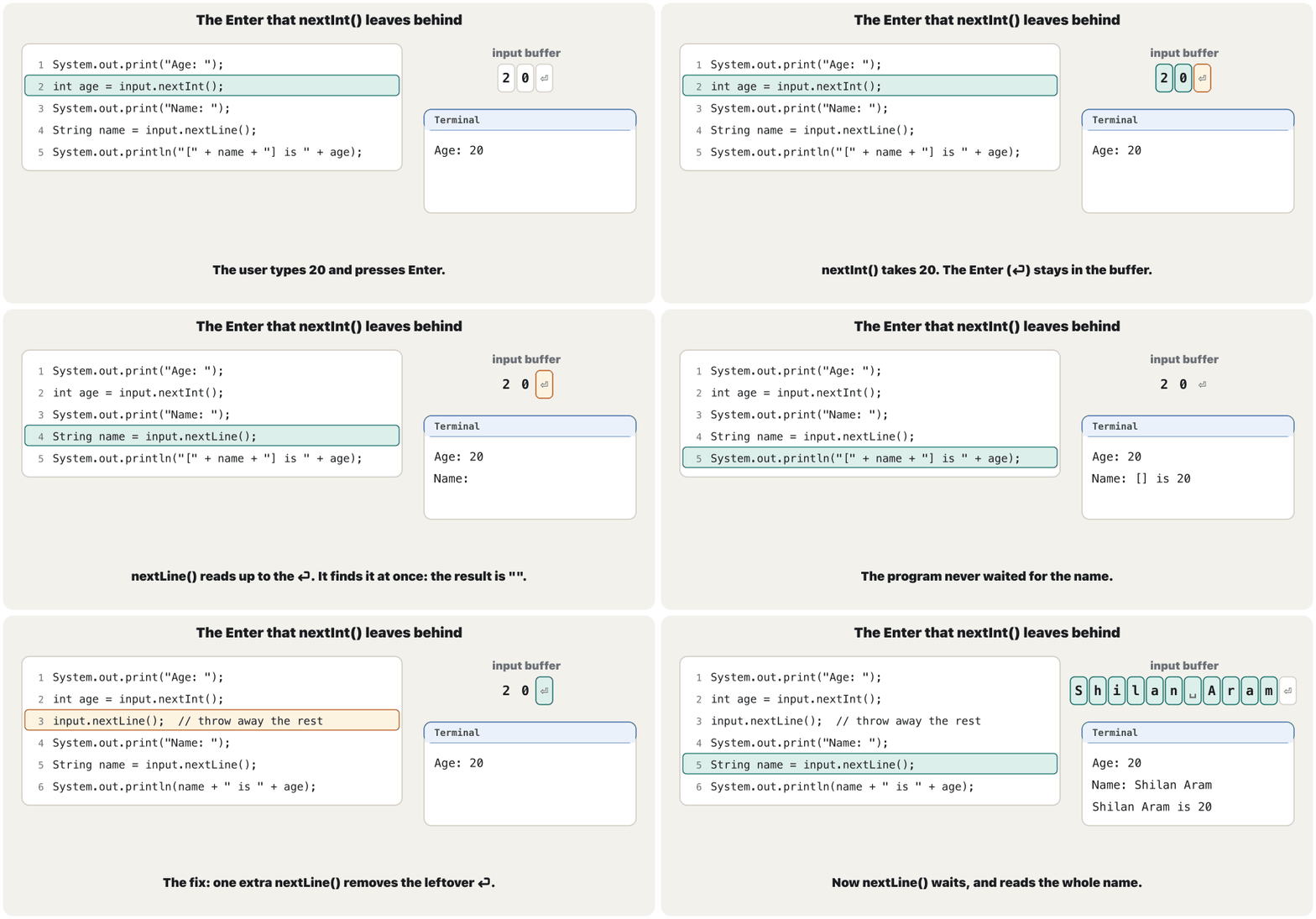
After nextInt() reads 20, the newline is still waiting, so the next nextLine() returns an empty string.
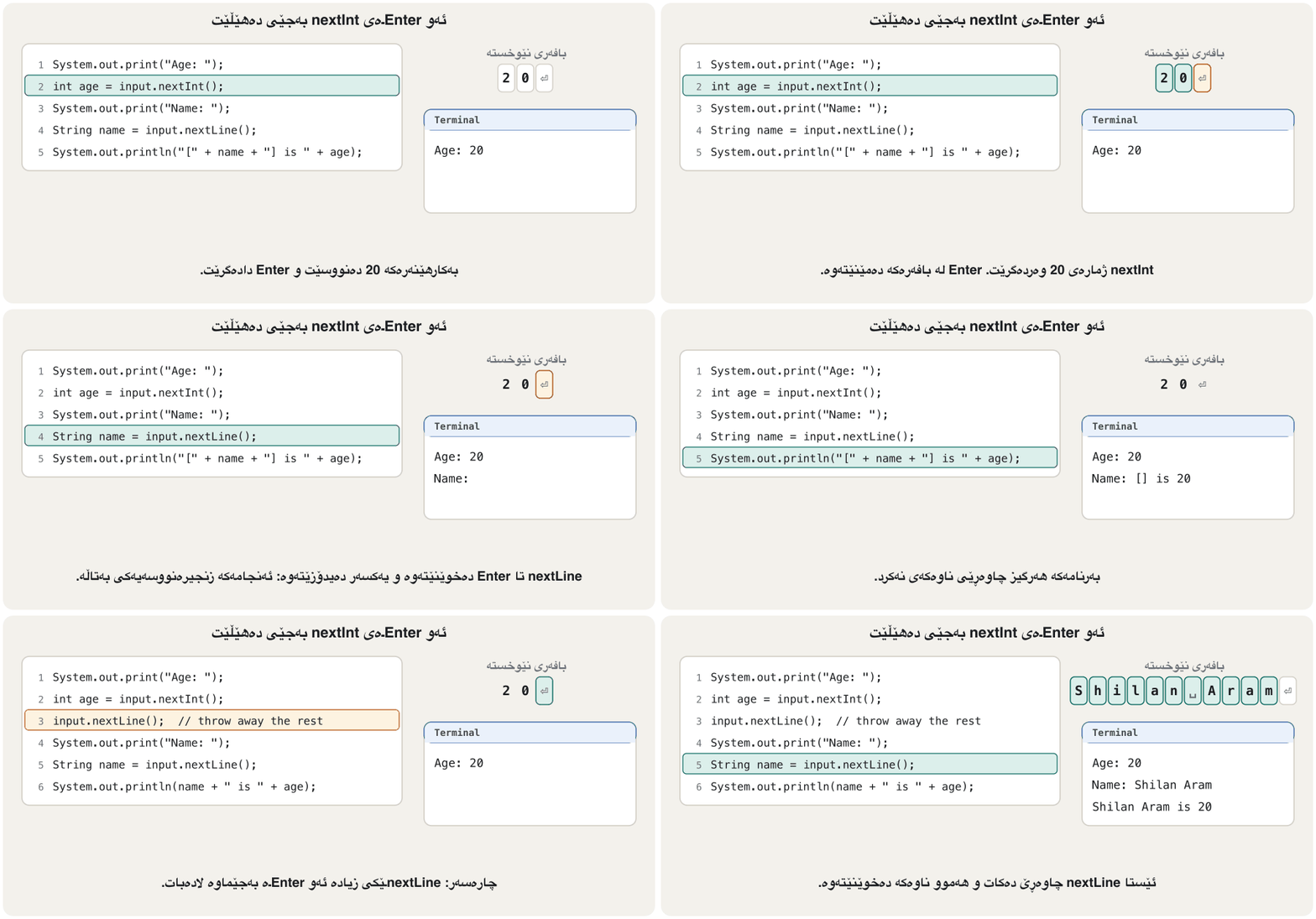
دوای ئەوەی nextInt() ژمارەی 20 دەخوێنێتەوە، هێشتا چاوەڕێیە، بۆیە nextLine()ـی دواتر بەتاڵ دەگەڕێنێتەوە.
Other Kurdish renderings in useوەرگێڕانە کوردییەکانی تر
نووسەکانی دێڕی نوێ، نووسەیەکی دێڕی نوێ
Note on the Kurdish termتێبینی لەبارەی زاراوە کوردییەکە
Descriptive: the registry's character «نووسە» + «دێڕی نوێ» (new line), the words that the registry's text-file and escape-sequence definitions already use. Proposed.
Related termsزاراوە پەیوەندیدارەکان
Learn more inزیاتر فێربە لە
- Keyboard Input with Scanner and Formatted Outputنێوخستە لە کیبۆردەوە بە Scanner و دەرخستەی ڕێکخراو
- Your First Java Program: Output and Commentsیەکەم بەرنامەی Javaـت: دەرخستە و لێدوانەکان
- Files: Create, Write, Read and Deleteفایلەکان: دروستکردن، نووسین، خوێندنەوە و سڕینەوە
- Lab: Talking to the Board with the Serial Monitorتاقیگە: قسەکردن لەگەڵ بۆرد بە Serial Monitor