Chapterبەش 1 · Lectureوانە 1.1
What Is Generative AI?ژیریی دەستکردی بەرهەمهێنەر چییە؟
What makes AI “generative”: models that learn the patterns of many examples and create new text, code, pictures, sound and video; how chat assistants are made in three stages (pre-training, fine-tuning, human feedback); foundation and multimodal models; training versus inference; diffusion models for pictures; a short history from ELIZA to AI agents; what a model knows and does not know; and why Kurdish answers need extra care.
چی وا دەکات «بەرهەمهێنەر» بێت: کە شێوازی زۆر نموونە فێر دەبن و دەق، کۆد، وێنە، دەنگ و ڤیدیۆی نوێ دروست دەکەن؛ یاریدەدەری گفتوگۆ چۆن لە سێ قۆناغدا دروست دەکرێت (، ، هەڵسەنگاندنی خەڵک)؛ و ؛ ڕاهێنان بەرامبەر ؛ بۆ وێنە؛ مێژوویەکی کورت لە ELIZAـەوە تا ؛ چی دەزانێت و چی نازانێت؛ هەروەها بۆچی وەڵامی کوردی وردبینیی زیاتری دەوێت.
What you will learnچی فێر دەبیت
- Explain the difference between predictive and generative AI with an example.
- Name the kinds of content generative AI makes and say what a multimodal model is.
- Describe the three stages that turn a language model into a chat assistant.
- Explain what a foundation model is, why few companies train one, and how training differs from inference.
- Describe how a diffusion model makes a picture from noise.
- Say what a model knows and does not know, and check Kurdish output carefully.
- جیاوازیی نێوان پێشبینیکەر و بە نموونەیەک ڕوون بکەیتەوە.
- جۆرەکانی ئەو ناوەڕۆکەی دروستی دەکات بناسیت و بڵێیت چییە.
- ئەو سێ قۆناغە باس بکەیت کە دەکەن بە یاریدەدەرێکی گفتوگۆ.
- ڕوون بکەیتەوە چییە، بۆچی کۆمپانیای کەم ڕایدەهێنن و ڕاهێنان چ جیاوازییەکی لەگەڵ هەیە.
- باس بکەیت چۆن لە خاڵخاڵییەوە وێنە دروست دەکات.
- بڵێیت چی دەزانێت و چی نازانێت و کوردی بە وردی بپشکنیت.
From recognising to creatingلە ناسینەوەوە بۆ دروستکردن
Your phone's gallery can find every photo of your cat. It looks at each picture and decides: cat or not a cat. That is AI that recognises. Now ask an AI app to draw a cat asleep on a Kurdish carpet. A few seconds later you have a picture that never existed before. That is AI that creates.
گەلەریی مۆبایلەکەت دەتوانێت هەموو وێنەیەکی پشیلەکەت بدۆزێتەوە. سەیری هەر وێنەیەک دەکات و بڕیار دەدات: پشیلەیە یان نا. ئەمە کە دەناسێتەوە. ئێستا داوا لە بکە پشیلەیەک بکێشێت کە لەسەر قاڵییەکی کوردی خەوتبێت. چەند چرکەیەک دواتر وێنەیەکت هەیە کە پێشتر هەرگیز بوونی نەبووە. ئەمە کە دروست دەکات.
This course is about the second kind: generative AI. You meet it when a chatbot answers you, when your phone suggests a reply, or when a tool turns your words into a picture. This first lesson explains what it is, how it is made, and what it can and cannot do.
ئەم کۆرسە لەبارەی جۆری دووەمە: . کاتێک وەڵامت دەداتەوە، کاتێک مۆبایلەکەت وەڵامێکت بۆ پێشنیار دەکات، یان کاتێک ئامرازێک وشەکانت دەکات بە وێنە، ئەم جۆرە دەبینیت. ئەم یەکەم وانەیە ڕوون دەکاتەوە کە چییە، چۆن دروست دەکرێت و چی دەتوانێت و چی ناتوانێت بکات.
What is generative AI?ژیریی دەستکردی بەرهەمهێنەر چییە؟
Generative AI is AI that creates new content: text, computer code, pictures, sound or video. A model learns the patterns in a huge number of examples, then uses those patterns to make something new of the same kind. A US definition used by NIST (2024) says these models copy the structure and characteristics of the data they learned from in order to produce new, synthetic content.
جۆرێکە لە کە ناوەڕۆکی نوێ دروست دەکات: دەق، ، وێنە، دەنگ یان ڤیدیۆ. شێوازەکانی ناو ژمارەیەکی زۆر زۆری نموونە فێر دەبێت، پاشان بەو شێوازانە شتێکی نوێ لە هەمان جۆر دروست دەکات. پێناسەیەکی ئەمریکی کە NIST (2024) بەکاری دەهێنێت دەڵێت ئەم پێکهاتە و تایبەتمەندییەکانی ئەو لێی فێر بوون لاسایی دەکەنەوە، بۆ ئەوەی ناوەڕۆکی نوێی دەستکرد بەرهەم بهێنن.
AI that creates new content, such as text, images or sound, after learning the patterns of a very large amount of existing examples. Chatbots built on are generative AI.
جۆرێک لە کە ناوەڕۆکی نوێ دروست دەکات، وەک دەق، وێنە یان دەنگ، دوای فێربوونی شێوازەکانی بڕێکی زۆر زۆری نموونەی هەبوو. ئەو لەسەر دروست کراون .
A young apprentice in a carpet workshop in Sanandaj studies thousands of Kurdish carpets: their colours, borders and repeating shapes. One day he weaves a carpet nobody has seen before, yet everyone can tell it is Kurdish. He did not copy one carpet; he learned the style. A generative model does the same with text or pictures.
شاگردێکی گەنج لە کارگەیەکی قاڵیچنی لە سنە سەیری هەزاران قاڵیی کوردی دەکات: ڕەنگەکانیان، چوارچێوەکانیان و ئەو شێوانەی دووپاتە دەبنەوە. ڕۆژێک قاڵییەک دەچنێت کە کەس پێشتر نەیبینیوە، بەڵام هەموو کەس دەزانێت کوردییە. هیچ قاڵییەکی کۆپی نەکردووە؛ شێوازەکەی فێر بووە. بەرهەمهێنەر هەمان کار بە دەق یان وێنە دەکات.
Where the analogy stops workingسنووری ئەم نموونەیە
Unlike the apprentice, a model has no eyes, hands or taste: it learns from numbers. It can also repeat parts of its examples too closely, which raises copyright questions.
بە پێچەوانەی شاگردەکە، نە چاوی هەیە، نە دەست و نە سەلیقە: لە ژمارەوە فێر دەبێت. هەروەها دەشێت بەشێک لە نموونەکانی زۆر لە نزیکەوە دووپاتە بکاتەوە و ئەمەش پرسیاری مافی لەبەرگرتنەوە دروست دەکات.
What it can makeچی دروست دەکات
Generative models make five main kinds of content. Some models make one kind; many of the newest handle several. The table gives examples as of November 2026; the names change often, the kinds do not.
بەرهەمهێنەر پێنج جۆری سەرەکیی ناوەڕۆک دروست دەکەن. هەندێک یەک جۆر دروست دەکات؛ زۆرێک لە نوێترینەکان چەند جۆرێک. خشتەکە نموونەی تشرینی دووەمی 2026 دەدات؛ ناوەکان زوو زوو دەگۆڕێن، بەڵام جۆرەکان نا.
| Kindجۆر | What it makesچی دروست دەکات | Examples (November 2026)نموونە (تشرینی دووەمی 2026) |
|---|---|---|
| Textدەق | answers, summaries, translations, storiesوەڵام، کورتە، وەرگێڕان، چیرۆک | chat models such as Claude, GPT and Gemini گفتوگۆ وەک Claude، GPT و Gemini |
| Codeکۆد | programs, fixes, explanations of errorsبەرنامە، چاککردن، ڕوونکردنەوەی هەڵەکان | the same chat modelsهەمان گفتوگۆ |
| Picturesوێنە | drawings, posters, edited photosوێنەکێشان، پۆستەر، وێنەی دەستکاریکراو | GPT-Image-2.6 (OpenAI), Nano Banana 2 (Google)GPT-Image-2.6 (OpenAI)، Nano Banana 2 (Google) |
| Voice and musicدەنگ و مۆسیقا | speech from text, spoken chat, short musicدەنگ لە دەقەوە، گفتوگۆی دەنگی، مۆسیقای کورت | GPT-Realtime-1.5 (OpenAI), Gemini 3.8 Flash TTS (Google)GPT-Realtime-1.5 (OpenAI)، Gemini 3.8 Flash TTS (Google) |
| Videoڤیدیۆ | short clips from a descriptionکلیپی کورت لە وەسفێکەوە | several companies offer them; check their model pagesچەند کۆمپانیایەک پێشکەشی دەکەن؛ پەڕەی ببینە |
A multimodal model takes in more than one kind of data, for example a photo and a question about it, and often answers in more than one kind. Most big chat models of 2026 read pictures and documents as well as text: every current Claude model takes text and images, and Gemini 3.8 Flash also takes audio, video and PDF files.
زیاتر لە یەک جۆر وەردەگرێت، بۆ نموونە وێنەیەک و پرسیارێک لەبارەی. زۆرجاریش بە زیاتر لە یەک جۆر وەڵام دەداتەوە. زۆربەی گەورەکانی گفتوگۆی ساڵی 2026 وێنە و بەڵگەنامەش وەک دەق دەخوێننەوە: هەموو ئێستای Claude دەق و وێنە وەردەگرێت و Gemini 3.8 Flash دەنگ، ڤیدیۆ و PDFـیش وەردەگرێت.
Predictive or generative?پێشبینیکەر یان بەرهەمهێنەر؟
Both kinds learn from data, as in the three kinds of machine learning. The difference is the output. A predictive model chooses from a fixed set of answers: a label such as spam, or a number such as tomorrow's temperature. This is classification or regression. A generative model writes or draws something new, so the number of possible answers is almost endless.
هەردوو جۆرەکە لە فێر دەبن، وەک لە سێ جۆرەکەی فێربوونی ئامێرـدا. جیاوازییەکە لە . پێشبینیکەر لە نێو کۆمەڵەیەکی جێگیری وەڵامدا هەڵدەبژێرێت: وەک ، یان ژمارەیەک وەک پلەی گەرمیی سبەی. ئەمە یان . بەرهەمهێنەر شتێکی نوێ دەنووسێت یان دەکێشێت، بۆیە ژمارەی وەڵامە گونجاوەکان نزیکەی بێکۆتایە.
| Predictive model پێشبینیکەر | Generative model بەرهەمهێنەر | |
|---|---|---|
| Output | a label or a number from a fixed set یان ژمارەیەک لە کۆمەڵەیەکی جێگیر | new text, code, pictures or soundدەق، کۆد، وێنە یان دەنگی نوێ |
| a spam filter: spam or not spamفلتەری : یان نییە | a chatbot writes a reply to the e-mail وەڵامی دەنووسێت | |
| Shilan's bookshopکتێبخانەکەی شیلان | sorts each message: order, question or complaintهەر نامەیەک پۆل دەکات: داواکردن، پرسیار یان سکاڵا | writes a polite answer to the messageوەڵامێکی ڕێکوپێک بۆ نامەکە دەنووسێت |
| How you check itچۆن دەیپشکنیت | count right and wrong labelsلەیبڵە ڕاست و هەڵەکان بژمێرە | read it: is it true, clear and safe?بیخوێنەرەوە: ڕاستە، ڕوونە و بێ مەترسییە؟ |
The two often work together: Shilan's helper first sorts a message, then writes the reply.
زۆرجار هەردووکیان پێکەوە کار دەکەن: یاریدەدەرەکەی شیلان سەرەتا نامەیەک پۆل دەکات، پاشان وەڵامەکە دەنووسێت.
How a chat assistant is madeیاریدەدەرێکی گفتوگۆ چۆن دروست دەکرێت
A chat assistant such as ChatGPT, Claude or Gemini is made in three stages:
یاریدەدەرێکی گفتوگۆ وەک ChatGPT، Claude یان Gemini لە سێ قۆناغدا دروست دەکرێت:
- Pre-training. The model reads a huge library of text and code. Again and again it guesses the next small piece of text (a token, lesson 3) and is corrected; choosing the next piece is a probability question. Afterwards it can continue any text, but it is not yet a helpful assistant.
- Fine-tuning. People write thousands of good example answers to instructions, and the model trains a little more on them. Now it follows instructions.
- Human feedback (RLHF). People compare two answers to the same question and choose the better one. Thousands of such choices train the model, with reinforcement learning, to give the kind of answers people prefer.
- . کتێبخانەیەکی زۆر گەورەی دەق و کۆد دەخوێنێتەوە. دیسان و دیسان پارچە دەقێکی بچووکی داهاتوو (، وانەی 3) مەزەندە دەکات و هەڵەکەی بۆ ڕاست دەکرێتەوە؛ هەڵبژاردنی پارچەی داهاتوو پرسیارێکی ئەگەرە. دوای ئەمە دەتوانێت هەر دەقێک درێژە پێبدات، بەڵام هێشتا یاریدەدەرێکی بەسوود نییە.
- . خەڵک هەزاران نموونەی وەڵامی باش بۆ ڕێنمایی دەنووسن و کەمێکی تر لەسەریان ڕادەهێنرێت. ئێستا پەیڕەوی ڕێنمایی دەکات.
- (RLHF). خەڵک دوو وەڵامی هەمان پرسیار بەراورد دەکەن و باشترەکەیان هەڵدەبژێرن. هەزاران هەڵبژاردنی لەو جۆرە بە فێربوونی بەهێزکردنەوە ڕادەهێنن، تاکو ئەو جۆرە وەڵامانە بداتەوە کە خەڵک پێیان باشترە.
The networks inside these models, and how training changes their numbers, are taught in Neural networks and deep learning.
ئەو تۆڕانەی ناو ئەم و چۆنیەتیی گۆڕینی ژمارەکانیان لە کاتی ڕاهێناندا، لە تۆڕە دەمارییەکان و فێربوونی قووڵـدا دەخوێنرێن.
Foundation models: one model, many usesمۆدێلە بنچینەییەکان: یەک مۆدێل، زۆر بەکارهێنان
A model trained this way is so general that one model can serve many apps: a chat app, a translator, a coding helper, a bookshop assistant. In 2021 researchers at Stanford named such models foundation models: models trained on broad data at scale that can be adapted to a wide range of tasks. The EU AI Act calls them general-purpose AI models and gives their makers duties (rules for general-purpose AI models).
کە بەم شێوەیە ڕاهێنرابێت ئەوەندە گشتییە کە یەک دەتوانێت خزمەتی زۆر بکات: گفتوگۆ، وەرگێڕێک، یاریدەدەرێکی ، یاریدەدەرێکی کتێبخانە. لە ساڵی 2021دا توێژەرانی زانکۆی ستانفۆرد ناوی ئەم جۆرە نا : کە لەسەر فراوان و بە قەبارەیەکی گەورە ڕاهێنراوە و دەکرێت بۆ ئەرکی زۆر جیاواز بگونجێنرێت. پێیان دەڵێت گشتی و ئەرکیان دەخاتە سەر دروستکەرەکانیان (یاساکانی مۆدێلە گشتییەکان).
A very large trained on huge and varied , so that the same model can be adapted to many different tasks: chatting, translating, summarising, writing code. are the best-known examples.
زۆر گەورەیە کە لەسەر بڕێکی زۆر زۆری جۆراوجۆر ڕاهێنراوە، بۆ ئەوەی هەمان مۆدێل بۆ چەندین ئەرکی جیاواز بگونجێنرێت: گفتوگۆ، وەرگێڕان، کورتکردنەوە، نووسینی کۆد. ناسراوترین نموونەی ئەم جۆرە مۆدێلانە .
Large language models are the best-known foundation models. An app adapts the same model with its own instructions (prompts, lesson 5), sometimes with fine-tuning, instead of training a new model from the start.
ناسراوترین . هەمان بە ڕێنماییەکانی خۆی دەگونجێنێت (، وانەی 5)، هەندێک جاریش بە ، لە جیاتی ئەوەی نوێ لە سەرەتاوە ڕابهێنێت.
Train once, use many timesیەک جار ڕاهێنان، زۆر جار بەکارهێنان
Why do only a few companies train foundation models? Because pre-training is enormous. Meta's 2024 report on its largest Llama 3 model (405 billion weights) says it read 15.6 trillion tokens of text and was trained on up to 16,000 GPUs (what a GPU is) in data centres (inside a data centre). That costs a great deal of money and electricity.
بۆچی تەنیا چەند کۆمپانیایەکی کەم ڕادەهێنن؟ چونکە زۆر گەورەیە. ساڵی 2024ی Meta لەبارەی گەورەترین Llama 3 (405 ملیار ) دەڵێت 15.6 تریلیۆن دەق خوێندووەتەوە و لەسەر تا 16,000 (یەکەی چارەسەرکردنی وێنەیی چییە) لە (ناو ناوەندێکی دراوە) ڕاهێنراوە. ئەمە پارە و کارەبایەکی زۆری تێدەچێت.
Using a trained model is called inference. Training happens once and costs a lot; inference happens every time someone asks, and each request costs a little. The prices on model pages (next lesson) are inference prices.
بەکارهێنانی ڕاهێنراو پێی دەوترێت . ڕاهێنان یەک جار ڕوو دەدات و زۆر گرانە؛ هەموو جارێک ڕوو دەدات کە کەسێک پرسیار دەکات و هەر کەمێک تێدەچێت. نرخەکانی سەر پەڕەی (وانەی داهاتوو) نرخی .
| Trainingڕاهێنان | Inference | |
|---|---|---|
| How oftenچەند جار | once, plus later updatesیەک جار، لەگەڵ نوێکردنەوەی دواتر | every requestهەموو |
| How longچەند دەخایەنێت | weeks or monthsچەند هەفتە یان مانگێک | secondsچەند چرکەیەک |
| Who paysکێ پارە دەدات | the company that makes the modelئەو کۆمپانیایەی دروست دەکات | the user or the app, per request or by subscriptionبەکارهێنەر یان ، بۆ هەر یان بە |
| Machinesئامێرەکان | thousands of GPUs in data centresهەزاران لە | GPUs in data centres, or your own computer for small models لە ، یان خۆت بۆ بچووک |
Pictures from noise: diffusion modelsوێنە لە خاڵخاڵییەوە: مۆدێلەکانی بڵاوبوونەوە
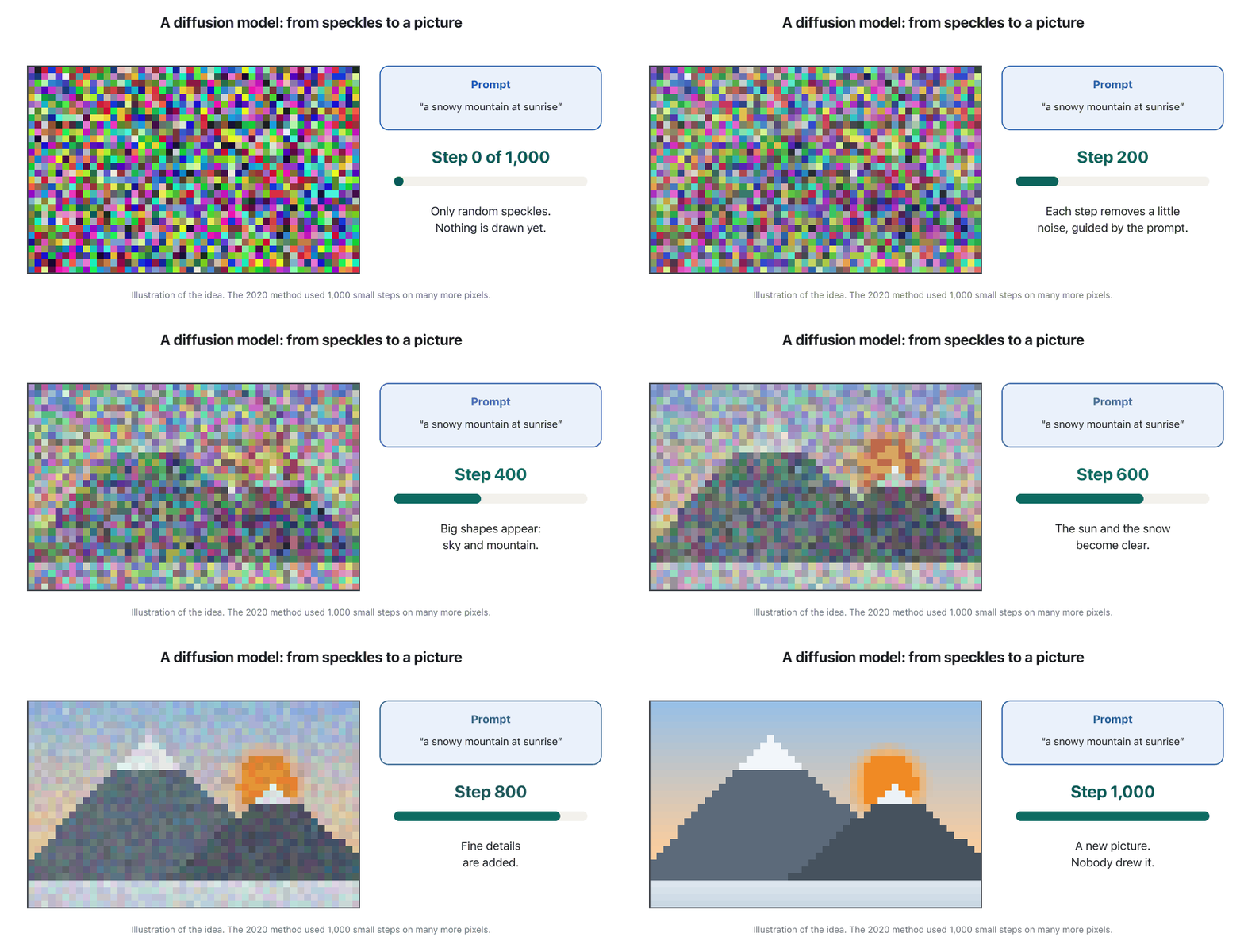
Many picture generators use a diffusion model. In training, the model sees many pictures with random speckles (noise) added to them, a little more at each step, and it learns to remove the noise again. To make a new picture, it starts from pure noise and removes noise step by step, guided by your prompt, for example a snowy mountain at sunrise. A 2020 paper by Ho, Jain and Abbeel showed that this gives high-quality pictures; it used 1,000 small steps.
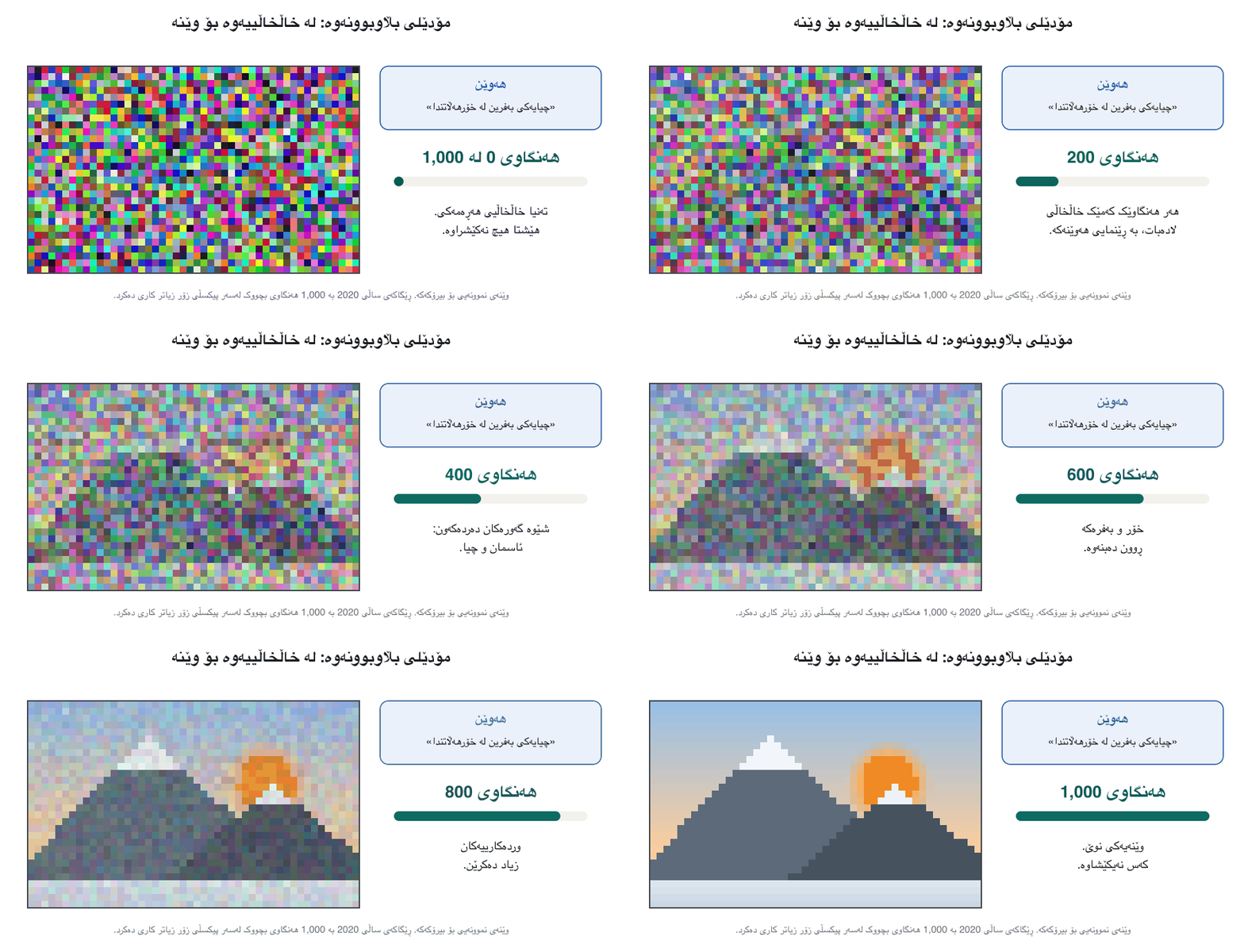
زۆرێک لە دروستکەرانی وێنە بەکار دەهێنن. لە کاتی ڕاهێناندا، زۆر وێنە دەبینێت کە خاڵخاڵیی هەڕەمەکییان تێکراوە (لە هەر هەنگاوێکدا کەمێک زیاتر) و فێر دەبێت خاڵخاڵییەکە دیسان لاببات. بۆ دروستکردنی وێنەیەکی نوێ، لە خاڵخاڵیی پەتییەوە دەست پێدەکات و هەنگاو بە هەنگاو خاڵخاڵی لادەبات، بە ڕێنمایی ، بۆ نموونە چیایەکی بەفرین لە خۆرهەڵاتندا. توێژینەوەیەکی ساڵی 2020ی Ho، Jain و Abbeel نیشانی دا کە ئەمە وێنەی کوالیتی بەرز دەدات؛ 1,000 هەنگاوی بچووکی بەکار دەهێنا.
Each run starts from different noise, so the same prompt gives a different picture each time. Companies do not always say which method their newest picture models use. The same power can make fake photos of real people: see deepfakes.
هەر جارێک لە خاڵخاڵییەکی جیاوازەوە دەست پێدەکات، بۆیە هەمان هەر جارە وێنەیەکی جیاواز دەدات. کۆمپانیاکان هەمیشە ناڵێن نوێترین وێنەیان چ ڕێگایەک بەکار دەهێنن. هەمان توانا دەتوانێت وێنەی ساختەی خەڵکی ڕاستەقینە دروست بکات: دیپفەیکەکان ببینە.
A short historyمێژوویەکی کورت
Generative AI did not appear overnight. Each idea on the timeline grew out of the one before: from hand-written rules, to counting which word comes next, to turning words into numbers, to one huge model that you steer with words.
لە شەوێکدا دەرنەکەوت. هەر بیرۆکەیەک لەسەر هێڵی کاتەکە لە بیرۆکەی پێشترەوە سەری هەڵدا: لە یاسای دەستنووسەوە، بۆ ژماردنی ئەوەی کام وشە دواتر دێت، بۆ گۆڕینی وشە بە ژمارە، بۆ یەک زۆر گەورە کە بە وشە ئاڕاستەی دەکەیت.
Read more: ELIZA in the Turing test lesson, next-word counting in predictive text, the transformer in RNNs and transformers, today's chatbots in Chatbots today and the wider story of AI in What is AI?. ChatGPT was released on 30 November 2022 and reached 100 million users in about two months.
زیاتر بخوێنەوە: ELIZA لە وانەی تاقیکاریی تیورینگ، ژماردنی وشەی داهاتوو لە پێشبینیی دەق، لە RNN و ترانسفۆرمەرەکان، ئەمڕۆ لە چاتبۆتەکان ئەمڕۆ و چیرۆکی فراوانتری لە ژیریی دەستکرد چییە؟. ChatGPT لە 30ی تشرینی دووەمی 2022 بڵاو کرایەوە و لە نزیکەی دوو مانگدا گەیشتە 100 ملیۆن بەکارهێنەر.
What a model knows, and what it does notمۆدێل چی دەزانێت و چی نازانێت
A language model has never seen a computer, a car, the sun or a person. Everything it “knows” comes from its training data: what people wrote and, for multimodal models, pictures, sound and video. It has no feelings: it is not kind or angry, even when its words sound so. And it does not look up stored answers: it writes new text, token by token, from the patterns it learned. So it can sound sure and still be wrong. NIST calls this confabulation; most people say hallucination (limits and safety). Hidden bias is another risk: see chatbots and large language models: five questions.
هەرگیز ، ئۆتۆمبێل، خۆر یان مرۆڤێکی نەبینیوە. هەموو ئەوەی «دەیزانێت» لە هاتووە: ئەوەی خەڵک نووسیویانە و بۆ وێنە، دەنگ و ڤیدیۆش. هەستی نییە: میهرەبان یان تووڕە نییە، تەنانەت کاتێک وشەکانی وا دەردەکەون. هەروەها وەڵامی هەڵگیراو ناگەڕێتەوە: لە شێوازە فێربووەکانەوە، بە ، دەقی نوێ دەنووسێت. بۆیە دەکرێت دڵنیا دەربکەوێت و هێشتا هەڵە بێت. NIST پێی دەڵێت confabulation؛ زۆربەی خەڵک بە ئینگلیزی دەڵێن hallucination، بە کوردی (سنوور و سەلامەتی). لاسەنگیی شاراوە مەترسییەکی ترە: چاتبۆتەکان و مۆدێلە گەورەکانی زمان: پێنج پرسیار ببینە.
A model also knows little about anything after its training data ends (its knowledge cutoff, next lesson), unless an app gives it fresh information. That is why a clear, detailed request helps so much: it gives the model what it cannot guess (prompt engineering).
هەروەها کەم دەزانێت لەبارەی هەر شتێک کە دوای کۆتایی ڕوویداوە (، وانەی داهاتوو)، مەگەر زانیاریی نوێی پێبدات. بۆیە داوایەکی ڕوون و ورد ئەوەندە یارمەتی دەدات: ئەوەی پێدەدات کە ناتوانێت مەزەندەی بکات (ئەندازیاریی هەوێن).
Generative AI and Kurdishژیریی دەستکردی بەرهەمهێنەر و زمانی کوردی
Models learn mostly from text on the internet, and there is far less Kurdish text than English text. NIST's 2024 profile warns that a model “may perform less well for non-English languages or certain dialects”. In practice, a Kurdish answer may mix Sorani and Kurmanji, borrow Persian or Arabic words, misspell, or invent technical words. Kurdish text is also cut into more tokens, so it costs more and fills the model's working memory sooner (why Kurdish costs more).
زیاتر لە دەقی سەر فێر دەبن و دەقی کوردی زۆر کەمترە لە دەقی ئینگلیزی. پرۆفایلەکەی NIST لە ساڵی 2024دا ئاگادار دەکاتەوە کە دەشێت بۆ زمانە نائینگلیزییەکان یان هەندێک شێوەزار خراپتر کار بکات. لە ڕاستیدا، دەشێت وەڵامێکی کوردی سۆرانی و کرمانجی تێکەڵ بکات، وشەی فارسی یان عەرەبی بخوازێت، هەڵەی ڕێنووسی تێدا بێت، یان وشەی تەکنیکی دابهێنێت. هەروەها دەقی کوردی بە زیاتر دابەش دەکرێت، بۆیە تێچووی زیاترە و زووتر بیرگەی کارکردنی پڕ دەکاتەوە (بۆچی کوردی گرانترە).
So use it, but check it. Name the dialect and script in your request, take technical words from a trusted list (such as CêIT's terms), and ask a teacher or a dictionary when a word looks strange.
کەواتە بەکاری بهێنە، بەڵام بیپشکنە. لە داواکەتدا ناوی شێوەزار و ئەلفوبێکە بنووسە، وشە تەکنیکییەکان لە لیستێکی متمانەپێکراو وەربگرە (وەک زاراوەکانی CêIT) و کاتێک وشەیەک سەیر دەردەکەوێت لە مامۆستایەک یان فەرهەنگێک بپرسە.
Common mistakesهەڵە باوەکان
Exercisesڕاهێنانەکان
Sort these eight tools: (a) a keyboard that suggests your next word; (b) an app that writes a cover letter; (c) a camera that finds faces; (d) a tool that draws a logo from a description; (e) a filter that moves e-mails to spam; (f) a model that reads text aloud in a natural voice; (g) a system that predicts tomorrow's electricity use; (h) a helper that writes Python code from a request.
ئەم هەشت ئامرازە پۆل بکە: (a) کە وشەی داهاتووت پێشنیار دەکات؛ (b) کە نامەیەکی داواکاریی کار دەنووسێت؛ (c) کامێرایەک کە ڕووخسار دەدۆزێتەوە؛ (d) ئامرازێک کە لە وەسفێکەوە لۆگۆیەک دەکێشێت؛ (e) فلتەرێک کە دەگوازێتەوە بۆ ؛ (f) کە دەق بە دەنگێکی سروشتی دەخوێنێتەوە؛ (g) سیستەمێک کە بەکارهێنانی کارەبای سبەی پێشبینی دەکات؛ (h) یاریدەدەرێک کە لە داوایەکەوە کۆدی Python دەنووسێت.
Show answerوەڵامەکە پیشان بدە
Generative: (b), (d), (f), (h): each makes new content. Predictive: (c), (e), (g): each picks a label or a number. (a) sits in between: it predicts the next word from a fixed vocabulary, which is a tiny language model. Repeating that step word after word is exactly how chat models write (lesson 3).
بەرهەمهێنەر: (b)، (d)، (f)، (h): هەریەکەیان ناوەڕۆکی نوێ دروست دەکات. پێشبینیکەر: (c)، (e)، (g): هەریەکەیان یان ژمارەیەک هەڵدەبژێرێت. (a) لە نێوانیاندایە: وشەی داهاتوو لە نێو وشەنامەیەکی جێگیردا پێشبینی دەکات، کە زۆر بچووکە. دووپاتەکردنەوەی ئەو هەنگاوە وشە بە وشە ڕێک ئەوەیە کە گفتوگۆ پێی دەنووسن (وانەی 3).
Which training stage is each description? (1) Reviewers see two answers and choose the clearer, more honest one. (2) The model guesses the next token in billions of sentences. (3) The model trains on 10,000 good answers that teachers wrote.
هەر وەسفێک کام قۆناغی ڕاهێنانە؟ (1) هەڵسەنگێنەران دوو وەڵام دەبینن و ڕوونتر و ڕاستگۆترەکەیان هەڵدەبژێرن. (2) داهاتوو لە ملیارەها ڕستەدا مەزەندە دەکات. (3) لەسەر 10,000 وەڵامی باش ڕادەهێنرێت کە مامۆستایان نووسیویانە.
Show answerوەڵامەکە پیشان بدە
(1) Human feedback (RLHF). (2) Pre-training. (3) Fine-tuning. The real order is (2), then (3), then (1).
(1) (RLHF). (2) . (3) . ڕیزبەندیی ڕاستەقینە (2)، پاشان (3)، پاشان (1)ـە.
Decide for each: (a) a company runs thousands of GPUs for two months on trillions of tokens; (b) Aram asks a chatbot to explain recursion; (c) Shilan's helper answers 300 messages a day.
بۆ هەریەکەیان بڕیار بدە: (a) کۆمپانیایەک بۆ ماوەی دوو مانگ هەزاران لەسەر تریلیۆنەها کار پێدەکات؛ (b) ئارام داوا لە دەکات ڕوون بکاتەوە؛ (c) یاریدەدەرەکەی شیلان ڕۆژانە وەڵامی 300 نامە دەداتەوە.
Show answerوەڵامەکە پیشان بدە
(a) Training (pre-training): huge, once. (b) and (c) Inference: the trained model answers each request, and each one costs a little.
(a) ڕاهێنان (): زۆر گەورە، یەک جار. (b) و (c) : ڕاهێنراوەکە وەڵامی هەر دەداتەوە و هەریەکەیان کەمێک تێدەچێت.
Summaryپوختە
- Generative AI creates new content (text, code, pictures, voice, music, video) from patterns it learned; predictive AI picks a label or a number.
- A multimodal model takes in (and often gives back) more than one kind of data.
- Chat assistants are made in three stages: pre-training (predict the next token on a huge library), fine-tuning (good examples), human feedback / RLHF (people choose the better answer).
- A foundation model is trained once at great cost and adapted to many apps; using it is inference, paid per request.
- A diffusion model turns random noise into a picture, step by step, guided by the prompt.
- A model never saw the world: it learned from what people wrote, has no feelings, can be confidently wrong, and is weaker in Kurdish, so check its answers.
- لەو شێوازانەوە کە فێری بووە ناوەڕۆکی نوێ دروست دەکات (دەق، کۆد، وێنە، دەنگ، مۆسیقا، ڤیدیۆ)؛ پێشبینیکەر یان ژمارەیەک هەڵدەبژێرێت.
- زیاتر لە یەک جۆر وەردەگرێت (و زۆرجار دەیداتەوە).
- یاریدەدەرەکانی گفتوگۆ لە سێ قۆناغدا دروست دەکرێن: (پێشبینیکردنی داهاتوو لەسەر کتێبخانەیەکی زۆر گەورە)، (نموونەی باش)، (خەڵک وەڵامی باشتر هەڵدەبژێرن).
- یەک جار بە تێچوویەکی زۆر ڕادەهێنرێت و بۆ زۆر دەگونجێنرێت؛ بەکارهێنانی و بۆ هەر پارەی دەدرێت.
- هەنگاو بە هەنگاو و بە ڕێنمایی خاڵخاڵیی هەڕەمەکی دەکات بە وێنە.
- هەرگیز جیهانی نەبینیوە: لەوەوە فێر بووە کە خەڵک نووسیویانە، هەستی نییە، دەکرێت بە دڵنیاییەوە هەڵە بکات و لە کوردیدا لاوازترە، بۆیە وەڵامەکانی بپشکنە.
Next: the models you can use today, how to read their pages and how to choose one: AI models today.
داهاتوو: ئەو ئەمڕۆ دەتوانیت بەکاریان بهێنیت، چۆن پەڕەکانیان بخوێنیتەوە و چۆن یەکێکیان هەڵبژێریت: مۆدێلەکانی ژیریی دەستکرد ئەمڕۆ.
Lesson complete!وانەکە تەواو بوو!
Well done. Review the key terms, then go on to the next lesson.دەستخۆش. سەیرێکی زاراوە سەرەکییەکان بکەرەوە، پاشان بڕۆ بۆ وانەی داهاتوو.
Key termsزاراوە سەرەکییەکان
AI Models Today: Claude, GPT, Gemini and Open Modelsمۆدێلەکانی ژیریی دەستکرد ئەمڕۆ: Claude، GPT، Gemini و مۆدێلە کێشکراوەکان
Related lecturesوانە پەیوەندیدارەکان
- What Is Artificial Intelligence?ژیریی دەستکرد چییە؟
- Machine Learning Basics (Supplementary)بنەماکانی فێربوونی ئامێر (زیادە)
- Can Machines Think? The Turing Testئایا ئامێرەکان بیر دەکەنەوە؟ تاقیکاریی تیورینگ
- Probability in Computing: Speech, Predictive Text and Riskبەکارهێنانی ئەگەر لە بواری کۆمپیوتەردا: ئاخاوتن، پێشبینیی دەق و مەترسی
- AI in Cybersecurity: Bias, Privacy, Surveillance and Deepfakesژیریی دەستکرد لە ئاسایشی سایبەردا: لاسەنگی، تایبەتێتی، چاودێری و دیپفەیکەکان
- Processor Speed, Cache, GPUs and Coolingخێرایی پرۆسێسەر، کاش، GPU و ساردکردنەوە
- Cloud Computingهەورەژمێرکاری
- Neural Networks and Deep Learningتۆڕە دەمارییەکان و فێربوونی قووڵ
- AI Models Today: Claude, GPT, Gemini and Open Modelsمۆدێلەکانی ژیریی دەستکرد ئەمڕۆ: Claude، GPT، Gemini و مۆدێلە کێشکراوەکان
References and further readingسەرچاوەکان و خوێندنەوەی زیاتر
- NIST AI 600-1: AI Risk Management Framework, Generative AI Profile (26 July 2024): definition of generative AI, confabulation, performance gaps between languages
- Google Machine Learning Crash Course: LLMs, transformers and self-attention
- Stanford CS324 Large Language Models: Introduction (language models, n-gram history, in-context learning)
- MIT 6.S191 Introduction to Deep Learning 2026 (deep generative modelling; music generation and LLM fine-tuning labs)
- Bommasani et al. (2021), On the Opportunities and Risks of Foundation Models
- Ouyang et al. (2022), Training language models to follow instructions with human feedback (InstructGPT)
- Ho, Jain and Abbeel (2020), Denoising Diffusion Probabilistic Models
- Llama Team, Meta (2024), The Llama 3 Herd of Models (405B weights, 15.6T tokens, up to 16K GPUs)
- Vaswani et al. (2017), Attention Is All You Need
- Mikolov et al. (2013), Efficient Estimation of Word Representations in Vector Space (word2vec)
- Brown et al. (2020), Language Models are Few-Shot Learners (GPT-3)
- Petrov et al. (2023), Language Model Tokenizers Introduce Unfairness Between Languages
- Wikipedia: ChatGPT (released 30 November 2022)
- Wikipedia: GPT-4 (released 14 March 2023, image input)
- Wikipedia: OpenAI o1 (o1-preview released 12 September 2024)
- Anthropic Engineering: Building effective agents (19 December 2024)
- Anthropic: Models overview (current Claude models take text and image input), checked November 2026
- OpenAI API: Models (image and voice models), checked November 2026
- Google AI Studio: Gemini models (inputs of Gemini 3.8 Flash, TTS and image models), checked November 2026
This lecture is a first edition. The Kurdish text and terminology are waiting for review by Kurdish IT teachers.ئەم وانەیە چاپی یەکەمە. دەقە کوردییەکە و زاراوەکانی چاوەڕێی پێداچوونەوەی مامۆستایانی کوردی بواری IT ن.