Chapterبەش 3 · Lectureوانە 3.8
AI in Cybersecurity: Bias, Privacy, Surveillance and Deepfakesژیریی دەستکرد لە ئاسایشی سایبەردا: لاسەنگی، تایبەتێتی، چاودێری و دیپفەیکەکان
AI makes security tools faster, but it can be unfair, invade privacy and be turned against people. Learn how bias, false alarms and missed attacks arise, how predictive analytics and surveillance threaten privacy, how deepfakes fool people, and what accountability and the EU AI Act require.
ئامرازەکانی خێراتر دەکات، بەڵام دەتوانێت نادادپەروەر بێت، دەستدرێژی بکاتە سەر و دژی خەڵک بەکار بهێنرێت. فێر بە ، ئاگادارکردنەوەی هەڵە و لەدەستچوو چۆن دروست دەبن، و چۆن هەڕەشە لە دەکەن، چۆن خەڵک فریو دەدەن و و داوای چی دەکەن.
What you will learnچی فێر دەبیت
- Explain how algorithmic bias arises from training data and design, and why it can grow over time.
- Tell false positives from false negatives, and calculate their rates to check a model for bias.
- Describe how predictive analytics and behaviour profiling can violate privacy, and apply data minimisation.
- Recognise misuse of AI for surveillance and name the safeguards against it.
- Defend against deepfake fraud and explain accountability, NIST's trustworthy-AI characteristics and the EU AI Act's risk levels.
- ڕوونی بکەیتەوە چۆن لە و دیزاینەوە دروست دەبێت و بۆچی دەتوانێت بە تێپەڕبوونی کات گەورەتر ببێت.
- لە جیا بکەیتەوە و ڕێژەکانیان هەژمار بکەیت بۆ پشکنینی بۆ .
- وەسف بکەیت و چۆن دەتوانن پێشێل بکەن و جێبەجێ بکەیت.
- خراپ بەکارهێنانی بۆ بناسیتەوە و پاراستنەکان دژی ئەوە ناو ببەیت.
- بەرگری لە فێڵی بکەیت و ، تایبەتمەندییەکانی متمانەپێکراوی NIST و ئاستەکانی ڕوون بکەیتەوە.
AI helps defenders — and raises new questionsژیریی دەستکرد یارمەتیی بەرگریکاران دەدات — و پرسیاری نوێ دروست دەکات
Security teams now use artificial intelligence (AI) every day. AI filters spam and phishing e-mail, watches network traffic for unusual behaviour, gives each login a risk score and recognises faces at doors. It is fast and never gets tired. But an AI system does not understand the world the way a person does: it learns patterns from the examples it was trained on. If those examples are one-sided, its decisions are one-sided too. And because it can draw conclusions about people from their data, it can learn private things they never agreed to share.
تیمەکانی ئێستا هەموو ڕۆژێک بەکار دەهێنن. و دەپاڵێوێت، چاودێریی هاتوچۆی دەکات بۆ ڕەفتاری نائاسایی، نمرەیەکی دەداتە هەر و ڕووخسار لە بەردەم دەرگاکاندا دەناسێتەوە. خێرایە و هەرگیز ماندوو نابێت. بەڵام سیستەمێکی جیهان وەک مرۆڤ تێناگات: لەو نموونانەوە فێری شێوازەکان دەبێت کە لەسەریان ڕاهێنراوە. ئەگەر ئەو نموونانە یەکلایەنە بن، بڕیارەکانیشی یەکلایەنە دەبن. هەروەها لەبەر ئەوەی دەتوانێت لە خەڵکەوە دەرئەنجام دەربهێنێت، دەتوانێت شتی تایبەتی دەربارەیان بزانێت کە هەرگیز ڕازی نەبوون بڵاوی بکەنەوە.
The course names three ethical challenges of AI in cybersecurity. This lesson adds two more that have grown since then:
کۆرسەکە سێ ئاستەنگی ئەخلاقیی لە ناو دەبات. ئەم وانەیە دوو ئاستەنگی تر زیاد دەکات کە لەو کاتەوە گەورەتر بوون:
- Bias in algorithms — unfair results for some groups.
- Privacy violations through predictive analytics.
- Misuse for surveillance — watching people without limits.
- Deepfakes — fake voices and videos used to trick people (added).
- Accountability — who answers when AI gets it wrong (added).
- لە — ئەنجامی نادادپەروەرانە بۆ هەندێک گرووپ.
- پێشێلکردنی لە ڕێگەی .
- خراپ بەکارهێنان بۆ — چاودێریکردنی خەڵک بێ سنوور.
- — دەنگ و ڤیدیۆی ساختە بۆ فریودانی خەڵک (زیادکراو).
- — کێ وەڵام دەداتەوە کاتێک هەڵە دەکات (زیادکراو).
Bias in algorithmsلاسەنگی لە ئەلگۆریزمەکاندا
Algorithmic bias happens when an AI system produces results that favour some groups or outcomes over others, because its training data or its design was one-sided. In Kurdish the course calls it «لاسەنگی» — like a scale that leans to one side even when both pans hold the same weight.
ئەوکاتە ڕوو دەدات کە سیستەمێکی ئەنجامێک بەرهەم دەهێنێت کە هەندێک گرووپ یان ئەنجام بەسەر ئەوانی تردا پێش دەخات، چونکە یان دیزاینەکەی یەکلایەنە بووە. وەک تەرازوویەک کە بەلایەکدا دەشکێتەوە تەنانەت کاتێک هەردوو تاکەکەی هەمان کێشیان تێدایە.
Unfair results from an system that favour or harm certain groups, usually because the or the design was one-sided.
ئەنجامی نادادپەروەرانەی سیستەمێکی کە هەندێک گرووپ پێش دەخات یان زیانیان پێ دەگەیەنێت، زۆرجار لەبەر ئەوەی یان دیزاینەکە لایەنگیرانە بووە.
NIST, the US standards agency, says bias comes from three places, and none of them needs anyone to mean harm: systemic bias in society and in the data it produces, statistical bias from samples that do not represent everyone, and human bias in how people build and read the system.
NIST، دەزگای ستانداردی ئەمریکا، دەڵێت لە سێ شوێنەوە دێت و هیچیان پێویستی بەوە نییە کەسێک بیەوێت زیان بگەیەنێت: سیستەمی لە کۆمەڵگا و ئەو بەرهەمی دەهێنێت، ئاماری لەو نموونانەی هەموو کەس نانوێنن، هەروەها مرۆیی لەوەی خەڵک چۆن سیستەمەکە دروست دەکەن و ئەنجامەکانی دەخوێننەوە.
Five ways bias gets into AI: biased data, too few examples of some groups, hard-to-measure features, feedback loops and manipulated data, with real examples.
پێنج ڕێگای هاتنی بۆ ناو : ، نموونەی کەمی هەندێک گرووپ، تایبەتمەندیی گرانپێوان، feedback loops و دەستکاریکراو، بە نموونەی ڕاستەقینە.
Plays 0:00-10:41: where algorithmic bias comes from and how to watch for it. Stops before the end promotions.
لە 0:00 تا 10:41 پەخش دەبێت: لە کوێوە دێت و چۆن ئاگاداری بیت. پێش ڕیکلامەکانی کۆتایی ڕادەوەستێت.
Bias in algorithmsلاسەنگی لە ئەلگۆریزمەکاندا
How bias grows over timeلاسەنگی چۆن بە تێپەڕبوونی کات گەورە دەبێت
In cybersecurity, AI models learn from historical data to recognise threats, give risk scores and spot anomalies (behaviour that is not normal). If that history already contains a bias — for example, it holds many alerts from one city because that city's network was watched more closely — the model does not just copy the bias. It can keep it alive and even make it bigger, because its own alerts become tomorrow's training data.
لە لە مێژوویی فێر دەبن بۆ ناسینەوەی ، دانانی نمرەی و دۆزینەوەی ڕەفتاری نائاسایی. ئەگەر ئەو مێژووە پێشتر تێدا بێت — بۆ نموونە ئاگادارکردنەوەی زۆری لە شارێکەوە تێدایە چونکە ئەو شارە زیاتر چاودێری کراوە — تەنها کۆپی ناکات. دەتوانێت زیندووی بهێڵێتەوە و تەنانەت گەورەتری بکات، چونکە ئاگادارکردنەوەکانی خۆی دەبنە سبەینێ.
A new guard learns who looks 'suspicious' only by watching the old guard, who always stopped young men from one village. After a month, the new guard stops them too — and because he finds a few problems among the people he searches, he becomes even more sure. People from other places pass without a look, even when one of them is the real thief.
پاسەوانێکی نوێ تەنها بە سەیرکردنی پاسەوانە کۆنەکە فێر دەبێت کێ «گوماناوی» دەردەکەوێت، کە هەمیشە گەنجانی یەک گوندی ڕادەگرت. دوای مانگێک، پاسەوانە نوێیەکەش ئەوان ڕادەگرێت — و لەبەر ئەوەی لەنێو ئەو کەسانەی دەیانپشکنێت چەند کێشەیەک دەدۆزێتەوە، زیاتر دڵنیا دەبێت. خەڵکی شوێنەکانی تر بێ سەیرکردن تێدەپەڕن، تەنانەت کاتێک یەکێکیان دزە ڕاستەقینەکەیە.
Where the analogy stops workingسنووری ئەم نموونەیە
An AI system has no prejudice of its own; it repeats what its data shows. That also means better data can fix it, while a person's prejudice is harder to change.
سیستەمێکی دەمارگیریی خۆی نییە؛ ئەوە دووبارە دەکاتەوە کە پیشانی دەدات. ئەمە واتای ئەوەشە کە باشتر دەتوانێت چاکی بکاتەوە، لە کاتێکدا گۆڕینی دەمارگیریی مرۆڤ قورسترە.
Bias in algorithmsلاسەنگی لە ئەلگۆریزمەکاندا
False alarms and missed attacksئاگادارکردنەوەی هەڵە و هێرشی لەدەستچوو
Every detector — a person, an antivirus or an AI — makes two kinds of mistake. A false positive is a false alarm: something harmless is flagged as a threat. A false negative is a miss: a real attack passes as normal. The course notes put it simply: a false positive calls a harmless thing harmful; a false negative lets a harmful thing slip away.
هەموو دۆزەرەوەیەک — مرۆڤ، یان — دوو جۆر هەڵە دەکات. ئاگادارکردنەوەیەکی هەڵەیە: شتێکی بێزیان وەک نیشانە دەکرێت. لەدەستچوونە: ڕاستەقینە وەک شتێکی ئاسایی تێدەپەڕێت. تێبینییەکانی کۆرسەکە بە سادەیی دەڵێن: شتێکی بێزیان بە زیانبەخش دادەنێت؛ ڕێگە دەدات شتێکی زیانبەخش لە دەست دەربچێت.
Both mistakes cost something. Too many false positives tire the security team until they start ignoring alerts, and they treat innocent people as suspects. Too many false negatives let attackers in. A biased model is one whose mistakes are not spread evenly: it makes far more of them for one group or one place than for others.
هەردوو هەڵەکە تێچوویان هەیە. زۆریی تیمی ماندوو دەکات تا دەست دەکەن بە پشتگوێخستنی ئاگادارکردنەوەکان، هەروەها مامەڵە لەگەڵ خەڵکی بێتاوان وەک گومانلێکراو دەکەن. زۆریی ڕێگە بە دەدات بچنە ژوورەوە. لاسەنگ ئەوەیە کە هەڵەکانی بە یەکسانی دابەش نەبوون: بۆ گرووپێک یان شوێنێک زۆر زیاتر هەڵە دەکات لە ئەوانی تر.
Bias in algorithmsلاسەنگی لە ئەلگۆریزمەکاندا
Example: a detector trained in only one regionنموونە: دۆزەرەوەیەک کە تەنها لە یەک هەرێمدا ڕاهێنراوە
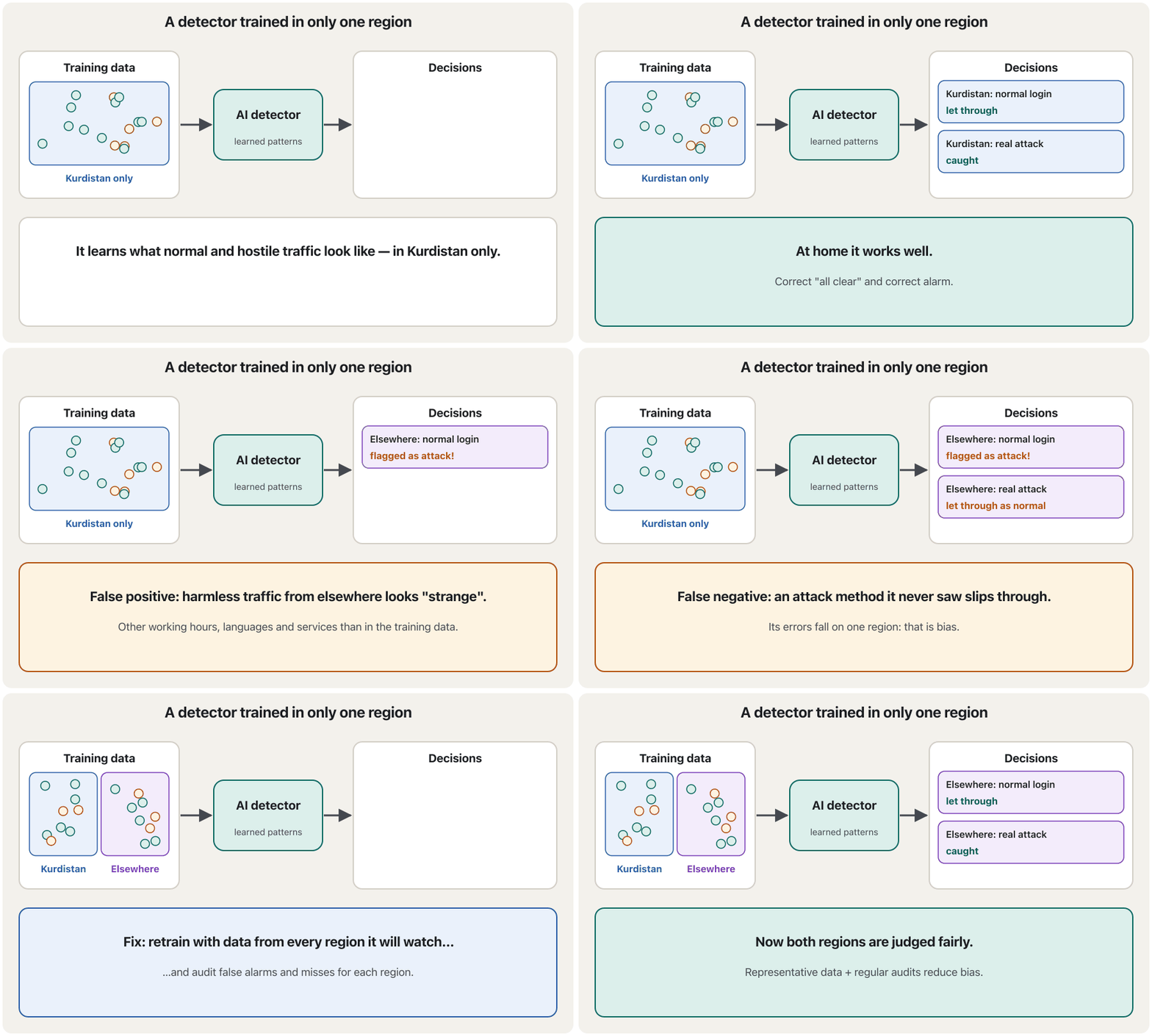
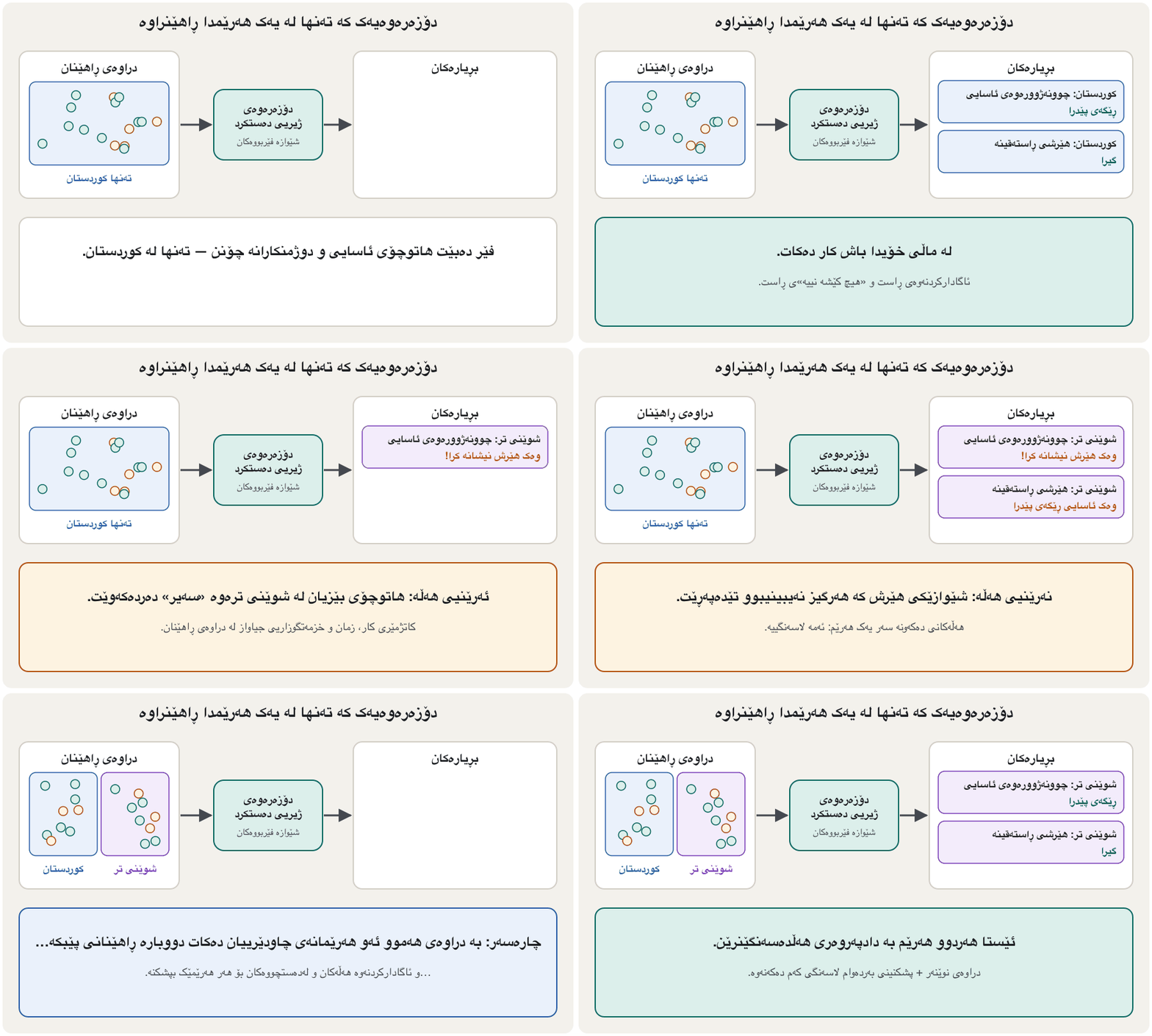
The course gives an example of its own. Suppose an AI intrusion detection system is trained only on network data collected in the Kurdistan Region. It learns what normal and hostile traffic look like there. Now it is used to watch traffic coming from other places. People elsewhere work at other hours, use other languages and other services, so harmless activity may look strange to the model and be flagged (false positives). And attacks that use methods common elsewhere but never seen in its training data may slip through (false negatives).
کۆرسەکە نموونەیەکی خۆی دەدات. وا دابنێ بە تەنها لەسەر ڕاهێنراوە کە لە هەرێمی کوردستان کۆکراوەتەوە. فێر دەبێت هاتوچۆی ئاسایی و دوژمنکارانە لەوێ چۆنن. ئێستا بۆ چاودێریکردنی ئەو هاتوچۆیە بەکار دەهێنرێت کە لە شوێنەکانی ترەوە دێت. خەڵکی شوێنەکانی تر لە کاتژمێری تردا کار دەکەن، زمان و خزمەتگوزاریی تر بەکار دەهێنن، بۆیە ڕەنگە چالاکیی بێزیان بۆ سەیر دەربکەوێت و نیشانە بکرێت (). هەروەها ئەو شێوازێک بەکار دەهێنن کە لە شوێنەکانی تر باوە بەڵام هەرگیز لە ئەودا نەبووە، ڕەنگە تێبپەڕن ().
Bias in algorithmsلاسەنگی لە ئەلگۆریزمەکاندا
Discrimination: when AI targets the wrong peopleجیاکاری: کاتێک ژیریی دەستکرد خەڵکی هەڵە دەکاتە ئامانج
AI used for surveillance or risk assessment (estimating the likely risks and harms) can hit some groups or places much more often than others. The model may point at a neighbourhood, a group of people or a place that is not the real target. The course gives predictive policing as an example: a tool trained on old arrest records sends more police to the areas where people were arrested before. More police there means more arrests there, which 'confirms' the tool — a closed loop that keeps pointing at the same people.
ئەو بۆ یان (خەمڵاندنی و زیانە ئەگەرییەکان) بەکار دەهێنرێت دەتوانێت هەندێک گرووپ یان شوێن زۆر زیاتر لە ئەوانی تر بپێکێت. ڕەنگە ئاماژە بە گەڕەکێک، گرووپێک لە خەڵک یان شوێنێک بکات کە ئامانجە ڕاستەقینەکە نییە. کۆرسەکە پۆلیسیی پێشبینیکەر وەک نموونە دەهێنێتەوە: ئامرازێک کە لەسەر تۆماری کۆنی دەستگیرکردن ڕاهێنراوە پۆلیسی زیاتر دەنێرێت بۆ ئەو ناوچانەی پێشتر خەڵکی لێ دەستگیر کراوە. پۆلیسی زیاتر لەوێ واتە دەستگیرکردنی زیاتر لەوێ، کە ئامرازەکە «پشتڕاست دەکاتەوە» — ئەڵقەیەکی داخراو کە بەردەوام ئاماژە بە هەمان خەڵک دەکات.
Bias in algorithmsلاسەنگی لە ئەلگۆریزمەکاندا
A real case: face recognitionدۆسیەیەکی ڕاستەقینە: ناسینەوەی ڕووخسار
A real-world case: face recognition. In December 2019 NIST tested 189 face-recognition algorithms from 99 developers on about 18 million photos. Most algorithms showed differences between groups. In one-to-one matching, false positives were often 10 to 100 times higher for Asian and African American faces than for white faces, depending on the algorithm; in one-to-many searches of a police photo database, African American women had higher false-positive rates — the kind of error that can lead to a false accusation. Some algorithms showed much smaller differences, and the fairest ones were also among the most accurate. In 2020 there were reports from the United States of people wrongly arrested after a face-recognition match.
نموونەیەکی ڕاستەقینە: . لە کانوونی یەکەمی ٢٠١٩دا NIST ١٨٩ لە ٩٩ پەرەپێدەرەوە لەسەر نزیکەی ١٨ ملیۆن وێنە تاقی کردەوە. زۆربەی جیاوازییان لە نێوان گرووپەکاندا پیشان دا. لە بەراوردکردنی یەک بە یەکدا، زۆرجار بۆ ڕووخساری ئاسیایی و ئەمریکیی ئەفریقی ١٠ بۆ ١٠٠ جار زیاتر بوو لە ڕووخساری سپی، بەپێی ئەلگۆریزمەکە؛ لە گەڕانی یەک بە زۆردا لە وێنەی پۆلیسدا، بۆ ژنانی ئەمریکیی ئەفریقی زیاتر بوون — ئەو جۆرە هەڵەیەی دەتوانێت ببێتە هۆی تۆمەتی ناڕاست. هەندێک جیاوازیی زۆر کەمتریان پیشان دا و دادپەروەرترینەکانیان لە نێو وردترینەکاندا بوون. لە ٢٠٢٠دا لە ئەمریکا ڕاپۆرت هەبوو دەربارەی کەسانێک کە دوای هاوتابوونێکی بە هەڵە دەستگیر کران.
Bias in algorithmsلاسەنگی لە ئەلگۆریزمەکاندا
How to reduce biasچۆن لاسەنگی کەم بکەینەوە
The course lists three ways to reduce bias. Each one is a habit, not a one-time fix:
کۆرسەکە سێ ڕێگا بۆ کەمکردنەوەی دەژمێرێت. هەریەکەیان خوویەکە، نەک چارەسەرێکی یەک جاری:
- Use diverse, representative training data — collected from every place and group the system will judge, not only the easy ones.
- Audit the model regularly — test it again and again, and compare its false-positive and false-negative rates for each group, so errors are caught and fixed.
- Use fairness-aware machine-learning techniques — methods that measure fairness while the model is built, for example by re-weighting rare groups in the data or checking that error rates stay close between groups.
- جۆراوجۆر و نوێنەر بەکار بهێنە — کە لە هەموو ئەو شوێن و گرووپانەوە کۆکرابێتەوە کە سیستەمەکە بڕیاریان لەسەر دەدات، نەک تەنها ئاسانەکان.
- بە بەردەوامی بپشکنە — دووبارە و دووبارە تاقی بکەرەوە و ڕێژەی و بۆ هەر گرووپێک بەراورد بکە، بۆ ئەوەی هەڵەکان بگیرێن و چاک بکرێنەوە.
- تەکنیکەکانی ئاگادار لە دادپەروەری بەکار بهێنە — ئەو ڕێگایانەی لە کاتی دروستکردنی دادپەروەری دەپێون، بۆ نموونە بە زیادکردنی کێشی گرووپە دەگمەنەکان لە یان پشکنینی ئەوەی ڕێژەی هەڵەکان لە نێوان گرووپەکاندا نزیک بمێننەوە.
Privacy violations through predictive analyticsپێشێلکردنی تایبەتێتی لە ڕێگەی شیکاریی پێشبینیکەرەوە
Predictive analytics uses AI to forecast future events or behaviour from past data — who is likely to click a phishing link, which account is likely to be stolen, which customer is about to leave. It is powerful. But if it is misused, it can intrude on people's private lives: a prediction can reveal something a person never told anyone.
بەکار دەهێنێت بۆ پێشبینیکردنی ڕووداو یان ڕەفتاری داهاتوو لە ڕابردووەوە — کێ ئەگەری هەیە کلیک لە بکات، کام هەژمار ئەگەری دزرانی هەیە، کام کڕیار خەریکە بڕوات. بەهێزە. بەڵام ئەگەر خراپ بەکار بهێنرێت، دەتوانێت دەستدرێژی بکاتە سەر ژیانی تایبەتیی خەڵک: پێشبینییەک دەتوانێت شتێک ئاشکرا بکات کە کەسەکە هەرگیز بە کەسی نەگوتووە.
Using past and to forecast future events or behaviour, for example which accounts are most likely to be attacked. It can invade if it uses more personal data than needed.
بەکارهێنانی ڕابردوو و بۆ پێشبینیکردنی ڕووداو یان ڕەفتاری داهاتوو، بۆ نموونە کام هەژمار ئەگەری زیاتری هەیە هێرشی بکرێتە سەر. ئەگەر زیاتر لە پێویست بەکار بهێنێت دەتوانێت دەستدرێژی بکاتە سەر .
Security systems analyse huge amounts of user data to predict threats or behaviour. Along the way they may, without meaning to, reveal or misuse sensitive personal information. The course notes add the reason: AI can predict things about people from their private information without their consent.
سیستەمەکانی بڕێکی زۆر لە بەکارهێنەران شی دەکەنەوە بۆ پێشبینیکردنی یان ڕەفتار. لەم ڕێگایەدا ڕەنگە بێ مەبەست زانیاریی کەسیی هەستیار ئاشکرا بکەن یان خراپ بەکاری بهێنن. تێبینییەکانی کۆرسەکە هۆکارەکە زیاد دەکەن: دەتوانێت لە زانیارییە تایبەتییەکانی خەڵکەوە شتیان دەربارە پێشبینی بکات بێ خۆیان.
Privacy violations through predictive analyticsپێشێلکردنی تایبەتێتی لە ڕێگەی شیکاریی پێشبینیکەرەوە
Data overreach and data minimisationزیادەڕۆیی لە دراوەدا و کۆکردنەوەی کەمترین دراوە
Data overreach means collecting more data than the job needs, simply because more data might improve the predictions. It breaks the principle of data minimisation: collect only the data you really need for a clear purpose, and keep it only as long as you need it. Data-protection laws such as the GDPR make this a legal duty.
زیادەڕۆیی لە واتە کۆکردنەوەی زیاتر لەوەی کارەکە پێویستی پێیەتی، تەنها لەبەر ئەوەی ڕەنگە زیاتر پێشبینییەکان باشتر بکات. ئەمە بنەمای دەشکێنێت: تەنها ئەو کۆبکەرەوە کە بە ڕاستی بۆ مەبەستێکی ڕوون پێویستتە و تەنها ئەوەندە ماوە هەڵیبگرە کە پێویستتە. یاساکانی وەک GDPR ئەمە دەکەن بە ئەرکێکی یاسایی.
The rule that an organisation should collect and keep only the it really needs for a clear purpose, and no more. It is one of the GDPR principles.
ئەو ڕێسایەیە کە دامەزراوەیەک دەبێت تەنیا ئەو کۆ بکاتەوە و هەڵبگرێت کە بە ڕاستی بۆ مەبەستێکی ڕوون پێویستیەتی، نەک زیاتر. یەکێکە لە بنەماکانی .
Example: an AI that reads your e-mailنموونە: ژیریی دەستکرد کە ئیمەیڵەکانت دەخوێنێتەوە
The course's example: an AI that scans your e-mail for phishing must look at messages to do its job. But it may also read — and learn from — your private conversations: who you write to, when, about what. That is not its job. A privacy-friendly design looks only at what phishing detection needs (sender, links, attachments, known tricks), keeps no copies longer than necessary and does not use your mail to build a profile of you.
نموونەی کۆرسەکە: کە بۆ دەپشکنێت دەبێت سەیری نامەکان بکات بۆ ئەنجامدانی کارەکەی. بەڵام ڕەنگە گفتوگۆ تایبەتییەکانیشت بخوێنێتەوە — و لێیان فێر ببێت: بۆ کێ دەنووسیت، کەی، دەربارەی چی. ئەمە ئەرکی ئەو نییە. دیزاینێکی دۆستی تەنها سەیری ئەو شتانە دەکات کە دۆزینەوەی پێویستی پێیانە (نێرەر، بەستەرەکان، ، فێڵە ناسراوەکان)، هیچ کۆپییەک زیاتر لە پێویست هەڵناگرێت و بەکار ناهێنێت بۆ دروستکردنی پرۆفایلێک دەربارەی تۆ.
Privacy violations through predictive analyticsپێشێلکردنی تایبەتێتی لە ڕێگەی شیکاریی پێشبینیکەرەوە
Behaviour profilingپرۆفایلسازیی ڕەفتار
Behaviour profiling means using data about how people act — the websites they visit, the e-mails they send, when they log in — to build a profile and predict what they might do next. Such profiles can help security, for example to spot an insider threat. But detailed profiles are dangerous too: criminals who steal them can misuse them, and organisations can use them for invasive purposes — intruding into people's private lives.
واتە بەکارهێنانی دەربارەی ئەوەی خەڵک چۆن ڕەفتار دەکەن — سەردانی کام دەکەن، چ دەنێرن، کەی دەچنە ژوورەوە — بۆ دروستکردنی پرۆفایلێک و پێشبینیکردنی ئەوەی دواتر ڕەنگە بیکەن. ئەم پرۆفایلانە دەتوانن یارمەتیی بدەن، بۆ نموونە بۆ دۆزینەوەی . بەڵام پرۆفایلی ورد مەترسیداریشن: ئەو تاوانبارانەی دەیاندزن دەتوانن خراپ بەکاریان بهێنن و ڕێکخراوەکان دەتوانن بۆ مەبەستی دەستدرێژیکار بەکاریان بهێنن — واتە چوونە ناو ژیانی تایبەتیی خەڵکەوە.
Privacy violations through predictive analyticsپێشێلکردنی تایبەتێتی لە ڕێگەی شیکاریی پێشبینیکەرەوە
Watching employees for insider threatsچاودێریکردنی کارمەندان بۆ هەڕەشە ناوخۆییەکان
Example from the course: to find possible insider threats, a company tracks its employees' e-mails and actions. That may catch a real problem, but it can also violate the privacy rights of every honest employee. An insider threat is broader than 'someone stealing company information': CISA, the US cybersecurity agency, defines it as the potential for anyone with authorised access — staff, contractors, partners — to harm the organisation, whether on purpose, by carelessness or by accident.
نموونەی کۆرسەکە: بۆ دۆزینەوەی ئەگەری، کۆمپانیایەک بەدواداچوون بۆ و کارەکانی کارمەندەکانی دەکات. ڕەنگە کێشەیەکی ڕاستەقینە بگرێت، بەڵام هەروەها دەتوانێت مافەکانی هەموو کارمەندێکی دڵسۆز پێشێل بکات. لە «کەسێک کە زانیاریی کۆمپانیا دەدزێت» فراوانترە: CISA، دەزگای ئەمریکا، وا پێناسەی دەکات: ئەگەری ئەوەی هەر کەسێک کە دەستڕاگەیشتنی ڕێگەپێدراوی هەیە — کارمەند، بەڵێندەر، هاوبەش — زیان بە ڕێکخراوەکە بگەیەنێت، جا بە ئەنقەست بێت، بە کەمتەرخەمی یان بە هەڵە.
Privacy violations through predictive analyticsپێشێلکردنی تایبەتێتی لە ڕێگەی شیکاریی پێشبینیکەرەوە
A shopping story: predictions that reveal too muchچیرۆکێکی کڕین: پێشبینییەک کە زۆر ئاشکرا دەکات
A widely reported story. In 2012 newspapers reported that the US retailer Target had built a model that gave shoppers a 'pregnancy prediction' score from what they bought, and that coupons for baby products revealed a teenager's pregnancy to her family. The model itself was real — a Target statistician had described it at a conference in 2010 — but the story about the family has never been confirmed, and analysts point out that Target mixed baby offers with unrelated ones. The lesson stands either way: predictions from ordinary shopping data can reveal very private facts.
چیرۆکێکی زۆر بڵاوکراوە. لە ٢٠١٢دا ڕۆژنامەکان ڕاپۆرتیان دا کە کۆمپانیای فرۆشتنی ئەمریکیی Target دروست کردبوو کە لە ڕێگەی ئەو شتانەی کڕیاران دەیانکڕی نمرەیەکی «پێشبینیی دووگیانی» پێدەدان. هەروەها گوتیان کوپۆنی کاڵای منداڵ دووگیانیی کچێکی هەرزەکاری بۆ خێزانەکەی ئاشکرا کردووە. خودی ڕاستەقینە بوو — ئامارناسێکی Target لە ٢٠١٠دا لە کۆنفرانسێکدا وەسفی کردبوو — بەڵام چیرۆکەکەی خێزانەکە هەرگیز پشتڕاست نەکراوەتەوە و شیکەرەوەکان ئاماژە بەوە دەکەن کە Target پێشنیارەکانی منداڵی لەگەڵ پێشنیاری بێپەیوەندیدا تێکەڵ دەکرد. وانەکە لە هەردوو حاڵەتدا دەمێنێتەوە: پێشبینی لە ئاسایی کڕینەوە دەتوانێت ڕاستیی زۆر تایبەتی ئاشکرا بکات.
Privacy violations through predictive analyticsپێشێلکردنی تایبەتێتی لە ڕێگەی شیکاریی پێشبینیکەرەوە
Protecting privacyپاراستنی تایبەتێتی
The course lists three ways to limit privacy harm. Each answers a different question:
کۆرسەکە سێ ڕێگا بۆ سنووردارکردنی زیانی دەژمێرێت. هەریەکەیان وەڵامی پرسیارێکی جیاواز دەداتەوە:
| Measureڕێوشوێن | Question it answersوەڵامی کام پرسیار دەداتەوە | Exampleنموونە |
|---|---|---|
| Enforce strict privacy laws (GDPR in the EU, CCPA in California)جێبەجێکردنی یاسای توندی ( لە یەکێتیی ئەوروپا، لە کالیفۆرنیا) | Who may use the data, and with what rights for people?کێ دەتوانێت بەکار بهێنێت و خەڵک چ مافێکیان هەیە؟ | Users can ask what data is held about them and have it deletedبەکارهێنەران دەتوانن بپرسن چ دەربارەیان هەڵگیراوە و داوای سڕینەوەی بکەن |
| Limit collection to what is strictly necessaryسنووردارکردنی کۆکردنەوە بۆ ئەوەی بە تەواوی پێویستە | How much data do we take?چەند وەردەگرین؟ | A login-risk model uses time and device, not the content of messages کات و ئامێر بەکار دەهێنێت، نەک ناوەڕۆکی نامەکان |
| Anonymise and encrypt sensitive data و هەستیار | If the data leaks, how much harm is done?ئەگەر دزە بکات، چەند زیان دەگات؟ | Names replaced by random codes; the database encrypted at restناوەکان بە کۆدی هەڕەمەکی گۆڕدراون؛ لە کاتی هەڵگرتندا شفرە کراوە |
Misuse for surveillanceخراپ بەکارهێنان بۆ چاودێری
AI makes surveillance — watching people, their movements or their communication — much more powerful. Security tools use face recognition, behaviour analysis and location tracking to find threats. The same tools can be repurposed: given a new use that nobody agreed to. Used without limits, they can lead to unethical monitoring or to control by those in power.
— چاودێریکردنی خەڵک، جووڵەکانیان یان پەیوەندییەکانیان — زۆر بەهێزتر دەکات. ئامرازەکانی ، شیکردنەوەی ڕەفتار و بەدواداچوونی شوێن بەکار دەهێنن بۆ دۆزینەوەی . هەمان ئامراز دەتوانێت بۆ مەبەستێکی تر بەکار بهێنرێتەوە: بەکارهێنانێکی نوێی پێبدرێت کە کەس ڕازی نەبووە. ئەگەر بێ سنوور بەکار بهێنرێن، دەتوانن ببنە هۆی چاودێریی نائەخلاقی یان کۆنترۆڵکردنی خەڵک لە لایەن دەسەڵاتدارانەوە.
Closely watching people, their movements or their communication, for example with cameras, or by tracking online activity. Used without limits, it threatens and freedom.
چاودێریکردنی ورد و نزیکی خەڵک، جووڵەکانیان یان پەیوەندییەکانیانە، بۆ نموونە بە کامێرا، یان بەدواداچوونی چالاکیی ئۆنلاینیان. ئەگەر بێ سنوور بەکار بهێنرێت، هەڕەشە لە و ئازادی دەکات.
| Challengeئاستەنگ | What it looks likeچۆن دەردەکەوێت | Example from the courseنموونەی کۆرسەکە |
|---|---|---|
| Mass surveillance گشتی | Governments or organisations watch whole populations, which weakens civil libertiesحکوومەت یان ڕێکخراوەکان چاودێریی هەموو دانیشتووان دەکەن، کە ئازادییە مەدەنییەکان لاواز دەکات | AI cameras in public places follow people's movements without their knowledgeکامێرای لە شوێنە گشتییەکاندا بێ ئاگاداریی خەڵک بەدوای جووڵەکانیاندا دەچن |
| Unethical trackingبەدواداچوونی نائەخلاقی | Employers monitor staff far beyond what security needs, which builds distrustخاوەنکاران زۆر زیاتر لەوەی پێویستی پێیەتی چاودێریی کارمەندان دەکەن، کە بێمتمانەیی دروست دەکات | A tool bought to find insider threats is used to count how many minutes each employee worksئامرازێک کە بۆ دۆزینەوەی کڕدراوە بۆ ژماردنی ئەوەی هەر کارمەندێک چەند خولەک کار دەکات بەکار دەهێنرێت |
Misuse for surveillanceخراپ بەکارهێنان بۆ چاودێری
Keeping AI surveillance in checkسنووردارکردنی چاودێریی ژیریی دەستکرد
The course gives three safeguards. Together they answer: who decides, who knows, and who answers?
کۆرسەکە سێ پاراستن دەدات. پێکەوە وەڵامی ئەم پرسیارانە دەدەنەوە: کێ بڕیار دەدات، کێ دەزانێت و کێ وەڵام دەداتەوە؟
- Ethical AI policies and standards — fair and safe written rules for how AI may be used, decided before the system is switched on.
- Transparency and accountability — people know that monitoring happens and how it works, and a named person or body can be held responsible if it goes wrong.
- Involve stakeholders — citizens, experts and lawmakers discuss privacy and ethics before AI monitoring is introduced, not after.
- سیاسەت و ستانداردی ئەخلاقیی — ڕێسای نووسراوی دادپەروەرانە و سەلامەت بۆ ئەوەی چۆن بەکار بهێنرێت، کە پێش هەڵکردنی سیستەمەکە بڕیاریان لەسەر دراوە.
- ڕوونی و — خەڵک دەزانن چاودێری دەکرێت و چۆن کار دەکات، هەروەها کەسێک یان دەزگایەکی دیاریکراو دەتوانرێت بەرپرسیار بکرێت ئەگەر هەڵە بڕوات.
- بەشدارکردنی لایەنە پەیوەندیدارەکان — هاووڵاتیان، پسپۆڕان و یاسادانەران پێش هێنانی چاودێریی ، نەک دوای، گفتوگۆ دەربارەی و ئەخلاق دەکەن.
Deepfakes: when seeing is no longer believingدیپفەیکەکان: کاتێک بینین ئیتر باوەڕپێکردن نییە
A deepfake is a fake video, picture or voice made with AI so that a real person seems to say or do something they never did. Deepfakes turn social engineering into something much more convincing: the 'manager' on a video call may look and sound exactly right.
ڤیدیۆ، وێنە یان دەنگێکی ساختەیە کە بە دروست کراوە بۆ ئەوەی وا دەربکەوێت کەسێکی ڕاستەقینە شتێک دەڵێت یان دەکات کە هەرگیز نەیکردووە. ئەندازیاریی کۆمەڵایەتی دەکەن بە شتێکی زۆر باوەڕپێکراوتر: «بەڕێوەبەرەکە» لە پەیوەندییەکی ڤیدیۆییدا ڕەنگە ڕێک وەک خۆی دەربکەوێت و دەنگی بێت.
A fake video, picture or voice recording made with so that a real person seems to say or do something they never did. Criminals use deepfake calls to trick staff into paying.
ڤیدیۆ، وێنە یان دەنگێکی ساختەیە کە بە دروست کراوە بۆ ئەوەی وا دەربکەوێت کەسێکی ڕاستەقینە شتێک دەڵێت یان دەکات کە هەرگیز نەیکردووە. تاوانباران پەیوەندیی بەکار دەهێنن بۆ فریودانی کارمەندان تاکو پارە بدەن.
A documented case. In early 2024 an employee of the engineering firm Arup in Hong Kong joined a video call with people who looked and sounded like the company's chief financial officer and other colleagues. All of them were deepfakes. Convinced, the employee made 15 transfers totalling about HK$200 million (about US$25.6 million). Arup said none of its computer systems had been broken into — the attack worked entirely on human trust.
دۆسیەیەکی بەڵگەدار. لە سەرەتای ٢٠٢٤دا کارمەندێکی کۆمپانیای ئەندازیاریی Arup لە هۆنگ کۆنگ بەشداریی پەیوەندییەکی ڤیدیۆیی کرد لەگەڵ کەسانێک کە وەک بەرپرسی دارایی کۆمپانیاکە و هاوکارانی تر دەردەکەوتن و دەنگیان دەهات. هەموویان بوون. کارمەندەکە قایل بوو و ١٥ گواستنەوەی کرد کە کۆیان نزیکەی ٢٠٠ ملیۆن دۆلاری هۆنگ کۆنگ بوو (نزیکەی ٢٥٫٦ ملیۆن دۆلاری ئەمریکی). Arup گوتی هیچ کام لە سیستەمەکانی دزەیان پێنەکراوە — بە تەواوی لەسەر متمانەی مرۆیی کاری کرد.
- Verify through a second channel. If a call or message asks for money or passwords, hang up and call the person back on a number you already know.
- Two people approve large payments, so one deceived person cannot send money alone.
- Agree on a family or team code word for emergencies.
- Slow down when there is urgency and secrecy — the two favourite tools of every scammer.
- لە ڕێگەی کەناڵێکی دووەمەوە پشتڕاستی بکەرەوە. ئەگەر پەیوەندییەک یان نامەیەک داوای پارە یان دەکات، دایبخە و بە ژمارەیەک کە پێشتر دەیزانیت پەیوەندی بە کەسەکەوە بکەرەوە.
- دوو کەس گواستنەوە گەورەکان پەسەند دەکەن، بۆ ئەوەی یەک کەسی فریودراو نەتوانێت بە تەنها پارە بنێرێت.
- لەسەر وشەیەکی نهێنیی خێزان یان تیم بۆ کاتی پەلە ڕێک بکەون.
- کاتێک پەلە و نهێنی هەیە خاو ببەوە — دوو ئامرازە دڵخوازەکەی هەموو فێڵبازێک.
What a deepfake is and how two AIs (a GAN) train each other until fake faces look real, plus some good uses of the technology.
چییە و چۆن دوو سیستەمی (GAN) یەکتر ڕادەهێنن تا ڕووخساری ساختە ڕاستەقینە دەردەکەوێت، لەگەڵ هەندێک بەکارهێنانی باشی ئەم تەکنەلۆژیایە.
Plays 0:00-2:12: what deepfakes are and how AI makes them, ending with 'there is a much darker side'. The lesson then explains the dangers.
لە 0:00 تا 2:12 پەخش دەبێت: چین و چۆن دروستیان دەکات، بەم ڕستەیە کۆتایی دێت: «لایەنێکی زۆر تاریکتریش هەیە». پاشان وانەکە ڕوون دەکاتەوە.
Accountability: who answers when AI is wrong?لێپرسینەوە: کێ وەڵام دەداتەوە کاتێک ژیریی دەستکرد هەڵە دەکات؟
When an AI system blocks an innocent person's account, or misses an attack that costs millions, someone must be answerable. An algorithm cannot be taken to court; the organisation that chose it, trained it and used it can. Accountability depends on transparency: people affected must be able to learn what the system does, with what data, and why it decided as it did, so that mistakes can be found and put right.
کاتێک سیستەمێکی هەژماری کەسێکی بێتاوان دادەخات، یان لەدەست دەدات کە ملیۆنان تێدەچێت، دەبێت کەسێک وەڵامدەر بێت. ناتوانرێت ببرێتە دادگا؛ ئەو ڕێکخراوەی هەڵیبژاردووە، ڕاهێنانی پێکردووە و بەکاری هێناوە دەتوانرێت. پشت بە ڕوونی دەبەستێت: ئەو کەسانەی کاریگەرییان لەسەر دەبێت دەبێت بتوانن بزانن سیستەمەکە چی دەکات، بە چ و بۆچی بەو شێوەیە بڕیاری دا، بۆ ئەوەی هەڵەکان بدۆزرێنەوە و چاک بکرێنەوە.
The US standards body NIST describes trustworthy AI with seven characteristics in its AI Risk Management Framework (2023): valid and reliable; safe; secure and resilient; accountable and transparent; explainable and interpretable; privacy-enhanced; and fair, with harmful bias managed. Notice how each challenge in this lesson matches one of them.
دەزگای ستانداردی ئەمریکا NIST لە چوارچێوەی بەڕێوەبردنی (٢٠٢٣)دا متمانەپێکراو بە حەوت تایبەتمەندی وەسف دەکات: دروست و پشتپێبەستراو؛ سەلامەت؛ پارێزراو و خۆڕاگر؛ و ڕوون؛ شیاوی ڕوونکردنەوە و لێکدانەوە؛ پارێزەری ؛ هەروەها دادپەروەر، لەگەڵ کۆنترۆڵکردنی زیانبەخش. سەرنج بدە چۆن هەر ئاستەنگێکی ئەم وانەیە لەگەڵ یەکێک لەوانە دەگونجێت.
Accountability: who answers when AI is wrong?لێپرسینەوە: کێ وەڵام دەداتەوە کاتێک ژیریی دەستکرد هەڵە دەکات؟
The EU AI Act in briefیاسای ژیریی دەستکردی یەکێتیی ئەوروپا بە کورتی
The European Union's AI Act (Regulation 2024/1689) is the first large law made only for AI. It came into force on 1 August 2024 and sorts AI systems by risk. Like the GDPR, it applies to anyone who offers AI systems in the EU, wherever they are based.
(ڕێسای 2024/1689) یەکەم یاسای گەورەیە کە تەنها بۆ دانرابێت. لە ١ی ئابی ٢٠٢٤ـەوە کاری پێکرا و سیستەمەکانی بەپێی پۆلێن دەکات. وەک ، هەر کەسێک دەگرێتەوە کە سیستەمی لە یەکێتیی ئەوروپا پێشکەش دەکات، لە هەر کوێیەک بێت.
The European Union's law on artificial intelligence (in force since August 2024). It sorts AI systems by risk: it bans a few uses such as social scoring, sets strict duties for high-risk systems and requires transparency, for example labelling deepfakes.
یاسای یەکێتیی ئەوروپایە بۆ (لە ئابی ٢٠٢٤ـەوە کاری پێدەکرێت). سیستەمەکانی بەپێی پۆلێن دەکات: هەندێک بەکارهێنان قەدەغە دەکات وەک نمرەدانی کۆمەڵایەتی، ئەرکی توند بۆ سیستەمە پڕمەترسییەکان دادەنێت و داوای ڕوونی دەکات، بۆ نموونە نیشانەکردنی .
| Risk levelئاستی | Ruleڕێسا | Examplesنموونەکان |
|---|---|---|
| Unacceptableقبووڵنەکراو | Banned (since 2 February 2025)قەدەغەیە (لە ٢ی شوباتی ٢٠٢٥ـەوە) | Social scoring; manipulative AI; scraping faces from the Internet or CCTV to build databases; emotion recognition at work or school; real-time face identification in public by police, except in narrow casesنمرەدانی کۆمەڵایەتی؛ فریودەر؛ کۆکردنەوەی ڕووخسار لە یان کامێراکانی چاودێری بۆ دروستکردنی ؛ ناسینەوەی هەست لە شوێنی کار یان قوتابخانە؛ لە کاتی ڕاستەقینەدا لە شوێنی گشتی لە لایەن پۆلیسەوە، جگە لە حاڵەتی تەسک |
| Highبەرز | Strict duties: risk management, representative data, logging, human oversight, accuracy and cybersecurityئەرکی توند: بەڕێوەبردنی ، نوێنەر، تۆمارکردنی ڕووداوەکان، چاودێریی مرۆیی، وردی و | AI that screens job applicants, scores students or decides on credit کە داواکارانی کار دەپاڵێوێت، نمرە بە خوێندکاران دەدات یان بڕیار لەسەر قەرز دەدات |
| Limitedسنووردار | Transparency (from 2 August 2026; marking AI-generated content from 2 December 2026)ڕوونی (لە ٢ی ئابی ٢٠٢٦ـەوە؛ نیشانەکردنی ناوەڕۆکی دروستکراو بە لە ٢ی کانوونی یەکەمی ٢٠٢٦ـەوە) | Chatbots must say they are AI; AI-generated content must be marked; deepfakes must be disclosed دەبێت ئاشکرا بکەن کە مرۆڤ نین؛ ناوەڕۆکی دروستکراو بە دەبێت نیشانە بکرێت؛ دەبێت ئاشکرا بکرێن |
| Minimalکەم | No new rulesهیچ ڕێسایەکی نوێ نییە | Spam filters, AI in video gamesفلتەری ، لە یارییە ڤیدیۆییەکاندا |
The EU AI Act simply: AI sorted into four risk levels, with banned uses, strict rules for high-risk AI and transparency for chatbots.
بە سادەیی: لە چوار ئاستی پۆلێن دەکرێت؛ هەندێک بەکارهێنان قەدەغەیە، ڕێسای توند بۆ و شەفافیەت بۆ .
Plays 0:28-2:51: the four risk levels of the AI Act. Stops before the dates (changed in 2026) and the pros-and-cons opinions.
لە 0:28 تا 2:51 پەخش دەبێت: چوار ئاستەکەی . پێش بەروارەکانی جێبەجێکردن (کە لە ساڵی 2026 گۆڕدران) و ڕای لایەنگر و دژبەر ڕادەوەستێت.
Fines and the timelineغەرامەکان و خشتەی کات
Fines can reach €35 million or 7% of a company's worldwide yearly turnover, whichever is higher, for banned practices (smaller companies pay the lower of the two). The rules arrive step by step: bans in February 2025, rules for general-purpose AI models in August 2025 and most transparency duties in August 2026. An amendment, the 'Digital Omnibus' (Regulation (EU) 2026/1744, published in July 2026), moved most high-risk duties to 2 December 2027 (2 August 2028 for AI built into products), set 2 December 2026 for marking AI-generated content, and from that day bans AI systems that make sexual deepfakes of real people without consent or child sexual abuse material.
غەرامەکان دەگەنە ٣٥ ملیۆن یۆرۆ یان ٧٪ی داهاتی ساڵانەی جیهانیی کۆمپانیاکە، کامیان زیاتر بێت، بۆ کارە قەدەغەکراوەکان (کۆمپانیا بچووکەکان کەمترەکەیان دەدەن). ڕێساکان هەنگاو بە هەنگاو دێن: قەدەغەکان لە شوباتی ٢٠٢٥، ڕێساکانی لە ئابی ٢٠٢٥ و زۆربەی ئەرکەکانی ڕوونی لە ئابی ٢٠٢٦. هەموارێک بە ناوی «Digital Omnibus» (ڕێسای 2026/1744، لە تەممووزی ٢٠٢٦دا بڵاو کرایەوە) زۆربەی ئەرکەکانی سیستەمە پڕمەترسییەکانی گواستەوە بۆ ٢ی کانوونی یەکەمی ٢٠٢٧ (٢ی ئابی ٢٠٢٨ بۆ ئەو لەناو بەرهەمەکاندا دانراوە)، ٢ی کانوونی یەکەمی ٢٠٢٦ی بۆ نیشانەکردنی ناوەڕۆکی دروستکراو بە دانا و لەو ڕۆژەوە ئەو سیستەمانەی قەدەغە دەکات کە سێکسیی کەسانی ڕاستەقینە بێ ڕەزامەندییان، یان ناوەڕۆکی دەستدرێژیی سێکسی بۆ سەر منداڵان دروست دەکەن.
Impacts and solutions at a glanceکاریگەری و چارەسەرەکان بە کورتی
The course ends this topic with one goal: if we deal with these challenges, AI's role in cybersecurity can stay ethical, fair and in line with the values of society. The table brings the whole lesson together; the last two rows are this lesson's additions.
کۆرسەکە ئەم بابەتە بە یەک ئامانج کۆتایی پێدەهێنێت: ئەگەر مامەڵە لەگەڵ ئەم ئاستەنگانەدا بکەین، ڕۆڵی لە دەتوانێت ئەخلاقی، دادپەروەر و گونجاو لەگەڵ بەهاکانی کۆمەڵگا بمێنێتەوە. خشتەکە هەموو وانەکە کۆ دەکاتەوە؛ دوو ڕیزی کۆتایی زیادکراوی ئەم وانەیەن.
| Challengeئاستەنگ | Impactکاریگەری | Solutionچارەسەر |
|---|---|---|
| Bias in algorithms لە | Discriminatory outcomes; less trust in AI systemsئەنجامی جیاکارانە؛ متمانەی کەمتر بە سیستەمەکانی | Audit data and models; use diverse datasets; apply fairness-aware techniquesپشکنینی و ؛ بەکارهێنانی جۆراوجۆر؛ جێبەجێکردنی تەکنیکی ئاگادار لە دادپەروەری |
| Privacy violationsپێشێلکردنی | Loss of personal privacy; possible misuse of dataلەدەستدانی کەسی؛ ئەگەری خراپ بەکارهێنانی | Enforce data regulations; anonymise sensitive data; limit unnecessary collectionجێبەجێکردنی ڕێساکانی ؛ هەستیار؛ سنووردارکردنی کۆکردنەوەی ناپێویست |
| Misuse for surveillanceخراپ بەکارهێنان بۆ | Erosion of civil liberties; distrust in organisations or governmentsلاوازبوونی ئازادییە مەدەنییەکان؛ بێمتمانەیی بە ڕێکخراو یان حکوومەتەکان | Transparent policies; involve stakeholders; accountability measuresسیاسەتی ڕوون؛ بەشدارکردنی لایەنە پەیوەندیدارەکان؛ ڕێوشوێنی |
| Deepfakes (added) (زیادکراو) | Fraud; people stop trusting voices and videosفێڵ؛ خەڵک متمانە بە دەنگ و ڤیدیۆ نامێنێت | Verify by a second channel; two-person approval; label AI contentپشتڕاستکردنەوە بە کەناڵێکی دووەم؛ پەسەندکردنی دوو کەس؛ نیشانەکردنی ناوەڕۆکی |
| Unclear accountability (added) ناڕوون (زیادکراو) | Nobody fixes the errors; victims have no remedyکەس هەڵەکان چاک ناکاتەوە؛ قوربانییەکان هیچ چارەیەکیان نییە | Named owners, logs and appeals; follow NIST AI RMF and the EU AI Actخاوەنی ناودار، و تانەدان؛ پەیڕەوکردنی چوارچێوەی NIST و |
Common mistakesهەڵە باوەکان
| Mistakeهەڵە | Why it is wrongبۆچی هەڵەیە | Better ideaبیرۆکەی باشتر |
|---|---|---|
| 'Computers are neutral, so AI cannot be unfair.'« بێلایەنە، کەواتە ناتوانێت نادادپەروەر بێت.» | AI repeats the patterns, and the gaps, in its training data شێوازەکان و کەموکورتییەکانی ناو دووبارە دەکاتەوە | Measure errors for each group before trusting a modelپێش متمانەکردن بە هەڵەکان بۆ هەر گرووپێک بپێوە |
| 'Only the overall accuracy matters.'«تەنها وردیی گشتی گرنگە.» | A model can be 99% accurate overall and still fail one group badly دەتوانێت بە گشتی ٩٩٪ ورد بێت و هێشتا بۆ گرووپێک زۆر خراپ بێت | Compare false-positive and false-negative rates per groupڕێژەی و بۆ هەر گرووپێک بەراورد بکە |
| 'More data always means better security.'« زیاتر هەمیشە واتە باشتر.» | Extra data is extra risk if it leaks, and it breaks data minimisation زیادە زیادەیە ئەگەر دزە بکات و دەشکێنێت | Collect only what the purpose needsتەنها ئەوە کۆبکەرەوە کە مەبەستەکە پێویستی پێیەتی |
| 'Removing names makes data anonymous.'«لابردنی ناوەکان نەناسراو دەکات.» | People can often be re-identified from other detailsزۆرجار خەڵک لە وردەکاریی ترەوە دووبارە دەناسرێنەوە | Remove or blur identifying details too, and encryptوردەکارییە ناسێنەرەکانیش لابە یان ناڕوون بکە و شفرە بکە |
| 'If I can see his face on the call, it's really him.'«ئەگەر ڕووخساری لە پەیوەندییەکەدا ببینم، بە ڕاستی خۆیەتی.» | Deepfakes copy faces and voices in real time ڕووخسار و دەنگ لە کاتی ڕاستەقینەدا کۆپی دەکەن | Confirm money requests by a second, known channelداواکاریی پارە بە کەناڵێکی دووەمی ناسراو پشتڕاست بکەرەوە |
| 'The AI decided, so nobody is responsible.'« بڕیاری دا، کەواتە کەس بەرپرسیار نییە.» | The organisation that deploys AI answers for its decisionsئەو ڕێکخراوەی دادەمەزرێنێت وەڵامدەری بڕیارەکانییەتی | Give every AI tool a named owner, logs and an appeal routeخاوەنی ناودار، و ڕێگەی تانەدان بدە بە هەموو ئامرازێکی |
Exercisesڕاهێنانەکان
A university tests its AI login-alarm on two regions. Region A: of 1,000 normal logins it flags 10; of 50 real attacks it catches 48. Region B: of 1,000 normal logins it flags 80; of 50 real attacks it catches 35. Work out the false-positive rate and the false-negative rate for each region. Is the model biased?
زانکۆیەک ئاگادارکەرەوەی لەسەر دوو هەرێم تاقی دەکاتەوە. هەرێمی A: لە ١٬٠٠٠ ئاسایی ١٠ نیشانە دەکات؛ لە ٥٠ ڕاستەقینە ٤٨ دەگرێت. هەرێمی B: لە ١٬٠٠٠ ئاسایی ٨٠ نیشانە دەکات؛ لە ٥٠ ڕاستەقینە ٣٥ دەگرێت. ڕێژەی و ڕێژەی بۆ هەر هەرێمێک بدۆزەرەوە. ئایا لاسەنگە؟
Hintئاماژە
False-positive rate = false alarms ÷ all normal cases. False-negative rate = missed attacks ÷ all real attacks.
ڕێژەی = ئاگادارکردنەوە هەڵەکان ÷ هەموو حاڵەتە ئاساییەکان. ڕێژەی = لەدەستچووەکان ÷ هەموو ڕاستەقینەکان.
Show answerوەڵامەکە پیشان بدە
FP = false positives, TN = true negatives, FN = false negatives, TP = true positives.
FP = ، TN = ، FN = ، TP = .
Yes, it is biased. Normal users in Region B are flagged 8 times as often (8% against 1%), and real attacks from Region B are missed 7.5 times as often (30% against 4%). The overall numbers would hide this: only the per-region comparison shows it. The fix is more representative training data from Region B, then a new audit.
بەڵێ، لاسەنگە. بەکارهێنەرانی ئاسایی لە هەرێمی B ٨ جار زیاتر نیشانە دەکرێن (٨٪ بەرامبەر ١٪)، هەروەها ڕاستەقینەکان لە هەرێمی B ٧٫٥ جار زیاتر لەدەست دەچن (٣٠٪ بەرامبەر ٤٪). ژمارە گشتییەکان ئەمە دەشارنەوە: تەنها بەراوردی هەر هەرێمێک پیشانی دەدات. چارەسەرەکە نوێنەرترە لە هەرێمی B، پاشان پشکنینێکی نوێ.
Your college wants an AI filter that scans staff e-mail for phishing. List what the filter should look at, what it should not keep, and one rule that protects staff privacy.
کۆلێژەکەت فلتەرێکی دەوێت کە کارمەندان بۆ بپشکنێت. بیژمێرە فلتەرەکە دەبێت سەیری چی بکات، چی نەهێڵێتەوە و یەک ڕێسا کە کارمەندان دەپارێزێت.
Show answerوەڵامەکە پیشان بدە
- Look at: the sender's address and domain, links and where they really go, attachments and their type, known scam phrases and urgency tricks.
- Do not keep: full copies of messages after the check, or profiles of who writes to whom (data minimisation).
- Protect people: staff are told the filter exists and what it checks; only the security team sees flagged messages; flagged data is deleted after a fixed period; the filter is never used to rate staff.
- سەیر بکات: ناونیشان و دۆمەینی نێرەر، و ئەوەی بە ڕاستی بۆ کوێ دەچن، و جۆرەکانیان، دەستەواژە ناسراوەکانی فێڵ و فێڵەکانی پەلەپێکردن.
- نەیهێڵێتەوە: کۆپیی تەواوی نامەکان دوای پشکنین، یان پرۆفایلی ئەوەی کێ بۆ کێ دەنووسێت ().
- خەڵک بپارێزێت: کارمەندان ئاگادار دەکرێنەوە کە فلتەرەکە هەیە و چی دەپشکنێت؛ تەنها تیمی نامە نیشانەکراوەکان دەبینێت؛ نیشانەکراو دوای ماوەیەکی دیاریکراو دەسڕدرێتەوە؛ فلتەرەکە هەرگیز بۆ هەڵسەنگاندنی کارمەندان بەکار ناهێنرێت.
Choose an app or website you use every day, for example a weather app. Open its privacy settings, or the phone's permission settings for it, and list the data it collects about you (for example location, device details, IP address, contacts, cookies). For each item, say whether the service really needs it. Which items are data overreach, and what would data minimisation keep?
یان هەڵبژێرە کە هەموو ڕۆژێک بەکاری دەهێنیت، بۆ نموونە ئەپێکی کەشوهەوا. ڕێکخستنەکانی ئەپەکە، یان لە ڕێکخستنەکانی مۆبایلەکەدا بکەرەوە و ئەو کە دەربارەی تۆ کۆی دەکاتەوە بنووسە (بۆ نموونە شوێن، وردەکاریی ئامێر، ، ژمارە تەلەفۆنەکانی ناو مۆبایل، ). بۆ هەر یەکێک بڵێ ئایا خزمەتگوزارییەکە بە ڕاستی پێویستی پێیەتی. کامیان زیادەڕۆیین لە و چی دەهێڵێتەوە؟
Hintئاماژە
The kinds of data that websites and apps collect are listed in Active and passive footprints.
ئەو جۆرانەی کە و کۆیان دەکەنەوە لە شوێنپێی چالاک و ناچالاکدا ڕیز کراون.
Show answerوەڵامەکە پیشان بدە
A typical answer for a weather app:
وەڵامێکی نموونەیی بۆ ئەپێکی کەشوهەوا:
- Approximate location — needed to show your city's weather, but not your exact GPS position all day.
- Device type and language — useful to show the screen correctly; low risk.
- IP address — sent with every connection, so it cannot be avoided, but it should not be kept for long.
- Contacts, photos, microphone, advertising and tracking cookies — not needed for the weather: data overreach. Deny or switch them off.
- شوێنی نزیکەیی — پێویستە بۆ پیشاندانی کەشوهەوای شارەکەت، بەڵام نەک شوێنی وردی بە درێژایی ڕۆژ.
- جۆری ئامێر و زمان — بەسوودە بۆ پیشاندانی دروستی شاشەکە؛ مەترسیی کەمە.
- — لەگەڵ هەموو پەیوەندییەک دەنێردرێت، بۆیە ناتوانرێت لێی دوور بکەویتەوە، بەڵام نابێت بۆ ماوەیەکی درێژ هەڵبگیرێت.
- ژمارە تەلەفۆنەکان، وێنەکان، ، ڕیکلام و بەدواداچوون — بۆ کەشوهەوا پێویست نین: زیادەڕۆیی لە . ڕەتیان بکەرەوە یان بیانکوژێنەوە.
Data minimisation keeps only an approximate location while the app is open. On the phone, set location access to 'While using the app' and approximate, and deny the other permissions.
تەنها شوێنی نزیکەیی دەهێڵێتەوە لە کاتێکدا ئەپەکە کراوەیە. لەسەر مۆبایلەکە، دەستڕاگەیشتن بە شوێن بکە بە «While using the app» و نزیکەیی. هەروەها تر ڕەت بکەرەوە.
A city council proposes AI cameras with face recognition in its main bazaar 'to catch pickpockets'. Using this lesson, write three questions the council should answer first, and say how the EU AI Act would treat live face identification by police in a public place.
ئەنجومەنی شارێک پێشنیاری کامێرای بە لە بازاڕی سەرەکیی شارەکە دەکات «بۆ گرتنی گیرفانبڕەکان». بە بەکارهێنانی ئەم وانەیە سێ پرسیار بنووسە کە ئەنجومەنەکە دەبێت سەرەتا وەڵامیان بداتەوە و بڵێ چۆن مامەڵە لەگەڵ ناسینەوەی زیندووی ڕووخسار لە لایەن پۆلیسەوە لە شوێنی گشتیدا دەکات.
Show answerوەڵامەکە پیشان بدە
- Bias: how accurate is the system for every group of people who use the bazaar, and who checked it? (Remember NIST's 10–100× differences between algorithms.)
- Privacy: what is recorded, how long is it kept, who can see it, and is it ever used for anything except theft?
- Accountability and stakeholders: who is responsible for wrong matches, how can a person appeal, and were shopkeepers and residents consulted?
- : سیستەمەکە بۆ هەموو گرووپێکی ئەو خەڵکەی بازاڕەکە بەکار دەهێنن چەند وردە و کێ پشکنیویەتی؟ (جیاوازییە ١٠–١٠٠ جارییەکانی NIST لە نێوان لەبیر بێت.)
- : چی تۆمار دەکرێت، چەند ماوە هەڵدەگیرێت، کێ دەتوانێت بیبینێت و ئایا هەرگیز بۆ شتێکی جگە لە دزی بەکار دەهێنرێت؟
- و لایەنە پەیوەندیدارەکان: کێ بەرپرسیارە لە هاوتابوونە هەڵەکان، کەسێک چۆن دەتوانێت تانە بدات و ئایا ڕاوێژ بە دوکانداران و دانیشتووان کراوە؟
EU AI Act: real-time remote face identification in public places by police is banned, except in narrow cases (such as searching for a missing person or preventing an imminent threat) that need prior approval. Catching pickpockets would not normally qualify. (The Act applies in the EU; for us it shows where careful lawmakers drew the line.)
: ناسینەوەی دووری ڕووخسار لە کاتی ڕاستەقینەدا لە شوێنە گشتییەکان لە لایەن پۆلیسەوە قەدەغەیە، جگە لە حاڵەتی تەسک (وەک گەڕان بەدوای کەسێکی ونبوودا یان ڕێگرتن لە نزیک) کە پێویستیان بە ڕەزامەندیی پێشوەختە هەیە. گرتنی گیرفانبڕ بە ئاسایی ناچێتە ئەو حاڵەتانەوە. (یاساکە لە یەکێتیی ئەوروپا کار دەکات؛ بۆ ئێمە پیشانی دەدات یاسادانەرانی وردبین سنوورەکەیان لە کوێ داناوە.)
Summaryپوختە
- AI learns from examples. One-sided training data gives one-sided decisions: bias («لاسەنگی» in the course's Kurdish).
- Every detector makes false positives (false alarms) and false negatives (missed attacks). Bias means these errors fall unevenly on some groups or places — check rates per group.
- Reduce bias with representative data, regular audits, fairness-aware techniques and human review.
- Predictive analytics and behaviour profiling can reveal private facts; use data minimisation, anonymisation, encryption and privacy laws.
- AI surveillance needs ethical policies, transparency, accountability and stakeholders' voices; the EU AI Act bans social scoring and most live face identification by police in public.
- Deepfakes fake faces and voices; verify by a second channel. Accountability means a named person or organisation answers for AI decisions.
- لە نموونەوە فێر دەبێت. یەکلایەنە بڕیاری یەکلایەنە دەدات: .
- هەموو دۆزەرەوەیەک (ئاگادارکردنەوەی هەڵە) و ( لەدەستچوو) دروست دەکات. واتە ئەم هەڵانە بە ناڕێکی دەکەونە سەر هەندێک گرووپ یان شوێن — ڕێژەکان بۆ هەر گرووپێک بپشکنە.
- کەم بکەرەوە بە نوێنەر، پشکنینی بەردەوام، تەکنیکی ئاگادار لە دادپەروەری و پێداچوونەوەی مرۆیی.
- و دەتوانن ڕاستیی تایبەتی ئاشکرا بکەن؛ ، ، و یاساکانی بەکار بهێنە.
- پێویستی بە سیاسەتی ئەخلاقی، ڕوونی، و دەنگی لایەنە پەیوەندیدارەکان هەیە؛ نمرەدانی کۆمەڵایەتی و زۆربەی ناسینەوەی زیندووی ڕووخسار لە لایەن پۆلیسەوە لە شوێنی گشتیدا قەدەغە دەکات.
- ڕووخسار و دەنگ ساختە دەکەن؛ بە کەناڵێکی دووەم پشتڕاستی بکەرەوە. واتە کەسێک یان ڕێکخراوێکی دیاریکراو وەڵامدەری بڕیارەکانی .
What is the difference between a false positive and a false negative?جیاوازیی نێوان ئەرێنیی هەڵە و نەرێنیی هەڵە چییە؟
A false positive flags something harmless as a threat (a false alarm); a false negative lets a real threat pass as normal (a miss).
شتێکی بێزیان وەک نیشانە دەکات (ئاگادارکردنەوەی هەڵە)؛ ڕێگە دەدات ڕاستەقینە وەک شتی ئاسایی تێبپەڕێت (لەدەستچوون).
Why can predictive policing make bias worse over time?بۆچی پۆلیسیی پێشبینیکەر دەتوانێت لاسەنگی بە تێپەڕبوونی کات خراپتر بکات؟
It sends more police where arrests happened before, which produces more arrests there, which the model then learns from — a feedback loop.
پۆلیسی زیاتر دەنێرێت بۆ ئەو شوێنانەی پێشتر دەستگیرکردنی لێ کراوە، کە دەستگیرکردنی زیاتر لەوێ بەرهەم دەهێنێت، کە پاشان لێی فێر دەبێت — ئەڵقەیەکی گەڕاوە.
What does data minimisation ask?کۆکردنەوەی کەمترین دراوە داوای چی دەکات؟
Collect only the data you need for a clear purpose and keep it only as long as needed.
تەنها ئەو پێویستتە بۆ مەبەستێکی ڕوون کۆبکەرەوە و تەنها ئەوەندە ماوە هەڵیبگرە کە پێویستە.
How did the Arup deepfake fraud work, and what would have stopped it?فێڵە دیپفەیکی Arup چۆن کاری کرد و چی ڕای دەگرت؟
Deepfake 'colleagues' on a video call persuaded an employee to make transfers; calling back on a known number and two-person approval would have stopped it.
«هاوکارانی» لە پەیوەندییەکی ڤیدیۆییدا کارمەندێکیان قایل کرد گواستنەوە بکات؛ پەیوەندیکردنەوە بە ژمارەیەکی ناسراو و پەسەندکردنی دوو کەس ڕایان دەگرت.
Lesson complete!وانەکە تەواو بوو!
Well done. Review the key terms, then go on to the next lesson.دەستخۆش. سەیرێکی زاراوە سەرەکییەکان بکەرەوە، پاشان بڕۆ بۆ وانەی داهاتوو.
Key termsزاراوە سەرەکییەکان
Malware: Viruses, Worms, Trojans, Ransomware and Spywareنەرمەواڵەی زیانبەخش: ڤایرۆسەکانی کۆمپیوتەر، کرمەکان، ئەسپەکانی ترۆیا، نەرمەواڵەی بارمتەگر و نەرمەواڵەی سیخوڕی
Related lecturesوانە پەیوەندیدارەکان
- Europe's GDPR: Rights, Breach Notification and FinesGDPRـی ئەوروپا: ماف، ئاگادارکردنەوەی دزەکردنی دراوە و سزای دارایی
- Social Engineering and Phishingئەندازیاریی کۆمەڵایەتی و فیشینگ
- Computer-Crime Laws: Budapest, the CFAA, the UK and the Law at Homeیاساکانی تاوانی سایبەری: بوداپێست، CFAA، بەریتانیا و یاسا لە وڵاتی خۆمان
- Malware Today: Infostealers, Banking Trojans, RATs, Cryptojacking and Moreنەرمەواڵەی زیانبەخشی ئەمڕۆ: نەرمەواڵە زانیاریدزەکان، ئەسپەکانی ترۆیای بانکی، RAT، کریپتۆجاکینگ و زیاتر
- Emerging Technologiesتەکنەلۆجیا نوێکان
- Digital Citizenship: Footprints, Netiquette and Cyberbullyingهاووڵاتیبوونی دیجیتاڵی: شوێنپێ دیجیتاڵییەکان، ئادابی ئینتەرنێت و ئازاردانی سایبەری
References and further readingسەرچاوەکان و خوێندنەوەی زیاتر
- NIST: NIST study evaluates effects of race, age, sex on face recognition software (NISTIR 8280, 19 Dec 2019)
- NIST: AI Risk Management Framework (AI RMF 1.0, 2023; Generative AI Profile, 2024)
- NIST AI Resource Center: AI RMF section 3 — characteristics of trustworthy AI
- EU Artificial Intelligence Act: high-level summary
- EU Artificial Intelligence Act: implementation timeline
- EU AI Act, Article 50: transparency obligations (chatbots, synthetic content, deepfakes)
- EU AI Act, Article 99: penalties
- Gibson Dunn: EU AI Act Omnibus agreement — postponed high-risk deadlines and other key changes (27 May 2026)
- Cloud Security Alliance research note: EU AI Act high-risk deadline deferred — Regulation (EU) 2026/1744 in force 27 July 2026 (1 Aug 2026)
- CISA: Defining insider threats
- CNN via ABC17: British engineering giant Arup revealed as $25 million deepfake scam victim (16 May 2024)
- KDnuggets (G. Piatetsky, with E. Siegel): Did Target really predict a teen's pregnancy? The inside story (2014)
- MERICS (V. Brussee): China's social credit score — untangling myth from reality (11 Feb 2022)
- Wikipedia: Phishing (early history and the 'phreaking' spelling)
- Future of Privacy Forum: The AI Act implementation timeline — what changes under the AI Omnibus (2026)
- Mayer Brown: EU AI Act news — Digital Omnibus on AI, new guidance on risk classification, GPAI and transparency obligations (30 Jul 2026)
This lecture is a first edition. The Kurdish text and terminology are waiting for review by Kurdish IT teachers.ئەم وانەیە چاپی یەکەمە. دەقە کوردییەکە و زاراوەکانی چاوەڕێی پێداچوونەوەی مامۆستایانی کوردی بواری IT ن.
Misuse for surveillanceخراپ بەکارهێنان بۆ چاودێری
A careful example: 'social credit'نموونەیەکی وردبینانە: «کریدیتی کۆمەڵایەتی»
A careful example. The course mentions AI cameras with face recognition used in China under a 'social credit system'. Large camera networks with face recognition do exist in several countries and raise privacy concerns around the world. But the 'social credit system' is often described too simply: researchers at the Mercator Institute for China Studies (MERICS, 2022) found no single national score that rates every citizen — the system is fragmented and mainly rates companies, and in 2019 the central authorities said such scores may not be used to punish citizens. The European Union decided the idea itself is dangerous: its AI Act bans social scoring outright.
نموونەیەکی وردبینانە. کۆرسەکە باسی کامێرای بە دەکات کە لە چین لە چوارچێوەی «سیستەمی کریدیتی کۆمەڵایەتی»دا بەکار دەهێنرێن. تۆڕی گەورەی کامێرا بە لە چەند وڵاتێکدا هەن و لە سەرانسەری جیهاندا نیگەرانیی دروست دەکەن. بەڵام «سیستەمی کریدیتی کۆمەڵایەتی» زۆرجار زۆر سادە وەسف دەکرێت: توێژەرانی پەیمانگای مێرکاتۆر بۆ لێکۆڵینەوەی چین (MERICS، ٢٠٢٢) هیچ نمرەیەکی نیشتیمانیی تاکیان نەدۆزییەوە کە هەموو هاووڵاتییەک هەڵبسەنگێنێت — سیستەمەکە پارچەپارچەیە و بە شێوەیەکی سەرەکی کۆمپانیاکان هەڵدەسەنگێنێت، هەروەها لە ٢٠١٩دا دەسەڵاتی ناوەندی گوتی نابێت ئەم نمرانە بۆ سزادانی هاووڵاتیان بەکار بهێنرێن. یەکێتیی ئەوروپا بڕیاری دا کە خودی بیرۆکەکە مەترسیدارە: نمرەدانی کۆمەڵایەتی بە تەواوی قەدەغە دەکات.