Chapterبەش 1 · Lectureوانە 1.2
The Development Life Cycle: Waterfall, Iterative and Agileسووڕی ژیانی گەشەپێدانی نەرمەواڵە: مۆدێلی تاڤگە، خولبەخول و ئەجایڵ
How a team orders the six activities of a software project: plan-driven and adaptive process models, the waterfall model and why its feedback comes late, the V-model, iterative and incremental development, prototypes and the spiral model, the Agile Manifesto, Scrum (accountabilities, events, artifacts and commitments) with a two-week Bazaar Cart sprint, Kanban and WIP limits, DevOps, and how to choose a model.
تیمێک چۆن شەش چالاکییەکەی پڕۆژەیەکی ڕیز دەکات: بە پلان و گونجێنەر، و بۆچی ڕای بەکارهێنەرانی درەنگ دێت، ، و ، و ، بەیاننامەی ، (بەرپرسیارێتی، ڕووداو، بەرهەم و پابەندبوون) لەگەڵ دوو هەفتەیی Bazaar Cart، و سنووری کاری لە دەستدا، و چۆنیەتیی هەڵبژاردنی مۆدێل.
What you will learnچی فێر دەبیت
- Explain what a software process model is and tell plan-driven from adaptive models.
- Describe the waterfall and V-model, when they fit, and why late feedback is expensive.
- Tell iterative from incremental development, and explain prototypes and the spiral model.
- State the four Agile values and the rules of Scrum: accountabilities, events, artifacts and commitments.
- Use a Kanban board with WIP limits, explain DevOps, and choose a model for a project.
- ڕوون بکەیتەوە چییە و مۆدێلی بە پلان لە گونجێنەر جیا بکەیتەوە.
- و وەسف بکەیت، کەی دەگونجێن و بۆچی ڕای درەنگ گرانە.
- لە جیا بکەیتەوە و و ڕوون بکەیتەوە.
- چوار بەهاکەی و یاساکانی بڵێیت: بەرپرسیارێتی، ڕووداو، بەرهەم و پابەندبوون.
- تەختەی بە سنووری کاری لە دەستدا بەکاربهێنیت، ڕوون بکەیتەوە و مۆدێلێک بۆ پڕۆژەیەک هەڵبژێریت.
Six activities, many ordersشەش چالاکی، چەندین ڕیز
Every software project does the same six things: find out the requirements, design, build, test, release and maintain. Their English names are practised in Key words: the life cycle, and the five phases of a website in The website development life cycle. Together they make the .
هەموو پڕۆژەیەکی هەمان شەش کار دەکات: دۆزینەوەی ، دیزاین، دروستکردن، ، بڵاوکردنەوە و . ناوە ئینگلیزییەکانیان لە وشە سەرەکییەکان: سووڕی ژیاندا ڕاهێنانیان لەسەر دەکرێت و پێنج قۆناغەکەی لە سووڕی ژیانی گەشەپێدانی تۆڕگەدا ڕوون کراونەتەوە. پێکەوە پێکدەهێنن.
This lesson does not repeat what each activity is. It asks how a team orders them: once, one after another? In short repeated rounds? Or one small task at a time? The answer changes how soon users see the software and how cheaply mistakes are fixed.
ئەم وانەیە دووپاتە ناکاتەوە هەر چالاکییەک چییە. دەپرسێت تیمێک چۆن ڕیزیان دەکات: یەک جار، یەک لە دوای یەک؟ لە خولی کورتی دووپاتەدا؟ یان هەر جارە ئەرکێکی بچووک؟ وەڵامەکە دیاری دەکات چەند زوو دەبینن و هەڵەکان بە چ نرخێک چاک دەکرێنەوە.
Six activities, many ordersشەش چالاکی، چەندین ڕیز
Process models: plan-driven or adaptiveمۆدێلەکانی پرۆسەی نەرمەواڵە: بە پلان یان گونجێنەر
A plan for the order in which a team does the activities of the : once, one after another (), or in short repeated cycles ().
پلانێک بۆ ئەوەی تیمێک بە چ ڕیزێک چالاکییەکانی ئەنجام دەدات: یەک جار و یەک لە دوای یەک ()، یان لە خولی کورت و دووپاتەبووەوەدا ().
SWEBOK sorts life cycles into two big families. In a plan-driven (predictive) life cycle, scope, time and cost are fixed early and the requirements are treated as a closed list. In an adaptive life cycle, the team works in short rounds and expects the requirements to change as everyone learns.
SWEBOK دەکات بە دوو خێزانی گەورە. لە بە پلاندا (پێشبینیکەر)، مەودا، کات و تێچوو زوو دیاری دەکرێن و وەک لیستێکی داخراو سەیر دەکرێن. لە گونجێنەردا، تیمەکە لە خولی کورتدا کار دەکات و چاوەڕێ دەکات بگۆڕێن کاتێک هەمووان فێر دەبن.
The waterfall modelمۆدێلی تاڤگە
In the waterfall model each stage is finished and signed off before the next starts, and documents carry the work down like water down steps. SWEBOK calls it document-driven and strictly ordered. It brought order to early software projects.
لە دا هەر قۆناغێک تەواو و پەسەند دەکرێت پێش ئەوەی دواتر دەست پێبکات و بەڵگەنامەکان کارەکە وەک ئاو بە پلیکانەدا دەبەنە خوارەوە. SWEBOK دەڵێت پاڵپشتی بەڵگەنامەیە و ڕیزبەندییەکی توندی هەیە. ڕێکوپێکیی هێنایە ناو پڕۆژە سەرەتاییەکانی .
It fits when the requirements are known and will not change: a fixed contract, a law with a fixed start date, hardware that cannot change after it is built, or rules that demand a document for every step. Strangely, the 1970 paper by Winston Royce that is often cited for it called this simple one-pass form “risky” and said it invites failure on large projects; he recommended going round more than once.
کاتێک دەگونجێت کە زانراون و ناگۆڕێن: گرێبەستێکی جێگیر، یاسایەک بە ڕێکەوتی دەستپێکی جێگیر، ڕەقەواڵەیەک کە دوای دروستکردن ناگۆڕدرێت، یان یاسایەک کە بۆ هەر هەنگاوێک بەڵگەنامە بخوازێت. سەیر ئەوەیە کە ئەو وتارەی Winston Royce لە 1970دا کە زۆرجار بۆ ئەم مۆدێلە ئاماژەی پێدەکرێت، ئەم شێوە سادە یەکجارییەی بە «مەترسیدار» ناو برد و گوتی لە پڕۆژەی گەورەدا ڕێگە بۆ شکست خۆش دەکات؛ ڕاسپاردەی کرد کە زیاتر لە جارێک بەدەوریدا بسوڕێنەوە.
The waterfall modelمۆدێلی تاڤگە
The problem: feedback arrives lateکێشەکە: ڕای بەکارهێنەران درەنگ دەگات
Lana's team builds a timetable app for a high school in Duhok, waterfall style. In October the head teacher signs the requirements. Design takes November, building takes until April, testing takes May. In June the teachers see it for the first time and say: “Two shifts share each room!” The design must change, and the school year starts in September.
تیمەکەی لانا بە شێوازی خشتەی وانەکان بۆ ئامادەییەک لە دهۆک دروست دەکەن. لە تشرینی یەکەمدا بەڕێوەبەری قوتابخانە واژۆ دەکات. دیزاین تشرینی دووەم دەخایەنێت، دروستکردن تا نیسان، ئایار. لە حوزەیراندا مامۆستاکان بۆ یەکەم جار دەیبینن و دەڵێن: «هەر پۆلێک دوو دەوام بەکاری دەهێنن!» دیزاینەکە دەبێت بگۆڕێت و ساڵی خوێندن لە ئەیلوولدا دەست پێدەکات.
The engineers of Software Engineering at Google call the cure shifting left: find problems earlier, when they are cheaper to fix. A sketch shown to the teachers in October would have caught the two shifts in a day.
ئەندازیارانی کتێبی لە Google بە چارەسەرەکە دەڵێن گواستنەوە بۆ چەپ: کێشەکان زووتر بدۆزەرەوە، کاتێک چاککردنیان هەرزانترە. ڕەشنووسێک کە لە تشرینی یەکەمدا پیشانی مامۆستاکان بدرایە لە ڕۆژێکدا کێشەی دوو دەوامەکەی دەدۆزییەوە.
The V-model: a test for every design stepمۆدێلی V: تاقیکردنەوەیەک بۆ هەر هەنگاوێکی دیزاین
The V-model is a variant of the waterfall drawn as the letter V. Going down the left side, the team plans and designs in more and more detail. At the bottom it writes the code. Going up the right side, it tests at the same levels in reverse order. The four test levels are explained in Testing in four levels.
جۆرێکی کە وەک پیتی V دەکێشرێت. بە لای چەپدا دابەزین، تیمەکە بە وردیی زیاتر و زیاتر پلان و دیزاین دەکات. لە خوارەوە کۆدەکە دەنووسێت. بە لای ڕاستدا سەرکەوتن، لە هەمان ئاستەکاندا بە ڕیزی پێچەوانە دەکات. چوار ئاستەکەی لە تاقیکردنەوە لە چوار ئاستدا ڕوون کراونەتەوە.
The pairs answer two different questions. Verification asks “are we building it right?”: does each step meet the specification of the step before? Validation asks “are we building the right thing?”: does it do what the users really need? Acceptance tests are validation; unit tests are verification. The V-model suits projects where rules demand evidence for every step.
جووتەکان وەڵامی دوو پرسیاری جیاواز دەدەنەوە. پشتڕاستکردنەوە (verification) دەپرسێت «ئایا بە دروستی دروستی دەکەین؟»: ئایا هەر هەنگاوێک تایبەتمەندییەکانی هەنگاوی پێشووی جێبەجێ دەکات؟ سەلماندن (validation) دەپرسێت «ئایا شتی دروست دروست دەکەین؟»: ئایا ئەوە دەکات کە بەڕاستی پێویستیانە؟ سەلماندنە؛ پشتڕاستکردنەوەن. بۆ ئەو پڕۆژانە دەگونجێت کە یاساکانیان بۆ هەر هەنگاوێک بەڵگە دەخوازن.
Iterative and incremental developmentگەشەپێدانی خولبەخول و گەشەپێدانی بەشبەبەش
Adaptive models rest on two ideas. Incremental development delivers the software in working pieces: a small first version, then more. Iterative development goes round the activities again and again, improving the whole each time with what the team learned.
مۆدێلە گونجێنەرەکان لەسەر دوو بیرۆکە وەستاون. بە پارچەی کارا دەگەیەنێت: یەکەمی بچووک، پاشان زیاتر. چەند جار و چەند جار بە چالاکییەکاندا دەسوڕێتەوە و هەر جارێک بەپێی ئەوەی تیمەکە فێری بوو هەمووی باشتر دەکات.
Many Kurdish families build a house floor by floor: they build the ground floor, move in, and add the next floor when they can. That is incremental. A painter first sketches the whole picture in pencil, then adds shapes, then colour and detail. That is iterative.
زۆر خێزانی کورد خانوو نهۆم بە نهۆم دروست دەکەن: نهۆمی خوارەوە دروست دەکەن، تێیدا دەژین و کاتێک توانیان نهۆمی دواتر زیاد دەکەن. ئەمە بەشبەبەشە. وێنەکێشێک سەرەتا هەموو وێنەکە بە قەڵەمی ڕەساس ڕەشنووس دەکات، پاشان شێوەکان، پاشان ڕەنگ و وردەکاری زیاد دەکات. ئەمە خولبەخولە.
Where the analogy stops workingسنووری ئەم نموونەیە
A house cannot easily move its stairs after three floors are built; software can be restructured, but only if the team keeps the code clean.
خانوو دوای دروستکردنی سێ نهۆم بە ئاسانی پلیکانەکەی ناگۆڕێت؛ دەتوانرێت ڕێکخستنی بگۆڕدرێت، بەڵام تەنیا ئەگەر تیمەکە کۆدەکە ڕێک بهێڵێتەوە.
Prototypes and the spiral modelنموونە سەرەتاییەکان و مۆدێلی پێچاوپێچ
A is a quick early model that users can try, so that wrong ideas die cheaply. Paper sketches, clickable mock-ups and their tools are taught in Mock-ups and prototypes.
مۆدێلێکی خێرا و سەرەتاییە کە دەتوانن تاقیی بکەنەوە، بۆ ئەوەی بیرۆکە هەڵەکان بە نرخێکی کەم بمرن. ڕەشنووسی سەر کاغەز، نموونەی کرتەکراو و ئامرازەکانیان لە مۆکئەپ و نموونە سەرەتاییەکاندا دەخوێنرێن.
Barry Boehm's spiral model builds on that idea. SWEBOK calls it evolutionary and risk-driven: the project goes round in loops, and each loop sets its goals, finds the biggest risk and reduces it (often with a prototype), builds and tests, then reviews with the users and plans the next loop.
، کە Barry Boehm دایهێنا، لەسەر ئەم بیرۆکەیە دروست دەبێت. SWEBOK دەڵێت پەرەسەندووە و پاڵپشتی : پڕۆژەکە بە خولدا دەسوڕێتەوە و هەر خولێک ئامانجەکانی دیاری دەکات، گەورەترین دەدۆزێتەوە و کەمی دەکاتەوە (زۆرجار بە )، دروست دەکات و تاقی دەکاتەوە، پاشان لەگەڵ پێیدا دەچێتەوە و خولی داهاتوو پلان دەکات.
The Agile Manifesto (2001)بەیاننامەی ئەجایڵ (2001)
From 11 to 13 February 2001, seventeen software developers met at a ski lodge in Snowbird, Utah, USA. They wrote a one-page Manifesto for Agile Software Development. It gave a name to a family of lighter ways of working: . It has four values:
لە 11 تا 13ی شوباتی 2001، حەڤدە لە شوێنێکی خلیسکێنەی بەفر لە Snowbird لە Utah لە ئەمریکا کۆبوونەوە. بەیاننامەیەکی یەک پەڕەییان نووسی بە ناوی Manifesto for Agile Software Development. ناوێکی دا بە خێزانێک لە شێوازی سووکتری کارکردن: . چوار بەهای هەیە:
Read the sentence under the values carefully: there is value in the items on the right, but the authors value the items on the left more. Agile teams still plan, write documents and use tools; they just do not let them come before people, working software, the customer and change.
ئەو ڕستەیەی ژێر بەهاکان بە وردی بخوێنەرەوە: شتەکانی لای ڕاست بەهایان هەیە، بەڵام نووسەران بەهای زیاتر دەدەن بە شتەکانی لای چەپ. تیمەکانی هێشتا پلان دادەنێن، بەڵگەنامە دەنووسن و ئامراز بەکار دەهێنن؛ تەنیا ڕێگە نادەن ئەمانە بکەونە پێش خەڵک، کارا، کڕیار و گۆڕانکاری.
The Agile Manifesto (2001)بەیاننامەی ئەجایڵ (2001)
Agile principles in practiceبنەماکانی ئەجایڵ لە کرداردا
Behind the values are twelve principles. Four of them shape everything else in this course:
لە پشت بەهاکانەوە دوازدە بنەما هەن. چواریان هەموو شتەکانی تری ئەم کۆرسە شێوە دەدەن:
- Deliver working software often, from a couple of weeks to a couple of months, preferring the shorter time.
- Welcome changing requirements, even late: change can help the customer.
- Working software is the main measure of progress, not reports.
- At regular intervals the team reflects on how to work better, and changes.
- کارا زوو زوو بگەیەنە، لە دوو هەفتەوە تا دوو مانگ؛ کاتی کورتتر باشترە.
- پێشوازی لە گۆڕانی بکە، تەنانەت درەنگیش: گۆڕانکاری دەتوانێت یارمەتی کڕیار بدات.
- کارا پێوەری سەرەکیی پێشکەوتنە، نەک ڕاپۆرت.
- تیمەکە لە ماوەی ڕێکوپێکدا بیر دەکاتەوە چۆن باشتر کار بکات و خۆی دەگۆڕێت.
Scrum: a framework for small teamsScrum: فرەیموۆرکێک بۆ تیمی بچووک
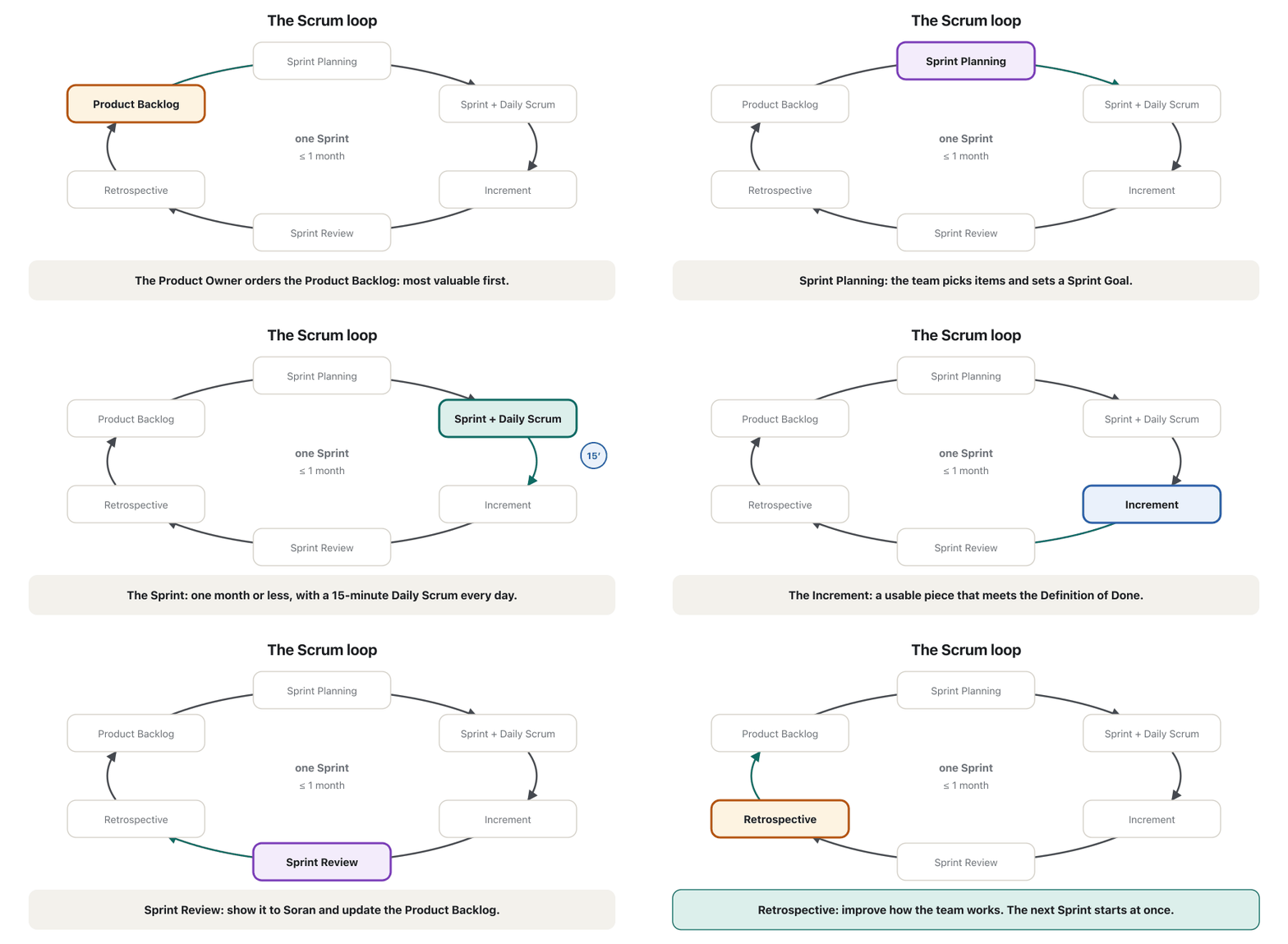
Scrum is a well-known agile framework. Its rules fit in the short Scrum Guide by Ken Schwaber and Jeff Sutherland; the November 2020 version is still the official one in November 2026. A Scrum Team is small, typically 10 people or fewer, with three accountabilities:
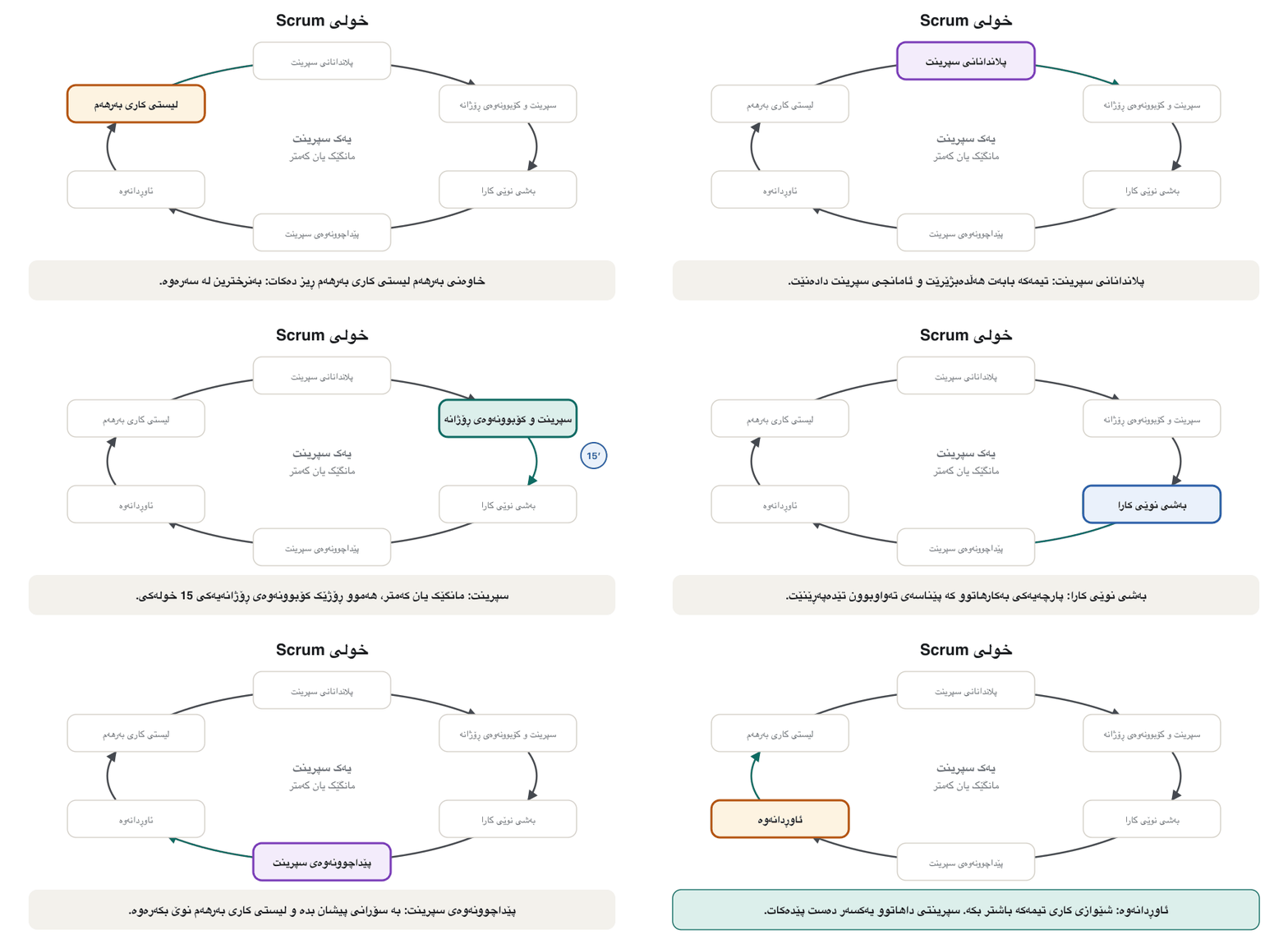
ناسراوی . یاساکانی لە ڕێبەرێکی کورتدا هاتوون، The Scrum Guide، نووسینی Ken Schwaber و Jeff Sutherland؛ تشرینی دووەمی 2020 لە تشرینی دووەمی 2026دا هێشتا فەرمییە. تیمی Scrum بچووکە، زۆرجار 10 کەس یان کەمتر، بە سێ بەرپرسیارێتییەوە:
- Product Owner (Aram): maximises the value of the product and orders the .
- Developers (Shilan, Karwan, Dilan): create a usable piece of the product every Sprint.
- Scrum Master: helps everyone use Scrum well, removes obstacles; a leader who serves, not a boss.
- (ئارام): بەهای بەرهەمەکە بەرز دەکاتەوە و ڕیز دەکات.
- (شیلان، کاروان، دیلان): لە هەموو پارچەیەکی بەکارهاتووی بەرهەمەکە دروست دەکەن.
- : یارمەتی هەمووان دەدات باش بەکاربهێنن و ڕێگرەکان لادەبات؛ سەرکردەیەکی خزمەتکار، نەک سەرۆک.
Scrum: a framework for small teamsScrum: فرەیموۆرکێک بۆ تیمی بچووک
The five Scrum eventsپێنج ڕووداوەکەی Scrum
Scrum runs on a fixed rhythm. The Sprint holds the other four events. The times below are the Scrum Guide's maximums for a one-month Sprint; shorter Sprints usually need less.
لەسەر ڕیتمێکی جێگیر دەڕوات. چوار ڕووداوەکەی تر لە خۆ دەگرێت. ئەو کاتانەی خوارەوە زۆرترین کاتی ڕێبەری Scrumـن بۆ یەک مانگی؛ کورتتر زۆرجار کەمتریان پێویستە.
| Eventڕووداو | Time boxزۆرترین کات | Purposeمەبەست |
|---|---|---|
| Sprint | one month or less, fixed lengthمانگێک یان کەمتر، درێژیی جێگیر | turn ideas into a usable Increment; the next starts at onceبیرۆکەکان بکە بە بەشێکی نوێی بەکارهاتوو؛ دواتر یەکسەر دەست پێدەکات |
| Sprint Planningپلاندانانی | up to 8 hoursتا 8 کاتژمێر | choose the Sprint Goal and the workئامانجی و کارەکان هەڵبژێرە |
| Daily Scrum | 15 minutes, every day15 خولەک، هەموو ڕۆژێک | check progress toward the Sprint Goal; adapt the planپێشکەوتن بەرەو ئامانجی بپشکنە؛ پلانەکە بگونجێنە |
| Sprint Reviewپێداچوونەوەی | up to 4 hoursتا 4 کاتژمێر | show the result to stakeholders; decide what nextئەنجامەکە بە پیشان بدە؛ بڕیار بدە دواتر چی |
| Sprint Retrospectiveئاوڕدانەوەی | up to 3 hoursتا 3 کاتژمێر | improve how the team worksشێوازی کاری تیمەکە باشتر بکە |
The Daily Scrum is for the Developers, not a report to a manager. Many teams use three questions (what I did, what I will do, what blocks me), as in the morning stand-up, but the 2020 Guide lets them choose any structure that serves the Sprint Goal.
بۆ ، نەک ڕاپۆرتدان بە بەڕێوەبەر. زۆر تیم سێ پرسیار بەکار دەهێنن (چیم کرد، چی دەکەم، چی ڕێگرمە)، وەک لە کۆبوونەوەی بەیانیاندا، بەڵام ڕێبەری 2020 ڕێگەیان دەدات هەر ڕێکخستنێک هەڵبژێرن کە خزمەتی ئامانجی بکات.
Scrum: a framework for small teamsScrum: فرەیموۆرکێک بۆ تیمی بچووک
Artifacts and commitmentsبەرهەمەکان و پابەندبوونەکان
Scrum has three artifacts, and each comes with a commitment that keeps it honest:
سێ بەرهەمی هەیە و هەریەکەیان پابەندبوونێکی لەگەڵدایە کە ڕاستگۆی دەهێڵێتەوە:
Bazaar Cart's : all tests pass, another developer has reviewed the code, and the README is updated. A piece that misses one of these is not done, even if it runs. (In 2025 Jeff Sutherland and two co-authors published a Scrum Guide Expansion Pack; its own page says it is a companion, not a replacement, so the 2020 Guide stays the rulebook.)
Bazaar Cart: هەموو تاقیکردنەوەکان سەردەکەون، تر کردووە و README نوێ کراوەتەوە. پارچەیەک کە یەکێک لەمانەی نەبێت تەواو نییە، تەنانەت ئەگەر کاریش بکات. (لە 2025دا Jeff Sutherland و دوو هاوبەشی پاشکۆیەکیان بڵاو کردەوە بە ناوی Scrum Guide Expansion Pack؛ پەڕەکەی خۆی دەڵێت هاوەڵێکە نەک جێگرەوە، بۆیە ڕێبەری 2020 هەر کتێبی یاساکەیە.)
A two-week Bazaar Cart sprintسپرینتێکی دوو هەفتەیی Bazaar Cart
Aram has put “show the delivery fee” at the top of the (rule R4: 3,000 IQD inside Sulaimani, free from 50,000; prices made up). The team plans a two-week Sprint with this Sprint Goal: customers see the delivery fee before they order. The result will be version 0.2.0.
ئارام پیشاندانی کرێی گەیاندنی خستووەتە سەرەوەی (یاسای R4: لە ناو سلێمانی 3,000 دینار، لە 50,000ـەوە بێبەرانبەر؛ نرخەکان دەستکردن). تیمەکە پلانی دوو هەفتەیی دادەنێت بەم ئامانجەوە: کڕیاران پێش داواکردن کرێی گەیاندن دەبینن. ئەنجامەکە 0.2.0 دەبێت.
On day 6 Soran tries the prototype and asks for a message “free delivery from 50,000”. Because the Sprint Goal is about seeing the fee, the team adds it now. At the Retrospective they agree to test boundary values like 49,750 earlier next time. The Sprint length never stretches: unfinished work goes back to the .
لە ڕۆژی 6دا سۆران تاقی دەکاتەوە و داوای پەیامێکی «گەیاندنی بێبەرانبەر لە 50,000ـەوە» دەکات. چونکە ئامانجی پەیوەندی بە بینینی کرێکەوە هەیە، تیمەکە ئێستا زیادی دەکات. لە ئاوڕدانەوەدا ڕێک دەکەون جاری داهاتوو بەهای سنووری وەک 49,750 زووتر تاقی بکەنەوە. درێژیی هەرگیز درێژ ناکرێتەوە: کاری تەواونەکراو دەگەڕێتەوە بۆ .
Kanban: make the work visibleکانبان: کارەکە دیار بخە
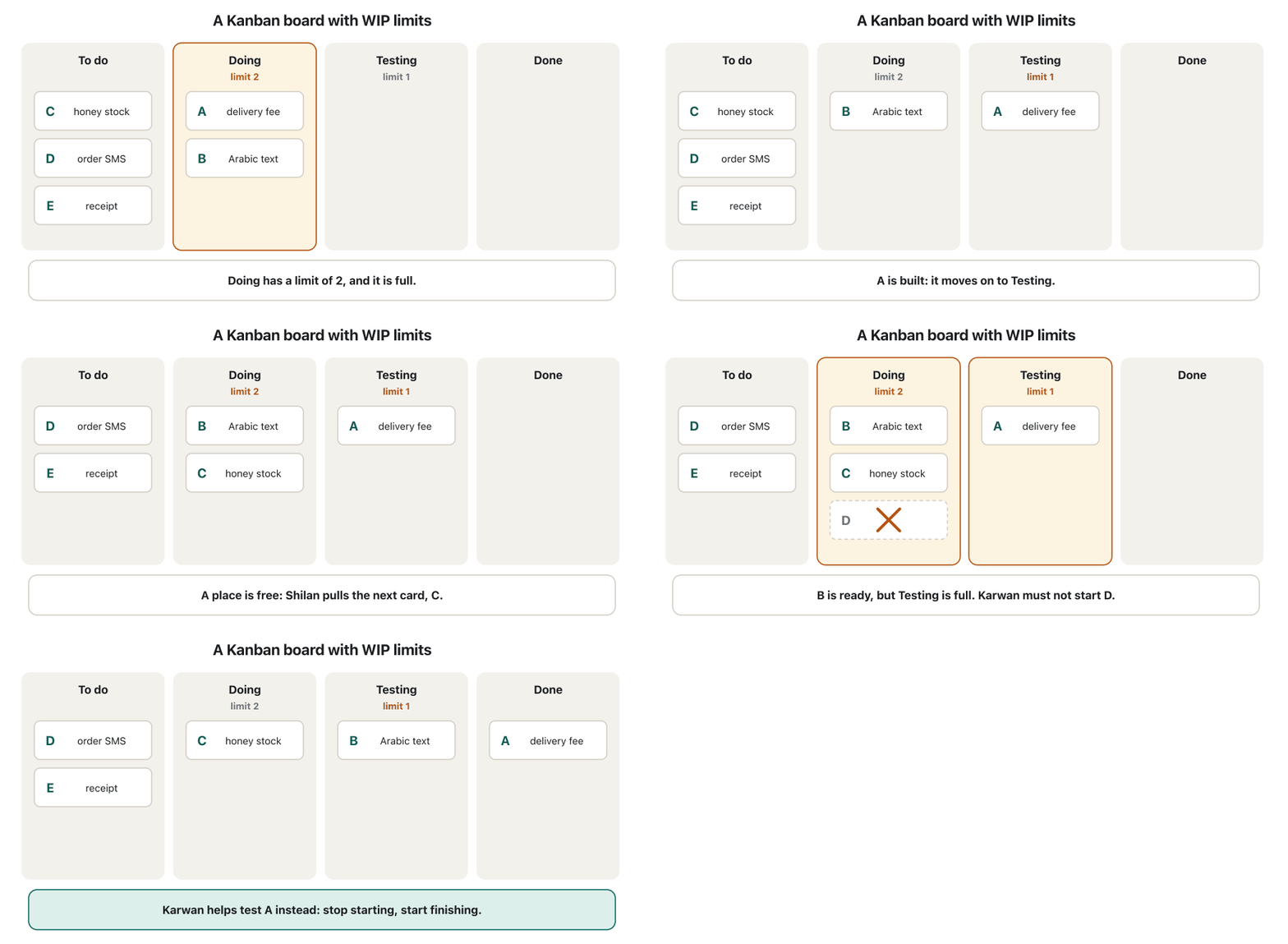
is a method for managing knowledge work. The Kanban Guide says it is applied on top of the way a team already works; it does not replace it. Every task is a card on a board, and the columns show the real steps of the work, for example To do → Doing → Testing → Done.
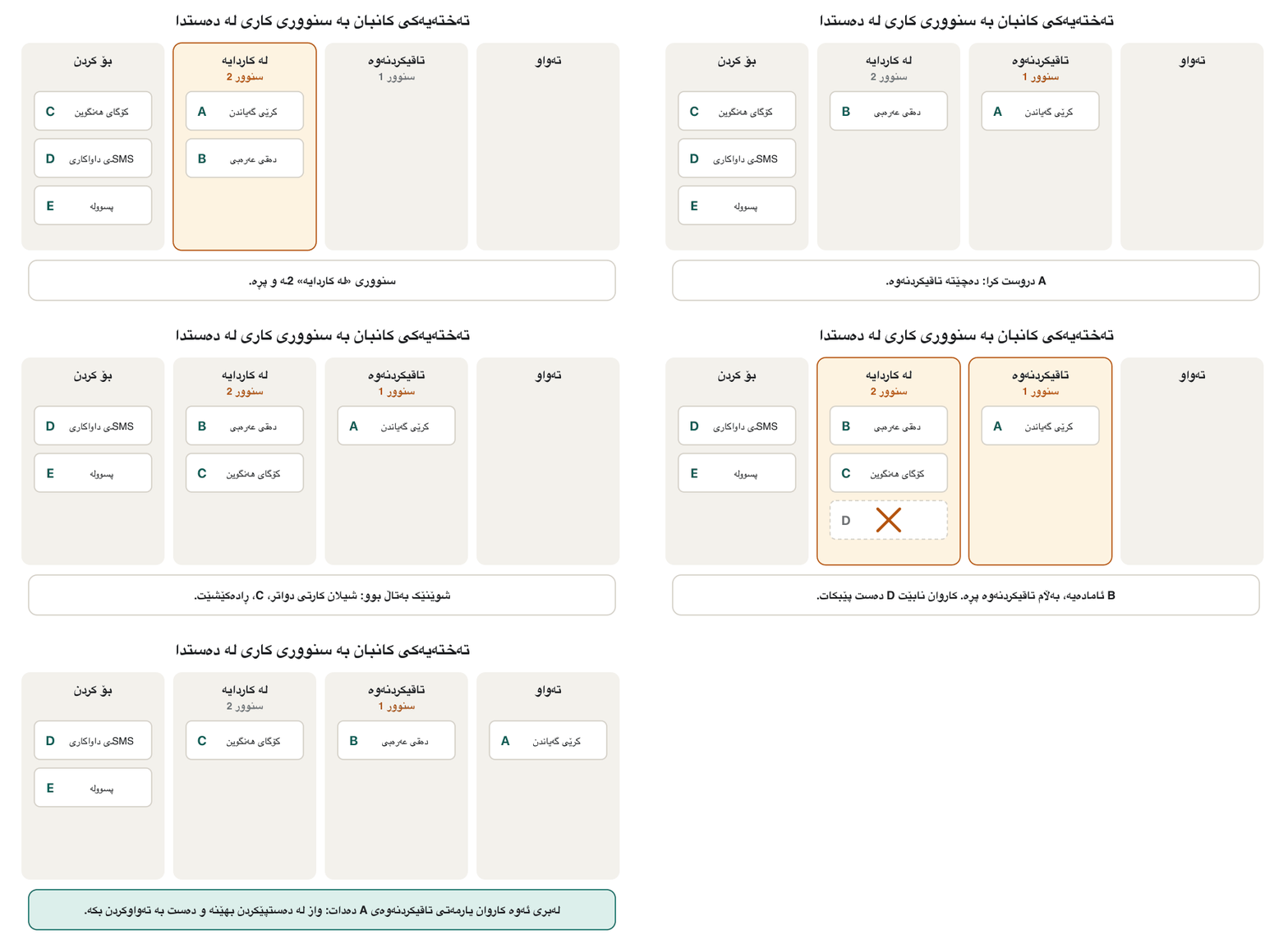
ڕێگایەکە بۆ بەڕێوەبردنی کاری زانیاری. ڕێبەری Kanban دەڵێت لەسەر ئەو شێوازە کارەی تیمێک هەیەتی جێبەجێ دەکرێت؛ جێگەی ناگرێتەوە. هەموو ئەرکێک کارتێکە لەسەر تەختەیەک و ستوونەکان هەنگاوە ڕاستەقینەکانی کارەکە پیشان دەدەن، بۆ نموونە بۆ کردن ← لە کاردایە ← ← تەواو.
Its six general practices: visualise the work, limit work in progress (WIP), manage the flow, make the rules explicit, use feedback loops, and improve together through small experiments. Its roots are in Lean manufacturing, and the method itself comes from David J. Anderson's 2010 book.
شەش کرداری گشتیی هەیە: کارەکە دیار بخە، سنوور بۆ کاری لە دەستدا (WIP) دابنێ، ڕۆیشتنی کار بەڕێوە ببە، یاساکان ئاشکرا بکە، خولی ڕا بەکاربهێنە و بە تاقیکردنەوەی بچووک پێکەوە باشتری بکە. ڕەگەکانی لە بەرهەمهێنانی Leanـدایە و خودی ڕێگاکە لە کتێبەکەی David J. Andersonـی ساڵی 2010ـەوە هاتووە.
Kanban: make the work visibleکانبان: کارەکە دیار بخە
WIP limits: stop starting, start finishingسنووری کاری لە دەستدا: واز لە دەستپێکردن بهێنە و دەست بە تەواوکردن بکە
A WIP limit caps how many cards may be in a column at once. When Doing is full, nobody starts a new card: they help finish one instead. The Kanban Guide gives newcomers a short rule for this: stop starting, start finishing.
سنووری کاری لە دەستدا (WIP limit) دیاری دەکات لە یەک کاتدا چەند کارت دەتوانن لە ستوونێکدا بن. کاتێک لە کاردایە پڕە، کەس کارتی نوێ دەست پێناکات: لەبری ئەوە یارمەتی تەواوکردنی یەکێک دەدەن. ڕێبەری Kanban بۆ تازەکاران یاسایەکی کورتی بۆ ئەمە هەیە: واز لە دەستپێکردن بهێنە و دەست بە تەواوکردن بکە.
DevOps: building and running togetherDevOps: دروستکردن و کارپێکردن پێکەوە
In many companies one team built software (development) and another ran it on servers (operations), and releases were slow and risky. joins the two. SWEBOK v4 describes it as principles and practices that help everyone involved specify, develop and operate software together; Microsoft's guide splits the work into four phases: plan, develop, deliver and operate.
لە زۆر کۆمپانیادا تیمێک دروست دەکرد (گەشەپێدان) و تیمێکی تر لەسەر کاری پێدەکرد (کارپێکردن) و بڵاوکردنەوەکان هێواش و پڕمەترسی بوون. ئەم دووانە پێکەوە دەبەستێت. SWEBOK v4 وەک کۆمەڵێک بنەما و کردار وەسفی دەکات کە یارمەتی هەموو لایەنەکان دەدەن پێکەوە دیاری بکەن، گەشەی پێبدەن و کاری پێ بکەن؛ ڕێبەری Microsoft کارەکە دەکات بە چوار قۆناغ: پلان، گەشەپێدان، گەیاندن و کارپێکردن.
Its practices fill the rest of this course: version control with Git, automatic tests and continuous integration in Automated testing, and builds and releases in Versions and builds. Release cycles become short, and the monitoring of the live app feeds the next plan.
کردارەکانی باقیی ئەم کۆرسە پڕ دەکەنەوە: بە Git، و لە تاقیکردنەوەی خۆکار و و بڵاوکردنەوەکان لە وەشانەکان و بیلدەکاندا. خولەکانی بڵاوکردنەوە کورت دەبنەوە و چاودێریی کارا خۆراک دەدات بە پلانی داهاتوو.
Choosing a modelهەڵبژاردنی مۆدێل
No model is best for everything. Two questions go a long way: how fixed are the requirements, and do rules demand evidence for every step? And does the work come as planned features or as a stream of small tasks?
هیچ مۆدێلێک بۆ هەموو شتێک باشترین نییە. دوو پرسیار زۆر یارمەتی دەدەن: تا چەند جێگیرن و ئایا یاساکان بۆ هەر هەنگاوێک بەڵگە دەخوازن؟ هەروەها ئایا کار وەک تایبەتمەندیی پلانکراو دێت یان وەک زنجیرەیەک ئەرکی بچووک؟
| Projectپڕۆژە | Situationبارودۆخ | A good fitگونجاوترین |
|---|---|---|
| Bazaar Cart | rules change; Soran can look every two weeksیاساکان دەگۆڕێن؛ سۆران دەتوانێت هەموو دوو هەفتە سەیر بکات | Scrum |
| Infusion pump software پەمپی دەرمان | a safety-critical system; regulators want evidence؛ ڕێکخەران بەڵگە دەخوازن | V-model (plan-driven) (بە پلان) |
| Lana's timetable app خشتەی لانا | fixed September date; teachers are busyڕێکەوتی جێگیری ئەیلوول؛ مامۆستاکان سەرقاڵن | incremental, with early prototypesبەشبەبەش، بە زوو |
| Fixes after 1.0.0چاککردنەوە دوای 1.0.0 | small requests arrive any dayداوای بچووک هەر ڕۆژێک دێن | Kanban |
Common mistakesهەڵە باوەکان
Exercisesڕاهێنانەکان
Which process model does each team use? (a) Each stage is approved before the next, and users see the product at the end. (b) Each design step is paired with a test level. (c) Every two weeks the team shows Soran a new working version. (d) The team limits Doing to 3 cards and pulls new work only when a card is finished.
هەر تیمێک کام بەکار دەهێنێت؟ (a) هەر قۆناغێک پێش دواتر پەسەند دەکرێت و لە کۆتاییدا بەرهەمەکە دەبینن. (b) هەر هەنگاوێکی دیزاین لەگەڵ ئاستێکی جووت دەکرێت. (c) هەموو دوو هەفتە تیمەکە کارای نوێ بە سۆران پیشان دەدات. (d) تیمەکە «لە کاردایە» بە 3 کارت سنووردار دەکات و تەنیا کاتێک کارتێک تەواو بوو کاری نوێ دەهێنێت.
Show answerوەڵامەکە پیشان بدە
- (a) Waterfall.
- (b) V-model.
- (c) Scrum (iterative and incremental).
- (d) Kanban with a WIP limit.
- (a) .
- (b) .
- (c) (خولبەخول و بەشبەبەش).
- (d) بە سنووری کاری لە دەستدا.
Lana's team uses the V-model. Which test level checks each design step: requirements, system design, architecture, detailed design?
تیمەکەی لانا بەکار دەهێنێت. کام ئاستی هەر هەنگاوێکی دیزاین دەپشکنێت: ، دیزاینی سیستەم، ، دیزاینی ورد؟
Show answerوەڵامەکە پیشان بدە
- Requirements ↔ acceptance testing (the teachers try it).
- System design ↔ system testing.
- Architecture ↔ integration testing.
- Detailed design ↔ unit testing.
- ↔ (مامۆستاکان تاقیی دەکەنەوە).
- دیزاینی سیستەم ↔ .
- ↔ .
- دیزاینی ورد ↔ .
Bazaar Cart's Product Backlog, in order: (1) save orders in SQLite, about 6 days; (2) Kurdish and Arabic text, 3 days; (3) SMS to the customer, 5 days; (4) dark mode, 2 days. The team has about 10 days of work in a two-week Sprint. Write a Sprint Goal, choose the items, and write a Definition of Done.
Bazaar Cart، بە ڕیز: (1) هەڵگرتنی داواکارییەکان لە ، نزیکەی 6 ڕۆژ؛ (2) دەقی کوردی و عەرەبی، 3 ڕۆژ؛ (3) SMS بۆ کڕیار، 5 ڕۆژ؛ (4) ، 2 ڕۆژ. تیمەکە لە دوو هەفتەییدا نزیکەی 10 ڕۆژ کاری هەیە. ئامانجێکی بنووسە، بابەتەکان هەڵبژێرە و بنووسە.
Show answerوەڵامەکە پیشان بدە
One good answer. Sprint Goal: orders are never lost and customers can read the app in their language. Items 1 and 2 (9 days) fit; item 3 (5 days) does not, so it waits for the next Sprint, even though item 4 is small: the order comes from the Product Owner. Definition of Done: all tests pass, code reviewed by another developer, README updated.
وەڵامێکی باش. ئامانجی : داواکارییەکان هەرگیز ون نابن و کڕیاران دەتوانن بە زمانی خۆیان بخوێننەوە. بابەتی 1 و 2 (9 ڕۆژ) جێیان دەبێتەوە؛ بابەتی 3 (5 ڕۆژ) جێی نابێتەوە، بۆیە چاوەڕێی داهاتوو دەکات، هەرچەندە بابەتی 4 بچووکە: ڕیزەکە دیاری دەکات. : هەموو تاقیکردنەوەکان سەردەکەون، تر کردووە، README نوێ کراوەتەوە.
Choose a model and give one reason: (a) a tax calculation for a law that starts on 1 January and will not change; (b) Hawler Ride, where Hana and Rebin add features every few weeks; (c) the help desk of a university, fixing small problems as they arrive.
مۆدێلێک هەڵبژێرە و یەک هۆکار بدە: (a) حسابی باج بۆ یاسایەک کە لە 1ی کانوونی دووەمدا دەست پێدەکات و ناگۆڕێت؛ (b) Hawler Ride، کە هانا و ڕێبین هەموو چەند هەفتەیەک تایبەتمەندی زیاد دەکەن؛ (c) مێزی یارمەتیی زانکۆیەک کە کێشە بچووکەکان کاتێک دێن چاک دەکات.
Show answerوەڵامەکە پیشان بدە
- (a) Waterfall or V-model: fixed, known requirements and a fixed date.
- (b) Scrum: features change and users can give feedback every Sprint.
- (c) Kanban: a stream of small tasks with no natural Sprint.
- (a) یان : جێگیر و ناسراو و ڕێکەوتی جێگیر.
- (b) : تایبەتمەندییەکان دەگۆڕێن و دەتوانن لە هەموو ڕا بدەن.
- (c) : زنجیرەیەک ئەرکی بچووک بێ سروشتی.
Bazaar Cart's board has 7 cards in Doing for 4 people, and nothing has reached Done for a week. What would you change?
تەختەی Bazaar Cart 7 کارتی لە «لە کاردایە»دا هەیە بۆ 4 کەس و ماوەی هەفتەیەکە هیچ شتێک نەگەیشتووەتە تەواو. چی دەگۆڕیت؟
Show answerوەڵامەکە پیشان بدە
Set a WIP limit (for example 3 or 4) on Doing, stop pulling new cards, and let people pair up to finish the oldest cards first: stop starting, start finishing.
سنوورێکی کاری لە دەستدا (بۆ نموونە 3 یان 4) بۆ «لە کاردایە» دابنێ، ڕاکێشانی کارتی نوێ ڕابگرە و ڕێگە بدە خەڵک دوو دوو کار بکەن تا سەرەتا کۆنترین کارتەکان تەواو بکەن: واز لە دەستپێکردن بهێنە و دەست بە تەواوکردن بکە.
Summaryکورتە
- Every project has the same six activities; a decides their order and how often they repeat.
- Plan-driven models (waterfall, V-model) fix everything early; they suit stable requirements and strict rules, but feedback comes late.
- Incremental development adds working pieces; iterative development improves the whole; prototypes and the spiral attack risk early.
- The Agile Manifesto (2001) values individuals, working software, collaboration and responding to change more, without throwing the rest away.
- Scrum (Guide 2020): Product Owner, Scrum Master and Developers; Sprints of one month or less; a 15-minute Daily Scrum; Product Backlog, Sprint Backlog and Increment with their commitments.
- Kanban visualises the work and limits work in progress; DevOps joins building and running software in one loop.
- هەموو پڕۆژەیەک هەمان شەش چالاکیی هەیە؛ ڕیزیان و ئەوەی چەند جار دووپاتە دەبنەوە دیاری دەکات.
- مۆدێلە بە پلانەکان (، ) هەموو شتێک زوو جێگیر دەکەن؛ بۆ جێگیر و یاسای توند دەگونجێن، بەڵام ڕای بەکارهێنەران درەنگ دێت.
- پارچەی کارا زیاد دەکات؛ هەمووی باشتر دەکات؛ و زوو چارەسەر دەکەن.
- بەیاننامەی (2001) بەهای زیاتر دەدات بە تاک، کارا، هاوکاری و وەڵامدانەوەی گۆڕانکاری، بێ فڕێدانی ئەوانی تر.
- (ڕێبەری 2020): ، و ؛ مانگێک یان کەمتر؛ 15 خولەکی؛ ، و بەشی نوێی کارا لەگەڵ پابەندبوونەکانیان.
- کارەکە دیار دەخات و سنوور بۆ کاری لە دەستدا دادەنێت؛ دروستکردن و کارپێکردنی لە یەک خولدا پێکەوە دەبەستێت.
Next: Requirements and design shows how Aram's team finds out what Soran really needs and turns it into user stories.
دواتر: پێداویستییەکان و دیزاین پیشان دەدات تیمەکەی ئارام چۆن دەزانن سۆران بەڕاستی چی پێویستە و دەیکەن بە .
Lesson complete!وانەکە تەواو بوو!
Well done. Review the key terms, then go on to the next lesson.دەستخۆش. سەیرێکی زاراوە سەرەکییەکان بکەرەوە، پاشان بڕۆ بۆ وانەی داهاتوو.
Key termsزاراوە سەرەکییەکان
Requirements and Design: Deciding What to Buildپێداویستییەکان و دیزاین: بڕیاردان لەسەر ئەوەی چی دروست بکەین
Related lecturesوانە پەیوەندیدارەکان
- Building Softwareدروستکردنی نەرمەواڵە
- The Website Development Life Cycleسووڕی ژیانی گەشەپێدانی تۆڕگە
- The Database Development Life Cycleسووڕی ژیانی گەشەپێدانی بنکەدراوە
- What Is Programming?بەرنامەسازی چییە؟
- User Experience: Users, Wireframes and Prototypesئەزموونی بەکارهێنەر: بەکارهێنەران، وایەرفرەیمەکان و نموونە سەرەتاییەکان
References and further readingسەرچاوەکان و خوێندنەوەی زیاتر
- SWEBOK Guide V4.0a (PDF), Software Engineering Process KA §2.3–2.5: life cycle models (predictive, iterative, incremental, waterfall, V-model, spiral, Agile, DevOps); Software Quality KA §3.4: verification and validation
- David A. Wheeler (2018): The Waterfall Model was a Straw Man (what Royce wrote in 1970)
- Manifesto for Agile Software Development (2001)
- Principles behind the Agile Manifesto
- Agile Manifesto: History (Snowbird, Utah, 11–13 February 2001)
- Ken Schwaber and Jeff Sutherland: The Scrum Guide (November 2020)
- scrumguides.org: Scrum Guide revision history (2010–2020)
- Scrum Guide Expansion Pack repository (a companion, not a replacement)
- Kanban University: The Kanban Guide
- Microsoft Learn: What is DevOps?
- Titus Winters: Software Engineering at Google, chapter 1 (shifting left)
This lecture is a first edition. The Kurdish text and terminology are waiting for review by Kurdish IT teachers.ئەم وانەیە چاپی یەکەمە. دەقە کوردییەکە و زاراوەکانی چاوەڕێی پێداچوونەوەی مامۆستایانی کوردی بواری IT ن.