Chapterبەش 4 · Lectureوانە 4.2
War Has Rules: International Law and Military AIشەڕیش یاسای هەیە: یاسای نێودەوڵەتی و ژیریی دەستکردی سەربازی
Which international rules apply to military AI? The laws of war that already bind every state — distinction, proportionality, precautions and legal reviews of new weapons — what a 'lethal autonomous weapon system' is, the ICRC's proposal, the UN talks from 2014 to the Review Conference of November 2026, non-binding declarations, and why the EU AI Act leaves out purely military AI. As of November 2026 there is no treaty on autonomous weapons.
کام ڕێسای نێودەوڵەتی بەسەر جێبەجێ دەبێت؟ یاساکانی جەنگ کە ئێستا هەموو دەوڵەتێک پابەند دەکەن — ، ، و — چییە، پێشنیاری خاچی سووری نێودەوڵەتی، گفتوگۆکانی نەتەوە یەکگرتووەکان لە 2014ـەوە تا کۆنگرەی پێداچوونەوەی تشرینی دووەمی 2026، ئەو ڕاگەیەندراوانەی ناچاری نین و بۆچی تەنیا سەربازی لەخۆ ناگرێت. تا تشرینی دووەمی 2026 هیچ پەیماننامەیەک لەبارەی چەکی سەربەخۆ نییە.
What you will learnچی فێر دەبیت
- Explain why international humanitarian law already applies to AI weapons.
- State distinction, proportionality and precautions as three questions a person must answer.
- Describe a legal review of new weapons and the 2026 description of a 'lethal autonomous weapon system'.
- Trace the UN talks from 2014 to the Review Conference of November 2026 and the main UN resolutions.
- Tell binding law from political commitments, and explain the EU AI Act’s military exclusion.
- ڕوونی بکەیتەوە بۆچی ئێستا بەسەر چەکی جێبەجێ دەبێت.
- ، و وەک سێ پرسیار بڵێیت کە مرۆڤ دەبێت وەڵامیان بداتەوە.
- و وەسفی 2026ی وەسف بکەیت.
- گفتوگۆکانی نەتەوە یەکگرتووەکان لە 2014ـەوە تا کۆنگرەی پێداچوونەوەی تشرینی دووەمی 2026 و بڕیارنامە سەرەکییەکان بەدوادا بچیت.
- یاسای ناچاری لە پابەندبوونی سیاسی جیا بکەیتەوە و دەرکردنی بەکارهێنانی سەربازی لە ڕوون بکەیتەوە.
Are there international rules for AI in war?ئایا ڕێسای نێودەوڵەتی بۆ ژیریی دەستکرد لە جەنگدا هەیە؟
One hope for the future of military AI is international rules for safe AI use. Do such rules exist? The honest answer has three layers. First, the laws of war already apply to every weapon, including AI. Second, states are discussing new rules for autonomous weapons — as of November 2026 there is no treaty yet. Third, many governments have signed shared principles that are political promises, not law.
یەکێک لە هیواکانی داهاتووی ڕێسای نێودەوڵەتییە بۆ بەکارهێنانی سەلامەتی . ئایا ئەم ڕێسایانە هەن؟ وەڵامی ڕاستگۆیانە سێ چینی هەیە. یەکەم، یاساکانی جەنگ ئێستا بەسەر هەموو چەکێکدا جێبەجێ دەبن، لەوانە . دووەم، دەوڵەتان گفتوگۆ لەسەر ڕێسای نوێ بۆ چەکی سەربەخۆ دەکەن — تا تشرینی دووەمی 2026 هێشتا هیچ پەیماننامەیەک نییە. سێیەم، زۆرێک لە حکومەتەکان بنەمای هاوبەشیان واژوو کردووە کە بەڵێنی سیاسین، نەک یاسا.
International humanitarian law in one screenیاسای نێودەوڵەتیی مرۆیی لە یەک پەڕەدا
International humanitarian law (IHL), also called the law of war, limits the effects of armed conflict. It protects people who are not, or no longer, taking part in the fighting — civilians, the wounded, prisoners — and it limits the means and methods of warfare. Its core is the Geneva Conventions. Many of its rules are also customary law: they bind every state, whether or not it joined a treaty.
، کە یاسای جەنگیشی پێ دەگوترێت، کاریگەرییەکانی ململانێی چەکدار سنووردار دەکات. ئەو کەسانە دەپارێزێت کە بەشداری شەڕ ناکەن یان چیتر بەشداری ناکەن — خەڵکی مەدەنی، بریندار و دیلەکان — و ئامراز و شێوازەکانی شەڕکردن سنووردار دەکات. ناوکەکەی پەیماننامەکانی جنێڤن. زۆرێک لە ڕێساکانی یاسای عورفیشن: هەموو دەوڵەتێک پابەند دەکەن، جا پەیماننامەیەکی واژوو کردبێت یان نا.
The rules that limit the effects of war: they protect people who are not or are no longer fighting, such as civilians, the wounded and prisoners, and limit how wars may be fought. They apply to every weapon, old and new, including those that use AI; the Geneva Conventions are their core.
ئەو یاسایانەیە کە کاریگەرییەکانی جەنگ سنووردار دەکەن: ئەو کەسانە دەپارێزن کە شەڕ ناکەن یان چیتر شەڕ ناکەن، وەک خەڵکی مەدەنی، بریندار و دیلەکان، هەروەها شێوازی شەڕکردن سنووردار دەکەن. بەسەر هەموو چەکێکدا جێبەجێ دەبن، کۆن و نوێ، لەوانە ئەوانەی بەکار دەهێنن؛ پەیماننامەکانی جنێڤ ناوکی ئەم یاسایانەن.
IHL does not wait for new technology. The CCW experts' report of September 2026 says it governs all weapons, 'those of the past, those of the present, and those of the future', and that it 'applies fully' to lethal autonomous weapon systems. It binds states, parties to a conflict and individuals — not machines (see Who is responsible?).
چاوەڕێی تەکنەلۆژیای نوێ ناکات. ڕاپۆرتی ئەیلوولی 2026ی پسپۆڕانی دەڵێت ئەم یاسایە هەموو چەکێک دەگرێتەوە، «ئەوانەی ڕابردوو، ئەوانەی ئێستا و ئەوانەی داهاتوو» و «بە تەواوی» بەسەر جێبەجێ دەبێت. دەوڵەتان، لایەنەکانی ململانێ و تاکەکان پابەند دەکات — نەک ئامێر (بڕوانە کێ بەرپرسیارە؟).
Three questions a person must answerسێ پرسیار کە مرۆڤ دەبێت وەڵامیان بداتەوە
Three principles of IHL become questions that someone must be able to answer before force is used:
سێ بنەمای دەبنە پرسیار کە پێش بەکارهێنانی هێز کەسێک دەبێت بتوانێت وەڵامیان بداتەوە:
- (customary rule 1): the parties 'must at all times distinguish between civilians and combatants'; attacks may be directed only against combatants and . Each party 'must do everything feasible to verify that targets are military objectives' (rule 16).
- (rule 14): an attack is forbidden if the expected harm to civilians would be excessive compared with the concrete and direct military advantage expected.
- (rule 15): 'constant care' must be taken to spare civilians, and all feasible precautions must be taken to avoid, and in any case to minimise, harm to them.
- (ڕێسای عورفیی 1): لایەنەکان «دەبێت هەمیشە خەڵکی مەدەنی لە شەڕکەران جیا بکەنەوە»؛ تەنیا دەکرێت هێرش بکرێتە سەر شەڕکەران و . هەر لایەنێک «دەبێت هەموو ئەوەی بە کردەوە دەکرێت بکات بۆ پشتڕاستکردنەوەی ئەوەی ئامانجەکان » (ڕێسای 16).
- (ڕێسای 14): هێرشێک قەدەغەیە ئەگەر زیانی چاوەڕوانکراو بۆ خەڵکی مەدەنی، بەراورد بە سوودی سەربازیی ڕاستەوخۆ و دیاریکراوی چاوەڕوانکراو، زیادەڕۆیی بێت.
- (ڕێسای 15): دەبێت «وریایی بەردەوام» هەبێت بۆ پاراستنی خەڵکی مەدەنی و هەموو ئەو وریاییانەی لە توانادایە بگیرێنەبەر بۆ ڕێگرتن لە زیان پێیان، یان لانیکەم کەمکردنەوەی.
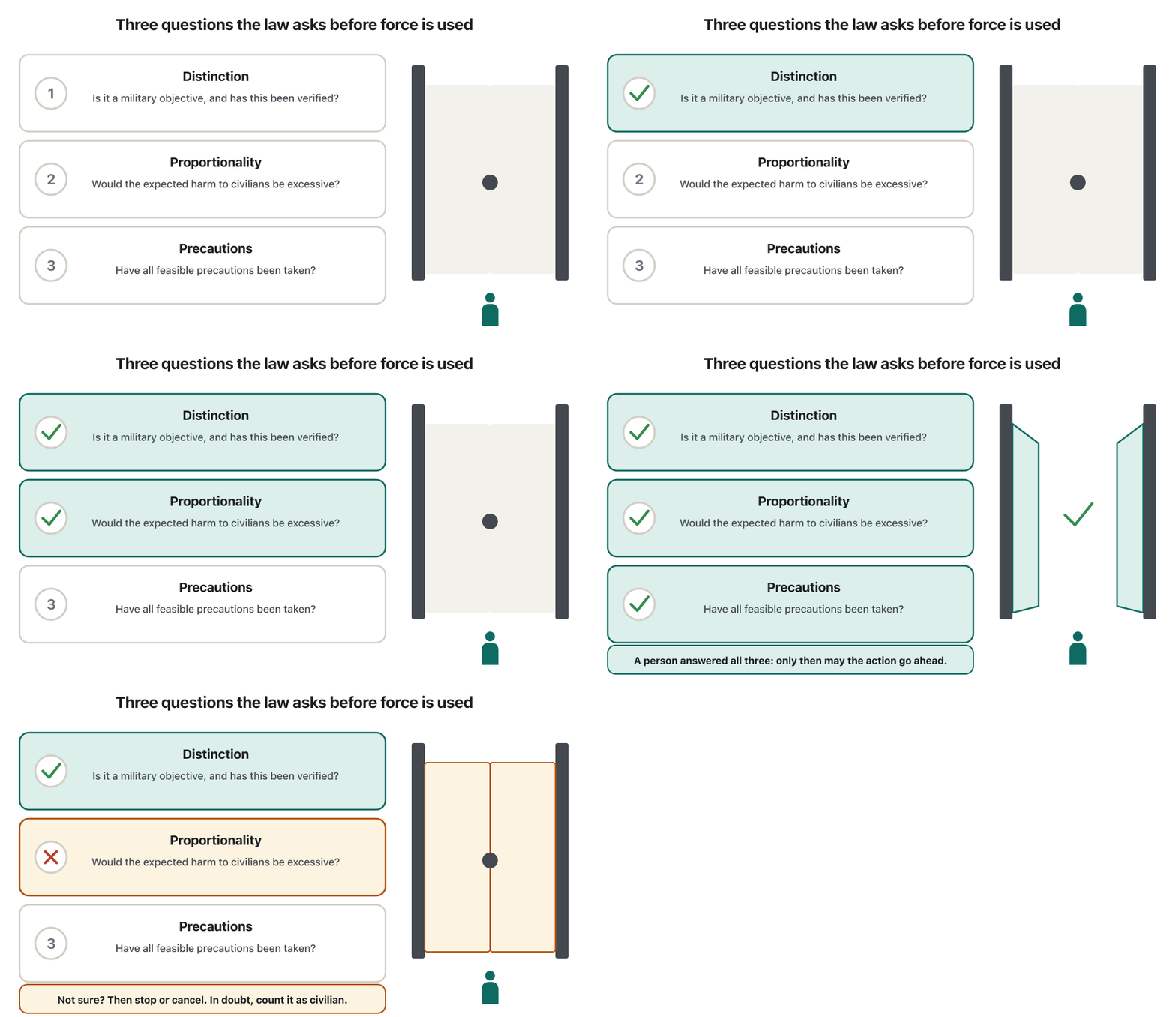
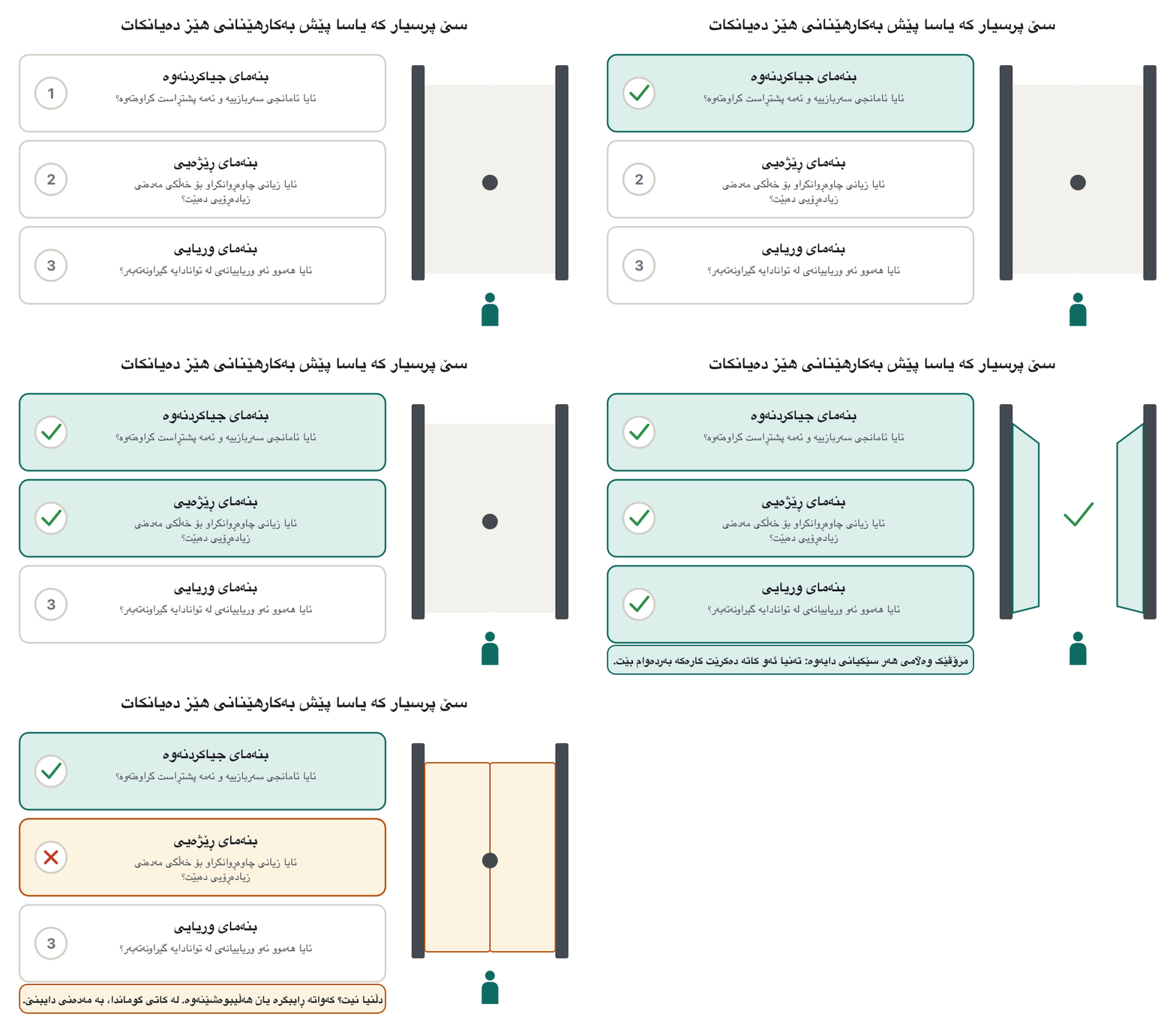
Three questions a person must answerسێ پرسیار کە مرۆڤ دەبێت وەڵامیان بداتەوە
Why these questions are hard for machinesبۆچی ئەم پرسیارانە بۆ ئامێر قورسن
A sensor and an AI model give shapes, heat, a label and a score. The law asks about people and context: Is this vehicle a military objective right now, or a family car? Is someone surrendering or wounded? Who is nearby? What harm could follow, and is it excessive? The answers change from minute to minute. Proportionality in particular is a weighing of values that a responsible commander must make case by case.
و شێوە، گەرمی، و نمرەیەک دەدەن. یاسا لەبارەی مرۆڤ و دەوروبەر دەپرسێت: ئایا ئەم ئۆتۆمبێلە ئێستا یان ئۆتۆمبێلی خێزانێکە؟ ئایا کەسێک خۆی بەدەستەوە دەدات یان بریندارە؟ کێ لە نزیکەوەیە؟ چ زیانێک دوای دەکەوێت و ئایا زیادەڕۆییە؟ وەڵامەکان خولەک بە خولەک دەگۆڕێن. بەتایبەتی کێشانی بەهاکانە کە فەرماندەیەکی بەرپرسیار دەبێت لە هەر حاڵەتێکدا جیا بیکات.
AI can still help people follow the law — for example by gathering better information about where civilians are. But the 2026 CCW report says that humans must use judgement to decide the measures needed for distinction, proportionality and precautions, taking into account the situation and what the weapon can do.
هێشتا دەتوانێت یارمەتی مرۆڤ بدات یاسا جێبەجێ بکات — بۆ نموونە بە کۆکردنەوەی زانیاریی باشتر لەبارەی شوێنی خەڵکی مەدەنی. بەڵام ڕاپۆرتی 2026ی دەڵێت مرۆڤ دەبێت هەڵسەنگاندن بەکار بهێنێت بۆ دیاریکردنی ئەو ڕێوشوێنانەی بۆ جیاکردنەوە، ڕێژەیی و وریایی پێویستن، بە لەبەرچاوگرتنی بارودۆخەکە و توانای چەکەکە.
Checking new weapons before useپشکنینی چەکی نوێ پێش بەکارهێنان
Additional Protocol I to the Geneva Conventions (1977), Article 36, says that when a state studies, develops, acquires or adopts a new weapon, means or method of warfare, it must determine whether its use would, 'in some or all circumstances', be prohibited by international law. This is a legal review of new weapons.
پرۆتۆکۆڵی زیادکراوی یەکەمی پەیماننامەکانی جنێڤ (1977)، ماددەی 36، دەڵێت کاتێک دەوڵەتێک لە چەکێک، ئامرازێک یان شێوازێکی نوێی شەڕ دەکۆڵێتەوە، گەشەی پێدەدات، دەیکڕێت یان وەریدەگرێت، دەبێت دیاری بکات ئایا بەکارهێنانی «لە هەندێک یان لە هەموو بارودۆخێکدا» لە لایەن یاسای نێودەوڵەتییەوە قەدەغەیە یان نا. ئەمە پێی دەگوترێت .
A check that a state must make before it studies, develops, buys or adopts a new weapon or way of warfare, to decide whether using it would break (Additional Protocol I, Article 36). For AI systems it includes testing how they behave.
پشکنینێکە کە دەوڵەتێک دەبێت پێش لێکۆڵینەوە، گەشەپێدان، کڕین یان وەرگرتنی چەکێکی نوێ یان شێوازێکی نوێی شەڕ بیکات، بۆ ئەوەی بڕیار بدات ئایا بەکارهێنانی دەشکێنێت یان نا (پرۆتۆکۆڵی زیادکراوی یەکەم، مادەی 36). بۆ سیستەمەکانی ، تاقیکردنەوەی ڕەفتاریشیان دەگرێتەوە.
For AI systems a legal review is harder: behaviour depends on data and surroundings and may change with updates. So reviews need realistic testing — the 2026 CCW text asks states to test and evaluate 'including adequately realistic simulations' — and a new review after big changes. The 2023 Political Declaration also lists legal reviews among its ten measures.
بۆ سیستەمەکانی پێداچوونەوەی یاسایی قورسترە: ڕەفتاریان پشت بە و دەوروبەر دەبەستێت و لەوانەیە بە نوێکردنەوە بگۆڕێت. بۆیە پێداچوونەوەکان پێویستیان بە تاقیکردنەوەی نزیک لە ڕاستییە — دەقی 2026ی داوا لە دەوڵەتان دەکات تاقی بکەنەوە و هەڵبسەنگێنن، «لەوانەش گونجاو و نزیک لە ڕاستی» — هەروەها پێداچوونەوەیەکی نوێ دوای گۆڕانکاریی گەورە. ڕاگەیەندراوی سیاسیی 2023یش پێداچوونەوەی یاسایی لە نێو دە ڕێوشوێنەکەیدا دەژمێرێت.
What is a 'lethal autonomous weapon system'?سیستەمی چەکی سەربەخۆی کوشندە چییە؟
In the UN talks, the systems at the centre of the debate are called lethal autonomous weapon systems (LAWS). No treaty defines them yet. In September 2026 the CCW experts agreed on this description (paragraph 25 of their report): weapons and technology working together that are 'capable of identifying, selecting, and engaging a target in a way that results in loss of life, without intervention by a human being operating the system'.
لە گفتوگۆکانی نەتەوە یەکگرتووەکاندا، ئەو سیستەمانەی لە ناوەڕاستی گفتوگۆکەدان پێیان دەگوترێت (LAWS). هێشتا هیچ پەیماننامەیەک پێناسەیان ناکات. لە ئەیلوولی 2026دا پسپۆڕانی لەسەر ئەم وەسفە ڕێککەوتن (بڕگەی 25ی ڕاپۆرتەکەیان): چەک و تەکنەلۆژیا کە پێکەوە کار دەکەن و «توانای ناسینەوە، هەڵبژاردن و هێرشکردنە سەر ئامانجێکیان هەیە بە شێوەیەک کە ببێتە هۆی لەدەستدانی ژیان، بەبێ دەستێوەردانی ئەو مرۆڤەی سیستەمەکە بەکار دەهێنێت».
- Still counted: even if a person programmed a set of possible targets or their features.
- Not counted: when the people planning or carrying out the attack choose the specific target and the timing.
- هەر دەژمێردرێت: تەنانەت ئەگەر مرۆڤێک کۆمەڵەیەک ئامانجی ئەگەری یان تایبەتمەندییەکانیانی بەرنامە بۆ دانابێت.
- ناژمێردرێت: کاتێک ئەو کەسانەی پلانی هێرشەکە دادەنێن یان جێبەجێی دەکەن ئامانجە دیاریکراوەکە و کاتەکەی هەڵدەبژێرن.
The ICRC uses a wider idea: an autonomous weapon system is one that, after a person activates it, 'selects and applies force to targets without human intervention', triggered when what its sensors detect matches a 'target profile'. So the user does not know exactly what will be struck, or exactly when and where.
کۆمیتەی نێودەوڵەتیی خاچی سوور بیرۆکەیەکی فراوانتر بەکار دەهێنێت: ئەو سیستەمەیە کە دوای ئەوەی مرۆڤێک چالاکی دەکات، «بەبێ دەستێوەردانی مرۆڤ ئامانج هەڵدەبژێرێت و هێزیان لەسەر بەکار دەهێنێت»، کاتێک ئەوەی هەستی پێ دەکەن لەگەڵ «پرۆفایلی ئامانج» دەگونجێت. بۆیە بەکارهێنەرەکە بە تەواوی نازانێت چی دەپێکرێت و لە کوێ و کەی.
The name used in the UN talks for an that can cause death. The CCW experts (2026) describe it as weapons and technology that together can identify, select and engage a target in a way that causes loss of life, without the intervention of a human who operates the system. As of October 2026 there is no treaty on them.
ئەو ناوەیە کە لە گفتوگۆکانی نەتەوە یەکگرتووەکاندا بۆ بەکار دێت کە دەتوانێت ببێتە هۆی مردن. پسپۆڕانی (2026) وەسفی دەکەن وەک چەک و تەکنەلۆژیایەک کە پێکەوە دەتوانن ئامانجێک بناسنەوە، هەڵیبژێرن و هێرشی بکەنە سەر بە شێوەیەک کە ببێتە هۆی لەدەستدانی ژیان، بەبێ دەستێوەردانی ئەو مرۆڤەی سیستەمەکە بەکار دەهێنێت. تا تشرینی یەکەمی 2026 هیچ پەیماننامەیەک لەبارەیان نییە.
The ICRC's proposal: prohibit some, restrict the restپێشنیاری خاچی سووری نێودەوڵەتی: هەندێکیان قەدەغە بکە، ئەوانی تر سنووردار بکە
On 12 May 2021 the ICRC asked states for new, legally binding rules with two prohibitions and many restrictions:
لە 12ی ئایاری 2021دا کۆمیتەی نێودەوڵەتیی خاچی سوور داوای لە دەوڵەتان کرد ڕێسای نوێی ناچاریی یاسایی دابنێن بە دوو قەدەغەکردن و چەندین سنووردارکردن:
- Prohibit unpredictable autonomous weapons — those whose effects cannot be sufficiently understood, predicted and explained.
- Prohibit autonomous weapons designed or used to apply force against persons.
- Restrict all others: only targets that are military objectives by nature; limits on duration, area and scale of use; use only where civilians are not present; effective human supervision, timely intervention and the ability to switch the system off.
- قەدەغەکردنی چەکی سەربەخۆی پێشبینینەکراو — ئەوانەی ناکرێت کاریگەرییەکانیان بە تەواوی تێبگەین، پێشبینی بکەین و ڕوونیان بکەینەوە.
- قەدەغەکردنی ئەو چەکە سەربەخۆیانەی بۆ بەکارهێنانی هێز دژی مرۆڤ دیزاین کراون یان بەکاردێن.
- سنووردارکردنی هەموو ئەوانی تر: تەنیا ئەو ئامانجانەی بە سروشتی خۆیان ؛ سنوور بۆ ماوە، ناوچە و قەبارەی بەکارهێنان؛ بەکارهێنان تەنیا لەو شوێنانەی خەڵکی مەدەنی لێ نییە؛ سەرپەرشتیی کاریگەری مرۆڤ، دەستێوەردانی لە کاتی خۆیدا و توانای کوژاندنەوەی سیستەمەکە.
The UN Secretary-General and the ICRC President asked jointly for such prohibitions and restrictions in 2023 and again in August 2026, and the ICRC restated its position in October 2026. Not every state agrees: on 29 October 2026, when a UN committee approved the new draft resolution on autonomous weapons, five states voted against it and nine abstained. That disagreement is one reason the talks take so long.
سکرتێری گشتیی نەتەوە یەکگرتووەکان و سەرۆکی خاچی سووری نێودەوڵەتی لە 2023 و دیسان لە ئابی 2026دا پێکەوە داوای ئەم قەدەغەکردن و سنووردارکردنانەیان کرد و خاچی سوور لە تشرینی یەکەمی 2026دا هەڵوێستەکەی دووپات کردەوە. هەموو دەوڵەتێک هاوڕا نییە: لە 29ی تشرینی یەکەمی 2026دا، کاتێک لیژنەیەکی نەتەوە یەکگرتووەکان ڕەشنووسی بڕیارنامە نوێیەکەی لەبارەی چەکی سەربەخۆ پەسەند کرد، پێنج دەوڵەت دژی دەنگیان دا و نۆ دەوڵەتیش بێلایەن بوون. ئەم ناکۆکییە یەکێکە لە هۆکارەکانی درێژەکێشانی گفتوگۆکان.
From Geneva 2014 to November 2026لە جنێڤی 2014ـەوە تا تشرینی دووەمی 2026
Talks on these weapons take place under the Convention on Certain Conventional Weapons (CCW), a UN treaty of 1980 that bans or limits weapons such as blinding lasers. Its member states meet in Geneva:
گفتوگۆ لەسەر ئەم چەکانە لە چوارچێوەی (CCW) دەکرێت، پەیماننامەیەکی نەتەوە یەکگرتووەکانی ساڵی 1980 کە چەکی وەک کوێرکەر قەدەغە یان سنووردار دەکات. وڵاتانی ئەندام لە جنێڤ کۆ دەبنەوە:
- 13–16 May 2014: the first informal meeting of experts on lethal autonomous weapons.
- 2016–2017: a Group of Governmental Experts (GGE) is set up; it first meets on 13–17 November 2017.
- 2019: the Group recommends eleven guiding principles, and the states endorse them — not binding, but agreed by all.
- 2023: the states ask the Group to write 'a set of elements of an instrument'.
- 4 September 2026: the Group adopts its final report with the set of elements (LAWS, IHL, human control and judgement, limits, legal reviews, testing, bias, accountability).
- 16–20 November 2026: the Seventh Review Conference is to consider the elements and decide, by consensus, how work continues.
- 13 تا 16ی ئایاری 2014: یەکەم کۆبوونەوەی نافەرمیی پسپۆڕان لەبارەی چەکی سەربەخۆی کوشندە.
- 2016 تا 2017: گرووپی پسپۆڕانی حکومی (GGE) دادەمەزرێت؛ یەکەم کۆبوونەوەی لە 13 تا 17ی تشرینی دووەمی 2017دایە.
- 2019: گرووپەکە یانزە بنەمای ڕێنمایی پێشنیار دەکات و دەوڵەتان پەسەندیان دەکەن — ناچاری نین، بەڵام هەمووان لەسەریان ڕێککەوتوون.
- 2023: دەوڵەتان داوا لە گرووپەکە دەکەن «کۆمەڵەیەک توخم بۆ بەڵگەنامەیەک» بنووسێت.
- 4ی ئەیلوولی 2026: گرووپەکە ڕاپۆرتی کۆتایی لەگەڵ کۆمەڵە توخمەکە پەسەند دەکات (LAWS، ، کۆنترۆڵ و هەڵسەنگاندنی مرۆڤ، سنوور، پێداچوونەوەی یاسایی، تاقیکردنەوە، ، ).
- 16 تا 20ی تشرینی دووەمی 2026: کۆنگرەی حەوتەمی پێداچوونەوە توخمەکان تاوتوێ دەکات و بە کۆدەنگی بڕیار دەدات کار چۆن بەردەوام بێت.
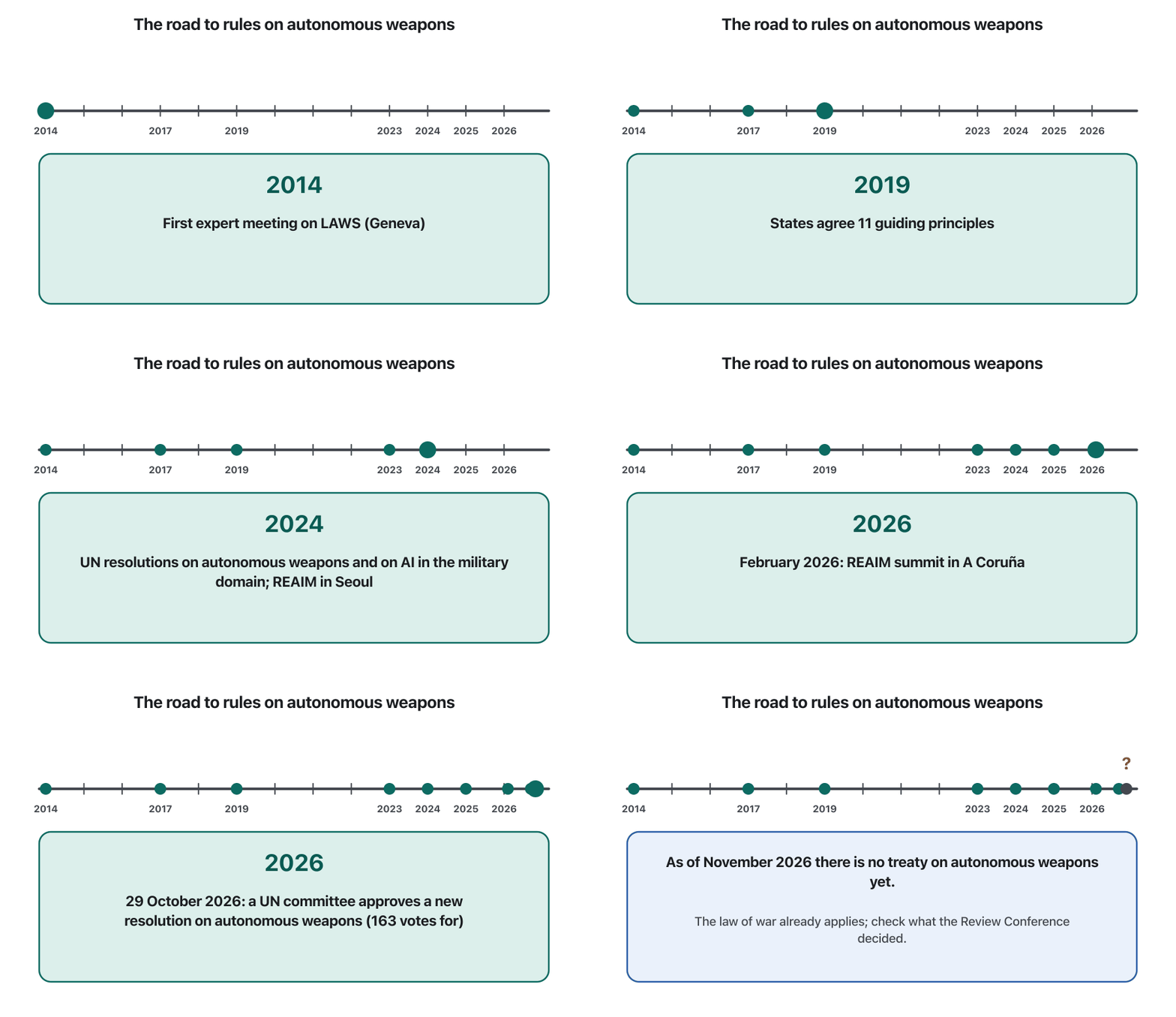
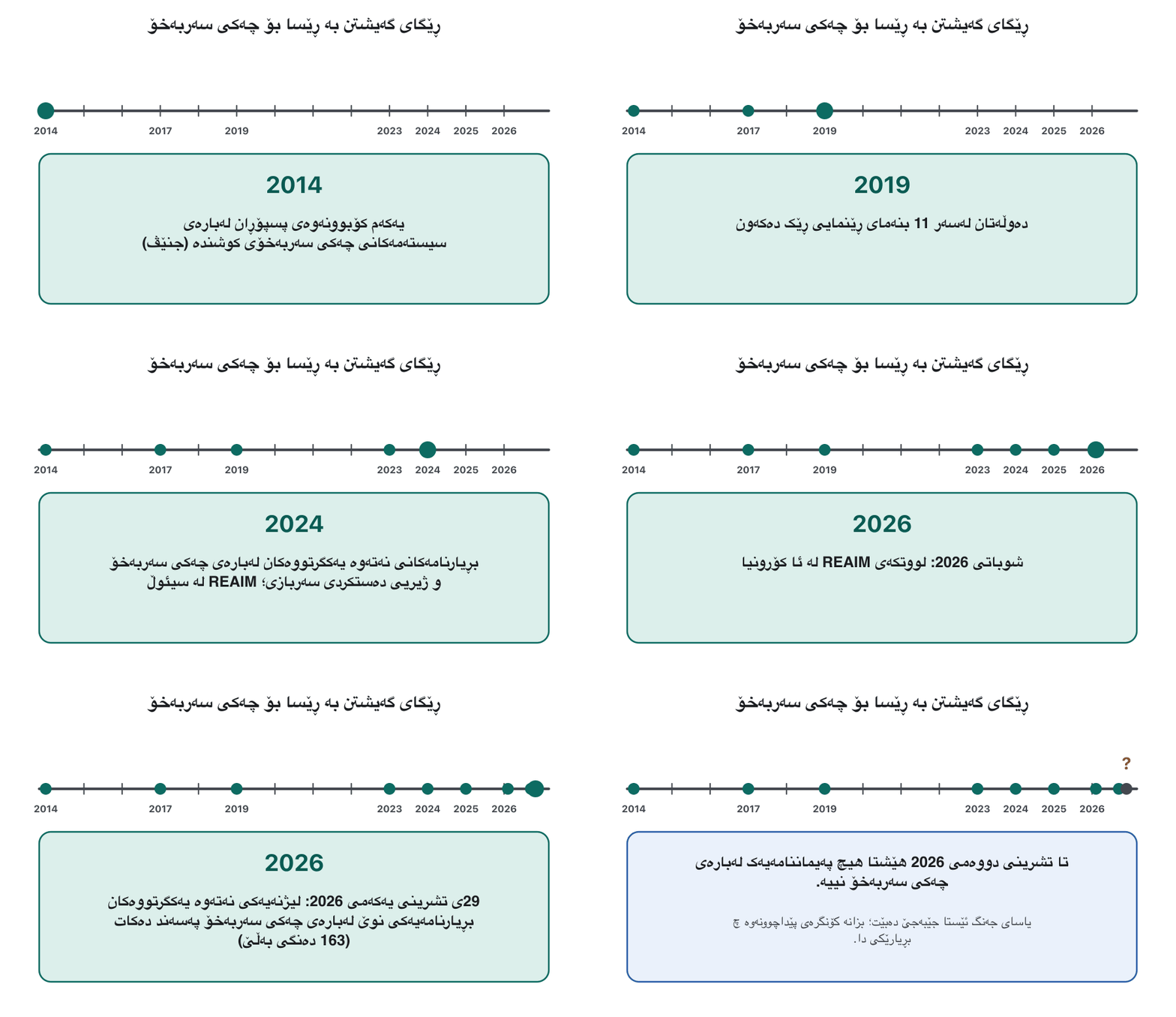
From Geneva 2014 to November 2026لە جنێڤی 2014ـەوە تا تشرینی دووەمی 2026
Before the Review Conference: what we knowپێش کۆنگرەی پێداچوونەوە: ئەوەی دەیزانین
As of 4 November 2026 the Seventh Review Conference is still ahead (Geneva, 16–20 November). Three things are already known:
تا 4ی تشرینی دووەمی 2026 کۆنگرەی حەوتەمی پێداچوونەوە هێشتا نەکراوە (جنێڤ، 16 تا 20ی تشرینی دووەم). سێ شت لە ئێستاوە دەزانرێن:
- What the experts ask: that the Conference endorses their set of elements (paragraphs 25–44) 'without prejudging its nature' — that is, without deciding yet whether a future instrument will be legally binding — and decides how the work continues (paragraph 45).
- How it decides: by consensus. Every state party must accept the decision, so a single state can block it.
- Who wants more: on 5 October 2023 the UN Secretary-General and the ICRC President asked for a new legally binding instrument 'by 2026'; on 25 August 2026 they called the Conference the clearest path to start negotiations. On 29 October 2026, 163 states supported a new UN draft resolution on autonomous weapons in committee.
- ئەوەی پسپۆڕان داوای دەکەن: کۆنگرەکە کۆمەڵە توخمەکەیان (بڕگەکانی 25 تا 44) پەسەند بکات «بەبێ ئەوەی پێشوەختە سروشتەکەی دیاری بکات» — واتە بەبێ ئەوەی ئێستا بڕیار بدات ئایا بەڵگەنامەی داهاتوو بە یاسا ناچاری دەبێت یان نا — هەروەها بڕیار بدات کارەکە چۆن بەردەوام بێت (بڕگەی 45).
- چۆن بڕیار دەدات: بە کۆدەنگی. هەموو دەوڵەتێکی ئەندام دەبێت بڕیارەکە قبووڵ بکات، بۆیە تەنیا یەک دەوڵەت دەتوانێت ڕێگەی لێ بگرێت.
- کێ زیاتری دەوێت: لە 5ی تشرینی یەکەمی 2023دا سکرتێری گشتیی نەتەوە یەکگرتووەکان و سەرۆکی خاچی سووری نێودەوڵەتی داوای بەڵگەنامەیەکی نوێی ناچاریی یاساییان کرد «تا 2026»؛ لە 25ی ئابی 2026دا کۆنگرەکەیان بە ڕوونترین ڕێگا ناو برد بۆ دەستپێکردنی گفتوگۆ. لە 29ی تشرینی یەکەمی 2026دا، 163 دەوڵەت لە لیژنەدا پشتگیرییان لە ڕەشنووسی بڕیارنامەیەکی نوێی نەتەوە یەکگرتووەکان لەبارەی چەکی سەربەخۆ کرد.
From Geneva 2014 to November 2026لە جنێڤی 2014ـەوە تا تشرینی دووەمی 2026
The UN General Assembly and the call for a treatyکۆڕی گشتیی نەتەوە یەکگرتووەکان و داوای پەیماننامە
In New York, the UN General Assembly adds its voice with resolutions. Each autumn its disarmament committee (the First Committee) votes first, and the full Assembly adopts the texts in December. Resolutions are recommendations: they show what most states want, but they are not binding law.
لە نیویۆرک، کۆڕی گشتیی نەتەوە یەکگرتووەکان بە بڕیارنامە دەنگی خۆی زیاد دەکات. هەموو پاییزێک سەرەتا لیژنەی چەکداماڵینەکەی (لیژنەی یەکەم) دەنگ دەدات و پاشان کۆڕی گشتی لە کانوونی یەکەمدا دەقەکان پەسەند دەکات. بڕیارنامەکان ڕاسپاردەن: پیشانی دەدەن زۆربەی دەوڵەتان چییان دەوێت، بەڵام یاسای ناچاری نین.
| Dateڕێکەوت | Resolutionبڕیارنامە | Vote (for–against–abstain)دەنگ (بەڵێ–نەخێر–بێلایەن) | What it doesچی دەکات |
|---|---|---|---|
| 22 Dec 202322ی کانوونی یەکەمی 2023 | 78/241: autonomous weapons78/241: چەکی سەربەخۆ | 152–4–11 | the first UN resolution on lethal autonomous weaponsیەکەم بڕیارنامەی نەتەوە یەکگرتووەکان لەبارەی چەکی سەربەخۆی کوشندە |
| 2 Dec 20242ی کانوونی یەکەمی 2024 | 79/62: autonomous weapons79/62: چەکی سەربەخۆ | 166–3–15 | concern about an arms race and escalation; the law appliesنیگەرانی لە کێبڕکێی چەکداری و گەورەبوونی ململانێ؛ یاسا جێبەجێ دەبێت |
| 24 Dec 202424ی کانوونی یەکەمی 2024 | 79/239: AI in the military domain79/239: | 159–2–5 | the first on this topic; asks the Secretary-General for a reportیەکەمینیانە لەم بابەتەدا؛ داوای ڕاپۆرت لە سکرتێری گشتی دەکات |
| 1 Dec 20251ی کانوونی یەکەمی 2025 | 80/57: autonomous weapons80/57: چەکی سەربەخۆ | 164–6–7 | asks the CCW to complete the set of elements, with a view to future negotiationsداوا لە CCW دەکات کۆمەڵە توخمەکە تەواو بکات، بە مەبەستی گفتوگۆی داهاتوو |
| 1 Dec 20251ی کانوونی یەکەمی 2025 | 80/58: AI in the military domain80/58: | 167–5–5 | informal exchanges between states in Genevaئاڵوگۆڕی نافەرمیی نێوان دەوڵەتان لە جنێڤ |
| 1 Dec 20251ی کانوونی یەکەمی 2025 | 80/23: AI and nuclear command and control80/23: و فەرماندەیی و کۆنترۆڵی ئەتۆمی | 118–9–44 | demands that human control and oversight be keptداوا دەکات کۆنترۆڵ و سەرپەرشتیی مرۆڤ بمێنێتەوە |
| 29 Oct 202629ی تشرینی یەکەمی 2026 | L.37: autonomous weaponsL.37: چەکی سەربەخۆ | 163–5–9 | committee vote: calls for a comprehensive, inclusive approach; Assembly vote due in December 2026دەنگدانی لیژنە: داوای ڕێگایەکی گشتگیر و هەمووان لەخۆگر دەکات؛ دەنگدانی کۆڕی گشتی لە کانوونی یەکەمی 2026دایە |
| 30 Oct 202630ی تشرینی یەکەمی 2026 | L.34: AI in the military domainL.34: | 171–4–6 | committee vote: international law applies across the whole life cycleدەنگدانی لیژنە: یاسای نێودەوڵەتی لە هەموو قۆناغەکانی تەمەنیدا جێبەجێ دەبێت |
Shared principles: promises, not lawبنەما هاوبەشەکان: بەڵێن، نەک یاسا
Alongside the law, governments sign political commitments. They are not legally binding, but they shape national rules:
لە تەنیشت یاسادا، حکومەتەکان پابەندبوونی سیاسی واژوو دەکەن. بە یاسا ناچاری نین، بەڵام شێوە بە ڕێسا نیشتیمانییەکان دەدەن:
- Political Declaration on Responsible Military Use of AI and Autonomy: launched by the United States at The Hague on 16 February 2023; 47 states had endorsed it by November 2023, and more than 50 by 2025. Its ten measures include legal reviews, senior-level oversight of high-consequence uses, reducing unintended bias, transparent and auditable methods, training against automation bias, clear uses, rigorous testing across the life cycle, and the ability to disengage or deactivate a system that behaves in an unintended way.
- REAIM summits (Responsible AI in the Military Domain): The Hague 2023 ('Call to Action'), Seoul 2024 ('Blueprint for Action'), A Coruña, Spain, 4–5 February 2026 ('Pathways to Action'). As of 4 November 2026, Spain's official page lists 45 states that endorsed the 2026 text; the United States and China are not among them.
- NATO: six principles of responsible use (2021), kept in its revised AI strategy of July 2024 — see the principles.
- ڕاگەیەندراوی سیاسی لەبارەی بەکارهێنانی سەربازیی بەرپرسیارانەی و : ئەمریکا لە 16ی شوباتی 2023دا لە لاهای ڕایگەیاند؛ تا تشرینی دووەمی 2023، 47 دەوڵەت پشتگیرییان کردبوو و تا 2025 زیاتر لە 50 دەوڵەت. دە ڕێوشوێنەکەی ئەمانە لەخۆ دەگرن: پێداچوونەوەی یاسایی، سەرپەرشتیی بەرپرسانی باڵا بەسەر بەکارهێنانە گرنگەکاندا، کەمکردنەوەی نامەبەست، ڕێگای ڕوون و پشکنراو، ڕاهێنان دژی ، بەکارهێنانی ڕوون، تاقیکردنەوەی ورد لە هەموو تەمەنی سیستەمەکەدا و توانای پچڕاندن یان کوژاندنەوەی ئەو سیستەمەی ڕەفتاری نامەبەست دەکات.
- لووتکەکانی REAIM ( لە بواری سەربازیدا): لاهای 2023 («بانگەواز بۆ کارکردن»)، سیئوڵ 2024 («نەخشەی کارکردن»)، ئا کۆرونیا لە ئیسپانیا، 4 تا 5ی شوباتی 2026 («ڕێگاکانی کارکردن»). تا 4ی تشرینی دووەمی 2026، پەڕە فەرمییەکەی ئیسپانیا 45 دەوڵەت ناو دەبات کە پشتگیریی دەقی 2026یان کردووە؛ ئەمریکا و چین لە نێویاندا نین.
- ناتۆ: شەش بنەمای بەکارهێنانی بەرپرسیارانە (2021)، کە لە ستراتیژی نوێکراوەی تەممووزی 2024دا ماونەتەوە — بڕوانە بنەماکان.
The EU AI Act and military AIیاسای ژیریی دەستکردی یەکێتیی ئەوروپا و ژیریی دەستکردی سەربازی
The EU's AI Act (Regulation 2024/1689) is a large law for AI in Europe — see The EU AI Act in brief. But its Article 2(3) says it does not apply to AI systems placed on the market, put into service or used exclusively for military, defence or national-security purposes.
(ڕێسای 2024/1689) یاسایەکی گەورەیە بۆ لە ئەوروپا — بڕوانە یاسای ژیریی دەستکردی یەکێتیی ئەوروپا بە کورتی. بەڵام ماددەی 2(3)ی دەڵێت ئەم یاسایە بەسەر ئەو سیستەمانەی جێبەجێ نابێت کە تەنیا بۆ مەبەستی سەربازی، بەرگری یان دەخرێنە بازاڕ، دەخرێنە کار یان بەکاردێن.
Why? Recital 24 explains that for military uses, public international law — mainly IHL — is the more appropriate framework. But the word 'exclusively' matters: if a system made for military purposes is also used, even for a while, for civilian or humanitarian work, law enforcement or public security, it falls under the Act. This is the dual use problem from Dual use: one technology, two purposes.
بۆچی؟ بڕگەی ڕوونکردنەوەی 24 دەڵێت بۆ بەکارهێنانی سەربازی، یاسای نێودەوڵەتیی گشتی — بەتایبەتی — چوارچێوەیەکی گونجاوترە. بەڵام وشەی «تەنیا» گرنگە: ئەگەر سیستەمێک کە بۆ مەبەستی سەربازی دروست کراوە، تەنانەت بۆ ماوەیەکیش، بۆ کاری مەدەنی یان مرۆیی، جێبەجێکردنی یاسا یان ئاسایشی گشتی بەکار بهێنرێت، دەکەوێتە ژێر یاساکەوە. ئەمە کێشەی لە دوو بەکارهێنان: یەک تەکنەلۆژیا، دوو مەبەست.
Common mistakesهەڵە باوەکان
Exercisesڕاهێنانەکان
Sort these into 'binding law' and 'political commitment': (a) the Geneva Conventions; (b) UN General Assembly resolution 79/62; (c) customary rule 1 on distinction; (d) the Political Declaration of 2023; (e) Article 36 of Additional Protocol I; (f) NATO's principles of responsible use.
ئەمانە لە نێوان «یاسای ناچاری» و «پابەندبوونی سیاسی»دا پۆلێن بکە: (a) پەیماننامەکانی جنێڤ؛ (b) بڕیارنامەی 79/62ی کۆڕی گشتی؛ (c) ڕێسای عورفیی 1 لەبارەی جیاکردنەوە؛ (d) ڕاگەیەندراوی سیاسیی 2023؛ (e) ماددەی 36ی پرۆتۆکۆڵی زیادکراوی یەکەم؛ (f) بنەماکانی ناتۆ بۆ بەکارهێنانی بەرپرسیارانە.
Show answerوەڵامەکە پیشان بدە
- Binding law: (a), (c), (e) — (e) binds the states that joined Additional Protocol I.
- Political commitments: (b), (d), (f).
- یاسای ناچاری: (a)، (c)، (e) — (e) ئەو دەوڵەتانە پابەند دەکات کە بەشداری پرۆتۆکۆڵی زیادکراوی یەکەمن.
- پابەندبوونی سیاسی: (b)، (d)، (f).
Write the three questions a commander must be able to answer before force is used, and name the principle behind each.
ئەو سێ پرسیارە بنووسە کە فەرماندەیەک دەبێت پێش بەکارهێنانی هێز بتوانێت وەڵامیان بداتەوە و ناوی بنەمای پشت هەریەکەیان بنووسە.
Show answerوەڵامەکە پیشان بدە
- Is the target a military objective, and have I done everything feasible to verify it? — distinction (and verification, rule 16).
- Would the expected harm to civilians be excessive compared with the concrete and direct military advantage? — proportionality.
- Have all feasible precautions been taken to avoid or minimise harm to civilians? — precautions.
- ئایا ئامانجەکە و هەموو ئەوەی دەکرا کردوومە بۆ پشتڕاستکردنەوەی؟ — (و پشتڕاستکردنەوە، ڕێسای 16).
- ئایا زیانی چاوەڕوانکراو بۆ خەڵکی مەدەنی بەراورد بە سوودی سەربازیی ڕاستەوخۆ و دیاریکراو زیادەڕۆیی دەبێت؟ — .
- ئایا هەموو ئەو وریاییانەی لە توانادایە گیراونەتەبەر بۆ ڕێگرتن لە زیان بە خەڵکی مەدەنی یان کەمکردنەوەی؟ — .
Order these events: the CCW experts adopt their final report; the first UN General Assembly resolution on LAWS; the first informal meeting of experts; the Seventh Review Conference; eleven guiding principles.
ئەم ڕووداوانە ڕیز بکە: پسپۆڕانی CCW ڕاپۆرتی کۆتاییان پەسەند دەکەن؛ یەکەم بڕیارنامەی کۆڕی گشتی لەبارەی LAWS؛ یەکەم کۆبوونەوەی نافەرمیی پسپۆڕان؛ کۆنگرەی حەوتەمی پێداچوونەوە؛ یانزە بنەمای ڕێنمایی.
Show answerوەڵامەکە پیشان بدە
First informal meeting (May 2014) → eleven guiding principles (2019) → first UN General Assembly resolution (December 2023) → final report of the experts (4 September 2026) → Seventh Review Conference (16–20 November 2026).
یەکەم کۆبوونەوەی نافەرمی (ئایاری 2014) ← یانزە بنەمای ڕێنمایی (2019) ← یەکەم بڕیارنامەی کۆڕی گشتی (کانوونی یەکەمی 2023) ← ڕاپۆرتی کۆتایی پسپۆڕان (4ی ئەیلوولی 2026) ← کۆنگرەی حەوتەمی پێداچوونەوە (16 تا 20ی تشرینی دووەمی 2026).
After 20 November 2026, find the final document of the Seventh CCW Review Conference on the UN Office for Disarmament Affairs' meetings website. Did the states agree to start negotiating an instrument? What did they decide about the experts' set of elements?
دوای 20ی تشرینی دووەمی 2026، بەڵگەنامەی کۆتایی کۆنگرەی حەوتەمی پێداچوونەوەی CCW لە ماڵپەڕی کۆبوونەوەکانی نووسینگەی کاروباری چەکداماڵینی نەتەوە یەکگرتووەکان بدۆزەوە. ئایا دەوڵەتان ڕێککەوتن دەست بە گفتوگۆ بۆ بەڵگەنامەیەک بکەن؟ چ بڕیارێکیان لەبارەی کۆمەڵە توخمەکەی پسپۆڕان دا؟
Show answerوەڵامەکە پیشان بدە
Look for three things in the final document: whether the elements of paragraphs 25–44 were endorsed; whether a mandate to negotiate an instrument (binding or not) was given; and the dates of the next meetings. Compare the result with the ICRC's and the UN Secretary-General's call for a binding instrument.
لە بەڵگەنامە کۆتاییەکەدا بەدوای سێ شتدا بگەڕێ: ئایا توخمەکانی بڕگەکانی 25 تا 44 پەسەند کران؛ ئایا ئەرکی گفتوگۆ بۆ بەڵگەنامەیەک (ناچاری بێت یان نا) درا؛ هەروەها ڕێکەوتی کۆبوونەوەکانی داهاتوو. ئەنجامەکە لەگەڵ داوای خاچی سووری نێودەوڵەتی و سکرتێری گشتیی نەتەوە یەکگرتووەکان بۆ بەڵگەنامەیەکی ناچاری بەراورد بکە.
Summaryکورتە
Does international law already apply to military AI?ئایا یاسای نێودەوڵەتی ئێستا بەسەر ژیریی دەستکردی سەربازیدا جێبەجێ دەبێت؟
Yes. IHL governs all weapons, past, present and future, and applies fully to autonomous weapons.
بەڵێ. هەموو چەکێک دەگرێتەوە، ڕابردوو، ئێستا و داهاتوو و بە تەواوی بەسەر چەکی سەربەخۆدا جێبەجێ دەبێت.
Name the three IHL principles behind the 'three questions'.سێ بنەمای یاسای نێودەوڵەتیی مرۆیی لە پشت «سێ پرسیارەکە» بنووسە.
Distinction (with verification), proportionality and precautions.
(لەگەڵ پشتڕاستکردنەوە)، و .
What does Article 36 of Additional Protocol I require?ماددەی 36ی پرۆتۆکۆڵی زیادکراوی یەکەم چی دەخوازێت؟
A legal review of every new weapon, means or method of warfare during its study, development, acquisition or adoption.
بۆ هەموو چەک، ئامراز یان شێوازێکی نوێی شەڕ لە کاتی لێکۆڵینەوە، گەشەپێدان، کڕین یان وەرگرتنیدا.
What did the CCW experts adopt on 4 September 2026, and what comes next?پسپۆڕانی CCW لە 4ی ئەیلوولی 2026دا چییان پەسەند کرد و دواتر چی دێت؟
A final report with a set of elements (paragraphs 25–44). The Seventh Review Conference (16–20 November 2026) is to consider them and decide on future work. As of November 2026 there is no treaty.
ڕاپۆرتێکی کۆتایی لەگەڵ کۆمەڵەیەک توخم (بڕگەکانی 25 تا 44). کۆنگرەی حەوتەمی پێداچوونەوە (16 تا 20ی تشرینی دووەمی 2026) تاوتوێیان دەکات و بڕیار لەسەر کاری داهاتوو دەدات. تا تشرینی دووەمی 2026 هیچ پەیماننامەیەک نییە.
Does the EU AI Act cover military AI?ئایا یاسای ژیریی دەستکردی یەکێتیی ئەوروپا ژیریی دەستکردی سەربازی دەگرێتەوە؟
Not when it is used exclusively for military, defence or national-security purposes (Article 2(3)). Civilian or humanitarian re-use brings it under the Act.
نا، کاتێک تەنیا بۆ مەبەستی سەربازی، بەرگری یان بەکاردێت (ماددەی 2، بڕگەی 3). بەکارهێنانەوەی مەدەنی یان مرۆیی دەیخاتە ژێر یاساکەوە.
Lesson complete!وانەکە تەواو بوو!
Well done. Review the key terms, then go on to the next lesson.دەستخۆش. سەیرێکی زاراوە سەرەکییەکان بکەرەوە، پاشان بڕۆ بۆ وانەی داهاتوو.
Key termsزاراوە سەرەکییەکان
AI That Protects: Rescue, Relief and Peacekeepingژیریی دەستکرد بۆ پاراستن: ڕزگارکردن، فریاگوزاری و ئاشتیپارێزی
Related lecturesوانە پەیوەندیدارەکان
- Target Recognition: Recognising Is Not Identifyingناسینەوەی ئامانج: ناسینەوەی جۆر، دیاریکردنی ناسنامە نییە
- What Is Military AI?ژیریی دەستکردی سەربازی چییە؟
- AI in Cybersecurity: Bias, Privacy, Surveillance and Deepfakesژیریی دەستکرد لە ئاسایشی سایبەردا: لاسەنگی، تایبەتێتی، چاودێری و دیپفەیکەکان
- What Is Artificial Intelligence?ژیریی دەستکرد چییە؟
- AI That Protects: Rescue, Relief and Peacekeepingژیریی دەستکرد بۆ پاراستن: ڕزگارکردن، فریاگوزاری و ئاشتیپارێزی
References and further readingسەرچاوەکان و خوێندنەوەی زیاتر
- ICRC Customary IHL Database, Rule 1: The principle of distinction between civilians and combatants
- ICRC Customary IHL Database, Rule 14: Proportionality in attack
- ICRC Customary IHL Database, Rule 15: Principle of precautions in attack
- ICRC Customary IHL Database, Rule 16: Target verification
- Additional Protocol I (1977), Article 36: New weapons
- CCW Group of Governmental Experts on LAWS: final report CCW/GGE.1/2026/3 (adopted 4 September 2026; paragraphs 25–45 read on 4 November 2026)
- UNODA meetings: CCW informal meeting of experts on LAWS, 13–16 May 2014
- UNODA meetings: CCW Group of Governmental Experts, first session 13–17 November 2017
- Report of the 2019 session of the CCW Group of Governmental Experts on LAWS (eleven guiding principles)
- ICRC position on autonomous weapon systems (12 May 2021)
- ICRC: Frequently asked questions — autonomous weapon systems (8 October 2026)
- Joint call by the UN Secretary-General and the ICRC President (5 October 2023)
- Renewed call by the UN Secretary-General and the ICRC President (25 August 2026)
- UN News: UN chief, Red Cross renew call for rules on lethal autonomous weapons (25 August 2026)
- UN press release GA/12736: General Assembly adopts First Committee texts (1 December 2025)
- UN press release GA/DIS/3781: First Committee approves the draft on lethal autonomous weapons systems, A/C.1/81/L.37, 163–5–9 (29 October 2026)
- UN press release GA/DIS/3782: First Committee approves the draft on AI in the military domain, A/C.1/81/L.34, 171–4–6 (30 October 2026)
- UN press release GA/12660: General Assembly adopts First Committee texts (2 December 2024)
- UN Project: vote record of resolution A/RES/78/241, Lethal autonomous weapons systems (22 December 2023)
- UN Project: vote record of resolution A/RES/80/57, Lethal autonomous weapons systems (1 December 2025)
- UN Project: vote record of resolution A/RES/80/58, AI in the military domain (1 December 2025)
- UN Project: vote record of resolution A/RES/80/23, AI in nuclear command, control and communications (1 December 2025)
- UN Project: vote record of resolution A/RES/79/239, AI in the military domain (24 December 2024)
- UNODA: Artificial intelligence in the military domain (resolution 79/239)
- Political Declaration on Responsible Military Use of Artificial Intelligence and Autonomy (US State Department archive)
- DoD News: U.S. endorses responsible AI measures for global militaries (22 November 2023)
- Spanish Ministry of Foreign Affairs: REAIM 2026, A Coruña Declaration "Pathways to Action" (45 endorsing states, checked 4 November 2026)
- Just Security: the third REAIM summit (2 February 2026)
- Regulation (EU) 2024/1689 (AI Act): Article 2(3) and recital 24
This lecture is a first edition. The Kurdish text and terminology are waiting for review by Kurdish IT teachers.ئەم وانەیە چاپی یەکەمە. دەقە کوردییەکە و زاراوەکانی چاوەڕێی پێداچوونەوەی مامۆستایانی کوردی بواری IT ن.