Chapterبەش 3 · Lectureوانە 3.1
Autonomous Drones, Vehicles and Robotsدرۆن، ئۆتۆمبێل و ڕۆبۆتی سەربەخۆ
Unmanned is not the same as autonomous: most military robots are remotely driven or supervised. Autonomy as a spectrum (with the car levels as an everyday example), the sense–plan–act loop, mission routes and waypoints, obstacle avoidance, navigation and what goes wrong, failsafes and return to home, bomb-disposal robots, robots on land, at sea and under water, and people and robots as one team.
بێمرۆڤ واتای نییە: زۆربەی سەربازی لە دوورەوە دەجووڵێنرێن یان بە سەرپەرشتیی مرۆڤ کار دەکەن. وەک پلەبەندییەک (لەگەڵ ئاستەکانی ئۆتۆمبێل وەک نموونەیەکی ڕۆژانە)، خولی هەستکردن، پلاندانان و کارکردن، ڕێگەی ئەرک و ، ، دۆزینەوەی شوێن و ئەوەی تێکدەچێت، و ، ، لەسەر زەوی، لە دەریا و لەژێر ئاو و مرۆڤ و وەک یەک تیم.
What you will learnچی فێر دەبیت
- Explain the difference between unmanned, remotely piloted, supervised and autonomous, and why autonomy is a spectrum.
- Use the six levels of driving automation as an example and say what the person does at each level.
- Describe the sense–plan–act loop of a robot, with its sensors and actuators.
- Explain how a robot follows waypoints, avoids obstacles and knows where it is, and what can go wrong.
- Explain failsafes, why bomb-disposal robots are mostly remotely driven, and what human–machine teaming means.
- جیاوازیی نێوان بێمرۆڤ، ، سەرپەرشتیکراو و ڕوون بکەیتەوە و بڵێیت بۆچی پلەبەندییە.
- شەش ئاستەکەی لێخوڕین وەک نموونە بەکاربهێنیت و بڵێیت مرۆڤ لە هەر ئاستێکدا چی دەکات.
- خولی هەستکردن، پلاندانان و کارکردنی باس بکەیت، لەگەڵ و .
- ڕوونی بکەیتەوە چۆن دەگرێتەبەر، خۆی لە بەربەست لادەدات و دەزانێت لە کوێیە و چی دەتوانێت تێکبچێت.
- ڕوون بکەیتەوە، بۆچی زیاتر لە دوورەوە دەجووڵێنرێن و واتای چییە.
Nobody on board is not nobody in controlبێمرۆڤ واتای بێ کۆنترۆڵی مرۆڤ نییە
AI helps guide aircraft, ground vehicles and boats that have no pilot or driver on board. They are often sent where it is dangerous for people: into a collapsed building, through smoke, across a field that may hide , or deep under water.
یارمەتیی ئاراستەکردنی ئەو فڕۆکە، ئۆتۆمبێل و بەلەمانە دەدات کە هیچ فڕۆکەوان یان شۆفێرێکیان لەسەر نییە. زۆرجار دەنێردرێنە ئەو شوێنانەی بۆ مرۆڤ مەترسیدارن: ناو بینایەکی ڕووخاو، ناو دووکەڵ، کێڵگەیەک کە لەوانەیە تێدا شاردرابێتەوە، یان قووڵایی ژێر ئاو.
But 'unmanned' only says that nobody is on board. It does not say who is in control. Most military unmanned vehicles today are remotely piloted: a person drives them through a radio link and their cameras. Others are supervised: the machine drives a planned route while a person watches and can stop it. Full autonomy is used only for some tasks and in limited conditions.
بەڵام «بێمرۆڤ» تەنیا دەڵێت هیچ کەسێک لەسەری نییە. ناڵێت کێ کۆنترۆڵی دەکات. ئەمڕۆ زۆربەی ئامێرە بێمرۆڤە سەربازییەکان بە کار دەکەن: مرۆڤێک لە ڕێگەی پەیوەندییەکی ڕادیۆیی و کامێراکانیانەوە دەیانجووڵێنێت. هەندێکی تریان بە سەرپەرشتیی مرۆڤ کار دەکەن: ئامێرەکە ڕێگەیەکی پلانکراو دەبڕێت و مرۆڤێک سەیر دەکات و دەتوانێت ڕایبگرێت. تەواو تەنیا بۆ هەندێک ئەرک و لە بارودۆخی سنوورداردا بەکاردێت.
Controlling a machine from a distance: a person sees through its cameras and steers it by radio or cable. Most unmanned vehicles and bomb-disposal robots today are teleoperated, not autonomous.
کۆنترۆڵکردنی ئامێرێکە لە دوورەوە: مرۆڤێک لە ڕێگەی کامێراکانییەوە دەبینێت و بە ڕادیۆ یان کێبڵ ئاراستەی دەکات. زۆربەی ئامێرە بێمرۆڤەکان و ئەمڕۆ لە دوورەوە کۆنترۆڵ دەکرێن، نەک بن.
Autonomy is a spectrumسەربەخۆیی پلەبەندییە
Autonomy is not simply on or off. The Political Declaration on Responsible Military Use of AI and Autonomy (2023), endorsed by many states, says that autonomy may be understood as a spectrum: a system that can operate without further human intervention once it is activated. A machine can also be autonomous for one function and not for another. A robot may keep its balance by itself while a person chooses where it goes.
تەنیا هەڵکراو یان کوژاوە نییە. ڕاگەیەندراوی سیاسی لەبارەی بەکارهێنانی بەرپرسیارانەی و لە بواری سەربازیدا (2023)، کە زۆر دەوڵەت پشتیوانییان لێ کردووە، دەڵێت دەکرێت وەک پلەبەندییەک تێبگەین: سیستەمێک کە دوای هەڵکردنی دەتوانێت بێ دەستێوەردانی زیاتری مرۆڤ کار بکات. هەروەها ئامێرێک دەکرێت بۆ ئەرکێک بێت و بۆ ئەرکێکی تر نا. دەتوانێت هاوسەنگیی خۆی بەتەنیا ڕابگرێت، لە کاتێکدا مرۆڤ هەڵدەبژێرێت بۆ کوێ بچێت.
The SAE J3016 standard for cars (revised in 2021) sorts driving automation into six levels. At levels 0–2 the person drives, or at least watches all the time. At level 3 the car drives in limited conditions, but the person must take over when asked. At levels 4 and 5 no takeover is needed: level 4 only in set places and conditions, level 5 everywhere.
ستانداردی SAE J3016ـی ئۆتۆمبێل (نوێکراوەی 2021) لێخوڕین دەکاتە شەش ئاست. لە ئاستەکانی 0 تا 2 مرۆڤ لێدەخوڕێت، یان لانیکەم هەمیشە سەیر دەکات. لە ئاستی 3ـدا ئۆتۆمبێلەکە لە بارودۆخی سنوورداردا خۆی لێدەخوڕێت، بەڵام کاتێک داوای لێ دەکرێت مرۆڤ دەبێت کۆنترۆڵ وەربگرێتەوە. لە ئاستەکانی 4 و 5ـدا پێویست ناکات کۆنترۆڵ وەربگیرێتەوە: ئاستی 4 تەنیا لە شوێن و بارودۆخی دیاریکراودا، ئاستی 5 لە هەموو شوێنێک.
From doing to supervisingلە کارکردنەوە بۆ سەرپەرشتیکردن
As autonomy grows, the person's job changes. With remote control, the person makes every move. With assistance, the machine handles small things such as balance or speed. With supervision, the machine drives and the person watches and can stop it. When a machine is autonomous for a task, the person set the task and its limits beforehand, and may not be able to step in quickly, for example when the radio link is slow or lost.
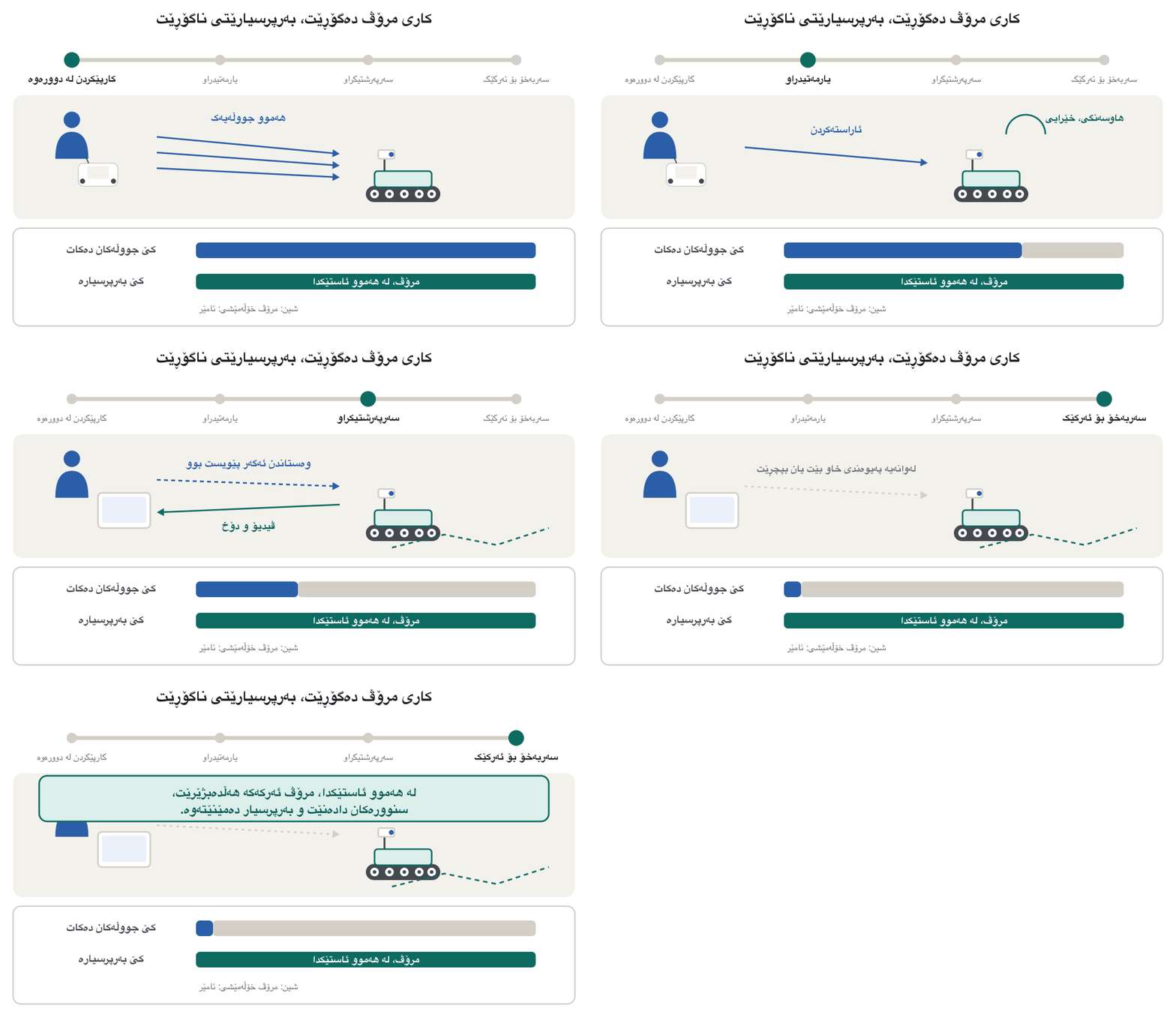
هەتا زیاتر بێت، کاری مرۆڤ دەگۆڕێت. لە مرۆڤ هەموو جووڵەیەک دەکات. لە یارمەتیداندا ئامێرەکە کاری بچووکی وەک هاوسەنگی یان خێرایی دەکات. لە سەرپەرشتیدا ئامێرەکە دەڕوات و مرۆڤ سەیر دەکات و دەتوانێت ڕایبگرێت. کاتێک ئامێرێک بۆ ئەرکێک بێت، مرۆڤ پێشتر ئەرکەکە و سنوورەکانی داناوە و لەوانەیە نەتوانێت بە خێرایی دەستێوەردان بکات، بۆ نموونە کاتێک پەیوەندیی ڕادیۆیی خاوە یان پچڕاوە.
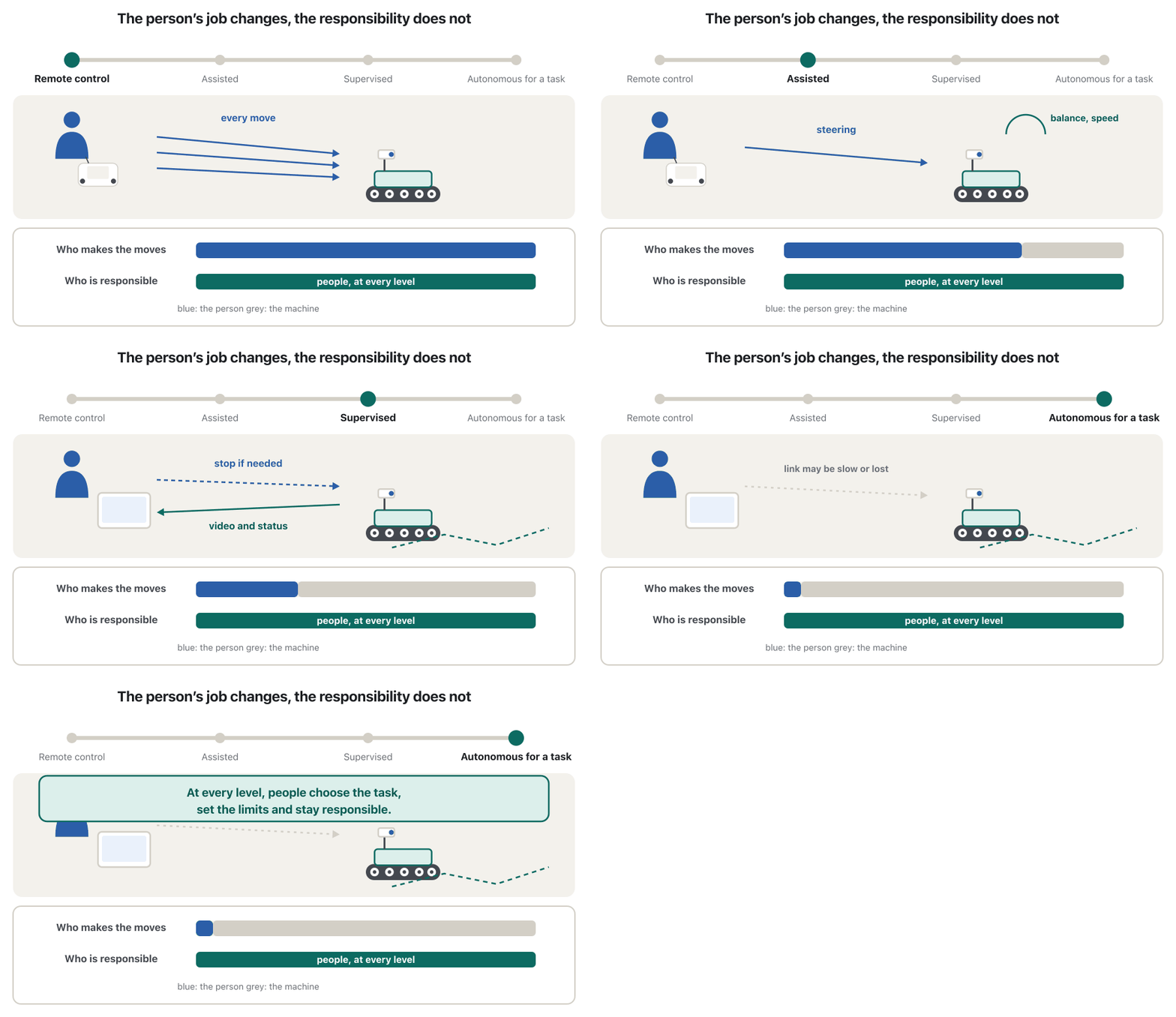
What does not change is responsibility. A machine cannot be held to account; the people who decide to use it, set its limits and supervise it can. On 4 September 2026 states agreed by consensus, in the UN talks on lethal autonomous weapons, that the law places obligations on states, parties to a conflict and individuals, not on machines.
ئەوەی ناگۆڕێت بەرپرسیارێتییە. ناتوانرێت ئامێر بە بەرپرسیار دابنرێت؛ ئەو مرۆڤانەی بڕیاری بەکارهێنانی دەدەن، سنوورەکانی دادەنێن و سەرپەرشتیی دەکەن دەتوانن. لە 4ی ئەیلوولی 2026ـدا دەوڵەتان لە گفتوگۆکانی نەتەوە یەکگرتووەکان لەبارەی بە کۆدەنگی ڕێککەوتن کە یاسا ئەرک دەخاتە سەر دەوڵەتان، لایەنەکانی ململانێ و تاکەکەسەکان، نەک سەر ئامێر.
Sense, plan, actهەستکردن، پلاندانان، کارکردن
An autonomous robot is an : it senses its environment, decides and acts, again and again (Agents and environments). Its are cameras, distance sensors, satellite navigation () and inertial sensors. Its computer turns the readings into answers to three questions: Where am I? What is around me? Which way now? Its are motors, wheels or tracks and the steering.
: هەست بە ژینگەکەی دەکات، بڕیار دەدات و کار دەکات، دووپاتە و دووپاتە (ئەیجێنتەکان و ژینگەکانیان). بریتین لە کامێرا، دووری، ، و . کۆمپیوتەرەکەی خوێندنەوەکان دەکاتە وەڵامی سێ پرسیار: لە کوێم؟ چی لە دەورمە؟ ئێستا بە کامدا بڕۆم؟ بریتین لە مۆتۆر، تایە یان زنجیر و ئاراستەکەر.
A robot cannot see everything at once, so it keeps an inner map and updates it as it moves, like the model-based agents in the self-driving car example.
ناتوانێت هەموو شتێک پێکەوە ببینێت، بۆیە نەخشەیەکی ناوەکی هەڵدەگرێت و لە کاتی جووڵەدا نوێی دەکاتەوە، وەک لە نموونەی ئۆتۆمبێلی خۆگەڕەکە.
Following a mission routeگرتنەبەری ڕێگەی ئەرک
The first ability is to follow a mission route. A person plans the mission as an ordered list of : points given by their , such as 'the bridge', 'the school', 'back home'. The robot drives from one waypoint to the next.
یەکەم توانا گرتنەبەری ڕێگەی ئەرکە. مرۆڤ ئەرکەکە وەک لیستێکی ڕیزکراو لە پلان دەکات: خاڵێک کە بە دیاری دەکرێت، وەک «پردەکە»، «قوتابخانەکە»، «گەڕانەوە بۆ ماڵەوە». لە دەچێت بۆ دانەی دواتر.
Between waypoints, the computer searches its map for a good route. The map is a : roads and open ground with costs such as distance, slope or risk, and no-go areas such as a river without a bridge. It is the same search you met in A* on a road map. Drones fly missions the same way: Holding position and flying missions.
لە نێوان ، کۆمپیوتەرەکە لە نەخشەکەیدا بەدوای ڕێگەیەکی باشدا دەگەڕێت. نەخشەکە : ڕێگا و زەویی کراوە لەگەڵ کۆستی وەک دووری، لێژی یان مەترسی و ناوچەی قەدەغە وەک ڕووبارێکی بێ پرد. ئەمە هەمان گەڕانە کە لە گەڕانی A* لەسەر نەخشەی ڕێگا ناسیت. بە هەمان شێوە ئەرک دەفڕن: ڕاگرتنی شوێن و فڕینی ئەرک.
Avoiding obstaclesخۆلادان لە بەربەست
The second ability is to avoid obstacles: a fallen tree, a ditch, a parked car or a person. Distance sensors and cameras check the path ahead many times a second. The simplest reaction is to stop or slow down. Smarter robots then re-plan: they run the route search again with the blocked part marked, like a taxi driver who takes another street when a road is closed.
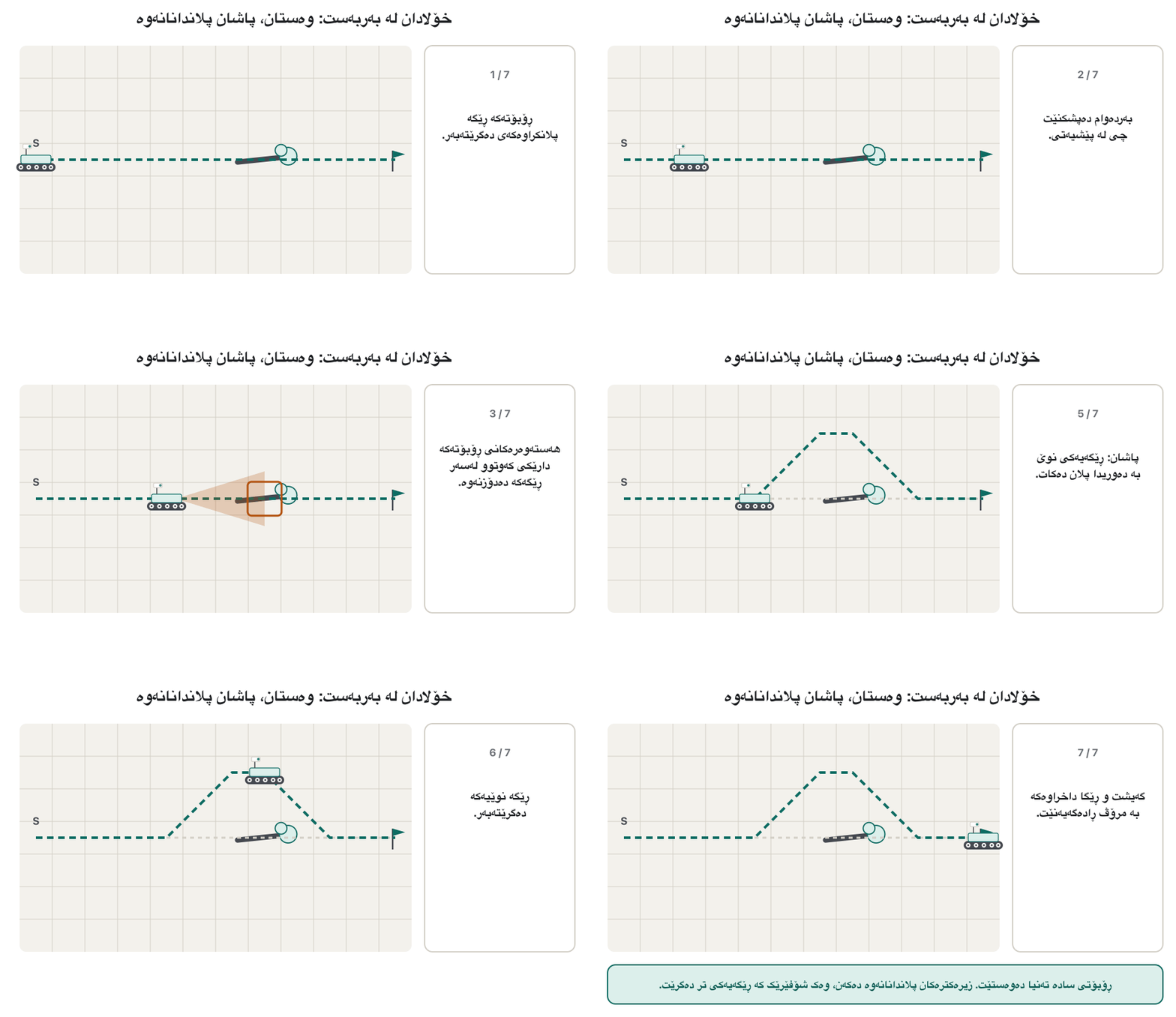
دووەم توانا : دارێکی کەوتوو، چاڵێک، ئۆتۆمبێلێکی ڕاگیراو یان مرۆڤێک. دووری و کامێرا لە هەر چرکەیەکدا چەند جار ڕێگای پێشەوە دەپشکنن. سادەترین کاردانەوە وەستان یان خاوکردنەوەیە. زیرەکتر پاشان دەکەن: گەڕانی ڕێگە دووپاتە دەکەنەوە و بەشە داخراوەکە نیشان دەکەن، وەک شۆفێرێکی تەکسی کە کاتێک ڕێگایەک داخراوە، شەقامێکی تر دەگرێت.
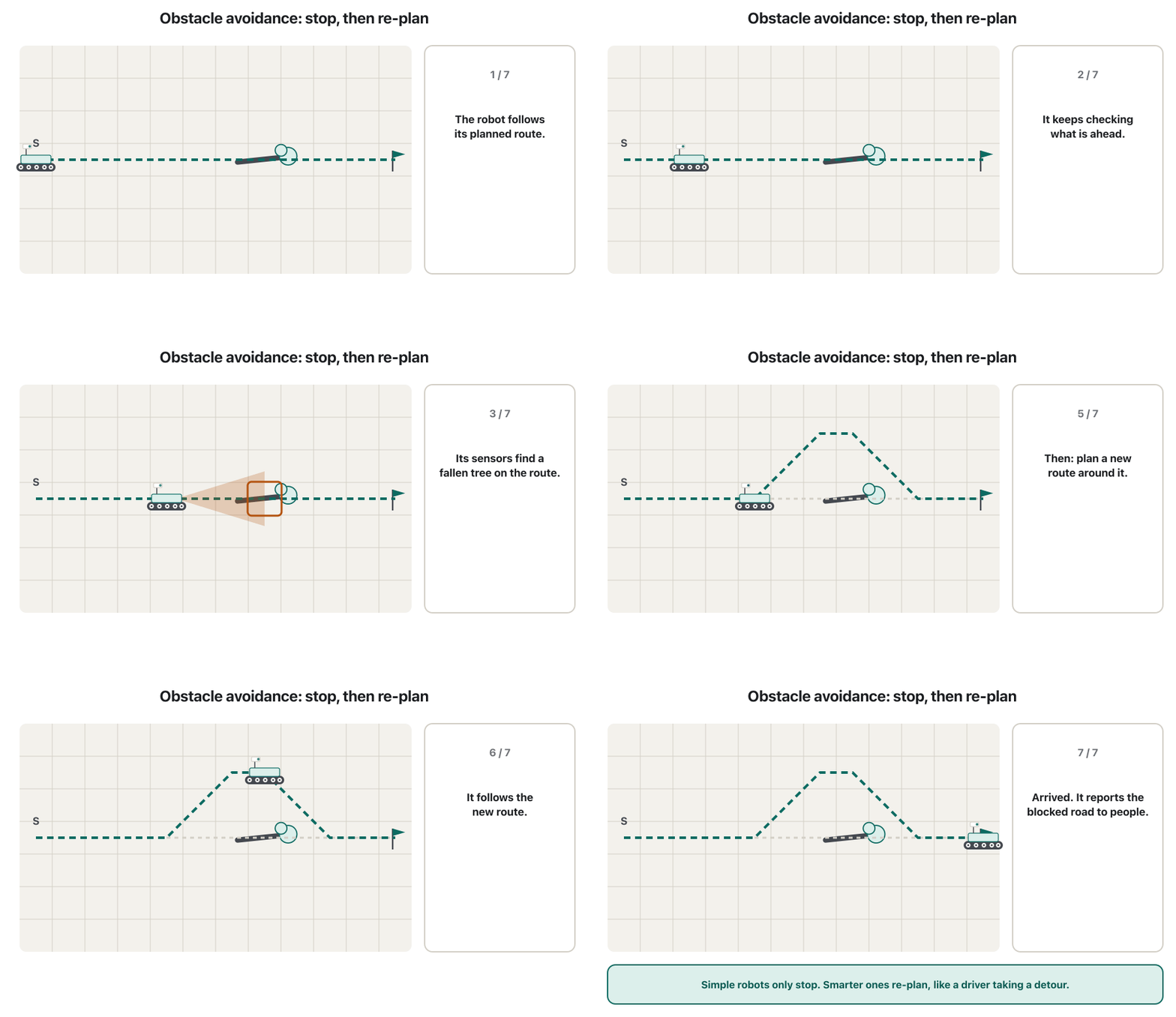
Open-source autopilots for ground robots and boats, such as ArduPilot, offer both: 'simple avoidance', which stops or slides before an obstacle, and path planners that go around obstacles and fences. It is harder than it looks: tall grass, water, glass and dust confuse sensors, and a moving person is not a fixed obstacle.
نەرمەکاڵای کۆنترۆڵی خۆکار بۆ زەمینی و بەلەم، وەک ArduPilot، هەردووکیان پێشکەش دەکات: «خۆلادانی سادە» کە لە بەردەم بەربەستێکدا دەوەستێت یان لای دەدات و پلاندانەری ڕێگە کە بە دەوری بەربەست و ڕێگە دەدۆزێتەوە. ئەمە لەوەی دەردەکەوێت قورسترە: گیای درێژ، ئاو، شووشە و تۆز تێکدەدەن و مرۆڤێکی جووڵاو بەربەستێکی جێگیر نییە.
Returning safely: failsafesگەڕانەوەی سەلامەت: سەلامەتیی کاتی تێکچوون
The third ability is to return safely. Before every mission, people decide what the machine must do when something goes wrong: the radio link is lost, the battery is low or the position is lost. This planned safe reaction is a .
سێیەم توانا گەڕانەوەی سەلامەتە. پێش هەموو ئەرکێک، مرۆڤ بڕیار دەدات ئامێرەکە دەبێت چی بکات کاتێک شتێک تێکدەچێت: پەیوەندیی ڕادیۆیی دەپچڕێت، پاتری کەم دەبێتەوە یان شوێن ون دەبێت. ئەم کاردانەوە سەلامەتە پلانکراوە پێی دەوترێت .
Typical failsafes: a ground robot stops and holds; a drone hovers, lands or flies back to its starting point by a known safe route, called . Then a person takes back control. ArduPilot's autopilot for ground robots, for example, reacts when the radio link has been silent for 1 second (its default setting); its actions include hold and return to launch. Drone failsafes are taught in GNSS navigation, return-to-home and failsafes.
باو: زەمینی دەوەستێت و چاوەڕێ دەکات؛ لە هەوادا ڕادەوەستێت، دەنیشێتەوە یان بە ڕێگەیەکی سەلامەتی ناسراو دەگەڕێتەوە بۆ شوێنی دەستپێکردنی، کە پێی دەوترێت . پاشان مرۆڤ کۆنترۆڵ وەردەگرێتەوە. بۆ نموونە ArduPilot بۆ زەمینی کاتێک پەیوەندیی ڕادیۆیی بۆ 1 چرکە بێدەنگ بوو کاردانەوەی دەبێت (ڕێکخستنی بنەڕەتی)؛ کارەکانی وەستان و گەڕانەوە بۆ شوێنی دەستپێکردن لەخۆ دەگرن. لە دۆزینەوەی شوێن، گەڕانەوە بۆ ماڵ و سەلامەتیی کاتی تێکچوون دەخوێندرێت.
Robots for dangerous jobsڕۆبۆت بۆ کاری مەترسیدار
Robots are often used in risky areas. A good example is the bomb-disposal robot, used in : the trained work of making explosive devices safe. You may read that an unmanned ground vehicle 'patrols a road to detect bombs' by itself. In practice such robots are mostly driven by an operator from a safe distance, who watches through the robot's cameras and controls every move of its tracks and arm.
زۆرجار لە ناوچە مەترسیدارەکاندا بەکاردێت. نموونەیەکی باش : کاری شارەزایانەی بێمەترسیکردنی ئامێرە تەقەمەنییەکان. لەوانەیە بخوێنیتەوە کە بەتەنیا «پاسەوانیی ڕێگایەک دەکات بۆ دۆزینەوەی بۆمب». لە ڕاستیدا ئەم زیاتر لەلایەن ئۆپەراتۆرێکەوە لە دوورییەکی سەلامەتەوە دەجووڵێنرێن، کە لە ڕێگەی کامێراکانی سەیر دەکات و هەموو جووڵەیەکی زنجیر و دەستەکەی کۆنترۆڵ دەکات.
In October 2020, for example, the US Air Force began rolling out 333 new bomb-disposal robots (MTRS Increment II) to its disposal teams over 16 to 18 months. They are remotely operated with a hand-held controller that works like a game controller. AI can help by marking objects in the video or keeping the arm steady, but trained people decide. The same idea saves lives in peacetime: robots and drones help survey land for (AI That Protects).
بۆ نموونە لە ئۆکتۆبەری 2020ـدا هێزی ئاسمانیی ئەمریکا دەستی کرد بە گەیاندنی 333 نوێی (MTRS Increment II) بە تیمەکانی لە ماوەی 16 تا 18 مانگدا. ئەم لە دوورەوە بە کۆنترۆڵێکی دەستی کار دەکەن کە وەک وایە. دەتوانێت یارمەتی بدات بە نیشانکردنی تەن لە ڤیدیۆکەدا یان جێگیرڕاگرتنی دەستەکە، بەڵام مرۆڤی ڕاهێنراو بڕیار دەدات. هەمان بیرۆکە لە کاتی ئاشتیشدا ژیان ڕزگار دەکات: و یارمەتیی پشکنینی زەوی دەدەن بۆ (ژیریی دەستکرد بۆ پاراستن).
In the air, on land, at sea and under waterلە ئاسمان، لەسەر زەوی، لە دەریا و لەژێر ئاو
Unmanned systems work in four places. Autonomy is hardest where the world is most crowded and least predictable, and most needed where people cannot stay in contact.
سیستەمە بێمرۆڤەکان لە چوار شوێندا کار دەکەن. لەو شوێنانەدا قورسترە کە جیهان قەرەباڵغتر و کەمتر پێشبینیکراوە و لەو شوێنانەدا پێویستترە کە مرۆڤ ناتوانێت پەیوەندیی بەردەوامی هەبێت.
| Whereلە کوێ | Examplesنموونە | What makes autonomy hardچی قورس دەکات |
|---|---|---|
| In the airلە ئاسمان | for watching, mapping and delivery (the drone family, types of drones) بۆ ، نەخشەکێشان و گەیاندن (خێزانی درۆن، جۆرەکانی درۆن) | wind, weather, other aircraftبا، کەشوهەوا، فڕۆکەی تر |
| On landلەسەر زەوی | : bomb-disposal robots, supply carriers: ، هەڵگری پێداویستی | many obstacles: rocks, ditches, people, trafficبەربەستی زۆر: بەرد، چاڵ، مرۆڤ، هاتوچۆ |
| On the seaلەسەر دەریا | unmanned boats that survey harbours and coastsبەلەمی بێمرۆڤ کە بەندەر و کەنارەکان دەپشکنن | waves, other ships, salt waterشەپۆل، کەشتیی تر، ئاوی سوێر |
| Under waterلەژێر ئاو | autonomous underwater vehicles that map the seabedئامێری ژێر ئاو کە نەخشەی بنی دەریا دەکێشن | no satellite signals and weak radio, so they must work alone for hoursهیچ ئیشارەتێکی مانگی دەستکرد نییە و ڕادیۆ لاوازە، بۆیە دەبێت چەند کاتژمێرێک بەتەنیا کار بکەن |
That is why underwater robots are often the most autonomous. NOAA, the US ocean agency, explains that researchers plan an underwater robot's mission before the dive; the robot then carries it out alone, untethered from the ship, and its data are collected when it comes back.
لەبەر ئەمە ژێر ئاو زۆرجار لە هەمووان . NOAA، دەزگای ئۆقیانووسی ئەمریکا، ڕوونی دەکاتەوە کە توێژەران پێش ڕۆچوون ئەرکی ژێرئاوییەکە پلان دەکەن؛ پاشان بەتەنیا و بێ پەتی بەستراو بە کەشتییەوە جێبەجێی دەکات و کاتێک دەگەڕێتەوە وەردەگیرێن.
Robots that work with peopleڕۆبۆت کە لەگەڵ مرۆڤ کار دەکات
The future of military AI is often described as smarter robots that cooperate with soldiers. The idea behind it is : people and machines in one team, each doing what it does best. Robots search, carry and go into danger; people judge, decide and stay responsible.
داهاتووی زۆرجار وەک زیرەکتر وەسف دەکرێت کە هاوکاریی سەربازان دەکەن. بیرۆکەی پشتی ئەمە : مرۆڤ و ئامێر لە یەک تیمدا، هەر یەکەیان ئەو کارە دەکات کە باشتر دەیزانێت. دەگەڕێت، بار هەڵدەگرێت و دەچێتە ناو مەترسی؛ مرۆڤ هەڵدەسەنگێنێت، بڕیار دەدات و بەرپرسیار دەمێنێتەوە.
One person can supervise several robots that share a map and divide the work, a small (Multi-agent systems). For example, after an earthquake one operator could send a drone and two ground robots to search three areas while rescuers decide where to dig. NATO's revised AI strategy (July 2024) names 'accountability in human-machine teaming' among the issues that need attention: when one team member is a machine, people must still answer for what the team does.
یەک کەس دەتوانێت سەرپەرشتیی چەند بکات کە نەخشەیەکی هاوبەشیان هەیە و کارەکە دابەش دەکەن، واتە بچووک (سیستەمە فرەئەیجێنتەکان). بۆ نموونە دوای بوومەلەرزەیەک، ئۆپەراتۆرێک دەتوانێت و دوو زەمینی بنێرێت بۆ گەڕان لە سێ ناوچەدا، لە کاتێکدا ڕزگارکەران بڕیار دەدەن لە کوێ هەڵبکۆڵن. ستراتیژیی نوێکراوەی ناتۆ (تەممووزی 2024) « لە » بە یەکێک لەو پرسانە دادەنێت کە سەرنجیان پێویستە: کاتێک یەکێک لە ئەندامانی تیمەکە ئامێرە، هێشتا مرۆڤ دەبێت وەڵامی ئەوە بداتەوە کە تیمەکە دەیکات.
Common mistakesهەڵە باوەکان
| Mistakeهەڵە | What is trueڕاستییەکە |
|---|---|
| Unmanned means autonomous.بێمرۆڤ واتە . | Unmanned only means nobody is on board. Most military unmanned vehicles are remotely piloted or supervised.بێمرۆڤ تەنیا واتە هیچ کەسێک لەسەری نییە. زۆربەی ئامێرە بێمرۆڤە سەربازییەکان بە یان بە سەرپەرشتیی مرۆڤ کار دەکەن. |
| Autonomy is on or off. یان هەیە یان نییە. | It is a spectrum, and it can differ for each function of a machine.پلەبەندییە و دەکرێت بۆ هەر ئەرکێکی ئامێرێک جیاواز بێت. |
| A level 2 car drives itself.ئۆتۆمبێلێکی ئاستی 2 خۆی لێدەخوڕێت. | At level 2 the driver must watch all the time and take over at once.لە ئاستی 2ـدا شۆفێر دەبێت هەمیشە سەیر بکات و دەستبەجێ کۆنترۆڵ وەربگرێتەوە. |
| Bomb-disposal robots patrol roads by themselves. بەتەنیا پاسەوانیی ڕێگاکان دەکەن. | Most are driven by an operator from a safe distance; AI may help.زۆربەیان لەلایەن ئۆپەراتۆرێکەوە لە دوورییەکی سەلامەتەوە دەجووڵێنرێن؛ لەوانەیە یارمەتی بدات. |
| GPS always knows where the robot is. هەمیشە دەزانێت لە کوێیە. | Signals can be jammed or spoofed and do not reach under water. Robots combine several sensors and need failsafes.ئیشارەتەکان دەکرێت بشێوێنرێن یان ساختە بکرێن و ناگەنە ژێر ئاو. چەند پێکەوە بەکاردەهێنن و پێویستە. |
| If the link is lost, the robot should simply carry on.ئەگەر پەیوەندی پچڕا، با بەردەوام بێت. | A failsafe set before the mission takes over: stop, hover, land or return home. کە پێش ئەرکەکە دانراوە دەست بەکار دەبێت: وەستان، ڕاوەستان لە هەوادا، نیشتنەوە یان گەڕانەوە بۆ ماڵ. |
| With a smart enough robot, nobody is responsible.ئەگەر بەس زیرەک بێت، کەس بەرپرسیار نییە. | People stay responsible at every level of autonomy.مرۆڤ لە هەموو ئاستێکی بەرپرسیار دەمێنێتەوە. |
Exercisesڕاهێنانەکان
Name the mode of each machine: (a) an operator steers a robot arm through a camera to open a box; (b) a drone flies a planned survey route while an operator watches and can stop it; (c) an underwater robot maps the seabed for six hours with no contact, on a route planned before the dive; (d) a car keeps its lane and its speed while the driver watches the road.
شێوەی کارکردنی هەر ئامێرێک بنووسە: (a) ئۆپەراتۆرێک لە ڕێگەی کامێرایەکەوە دەستی ئاراستە دەکات بۆ کردنەوەی سندووقێک؛ (b) ڕێگەیەکی پلانکراوی پشکنین دەبڕێت و ئۆپەراتۆرێک سەیر دەکات و دەتوانێت ڕایبگرێت؛ (c) ژێرئاوی بۆ شەش کاتژمێر بێ پەیوەندی نەخشەی بنی دەریا دەکێشێت، لەسەر ڕێگەیەک کە پێش ڕۆچوون پلان کراوە؛ (d) ئۆتۆمبێلێک هێڵ و خێرایی خۆی ڕادەگرێت و شۆفێرەکە سەیری ڕێگاکە دەکات.
Show answerوەڵامەکە پیشان بدە
- (a) Remote control (teleoperation): the person makes every move.
- (b) Supervised: the machine flies, the person watches and can stop it.
- (c) Autonomous for a task, within limits people set before the dive.
- (d) SAE level 2, partial automation: the driver still drives by watching all the time.
- (a) : مرۆڤ هەموو جووڵەیەک دەکات.
- (b) سەرپەرشتیکراو: ئامێرەکە دەفڕێت، مرۆڤ سەیر دەکات و دەتوانێت ڕایبگرێت.
- (c) بۆ ئەرکێک، لەناو ئەو سنوورانەی مرۆڤ پێش ڕۆچوون دایناون.
- (d) ئاستی 2ی SAE، بەشەکی: شۆفێرەکە هێشتا لێدەخوڕێت، چونکە هەمیشە سەیر دەکات.
A ground robot carries drinking water to a village cut off by a flood. List its sensors, what it must plan, and its actuators.
زەمینی ئاوی خواردنەوە دەگەیەنێتە گوندێک کە لافاو ڕێگاکەی بڕیوە. ، ئەوەی دەبێت پلانی بکات و بنووسە.
Show answerوەڵامەکە پیشان بدە
- Sensors: cameras, distance sensors for obstacles and water depth, satellite navigation, inertial sensors, a battery sensor.
- Plan: a route through the waypoints that avoids flooded and steep ground, a new route if a road is blocked, and the failsafe if the link is lost.
- Actuators: motors and tracks or wheels, steering, and the brake.
- : کامێرا، دووری بۆ بەربەست و قووڵیی ئاو، ، و ، پاتری.
- پلاندانان: ڕێگەیەک بە ناو کە زەویی لافاوگرتوو و لێژ دوور بخاتەوە، ڕێگەیەکی نوێ ئەگەر ڕێگایەک داخرا و ئەگەر پەیوەندی پچڕا.
- : مۆتۆر و زنجیر یان تایە، ئاراستەکەر و وەستێنەر.
A ground robot carries medicine between two villages. Write its failsafe plan: what triggers it, what the robot does, and who takes over.
زەمینی دەرمان لە نێوان دوو گونددا دەگوازێتەوە. پلانی بنووسە: چی دەستی پێ دەکات، چی دەکات و کێ کۆنترۆڵ وەردەگرێتەوە.
Show answerوەڵامەکە پیشان بدە
Triggers: radio link silent for a set time, battery below a set level, position lost or sensors disagreeing, an obstacle it cannot pass.
هۆکارەکان: بێدەنگبوونی پەیوەندیی ڕادیۆیی بۆ ماوەیەکی دیاریکراو، کەمبوونەوەی پاتری لە ئاستێکی دیاریکراو، ونبوونی شوێن یان ناکۆکیی ، بەربەستێک کە ناتوانێت تێیپەڕێنێت.
Action: stop in a safe place off the road and hold; if the battery allows, return home by the known route.
کار: لە شوێنێکی سەلامەت لە دەرەوەی ڕێگاکە بوەستێت و چاوەڕێ بکات؛ ئەگەر پاترییەکە ڕێگە بدات، بە ڕێگە ناسراوەکە بگەڕێتەوە بۆ ماڵ.
Takeover: a named operator gets an alert, takes back control or sends a team, and checks what went wrong before the next trip.
کۆنترۆڵوەرگرتنەوە: ئۆپەراتۆرێکی دیاریکراو ئاگادارکردنەوەیەک وەردەگرێت، کۆنترۆڵ وەردەگرێتەوە یان تیمێک دەنێرێت و پێش گەشتی دواتر دەپشکنێت چی تێکچوو.
A rescue team has one operator, one drone and two ground robots after an earthquake. How would you divide the work, and what must the operator always be able to do?
تیمێکی ڕزگارکردن دوای بوومەلەرزەیەک یەک ئۆپەراتۆر، یەک و دوو زەمینیی هەیە. کارەکە چۆن دابەش دەکەیت و ئۆپەراتۆرەکە دەبێت هەمیشە بتوانێت چی بکات؟
Show answerوەڵامەکە پیشان بدە
- Divide the area on a shared map: the drone looks from above, each ground robot searches one zone and reports what it finds.
- The operator must always see where each machine is, be able to stop any of them at once, and decide what to do with every report; rescuers decide where to dig.
- Each machine has a failsafe, and the operator answers for the team's decisions.
- ناوچەکە لەسەر نەخشەیەکی هاوبەش دابەش بکە: لە سەرەوە سەیر دەکات، هەر زەمینی لە ناوچەیەک دەگەڕێت و ئەوەی دەیدۆزێتەوە ڕادەگەیەنێت.
- ئۆپەراتۆرەکە دەبێت هەمیشە ببینێت هەر ئامێرێک لە کوێیە، بتوانێت دەستبەجێ هەر یەکێکیان ڕابگرێت و بڕیار بدات چی بە هەر ڕاپۆرتێک بکرێت؛ ڕزگارکەران بڕیار دەدەن لە کوێ هەڵبکۆڵن.
- هەر ئامێرێک هەیە و ئۆپەراتۆرەکە وەڵامی بڕیارەکانی تیمەکە دەداتەوە.
Summaryپوختە
- Unmanned is not autonomous: most military robots are remotely piloted or supervised.
- Autonomy is a spectrum and can differ by function; the car levels 0–5 are an everyday example.
- An autonomous robot is an agent: sense, plan, act, with sensors, a computer and actuators.
- Three abilities: follow waypoints, avoid obstacles (stop, then re-plan) and return safely with a failsafe.
- Navigation combines satellites, inertial sensors and cameras; jamming, spoofing and water can take the position away.
- Bomb-disposal robots are mostly driven from a safe distance; trained people decide.
- Human–machine teaming: machines share the work, never the responsibility.
- بێمرۆڤ واتای نییە: زۆربەی سەربازی بە یان بە سەرپەرشتیی مرۆڤ کار دەکەن.
- پلەبەندییە و دەکرێت بەپێی ئەرک جیاواز بێت؛ ئاستەکانی 0 تا 5ی ئۆتۆمبێل نموونەیەکی ڕۆژانەن.
- : هەستکردن، پلاندانان، کارکردن، بە ، کۆمپیوتەر و .
- سێ توانا: گرتنەبەری ، (وەستان، پاشان ) و گەڕانەوەی سەلامەت بە .
- دۆزینەوەی شوێن مانگی دەستکرد، ، و کامێرا پێکەوە دەبەستێت؛ ، و ئاو دەتوانن شوێنەکە ون بکەن.
- زیاتر لە دوورییەکی سەلامەتەوە دەجووڵێنرێن؛ مرۆڤی ڕاهێنراو بڕیار دەدات.
- : ئامێر لە کاردا بەشدارە، هەرگیز لە بەرپرسیارێتیدا نا.
What is the difference between unmanned and autonomous?جیاوازیی نێوان بێمرۆڤ و سەربەخۆ چییە؟
Unmanned means no person on board. Autonomous means the machine does a task without a person controlling each step; an unmanned machine can be remotely piloted, supervised or autonomous.
بێمرۆڤ واتە هیچ کەسێک لەسەری نییە. واتە ئامێرەکە ئەرکێک دەکات بێ ئەوەی مرۆڤ هەموو هەنگاوێک کۆنترۆڵ بکات؛ ئامێرێکی بێمرۆڤ دەکرێت بە ، بە سەرپەرشتی یان بە کار بکات.
What should a robot do when its radio link is lost?ڕۆبۆتێک دەبێت چی بکات کاتێک پەیوەندیی ڕادیۆیی دەپچڕێت؟
Follow its failsafe: after a short wait, do the safe action set before the mission, such as stopping and holding or returning home, until a person takes back control.
پەیڕەو بکات: دوای چاوەڕوانییەکی کورت، ئەو کارە سەلامەتە بکات کە پێش ئەرکەکە دانرابوو، وەک وەستان و چاوەڕێکردن یان گەڕانەوە بۆ ماڵ، تا مرۆڤ کۆنترۆڵ وەردەگرێتەوە.
Why do bomb-disposal teams use robots?بۆچی تیمەکانی پووچەڵکردنەوەی تەقەمەنی ڕۆبۆت بەکاردەهێنن؟
So that nobody has to stand next to the danger: an operator drives the robot from a safe distance and decides every move.
بۆ ئەوەی پێویست نەکات کەس لە تەنیشت مەترسییەکەوە بوەستێت: ئۆپەراتۆرێک لە دوورییەکی سەلامەتەوە دەجووڵێنێت و بڕیاری هەموو جووڵەیەک دەدات.
Lesson complete!وانەکە تەواو بوو!
Well done. Review the key terms, then go on to the next lesson.دەستخۆش. سەیرێکی زاراوە سەرەکییەکان بکەرەوە، پاشان بڕۆ بۆ وانەی داهاتوو.
Key termsزاراوە سەرەکییەکان
AI in Cyber Defenceژیریی دەستکرد لە بەرگریی سایبەریدا
Related lecturesوانە پەیوەندیدارەکان
- Types of Agents and Multi-Agent Systemsجۆرەکانی ئەیجێنت و سیستەمە فرەئەیجێنتەکان
- A* Searchگەڕانی A*
- Decisions, Human Control and Responsibilityبڕیار، کۆنترۆڵی مرۆڤ و بەرپرسیارێتی
- When AI Gets It Wrong: Errors, Bias and Deceptionکاتێک ژیریی دەستکرد هەڵە دەکات: هەڵە، لاسەنگی و فریودان
- AI That Protects: Rescue, Relief and Peacekeepingژیریی دەستکرد بۆ پاراستن: ڕزگارکردن، فریاگوزاری و ئاشتیپارێزی
- GNSS Navigation, Return-to-Home, Geofences and Failsafesڕێنیشاندەری GNSS، گەڕانەوە بۆ ماڵ، پەرژینەکانی جوگرافی و سەلامەتیی کاتی تێکچوون
- Autonomy, Swarms, Air Taxis and the Future of Dronesسەربەخۆیی، ڕەوەکانی درۆن، تەکسییە ئاسمانییەکان و داهاتووی درۆنەکان
- Real Incidents: From MoneyGram to GPS Spoofingڕووداوە ڕاستەقینەکان: لە MoneyGramـەوە تا هەڵخەڵەتاندنی GPS
- Emerging Technologies: IoT, VR/AR, Robots and Blockchainتەکنەلۆجیا نوێیەکان: ئینتەرنێتی شتەکان، ڕاستیی گریمانەیی/ڕاستیی زیادکراو، ڕۆبۆتەکان و بلۆکچەین
References and further readingسەرچاوەکان و خوێندنەوەی زیاتر
- Political Declaration on Responsible Military Use of Artificial Intelligence and Autonomy (text)
- SAE J3016: Taxonomy and Definitions for Terms Related to Driving Automation Systems
- Wikipedia: Self-driving car (SAE classification and operational design domain)
- ArduPilot Rover documentation: Failsafes
- ArduPilot Rover documentation: Object avoidance
- Defense One (27 October 2020): Air Force rolls out bomb disposal robots
- NOAA Ocean Exploration: Autonomous underwater vehicles
- NATO: Summary of the revised Artificial Intelligence Strategy (10 July 2024)
- CCW Group of Governmental Experts on LAWS: final report CCW/GGE.1/2026/3 (adopted 4 September 2026)
This lecture is a first edition. The Kurdish text and terminology are waiting for review by Kurdish IT teachers.ئەم وانەیە چاپی یەکەمە. دەقە کوردییەکە و زاراوەکانی چاوەڕێی پێداچوونەوەی مامۆستایانی کوردی بواری IT ن.