Chapterبەش 1 · Lectureوانە 1.3
When AI Gets It Wrong: Errors, Bias and Deceptionکاتێک ژیریی دەستکرد هەڵە دەکات: هەڵە، لاسەنگی و فریودان
Why every AI system makes mistakes: false alarms and misses, the accuracy trap and the confidence threshold, bias and distribution shift, deliberate tricks (camouflage and decoys, adversarial examples, spoofing and jamming, data poisoning), black boxes and explainability, and how testing, red teaming and a human check reduce the risks.
بۆچی هەموو سیستەمێکی هەڵە دەکات: ئاگادارکردنەوەی هەڵە و لەدەستدان، فریوی و ، و ، فێڵی ئەنقەست ( و ، ، و شێواندن، )، و ، هەروەها ، و پشکنینی مرۆڤ چۆن مەترسییەکان کەم دەکەنەوە.
What you will learnچی فێر دەبیت
- Tell false positives from false negatives, read a confusion matrix and explain why high accuracy can hide rare cases.
- Explain how a confidence threshold trades false alarms for misses and who chooses it.
- Explain distribution shift and bias, with examples.
- Describe, at concept level, camouflage and decoys, adversarial examples, spoofing and jamming, and data poisoning, and place them in NIST's groups.
- Explain why black boxes are a problem and list the habits that reduce the risks.
- لە جیا بکەیتەوە، بخوێنیتەوە و ڕوونی بکەیتەوە بۆچی بەرز دەتوانێت حاڵەتی دەگمەن بشارێتەوە.
- ڕوونی بکەیتەوە چۆن ئاگادارکردنەوەی هەڵە بە لەدەستدان دەگۆڕێتەوە و کێ هەڵیدەبژێرێت.
- و بە نموونە ڕوون بکەیتەوە.
- لە ئاستی بیرۆکەدا و ، ، و شێواندن و وەسف بکەیت و لە گرووپەکانی NISTـدا جێیان بکەیتەوە.
- ڕوونی بکەیتەوە بۆچی کێشەن و ئەو خووانە بژمێریت کە مەترسییەکان کەم دەکەنەوە.
Every AI system makes mistakesهەموو سیستەمێکی ژیریی دەستکرد هەڵە دەکات
No AI is right all the time. UNIDIR, the UN's institute for disarmament research, sorts the risks of military AI into two families: risks of the technology itself, and risks of how it spreads and is used. This lesson covers the first family: honest mistakes, data problems, deliberate tricks and hidden reasons. People trusting a machine too much (automation bias) is taught in Decisions, human control and responsibility, and the risks of spread and use in War has rules.
هیچ سیستەمێکی هەمیشە ڕاست نییە. UNIDIR، دامەزراوەی توێژینەوەی چەکداماڵینی نەتەوە یەکگرتووەکان، مەترسییەکانی دەکاتە دوو خێزان: مەترسیی خودی تەکنەلۆژیاکە و مەترسیی بڵاوبوونەوە و بەکارهێنانی. ئەم وانەیە باسی خێزانی یەکەم دەکات: هەڵەی ئاسایی، کێشەکانی ، فێڵی ئەنقەست و هۆکاری شاراوە. متمانەی زیادەی مرۆڤ بە ئامێر () لە وانەی بڕیار، کۆنترۆڵی مرۆڤ و بەرپرسیارێتیدا فێر دەکرێت. مەترسییەکانی بڵاوبوونەوە و بەکارهێنانیش لە وانەی شەڕیش یاسای هەیەدا.
False alarms and missesئاگادارکردنەوەی هەڵە و لەدەستدان
Any detector can be wrong in two ways. Take a rescue drone whose model looks for people in thermal pictures. A false positive is a false alarm: it says “person”, but there is only a warm rock. A false negative is a miss: a person is there, but it says “nobody”. You met these words in False alarms and missed attacks; here a miss can cost a life.
هەر دۆزەرەوەیەک دەتوانێت بە دوو شێوە هەڵە بکات. ڕزگارکردن وەربگرە کە لە وێنە گەرمییەکاندا بە دوای خەڵکدا دەگەڕێت. ئاگادارکردنەوەیەکی هەڵەیە: دەڵێت «کەس»، بەڵام تەنیا بەردێکی گەرم هەیە. لەدەستدانێکە: کەسێک لەوێیە، بەڵام دەڵێت «هیچ کەس». ئەم وشانەت پێشتر لە ئاگادارکردنەوەی هەڵە و هێرشی لەدەستچوودا بینیوە؛ لێرەدا لەدەستدانێک دەکرێت بە نرخی ژیانێک تەواو بێت.
A table that counts a model's right and wrong answers by kind: , , and . It shows which kind of mistake a system makes, not only how often it is right.
خشتەیەکە کە وەڵامە ڕاست و هەڵەکانی بەپێی جۆر دەژمێرێت: ، ، و . پیشان دەدات سیستەمێک چ جۆرە هەڵەیەک دەکات، نەک تەنیا چەند جار ڕاستە.
False alarms and missesئاگادارکردنەوەی هەڵە و لەدەستدان
Why 99% accurate can be uselessبۆچی ڕێژەی ڕاستیی 99% دەکرێت بێسوود بێت
After an earthquake, a drone takes 1,000 pictures, and 10 of them show a person. A lazy model that always answers “nobody” is right on 990 pictures: accuracy, and it found no one. Accuracy alone hides the rare cases that matter most. That is why testers count false positives and false negatives separately, and ask how many of the real cases were found: here, 0 of 10.
دوای بوومەلەرزەیەک، 1,000 وێنە دەگرێت کە 10 دانەیان کەسێکیان تێدایە. تەمبەڵ کە هەمیشە دەڵێت «هیچ کەس»، لە 990 وێنەدا ڕاستە: ، بەڵام هیچ کەسێکی نەدۆزییەوە. بە تەنیا ئەو حاڵەتە دەگمەنانە دەشارێتەوە کە لە هەموو شتێک گرنگترن. بۆیە تاقیکەرەوەکان و جیا جیا دەژمێرن و دەپرسن چەند لە حاڵەتە ڕاستەقینەکان دۆزرانەوە: لێرەدا 0 لە 10.
The share of a model's answers that are right, measured on the model has not seen. A high accuracy can hide many misses of rare things, so and are counted too.
ئەو ڕێژەیەیە لە وەڵامەکانی کە ڕاستن، لەسەر دەپێورێت کە پێشتر نەیبینیوە. ڕێژەیەکی بەرز دەتوانێت زۆر لەدەستدانی شتە دەگمەنەکان بشارێتەوە، بۆیە و لەگەڵیدا دەژمێردرێن.
The threshold: false alarms against missesسنووری دڵنیایی: ئاگادارکردنەوەی هەڵە بەرانبەر لەدەستدان
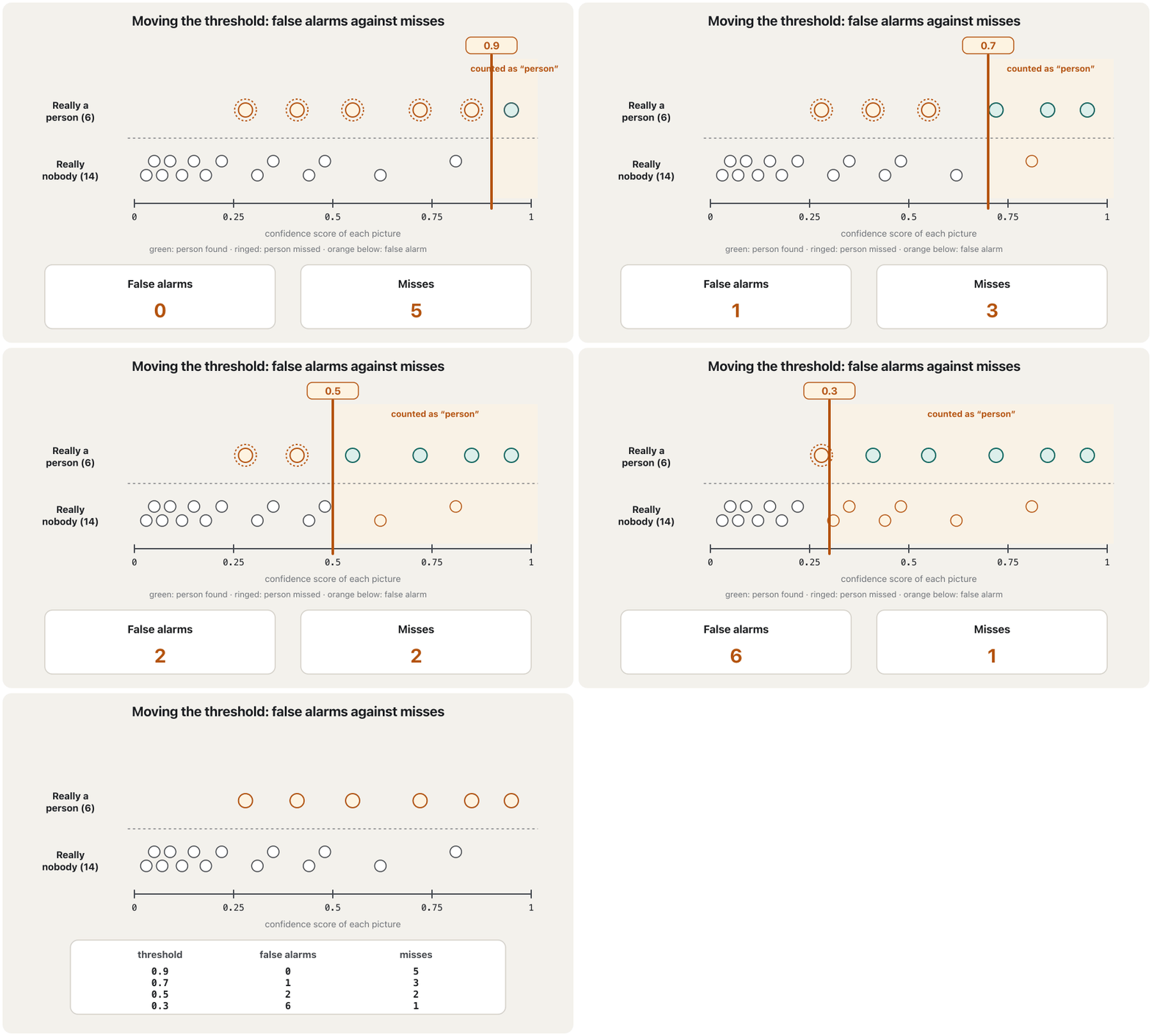
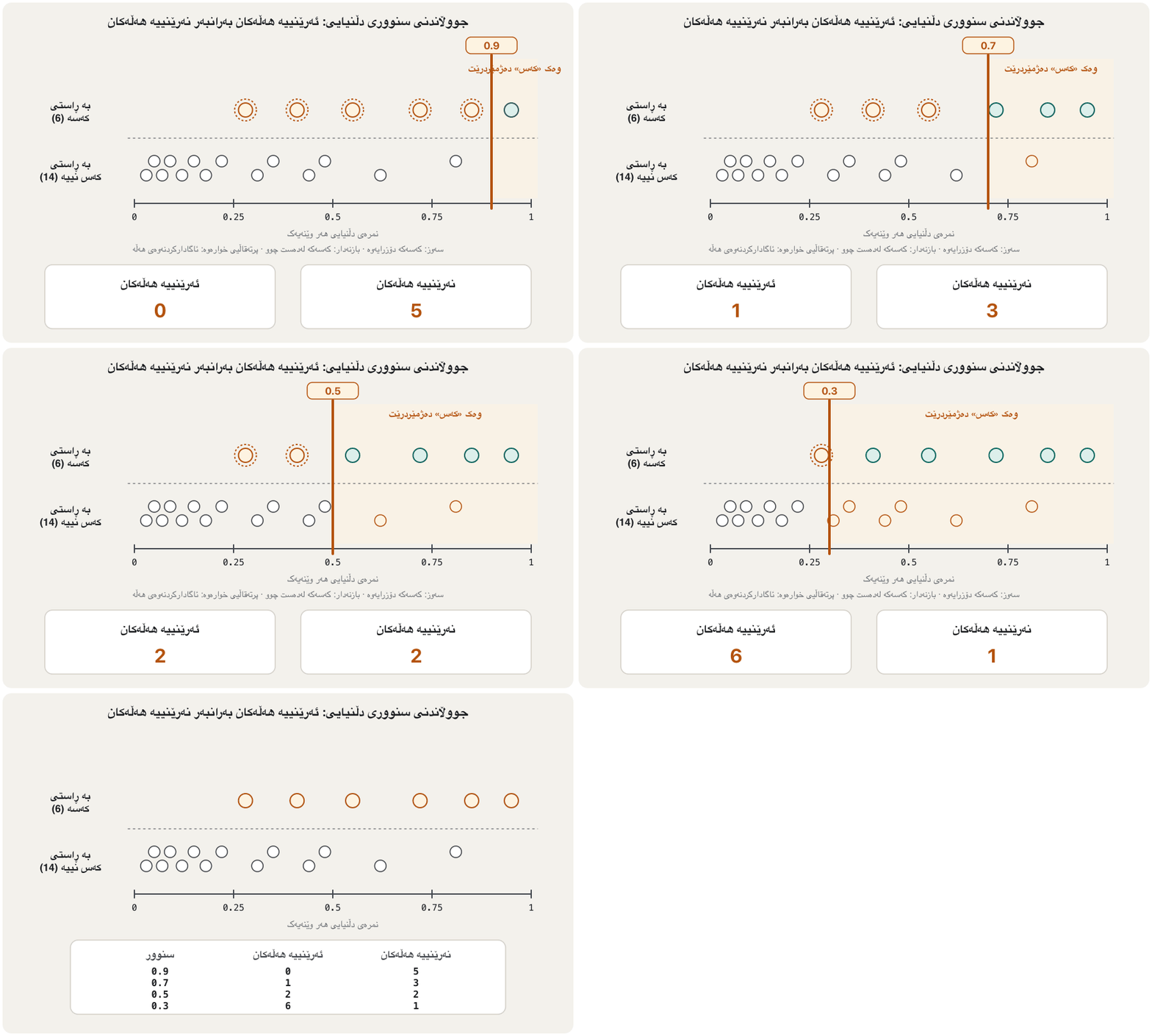
A detector gives each picture a confidence score. Someone must choose the confidence threshold: the lowest score that counts as “person”. Raise it, and there are fewer false alarms but more misses. Lower it, and the misses fall but the false alarms rise. No setting removes both. The animation shows 20 test pictures at four settings.
دۆزەرەوەیەک بە هەر وێنەیەک دەدات. کەسێک دەبێت هەڵبژێرێت: کەمترین نمرە کە وەک «کەس» دەژمێردرێت. بەرزی بکەرەوە، کەمتر دەبن بەڵام زیاتر. نزمی بکەرەوە، کەم دەبنەوە بەڵام زیاد دەبن. هیچ ڕێکخستنێک هەردووکیان لانابات. 20 وێنەی تاقیکردنەوە لە چوار ڕێکخستندا پیشان دەدات.
The lowest at which a system reports something. A high threshold gives fewer but more ; a low threshold does the opposite, so people choose it for each job.
کەمترین کە سیستەمێک لێیەوە شتێک ڕاپۆرت دەکات. سنوورێکی بەرز کەمتر بەڵام زیاتر دەدات؛ سنوورێکی نزم بە پێچەوانەوە، بۆیە مرۆڤ بۆ هەر کارێک هەڵیدەبژێرێت.
The threshold: false alarms against missesسنووری دڵنیایی: ئاگادارکردنەوەی هەڵە بەرانبەر لەدەستدان
Who chooses the threshold?کێ سنووری دڵنیایی هەڵدەبژێرێت؟
The right threshold depends on which mistake costs more, and people must decide that. In a search for earthquake survivors, a miss can cost a life while a false alarm costs a short check, so the threshold is set low and the team checks every alarm. Where a false alarm could harm people, a score is never enough on its own: a person must check the evidence under strict rules (Decisions, human control and responsibility). The threshold is chosen in testing, written down and reviewed when conditions change.
گونجاو بەوە دیاری دەکرێت کە کام هەڵە گرانترە و مرۆڤ دەبێت ئەمە بڕیار بدات. لە گەڕان بە دوای ڕزگاربووانی بوومەلەرزەدا، لەدەستدانێک دەکرێت بە نرخی ژیانێک تەواو بێت، لە کاتێکدا ئاگادارکردنەوەیەکی هەڵە تەنیا پشکنینێکی کورتی دەوێت، بۆیە سنوورەکە نزم دادەنرێت و تیمەکە هەموو ئاگادارکردنەوەیەک دەپشکنێت. لەو شوێنانەی ئاگادارکردنەوەیەکی هەڵە دەکرێت زیان بە خەڵک بگەیەنێت، نمرە بە تەنیا هەرگیز بەس نییە: مرۆڤ دەبێت بەپێی ڕێسای توند بەڵگەکان بپشکنێت (بڕیار، کۆنترۆڵی مرۆڤ و بەرپرسیارێتی). سنوورەکە لە کاتی تاقیکردنەوەدا هەڵدەبژێردرێت، دەنووسرێتەوە و کاتێک بارودۆخ دەگۆڕێت پێیدا دەچنەوە.
When the world is not like the training dataکاتێک جیهان وەک دراوەی ڕاهێنان نییە
A model learns the world shown in its training data. If those pictures were all desert, daytime and summer, it may fail in snow, at night or in another country, often without any warning. This is distribution shift, and AI that breaks down like this is called brittle. When researchers collected real cases of such shifts (the WILDS benchmark, 2021), standard models did substantially worse on the shifted data than in their tests.
ئەو جیهانە فێر دەبێت کە پیشانی دەدات. ئەگەر هەموو ئەو وێنانە بیابان، ڕۆژ و هاوین بوون، دەکرێت لە بەفر، شەو یان وڵاتێکی تردا شکست بهێنێت، زۆرجار بەبێ هیچ ئاگادارکردنەوەیەک. ئەمە ؛ بە کە ئاوا تێکدەچێت دەوترێت «شکەنۆک». کاتێک توێژەران حاڵەتی ڕاستەقینەی ئەم گۆڕانانەیان کۆکردەوە (کۆمەڵەی تاقیکردنەوەی WILDS، 2021)، ئاسایی لەسەر گۆڕاوەکە بە ڕوونی خراپتر بوون لە تاقیکردنەوەکانیان.
When the a model meets in real use is different from its , for example new weather, a new country or new kinds of vehicles. The model can then fail badly even if it scored well in tests; AI that breaks down like this is called brittle.
کاتێکە ئەو لە کاری ڕاستەقینەدا دەیبینێت، جیاوازە لە خۆی، بۆ نموونە کەشوهەوای نوێ، وڵاتێکی نوێ یان جۆری نوێی ئۆتۆمبێل. ئەو کاتە دەکرێت بە خراپی شکست بهێنێت، تەنانەت ئەگەر لە تاقیکردنەوەکاندا نمرەی باشی هێنابێت؛ بە کە ئاوا تێکدەچێت دەوترێت «شکەنۆک».
When the training data leaves out some groups or places, the errors fall unevenly: that is bias (Bias in algorithms; a detector trained in one region: an example; face recognition: a real case). The fix starts with the data: collect examples from every condition and place where the system will work, and test each one separately.
کاتێک هەندێک گرووپ یان شوێن لەبیر دەکات، هەڵەکان بە یەکسانی دابەش نابن: ئەمە (لاسەنگیی ئەلگۆریزم؛ دۆزەرەوەیەک کە تەنیا لە یەک هەرێمدا ڕاهێنراوە: نموونەیەک؛ : حاڵەتێکی ڕاستەقینە). چارەسەر لە دەست پێ دەکات: نموونە لە هەموو ئەو بارودۆخ و شوێنانە کۆ بکەرەوە کە سیستەمەکە تێیدا کار دەکات و هەریەکەیان بە جیا تاقی بکەرەوە.
Camouflage and decoysخۆشاردنەوە و فریودەرەکان
In war, the other side tries to fool sensors on purpose. Camouflage hides real things by making them look like their surroundings, with nets, paint or covers. Decoys do the opposite: fake objects made to look real, such as an inflatable copy of a vehicle. Both are very old tricks, and both work against computer vision too: a hidden vehicle becomes a miss, and a decoy becomes a false alarm.
لە جەنگدا، لایەنەکەی تر بە ئەنقەست هەوڵ دەدات فریو بدات. شتە ڕاستەقینەکان دەشارێتەوە بەوەی وەک دەوروبەرەکەیان دەریان دەخات، بە تۆڕ، ڕەنگ یان داپۆشەر. پێچەوانەکەی دەکەن: تەنی ساختەن کە وا دروست کراون ڕاستەقینە دەربکەون، وەک نموونەیەکی پڕ لە هەوای ئۆتۆمبێلێک. هەردووکیان فێڵی زۆر کۆنن و هەردووکیان دژی کار دەکەن: ئۆتۆمبێلێکی شاردراوە دەبێتە و دەبێتە .
A fake object made to look like a real one, such as an inflatable copy of a vehicle, so that people or sensors take it for the real thing. Decoys are one reason why anything AI detects must be checked.
تەنێکی ساختەیە کە وا دروست کراوە لە تەنێکی ڕاستەقینە بچێت، وەک نموونەیەکی پڕ لە هەوای ئۆتۆمبێلێک، بۆ ئەوەی خەڵک یان وا بزانن ڕاستەقینەیە. فریودەرەکان یەکێکن لە هۆکارەکانی ئەوەی کە هەر شتێک دەیدۆزێتەوە دەبێت بپشکنرێت.
Adversarial examples: tiny changes, wrong answersنموونە دژبەرانەکان: گۆڕانی بچووک، وەڵامی هەڵە
In 2014 researchers showed that a tiny, carefully chosen change to a picture, which people cannot even notice, can make a neural network give a wrong answer with high confidence (Goodfellow, Shlens and Szegedy). Such an input is an adversarial example; using one against a working system is called an evasion attack.
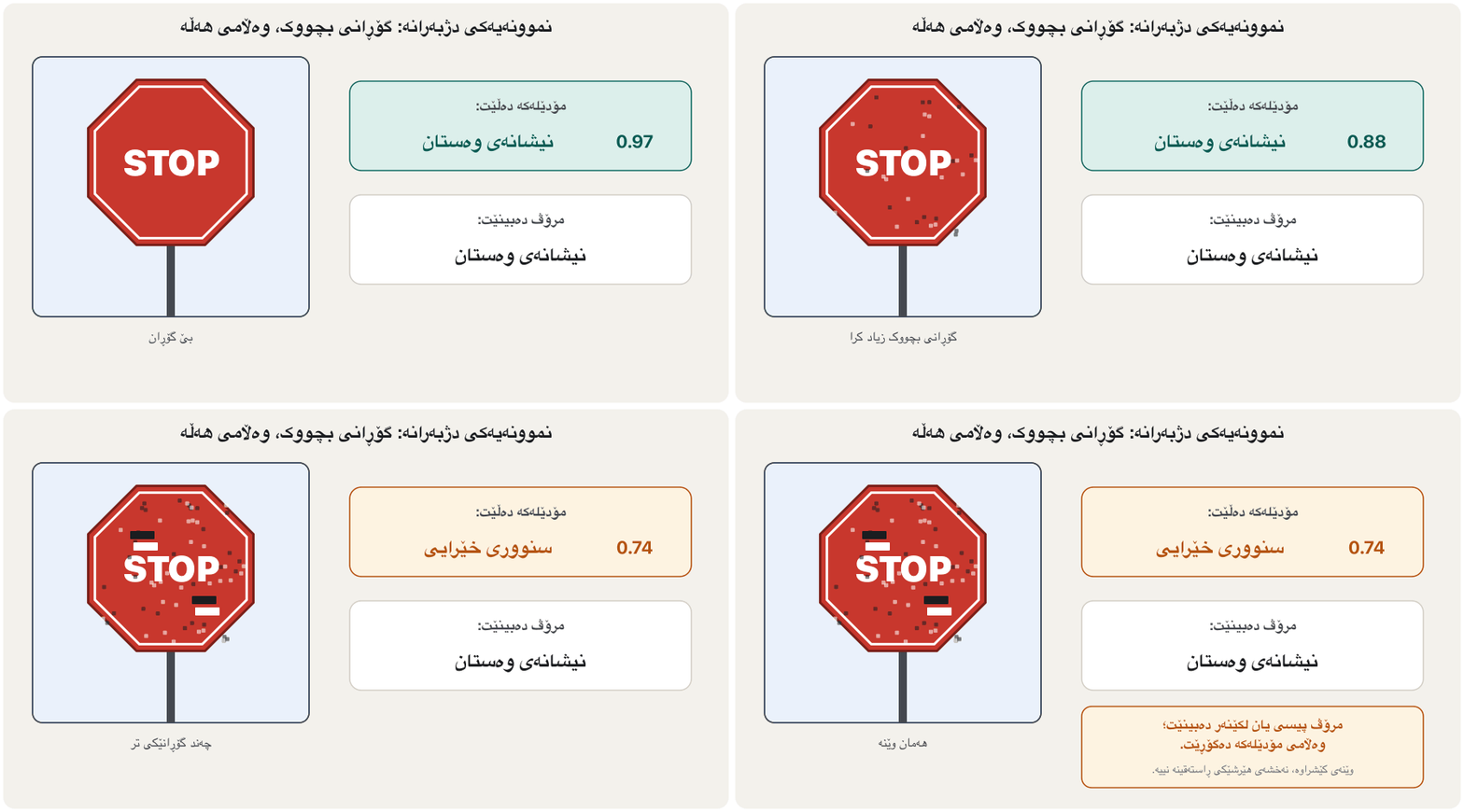
لە ساڵی 2014دا توێژەران پیشانیان دا کە گۆڕانێکی زۆر بچووک و بە وردی هەڵبژێردراو لە وێنەیەکدا، کە مرۆڤ تەنانەت هەستیشی پێ ناکات، دەتوانێت وا لە بکات بە دڵنیاییەکی بەرزەوە وەڵامێکی هەڵە بداتەوە (Goodfellow، Shlens و Szegedy). لەم جۆرە ؛ بەکارهێنانی دژی سیستەمێکی کارا پێی دەوترێت هێرشی خۆدزینەوە.
An input changed on purpose, often by tiny changes a person cannot notice, so that a model gives a wrong answer. Using such inputs against a working system is called an evasion attack.
کە بە ئەنقەست گۆڕدراوە، زۆرجار بە گۆڕانکاریی زۆر بچووک کە مرۆڤ هەستی پێ ناکات، بۆ ئەوەی وەڵامێکی هەڵە بداتەوە. بەکارهێنانیان دژی سیستەمێکی کارا پێی دەوترێت هێرشی خۆدزینەوە.
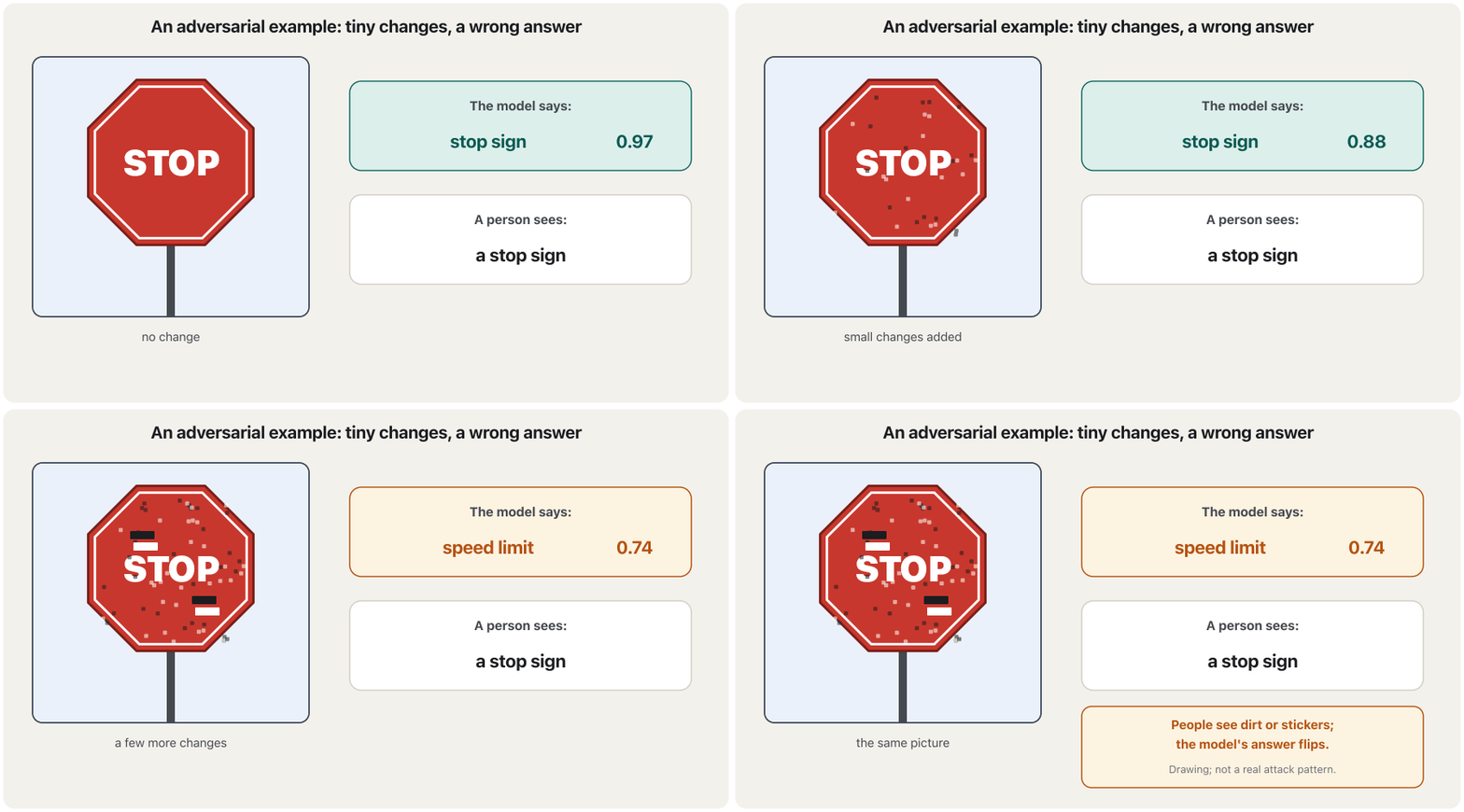
It also works in the physical world. In a study published in 2017–2018, a few black and white stickers made a road-sign classifier misread a real stop sign in 84.8% of the video frames filmed from a moving car (Eykholt et al., CVPR 2018). Defences exist, such as training the model on such examples (adversarial training), but NIST notes that they cost some accuracy, and building models that resist these attacks remains an open problem.
لە جیهانی ڕاستەقینەشدا کار دەکات. لە توێژینەوەیەکدا کە لە نێوان 2017 و 2018 بڵاو کرایەوە، چەند لکێنەرێکی ڕەش و سپی وای کرد پۆلێنکەرێکی نیشانەی هاتوچۆ نیشانەیەکی وەستانی ڕاستەقینە لە 84.8%ـی ئەو وێنە ڤیدیۆییانەدا بە هەڵە بخوێنێتەوە کە لە ئۆتۆمبێلێکی جووڵاوەوە گیرابوون (Eykholt و هاوکارانی، CVPR 2018). بەرگری هەیە، وەک ڕاهێنانی لەسەر ئەم جۆرە نموونانە (ڕاهێنانی دژبەرانە)، بەڵام NIST دەڵێت بەرگرییەکان هەندێک لە کەم دەکەنەوە و دروستکردنی بەرگەگر لە بەرانبەر ئەم هێرشانەدا هێشتا کێشەیەکی چارەسەرنەکراوە.
Spoofing and jamming: lying to the sensorsهەڵخەڵەتاندن و شێواندن: درۆکردن لەگەڵ هەستەوەرەکان
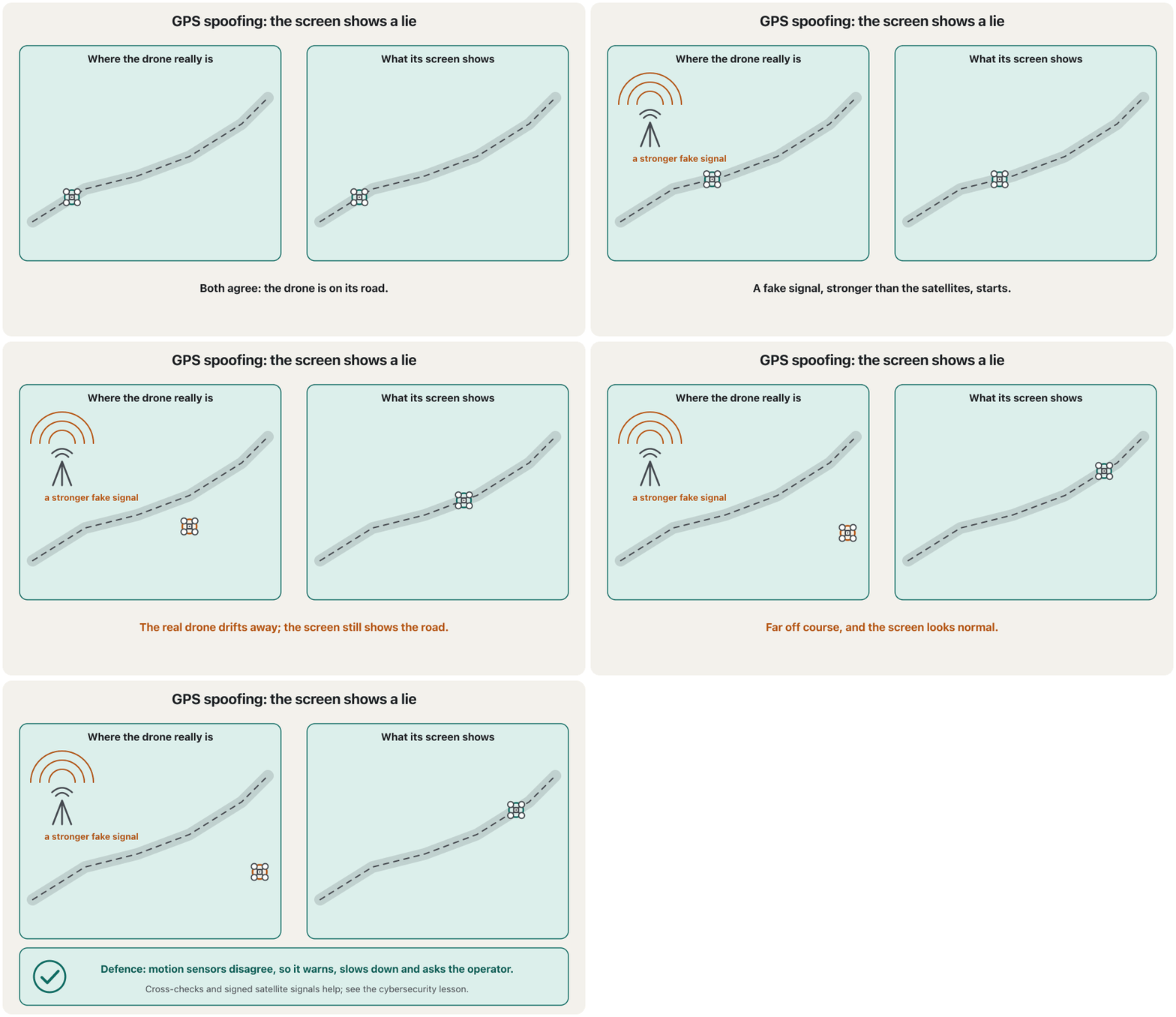
Instead of fooling the model, an attacker can fool or block its sensors. Jamming drowns a signal in noise, so the receiver gets nothing useful. Spoofing sends a fake signal that looks real, so the receiver believes a lie. Satellite navigation is the classic case: its signals are very weak, so a stronger fake signal from the ground can move a drone's “position” far from where it really is (GPS under attack). Defences include cross-checking with other sensors and signed navigation signals (Defending against GPS attacks). Jamming and spoofing are against the law for private people in many countries: only authorised agencies may act against a drone (Who may stop a drone?). How drones protect their own radio links: Keeping links secure.
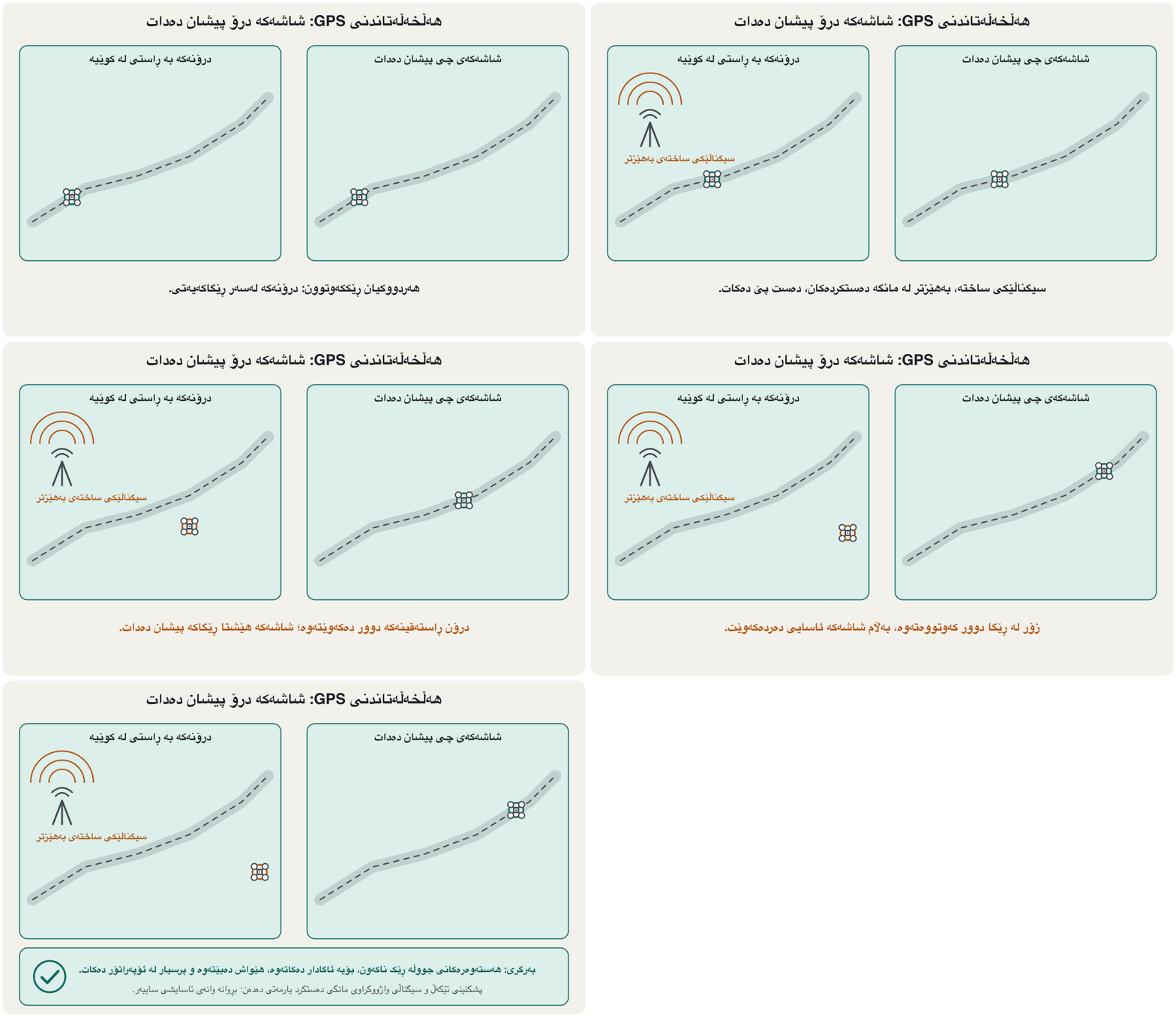
لە جیاتی فریودانی ، دەتوانێت فریو بدات یان ڕایانبگرێت. شێواندن لە ناو نوقم دەکات، بۆیە وەرگرەکە هیچ شتێکی بەسوود وەرناگرێت. ساختە دەنێرێت کە ڕاستەقینە دەردەکەوێت، بۆیە وەرگرەکە باوەڕ بە درۆیەک دەکات. ڕێنیشاندەری مانگی دەستکرد () نموونە بەناوبانگەکەیە: زۆر لاوازن، بۆیە ساختەی بەهێزتر لە سەر زەوییەوە دەتوانێت «شوێن»ـی زۆر دوور لە شوێنی ڕاستەقینەی بگوازێتەوە (GPS لە ژێر هێرشدا). بەرگرییەکان بریتین لە بەراوردکردن لەگەڵ تر و ڕێنیشاندەری واژووکراو (بەرگری دژی هێرشەکانی GPS). شێواندن و لە زۆر وڵاتدا بۆ کەسانی ئاسایی دژی یاسان: تەنیا دەزگا ڕێگەپێدراوەکان دەتوانن دژی کار بکەن (کێ دەتوانێت درۆنێک ڕابگرێت؟). چۆن پەیوەندییە ڕادیۆییەکانی خۆیان دەپارێزن: پاراستنی پەیوەندییەکان.
Data poisoning: attacking the lessonsژەهراویکردنی دراوە: هێرش بۆ سەر وانەکان
Some attacks happen long before a system is used. In data poisoning, wrong or harmful examples are hidden in the training data: a few hundred mislabelled pictures among a million, or examples with a small secret mark (a trigger) that later makes the model give the attacker's answer. Because training sets are huge and gathered from many sources, poisoned examples are hard to spot. Defences: know where every piece of data comes from, check samples by hand, and test the finished model for strange behaviour.
هەندێک هێرش زۆر پێش بەکارهێنانی سیستەمێک ڕوو دەدەن. لە ، نموونەی هەڵە یان زیانبەخش لە ناو دەشاردرێنەوە: چەند سەد وێنەی بە هەڵە نیشانەکراو لە نێو ملیۆنێکدا، یان نموونە بە نیشانەیەکی نهێنیی بچووکەوە (نیشانەی چالاککەر) کە دواتر وا لە دەکات وەڵامی بداتەوە. چونکە ڕاهێنان زۆر گەورەن و لە زۆر سەرچاوەوە کۆ دەکرێنەوە، دۆزینەوەی نموونە ژەهراوییەکان قورسە. بەرگری: بزانە هەر پارچەیەکی لە کوێوە هاتووە، نموونەکان بە دەست بپشکنە و تەواوکراوەکە بۆ ڕەفتاری سەیر تاقی بکەرەوە.
An attack that hides wrong or harmful examples in a model's , so that the trained model makes mistakes, sometimes only when it sees a secret trigger.
کە نموونەی هەڵە یان زیانبەخش لە ناو دەشارێتەوە، بۆ ئەوەی دوای ڕاهێنان هەڵە بکات، هەندێک جار تەنیا کاتێک هێمایەکی نهێنی دەبینێت.
Four kinds of attack (NIST)چوار جۆری هێرش (NIST)
NIST, the US standards institute, sorts attacks on AI in its report Adversarial Machine Learning (March 2025) by when they happen and what they aim at:
NIST، دامەزراوەی ستانداردەکانی ئەمریکا، لە ڕاپۆرتی Adversarial Machine Learning (ئازاری 2025) هێرشەکان بۆ سەر بەپێی ئەوەی کەی ڕوو دەدەن و ئامانجیان چییە پۆلێن دەکات:
| Kindجۆر | Whenکەی | What it doesچی دەکات | Exampleنموونە |
|---|---|---|---|
| Evasionخۆدزینەوە | while in useلە کاتی بەکارهێناندا | changes the input so the model is wrong دەگۆڕێت بۆ ئەوەی هەڵە بکات | stickers on a stop signلکێنەر لەسەر نیشانەی وەستان |
| Poisoningژەهراویکردن | before or during trainingپێش ڕاهێنان یان لە کاتیدا | corrupts the training data or the model یان تێکدەدات | mislabelled pictures, secret triggersوێنەی بە هەڵە نیشانەکراو، هێمای نهێنی |
| Privacy attacksهێرشی سەر | after trainingدوای ڕاهێنان | pulls out what the model learned, even private training dataئەوەی فێری بووە دەری دەهێنێت، تەنانەت تایبەت | rebuilding pictures from a model's answersدروستکردنەوەی وێنە لە وەڵامەکانی |
| Misuse (generative AI)خراپ بەکارهێنان () | while in useلە کاتی بەکارهێناندا | tricks a chatbot or image generator into what it should refuse یان دروستکەرێکی وێنە فریو دەدات بۆ ئەوەی ئەو کارە بکات کە دەبوو ڕەتی بکاتەوە | a “jailbreak”: a cleverly worded request that gets round the chatbot’s safety rulesjailbreak: داواکارییەکی فێڵبازانە کە یاساکانی سەلامەتیی تێدەپەڕێنێت |
The study of attacks on systems and of defences against them. NIST groups the attacks into evasion (tricky inputs), poisoning (bad ), privacy attacks (stealing what a model has learned) and misuse.
لێکۆڵینەوەیە لە دژی سیستەمەکانی و بەرگری لێیان. NIST دەکاتە چوار گرووپ: خۆدزینەوە ( فێڵاوی)، ( خراپ)، هێرشی سەر (دزینی ئەوەی فێری بووە) و خراپ بەکارهێنان.
The black box: why explanations matterمۆدێلی سندووقی ڕەش: بۆچی توانای ڕوونکردنەوە گرنگە
Many modern models are black boxes: we see what goes in and what comes out, but not why. That makes hidden mistakes hard to find. In a 2016 study, a classifier trained on pictures in which every wolf stood in snow learned to answer “wolf” whenever it saw snow. Before seeing explanations, 10 of 27 graduate students who had studied machine learning trusted it; after seeing which parts of the pictures drove its answers, only 3 did (Ribeiro et al., 2016).
زۆرێک لە نوێ : دەبینین چی دەچێتە ژوورەوە و چی دێتە دەرەوە، بەڵام نازانین بۆچی. ئەمە دۆزینەوەی هەڵە شاراوەکان قورس دەکات. لە توێژینەوەیەکی ساڵی 2016دا، پۆلێنکەرێک کە لەسەر ئەو وێنانە ڕاهێنرابوو کە هەموو گورگەکانیان لە بەفردا بوون، فێر بوو هەر کاتێک بەفری بدیبایە وەڵام بداتەوە «گورگ». پێش بینینی ڕوونکردنەوەکان، 10 لە 27 خوێندکاری خوێندنی باڵا کە خوێندبوو متمانەیان پێی هەبوو؛ دوای بینینی ئەوەی کام بەشی وێنەکان وەڵامەکانیان دیاری دەکرد، تەنیا 3 کەس (Ribeiro و هاوکارانی، 2016).
Explainability tools show which parts of the input drove an answer. NIST's four principles of explainable AI also include knowledge limits: a system should work only in the conditions it was designed for, and only when it is confident enough. The ICRC asks states to rule out autonomous weapons whose effects cannot be sufficiently understood, predicted and explained (War has rules).
ئامرازەکانی پیشان دەدەن کام بەشی وەڵامێکی دیاری کردووە. چوار بنەماکەی NIST بۆ ڕوونکەرەوە سنووری زانینیش دەگرنەوە: سیستەمێک دەبێت تەنیا لەو بارودۆخانەدا کار بکات کە بۆیان دیزاین کراوە و تەنیا کاتێک بە ڕادەی پێویست دڵنیایە. ICRC (لیژنەی نێودەوڵەتیی خاچی سوور) داوا لە دەوڵەتان دەکات ئەو چەکە ڕەت بکەنەوە کە ناتوانرێت بە ڕادەی پێویست لە کاریگەرییەکانیان تێبگەن، پێشبینییان بکەن و ڕوونیان بکەنەوە (شەڕیش یاسای هەیە).
How the risks are reducedمەترسییەکان چۆن کەم دەکرێنەوە
No single fix makes AI safe. Responsible users combine several habits, and repeat them as long as the system is used:
هیچ چارەسەرێکی تاک سەلامەت ناکات. بەکارهێنەرە بەرپرسیارەکان چەند خوویەک پێکەوە بەکار دەهێنن و تا سیستەمەکە بەکار بێت دووپاتەیان دەکەنەوە:
- in realistic conditions: in labs, in realistic simulations and in the field. In September 2026 the CCW group of experts agreed that states should test autonomous weapons, “including adequately realistic simulations”; a review conference on 16–20 November 2026 decides what happens next (War has rules).
- : a separate team tries hard to fool or break the system before real use, with the tricks of this lesson.
- A human check with enough time to judge, by people trained in the system’s limits and warned about automation bias.
- Monitoring in use: watch error rates as conditions change, and test again after every update.
- Recording and reporting problems, so that they are fixed and others can learn from them.
- لە بارودۆخی نزیک لە ڕاستیدا: لە تاقیگە، لە نزیک لە ڕاستی و لە مەیداندا. لە ئەیلوولی 2026دا دەوڵەتانی گرووپی شارەزایانی ڕێککەوتن کە چەکی تاقی بکرێتەوە، «بە بە ڕادەی پێویست نزیک لە ڕاستیشەوە»؛ کۆنفرانسێکی پێداچوونەوە لە 16–20ی تشرینی دووەمی 2026دا بڕیار دەدات دواتر چی ڕوو بدات (شەڕیش یاسای هەیە).
- : تیمێکی جیا پێش بەکارهێنانی ڕاستەقینە بە فێڵەکانی ئەم وانەیە بە هەموو توانایەوە هەوڵ دەدات سیستەمەکە فریو بدات یان تێکی بشکێنێت.
- پشکنینی مرۆڤ بە کاتی پێویست بۆ هەڵسەنگاندن، لەلایەن کەسانێکەوە کە لەسەر سنوورەکانی سیستەمەکە ڕاهێنراون و لە ئاگادار کراونەتەوە.
- چاودێری لە کاتی بەکارهێناندا: ڕێژەی هەڵەکان لە کاتی گۆڕانی بارودۆخدا بپشکنە و دوای هەموو نوێکردنەوەیەک دووپاتە تاقی بکەرەوە.
- تۆمارکردن و ڕاپۆرتکردنی کێشەکان، بۆ ئەوەی چاک بکرێن و ئەوانی تریش لێیان فێر ببن.
Common mistakesهەڵە باوەکان
| Mistakeهەڵە | Betterباشتر |
|---|---|
| “99% accurate means safe.”«99% ڕاست واتە سەلامەت.» | Ask how many rare cases it misses: count false positives and false negatives.بپرسە چەند حاڵەتی دەگمەن لەدەست دەدات: و بژمێرە. |
| “A high threshold is always safer.”«سنووری بەرز هەمیشە سەلامەتترە.» | It swaps false alarms for misses; which is safer depends on the job.ئاگادارکردنەوەی هەڵە بە لەدەستدان دەگۆڕێتەوە؛ کامیان سەلامەتترە بەپێی کارەکە دەگۆڕێت. |
| “If it passed the tests, it works everywhere.”«ئەگەر لە تاقیکردنەوەکان دەرچوو، لە هەموو شوێنێک کار دەکات.» | Only in conditions like the tests; distribution shift breaks it.تەنیا لە بارودۆخی وەک تاقیکردنەوەکاندا؛ تێکی دەدات. |
| “Adversarial examples are science fiction.”« خەیاڵی زانستین.» | They have fooled classifiers with stickers on real road signs; defences cost accuracy.بە لکێنەر لەسەر نیشانەی هاتوچۆی ڕاستەقینە پۆلێنکەرەکانیان فریو داوە؛ بەرگرییەکان کەم دەکەنەوە. |
| “Two sensors make spoofing impossible.”«دوو مەحاڵ دەکەن.» | They make it harder and easier to notice; people and rules still decide what to do.ئەنجامدانی قورستر و هەستپێکردنی ئاسانتر دەکەن؛ هێشتا مرۆڤ و ڕێسا بڕیار دەدەن چی بکرێت. |
| “If nobody can explain the answer, it is still fine to rely on it.”«ئەگەر کەس نەتوانێت وەڵامەکە ڕوون بکاتەوە، هێشتا دەکرێت پشتی پێ ببەسترێت.» | Unexplained answers hide mistakes; explainability and testing are needed.وەڵامی ڕووننەکراوە هەڵە دەشارێتەوە؛ و تاقیکردنەوە پێویستن. |
Exercisesڕاهێنانەکان
A model checked 200 drone pictures after a flood; 20 of them really showed people. It said “person” for 25 pictures, and 17 of those were right. Fill in the four boxes, then give the accuracy and how many people it found.
دوای لافاوێک 200 وێنەی پشکنی؛ 20 دانەیان بە ڕاستی خەڵکیان تێدا بوو. بۆ 25 وێنە گوتی «کەس» و 17یان ڕاست بوون. چوار خانەکە پڕ بکەرەوە، پاشان و ژمارەی ئەو کەسانەی دۆزییەوە بڵێ.
Hintئاماژە
Start with the row of real people: 17 found, so were missed.
لە ڕیزی کەسە ڕاستەقینەکانەوە دەست پێ بکە: 17 دۆزرانەوە، بۆیە لەدەست چوون.
Show answerوەڵامەکە پیشان بدە
| Model: “person”: «کەس» | Model: “nobody”: «هیچ کەس» | |
|---|---|---|
| Really a person (20)بە ڕاستی کەس (20) | 17 true positives17 حاڵەت: | 3 false negatives3 حاڵەت: |
| Really nobody (180)بە ڕاستی کەس نییە (180) | 8 false positives8 حاڵەت: | 172 true negatives172 حاڵەت: |
False positives, false negatives, true negatives and accuracy (94.5%). It found 17 of the 20 people and missed 3: a high accuracy still hides three missed people.
، ، و (94.5%). 17 لە 20 کەسەکەی دۆزییەوە و 3ی لەدەست دا: بەرز هێشتا سێ کەسی لەدەستچوو دەشارێتەوە.
For each job, say whether you would set the threshold lower or higher, and what people must still check: (a) finding survivors in rubble; (b) a filter that sends only the most important pictures to a busy analyst; (c) a system where an alarm could lead to harm.
بۆ هەر کارێک بڵێ سنوورەکە نزمتر یان بەرزتر دادەنێیت و مرۆڤ هێشتا دەبێت چی بپشکنێت: (a) دۆزینەوەی ڕزگاربووان لە ناو داروپەردوودا؛ (b) پاڵاوتەیەک کە تەنیا گرنگترین وێنەکان بۆ شیکەرەوەیەکی سەرقاڵ دەنێرێت؛ (c) سیستەمێک کە ئاگادارکردنەوەکەی دەکرێت ببێتە هۆی زیان.
Show answerوەڵامەکە پیشان بدە
- (a) Lower: a miss can cost a life, so accept more false alarms and check each one.
- (b) Higher, so the analyst is not flooded; but regularly check a sample of the rejected pictures to see what is being missed.
- (c) The threshold is not enough: a person checks the evidence under strict rules before anything happens.
- (a) نزمتر: لەدەستدانێک دەکرێت بە نرخی ژیانێک تەواو بێت، بۆیە ئاگادارکردنەوەی هەڵەی زیاتر قبووڵ بکە و هەریەکەیان بپشکنە.
- (b) بەرزتر، بۆ ئەوەی شیکەرەوەکە نوقم نەبێت؛ بەڵام بە بەردەوامی نموونەیەک لە وێنە ڕەتکراوەکان بپشکنە بۆ ئەوەی بزانیت چی لەدەست دەچێت.
- (c) سنوورەکە بەس نییە: پێش ئەوەی هیچ شتێک ڕوو بدات، مرۆڤ بەپێی ڕێسای توند بەڵگەکان دەپشکنێت.
Name the problem in each case: (a) a model works well in summer but fails in winter; (b) an outsider secretly added a few hundred wrong labels to the training set; (c) a drone's position jumps 2 km while its motion sensors say it hardly moved; (d) an inflatable copy of a vehicle is detected as a vehicle; (e) a model says “wolf” because of the snow, not the animal.
کێشەکە لە هەر حاڵەتێکدا ناو ببە: (a) لە هاویندا باش کار دەکات بەڵام لە زستاندا شکست دەهێنێت؛ (b) کەسێکی دەرەکی بە نهێنی چەند سەد هەڵەی خستە ناو کۆمەڵەی ڕاهێنانەوە؛ (c) شوێنی 2 کیلۆمەتر باز دەدات، لە کاتێکدا جووڵەکەی دەڵێن بە زەحمەت جووڵاوە؛ (d) نموونەیەکی پڕ لە هەوای ئۆتۆمبێلێک وەک ئۆتۆمبێل دەدۆزرێتەوە؛ (e) بەهۆی بەفرەکەوە دەڵێت «گورگ»، نەک ئاژەڵەکە.
Show answerوەڵامەکە پیشان بدە
- (a) Distribution shift.
- (b) Data poisoning.
- (c) GPS spoofing, noticed by cross-checking with other sensors.
- (d) A decoy, which causes a false positive.
- (e) A black-box shortcut, which explainability can reveal.
- (a) ئەمە .
- (b) ئەمە .
- (c) ، کە بە بەراوردکردن لەگەڵ تر هەستی پێ کرا.
- (d) کە دروست دەکات.
- (e) ڕێگایەکی کورتی کە دەتوانێت ئاشکرای بکات.
Summaryپوختە
- Every detector makes two kinds of mistake: false positives (false alarms) and false negatives (misses). A confusion matrix counts both.
- High accuracy can hide every rare case; the threshold trades false alarms for misses, and people decide which costs more.
- A model knows only the world of its training data: distribution shift and bias make it fail in new conditions and for some groups.
- Opponents fool AI on purpose: camouflage and decoys, adversarial examples, spoofing and jamming of sensors, and data poisoning.
- Black-box models hide their reasons; explainability helps people find hidden mistakes.
- Risks are reduced by realistic testing, red teaming, a human check, monitoring and reporting, again and again.
- هەموو دۆزەرەوەیەک دوو جۆر هەڵە دەکات: (ئاگادارکردنەوەی هەڵە) و (لەدەستدان). هەردووکیان دەژمێرێت.
- بەرز دەتوانێت هەموو حاڵەتە دەگمەنەکان بشارێتەوە؛ ئاگادارکردنەوەی هەڵە بە لەدەستدان دەگۆڕێتەوە و مرۆڤ بڕیار دەدات کامیان گرانترە.
- تەنیا جیهانی خۆی دەناسێت: و لە بارودۆخی نوێدا و بۆ هەندێک گرووپ شکستی پێ دەهێنن.
- نەیاران بە ئەنقەست فریو دەدەن: و ، ، و شێواندنی و .
- هۆکارەکانیان دەشارنەوە؛ یارمەتیی مرۆڤ دەدات هەڵە شاراوەکان بدۆزێتەوە.
- مەترسییەکان بە نزیک لە ڕاستی، ، پشکنینی مرۆڤ، چاودێری و ڕاپۆرتکردن کەم دەکرێنەوە، جار لە دوای جار.
Why is a miss the worst error in a rescue search?بۆچی لەدەستدان خراپترین هەڵەیە لە گەڕانی ڕزگارکردندا؟
A missed person may not be found in time, while a false alarm only costs a short check.
کەسێکی لەدەستچوو لەوانەیە لە کاتی خۆیدا نەدۆزرێتەوە، لە کاتێکدا ئاگادارکردنەوەیەکی هەڵە تەنیا پشکنینێکی کورتی دەوێت.
What is the difference between an adversarial example and data poisoning?جیاوازیی نێوان نموونەی دژبەرانە و ژەهراویکردنی دراوە چییە؟
An adversarial example fools a finished model while it is used; data poisoning corrupts the training data before the model is finished.
تەواوکراو لە کاتی بەکارهێناندا فریو دەدات؛ پێش تەواوبوونی تێکدەدات.
Name two ways to reduce the risks of AI errors.دوو ڕێگا بۆ کەمکردنەوەی مەترسیی هەڵەکانی ژیریی دەستکرد ناو ببە.
For example: testing in realistic conditions and red teaming; also a human check, monitoring in use and reporting problems.
بۆ نموونە: تاقیکردنەوە لە بارودۆخی نزیک لە ڕاستیدا و ؛ هەروەها پشکنینی مرۆڤ، چاودێری لە کاتی بەکارهێناندا و ڕاپۆرتکردنی کێشەکان.
Lesson complete!وانەکە تەواو بوو!
Well done. Review the key terms, then go on to the next lesson.دەستخۆش. سەیرێکی زاراوە سەرەکییەکان بکەرەوە، پاشان بڕۆ بۆ وانەی داهاتوو.
Key termsزاراوە سەرەکییەکان
Surveillance and Reconnaissanceچاودێری و دیدەوانی
Related lecturesوانە پەیوەندیدارەکان
- What Is Military AI?ژیریی دەستکردی سەربازی چییە؟
- AI in Cybersecurity: Bias, Privacy, Surveillance and Deepfakesژیریی دەستکرد لە ئاسایشی سایبەردا: لاسەنگی، تایبەتێتی، چاودێری و دیپفەیکەکان
- Real Incidents: From MoneyGram to GPS Spoofingڕووداوە ڕاستەقینەکان: لە MoneyGramـەوە تا هەڵخەڵەتاندنی GPS
- Machine Learning Basics (Supplementary)بنەماکانی فێربوونی ئامێر (زیادە)
- Decisions, Human Control and Responsibilityبڕیار، کۆنترۆڵی مرۆڤ و بەرپرسیارێتی
- War Has Rules: International Law and Military AIشەڕیش یاسای هەیە: یاسای نێودەوڵەتی و ژیریی دەستکردی سەربازی
- Target Recognition: Recognising Is Not Identifyingناسینەوەی ئامانج: ناسینەوەی جۆر، دیاریکردنی ناسنامە نییە
References and further readingسەرچاوەکان و خوێندنەوەی زیاتر
- NIST AI 100-2 E2025: Adversarial Machine Learning — A Taxonomy and Terminology of Attacks and Mitigations (March 2025)
- Goodfellow, Shlens and Szegedy (2014): Explaining and Harnessing Adversarial Examples (arXiv:1412.6572)
- Eykholt et al. (CVPR 2018): Robust Physical-World Attacks on Deep Learning Models (arXiv:1707.08945)
- Koh et al. (2021): WILDS — A Benchmark of in-the-Wild Distribution Shifts (arXiv:2012.07421)
- Ribeiro, Singh and Guestrin (KDD 2016): “Why Should I Trust You?” Explaining the Predictions of Any Classifier (arXiv:1602.04938)
- NIST IR 8312 (2021): Four Principles of Explainable Artificial Intelligence
- CCW Group of Governmental Experts on LAWS: final report CCW/GGE.1/2026/3 (adopted 4 September 2026), paras 38-39
- UNIDIR (2025): AI in the Military Domain — A briefing note for States
- ICRC (8 October 2026): Frequently asked questions — Autonomous weapon systems
This lecture is a first edition. The Kurdish text and terminology are waiting for review by Kurdish IT teachers.ئەم وانەیە چاپی یەکەمە. دەقە کوردییەکە و زاراوەکانی چاوەڕێی پێداچوونەوەی مامۆستایانی کوردی بواری IT ن.