Chapterبەش 2 · Lectureوانە 2.2
Target Recognition: Recognising Is Not Identifyingناسینەوەی ئامانج: ناسینەوەی جۆر، دیاریکردنی ناسنامە نییە
What automatic target recognition really does: it suggests what kind of object something may be, with a confidence score. Why distance, look-alikes and decoys make that hard, why a picture cannot tell friend from foe, what the law asks people to verify, and why face identification in the field is far less reliable than unlocking a phone.
بە ڕاستی چی دەکات: پێشنیار دەکات تەنێک لەوانەیە چ جۆرێک بێت، لەگەڵ . بۆچی دووری، شتی لەیەکچوو و ئەم کارە قورس دەکەن، بۆچی وێنە ناتوانێت دۆست و دوژمن لێک جیا بکاتەوە، یاسا داوا دەکات مرۆڤ چی پشتڕاست بکاتەوە و بۆچی لە مەیداندا زۆر کەمتر لە کردنەوەی قفڵی مۆبایل جێی متمانەیە.
What you will learnچی فێر دەبیت
- Explain the difference between recognising a kind of object and identifying whose it is and whether it may be attacked.
- Read a model's output such as 'large vehicle 0.62' and say what it does and does not tell you.
- Use the distance rule (4 times farther, 16 times fewer pixels) and name three things that fool recognition.
- Explain why identification friend or foe needs more than a picture, and what 'no reply' means.
- Tell face verification (one-to-one) from face identification (one-to-many) and explain why the second makes more mistakes.
- جیاوازیی نێوان ناسینەوەی جۆری تەنێک و دیاریکردنی ئەوەی هی کێیە و ئایا دەکرێت هێرشی بکرێتە سەر ڕوون بکەیتەوە.
- دەرئەنجامی وەک «ئۆتۆمبێلی گەورە 0.62» بخوێنیتەوە و بڵێیت چی پێ دەڵێت و چی پێ ناڵێت.
- یاسای دووری بەکاربهێنیت (4 هێندە دوورتر، 16 هێندە کەمتر) و سێ شت بژمێریت کە ناسینەوە فریو دەدەن.
- ڕوونی بکەیتەوە بۆچی لە وێنە زیاتری پێویستە و «هیچ وەڵامێک» واتای چییە.
- (یەک بە یەک) لە (یەک بە زۆر) جیا بکەیتەوە و ڕوونی بکەیتەوە بۆچی دووەمیان هەڵەی زیاتر دەکات.
Two different questionsدوو پرسیاری جیاواز
You may read that an AI system can spot a vehicle 2 km away, confirm that it is not friendly and then alert the operators. The first part is real: AI can help people notice objects in camera, thermal or radar pictures and suggest what kind of object they are. The second part is where people are needed.
لەوانەیە بخوێنیتەوە کە سیستەمێکی دەتوانێت ئۆتۆمبێلێک لە 2 کیلۆمەتر دوورەوە ببینێت، پشتڕاستی بکاتەوە کە دۆست نییە و پاشان ئۆپەراتۆرەکان ئاگادار بکاتەوە. بەشی یەکەم ڕاستە: دەتوانێت یارمەتیی مرۆڤ بدات تەن لە وێنەی کامێرا، وێنەی گەرمی یان ببینێت و پێشنیار بکات چ جۆرە تەنێکن. بەشی دووەم ئەو شوێنەیە کە مرۆڤی پێویستە.
Two questions are easy to mix up. What kind of object is it? is a recognition question, and a model can help with it. Whose is it, is it a lawful military objective, and are civilians in it or near it? are identification and legal questions. People must answer them, with more information and the law.
دوو پرسیار بە ئاسانی تێکەڵ دەکرێن. ئەمە چ جۆرە تەنێکە؟ پرسیارێکی ناسینەوەیە و دەتوانێت یارمەتی بدات. هی کێیە، ئایا بەپێی یاسا و ئایا مەدەنی لەناویدا یان لە نزیکیدا هەیە؟ پرسیاری دیاریکردنی ناسنامە و یاسایین. مرۆڤ دەبێت وەڵامیان بداتەوە، بە زانیاریی زیاتر و بەپێی یاسا.
Why build such systems at all? Their stated purpose is to help avoid attacking the wrong target: fewer mistakes, fewer civilians harmed and fewer attacks on one's own side. This lesson shows what it takes to reach that aim, and why the machine alone cannot.
بۆچی ئەم جۆرە سیستەمانە دروست دەکرێن؟ ئامانجی ڕاگەیەندراویان یارمەتیدانە بۆ ئەوەی هێرش نەکرێتە سەر ئامانجێکی هەڵە: هەڵەی کەمتر، زیانی کەمتر بە مەدەنییەکان و هێرشی کەمتر بۆ سەر لایەنی خۆ. ئەم وانەیە پیشان دەدات گەیشتن بەو ئامانجە چی پێویستە و بۆچی ئامێر بەتەنیا ناتوانێت.
What automatic target recognition doesناسینەوەی خۆکاری ئامانج چی دەکات
Automatic target recognition (ATR) is software that analyses data, such as camera or thermal pictures and echoes, and suggests what kind of object something may be. It is the Object detection you met in How AI Sees, trained on many labelled examples of vehicles, boats or aircraft. Its output looks like this: a box around the object, a label and a , for example 'large vehicle, 0.62'.
نەرمەکاڵایەکە کە شی دەکاتەوە، وەک وێنەی کامێرا یان وێنەی گەرمی و دەنگدانەوەی و پێشنیار دەکات تەنێک لەوانەیە چ جۆرێک بێت. ئەمە هەمان شێوازی دۆزینەوەی تەن کە لە وانەی « چۆن دەبینێت» ناسیت، کە لەسەر زۆر نموونەی نیشانەکراوی ئۆتۆمبێل، بەلەم یان فڕۆکە ڕاهێنراوە. دەرئەنجامەکەی ئاوایە: چوارگۆشەیەک بە دەوری تەنەکەدا، و ، بۆ نموونە «ئۆتۆمبێلی گەورە، 0.62».
Software that analyses sensor data, such as pictures or echoes, and suggests what kind of object it may be (for example 'large vehicle, 0.6'). Recognising the kind of object is not identifying it: people must verify who and what it is, and the law must be followed.
کە شی دەکاتەوە (وەک وێنە یان دەنگدانەوەی ) و پێشنیار دەکات تەنەکە چ جۆرێک بێت (بۆ نموونە «ئۆتۆمبێلی گەورە، 0.6»). ناسینەوەی جۆری تەنێک هەمان شت نییە لەگەڵ دیاریکردنی ناسنامەکەی: مرۆڤ دەبێت پشتڕاستی بکاتەوە کە کێیە و چییە، هەروەها دەبێت یاسا پەیڕەو بکرێت.
The score (What a confidence score means) says how closely the shape matches the examples the model learned from. It is not the chance that the object is hostile, and it is often not even a true probability: scores have to be checked against tests. The model does not know who owns the object, who is inside, what anyone intends, or what the law allows.
نمرەکە (نمرەی دڵنیایی واتای چییە) دەڵێت شێوەکە چەندە لەو نموونانە دەچێت کە لێیان فێر بووە. ئەگەری دوژمنبوونی تەنەکە نییە و زۆرجار تەنانەت ئەگەرێکی ڕاستەقینەش نییە: دەبێت نمرەکان بە تاقیکردنەوە بپشکنرێن. نازانێت تەنەکە هی کێیە، کێ لەناویدایە، کەس چ نیازێکی هەیە یان یاسا ڕێگە بە چی دەدات.
Why distance matters: a few pixels at 2 kmبۆچی دووری گرنگە: چەند پیکسڵێک لە 2 کیلۆمەترەوە
A camera turns the world into . The farther away an object is, the fewer pixels it covers. Twice as far gives half as many pixels across and half as many down, so only a quarter of the pixels. Four times as far gives times fewer.
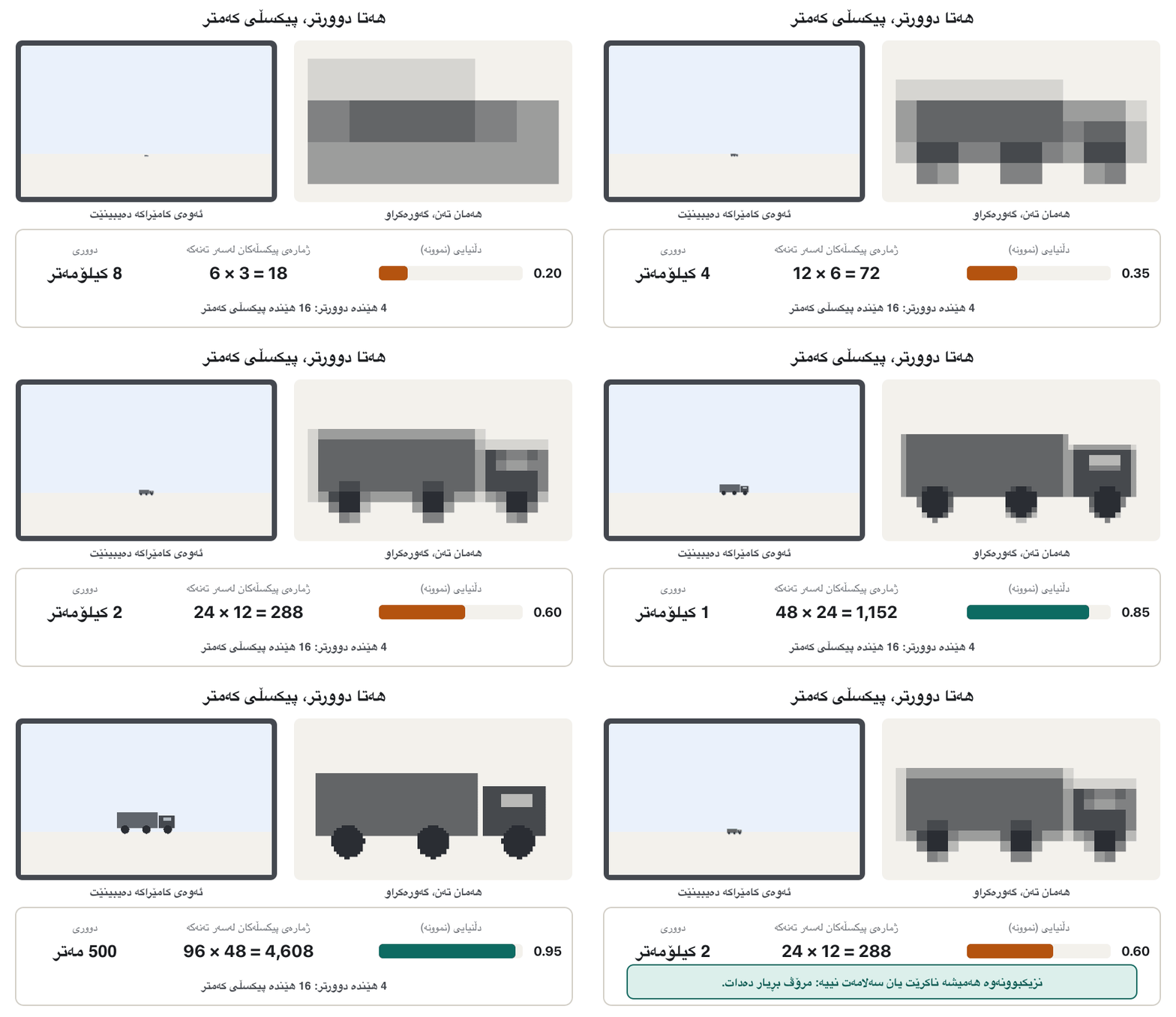
کامێرا جیهان دەکاتە . تەنێک هەتا دوورتر بێت، کەمتر دادەپۆشێت. دوو هێندە دوورتر واتە نیوەی بە پانی و نیوەیان بە درێژی، کەواتە تەنیا چارەکی . چوار هێندە دوورتر واتە هێندە کەمتر.
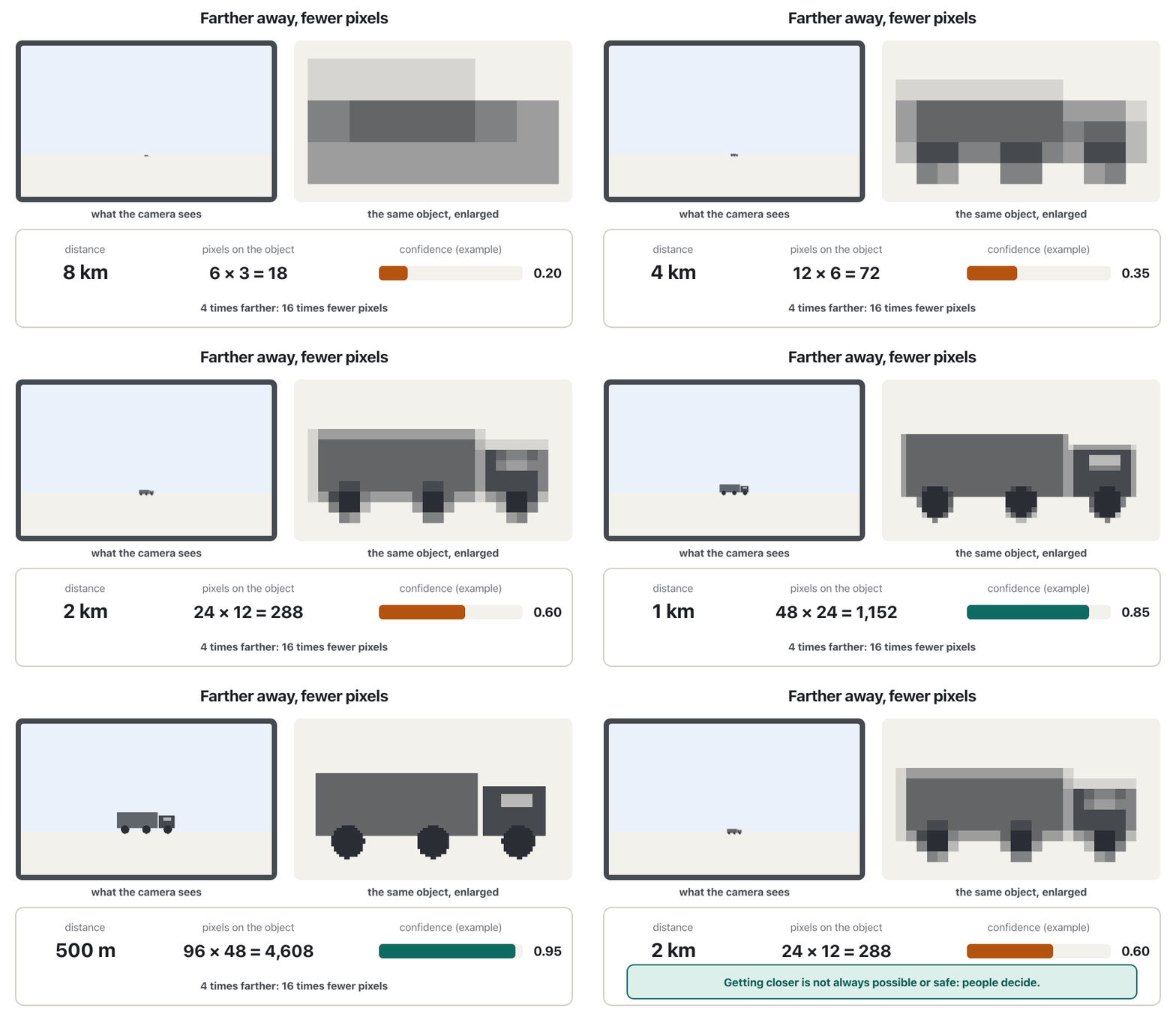
In the animation, the truck covers pixels at 2 km. Its shape is still there, but the details that tell one truck from another are gone. Haze, dust, rain, heat shimmer and night take away even more. With less detail the model's confidence drops, and so does its accuracy.
لە ، بارهەڵگرەکە لە 2 کیلۆمەترەوە دادەپۆشێت. شێوەکەی هێشتا دیارە، بەڵام ئەو وردەکارییانەی بارهەڵگرێک لە بارهەڵگرێکی تر جیا دەکەنەوە نەماون. تەم، تۆز، باران، لەرزینی هەوای گەرم و شەو زیاتریش لادەبەن. بە وردەکاریی کەمتر، دڵنیایی دادەبەزێت و ڕاستیی ئەنجامەکانیشی.
Look-alikes, decoys and camouflageشتی لەیەکچوو، فریودەرەکان و خۆشاردنەوە
From far away many things look alike. A water tanker, a farm truck and a military truck can all be 'a large vehicle'. Some objects are made to fool on purpose: , such as inflatable copies of vehicles, and . And a model trained on desert pictures in summer may fail in snow, in a city or at night, because the new pictures differ from its training data.
لە دوورەوە زۆر شت لەیەک دەچن. تانکەرێکی ئاو، بارهەڵگرێکی کشتوکاڵی و بارهەڵگرێکی سەربازی هەموویان دەتوانن «ئۆتۆمبێلێکی گەورە» بن. هەندێک تەن بە ئەنقەست بۆ فریودان دروست دەکرێن: ، وەک کۆپیی بادراوی ئۆتۆمبێل و . هەروەها کە لەسەر وێنەی بیابان لە هاویندا ڕاهێنراوە، لەوانەیە لە بەفر، لە شار یان لە شەودا هەڵە بکات، چونکە وێنە نوێیەکان جیاوازن لە .
Friend or foe? Not from a pictureدۆست یان دوژمن؟ نەک لە وێنەوە
A picture cannot 'confirm' that a vehicle is not friendly. Both sides may use the same models of vehicles, vehicles are captured or borrowed, and civilians drive similar trucks. A camera sees a shape, not an owner.
وێنە ناتوانێت «پشتڕاستی بکاتەوە» کە ئۆتۆمبێلێک دۆست نییە. لەوانەیە هەردوو لا هەمان جۆری ئۆتۆمبێل بەکاربهێنن، ئۆتۆمبێل دەگیرێت یان بە قەرز وەردەگیرێت و مەدەنییەکانیش بارهەڵگری هاوشێوە لێدەخوڕن. کامێرا شێوەیەک دەبینێت، نەک خاوەنێک.
Armed forces use other tools to recognise their own side. (IFF) sends a coded radio question, and a small device called a transponder on their own aircraft, ships or vehicles sends back a coded reply. Reports and shared maps show where friendly units are, and agreed procedures say who may be where. People combine all of these.
هێزە چەکدارەکان ئامرازی تر بەکاردەهێنن بۆ ناسینەوەی لایەنی خۆیان. پرسیارێکی ڕادیۆیی کۆدکراو دەنێرێت و ئامێرێکی بچووکی وەڵامدەرەوە لەسەر فڕۆکە، کەشتی یان ئۆتۆمبێلەکانی خۆیان وەڵامێکی کۆدکراو دەداتەوە. ڕاپۆرت و نەخشەی هاوبەش پیشان دەدەن یەکە دۆستەکان لە کوێن و ڕێوشوێنی ڕێککەوتوو دیاری دەکات کێ دەتوانێت لە کوێ بێت. مرۆڤ هەموو ئەمانە پێکەوە دەبەستێت.
IFF has a famous limit. A correct reply confirms a friend, but no reply does not prove a foe: the device may be broken or switched off, or the aircraft may be a civilian or neutral one without such a device. 'Unknown' must stay 'unknown' until people find out more.
سنوورێکی ناسراوی هەیە. وەڵامێکی دروست دۆستێک پشتڕاست دەکاتەوە، بەڵام نەبوونی وەڵام بەڵگە نییە بۆ دوژمن: لەوانەیە ئامێرەکە تێکچووبێت یان کوژابێتەوە، یان فڕۆکەکە مەدەنی یان بێلایەن بێت و ئەو ئامێرەی نەبێت. «نەناسراو» دەبێت هەر «نەناسراو» بمێنێتەوە تا مرۆڤ زیاتر دەزانێت.
AI suggests, people verifyژیریی دەستکرد پێشنیار دەکات، مرۆڤ پشتڕاستی دەکاتەوە
, the rules that limit war, puts the duty on people. The parties must always tell civilians apart from fighters, and civilian objects from military objectives: the (customary rule 1). Those who plan an attack must do everything feasible to verify that a target is a (rule 16, part of the ). And in case of doubt whether a person is a civilian, that person is to be considered a civilian (Additional Protocol I, Article 50).
، واتە ئەو یاسایانەی شەڕ سنووردار دەکەن، ئەرکەکە دەخاتە سەر مرۆڤ. لایەنەکان دەبێت هەمیشە مەدەنی لە جەنگاوەر جیا بکەنەوە و تەنی مەدەنیش لە : ئەمە (ڕێسای نەریتیی 1). ئەوانەی پلانی هێرشێک دادەنێن دەبێت هەموو ئەوەی دەکرێت بیکەن بۆ پشتڕاستکردنەوەی ئەوەی ئامانجەکە (ڕێسای 16، بەشێک لە ). هەروەها ئەگەر گومان هەبێت کە کەسێک مەدەنییە یان نا، ئەو کەسە بە مەدەنی دادەنرێت (پرۆتۆکۆلی زیادکراوی یەکەم، ماددەی 50).
So the AI's output is a suggestion. People check it against other sources, look for civilians and apply the rules. Used this way, recognition tools can reduce mistakes. The same tools can also make attacks faster and tempt people to trust the machine too much; that danger, automation bias, is the subject of Decisions, Human Control and Responsibility. The full legal rules are in War Has Rules.
کەواتە دەرئەنجامی پێشنیارێکە. مرۆڤ بە سەرچاوەی تر دەیپشکنێت، بەدوای مەدەنیدا دەگەڕێت و ڕێساکان جێبەجێ دەکات. بەم شێوەیە، ئامرازەکانی ناسینەوە دەتوانن هەڵە کەم بکەنەوە. هەمان ئامراز دەتوانن هێرشیش خێراتر بکەن و مرۆڤ هان بدەن زیاد لە پێویست متمانە بە ئامێر بکات؛ ئەو مەترسییە، واتە ، لە وانەی بڕیار، کۆنترۆڵی مرۆڤ و بەرپرسیارێتی باس کراوە. ڕێسا یاساییەکان بە تەواوی لە وانەی شەڕیش یاسای هەیە باس کراون.
Faces: verification is not identificationڕووخسار: پشتڕاستکردنەوە، دیاریکردنی ناسنامە نییە
Some systems use , and it is often compared with unlocking a phone. NIST, the US institute that tests these systems, separates two tasks that work very differently:
هەندێک سیستەم بەکاردەهێنن و زۆرجار بە کردنەوەی قفڵی مۆبایل بەراورد دەکرێت. NIST، ئەو دەزگا ئەمریکییەی ئەم سیستەمانە تاقی دەکاتەوە، دوو کار لێک جیا دەکاتەوە کە زۆر جیاواز کار دەکەن:
- Verification, one-to-one: 'Is this person who they claim to be?' One face is compared with one stored picture, as when your phone unlocks for you (how face unlock works). You are close, you look at the camera and the light is usually good.
- Identification, one-to-many: 'Who is this?' One face is searched against a whole of faces. The person may be far away, at an angle, in poor light, moving or not cooperating.
- ، یەک بە یەک: «ئایا ئەم کەسە ئەوەیە کە دەڵێت؟» یەک ڕووخسار لەگەڵ یەک وێنەی هەڵگیراو بەراورد دەکرێت، وەک کاتێک مۆبایلەکەت بۆ خۆت دەکرێتەوە (ناسینەوەی ڕووخسار چۆن کار دەکات). نزیکیت، سەیری کامێرا دەکەیت و ڕووناکی زۆرجار باشە.
- ، یەک بە زۆر: «ئەمە کێیە؟» یەک ڕووخسار لەناو گەورەی ڕووخساردا دەگەڕێندرێت. لەوانەیە کەسەکە دوور بێت، لە لاوە بێت، لە ڕووناکیی کەمدا بێت، بجووڵێت یان هاوکاری نەکات.
Why one-to-many searches make more mistakesبۆچی گەڕانی یەک بە زۆر هەڵەی زیاتر دەکات
Every comparison has a tiny chance of a false match, a . A phone makes one comparison. A search makes one comparison for every face in the database, so the tiny chance is repeated many times.
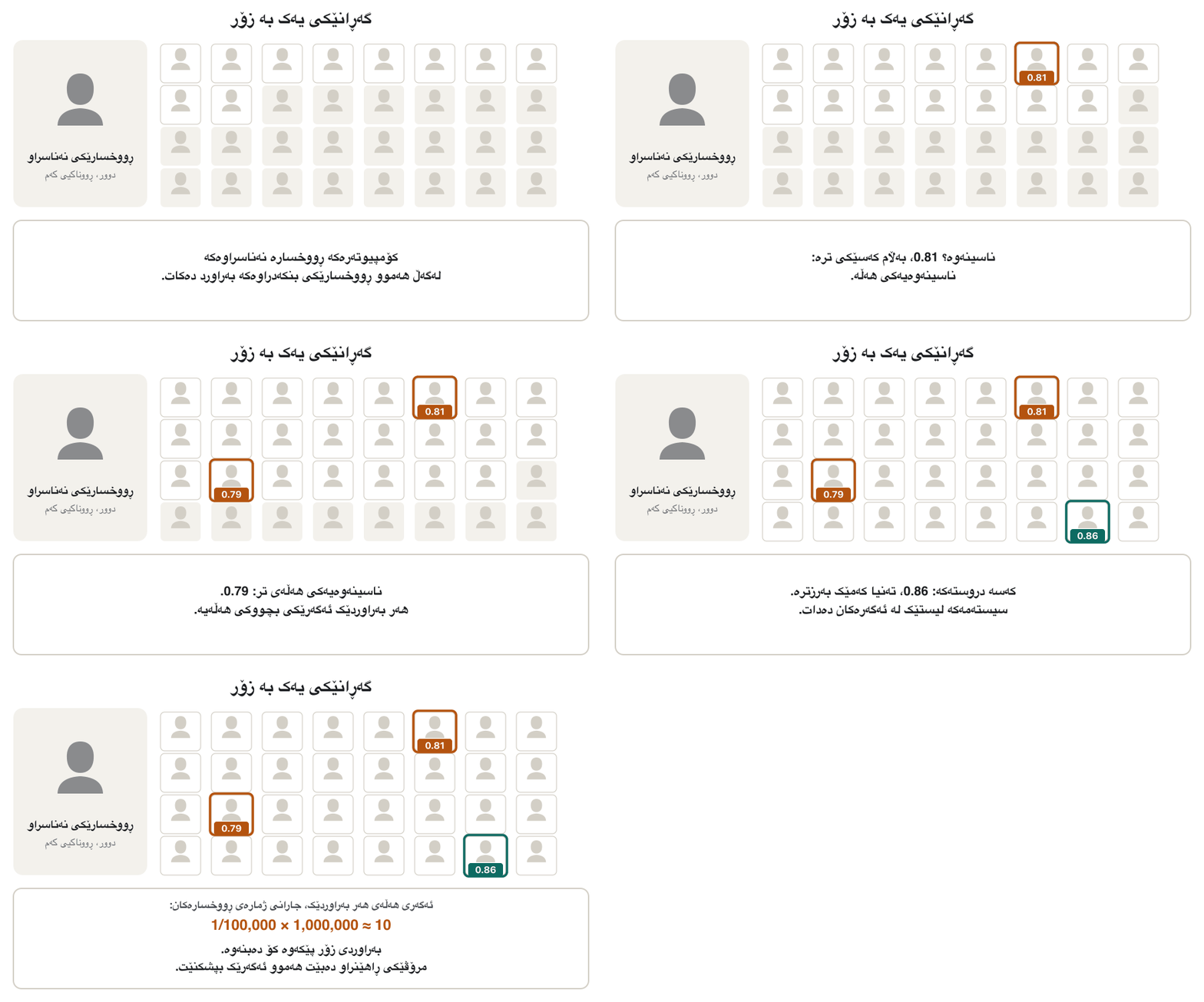
هەر بەراوردێک ئەگەرێکی زۆر بچووکی ناسینەوەی هەڵەی هەیە، واتە . مۆبایل یەک بەراورد دەکات. گەڕانێک بۆ هەر ڕووخسارێکی بەراوردێک دەکات، بۆیە ئەو ئەگەرە بچووکە زۆر جار دووپاتە دەبێتەوە.
If a system makes one false match in 100,000 comparisons, one phone unlock is very safe. But one search of a database of 1,000,000 faces gives about 10 false matches.
ئەگەر سیستەمێک لە هەر 100,000 بەراوردێکدا یەک ناسینەوەی هەڵە بکات، کردنەوەی قفڵی مۆبایل زۆر سەلامەتە. بەڵام یەک گەڕان لە 1,000,000 ڕووخساریدا نزیکەی 10 ناسینەوەی هەڵە دەدات.
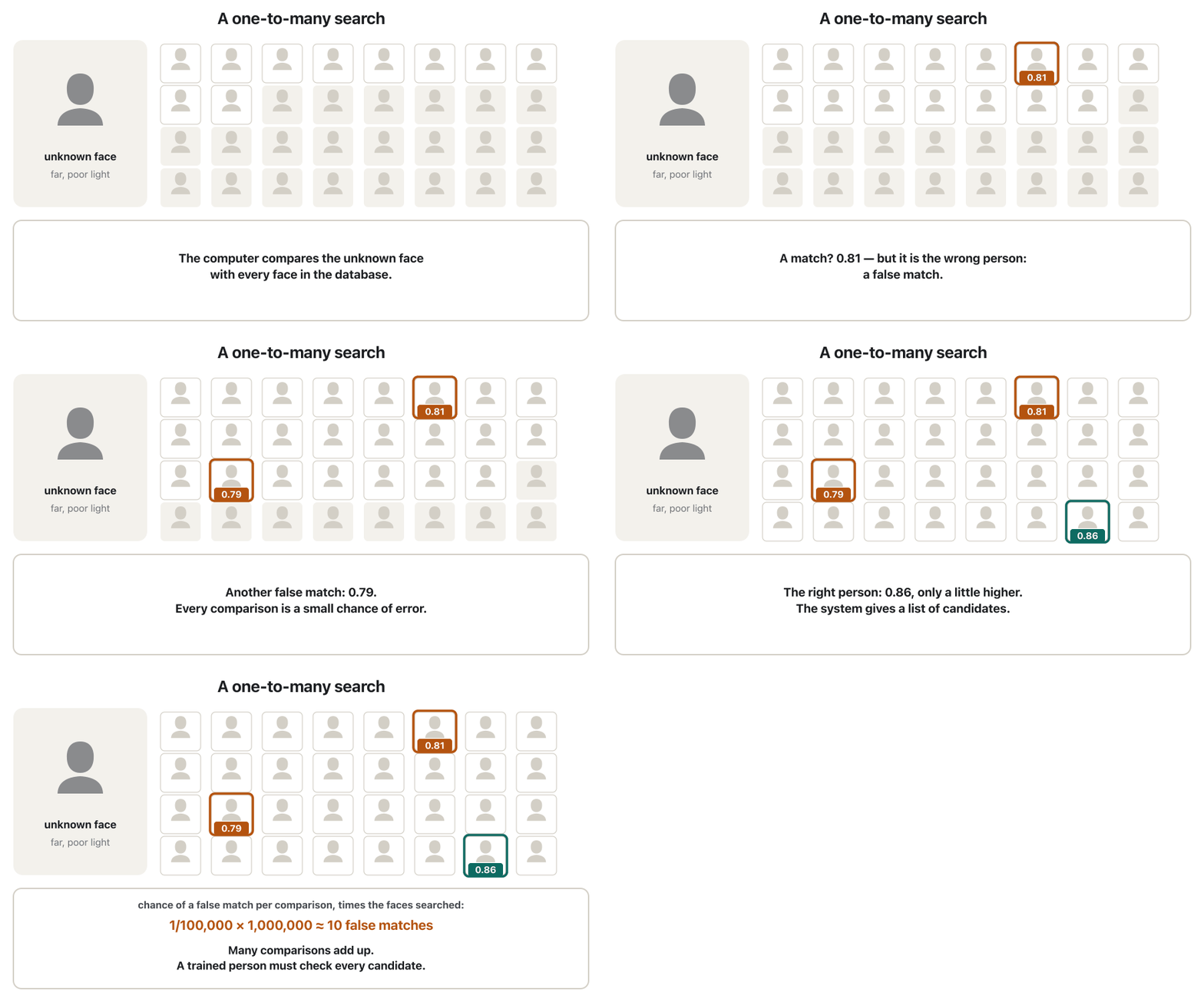
Real systems raise their threshold for big searches and return a short list of candidates for trained examiners, but a higher threshold means more misses: there is always a trade-off. Picture quality matters too: NIST compares good, posed photos with lower-quality pictures. And NIST found differences between groups. In one-to-one tests, false positives were higher for women, for older and younger people and for some ethnic groups, with big differences between algorithms. The numbers are in A real case: face recognition.
سیستەمە ڕاستەقینەکان بۆ گەڕانی گەورە بەرز دەکەنەوە و لیستێکی کورت لە ئەگەرەکان بۆ پشکنەرانی ڕاهێنراو دەدەنەوە، بەڵام بەرزتر واتە ونبووی زیاتر: هەمیشە ئاڵوگۆڕێک هەیە. کوالیتیی وێنەش گرنگە: NIST وێنەی باش و ئامادەکراو لەگەڵ وێنەی کوالیتی نزمتر بەراورد دەکات. هەروەها NIST جیاوازیی نێوان گرووپەکانی دۆزییەوە. لە تاقیکردنەوەی یەک بە یەکدا، بۆ ژنان، بۆ پیر و گەنجەکان و بۆ هەندێک گرووپی ڕەگەزی زیاتر بوون، لەگەڵ جیاوازیی گەورە لە نێوان . ژمارەکان لە بەشی نموونەیەکی ڕاستەقینە: ناسینەوەی ڕووخسار هەن.
Why the world is careful with machines and peopleبۆچی جیهان لە ئامێر و مرۆڤ وریایە
Recognising people is the most error-prone task, and its errors can cost lives. That is why the International Committee of the Red Cross (ICRC) recommended on 12 May 2021, and still recommends in 2026, that autonomous weapon systems designed or used to apply force against persons be ruled out, together with autonomous weapons whose effects cannot be predicted. All other autonomous weapons, it says, should be strictly limited: in target type, time, place and scale, with effective human supervision. The whole proposal is explained in The ICRC's position.
ناسینەوەی مرۆڤ هەڵەدارترین کارە و هەڵەکانیشی دەشێت بە نرخی گیانی خەڵک تەواو ببن. لەبەر ئەمە کۆمیتەی نێودەوڵەتیی خاچی سوور (ICRC) لە 12ی ئایاری 2021ـدا پێشنیاری کرد کە بۆ بەکارهێنانی هێز دژی مرۆڤ دیزاین کراون یان بەکاردێن قەدەغە بکرێن، لەگەڵ ئەو چەکە سەربەخۆیانەی کاریگەرییان پێشبینی ناکرێت. لە 2026یشدا هەمان داوا دەکاتەوە. دەڵێت هەموو چەکە سەربەخۆکانی تر دەبێت بە توندی سنووردار بکرێن: لە جۆری ئامانج، کات، شوێن و قەبارەدا، لەگەڵ سەرپەرشتیی کاریگەری مرۆڤ. هەموو پێشنیارەکە لە هەڵوێستی ICRC ڕوون کراوەتەوە.
Where the talks stand (November 2026)گفتوگۆکان گەیشتوونەتە کوێ (تشرینی دووەمی 2026)
States are talking too. On 4 September 2026 the UN group of government experts on lethal autonomous weapons agreed by consensus that control and human judgement are needed, and that the law places obligations on states, parties to a conflict and individuals, not on machines.
دەوڵەتانیش گفتوگۆ دەکەن. لە 4ی ئەیلوولی 2026ـدا گرووپی شارەزایانی حکومییەکانی نەتەوە یەکگرتووەکان لەبارەی بە کۆدەنگی ڕێککەوتن کە کۆنترۆڵ و هەڵسەنگاندنی مرۆڤ پێویستن و یاسا ئەرک دەخاتە سەر دەوڵەتان، لایەنەکانی ململانێ و تاکەکەسەکان، نەک سەر ئامێر.
As of November 2026 there is no treaty. The Review Conference of the weapons convention meets in Geneva on 16–20 November 2026 to consider these points and decide how the talks continue. The UN Secretary-General and the ICRC have asked states to use it to start negotiating new binding rules. Each step is followed in War Has Rules.
تا تشرینی دووەمی 2026 هیچ پەیماننامەیەک نییە. کۆنگرەی پێداچوونەوەی لە 16 تا 20ی تشرینی دووەمی 2026 لە جنێڤ کۆ دەبێتەوە، بۆ ئەوەی ئەم خاڵانە تاوتوێ بکات و بڕیار بدات گفتوگۆکان چۆن بەردەوام بن. سکرتێری گشتیی نەتەوە یەکگرتووەکان و ICRC داوایان لە دەوڵەتان کردووە لەو کۆنگرەیەدا دەست بە گفتوگۆ بۆ ڕێسای نوێی ناچاری بکەن. هەنگاو بە هەنگاو لە شەڕیش یاسای هەیە باس کراون.
Outside war, the UN human rights office has asked for a pause on remote face recognition in public places (see Where watching must stop).
لە دەرەوەی شەڕیش، نووسینگەی مافەکانی مرۆڤی نەتەوە یەکگرتووەکان داوای ڕاگرتنی لە دوورەوە لە شوێنە گشتییەکاندا کردووە (بڕوانە چاودێریکردن لە کوێدا دەبێت بوەستێت).
Common mistakesهەڵە باوەکان
| Mistakeهەڵە | What is trueڕاستییەکە |
|---|---|
| 'The AI identified the vehicle.'« ئۆتۆمبێلەکەی ناسییەوە.» | It suggested a kind of object with a confidence score. Whose it is, and whether it may be attacked, need people, other information and the law.جۆرێکی تەنی لەگەڵ پێشنیار کرد. ئەوەی هی کێیە و ئایا دەکرێت هێرشی بکرێتە سەر، مرۆڤ، زانیاریی تر و یاسای پێویستە. |
| A score of 0.9 means a 90% chance it is an enemy vehicle.نمرەی 0.9 واتە ئەگەری 90% هەیە ئۆتۆمبێلی دوژمن بێت. | The score measures likeness to a kind of object, not ownership. It is often not even a true probability.نمرەکە لەیەکچوون لەگەڵ جۆرێکی تەن دەپێوێت، نەک خاوەندارێتی. زۆرجار تەنانەت ئەگەرێکی ڕاستەقینەش نییە. |
| No IFF reply means hostile.نەبوونی وەڵامی واتە دوژمن. | No reply means unknown: a broken or switched-off device, or a civilian aircraft without one.نەبوونی وەڵام واتە نەناسراو: ئامێرێکی تێکچوو یان کوژاوە، یان فڕۆکەیەکی مەدەنی بێ ئەو ئامێرە. |
| Face recognition in a conflict area is just like unlocking a phone. لە ناوچەی ململانێدا هەروەک کردنەوەی قفڵی مۆبایلە. | A phone does one-to-one verification with a cooperating person. Field identification is one-to-many with poor pictures, so it makes far more errors.مۆبایل یەک بە یەک لەگەڵ کەسێکی هاوکار دەکات. ناسینەوە لە مەیداندا یەک بە زۆرە و بە وێنەی خراپ، بۆیە هەڵەی زۆر زیاتر دەکات. |
| A sharper camera solves the problem.کامێرایەکی ڕوونتر کێشەکە چارەسەر دەکات. | Better cameras help with distance, but look-alikes, decoys and camouflage remain. People must still verify.کامێرای باشتر لە دووریدا یارمەتی دەدات، بەڵام شتی لەیەکچوو، و دەمێننەوە. هێشتا مرۆڤ دەبێت پشتڕاستی بکاتەوە. |
| If the machine says 'target', the law is satisfied.ئەگەر ئامێرەکە بڵێت «ئامانج»، یاسا ڕازییە. | The law asks people to do everything feasible to verify, and to consider a person a civilian when in doubt.یاسا داوا لە مرۆڤ دەکات هەموو ئەوەی دەکرێت بیکات بۆ پشتڕاستکردنەوە و لە کاتی گوماندا کەسەکە بە مەدەنی دابنێت. |
Exercisesڕاهێنانەکان
Which of these questions can a recognition model help with, and which need people with more information and the law? (a) Is that shape a vehicle? (b) Is the vehicle carrying civilians? (c) Does this shape match the model's 'boat' examples? (d) Is this boat a lawful military objective? (e) Whose aircraft is that?
ناسینەوە دەتوانێت یارمەتی کام لەم پرسیارانە بدات و کامیان مرۆڤ بە زانیاریی زیاتر و یاسای پێویستە؟ (a) ئایا ئەو شێوەیە ئۆتۆمبێلە؟ (b) ئایا ئۆتۆمبێلەکە مەدەنی هەڵگرتووە؟ (c) ئایا ئەم شێوەیە لە نموونەکانی «بەلەم»ی دەچێت؟ (d) ئایا ئەم بەلەمە بەپێی یاسا ؟ (e) ئەو فڕۆکەیە هی کێیە؟
Show answerوەڵامەکە پیشان بدە
- A model can help with (a) and (c): they ask what kind of object a shape looks like.
- (b), (d) and (e) need people: other sources such as IFF and reports, a search for civilians, and the rules of the law.
- دەتوانێت یارمەتیی (a) و (c) بدات: دەپرسن شێوەیەک لە چ جۆرە تەنێک دەچێت.
- (b)، (d) و (e) مرۆڤیان پێویستە: سەرچاوەی تر وەک و ڕاپۆرت، گەڕان بەدوای مەدەنیدا و ڕێساکانی یاسا.
Rewrite this sentence so that it is true: 'AI identifies a tank from 2 km away and confirms it is not friendly before alerting operators.'
ئەم ڕستەیە بنووسەرەوە تا ڕاست بێت: « تانکێک لە 2 کیلۆمەتر دوورەوە دەناسێتەوە و پێش ئاگادارکردنەوەی ئۆپەراتۆرەکان پشتڕاستی دەکاتەوە کە دۆست نییە.»
Show answerوەڵامەکە پیشان بدە
A sample answer: 'An AI model flags a large vehicle about 2 km away with a confidence score of 0.6 and alerts the operators. People then check other sources, such as IFF, reports of where friendly units are and more pictures, and look for civilians. While doubt remains, it is not treated as a target.'
وەڵامێکی نموونەیی: « ئۆتۆمبێلێکی گەورە لە نزیکەی 2 کیلۆمەتر دوورەوە بە 0.6 نیشان دەکات و ئۆپەراتۆرەکان ئاگادار دەکاتەوە. پاشان مرۆڤ سەرچاوەی تر دەپشکنێت، وەک ، ڕاپۆرتی شوێنی یەکە دۆستەکان و وێنەی زیاتر و بەدوای مەدەنیدا دەگەڕێت. تا گومان مابێت، وەک ئامانج مامەڵەی لەگەڵ ناکرێت.»
A camera sees a bus 1 km away as 40 × 12 pixels. How many pixels will the bus cover at 2 km and at 4 km?
کامێرایەک پاسێک لە 1 کیلۆمەتر دوورەوە بە 40 × 12 دەبینێت. پاسەکە لە 2 کیلۆمەتر و لە 4 کیلۆمەترەوە چەند دادەپۆشێت؟
Hintئاماژە
Divide both sides by the same number as the distance grows.
هەر دوو لا بە هەمان ژمارە دابەش بکە کە دووری پێی زیاد دەبێت.
Show answerوەڵامەکە پیشان بدە
- At 1 km: pixels.
- At 2 km: pixels, a quarter of 480.
- At 4 km: pixels, 16 times fewer than at 1 km.
- لە 1 کیلۆمەترەوە: .
- لە 2 کیلۆمەترەوە: ، چارەکی 480.
- لە 4 کیلۆمەترەوە: ، 16 هێندە کەمتر لە 1 کیلۆمەتر.
A face system makes one false match in 50,000 comparisons. How many false matches does one search of 2,000,000 faces give? Name two ways to reduce them and the cost of each.
سیستەمێکی ڕووخسار لە هەر 50,000 بەراوردێکدا یەک ناسینەوەی هەڵە دەکات. یەک گەڕان لە 2,000,000 ڕووخساردا چەند ناسینەوەی هەڵە دەدات؟ دوو ڕێگە بۆ کەمکردنەوەیان بنووسە و تێچووی هەر یەکەیان.
Show answerوەڵامەکە پیشان بدە
- false matches per search.
- Raise the threshold: fewer false matches, but more real people are missed.
- Search a smaller, lawful list or use better pictures: fewer comparisons and errors, but it limits what can be searched and needs time and rules.
- In every case, trained people check each candidate before anything is done.
- ناسینەوەی هەڵە بۆ هەر گەڕانێک.
- بەرز بکەرەوە: ناسینەوەی هەڵەی کەمتر، بەڵام کەسی ڕاستەقینەی زیاتر ون دەبن.
- لە لیستێکی بچووکتر و یاسایی بگەڕێ یان وێنەی باشتر بەکاربهێنە: بەراورد و هەڵەی کەمتر، بەڵام ئەوەی دەتوانرێت بگەڕێندرێت سنووردار دەکات و کات و ڕێسای پێویستە.
- لە هەموو حاڵەتێکدا، مرۆڤی ڕاهێنراو پێش هەر کارێک هەموو ئەگەرێک دەپشکنێت.
Summaryپوختە
- Recognising is not identifying. A model suggests what kind of object something may be; whose it is and whether it may be attacked are questions for people and the law.
- A confidence score measures likeness to the model's examples, not ownership or intent.
- Distance: 4 times farther gives 16 times fewer pixels; look-alikes, decoys and camouflage add more doubt.
- A picture cannot tell friend from foe. IFF, reports and procedures help, and no IFF reply means unknown.
- The law puts the duty on people: distinction, everything feasible to verify, and in doubt a person is a civilian.
- Face verification (one-to-one, a phone) is far more reliable than face identification (one-to-many, in the field), which multiplies false matches.
- ناسینەوەی جۆر، دیاریکردنی ناسنامە نییە. پێشنیار دەکات تەنێک لەوانەیە چ جۆرێک بێت؛ ئەوەی هی کێیە و ئایا دەکرێت هێرشی بکرێتە سەر، پرسیارن بۆ مرۆڤ و یاسا.
- لەیەکچوون لەگەڵ نموونەکانی دەپێوێت، نەک خاوەندارێتی یان نیاز.
- دووری: 4 هێندە دوورتر واتە 16 هێندە کەمتر؛ شتی لەیەکچوو، و گومانی زیاتر زیاد دەکەن.
- وێنە ناتوانێت دۆست و دوژمن لێک جیا بکاتەوە. ، ڕاپۆرت و ڕێوشوێن یارمەتی دەدەن و نەبوونی وەڵام واتە نەناسراو.
- یاسا ئەرکەکە دەخاتە سەر مرۆڤ: ، هەموو ئەوەی دەکرێت بۆ پشتڕاستکردنەوە و لە کاتی گوماندا کەسەکە مەدەنییە.
- (یەک بە یەک، مۆبایل) زۆر جێی متمانەترە لە (یەک بە زۆر، لە مەیدان)، کە ناسینەوەی هەڵە زۆر دەکات.
Why can't AI confirm that a vehicle 2 km away is not friendly?بۆچی ژیریی دەستکرد ناتوانێت پشتڕاستی بکاتەوە کە ئۆتۆمبێلێک لە 2 کیلۆمەتر دوورەوە دۆست نییە؟
At that distance the vehicle is only a few hundred pixels, look-alikes and decoys exist, and a picture shows a shape, not an owner. Friend-or-foe identification needs IFF, reports and procedures, checked by people.
لەو دوورییەدا ئۆتۆمبێلەکە تەنیا چەند سەد ، شتی لەیەکچوو و هەن و وێنە شێوەیەک پیشان دەدات، نەک خاوەنێک. پێویستی بە ئامێرە وەڵامدەرەوەکان، ڕاپۆرت و ڕێوشوێن هەیە کە مرۆڤ بیانپشکنێت.
What does international humanitarian law ask of the people who use such tools?یاسای نێودەوڵەتیی مرۆیی چی لەو مرۆڤانە دەخوازێت کە ئەم ئامرازانە بەکاردەهێنن؟
Always distinguish civilians from fighters, do everything feasible to verify that a target is a military objective, and consider a person a civilian when in doubt.
هەمیشە مەدەنی لە جەنگاوەر جیا بکەنەوە، هەموو ئەوەی دەکرێت بکەن بۆ پشتڕاستکردنەوەی ئەوەی ئامانجێک و لە کاتی گوماندا کەسەکە بە مەدەنی دابنێن.
Why does a one-to-many face search make more false matches than a phone unlock?بۆچی گەڕانی یەک بە زۆری ڕووخسار ناسینەوەی هەڵەی زیاتر لە کردنەوەی قفڵی مۆبایل دەکات؟
It makes one comparison for every face in the database, so a tiny error chance is repeated many times, and its pictures are usually worse.
بۆ هەر ڕووخسارێکی بەراوردێک دەکات، بۆیە ئەگەرێکی زۆر بچووکی هەڵە زۆر جار دووپاتە دەبێتەوە و وێنەکانیشی زۆرجار خراپترن.
Lesson complete!وانەکە تەواو بوو!
Well done. Review the key terms, then go on to the next lesson.دەستخۆش. سەیرێکی زاراوە سەرەکییەکان بکەرەوە، پاشان بڕۆ بۆ وانەی داهاتوو.
Key termsزاراوە سەرەکییەکان
Autonomous Drones, Vehicles and Robotsدرۆن، ئۆتۆمبێل و ڕۆبۆتی سەربەخۆ
Related lecturesوانە پەیوەندیدارەکان
- Surveillance and Reconnaissanceچاودێری و دیدەوانی
- When AI Gets It Wrong: Errors, Bias and Deceptionکاتێک ژیریی دەستکرد هەڵە دەکات: هەڵە، لاسەنگی و فریودان
- Decisions, Human Control and Responsibilityبڕیار، کۆنترۆڵی مرۆڤ و بەرپرسیارێتی
- War Has Rules: International Law and Military AIشەڕیش یاسای هەیە: یاسای نێودەوڵەتی و ژیریی دەستکردی سەربازی
- AI in Cybersecurity: Bias, Privacy, Surveillance and Deepfakesژیریی دەستکرد لە ئاسایشی سایبەردا: لاسەنگی، تایبەتێتی، چاودێری و دیپفەیکەکان
References and further readingسەرچاوەکان و خوێندنەوەی زیاتر
- ICRC: What are the main IHL rules governing hostilities? (distinction, proportionality, precautions)
- ICRC Customary IHL Database, Rule 1: The principle of distinction between civilians and combatants
- ICRC Customary IHL Database, Rule 16: Target verification
- Lieber Institute, West Point (12 February 2025): The presumption of civilian status in cases of doubt
- ICRC position on autonomous weapon systems (12 May 2021)
- CCW Group of Governmental Experts on LAWS: final report CCW/GGE.1/2026/3 (adopted 4 September 2026)
- NIST: Facial Recognition Technology (testimony, 6 February 2020, updated 29 August 2025)
- Wikipedia: Identification friend or foe
This lecture is a first edition. The Kurdish text and terminology are waiting for review by Kurdish IT teachers.ئەم وانەیە چاپی یەکەمە. دەقە کوردییەکە و زاراوەکانی چاوەڕێی پێداچوونەوەی مامۆستایانی کوردی بواری IT ن.