Chapterبەش 1 · Lectureوانە 1.2
How AI Sees: Sensors, Computer Vision and Detectionژیریی دەستکرد چۆن دەبینێت: هەستەوەرەکان، بینایی کۆمپیوتەر و دۆزینەوە
How a machine turns light, heat and radio echoes into numbers, how a model learns to see from labelled examples, the difference between classification, detection and tracking, what a confidence score means, the sensors beyond the camera, sensor fusion, and anomaly and change detection.
ئامێر چۆن ڕووناکی، گەرمی و دەنگدانەوەی ڕادیۆ دەکات بە ژمارە، چۆن لە نموونە نیشانەکراوەکانەوە فێری بینین دەبێت، جیاوازیی نێوان ، دۆزینەوە و بەدواداچوون، واتای چییە، جگە لە کامێرا، ، و .
What you will learnچی فێر دەبیت
- Explain that a picture is a grid of numbers and that a vision model learns patterns from labelled examples.
- Tell classification, object detection and object tracking apart.
- Read a detection (box, label, confidence score) and explain why a high score is not a certainty.
- Compare cameras, thermal cameras, radar and microphones, and explain sensor fusion.
- Explain anomaly and change detection and why their results are clues for a person to check.
- ڕوونی بکەیتەوە کە وێنە خشتەیەک ژمارەیە و بینین لە نموونە نیشانەکراوەکانەوە وێنەک فێر دەبێت.
- ، و لە یەکتر جیا بکەیتەوە.
- دۆزینەوەیەک بخوێنیتەوە (سندووق، ، ) و ڕوونی بکەیتەوە بۆچی نمرەی بەرز بێگومانی نییە.
- کامێرا، ، و بەراورد بکەیت و ڕوون بکەیتەوە.
- و ڕوون بکەیتەوە و بۆچی ئەنجامەکانیان سەرەداون بۆ ئەوەی مرۆڤ بیانپشکنێت.
How does a machine see?ئامێر چۆن دەبینێت؟
Military AI often uses computer vision: the part of AI that finds and understands what is in pictures and videos. It is used to detect and classify objects such as vehicles, ships, aircraft or weapons. Some systems also try to identify people by their faces. That is a different, harder and more error-prone task with its own legal limits; it is taught in Target recognition.
زۆرجار بەکار دەهێنێت: ئەو بەشەی کە ئەوەی لە وێنە و ڤیدیۆدایە دەدۆزێتەوە و تێی دەگات. بۆ دۆزینەوە و تەنەکانی وەک ئۆتۆمبێل، کەشتی، فڕۆکە یان چەک بەکار دێت. هەندێک سیستەمیش هەوڵ دەدەن خەڵک بە ڕووخساریان بناسنەوە (). ئەمە کارێکی جیاواز، قورستر و پڕهەڵەترە کە سنووری یاسایی خۆی هەیە؛ لە وانەی ناسینەوەی ئامانجدا فێر دەکرێت.
The part of that lets computers find and understand what is in pictures and videos, for example by classifying a picture, detecting objects or tracking them from one video frame to the next. It learns from many labelled pictures.
ئەو بەشەی کە وا لە دەکات ئەوەی لە وێنە و ڤیدیۆدایە بدۆزنەوە و تێی بگەن، بۆ نموونە بە وێنەیەک، یان لە وێنەیەکی ڤیدیۆوە بۆ وێنەی دواتر. لە ژمارەیەکی زۆر وێنەی نیشانەدار فێر دەبێت.
Every vision system follows the same path: a sensor turns light, heat or radio echoes into numbers; a trained model turns the numbers into an answer; and a person checks the answer before anything important happens. This lesson walks along that path.
هەموو سیستەمێکی بینین هەمان ڕێگا دەگرێتەبەر: ڕووناکی، گەرمی یان دەنگدانەوەی ڕادیۆ دەکات بە ژمارە؛ ڕاهێنراو ژمارەکان دەکات بە وەڵام؛ پاشان مرۆڤێک پێش ئەوەی هیچ شتێکی گرنگ ڕوو بدات وەڵامەکە دەپشکنێت. ئەم وانەیە بە درێژایی ئەو ڕێگایەدا دەڕوات.
A picture is a grid of numbersوێنە خشتەیەک لە ژمارەیە
A digital picture is a grid of tiny squares called pixels (see Pixels, subpixels and colour). In a grey picture, each pixel is one number: 0 for black, 255 for white and the values between for greys. A colour pixel has three numbers: red, green and blue.
وێنەیەکی خشتەیەکە لە چوارگۆشەی زۆر بچووک کە پێیان دەوترێت (بڕوانە پیکسڵ، ژێرپیکسڵ و ڕەنگ). لە وێنەیەکی خۆڵەمێشیدا هەر یەک ژمارەیە: 0 بۆ ڕەش، 255 بۆ سپی و ژمارەکانی نێوانیان بۆ ڕەنگە خۆڵەمێشییەکان. ڕەنگاوڕەنگ سێ ژمارەی هەیە: سوور، سەوز و شین.
So the computer never “sees” a truck. It receives a table of numbers, and a model must learn which patterns of numbers usually mean “truck”. A 12-megapixel phone photo has numbers.
کەواتە هەرگیز بارهەڵگرێک «نابینێت». خشتەیەک ژمارە وەردەگرێت و دەبێت فێر ببێت کام وێنەکی ژمارەکان زۆرجار واتای «بارهەڵگر» دەدەن. وێنەیەکی مۆبایلی 12 مێگاپیکسڵ ژمارەی هەیە.
Learning to see from examplesفێربوونی بینین لە نموونەکانەوە
Nobody writes rules such as “a truck has six dark pixels in a row”. Instead, the model learns from thousands of labelled examples: pictures in which people have marked what is there. This is called supervised learning. Today's vision models use deep learning (Neural Networks and Deep Learning).
کەس یاسای وەک «بارهەڵگر شەش تاریکی لە ڕیزێکدا هەیە» نانووسێت. لە جیاتی ئەوە، لە هەزاران نموونەی نیشانەکراو () فێر دەبێت: ئەو وێنانەی کە مرۆڤ نیشانی کردووە چییان تێدایە. ئەمە پێی دەوترێت فێربوونی چاودێریکراو. بینینی ئەمڕۆ بەکار دەهێنن (تۆڕە دەمارییەکان و فێربوونی قووڵ).
Then the model is tested on pictures it has never seen (Training data and test data). A model is only as good as its examples: if they show only desert roads by day, it has learned nothing about snow or night (When AI gets it wrong).
پاشان لەسەر ئەو وێنانە تاقی دەکرێتەوە کە هەرگیز نەیبینیون (دراوەی ڕاهێنان و دراوەی تاقیکردنەوە). هێندەی نموونەکانی باشە: ئەگەر تەنیا ڕێگای بیابان بە ڕۆژ پیشان بدەن، هیچ شتێک لەبارەی بەفر یان شەو فێر نەبووە (کاتێک ژیریی دەستکرد هەڵە دەکات).
How a neural network reads a 28 × 28 picture of a handwritten digit: small units that each hold a number, layers, and the weights that join them, and why the layers can learn to find edges and shapes.
چۆن وێنەیەکی 28 × 28ی ژمارەیەکی دەستنووس دەخوێنێتەوە: یەکەی بچووک کە هەریەکەیان ژمارەیەک هەڵدەگرێت، چینەکان و ئەو کێشانەی پێکیانەوە دەبەستن؛ هەروەها بۆچی چینەکان دەتوانن فێر ببن لێوار و شێوە بدۆزنەوە.
Watch 0:00–11:34: a network that learns to read handwritten digits from a grid of pixel numbers, layer by layer; stops before the maths of weights and biases.
لە 0:00 تا 11:34 سەیر بکە: کە فێر دەبێت ژمارەی دەستنووس لە خانەبەندییەکی ژمارەی بخوێنێتەوە، چین بە چین؛ پێش بیرکاریی کێشەکان ڕادەوەستێت.
Three jobs: classify, detect, trackسێ کار: پۆلێنکردن، دۆزینەوە، بەدواداچوون
Computer vision does several different jobs. Three matter most in this course:
چەند کارێکی جیاواز دەکات. سێیان لەم کۆرسەدا لە هەموویان گرنگترن:
- Image classification answers: what is in this picture? It gives one label for the whole picture, such as “road with vehicles”.
- Object detection answers: what is where? It draws a box around each object, with a label and a confidence score.
- Object tracking answers: where did each object go? It follows the same object from one video frame to the next.
- وێنە وەڵامی ئەم پرسیارە دەداتەوە: چی لەم وێنەیەدایە؟ یەک بۆ هەموو وێنەکە دەدات، وەک «ڕێگا لەگەڵ ئۆتۆمبێل».
- وەڵامی ئەمە دەداتەوە: چی لە کوێیە؟ بە دەوری هەر تەنێکدا دەکێشێت، لەگەڵ و .
- وەڵامی ئەمە دەداتەوە: هەر تەنێک بۆ کوێ چوو؟ هەمان تەن لە وێنەیەکی ڤیدیۆوە بۆ وێنەی دواتر بەدوادا دەچێت.
Three jobs: classify, detect, trackسێ کار: پۆلێنکردن، دۆزینەوە، بەدواداچوون
Object detection: boxes, labels and scoresدۆزینەوەی تەن: سندووق، نیشانە و نمرە
A detector looks at the whole picture and returns a list. Each item has three parts: a bounding box (four numbers that give the rectangle's place and size), a label such as “truck”, and a confidence score between 0 and 1, such as 0.82.
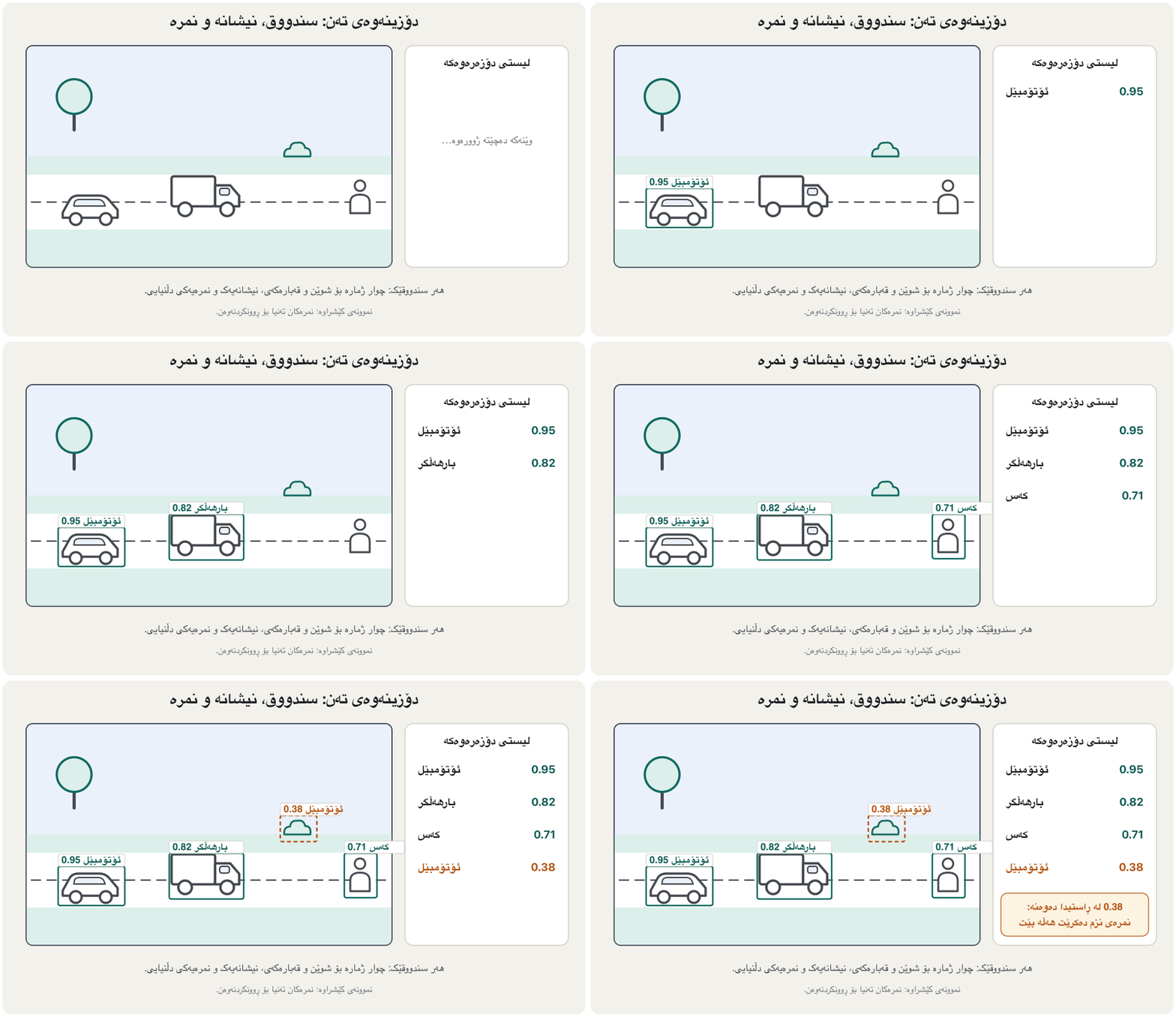
دۆزەرەوەیەک سەیری هەموو وێنەکە دەکات و لیستێک دەگەڕێنێتەوە. هەر بڕگەیەک سێ بەشی هەیە: (چوار ژمارە کە شوێن و قەبارەی لاکێشەکە دەدەن)، وەک «بارهەڵگر» و لە نێوان 0 و 1ـدا، وەک 0.82.
The rectangle that an model draws around an object it has found in a picture. Its place and size are given as numbers, usually its corners, or its centre, width and height.
ئەو لاکێشەیەیە کە بە دەوری ئەو تەنەدا دەیکێشێت کە لە وێنەکەدا دۆزیویەتییەوە. شوێن و قەبارەکەی بە ژمارە دەدرێت، زۆرجار گۆشەکانی یان ناوەڕاست، پانی و بەرزییەکەی.
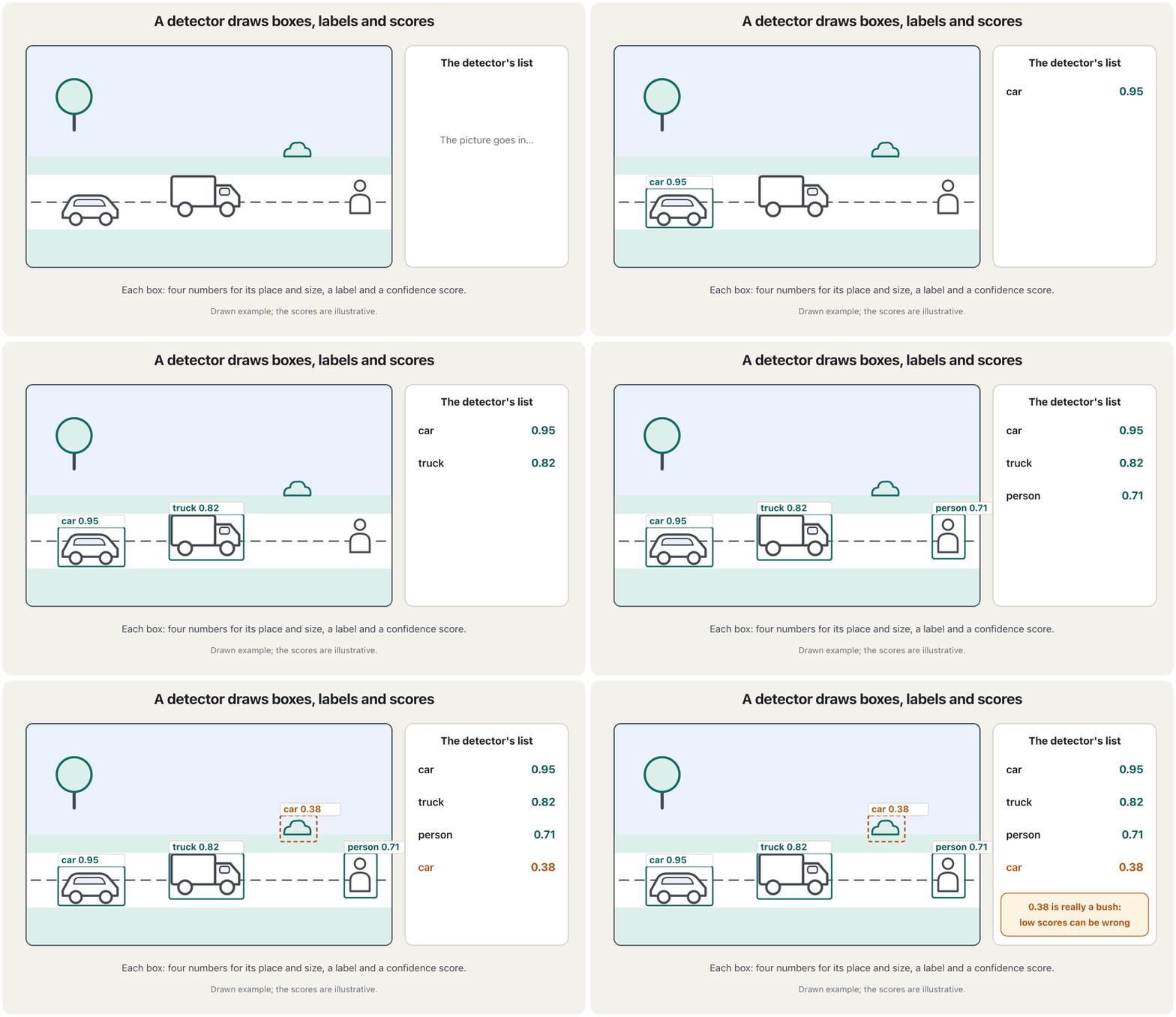
The detector does not know what a truck is. It has learned which shapes and colours in its training pictures were usually marked “truck”. That is how, in the animation, a bush got the label “car” with a low score.
دۆزەرەوەکە نازانێت بارهەڵگر چییە. فێر بووە کام شێوە و ڕەنگ لە وێنەکانی ڕاهێناندا زۆرجار وەک «بارهەڵگر» نیشان کراون. بۆیە لە دەوەنێک بە نمرەیەکی نزم ناوی «ئۆتۆمبێل»ی لێ نرا.
Three jobs: classify, detect, trackسێ کار: پۆلێنکردن، دۆزینەوە، بەدواداچوون
What a confidence score meansنمرەی دڵنیایی واتای چییە
A number, usually between 0 and 1, that a model gives with its answer to show how sure it is. A score of 0.82 means 'quite sure', not 'certain': the model can still be wrong.
ژمارەیەکە، زۆرجار لە نێوان 0 و 1ـدا، کە لەگەڵ وەڵامەکەیدا دەیدات بۆ ئەوەی نیشان بدات چەند دڵنیایە. نمرەی 0.82 واتە «تا ڕادەیەکی باش دڵنیایە»، نەک «بێگومانە»: هێشتا دەکرێت هەڵە بکات.
A score of 0.82 means “quite sure”, not “certain”. In a model whose scores are well calibrated, boxes scored about 0.8 are right about 8 times in 10. But many modern neural networks are badly calibrated: their scores do not match how often they are right (Guo et al., 2017). And on pictures unlike its training pictures, a model can be very sure and still wrong.
نمرەی 0.82 واتە «تا ڕادەیەک دڵنیا»، نەک «بێگومان». لە کە نمرەکانی بە باشی ڕێکخراون، ئەو سندووقانەی نمرەکەیان نزیکەی 0.8ـە، نزیکەی 8 جار لە 10 جار ڕاستن. بەڵام زۆرێک لە نوێ بە باشی ڕێک نەخراون: نمرەکانیان لەگەڵ ئەوەی چەند جار ڕاستن ناگونجێت (Guo و هاوکارانی، 2017). هەروەها لەسەر ئەو وێنانەی لە وێنەکانی ڕاهێنان ناچن، دەتوانێت زۆر دڵنیا بێت و هێشتا هەڵە بێت.
Three jobs: classify, detect, trackسێ کار: پۆلێنکردن، دۆزینەوە، بەدواداچوون
Tracking: following the same objectبەدواداچوون: شوێنکەوتنی هەمان تەن
A common example: a drone finds a vehicle and follows it without a pilot steering it. The software part of this is object tracking. The detector finds the vehicles in every frame of the video; the tracker links each box to the box in the next frame that is close by and looks the same, so each vehicle keeps one number (an ID).
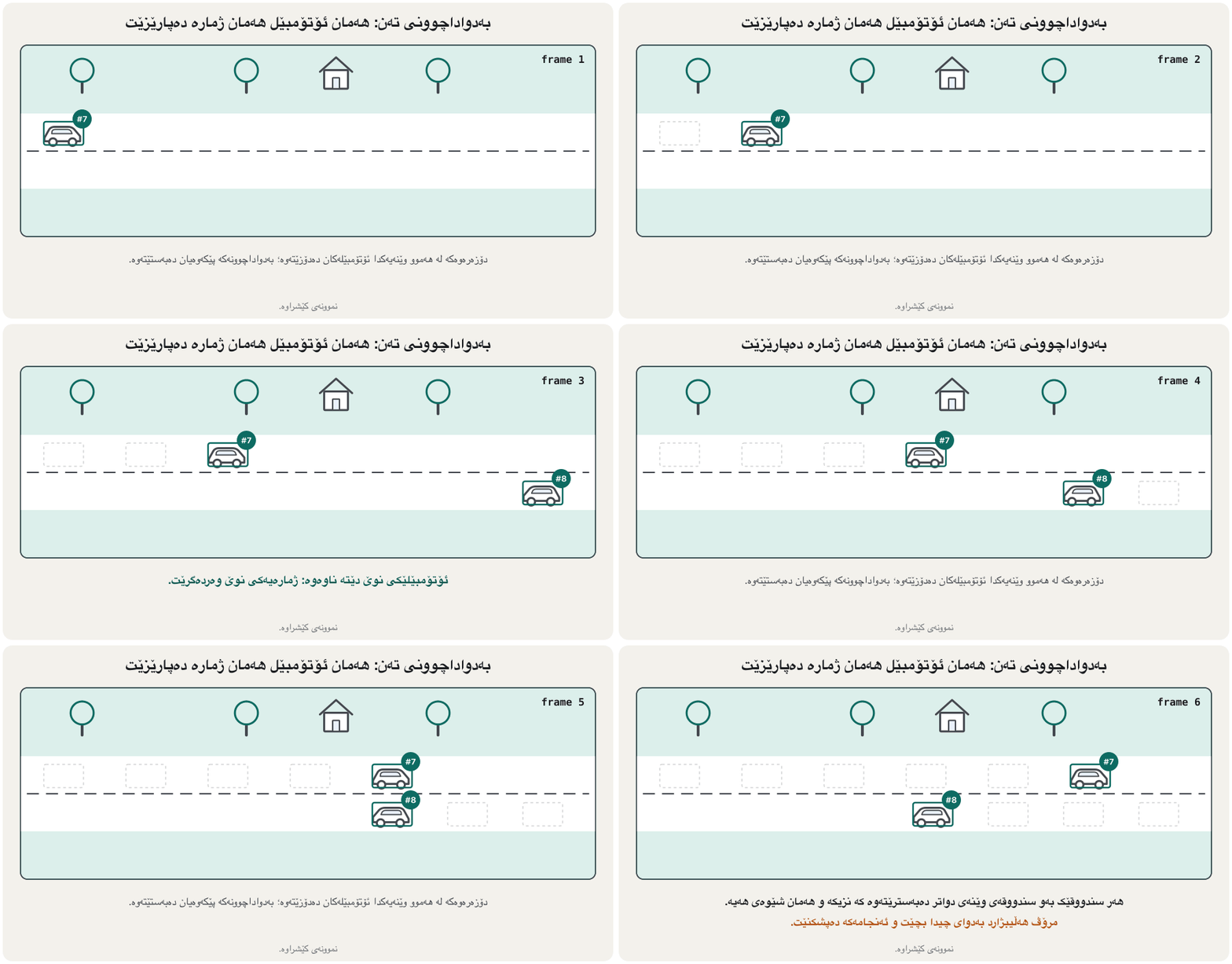
نموونەیەکی باو: ئۆتۆمبێلێک دەدۆزێتەوە و بەبێ ئەوەی فڕۆکەوانێک ئاڕاستەی بکات بەدوایدا دەچێت. بەشی ئەم کارە . دۆزەرەوەکە لە هەموو وێنەیەکی ڤیدیۆکەدا ئۆتۆمبێلەکان دەدۆزێتەوە؛ بەدواداچووەکە هەر سندووقێک بەو سندووقەی وێنەی دواتر دەبەستێتەوە کە نزیکە و هەمان شێوەی هەیە، بۆ ئەوەی هەر ئۆتۆمبێلێک یەک ژمارە (ID) بپارێزێت.
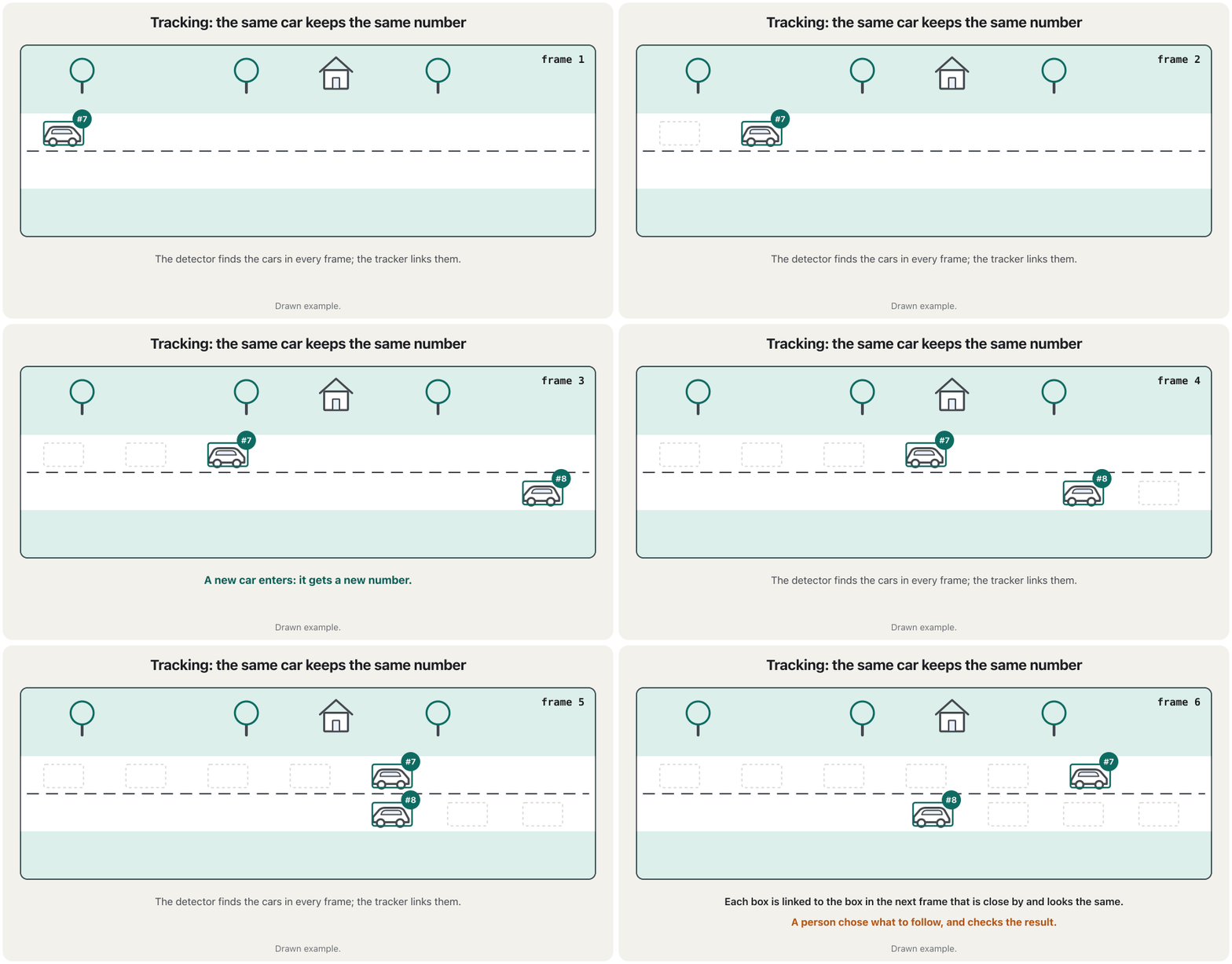
But “suspicious” is not something a camera can see. Within the law, a person decides which vehicle to follow and why, and checks what the system reports. Trackers also make mistakes: when two cars cross or one disappears behind a building, the numbers can swap. Flying the drone can be automatic; the decision is not.
بەڵام «گوماناوی» شتێک نییە کامێرا بتوانێت بیبینێت. مرۆڤ لە چوارچێوەی یاسادا بڕیار دەدات بەدوای کام ئۆتۆمبێلدا بچن و بۆچی. هەروەها ئەوەی سیستەمەکە ڕاپۆرتی دەکات دەپشکنێت. بەدواداچووەکانیش هەڵە دەکەن: کاتێک دوو ئۆتۆمبێل بە یەکتردا تێدەپەڕن یان یەکێکیان لە پشت باڵەخانەیەکەوە ون دەبێت، دەکرێت ژمارەکان تێکەڵ ببن. فڕاندنی دەکرێت خۆکار بێت؛ بڕیارەکە خۆکار نییە.
Sensors beyond the cameraهەستەوەرەکان جگە لە کامێرا
An ordinary camera needs light and a clear view. Other sensors fill the gaps (more in Sensors and Sensors: how things feel the world):
کامێرایەکی ئاسایی پێویستی بە ڕووناکی و دیمەنێکی ڕوون هەیە. تر ئەو کەلێنانە پڕ دەکەنەوە (زیاتر لە هەستەوەرەکان و هەستەوەرەکان: شتەکان چۆن هەست بە جیهان دەکەن):
- Thermal cameras see heat (infrared light), so they work at night.
- Radar sends out radio waves and listens for their echoes; it works at night and through clouds and rain.
- Acoustic sensors (microphones) hear engines, voices or knocking, even where nothing can be seen.
- گەرمی دەبینن ()، بۆیە بە شەو کار دەکەن.
- دەنێرێت و گوێ لە دەنگدانەوەکانیان دەگرێت؛ بە شەو و بە ناو هەور و باراندا کار دەکات.
- دەنگ () گوێیان لە بزوێنەر، دەنگی خەڵک یان لێدان دەبێت، تەنانەت لەو شوێنانەی هیچ نابینرێت.
Each sensor gives a different kind of data, and each needs a model trained on that kind of data: a model trained on camera pictures cannot read radar pictures. Cameras and thermal payloads on drones are explained in the Drone Technology course: Payloads and mapping.
هەر جۆرێکی جیاوازی دەدات و هەریەکەیان پێویستە کە لەسەر هەمان جۆری ڕاهێنرابێت: کە لەسەر وێنەی کامێرا ڕاهێنراوە ناتوانێت وێنەی بخوێنێتەوە. کامێرا ئاسایی و گەرمییەکانی سەر ، وەک ، لە کۆرسی تەکنەلۆژیای ڕوون کراونەتەوە: باری درۆن و نەخشەکێشان.
Sensors beyond the cameraهەستەوەرەکان جگە لە کامێرا
Thermal cameras: seeing heatکامێرای گەرمی: بینینی گەرمی
A camera that sees heat instead of light. It measures the energy that people, animals, engines and buildings give off, so it works in the dark and through light smoke, but it cannot see through walls.
کامێرایەکە کە لە جیاتی ڕووناکی، گەرمی دەبینێت. ئەو تیشکە دەپێوێت کە مرۆڤ، ئاژەڵ، بزوێنەر و باڵەخانەکان دەری دەدەن، بۆیە لە تاریکی و لە ناو دووکەڵی کەمدا کار دەکات، بەڵام بە ناو دیواردا نابینێت.
Everything warm gives off infrared light, which our eyes cannot see. A thermal camera measures it and shows warm things as bright or coloured, so a person, an animal or a running engine stands out at night. Rescue teams fly thermal cameras on drones to find people after earthquakes and in the mountains at night (AI that protects). Limits: they cannot see through walls or windows, and on a hot afternoon a sun-warmed rock can look like a person. Drone thermal cameras in more detail: Thermal cameras.
هەموو شتێکی گەرم ڕووناکیی دەردەدات کە چاومان نایبینێت. ئەم ڕووناکییە دەپێوێت و شتە گەرمەکان بە ڕووناک یان ڕەنگاوڕەنگ پیشان دەدات، بۆیە مرۆڤ، ئاژەڵ یان بزوێنەرێکی کارا بە شەو دیار دەبن. تیمەکانی ڕزگارکردن لەسەر دەفڕێنن بۆ دۆزینەوەی خەڵک دوای بوومەلەرزە و لە شاخەکاندا بە شەو (ژیریی دەستکرد بۆ پاراستن). سنوورەکان: ناتوانن بە ناو دیوار یان پەنجەرەدا ببینن و لە پاشنیوەڕۆیەکی گەرمدا بەردێکی گەرمبوو بە خۆر دەکرێت وەک مرۆڤ دەربکەوێت. سەر بە وردی: کامێرا گەرمییەکان.
Sensors beyond the cameraهەستەوەرەکان جگە لە کامێرا
Radar and radar satellitesڕادار و ڕاداری کونەی دەستکرد
Radar sends out radio waves and listens for their echoes, to measure how far away things are and how they move. Because it brings its own “light”, it works at night, and its waves pass through clouds and rain. A synthetic-aperture radar (SAR) on a moving satellite joins many echoes along its path, as if it had one huge antenna, to make sharp pictures of the ground. Europe's Sentinel-1 satellites give an “all-weather, day-and-night” supply of such pictures, used for floods, earthquakes and ice.
دەنێرێت و گوێ لە دەنگدانەوەکانیان دەگرێت، بۆ پێوانی دووریی شتەکان و جووڵەیان. چونکە «ڕووناکیی» خۆی لەگەڵ خۆیدا دەهێنێت، بە شەو کار دەکات و شەپۆلەکانی بە ناو هەور و باراندا تێدەپەڕن. (SAR) لەسەر مانگێکی دەستکردی جووڵاو زۆر دەنگدانەوە بە درێژایی ڕێگاکەی پێکەوە دەبەستێت، وەک ئەوەی ئەنتێنێکی زۆر گەورەی هەبێت، بۆ ئەوەی وێنەی ڕوونی زەوی دروست بکات. مانگە دەستکردەکانی Sentinel-1ـی ئەورووپا «لە هەموو کەشوهەوایەکدا، شەو و ڕۆژ» وێنەی لەم جۆرە دابین دەکەن کە بۆ لافاو، بوومەلەرزە و سەهۆڵ بەکار دێن.
Radar pictures do not look like photos: calm water looks dark and buildings look bright, so reading them needs trained eyes or trained models. The UN's flood maps made this way are explained in Surveillance and reconnaissance.
وێنەکانی لە وێنەی ئاسایی ناچن: ئاوی هێمن تاریک و باڵەخانەکان ڕووناک دەردەکەون، بۆیە خوێندنەوەیان پێویستی بە چاوی ڕاهێنراو یان ڕاهێنراو هەیە. نەخشەکانی لافاوی نەتەوە یەکگرتووەکان کە بەم شێوەیە دروست دەکرێن، لە وانەی چاودێری و دیدەوانی ڕوون کراونەتەوە.
Sensor fusion: two weak clues, one stronger answerیەکخستنی هەستەوەرەکان: دوو سەرەداوی لاواز، یەک وەڵامی بەهێزتر
Combining the readings of several into one answer that is more reliable than any single sensor, for example a camera and a together, or a drone's GPS, gyroscope and accelerometer.
تێکەڵکردنی خوێندنەوەکانی چەند بۆ یەک وەڵام کە لە هەر بە تەنیا پشتپێبەستراوترە، بۆ نموونە کامێرایەک و پێکەوە، یان ، و .
In fog, a camera sees only a grey shape: “vehicle?”, score 0.40. A radar says: “something metal, 300 m away, moving slowly”. Together they give a stronger answer: “vehicle”, 0.80. Combining sensors like this is sensor fusion. Drones use it all the time to know where they are, by combining satellite positioning (GNSS) with motion sensors (Sensor fusion in the flight controller).
لە تەمدا کامێرا تەنیا شێوەیەکی خۆڵەمێشی دەبینێت: «ئۆتۆمبێل؟»، نمرە 0.40. دەڵێت: «شتێکی کانزایی، 300 مەتر دوور، بە هێواشی دەجووڵێت». پێکەوە وەڵامێکی بەهێزتر دەدەن: «ئۆتۆمبێل»، 0.80. تێکەڵکردنی بەم شێوەیە . هەمیشە بەکاری دەهێنن بۆ ئەوەی بزانن لە کوێن، بە تێکەڵکردنی لەگەڵ جووڵە (یەکخستنی هەستەوەرەکان لە کۆنترۆڵکەری فڕیندا).
Fusion is only as good as its parts: if one sensor is fooled or jammed, the combined answer can be wrong too (When AI gets it wrong).
یەکخستن هێندەی بەشەکانی باشە: ئەگەر فریو بدرێت یان بشێوێنرێت، وەڵامە تێکەڵەکەش دەکرێت هەڵە بێت (کاتێک ژیریی دەستکرد هەڵە دەکات).
What is different? Anomaly and change detectionچی جیاوازە؟ دۆزینەوەی ڕەفتاری نائاسایی و دۆزینەوەی گۆڕانکاری
Sometimes the question is not “what is this?” but “what is unusual?”. Anomaly detection learns what normal looks like and flags what does not fit, such as an engine that suddenly sounds different. Change detection compares pictures of the same place at two times: after an earthquake, which buildings have collapsed; after a storm, which fields are flooded.
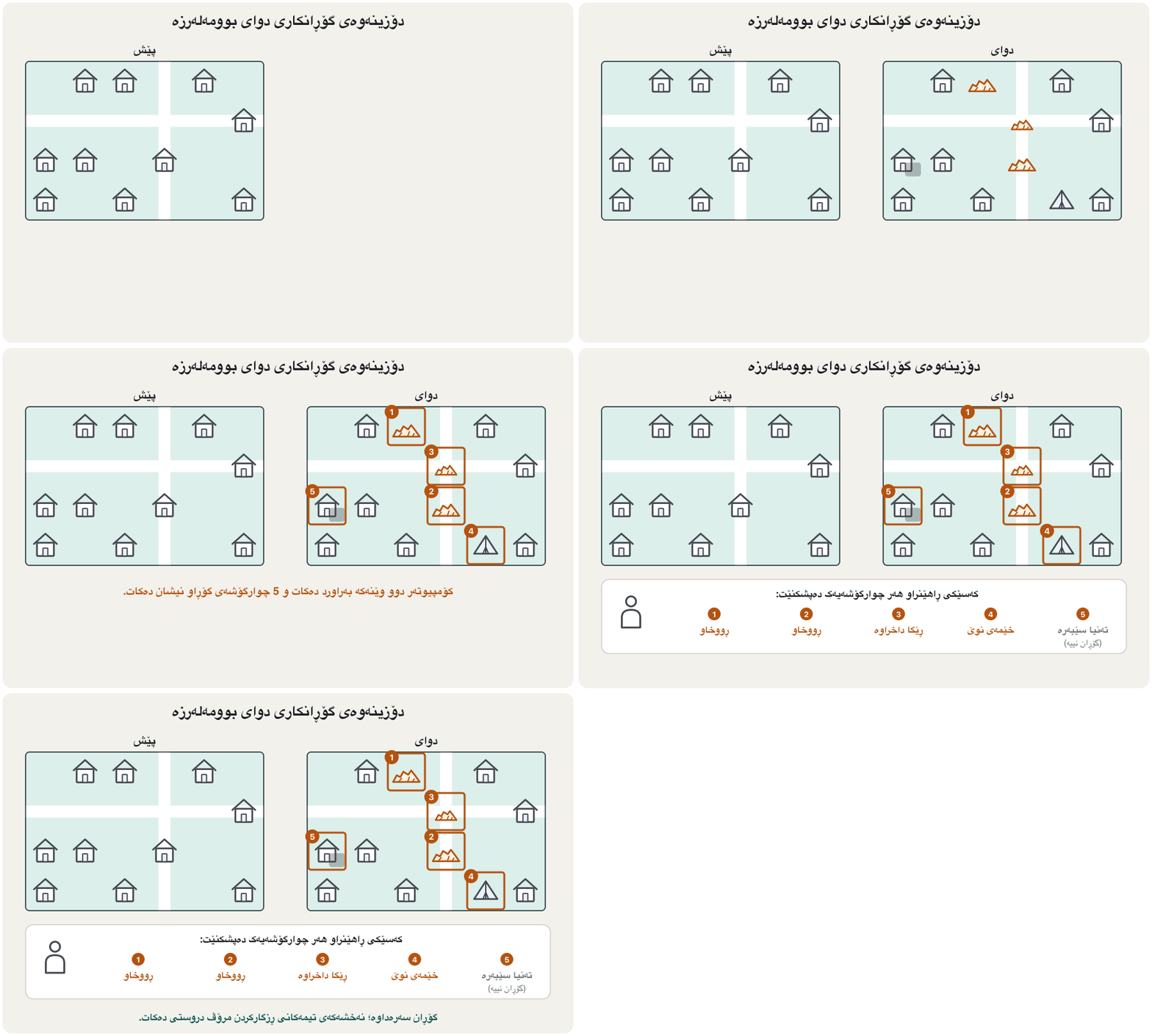
هەندێک جار پرسیارەکە ئەوە نییە «ئەمە چییە؟»، بەڵکو «چی نائاساییە؟». فێر دەبێت ئاسایی چۆنە و ئەوەی ناگونجێت نیشان دەکات، وەک بزوێنەرێک کە لەپڕ دەنگی دەگۆڕێت. وێنەی هەمان شوێن لە دوو کاتی جیاوازدا بەراورد دەکات: دوای بوومەلەرزە، کام باڵەخانە ڕووخاون؛ دوای زریان، کام کێڵگە کەوتوونەتە ژێر ئاو.
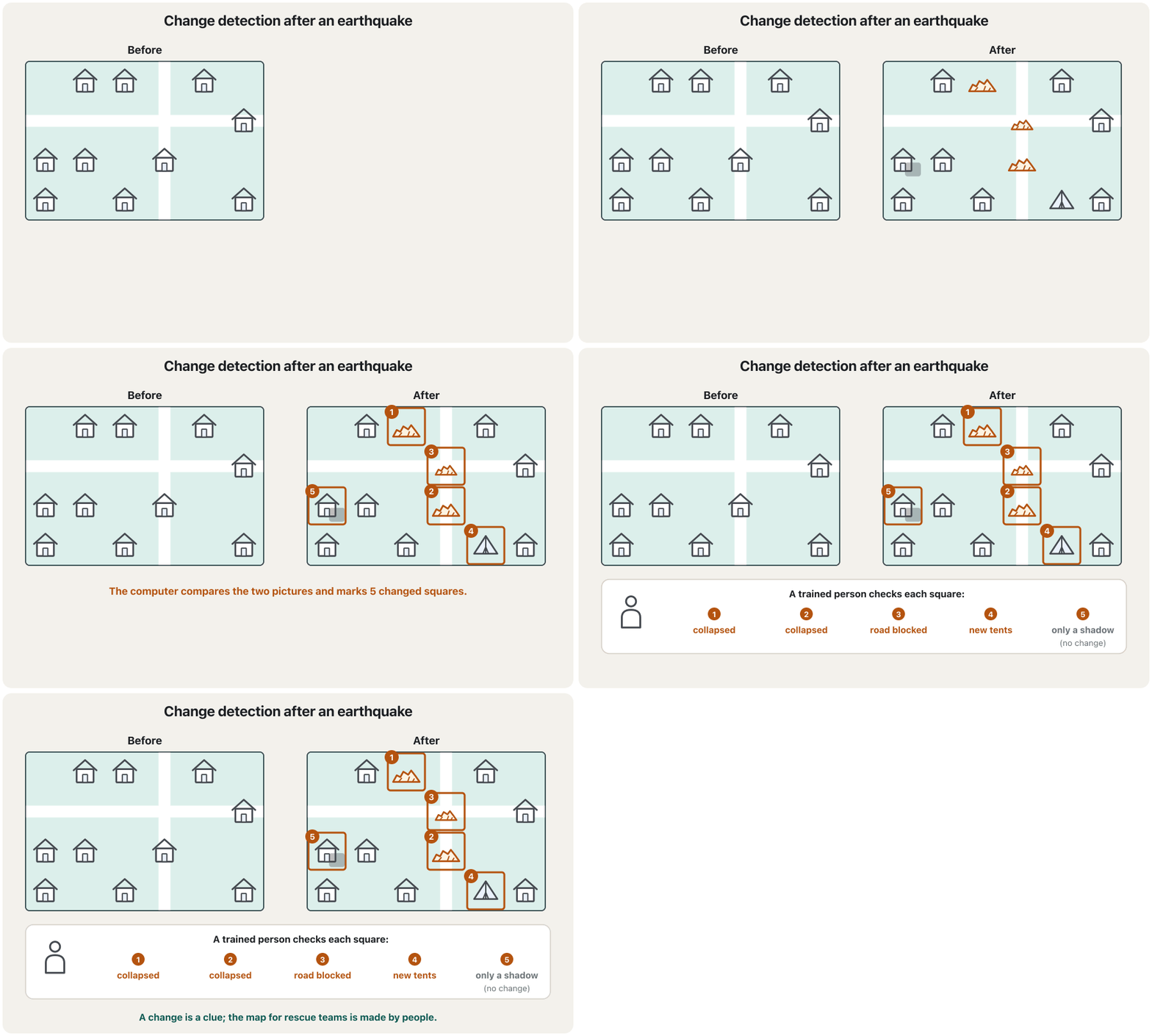
Both give a clue to check, not an answer. A flagged square may be a collapsed house, a shadow or a parked bus, and only a trained person can tell. Camouflage and decoys are made to fool exactly this kind of system (When AI gets it wrong); how image analysts work with such clues is taught in Surveillance and reconnaissance.
هەردووکیان سەرەداوێک بۆ پشکنین دەدەن، نەک وەڵامێک. چوارگۆشەیەکی نیشانکراو دەکرێت خانوویەکی ڕووخاو، سێبەرێک یان پاسێکی ڕاگیراو بێت و تەنیا کەسێکی ڕاهێنراو دەتوانێت جیایان بکاتەوە. و بۆ فریودانی ڕێک ئەم جۆرە سیستەمانە دروست دەکرێن (کاتێک ژیریی دەستکرد هەڵە دەکات)؛ شیکەرەوەکانی وێنە چۆن لەگەڵ ئەم سەرەداوانەدا کار دەکەن لە وانەی چاودێری و دیدەوانی فێر دەکرێت.
Common mistakesهەڵە باوەکان
| Mistakeهەڵە | Betterباشتر |
|---|---|
| “The computer sees the picture as we do.”« وێنەکە وەک ئێمە دەبینێت.» | It receives a grid of numbers and has learned which patterns usually mean what.خشتەیەک ژمارە وەردەگرێت و فێر بووە کام وێنەک زۆرجار واتای چی دەدات. |
| “A score of 0.95 means certain.”«نمرەی 0.95 واتە بێگومان.» | It means “quite sure” on pictures like its training pictures; many models are over-confident.واتە «تا ڕادەیەک دڵنیا» لەسەر وێنەی وەک وێنەکانی ڕاهێنان؛ زۆر زیادەدڵنیان. |
| “Detecting a truck tells you whose truck it is.”«دۆزینەوەی بارهەڵگرێک پێت دەڵێت هی کێیە.» | Detection says what kind of object it is, not whose it is or what it is doing (Target recognition).دۆزینەوە دەڵێت چ جۆرە تەنێکە، نەک هی کێیە یان چی دەکات (ناسینەوەی ئامانج). |
| “A thermal camera sees through walls.”« بە ناو دیواردا دەبینێت.» | It sees surface heat; walls and windows block it.گەرمیی ڕووی شتەکان دەبینێت؛ دیوار و پەنجەرە ڕێگری لێ دەکەن. |
| “The tracker decides what to follow.”«بەدواداچووەکە بڕیار دەدات بەدوای چیدا بچێت.» | A person chooses the object and checks the result; the tracker only keeps the box on it.مرۆڤ تەنەکە هەڵدەبژێرێت و ئەنجامەکە دەپشکنێت؛ بەدواداچووەکە تەنیا سندووقەکە لەسەری دەهێڵێتەوە. |
| “Two sensors cannot both be wrong.”«دوو ناکرێت هەردووکیان هەڵە بن.» | Fusion helps, but fog, jamming or decoys can fool several sensors at once.یەکخستن یارمەتی دەدات، بەڵام تەم، شێواندن یان دەتوانن لە یەک کاتدا چەند فریو بدەن. |
Exercisesڕاهێنانەکان
A drone camera records colour video at pixels and 30 frames per second. How many numbers does one frame have? How many arrive every second?
کامێرای ڤیدیۆی ڕەنگاوڕەنگ بە و 30 وێنە لە چرکەیەکدا تۆمار دەکات. یەک وێنە چەند ژمارەی هەیە؟ هەموو چرکەیەک چەند ژمارە دێت؟
Hintئاماژە
Pixels × 3 colours, then × 30 frames.
× 3 ڕەنگ، پاشان × 30 وێنە.
Show answerوەڵامەکە پیشان بدە
Pixels in one frame; numbers in one frame (3 per pixel); numbers per second (30 frames). About 187 million numbers arrive every second, which is why AI is used to sort them.
یەک وێنە؛ ژمارەکانی یەک وێنە (3 بۆ هەر )؛ ژمارەکان لە چرکەیەکدا (30 وێنە). نزیکەی 187 ملیۆن ژمارە هەموو چرکەیەک دێت، بۆیە بۆ ڕیزکردنیان بەکار دێت.
Say whether each task is classification, detection or tracking: (a) sorting 10,000 photos into “flooded” and “not flooded”; (b) counting the tents in a photo of a camp; (c) following a lost hiker in a rescue drone's video.
بڵێ هەر کارێک ، دۆزینەوە یان بەدواداچوونە: (a) ڕیزکردنی 10,000 وێنە بۆ «ژێر ئاو کەوتوو» و «ژێر ئاو نەکەوتوو»؛ (b) ژماردنی خێمەکان لە وێنەی کەمپێکدا؛ (c) بەدواداچوونی شاخەوانێکی ونبوو لە ڤیدیۆی ڕزگارکردندا.
Show answerوەڵامەکە پیشان بدە
- (a) Classification: one label per photo.
- (b) Detection: one box per tent, then count the boxes.
- (c) Tracking (with detection in every frame): the hiker keeps one ID while moving.
- (a) : یەک بۆ هەر وێنەیەک.
- (b) : یەک سندووق بۆ هەر خێمەیەک، پاشان سندووقەکان بژمێرە.
- (c) (لەگەڵ دۆزینەوە لە هەموو وێنەیەکدا): شاخەوانەکە لە کاتی جووڵەدا یەک ID دەپارێزێت.
A rescue team must search a forest at night, in light rain, for a lost child. Which sensors would you put on the drone, and why? What could still go wrong?
تیمێکی ڕزگارکردن دەبێت بە شەو، لە بارانێکی کەمدا، بە دارستانێکدا بە دوای منداڵێکی ونبوودا بگەڕێت. کام دەخەیتە سەر و بۆچی؟ هێشتا چی دەکرێت هەڵە بچێت؟
Show answerوەڵامەکە پیشان بدە
A thermal camera to see body heat at night (light rain shortens its range); an ordinary camera with a light for a closer look; a loudspeaker and a microphone to call and listen. Fused together they give stronger clues. Things that can still go wrong: trees hide the child from above, warm animals or rocks cause false alarms, and rain or fog shortens the range, so people on the ground check every alarm.
بۆ بینینی گەرمیی لەش بە شەو (بارانی کەم مەودای کورت دەکاتەوە)؛ کامێرایەکی ئاسایی لەگەڵ ڕووناکی بۆ سەیرکردنی نزیکتر؛ بڵندگۆ و بۆ بانگکردن و گوێگرتن. بە یەکخستنیان سەرەداوی بەهێزتر دەدەن. ئەوەی هێشتا دەکرێت هەڵە بچێت: دار منداڵەکە لە سەرەوە دەشارێتەوە، ئاژەڵ یان بەردی گەرم ئاگادارکردنەوەی هەڵە دروست دەکەن و باران یان تەم مەودا کورت دەکەنەوە، بۆیە خەڵکی سەر زەوی هەموو ئاگادارکردنەوەیەک دەپشکنن.
Summaryپوختە
- To a computer, a picture is a grid of numbers (pixels); a model learns from labelled examples which patterns mean what.
- Classification gives one label per picture; detection gives boxes, labels and confidence scores; tracking keeps the same ID on the same object from frame to frame.
- A confidence score means “quite sure”, not “certain”; many models are over-confident on unfamiliar pictures.
- Thermal cameras see heat, radar and SAR see at night and through clouds, and microphones hear; each needs a model trained on its own kind of data.
- Sensor fusion turns weak clues into a stronger answer; anomaly and change detection point people to what is different.
- A person decides what to look for and checks what the system finds.
- بۆ ، وێنە خشتەیەک ژمارەیە ()؛ لە نموونە نیشانەکراوەکانەوە فێر دەبێت کام وێنەک واتای چی دەدات.
- یەک بۆ هەر وێنەیەک دەدات؛ سندووق، و دەدات؛ هەمان ID لەسەر هەمان تەن لە وێنەیەکەوە بۆ وێنەیەکی تر دەهێڵێتەوە.
- واتە «تا ڕادەیەک دڵنیا»، نەک «بێگومان»؛ زۆر لەسەر وێنەی نەناسراو زیادەدڵنیان.
- گەرمی دەبینن، و SAR بە شەو و بە ناو هەوردا دەبینن و دەبیستن؛ هەریەکەیان پێویستە کە لەسەر جۆری خۆی ڕاهێنرابێت.
- سەرەداوی لاواز دەکات بە وەڵامێکی بەهێزتر؛ و مرۆڤ بۆ ئەوەی جیاوازە ڕێنمایی دەکەن.
- مرۆڤ بڕیار دەدات بە دوای چیدا بگەڕێت و ئەوەی سیستەمەکە دەیدۆزێتەوە دەپشکنێت.
What is the difference between classification and detection?جیاوازیی نێوان پۆلێنکردن و دۆزینەوەی تەن چییە؟
Classification gives one label for the whole picture. Detection finds each object and gives it a box, a label and a confidence score.
یەک بۆ هەموو وێنەکە دەدات. هەر تەنێک دەدۆزێتەوە و سندووق، و پێ دەدات.
Why do radar satellites matter for disaster relief?بۆچی مانگە دەستکردە ڕادارییەکان بۆ فریاکەوتنی کارەسات گرنگن؟
They see at night and through clouds, so floods can be mapped during the storm itself.
بە شەو و بە ناو هەوردا دەبینن، بۆیە دەکرێت لە کاتی خودی زریانەکەدا نەخشەی لافاو بکێشرێت.
In tracking, what stays with people?لە بەدواداچوونی تەندا چی لای مرۆڤ دەمێنێتەوە؟
Choosing what to follow and why, within the law, and checking what the system reports.
هەڵبژاردنی ئەوەی بەدوای چیدا بچن و بۆچی، لە چوارچێوەی یاسادا، هەروەها پشکنینی ئەوەی سیستەمەکە ڕاپۆرتی دەکات.
Lesson complete!وانەکە تەواو بوو!
Well done. Review the key terms, then go on to the next lesson.دەستخۆش. سەیرێکی زاراوە سەرەکییەکان بکەرەوە، پاشان بڕۆ بۆ وانەی داهاتوو.
Key termsزاراوە سەرەکییەکان
When AI Gets It Wrong: Errors, Bias and Deceptionکاتێک ژیریی دەستکرد هەڵە دەکات: هەڵە، لاسەنگی و فریودان
Related lecturesوانە پەیوەندیدارەکان
- Machine Learning Basics (Supplementary)بنەماکانی فێربوونی ئامێر (زیادە)
- Agents, Sensors and Actuators; Rational Agentsئەیجێنتەکان، هەستەوەرەکان و جووڵێنەرەکان؛ ئەیجێنتە عەقڵانییەکان
- Monitors and Displaysشاشەکان
- Emerging Technologies: IoT, VR/AR, Robots and Blockchainتەکنەلۆجیا نوێیەکان: ئینتەرنێتی شتەکان، ڕاستیی گریمانەیی/ڕاستیی زیادکراو، ڕۆبۆتەکان و بلۆکچەین
- When AI Gets It Wrong: Errors, Bias and Deceptionکاتێک ژیریی دەستکرد هەڵە دەکات: هەڵە، لاسەنگی و فریودان
- Surveillance and Reconnaissanceچاودێری و دیدەوانی
- Target Recognition: Recognising Is Not Identifyingناسینەوەی ئامانج: ناسینەوەی جۆر، دیاریکردنی ناسنامە نییە
- Payloads and Mapping: Cameras, Thermal, LiDAR and Photogrammetryباری درۆن و نەخشەکێشان: کامێرا، گەرمی، لایدار و فۆتۆگرامێتری
References and further readingسەرچاوەکان و خوێندنەوەی زیاتر
- Stanford CS231n: Deep Learning for Computer Vision, schedule (Spring 2026)
- ESA: Sentinel-1
- NASA Earthdata: What is Synthetic Aperture Radar?
- NASA Science: Infrared Waves
- Bewley et al. (2016): Simple Online and Realtime Tracking (arXiv:1602.00763)
- Guo et al. (2017): On Calibration of Modern Neural Networks (ICML 2017, arXiv:1706.04599)
- UNITAR (13 April 2021): Fusing AI and satellite image analysis to inform rapid response to floods
This lecture is a first edition. The Kurdish text and terminology are waiting for review by Kurdish IT teachers.ئەم وانەیە چاپی یەکەمە. دەقە کوردییەکە و زاراوەکانی چاوەڕێی پێداچوونەوەی مامۆستایانی کوردی بواری IT ن.