Chapterبەش 2 · Lectureوانە 2.1
Surveillance and Reconnaissanceچاودێری و دیدەوانی
How drones and satellites collect pictures, how AI sorts them so that people look at the right few first, why radar satellites see through clouds, how AI flood maps reach relief teams, why an unusual shape is a question and not an answer, and where watching must stop to protect privacy.
و مانگە دەستکردەکان چۆن وێنە کۆ دەکەنەوە، چۆن ڕیزیان دەکات تا مرۆڤ سەرەتا سەیری چەند وێنەیەکی گرنگ بکات، بۆچی مانگی دەستکردی بە ناو هەوردا دەبینێت، نەخشەی لافاوی چۆن دەگاتە تیمەکانی فریاگوزاری، بۆچی شێوەیەکی نائاسایی پرسیارە نەک وەڵام و چاودێریکردن لە کوێدا دەبێت بوەستێت بۆ پاراستنی .
What you will learnچی فێر دەبیت
- Tell surveillance and reconnaissance apart, and say what ISR means.
- Describe the four steps from pictures to a decision, and why a trained person checks before anything is decided.
- Explain AI triage with numbers: flagged pictures, confirmed ones and misses.
- Explain why radar satellites see through clouds and at night, and how AI flood maps help relief teams.
- Explain why an anomaly or a change is a clue to check, and why watching people needs legal limits.
- جیاوازیی نێوان و بزانیت و بڵێیت چییە.
- چوار هەنگاوەکەی نێوان وێنە و بڕیار باس بکەیت و بڵێیت بۆچی مرۆڤێکی ڕاهێنراو پێش هەر بڕیارێک دەپشکنێت.
- بە بە ژمارە ڕوون بکەیتەوە: وێنەی نیشانکراو، وێنەی پشتڕاستکراوە و ونبوو.
- ڕوونی بکەیتەوە بۆچی مانگی دەستکردی بە ناو هەوردا و لە شەودا دەبینێت و نەخشەی لافاوی چۆن یارمەتیی تیمەکانی فریاگوزاری دەدات.
- ڕوونی بکەیتەوە بۆچی شتێکی نائاسایی یان گۆڕانکارییەک نیشانەیەکە بۆ پشکنین و بۆچی چاودێریکردنی خەڵک سنووری یاسایی پێویستە.
Too many pictures for human eyesوێنەی زیاتر لەوەی چاوی مرۆڤ بیبینێت
Armies, border guards and relief agencies all collect pictures from the sky: from , aircraft and satellites. These cameras take far more pictures than people can look at. Imagine a satellite sends back 1,000 pictures of a large area. Who looks at them all?
سوپا، پاسەوانانی سنوور و ڕێکخراوە مرۆییەکان هەموویان لە ئاسمانەوە وێنە کۆ دەکەنەوە: لە ، فڕۆکە و مانگە دەستکردەکانەوە. ئەم کامێرایانە زۆر زیاتر لەوە وێنە دەگرن کە مرۆڤ بتوانێت سەیریان بکات. وای دابنێ مانگێکی دەستکرد 1,000 وێنە لە ناوچەیەکی گەورە دەنێرێتەوە. کێ سەیری هەموویان دەکات؟
If one person needs about 2 minutes for each picture, the pile takes minutes: about 33 hours, or four long working days. Tired eyes also miss things. An AI system can go through all 1,000 pictures in minutes and put the most promising ones first. That is the real job of AI here: it sorts, and people check.
ئەگەر کەسێک بۆ هەر وێنەیەک نزیکەی 2 خولەکی پێویست بێت، ئەم کۆمەڵە وێنەیە خولەک دەخایەنێت: نزیکەی 33 کاتژمێر، واتە چوار ڕۆژی درێژی کار. چاوی ماندووش شت لەدەست دەدات. سیستەمێکی دەتوانێت لە چەند خولەکێکدا هەموو 1,000 وێنەکە ببینێت و ئەوانەی ئەگەری گرنگییان زیاترە بخاتە پێشەوە. ئەمە کاری ڕاستەقینەی لێرەدا: ڕیز دەکات و مرۆڤ دەپشکنێت.
This lesson uses what How AI Sees explains about cameras, sensors and object detection. Here you will see how those tools are used to watch large areas, where they help, where they fail, and where watching must stop.
ئەم وانەیە پشت بەوە دەبەستێت کە وانەی ژیریی دەستکرد چۆن دەبینێت لەبارەی کامێرا، و ڕوونی دەکاتەوە. لێرەدا دەبینیت ئەم ئامرازانە چۆن بۆ چاودێریکردنی ناوچەی گەورە بەکاردێن، لە کوێدا یارمەتی دەدەن، لە کوێدا هەڵە دەکەن و چاودێریکردن لە کوێدا دەبێت بوەستێت.
Surveillance and reconnaissanceچاودێری و دیدەوانی
Surveillance means watching a place, or what happens there, over a long time: again and again, often every day. A camera that watches a border crossing, or a satellite that photographs the same valley every week, is doing surveillance.
واتە سەیرکردنی شوێنێک، یان ئەوەی لەوێ ڕوودەدات، بۆ ماوەیەکی درێژ: دووپاتە و دووپاتە، زۆرجار هەموو ڕۆژێک. کامێرایەک کە سەیری خاڵێکی سنوور دەکات، یان مانگێکی دەستکرد کە هەموو هەفتەیەک وێنەی هەمان دۆڵ دەگرێت، دەکات.
Reconnaissance is a mission to find out something specific about a place. Is the bridge still standing? Which roads are under water? It is shorter and more focused. A drone that flies once over a flooded valley to check a bridge is doing reconnaissance.
ئەرکێکە بۆ زانینی شتێکی دیاریکراو لەبارەی شوێنێک. ئایا پردەکە هێشتا ماوە؟ کام ڕێگایانە لەژێر ئاودان؟ کورتتر و ئامانجدارترە. کە یەک جار بەسەر دۆڵێکی لافاوگرتوودا دەفڕێت بۆ پشکنینی پردێک، دەکات.
A shopkeeper in the bazaar who watches the street from his door every day does a kind of surveillance: he notices what is normal and what is new. When a heavy rain falls and you send a cousin to the next village to see whether the road is open, he is doing reconnaissance: one trip, one question.
دوکاندارێک لە بازاڕ کە هەموو ڕۆژێک لە بەردەم دەرگاکەیەوە سەیری شەقامەکە دەکات، جۆرێک لە دەکات: دەزانێت چی ئاساییە و چی نوێیە. کاتێک بارانێکی زۆر دەبارێت و ئامۆزایەکت دەنێریت بۆ گوندی تەنیشت بۆ ئەوەی بزانێت ڕێگاکە کراوەیە یان نا، ئەو دەکات: یەک گەشت، یەک پرسیار.
Where the analogy stops workingسنووری ئەم نموونەیە
The shopkeeper understands what he sees. Sensors only collect data; people still have to understand it and decide what it means.
دوکاندارەکە لەوە تێدەگات کە دەیبینێت. تەنیا کۆ دەکەنەوە؛ هێشتا مرۆڤ دەبێت لێی تێبگات و بڕیار بدات واتای چییە.
Surveillance and reconnaissanceچاودێری و دیدەوانی
ISR: from collecting to understandingهەواڵگری، چاودێری و دیدەوانی: لە کۆکردنەوەوە بۆ تێگەیشتن
Militaries group these jobs as ISR: intelligence, surveillance and reconnaissance. Surveillance and reconnaissance collect information; intelligence is what people make of it: checked and understood information that helps someone decide. AI now helps at every step, mostly by sorting and joining huge amounts of data.
سوپاکان ئەم کارانە بە ناوی پێکەوە دەبەستن. و زانیاری کۆ دەکەنەوە؛ هەواڵگری ئەوەیە کە مرۆڤ لێی دروست دەکات: زانیارییەکی پشکنراو کە لێی تێگەیشتراوە و یارمەتیی کەسێک دەدات بڕیار بدات. ئێستا لە هەموو هەنگاوێکدا یارمەتی دەدات، زیاتر بە ڕیزکردن و پێکەوەبەستنی بڕێکی زۆری .
Drones grew up in this work: during the Cold War, armies built reconnaissance drones to take photographs far away without risking a pilot (A short history of drones). Today the same kind of pipeline also serves relief work, as the next screens show.
لەم کارەدا گەشەیان کرد: لە سەردەمی جەنگی سارددا سوپاکان بۆ دروست کرد تا بێ ئەوەی ژیانی فڕۆکەوانێک بخەنە مەترسییەوە لە دوورەوە وێنە بگرن (مێژوویەکی کورتی درۆن). ئەمڕۆ هەمان جۆری ڕێگا لە کاری فریاگوزاریشدا بەکار دێت، وەک لە پەڕەکانی داهاتوودا دەیبینیت.
From pictures to a decision: four stepsلە وێنەوە بۆ بڕیار: چوار هەنگاو
AI-supported surveillance and reconnaissance usually works in four steps. Machines do the first three. The fourth must never be skipped.
و بە یارمەتیی زۆرجار بە چوار هەنگاو کار دەکەن. ئامێر سێ هەنگاوی یەکەم دەکات. هەنگاوی چوارەم هەرگیز نابێت بازی بەسەردا بدرێت.
- Collectکۆکردنەوە
, aircraft and satellites take pictures of a large area. Some carry other too, such as .
، فڕۆکە و مانگە دەستکردەکان وێنەی ناوچەیەکی گەورە دەگرن. هەندێکیان تریش هەڵدەگرن، وەک .
- Scan and sortپشکنین و ڕیزکردن
AI scans the pictures for objects such as vehicles or buildings, and for changes compared with older pictures of the same place.
وێنەکان دەپشکنێت بۆ دۆزینەوەی تەنی وەک ئۆتۆمبێل یان بینا و بۆ گۆڕانکاری بە بەراورد لەگەڵ وێنە کۆنەکانی هەمان شوێن.
- Alertئاگادارکردنەوە
AI gives people a short list: where it found something, what it thinks it is, and a .
لیستێکی کورت دەداتە مرۆڤ: لە کوێ شتێکی دۆزیوەتەوە، پێی وایە چییە و .
- Checkپشکنینی مرۆڤ
A trained analyst looks at the original pictures, compares them with other sources and writes a report. Only then do responsible people decide what, if anything, to do.
شیکەرەوەیەکی ڕاهێنراو سەیری وێنە ڕەسەنەکان دەکات، بەراوردیان دەکات لەگەڵ سەرچاوەی تر و ڕاپۆرتێک دەنووسێت. تەنیا ئەوکاتە کەسانی بەرپرسیار بڕیار دەدەن کە چی بکرێت، ئەگەر شتێک پێویست بێت.
Steps 1–3 are what machines do well: they are fast and never get bored. Step 4 is where people bring judgement, knowledge of the place, the law and responsibility. Working this way, each side doing what it does best, is called human–machine teaming.
هەنگاوەکانی 1 تا 3 ئەو کارانەن کە ئامێر باش دەیانکات: خێرایە و هەرگیز بێزار نابێت. لە هەنگاوی 4ـدا مرۆڤ هەڵسەنگاندن، ناسینی شوێنەکە، یاسا و بەرپرسیارێتی دەهێنێت. ئەم شێوە کارکردنە، کە هەر لایەک ئەو کارە دەکات کە باشتر دەیزانێت، پێی دەوترێت .
People and AI systems or robots working as one team, each doing what it does best: machines search, sort and carry; people judge, decide and stay responsible.
کارکردنی مرۆڤ و سیستەمەکانی یان وەک یەک تیم، هەریەکەیان ئەوە دەکات کە باشتر دەیکات: ئامێرەکان دەگەڕێن، ڕیز دەکەن و هەڵدەگرن؛ مرۆڤەکان هەڵدەسەنگێنن، بڕیار دەدەن و بەرپرسیار دەمێننەوە.
AI as triage: sorting the pileژیریی دەستکرد بۆ هەڵسەنگاندنی سەرەتایی: ڕیزکردنی کۆمەڵە وێنەکە
In a hospital emergency room, a nurse quickly sorts patients by how urgent they are. That first quick sort is called triage. AI does the same for pictures. It does not answer 'What is there?'. It answers 'Which pictures should a person look at first?'
لە بەشی فریاکەوتنی نەخۆشخانەدا، پەرستارێک بە خێرایی نەخۆشەکان بەپێی پەلەیی حاڵیان ڕیز دەکات. ئەم ڕیزکردنە خێرا و یەکەمە پێی دەوترێت . هەمان کار بۆ وێنە دەکات. وەڵامی «چی لەوێیە؟» ناداتەوە، بەڵکو وەڵامی «مرۆڤ دەبێت سەرەتا سەیری کام وێنە بکات؟» دەداتەوە.
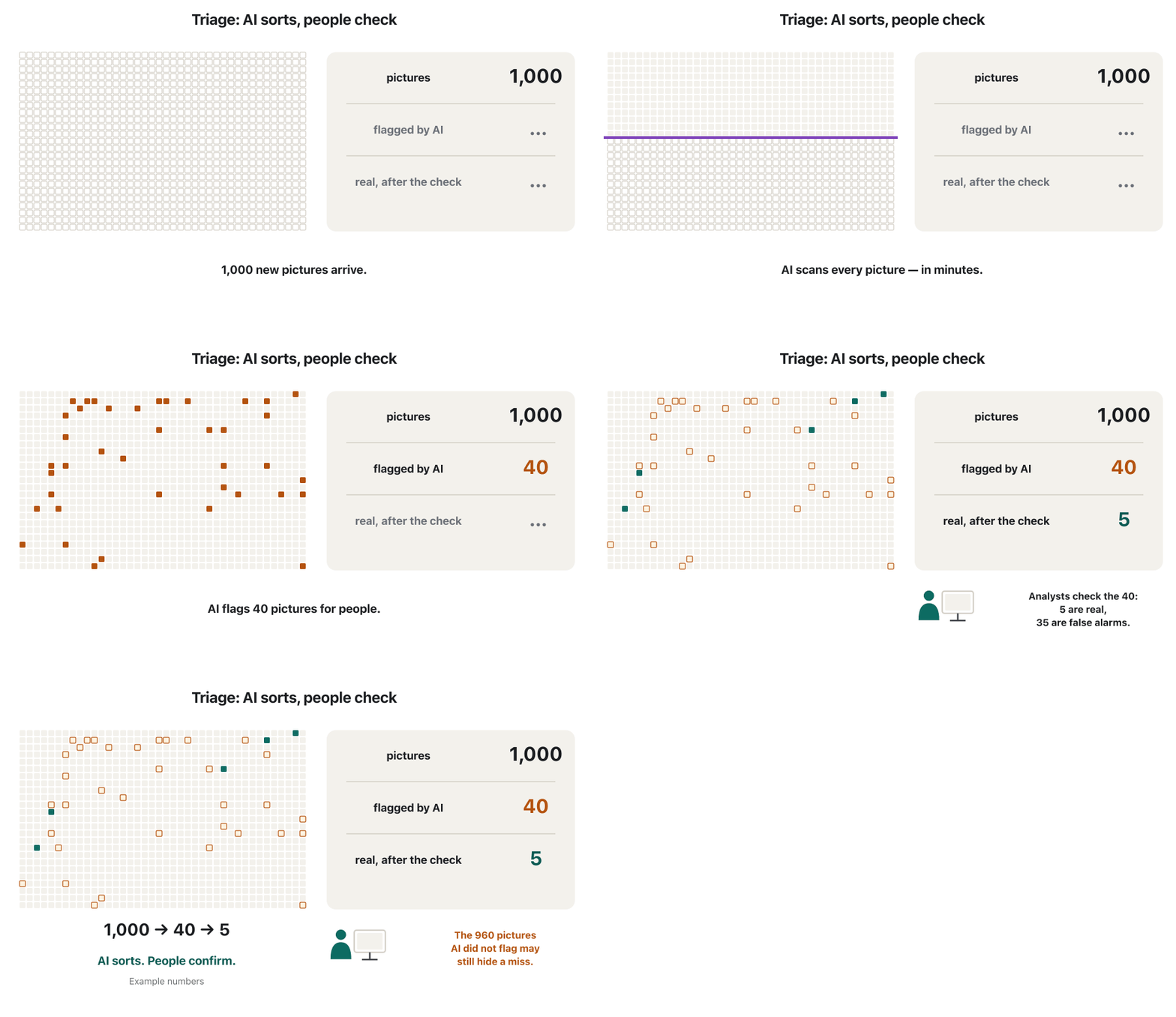
In the animation, the AI flags 40 of the 1,000 pictures. Analysts check them: 5 are real and 35 are false alarms, . That is still a big saving: people studied 40 pictures closely instead of 1,000. But the numbers hide two things:
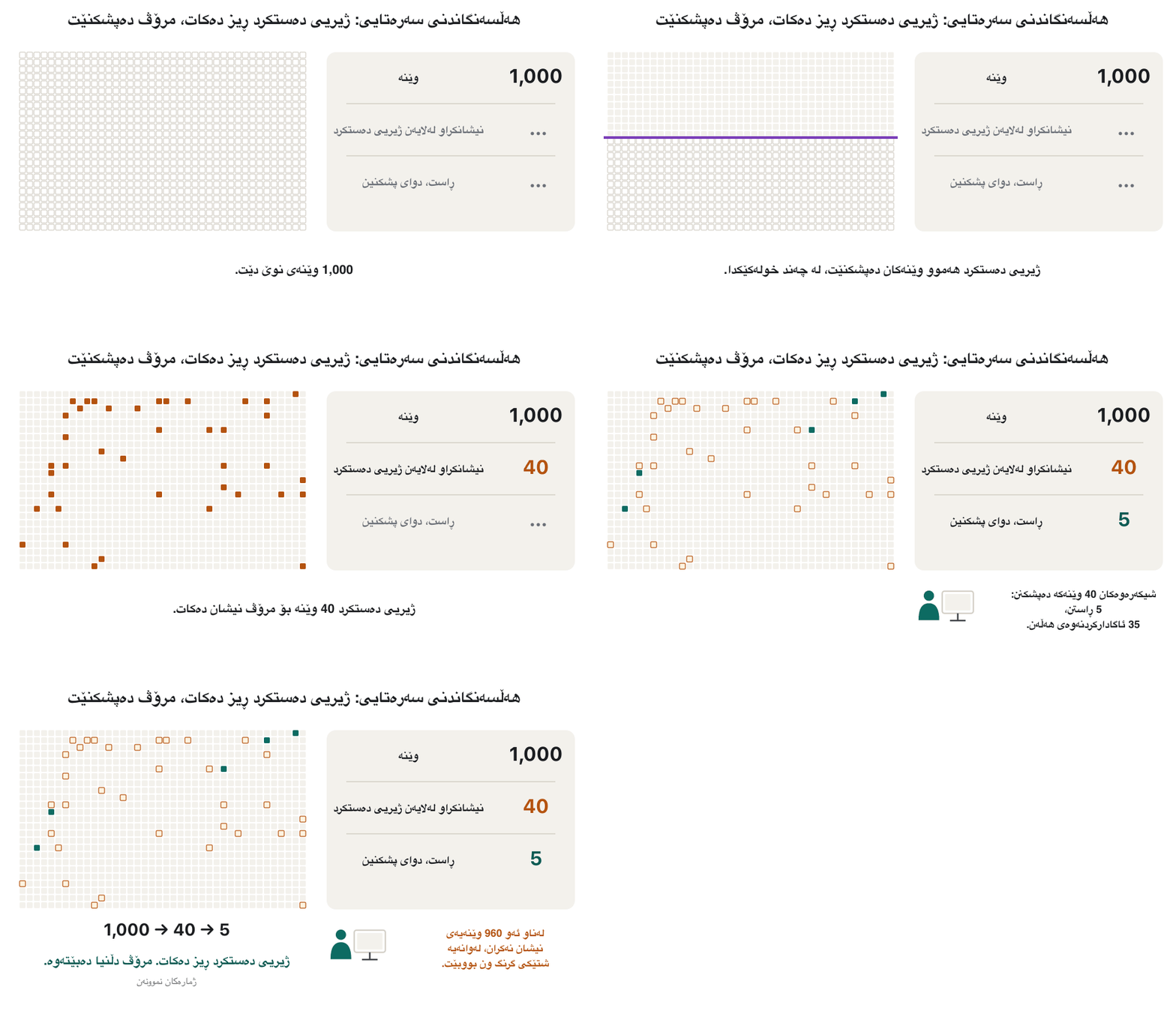
لە ، 40 وێنە لە 1,000 وێنەکە نیشان دەکات. شیکەرەوەکان دەیانپشکنن: 5 ڕاستن و 35 ئاگادارکردنەوەی هەڵەن، واتە . ئەمە هێشتا کاتێکی زۆر پاشەکەوت دەکات: مرۆڤ بە وردی سەیری 40 وێنەی کرد لە جیاتی 1,000. بەڵام ژمارەکان دوو شت دەشارنەوە:
- Only 5 of the 40 flags were real: . A flag is a reason to look, not a result.
- Nobody looked closely at the 960 pictures that were not flagged. If something real was among them, a miss or , nobody knows. Misses can only be measured by testing the system on pictures with known answers, or by checking a random sample of the unflagged ones.
- تەنیا 5 لە 40 وێنە نیشانکراوەکە ڕاست بوون: . نیشانکردن هۆیەکە بۆ سەیرکردن، نەک ئەنجام.
- کەس بە وردی سەیری ئەو 960 وێنەیەی نەکرد کە نیشان نەکرابوون. ئەگەر شتێکی ڕاستەقینە لەناویاندا بووبێت، واتە ونبوویەک یان ، کەس نایزانێت. ونبووەکان تەنیا بەوە دەپێورێن کە سیستەمەکە لەسەر ئەو وێنانەی وەڵامەکانیان زانراوە تاقی بکرێتەوە، یان لە وێنە نیشاننەکراوەکان بپشکنرێت.
Clouds, night and radar satellitesهەور، شەو و مانگی دەستکردی ڕادار
Optical satellites take ordinary photos with sunlight, like a phone camera very high up. Their pictures are sharp and in colour, but they see nothing through clouds and very little at night.
مانگە دەستکردە ئۆپتیکییەکان بە ڕووناکیی خۆر وێنەی ئاسایی دەگرن، وەک کامێرای مۆبایلێک لە بەرزاییەکی زۆرەوە. وێنەکانیان ڕوون و ڕەنگاوڕەنگن، بەڵام بە ناو هەوردا هیچ نابینن و لە شەودا زۆر کەم دەبینن.
Radar satellites send out their own microwaves and record the echoes. Clouds and darkness do not stop them: ESA describes its Sentinel-1 radar satellites as an all-weather, day-and-night source of pictures of the Earth. Their sharp pictures come from (SAR), explained in Radar and radar satellites.
مانگە دەستکردەکانی شەپۆلی مایکرۆوەیڤی خۆیان دەنێرن و دەنگدانەوەکەی تۆمار دەکەن. هەور و تاریکی ڕێگرییان لێ ناکەن: ESA مانگە دەستکردەکانی Sentinel-1 وەک سەرچاوەیەکی وێنەی زەوی وەسف دەکات کە لە هەموو کەشوهەوایەکدا و شەو و ڕۆژ کار دەکات. وێنە ڕوونەکانیان بە دروست دەکرێن کە لە بەشی ڕادار و ڕاداری کونەی دەستکرددا ڕوون کراوەتەوە.
Radar pictures are grey and look strange, but they show water very well. Calm water is smooth like a mirror, so it reflects the radar signal away from the satellite and looks dark. That is why many flood maps are made from radar pictures.
وێنەی خۆڵەمێشییە و سەیر دەردەکەوێت، بەڵام ئاو زۆر باش پیشان دەدات. ئاوی هێمن وەک ئاوێنە لووسە، بۆیە بە دوور لە مانگە دەستکردەکە دەداتەوە و ڕەش دەردەکەوێت. لەبەر ئەمە زۆربەی نەخشەکانی لافاو لە وێنەی دروست دەکرێن.
A real example: AI flood maps for relief teamsنموونەیەکی ڕاستەقینە: نەخشەی لافاوی ژیریی دەستکرد بۆ تیمەکانی فریاگوزاری
The same kind of AI that sorts pictures for an army also helps people after disasters. UNOSAT, the UN satellite centre (part of UNITAR), makes maps from satellite pictures for relief workers. In 2021 it responded to about 17 flood events a year on average, and its maps often reached relief teams within two days.
هەمان جۆری کە وێنە بۆ سوپا ڕیز دەکات، دوای کارەساتیش یارمەتیی خەڵک دەدات. UNOSAT، ناوەندی مانگی دەستکردی نەتەوە یەکگرتووەکان (بەشێکە لە UNITAR)، لە نەخشە بۆ کارمەندانی فریاگوزاری دروست دەکات. لە ساڵی 2021دا بە تێکڕایی ساڵانە وەڵامی نزیکەی 17 لافاوی دەدایەوە و نەخشەکانی زۆرجار لە ماوەی دوو ڕۆژدا دەگەیشتنە تیمەکانی فریاگوزاری.
In 2020–2021 UNOSAT and UN Global Pulse built an AI model that marks flooded areas on Sentinel-1 radar pictures. It learned from 15 past floods in 9 countries, using flood maps that UNOSAT analysts had drawn. Tested on regions it had never seen, it scored above 97%. The team also warned that results in the field can be lower, especially in places that look different from the training pictures.
لە ساڵانی 2020 و 2021ـدا UNOSAT و UN Global Pulse دروست کرد کە ناوچە لافاوگرتووەکان لەسەر وێنەکانی Sentinel-1 دیاری دەکات. لە 15 لافاوی ڕابردوو لە 9 وڵات فێر بوو، بە یارمەتیی ئەو نەخشانەی لافاو کە شیکەرەوەکانی UNOSAT کێشابوویان. کاتێک لەسەر ناوچەی نەبینراو تاقی کرایەوە، لە 97% زیاتر بوو. تیمەکە ئاگاداریشی کردەوە کە ئەنجام لە کاری ڕاستەقینەدا دەکرێت کەمتر بێت، بەتایبەتی لەو شوێنانەی جیاوازن لە وێنەکانی ڕاهێنان.
Every AI map is checked by an analyst, who approves or corrects it before it reaches field teams; the corrections improve the model. In January 2021, after Tropical Cyclone Eloise, the system mapped floods in central Mozambique for UN relief workers, and in that case the maps needed no corrections. Damage maps after earthquakes: Damage maps from space.
هەموو نەخشەیەکی شیکەرەوەیەک دەیپشکنێت و پێش ئەوەی بگاتە تیمەکانی مەیدان پەسەندی دەکات یان چاکی دەکات؛ چاککردنەکانیش باشتر دەکەن. لە کانوونی دووەمی 2021ـدا، دوای گەردەلوولی ئیلۆیز، سیستەمەکە لافاوەکانی ناوەڕاستی مۆزەمبیقی بۆ کارمەندانی فریاگوزاریی نەتەوە یەکگرتووەکان نەخشە کرد و لەو جارەدا نەخشەکان هیچ چاککردنێکیان پێویست نەبوو. نەخشەی زیان دوای بوومەلەرزە: نەخشەی زیان لە ئاسمانەوە.
What changed? Comparing before and afterچی گۆڕاوە؟ بەراوردکردنی پێش و دوای
Many questions are about change: a road now under water, a new building, a burnt field, a bridge that is gone. compares pictures of the same place taken at different times and marks what is different. The idea is introduced in What is different? Anomaly and change detection; here it maps a flood.
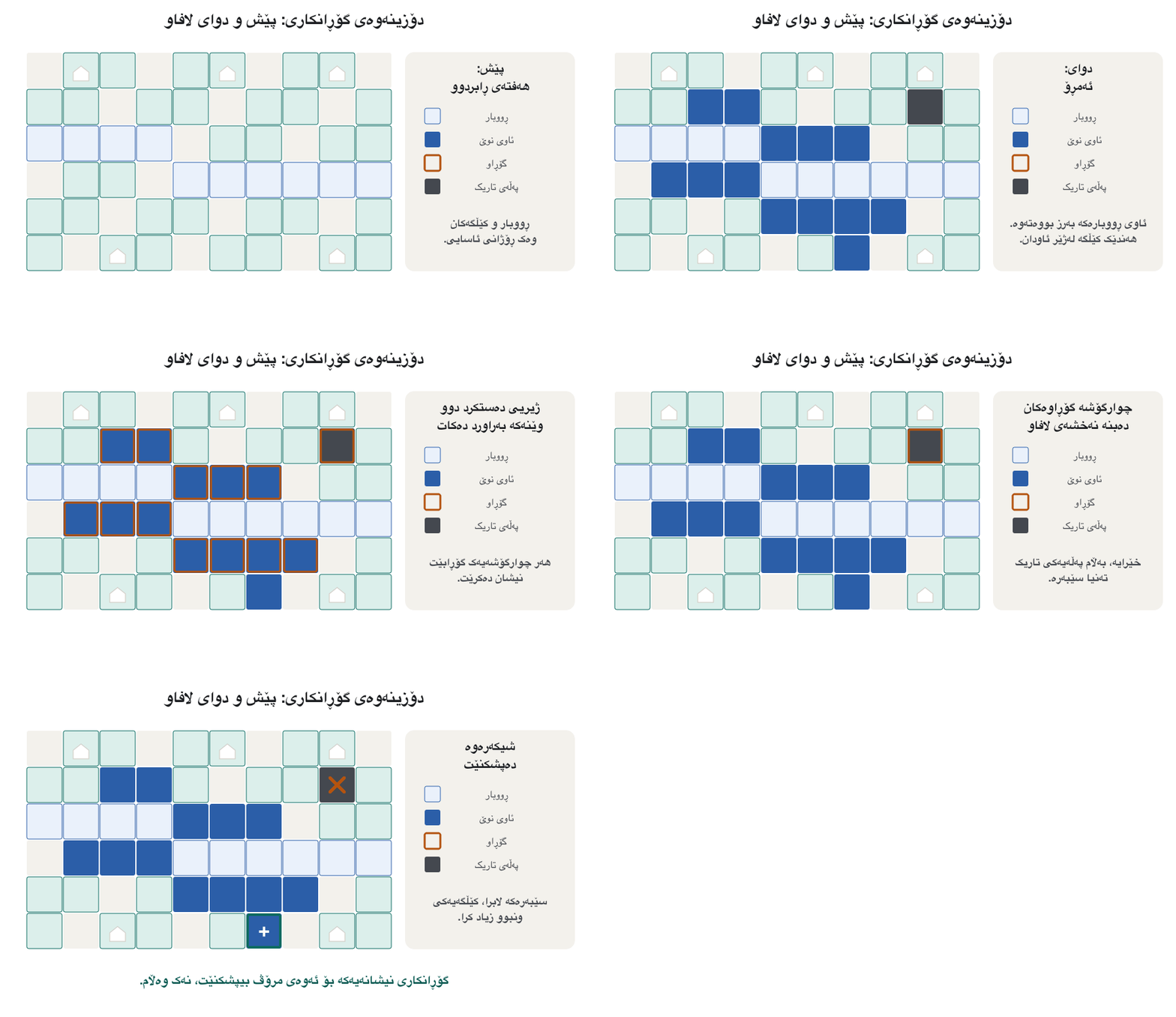
زۆر پرسیار لەبارەی گۆڕانکارین: ڕێگایەک کە ئێستا لەژێر ئاودایە، بینایەکی نوێ، کێڵگەیەکی سووتاو، پردێک کە نەماوە. وێنەی هەمان شوێن کە لە کاتی جیاوازدا گیراون بەراورد دەکات و ئەوەی جیاوازە نیشانی دەکات. بیرۆکەکە لە بەشی چی جیاوازە؟ دۆزینەوەی ڕەفتاری نائاسایی و دۆزینەوەی گۆڕانکاریدا ناسێنراوە؛ لێرەدا نەخشەی لافاوێک دروست دەکات.
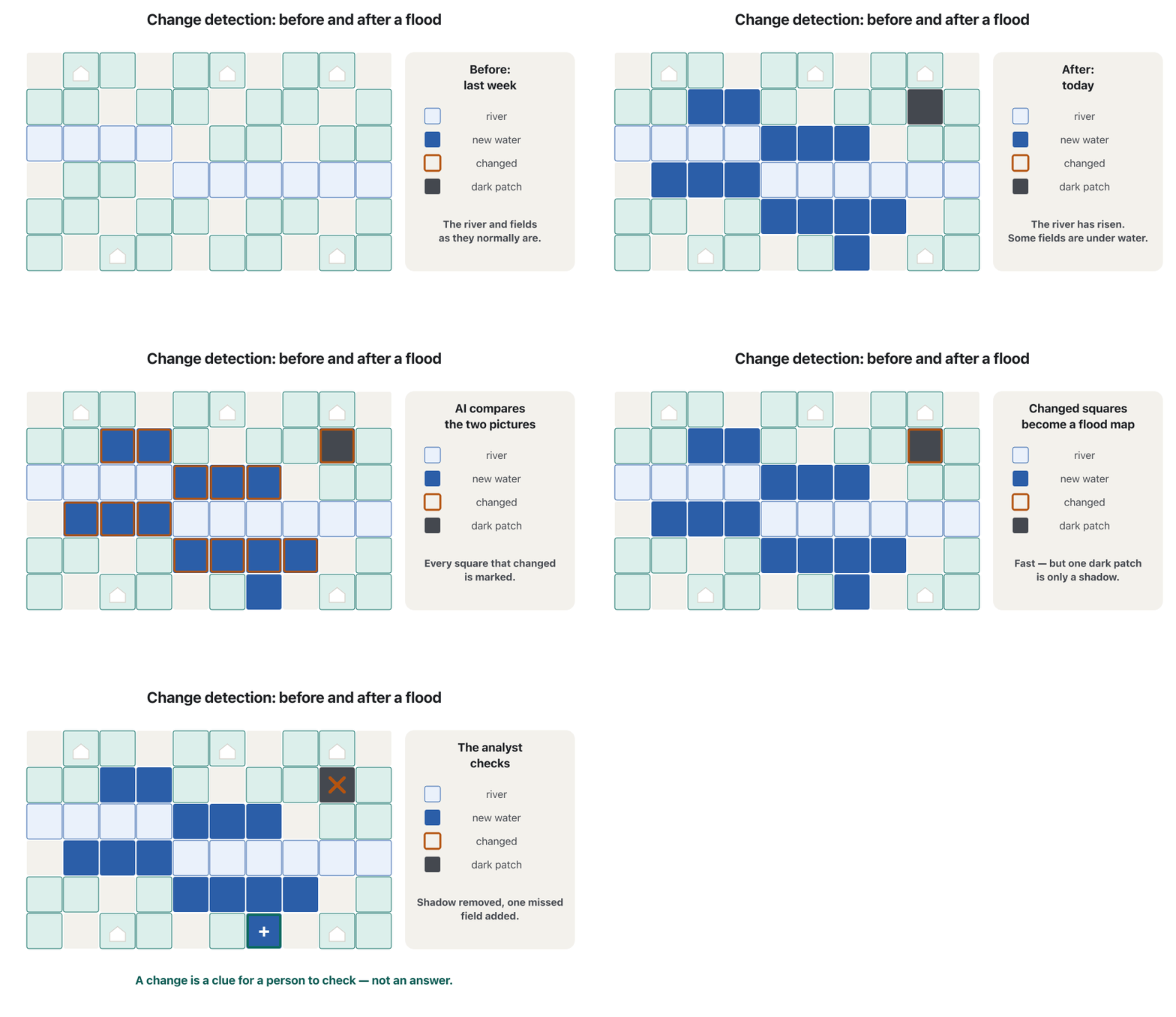
Change detection is powerful because people are slow at spotting small differences between two big pictures, and machines are fast at it. But not every change matters. Shadows move with the sun, fields are ploughed and seasons change the colours. So a change is a clue for a person to check, not an answer.
بەهێزە چونکە مرۆڤ لە دۆزینەوەی جیاوازیی بچووک لە نێوان دوو وێنەی گەورەدا خاوە و ئامێر تێیدا خێرایە. بەڵام هەموو گۆڕانکارییەک گرنگ نییە. سێبەر لەگەڵ خۆردا دەجووڵێت، کێڵگە دەکێڵدرێت و وەرزەکان ڕەنگەکان دەگۆڕن. بۆیە گۆڕانکاری نیشانەیەکە بۆ ئەوەی مرۆڤ بیپشکنێت، نەک وەڵام.
The covered truck: an anomaly is a questionبارهەڵگرە داپۆشراوەکە: شتی نائاسایی پرسیارە
Here is a classic example. An AI system spots the outline of a pickup truck parked under a cover in a desert valley, and highlights it within seconds. A person scanning the whole valley by eye might need hours. The system did : it found something unlike the normal sand and rocks around it.
ئەمە نموونەیەکی ناسراوە. سیستەمێکی شێوەی دەرەوەی پیکاپێک دەبینێت کە لەژێر داپۆشەرێکدا لە دۆڵێکی بیابانیدا ڕاگیراوە و لە چەند چرکەیەکدا نیشانی دەکات. کەسێک کە هەموو دۆڵەکە بە چاو بپشکنێت لەوانەیە چەند کاتژمێرێکی پێویست بێت. سیستەمەکە ئەنجام دا: شتێکی دۆزییەوە کە لە لم و بەردە ئاساییەکانی دەوروبەری ناچێت.
But what is it really? A truck under a cover, a farmer's tent or a pile of hay, or a : a fake copy put there on purpose. and decoys exist precisely to fool both human eyes and AI. So the highlight is a candidate for an analyst to check with more pictures and other sources. It is not a finding.
بەڵام لە ڕاستیدا چییە؟ بارهەڵگرێک لەژێر داپۆشەرێکدا، چادری جووتیارێک یان کۆمەڵێک کا، یان : کۆپییەکی ساختە کە بە ئەنقەست لەوێ دانراوە. و ڕێک بۆ ئەوە هەن کە هەم چاوی مرۆڤ و هەم فریو بدەن. بۆیە نیشانکردنەکە ئەگەرێکە بۆ ئەوەی شیکەرەوەیەک بە وێنەی زیاتر و سەرچاوەی تر بیپشکنێت. دۆزینەوەیەکی دڵنیا نییە.
Where watching must stopچاودێریکردن لە کوێدا دەبێت بوەستێت
The same cameras, drones and AI that watch a border or a flood can be turned on ordinary people: where they go, whom they meet, which gathering they join. Watching a whole population in this way is called mass surveillance, and it threatens and freedom.
هەمان کامێرا، و کە چاودێریی سنوورێک یان لافاوێک دەکەن، دەتوانرێت بەرەو خەڵکی ئاسایی وەربگێڕدرێن: بۆ کوێ دەچن، کێ دەبینن، بەشداری لە چ کۆبوونەوەیەک دەکەن. چاودێریکردنی هەموو دانیشتوان بەم شێوەیە پێی دەوترێت گشتگیر و هەڕەشەیە بۆ سەر و ئازادی.
In September 2021 the UN High Commissioner for Human Rights warned of an “unprecedented level of surveillance across the globe” by states and companies. Her office’s report called for a pause on remote biometric recognition, such as face recognition, in public places until governments can show that it is accurate, does not discriminate and meets strong privacy and data-protection rules.
لە ئەیلوولی 2021ـدا کۆمیسیاری باڵای مافەکانی مرۆڤی نەتەوە یەکگرتووەکان ئاگاداری کردەوە لە ئاستێکی «بێوێنە»ی چاودێریکردن لە سەرانسەری جیهاندا لەلایەن دەوڵەت و کۆمپانیاکانەوە. ڕاپۆرتی نووسینگەکەی داوای ڕاگرتنی ناسینەوەی لە دوورەوە، وەک ، لە شوێنە گشتییەکاندا کرد، تا ئەو کاتەی حکومەتەکان بیسەلمێنن کە ورد و دروستە، جیاکاری ناکات و یاسای بەهێزی و جێبەجێ دەکات.
Where watching must stopچاودێریکردن لە کوێدا دەبێت بوەستێت
Rules for watching peopleڕێساکانی چاودێریکردنی خەڵک
Laws are starting to draw this line. In the EU, the AI Act has banned police from using real-time face identification in public places since 2 February 2025, except in a few narrow cases (The EU AI Act in brief). The Act does not cover AI systems used only for military purposes, but a military tool that is reused for policing falls under it (The EU AI Act and military AI).
یاساکان خەریکن ئەم سنوورە دیاری دەکەن. لە یەکێتیی ئەوروپادا، لە 2ی شوباتی 2025ـەوە بەکارهێنانی لە کاتی ڕاستەقینەدا لە شوێنە گشتییەکاندا لەلایەن پۆلیسەوە قەدەغە کردووە، جگە لە چەند حاڵەتێکی تەسک (یاسای ژیریی دەستکردی یەکێتیی ئەوروپا بە کورتی). ئەم یاسایە ئەو سیستەمانەی ناگرێتەوە کە تەنیا بۆ مەبەستی سەربازی بەکار دێن، بەڵام ئامرازێکی سەربازی ئەگەر بۆ کاری پۆلیس بەکار بهێنرێتەوە، دەکەوێتە ژێر ئەم یاسایەوە (یاسای ژیریی دەستکردی یەکێتیی ئەوروپا و ژیریی دەستکردی سەربازی).
Good practice for any surveillance system: a clear legal purpose, limits on who and what is watched, keeping data only as long as needed, independent oversight, and a named person or body who answers for mistakes. CêIT's Cybersecurity course discusses these limits in Misuse for surveillance and Privacy; drone cameras raise the same questions (Privacy: what a drone camera can see).
ڕێوشوێنی باش بۆ هەر سیستەمێکی : ئامانجێکی یاسایی ڕوون، سنوور بۆ ئەوەی کێ و چی چاودێری دەکرێت، هەڵگرتنی تەنیا بە ئەندازەی پێویست، سەرپەرشتیی سەربەخۆ و کەسێک یان دەزگایەکی دیاریکراو کە وەڵامی هەڵەکان بداتەوە. کۆرسی ئاسایشی سایبەریی CêIT ئەم سنوورانە لە خراپ بەکارهێنان بۆ چاودێری و تایبەتێتیدا باس دەکات؛ کامێرای هەمان پرسیار دروست دەکەن (تایبەتێتی: کامێرای درۆن چی دەبینێت).
Common mistakesهەڵە باوەکان
| Mistakeهەڵە | What is trueڕاستییەکە |
|---|---|
| AI finds what is there by itself. خۆی دەدۆزێتەوە چی لەوێیە. | AI sorts and flags candidates. Trained people check them and decide. ڕیز دەکات و ئەگەرەکان نیشان دەکات. مرۆڤی ڕاهێنراو دەیانپشکنێت و بڕیار دەدات. |
| Faster means more accurate.خێراتر واتە وردتر. | Triage saves time, but flags can be false alarms and some real things are missed. کات پاشەکەوت دەکات، بەڵام نیشانکردن دەکرێت ئاگادارکردنەوەی هەڵە بێت و هەندێک شتی ڕاستەقینەش ون دەبن. |
| Satellites see everywhere all the time.مانگی دەستکرد هەمیشە هەموو شوێنێک دەبینێت. | A satellite passes over a place only at certain times. Optical ones also need daylight and a clear sky.مانگی دەستکرد تەنیا لە هەندێک کاتدا بەسەر شوێنێکدا تێدەپەڕێت. ئۆپتیکییەکانیش ڕووناکیی ڕۆژ و ئاسمانی ساماڵیان پێویستە. |
| Dark on a radar picture means water.ڕەش لە وێنەی واتە ئاو. | Smooth sand or tarmac can look dark too. Compare with an older picture and check.لمی لووس یان قیرتاویش ڕەش دەردەکەون. بەراورد لەگەڵ وێنەیەکی کۆنتر بکە و بیپشکنە. |
| An unusual shape is a hidden vehicle.شێوەیەکی نائاسایی ئۆتۆمبێلێکی شاردراوەیە. | It may be a tent, hay or a decoy. It is a question for an analyst.لەوانەیە چادر، کا یان بێت. پرسیارێکە بۆ شیکەرەوە. |
| Surveillance and reconnaissance are the same thing. و هەمان شتن. | Surveillance watches over time. Reconnaissance is a mission to find out something specific. بە درێژایی کات سەیری شوێنێک دەکات. ئەرکێکە بۆ زانینی شتێکی دیاریکراو. |
| A tool that is allowed for watching a battlefield is fine for watching citizens.ئامرازێک کە بۆ چاودێریی گۆڕەپانی شەڕ ڕێگەپێدراوە، بۆ چاودێریکردنی هاووڵاتیانیش باشە. | Watching people raises privacy and human-rights questions. It needs a legal purpose, limits and oversight.چاودێریکردنی خەڵک پرسیاری و مافەکانی مرۆڤ دروست دەکات. ئامانجی یاسایی، سنوور و سەرپەرشتیی پێویستە. |
Exercisesڕاهێنانەکان
Decide for each case: (a) a camera watches a hospital gate every night; (b) a drone flies once over a landslide to see whether a road is blocked; (c) a satellite photographs the same farmland every 12 days; (d) a team flies a drone over a burnt forest to find where the fire started.
بۆ هەر حاڵەتێک بڕیار بدە: (a) کامێرایەک هەموو شەوێک سەیری دەرگای نەخۆشخانەیەک دەکات؛ (b) یەک جار بەسەر خلیسکانێکی زەویدا دەفڕێت بۆ ئەوەی بزانێت ڕێگایەک گیراوە یان نا؛ (c) مانگێکی دەستکرد هەموو 12 ڕۆژ جارێک وێنەی هەمان زەویی کشتوکاڵی دەگرێت؛ (d) تیمێک بەسەر دارستانێکی سووتاودا دەفڕێنێت بۆ دۆزینەوەی شوێنی دەستپێکردنی ئاگرەکە.
Show answerوەڵامەکە پیشان بدە
- (a) Surveillance: the same place, watched again and again.
- (b) Reconnaissance: one flight, one question.
- (c) Surveillance: regular pictures of the same place over time.
- (d) Reconnaissance: a mission to find out one thing.
- (a) : هەمان شوێن، دووپاتە و دووپاتە چاودێری دەکرێت.
- (b) : یەک گەشت، یەک پرسیار.
- (c) : وێنەی ڕێکوپێکی هەمان شوێن بە درێژایی کات.
- (d) : ئەرکێک بۆ زانینی یەک شت.
An AI system flags 60 of 2,000 pictures. Analysts confirm 9. (a) How many flags were false alarms? (b) What share of the flags were real? (c) What can these numbers not tell you, and how could you find out?
سیستەمێکی 60 وێنە لە 2,000 وێنە نیشان دەکات. شیکەرەوەکان 9یان پشتڕاست دەکەنەوە. (a) چەند نیشانکردن ئاگادارکردنەوەی هەڵە بوون؟ (b) چ بەشێکی نیشانکردنەکان ڕاست بوون؟ (c) ئەم ژمارانە چی پێ نالێن و چۆن دەتوانیت بیزانیت؟
Hintئاماژە
Subtract for (a) and divide for (b). For (c), think about the pictures nobody looked at closely.
بۆ (a) لێی دەربکە و بۆ (b) دابەشی بکە. بۆ (c)، بیر لەو وێنانە بکەرەوە کە کەس بە وردی سەیری نەکردوون.
Show answerوەڵامەکە پیشان بدە
- (a) false alarms.
- (b) , so 15% of the flags were real.
- (c) How many real things were missed among the unflagged pictures. Test the system on pictures whose answers are known, or let analysts check a random sample of unflagged pictures.
- (a) ئاگادارکردنەوەی هەڵە.
- (b) ، واتە 15%ی نیشانکردنەکان ڕاست بوون.
- (c) چەند شتی ڕاستەقینە لەناو ئەو وێنە نیشاننەکراوەدا ون بوون. سیستەمەکە لەسەر ئەو وێنانە تاقی بکەرەوە کە وەڵامەکانیان زانراوە، یان با شیکەرەوەکان لە وێنە نیشاننەکراوەکان بپشکنن.
Heavy rain has flooded villages near Hewler, and the sky is still cloudy. Relief teams need a map today. Which satellite pictures would you use, what would the AI do, where does the human check go, and which false alarm should the analyst watch for?
بارانێکی زۆر لە چەند گوندێکی نزیک هەولێر لافاوی دروست کردووە و ئاسمان هێشتا هەورە. تیمەکانی فریاگوزاری هەر ئەمڕۆ نەخشەیەکیان پێویستە. وێنەی کام مانگی دەستکرد بەکاردەهێنیت، چی دەکات، پشکنینی مرۆڤ لە کوێدایە و شیکەرەوەکە دەبێت ئاگاداری کام ئاگادارکردنەوەی هەڵە بێت؟
Show answerوەڵامەکە پیشان بدە
Radar (SAR) pictures, for example from Sentinel-1, because they see through clouds and at night. Relief authorities can also ask Europe’s free Copernicus Emergency Management Service for such maps.
وێنەی ، بۆ نموونە لە Sentinel-1ـەوە، چونکە بە ناو هەوردا و لە شەودا دەبینن. دەزگاکانی فریاگوزاری دەتوانن داوای نەخشەی لەم جۆرە لە خزمەتگوزاریی بێبەرانبەری بەڕێوەبردنی فریاکەوتنی Copernicusـی ئەوروپاش بکەن.
The AI marks dark, water-like areas and compares them with a picture taken before the rain ().
ناوچە ڕەش و ئاوئاساکان نیشان دەکات و بەراوردیان دەکات لەگەڵ وێنەیەک کە پێش بارانەکە گیراوە ().
An analyst checks the map before it goes out: removes false floods such as smooth dry ground, tarmac or hill shadows, and adds flooded places the AI missed.
شیکەرەوەیەک پێش ناردنی نەخشەکە دەیپشکنێت: لافاوە هەڵەکان لادەبات، وەک زەویی وشک و لووس، قیرتاو یان سێبەری گردەکان و ئەو شوێنە لافاوگرتووانە زیاد دەکات کە لەدەستی داون.
The checked map goes to the relief teams, and the corrections are kept to improve the model.
نەخشە پشکنراوەکە دەچێت بۆ تیمەکانی فریاگوزاری و چاککردنەکان بۆ باشترکردنی هەڵدەگیرێن.
A city wants drones with face recognition to watch a public square every day. Write three questions people should ask before it starts.
شارێک دەیەوێت لەگەڵ هەموو ڕۆژێک چاودێریی گۆڕەپانێکی گشتی بکەن. سێ پرسیار بنووسە کە دەبێت خەڵک پێش دەستپێکردنی بیپرسن.
Show answerوەڵامەکە پیشان بدە
- Who decided this, under which law, and for what exact purpose? Could a less intrusive tool do the job?
- Who sees the pictures and the matches, and how long are they kept?
- How are false matches found and corrected, and who answers if an innocent person is harmed?
- کێ ئەمەی بڕیار دا، بەپێی کام یاسا و بۆ چ ئامانجێکی ڕوون؟ ئایا ئامرازێکی کەمتر دەستدرێژیکەر دەتوانێت ئەو کارە بکات؟
- کێ وێنەکان و ناسینەوەکان دەبینێت و تا کەی هەڵدەگیرێن؟
- ناسینەوە هەڵەکان چۆن دەدۆزرێنەوە و چاک دەکرێن و ئەگەر زیان بە کەسێکی بێتاوان بگات، کێ وەڵام دەداتەوە؟
Summaryپوختە
- Surveillance watches a place over time; reconnaissance is a mission to find out one thing; ISR adds the intelligence people make from what is collected.
- Four steps: collect, scan and sort, alert, and a trained person checks. People decide and stay responsible: human–machine teaming.
- AI is triage: it chooses where people look first. Flags include false alarms, and misses hide in the unflagged pictures.
- Radar (SAR) satellites see through clouds and at night; calm water looks dark, but so can dry sand.
- UNOSAT's AI maps floods from radar pictures, and analysts check every map before relief teams use it.
- A change or an anomaly is a clue, not an answer: shadows, tents and decoys can look like what the AI is looking for.
- Watching people needs a legal purpose, limits and oversight: the same tools can become mass surveillance.
- بە درێژایی کات سەیری شوێنێک دەکات؛ ئەرکێکە بۆ زانینی یەک شت؛ ئەو هەواڵگرییەش زیاد دەکات کە مرۆڤ لەوەی کۆکراوەتەوە دروستی دەکات.
- چوار هەنگاو: کۆکردنەوە، پشکنین و ڕیزکردن، ئاگادارکردنەوە و پشکنینی مرۆڤێکی ڕاهێنراو. مرۆڤ بڕیار دەدات و بەرپرسیار دەمێنێتەوە: .
- بۆ کار دەکات: هەڵدەبژێرێت مرۆڤ سەرەتا سەیری کوێ بکات. هەندێک لە نیشانکراوەکان و ونبووەکان لەناو وێنە نیشاننەکراوەکاندا دەشاردرێنەوە.
- مانگە دەستکردەکانی بە ناو هەوردا و لە شەودا دەبینن؛ ئاوی هێمن ڕەش دەردەکەوێت، بەڵام لمی وشکیش ڕەش دەردەکەوێت.
- UNOSAT لە وێنەی نەخشەی لافاو دروست دەکات و شیکەرەوەکان پێش ئەوەی تیمەکانی فریاگوزاری بەکاری بهێنن هەموو نەخشەیەک دەپشکنن.
- گۆڕانکاری یان شتی نائاسایی نیشانەیە، نەک وەڵام: سێبەر، چادر و دەتوانن لەوە بچن کە بەدوایدا دەگەڕێت.
- چاودێریکردنی خەڵک ئامانجی یاسایی، سنوور و سەرپەرشتیی پێویستە: هەمان ئامراز دەتوانێت ببێتە گشتگیر.
Why does a fast AI system still need an analyst?بۆچی سیستەمێکی خێرای ژیریی دەستکرد هێشتا شیکەرەوەی پێویستە؟
Because its flags are candidates: some are false alarms, some real things are missed, and only people can judge the context, apply the law and take responsibility.
چونکە نیشانکردنەکانی تەنیا ئەگەرن: هەندێکیان ئاگادارکردنەوەی هەڵەن، هەندێک شتی ڕاستەقینە ون دەبن و تەنیا مرۆڤ دەتوانێت بارودۆخەکە هەڵبسەنگێنێت، یاسا جێبەجێ بکات و بەرپرسیارێتی هەڵبگرێت.
Why are radar satellites good for flood maps?بۆچی مانگی دەستکردی ڕادار بۆ نەخشەی لافاو باشن؟
They send their own signal, so clouds and night do not stop them, and calm water reflects the signal away and looks dark.
خۆیان دەنێرن، بۆیە هەور و شەو ڕێگرییان لێ ناکەن و ئاوی هێمن بە دوور دەداتەوە و ڕەش دەردەکەوێت.
What should happen after AI highlights a covered shape in a desert valley?دوای ئەوەی ژیریی دەستکرد شێوەیەکی داپۆشراو لە دۆڵێکی بیابانیدا نیشان دەکات، دەبێت چی ڕووبدات؟
An analyst checks it with more pictures and other sources, because it could be a truck, a tent, hay or a decoy.
شیکەرەوەیەک بە وێنەی زیاتر و سەرچاوەی تر دەیپشکنێت، چونکە لەوانەیە بارهەڵگر، چادر، کا یان بێت.
Lesson complete!وانەکە تەواو بوو!
Well done. Review the key terms, then go on to the next lesson.دەستخۆش. سەیرێکی زاراوە سەرەکییەکان بکەرەوە، پاشان بڕۆ بۆ وانەی داهاتوو.
Key termsزاراوە سەرەکییەکان
Target Recognition: Recognising Is Not Identifyingناسینەوەی ئامانج: ناسینەوەی جۆر، دیاریکردنی ناسنامە نییە
Related lecturesوانە پەیوەندیدارەکان
- Target Recognition: Recognising Is Not Identifyingناسینەوەی ئامانج: ناسینەوەی جۆر، دیاریکردنی ناسنامە نییە
- When AI Gets It Wrong: Errors, Bias and Deceptionکاتێک ژیریی دەستکرد هەڵە دەکات: هەڵە، لاسەنگی و فریودان
- AI That Protects: Rescue, Relief and Peacekeepingژیریی دەستکرد بۆ پاراستن: ڕزگارکردن، فریاگوزاری و ئاشتیپارێزی
- AI in Cybersecurity: Bias, Privacy, Surveillance and Deepfakesژیریی دەستکرد لە ئاسایشی سایبەردا: لاسەنگی، تایبەتێتی، چاودێری و دیپفەیکەکان
References and further readingسەرچاوەکان و خوێندنەوەی زیاتر
- UNITAR: Fusing AI and satellite image analysis to inform rapid response to floods (13 April 2021)
- ESA: Sentinel-1
- Dasgupta et al., EGU General Assembly 2021: Sentinel-1 flood mapping and water-like surfaces in arid regions
- Copernicus Emergency Management Service: Rapid Mapping
- UN News (15 September 2021): Urgent action needed over artificial intelligence risks to human rights
- Political Declaration on Responsible Military Use of Artificial Intelligence and Autonomy (text)
This lecture is a first edition. The Kurdish text and terminology are waiting for review by Kurdish IT teachers.ئەم وانەیە چاپی یەکەمە. دەقە کوردییەکە و زاراوەکانی چاوەڕێی پێداچوونەوەی مامۆستایانی کوردی بواری IT ن.