Chapterبەش 3 · Lectureوانە 3.2
AI in Cyber Defenceژیریی دەستکرد لە بەرگریی سایبەریدا
Why military networks need help from AI, the difference between a fixed rule and a learned picture of normal behaviour, AI's three jobs (detect intrusions, stop malware, respond faster), the 2 a.m. story as a timeline with a human check, AI that finds and fixes software flaws (DARPA's AI Cyber Challenge, 2025), and the limits: false alarms, attackers who use AI too, and AI tools that can themselves be attacked.
بۆچی پێویستیان بە یارمەتیی هەیە، جیاوازیی نێوان ڕێسایەکی جێگیر و وێنەیەکی فێربوو لە ڕەفتاری ئاسایی، سێ ئەرکی (دۆزینەوەی دزەکردن، ڕاگرتنی ، وەڵامدانەوەی خێراتر)، چیرۆکی کاتژمێر 2ی شەو وەک هێڵێکی کات لەگەڵ پشکنینی مرۆڤ، کە دەدۆزێتەوە و چاکیان دەکاتەوە (پێشبڕکێی AIxCCـی DARPA، 2025) و سنوورەکان: ئاگادارکردنەوەی هەڵە، کە ئەوانیش بەکار دەهێنن و ئامرازەکانی کە خۆیان دەکرێنە ئامانجی هێرش.
What you will learnچی فێر دەبیت
- Explain why military networks need AI's help: constant attacks and far more logs than people can read.
- Tell a fixed rule from anomaly detection against a learned normal, and say what each one misses.
- Describe AI's three jobs in cyber defence and decide which steps may run automatically and which need a person.
- Retell the 2 a.m. story as a timeline and explain what DARPA's AI Cyber Challenge showed in 2025.
- Name the limits: false alarms, attackers who use AI, and attacks on the AI itself.
- ڕوونی بکەیتەوە بۆچی پێویستیان بە یارمەتیی هەیە: هێرشی بەردەوام و زۆر زیاتر لەوەی مرۆڤ بتوانێت بیخوێنێتەوە.
- ڕێسایەکی جێگیر لە بەرامبەر ئاساییەکی فێربوو جیا بکەیتەوە و بڵێیت هەر یەکەیان چی لە دەست دەدات.
- سێ ئەرکی لە بەرگریی سایبەریدا باس بکەیت و بڕیار بدەیت کام هەنگاو دەتوانێت خۆکار بێت و کامیان پێویستی بە مرۆڤ هەیە.
- چیرۆکی کاتژمێر 2ی شەو وەک هێڵێکی کات بگێڕیتەوە و ڕوونی بکەیتەوە پێشبڕکێی AIxCCـی DARPA لە 2025دا چی پیشان دا.
- سنوورەکان بڵێیت: ئاگادارکردنەوەی هەڵە، کە بەکار دەهێنن و هێرش بۆ سەر خودی .
Networks that never sleepڕایەڵەیەک کە هەرگیز ناخەوێت
A modern army runs on computer networks. They link bases, ships, aircraft and supply depots, and they carry e-mail, maps, medical records and payroll. Every link is a door that attackers try. NATO reports that malicious cyber events against it happen every day, from simple attacks to very advanced ones, so its own networks are defended around the clock.
سوپایەکی هاوچەرخ پشت بە دەبەستێت. بنکەکان، کەشتییەکان، فڕۆکەکان و کۆگاکانی پێداویستی بە یەکەوە دەبەستن و ئیمەیڵ، نەخشە، تۆماری پزیشکی و مووچە دەگوازنەوە. هەر پەیوەندییەک دەرگایەکە کە تاقی دەکەنەوە. ناتۆ دەڵێت ڕووداوی سایبەریی زیانبەخش هەموو ڕۆژێک دژی ڕوو دەدات، لە هێرشی سادەوە تا هێرشی زۆر پێشکەوتوو، بۆیە خۆی شەو و ڕۆژ دەپارێزرێن.
This lesson follows one example from start to end: at 2 a.m., an AI system stops a cyberattack before it reaches secret files. By the end you will know what really happens in those minutes, and who does what.
ئەم وانەیە لە سەرەتاوە تا کۆتایی بەدوای یەک نموونەدا دەڕوات: لە کاتژمێر 2ی شەودا، سیستەمێکی ڕادەگرێت پێش ئەوەی بگاتە فایلە نهێنییەکان. لە کۆتاییدا دەزانیت لەو چەند خولەکەدا بەڕاستی چی ڕوو دەدات و کێ چی دەکات.
Networks that never sleepڕایەڵەیەک کە هەرگیز ناخەوێت
Too much for human eyesزیاتر لەوەی چاوی مرۆڤ بیخوێنێتەوە
Every computer, server and firewall writes a log: one line for each sign-in, file opened or connection made. A large network writes millions of lines a day, far more than people can read. So defenders work like a funnel: tools collect the logs in a SIEM, rules and AI models sort them, and people look closely at the few events that really matter.
هەر ، و دەنووسێت: دێڕێک بۆ هەر ، کردنەوەی هەر فایلێک یان هەر پەیوەندییەک. گەورە ڕۆژانە ملیۆنان دێڕ دەنووسێت، زۆر زیاتر لەوەی خەڵک بتوانن بیخوێننەوە. بۆیە بەرگریکاران وەک قیفێک کار دەکەن: ئامرازەکان لە کۆ دەکەنەوە (بڕوانە SIEM)، ڕێساکان و ڕیزیان دەکەن و مرۆڤ بە وردی سەیری ئەو چەند ڕووداوە کەمە دەکات کە بەڕاستی گرنگن.
A fixed rule or a learned normal?ڕێسایەکی جێگیر یان ئاساییەکی فێربوو؟
Defenders want to spot strange patterns, such as too many login attempts. Part of this needs no AI at all: a person can write a rule, for example 'if one account fails 10 times in 5 minutes, raise an alarm'. Rules are fast and easy to check, but they catch only what someone thought of in advance.
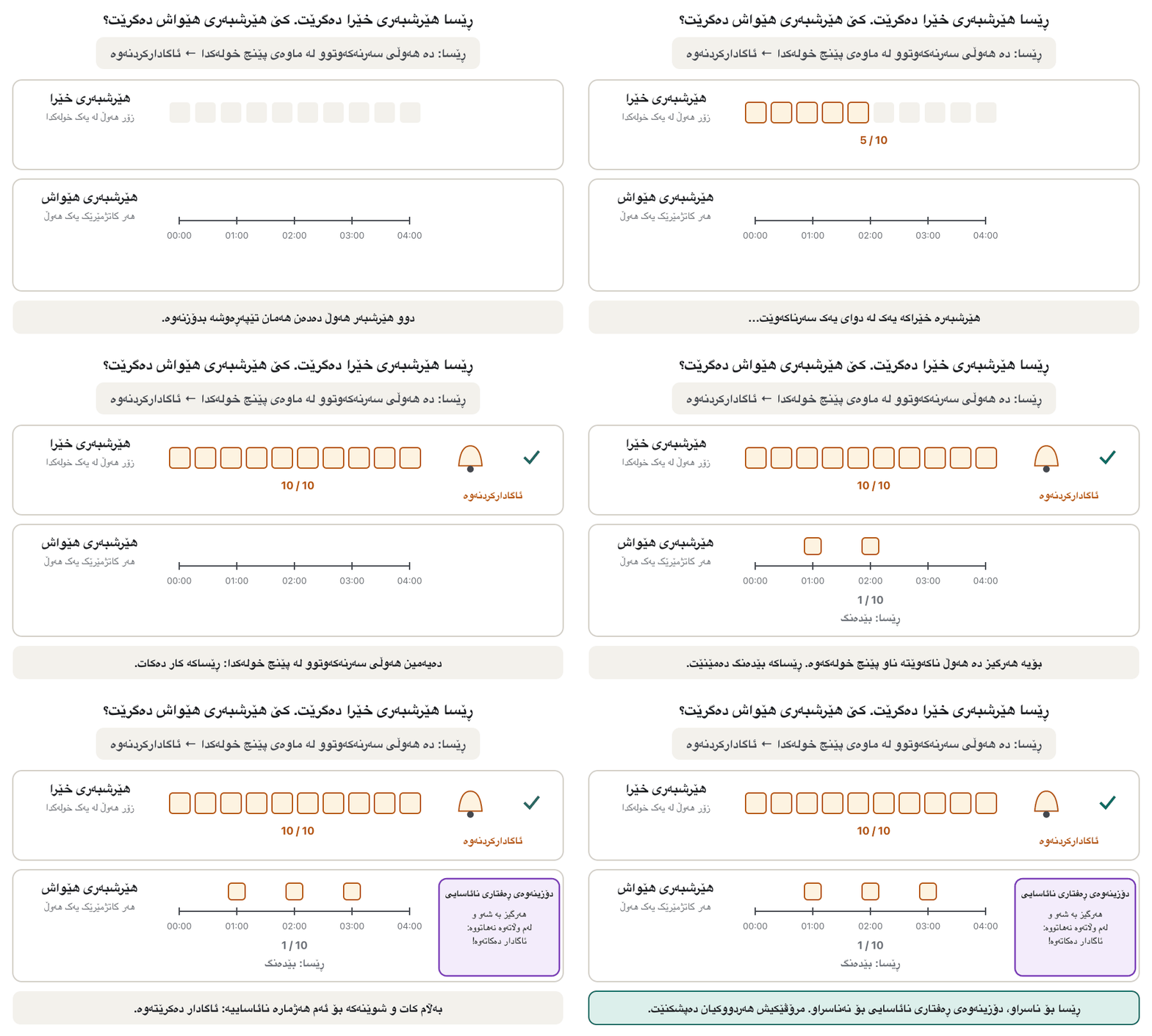
بەرگریکاران دەیانەوێت شێوازی سەیر بدۆزنەوە، وەک هەوڵی زۆری . بەشێکی ئەم کارە هیچ پێویستی بە نییە: مرۆڤێک دەتوانێت ڕێسایەک بنووسێت، بۆ نموونە «ئەگەر هەژمارێک لە 5 خولەکدا 10 جار سەرنەکەوێت، ئاگادار بکەرەوە». ڕێساکان خێران و پشکنینیان ئاسانە، بەڵام تەنیا ئەو شتانە دەگرن کە کەسێک پێشتر بیری لێ کردبێتەوە.
Anomaly detection works the other way round. A model first learns what is normal for each account and each computer: usual hours, places, devices and amounts of data. Then it flags whatever is far from normal, even when no rule describes it. This can catch new tricks, but unusual is not always bad, so it raises more false alarms. The Cybersecurity course shows both methods in How an IDS recognises attacks and Spotting unusual behaviour.
بە پێچەوانەوە کار دەکات. سەرەتا فێر دەبێت چی بۆ هەر هەژمارێک و هەر ئاساییە: کاتژمێرە باوەکان، شوێنەکان، ئامێرەکان و قەبارەی . پاشان هەر شتێک کە زۆر لە ئاسایی دوور بێت نیشانە دەکات، تەنانەت ئەگەر هیچ ڕێسایەک باسی نەکردبێت. ئەمە دەتوانێت فێڵی نوێ بگرێت، بەڵام نائاسایی هەمیشە خراپ نییە، بۆیە ئاگادارکردنەوەی هەڵەی زیاتر دەدات. کۆرسی هەردوو ڕێگاکە لە IDS چۆن هێرش دەناسێتەوە و بینینی ڕەفتاری نائاسایی پیشان دەدات.
A fixed rule or a learned normal?ڕێسایەکی جێگیر یان ئاساییەکی فێربوو؟
When a rule is not enoughکاتێک ڕێسایەک بەس نییە
Watch the animation. A noisy attacker guesses passwords quickly (a brute-force attack), and the rule fires at the 10th failure. A careful attacker tries only once an hour, so 5 minutes never hold 10 failures and the rule stays silent. But this account has never signed in at night, or from that country, so the anomaly detector raises a flag.
سەیری بکە. بەپەلە تاقی دەکاتەوە (هێرشی تاقیکردنەوەی هەموو ئەگەرەکان)، ڕێساکەش لە دەیەمین هەوڵی سەرنەکەوتوودا کار دەکات. وریا تەنیا کاتژمێرێک جارێک هەوڵ دەدات، بۆیە هەرگیز دە هەوڵ ناکەوێتە ناو پێنج خولەکەوە و ڕێساکە بێدەنگ دەمێنێت. بەڵام ئەم هەژمارە هەرگیز بە شەو یان لەو وڵاتەوە نەهاتووەتە ژوورەوە، بۆیە ئاگادار دەکاتەوە.
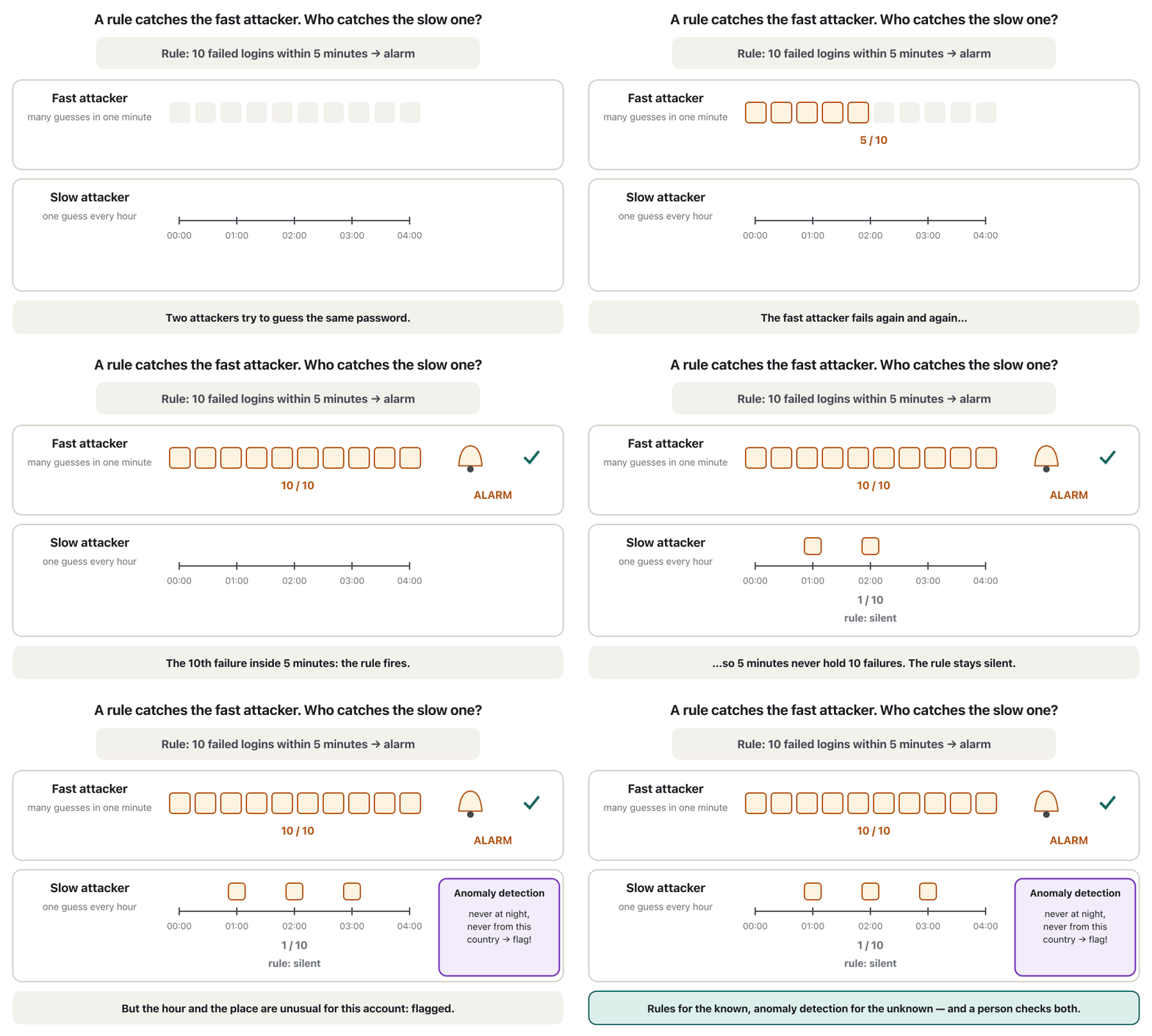
The two methods work best together: rules for the patterns we know, anomaly detection for the ones we do not, and a person to decide what each flag means.
ئەم دوو ڕێگایە پێکەوە باشترین کار دەکەن: ڕێسا بۆ ئەو شێوازانەی دەیانناسین، بۆ ئەوانەی نایانناسین و مرۆڤێک بۆ ئەوەی بڕیار بدات هەر ئاگادارکردنەوەیەک واتای چییە.
Three jobs: detect, stop, respondسێ ئەرک: دۆزینەوە، ڕاگرتن، وەڵامدانەوە
In military cyber defence, AI helps with three jobs: detecting intrusions (someone is inside who should not be), stopping malware (harmful programs) and responding faster (cutting off the danger). This screen covers the first; the next two cover the others.
لە بەرگریی سایبەریی سەربازیدا، یارمەتیی سێ ئەرک دەدات: دۆزینەوەی دزەکردن (کەسێک لە ناوەوەیە کە نابێت لەوێ بێت)، ڕاگرتنی ( زیانبەخش) و وەڵامدانەوەی خێراتر (دابڕینی مەترسییەکە). ئەم بەشە باسی یەکەمیان دەکات؛ دوو بەشی داهاتوو باسی ئەوانی تر دەکەن.
An intrusion detection system (IDS) does the job of detecting intrusions; the Cybersecurity course explains how it works. What AI adds is joining weak clues. One odd sign-in, one strange file read and one new outgoing connection may each look harmless. Together, on one account in one hour, they tell a story, and a model trained on many past attacks can score that story as dangerous.
سیستەمی دۆزینەوەی دزەکردن (IDS) ئەرکی دۆزینەوەی دزەکردن دەبینێت؛ کۆرسی ڕوونی دەکاتەوە چۆن کار دەکات. ئەوەی زیادی دەکات بەستنەوەی ئاماژە لاوازەکانە بە یەکەوە. یەک سەیر، یەک خوێندنەوەی فایلێکی نامۆ و یەک پەیوەندیی نوێی دەرەوە، هەر یەکەیان بەتەنیا لەوانەیە بێزیان دیار بێت. بەڵام هەموویان پێکەوە، لەسەر یەک هەژمار و لە یەک کاتژمێردا، چیرۆکێک دەگێڕنەوە و کە لەسەر زۆر هێرشی پێشوو ڕاهێنراوە دەتوانێت ئەو چیرۆکە وەک مەترسیدار هەڵبسەنگێنێت.
Three jobs: detect, stop, respondسێ ئەرک: دۆزینەوە، ڕاگرتن، وەڵامدانەوە
Stopping malware, not only virusesڕاگرتنی نەرمەواڵەی زیانبەخش، نەک تەنیا ڤایرۆسەکانی کۆمپیوتەر
Viruses are only one kind of malware: worms, Trojans, ransomware and spyware are others (see Malware). Classic antivirus looks for the exact fingerprints of known malware, so it misses new variants. Machine-learning detectors learn from millions of good and bad programs which features usually mean danger, so they can block a brand-new variant at first sight. Microsoft, for example, runs small machine-learning models on each computer and bigger ones in the cloud.
تەنیا جۆرێکن لە : ، ، و جۆری ترن (بڕوانە نەرمەواڵەی زیانبەخش). کلاسیک بەدوای پەنجەمۆری ڕێک و دروستی ناسراودا دەگەڕێت، بۆیە جۆرە نوێکان نابینێت. دۆزەرەوەکانی لە ملیۆنان باش و خراپەوە فێر دەبن کام زۆرجار مانای مەترسییە، بۆیە دەتوانن جۆرێکی تەواو نوێ هەر لە یەکەم بینیندا ڕابگرن. بۆ نموونە Microsoft بچووکی لەسەر هەر و گەورەتر لە هەوردا بەکار دەهێنێت.
Two problems remain. A detector can block a good program by mistake (a false positive). And attackers try to make malware look harmless to the model, for example by stuffing it with ordinary, harmless parts. These are called evasion attacks (see When AI gets it wrong), so defenders keep retraining and hardening their models.
دوو کێشە دەمێننەوە. دۆزەرەوەیەک دەشێت باش بە هەڵە ڕابگرێت (). هەروەها هەوڵ دەدەن لای بێزیان دیار بێت، بۆ نموونە بە پڕکردنی لە بەشی ئاسایی و بێزیان. بەمە دەوترێت هێرشی خۆدزینەوە (بڕوانە کاتێک ژیریی دەستکرد هەڵە دەکات)، بۆیە بەرگریکاران بەردەوام ڕادەهێننەوە و بەهێزیان دەکەن.
Three jobs: detect, stop, respondسێ ئەرک: دۆزینەوە، ڕاگرتن، وەڵامدانەوە
Responding in secondsوەڵامدانەوە لە چەند چرکەیەکدا
When a detector is confident, a SOAR tool can run a ready-made playbook at once: lock the account, block an address, or isolate the computer. Isolation cuts the computer off from the network but keeps its link to the security tool, so defenders can still examine it. A machine does this in seconds; a person woken at night needs minutes.
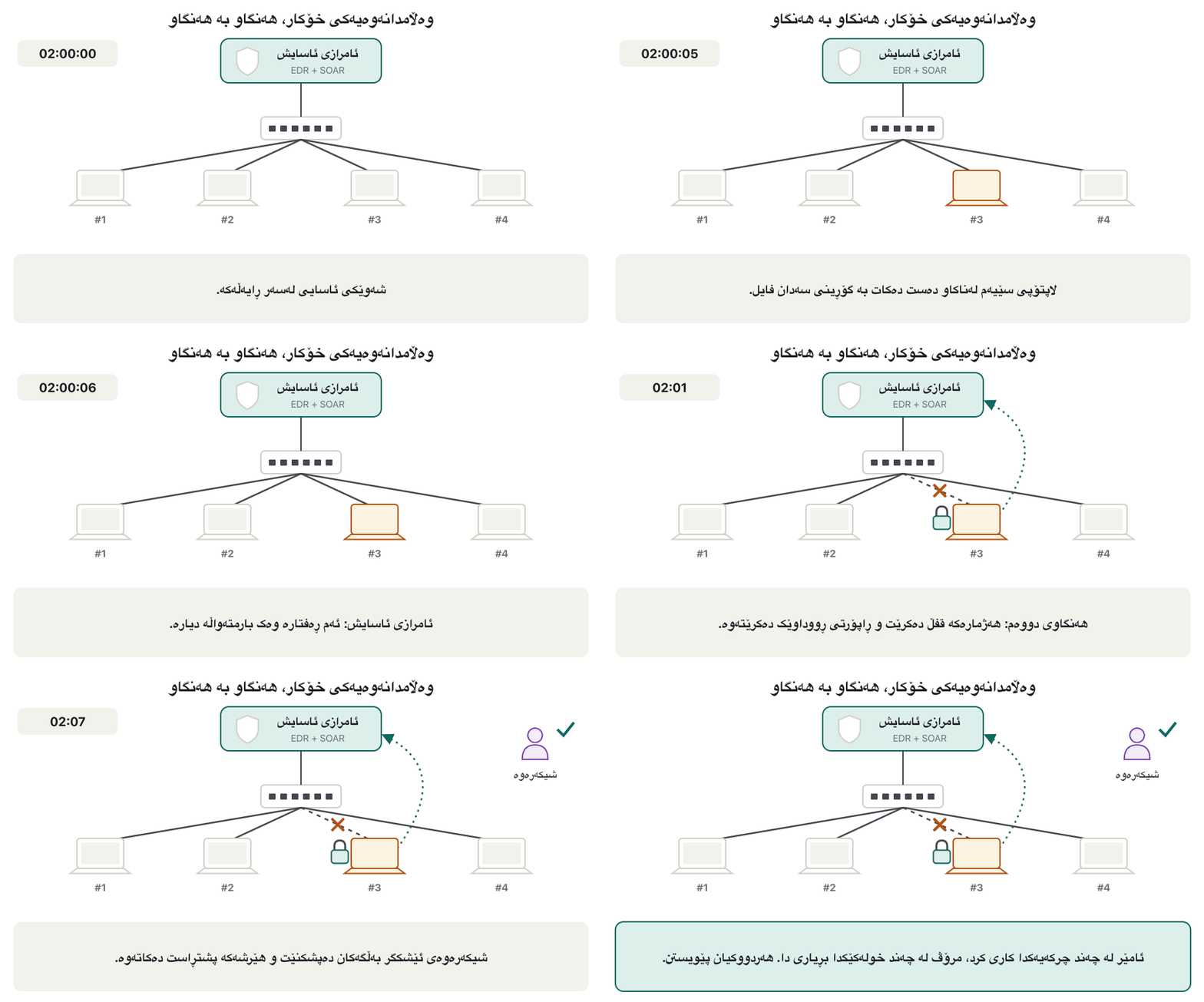
کاتێک دۆزەرەوەیەک دڵنیایە، ئامرازێکی SOAR دەتوانێت یەکسەر جێبەجێ بکات: هەژمارەکە قفڵ بکات، ناونیشانێک ڕابگرێت یان دابڕێت (). دابڕین لە جیا دەکاتەوە، بەڵام پەیوەندییەکەی بە ئامرازی ئاسایشەوە دەهێڵێتەوە، بۆ ئەوەی بەرگریکاران هێشتا بتوانن بیپشکنن. ئامێر ئەمە لە چەند چرکەیەکدا دەکات؛ مرۆڤێک کە بە شەو لە خەو هەڵدەستێنرێت چەند خولەکێکی پێویستە.
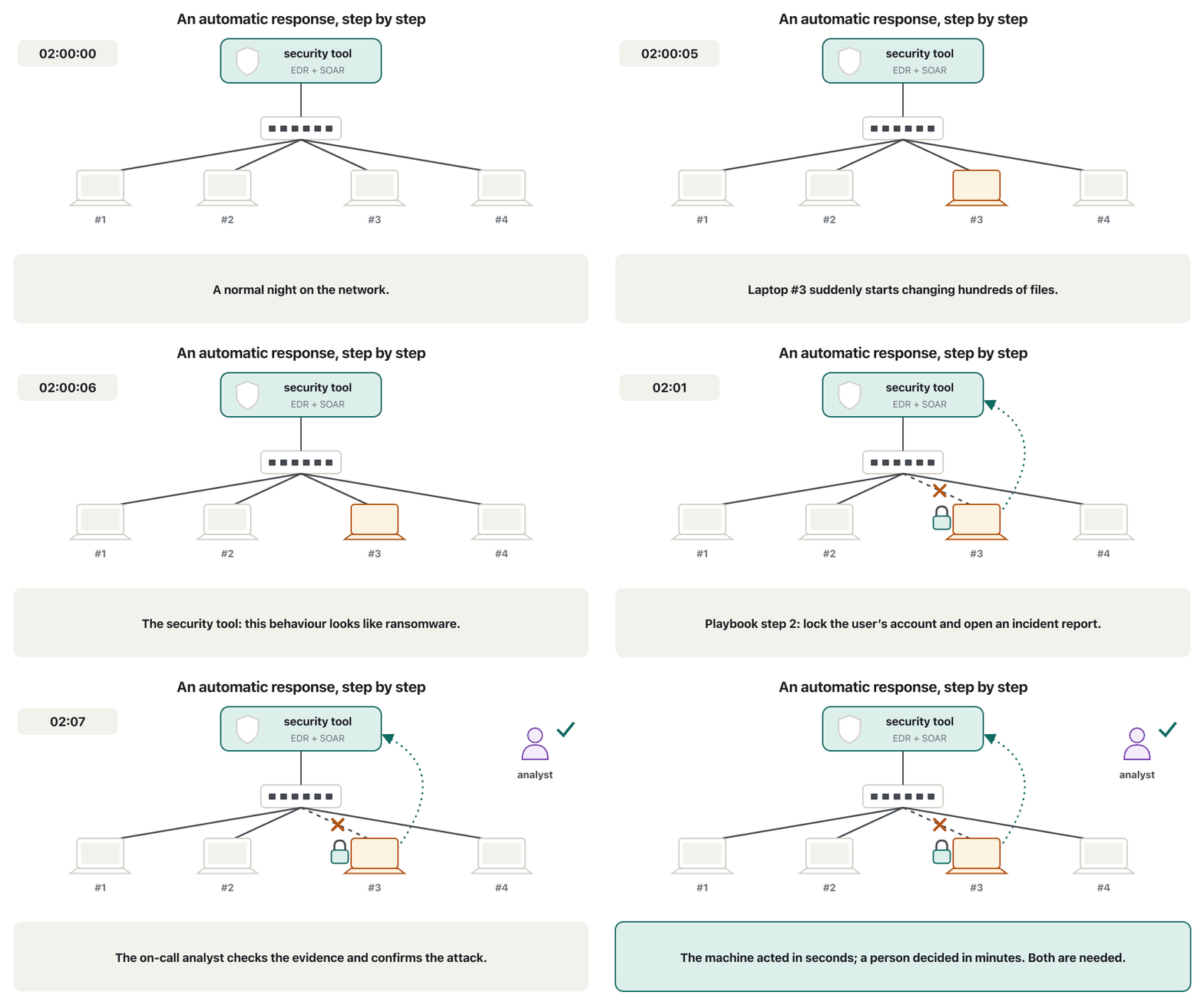
Automatic does not mean unsupervised. Low-risk steps can run on their own; big steps, such as shutting down a hospital system or a command network, wait for a person's approval. Every automatic action is logged and reviewed, and it can be undone. In the words of the next chapter, small steps use human on the loop and big steps use human in the loop (see Decisions, human control and responsibility).
خۆکار مانای بێ سەرپەرشتی نییە. هەنگاوە کەممەترسییەکان دەتوانن بە شێوەی خۆکار جێبەجێ بکرێن؛ هەنگاوە گەورەکان، وەک کوژاندنەوەی سیستەمێکی نەخۆشخانە یان فەرماندەیی، چاوەڕێی ڕەزامەندیی مرۆڤ دەکەن. هەموو کارێکی خۆکار تۆمار دەکرێت و پێیدا دەچنەوە و دەکرێت هەڵبوەشێنرێتەوە. بە زمانی بەشی داهاتوو: هەنگاوە بچووکەکان شێوازی بەکار دەهێنن و هەنگاوە گەورەکان شێوازی (بڕوانە بڕیار، کۆنترۆڵی مرۆڤ و بەرپرسیارێتی).
The 2 a.m. story, step by stepچیرۆکی کاتژمێر 2ی شەو، هەنگاو بە هەنگاو
Back to our example: AI stops a cyberattack at 2 a.m. before it reaches secret files. Here is what that sentence really means, minute by minute. The story is invented, but each step follows the phases of incident response that the Cybersecurity course teaches.
بگەڕێینەوە بۆ نموونەکەمان: لە کاتژمێر 2ی شەودا ڕادەگرێت پێش ئەوەی بگاتە فایلە نهێنییەکان. با ببینین ئەو ڕستەیە بەڕاستی چی دەگەیەنێت، خولەک بە خولەک. چیرۆکەکە گریمانەییە، بەڵام هەر هەنگاوێکی بەپێی قۆناغەکانی وەڵامدانەوەی ڕووداو دەڕوات کە کۆرسی فێری دەکات.
The AI part is real but small: it noticed the unusual sign-in and acted fast, using a playbook that people wrote in advance. People confirmed the alert, cleaned up and turned the lesson into a new rule (lessons learned).
بەشی ڕاستەقینەیە بەڵام بچووکە: نائاساییەکەی بینی و بە کە مرۆڤ پێشتر نووسیبووی خێرا کاری کرد. مرۆڤ ئاگادارکردنەوەکەی پشتڕاست کردەوە، پاکی کردەوە و وانەکەی کرد بە ڕێسایەکی نوێ (وانە وەرگیراوەکان).
AI that finds and fixes software flawsژیریی دەستکرد کە خاڵە لاوازەکان دەدۆزێتەوە و چاکیان دەکاتەوە
'Fixing problems faster than humans' now has a real test. In the AI Cyber Challenge (AIxCC) run by DARPA, the US defence research agency, teams built AI systems called cyber reasoning systems. They search open-source code for security flaws by themselves and write the fixes (patches). DARPA announced the results of the final on 8 August 2025. The systems:
«چاککردنی کێشەکان خێراتر لە مرۆڤ» ئێستا تاقیکردنەوەیەکی ڕاستەقینەی هەیە. لە پێشبڕکێی سایبەریی (AIxCC) کە DARPA، ئاژانسی توێژینەوەی بەرگریی ئەمریکا، ڕێکی خست، تیمەکان سیستەمی دروست کرد کە پێیان دەوترێت سیستەمی بیرکردنەوەی سایبەری. ئەم سیستەمانە خۆیان لە بەدوای ئاسایشدا دەگەڕێن و چارەسەرەکانیان () دەنووسن. DARPA لە 8ی ئابی 2025دا ئەنجامەکانی کۆتایی ڕاگەیاند. سیستەمەکان:
- found 54 of the 63 flaws that the organisers had planted (86%);
- patched 43 of them (68%);
- also found 18 real flaws that nobody knew about, and wrote 11 patches for them;
- needed about 45 minutes per patch on average;
- were all released as open source after the final, so anyone can use and improve them.
- لە کۆی 63 کە ڕێکخەران دایانابوو، 54یان دۆزییەوە (86%)؛
- 43یان کرد (68%)؛
- هەروەها 18 ڕاستەقینەیان دۆزییەوە کە کەس پێی نەدەزانی و 11 بۆ نووسین؛
- بە تێکڕایی نزیکەی 45 خولەکیان بۆ هەر پێویست بوو؛
- دوای کۆتایی پێشبڕکێکە هەموویان وەک بڵاو کرانەوە، بۆ ئەوەی هەموو کەسێک بەکاریان بهێنێت و باشتریان بکات.
Note the last step. The real flaws were reported to the people who maintain those projects, and they check each fix before releasing it. The same skill helps attackers too: in May 2025 the UK's National Cyber Security Centre warned that the time between a flaw becoming public and attacks using it has shrunk to days, and that AI will almost certainly shrink it further.
سەرنجی دوایین هەنگاو بدە. هەر ڕاستەقینە کە دۆزرایەوە بە بەڕێوەبەرانی پرۆژەکەی ڕاگەیەنرا، کە پێش بڵاوکردنەوەی هەر چاککردنەوەیەک دەیپشکنن. هەمان توانا یارمەتیی دەدات: لە ئایاری 2025دا ناوەندی نیشتیمانیی بەریتانیا (NCSC) ئاگاداری کردەوە کە ماوەی نێوان ئاشکرابوونی و بەکارهێنانی لە هێرشدا بووەتە چەند ڕۆژێک و بە دڵنیاییەکی زۆرەوە کورتتری دەکاتەوە.
AI on both sidesژیریی دەستکرد لە هەردوو لادا
AI is not only a defender's tool. Keep three limits in mind:
تەنیا ئامرازی بەرگریکاران نییە. سێ سنوور لە بیر مەکە:
- Attackers use AI too. In 2024 the UK's National Cyber Security Centre judged that AI will almost certainly increase the volume and impact of cyberattacks, mostly through better reconnaissance and more convincing phishing (see AI-written phishing).
- The AI itself can be attacked. Its training data can be poisoned, and inputs can be shaped to fool it; see When AI gets it wrong. UNIDIR, the UN institute for disarmament research, lists the new cyber weaknesses that AI systems bring as one of the risks of military AI.
- False alarms still happen. Too many alerts tire analysts (alert fatigue), and a wrong automatic block can stop real work.
- بەکار دەهێنن. لە 2024دا ناوەندی نیشتیمانیی بەریتانیا هەڵیسەنگاند کە بە دڵنیاییەکی زۆرەوە ژمارە و کاریگەریی زیاد دەکات، بە تایبەتی لە ڕێگەی کۆکردنەوەی زانیاریی باشتر و قایلکەرترەوە (بڕوانە فیشینگی نووسراو بە ژیریی دەستکرد).
- خۆی دەکرێتە ئامانجی هێرش. دەکرێت ژەهراوی بکرێت و بە شێوەیەک دابڕێژرێن کە فریوی بدەن؛ بڕوانە کاتێک ژیریی دەستکرد هەڵە دەکات. UNIDIR، دامەزراوەی نەتەوە یەکگرتووەکان بۆ توێژینەوەی چەکداماڵین، ئەو لاوازییە سایبەرییە نوێیانەی سیستەمەکانی لەگەڵ خۆیان دەیهێنن بە یەکێک لە مەترسییەکانی دادەنێت.
- ئاگادارکردنەوەی هەڵە هەر ڕوو دەدات. ئاگادارکردنەوەی زۆر شیکەرەوەکان ماندوو دەکات (ماندووبوون لە ئاگادارکردنەوە) و ڕاگرتنێکی خۆکاری هەڵە دەتوانێت کاری ڕاستەقینە بوەستێنێت.
Common mistakesهەڵە باوەکان
| Mistakeهەڵە | Betterڕاستییەکەی |
|---|---|
| 'Too many login attempts' is always AI.«هەوڵی زۆری » هەمیشە . | Usually it is a simple rule. AI adds a learned picture of normal behaviour.زۆرجار ڕێسایەکی سادەیە. وێنەیەکی فێربوو لە ڕەفتاری ئاسایی زیاد دەکات. |
| Unusual means attack.نائاسایی واتە هێرش. | An anomaly is a reason to look, not proof. A person checks.ڕەفتاری نائاسایی هۆیەکە بۆ سەیرکردن، نەک بەڵگە. مرۆڤ دەیپشکنێت. |
| Malware means viruses. واتە . | Viruses are only one kind of malware. تەنیا جۆرێکن لە . |
| Automate every response.هەموو وەڵامدانەوەیەک خۆکار بکە. | Automate low-risk steps; people approve the big ones.هەنگاوە کەممەترسییەکان خۆکار بکە؛ مرۆڤ ڕەزامەندی لەسەر گەورەکان دەدات. |
| The AI found the flaw, so ship its patch at once. دۆزییەوە، کەواتە یەکسەر بڵاو بکەرەوە. | Test the patch and let people review it before release. تاقی بکەرەوە و با مرۆڤ پێش بڵاوکردنەوە پێیدا بچێتەوە. |
| 'AI stopped the attack' means no people were needed.« هێرشەکەی ڕاگرت» واتە پێویستی بە مرۆڤ نەبوو. | People wrote the playbook, confirmed the alert, cleaned up and learned the lesson.مرۆڤ نووسی، ئاگادارکردنەوەکەی پشتڕاست کردەوە، پاکی کردەوە و وانەی لێ وەرگرت. |
Exercisesڕاهێنانەکان
For each case, say whether it is a fixed rule or anomaly detection: (1) block an address after 20 failed logins in one minute; (2) flag an engineer who suddenly downloads 50 GB at 4 a.m.; (3) alert when a file matches the fingerprint of known ransomware; (4) flag a printer that starts talking to a server abroad.
بۆ هەر حاڵەتێک بڵێ ڕێسایەکی جێگیرە یان : (1) ڕاگرتنی ناونیشانێک دوای 20 سەرنەکەوتوو لە یەک خولەکدا؛ (2) نیشانەکردنی ئەندازیارێک کە لەناکاو لە کاتژمێر 4ی بەیانیدا 50 GB دابار دەکات؛ (3) ئاگادارکردنەوە کاتێک فایلێک لەگەڵ پەنجەمۆری ناسراو یەک دەگرێتەوە؛ (4) نیشانەکردنی کە دەست دەکات بە قسەکردن لەگەڵ لە دەرەوەی وڵات.
Show answerوەڵامەکە پیشان بدە
- 1 — a fixed rule (a count and a limit).
- 2 — anomaly detection (an unusual time and amount for this person).
- 3 — a fixed rule: signature-based detection of a known fingerprint.
- 4 — anomaly detection (the printer never did this before).
- 1 — ڕێسایەکی جێگیر (ژماردن و سنوورێک).
- 2 — (کات و قەبارەیەکی نائاسایی بۆ ئەم کەسە).
- 3 — ڕێسایەکی جێگیر: دۆزینەوە بەپێی واژوو بۆ پەنجەمۆرێکی ناسراو.
- 4 — ( پێشتر هەرگیز ئەمەی نەکردووە).
A laptop on a base network suddenly behaves like ransomware. Write a short playbook with three levels: what runs automatically, what the on-call analyst does, and what needs the decision of a commander or manager.
لە بنکەیەکدا لەناکاو وەک ڕەفتار دەکات. کورت بە سێ ئاست بنووسە: چی بە شێوەی خۆکار جێبەجێ دەبێت، شیکەرەوەی ئێشکگر چی دەکات و چی پێویستی بە بڕیاری فەرماندە یان بەڕێوەبەرێک هەیە.
Hintئاماژە
Ask for each step: how much harm if it is wrong, and how quickly can it be undone?
بۆ هەر هەنگاوێک بپرسە: ئەگەر هەڵە بێت چەند زیان دەدات و بە چ خێرایییەک هەڵدەوەشێتەوە؟
Show answerوەڵامەکە پیشان بدە
- Automatic (seconds): isolate the laptop but keep its link to the security tool, lock the user's account, open an incident report and collect evidence.
- On-call analyst (minutes): check the evidence, confirm or close the alert, look for the same behaviour on other computers and start recovery from clean backups.
- Commander or manager (hours): decide on shutting down shared servers or a whole part of the network, inform other units and the national CERT if needed, and approve the return to normal.
- خۆکار (چرکە): داببڕە بەڵام پەیوەندییەکەی بە ئامرازی ئاسایشەوە بهێڵەرەوە، قفڵ بکە، ڕاپۆرتی ڕووداو بکەرەوە و بەڵگە کۆ بکەرەوە.
- شیکەرەوەی ئێشکگر (خولەک): بەڵگەکان بپشکنە، ئاگادارکردنەوەکە پشتڕاست بکەرەوە یان دایبخە، لە تردا بەدوای هەمان ڕەفتاردا بگەڕێ و لە دەست بە گەڕاندنەوە بکە.
- فەرماندە یان بەڕێوەبەر (کاتژمێر): بڕیار لەسەر کوژاندنەوەی یان بەشێکی تەواوی بدە، ئەگەر پێویست بوو یەکەکانی تر و نیشتیمانی ئاگادار بکەرەوە و ڕەزامەندی لەسەر گەڕانەوە بۆ دۆخی ئاسایی بدە.
The rule of thumb: automate what does little harm if it is wrong and can be undone quickly; keep a person in charge of everything else.
یاسای گشتی: ئەوە خۆکار بکە کە ئەگەر هەڵە بێت زیانێکی کەم دەدات و بە خێرایی هەڵدەوەشێتەوە؛ بۆ هەموو شتەکانی تر مرۆڤ دەسەڵاتدار بهێڵەرەوە.
In the AI Cyber Challenge final, 63 flaws were planted, 54 were found and 43 were patched. (1) What percentage was found? (2) What percentage was patched? (3) Of the flaws that were found, what share was patched?
لە کۆتایی پێشبڕکێی AIxCCدا 63 دانرابوو، 54یان دۆزرانەوە و 43یان کران. (1) چەند لە سەد دۆزرایەوە؟ (2) چەند لە سەد کرا؟ (3) لەوانەی دۆزرانەوە، چەند بەشیان کران؟
Show answerوەڵامەکە پیشان بدە
So about 4 of every 5 flaws that the systems found were also fixed.
واتە نزیکەی 4 لە هەر 5 کە سیستەمەکان دۆزیانەوە، چاکیش کران.
Summaryپوختە
- Military networks face attacks every day and write far more logs than people can read, so machines sort and people decide.
- 'Too many login attempts' is usually a rule; AI adds anomaly detection against a learned normal. Use both, with a person to decide.
- AI's three jobs: detect intrusions, stop malware (not only viruses) and respond faster with playbooks, while people approve the big steps.
- 'AI stopped the attack at 2 a.m.' means the machine noticed and acted in seconds; people confirmed, recovered and learned.
- In DARPA's AI Cyber Challenge (2025), AI systems found 86% of the planted flaws and patched 68%; people still review the fixes.
- Attackers use AI too, and AI tools can be attacked, so people stay in charge.
- هەموو ڕۆژێک ڕووبەڕووی هێرش دەبنەوە و زۆر زیاتر لەوەی مرۆڤ بتوانێت بیخوێنێتەوە دەنووسن، بۆیە ئامێر ڕیز دەکات و مرۆڤ بڕیار دەدات.
- «هەوڵی زۆری » زۆرجار ڕێسایەکە؛ بەرامبەر ئاساییەکی فێربوو زیاد دەکات. هەردووکیان بەکار بهێنە، لەگەڵ مرۆڤێک بۆ بڕیاردان.
- سێ ئەرکی : دۆزینەوەی دزەکردن، ڕاگرتنی (نەک تەنیا ) و وەڵامدانەوەی خێراتر بە ، لە کاتێکدا مرۆڤ ڕەزامەندی لەسەر هەنگاوە گەورەکان دەدات.
- « لە کاتژمێر 2ی شەودا هێرشەکەی ڕاگرت» واتە ئامێر لە چەند چرکەیەکدا هەستی پێ کرد و کاری کرد؛ مرۆڤ پشتڕاستی کردەوە، سیستەمەکەی گەڕاندەوە و وانەی لێ وەرگرت.
- لە پێشبڕکێی AIxCCـی DARPA (2025)دا، لە 63 دانراو، سیستەمەکانی لە سەدا 86یان دۆزییەوە و لە سەدا 68یان کرد؛ هێشتا مرۆڤ پێیاندا دەچێتەوە.
- بەکار دەهێنن و ئامرازەکانی دەکرێنە ئامانجی هێرش، بۆیە مرۆڤ دەسەڵاتدار دەمێنێتەوە.
What is the difference between a rule and anomaly detection?جیاوازیی نێوان ڕێسا و دۆزینەوەی ڕەفتاری نائاسایی چییە؟
A rule checks a condition that someone wrote in advance (10 failures in 5 minutes). Anomaly detection compares activity with a learned picture of normal, so it can catch new tricks but gives more false alarms.
ڕێسا مەرجێک دەپشکنێت کە کەسێک پێشتر نووسیویەتی (10 هەوڵی سەرنەکەوتوو لە 5 خولەکدا). چالاکی لەگەڵ وێنەیەکی فێربوو لە ئاسایی بەراورد دەکات، بۆیە دەتوانێت فێڵی نوێ بگرێت، بەڵام ئاگادارکردنەوەی هەڵەی زیاتر دەدات.
Why is isolating a laptop a good automatic step, but shutting down a command network is not?بۆچی دابڕینی لاپتۆپێک هەنگاوێکی خۆکاری باشە، بەڵام کوژاندنەوەی ڕایەڵەی فەرماندەیی نا؟
Isolating one laptop is low-risk, stops the spread and can be undone quickly. Shutting down a command network could do more harm than the attack, so a person must decide.
دابڕینی یەک مەترسیی کەمە، ڕێگە لە بڵاوبوونەوە دەگرێت و بە خێرایی هەڵدەوەشێتەوە. کوژاندنەوەی فەرماندەیی دەشێت زیانی زیاتر لە هێرشەکە بدات، بۆیە دەبێت مرۆڤ بڕیار بدات.
Name two limits of AI in cyber defence.دوو سنووری ژیریی دەستکرد لە بەرگریی سایبەریدا بڵێ.
Any two of: false alarms; attackers use AI too; the AI itself can be attacked (poisoned data, inputs shaped to fool it); it needs people to set the rules, check the alarms and answer for the results.
هەر دووانێک لەمانە: ئاگادارکردنەوەی هەڵە؛ بەکار دەهێنن؛ خۆی دەکرێتە ئامانجی هێرش (، )؛ پێویستی بە مرۆڤە بۆ دانانی ڕێسا، پشکنینی ئاگادارکردنەوەکان و وەڵامدانەوە بۆ ئەنجامەکان.
Lesson complete!وانەکە تەواو بوو!
Well done. Review the key terms, then go on to the next lesson.دەستخۆش. سەیرێکی زاراوە سەرەکییەکان بکەرەوە، پاشان بڕۆ بۆ وانەی داهاتوو.
Key termsزاراوە سەرەکییەکان
Logistics, Maintenance and Trainingلۆجستیک، چاککاری و ڕاهێنان
Related lecturesوانە پەیوەندیدارەکان
- Security Operations Centres and Threat Huntingناوەندی کارەکانی ئاسایش و ڕاوکردنی هەڕەشە
- Malware: Viruses, Worms, Trojans, Ransomware and Spywareنەرمەواڵەی زیانبەخش: ڤایرۆسەکانی کۆمپیوتەر، کرمەکان، ئەسپەکانی ترۆیا، بارمتەواڵە و نەرمەواڵەی سیخوڕی
- Incident Response: Six Phasesوەڵامدانەوەی ڕووداو: شەش قۆناغ
- Cybersecurity as the Frontline of National Securityئاسایشی سایبەر وەک هێڵی پێشەوەی ئاسایشی نیشتیمانی
- When AI Gets It Wrong: Errors, Bias and Deceptionکاتێک ژیریی دەستکرد هەڵە دەکات: هەڵە، لاسەنگی و فریودان
- Decisions, Human Control and Responsibilityبڕیار، کۆنترۆڵی مرۆڤ و بەرپرسیارێتی
References and further readingسەرچاوەکان و خوێندنەوەی زیاتر
- NATO: Cyber defence (updated 30 July 2024)
- DARPA: AI Cyber Challenge marks pivotal inflection point for cyber defense (8 August 2025)
- UK NCSC: The near-term impact of AI on the cyber threat (24 January 2024)
- UK NCSC: Impact of AI on cyber threat from now to 2027 (7 May 2025)
- Microsoft Learn: Cloud protection and sample submission at Microsoft Defender Antivirus
- Microsoft Security blog: New machine learning model sifts through the good to unearth the bad in evasive malware (2019)
- Microsoft Learn: Take response actions on a device (isolate devices from the network)
- UNIDIR: AI in the Military Domain — A briefing note for States (2025)
- NIST AI 100-2 E2025: Adversarial Machine Learning — A Taxonomy and Terminology of Attacks and Mitigations
This lecture is a first edition. The Kurdish text and terminology are waiting for review by Kurdish IT teachers.ئەم وانەیە چاپی یەکەمە. دەقە کوردییەکە و زاراوەکانی چاوەڕێی پێداچوونەوەی مامۆستایانی کوردی بواری IT ن.