Chapterبەش 3 · Lectureوانە 3.3
Logistics, Maintenance and Trainingلۆجستیک، چاککاری و ڕاهێنان
How AI helps an army, and an aid agency, get supplies to the right place at the right time: forecasting needs, predictive maintenance that fixes machines before they break, route optimisation and re-planning when a storm changes the roads, the World Food Programme's Optimus tool, and training with simulation, virtual reality, adaptive training and an AI opponent that gets harder each round. Simulation also tests the AI itself.
چۆن یارمەتیی سوپایەک، هەروەها دامەزراوەیەکی یارمەتیدان، دەدات بۆ ئەوەی پێداویستییەکان لە کاتی گونجاودا بگەنە شوێنی گونجاو: پێشبینیکردنی پێداویستییەکان، کە ئامێرەکان پێش تێکچوون چاک دەکاتەوە، و کاتێک زریانێک ڕێگاکان دەگۆڕێت، ئامرازی Optimusـی بەرنامەی خۆراکی جیهانی و ڕاهێنان بە و ، و ڕکابەرێکی کە لە هەر گەڕێکدا قورستر دەبێت. خودی تاقی دەکاتەوە.
What you will learnچی فێر دەبیت
- Explain logistics and a supply chain, and how AI forecasts what each place will need.
- Compare reactive, preventive and predictive maintenance, and describe the sensor → model → repair loop.
- Treat route optimisation as a search on a weighted graph, and re-plan when a storm changes the costs.
- Describe how simulation, virtual reality and adaptive training help people practise safely, and how an AI opponent gets harder.
- Explain why simulation is also used to test AI systems before use, and why it is not enough on its own.
- ڕوونی بکەیتەوە و چین و چۆن پێشبینیی پێداویستیی هەر شوێنێک دەکات.
- دوای تێکچوون، و بەراورد بکەیت و خولی ← ← چاککردنەوە باس بکەیت.
- وەک گەڕان لە ببینیت و کاتێک زریانێک کۆستەکان دەگۆڕێت پلان دابنێیتەوە.
- باس بکەیت ، و چۆن یارمەتیی خەڵک دەدەن بە سەلامەتی ڕاهێنان بکەن و ڕکابەرێکی چۆن قورستر دەبێت.
- ڕوونی بکەیتەوە بۆچی بۆ تاقیکردنەوەی سیستەمەکانی پێش بەکارهێنان بەکار دێت و بۆچی بەتەنیا بەس نییە.
The right supplies, in the right place, at the right timeپێداویستیی گونجاو، لە شوێنی گونجاو، لە کاتی گونجاودا
An army cannot move without logistics: getting fuel, food, water, medicine, spare parts and equipment, from radios to vehicles and weapons, to the right place at the right time. The goods travel along a supply chain: from makers and suppliers, through a main depot and hubs, to the camps, field hospitals and workshops that use them.
سوپا بەبێ ناجووڵێت: گەیاندنی سووتەمەنی، خواردن، ئاو، دەرمان، پارچەی یەدەگ و کەلوپەل، لە بێتەلەوە تا ئۆتۆمبێل و چەک، بۆ شوێنی گونجاو لە کاتی گونجاودا. کاڵاکان بە دەڕۆن: لە دروستکەر و دابینکەرانەوە، بە کۆگایەکی سەرەکی و ناوەندەکانی دابەشکردندا، بۆ ئۆردوگاکان، نەخۆشخانە مەیدانییەکان و وەرشەکان کە بەکاریان دەهێنن.
AI helps in three places: it forecasts what each place will need, predicts which machines will break, and plans routes for the trucks. People still decide what is sent, where and when. UNIDIR, the UN institute for disarmament research, counts logistics, including predictive maintenance, as one of the four main groups of military AI uses, beside command and control, information and training.
لە سێ شوێندا یارمەتی دەدات: پێشبینیی ئەوە دەکات کە هەر شوێنێک پێویستی بە چییە، پێشبینیی ئەوە دەکات کام ئامێر تێک دەچێت و ڕێگا بۆ بارهەڵگرەکان پلان دەکات. هێشتا مرۆڤ بڕیار دەدات چی، بۆ کوێ و کەی بنێردرێت. UNIDIR، دامەزراوەی نەتەوە یەکگرتووەکان بۆ توێژینەوەی چەکداماڵین، ، لەوانەش ، بە یەکێک لە چوار گرووپە سەرەکییەکەی بەکارهێنانی دادەنێت، لەتەک فەرماندەیی و کۆنترۆڵ، زانیاری و ڕاهێنان.
The right supplies, in the right place, at the right timeپێداویستیی گونجاو، لە شوێنی گونجاو، لە کاتی گونجاودا
Forecasting what each place will needپێشبینیکردنی ئەوەی هەر شوێنێک پێویستی پێیەتی
To send the right amount, planners must look into the future: how much fuel, food and water will each place use next week? A forecasting model learns from past use and adds what is known now: how many people are there, the weather forecast, distances and planned activities. This is called predictive analytics, here used for supplies.
بۆ ناردنی بڕی گونجاو، پلاندانەران دەبێت سەیری داهاتوو بکەن: هەر شوێنێک هەفتەی داهاتوو چەند سووتەمەنی، خواردن و ئاو بەکار دەهێنێت؟ پێشبینی لە بەکارهێنانی پێشووەوە فێر دەبێت و ئەوەی ئێستا دەزانرێت زیادی دەکات: ژمارەی خەڵک لەوێ، پێشبینیی کەشوهەوا، دووری و چالاکییە پلانکراوەکان. بەم کارە دەوترێت شیکاریی پێشبینیکەر، کە لێرەدا بۆ پێداویستییەکان بەکار دێت.
A good forecast gives a range and is checked against what really happens. If a flood closes a road or more people arrive, the forecast is updated. Too little water is dangerous; too much wastes trucks and fuel.
پێشبینییەکی باش کەمترین و زۆرترین بڕی چاوەڕوانکراو دەدات و بەراورد دەکرێت بەوەی بەڕاستی ڕوو دەدات. ئەگەر لافاوێک ڕێگایەک دابخات یان خەڵکی زیاتر بگەن، پێشبینییەکە نوێ دەکرێتەوە. ئاوی کەم مەترسیدارە؛ ئاوی زیاد بارهەڵگر و سووتەمەنی بەفیڕۆ دەدات.
Fixing a machine before it breaksچاککردنەوەی ئامێرێک پێش ئەوەی تێک بچێت
Trucks, generators, aircraft and water pumps tend to break at the worst moment. Predictive maintenance tries to see the failure coming. Sensors measure things like vibration, temperature, oil quality and running hours. A model learns what these readings look like in the weeks before a part fails, and it warns: 'this pump will probably fail within about 5 days'. Mechanics then repair it at a planned time, before the breakdown.
بارهەڵگر، مۆلیدە، فڕۆکە و پەمپی ئاو زۆرجار لە خراپترین کاتدا تێک دەچن. هەوڵ دەدات تێکچوونەکە پێش ئەوەی ڕوو بدات ببینێت. شتی وەک لەرینەوە، پلەی گەرمی، باشیی ڕۆن و کاتژمێرەکانی کارکردن دەپێون. فێر دەبێت ئەم خوێندنەوانە لە هەفتەکانی پێش تێکچوونی پارچەیەکدا چۆنن و ئاگادار دەکاتەوە: «ئەم پەمپە بە ئەگەری زۆر لە ماوەی نزیکەی پێنج ڕۆژدا تێک دەچێت». پاشان میکانیکییەکان لە کاتێکی پلانکراودا، پێش تێکچوونەکە، چاکی دەکەنەوە.
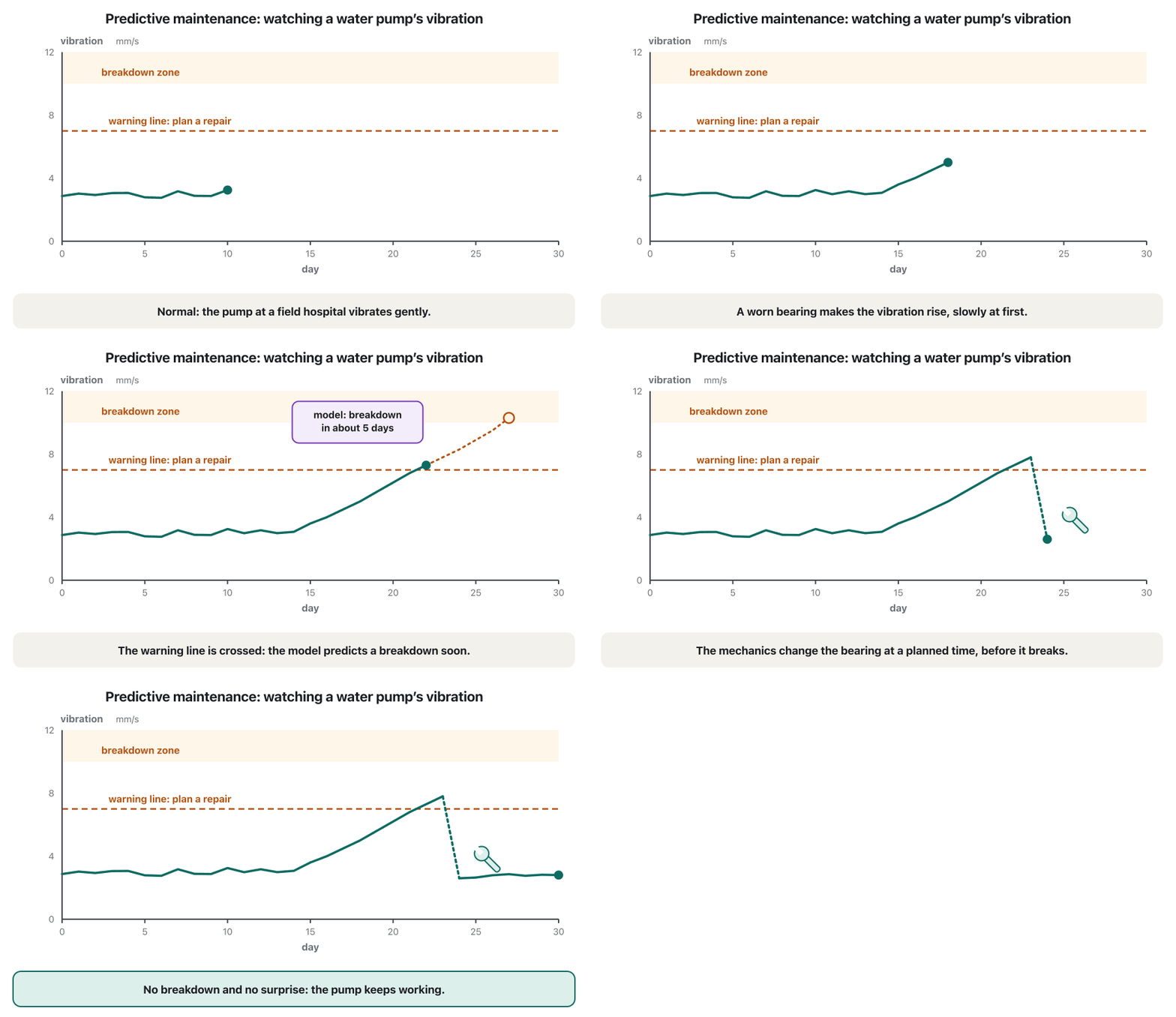
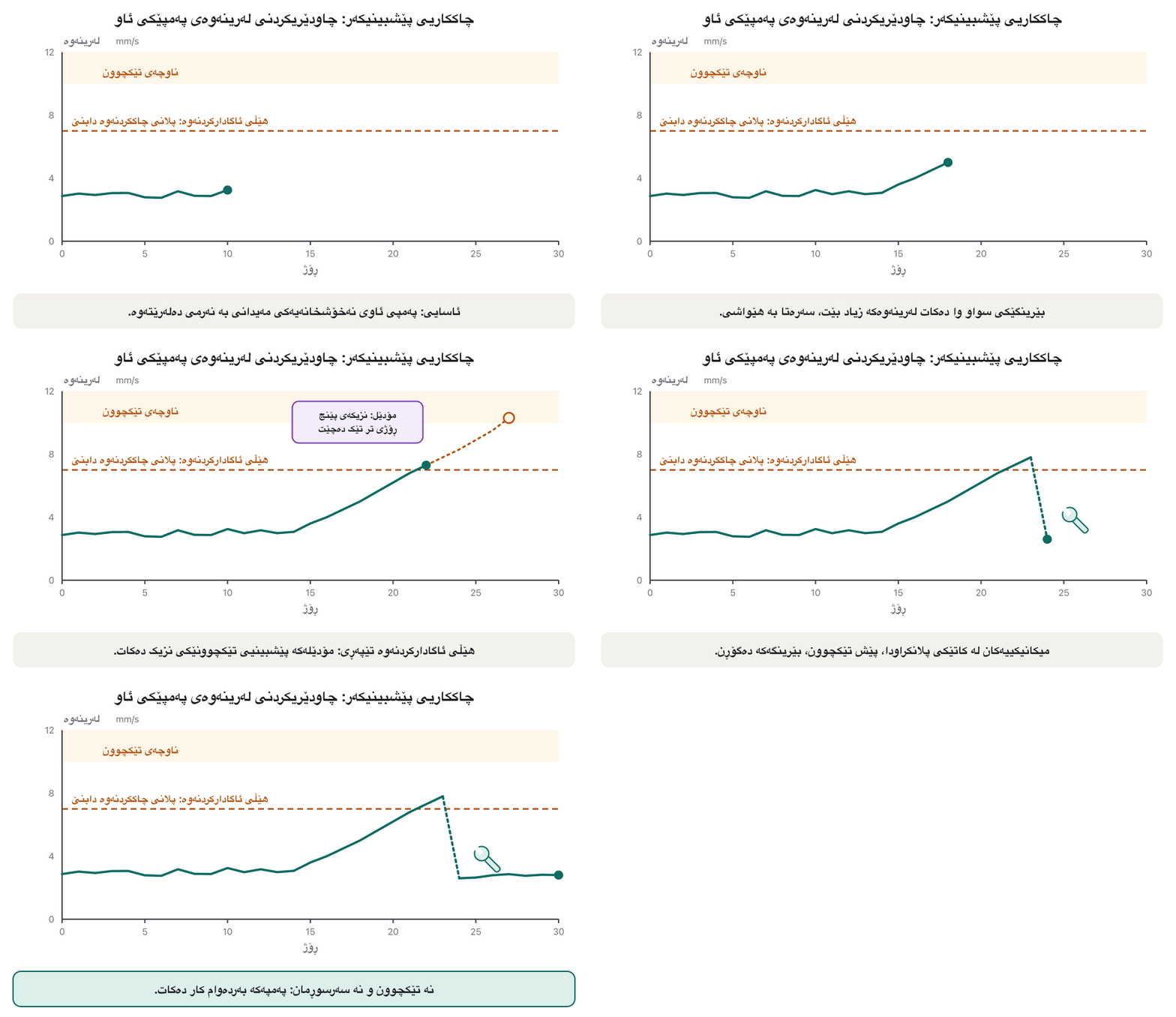
A real example: in 2023 the US Air Force made an AI tool called PANDA its official system for this kind of maintenance. It combines onboard sensor data, flight data and maintenance and supply records, and maintenance and engineering analysts review its recommendations before acting.
نموونەیەکی ڕاستەقینە: لە 2023دا هێزی ئاسمانیی ئەمریکا ئامرازێکی بە ناوی PANDA کردە سیستەمی فەرمیی خۆی بۆ ئەم جۆرە . ئەم ئامرازە سەر فڕۆکە، فڕین و تۆمارەکانی و پێداویستی پێکەوە کۆ دەکاتەوە و شیکەرەوەکانی و ئەندازیاری پێش ئەوەی کار بکەن پێداچوونەوە بە پێشنیارەکانیدا دەکەن.
Fixing a machine before it breaksچاککردنەوەی ئامێرێک پێش ئەوەی تێک بچێت
Three ways to look after a machineسێ ڕێگا بۆ ئاگالێبوونی ئامێرێک
The US Department of Energy describes the basic approaches in a few words: reactive maintenance means fix or replace it when it breaks; preventive maintenance means time-based care on a fixed timetable; predictive maintenance means fix it before it breaks, based on the machine's real condition.
وەزارەتی وزەی ئەمریکا ڕێگا سەرەکییەکان بە چەند وشەیەک باس دەکات: دوای تێکچوون واتە کاتێک تێکچوو چاکی بکەرەوە یان بیگۆڕە؛ واتە ئاگالێبوون بەپێی کات و بە خشتەیەکی جێگیر؛ واتە پێش تێکچوون چاکی بکەرەوە، بەپێی دۆخی ڕاستەقینەی ئامێرەکە.
| Approachڕێگا | Goodباشی | Weakلاوازی |
|---|---|---|
| Reactive دوای تێکچوون | no planning or sensors neededپێویستی بە پلان یان نییە | surprise breakdowns, long stops, dangerous in the fieldتێکچوونی چاوەڕواننەکراو، وەستانی درێژ، مەترسیدار لە مەیداندا |
| Preventive | fewer surprises; easy to planسەرسوڕمانی کەمتر؛ پلاندانانی ئاسان | good parts are replaced too early; some failures still happen between visitsپارچەی باش زوو دەگۆڕدرێت؛ هێشتا هەندێک تێکچوون لە نێوان سەردانەکاندا ڕوو دەدات |
| Predictive | repairs only when needed; fewer breakdownsچاککردنەوە تەنیا کاتێک پێویستە؛ تێکچوونی کەمتر | needs sensors, clean data and a good model; false alarms are possibleپێویستی بە ، پاک و باش هەیە؛ ئاگادارکردنەوەی هەڵە دەشێت ڕوو بدات |
Finding the best routeدۆزینەوەی باشترین ڕێگا
Route optimisation means finding the best way through a road network. The map is drawn as a weighted graph: places are nodes, roads are edges, and each road has a cost. The cost can be minutes, litres of fuel or a risk score, or a mix of them. A search algorithm such as A* search then finds the cheapest path.
واتە دۆزینەوەی باشترین ڕێگا بە ناو تۆڕێکی ڕێگاوباندا. نەخشەکە وەک گرافی کێشدار دەکێشرێت: شوێنەکان دەبنە ، ڕێگاکان دەبنە و هەر ڕێگایەک کۆستی خۆی هەیە. کۆستەکە دەکرێت خولەک بێت، لیتری سووتەمەنی یان نمرەی ، یان تێکەڵەیەک لەوانە. پاشان گەڕانی وەک گەڕانی A* هەرزانترین دەدۆزێتەوە.
'Best' depends on the cost you choose. Count only minutes and you get the fastest route; add a penalty for dangerous roads and you get the safest one that is still quick. Choosing the cost is a human decision: it says what matters most.
«باشترین» بەندە بەو کۆستەی هەڵیدەبژێریت. ئەگەر تەنیا خولەک بژمێریت، خێراترین ڕێگا وەردەگریت؛ ئەگەر سزایەک بۆ ڕێگا مەترسیدارەکان زیاد بکەیت، سەلامەتترین ڕێگا وەردەگریت کە هێشتا خێرایە. هەڵبژاردنی کۆست بڕیارێکی مرۆییە: دەڵێت چی لە هەمووی گرنگترە.
Finding the best routeدۆزینەوەی باشترین ڕێگا
A storm changes the costsزریانێک کۆستەکان دەگۆڕێت
Now a storm arrives while the truck is on the road. One road floods and another becomes slow. In the graph their costs go up, and the flooded road is removed. The old 'best' route is no longer best, so the planner re-plans: it searches again from where the truck is now, with the new costs.
ئێستا لە کاتێکدا بارهەڵگرەکە لە ڕێگادایە زریانێک دێت. ڕێگایەک لافاو دەیگرێت و ڕێگایەکی تر هێواش دەبێت. لە کۆستەکانیان بەرز دەبنەوە و ڕێگا لافاوگرتووەکە لادەبرێت. «باشترین» ڕێگای پێشوو ئیتر باشترین نییە، بۆیە پلاندانەر دەکات: دووپاتە دەگەڕێت، لەو شوێنەوەی بارهەڵگرەکە ئێستا لێیەتی، بە کۆستە نوێیەکان.
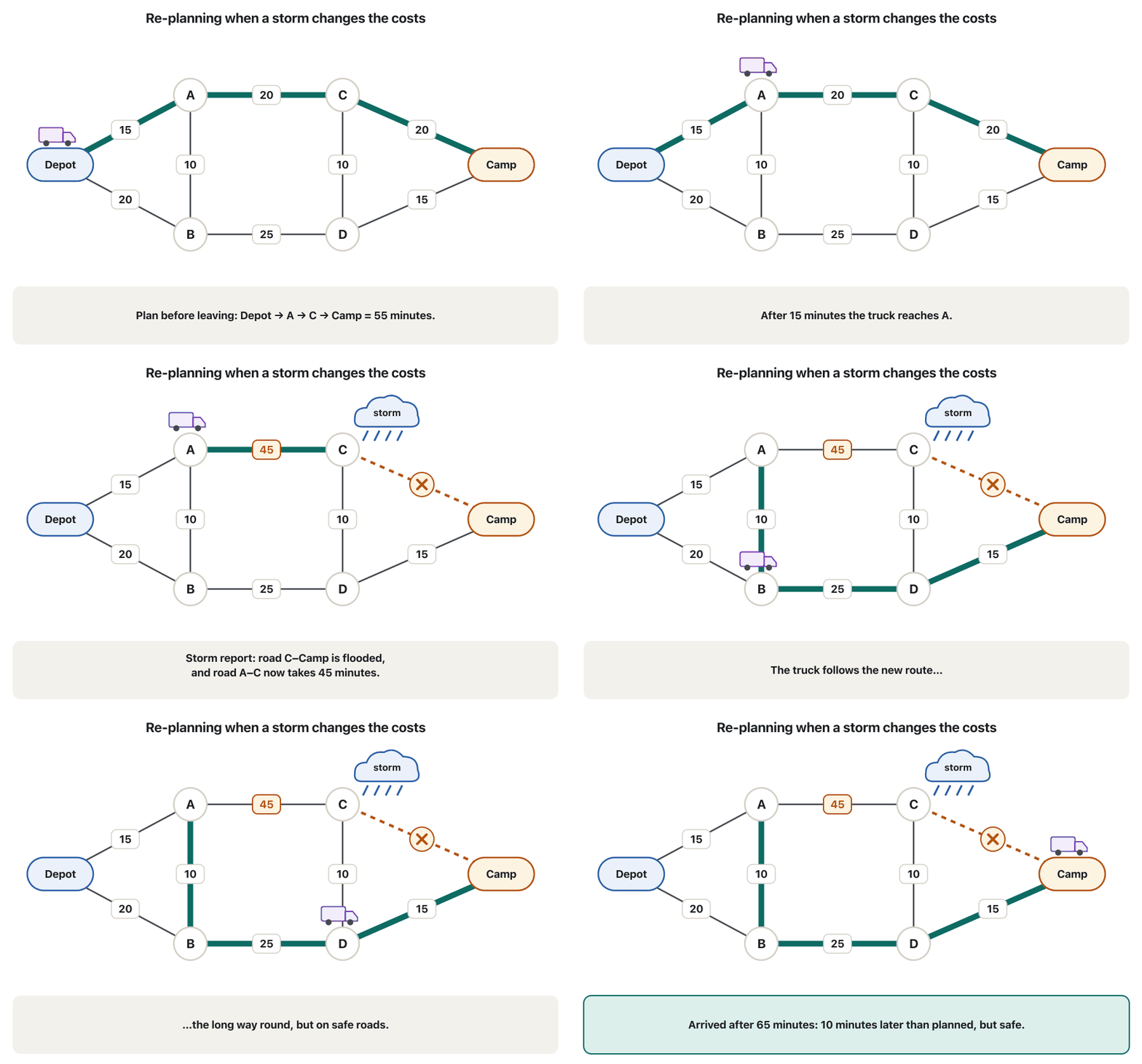
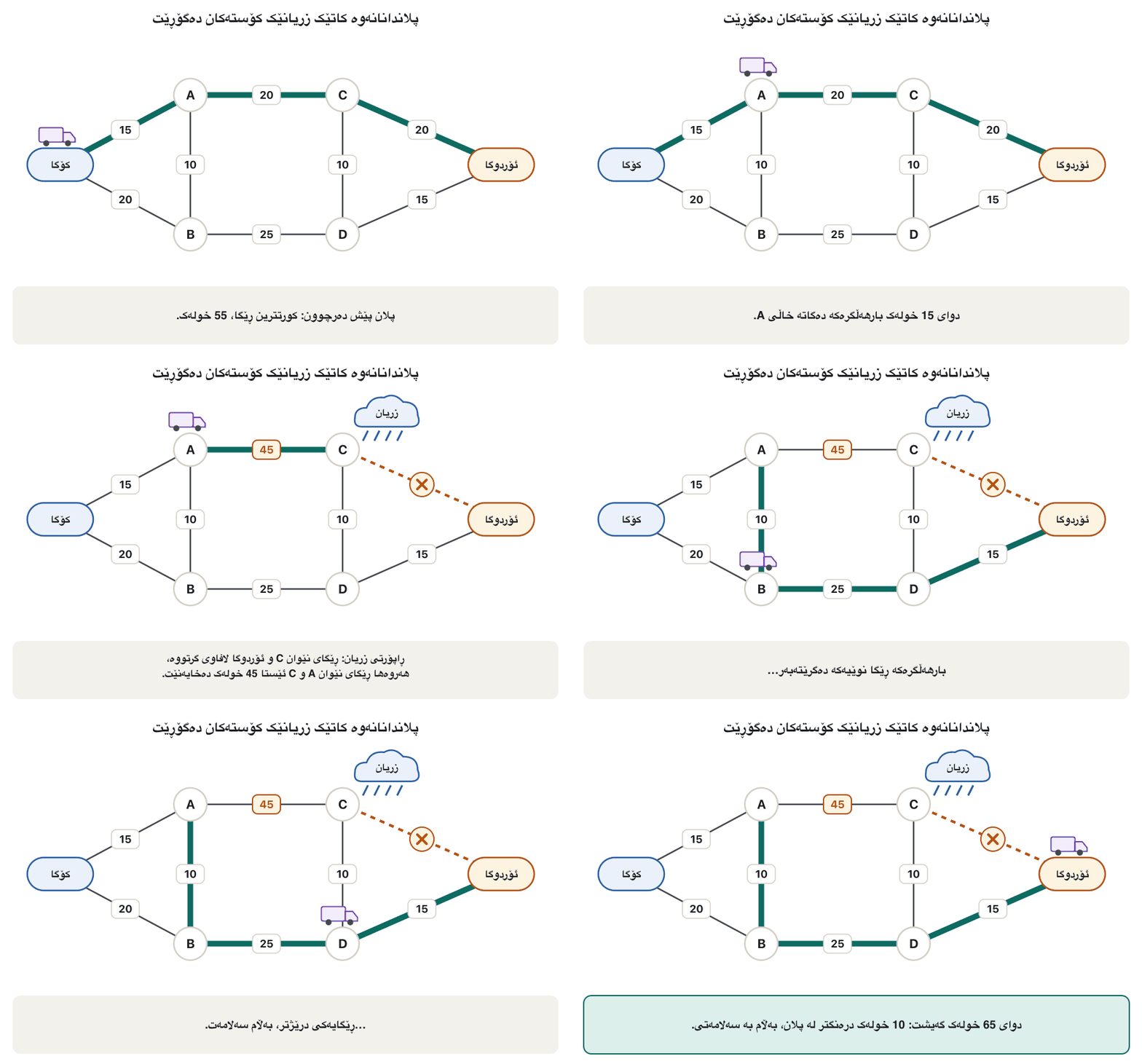
The hoped-for result is faster deliveries with fewer breakdowns. That is an expected benefit, not a promise: it depends on fresh road and weather reports, and on drivers who can report what they see. When the data is wrong, the plan is wrong.
ئەنجامی چاوەڕوانکراو گەیاندنی خێراتر و تێکچوونی کەمترە. ئەمە سوودێکی چاوەڕوانکراوە، نەک بەڵێن: بەندە بە ڕاپۆرتی نوێی ڕێگا و کەشوهەوا و بە شۆفێرانێک کە بتوانن ئەوەی دەیبینن ڕاپۆرت بکەن. کاتێک هەڵە بێت، پلانەکەش هەڵەیە.
Finding the best routeدۆزینەوەی باشترین ڕێگا
The same tools feed peopleهەمان ئامرازەکان خەڵک تێر دەکەن
The same mathematics serves aid agencies. The UN World Food Programme (WFP) built Optimus, a decision-support tool. It uses data and mathematical models to suggest which foods to put in a food basket so that it is nutritious and affordable, where to buy them and how to deliver them, within limits such as funding and delivery times. So far WFP has used it in 44 of its operations (as of November 2026); in 2023 it reached 1.7 million people, and in Haiti it cut operating costs by US$273,000.
هەمان بیرکاری خزمەتی دامەزراوەکانی یارمەتیدان دەکات. بەرنامەی خۆراکی جیهانیی نەتەوە یەکگرتووەکان (WFP) ئامرازێکی بە ناوی Optimus دروست کرد کە . و مۆدێلی بیرکاری بەکار دەهێنێت بۆ پێشنیارکردنی ئەوەی کام خواردن بخرێتە سەبەتەی خۆراکەوە تا هەم بە سوود بێت و هەم هەرزان، لە کوێ بکڕدرێن و چۆن بگەیەنرێن، لە چوارچێوەی سنووری وەک پارە و کاتی گەیاندن. تا تشرینی دووەمی 2026، WFP لە 44 کاری خۆیدا بەکاری هێناوە؛ لە 2023دا گەیشتە 1.7 ملیۆن کەس و لە هایتی 273,000 دۆلاری ئەمریکی لە تێچووی کارەکان کەم کردەوە.
Optimus suggests and WFP's teams decide. That is the pattern of every good decision support system, in war and in peace; the lesson on human control looks at it closely.
Optimus پێشنیار دەکات و تیمەکانی WFP بڕیار دەدەن. ئەمە شێوازی هەر سیستەمێکی پشتگیریی بڕیاردانی باشە، لە جەنگ و لە ئاشتیدا؛ وانەی کۆنترۆڵی مرۆڤ بە وردی سەیری دەکات.
Practising safely: simulation and virtual realityڕاهێنانی سەلامەت: هاوشێوەسازی و ڕاستیی گریمانەیی
Real exercises are expensive, and some situations are too dangerous or too rare to practise for real: an engine fire in flight, a convoy stuck in a flood, a collapsed building. A simulation recreates them on a computer. Trainees can sit in a simulator, a copy of a cockpit or a driver's seat, or wear a virtual reality headset, and practise as often as they need without danger. The three kinds of immersive technology are compared in VR, AR or mixed reality?.
ڕاهێنانی ڕاستەقینە گرانە و هەندێک بارودۆخ زۆر مەترسیدار یان زۆر دەگمەنن بۆ ئەوەی بە ڕاستی ڕاهێنانیان لەسەر بکرێت: ئاگرگرتنی بزوێنەر لە کاتی فڕیندا، کاروانێک کە لە لافاودا گیر بووە، باڵەخانەیەکی ڕووخاو. ئەمانە لەسەر دروست دەکاتەوە. ڕاهێنراوەکان دەتوانن لە دابنیشن، کە کۆپییەکی کابینەی فڕۆکە یان کورسیی شۆفێرە، یان لە سەر بکەن و هەر چەند جار پێویست بێت بەبێ مەترسی ڕاهێنان بکەن. ئەم سێ جۆرە تەکنەلۆجیایە لە کۆرسی بەراورد کراون (VR، AR یان ڕاستیی تێکەڵ).
AI makes simulations more useful in two ways: it adapts the training to each person, and it plays the other side, so trainees have someone to practise against. The next two screens show each.
بە دوو ڕێگا بەسوودتر دەکات: ڕاهێنانەکە لەگەڵ هەر کەسێک دەگونجێنێت و لایەنی بەرامبەر دەگێڕێت، بۆ ئەوەی ڕاهێنراوەکان کەسێکیان هەبێت بەرامبەری ڕاهێنان بکەن. دوو بەشی داهاتوو هەر یەکەیان پیشان دەدەن.
Practising safely: simulation and virtual realityڕاهێنانی سەلامەت: هاوشێوەسازی و ڕاستیی گریمانەیی
Training that adapts to each personڕاهێنانێک کە خۆی لەگەڵ هەر کەسێک دەگونجێنێت
In a normal class, everyone gets the same lesson. Adaptive training watches each learner's results and changes the next task: harder after a success, easier and with a hint after a mistake, and more practice on whatever skill is weak.
لە پۆلێکی ئاساییدا هەموو کەس هەمان وانە وەردەگرێت. سەیری ئەنجامەکانی هەر فێرخوازێک دەکات و ئەرکی داهاتوو دەگۆڕێت: دوای سەرکەوتن قورستر، دوای هەڵە ئاسانتر و لەگەڵ ڕێنمایی، هەروەها ڕاهێنانی زیاتر لەسەر هەر کارامەییەک کە لاوازە.
A good driving teacher notices that you struggle with parking and makes you park again, but lets you skip what you already do well.
مامۆستایەکی باشی شۆفێری تێدەگات کە لە پارککردندا ئاستەنگت هەیە و دووپاتە وات لێدەکات پارک بکەیت، بەڵام ڕێگەت پێ دەدات ئەوەی بە باشی دەیکەیت تێپەڕێنیت.
Where the analogy stops workingسنووری ئەم نموونەیە
A teacher also notices tiredness, fear and mood; software sees only the results it measures.
مامۆستا هەروەها ماندوویی، ترس و حاڵی دەروونیت دەبینێت؛ تەنیا ئەو ئەنجامانە دەبینێت کە دەیانپێوێت.
The US Army's research centre publishes GIFT, a framework for building adaptive tutors: one part estimates what the learner knows, and another decides when to give feedback or a hint.
ناوەندی توێژینەوەی سوپای ئەمریکا GIFT بڵاو دەکاتەوە، کە چوارچێوەیەکە بۆ دروستکردنی مامۆستای کە خۆی دەگونجێنێت: بەشێکی هەڵدەسەنگێنێت فێرخوازەکە چی دەزانێت و بەشێکی تر بڕیار دەدات کەی ڕاوبۆچوون یان ڕێنمایی بدات.
Practising safely: simulation and virtual realityڕاهێنانی سەلامەت: هاوشێوەسازی و ڕاستیی گریمانەیی
An AI opponent that gets harderڕکابەرێکی ژیریی دەستکرد کە قورستر دەبێت
In many simulations the computer plays the other side, the opposing team of an exercise. Each round it can use smarter tactics, so the trainee always has a challenge. You met the same idea in the AI course: in Minimax difficulty levels, searching more moves ahead makes a harder opponent. Modern game AI also learns by trial and error (reinforcement learning).
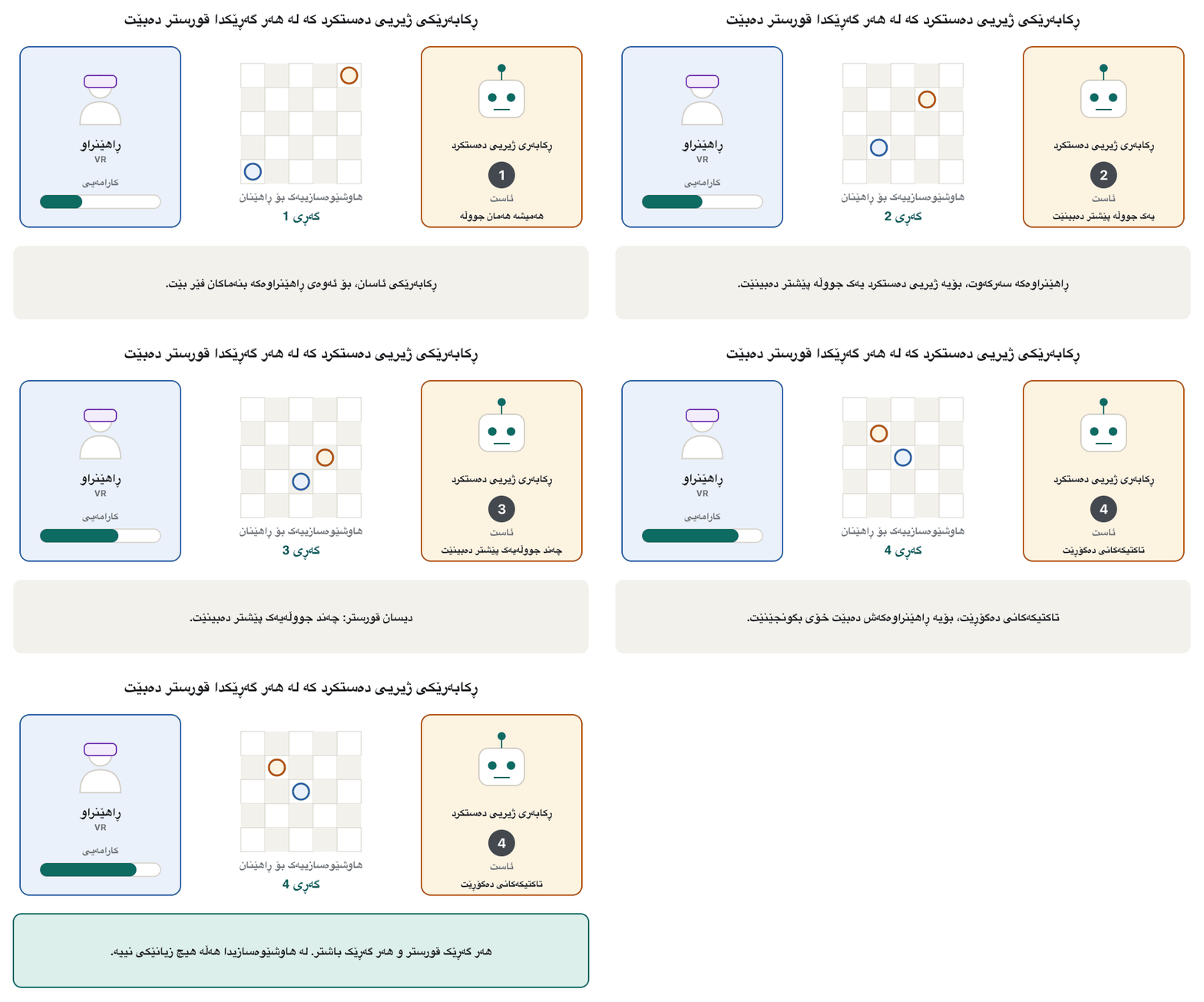
لە زۆر لایەنی بەرامبەر دەگێڕێت، واتە تیمی ڕکابەری ڕاهێنانەکە. لە هەر گەڕێکدا دەتوانێت تاکتیکی زیرەکتر بەکار بهێنێت، بۆ ئەوەی ڕاهێنراوەکە هەمیشە ئاستەنگێکی لە بەردەمدا بێت. هەمان بیرۆکەت لە کۆرسی بینیوە: لە ئاستەکانی قورسیی Minimax، گەڕان بە جووڵەی زیاتر بەرەو پێشەوە ڕکابەرێکی قورستر دروست دەکات. یارییە هاوچەرخەکانیش بە تاقیکردنەوە و هەڵە فێر دەبێت (فێربوونی بەهێزکردنەوە).
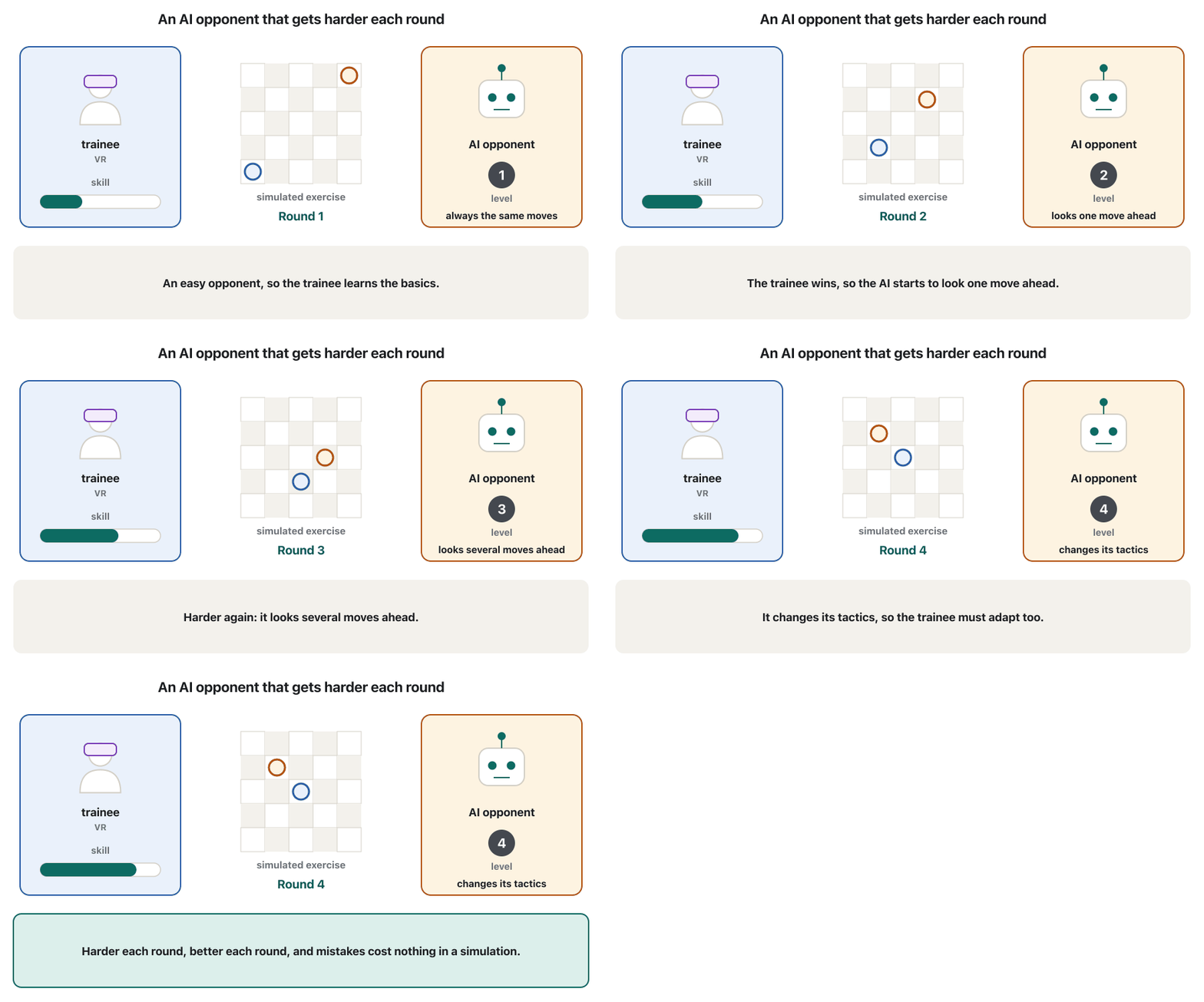
The trainee may wear a VR headset and practise decisions again and again. The goal is not to 'win a game' but to build safe habits before real life demands them.
ڕاهێنراوەکە دەشێت لە سەر بکات و بڕیاردان چەندین جار دووپاتە بکاتەوە. ئامانج «بردنەوەی یارییەک» نییە، بەڵکو دروستکردنی ڕاهاتنی سەلامەتە پێش ئەوەی ژیانی ڕاستەقینە داوایان بکات.
Simulation tests the AI tooهاوشێوەسازی ژیریی دەستکردیش تاقی دەکاتەوە
Simulation trains people, and it also tests machines. Before an AI system is used, it can face thousands of simulated situations: rain, night, a broken sensor, a closed road, people nearby. Engineers measure its mistakes, fix them and test again, and only then try it in the real world with people watching.
خەڵک ڕادەهێنێت و ئامێریش تاقی دەکاتەوە. پێش ئەوەی سیستەمێکی بەکار بهێنرێت، دەکرێت ڕووبەڕووی هەزاران بارودۆخی هاوشێوەسازیکراو ببێتەوە: باران، شەو، تێکچوو، ڕێگایەکی داخراو، خەڵک لە نزیکەوە. ئەندازیاران هەڵەکانی دەپێون، چاکیان دەکەنەوە و دووپاتە تاقیی دەکەنەوە و تەنیا دوای ئەوە، بە سەرپەرشتیی مرۆڤ، لە جیهانی ڕاستەقینەدا تاقیی دەکەنەوە.
On 4 September 2026 the government experts who discuss autonomous weapons under the Convention on Certain Conventional Weapons agreed by consensus that such weapons should be tested and evaluated 'including adequately realistic simulations', to see how they will perform where they will be used. Their report goes to the convention's Review Conference on 16–20 November 2026.
لە 4ی ئەیلوولی 2026دا شارەزایانی حکوومەتەکان، کە لە چوارچێوەی باسی دەکەن، بە کۆدەنگی ڕێککەوتن کە دەبێت ئەم جۆرە چەکانە تاقی بکرێنەوە و هەڵبسەنگێنرێن، «لەوانەش بە بەس نزیک لە ڕاستی»، بۆ ئەوەی ببینرێت لەو شوێنەی بەکار دەهێنرێن چۆن کار دەکەن. ڕاپۆرتەکەیان دەچێتە بەردەم کۆنگرەی پێداچوونەوەی پەیماننامەکە لە 16 تا 20ی تشرینی دووەمی 2026.
But a simulation is only a model of the world. If it is too clean, always sunny and with sensors that never fail, the AI may pass the test and still fail outside. That is why testing continues after a system is put into use; see When AI gets it wrong.
بەڵام تەنیا وێنەیەکی سادەکراوی جیهانە. ئەگەر زۆر پاک بێت، هەمیشە خۆرەتاو و بە کە هەرگیز تێک ناچن، دەشێت تاقیکردنەوەکە تێپەڕێنێت و هێشتا لە دەرەوە سەرنەکەوێت. لەبەر ئەوە دوای ئەوەی سیستەمێک دەخرێتە کار، تاقیکردنەوە بەردەوام دەبێت؛ بڕوانە کاتێک ژیریی دەستکرد هەڵە دەکات.
Common mistakesهەڵە باوەکان
| Mistakeهەڵە | Betterڕاستییەکەی |
|---|---|
| Logistics is just transport. تەنیا گواستنەوەیە. | It is planning, supply, storage, maintenance and movement together.پلاندانان، دابینکردن، هەڵگرتن، و گواستنەوەیە پێکەوە. |
| A forecast is a promise.پێشبینی بەڵێنە. | It is an estimate with a range; update it when things change.خەمڵاندنێکە لە نێوان کەمترین و زۆرتریندا؛ کاتێک شتەکان گۆڕان نوێی بکەرەوە. |
| Predictive and preventive maintenance are the same. و یەک شتن. | Preventive follows a timetable; predictive follows the machine's own data. بەدوای خشتەیەکی کاتیدا دەچێت؛ بەدوای خودی ئامێرەکەدا. |
| The best route never changes.باشترین ڕێگا هەرگیز ناگۆڕێت. | It depends on the costs; when they change, re-plan from where you are.بەندە بە کۆستەکان؛ کاتێک گۆڕان، لەو شوێنەوەی لێیت پلان دابنێرەوە. |
| The AI decides what is sent. بڕیار دەدات چی بنێردرێت. | It suggests options; people decide and answer for the decision.هەڵبژاردە پێشنیار دەکات؛ مرۆڤ بڕیار دەدات و بەرپرسیاری بڕیارەکەیە. |
| A VR headset is only for games. تەنیا بۆ یارییە. | Pilots, drivers, medics and rescuers train with VR and simulators.فڕۆکەوان، شۆفێر، پزیشک و فریاکەوتووان بە و ڕاهێنان دەکەن. |
| Passing a simulation means the system is safe.تێپەڕاندنی واتە سیستەمەکە سەلامەتە. | Real-world trials and monitoring are still needed.هێشتا تاقیکردنەوەی ڕاستەقینە و پشکنینی بەردەوام پێویستن. |
Exercisesڕاهێنانەکان
Use the map (minutes on each road). (1) Find the cheapest route from the depot S to the clinic T, and its cost. (2) The truck has just reached P when a storm report arrives: road Q–R is flooded and closed, and road R–T now takes 20 minutes. Find the cheapest route from P to T. (3) What is the total time of the trip now?
نەخشەکە بەکار بهێنە (خولەکی سەر هەر ڕێگایەک). (1) هەرزانترین ڕێگا لە کۆگای S بۆ نۆرینگەی T و کۆستەکەی بدۆزەرەوە. (2) بارهەڵگرەکە تازە گەیشتووەتە P کە ڕاپۆرتی زریانێک دێت: ڕێگای نێوان Q و R لافاوی گرتووە و داخراوە و ڕێگای نێوان R و T ئێستا 20 خولەک دەخایەنێت. هەرزانترین ڕێگا لە P بۆ T بدۆزەرەوە. (3) ئێستا کۆی کاتی گەشتەکە چەندە؟
Show answerوەڵامەکە پیشان بدە
- (1) S → P → Q → R → T: minutes. (S → Q → R → T takes 35, one minute longer.)
- (2) From P: P → Q → T, minutes. (P → R → T is ; going back through S takes 55.)
- (3) minutes: 8 minutes more than the first plan, on safe roads.
- (1) لە S بە P، Q و Rـدا بۆ T: خولەک. (ڕێگای S، Q، R و T 35 خولەک دەخایەنێت، یەک خولەک زیاتر.)
- (2) لە Pـەوە بە Qـدا بۆ T: خولەک. (بە Rـدا خولەکە؛ گەڕانەوە بە Sـدا 55 خولەکە.)
- (3) خولەک: 8 خولەک زیاتر لە پلانی یەکەم، بەسەر ڕێگای سەلامەتدا.
Name the approach: (1) a generator is repaired only after it stops; (2) a water pump's filters are changed every 3 months; (3) an engine is serviced when its oil sensor shows that worn-metal particles are rising.
ڕێگاکە ناو ببە: (1) مۆلیدەیەک تەنیا دوای ئەوەی وەستا چاک دەکرێتەوە؛ (2) فلتەرەکانی پەمپێکی ئاو هەموو 3 مانگ جارێک دەگۆڕدرێن؛ (3) بزوێنەرێک کاتێک ڕۆنەکەی پیشان دەدات کە وردە کانزای سواو زیاد دەبێت، چاک دەکرێتەوە.
Show answerوەڵامەکە پیشان بدە
- (1) Reactive: fix it when it breaks.
- (2) Preventive: a fixed timetable.
- (3) Predictive: the machine's own sensor data says a failure is coming.
- (1) دوای تێکچوون: کاتێک تێکچوو چاکی بکەرەوە.
- (2) : خشتەیەکی کاتیی جێگیر.
- (3) : خودی ئامێرەکە دەڵێت تێکچوونێک لە ڕێگادایە.
A first-aid training app has five levels. Write simple rules for when the next task gets harder or easier, and for when the app gives a hint.
ڕاهێنانی فریاگوزاریی سەرەتایی پێنج ئاستی هەیە. ڕێسای سادە بنووسە بۆ ئەوەی کەی ئەرکی داهاتوو قورستر یان ئاسانتر دەبێت و کەی ڕێنمایی دەدات.
Hintئاماژە
Think of the ladder chart: what moves the learner up, and what moves them down?
بیر لە ئاستەکان بکەرەوە: چی فێرخوازەکە بەرز دەکاتەوە و چی دایدەبەزێنێت؟
Show answerوەڵامەکە پیشان بدە
- After 2 successes in a row, go up one level (never above 5).
- After a mistake, stay or go down one level (never below 1) and show a hint on the step that went wrong.
- If the same skill fails twice, give an extra practice task on that skill before moving on.
- Keep a record of each skill, so the next lesson starts where the learner is weak.
- دوای دوو سەرکەوتن لە دوای یەک، یەک ئاست بەرز ببەرەوە (هەرگیز سەرووی 5 نا).
- دوای هەڵەیەک، لە هەمان ئاست بمێنەرەوە یان یەک ئاست دابەزە (هەرگیز خوار 1 نا) و ڕێنمایی لەسەر ئەو هەنگاوەی هەڵە بوو پیشان بدە.
- ئەگەر هەمان کارامەیی دوو جار سەرنەکەوت، پێش ئەوەی بچیتە پێشەوە ئەرکێکی ڕاهێنانی زیادە لەسەر ئەو کارامەییە بدە.
- تۆماری هەر کارامەییەک بهێڵەرەوە، بۆ ئەوەی وانەی داهاتوو لەو شوێنەوە دەست پێ بکات کە فێرخوازەکە تێیدا لاوازە.
Summaryپوختە
- Logistics gets the right supplies to the right place at the right time along a supply chain; AI forecasts needs, predicts breakdowns and plans routes, while people decide.
- Predictive maintenance: sensors → model → 'likely to fail soon' → a planned repair. Preventive maintenance follows a timetable; reactive maintenance waits for the breakdown.
- Route optimisation is a search on a weighted graph; when a storm changes the costs, re-plan from where the truck is now. The result is an expected benefit, not a promise.
- The same tools serve humanitarian work: WFP's Optimus suggests food baskets, sourcing and delivery plans, and people decide.
- Simulation and VR let people practise dangerous or rare situations safely; adaptive training fits each learner; an AI opponent gets harder as the trainee improves.
- Simulation also tests AI systems before use, but it must be realistic, and real-world testing and monitoring must follow.
- پێداویستیی گونجاو بە درێژایی لە کاتی گونجاودا دەگەیەنێتە شوێنی گونجاو؛ پێشبینیی پێداویستییەکان و تێکچوونەکان دەکات و ڕێگا پلان دەکات، لە کاتێکدا مرۆڤ بڕیار دەدات.
- : ← ← «بەم زووانە تێک دەچێت» ← چاککردنەوەی پلانکراو. بەدوای خشتەیەکدا دەچێت؛ دوای تێکچوون چاوەڕێی تێکچوونەکە دەکات.
- گەڕانە لە ؛ کاتێک زریانێک کۆستەکان دەگۆڕێت، لەو شوێنەوەی بارهەڵگرەکە ئێستا لێیەتی پلان دابنێرەوە. ئەنجامەکە سوودێکی چاوەڕوانکراوە، نەک بەڵێن.
- هەمان ئامرازەکان خزمەتی کاری مرۆیی دەکەن: Optimusـی WFP سەبەتەی خۆراک، شوێنی کڕین و پلانی گەیاندن پێشنیار دەکات و مرۆڤ بڕیار دەدات.
- و ڕێگە دەدەن خەڵک بە سەلامەتی لەسەر بارودۆخی مەترسیدار یان دەگمەن ڕاهێنان بکەن؛ لەگەڵ هەر فێرخوازێک دەگونجێت؛ ڕکابەرێکی بە باشتربوونی ڕاهێنراوەکە قورستر دەبێت.
- سیستەمەکانی پێش بەکارهێنان تاقی دەکاتەوە، بەڵام دەبێت نزیک لە ڕاستی بێت و دەبێت تاقیکردنەوەی ڕاستەقینە و پشکنینی بەردەوام بەدوایدا بێن.
What is the difference between preventive and predictive maintenance?جیاوازیی نێوان چاککاریی پێشوەختە و چاککاریی پێشبینیکەر چییە؟
Preventive maintenance follows a fixed timetable (for example every 250 hours). Predictive maintenance repairs a machine when its own sensor data shows that a failure is coming.
بەدوای خشتەیەکی کاتیی جێگیردا دەچێت (بۆ نموونە هەر 250 کاتژمێرێک). ئامێرێک کاتێک چاک دەکاتەوە کە خۆی پیشان دەدات تێکچوونێک لە ڕێگادایە.
Why must the planner re-plan from the truck's current position?بۆچی دەبێت پلاندانەر لە شوێنی ئێستای بارهەڵگرەکەوە پلاندانانەوە بکات؟
The truck has already driven part of the route; the best path now is the cheapest one from where it is, with the new costs.
بارهەڵگرەکە بەشێک لە ڕێگاکەی بڕیوە؛ باشترین ڕێگا ئێستا هەرزانترینیانە لەو شوێنەوەی لێیەتی، بە کۆستە نوێیەکان.
How does an AI opponent in a simulation get harder?ڕکابەرێکی ژیریی دەستکرد لە هاوشێوەسازییەکدا چۆن قورستر دەبێت؟
It uses smarter tactics each round, for example by searching more moves ahead (as with the minimax depth) or by learning from many games.
لە هەر گەڕێکدا تاکتیکی زیرەکتر بەکار دەهێنێت، بۆ نموونە بە گەڕان بە جووڵەی زیاتر بەرەو پێشەوە (وەک قووڵایی ) یان بە فێربوون لە زۆر یاری.
Lesson complete!وانەکە تەواو بوو!
Well done. Review the key terms, then go on to the next lesson.دەستخۆش. سەیرێکی زاراوە سەرەکییەکان بکەرەوە، پاشان بڕۆ بۆ وانەی داهاتوو.
Key termsزاراوە سەرەکییەکان
Decisions, Human Control and Responsibilityبڕیار، کۆنترۆڵی مرۆڤ و بەرپرسیارێتی
Related lecturesوانە پەیوەندیدارەکان
- A* Searchگەڕانی A*
- Search Problems: States, Actions, Goals and Costsکێشەکانی گەڕان: دۆخەکان، کردەوەکان، ئامانج و کۆست
- Minimax: An AI That Never LosesMinimax: یاریزانێکی ژیر کە هەرگیز نادۆڕێت
- Emerging Technologies: IoT, VR/AR, Robots and Blockchainتەکنەلۆجیا نوێیەکان: ئینتەرنێتی شتەکان، ڕاستیی گریمانەیی/ڕاستیی زیادکراو، ڕۆبۆتەکان و بلۆکچەین
- Autonomous Drones, Vehicles and Robotsدرۆن، ئۆتۆمبێل و ڕۆبۆتی سەربەخۆ
- When AI Gets It Wrong: Errors, Bias and Deceptionکاتێک ژیریی دەستکرد هەڵە دەکات: هەڵە، لاسەنگی و فریودان
- Decisions, Human Control and Responsibilityبڕیار، کۆنترۆڵی مرۆڤ و بەرپرسیارێتی
References and further readingسەرچاوەکان و خوێندنەوەی زیاتر
- UNIDIR: AI in the Military Domain — A briefing note for States (2025)
- WFP Innovation Accelerator: Optimus
- US Department of Energy, FEMP: Operations and Maintenance Challenges and Solutions
- DefenseScoop: Air Force selects AI-enabled predictive maintenance program as system of record (10 May 2023)
- Wikipedia: D* (incremental re-planning: D*, Focussed D*, D* Lite)
- GIFT (Generalized Intelligent Framework for Tutoring): Overview
- CCW Group of Governmental Experts on LAWS: final report CCW/GGE.1/2026/3 (adopted 4 September 2026)
This lecture is a first edition. The Kurdish text and terminology are waiting for review by Kurdish IT teachers.ئەم وانەیە چاپی یەکەمە. دەقە کوردییەکە و زاراوەکانی چاوەڕێی پێداچوونەوەی مامۆستایانی کوردی بواری IT ن.