Chapterبەش 1 · Lectureوانە 1.1
What Is a Drone? UAV, UAS, RPAS and a Short Historyدرۆن چییە؟ UAV، UAS، RPAS و مێژوویەکی کورت
What a drone is (an aircraft with no pilot on board, but never without a responsible person), where the word comes from, how big drones are, how UAV, UAS and RPAS differ, and a short history from the flying targets of the 1910s to the working drones of 2026.
چییە (فڕۆکەیەک کە فڕۆکەوانی لە ناودا نییە، بەڵام هەرگیز بێ کەسێکی بەرپرسیار نییە)، وشەکە لە کوێوە هاتووە، چەند گەورەن، جیاوازیی UAV، و چییە، هەروەها مێژوویەکی کورت لە ئامانجە فڕیوەکانی دەیەی 1910ـەوە تا کارکەرەکانی ساڵی 2026.
What you will learnچی فێر دەبیت
- Define a drone correctly: an aircraft with no pilot on board, flown by a remote pilot or by its own autopilot, with a person still responsible.
- Tell UAV/UA (the aircraft), UAS (the whole system) and RPAS (ICAO's remotely piloted kind) apart, and name the parts of a UAS.
- Explain where the word "drone" comes from and describe drone sizes, from palm-sized to airliner-sized.
- Put the main steps of drone history in order, from the 1910s to 2026.
- بە دروستی پێناسە بکەیت: فڕۆکەیەک کە فڕۆکەوانی لە ناودا نییە، یان خۆی دەیفڕێنێت و هێشتا کەسێک بەرپرسیارە.
- جیاوازی بکەیت لە نێوان UAV/UA (فڕۆکەکە)، (هەموو سیستەمەکە) و (جۆرە لە دوورەوە فڕێنراوەکەی )، هەروەها بەشەکانی ناو ببەیت.
- ڕوونی بکەیتەوە وشەی «drone» لە کوێوە هاتووە و قەبارەی وەسف بکەیت، لە قەبارەی لەپی دەستەوە تا قەبارەی فڕۆکەی ڕێبوار.
- هەنگاوە سەرەکییەکانی مێژووی بە ڕیز دابنێیت، لە دەیەی 1910ـەوە تا 2026.
From target practice to tomato fieldsلە ئامانجی ڕاهێنانەوە بۆ کێڵگەی تەماتە
About a hundred years ago, the first aircraft without a pilot were military experiments and flying targets for gunnery practice. Today most drones do ordinary civil work: they check crops, map building sites, carry medicine, help firefighters, film events and inspect bridges and power lines.
نزیکەی سەد ساڵ لەمەوبەر، یەکەم ئەو فڕۆکانەی فڕۆکەوانیان تێدا نەبوو تاقیکردنەوەی سەربازی و ئامانجی فڕیو بوون بۆ ڕاهێنانی تەقەکردن. ئەمڕۆ زۆربەی کاری مەدەنیی ئاسایی دەکەن: بەروبووم دەپشکنن، نەخشەی شوێنی بیناسازی دەکێشن، دەرمان دەگەیەنن، یارمەتی ئاگرکوژێنەرەوان دەدەن، ڤیدیۆی بۆنەکان دەگرن و پرد و هێڵی کارەبا دەپشکنن.
Three advances made this change possible: advanced materials (light, strong plastics and carbon fibre), smarter navigation (satellite positioning together with artificial intelligence that recognises obstacles) and efficient designs that fly longer on one battery. Together they are reshaping farming, logistics (moving and delivering goods) and emergency response.
سێ پێشکەوتن ئەم گۆڕانەیان ممکن کرد: ماددەی پێشکەوتوو (پلاستیک و ڕیشاڵی کاربۆنی سووک و بەهێز)، ڕێنیشاندانی زیرەکتر (دیاریکردنی شوێن بە مانگی دەستکرد لەگەڵ کە بەربەستەکان دەناسێتەوە) و دیزاینی کارا کە بە یەک ماوەیەکی درێژتر دەفڕێت. پێکەوە ئەمانە کشتوکاڵ، (گواستنەوە و گەیاندنی کاڵا) و وەڵامدانەوەی فریاکەوتن دەگۆڕن و شێوەیەکی نوێیان پێ دەدەن.
What is a drone?درۆن چییە؟
A drone is an aircraft that flies with no pilot on board. Aviation law calls it an unmanned aircraft: nobody inside it or on it can steer it. Something still has to fly it, and there are two ways:
فڕۆکەیەکە کە هیچ فڕۆکەوانێکی تێدا نییە. یاسای فڕۆکەوانی پێی دەڵێت unmanned aircraft: هیچ کەسێک لە ناویدا یان لەسەری نییە کە ئاراستەی بکات. بەڵام شتێک هەر دەبێت بیفڕێنێت و دوو ڕێگا هەیە:
- a remote pilot on the ground flies it with a remote controller or a tablet, over a radio link;
- its own autopilot — a small onboard computer that reads its sensors (satellite positioning, motion sensors, a barometer, cameras) — flies it along a planned route.
- لەسەر زەوی بە یان تابلێتێک و لە ڕێگەی پەیوەندییەکی ڕادیۆییەوە دەیفڕێنێت؛
- خۆی — بچووک لە ناو فڕۆکەکەدا کە دەخوێنێتەوە (، جووڵە، ، کامێرا) — بە ڕێگایەکی پلان بۆ دانراودا دەیفڕێنێت.
Either way, a person stays responsible for every flight and can take over or stop it: "no pilot on board" never means "nobody in charge". You met drones briefly in Drones: robots that fly; this course goes much deeper.
لە هەردوو حاڵەتەکەدا کەسێک هەر بەرپرسیار دەمێنێتەوە لە هەموو فڕینێک و دەتوانێت کۆنترۆڵ وەربگرێتەوە یان فڕینەکە ڕابگرێت: «فڕۆکەوانی تێدا نییە» هەرگیز واتای «کەس بەرپرسیار نییە» نییە. لە درۆنەکان: ڕۆبۆتی فڕیو بە کورتی ناسی؛ ئەم کۆرسە زۆر قووڵتر دەچێتە ناو بابەتەکەوە.
An aircraft with no pilot on board. It is flown by remote control or flies by itself along a planned route, using and other .
فڕۆکەیەکە کە فڕۆکەوانی تێدا نییە. بە کۆنترۆڵی دوور دەفڕێنرێت یان بە و تر خۆی بە ڕێگایەکی پلان بۆ دانراودا دەفڕێت.
A word borrowed from beesوشەیەک کە لە هەنگەوە وەرگیراوە
The English word drone is very old. In Old English it meant a male honeybee. A drone bee has no sting, collects no nectar and makes no honey; its job is to mate with a young queen. Later, "drone" also came to mean a lazy person and a low, steady humming sound.
وشەی ئینگلیزیی drone زۆر کۆنە. لە ئینگلیزیی کۆندا واتای هەنگی نێر بوو. هەنگی نێر نیشی نییە، شیلە کۆ ناکاتەوە و هەنگوین دروست ناکات؛ کارەکەی جووتبوونە لەگەڵ شاژنە هەنگێکی گەنجدا. دواتر «drone» واتای کەسێکی تەمەڵ و دەنگێکی نزم و بەردەوامی وزەوزیشی وەرگرت.
The aircraft meaning came in the 1930s. In 1935 Britain flew the Queen Bee, a radio-controlled target plane for anti-aircraft gunners. The US Navy built its own radio-controlled targets and, from 1936, called them drones — most likely in honour of the British Queen Bee. Today "drone" names every pilotless flying machine, from a toy that fits in your hand to an aircraft as big as an airliner.
واتا فڕۆکەییەکە لە دەیەی 1930دا هات. لە ساڵی 1935دا بەریتانیا Queen Beeـی («شاژنە هەنگ») فڕاند، فڕۆکەیەکی ئامانج کە بە ڕادیۆ کۆنترۆڵ دەکرا بۆ ڕاهێنانی تەقەکەرانی دژەفڕۆکە. هێزی دەریایی ئەمریکا ئامانجی ڕادیۆیی خۆی دروست کرد و لە ساڵی 1936ـەوە ناوی نان drone — بە ئەگەری زۆر بۆ ڕێزگرتن لە Queen Beeـی بەریتانی. ئەمڕۆ «drone» ناوی هەموو ئامێرێکی فڕیوی بێفڕۆکەوانە، لە یارییەکەوە کە لە ناو دەستتدا جێی دەبێتەوە تا فڕۆکەیەک کە هێندەی فڕۆکەی ڕێبوار گەورەیە.
From palm-sized to airliner-sizedلە قەبارەی لەپی دەستەوە تا قەبارەی فڕۆکەی ڕێبوار
Drones come in every size. Tiny research quadcopters weigh only about 30 g and are 9 cm across. Most camera drones that people buy weigh from just under 250 g to about 1 kg. Crop-spraying drones with a full tank can weigh more than 25 kg, and the largest drones are as big as airliners: NASA's Global Hawk science drone has wings 35.4 m wide and can weigh about 11.6 tonnes at take-off.
بە هەموو قەبارەیەک هەن. هەندێک بچووکی توێژینەوە تەنیا نزیکەی 30 گرام کێشیانە و پانییان 9 سانتیمەترە. زۆربەی ئەو کامێرادارانەی خەڵک دەیانکڕن لە کەمێک کەمتر لە 250 گرامەوە تا نزیکەی 1 کیلۆگرامن. ڕشاندنی کێڵگە بە تانکی پڕەوە دەتوانن لە 25 کیلۆگرام قورستر بن و گەورەترین هێندەی فڕۆکەی ڕێبوار گەورەن: زانستیی Global Hawkـی NASA باڵەکانی 35.4 مەتر پانن و لە کاتی هەڵفڕیندا کێشی دەگاتە نزیکەی 11.6 تەن.
Weight decides how much harm a falling drone can do, so many rules sort small drones by weight. In the European Union, a drone sold for the open category carries a class mark: C0 under 250 g, C1 under 900 g, C2 under 4 kg, C3 and C4 under 25 kg (as of 2026). Class marks explains what each class may do.
کێش بڕیار دەدات کە دەکەوێتە خوارەوە چەند زیان دەگەیەنێت، بۆیە زۆر یاسا بچووکەکان بەپێی کێش پۆلێن دەکەن. لە یەکێتیی ئەوروپادا، ئەو بۆ دەفرۆشرێت هەیە: C0 کەمتر لە 250 گرام، C1 کەمتر لە 900 گرام، C2 کەمتر لە 4 کیلۆگرام، C3 و C4 کەمتر لە 25 کیلۆگرام (تا ساڵی 2026). نیشانەکانی پۆل ڕوونی دەکاتەوە هەر پۆلێک چی بۆی هەیە.
UAV, UAS and RPASUAV، UAS و RPAS
People often call drones UAVs or UASs, as if the words meant the same. They do not:
خەڵک زۆرجار بە دەڵێن UAV یان UAS، وەک ئەوەی هەمان واتایان هەبێت. وا نییە:
- UAV (unmanned aerial vehicle) or UA (unmanned aircraft) means only the aircraft. UAV is the older engineering word; aviation rules today usually write UA.
- UAS (unmanned aircraft system) means the whole system: the aircraft, the ground control station (controller, tablet or laptop), the C2 link (the radio link: commands up, status and video down) and the people: the remote pilot and, if needed, a visual observer who watches the sky.
- RPAS (remotely piloted aircraft system) is the name that ICAO, the UN's civil aviation organisation, uses for a UAS whose aircraft is flown by a remote pilot who can take control at any moment.
- UAV (unmanned aerial vehicle) یان UA (unmanned aircraft) تەنیا فڕۆکەکە ناو دەبات. UAV وشە کۆنترەکەی ئەندازیارییە؛ یاساکانی فڕۆکەوانی ئەمڕۆ زیاتر UA دەنووسن.
- هەموو سیستەمەکە ناو دەبات: فڕۆکەکە، (، تابلێت یان لاپتۆپ)، (پەیوەندییە ڕادیۆییەکە: بۆ سەرەوە، دۆخ و ڤیدیۆ بۆ خوارەوە) و مرۆڤەکان: و ئەگەر پێویست بوو کە سەیری ئاسمان دەکات.
- ئەو ناوەیە کە ، ڕێکخراوی فڕۆکەوانیی مەدەنیی نەتەوە یەکگرتووەکان، بۆ بەکاری دەهێنێت کە فڕۆکەکەی دەیفڕێنێت و هەر ساتێک بیەوێت دەتوانێت کۆنترۆڵی بگرێتە دەست.
Think of a taxi company in Hewler. The car is only one part: the service also needs the office, the phone line to the driver and responsible people. The car is like the UA; the whole taxi service is like the UAS.
بیر لە کۆمپانیایەکی تەکسی لە هەولێر بکەرەوە. ئۆتۆمبێلەکە تەنیا بەشێکە: خزمەتگوزارییەکە نووسینگە، هێڵی تەلەفۆن بۆ شۆفێرەکە و کەسانی بەرپرسیشی پێویستە. ئۆتۆمبێلەکە وەک UA وایە؛ هەموو خزمەتگوزاریی تەکسییەکە وەک وایە.
Where the analogy stops workingسنووری ئەم نموونەیە
But a remote pilot is not inside the vehicle, and an autopilot can fly much of the trip alone.
بەڵام لە ناو ئامێرەکەدا نییە و دەتوانێت بەشێکی زۆری ڕێگاکە بە تەنیا بفڕێت.
UAV, UAS and RPASUAV، UAS و RPAS
RPAS, autonomous aircraft and model aircraftسیستەمی فڕۆکەی لە دوورەوە فڕێنراو، فڕۆکەی سەربەخۆ و فڕۆکەی مۆدێل
ICAO describes UAS as a big family with three groups that can overlap:
وەک خێزانێکی گەورە وەسف دەکات کە سێ گرووپی هەیە و دەکرێت بەسەر یەکدا بچن:
- RPAS: a remote pilot flies the aircraft or can take over at any moment. These are the drones that aviation law plans to fly among ordinary aircraft.
- Autonomous aircraft: no pilot can intervene during the flight. ICAO's plans for drones among airliners leave them out for now.
- Model aircraft: flown for fun, as a hobby.
- : فڕۆکەکە دەفڕێنێت یان هەر ساتێک بیەوێت دەتوانێت کۆنترۆڵی بگرێتە دەست. ئەمانە ئەو کە یاسای فڕۆکەوانی پلانی هەیە لەگەڵ فڕۆکە ئاساییەکاندا بفڕن.
- فڕۆکەی : لە کاتی فڕیندا هیچ فڕۆکەوانێک ناتوانێت دەست تێوەربدات. پلانەکانی بۆ لە نێوان فڕۆکە ڕێبوارەکاندا بۆ ئێستا ئەمانە ناگرنەوە.
- فڕۆکەی مۆدێل: بۆ خۆشی و وەک خولیا دەفڕێنرێن.
Many working drones fly most of a mission on autopilot but still count as RPAS, because a remote pilot watches and can take over. The question is not "computer or human?" but "can a human step in?". Autonomy and the future returns to this.
زۆر کارکەر زۆربەی ئەرکەکەی بە دەفڕێت، بەڵام هێشتا لە ناو دادەنرێت، چونکە سەیری دەکات و دەتوانێت کۆنترۆڵ وەربگرێتەوە. پرسیارەکە « یان مرۆڤ؟» نییە، بەڵکو «ئایا مرۆڤ دەتوانێت دەست تێوەربدات؟»ـە. سەربەخۆیی و داهاتوو دەگەڕێتەوە سەر ئەم بابەتە.
A short historyمێژوویەکی کورت
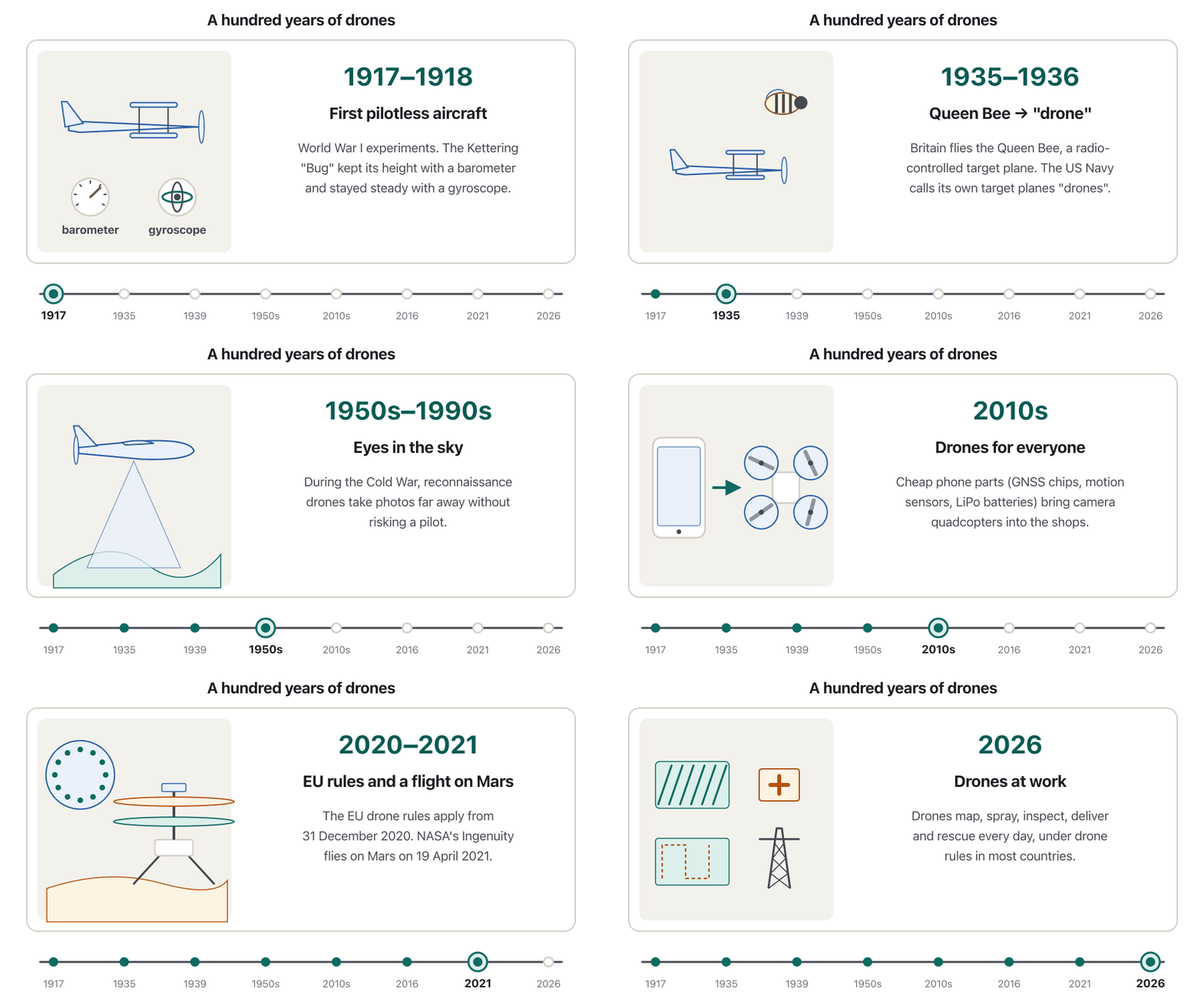
Drones have about a hundred years of history, in three big steps:
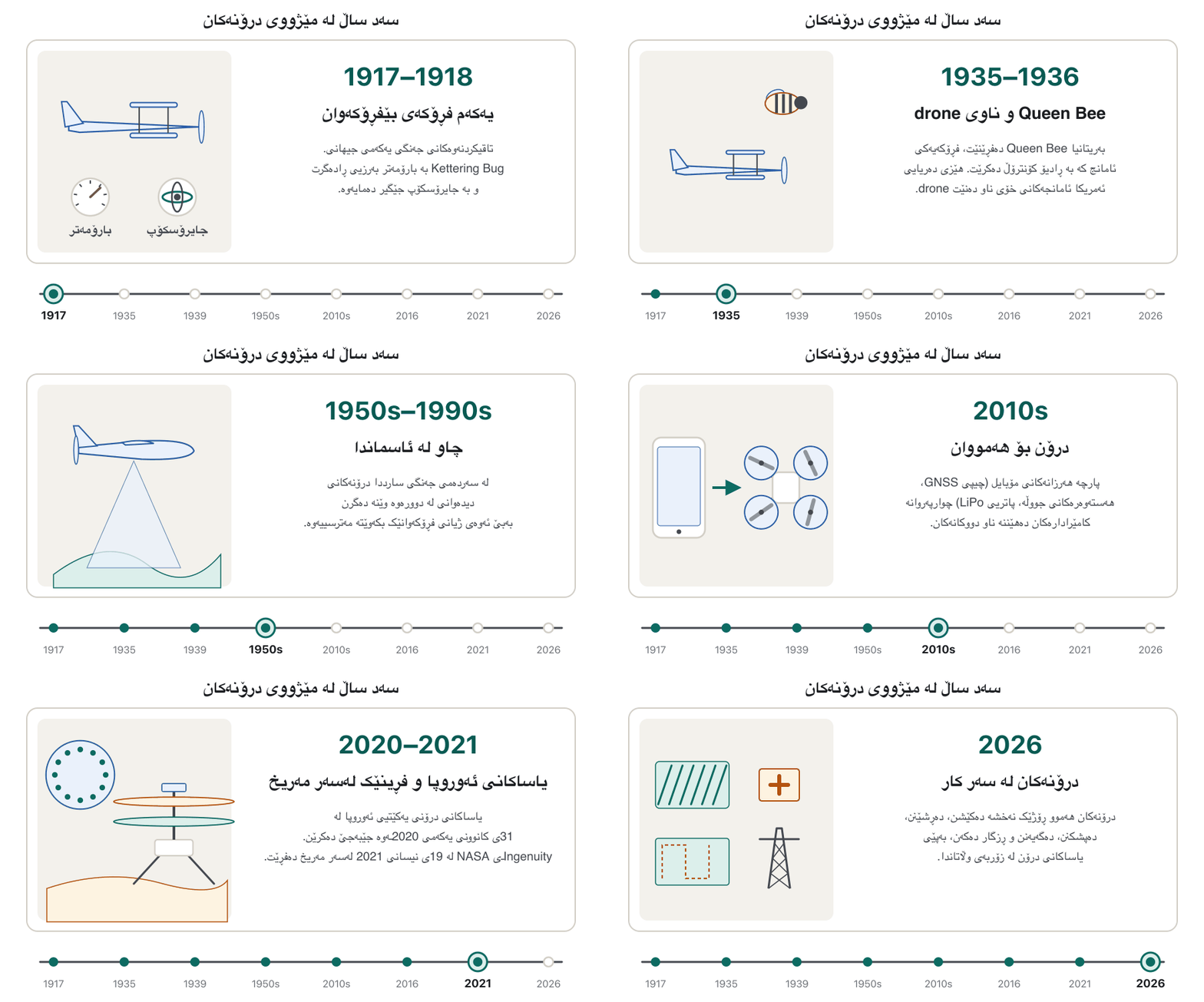
نزیکەی سەد ساڵ مێژوویان هەیە، بە سێ هەنگاوی گەورە:
- 1910s–1940s, early beginnings: remote-controlled aircraft were tried in World War I and built in large numbers in World War II, mainly as flying targets for training.
- 1950s–1990s, military development: during the Cold War, armies built reconnaissance drones that took photographs far away without risking a pilot.
- 2000s–today, commercial expansion: parts became smaller (miniaturisation), batteries became better and prices fell, so companies and ordinary people began to use drones.
- دەیەی 1910 تا 1940، سەرەتاکان: فڕۆکەی کۆنترۆڵکراو لە دوورەوە لە جەنگی یەکەمی جیهانیدا تاقی کرانەوە و لە جەنگی دووەمی جیهانیدا بە ژمارەی زۆر دروست کران، بە زۆری وەک ئامانجی فڕیو بۆ ڕاهێنان.
- دەیەی 1950 تا 1990، گەشەی سەربازی: لە سەردەمی جەنگی سارددا سوپاکان دروست کرد کە لە دوورەوە وێنەیان دەگرت بەبێ ئەوەی ژیانی فڕۆکەوانێک بخەنە مەترسییەوە.
- دەیەی 2000 تا ئەمڕۆ، بڵاوبوونەوەی بازرگانی: پارچەکان بچووکتر بوون (بچووککردنەوە)، باشتر بوون و نرخەکان دابەزین، بۆیە کۆمپانیا و خەڵکی ئاسایی دەستیان کرد بە بەکارهێنانی .
A short historyمێژوویەکی کورت
1910s–1940s: flying targetsدەیەی 1910 تا 1940: ئامانجی فڕیو
The first aircraft without a pilot were experiments of World War I. The American Kettering "Bug" of 1918 is a good example: it held its height with a barometer (an air-pressure meter) and stayed steady with a gyroscope. It never flew in battle, but today's drones still use the same two kinds of sensor.
یەکەم ئەو فڕۆکانەی فڕۆکەوانیان تێدا نەبوو تاقیکردنەوەکانی جەنگی یەکەمی جیهانی بوون. Kettering Bugـی ئەمریکی لە ساڵی 1918 نموونەیەکی باشە: بە (پێوەری ) بەرزیی خۆی ڕادەگرت و بە جێگیر دەمایەوە. هەرگیز لە جەنگدا نەفڕی، بەڵام ئەمڕۆ هێشتا هەمان دوو جۆری بەکار دەهێنن.
Radio control then made reusable target drones possible: anti-aircraft gunners could practise on a real flying target instead of only on a cloth target towed behind a piloted plane. The American company Radioplane built them for the US Army: about 15,000 were made during World War II. They were launched by catapult and, if they survived, came back down under a parachute.
پاشان کۆنترۆڵی ڕادیۆیی ئامانجی ممکن کرد کە دەکرا دووپاتە بەکار بهێنرێنەوە: تەقەکەرانی دژەفڕۆکە دەیانتوانی لەسەر ئامانجێکی ڕاستەقینەی فڕیو ڕاهێنان بکەن، نەک تەنیا لەسەر پارچە قوماشێک کە فڕۆکەیەکی فڕۆکەواندار بە دوای خۆیدا ڕایدەکێشا. کۆمپانیای ئەمریکیی Radioplane ئەم ئامانجانەی بۆ سوپای ئەمریکا دروست دەکرد: لە ماوەی جەنگی دووەمی جیهانیدا نزیکەی 15 هەزار دانە دروست کران. بە ئامێری هاویشتن (catapult) هەڵدەدران و ئەگەر تێک نەشکابان، بە پەڕەشووت دەهاتنەوە خوارەوە.
A short historyمێژوویەکی کورت
2000s–2026: drones for everyoneدەیەی 2000 تا 2026: درۆن بۆ هەمووان
From the 2000s, miniaturisation changed everything. Smartphones made exactly the parts a drone needs — satellite-positioning (GNSS) chips, tiny motion sensors, cameras, fast processors and light LiPo batteries — small and cheap. By the early 2010s, ready-to-fly camera quadcopters filled the shops. Then new uses and rules followed:
لە دەیەی 2000ـەوە بچووککردنەوە هەموو شتێکی گۆڕی. ڕێک ئەو پارچانەیان بچووک و هەرزان کرد کە پێویستیەتی: چیپی ، جووڵەی زۆر بچووک، کامێرا، پرۆسێسەری خێرا و کە سووکن. لە سەرەتای دەیەی 2010دا کامێرادارەکان کە ئامادەی فڕین بوون دووکانەکانیان پڕ کرد. پاشان بەکارهێنانی نوێ و یاسا هاتن:
- 2016: Rwanda started the world's first national drone delivery service, flying blood to hospitals (October); the USA's small-drone rules, Part 107, came into force (August).
- 2020–2021: the European Union's drone rules applied from 31 December 2020; NASA's helicopter Ingenuity made the first powered flight on another planet (read more).
- 2026: drones map, spray, inspect, deliver and rescue every day, and most countries have drone rules.
- 2016: ڕواندا یەکەم خزمەتگوزاریی نیشتمانیی لە جیهاندا دەست پێکرد و خوێنی بۆ نەخۆشخانەکان دەگەیاند (تشرینی یەکەم)؛ یاساکانی بچووکی ئەمریکا، Part 107، کەوتنە بواری جێبەجێکردنەوە (ئاب).
- 2020 تا 2021: یاساکانی یەکێتیی ئەوروپا لە 31ی کانوونی یەکەمی 2020ـەوە جێبەجێ کران؛ هەلیکۆپتەرەکەی NASA بە ناوی Ingenuity یەکەم فڕینی بە بزوێنەری لەسەر هەسارەیەکی تر ئەنجام دا (زیاتر بخوێنەرەوە).
- 2026: هەموو ڕۆژێک نەخشە دەکێشن، دەڕشێنن، دەپشکنن، دەگەیەنن و ڕزگار دەکەن و زۆربەی وڵاتان یاسای هەیە.
Abbreviations you will meetئەو کورتکراوانەی دەیانبینیت
These are the first drone abbreviations you will meet; each has its own lesson. Do not mix up the last two: points on the ground whose exact positions are known are ground control points (GCPs), while Kp (with a small p) is a space-weather number that pilots check before flying.
ئەمانە یەکەم کورتکراوەکانی بواری کە دەیانبینیت؛ هەریەکەیان وانەی خۆی هەیە. دوو دواییەکان تێکەڵ مەکە: بەو خاڵانەی سەر زەوی کە شوێنی وردیان زانراوە دەوترێت ، بەڵام Kp (بە pـی بچووک) ژمارەیەکی کەشوهەوای بۆشایی ئاسمانە کە فڕۆکەوانان پێش فڕین دەیپشکنن.
| Abbreviationکورتکراوە | Meaningواتا | Learn moreزیاتر |
|---|---|---|
| UAV / UA | Unmanned aerial vehicle / unmanned aircraft: only the aircraftunmanned aerial vehicle / unmanned aircraft: تەنیا فڕۆکەکە | UAV, UAS and RPASUAV، UAS و RPAS |
| UAS | Unmanned aircraft system: aircraft + ground control station + C2 link + people: فڕۆکە + + + مرۆڤ | UAV, UAS and RPASUAV، UAS و RPAS |
| RPAS | Remotely piloted aircraft system: ICAO's name for a UAS flown by a remote pilot: ناوی بۆ کە دەیفڕێنێت | The UAS familyخێزانی UAS |
| FPV | First-person view: live video from the drone's camera to goggles or a screen: ڤیدیۆی ڕاستەوخۆ لە کامێرای بۆ چاویلکە یان شاشە | Radio links and FPVپەیوەندییە ڕادیۆییەکان و FPV |
| ESC | Electronic speed controller: drives one motor at the speed the flight controller asks for: یەک بەو خێراییە دەخاتە کار کە داوای دەکات | Inside a droneناوەوەی درۆن |
| GCP | Ground control point: a marked point on the ground with an exactly known position; makes drone maps accurate: نیشانەیەک لەسەر زەوی کە شوێنەکەی بە وردی زانراوە؛ نەخشەی ورد دەکات | Payloads and mappingبار و نەخشەکێشان |
| Kp | Kp index: 0–9 scale of geomagnetic storms from the Sun; 5 or more can spoil GNSS positions: ژمارەیەک لە 0 تا 9 بۆ ئەو زریانە موگناتیسییانەی خۆر دروستیان دەکات؛ 5 و زیاتر دەتوانێت ئەو شوێنانە تێک بدات کە دیاریان دەکات | Navigation and failsafesڕێنیشاندان و سەلامەتی |
Common mistakesهەڵە باوەکان
| Mistakeهەڵە | Betterباشتر |
|---|---|
| "A drone has no pilot."« فڕۆکەوانی نییە.» | A drone has no pilot on board. A remote pilot flies it or supervises its autopilot and is responsible for the flight. فڕۆکەوانی لە ناودا نییە. دەیفڕێنێت یان سەرپەرشتیی دەکات و بەرپرسیاری فڕینەکەیە. |
| "UAV and UAS mean the same thing."«UAV و UAS هەمان واتایان هەیە.» | UAV (UA) is the aircraft. UAS is the whole system: aircraft, ground control station, C2 link and people.UAV (UA) فڕۆکەکەیە. هەموو سیستەمەکەیە: فڕۆکە، ، و مرۆڤ. |
| "Drones are only military."« تەنیا سەربازین.» | They began as military targets and scouts, but today most do civil work: farming, mapping, inspection, delivery, filming and rescue.وەک ئامانج و بۆ سەربازی دەستیان پێکرد، بەڵام ئەمڕۆ زۆربەیان کاری مەدەنی دەکەن: کشتوکاڵ، نەخشەکێشان، پشکنین، گەیاندن، وێنەگرتن و ڕزگارکردن. |
| "On autopilot, nobody is in charge."«کاتێک دەیفڕێنێت، کەس بەرپرسیار نییە.» | A person stays responsible and can take over or stop the flight.کەسێک بەرپرسیار دەمێنێتەوە و دەتوانێت کۆنترۆڵ وەربگرێتەوە یان فڕینەکە ڕابگرێت. |
| "DRONE is an abbreviation."«DRONE کورتکراوەیە.» | It is an old English word for a male bee; in 1936 the capitals marked a code name.وشەیەکی کۆنی ئینگلیزییە بۆ هەنگی نێر؛ لە ساڵی 1936دا پیتە گەورەکان نیشانەی ناوێکی ڕەمزی بوون. |
| "Drones were invented in the 1990s."« لە دەیەی 1990دا داهێنران.» | The first pilotless aircraft flew in the 1910s, and target drones were mass-produced in World War II.یەکەم فڕۆکەی بێفڕۆکەوان لە دەیەی 1910دا فڕی و ئامانج لە جەنگی دووەمی جیهانیدا بە ژمارەی زۆر دروست کران. |
Exercisesڕاهێنانەکان
Look at the six pictures. Put each number under one heading: aircraft (UA), ground control station, C2 link or people.
سەیری شەش وێنەکە بکە. هەر ژمارەیەک لە ژێر یەکێک لەم ناونیشانانەدا دابنێ: فڕۆکە (UA)، ، یان مرۆڤ.
Show answerوەڵامەکە پیشان بدە
- Aircraft (UA): 1 and 2 — a multirotor and a fixed-wing drone are both unmanned aircraft.
- Ground control station: 3 (the controller) and 4 (the laptop with ground-station software).
- C2 link: 5, the two-way radio link.
- People: 6, the remote pilot. All six together make up a UAS.
- فڕۆکە (UA): 1 و 2 — و هەردووکیان فڕۆکەن و فڕۆکەوانیان تێدا نییە.
- : 3 () و 4 (لاپتۆپەکە بە وێستگەی زەمینییەوە).
- : 5، پەیوەندییە ڕادیۆییە دوو ئاراستەییەکە.
- مرۆڤ: 6، . هەر شەشیان پێکەوە پێک دەهێنن.
Put these events in order, from oldest to newest: (a) Ingenuity flies on Mars; (b) about 15,000 Radioplane target drones are built; (c) Rwanda starts national drone delivery of blood; (d) the Kettering Bug flies; (e) the US Navy starts calling its targets "drones"; (f) Cold War reconnaissance drones; (g) camera quadcopters fill the shops.
ئەم ڕووداوانە لە کۆنترینەوە بۆ نوێترین بە ڕیز دابنێ: (أ) Ingenuity لەسەر مەریخ دەفڕێت؛ (ب) نزیکەی 15 هەزار ئامانجی Radioplane دروست دەکرێن؛ (ج) ڕواندا گەیاندنی نیشتمانیی خوێن بە دەست پێدەکات؛ (د) Kettering Bug دەفڕێت؛ (ه) هێزی دەریایی ئەمریکا ئامانجەکانی ناو دەنێت «drone»؛ (و) سەردەمی جەنگی سارد؛ (ز) کامێرادارەکان دووکانەکان پڕ دەکەن.
Show answerوەڵامەکە پیشان بدە
- d — the Kettering Bug (1918)
- e — the name "drone" (1936)
- b — Radioplane target drones (1939–1945)
- f — Cold War reconnaissance drones (1950s–1990s)
- g — camera quadcopters (early 2010s)
- c — blood delivery in Rwanda (2016)
- a — Ingenuity on Mars (2021)
- د — Kettering Bug (1918)
- ه — ناوی «drone» (1936)
- ب — ئامانجی Radioplane (1939 تا 1945)
- و — جەنگی سارد (دەیەی 1950 تا 1990)
- ز — کامێرادارەکان (سەرەتای دەیەی 2010)
- ج — گەیاندنی خوێن لە ڕواندا (2016)
- أ — Ingenuity لەسەر مەریخ (2021)
A friend says: "A drone is a robot plane with no human involved at all, and drones are only used by armies." Correct both parts in two or three sentences.
هاوڕێیەکت دەڵێت: « فڕۆکەیەکی ڕۆبۆتییە کە هیچ مرۆڤێکی تێدا بەشدار نییە و تەنیا سوپاکان بەکاریان دەهێنن.» هەردوو بەشەکە بە دوو یان سێ ڕستە ڕاست بکەرەوە.
Hintئاماژە
Think about "on board" and about the six jobs at the start of the lesson.
بیر لە «لە ناودا» و لەو شەش کارەی سەرەتای وانەکە بکەرەوە.
Show answerوەڵامەکە پیشان بدە
A drone has no pilot on board, but people are always involved: a remote pilot flies it or supervises its autopilot and is responsible for the flight, and the UAS also includes the ground control station and the C2 link. Drones started as military targets and scouts, but today most of them do civil work such as farming, mapping, inspection, delivery, filming and search and rescue.
فڕۆکەوانی لە ناودا نییە، بەڵام مرۆڤ هەمیشە بەشدارە: دەیفڕێنێت یان سەرپەرشتیی دەکات و بەرپرسیاری فڕینەکەیە، هەروەها و دەگرێتەوە. وەک ئامانج و بۆ سەربازی دەستیان پێکرد، بەڵام ئەمڕۆ زۆربەیان کاری مەدەنی دەکەن، وەک کشتوکاڵ، نەخشەکێشان، پشکنین، گەیاندن، وێنەگرتن و .
Write one English sentence each with "unmanned", "remote pilot" and "drone delivery". You can practise more emerging-technology words in Key words: connected world.
بۆ هەر یەکێک لە «unmanned»، «remote pilot» و «drone delivery» ڕستەیەکی ئینگلیزی بنووسە. دەتوانیت وشەی زیاتری تەکنەلۆجیای نوێ لە وشە سەرەکییەکان: جیهانی پەیوەندیدار ڕاهێنان بکەیت.
Show answerوەڵامەکە پیشان بدە
- An unmanned aircraft has no pilot on board.
- The remote pilot watches the drone and can take control at any moment.
- Drone delivery can bring blood to a hospital in a few minutes.
- فڕۆکەیەکی unmanned فڕۆکەوانی لە ناودا نییە.
- remote pilot سەیری دەکات و هەر ساتێک بیەوێت دەتوانێت کۆنترۆڵ بگرێتە دەست.
- drone delivery دەتوانێت لە چەند خولەکێکدا خوێن بگەیەنێتە نەخۆشخانەیەک.
Summaryپوختە
- A drone is an aircraft with no pilot on board, flown by a remote pilot or by its autopilot; a person is always responsible.
- The word first meant a male honeybee; the US Navy used it for radio-controlled targets from 1936, probably after Britain's Queen Bee.
- Drones range from about 30 g to about 11.6 t; the EU sorts small ones into class marks C0 to C4 by weight.
- UAV/UA = the aircraft; UAS = aircraft + ground control station + C2 link + people; RPAS = ICAO's name for the remotely piloted kind.
- History: flying targets (1910s–1940s), reconnaissance (1950s–1990s), then cheap phone parts, delivery and rules (2000s–2026).
- فڕۆکەیەکە کە فڕۆکەوانی لە ناودا نییە و یان دەیفڕێنێت؛ کەسێک هەمیشە بەرپرسیارە.
- وشەکە سەرەتا واتای هەنگی نێر بوو؛ هێزی دەریایی ئەمریکا لە ساڵی 1936ـەوە بۆ ئامانجی ڕادیۆیی بەکاری هێنا، بە ئەگەری زۆر لەسەر نموونەی Queen Beeـی بەریتانیا.
- لە نزیکەی 30 گرامەوە تا نزیکەی 11.6 تەنن؛ یەکێتیی ئەوروپا بچووکەکانیان بەپێی کێش بەسەر C0 تا C4دا دابەش دەکات.
- UAV/UA = فڕۆکەکە؛ = فڕۆکە + + + مرۆڤ؛ = ناوی بۆ جۆرە لە دوورەوە فڕێنراوەکە.
- مێژوو: ئامانجی فڕیو (دەیەی 1910 تا 1940)، (دەیەی 1950 تا 1990)، پاشان پارچەی هەرزانی مۆبایل، گەیاندن و یاسا (دەیەی 2000 تا 2026).
Why is "drone" not the same as "UAS"?بۆچی درۆن و سیستەمی فڕۆکەی بێفڕۆکەوان هەمان شت نین؟
"Drone" (UA) names the aircraft only. UAS names the whole system: the aircraft, the ground control station, the C2 link and the people.
(UA) تەنیا ناوی فڕۆکەکەیە. ناوی هەموو سیستەمەکەیە: فڕۆکەکە، ، و مرۆڤەکان.
What makes a UAS an RPAS?چی سیستەمێکی فڕۆکەی بێفڕۆکەوان دەکاتە سیستەمی فڕۆکەی لە دوورەوە فڕێنراو؟
A remote pilot flies it or can take control at any moment. If no pilot can intervene, the aircraft is autonomous, not remotely piloted.
دەیفڕێنێت یان هەر ساتێک بیەوێت دەتوانێت کۆنترۆڵی بگرێتە دەست. ئەگەر هیچ فڕۆکەوانێک نەتوانێت دەست تێوەربدات، فڕۆکەکە ، نەک لە دوورەوە فڕێنراو.
What were the first drones used for?یەکەم درۆنەکان بۆ چی بەکار دەهێنران؟
Mostly as flying targets for training anti-aircraft gunners, after experiments in World War I.
زیاتر وەک ئامانجی فڕیو بۆ ڕاهێنانی تەقەکەرانی دژەفڕۆکە، دوای تاقیکردنەوەکانی جەنگی یەکەمی جیهانی.
Name three changes that brought drones to ordinary people.سێ گۆڕانکاری ناو ببە کە درۆنەکانیان گەیاندە خەڵکی ئاسایی.
Smaller parts (miniaturisation, from smartphones), better batteries and lower prices.
پارچەی بچووکتر (بچووککردنەوە، لە )، باشتر و نرخی کەمتر.
Lesson complete!وانەکە تەواو بوو!
Well done. Review the key terms, then go on to the next lesson.دەستخۆش. سەیرێکی زاراوە سەرەکییەکان بکەرەوە، پاشان بڕۆ بۆ وانەی داهاتوو.
Key termsزاراوە سەرەکییەکان
Types of Drones: Multirotors, Fixed Wings, Helicopters and VTOLجۆرەکانی درۆن: فرەپەروانە، درۆنی باڵجێگیر، هەلیکۆپتەری بێفڕۆکەوان و VTOL
Related lecturesوانە پەیوەندیدارەکان
- Emerging Technologies: IoT, VR/AR, Robots and Blockchainتەکنەلۆجیا نوێیەکان: ئینتەرنێتی شتەکان، ڕاستیی گریمانەیی/ڕاستیی زیادکراو، ڕۆبۆتەکان و بلۆکچەین
- Types of Drones: Multirotors, Fixed Wings, Helicopters and VTOLجۆرەکانی درۆن: فرەپەروانە، درۆنی باڵجێگیر، هەلیکۆپتەری بێفڕۆکەوان و VTOL
- Drone Rules in 2026: ICAO, the USA, Europe and Your Countryیاساکانی درۆن لە 2026دا: ICAO، ئەمریکا، ئەورووپا و وڵاتی خۆت
- Autonomy, Swarms, Air Taxis and the Future of Dronesسەربەخۆیی، ڕەوەکانی درۆن، تەکسییە ئاسمانییەکان و داهاتووی درۆنەکان
- What Is Military AI?ژیریی دەستکردی سەربازی چییە؟
- Emerging Technologiesتەکنەلۆجیا نوێکان
References and further readingسەرچاوەکان و خوێندنەوەی زیاتر
- ICAO: Frequently used terms (UA, UAS, RPA, RPAS, remote pilot, C2 link)
- ICAO (March 2017): RPAS Concept of Operations for International IFR Operations (RPAS as a subset of UAS; autonomous and model aircraft)
- ICAO: Unmanned aviation
- 14 CFR 107.3: Definitions (unmanned aircraft, control station, visual observer)
- Language Log: Drones, the linguistic history (OED senses and the 1936 US Navy citation)
- Ben Zimmer, Vocabulary.com Word Routes: How "drone" got off the ground (Queen Bee, 1935-1936)
- Smithsonian National Air and Space Museum: Gyroscope autopilot, Kettering Liberty Eagle "Bug"
- Guinness World Records: First mass-produced target drone (Radioplane OQ-2)
- Foreign Policy (29 April 2013): Epiphanies from Chris Anderson (drones and smartphone parts)
- Gavi (14 October 2016): Rwanda launches world's first national drone delivery service
- GPS World (29 August 2016): New FAA rules for small unmanned aircraft now in effect
- EASA FAQ: Regulations for UAS (drones) explained (applicable from 31 December 2020)
- EASA: Open category, class marks C0-C4
- NASA: Global Hawk (wingspan 35.4 m, maximum take-off weight 25,600 lb)
- Bitcraze: Crazyflie 2.1 datasheet (29 g, 92 mm)
- NASA Science: Ingenuity Mars Helicopter
- NOAA SWPC: Planetary K-index
This lecture is a first edition. The Kurdish text and terminology are waiting for review by Kurdish IT teachers.ئەم وانەیە چاپی یەکەمە. دەقە کوردییەکە و زاراوەکانی چاوەڕێی پێداچوونەوەی مامۆستایانی کوردی بواری IT ن.