Chapterبەش 3 · Lectureوانە 3.2
Radio Links: Remote Control, Telemetry, FPV Video and 5Gپەیوەندیی ڕادیۆیی: کۆنترۆڵی دوور، تەلەمەتری، ڤیدیۆی FPV و 5G
How a drone talks to the ground: the three links (control, telemetry, video), the controller and receiver, the licence-free ISM bands, range, line of sight and antennas, telemetry and MAVLink, FPV video (analog or digital) and latency, drones on 4G/5G networks and what 3GPP Release 18 adds, link loss, and how links are attacked and protected.
چۆن لەگەڵ زەوی قسە دەکات: سێ پەیوەندییەکە (کۆنترۆڵ، ، ڤیدیۆ)، و وەرگر، ، مەودا، هێڵی بینین و ، و MAVLink، ڤیدیۆی FPV ( یان ) و ، لەسەر ڕایەڵەکانی 4G/5G و ئەوەی 3GPP Release 18 زیادی دەکات، پچڕانی پەیوەندی و چۆن هێرش دەکرێتە سەر پەیوەندییەکان و چۆن دەپارێزرێن.
What you will learnچی فێر دەبیت
- Name a drone's three radio links and say what each carries and needs.
- Explain channels, binding and the chain from the sticks to the motors.
- Choose suitable bands and antennas, and explain line of sight and why range falls with distance.
- Describe telemetry and MAVLink, FPV video and its latency, and calculate the distance flown blind.
- Explain the benefits and limits of 4G/5G drone links and the main threats to drone links and their defences.
- سێ پەیوەندیی ڕادیۆیی ناو ببەیت و بڵێیت هەریەکەیان چی دەگوازێتەوە و چی پێویستە.
- کەناڵ، جووتکردن و زنجیرەی دەسکەکان تا ڕوون بکەیتەوە.
- باند و گونجاو هەڵبژێریت و هێڵی بینین و بۆچی مەودا بە دووری کەم دەبێتەوە ڕوون بکەیتەوە.
- باسی و MAVLink، ڤیدیۆی FPV و بکەیت و دووریی فڕینی کوێرانە هەژمار بکەیت.
- سوود و سنوورەکانی پەیوەندیی 4G/5Gـی و مەترسییە سەرەکییەکانی سەر پەیوەندییەکان و بەرگرییەکانیان ڕوون بکەیتەوە.
Three invisible linksسێ پەیوەندیی نەبینراو
A drone's communication systems let the pilot send control inputs and let the drone send data back. In practice that is three jobs, often done by three separate radio links:
سیستەمەکانی پەیوەندیی وا دەکەن فڕۆکەوان فەرمانی کۆنترۆڵ بنێرێت و داتا بگەڕێنێتەوە. لە ڕاستیدا ئەمە سێ کارە و زۆرجار سێ پەیوەندیی ڕادیۆیی جیا ئەنجامیان دەدەن:
- Control, mainly up: the C2 link. The stick and switch positions go from the remote controller to the drone, many times a second; the drone's basic status can come back on the same link.
- Telemetry, both ways. Status goes down (battery, position, height, mode, warnings) and missions or settings go up, between the drone and a ground control station.
- Video, down. The camera picture goes to the pilot's goggles or screen.
- کۆنترۆڵ، زۆرتر بۆ سەرەوە: . شوێنی دەسک و کلیلەکان لە دەچن بۆ ، چەندین جار لە چرکەیەکدا؛ باری سەرەکیی دەتوانێت بە هەمان پەیوەندی بگەڕێتەوە.
- ، بە هەردوو ئاڕاستە. باری دێتە خوارەوە (، شوێن، بەرزی، دۆخ، ئاگادارکردنەوەکان) و ئەرک یان ڕێکخستنەکان دەچنە سەرەوە، لە نێوان و .
- ڤیدیۆ، بۆ خوارەوە. وێنەی کامێراکە دەچێت بۆ چاویلکە یان شاشەی فڕۆکەوانەکە.
The three jobs need different things. Control needs very little data but must arrive quickly and reliably; video needs a lot of data quickly; telemetry needs reliability more than speed. That is why they often use different radio bands, although many modern systems combine two or all three on one link.
ئەم سێ کارە پێداویستیی جیاوازیان هەیە. کۆنترۆڵ داتای زۆر کەمی پێویستە، بەڵام دەبێت خێرا و بە دڵنیاییەوە بگات؛ ڤیدیۆ داتای زۆری بە خێرایی پێویستە؛ دڵنیایی لە خێرایی گرنگترە بۆی. بۆیە زۆرجار ڕادیۆیی جیاواز بەکار دەهێنن، هەرچەندە زۆر سیستەمی نوێ دوو یان هەر سێکیان لەسەر یەک پەیوەندی کۆ دەکەنەوە.
Remote controller and receiverکۆنترۆڵی دوور و وەرگری ڕادیۆ
The turns every stick and switch into a number called a channel: usually 1 roll, 2 pitch, 3 throttle and 4 yaw, with switches on channel 5 and up for flight modes, return-to-home or the camera (the sticks). ArduPilot needs at least 5 channels, and 8 to 16 are common. The controller's radio sends all the channels to a receiver in the drone, which hands them to the flight controller through a serial such as CRSF or SBUS. CRSF works both ways, so the same wires also carry telemetry back to the controller's screen.
هەر دەسک و کلیلێک دەکات بە ژمارەیەک کە پێی دەڵێن کەناڵ: زۆرجار 1 ، 2 ، 3 و 4 . کلیلەکانیش لە کەناڵی 5 بەرەو سەرەوە بۆ ، یان کامێرا بەکاردێن (دەسکەکان). ArduPilot لانیکەم 5 کەناڵی پێویستە و 8 تا 16 کەناڵ باوە. ڕادیۆی کۆنترۆڵەکە هەموو کەناڵەکان دەنێرێت بۆ لە ناو و ئەویش بە زنجیرەیی وەک CRSF یان SBUS دەیانداتە . CRSF بە هەردوو ئاڕاستە کار دەکات، بۆیە هەمان وایەرەکان دەگەڕێننەوە بۆ شاشەی کۆنترۆڵەکە.
Speed matters for control. ExpressLRS, a popular open-source link for the 2.4 GHz and 900 MHz bands, is built on Semtech's LoRa radio chips and can use LoRa's chirp modulation (Chirp spread spectrum). It can send up to 1,000 packets a second, so a new stick position reaches the drone about a millisecond later.
خێرایی بۆ کۆنترۆڵ گرنگە. ExpressLRS، پەیوەندییەکی بەناوبانگ بۆ باندەکانی 2.4 GHz و 900 MHz، لەسەر ڕادیۆی LoRaـی Semtech دروست کراوە و دەتوانێت chirpـی LoRa بەکار بهێنێت (شەبەنگی بڵاوکراوەی جریوەیی). دەتوانێت تا 1,000 لە چرکەیەکدا بنێرێت، بۆیە شوێنی نوێی دەسکێک نزیکەی یەک میلیچرکە دواتر دەگاتە .
Remote controller and receiverکۆنترۆڵی دوور و وەرگری ڕادیۆ
Binding and rangeجووتکردن و مەودا
Binding pairs one receiver with one controller. After binding, the receiver listens only to its own controller and ignores the others flying at the same field. Binding is pairing, not secrecy: protection against eavesdropping and fake commands needs encryption and signing (Keeping links secure).
جووتکردن یەک وەرگر بە یەک دەبەستێت. دوای جووتکردن، وەرگرەکە تەنیا گوێ لە کۆنترۆڵەکەی خۆی دەگرێت و گوێ بەوانی تر نادات کە لە هەمان شوێندا دەفڕن. جووتکردن پێکەوەبەستنە، نەک نهێنی: پاراستن لە و فەرمانی ساختە پێویستی بە و واژوو هەیە (پاراستنی پەیوەندییەکان).
ArduPilot groups radio systems by range: short (up to 2 km), medium (2 to 10 km) and long (over 10 km), and notes that real range depends on the antennas, the ground and the weather. Telemetry sent over the control link is slower and often reaches less far than control itself. Whatever the radio can do, the law usually limits you to the distance at which you can still see the drone (VLOS).
ArduPilot سیستەمە ڕادیۆییەکان بەپێی مەودا پۆلێن دەکات: کورت (تا 2 کیلۆمەتر)، مامناوەند (2 تا 10 کیلۆمەتر) و درێژ (زیاتر لە 10 کیلۆمەتر) و دەڵێت مەودای ڕاستەقینە بەندە بە ، زەوی و کەشوهەوا. ئەو لە ڕێگەی پەیوەندیی کۆنترۆڵەوە دەنێردرێت خاوترە و زۆرجار کەمتر لە خودی کۆنترۆڵ دەگات. هەرچەندە ڕادیۆکە بتوانێت، یاسا زۆرجار سنووردارت دەکات بەو دوورییەی کە هێشتا دەبینیت (هێڵی بینینی چاو).
Which radio waves?کام شەپۆلە ڕادیۆییەکان؟
Most hobby and camera drones use the licence-free . The ITU's Radio Regulations set aside 2,400–2,500 MHz and 5,725–5,875 MHz worldwide, and 902–928 MHz in the Americas, for industrial, scientific and medical machines; radio users there must accept interference from those machines, and each country sets the power limits and allowed channels. So drones share 2.4 GHz with Wi-Fi, Bluetooth and microwave ovens, and 5.8 GHz with Wi-Fi (Wireless media, Wi-Fi generations). Long-range control links use sub-GHz bands: 868 MHz in Europe and 915 MHz in the Americas, the same licence-free bands that LoRa sensors use (Licence-free bands: ISM and SRD).
زۆربەی سەرگەرمی و وێنەگرتن بەکار دەهێنن. یاساکانی ڕادیۆی ITU مەودای 2,400 تا 2,500 MHz و 5,725 تا 5,875 MHz لە هەموو جیهان و 902 تا 928 MHz لە ئەمریکا بۆ ئامێرە پیشەسازی، زانستی و پزیشکییەکان تەرخان کردووە؛ بەکارهێنەرانی ڕادیۆ لەوێ دەبێت ئەو ئامێرانە قبووڵ بکەن و هەر وڵاتێک سنووری هێز و کەناڵە ڕێگەپێدراوەکان دیاری دەکات. بۆیە 2.4 GHz لەگەڵ ، و فڕنی مایکرۆوەیڤ و 5.8 GHz لەگەڵ بەش دەکەن (میدیای بێتەل، نەوەکانی وایفای). پەیوەندیی کۆنترۆڵی دوورمەودا باندی خوار GHz بەکار دەهێنێت: 868 MHz لە ئەوروپا و 915 MHz لە ئەمریکا؛ ئەمانە هەمان کە LoRa بەکاریان دەهێنن (باندە بێمۆڵەتەکان: ISM و SRD).
Lower frequencies reach farther and get around obstacles better, but need bigger antennas and carry less data: good for control and telemetry. Higher frequencies carry more data, such as HD video, but are blocked more easily. Where the rules allow it, some video links also use 5.1 GHz. The same trade-off decides which radio an IoT device uses (Choosing a wireless technology).
نزمتر دوورتر دەڕوات و باشتر بە دەوری بەربەستەکاندا دەسووڕێتەوە، بەڵام گەورەتری پێویستە و داتای کەمتر هەڵدەگرێت: باشە بۆ کۆنترۆڵ و . بەرزتر داتای زیاتر هەڵدەگرێت، وەک ڤیدیۆی HD، بەڵام زووتر دەگیرێت. لەو شوێنانەی یاسا ڕێگە دەدات، هەندێک پەیوەندیی ڤیدیۆ 5.1 GHzـیش بەکار دەهێنن. هەمان هاوسەنگی بڕیار دەدات ئامێرێکی IoT کام ڕادیۆ بەکار بهێنێت (هەڵبژاردنی تەکنەلۆجیای بێتەل).
Range and line of sightمەودا و هێڵی بینین
At 2.4 and 5.8 GHz, radio works best with a clear, straight path between the antennas. Hills, buildings, trees, the drone's own carbon frame and even people's bodies weaken it. Distance costs too: in open air the received power falls with the square of the distance, so flying twice as far leaves only a quarter of the power. A drone that drops behind a hill or a building can lose its link even when it is close; climbing usually brings the link back.
لە 2.4 و 5.8 GHzـدا ڕادیۆ باشترین کار دەکات کاتێک ڕێگەیەکی ڕاست و ئاشکرا لە نێوان هەبێت. گرد، باڵەخانە، دار، چوارچێوە کاربۆنییەکەی خودی و تەنانەت جەستەی خەڵکیش لاوازی دەکەن. دووریش نرخی هەیە: لە هەوای کراوەدا توانای وەرگیراو بە دووجای دووری کەم دەبێتەوە، بۆیە فڕین بۆ دوو هێندە دوورتر تەنیا چارەکێکی توانا دەهێڵێتەوە. کە دەچێتە پشت گردێک یان باڵەخانەیەکەوە دەشێت پەیوەندییەکەی لەدەست بدات تەنانەت کاتێک نزیکیشە؛ بەرزبوونەوە زۆرجار پەیوەندییەکە دەگەڕێنێتەوە.
Watch the link numbers on your screen: RSSI (the signal strength) and LQ (link quality, the share of packets that arrive). When they fall, turn back before the link is lost.
سەیری ژمارەکانی پەیوەندی لەسەر شاشەکەت بکە: RSSI (بەهێزیی ) و LQ (کوالیتیی پەیوەندی، ئەو ڕێژەیەی کە دەگەن). کاتێک کەم دەبنەوە، پێش ئەوەی پەیوەندییەکە بپچڕێت بگەڕێوە.
Range and line of sightمەودا و هێڵی بینین
Antennas: where the signal goesئەنتێناکان: سیگناڵ بۆ کوێ دەچێت
Most drone antennas are omnidirectional dipoles. They send all around their sides, in a doughnut shape, and very little off their tips. So never point the tip of the controller's antenna at the drone: point its side. Keep both antennas the same way up; a 90° mismatch of their polarisation loses much of the signal. Directional antennas, such as a patch, reach farther, but only where they point.
زۆربەی دووجەمسەریی هەمەلایەنەن. بە دەوری لاکانیاندا، بە شێوەی کولێرە، دەنێرن و لە سەرەکانیانەوە زۆر کەم. بۆیە هەرگیز سەری کۆنترۆڵەکە ڕووەو مەکە: لاکەی ڕووەو بکە. هەردوو بە هەمان ئاڕاستە ڕابگرە؛ جیاوازیی 90 پلەیی لە زۆربەی لەدەست دەدات. ، وەک پانێڵی (patch)، دوورتر دەڕوات، بەڵام تەنیا بەو لایەی ڕووی تێیەتی.
On the drone, keep the receiver antennas away from carbon fibre, metal and power wires, and mount two antennas at about 90° to each other (diversity) so that one of them always sees the controller well.
لەسەر ، وەرگرەکە لە کاربۆن فایبەر، کانزا و وایەرەکانی کارەبا دوور بخەرەوە و دوو بە نزیکەی 90 پلە لە یەکترەوە دابنێ (جۆراوجۆری، diversity) بۆ ئەوەی یەکێکیان هەمیشە کۆنترۆڵەکە باش ببینێت.
Telemetry and MAVLinkتەلەمەتری و MAVLink
is the drone's report to the ground: battery, position, height, speed, flight mode, number of satellites and warnings, shown on a ground control station such as QGroundControl or Mission Planner (PX4, ArduPilot and ground stations). It travels on its own telemetry radio, often on 433, 868 or 915 MHz (whatever the country allows), or inside the control link. ArduPilot notes telemetry speeds from 56,000 down to 1,000–2,000 bits per second, depending on the system and the distance.
ڕاپۆرتی بۆ سەر زەوی: ، شوێن، بەرزی، خێرایی، ، ژمارەی مانگە دەستکردەکان و ئاگادارکردنەوەکان، کە لەسەر وەک QGroundControl یان Mission Planner پیشان دەدرێن (PX4، ArduPilot و وێستگەکانی کۆنترۆڵی زەمینی). بە ڕادیۆی تایبەت بە خۆی دەڕوات، زۆرجار لەسەر 433، 868 یان 915 MHz (هەرچییەک وڵاتەکە ڕێگە بدات)، یان لە ناو پەیوەندیی کۆنترۆڵدا. ArduPilot دەڵێت خێرایی لە 56,000 تا 1,000 یان 2,000 لە چرکەیەکدایە، بەپێی سیستەم و دووری.
PX4 and ArduPilot speak , a very light message first released in 2009. Its messages are small: MAVLink 2 adds only 12 bytes to each message's data. Every system sends a HEARTBEAT message, usually once a second on radio links; if four or five heartbeats are missed, the other side treats the link as lost. Up to 255 systems can share one MAVLink network, so one ground station can follow several drones.
PX4 و ArduPilot بە قسە دەکەن، نامەی زۆر سووک کە یەکەمجار لە 2009دا بڵاو کرایەوە. نامەکانی بچووکن: MAVLink 2 تەنیا 12 بۆ داتای هەر نامەیەک زیاد دەکات. هەر سیستەمێک نامەیەکی HEARTBEAT (لێدانی دڵ) دەنێرێت، زۆرجار جارێک لە چرکەیەکدا لەسەر پەیوەندییە ڕادیۆییەکان؛ ئەگەر چوار یان پێنج لێدان نەگەن، لاکەی تر پەیوەندییەکە بە پچڕاو دادەنێت. تا 255 سیستەم دەتوانن یەک ڕایەڵەی MAVLink بەش بکەن، بۆیە یەک دەتوانێت چاودێریی چەند بکات.
FPV: seeing through the drone's eyesدیمەنی کەسی یەکەم: بینین بە چاوی درۆن
(first-person view) is a real-time video feed from the drone's own camera to the pilot, on goggles or a screen, so you fly as if you sat inside the drone. The chain is: camera → (VTX) → antenna → goggles with their own receiver and screens. FPV makes precise flying and close inspections easier, but the pilot sees only what the camera sees, not the other aircraft or the people around the drone.
پەخشێکی ڕاستەوخۆی ڤیدیۆیە لە کامێرای خودی بۆ فڕۆکەوان، لەسەر چاویلکە یان شاشەیەک، بۆیە وا دەفڕیت وەک ئەوەی لە ناو دانیشتبیت. زنجیرەکە: کامێرا ← (VTX) ← ← چاویلکە کە وەرگر و شاشەی خۆی هەیە. FPV فڕینی ورد و پشکنینی نزیک ئاسانتر دەکات، بەڵام فڕۆکەوان تەنیا ئەوە دەبینێت کە کامێراکە دەیبینێت، نەک فڕۆکەکانی تر یان ئەو خەڵکەی لە دەوروبەری .
So FPV is not visual line of sight. In the USA the remote pilot or a visual observer must see the drone with their own eyes, glasses allowed, throughout the flight (14 CFR 107.31). In the EU's open category, FPV is allowed only with an observer who stands beside the pilot and watches the drone all the time. The rules are in FPV goggles are not your eyes.
کەواتە FPV نییە. لە ئەمریکا یان دەبێت بە درێژایی فڕینەکە بە چاوی خۆی ببینێت، چاویلکەی پزیشکی ڕێگەپێدراوە (14 CFR 107.31). لە یەکێتیی ئەوروپادا، FPV تەنیا بە ڕێگەپێدراوە کە لە تەنیشت فڕۆکەوانەوە دەوەستێت و هەمیشە سەیری دەکات. یاساکان لە چاویلکەی دیمەنی کەسی یەکەم چاوی تۆ نیندان.
FPV: seeing through the drone's eyesدیمەنی کەسی یەکەم: بینین بە چاوی درۆن
Analog or digital video?ڤیدیۆی ئەنالۆگ یان دیجیتاڵ؟
Analog FPV sends each line of the picture as it comes, so it adds almost no delay, but the picture is grainy and anyone with a receiver on the same channel can watch it. At the edge of range it fills with snow and lines, yet you usually still see something. Digital systems compress the picture: much clearer, often encrypted, but at the edge of range the picture freezes or breaks into blocks suddenly. As of 2026, dedicated FPV units such as DJI's O4 claim a lowest delay of about 15–20 ms at 1080p and 100 frames per second, while the link of a typical 249 g camera drone is about 120 ms: fine for filming, too slow for racing.
FPVـی هەر هێڵێکی وێنەکە بەو شێوەیەی دێت دەنێرێت، بۆیە نزیکەی هیچ زیاد ناکات، بەڵام وێنەکە دەنکدارە و هەر کەسێک وەرگرێکی لەسەر هەمان کەناڵ هەبێت دەتوانێت سەیری بکات. لە سنووری مەوداکەدا پڕ دەبێت لە بەفر و هێڵ، بەڵام زۆرجار هێشتا شتێک دەبینیت. سیستەمە ـەکان وێنەکە دەپەستێنن: زۆر ڕوونترە، زۆرجار شفرە دەکرێت، بەڵام لە سنووری مەوداکەدا وێنەکە لە ناکاو دەوەستێت یان پارچە پارچە دەبێت. لە 2026دا، یەکەی FPVـی تایبەت وەک O4ـی DJI بانگەشەی نزمترین نزیکەی 15 تا 20 ms لە 1080p و 100 وێنە لە چرکەیەکدا دەکەن، لە کاتێکدا پەیوەندیی وێنەگرتنی ئاسایی 249 گرامی نزیکەی 120 msـە: بۆ وێنەگرتن باشە، بۆ پێشبڕکێ زۆر خاوە.
| Featureتایبەتمەندی | Analog | Digital |
|---|---|---|
| Pictureوێنە | grainy, low resolutionدەنکدار، ڕوونیی کەم | clear HDHDـی ڕوون |
| Delay | almost none from the radioنزیکەی هیچ لە ڕادیۆکەوە | about 15–20 ms at best; about 120 ms on many camera dronesباشترین نزیکەی 15 تا 20 ms؛ لە زۆر وێنەگرتن نزیکەی 120 ms |
| At the edge of rangeلە سنووری مەودادا | snow and lines, but still a pictureبەفر و هێڵ، بەڵام هێشتا وێنە | freezes or breaks into blocksدەوەستێت یان پارچە پارچە دەبێت |
| Privacyتایبەتمەندی | anyone on the channel can watchهەر کەسێک لەسەر کەناڵەکە دەتوانێت سەیر بکات | often encryptedزۆرجار شفرەکراو |
FPV: seeing through the drone's eyesدیمەنی کەسی یەکەم: بینین بە چاوی درۆن
Latency: flying in the pastدواکەوتن: فڕین لە ڕابردوودا
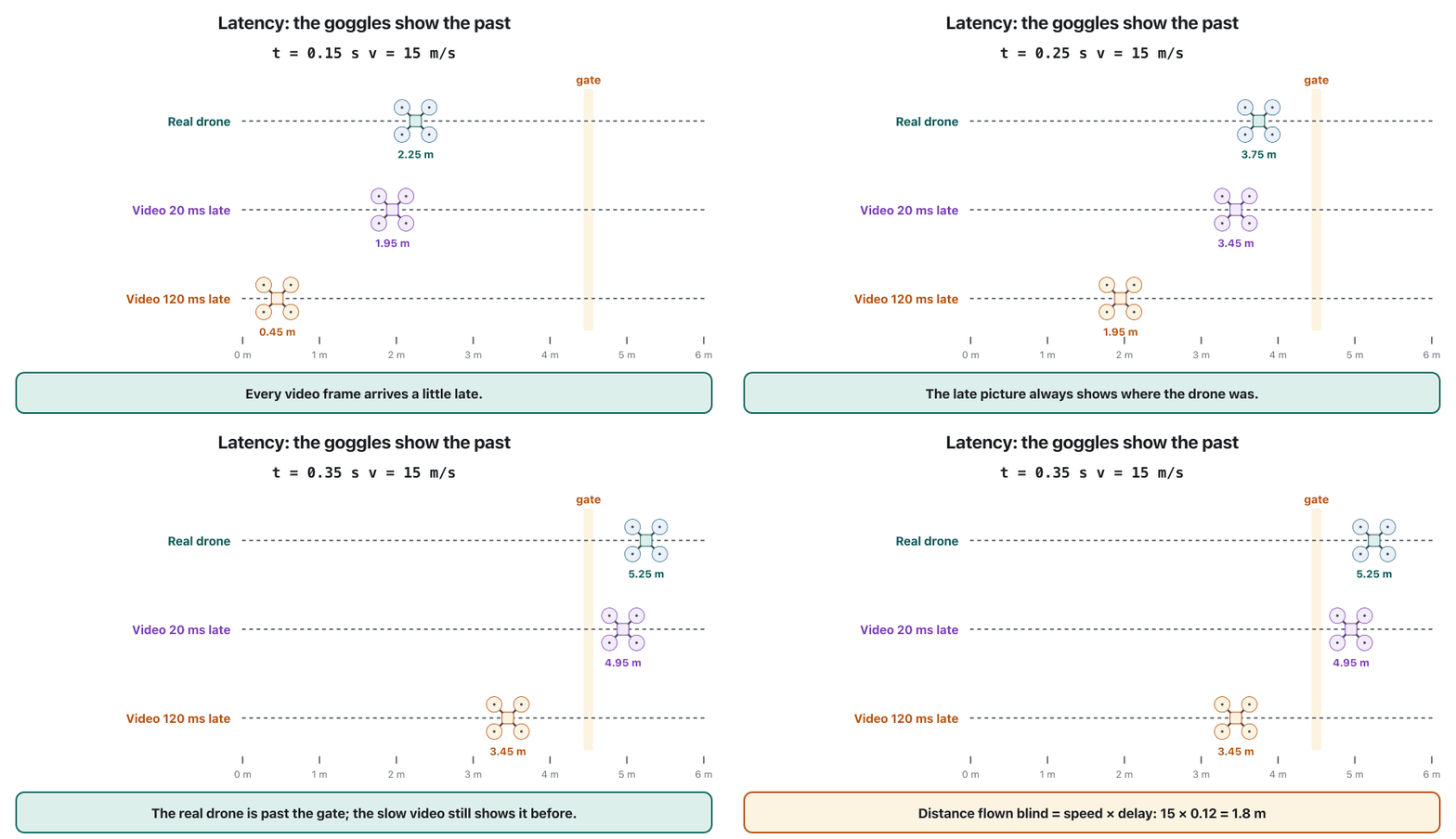
Latency is the delay between something happening at the camera and you seeing it (bandwidth and latency). The drone keeps flying while the picture travels, so you always see a slightly old picture. The distance it flies "blind" is speed times delay:
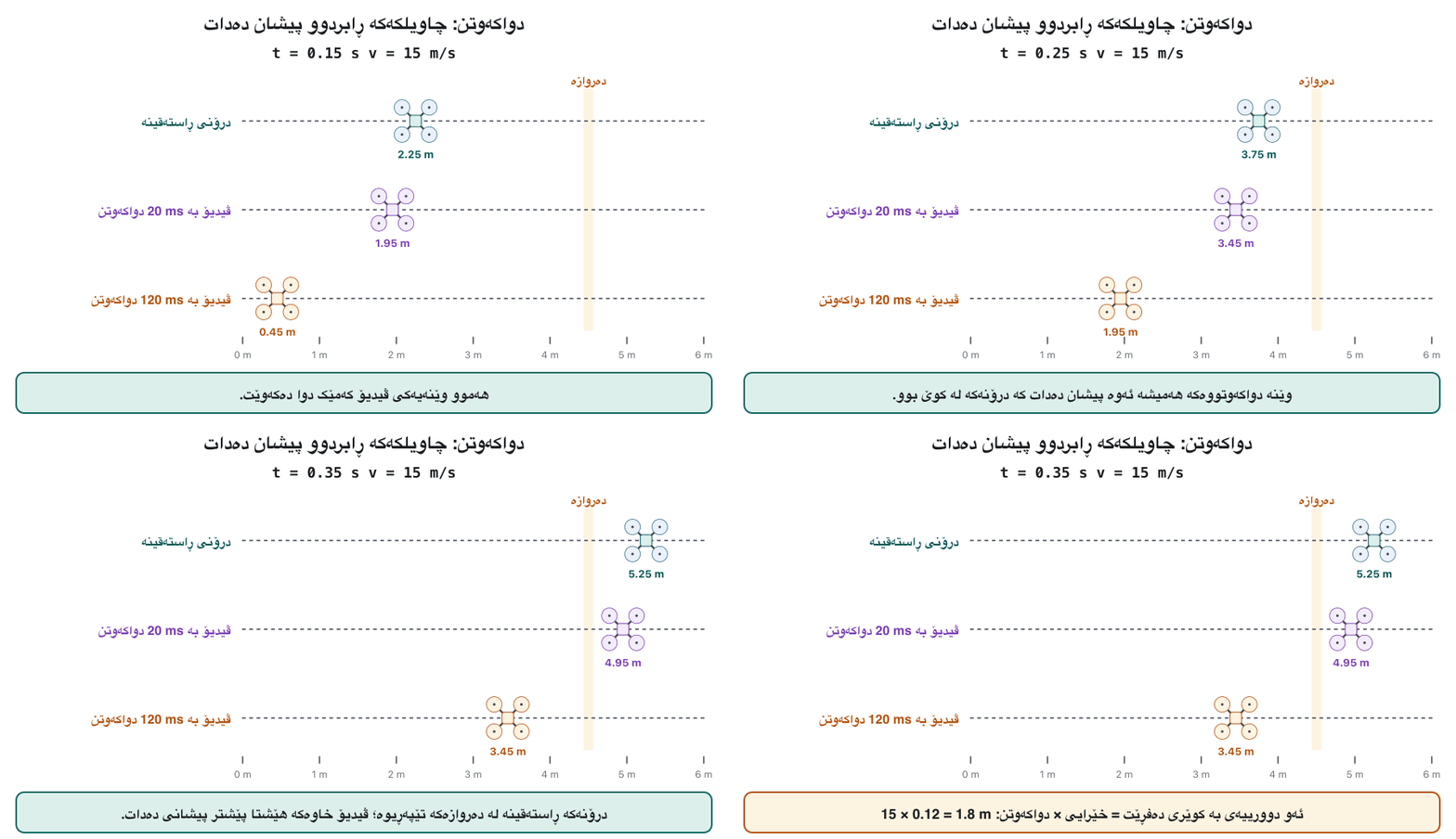
ئەو ماوەیەیە لە نێوان ڕوودانی شتێک لە بەردەم کامێراکە و بینینی لەلایەن تۆوە (پانایی باند و دواکەوتن). لە کاتی گەشتی وێنەکەدا بەردەوام دەفڕێت، بۆیە تۆ هەمیشە وێنەیەکی کەمێک کۆن دەبینیت. ئەو دوورییەی «بە کوێری» دەیفڕێت یەکسانە بە خێرایی جاران :
distance flown blind (m) = speed (m/s) × delay (s)
دووریی فڕینی کوێرانە (m) = خێرایی (m/s) × (s)
At 15 m/s, a 20 ms delay is , and a 120 ms delay is : enough to miss a gate or hit a branch.
بە خێرایی 15 m/s، 20 ms دەکاتە و 120 ms دەکاتە : بەسە بۆ ئەوەی دەروازەیەک لەدەست بدەیت یان بەر لقێک بکەویت.
Drones on mobile networks (4G and 5G)درۆنەکان لەسەر ڕایەڵەی مۆبایل (4G و 5G)
5G connectivity promises better control and real-time data: with a SIM card, a drone can be flown and can stream its video wherever there is mobile coverage, far beyond the reach of a hand-held controller. That makes cellular links attractive for long flights beyond visual line of sight, such as deliveries and pipeline inspections (Cells and base stations, 5G).
پەیوەندیی 5G بەڵێنی کۆنترۆڵی باشتر و داتای ڕاستەوخۆ دەدات: بە سیم کارتێک، دەتوانرێت بفڕێنرێت و ڤیدیۆکەی پەخش بکات لە هەر شوێنێک کە بگاتێ، زۆر دوورتر لە مەودای دەستی. بۆیە پەیوەندیی خانەیی بۆ فڕینی درێژی سەرنجڕاکێشە، وەک گەیاندن و پشکنینی بۆری (خانەکان و وێستگەکانی بنکە، 5G).
But mobile networks were built for phones on the ground. Base-station antennas aim down, so above the rooftops a drone has clear lines to many base stations at once: it suffers more interference and causes interference for other users. , which writes the mobile standards, added LTE support for drones in Release 15 (2018) and 5G NR support in Release 18: the network can ask a drone to report its height and planned flight path, drones can broadcast an ID, and only subscriptions approved for drones are served. Rural coverage gaps, changing delay and network outages remain, so a cellular drone still needs failsafes and, usually, the aviation authority's permission (cellular IoT).
بەڵام بۆ مۆبایلی سەر زەوی دروست کراون. ڕوویان لە خوارەوەیە، بۆیە لە سەرووی بانەکانەوە لە یەک کاتدا ڕێگەی ئاشکرای بۆ چەندین هەیە: زیاتر وەردەگرێت و بۆ بەکارهێنەرانی تریش دروست دەکات. ، کە ستانداردەکانی مۆبایل دەنووسێت، لە Release 15 (2018) پشتگیریی LTEـی بۆ زیاد کرد و لە Release 18دا پشتگیریی 5G NR: ڕایەڵەکە دەتوانێت داوا لە بکات بەرزی و ڕێڕەوی پلاندانراوی ڕاپۆرت بکات، دەتوانن ناسنامەیەک بڵاو بکەنەوە و تەنیا ئەو بەشدارییانە خزمەت دەکرێن کە بۆ پەسەند کراون. کەلێنی ڕووماڵ لە لادێکان، گۆڕاو و وەستانی ڕایەڵە هێشتا هەن، بۆیە خانەیی هێشتا و زۆرجار ڕێگەپێدانی دەسەڵاتی فڕینی پێویستە (IoTـی خانەیی).
When the link failsکاتێک پەیوەندی دەپچڕێت
Every link fails sometimes: the drone is too far away or behind a hill, there is interference, or the controller's battery is flat. Plan for it before take-off: set what the drone does when it loses the control link or the ground-station link (usually return home or land), keep it where you can see it, and turn back as soon as RSSI or LQ falls. What happens inside the drone is taught in Failsafes.
هەموو پەیوەندییەک جاروبار دەپچڕێت: زۆر دوورە یان لە پشت گردێکەوەیە، هەیە، یان کۆنترۆڵەکە بەتاڵە. پێش هەڵفڕین پلانی بۆ دابنێ: دیاری بکە چی بکات کاتێک پەیوەندیی کۆنترۆڵ یان پەیوەندیی لەدەست دەدات (زۆرجار یان نیشتنەوە)، لەو شوێنەدا بیهێڵەوە کە دەیبینیت و هەر کە RSSI یان LQ کەم بووەوە بگەڕێوە. ئەوەی لە ناو ڕوودەدات لە سەلامەتیی کاتی تێکچوون فێر دەکرێت.
Keeping links secureپاراستنی پەیوەندییەکان
A radio link can be attacked in three ways. : someone with a receiver on your channel watches your analog video or reads unencrypted telemetry. Fake commands: someone sends messages that look like yours. Jamming: strong radio noise drowns the link, so it is lost and the failsafe takes over; the same idea, and faking signals (spoofing), threaten satellite navigation too (spoofing and jamming, GPS under attack).
پەیوەندییەکی ڕادیۆیی دەتوانرێت بە سێ ڕێگا هێرشی بکرێتە سەر. : کەسێک کە وەرگرێکی لەسەر کەناڵەکەت هەیە سەیری ڤیدیۆ دەکات یان شفرەنەکراو دەخوێنێتەوە. فەرمانی ساختە: کەسێک نامە دەنێرێت کە وەک هی تۆ دەردەکەون. شێواندن: دەنگەدەنگی ڕادیۆیی بەهێز پەیوەندییەکە نقوم دەکات، بۆیە دەپچڕێت و دەست بەکار دەبێت؛ هەمان بیرۆکە و ساختەکردنی () ڕێنیشاندەری مانگی دەستکردیش دەخەنە مەترسییەوە (هەڵخەڵەتاندن و شێواندن، GPS لەژێر هێرشدا).
Defences: links that encrypt their data (many digital systems use AES; see where encryption is used); MAVLink 2 message signing, which uses a shared secret key so that fake or replayed messages are rejected, although it proves who sent a message rather than hiding it; binding; up-to-date ; and a planned route with failsafes for when the link is lost.
بەرگرییەکان: پەیوەندییەک کە داتاکەی شفرە دەکات (زۆر سیستەمی AES بەکار دەهێنن؛ بڕوانە شفرەکردن لە کوێ بەکاردێت)؛ واژووکردنی نامە لە MAVLink 2، کە نهێنیی هاوبەش بەکار دەهێنێت بۆ ئەوەی نامەی ساختە یان دووپاتەکراوە ڕەت بکرێنەوە، هەرچەندە ئەوە دەسەلمێنێت کێ نامەکەی ناردووە نەک ئەوەی بیشارێتەوە؛ جووتکردن؛ نوێکراوە؛ و ڕێڕەوێکی پلاندانراو لەگەڵ بۆ کاتی پچڕانی پەیوەندی.
Common mistakesهەڵە باوەکان
| Mistakeهەڵە | Fixچارەسەر |
|---|---|
| Pointing the tip of the controller's antenna at the drone.ئاڕاستەکردنی سەری کۆنترۆڵەکە بەرەو . | Point the side of the antenna at the drone; the tip is the weakest direction.لای ڕووەو بکە؛ سەرەکەی لاوازترین ئاڕاستەیە. |
| Flying low behind trees, buildings or hills.فڕینی نزم لە پشت دار، باڵەخانە یان گردەوە. | Keep a clear path to the drone; climb or come back when the link weakens.ڕێگەیەکی ئاشکرا بۆ بپارێزە؛ کاتێک پەیوەندی لاواز دەبێت بەرز ببەوە یان بگەڕێوە. |
| Ignoring falling RSSI or LQ.گوێنەدان بە کەمبوونەوەی RSSI یان LQ. | Turn back early; do not wait for the failsafe.زوو بگەڕێوە؛ چاوەڕێی مەکە. |
| Treating FPV goggles as visual line of sight.دانانی چاویلکەی FPV وەک . | Have an observer beside you who watches the drone. لە تەنیشتت بێت کە سەیری بکات. |
| Using a band, channel or power your country does not allow.بەکارهێنانی باند، کەناڵ یان هێزێک کە وڵاتەکەت ڕێگەی پێنادات. | Check the national radio rules before you buy or fly.پێش کڕین یان فڕین یاساکانی ڕادیۆی وڵاتەکەت بپشکنە. |
| Thinking that binding keeps the link private.وابزانیت جووتکردن پەیوەندییەکە تایبەت ڕادەگرێت. | Binding only pairs; use encryption and signing for protection.جووتکردن تەنیا پێکەوە دەبەستێت؛ بۆ پاراستن و واژوو بەکار بهێنە. |
| Taking off without link-loss failsafes.هەڵفڕین بەبێ بۆ پچڕانی پەیوەندی. | Set the RC-loss and ground-station-loss actions before every flight.پێش هەموو فڕینێک کاری پچڕانی کۆنترۆڵ و پچڕانی ڕێک بخە. |
| Believing a 5G drone has unlimited range.باوەڕکردن بەوەی 5G مەودای بێسنووری هەیە. | Coverage, interference and the law still limit it; keep a failsafe.ڕووماڵ، و یاسا هێشتا سنوورداری دەکەن؛ بپارێزە. |
Exercisesڕاهێنانەکان
Rebin's FPV video arrives 100 ms late, and he flies at 15 m/s. How far does the drone move before he sees it there?
ڤیدیۆی FPVـی ڕێبین 100 ms دوا دەکەوێت و بە 15 m/s دەفڕێت. چەند دەڕوات پێش ئەوەی ئەو لەوێ ببینێت؟
Show answerوەڵامەکە پیشان بدە
1.5 m, more than the width of many racing gates. A 20 ms system would cut it to 0.3 m.
1.5 مەتر، کە لە پانیی زۆر دەروازەی پێشبڕکێ زیاترە. سیستەمێکی 20 ms دەیکاتە 0.3 مەتر.
Hana builds a long-range mapping drone in Europe. Which band would you suggest for the control link, and which for the live video? Explain.
هانا نەخشەکێشانی دوورمەودا لە ئەوروپا دروست دەکات. کام باند بۆ پەیوەندیی کۆنترۆڵ و کام بۆ ڤیدیۆی ڕاستەوخۆ پێشنیار دەکەیت؟ ڕوونی بکەرەوە.
Show answerوەڵامەکە پیشان بدە
Control: 868 MHz (Europe's sub-GHz band), because low frequencies reach farther and get around obstacles, and control needs little data. Video: 5.8 GHz, because video needs much more data. Both must follow the national power and channel rules.
کۆنترۆڵ: 868 MHz (باندی خوار GHzـی ئەوروپا)، چونکە نزم دوورتر دەڕوات و بە دەوری بەربەستدا دەسووڕێتەوە و کۆنترۆڵ داتای کەمی پێویستە. ڤیدیۆ: 5.8 GHz، چونکە ڤیدیۆ داتای زۆر زیاتری پێویستە. هەردووکیان دەبێت یاساکانی هێز و کەناڵی وڵات جێبەجێ بکەن.
In open air your link has a certain power at 500 m. What fraction of that power is left at 1 km, and at 2 km?
لە هەوای کراوەدا پەیوەندییەکەت لە 500 مەتردا توانایەکی دیاریکراوی هەیە. لە 1 کیلۆمەتر و لە 2 کیلۆمەتردا چ بەشێکی ئەو توانایە دەمێنێتەوە؟
Show answerوەڵامەکە پیشان بدە
Power falls with the square of the distance. 1 km is twice as far: . 2 km is four times as far: .
توانا بە دووجای دووری کەم دەبێتەوە. 1 کیلۆمەتر دوو هێندە دوورە: . 2 کیلۆمەتر چوار هێندە دوورە: .
A drone sends a HEARTBEAT once a second. After about how many seconds of silence will the ground station treat the telemetry link as lost? What should the drone do then?
جارێک لە چرکەیەکدا HEARTBEAT دەنێرێت. دوای نزیکەی چەند چرکە بێدەنگی پەیوەندیی بە پچڕاو دادەنێت؟ ئەو کاتە چی بکات؟
Show answerوەڵامەکە پیشان بدە
After four or five missed heartbeats, so about 4–5 seconds. The drone follows its ground-station failsafe, for example return home or continue the mission, as set before the flight.
دوای چوار یان پێنج لێدانی ونبوو، واتە نزیکەی 4 تا 5 چرکە. جێبەجێ دەکات، بۆ نموونە یان تەواوکردنی ئەرکەکە، بەو شێوەیەی پێش فڕین ڕێکخراوە.
Summaryپوختە
- A drone uses three links: control (C2) up, telemetry both ways and video down; some systems combine them.
- The controller sends channels to a bound receiver, which passes them to the flight controller (CRSF, SBUS).
- Drones use licence-free ISM bands: 2.4 and 5.8 GHz worldwide, plus 868/915 MHz for long range; national rules decide power and channels.
- Radio needs a clear path; power falls with the square of the distance; point antenna sides, not tips, at the drone.
- Telemetry uses MAVLink: small messages, a HEARTBEAT about once a second, optional signing.
- FPV is live video from the drone's camera; it is not VLOS, so an observer must watch the drone; latency means flying blind for v × t.
- 4G/5G links reach far for BVLOS, but drones above rooftops cause and suffer interference; 3GPP Release 18 adds drone support.
- Protect links with encryption, signing and updated firmware, and set failsafes for link loss.
- سێ پەیوەندی بەکار دەهێنێت: کۆنترۆڵ () بۆ سەرەوە، بە هەردوو ئاڕاستە و ڤیدیۆ بۆ خوارەوە؛ هەندێک سیستەم کۆیان دەکەنەوە.
- کەناڵەکان دەنێرێت بۆ وەرگرێکی جووتکراو، کە دەیانداتە (CRSF، SBUS).
- بەکار دەهێنن: 2.4 و 5.8 GHz لە هەموو جیهان، لەگەڵ 868/915 MHz بۆ مەودای درێژ؛ یاساکانی وڵات هێز و کەناڵەکان دیاری دەکەن.
- ڕادیۆ ڕێگەیەکی ئاشکرای پێویستە؛ توانا بە دووجای دووری کەم دەبێتەوە؛ لای ، نەک سەرەکانیان، ڕووەو بکە.
- MAVLink بەکار دەهێنێت: نامەی بچووک، HEARTBEAT نزیکەی جارێک لە چرکەیەکدا، واژووی ئارەزوومەندانە.
- ڤیدیۆی ڕاستەوخۆی کامێرای ؛ نییە، بۆیە دەبێت سەیری بکات؛ واتە فڕینی کوێرانە بۆ v × t.
- پەیوەندیی 4G/5G بۆ دوور دەڕوات، بەڵام لە سەرووی بانەکانەوە دروست دەکەن و وەریدەگرن؛ 3GPP Release 18 پشتگیریی زیاد دەکات.
- پەیوەندییەکان بە ، واژوو و نوێکراوە بپارێزە و بۆ پچڕانی پەیوەندی ڕێک بخە.
Why do control links often use lower frequencies than video links?بۆچی پەیوەندیی کۆنترۆڵ زۆرجار لەرەلەری نزمتر لە پەیوەندیی ڤیدیۆ بەکار دەهێنێت؟
Control needs little data but must reach far and reliably; lower frequencies reach farther and get around obstacles. Video needs much more data, which higher frequencies can carry.
کۆنترۆڵ داتای کەمی پێویستە، بەڵام دەبێت دوور و بە دڵنیاییەوە بگات؛ نزمتر دوورتر دەڕوات و بە دەوری بەربەستدا دەسووڕێتەوە. ڤیدیۆ داتای زۆر زیاتری پێویستە کە بەرزتر دەتوانێت هەڵیبگرێت.
What is the difference between analog and digital FPV video?جیاوازیی نێوان ڤیدیۆی FPVـی ئەنالۆگ و دیجیتاڵ چییە؟
Analog adds almost no delay but is grainy and open to anyone on the channel; digital is clear and often encrypted but freezes suddenly at the edge of range and can add delay.
نزیکەی هیچ زیاد ناکات، بەڵام دەنکدارە و بۆ هەر کەسێک لەسەر کەناڵەکە کراوەیە؛ ڕوونە و زۆرجار شفرەکراوە، بەڵام لە سنووری مەودادا لە ناکاو دەوەستێت و دەشێت زیاد بکات.
Name two limits of flying a drone over a mobile network.دوو سنووری فڕاندنی درۆن لە ڕێگەی ڕایەڵەی مۆبایلەوە بڵێ.
Base stations aim at the ground, so high drones cause and suffer interference; rural coverage has gaps, delay changes and networks can fail, so failsafes and permission are still needed.
ڕوویان لە زەوییە، بۆیە لە بەرزیدا دروست دەکەن و وەریدەگرن؛ ڕووماڵی لادێکان کەلێنی هەیە، دەگۆڕێت و ڕایەڵەکان دەشێت بوەستن، بۆیە و ڕێگەپێدان هێشتا پێویستن.
Lesson complete!وانەکە تەواو بوو!
Well done. Review the key terms, then go on to the next lesson.دەستخۆش. سەیرێکی زاراوە سەرەکییەکان بکەرەوە، پاشان بڕۆ بۆ وانەی داهاتوو.
Key termsزاراوە سەرەکییەکان
Payloads and Mapping: Cameras, Thermal, LiDAR and Photogrammetryباری درۆن و نەخشەکێشان: کامێرا، گەرمی، لایدار و فۆتۆگرامێتری
Related lecturesوانە پەیوەندیدارەکان
- What Is a Drone? UAV, UAS, RPAS and a Short Historyدرۆن چییە؟ UAV، UAS، RPAS و مێژوویەکی کورت
- GNSS Navigation, Return-to-Home, Geofences and Failsafesڕێنیشاندەری GNSS، گەڕانەوە بۆ ماڵ، پەرژینەکانی جوگرافی و سەلامەتیی کاتی تێکچوون
- Batteries and Power: LiPo Cells, Flight Time and Safetyپاتری و وزە: خانەکانی LiPo، کاتی فڕین و سەلامەتی
- Payloads and Mapping: Cameras, Thermal, LiDAR and Photogrammetryباری درۆن و نەخشەکێشان: کامێرا، گەرمی، لایدار و فۆتۆگرامێتری
- Flying Safely: VLOS, EVLOS, BVLOS, Weather and Pre-flight Checksفڕینی سەلامەت: هێڵی بینینی چاو، هێڵی بینینی درێژکراوە، دەرەوەی هێڵی بینین، کەشوهەوا و پشکنینی پێش فڕین
- Privacy, Security and Counter-Drone Systemsتایبەتێتی، ئاسایش و تەکنەلۆجیای دژەدرۆن
- Cables and Wireless: Transmission Mediaکێبڵ و بێتەل: هۆکارەکانی گواستنەوە
- Computer Communicationsپەیوەندیی کۆمپیوتەر
- Cellular Networks and Mobile Generationsڕایەڵەکانی مۆبایل و نەوەکانی ڕایەڵەی مۆبایل
- Encryption, Hashing and Digital Signaturesشفرەکردن، هاشکردن و واژووە دیجیتاڵییەکان
- When AI Gets It Wrong: Errors, Bias and Deceptionکاتێک ژیریی دەستکرد هەڵە دەکات: هەڵە، لاسەنگی و فریودان
- Range, Speed and Power: Choosing a Wireless Technologyمەودای سیگناڵ، خێرایی و وزە: هەڵبژاردنی تەکنەلۆجیایەکی بێتەل
- Cellular IoT: 4G, 5G, LTE-M and NB-IoTIoTـی خانەیی: 4G، 5G، LTE-M و NB-IoT
References and further readingسەرچاوەکان و خوێندنەوەی زیاتر
- ITU Radio Regulations No. 5.150: ISM bands (ComReg Radio Frequency Plan Interface)
- ArduPilot: Radio Control Systems (channels, protocols, range classes, telemetry speeds)
- ArduPilot: Crossfire and ELRS RC systems (CRSF, MAVLink over ELRS)
- ExpressLRS: open-source RC link (900 MHz and 2.4 GHz, up to 1,000 Hz)
- MAVLink Developer Guide (overview, MAVLink 2 overhead, 255 systems)
- MAVLink: Heartbeat/connection protocol
- MAVLink: Message signing
- Oscar Liang: antenna positioning for FPV (dipole pattern, polarisation, diversity)
- Wikipedia: Free-space path loss (inverse-square law)
- DJI O4 Air Unit specifications (bands, lowest latency 15–20 ms)
- DJI Mini 4 Pro specifications (O4 transmission, lowest latency about 120 ms)
- 14 CFR 107.31: Visual line of sight aircraft operation (Cornell LII)
- EASA FAQ: FPV goggles in the open category (UA observer beside the pilot)
- 3GPP: NR support for UAVs (Release 18), July 2023
This lecture is a first edition. The Kurdish text and terminology are waiting for review by Kurdish IT teachers.ئەم وانەیە چاپی یەکەمە. دەقە کوردییەکە و زاراوەکانی چاوەڕێی پێداچوونەوەی مامۆستایانی کوردی بواری IT ن.