Chapterبەش 2 · Lectureوانە 2.1
Inside a Drone: Frame, Motors, ESCs and Propellersناو درۆن: چوارچێوەی درۆن، ماتۆڕەکان، کۆنترۆڵکەرەکانی خێرایی و پەروانەکان
What is inside a drone and how its propulsion system works: the frame, brushless motors and their KV rating, the ESC and how it turns a motor, the signals ESCs understand (PWM, OneShot, DShot, DroneCAN), propellers (diameter, pitch, clockwise and counter-clockwise), power distribution and wiring, and how builders match the parts for about twice as much thrust as weight.
لە ناو چی هەیە و سیستەمی چۆن کار دەکات: ، و ، و چۆنیەتیی سووڕاندنی ، ئەو تێیان دەگەن (PWM، OneShot، DShot، DroneCAN)، (تیرە، ، و )، دابەشکردنی کارەبا و وایەرکردن، هەروەها دروستکەران چۆن بەشەکان دەگونجێنن بۆ ئەوەی نزیکەی دوو هێندەی بێت.
What you will learnچی فێر دەبیت
- Name the main parts of a quadcopter and say what each one does.
- Follow the propulsion chain (battery → ESC → motor → propeller → thrust) and explain why a propeller makes thrust.
- Explain how a brushless motor and its ESC work, and use the KV rating to estimate a motor's speed.
- Read a propeller size such as 10 × 4.5, put CW and CCW propellers on the right motors, and match the parts with the 2:1 thrust-to-weight rule of thumb.
- بەشە سەرەکییەکانی ناو ببەیت و بڵێیت هەر یەکەیان چی دەکات.
- زنجیرەی شوێن بکەویت ( ← ← ← ← ) و ڕوونی بکەیتەوە بۆچی دروست دەکات.
- ڕوونی بکەیتەوە و چۆن کار دەکەن و بە خێرایی مەزەندە بکەیت.
- قەبارەی وەک 10 × 4.5 بخوێنیتەوە، CW و CCW لەسەر دروست دابنێیت و بەشەکان بە یاسا ئەزموونییەکەی 2:1ـی بگونجێنیت.
The parts at a glanceبەشەکان بە یەک نیگا
Open a camera quadcopter or a small racing drone and you find the same team of parts. Each part has one job, and the drone flies only when all of them work together. The picture below pulls the parts apart so you can see each one.
وێنەگرتن یان بچووکی پێشبڕکێ بکەرەوە، هەمان تیمی بەشەکان دەبینیت. هەر بەشێک یەک کاری هەیە و تەنیا کاتێک دەفڕێت کە هەموویان پێکەوە کار بکەن. وێنەکەی خوارەوە بەشەکان لێک جیا دەکاتەوە بۆ ئەوەی هەر یەکەیان ببینیت.
- Body: the frame, with its arms and landing gear (this lesson).
- Propulsion: the motors, the ESCs and the propellers (this lesson).
- Power: the LiPo battery and the power distribution board. The battery itself has its own lesson, Batteries and power; everyday lithium-battery care is in Battery care.
- Brain and navigation: the flight controller and the GNSS receiver: The flight controller and Navigation and failsafes.
- Radio and camera: the radio receiver, the video transmitter, their antennas and the camera: Radio links and FPV and Payloads and mapping.
- لاشە: لەگەڵ باسک و قاچەکانی نیشتنەوە (ئەم وانەیە).
- : ، و (ئەم وانەیە).
- وزە: و . خۆی وانەیەکی تایبەتی هەیە، پاتری و وزە؛ ئاگاداریی ڕۆژانەی لە وانەی ئاگاداری لە پاتری باس کراوە.
- مێشک و ڕێنیشاندان: و وەرگری : کۆنترۆڵکەری فڕین و ڕێنیشاندان و سەلامەتی.
- ڕادیۆ و کامێرا: ، ، و کامێرا: پەیوەندییە ڕادیۆییەکان و FPV و بار و نەخشەکێشان.
The frame: the drone's skeletonچوارچێوەی درۆن: ئێسکەپەیکەری درۆنەکە
The body of a that holds all its parts: the centre plates, the arms with the motors and often the landing legs. Frames are made of carbon fibre or plastic, and their size is measured diagonally from motor to motor.
لاشەی کە هەموو بەشەکانی هەڵدەگرێت: پلێتەکانی ناوەڕاست، ئەو باسکانەی ماتۆڕەکانیان پێوەیە و زۆرجار قاچەکانی نیشتنەوە. لە فایبەری کاربۆن یان پلاستیک دروست دەکرێت و قەبارەکەی بە شێوەی لار لە ماتۆڕێکەوە بۆ ماتۆڕی بەرامبەری دەپێورێت.
The frame is the structural body that holds every other part. Its centre plates carry the electronics and the battery, its arms hold the motors out at the corners, and the landing gear keeps the camera and the battery off the ground. Many camera drones have folding arms, so they fit in a small bag.
ئەو لاشە پێکهاتەییەیە کە هەموو بەشەکانی تر هەڵدەگرێت. پلێتە ناوەڕاستەکانی ئامێرە ئەلیکترۆنییەکان و هەڵدەگرن، باسکەکانی لە گۆشەکاندا بە دوورییەوە ڕادەگرن و قاچەکانی نیشتنەوە کامێرا و لە زەوی دوور دەخەنەوە. زۆر وێنەگرتن باسکی قەدکراویان هەیە، بۆیە لە جانتایەکی بچووکدا جێیان دەبێتەوە.
Most frames are made of carbon fibre (stiff and light) or plastic (cheap and tough). A stiff frame matters: a frame that bends or shakes passes vibration to the motion sensors of the flight controller and makes the drone harder to control. A frame's size is the distance from one motor to the opposite motor, diagonally: a 500 mm frame has about 50 cm between opposite motors, and that space decides the biggest propellers that fit.
زۆربەی لە فایبەری کاربۆن (ڕەق و سووک) یان پلاستیک (هەرزان و بەرگەگر) دروست دەکرێن. ڕەقی گرنگە: کە دەچەمێتەوە یان دەلەرزێت، لەرزینەکە دەگوازێتەوە بۆ جووڵەی کۆنترۆڵکەری فڕین و کۆنترۆڵکردنی قورستر دەکات. قەبارەی دووریی نێوان و بەرامبەرەکەیەتی، بە لاری: 500 mm نزیکەی 50 cm لە نێوان دوو بەرامبەردا هەیە و ئەو بۆشاییە گەورەترین دیاری دەکات کە جێی دەبێتەوە.
The propulsion systemسیستەمی پاڵنان
Everything that pushes an aircraft through the air. A drone's propulsion system is the chain → → motor → , which turns electrical energy into .
هەموو ئەو شتانەیە کە فڕۆکەیەک بە ناو هەوادا دەپاڵن. سیستەمی پاڵنانی زنجیرەی ← ← ماتۆڕ ← کە دەکاتە .
Propulsion means everything that pushes the drone through the air. The propulsion system is the motors and the propellers, with the ESCs that drive the motors. On a multirotor it is a short chain, repeated for every rotor: the battery stores energy, the ESC decides how much of it reaches the motor, the motor turns, and the propeller pushes air down. The air pushes the propeller back up, and that push is thrust.
واتە هەموو ئەو شتانەی بە ناو هەوادا پاڵ دەنێن. سیستەمی بریتییە لە و ، لەگەڵ کە دەخەنە کار. لە زنجیرەیەکی کورتە کە بۆ هەر دووپاتە دەبێتەوە: وزە هەڵدەگرێت، بڕیار دەدات چەندی بگاتە ، دەسووڕێتەوە و هەوا بەرەو خوارەوە پاڵ دەنێت. هەواش بەرەو سەرەوە پاڵ دەنێتەوە و ئەمە .
Notice the word: propellers make thrust. On a multirotor the thrust points up, so it does the job that lift does for an aeroplane's wings. When the drone tilts, the same thrust also moves it along. On a fixed-wing drone the wing makes the lift and the propeller pulls the drone forward. You will meet all four forces in How a quadcopter flies.
ئاگاداری وشەکە بە: دروست دەکەن. لە بەرەو سەرەوەیە، بۆیە ئەو کارە دەکات کە بۆ باڵەکانی فڕۆکە دەیکات. کاتێک لار دەبێتەوە، هەمان بەرەو پێشیشی دەبات. لە باڵەکە دروست دەکات و بەرەو پێش ڕادەکێشێت. هەر چوار لە چوارپەروانە چۆن دەفڕێت دەبینیت.
Brushless motorsماتۆڕە بێفڵچەکان
An electric motor without carbon brushes: an switches the current through its fixed coils in turn, and the magnets in the spinning bell follow. Nothing rubs, so it is light, strong and long-lasting; almost every drone uses it.
ماتۆڕێکی کارەباییە کە فڵچەی کاربۆنی نییە: بە نۆرە بە کۆیلە جێگیرەکانیدا دەنێرێت و موگناتیسەکانی ناو زەنگە سووڕاوەکە بەدوایدا دەڕۆن. هیچ شتێک خۆی بە شتێکدا ناخشێنێت، بۆیە سووک، بەهێز و تەمەندرێژە؛ نزیکەی هەموو بەکاری دەهێنن.
Almost every drone uses brushless motors. Inside, the part that stays still, the stator, carries copper coils. Around it spins a cup-shaped bell lined with magnets. In most drone motors the outside spins (an outrunner), and the propeller sits on top of the bell.
نزیکەی هەموو بەکار دەهێنن. لە ناویدا، ئەو بەشەی کە جێگیر دەمێنێتەوە (stator) کۆیلی مسی پێوەیە. بە دەوریدا زەنگێکی کووپئاسا دەسووڕێتەوە کە موگناتیسی پێوەیە. لە زۆربەی بەشی دەرەوە دەسووڕێتەوە (پێی دەڵێن outrunner) و لەسەر زەنگەکە دادەنرێت.
Cheaper motors with brushes use small carbon blocks that rub on a spinning switch to change the current; the brushes wear out and spark. The small motors of IoT labs are of this kind (The DC motor). A brushless motor has no brushes: nothing rubs except two small bearings, so it is light, strong, efficient and long-lasting. The price is that it cannot run straight from the battery: it needs an ESC to switch the current through its coils in the right order.
هەرزانتر کە فڵچەیان هەیە، پارچەی کاربۆنی بچووک بەکار دەهێنن کە بە سویچێکی سووڕاودا دەخشێن بۆ گۆڕینی ؛ فڵچەکان دەسوێن و پریشک دەدەن. ئەو بچووکانەی لە تاقیگەکانی IoTـدا بەکار دێن لەم جۆرەن (ماتۆڕی DC: تا تەزوو هەبێت دەسووڕێت). فڵچەی نییە: جگە لە دوو بێرینگی بچووک هیچ شتێک ناخشێت، بۆیە سووک، بەهێز، کەمخەرج و تەمەندرێژە. نرخەکەی ئەوەیە کە ناتوانێت ڕاستەوخۆ لە کار بکات: پێویستی بە هەیە بۆ ئەوەی بە ڕیزی دروست بە کۆیلەکانیدا بنێرێت.
Motors are named by sizes such as 2216: usually the stator is 22 mm wide and 16 mm tall. A bigger stator can give more torque, which bigger propellers need.
بە ژمارەی وەک 2216 ناو دەنرێن: زۆرجار واتای ئەوەیە کە بەشە جێگیرەکە 22 mm پان و 16 mm بەرزە. بەشی جێگیری گەورەتر دەتوانێت زیاتر بدات و گەورەتر پێویستیان پێیەتی.
Brushless motorsماتۆڕە بێفڵچەکان
KV: speed for each voltڕێژەی KV: خێرایی بۆ هەر ڤۆڵتێک
A number that says how many revolutions per minute () a turns for each volt, with no propeller on it. Low-KV motors turn big propellers slowly; high-KV motors turn small propellers fast.
ژمارەیەکە کە دەڵێت بەبێ بۆ هەر ڤۆڵتێک چەند جار لە خولەکێکدا () دەسووڕێتەوە. ماتۆڕی KVـی نزم گەورە بە هێواشی دەسووڕێنێت و ماتۆڕی KVـی بەرز بچووک بە خێرایی.
Every drone motor label shows a KV number, for example "2216 920KV". KV tells how many revolutions per minute (rpm) the motor turns for each volt with no propeller on it:
سەر هەموو ژمارەیەکی KV نووسراوە، بۆ نموونە «2216 920KV». KV دەڵێت بۆ هەر ڤۆڵتێک چەند جار لە خولەکێکدا دەسووڕێتەوە ()، کاتێک هیچ لەسەر نییە:
no-load speed ≈ KV × battery voltage
خێرایی بەبێ ≈ KV ×
A training quadcopter often has 920 KV motors and a 4S battery: four cells in series, 14.8 V nominal (cells in series). With no propeller: rpm. With a propeller pushing air, the motor turns slower. A full 4S battery (16.8 V) spins it faster than a nearly empty one.
ڕاهێنان زۆرجار 920 KV و 4S بەکار دەهێنێت: چوار بە زنجیرەیی، بە 14.8 V (خانەکان بە زنجیرەیی). بەبێ : . کاتێک هەوا پاڵ دەنێت، هێواشتر دەسووڕێتەوە. 4Sـی پڕ (16.8 V) خێراتری دەسووڕێنێت لە نزیکەی بەتاڵ.
KV is not strength. Low-KV motors (around 100 to a few hundred KV) turn big propellers slowly on big camera and heavy-lift drones; high-KV motors (2,000 KV and more) turn small propellers very fast on racing drones. The right KV depends on the propeller and the battery voltage.
KV بەهێزی نییە. KVـی نزم (نزیکەی 100 تا چەند سەد KV) گەورە بە هێواشی دەسووڕێنێت لەسەر گەورەی وێنەگرتن و بارهەڵگر؛ KVـی بەرز (2,000 KV و زیاتر) بچووک زۆر بە خێرایی دەسووڕێنێت لەسەر پێشبڕکێ. KVـی گونجاو بەندە بە و .
The ESC: the motor’s speed controllerکۆنترۆڵکەری خێرایی: ئەو بۆردەی خێرایی ماتۆڕ ڕێک دەخات
A small circuit board that drives one : it reads the speed signal from the and switches the battery's direct current into the three-phase pulses that the motor needs.
بۆردێکی بچووکی ئەلیکترۆنییە کە دەخاتە کار: خێرایی لە وەردەگرێت و دەکاتە ئەو لێدانە سێ فازییانەی کە ماتۆڕەکە پێویستیەتی.
An ESC (electronic speed controller) is the part that regulates the motor's speed. The flight controller only sends a tiny signal, far too weak to turn a motor. The ESC is the muscle: it takes the battery's direct current and, following the signal, switches it through the motor's three wires in the right order, thousands of times a second.
ئەو بەشەیە کە خێرایی ڕێک دەخات. تەنیا زۆر لاواز دەنێرێت کە ناتوانێت بسووڕێنێت. ماسولکەکەیە: وەردەگرێت و بەپێی ، لە چرکەیەکدا هەزاران جار بە ڕیزی دروست بە سێ وایەرەکەی دەینێرێت.
There is one ESC for each motor. On small drones the four ESCs often share one board, a 4-in-1 ESC. Each ESC has a current rating, for example 20 A or 30 A: it must carry the most current its motor can draw, with some to spare, or it overheats. Many ESCs can also send telemetry back to the flight controller: motor speed, temperature and current.
بۆ هەر یەک هەیە. لە بچووکدا هەر چوار زۆرجار یەک بۆرد بەکار دەهێنن، کە پێی دەڵێن 4-in-1 ESC. هەر سنووری خۆی هەیە، بۆ نموونە 20 A یان 30 A: دەبێت زۆرترین هەڵبگرێت کە دەیکێشێت، لەگەڵ هەندێک زیادە، ئەگینا زۆر گەرم دەبێت. زۆر هەروەها دەتوانن بنێرنەوە بۆ : خێرایی ، پلەی گەرمی و .
The ESC: the motor’s speed controllerکۆنترۆڵکەری خێرایی: ئەو بۆردەی خێرایی ماتۆڕ ڕێک دەخات
How the ESC turns the motorکۆنترۆڵکەری خێرایی چۆن ماتۆڕەکە دەسووڕێنێت
Each coil becomes a magnet while current flows through it. In the simple method that most drone ESCs use, the coils are never all powered at once. At each step, current goes in through one of the three wires and out through another, while the third wire rests. The two powered coils pull the spinning magnets toward them. Then the ESC moves on to the next step, the pull moves round, and the magnets chase it.
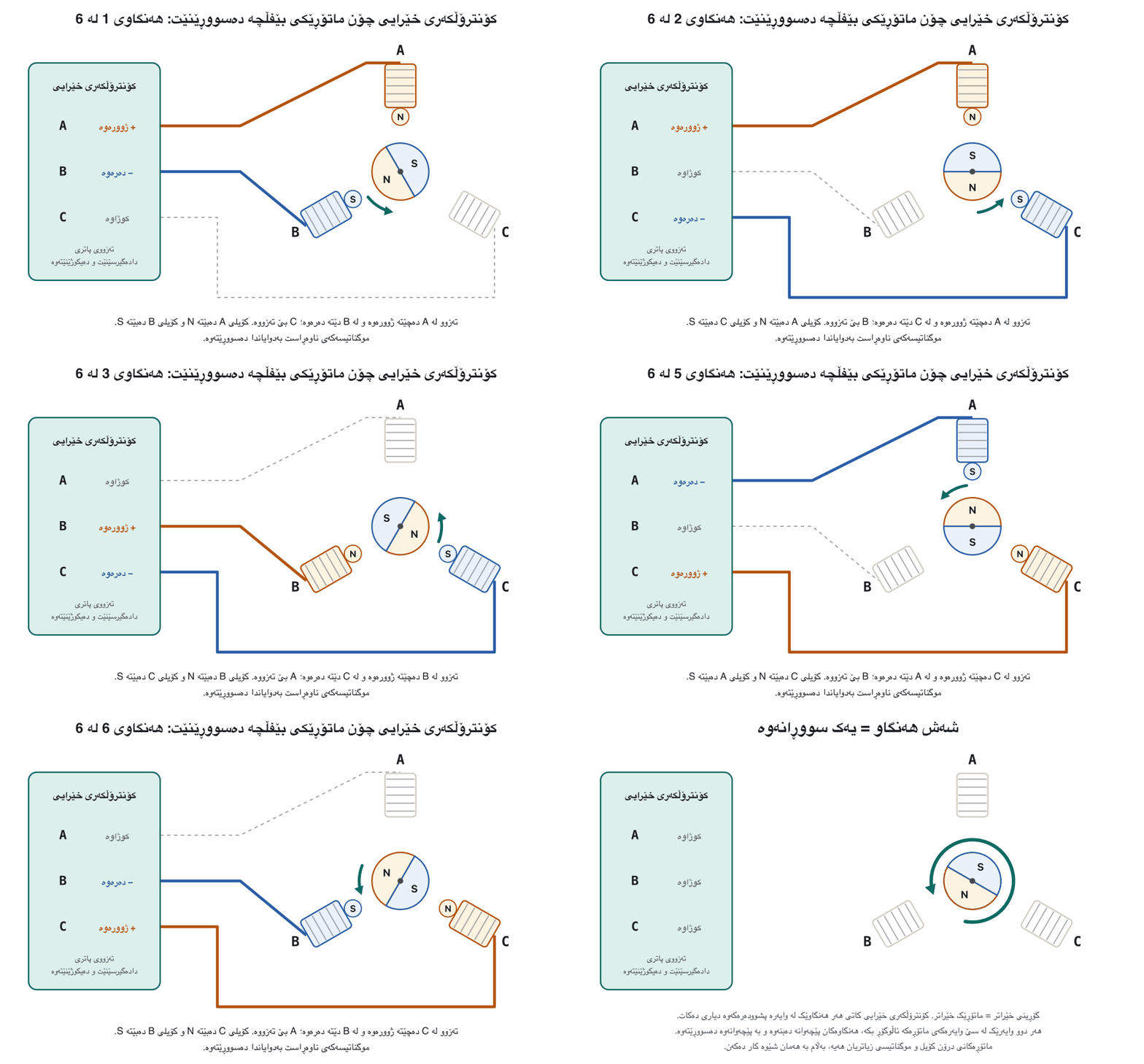
هەر کۆیلێک کاتێک پێیدا تێدەپەڕێت دەبێتە موگناتیس. لەو ڕێگا سادەیەدا کە زۆربەی بەکاری دەهێنن، هەرگیز هەموو کۆیلەکان پێکەوە ناخرێنە کار. لە هەر هەنگاوێکدا لە یەکێک لە سێ وایەرەکەوە دەچێتە ژوورەوە و لە یەکێکی ترەوە دێتە دەرەوە، لە کاتێکدا وایەری سێیەم پشوو دەدات. دوو کۆیلە چالاکەکە موگناتیسە سووڕاوەکان بەرەو لای خۆیان ڕادەکێشن. پاشان دەچێتە هەنگاوی دواتر، ڕاکێشانەکە دەسووڕێتەوە و موگناتیسەکان بەدوایدا ڕادەکەن.
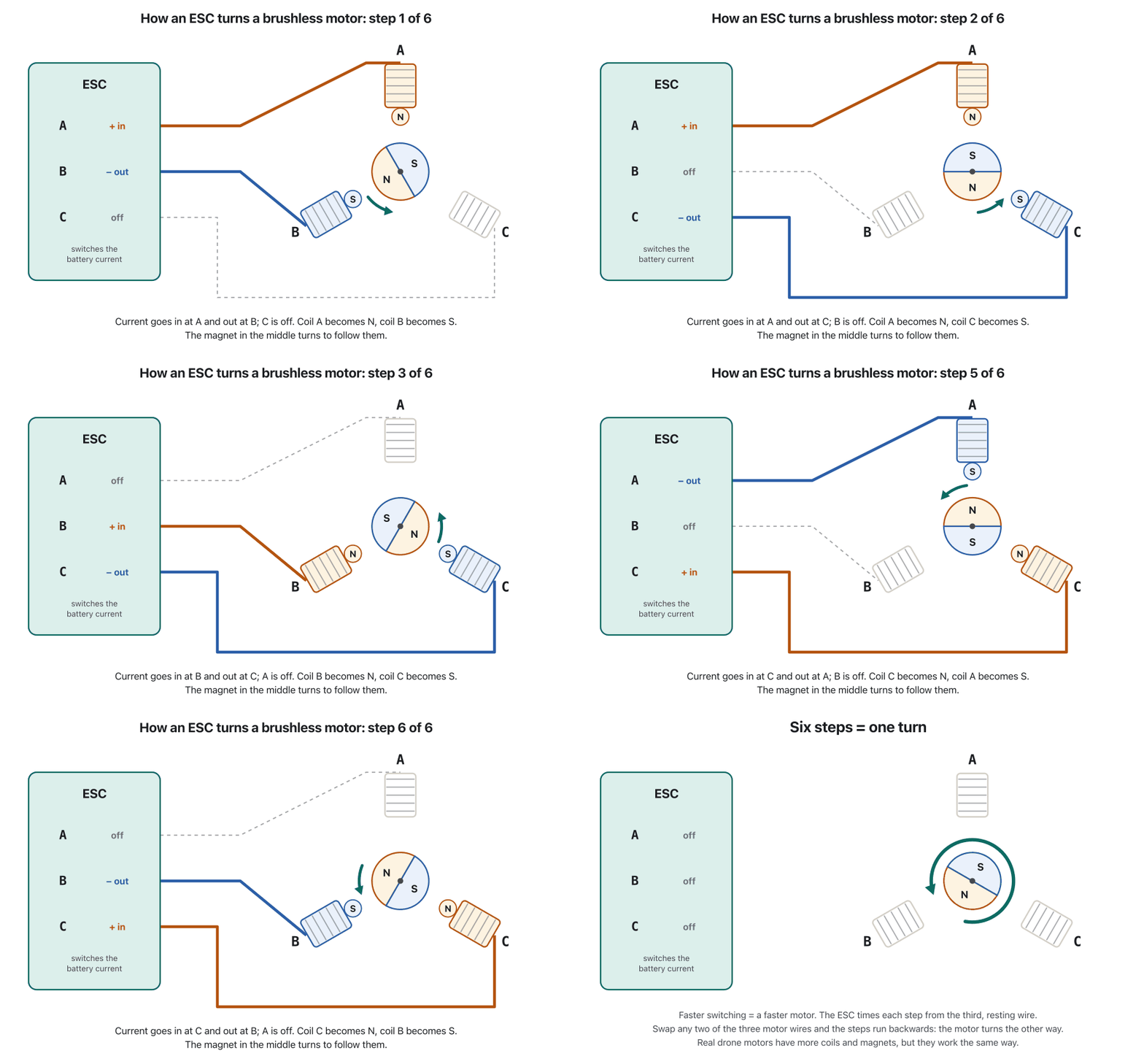
The faster the ESC steps, the faster the motor spins. Most drone ESCs sense where the magnets are from the small voltage on the resting wire, so the motor needs no extra position sensor. Real drone motors have more coils and magnets than the picture, but they work the same way.
هەتا خێراتر هەنگاو بنێت، خێراتر دەسووڕێتەوە. زۆربەی لە لە بچووکی سەر وایەرە پشوودەرەکەوە دەزانن موگناتیسەکان لە کوێن، بۆیە پێویستی بە زیادەی شوێن نییە. ڕاستەقینەی کۆیل و موگناتیسی زیاتریان هەیە لە وێنەکە، بەڵام بە هەمان شێوە کار دەکەن.
The ESC: the motor’s speed controllerکۆنترۆڵکەری خێرایی: ئەو بۆردەی خێرایی ماتۆڕ ڕێک دەخات
Signals from the flight controllerسیگناڵەکان لە کۆنترۆڵکەری فڕینەوە
Many times a second, the flight controller tells each ESC the speed it wants. There are a few agreed "languages" (protocols) for this message:
لە هەر چرکەیەکدا چەندین جار بە هەر دەڵێت چ خێراییەکی دەوێت. چەند «زمانێکی» ڕێککەوتوو () بۆ ئەم نامەیە هەن:
| Signal | How it worksچۆن کار دەکات | Notesتێبینی |
|---|---|---|
PWM | A pulse whose width is the speed: 1000 μs = stop, 2000 μs = full. کە پانییەکەی خێراییەکەیە: 1000 μs = وەستان، 2000 μs = تەواو. | 50–490 pulses a second; the ESC must be calibrated.50–490 لە چرکەیەکدا؛ پێویستی بە ڕێکخستنی سەرەتاییە. |
OneShot125 | The same idea with pulses 8 times shorter: 125–250 μs.هەمان بیرۆکە بە 8 جار کورتتر: 125–250 μs. | Faster updates; still needs calibration.نوێبوونەوەی خێراتر؛ هێشتا پێویستی بە ڕێکخستنی سەرەتاییە. |
DShot150/300/600 | A digital number sent as bits, with a checksum.ژمارەیەکی کە بە دەنێردرێت، لەگەڵ . | The number is the speed in kbit/s. No calibration; can reverse a motor and ask for telemetry.ژمارەکە خێرایی ناردنە بە kbit/s. ڕێکخستنی سەرەتایی ناوێت؛ دەتوانێت پێچەوانە بکاتەوە و داوای بکات. |
DroneCAN | Messages on a shared data bus.نامە لەسەر کە هاوبەشە. | Used on drones built around a CAN data bus; also gives telemetry.لەو بەکار دێت کە لەسەر CAN دروست کراون؛ هەروەها دەدات. |
Propellers: size, pitch and spin directionپەروانەکان: قەبارە، هەنگاوی پەروانە و ئاڕاستەی سووڕانەوە
The spinning blades on a motor that push air backwards or downwards, so that the aircraft is pushed the other way (). Each blade is a small twisted wing; a propeller is sized by its diameter and its .
ئەو پەڕە سووڕاوانەیە کە لەسەر ماتۆڕێکن و هەوا بەرەو دواوە یان بەرەو خوارەوە دەپاڵن، بۆیە فڕۆکەکە بەرەو لاکەی تر پاڵ دەنرێت (). هەر پەڕەیەک باڵێکی بچووکی بادراوە؛ قەبارەی پەروانە بە تیرەکەی و دیاری دەکرێت.
Each blade of a propeller is a small, twisted wing: as it spins, it turns air downwards and is pushed up (how a propeller pushes). A propeller is described by two numbers in inches: diameter × pitch.
هەر پەڕەیەکی باڵێکی بچووکی بادراوە: کاتێک دەسووڕێتەوە، هەوا بەرەو خوارەوە لا دەدات و بەرەو سەرەوە پاڵ دەنرێت (پەروانە چۆن پاڵ دەنێت). بە دوو ژمارە بە ئینج وەسف دەکرێت: تیرە × .
- Diameter: from tip to tip. A 10-inch propeller is 25.4 cm across.
- Pitch: how far the propeller would move forward in one turn if it went through the air like a screw through wood. A 4.5-inch pitch is a gentle twist.
- So 10 × 4.5, often printed 1045, means a 10-inch diameter and a 4.5-inch pitch.
- تیرە: لە سەرێکەوە بۆ سەرەکەی تر. 10 ئینجی 25.4 cm پانە.
- : ئەو دوورییەی لە یەک سووڕانەوەدا بەرەو پێش دەیبڕێت، ئەگەر وەک بزمارپێچێک لە ناو داردا بە ناو هەوادا بچێت. 4.5 ئینج بادانێکی نەرمە.
- کەواتە 10 × 4.5، کە زۆرجار بە 1045 دەنووسرێت، واتە تیرەی 10 ئینج و 4.5 ئینج.
Propellers: size, pitch and spin directionپەروانەکان: قەبارە، هەنگاوی پەروانە و ئاڕاستەی سووڕانەوە
Blades and spin directionپەڕەکان و ئاڕاستەی سووڕانەوە
A bigger diameter or pitch moves more air in each turn but needs more torque, so big propellers go with low-KV motors. Propellers have two, three or more blades: more blades grip more air inside a small circle, but each extra blade adds drag. Propellers also come in pairs, clockwise (CW) and counter-clockwise (CCW); each one fits only a motor that spins its way. To tell them apart, look at a blade: the thicker, rounded edge is the leading edge and moves first. ArduPilot calls CW propellers "pushers" and CCW propellers "pullers".
تیرە یان گەورەتر لە هەر سووڕانەوەیەکدا هەوای زیاتر دەجووڵێنێت بەڵام زیاتری پێویستە، بۆیە گەورە لەگەڵ KVـی نزمدا دەگونجێت. دوو، سێ یان زیاتر پەڕەیان هەیە: پەڕەی زیاتر لە ناو بازنەیەکی بچووکدا هەوای زیاتر دەگرێت، بەڵام هەر پەڕەیەکی زیادە زیاد دەکات. بە جووتیش دێن، (CW) و (CCW)؛ هەر یەکەیان تەنیا لەسەر دادەنرێت کە بە ئاڕاستەی ئەو دەسووڕێتەوە. بۆ جیاکردنەوەیان سەیری پەڕەیەک بکە: لێوارە ئەستوورتر و خڕەکە لێواری پێشەوەیە و یەکەم جار دەجووڵێت. ArduPilot بە CW دەڵێت «pushers» و بە CCW دەڵێت «pullers».
Propellers: size, pitch and spin directionپەروانەکان: قەبارە، هەنگاوی پەروانە و ئاڕاستەی سووڕانەوە
Looking after propellersئاگاداری لە پەروانەکان
- Balanced: if one blade is heavier, the whole drone shakes. Balanced propellers fly smoother and keep the sensors calm.
- Undamaged: a chip or crack can make a blade fly off at full speed. Replace damaged propellers; never glue or bend them back.
- Tight and on the right motor: check the nut or lock and the spin marks before every flight.
- Guards: propeller guards protect people and walls when you fly indoors or near people, but they add weight and drag.
- هاوسەنگ: ئەگەر پەڕەیەک قورستر بێت، هەموو دەلەرزێت. بە هاوسەنگ نەرمتر دەفڕێت و ئارام دەمێننەوە.
- ساغ: شکانێکی بچووک یان درزێک دەتوانێت پەڕەیەک بە خێرایی تەواو فڕێ بدات. زیانلێکەوتوو بگۆڕە؛ هەرگیز مەیانلکێنە و ڕاستیان مەکەرەوە.
- توند و لەسەر دروست: پێش هەموو فڕینێک سامۆڵەکە یان قفڵەکە و نیشانەکانی ئاڕاستەی سووڕانەوە بپشکنە.
- پارێزەر: پارێزەری خەڵک و دیوار دەپارێزێت کاتێک لە ناو خانوو یان نزیک خەڵک دەفڕیت، بەڵام و زیاد دەکات.
Power distribution and wiringدابەشکردنی کارەبا و وایەرکردن
A circuit board in the middle of a drone that takes the battery's power and shares it out to the , the and the cameras, with thick copper paths for the high current.
بۆردێکی ئەلیکترۆنییە لە ناوەڕاستی کە کارەبای وەردەگرێت و بەسەر ، و کامێراکاندا دابەشی دەکات، بە ڕێڕەوی مسی ئەستوور بۆ بەرز.
All four ESCs, the flight controller and the radio parts take power from one battery. The battery plugs in through one strong main connector, for example an XT60. A power distribution board (PDB), or a 4-in-1 ESC board that does the same job, shares the battery's power among the ESCs. A small regulator turns the battery's 14.8 V into the steady 5 V that the flight controller needs; it often also measures the battery's voltage and current for the low-battery warning (Batteries and power).
هەر چوار ، و بەشە ڕادیۆییەکان لە یەک کارەبا وەردەگرن. بە یەک سەرەکیی بەهێز دەبەسترێت، بۆ نموونە XT60. (PDB)، یان بۆردێکی 4-in-1 ESC کە هەمان کار دەکات، کارەبای بەسەر دابەش دەکات. ڕێکخەرێکی بچووک 14.8 Vـی دەکاتە ئەو 5 V جێگیرەی پێویستیەتی؛ زۆرجار و دەپێوێت بۆ ئاگادارکردنەوەی کەم (پاتری و وزە).
Why are the battery wires so thick? Electric power is voltage times current, (power and energy). At full throttle four motors can draw about 60 A together: . Thin wires would get hot and waste energy, so the high-current paths are thick copper. Such big currents also make the battery's voltage dip for a moment (voltage sag). Signal wires carry almost no current and can be thin.
بۆچی وایەرەکانی ئەوەندە ئەستوورن؟ یەکسانە بە جاران ، (توانا و وزە). بە تەواو چوار پێکەوە دەتوانن نزیکەی 60 A بکێشن: . وایەری باریک گەرم دەبێت و وزە بە فیڕۆ دەدات، بۆیە ڕێڕەوەکانی بەرز مسی ئەستوورن. ئەوەندە گەورە بۆ ساتێک دادەبەزێنێت (دابەزینی ڤۆڵتیە). وایەرەکانی نزیکەی هیچ هەڵناگرن و دەتوانن باریک بن.
Matching the partsگونجاندنی بەشەکان
The parts must suit each other: the propellers must fit the frame without touching, the motor's KV must suit the propeller and the battery voltage, the ESCs must carry the motors' current, and the battery must give enough current without being too heavy.
بەشەکان دەبێت لەگەڵ یەکتر بگونجێن: دەبێت لە جێیان ببێتەوە بەبێ ئەوەی بەر یەک بکەون، KVـی دەبێت لەگەڵ و بگونجێت، دەبێت هەڵبگرن و دەبێت پێویست بدات بەبێ ئەوەی زۆر قورس بێت.
Builders use a rule of thumb, a habit from experience rather than a law of physics: all the motors together should give about twice the drone's weight in thrust, a thrust-to-weight ratio of about 2. Then the drone hovers at roughly half power and keeps spare thrust for climbing, wind and quick turns. Racing drones use much more; some heavy-lift drones fly with less and gentler limits. Heavy loads are often carried by six or eight rotors instead of four (Six or eight rotors).
دروستکەران یاسایەکی ئەزموونی بەکار دەهێنن، کە نەریتێکە لە ئەزموونەوە نەک یاسایەکی فیزیا: هەموو پێکەوە دەبێت نزیکەی دوو هێندەی بدەن، واتە نزیکەی 2 بێت. بەم شێوەیە بە نزیکەی نیوەی تەواوی لە هەوادا ڕادەوەستێت و زیادەی بۆ بەرزبوونەوە، با و سووڕانەوەی خێرا دەمێنێتەوە. پێشبڕکێ زۆر زیاتر بەکار دەهێنێت؛ هەندێک بارهەڵگر بە کەمتر و سنووری نەرمترەوە دەفڕن. بۆ باری قورس زۆرجار لەبری چوار، شەش یان هەشت بەکار دێت (شەش یان هەشت ڕۆتۆر).
TWR: thrust-to-weight ratio; T: total thrust of all motors at full power; W: weight
TWR: ؛ T: کۆی هەموو بە تەواو؛ W:
Matching the partsگونجاندنی بەشەکان
Worked example: choosing motorsنموونەی کارکراو: هەڵبژاردنی ماتۆڕەکان
Total thrust at full power: of thrust. (Makers give thrust in grams or kilograms: the weight it can hold up.)
کۆی بە تەواو: . (دروستکەران بە گرام یان کیلۆگرام دەدەن: ئەو دەتوانێت هەڵیبگرێت.)
Shared by four motors: each.
بەسەر چوار : هەر یەکەیان .
Look in the motor maker's thrust table for your propeller and battery, and choose a motor that gives at least 600 g at full throttle.
لە خشتەی دروستکەری بۆ و بگەڕێ و هەڵبژێرە کە بە تەواو لانیکەم 600 g بدات.
Read the current at that thrust in the same table, and pick ESCs rated above it.
لە هەمان خشتەدا لەو بخوێنەرەوە و بە سنووری بەرزتر لەوە هەڵبژێرە.
A real example (the maker's figures, checked in November 2026): a 500 mm training kit made for the open-source PX4 autopilot uses 2216 920 KV motors, 10 × 4.5 propellers, four 20 A ESCs and a 4S battery of 3,000–5,000 mAh; its maker gives about 18 minutes of hovering with a 5,000 mAh battery.
نموونەیەکی ڕاستەقینە (ژمارەکانی دروستکەر، لە تشرینی دووەمی 2026دا پشکنراون): کیتێکی ڕاهێنانی 500 mm کە بۆ PX4 دروست کراوە، 2216 920 KV، 10 × 4.5، چوار (هەر یەکەیان 20 A) و 4Sـی 3,000–5,000 mAh بەکار دەهێنێت؛ دروستکەرەکەی دەڵێت بە 5,000 mAh نزیکەی 18 خولەک لە هەوادا ڕادەوەستێت.
Common mistakesهەڵە باوەکان
| Mistakeهەڵە | Fixچارەسەر |
|---|---|
| Putting a clockwise propeller on a counter-clockwise motor, or a propeller upside down.دانانی لەسەر ، یان سەرەوژێر. | The drone flips over at take-off. Match the spin marks of each motor and propeller; the thick edge must lead. لە کاتی هەڵفڕیندا وەردەگەڕێت. نیشانەکانی ئاڕاستەی هەر و بەراورد بکە؛ لێوارە ئەستوورەکە دەبێت لە پێشەوە بێت. |
| Testing motors on the bench with the propellers on.تاقیکردنەوەی لەسەر مێز لە کاتێکدا لەسەریانن. | Always take the propellers off before motor tests and setup.هەمیشە پێش تاقیکردنەوە و ڕێکخستنی ، لا ببە. |
| Choosing a high-KV motor "because it is stronger".هەڵبژاردنی KVـی بەرز «چونکە بەهێزترە». | KV is speed per volt, not strength. Match the KV to the propeller and the battery.KV خێراییە بۆ هەر ، نەک بەهێزی. KV لەگەڵ و بگونجێنە. |
| An ESC whose current rating is below the motor's peak current. کە سنووری لە زۆرترین کەمترە. | It overheats or burns. Choose ESCs rated above the motor's maximum current.زۆر گەرم دەبێت یان دەسووتێت. بە سنووری بەرزتر لە زۆرترین هەڵبژێرە. |
| Thin or loose power wires and connectors.وایەری کارەبای باریک یان شل. | They heat up and waste power. Use thick wires and a proper main connector, and check them before flying.گەرم دەبن و وزە بە فیڕۆ دەدەن. وایەری ئەستوور و سەرەکیی گونجاو بەکار بهێنە و پێش فڕین بیانپشکنە. |
| Plugging the battery in backwards (red to black).بەستنەوەی بە پێچەوانەوە (سوور بە ڕەش). | This can destroy the electronics at once. Use connectors that fit only one way, and look before you plug in.دەتوانێت یەکسەر ئامێرە ئەلیکترۆنییەکان تێک بدات. ئەو سەرانە بەکار بهێنە کە تەنیا بە یەک شێوە جێیان دەبێتەوە و پێش بەستنەوە سەیر بکە. |
| Saying that the propellers make "lift".وتنی ئەوەی کە «» دروست دەکەن. | Propellers make thrust; on a multirotor it points up and does the job of lift. دروست دەکەن؛ لە بەرەو سەرەوەیە و کاری دەکات. |
Exercisesڕاهێنانەکان
Write the name of each numbered part, and say which group it belongs to: body, propulsion, power, brain and navigation, or radio and camera.
ناوی هەر بەشێکی ژمارەدار بنووسە و بڵێ سەر بە کام گرووپە: لاشە، ، وزە، مێشک و ڕێنیشاندان، یان ڕادیۆ و کامێرا.
Show answerوەڵامەکە پیشان بدە
- 1 propeller (propulsion); 2 motor (propulsion); 3 ESC (propulsion); 4 video transmitter (radio); 5 its antenna (radio); 6 landing gear (body)
- 7 GNSS receiver (navigation); 8 flight controller (brain); 9 power distribution board (power); 10 frame: arm and plates (body)
- 11 radio receiver (radio); 12 camera (camera); 13 LiPo battery (power)
- 1 ()؛ 2 ()؛ 3 ()؛ 4 (ڕادیۆ)؛ 5 (ڕادیۆ)؛ 6 قاچەکانی نیشتنەوە (لاشە)
- 7 وەرگری (ڕێنیشاندان)؛ 8 (مێشک)؛ 9 (وزە)؛ 10 : باسک و پلێتەکان (لاشە)
- 11 (ڕادیۆ)؛ 12 کامێرا (کامێرا)؛ 13 (وزە)
A quadcopter has the usual X layout: front-left, front-right, back-left and back-right motors. The front-right and back-left motors spin counter-clockwise. Which motors get clockwise (CW) propellers and which get counter-clockwise (CCW) ones?
شێوەی باوی Xـی هەیە: پێشەوەی چەپ، پێشەوەی ڕاست، دواوەی چەپ و دواوەی ڕاست. پێشەوەی ڕاست و دواوەی چەپ دەسووڕێنەوە. کام (CW) وەردەگرێت و کامیان (CCW)؟
Hintئاماژە
Opposite corners spin the same way.
گۆشە بەرامبەرەکان بە هەمان ئاڕاستە دەسووڕێنەوە.
Show answerوەڵامەکە پیشان بدە
Front-right and back-left spin counter-clockwise, so they get CCW propellers. Front-left and back-right spin clockwise, so they get CW propellers. Opposite corners always match.
پێشەوەی ڕاست و دواوەی چەپ دەسووڕێنەوە، بۆیە CCW وەردەگرن. پێشەوەی چەپ و دواوەی ڕاست دەسووڕێنەوە، بۆیە CW وەردەگرن. گۆشە بەرامبەرەکان هەمیشە وەک یەکن.
A 2,300 KV racing motor runs on a 4S battery (14.8 V). Estimate its no-load speed. Then estimate it on a 6S battery (22.2 V). Why do 6S racing drones use lower-KV motors?
پێشبڕکێی 2,300 KV لەسەر 4S (14.8 V) کار دەکات. خێراییەکەی بەبێ مەزەندە بکە. پاشان لەسەر 6S (22.2 V) مەزەندەی بکە. بۆچی پێشبڕکێی 6S KVـی نزمتر بەکار دەهێنێت؟
Show answerوەڵامەکە پیشان بدە
On 6S the same motor would spin about 1.5 times faster and pull far more current with the same propeller, so it would overheat. 6S builds choose a lower KV so that the speed stays about the same with the higher voltage.
لەسەر 6S هەمان نزیکەی 1.5 هێندە خێراتر دەسووڕێتەوە و بە هەمان زۆر زیاتر دەکێشێت، بۆیە زۆر گەرم دەبێت. دروستکەرانی 6S KVـی نزمتر هەڵدەبژێرن بۆ ئەوەی خێراییەکە بە بەرزتر نزیکەی وەک خۆی بمێنێتەوە.
A camera drone weighs 1.6 kg. Each of its four motors gives 900 g of thrust at full power. Work out its thrust-to-weight ratio. Does it pass the builders' 2:1 rule of thumb?
وێنەگرتن 1.6 kg کێشی هەیە. هەر یەکێک لە چوار بە تەواو 900 g دەدات. بدۆزەرەوە. ئایا لە یاسا ئەزموونییەکەی 2:1ـی دروستکەران دەردەچێت؟
Show answerوەڵامەکە پیشان بدە
Yes: 2.25 is a little above 2, so the drone hovers at a bit under half of its full thrust and has spare thrust for wind.
بەڵێ: 2.25 کەمێک لە 2 زیاترە، بۆیە بە کەمێک کەمتر لە نیوەی تەواوی لە هەوادا ڕادەوەستێت و زیادەی بۆ با هەیە.
At full throttle a heavy drone draws 50 A from a 6S battery (22.2 V). How much power flows through its main wires?
بە تەواو قورس 50 A لە 6S (22.2 V) دەکێشێت. چەند بە وایەرە سەرەکییەکانیدا تێدەپەڕێت؟
Show answerوەڵامەکە پیشان بدە
About 1.1 kW, about as much as a small electric kettle. That is why the main wires and the connector must be thick.
نزیکەی 1.1 kW، نزیکەی هێندەی کەتڵییەکی کارەبایی بچووک. هەر بۆیە وایەرە سەرەکییەکان و سەرەکە دەبێت ئەستوور بن.
Summaryپوختە
- The frame is the drone's skeleton: centre plates, arms and landing gear. Its size is the diagonal motor-to-motor distance.
- The propulsion system is a chain on every arm: battery → ESC → motor → propeller → thrust.
- Brushless motors spin magnets around fixed coils. KV = rpm per volt with no propeller.
- The ESC regulates the motor's speed by switching battery current through three wires in six steps; it listens to PWM, OneShot, DShot or DroneCAN.
- Propellers are read as diameter × pitch (10 × 4.5) and come in CW and CCW pairs.
- Thick wires and a PDB carry the battery's high current; builders aim for a total thrust of about twice the weight ().
- ئێسکەپەیکەری : پلێتە ناوەڕاستەکان، باسکەکان و قاچەکانی نیشتنەوە. قەبارەکەی دووریی لاری نێوان .
- سیستەمی زنجیرەیەکە لەسەر هەموو باسکێک: ← ← ← ← .
- موگناتیس بە دەوری کۆیلی جێگیردا دەسووڕێنن. KV = بۆ هەر بەبێ .
- خێرایی ڕێک دەخات بە ناردنی بە سێ وایەردا لە شەش هەنگاودا؛ گوێ لە PWM، OneShot، DShot یان DroneCAN دەگرێت.
- بە شێوەی تیرە × (10 × 4.5) دەخوێنرێنەوە و بە جووتی CW و CCW دێن.
- وایەری ئەستوور و PDB بەرزی هەڵدەگرن؛ دروستکەران دەیانەوێت کۆی نزیکەی دوو هێندەی بێت ().
What is the difference between thrust and lift?جیاوازیی نێوان هێزی پاڵنەر و هێزی سەرخەر چییە؟
Thrust is the push a propeller makes along its shaft; lift is the upward force that holds an aircraft up. On a multirotor the rotors' thrust points up and does the job of lift.
ئەو پاڵەیە کە بە درێژایی میلەکەی دروستی دەکات؛ ئەو بەرەو سەرەوەیەیە کە فڕۆکە بە بەرزی ڕادەگرێت. لە بەرەو سەرەوەیە و کاری دەکات.
Why does a brushless motor need an ESC?بۆچی ماتۆڕی بێفڵچە پێویستی بە کۆنترۆڵکەری خێرایی هەیە؟
It has no brushes to switch the current, so an ESC must switch the battery's DC through its three wires in the right order and at the right moment.
فڵچەی نییە کە بگۆڕێت، بۆیە دەبێت بە ڕیزی دروست و لە کاتی دروستدا بە سێ وایەرەکەیدا بنێرێت.
How do you reverse a motor's direction?چۆن ئاڕاستەی ماتۆڕێک پێچەوانە دەکەیتەوە؟
Swap any two of its three wires, or, with a DShot ESC, change the direction setting.
هەر دوو وایەرێک لە سێ وایەرەکەی ئاڵوگۆڕ بکە، یان لە DShotـدا ئاڕاستە بگۆڕە.
A drone weighs 1.5 kg. How much total thrust should its motors give at full power?درۆنێک 1.5 kg کێشی هەیە. ماتۆڕەکانی بە گازی تەواو دەبێت چەند هێزی پاڵنەر بدەن؟
About 3 kg (), by the 2:1 rule of thumb: about 750 g per motor on a quadcopter.
نزیکەی 3 kg ()، بەپێی یاسا ئەزموونییەکەی 2:1: لە نزیکەی 750 g بۆ هەر .
Lesson complete!وانەکە تەواو بوو!
Well done. Review the key terms, then go on to the next lesson.دەستخۆش. سەیرێکی زاراوە سەرەکییەکان بکەرەوە، پاشان بڕۆ بۆ وانەی داهاتوو.
Key termsزاراوە سەرەکییەکان
How a Quadcopter Flies: Forces, Torque, Pitch, Roll and Yawچوارپەروانە چۆن دەفڕێت: هێزەکان، زەبر، لێژی، لاربوونەوە و سووڕانەوەی ئاسۆیی
Related lecturesوانە پەیوەندیدارەکان
- How a Quadcopter Flies: Forces, Torque, Pitch, Roll and Yawچوارپەروانە چۆن دەفڕێت: هێزەکان، زەبر، لێژی، لاربوونەوە و سووڕانەوەی ئاسۆیی
- Types of Drones: Multirotors, Fixed Wings, Helicopters and VTOLجۆرەکانی درۆن: فرەپەروانە، درۆنی باڵجێگیر، هەلیکۆپتەری بێفڕۆکەوان و VTOL
- The Flight Controller: Sensors, Control Loops and Autopilotsکۆنترۆڵکەری فڕین: هەستەوەرەکان، خولەکانی کۆنترۆڵ و فڕۆکەوانی خۆکار
- Batteries and Power: LiPo Cells, Flight Time and Safetyپاتری و وزە: خانەکانی LiPo، کاتی فڕین و سەلامەتی
- Radio Links: Remote Control, Telemetry, FPV Video and 5Gپەیوەندیی ڕادیۆیی: کۆنترۆڵی دوور، تەلەمەتری، ڤیدیۆی FPV و 5G
- Electricity Basics: Voltage, Current and Resistanceبنەماکانی کارەبا: ڤۆڵتیە، تەزوو و بەرگری
References and further readingسەرچاوەکان و خوێندنەوەی زیاتر
- PX4 Guide: ESCs & Motors
- PX4 Guide: ESC Protocols (PWM, OneShot, DShot, DroneCAN)
- PX4 Guide: DShot ESCs
- ArduPilot Copter: Connect ESCs and Motors (motor order, CW/CCW propellers, reversing a motor)
- Microchip AN885: Brushless DC (BLDC) Motor Fundamentals
- Tyto Robotics: How to calculate motor poles and brushless motor Kv
- Scorpion Power System: SII-2215-1400KV motor specifications (stator size naming)
- APC Propellers: FAQ (diameter × pitch)
- NASA Glenn Research Center: Propeller Thrust
- NASA Glenn Research Center: Four Forces on an Airplane
- Holybro: X500 V2 kit specifications (PX4 development kit)
- ArduPilot Discourse: Minimum thrust-to-weight ratio (builders’ rule of thumb)
- Brushless Whoop: DShot and bidirectional DShot (frame of 16 bits)
This lecture is a first edition. The Kurdish text and terminology are waiting for review by Kurdish IT teachers.ئەم وانەیە چاپی یەکەمە. دەقە کوردییەکە و زاراوەکانی چاوەڕێی پێداچوونەوەی مامۆستایانی کوردی بواری IT ن.