Chapterبەش 4 · Lectureوانە 4.1
Flying Safely: VLOS, EVLOS, BVLOS, Weather and Pre-flight Checksفڕینی سەلامەت: هێڵی بینینی چاو، هێڵی بینینی درێژکراوە، دەرەوەی هێڵی بینین، کەشوهەوا و پشکنینی پێش فڕین
How to fly a drone without hurting anyone: the three kinds of operation (VLOS in your own sight, EVLOS with observers, BVLOS out of sight) and what each needs, why FPV goggles are not VLOS, giving way and detect and avoid, backups (redundancy), weather limits including cold batteries and space weather, the training pilots need, and a pre-flight checklist.
چۆن بفڕێنیت بەبێ ئەوەی زیان بە کەس بگەیەنیت: سێ جۆرەکەی فڕاندن ( لە بەرچاوی خۆت، بە ، لە دەرەوەی بینین) و پێداویستیی هەر یەکەیان، بۆچی چاویلکەی FPV نییە، ڕێگە چۆڵکردن و ، یەدەگ ()، سنوورەکانی کەشوهەوا لەگەڵ سارد و کەشوهەوای بۆشایی ئاسمان، ئەو ڕاهێنانەی فڕۆکەوانان پێویستیانە و .
What you will learnچی فێر دەبیت
- Tell VLOS, EVLOS and BVLOS apart, give an example of each and say what each needs.
- Explain why FPV goggles do not count as seeing the drone and what a visual observer does.
- Describe how drones avoid collisions and why they need backups (redundancy).
- Decide whether the weather allows a flight: wind, rain, temperature, visibility, clouds and the Kp index.
- Name the training a pilot needs and go through a pre-flight checklist.
- جیاوازیی نێوان ، و بکەیت، نموونەیەک بۆ هەر یەکەیان بهێنیتەوە و بڵێیت هەر یەکەیان چی پێویستە.
- ڕوونی بکەیتەوە بۆچی چاویلکەی FPV وەک بینینی هەژمار ناکرێت و چی دەکات.
- وەسف بکەیت چۆن خۆیان لە پێکدادان لادەدەن و بۆچی پێویستیان بە یەدەگ () هەیە.
- بڕیار بدەیت ئایا کەشوهەوا ڕێگە بە فڕین دەدات: با، باران، پلەی گەرما، دووریی بینین، هەور و .
- ئەو ڕاهێنانە ناو ببەیت کە فڕۆکەوان پێویستیەتی و تەواو بکەیت.
Safety first: the pilot answers for the flightسەلامەتی پێش هەموو شتێک: فڕۆکەوان بەرپرسی فڕینەکەیە
When you use a drone, safety is very important. A drone is a flying machine with fast, sharp propellers and a battery full of energy. Nobody sits inside it, so the person on the ground answers for every second of the flight: the remote pilot. The law in most countries says the same: the remote pilot is responsible for the flight, even when the drone flies itself.
کاتێک بەکار دەهێنیت، سەلامەتی زۆر گرنگە. ئامێرێکی فڕیوە بە خێرا و تیژ و پڕ لە وزە. کەس لە ناویدا دانانیشێت، بۆیە ئەو کەسەی لەسەر زەوییە بەرپرسی هەموو چرکەیەکی فڕینەکەیە: . یاسای زۆربەی وڵاتانیش هەمان شت دەڵێت: بەرپرسی فڕینەکەیە، تەنانەت کاتێک خۆی دەفڕێت.
This lesson turns that responsibility into habits: keeping the drone in sight (or getting permission when you cannot), giving way to other aircraft, having backups, reading the weather, training, and checking everything before take-off. The laws behind these habits are in Drone rules in 2026.
ئەم وانەیە ئەو بەرپرسیارێتییە دەکاتە خوو: لە بەرچاو بێت (یان مۆڵەت وەربگرە کاتێک ناتوانیت)، ڕێگە بۆ فڕۆکەکانی تر چۆڵ بکە، یەدەگت هەبێت، کەشوهەوا بخوێنەرەوە، ڕاهێنان بکە و پێش هەڵفڕین هەموو شتێک بپشکنە. ئەو یاسایانەی لە پشت ئەم خووانەوەن لە یاساکانی درۆن لە 2026دا هەن.
Safety first: the pilot answers for the flightسەلامەتی پێش هەموو شتێک: فڕۆکەوان بەرپرسی فڕینەکەیە
What a drone can hurtدرۆن دەتوانێت زیان بە چی بگەیەنێت
Before you think about rules, think about what could be hurt: people below; other aircraft, such as helicopters, small planes and paragliders; wires, masts and buildings that can bring the drone down; and property such as cars and roofs. A damaged LiPo battery can even catch fire (Danger signs).
پێش ئەوەی بیر لە یاسا بکەیتەوە، بیر لەوە بکەرەوە چی زیانی پێ دەگات: خەڵکی خوارەوە؛ فڕۆکەکانی تر وەک هەلیکۆپتەر، فڕۆکەی بچووک و پاراگلایدەر؛ وایەر، ستوون و باڵەخانە کە دەتوانن بخەنە خوارەوە؛ هەروەها موڵک وەک ئۆتۆمبێل و سەربان. تێکشکاو دەتوانێت ئاگریش بگرێت (نیشانەکانی مەترسی).
Thinking through each danger — how likely it is and how bad it would be — is a risk assessment. Its answer tells you where, when and how to fly, and when not to fly at all.
بیرکردنەوە لە هەر مەترسییەک — چەند ئەگەری هەیە و چەند خراپ دەبێت — . وەڵامەکەی پێت دەڵێت لە کوێ، کەی و چۆن بفڕێنیت، هەروەها کەی هەر نەیفڕێنیت.
VLOS, EVLOS and BVLOS: three ways to flyهێڵی بینینی چاو، هێڵی بینینی درێژکراوە و دەرەوەی هێڵی بینین: سێ شێوەی فڕاندن
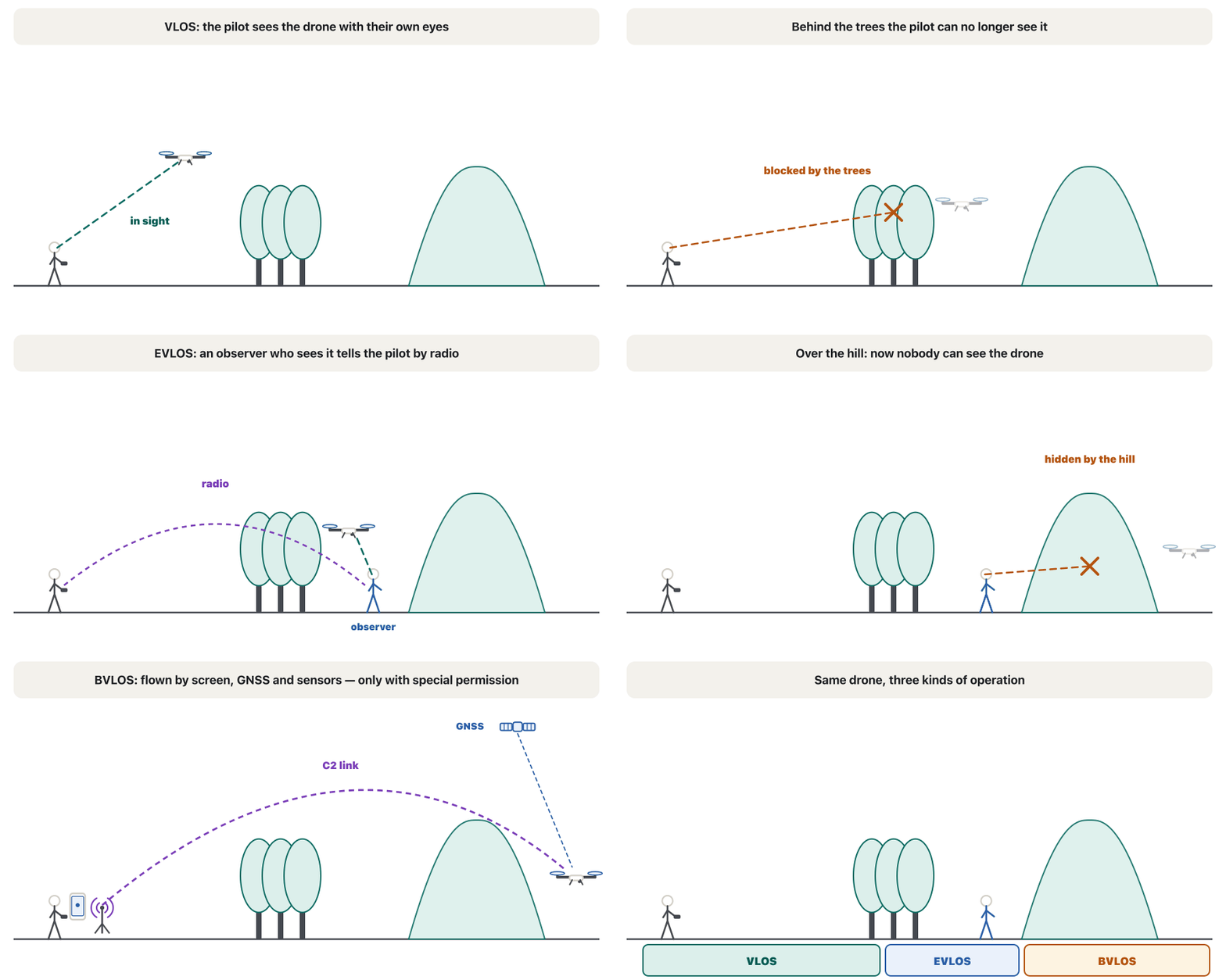
Drone flights are often sorted by range and capability into three groups: VLOS (visual line of sight), EVLOS (extended visual line of sight) and BVLOS (beyond visual line of sight). These are not three kinds of drone. They are three kinds of operation — three ways of flying. The same drone can fly all three; what changes is who can see it, how far it goes, and what permission and equipment the flight needs.
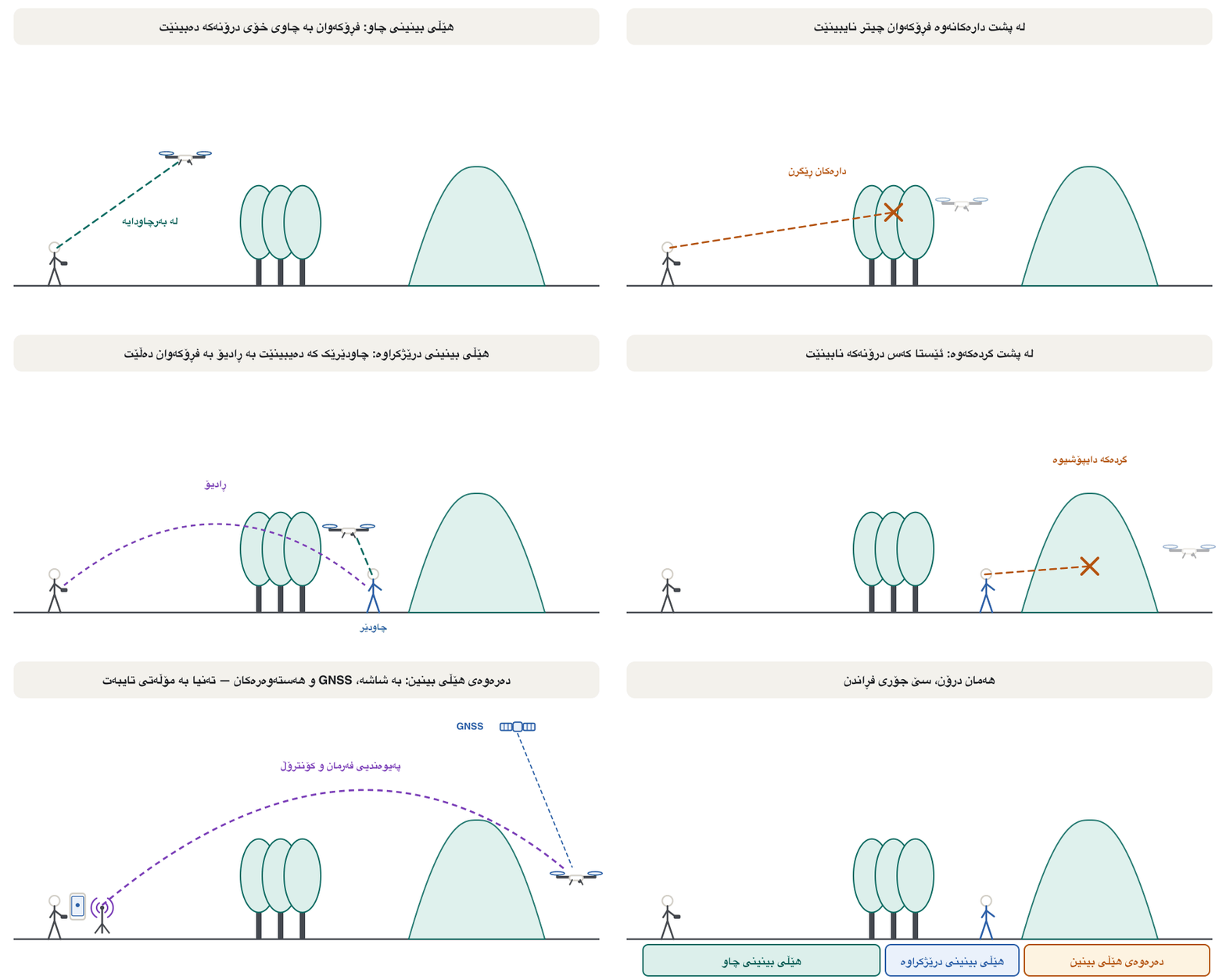
فڕینەکانی زۆرجار بەپێی دووری و توانا دەکرێنە سێ گرووپ: ، و . ئەمانە سێ جۆری نین، بەڵکو سێ جۆری فڕاندنن — سێ شێوەی فڕین. هەمان دەتوانێت هەر سێکیان بکات؛ ئەوەی دەگۆڕێت ئەوەیە کێ دەیبینێت، چەند دوور دەڕوات و فڕینەکە چ مۆڵەت و ئامێرێکی پێویستە.
VLOS: keep it in your own sightهێڵی بینینی چاو: با لە بەرچاوی خۆت بێت
In visual line of sight (VLOS) the drone stays where the pilot can see it with their own eyes, without cameras or binoculars. Picture flying in a park: you keep watching the drone as it flies around, so you always know where it is, which way it faces and what is near it.
لە لە شوێنێکدا دەمێنێتەوە کە فڕۆکەوان بە چاوی خۆی دەیبینێت، بەبێ کامێرا یان دووربین. وێنای فڕاندن لە پارکێکدا بکە: بەردەوام سەیری دەکەیت کە بە دەوری خۆیدا دەفڕێت، بۆیە هەمیشە دەزانیت لە کوێیە، ڕووی لە کوێیە و چی لە نزیکییەتی.
VLOS is good for hobby flying, photography and inspecting small areas, such as one roof or one field. Its limit is your eyes: the drone cannot go behind buildings, trees or hills, or so far away that it becomes a dot you can no longer follow.
بۆ فڕاندنی خولیایی، وێنەگرتن و پشکنینی ناوچەی بچووک باشە، وەک یەک سەربان یان یەک کێڵگە. سنوورەکەی چاوی تۆیە: ناتوانێت بچێتە پشت باڵەخانە، دار یان گرد، یان ئەوەندە دوور بکەوێتەوە کە ببێتە خاڵێک و چیتر نەتوانیت بەدوایدا بچیت.
The law says this in stricter words. EU rules define VLOS as keeping "continuous unaided visual contact" with the drone. US rules also ask for unaided vision but allow glasses and contact lenses. A screen never counts as seeing the drone.
یاسا هەمان شت بە وشەی توندتر دەڵێت. یاساکانی یەکێتیی ئەورووپا وا پێناسە دەکەن: «پەیوەندیی بینراوی بەردەوام و بێ ئامراز» لەگەڵ . یاساکانی ئەمریکاش بینینی بێ ئامراز داوا دەکەن، بەڵام چاویلکە و لێنزی چاو ڕێگەپێدراون. شاشە هەرگیز وەک بینینی هەژمار ناکرێت.
EVLOS: helpers who watchهێڵی بینینی درێژکراوە: یارمەتیدەرانی چاودێر
In extended visual line of sight (EVLOS) the drone flies a little farther than the pilot can see, and other people, called visual observers, help by watching it. Imagine inspecting a long road near Koya: your friend stands halfway along the road and tells you by radio where the drone is and whether a car, a bird or a helicopter is coming.
لە کەمێک دوورتر لەوەی فڕۆکەوان دەیبینێت دەفڕێت و کەسانی تر، کە پێیان دەوترێت ، بە سەیرکردنی یارمەتی دەدەن. وێنای پشکنینی ڕێگایەکی درێژ لە نزیک کۆیە بکە: هاوڕێکەت لە نیوەی ڕێگاکەدا وەستاوە و بە ڕادیۆ پێت دەڵێت لە کوێیە و ئایا ئۆتۆمبێلێک، باڵندەیەک یان هەلیکۆپتەرێک دێت.
EVLOS suits long, thin jobs, such as inspecting pipelines, roads and power lines. It needs extra people, a radio link between them, and careful planning of where each observer stands.
بۆ کاری درێژ و باریک گونجاوە، وەک پشکنینی بۆری، ڕێگا و هێڵی کارەبا. خەڵکی زیاتری پێویستە، پەیوەندییەکی ڕادیۆیی لە نێوانیاندا و پلاندانانێکی ورد بۆ ئەوەی هەر لە کوێ بوەستێت.
EVLOS: helpers who watchهێڵی بینینی درێژکراوە: یارمەتیدەرانی چاودێر
EVLOS and the lawهێڵی بینینی درێژکراوە و یاسا
Be careful with the word: EVLOS is not defined in EU or US law. Some authorities do define it: Hong Kong's, for example, allows EVLOS with trained observers at other places, but only with permission after a risk assessment (2025). In the EU, a flight beyond the pilot's own sight counts as BVLOS. In the USA, an observer may watch for the pilot, but the drone must stay close enough that the pilot could see it too.
ئاگاداری ئەم وشەیە بە: لە یاسای یەکێتیی ئەورووپا و ئەمریکادا پێناسە نەکراوە. هەندێک دەسەڵات پێناسەی دەکەن: بۆ نموونە دەسەڵاتی هۆنگ کۆنگ ڕێگە بە دەدات بە ڕاهێنراو لە شوێنی تر، بەڵام تەنیا بە مۆڵەت و دوای (2025). لە یەکێتیی ئەورووپادا فڕینێک کە لە بینینی خودی فڕۆکەوان تێپەڕێت بە دادەنرێت. لە ئەمریکادا دەتوانێت لە جیاتی فڕۆکەوان سەیر بکات، بەڵام دەبێت ئەوەندە نزیک بێت کە فڕۆکەوانیش بتوانێت بیبینێت.
BVLOS: out of sightدەرەوەی هێڵی بینین: لە دەرەوەی بینین
In beyond visual line of sight (BVLOS) flights the drone goes so far that nobody can see it with their eyes. The pilot flies it with a screen, GNSS and sensors: a map with the drone's position, its telemetry and often a video picture. Think of a delivery drone crossing a city, out of anyone's sight.
لە فڕینی ئەوەندە دوور دەڕوات کە کەس بە چاو نایبینێت. فڕۆکەوان بە شاشە، و دەیفڕێنێت: نەخشەیەک بە شوێنی ، و زۆرجار وێنەیەکی ڤیدیۆیی. بیر لە گەیاندن بکەرەوە کە بە ناو شارێکدا تێدەپەڕێت و کەس نایبینێت.
BVLOS is used for drone delivery, farming over large lands, inspecting disaster areas and long pipelines, and for military purposes (see the Military AI course). Real examples, such as medical deliveries, are in Drones at work.
بۆ ، کشتوکاڵ بەسەر زەوییە فراوانەکاندا، پشکنینی ناوچەی کارەساتلێدراو و بۆرییە درێژەکان و بۆ مەبەستی سەربازی بەکار دێت (بڕوانە کۆرسی ژیریی دەستکردی سەربازی). نموونەی ڕاستەقینە، وەک گەیاندنی پزیشکی، لە درۆنەکان لە کاردا هەن.
Because no eyes are watching, BVLOS needs special permission, advanced technology and safety systems: a reliable command-and-control (C2) link, detect and avoid to find other aircraft, and an authorisation after a risk assessment. In the EU such flights belong to the specific category. In the USA they need a waiver until the planned BVLOS rule, Part 108, takes effect; as of November 2026 it had been proposed (August 2025) but not yet published as a final rule.
چونکە هیچ چاوێک سەیری ناکات، پێویستی بە مۆڵەتی تایبەت، تەکنەلۆجیای پێشکەوتوو و سیستەمی سەلامەتی هەیە: متمانەپێکراو، بۆ دۆزینەوەی فڕۆکەکانی تر و ڕێگەپێدان دوای . لە یەکێتیی ئەورووپادا ئەم فڕینانە سەر بە . لە ئەمریکادا ڕێگەپێدانێکی تایبەت (waiver) پێویستە تا یاسا پلاندانراوەکەی BVLOS، واتە Part 108، جێبەجێ دەکرێت؛ تا تشرینی دووەمی 2026 پێشنیار کرابوو (ئابی 2025) بەڵام هێشتا وەک یاسای کۆتایی بڵاو نەکرابووەوە.
FPV goggles are not your eyesچاویلکەی دیمەنی کەسی یەکەم چاوی تۆ نین
With FPV (first-person view) the pilot wears goggles that show live video from the drone's camera (FPV). It feels like sitting in the drone, but the camera sees only straight ahead. A helicopter coming from the side, a kite string or a crowd behind the drone stays invisible.
لە فڕۆکەوان چاویلکەیەک لە چاو دەکات کە ڤیدیۆی ڕاستەوخۆی کامێرای پیشان دەدات (دیمەنی کەسی یەکەم). هەست دەکەیت لە ناو دانیشتوویت، بەڵام کامێراکە تەنیا ڕاستەوخۆ پێشەوە دەبینێت. هەلیکۆپتەرێک کە لە لاوە دێت، دەزووی کۆلارەیەک یان قەرەباڵغییەک لە پشت نابینرێن.
So FPV is not VLOS. An FPV pilot needs a visual observer who stands beside them, watches the drone and the whole sky with their own eyes, and can warn them at once. In the EU's open category this is the rule for FPV: the observer must stand alongside the pilot. In the USA, the observer (or the pilot) must be able to see the drone throughout the flight.
کەواتە نییە. فڕۆکەوانی FPV پێویستی بە هەیە کە لە تەنیشتی بوەستێت، بە چاوی خۆی سەیری و هەموو ئاسمان بکات و دەستبەجێ ئاگاداری بکاتەوە. لە یەکێتیی ئەورووپادا ئەمە یاسای FPVـیە: دەبێت لە تەنیشت فڕۆکەوانەوە بوەستێت. لە ئەمریکادا (یان فڕۆکەوان) دەبێت بتوانێت لە هەموو فڕینەکەدا ببینێت.
Avoiding collisions: give way and detectخۆلادان لە پێکدادان: ڕێگە چۆڵ بکە و بدۆزەرەوە
Planes rarely hit buildings or each other because air traffic control and on-board warning systems keep them apart. Drones need the same idea, called detect and avoid: notice the danger in time and get out of its way. The first rule is simple: a drone always gives way to crewed aircraft — planes, helicopters, paragliders (US rule 14 CFR 107.37). If you see or hear one, descend and land. Rescue and police helicopters often fly low.
فڕۆکەکان بە دەگمەن بەر باڵەخانە یان یەکتر دەکەون، چونکە کۆنترۆڵی هاتوچۆی ئاسمانی و سیستەمی ئاگادارکردنەوەی ناو فڕۆکەکان لێکیان دوور دەخەنەوە. پێویستیان بە هەمان بیرۆکەیە، کە پێی دەوترێت : مەترسییەکە لە کاتی خۆیدا ببینە و لە ڕێگەی لابدە. یەکەم یاسا سادەیە: هەمیشە ڕێگە بۆ فڕۆکەی فڕۆکەواندار چۆڵ دەکات — فڕۆکە، هەلیکۆپتەر، پاراگلایدەر (یاسای ئەمریکا 14 CFR 107.37). ئەگەر یەکێکیانت بینی یان دەنگیت بیست، دابەزە و بنیشەوە. هەلیکۆپتەری فریاکەوتن و پۆلیس زۆرجار نزم دەفڕن.
Helpers that detect: your own eyes and an observer; obstacle sensors that stop the drone before a wall (Obstacle sensors); a geofence that keeps it out of a zone (Geofences); an ADS-B receiver on some drones, which hears crewed aircraft that broadcast their position; and Remote ID, which lets others identify your drone. None of them is perfect, so they work together.
یارمەتیدەرەکانی دۆزینەوە: چاوی خۆت و ؛ بەربەست کە پێش دیوارێک ڕادەگرن (هەستەوەرەکانی بەربەست)؛ کە لە ناوچەیەک دووری دەخاتەوە (پەرژینەکانی جوگرافی)؛ وەرگری لەسەر هەندێک ، کە گوێی لە فڕۆکە فڕۆکەواندارەکان دەبێت کاتێک شوێنی خۆیان بڵاو دەکەنەوە؛ هەروەها ، کە ڕێگە دەدات کەسانی تر بناسنەوە. هیچیان تەواو نین، بۆیە پێکەوە کار دەکەن.
Backups: redundancyیەدەگ: یەدەگداری
System redundancy means a backup for every part that matters, so that one failure does not bring the drone down. A part whose failure stops everything is a single point of failure; good design finds each one and adds a backup or a safe reaction. Together, the backups give the drone fault tolerance. ArduPilot flight controllers also have a watchdog that restarts a frozen processor; whether that saves a drone in flight is explained in Lab: The Watchdog Timer.
سیستەم واتە یەدەگێک بۆ هەر بەشێکی گرنگ، بۆ ئەوەی تێکچوونی یەک بەش نەخاتە خوارەوە. بەشێک کە تێکچوونی هەموو شتێک ڕادەگرێت ؛ دیزاینی باش هەر یەکێکیان دەدۆزێتەوە و یەدەگێک یان کاردانەوەیەکی سەلامەتی بۆ زیاد دەکات. یەدەگەکان پێکەوە دەدەنە . ArduPilot هەیە کە گیرخواردوو دەست پێ دەکاتەوە؛ ئایا ئەمە لە کاتی فڕیندا ڕزگار دەکات، لە تاقیگە: تایمەری پاسەوان ڕوون کراوەتەوە.
- Two or three IMUs and two GNSS receivers, so the flight controller can switch to a healthy one (Real boards).
- Six or eight motors, so a hexacopter or octocopter has a chance to land when one stops (When a motor stops).
- Failsafes: planned reactions to a lost link, a low battery or a lost position (Failsafes).
- A parachute on some professional drones: the last backup when everything else fails.
- دوو یان سێ و دوو وەرگری ، بۆ ئەوەی بتوانێت بگۆڕێت بۆ یەکێکی ساغ (بۆردە ڕاستەقینەکان).
- شەش یان هەشت ، بۆ ئەوەی یان دەرفەتی نیشتنەوەی هەبێت کاتێک یەکێکیان دەوەستێت (کاتێک ماتۆڕێک دەوەستێت).
- : کاردانەوەی پلاندانراو بۆ پچڕانی پەیوەندی، کەمبوونەوەی یان ونبوونی شوێن (سەلامەتیی کاتی تێکچوون).
- پەڕەشووت لەسەر هەندێک پیشەیی: دوا یەدەگ کاتێک هەموو شتێکی تر تێکدەچێت.
Weather limitsسنوورەکانی کەشوهەوا
A pilot must know how weather limits affect flight safety. Every drone has limits in its manual; the weather on the day must stay inside them, with a margin. Check these before every flight:
فڕۆکەوان دەبێت بزانێت سنوورەکانی کەشوهەوا چۆن کار دەکەنە سەر سەلامەتیی فڕین. هەموو سنووری خۆی لە ڕێنماییەکەیدا هەیە؛ کەشوهەوای ئەو ڕۆژە دەبێت لە ناو ئەو سنوورانەدا بمێنێتەوە، بە پەراوێزێکەوە. پێش هەموو فڕینێک ئەمانە بپشکنە:
- Wind and gusts: stay well below the maker's limit (next screen).
- Rain and snow: most small drones are not waterproof; some industrial drones carry an IP rating that resists rain. Never fly near a thunderstorm.
- Temperature: stay inside the maker's range; a popular small camera drone, for example, is rated from −10 to 40 °C.
- Visibility: fog, dust storms and smoke hide the drone; US rules ask for at least 3 statute miles (about 4.8 km).
- Clouds: stay well below them; the drone must never enter a cloud (US rules: 500 ft below, 2,000 ft away).
- Space weather: a Kp index of 5 or more means a geomagnetic storm that can spoil GNSS and disturb the compass (Space weather).
- با و گژەبا: زۆر لە خوار سنووری دروستکەرەوە بمێنەوە (پەڕەی داهاتوو).
- باران و بەفر: زۆربەی بچووکەکان دژەئاو نین؛ هەندێک پیشەسازی پلەی IPـیان هەیە کە بەرگەی باران دەگرێت. هەرگیز لە نزیک هەورەتریشقەدا مەفڕێنە.
- پلەی گەرما: لە ناو سنووری دروستکەردا بمێنەوە؛ بۆ نموونە بچووکی کامێرادار کە زۆر بەکاردێت لە 10 پلە ژێر سفرەوە تا 40 پلە دیاری کراوە.
- دووریی بینین: تەم، زریانی تۆز و دووکەڵ دەشارنەوە؛ یاساکانی ئەمریکا لانیکەم 3 میلی وشکانی (نزیکەی 4.8 کیلۆمەتر) داوا دەکەن.
- هەور: زۆر لە خوارییانەوە بمێنەوە؛ هەرگیز نابێت بچێتە ناو هەورەوە (یاسای ئەمریکا: 500 پێ لە خوارەوە، 2,000 پێ دوور).
- کەشوهەوای بۆشایی ئاسمان: 5 یان زیاتر واتە زریانێکی موگناتیسی کە دەتوانێت GNSS تێک بدات و بشێوێنێت (کەشوهەوای بۆشایی ئاسمان).
Weather limitsسنوورەکانی کەشوهەوا
Wind and gustsبا و گژەبا
Wind is the limit you meet most often. Read the maker's figure — a popular 249 g camera drone, for example, is rated for winds up to 10.7 m/s — and remember: gusts count, the wind is usually stronger higher up, and flying home against it uses much more battery. A windsock, trees and flags show the wind at your site. Iraq's drone rules (CAP 58) also forbid flying in winds above 20 knots (37 km/h), or less if the maker's limit is lower.
با ئەو سنوورەیە کە زۆرتر لە هەموو پێی دەگەیت. ژمارەی دروستکەر بخوێنەرەوە — بۆ نموونە کامێرادار کە 249 گرامە و زۆر بەکاردێت، بۆ بای تا 10.7 m/s دیاری کراوە — و لەبیرت بێت: گژەباش هەژمار دەکرێت، بای بەرزایی زۆرجار لە بای سەر زەوی بەهێزترە و گەڕانەوە بۆ ماڵ بە پێچەوانەی باوە زۆر زیاتر لە دەخوات. بایەنما، دار و ئاڵا بای شوێنەکەت پیشان دەدەن. یاساکانی عێراق (CAP 58)یش فڕین لە بای سەرووی 20 گرێ (37 کیلۆمەتر لە کاتژمێرێکدا) قەدەغە دەکەن، یان کەمتر ئەگەر سنووری دروستکەر کەمتر بێت.
Cold batteries and hot daysپاتریی سارد و ڕۆژانی گەرم
Cold slows the chemistry inside a lithium battery: its internal resistance rises, so the voltage sags more under load and the usable capacity falls; at −20 °C most batteries give only about half of their normal performance. In winter near Penjwen, start with full, warm packs (kept in an inside pocket or a warm car), hover for a moment to check, and land earlier (Voltage sag). Heat and high places make the air thinner, so the propellers work harder (Thin air, hot days and wind); and never leave packs in a hot car (Storing packs).
سەرما کیمیای ناو لیسیۆم خاو دەکاتەوە: بەرز دەبێتەوە، بۆیە لە ژێر باردا زیاتر دادەبەزێت و توانای بەکارهاتووی کەم دەبێتەوە؛ لە 20 پلە ژێر سفردا زۆربەی تەنیا نزیکەی نیوەی توانای ئاسایی خۆیان دەدەن. لە زستاندا لە نزیک پێنجوێن، بە پڕ و گەرم دەست پێ بکە (لە گیرفانی ناوەوە یان ئۆتۆمبێلێکی گەرمدا هەڵیانبگرە)، کەمێک لە هەوادا ڕاوەستە بۆ پشکنین و زووتر بنیشەوە (دابەزینی ڤۆڵتیە). گەرما و شوێنی بەرز هەوا تەنکتر دەکەن، بۆیە زیاتر کار دەکەن (هەوای تەنک، ڕۆژانی گەرم و با)؛ هەرگیز لە ئۆتۆمبێلێکی گەرمدا جێ مەهێڵە (هەڵگرتنی پاترییەکان).
Training: learn before you flyڕاهێنان: پێش فڕین فێربە
People who fly these complicated systems need standard training. It usually goes in steps: practise the sticks on a computer simulator, where a crash costs nothing; fly in an open field far from people; take an official course and test; and only then move on to harder flights.
ئەو کەسانەی ئەم سیستەمە ئاڵۆزانە دەفڕێنن پێویستیان بە ڕاهێنانی ستاندارد هەیە. زۆرجار هەنگاو بە هەنگاو دەڕوات: لەسەر کۆمپیوتەر ڕاهێنان بە دەستگرەکان بکە، کە تێیدا کەوتن هیچ تێچوویەکی نییە؛ لە کێڵگەیەکی کراوەدا دوور لە خەڵک بفڕێنە؛ خولێکی فەرمی و تاقیکردنەوەیەک ببڕە؛ ئینجا بڕۆ بۆ فڕینی قورستر.
Examples as of 2026. EU: pilots of drones heavier than class C0 take an online course and exam for A1/A3 (40 questions, 75 % to pass; free in some countries, such as Spain); A2 adds practical self-training and a second exam; the certificates last 5 years. USA: recreational flyers pass the free TRUST test, while anyone flying under Part 107 (for example for work) needs a remote pilot certificate: a knowledge test on rules, airspace, weather, emergencies, radio, decision-making and pre-flight inspection, repeated as recurrent training every 24 months.
نموونەکان تا 2026. یەکێتیی ئەورووپا: فڕۆکەوانانی ئەو لە پۆلی C0 قورسترن خولێکی ئۆنلاین و تاقیکردنەوەیەک بۆ A1/A3 دەبڕن (40 پرسیار، 75 % بۆ دەرچوون؛ لە هەندێک وڵات، وەک ئیسپانیا، بێبەرانبەرە)؛ A2 ڕاهێنانی کرداریی خۆیی و تاقیکردنەوەیەکی دووەم زیاد دەکات؛ بڕوانامەکان 5 ساڵ کارا دەبن. ئەمریکا: فڕۆکەوانانی خولیایی تاقیکردنەوەی بێبەرانبەری TRUST دەبڕن، بەڵام هەر کەسێک بەپێی Part 107 بفڕێنێت (بۆ نموونە بۆ کار) پێویستی بە هەیە: تاقیکردنەوەیەکی زانیاری لەسەر یاسا، ، کەشوهەوا، بارودۆخی فریاکەوتن، ڕادیۆ، بڕیاردان و پشکنینی پێش فڕین، کە هەموو 24 مانگ جارێک وەک ڕاهێنانی دووپاتە دەکرێتەوە.
Before take-off: walk the siteپێش هەڵفڕین: بە شوێنەکەدا بگەڕێ
A safe flight starts on the ground. US rules, for example, ask the pilot to assess the site before every flight: the weather, the airspace and its limits, the people and property below, and other hazards (14 CFR 107.49). Walk around and look for people and roads, power lines and masts, tall trees, houses and gardens (privacy matters too), and a clear, flat take-off point away from people. Decide where you will land if something goes wrong.
فڕینی سەلامەت لەسەر زەوی دەست پێ دەکات. بۆ نموونە یاساکانی ئەمریکا داوا لە فڕۆکەوان دەکەن پێش هەموو فڕینێک شوێنەکە هەڵبسەنگێنێت: کەشوهەوا، و سنوورەکانی، خەڵک و موڵکی خوارەوە و مەترسییەکانی تر (14 CFR 107.49). بە دەوریدا بگەڕێ و بە دوای خەڵک و ڕێگا، هێڵی کارەبا و ستوون، داری بەرز، خانوو و باخچە (تایبەتێتیش گرنگە) و شوێنێکی هەڵفڕینی چۆڵ و تەخت دوور لە خەڵک بگەڕێ. بڕیار بدە ئەگەر شتێک هەڵە چوو لە کوێ دەنیشیتەوە.
Then brief your helpers: who watches what, how you talk to each other, and what each person does in an emergency. US rules ask for this briefing too (107.49(b)).
پاشان یارمەتیدەرەکانت ئاگادار بکەرەوە: کێ سەیری چی دەکات، چۆن قسە لەگەڵ یەکتر دەکەن و لە کاتی فریاکەوتندا هەر کەسێک چی دەکات. یاساکانی ئەمریکا ئەم ئاگادارکردنەوەیەش داوا دەکەن (107.49(b)).
The pre-flight checklistلیستی پشکنینی پێش فڕین
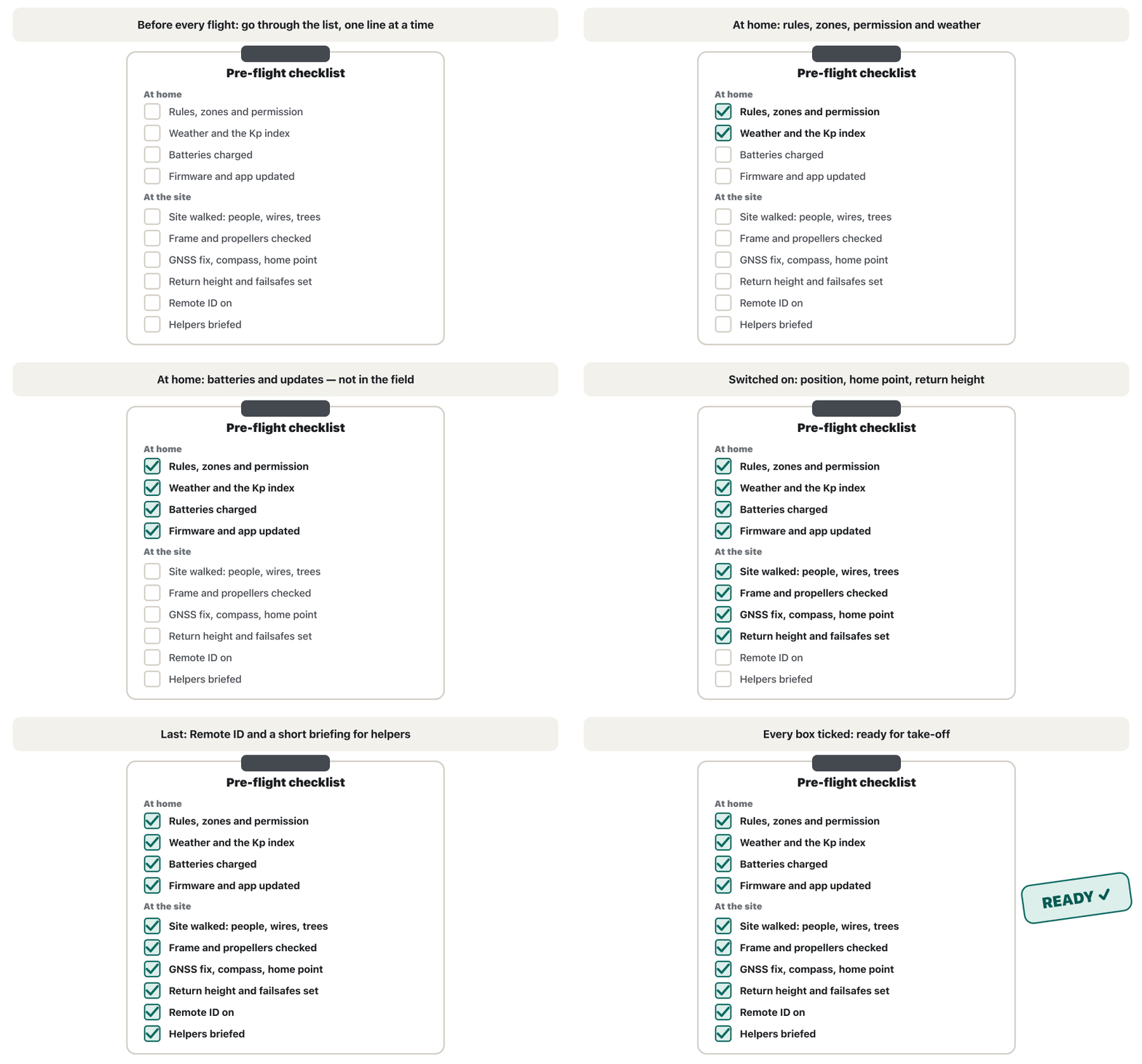
Pilots of big planes use written checklists because memory fails under stress. Drone pilots do the same: a pre-flight checklist turns this lesson into a routine. Go through it line by line before every flight:
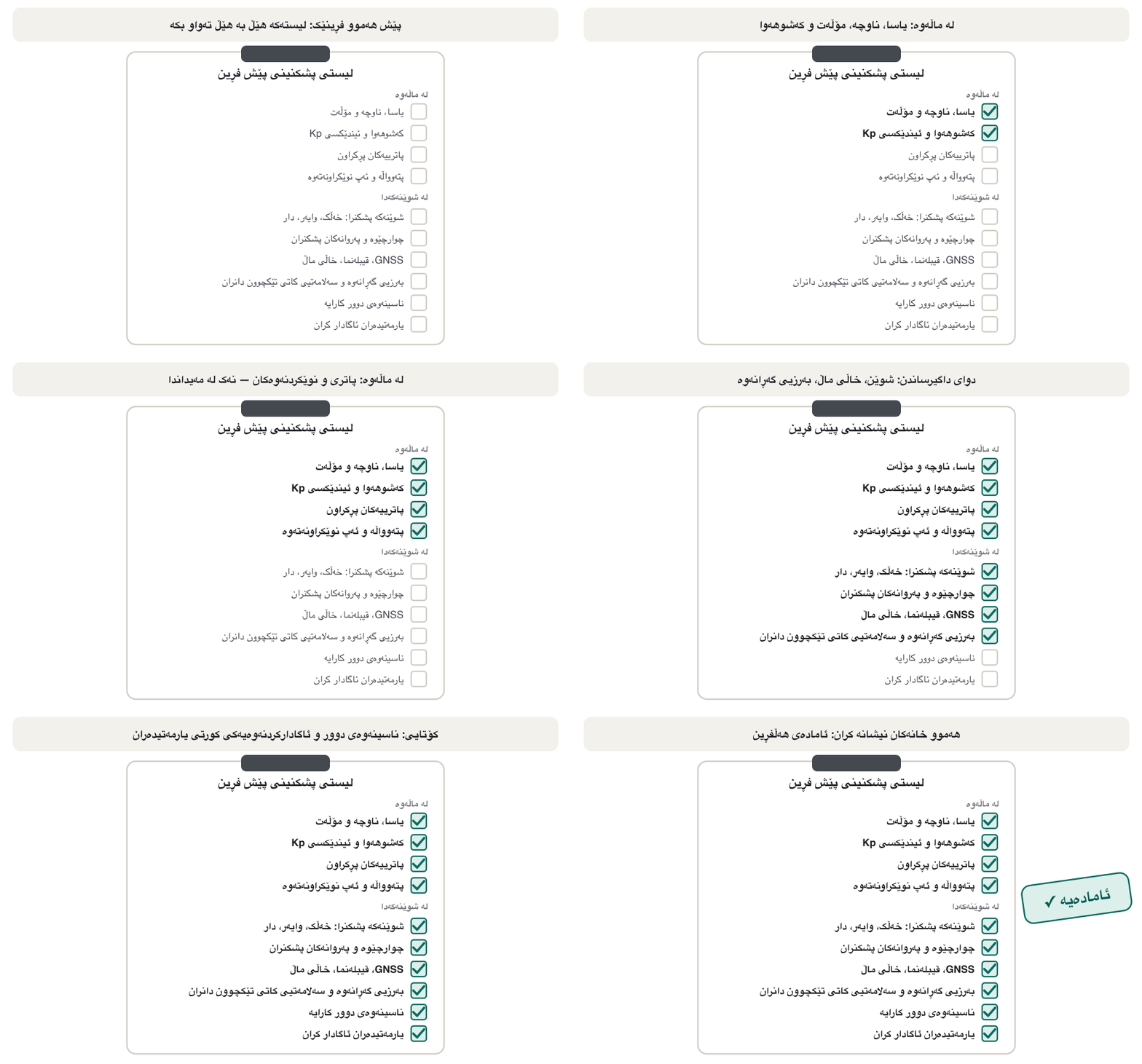
فڕۆکەوانانی فڕۆکە گەورەکان لیستی پشکنینی نووسراو بەکار دەهێنن، چونکە لە کاتی فشاردا بیرچوونەوە ڕوو دەدات. فڕۆکەوانانی هەمان شت دەکەن: ئەم وانەیە دەکاتە کارێکی ڕۆژانە. پێش هەموو فڕینێک هێڵ بە هێڵ پێیدا بڕۆ:
- At home: rules and zonesلە ماڵەوە: یاسا و ناوچەکان
Is flying allowed here, with the permission you need? Check the official map (Where you may fly).
ئایا فڕین لێرە بە مۆڵەتی پێویستەوە ڕێگەپێدراوە؟ نەخشە فەرمییەکە بپشکنە (لە کوێ دەتوانیت بفڕیت).
- At home: weather and Kpلە ماڵەوە: کەشوهەوا و Kp
Wind, gusts, rain, temperature and the Kp index inside the drone's limits?
با، گژەبا، باران، پلەی گەرما و لە ناو سنوورەکانی ؟
- At home: power and updatesلە ماڵەوە: وزە و نوێکردنەوە
Charge the drone, controller and phone; update the firmware and app at home, never at the field.
، و مۆبایل پڕ بکە؛ و ئەپەکە لە ماڵەوە نوێ بکەرەوە، هەرگیز لە مەیداندا نا.
- At the site: walk itلە شوێنەکەدا: پێیدا بڕۆ
People, roads, wires, trees; a clear take-off and landing spot.
خەڵک، ڕێگا، وایەر، دار؛ شوێنێکی چۆڵ بۆ هەڵفڕین و نیشتنەوە.
- At the site: inspect the droneلە شوێنەکەدا: درۆنەکە بپشکنە
Frame, propellers without cracks, battery locked in, anything carried firmly attached.
چوارچێوە، بێ درز، بە توندی جێگیر، هەر شتێک کە هەڵیدەگرێت بە توندی بەستراوە.
- Switched on: position and linkدوای داگیرساندن: شوێن و پەیوەندی
A good GNSS fix, the compass calibrated, the home point where you stand, and the control link working (Is the position good?).
شوێنێکی باشی GNSS، ڕێکخراوەتەوە، لەو شوێنەی تێیدا وەستاویت و پەیوەندیی کۆنترۆڵ کار بکات (ئایا شوێنەکە باشە؟).
- Return height and failsafesبەرزایی گەڕانەوە و سەلامەتیی کاتی تێکچوون
Return height above every obstacle; check what the drone does if the link or battery is lost.
گەڕانەوە لە سەرووی هەموو بەربەستێکەوە؛ بپشکنە چی دەکات ئەگەر پەیوەندی یان لەدەست چوو.
- Remote ID and helpersناسینەوەی دوور و یارمەتیدەران
Remote ID on where the law asks for it; helpers briefed.
کارا بێت لە شوێنێک کە یاسا داوای دەکات؛ یارمەتیدەران ئاگادار کرابنەوە.
- Arm and flyچالاککردن و فڕین
Arm only when everyone is clear of the propellers (Arming); keep the drone in sight.
تەنیا کاتێک بکە کە هەمووان لە دوورن (چالاککردنی ماتۆڕەکان)؛ لە بەرچاو بهێڵەوە.
- After landing: log itدوای نیشتنەوە: تۆماری بکە
Write down the time, place, battery and any problem, so the next flight is safer.
کات، شوێن، و هەر کێشەیەک بنووسە، بۆ ئەوەی فڕینی داهاتوو سەلامەتتر بێت.
Common mistakesهەڵە باوەکان
| Mistakeهەڵە | Betterباشتر |
|---|---|
| "My drone has GPS, so I don't need to see it."« GPSـی هەیە، بۆیە پێویست ناکات بیبینم.» | GPS shows where it is, not what is around it. Keep VLOS unless you have BVLOS permission.GPS پیشان دەدات لە کوێیە، نەک چی لە دەوروبەرییەتی. بپارێزە مەگەر مۆڵەتی هەبێت. |
| "FPV goggles count as seeing the drone."«چاویلکەی FPV وەک بینینی هەژمار دەکرێت.» | Goggles show only the camera's view. FPV needs an observer beside you.چاویلکە تەنیا دیمەنی کامێرا پیشان دەدات. پێویستی بە لە تەنیشتتەوە هەیە. |
| "With observers I can fly as far as I like."«بە دەتوانم چەند دوورم بوێت بفڕێنم.» | In the EU a flight beyond your own sight is BVLOS; in the USA the drone must stay close enough for you to see it. EVLOS needs permission where it exists.لە یەکێتیی ئەورووپادا فڕین لە دەرەوەی بینینی خۆت ؛ لە ئەمریکادا دەبێت ئەوەندە نزیک بێت کە بتوانیت بیبینیت. لەو شوێنانەی هەیە مۆڵەتی پێویستە. |
| "The helicopter will avoid my drone."«هەلیکۆپتەرەکە خۆی لە لادەدات.» | A small drone is almost invisible from a cockpit. The drone always gives way: descend and land. بچووک لە ناو فڕۆکەوە نزیکەی نابینرێت. هەمیشە ڕێگە چۆڵ دەکات: دابەزە و بنیشەوە. |
| "It is windy down here, so it will be calmer higher up."«لێرە لە خوارەوە با هەیە، کەواتە لە سەرەوە هێمنترە.» | Usually the reverse: wind grows with height. Compare the gusts with the maker's limit.زۆرجار پێچەوانەکەیەتی: با لەگەڵ بەرزیدا زیاد دەکات. گژەبا لەگەڵ سنووری دروستکەردا بەراورد بکە. |
| "A full battery gives a full flight, even in winter."« پڕ فڕینێکی تەواو دەدات، تەنانەت لە زستانیشدا.» | Cold lowers capacity and makes the voltage sag. Start with warm packs and land early.سەرما توانا کەم دەکاتەوە و دادەبەزێنێت. بە گەرم دەست پێ بکە و زوو بنیشەوە. |
| "One spare part is enough; I don't need failsafes."«یەک پارچەی یەدەگ بەسە؛ پێویستم بە نییە.» | Find every single point of failure: motors, battery, GNSS, link, compass. Each needs a backup or a planned reaction.هەموو بدۆزەوە: ، ، GNSS، پەیوەندی، . هەر یەکەیان یەدەگێک یان کاردانەوەیەکی پلاندانراوی پێویستە. |
| "I remember the checks; a written list is for beginners."«پشکنینەکانم لەبیرە؛ لیستی نووسراو بۆ تازەکارانە.» | Airline pilots with thousands of hours still use checklists. Memory fails under pressure.فڕۆکەوانانی کۆمپانیای فڕین کە هەزاران کاتژمێریان فڕاندووە هێشتا لیستی پشکنین بەکار دەهێنن. لە ژێر فشاردا بیرچوونەوە ڕوو دەدات. |
Exercisesڕاهێنانەکان
Classify each flight and say what it needs: (a) Hana photographs her family's roof in Erbil and watches the drone all the time. (b) A team inspects 3 km of a pipeline near Kirkuk; two observers along the route radio the pilot. (c) A medical-delivery drone flies 15 km between two hospitals. (d) Soran flies with FPV goggles while a friend beside him watches the drone. (e) A drone maps a large wheat farm in Sharazur on an automatic mission; the far side is 2 km away and out of sight. (f) A drone follows a runner along a river path, behind trees most of the time.
هەر فڕینێک پۆلێن بکە و بڵێ چی پێویستە: (a) هانا وێنەی سەربانی ماڵەکەیان لە هەولێر دەگرێت و هەموو کاتێک سەیری دەکات. (b) تیمێک 3 کیلۆمەتر لە بۆرییەک لە نزیک کەرکووک دەپشکنێت؛ دوو بە درێژایی ڕێگاکە بە ڕادیۆ قسە لەگەڵ فڕۆکەوان دەکەن. (c) گەیاندنی پزیشکی 15 کیلۆمەتر لە نێوان دوو نەخۆشخانەدا دەفڕێت. (d) سۆران بە چاویلکەی FPV دەفڕێنێت و هاوڕێیەکی لە تەنیشتییەوە سەیری دەکات. (e) بە ئەرکێکی خۆکار نەخشەی کێڵگەیەکی گەورەی گەنم لە شارەزوور دەکێشێت؛ سەری ترەکەی 2 کیلۆمەتر دوورە و نابینرێت. (f) بە دوای ڕاکەرێکدا بە ڕێگای کەناری ڕووبارێکدا دەڕوات، زۆربەی کات لە پشت دارەکانەوە.
Hintئاماژە
Ask: can the pilot see it with their own eyes the whole time? If not, who can, and is that allowed?
بپرسە: ئایا فڕۆکەوان هەموو کاتێک بە چاوی خۆی دەیبینێت؟ ئەگەر نا، کێ دەیبینێت و ئایا ئەوە ڕێگەپێدراوە؟
Show answerوەڵامەکە پیشان بدە
- (a) VLOS: follow the normal rules and keep it in sight.
- (b) EVLOS where an authority defines it (permission and a risk assessment); in EU law it is BVLOS.
- (c) BVLOS: special permission, a reliable C2 link and detect and avoid.
- (d) VLOS kept by the observer beside him: allowed in the EU open category and in the USA.
- (e) BVLOS: an automatic mission does not replace eyes; it needs permission, or the farm must be mapped in parts within sight.
- (f) It keeps leaving VLOS behind the trees: change the route, add an observer where allowed, or do not fly it.
- (a) : یاسا ئاساییەکان جێبەجێ بکە و لە بەرچاوی بهێڵەوە.
- (b) لەو شوێنەی دەسەڵاتێک پێناسەی کردبێت (مۆڵەت و )؛ لە یاسای یەکێتیی ئەورووپادا .
- (c) : مۆڵەتی تایبەت، متمانەپێکراو و .
- (d) لە ڕێگەی ئەو لە تەنیشتییەتی: لە یەکێتیی ئەورووپا و لە ئەمریکا ڕێگەپێدراوە.
- (e) : ئەرکی خۆکار جێگەی چاو ناگرێتەوە؛ مۆڵەتی پێویستە، یان دەبێت نەخشەی کێڵگەکە بەش بەش لە ناو بینیندا بکێشرێت.
- (f) بەردەوام لە پشت دارەکانەوە لە دەردەچێت: ڕێڕەوەکە بگۆڕە، زیاد بکە لە شوێنێک کە ڕێگەپێدراوە، یان مەیفڕێنە.
Your drone is rated for winds up to 10.7 m/s and from −10 to 40 °C. Today's forecast for Duhok: wind 6 m/s at the ground with gusts to 12 m/s, 2 °C, visibility 10 km, Kp 3. Do you fly? What would you change if the gusts dropped to 7 m/s?
بۆ بای تا 10.7 m/s و لە 10 پلە ژێر سفرەوە تا 40 پلە دیاری کراوە. پێشبینیی ئەمڕۆی دهۆک: بای 6 m/s لەسەر زەوی و گژەبای تا 12 m/s، 2 پلە، دووریی بینینی 10 کیلۆمەتر، Kp 3. دەیفڕێنیت؟ ئەگەر گژەبا دابەزییە 7 m/s چی دەگۆڕیت؟
Hintئاماژە
Compare each item with the drone's limits; remember that wind is stronger higher up.
هەر خاڵێک لەگەڵ سنوورەکانی بەراورد بکە؛ لەبیرت بێت با لە بەرزیدا بەهێزترە.
Show answerوەڵامەکە پیشان بدە
No-go: gusts of 12 m/s are above the 10.7 m/s limit, and the wind will be stronger at flying height. Temperature, visibility and Kp are fine. If the gusts dropped to 7 m/s you could fly with care: warm the batteries, keep a bigger reserve because of the cold, stay low and close, and land early.
مەیفڕێنە: گژەبای 12 m/s لە سەرووی سنووری 10.7 m/sـەوەیە و لە فڕیندا با بەهێزتر دەبێت. پلەی گەرما، دووریی بینین و Kp باشن. ئەگەر گژەبا دابەزییە 7 m/s دەتوانیت بە وریاییەوە بفڕێنیت: گەرم بکە، بەهۆی سەرماوە یەدەگێکی گەورەتر بهێڵەوە، نزم و نزیک بمێنەوە و زوو بنیشەوە.
A simple quadcopter has one battery, one GNSS receiver, one compass, one radio link and four motors, and one pilot with no helper. For each, say what happens if it fails and suggest a backup or a safe reaction.
سادە یەک ، یەک وەرگری GNSS، یەک ، یەک پەیوەندیی ڕادیۆیی و چوار هەیە، لەگەڵ یەک فڕۆکەوان بێ یارمەتیدەر. بۆ هەر یەکەیان بڵێ ئەگەر تێکچوو چی ڕوو دەدات و یەدەگێک یان کاردانەوەیەکی سەلامەت پێشنیار بکە.
Show answerوەڵامەکە پیشان بدە
- Battery: the drone falls → two batteries on bigger drones, a low-battery failsafe that returns early, and a reserve of about 20 %.
- GNSS: position lost or wrong → a second receiver, or switch to Alt Hold and land by sight.
- Compass: wrong heading → a second compass, calibration and pre-arm checks.
- Radio link: no control → a link-loss failsafe (return home or land).
- A motor: a quadcopter falls → a hexacopter or octocopter, or a parachute.
- The pilot: distraction or illness → an observer, training and a checklist.
- : دەکەوێت ← دوو لەسەر گەورەکان، کەم کە زوو دەیگەڕێنێتەوە، لەگەڵ یەدەگێکی نزیکەی 20 %.
- GNSS: شوێن ون دەبێت یان هەڵە دەبێت ← وەرگرێکی دووەم، یان گۆڕین بۆ Alt Hold و نیشتنەوە بە چاو.
- : ئاراستەی هەڵە ← دووەم، ڕێکخستن و پشکنینی پێش چالاککردن.
- پەیوەندیی ڕادیۆیی: کۆنترۆڵ نامێنێت ← پچڕانی پەیوەندی (گەڕانەوە بۆ ماڵ یان نیشتنەوە).
- : دەکەوێت ← یان ، یان پەڕەشووت.
- فڕۆکەوان: سەرقاڵبوون یان نەخۆشی ← ، ڕاهێنان و لیستی پشکنین.
You will photograph a farmer's orchard near Halabja: a power line crosses the far end, a village road runs along one side and a family lives next door. Write the checklist lines that matter most for this job.
دەتەوێت وێنەی باخی جووتیارێک لە نزیک هەڵەبجە بگریت: هێڵێکی کارەبا بە سەری ترەکەیدا تێدەپەڕێت، ڕێگایەکی گوند بە لایەکیدا دەڕوات و خێزانێک لە دراوسێیەتیدا دەژی. ئەو هێڵانەی لیستی پشکنین بنووسە کە بۆ ئەم کارە گرنگترن.
Show answerوەڵامەکە پیشان بدە
Rules and permission for this place; weather and Kp; batteries charged and firmware updated at home; walk the site and mark the power line, the road and the neighbour's house; take off away from the line; set a return height and route that cannot cross the line; failsafes set; do not film into the neighbours' garden and tell them before you fly; Remote ID on where required; brief any helper; keep the drone in sight; log the flight.
یاسا و مۆڵەت بۆ ئەم شوێنە؛ کەشوهەوا و Kp؛ پڕ و لە ماڵەوە نوێکراوە؛ بە شوێنەکەدا بگەڕێ و هێڵی کارەبا، ڕێگاکە و خانووی دراوسێ دیاری بکە؛ دوور لە هێڵەکە هەڵبفڕە؛ و ڕێڕەوێکی گەڕانەوە دابنێ کە نەتوانێت بە هێڵەکەدا تێپەڕێت؛ دانراو بێت؛ ڤیدیۆی باخچەی دراوسێکان مەگرە و پێش فڕین ئاگاداریان بکەرەوە؛ کارا بێت لە شوێنێک کە پێویستە؛ یارمەتیدەرەکان ئاگادار بکەرەوە؛ لە بەرچاو بهێڵەوە؛ فڕینەکە تۆمار بکە.
Summaryپوختە
- Safety comes first, and the remote pilot answers for the whole flight; a risk assessment asks who and what could be hurt.
- VLOS, EVLOS and BVLOS are kinds of operation, not kinds of drone: in your own sight; with observers; out of anyone's sight.
- VLOS means unaided eyes (glasses allowed); FPV goggles need an observer beside the pilot.
- BVLOS needs special permission, a reliable C2 link and detect and avoid; in the USA the Part 108 rule was still not final in November 2026.
- Drones always give way to crewed aircraft; eyes, sensors, geofences, ADS-B receivers and Remote ID work together.
- Redundancy removes single points of failure: spare sensors, extra motors, failsafes, a parachute.
- Weather: wind and gusts, rain, temperature (cold batteries), visibility, clouds and the Kp index — each has a no-go point.
- Train step by step (simulator, field, course and test) and use a written pre-flight checklist every time.
- سەلامەتی پێش هەموو شتێکە و بەرپرسی هەموو فڕینەکەیە؛ دەپرسێت کێ و چی زیانی پێ دەگات.
- ، و جۆری فڕاندنن، نەک جۆری : لە بەرچاوی خۆت؛ بە ؛ لە دەرەوەی بینینی هەمووان.
- واتە چاوی بێ ئامراز (چاویلکە ڕێگەپێدراوە)؛ چاویلکەی FPV پێویستی بە لە تەنیشت فڕۆکەوانەوە هەیە.
- پێویستی بە مۆڵەتی تایبەت، متمانەپێکراو و هەیە؛ لە ئەمریکادا یاسای Part 108 تا تشرینی دووەمی 2026 هێشتا کۆتایی نەهاتبوو.
- هەمیشە ڕێگە بۆ فڕۆکەی فڕۆکەواندار چۆڵ دەکات؛ چاو، ، ، وەرگری ADS-B و پێکەوە کار دەکەن.
- لادەبات: یەدەگ، زیاتر، ، پەڕەشووت.
- کەشوهەوا: با و گژەبا، باران، پلەی گەرما ( سارد)، دووریی بینین، هەور و — هەر یەکەیان خاڵێکی «مەفڕە»ی هەیە.
- هەنگاو بە هەنگاو ڕاهێنان بکە (، کێڵگە، خول و تاقیکردنەوە) و هەموو جارێک نووسراو بەکار بهێنە.
Why is FPV not VLOS?بۆچی دیمەنی کەسی یەکەم هێڵی بینینی چاو نییە؟
The goggles show only the camera's narrow view ahead, so aircraft and people to the side or behind stay invisible. VLOS needs eyes that can look all around.
چاویلکەکە تەنیا دیمەنە تەسکەکەی کامێرا لە پێشەوە پیشان دەدات، بۆیە فڕۆکە و خەڵکی لاتەنیشت یان پشتەوە نابینرێن. پێویستی بە چاوێکە کە بتوانێت هەموو دەوروبەر ببینێت.
What three things replace the pilot's eyes in a BVLOS flight?لە فڕینی دەرەوەی هێڵی بینیندا چ سێ شتێک جێگەی چاوی فڕۆکەوان دەگرنەوە؟
A reliable C2 link, detect and avoid, and an authorisation based on a risk assessment.
متمانەپێکراو، و ڕێگەپێدانێک لەسەر بنەمای .
Why do pilots warm batteries before a winter flight?بۆچی فڕۆکەوانان پێش فڕینی زستان پاترییەکان گەرم دەکەنەوە؟
Cold raises a lithium battery's internal resistance, so the voltage sags and the usable capacity falls; a warm pack gives a longer, safer flight.
سەرما لیسیۆم بەرز دەکاتەوە، بۆیە دادەبەزێت و توانای بەکارهاتوو کەم دەبێتەوە؛ گەرم فڕینێکی درێژتر و سەلامەتتر دەدات.
Lesson complete!وانەکە تەواو بوو!
Well done. Review the key terms, then go on to the next lesson.دەستخۆش. سەیرێکی زاراوە سەرەکییەکان بکەرەوە، پاشان بڕۆ بۆ وانەی داهاتوو.
Key termsزاراوە سەرەکییەکان
Drone Rules in 2026: ICAO, the USA, Europe and Your Countryیاساکانی درۆن لە 2026دا: ICAO، ئەمریکا، ئەورووپا و وڵاتی خۆت
Related lecturesوانە پەیوەندیدارەکان
- Drone Rules in 2026: ICAO, the USA, Europe and Your Countryیاساکانی درۆن لە 2026دا: ICAO، ئەمریکا، ئەورووپا و وڵاتی خۆت
- Privacy, Security and Counter-Drone Systemsتایبەتێتی، ئاسایش و تەکنەلۆجیای دژەدرۆن
- GNSS Navigation, Return-to-Home, Geofences and Failsafesڕێنیشاندەری GNSS، گەڕانەوە بۆ ماڵ، پەرژینەکانی جوگرافی و سەلامەتیی کاتی تێکچوون
- Radio Links: Remote Control, Telemetry, FPV Video and 5Gپەیوەندیی ڕادیۆیی: کۆنترۆڵی دوور، تەلەمەتری، ڤیدیۆی FPV و 5G
- Batteries and Power: LiPo Cells, Flight Time and Safetyپاتری و وزە: خانەکانی LiPo، کاتی فڕین و سەلامەتی
- The Flight Controller: Sensors, Control Loops and Autopilotsکۆنترۆڵکەری فڕین: هەستەوەرەکان، خولەکانی کۆنترۆڵ و فڕۆکەوانی خۆکار
- Types of Drones: Multirotors, Fixed Wings, Helicopters and VTOLجۆرەکانی درۆن: فرەپەروانە، درۆنی باڵجێگیر، هەلیکۆپتەری بێفڕۆکەوان و VTOL
- How a Quadcopter Flies: Forces, Torque, Pitch, Roll and Yawچوارپەروانە چۆن دەفڕێت: هێزەکان، زەبر، لێژی، لاربوونەوە و سووڕانەوەی ئاسۆیی
- Drones at Work: Farms, Building Sites, Emergencies, Media and Deliveryدرۆنەکان لە کاردا: کێڵگە، شوێنی بیناسازی، فریاکەوتن، میدیا و گەیاندن
- Autonomous Drones, Vehicles and Robotsدرۆن، ئۆتۆمبێل و ڕۆبۆتی سەربەخۆ
- What Is Military AI?ژیریی دەستکردی سەربازی چییە؟
- Emerging Technologies: IoT, VR/AR, Robots and Blockchainتەکنەلۆجیا نوێیەکان: ئینتەرنێتی شتەکان، ڕاستیی گریمانەیی/ڕاستیی زیادکراو، ڕۆبۆتەکان و بلۆکچەین
References and further readingسەرچاوەکان و خوێندنەوەی زیاتر
- Regulation (EU) 2019/947, Article 2: definitions of VLOS and BVLOS (legislation.gov.uk)
- 14 CFR 107.31 Visual line of sight aircraft operation (LII)
- 14 CFR 107.37 Operation near aircraft; right-of-way rules (LII)
- 14 CFR 107.49 Preflight familiarization, inspection, and actions (LII)
- 14 CFR 107.51 Operating limitations: speed, altitude, visibility, clouds (LII)
- 14 CFR 107.12 Requirement for a remote pilot certificate (LII)
- 14 CFR 107.61 Eligibility: remote pilot certificate (LII)
- 14 CFR 107.65 Aeronautical knowledge recency (LII)
- 14 CFR 107.73 Knowledge and training areas (LII)
- 49 U.S.C. 44809 Exception for limited recreational operations (LII)
- Hong Kong Civil Aviation Department, AC-004: Permission for SUA Extended Visual Line of Sight Operations (18 July 2025)
- EASA FAQ: Is flying with goggles (first person view) authorised in the 'open' category?
- EASA: Open category — civil drones (subcategories, training, age)
- AESA (Spain): Remote pilot training in the open category (A1/A3 exam 40 questions, 75 %, A2, validity)
- UAShield: Is Part 108 final? BVLOS rule status (updated 29 Oct 2026)
- UAV Coach: Part 108 still at White House review (16 Sep 2026)
- DJI Mini 4 Pro specifications (wind resistance 10.7 m/s; -10 to 40 °C)
- Battery University BU-502: Discharging at high and low temperatures
- ArduPilot Copter: Failsafe (radio, battery, GCS, EKF, parachute and more)
- Iraq Civil Aviation Authority: Drones page (ICAR 124, CAP 58 corrected January 2026)
- Federal Register: documents on 'Normalizing Unmanned Aircraft Systems Beyond Visual Line of Sight Operations' (NPRM 7 Aug 2025, comment period reopened Jan–Feb 2026; no final rule as of 4 Nov 2026)
This lecture is a first edition. The Kurdish text and terminology are waiting for review by Kurdish IT teachers.ئەم وانەیە چاپی یەکەمە. دەقە کوردییەکە و زاراوەکانی چاوەڕێی پێداچوونەوەی مامۆستایانی کوردی بواری IT ن.