Chapterبەش 5 · Lectureوانە 5.2
Autonomy, Swarms, Air Taxis and the Future of Dronesسەربەخۆیی، ڕەوەکانی درۆن، تەکسییە ئاسمانییەکان و داهاتووی درۆنەکان
Where drones are going: levels of autonomy, obstacle avoidance and sharing the sky, recognising objects and its errors, swarms and why light shows are choreography, air taxis and their real status in November 2026, shape-changing drones, quantum navigation, drones on Mars and Titan, jobs, the environment and responsible use, and a summary of the whole course.
بەرەو کوێ دەچن: ، و هاوبەشیکردنی ئاسمان، ناسینەوەی تەنەکان و هەڵەکانی، و بۆچی نمایشی ڕووناکی ڕێکخستنی پێشوەختەیە، و بارودۆخی ڕاستەقینەیان لە تشرینی دووەمی 2026دا، ئەو شێوە دەگۆڕن، ڕێنیشاندانی کوانتەمی، لەسەر مەریخ و تیتان، کار، ژینگە و بەکارهێنانی بەرپرسیارانە، هەروەها پوختەی هەموو کۆرسەکە.
What you will learnچی فێر دەبیت
- Describe the levels of drone autonomy and explain why a person stays responsible at every level.
- Explain how drones avoid obstacles and share the sky (detect and avoid, UTM / U-space), and calculate a stopping distance.
- Explain object recognition and its errors, and tell a self-organising swarm from a choreographed light show.
- Describe air taxis, eVTOLs and vertiports and their real status in 2026, and the research on shape-changing drones, quantum navigation and drones on other worlds.
- Discuss jobs, environmental effects and frameworks for responsible use, and summarise the whole course.
- ڕوون بکەیتەوە و بڵێیت بۆچی لە هەموو ئاستێکدا مرۆڤ بەرپرسیار دەمێنێتەوە.
- ڕوونی بکەیتەوە چۆن دەکەن و ئاسمان هاوبەش دەکەن (، / U-space) و دووریی ڕاوەستان هەژمار بکەیت.
- ناسینەوەی تەن و هەڵەکانی ڕوون بکەیتەوە و کە خۆی ڕێک دەخات لە نمایشێکی ڕووناکیی پێشوەختە جیا بکەیتەوە.
- ، و و بارودۆخی ڕاستەقینەیان لە 2026دا ڕوون بکەیتەوە، هەروەها توێژینەوە لەسەر ئەو شێوە دەگۆڕن، ڕێنیشاندانی کوانتەمی و لە جیهانەکانی تر.
- گفتوگۆ لەسەر کار، کاریگەریی ژینگەیی و چوارچێوەی بەکارهێنانی بەرپرسیارانە بکەیت و هەموو کۆرسەکە کورت بکەیتەوە.
Smarter drones: what comes nextدرۆنی زیرەکتر: داهاتوو چی دەهێنێت
The first lesson of this course told how drones went from military tools to tools for everyone. This last lesson looks ahead. Drone technology is moving fast in several directions: autonomy and AI integration (drones that sense, decide and act with less help), swarms, urban air mobility (air taxis), research frontiers such as shape-changing drones and quantum sensors, and new questions about jobs, the environment and ethics.
یەکەم وانەی ئەم کۆرسە باسی کرد چۆن لە ئامرازی سەربازییەوە بوونە ئامرازی هەمووان. ئەم دوایین وانەیە سەیری داهاتوو دەکات. تەکنەلۆجیای بە چەند ئاڕاستەیەکدا خێرا دەڕوات: و تێکەڵکردنی ( کە بە یارمەتیی کەمتر هەست دەکەن، بڕیار دەدەن و کار دەکەن)، ، ()، سنوورەکانی توێژینەوە وەک شێوە دەگۆڕن و کوانتەمی، هەروەها پرسیاری نوێ لەبارەی کار، ژینگە و ئەخلاق.
Each part links to lessons you already know, so you can see how the pieces fit together. Military uses of these technologies, such as autonomous weapons, are taught in the Military AI course (Autonomous Drones, Vehicles and Robots, War Has Rules); here we stay with civil drones.
هەر بەشێک بە وانەیەکەوە دەبەسترێتەوە کە پێشتر خوێندووتە، بۆ ئەوەی ببینیت پارچەکان چۆن پێکەوە دەگونجێن. بەکارهێنانی سەربازیی ئەم تەکنەلۆجیایانە، وەک ، لە کۆرسی فێر دەکرێت (درۆنەکان، ئۆتۆمبێل و ڕۆبۆتی سەربەخۆ، جەنگ یاسای هەیە)؛ لێرەدا لەگەڵ مەدەنیدا دەمێنینەوە.
Levels of autonomy: a ladderئاستەکانی سەربەخۆیی: پەیژەیەک
is how much a machine does by itself. It is not simply on or off: a drone can hold its height by itself while a person steers. Drone people borrowed from cars (Autonomy is a spectrum). Drone Industry Insights described six steps, from level 0, where the pilot makes every move, to level 5, where the drone handles every situation and no person is needed.
ئەوەیە کە ئامێرێک چەند کار خۆی دەکات. تەنیا داگیرسان و کوژانەوە نییە: دەتوانێت خۆی بەرزییەکەی ڕابگرێت لە کاتێکدا مرۆڤ ئاراستەی دەکات. خەڵکی بواری بیرۆکەی لە ئۆتۆمبێلەوە وەرگرت (سەربەخۆیی پلەپلەیە). Drone Industry Insights شەش پلەی باس کرد، لە ئاستی 0 کە فڕۆکەوان هەموو جووڵەیەک دەکات، تا ئاستی 5 کە هەموو بارێک خۆی چارەسەر دەکات و پێویستی بە مرۆڤ نییە.
Most camera drones of 2019 were at level 2: they hold height, heading and speed while the pilot watches. A mapping mission with is close to level 3: the drone flies the plan and stops to ask when something is wrong. Drones that live in and delivery drones work near level 4, with a remote pilot supervising from an operations centre; in 2026 researchers and regulators were still studying how many drones one person can safely supervise. Level 5 does not exist. At every level a person is responsible (From doing to supervising).
زۆربەی کامێرای ساڵی 2019 لە ئاستی 2دا بوون: بەرزی، ئاڕاستە و خێرایی ڕادەگرن و فڕۆکەوان سەیریان دەکات. فڕینی نەخشەکێشان بە نزیکی ئاستی 3ـە: پلانەکە دەفڕێت و کاتێک شتێک هەڵە دەبێت ڕادەوەستێت و دەپرسێت. ناو و گەیاندن نزیکی ئاستی 4 کار دەکەن، بە کە لە ناوەندێکی کارپێکردنەوە سەرپەرشتییان دەکات؛ لە 2026دا توێژەران و دەسەڵاتداران هێشتا لێیان دەکۆڵییەوە کە کەسێک بە سەلامەتی دەتوانێت سەرپەرشتیی چەند بکات. ئاستی 5 بوونی نییە. لە هەموو ئاستێکدا مرۆڤێک بەرپرسیارە (لە کارکردنەوە بۆ سەرپەرشتیکردن).
Obstacle avoidanceخۆلادان لە بەربەست
means finding things in the way in real time and not hitting them. The drone's obstacle sensors (stereo cameras, time-of-flight beams, lidar: see Obstacle sensors) measure distances many times a second, and the computer marks the blocked places on a map. The simplest reaction is to brake: the open-source autopilot PX4, for example, slows the drone, stops it at a set distance and will not fly in directions its sensors cannot see.
واتە دۆزینەوەی ئەو شتانەی لە ڕێگەدان لە کاتی خۆیدا و بەرنەکەوتن پێیان. بەربەستی (دوو کامێرای هاوجووت، تیشکی کاتی فڕین، : بڕوانە هەستەوەرەکانی بەربەست) چەند جارێک لە چرکەیەکدا دووری دەپێون و کۆمپیوتەرەکە شوێنە گیراوەکان لەسەر نەخشەیەک نیشانە دەکات. سادەترین کاردانەوە ڕاوەستانە: بۆ نموونە PX4 خاو دەکاتەوە، لە دوورییەکی دیاریکراودا ڕایدەگرێت و بەرەو ئەو ئاڕاستانە نافڕێت کە نایبینن.
Smarter drones then re-plan: they search the map for a new path through free space, like A* search in the AI course, and a drone can also climb over an obstacle. Two limits matter. A drone must see farther than it needs to stop, so fast flight needs long-range sensors. And thin wires, glass, smoke and darkness are hard to see. Ground robots do the same: see obstacle avoidance for robots.
زیرەکتر پاشان دەکەن: لە نەخشەکەدا بەدوای ڕێگەیەکی نوێدا لە ناو شوێنی بەتاڵدا دەگەڕێن، وەک گەڕانی A* لە کۆرسی ژیریی دەستکرد؛ دەتوانێت بەسەر بەربەستێکیشدا بڕوات. دوو سنوور گرنگن. دەبێت دوورتر ببینێت لەو دوورییەی بۆ ڕاوەستان پێویستە، بۆیە فڕینی خێرا دەوێت کە تا دوور ببینێت. هەروەها وایەری باریک، شووشە، دووکەڵ و تاریکی بە زەحمەت دەبینرێن. زەمینیش هەمان کار دەکەن: بڕوانە خۆلادان لە بەربەست بۆ ڕۆبۆتەکان.
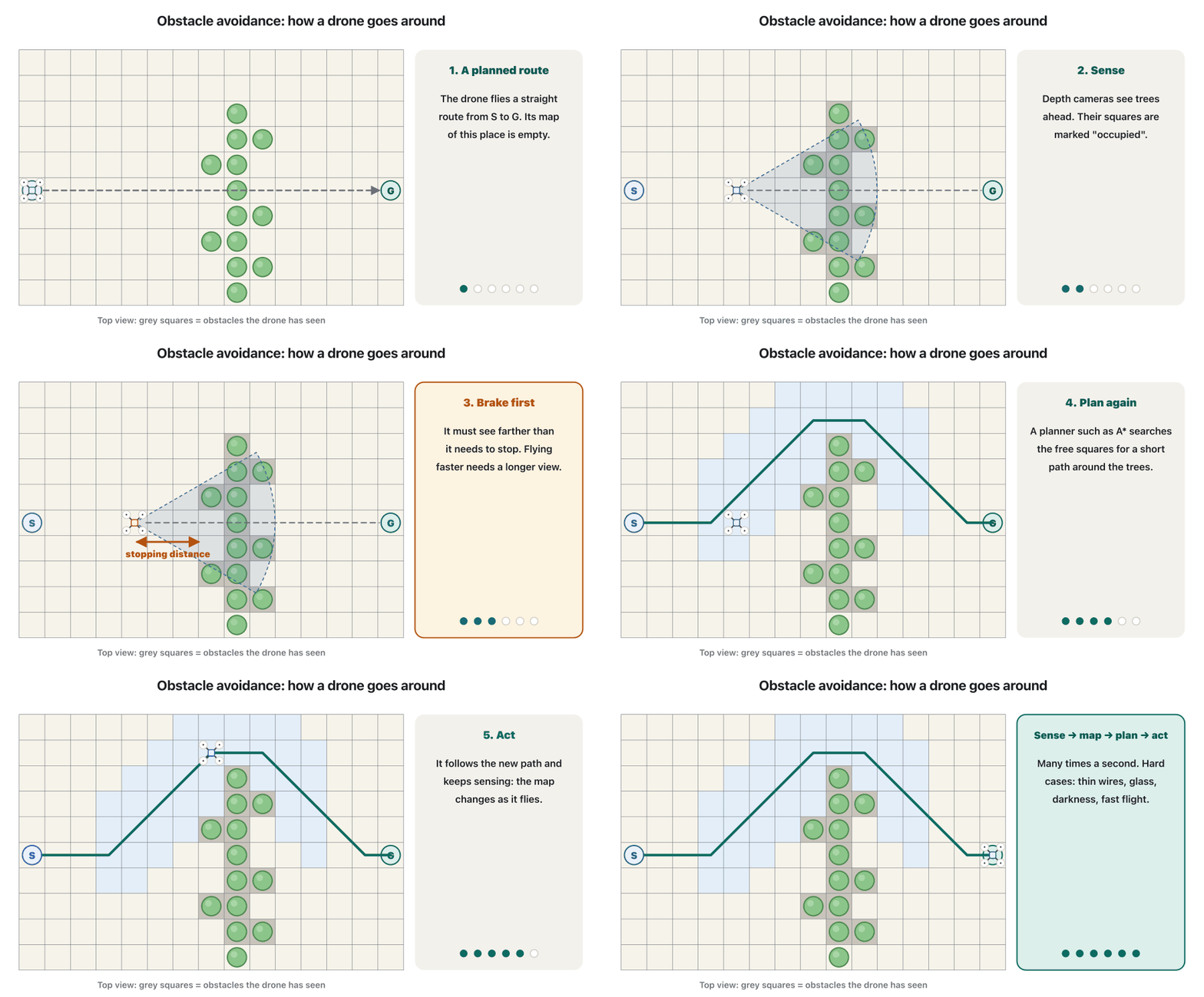
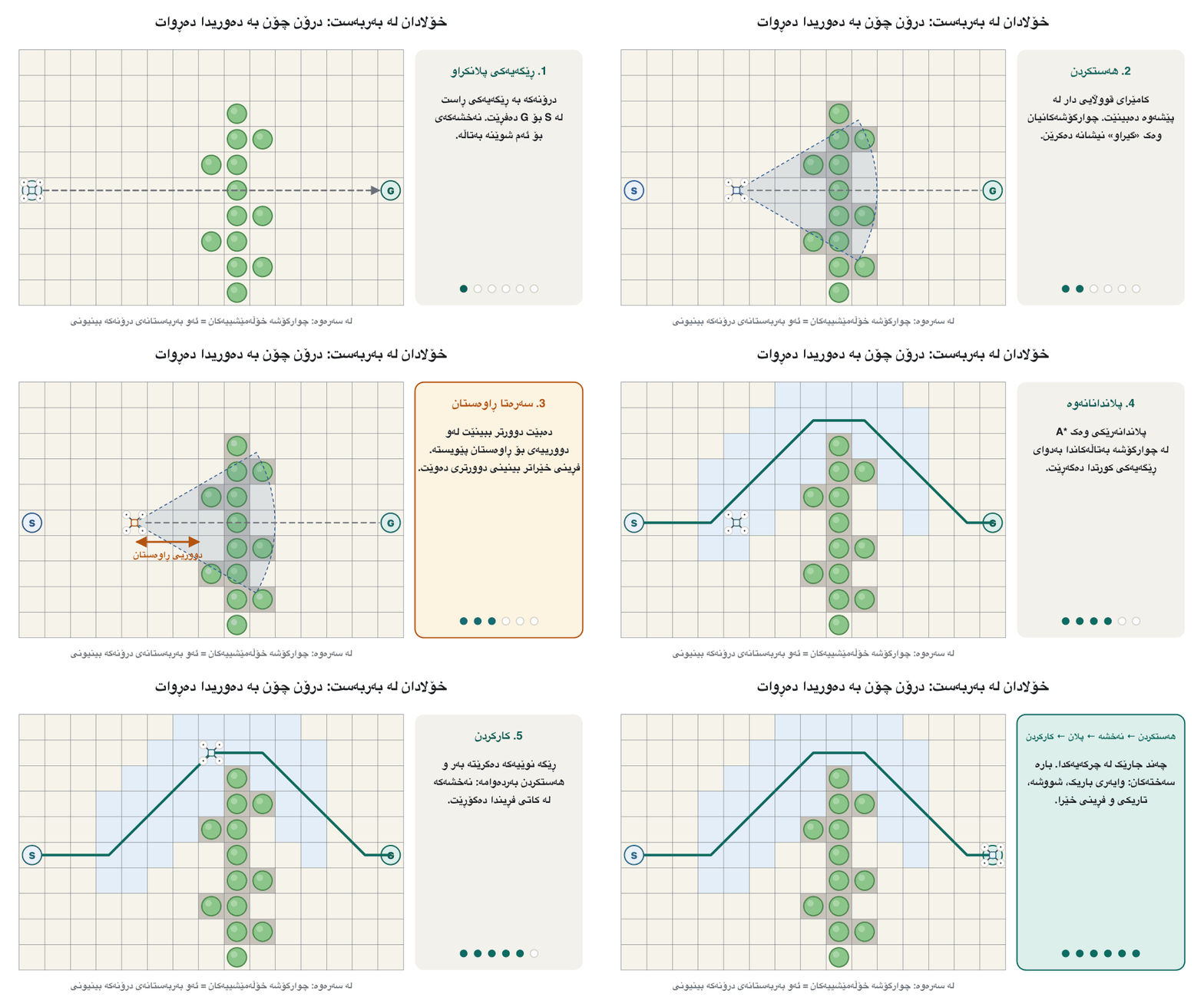
Obstacle avoidanceخۆلادان لە بەربەست
Sharing the skyهاوبەشیکردنی ئاسمان
Trees and walls stand still; aircraft move. To fly far beyond the pilot's sight, a drone also needs : noticing other aircraft in time and always giving way to crewed aircraft. It can use cameras, radar and receivers for the position signals that many aircraft broadcast (). How pilots do this today is taught in Avoiding collisions: give way and detect.
دار و دیوار جێگیرن؛ فڕۆکە دەجووڵێت. بۆ فڕینی دوور لە دەرەوەی بینینی فڕۆکەوان، پێویستی بە هەیە: بینینی فڕۆکەکانی تر لە کاتی خۆیدا و چۆڵکردنی ڕێگە، هەمیشە، بۆ فڕۆکەی فڕۆکەواندار. دەتوانێت کامێرا، و وەرگری ئەو ئاماژانەی شوێن بەکار بهێنێت کە زۆر فڕۆکە بڵاویان دەکەنەوە (). فڕۆکەوانان ئەمڕۆ چۆن ئەمە دەکەن، لە خۆلادان لە بەریەککەوتن: ڕێگە چۆڵ بکە و بیدۆزەوە فێر دەکرێت.
When thousands of drones share the same sky, each one sensing alone is not enough. Digital traffic services, (in the EU: U-space), share who is flying where, the zones to avoid, flight approvals and nearby traffic (UTM and U-space). In May 2025 EASA certified the first U-space service provider; in the USA the final rule for routine flights beyond sight (Part 108) had still not been published in early November 2026.
کاتێک هەزاران هەمان ئاسمان هاوبەش دەکەن، هەستکردنی هەر یەکێکیان بە تەنیا بەس نییە. خزمەتگوزاریی دیجیتاڵیی هاتوچۆ، (لە یەکێتیی ئەوروپا: U-space)، ئەوە هاوبەش دەکەن کە کێ لە کوێ دەفڕێت، ناوچە قەدەغەکان، ڕەزامەندیی فڕین و هاتوچۆی نزیک (بەڕێوەبردنی هاتوچۆی درۆن و U-space). لە ئایاری 2025دا EASA یەکەم دابینکەری خزمەتگوزاریی U-spaceـی بڕوانامەدار کرد؛ لە ئەمریکا، یاسای کۆتایی بۆ فڕینی ڕۆژانەی دەرەوەی بینین (Part 108) تا سەرەتای تشرینی دووەمی 2026 هێشتا بڵاو نەکرابووەوە.
Recognising objectsناسینەوەی تەنەکان
With , a drone's computer can find things in its pictures: a missing person on a hillside, a crack in a bridge, a sick plant, sheep to count. The usual task is : the model draws a box around each object and gives it a label and a confidence score. It learned from thousands of labelled pictures (Object detection: boxes, labels and scores; neural networks).
بە ، کۆمپیوتەری دەتوانێت شتەکان لە وێنەکانیدا بدۆزێتەوە: کەسێکی ونبوو لە گردێکدا، درزێک لە پردێکدا، ڕووەکێکی نەخۆش، مەڕ بۆ ژماردن. ئەرکی باو : بە دەوری هەر تەنێکدا دەکێشێت و ناوێک و پێ دەدات. لە هەزاران وێنەی نیشانەدار فێر بووە (دۆزینەوەی تەن: سندووق، ناو و نمرە؛ تۆڕە دەمارییەکان).
The model makes mistakes: false alarms (a rock called a person) and misses (a person under a tree). A model trained in one country or season can fail in another, and some groups of people can be recognised worse than others (When AI Gets It Wrong). So people check the results before acting. Recognising military targets is a different and far more serious question; it is taught, with its ethics and law, in Target Recognition.
هەڵە دەکات: ئاگادارکردنەوەی بەهەڵە (بەردێک کە بە مرۆڤ ناو دەبرێت) و لەدەستدان (مرۆڤێک لە ژێر دارێکدا). کە لە وڵاتێک یان وەرزێکدا ڕاهێنرابێت لەوانەیە لە شوێنێکی تردا شکست بهێنێت و هەندێک گرووپی خەڵک لەوانەیە خراپتر لە هی تر بناسرێنەوە (کاتێک ژیریی دەستکرد هەڵە دەکات). بۆیە مرۆڤ پێش هەر بڕیارێک ئەنجامەکان دەپشکنێت. ناسینەوەی ئامانجی سەربازی پرسیارێکی جیاواز و زۆر جیددیترە؛ لەگەڵ ئەخلاق و یاساکەیدا لە ناسینەوەی ئامانج فێر دەکرێت.
Swarms: many drones, simple rulesڕەوەکانی درۆن: چەندین درۆن، یاسای سادە
Swarm technology means many drones operating together in a coordinated formation. In a true there is no pilot for each drone, and often no leader. In 1987 Craig Reynolds showed with simulated birds, which he called 'boids', that three local rules are enough for a flock: avoid crowding nearby flockmates (separation), match their direction and speed (alignment) and stay close to them (cohesion). A swarm is a kind of (Multi-agent systems).
تەکنەلۆجیای ڕەوە واتە چەندین کە پێکەوە کار دەکەن بە شێوەیەکی ڕێکخراو. لە ڕاستەقینەدا هەر فڕۆکەوانی خۆی نییە و زۆرجار سەرکردەش نییە. لە 1987دا Craig Reynolds بە باڵندەی گریمانەیی لە کۆمپیوتەردا، کە ناوی لێنان «boids»، پیشانی دا سێ یاسای سادەی نێوان دراوسێکان بۆ ڕەوەیەک بەسن: لە دراوسێکان زۆر نزیک مەبەرەوە (دووری)، ئاڕاستە و خێراییت لەگەڵیان ڕێک بخە (هاوئاڕاستەیی) و لێیانەوە نزیک بمێنەوە (پێکەوەبوون). جۆرێکە لە (سیستەمە فرەئەیجێنتەکان).
Real swarms add obstacle avoidance and a shared goal. In 2022 researchers at Zhejiang University flew ten palm-sized drones through a dense bamboo forest; each had its own cameras and computer and shared information with the others (what a multi-agent system must handle). Swarms could one day search an earthquake zone faster than one drone. Military swarms exist too; they belong to the Military AI course, not to this lesson.
ڕەوە ڕاستەقینەکان و ئامانجێکی هاوبەشیش زیاد دەکەن. لە 2022دا توێژەرانی زانکۆی Zhejiang دە بچووکی قەبارەی لەپی دەستیان بە ناو دارستانێکی چڕی بامبوودا فڕاند؛ هەر یەکەیان کامێرا و کۆمپیوتەری خۆی هەبوو و زانیاریی لەگەڵ ئەوانی تر ئاڵوگۆڕ دەکرد (ئەوەی سیستەمێکی فرەئەیجێنت دەبێت چارەسەری بکات). ڕەوەکان ڕۆژێک لەوانەیە خێراتر لە یەک لە ناوچەیەکی بوومەلەرزەلێداودا بگەڕێن. ڕەوەی سەربازیش هەیە؛ ئەوانە لە کۆرسی باس دەکرێن، نەک لەم وانەیەدا.
Many drones that work together by following simple local rules (keep a distance, fly the same way, stay together) and sharing information, like a flock of birds, without one pilot for each drone. Most drone light shows are not swarms: each drone flies its own pre-planned path.
چەندین کە بە پەیڕەوکردنی چەند یاسایەکی سادەی ناوخۆیی (دووری بپارێزە، بە هەمان ئاڕاستە بفڕە، پێکەوە بمێنەوە) و ئاڵوگۆڕی زانیاری پێکەوە کار دەکەن، وەک ڕەوە باڵندەیەک، بەبێ ئەوەی هەر فڕۆکەوانێکی هەبێت. زۆربەی نمایشە ڕووناکییەکانی ڕەوە نین: هەر ڕێڕەوێکی پێشتر پلاندانراوی خۆی دەفڕێت.
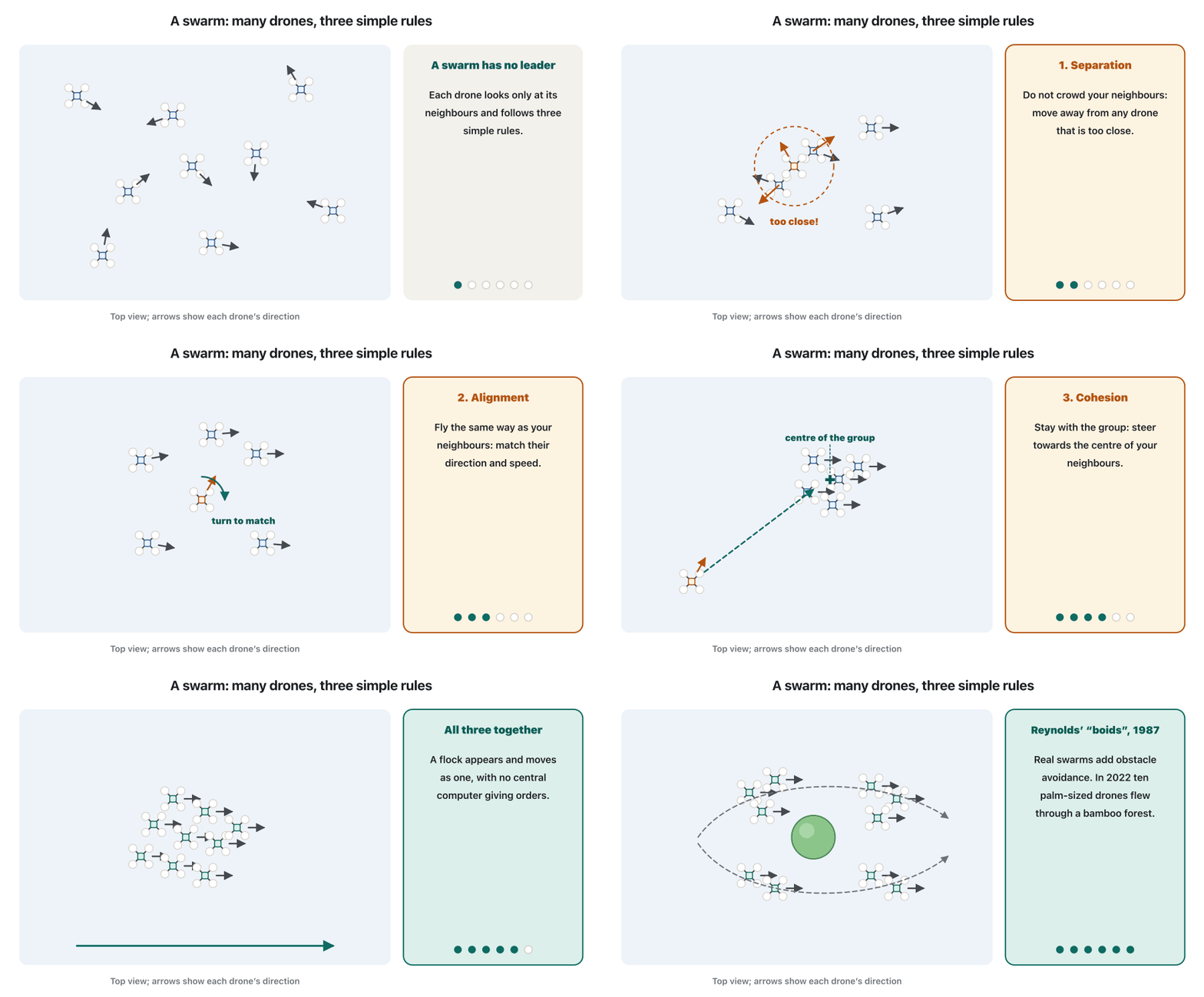
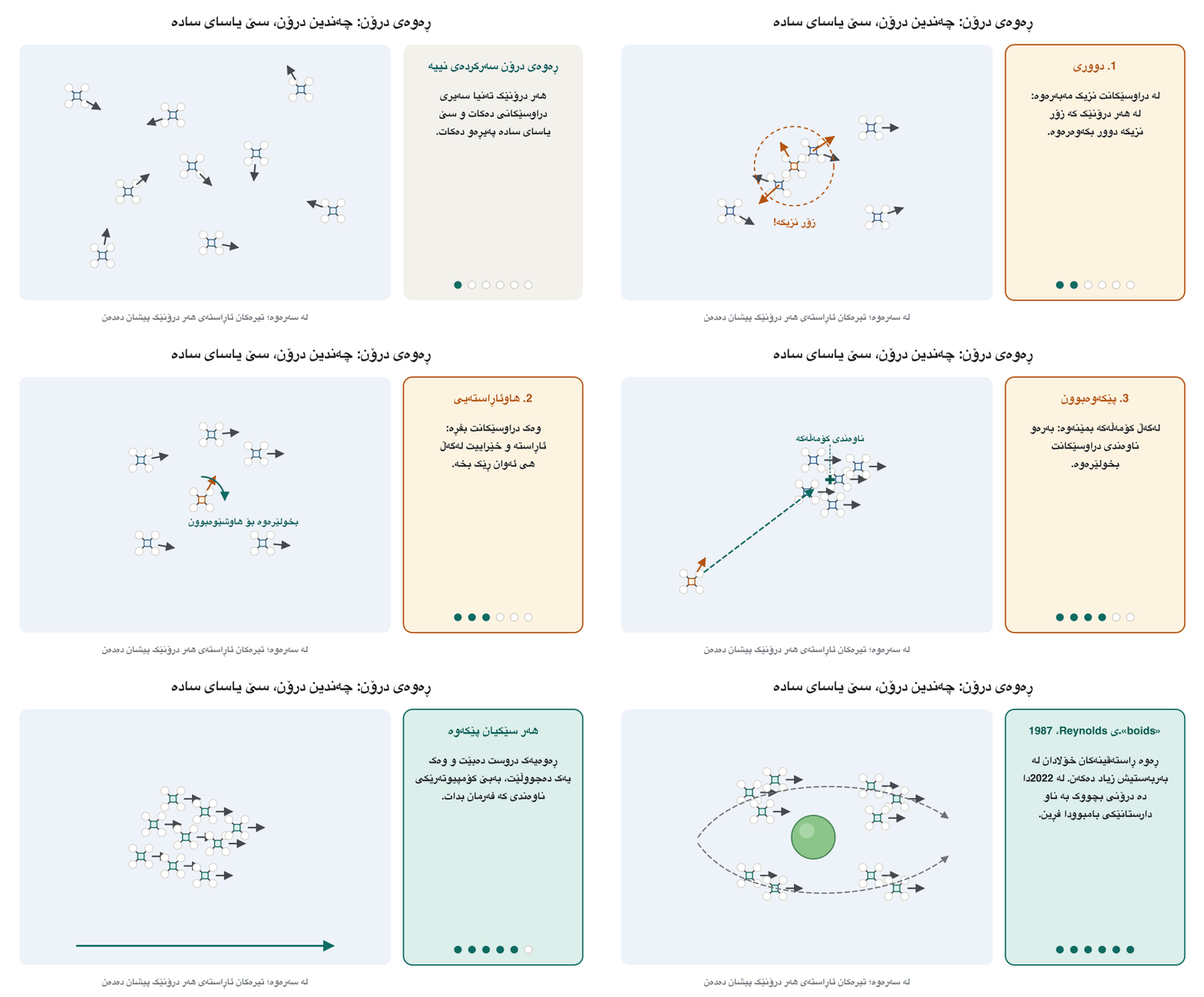
Swarms: many drones, simple rulesڕەوەکانی درۆن: چەندین درۆن، یاسای سادە
Light shows are choreographyنمایشی ڕووناکی ڕێکخستنی پێشوەختەیە
A looks like a swarm, but it works differently. Before the show, a designer plans every drone's path and light timing on a computer, checks that no two drones come too close, and uploads each drone's own plan. During the show the drones follow a shared clock from the satellites and keep their places to within centimetres with . They are not steered live and do not talk to each other; the radio links are there so the crew can stop or land any drone.
وەک ڕەوە دەردەکەوێت، بەڵام جیاواز کار دەکات. پێش نمایشەکە، دیزاینەرێک ڕێگە و کاتی ڕووناکیی هەموو لەسەر کۆمپیوتەر پلان دەکات، دڵنیا دەبێتەوە کە هیچ دوو زۆر لە یەک نزیک نابنەوە و پلانی تایبەتی هەر بۆی بار دەکات. لە کاتی نمایشدا کاتژمێرێکی هاوبەشی مانگە دەستکردەکانی پەیڕەو دەکەن و بە شوێنەکانیان بە وردیی چەند سانتیمەترێک ڕادەگرن. ڕاستەوخۆ ئاراستە ناکرێن و قسە لەگەڵ یەکتر ناکەن؛ پەیوەندییە ڕادیۆییەکان بۆ ئەوەن کە تیمەکە بتوانێت هەر ڕابگرێت یان بینیشێنێتەوە.
Shows keep growing. On 3 February 2026, 22,580 drones flown from a single computer drew pictures over Hefei, China, for the Spring Festival Gala: a Guinness World Record. Whether there are 500 drones or 22,580, the principle is the same: a light show is choreography, not a self-organising swarm.
نمایشەکان هەر گەورەتر دەبن. لە 3ی شوباتی 2026دا، 22,580 کە لە یەک کۆمپیوتەرەوە دەفڕێنران، بۆ ئاهەنگی جەژنی بەهار لە سەرووی شاری هێفەیی لە چین وێنەیان کێشا: تۆمارێکی جیهانیی Guinness. چ 500 بێت یان 22,580، بنەماکە هەمان شتە: ڕێکخستنی پێشوەختەیە، نەک کە خۆی ڕێک بخات.
A night show in which hundreds or thousands of small with coloured lights draw pictures in the sky. Each drone flies its own path, planned on a computer beforehand and timed by the clock; it is choreography, not a self-organising .
نمایشێکی شەوانەیە کە تێیدا سەدان یان هەزاران بچووک بە گڵۆپی ڕەنگاوڕەنگ وێنە لە ئاسماندا دەکێشن. هەر ڕێگەی تایبەتی خۆی دەفڕێت کە پێشتر لەسەر کۆمپیوتەر پلانی بۆ دانراوە و کاتەکەی بە کاتژمێری ڕێک دەخرێت؛ ئەمە ڕێکخستنی پێشوەختەیە، نەک کە خۆی ڕێک بخات.
Air taxis and urban air mobilityتەکسییە ئاسمانییەکان و گواستنەوەی ئاسمانیی شاری
is the idea of moving people and goods through the air over and between cities. Its star is the , usually an : an electric aircraft that takes off and lands vertically like a big drone and then flies forward. Many electric rotors make it simpler and quieter than a helicopter, but batteries limit it to short trips. Air taxis take off from : small airports on roofs or next to big airports.
بیرۆکەی گواستنەوەی خەڵک و کاڵایە بە ئاسماندا لە سەرووی شارەکانەوە و لە نێوانیاندا. ئەستێرەکەی ، کە زۆرجار : فڕۆکەیەکی کارەبایی کە وەک گەورە بە ستوونی هەڵدەفڕێت و دەنیشێتەوە و پاشان بەرەو پێشەوە دەفڕێت. چەندین کارەبایی لە هەلیکۆپتەر سادەتر و بێدەنگتری دەکەن، بەڵام سنووری بۆ گەشتی کورت دادەنێت. لە هەڵدەفڕن: فڕۆکەخانەی بچووک لەسەر سەربان یان لە تەنیشت فڕۆکەخانە گەورەکان.
There are two main designs. Multicopters such as EHang's EH216-S lift two passengers with many rotors and no pilot on board. Tilt-rotors with a wing, such as Joby's S4, carry a pilot and up to four passengers, and tilt their rotors forward to cruise on the wing at up to about 320 km/h. In the EU, air taxis belong to the : the aircraft needs a , and the operator and the pilot need licences, as in ordinary aviation (the specific and certified categories).
دوو دیزاینی سەرەکی هەیە. وەک EH216-Sـی EHang بە چەندین و بەبێ فڕۆکەوان دوو گەشتیار هەڵدەگرن. لارەوەبوو و باڵ، وەک S4ـی Joby، فڕۆکەوانێک و تا چوار گەشتیار هەڵدەگرێت و بەرەو پێشەوە لار دەکاتەوە بۆ ئەوەی بە باڵ بفڕێت بە خێرایی تا نزیکەی 320 km/h. لە یەکێتیی ئەوروپا سەر بە : فڕۆکەکە پێویستی بە هەیە و کۆمپانیای بەڕێوەبەری فڕینەکان و فڕۆکەوان مۆڵەتیان پێویستە، وەک فڕۆکەوانیی ئاسایی (جۆری تایبەت و جۆری بڕوانامەدار).
An electric aircraft that takes off and lands vertically like a large drone and then flies forward: the kind of aircraft planned for . It uses many electric , which makes it quieter and simpler than a helicopter.
فڕۆکەیەکی کارەباییە کە وەک گەورە بە ستوونی هەڵدەفڕێت و دەنیشێتەوە و پاشان بەرەو پێشەوە دەفڕێت: ئەو جۆرە فڕۆکەیەیە کە بۆ پلانی بۆ دانراوە. چەندین کارەبایی بەکار دەهێنێت، بۆیە لە هەلیکۆپتەر بێدەنگتر و سادەترە.
Air taxis and urban air mobilityتەکسییە ئاسمانییەکان و گواستنەوەی ئاسمانیی شاری
Where things stood in November 2026بارودۆخ لە تشرینی دووەمی 2026دا
Air taxis have been 'just a few years away' for a long time, so check the facts. As of November 2026: China certified EHang's pilotless EH216-S in October 2023 (type certificate), and the first operator certificates followed in March 2025; trial flights ran in Guangzhou and Hefei, but public ticketed passenger service was still waiting for approval. No eVTOL air taxi had an FAA type certificate; Joby and Archer were in the last stages and planned their first passengers in the United Arab Emirates, where a vertiport next to Dubai International Airport was finished in 2026.
ماوەیەکی زۆرە «تەنیا چەند ساڵێک دوورن»، بۆیە ڕاستییەکان بپشکنە. تا تشرینی دووەمی 2026: چین لە تشرینی یەکەمی 2023دا دا بە EH216-Sـی بێفڕۆکەوانی EHang و یەکەم بڕوانامەکانی کارپێکردن لە ئازاری 2025دا دران؛ فڕینی تاقیکردنەوە لە گوانگجۆ و هێفەیی دەکرا، بەڵام خزمەتگوزاریی گشتیی گەشتیار بە بلیت هێشتا چاوەڕێی ڕەزامەندی بوو. هیچ FAAـی نەبوو؛ Joby و Archer لە قۆناغە کۆتاییەکاندا بوون و یەکەم گەشتیارەکانیان لە ئیماراتی عەرەبیی یەکگرتوو پلان دانابوو، کە لە تەنیشت فڕۆکەخانەی نێودەوڵەتیی دوبەی لە 2026دا تێیدا تەواو کرا.
It is also a hard business: the German companies Volocopter (insolvent at the end of 2024, then taken over) and Lilium (insolvent twice, in 2024 and 2025) ran out of money. And 'personal drones' that private owners could fly to work are not legal products anywhere today. Read air-taxi news with a critical eye: a test flight is not a service.
هەروەها بازرگانییەکی سەختە: کۆمپانیا ئەڵمانییەکانی Volocopter (لە کۆتایی 2024دا مایەپووچ بوو، پاشان کڕدرا) و Lilium (دوو جار مایەپووچ بوو، لە 2024 و 2025دا) پارەیان نەما. « کەسی» کە خاوەنە تایبەتەکان بۆ چوونە سەر کار بیانفڕێنن ئەمڕۆ لە هیچ شوێنێک بەرهەمی یاسایی نین. هەواڵەکانی بە چاوێکی ڕەخنەگرانە بخوێنەوە: فڕینێکی تاقیکردنەوە خزمەتگوزاری نییە.
Drones that change shapeئەو درۆنانەی شێوە دەگۆڕن
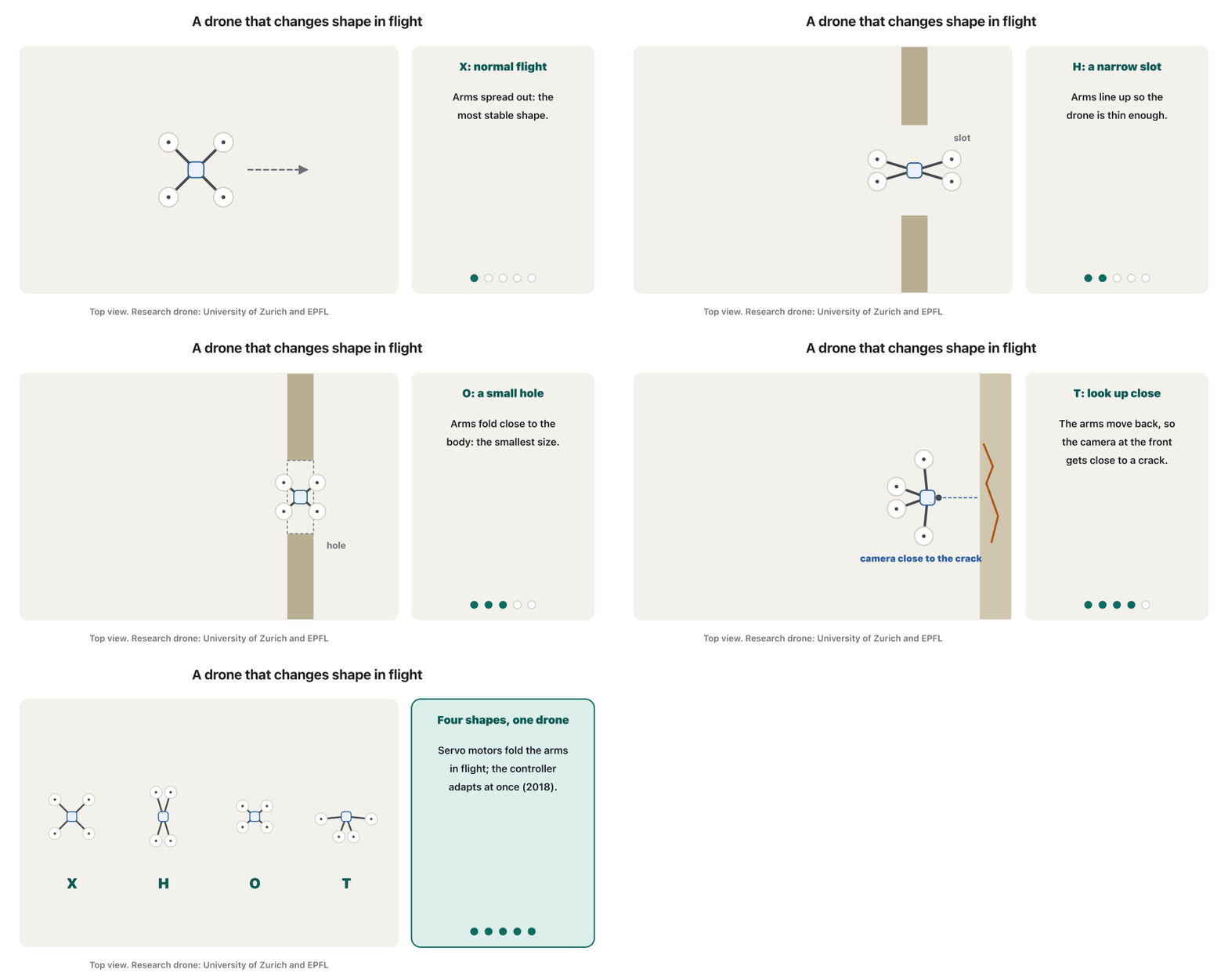
A research frontier is : drones that change their shape during flight. Birds fold their wings to slip through branches; a drone could fold its arms to pass a narrow gap in a damaged building. In 2018 researchers at the University of Zurich and EPFL built a quadcopter whose arms rotate around its body on servo motors. It can fly as an X (the normal, most stable shape), an H (thin, for a narrow slot), an O (arms folded close, for the smallest hole) or a T (arms moved back, so the camera at the front can get close to a surface).
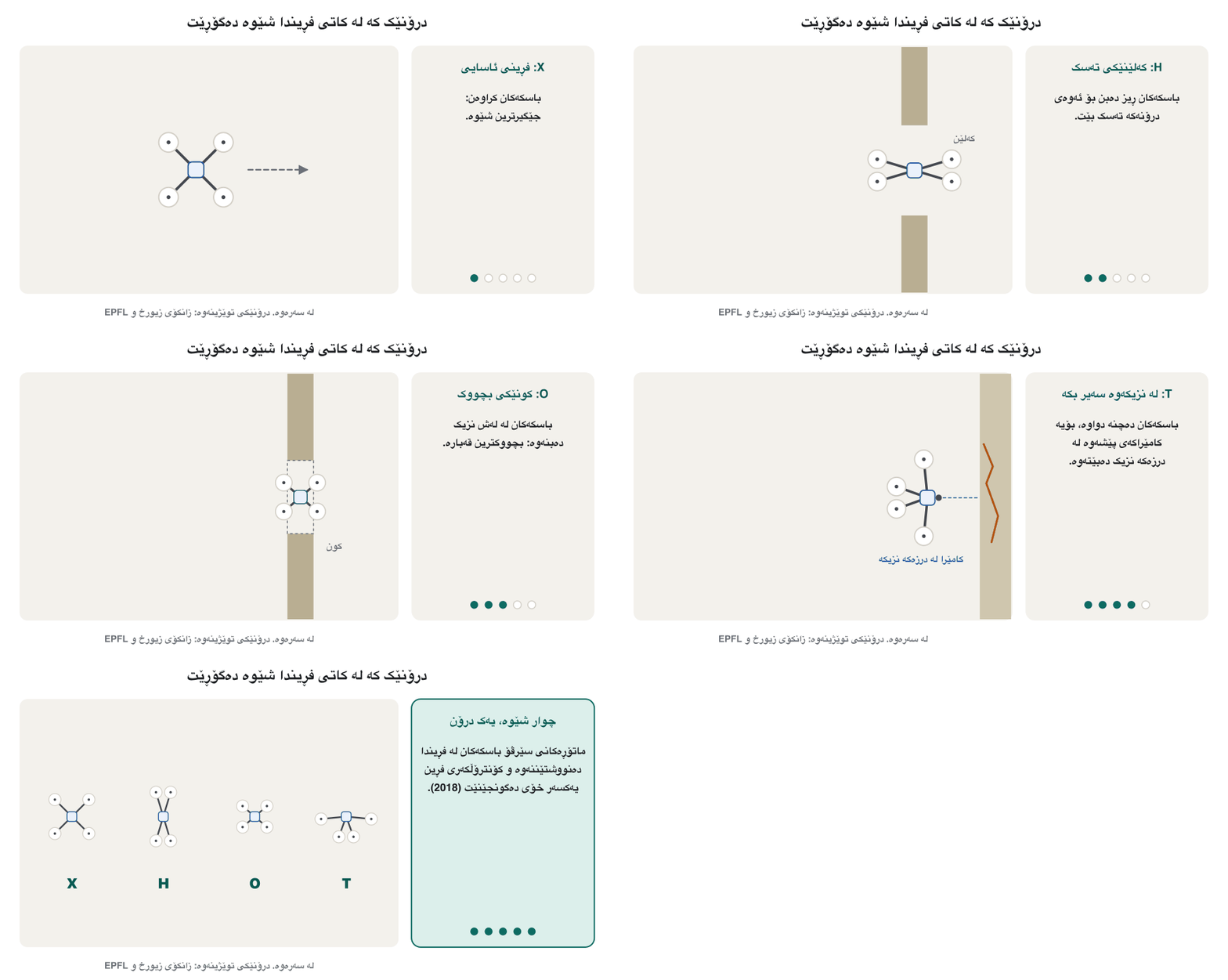
یەکێک لە سنوورەکانی توێژینەوە : کە لە کاتی فڕیندا شێوەی خۆیان دەگۆڕن. باڵندە باڵەکانی دەنووشتێنێتەوە بۆ ئەوەی بە ناو لقەکاندا تێبپەڕێت؛ دەتوانێت باسکەکانی بنووشتێنێتەوە بۆ تێپەڕین بە کەلێنێکی تەسکی باڵەخانەیەکی ڕووخاودا. لە 2018دا توێژەرانی زانکۆی زیورخ و EPFL دروست کرد کە باسکەکانی بە بە دەوری لەشەکەیدا دەسووڕێنەوە. دەتوانێت وەک X (شێوە ئاسایی و جێگیرترەکە)، H (تەسک، بۆ کەلێنێکی باریک)، O (باسکەکان لە لەش نزیک دەبنەوە، بۆ بچووکترین کون) یان T (باسکەکان دەچنە دواوە، بۆ ئەوەی کامێراکەی پێشەوە لە ڕوویەک نزیک ببێتەوە) بفڕێت.
The hard part is control: when an arm moves, the centre of gravity and the layout of the thrust change, so the flight controller must adapt at once (The control loop). In 2026 shape-changing drones were still research machines, aimed at inspection and at search in collapsed buildings.
بەشە سەختەکە کۆنترۆڵە: کاتێک باسکێک دەجووڵێت، ناوەندی کێش و شوێنی دەگۆڕێن، بۆیە دەبێت یەکسەر خۆی بگونجێنێت (خولی کۆنترۆڵ). لە 2026دا ئەو شێوە دەگۆڕن هێشتا ئامێری توێژینەوە بوون، بۆ پشکنین و گەڕان لە باڵەخانەی ڕووخاودا.
Quantum sensing: navigating without GPSهەستپێکردنی کوانتەمی: ڕێنیشاندان بەبێ GPS
Satellite navigation can be jammed, spoofed or blocked (When GNSS cannot be trusted). Without it, a drone's IMU slowly drifts away from the true position. offers another way: sensors that use quantum effects in atoms measure tiny things very precisely. A quantum measures small changes in the Earth's magnetic field along the way, and software matches that pattern with a magnetic map of the ground, like recognising a street by its shape.
ڕێنیشاندانی مانگی دەستکرد دەکرێت بشێوێنرێت، هەڵبخەڵەتێنرێت یان ڕێی لێ بگیرێت (کاتێک ناتوانرێت متمانە بە GNSS بکرێت). بەبێ ئەو، هێواش هێواش لە شوێنی ڕاستەقینە لادەدات. ڕێگەیەکی تر پێشکەش دەکات: ئەو دیاردە کوانتەمییەکانی ناو گەردیلە بەکار دەهێنن شتی زۆر بچووک زۆر بە وردی دەپێون. کوانتەمی گۆڕانی بچووکی بواری موگناتیسیی زەوی بە درێژایی ڕێگاکە دەپێوێت و ئەو شێوازە لەگەڵ نەخشەیەکی موگناتیسیی زەویدا بەراورد دەکات، وەک ناسینەوەی شەقامێک لە شێوەکەیەوە.
In April 2025 the company Q-CTRL reported flight trials over about 500 km in which this magnetic navigation had up to 50 times less position error than an inertial system alone (results reported by the company). It needs no satellite signal at all. But in 2026 it was at the field-trial stage, mostly on aircraft and vehicles, not in everyday drones.
لە نیسانی 2025دا کۆمپانیای Q-CTRL ڕاپۆرتی فڕینی تاقیکردنەوەی بە درێژیی نزیکەی 500 km دا کە تێیدا ئەم ڕێنیشاندانە موگناتیسییە هەڵەی شوێنی تا 50 جار کەمتر بوو لە سیستەمێکی بارنەگۆڕین بە تەنیا (ئەنجامی ڕاپۆرتی کۆمپانیا). هیچ ئاماژەیەکی مانگی دەستکردی پێویست نییە. بەڵام لە 2026دا لە قۆناغی تاقیکردنەوەی مەیدانیدا بوو، زۆربەی لەسەر فڕۆکە و ئۆتۆمبێل، نەک لە ڕۆژانەدا.
Drones on other worlds: Ingenuity on Marsدرۆنەکان لە جیهانەکانی تر: Ingenuity لەسەر مەریخ
The farthest drones fly on other worlds, while their pilots stay on Earth. NASA's helicopter Ingenuity (1.8 kg, two 1.2 m rotors spinning at about 2,400 rpm) made the first powered, controlled flight on Mars on 19 April 2021. Mars's air is only about 1 % as dense as Earth's, so the rotors had to be large and fast (Thin air, hot days and wind). Built for five test flights, it made 72 before its last flight on 18 January 2024. Its first flights are also told in Drones: robots that fly.
دوورترین لە جیهانەکانی تردا دەفڕن، لە کاتێکدا فڕۆکەوانەکانیان لەسەر زەوین. هەلیکۆپتەرەکەی NASA بە ناوی Ingenuity (1.8 kg، دوو 1.2 مەتری کە بە نزیکەی 2,400 خول لە خولەکێکدا دەسووڕانەوە) لە 19ی نیسانی 2021دا یەکەم فڕینی بە وزە و کۆنترۆڵکراوی لەسەر مەریخ کرد. هەوای مەریخ تەنیا نزیکەی 1 % ئەوەندەی هەوای زەوی چڕە، بۆیە دەبوو گەورە و خێرا بن (هەوای تەنک، ڕۆژی گەرم و با). بۆ پێنج فڕینی تاقیکردنەوە دروست کرابوو، بەڵام تا دوایین فڕینی لە 18ی کانوونی دووەمی 2024دا 72 فڕینی کرد. یەکەم فڕینەکانیشی لێرەدا باس کراون: درۆنەکان: ڕۆبۆتی فڕیو.
Radio messages take minutes to travel between Earth and Mars, so nobody could steer Ingenuity live. Each flight was planned in advance, sent to Mars, and flown by the helicopter's own computer, which used its camera and sensors to keep track of where it was: autonomy was the only option.
نامەی ڕادیۆیی چەند خولەکێک لە نێوان زەوی و مەریخدا دەخایەنێت، بۆیە کەس نەیدەتوانی ڕاستەوخۆ Ingenuity ئاراستە بکات. هەر فڕینێک پێشتر پلانی بۆ دادەنرا، دەنێردرا بۆ مەریخ و کۆمپیوتەری خودی هەلیکۆپتەرەکە دەیفڕاند و بە کامێرا و خۆی شوێنی خۆی دەزانی: تاکە ڕێگە بوو.
Drones on other worlds: Ingenuity on Marsدرۆنەکان لە جیهانەکانی تر: Ingenuity لەسەر مەریخ
Next: Dragonfly on Titanدواتر: Dragonfly لەسەر تیتان
Next comes Dragonfly, a nuclear-powered rotorcraft with eight rotors that will explore Saturn's moon Titan, flying several kilometres at a time from one place to the next. Titan's air is about four times denser than Earth's and its gravity is only about one seventh of Earth's, so flying there is easier than on Earth. NASA plans the launch for no earlier than July 2028 and the arrival in 2034; Titan is even farther away than Mars, so Dragonfly too must fly by itself.
پاشان Dragonfly دێت، فڕۆکەیەکی بە وزەی ناوکی و هەشت کە مانگی تیتانی زوحەل دەپشکنێت و هەر جارە چەند کیلۆمەترێک لە شوێنێکەوە بۆ شوێنێکی تر دەفڕێت. هەوای تیتان نزیکەی چوار جار لە هی زەوی چڕترە و تەنیا نزیکەی یەک لەسەر حەوتی هی زەوییە، بۆیە فڕین لەوێ لە زەوی ئاسانترە. NASA هەڵدانەکەی بۆ زووترین کات تەممووزی 2028 و گەیشتنەکەی بۆ 2034 پلان داناوە؛ تیتان لە مەریخیش دوورترە، بۆیە Dragonflyـیش دەبێت خۆی بفڕێت.
Jobs and skillsکار و کارامەیی
Drones change work in two ways. They create new jobs: remote pilots, farm spray-drone operators, mapping and GIS analysts, inspectors who read thermal pictures, technicians who repair motors and batteries, and software and AI developers who write autopilots and vision models. And they transform existing jobs: a surveyor, a farmer or a bridge engineer now uses drone data in work they already did.
بە دوو ڕێگە کار دەگۆڕن. کاری نوێ دروست دەکەن: ، فڕێنەرانی لە کشتوکاڵدا، شیکەرەوەکانی نەخشە و GIS، پشکنەرانی وێنەی گەرمی، تەکنیککارانی چاککردنەوەی و ، هەروەها گەشەپێدەرانی و کە و بینین دەنووسن. هەروەها کاری هەبوو دەگۆڕن: ڕووپێوکەر، جووتیار یان ئەندازیاری پرد ئێستا لەو کارەدا بەکار دەهێنن کە پێشتر دەیانکرد.
The skills are a mix: rules and safety habits, maths and physics, maps, electronics, programming (Python is common) and English for manuals and forums. Pilots need official training and a test: see Training: learn before you fly. On CêIT you can build these skills in the programming, AI, IoT and networking courses.
کارامەییەکان تێکەڵەیەکن: یاسا و خووی سەلامەتی، بیرکاری و فیزیا، نەخشە، ئەلیکترۆنیات، (Python باوە) و ئینگلیزی بۆ ڕێنمایی و فۆرەمەکان. فڕۆکەوانان ڕاهێنان و تاقیکردنەوەی فەرمییان پێویستە: بڕوانە ڕاهێنان: پێش فڕین فێر بە. لە CêIT دەتوانیت ئەم کارامەییانە لە کۆرسەکانی ، ، و تۆڕدا بنیات بنێیت.
The environment: it depends on the jobژینگە: بەستراوە بە کارەکەوە
Can drones reduce the of some operations? Yes, but only in some cases. A small drone delivering a light parcel can cause less CO₂ than a van, while a heavy parcel on a big drone can cause more (When does drone delivery make sense?). A short drone flight can replace a helicopter flight or a truck trip for some inspections and surveys, and spraying only the sick patches uses less chemical.
ئایا دەتوانن هەندێک کار کەم بکەنەوە؟ بەڵێ، بەڵام تەنیا لە هەندێک بارودۆخدا. بچووک کە پاکەتێکی سووک دەگەیەنێت دەتوانێت لە ئۆتۆمبێلێک CO₂ی کەمتر دەربدات، لە کاتێکدا پاکەتێکی قورس لەسەر گەورە دەکرێت زیاتر دەربدات (گەیاندن بە درۆن کەی گونجاوە؟). فڕینێکی کورتی دەتوانێت بۆ هەندێک پشکنین و ڕووپێو جێگەی فڕینێکی هەلیکۆپتەر یان گەشتێکی بارهەڵگر بگرێتەوە و پرژاندنی تەنیا پەڵە نەخۆشەکان دەرمانی کەمتر بەکار دەهێنێت.
Drones also have costs. In NASA listening tests in 2017, people found the sound of small drones more annoying than road traffic at similar levels. A review of wildlife studies found that birds react most, especially to large, noisy drones flying straight at them. Batteries and electronics become waste. So the honest answer is: better for the environment in some jobs, and only if we fly carefully.
تێچووشیان هەیە. لە تاقیکردنەوەکانی گوێگرتنی NASA لە 2017دا، خەڵک دەنگی بچووکیان لە دەنگی هاتوچۆی ئۆتۆمبێل لە ئاستی هاوشێوەدا بێزارکەرتر زانی. پێداچوونەوەیەکی توێژینەوەکانی ئاژەڵی کێوی دۆزییەوە کە باڵندە زیاتر لە هەموو کاردانەوەیان هەیە، بەتایبەتی بەرامبەر گەورە و بەدەنگ کە ڕاستەوخۆ بەرەو ڕوویان دەفڕن. و ئەلیکترۆنیات دەبنە پاشماوە. بۆیە وەڵامی ڕاست ئەمەیە: بۆ ژینگە باشترە لە هەندێک کاردا، ئەویش تەنیا ئەگەر بە وریاییەوە بفڕین.
Frameworks for responsible useچوارچێوەی بەکارهێنانی بەرپرسیارانە
The same technology can rescue or harm: drones are a well-known example of (Dual use: one technology, two purposes). Societies therefore build frameworks for responsible use: laws and registration (Drone rules in 2026), safety training and checklists (Flying safely), privacy and data protection (Privacy, security and counter-drone systems), and rules for the AI on board.
هەمان تەکنەلۆجیا دەتوانێت ڕزگار بکات یان زیان بگەیەنێت: نموونەیەکی ناسراون بۆ (دوو بەکارهێنان: یەک تەکنەلۆجیا، دوو مەبەست). بۆیە کۆمەڵگاکان چوارچێوەی بەکارهێنانی بەرپرسیارانە دروست دەکەن: یاسا و (یاساکانی درۆن لە 2026دا)، ڕاهێنانی سەلامەتی و لیستی پشکنین (فڕاندنی سەلامەت)، و پاراستنی (تایبەتێتی، ئاسایش و تەکنەلۆجیای دژەدرۆن)، هەروەها یاسا بۆ ئەو لەسەر .
As drones become more autonomous, two ideas matter most. People stay in control: a person sets the mission and its limits and can stop it, and people, not machines, answer for what happens (Who is responsible?). And AI must be checked and explained: tested for bias and errors, with someone accountable (Accountability). Together these principles are called .
هەتا دەبن، دوو بیرۆکە گرنگترن. مرۆڤ کۆنترۆڵ دەکات: مرۆڤێک ئەرکەکە و سنوورەکانی دادەنێت و دەتوانێت ڕایبگرێت و مرۆڤ، نەک ئامێر، وەڵامدەری ئەوەیە کە ڕوو دەدات (کێ بەرپرسیارە؟). هەروەها دەبێت بپشکنرێت و ڕوون بکرێتەوە: بۆ و هەڵە تاقی بکرێتەوە و کەسێک لێی بەرپرسیار بێت (لێپرسینەوە). بەم بنەمایانە پێکەوە دەگوترێت .
Why drones matter: the whole course in one pictureبۆچی درۆنەکان گرنگن: هەموو کۆرسەکە لە یەک وێنەدا
Drone technology is one of the most dynamic areas of technology today. In fourteen lessons you followed the whole story: what a drone is and its types; how it flies, from motors and propellers to the flight controller and GNSS; its batteries, radio links and cameras; how to fly safely, legally and with respect for privacy; and what drones do at work and where they are going.
تەکنەلۆجیای یەکێکە لە چالاکترین بوارەکانی تەکنەلۆجیا لە ئەمڕۆدا. لە چواردە وانەدا هەموو چیرۆکەکەت پەیڕەو کرد: چییە و جۆرەکانی؛ چۆن دەفڕێت، لە و تا و ؛ ، پەیوەندیی ڕادیۆیی و کامێراکانی؛ چۆن بە سەلامەتی، بە یاسایی و بە ڕێزگرتن لە بفڕێنیت؛ هەروەها لە کاردا چی دەکەن و بەرەو کوێ دەچن.
What comes next grows from four things coming together: artificial intelligence, better sensors, better power and new designs. Whether you use drones in your job or just for fun, understanding them helps you see a technology that will increasingly shape the world around you, from the wheat fields near Erbil to the moons of Saturn.
ئەوەی دێت لە کۆبوونەوەی چوار شت سەرچاوە دەگرێت: ، باشتر، وزەی باشتر و دیزاینی نوێ. چ لە کارەکەتدا بەکار بهێنیت یان تەنیا بۆ خۆشی، تێگەیشتن لێی یارمەتیت دەدات تەکنەلۆجیایەک ببینیت کە هەتا دێت زیاتر جیهانی دەوروبەرت شێوە دەدات، لە کێڵگەکانی گەنمی نزیک هەولێرەوە تا مانگەکانی زوحەل.
Why drones matter: the whole course in one pictureبۆچی درۆنەکان گرنگن: هەموو کۆرسەکە لە یەک وێنەدا
What to learn nextئەوەی دواتر فێری دەبیت
To go further: for the 'brain' of autonomous drones, learn about agents and search in the AI course, starting with Agents, sensors and actuators, A* search and Machine learning basics; for connected sensors and radios, the Internet of Things course, starting with What Is the Internet of Things?; for programming, start with What is programming?; for safety, ethics and military uses, the Military AI course, starting with What Is Military AI?. To fly legally, check the rules where you live and take your country's official drone training (in the EU the online A1/A3 course, in the USA the Part 107 test): see Training and Iraq and the Kurdistan Region. For English vocabulary, see Emerging technologies.
بۆ ئەوەی زیاتر بڕۆیت: بۆ «مێشک»ی سەربەخۆ، لە کۆرسی لەبارەی و گەڕان فێر بە، بە دەستپێکردن لە ئەیجێنتەکان، هەستەوەرەکان و جووڵێنەرەکان، گەڕانی A* و بنەماکانی فێربوونی ئامێر؛ بۆ و ڕادیۆی بەیەکەوەبەستراو، کۆرسی ، بە دەستپێکردن لە ئینتەرنێتی شتەکان چییە؟؛ بۆ ، بە بەرنامەسازی چییە؟ دەست پێ بکە؛ بۆ سەلامەتی، ئەخلاق و بەکارهێنانی سەربازی، کۆرسی ، بە دەستپێکردن لە ژیریی دەستکردی سەربازی چییە؟. بۆ فڕینی یاسایی، یاساکانی شوێنی خۆت بپشکنە و ڕاهێنانی فەرمیی لە وڵاتەکەت وەربگرە (لە یەکێتیی ئەوروپا کۆرسی ئۆنلاینی A1/A3 و لە ئەمریکا تاقیکردنەوەی Part 107): بڕوانە ڕاهێنان و عێراق و هەرێمی کوردستان. بۆ وشەی ئینگلیزی، بڕوانە تەکنەلۆجیا نوێیەکان.
Common mistakesهەڵە باوەکان
| Mistakeهەڵە | Fixچارەسەر |
|---|---|
| Thinking 'autonomous' means 'nobody is responsible'.وا بزانیت «سەربەخۆ» واتە «کەس بەرپرسیار نییە». | At every level a person sets the limits, can stop the drone and answers for it.لە هەموو ئاستێکدا مرۆڤێک سنوورەکان دادەنێت، دەتوانێت ڕابگرێت و وەڵامدەرە. |
| Believing obstacle avoidance makes crashes impossible.باوەڕکردن بەوەی بەریەککەوتن مەحاڵ دەکات. | Thin wires, glass, darkness and speed defeat sensors; keep flying carefully.وایەری باریک، شووشە، تاریکی و خێرایی فریو دەدەن؛ هەر بە وریاییەوە بفڕە. |
| Calling a light show an AI swarm.ناونانی نمایشی ڕووناکی بە ڕەوەی . | Light shows follow pre-planned paths; a swarm decides together with local rules.نمایشی ڕووناکی ڕێگەی پێشتر پلانکراو پەیڕەو دەکات؛ ڕەوە بە یاسای نێوان دراوسێکان پێکەوە بڕیار دەدات. |
| Thinking air taxis are already everywhere.وا بزانیت ئێستا لە هەموو شوێنێکن. | As of November 2026: test flights and certification; no FAA type certificate for an eVTOL yet.تا تشرینی دووەمی 2026: فڕینی تاقیکردنەوە و وەرگرتنی بڕوانامە؛ هێشتا هیچ FAAـی نییە. |
| Thinking drones always cut emissions.وا بزانیت هەمیشە دەردانی کاربۆن کەم دەکەنەوە. | Only in some jobs (small drones, light loads); count noise, wildlife and waste too.تەنیا لە هەندێک کاردا ( بچووک، باری سووک)؛ دەنگ، ئاژەڵی کێوی و پاشماوەش هەژمار بکە. |
| Trusting a detection box without checking.متمانەکردن بە سندووقێکی دۆزینەوە بەبێ پشکنین. | Scores can be wrong; people check, especially in rescue.نمرەکان دەکرێت هەڵە بن؛ مرۆڤ دەپشکنێت، بەتایبەتی لە ڕزگارکردندا. |
Exercisesڕاهێنانەکان
Give each case a level of autonomy from 0 to 5: (a) a racing drone flown in manual mode; (b) a camera drone that holds its height while you steer; (c) a mapping drone that flies its waypoints and stops to ask when blocked; (d) a drone in a dock that inspects a pipeline every morning while one operator watches several sites.
هەر بارێک ئاستێکی لە 0 تا 5 بدەرێ: (a) پێشبڕکێ کە بە دۆخی دەستی دەفڕێنرێت؛ (b) کامێرا کە بەرزییەکەی ڕادەگرێت لە کاتێکدا تۆ ئاراستەی دەکەیت؛ (c) نەخشەکێشان کە خۆی دەفڕێت و کاتێک ڕێگا گیراوە ڕادەوەستێت و دەپرسێت؛ (d) لە ناو کە هەموو بەیانییەک بۆرییەک دەپشکنێت لە کاتێکدا یەک کەس سەرپەرشتیی چەند شوێنێک دەکات.
Show answerوەڵامەکە پیشان بدە
(a) Level 0. (b) Level 1: the drone helps with one thing. (c) Level 3: conditional automation. (d) Close to level 4: high automation with a supervising person.
(a) ئاستی 0. (b) ئاستی 1: لە یەک شتدا یارمەتی دەدات. (c) ئاستی 3: خۆکاریی مەرجدار. (d) نزیکی ئاستی 4: خۆکاریی بەرز بە مرۆڤێکی سەرپەرشت.
A drone flies at 10 m/s. It needs 1 s to react, then brakes at 5 m/s². How far does it travel before it stops? Its sensors see 20 m ahead: is that enough?
بە خێرایی 10 m/s دەفڕێت. 1 چرکەی پێویستە بۆ کاردانەوە، پاشان بە 5 m/s² ڕادەوەستێت. پێش ڕاوەستان چەند دەڕوات؟ 20 مەتر لە پێشەوە دەبینن: ئایا بەسە؟
Hintئاماژە
Reaction distance = speed × reaction time; braking distance = v² ÷ (2a).
دووریی کاردانەوە = خێرایی × کاتی کاردانەوە؛ دووریی ڕاوەستان = v² ÷ (2a).
Show answerوەڵامەکە پیشان بدە
It needs 20 m, exactly what the sensors see: no safety margin. At 7 m/s it would need 7 + 4.9 ≈ 12 m, so it should slow down.
20 مەتری پێویستە، ڕێک ئەوەندەی دەیبینن: هیچ پەراوێزێکی سەلامەتی نییە. بە 7 m/s تەنیا 7 + 4.9 ≈ 12 مەتری پێویست دەبوو، بۆیە دەبێت خاو بێتەوە.
Decide for each: (a) 300 drones draw a logo in the sky, each with a path planned last week; (b) twelve drones search a forest, each keeping its distance from the others and sharing what it sees, with no fixed routes.
بۆ هەر یەکەیان بڕیار بدە: (a) 300 لۆگۆیەک لە ئاسماندا دەکێشن، هەر یەکەیان بە ڕێگەیەک کە هەفتەی ڕابردوو پلانی بۆ دانرا؛ (b) دوازدە لە دارستانێکدا دەگەڕێن، هەر یەکەیان دووری لە ئەوانی تر دەپارێزێت و ئەوەی دەیبینێت هاوبەش دەکات، بەبێ ڕێڕەوی دیاریکراو.
Show answerوەڵامەکە پیشان بدە
(a) A light show: choreography. (b) A swarm: local rules and shared information decide the movement during the flight.
(a) نمایشی ڕووناکی: ڕێکخستنی پێشوەختە. (b) : یاسای نێوان دراوسێکان و زانیاریی هاوبەش لە کاتی فڕیندا جووڵەکە دیاری دەکەن.
A video says: 'Air taxis now carry passengers in every big city.' Write three questions you would ask to check it.
ڤیدیۆیەک دەڵێت: « ئێستا لە هەموو شارێکی گەورەدا گەشتیار دەگوازنەوە.» سێ پرسیار بنووسە کە بۆ پشکنینی دەیکەیت.
Show answerوەڵامەکە پیشان بدە
- Which aircraft, and does it have a type certificate from the authority of that country?
- Is it a paid, everyday service or a test or demonstration flight?
- Which cities, and what do the company's report and the aviation authority say?
- کام فڕۆکە و ئایا دەسەڵاتی ئەو وڵاتەی هەیە؟
- ئایا خزمەتگوزارییەکی ڕۆژانەی بە پارەیە یان فڕینی تاقیکردنەوە و نمایشە؟
- کام شارەکان و ڕاپۆرتی کۆمپانیاکە و دەسەڵاتی فڕۆکەوانی چی دەڵێن؟
Write five sentences about how drones could be used in Kurdistan in 2035. Include one risk and one rule or habit that controls it.
پێنج ڕستە بنووسە لەبارەی ئەوەی چۆن دەکرێت لە 2035دا لە کوردستان بەکار بهێنرێن. یەک مەترسی و یەک یاسا یان خوو کە کۆنترۆڵی دەکات تێدا بێت.
Show answerوەڵامەکە پیشان بدە
Sample: In 2035, farmers on the Erbil plain check their wheat with NDVI maps every week and spray only the sick patches. Drones carry blood from Sulaymaniyah to mountain villages in winter. Rescue teams search for lost hikers at night with thermal drones. Engineers inspect bridges without closing the roads. Risk: drones over houses could film people's gardens; rule: delivery routes avoid homes where possible, cameras point down only at the drop zone, and pictures are deleted after the flight.
نموونە: لە 2035دا، جووتیارانی دەشتی هەولێر هەموو هەفتەیەک بە نەخشەی NDVI گەنمەکەیان دەپشکنن و تەنیا پەڵە نەخۆشەکان دەپرژێنن. لە زستاندا خوێن لە سلێمانییەوە بۆ گوندە شاخاوییەکان دەبەن. تیمەکانی ڕزگارکردن بە شەو بە خاوەن بەدوای شاخەوانی ونبوودا دەگەڕێن. ئەندازیاران پرد دەپشکنن بەبێ داخستنی ڕێگاکان. مەترسی: لە سەرووی خانووەکانەوە دەکرێت وێنەی باخچەی خەڵک بگرن؛ یاسا: ڕێگاکانی گەیاندن تا بکرێت لە ماڵەکان دوور دەکەونەوە، کامێرا تەنیا لە ناوچەی داناندا ڕوو لە خوارە و وێنەکان دوای فڕین دەسڕدرێنەوە.
Summaryپوختە
- Autonomy has levels: from 0 (the pilot does everything) to 5 (no person needed, which does not exist); at every level a person is responsible.
- Obstacle avoidance: sense, map, brake or re-plan; drones must see farther than they need to stop.
- Detect and avoid and UTM / U-space let many drones share the sky safely.
- Computer vision finds objects with boxes and scores, but makes errors; people check.
- A swarm follows local rules (separation, alignment, cohesion); a light show follows pre-planned paths.
- Air taxis are eVTOLs flying between vertiports; in November 2026 they were in trials and certification, not everyday service.
- Research frontiers: shape-changing drones (X, H, O, T) and quantum magnetic navigation without GPS.
- On Mars, Ingenuity flew 72 times by itself; Dragonfly will fly on Titan from 2034.
- Drones create and change jobs, help the environment only in some jobs, and need responsible use: laws, safety, privacy, people in control.
- ئاستی هەیە: لە 0 (فڕۆکەوان هەموو شتێک دەکات) تا 5 (پێویستی بە مرۆڤ نییە، کە بوونی نییە)؛ لە هەموو ئاستێکدا مرۆڤێک بەرپرسیارە.
- : هەستکردن، نەخشە، ڕاوەستان یان ؛ دەبێت دوورتر ببینن لەوەی بۆ ڕاوەستان پێویستە.
- و / U-space ڕێگە دەدەن چەندین بە سەلامەتی ئاسمان هاوبەش بکەن.
- بە سندووق و نمرە تەنەکان دەدۆزێتەوە، بەڵام هەڵە دەکات؛ مرۆڤ دەپشکنێت.
- سێ یاسای نێوان دراوسێکان (دووری، هاوئاڕاستەیی، پێکەوەبوون) پەیڕەو دەکات؛ ڕێگەی پێشتر پلانکراو.
- کە لە نێوان دەفڕن؛ لە تشرینی دووەمی 2026دا لە قۆناغی تاقیکردنەوە و وەرگرتنی بڕوانامەدا بوون، نەک خزمەتگوزاریی ڕۆژانە.
- سنوورەکانی توێژینەوە: شێوە دەگۆڕن (X، H، O، T) و ڕێنیشاندانی موگناتیسیی کوانتەمی بەبێ .
- لەسەر مەریخ، Ingenuity 72 جار خۆی فڕی؛ Dragonfly لە 2034ەوە لەسەر تیتان دەفڕێت.
- کار دروست دەکەن و دەیگۆڕن، تەنیا لە هەندێک کاردا یارمەتی ژینگە دەدەن و بەکارهێنانی بەرپرسیارانەیان پێویستە: یاسا، سەلامەتی، ، کۆنترۆڵی مرۆڤ.
Why is a drone light show not a swarm?بۆچی نمایشی ڕووناکیی درۆن ڕەوە نییە؟
Every drone follows its own path planned before the show, timed by the GNSS clock; the drones do not decide together during the flight.
هەر ڕێگەی خۆی پەیڕەو دەکات کە پێش نمایشەکە پلانی بۆ دانراوە و بە کاتژمێری ڕێک دەخرێت؛ لە کاتی فڕیندا پێکەوە بڕیار نادەن.
What were the three Reynolds rules, and which one prevents collisions?سێ یاساکەی Reynolds چی بوون و کامیان ڕێگری لە بەریەککەوتن دەکات؟
Separation, alignment and cohesion; separation keeps drones apart.
دووری، هاوئاڕاستەیی و پێکەوەبوون؛ دووری لە یەک دوور دەهێڵێتەوە.
Why did Ingenuity need autonomy?بۆچی Ingenuity پێویستی بە سەربەخۆیی بوو؟
Radio messages take minutes between Earth and Mars, so nobody could steer it live; it flew plans sent in advance.
نامەی ڕادیۆیی چەند خولەکێک لە نێوان زەوی و مەریخدا دەخایەنێت، بۆیە کەس نەیدەتوانی ڕاستەوخۆ ئاراستەی بکات؛ ئەو پلانانەی دەفڕی کە پێشتر نێردرابوون.
Lesson complete!وانەکە تەواو بوو!
Well done. Review the key terms, then go on to the next lesson.دەستخۆش. سەیرێکی زاراوە سەرەکییەکان بکەرەوە، پاشان بڕۆ بۆ وانەی داهاتوو.
Key termsزاراوە سەرەکییەکان
Related lecturesوانە پەیوەندیدارەکان
- GNSS Navigation, Return-to-Home, Geofences and Failsafesڕێنیشاندەری GNSS، گەڕانەوە بۆ ماڵ، پەرژینەکانی جوگرافی و سەلامەتیی کاتی تێکچوون
- Flying Safely: VLOS, EVLOS, BVLOS, Weather and Pre-flight Checksفڕینی سەلامەت: هێڵی بینینی چاو، هێڵی بینینی درێژکراوە، دەرەوەی هێڵی بینین، کەشوهەوا و پشکنینی پێش فڕین
- Drone Rules in 2026: ICAO, the USA, Europe and Your Countryیاساکانی درۆن لە 2026دا: ICAO، ئەمریکا، ئەورووپا و وڵاتی خۆت
- Privacy, Security and Counter-Drone Systemsتایبەتێتی، ئاسایش و تەکنەلۆجیای دژەدرۆن
- Autonomous Drones, Vehicles and Robotsدرۆن، ئۆتۆمبێل و ڕۆبۆتی سەربەخۆ
- How AI Sees: Sensors, Computer Vision and Detectionژیریی دەستکرد چۆن دەبینێت: هەستەوەرەکان، بینایی کۆمپیوتەر و دۆزینەوە
- Decisions, Human Control and Responsibilityبڕیار، کۆنترۆڵی مرۆڤ و بەرپرسیارێتی
- Target Recognition: Recognising Is Not Identifyingناسینەوەی ئامانج: ناسینەوەی جۆر، دیاریکردنی ناسنامە نییە
- Types of Agents and Multi-Agent Systemsجۆرەکانی ئەیجێنت و سیستەمە فرەئەیجێنتەکان
- A* Searchگەڕانی A*
- Machine Learning Basics (Supplementary)بنەماکانی فێربوونی ئامێر (زیادە)
- AI in Cybersecurity: Bias, Privacy, Surveillance and Deepfakesژیریی دەستکرد لە ئاسایشی سایبەردا: لاسەنگی، تایبەتێتی، چاودێری و دیپفەیکەکان
- Emerging Technologies: IoT, VR/AR, Robots and Blockchainتەکنەلۆجیا نوێیەکان: ئینتەرنێتی شتەکان، ڕاستیی گریمانەیی/ڕاستیی زیادکراو، ڕۆبۆتەکان و بلۆکچەین
References and further readingسەرچاوەکان و خوێندنەوەی زیاتر
- DroneLife / Drone Industry Insights: The five levels of drone autonomy (2019)
- Urban Air Mobility News: How many drones can a single operator manage? NASA RAM-AO working group (February 2026)
- PX4 User Guide: Collision Prevention
- EASA: EASA certifies ANRA Technologies as the first U-space service provider (14 May 2025)
- UAV Coach: FAA says Part 108 is on the “10-yard line” but still at the White House (16 September 2026)
- Federal Register: Normalizing Unmanned Aircraft Systems Beyond Visual Line of Sight Operations (proposed rule, 7 August 2025; no final rule published as of 4 November 2026)
- Reynolds (1987): Flocks, Herds, and Schools: A Distributed Behavioral Model (SIGGRAPH ’87)
- AAAS: Flight planning system lets tiny drones swarm dense forests (Zhou et al., Science Robotics, May 2022)
- Skybrush FAQ: How does a drone show work?
- Guinness World Records: Most multirotor/drones airborne simultaneously from a single computer (outdoors), 22,580 (2026)
- eVTOL air taxis 2026: certification status tracker (9 October 2026)
- AVweb: FAA, DOT choose first eVTOL trial projects (eight projects in 26 states, 9 March 2026)
- EHang Holdings: second quarter 2026 results (SEC Form 6-K, 25 August 2026)
- Joby Aviation: Dubai flights and commercial market readiness work (30 June 2025)
- EASA: Certified category of civil drones
- Robohub: A new drone can change its shape to fly through a narrow gap (University of Zurich and EPFL, December 2018)
- Q-CTRL: quantum-assured magnetic navigation flight trials (April 2025; company-reported results)
- NASA: Ingenuity Mars Helicopter (72 flights, 19 April 2021 to 18 January 2024)
- NASA JPL: Ingenuity quick facts (1.8 kg, two 1.2 m rotors at about 2,400 rpm, air about 1 % as dense as Earth’s)
- NASA: Dragonfly mission (launch no earlier than July 2028, arrival 2034)
- Johns Hopkins APL: Dragonfly, a dual-quadcopter lander for Titan (atmosphere four times denser than Earth’s, gravity one-seventh)
- Christian and Cabell (2017): Initial investigation into the psychoacoustic properties of small unmanned aerial system noise (NASA)
- Engadget: NASA study says drone noise is more annoying than cars (July 2017)
- Mulero-Pázmány et al. (2017): Unmanned aircraft systems as a new source of disturbance for wildlife, PLoS ONE
- Stolaroff et al. (2018): Energy use and life cycle greenhouse gas emissions of drones for commercial package delivery
This lecture is a first edition. The Kurdish text and terminology are waiting for review by Kurdish IT teachers.ئەم وانەیە چاپی یەکەمە. دەقە کوردییەکە و زاراوەکانی چاوەڕێی پێداچوونەوەی مامۆستایانی کوردی بواری IT ن.