Chapterبەش 5 · Lectureوانە 5.1
Electricity Basics: Voltage, Current and Resistanceبنەماکانی کارەبا: ڤۆڵتیە، تەزوو و بەرگری
The electricity behind every logic gate: a complete circuit; charge and current; voltage; resistance and Ohm's law (with an animation); one water picture for all three, with its limits; series and parallel circuits and the switch models of AND and OR; power, energy and kilowatt-hours; AC and DC (230 V, 50 Hz); and the real dangers of electric current, with the corrected safety figures.
ئەو کارەبایەی لە پشت هەموو : تەواو؛ و ؛ ؛ و (بە ئەنیمەیشنێک)؛ یەک وێنەی ئاو بۆ هەر سێکیان، لەگەڵ سنوورەکانی؛ و و نموونەی سویچیی AND و OR؛ ، و ؛ AC و DC (230 V، 50 Hz)؛ و مەترسییە ڕاستەقینەکانی ، بە ژمارە ڕاستکراوەکانی سەلامەتی.
What you will learnچی فێر دەبیت
- Name the three parts of every circuit and tell whether a circuit is complete.
- Explain charge, current, voltage and resistance with their units, and the direction of conventional current.
- Use Ohm's law and the series and parallel rules to find currents, voltages and resistances.
- Calculate power and energy, including the kilowatt-hours on an electricity bill.
- Tell AC from DC and work safely, knowing which currents are dangerous.
- سێ بەشەکەی هەموو ناو ببەیت و بزانیت تەواوە یان نا.
- ، ، و بە یەکەکانیانەوە ڕوون بکەیتەوە، هەروەها ئاراستە ڕێککەوتووەکەی .
- و یاساکانی و بەکار بهێنیت بۆ دۆزینەوەی ، و .
- و بژمێریت، لەوانە پسوولەی کارەبا.
- AC لە DC جیا بکەیتەوە و بە سەلامەتی کار بکەیت، بە زانینی ئەوەی کام مەترسیدارە.
Why a logic course starts with electricityبۆچی کۆرسێکی لۆجیک بە کارەبا دەست پێدەکات
Every bit inside a computer, 0 or 1, is an electrical signal: a voltage that is either HIGH or LOW (logic levels). The gates in the next chapter are built from batteries, switches, lamps, resistors and transistors. So before we build gates, this lesson explains the electricity that flows through them.
هەر لە ناو ، چ 0 بێت چ 1، کارەباییە: کە یان HIGHـە یان LOW (ئاستە لۆجیکییەکان). لە بەشی داهاتوودا لە پاتری، ، گڵۆپ، و دروست دەکرێن. بۆیە پێش دروستکردنی ، ئەم وانەیە ئەو کارەبایە ڕوون دەکاتەوە کە پێیاندا دەڕوات.
- A complete circuit: what every circuit needs.
- Charge and current: what flows, and how much.
- Voltage: the push.
- Resistance and Ohm's law: how the three are linked.
- Series and parallel circuits: one path or several.
- Power and energy: watts, and the kilowatt-hours on the electricity bill.
- AC and DC, and safety first.
- تەواو: ئەوەی هەموو پێویستی پێیەتی.
- و : چی دەڕوات و چەند.
- : پاڵنەرەکە.
- و : سێیەکە چۆن بە یەکەوە بەستراون.
- و : یەک ڕێگا یان چەند ڕێگا.
- و : و ئەو لە پسوولەی کارەبادا دەنووسرێن.
- AC و DC، هەروەها سەرەتا سەلامەتی.
A complete circuitسووڕێکی تەواو
Electricity does useful work only when two things are present: a source that pushes, such as a battery, and a complete loop of conductors. The loop must run from one terminal of the source, through the part that uses the energy, and back to the other terminal. Break the loop anywhere and the current stops everywhere at once.
کارەبا تەنها کاتێک کارێکی بەسوود دەکات کە دوو شت هەبن: سەرچاوەیەک کە پاڵ دەنێت (وەک پاترییەک) و بازنەیەکی تەواو لە . بازنەکە دەبێت لە سەرێکی سەرچاوەکەوە دەست پێبکات، بە ناو ئەو پارچەیەدا بڕوات کە وزەکە بەکار دەهێنێت و بگەڕێتەوە بۆ سەرەکەی تری. لە هەر شوێنێکدا بازنەکە بپچڕێنیت، لە هەموو شوێنێک پێکەوە دەوەستێت.
- A voltage source: a battery, a cell or a power supply.
- A load: the part that uses the energy, such as a lamp, an LED, a motor or a resistor.
- Conductors: usually copper wires, which join everything into one loop.
- سەرچاوەیەکی : پاتری یان .
- : ئەو پارچەیەی وزەکە بەکار دەهێنێت، وەک گڵۆپ، ، ماتۆڕ یان .
- : زۆرجار وایەری مس، کە هەموو شتێک دەکەنە یەک بازنە.
A closed path through which electric current flows, for example from a battery through a switch to a lamp and back. If the path is broken, the current stops.
ڕێڕەوێکی داخراوە کە تەزووی کارەبا پێیدا دەڕوات، بۆ نموونە لە پاترییەکەوە بە سویچێکدا بۆ گڵۆپێک و دواتر دەگەڕێتەوە. ئەگەر ڕێڕەوەکە بپچڕێت، تەزووەکە دەوەستێت.
A complete circuitسووڕێکی تەواو
Drawing circuits: the circuit diagramکێشانی سووڕەکان: هێڵکاریی سووڕ
Engineers do not draw real batteries and bulbs. They draw a circuit diagram (a schematic) with a standard symbol for each part and straight lines for the wires. Like a city's bus-route map, it keeps only what matters — which part is connected to which — and ignores where the parts really sit on the table.
ئەندازیاران پاتری و گڵۆپی ڕاستەقینە ناکێشن. دەکێشن کە بۆ هەر پارچەیەک هێمایەکی ستانداردی هەیە و بۆ وایەرەکان هێڵی ڕاست. وەک نەخشەی هێڵەکانی پاسی شارێک، تەنها ئەوەی گرنگە دەپارێزێت — کام پارچە بە کامەوە بەستراوە — و گوێ نادات بەوەی پارچەکان لە ڕاستیدا لەسەر مێزەکە لە کوێن.
You will meet two symbols for a resistor. The zigzag is the American (ANSI) style used by Multisim and in this chapter; the small box is the international (IEC) style, used in the switch drawings of the gate lessons. Both mean the same part.
دوو بۆ دەبینیت. هێڵە شکاوەکە شێوازی ئەمریکی (ANSI)ـیە کە Multisim و ئەم بەشە بەکاری دەهێنن؛ سندووقە بچووکەکە شێوازی نێودەوڵەتی (IEC)ـیە کە لە وێنەی وانەکانی بەکار هاتووە. هەردووکیان هەمان پارچەن.
Charge and currentبارگە و تەزوو
All matter is made of atoms, and every atom has tiny particles called electrons, each carrying a small negative charge. In a metal some electrons are free to move. When a battery pushes them along a wire, charge flows past every point of the wire: this flow is the electric current.
هەموو مادەیەک لە گەردیلە پێک هاتووە و هەر گەردیلەیەک تەنۆلکەی زۆر بچووکی هەیە بە ناوی ، کە هەر یەکەیان سالبی بچووک هەڵدەگرێت. لە کانزادا هەندێک ئازادن بجووڵێن. کاتێک پاترییەک بە درێژایی وایەرێک پاڵیان پێوە دەنێت، بە هەموو خاڵێکی وایەرەکەدا تێدەپەڕێت: ئەم ڕۆیشتنە .
Charge is measured in coulombs (C). One coulomb is the charge of about electrons — six billion billion. Current is how much charge passes a point every second:
بە (C) دەپێورێت. یەک نزیکەی — شەش ملیار ملیار. ئەوەیە کە لە هەر چرکەیەکدا چەند بە خاڵێکدا تێدەپەڕێت:
I is the current in amperes (A), Q the charge in coulombs and t the time in seconds. The ampere is named after André-Marie Ampère (1775–1836). One ampere is large for electronics, so we often use milliamperes () and microamperes (µA).
I بە (A)، Q بە و t کاتە بە چرکە. ناوی André-Marie Ampère (1775–1836)ـی لێنراوە. یەک بۆ ئەلیکترۆنیات گەورەیە، بۆیە زۆرجار میلیئەمپێر () و مایکرۆئەمپێر (µA) بەکار دەهێنین.
- 3 coulombs in 2 seconds3 کولۆم لە 2 چرکەدا
If 3 C of charge pass a point of a wire in 2 s, the current is .
ئەگەر لە 2 چرکەدا 3 C بە خاڵێکی وایەرێکدا تێبپەڕێت، دەکاتە .
- A phone charger for one hourشارژەری مۆبایل بۆ یەک کاتژمێر
A charger that gives 2 A for one hour (3600 s) moves through the cable.
شارژەرێک کە بۆ ماوەی یەک کاتژمێر (3600 چرکە) 2 A بدات، بە ناو کێبڵەکەدا دەگوازێتەوە.
Current is measured with an ammeter, which is put in the path of the current (in series). The next lesson shows how to do this with a multimeter.
بە دەپێورێت کە دەخرێتە ناو ڕێگای (بە ). وانەی داهاتوو پیشانی دەدات چۆن ئەمە بە بکەیت.
Charge and currentبارگە و تەزوو
Which way does current flow?تەزوو بە کام ئاراستەدا دەڕوات؟
Electrons are negative, so in a metal wire they move from the battery's − terminal, around the circuit, to the + terminal. But long before the electron was discovered (1897), scientists had agreed to draw current as a flow of positive charge from + to −. This conventional current is still what every circuit diagram, every diode and transistor symbol, and this course use. Both descriptions give the same results.
سالبن، بۆیە لە وایەری کانزاییدا لە سەری −ـی پاترییەکەوە، بە دەوری ، بەرەو سەری + دەجووڵێن. بەڵام زۆر پێش دۆزینەوەی (1897)، زانایان ڕێککەوتبوون کە وەک ڕۆیشتنی موجەب لە +ـەوە بۆ − بکێشن. ئەم ئاراستە ڕێککەوتووە (conventional current) هێشتا ئەوەیە کە هەموو ، هەموو و و ئەم کۆرسە بەکاری دەهێنن. هەردوو وەسفەکە هەمان ئەنجام دەدەن.
Voltage: the pushڤۆڵتیە: پاڵنەرەکە
Current needs a push. Voltage is the difference in electrical potential energy between two points of a circuit: it tells how hard the charge is pushed from one point to the other. Because it is a difference, voltage is always measured between two points — “the voltage across the lamp”, “the voltage of the battery's + terminal compared with its − terminal”. The instrument is a voltmeter, whose two leads touch those two points.
پێویستی بە پاڵنانە. جیاوازیی شاراوەیە لە نێوان دوو خاڵی : دەڵێت چەند بەهێز لە خاڵێکەوە بۆ خاڵەکەی تر پاڵ دەنرێت. لەبەر ئەوەی جیاوازییە، هەمیشە لە نێوان دوو خاڵدا دەپێورێت — « لە نێوان دوو سەری گڵۆپەکەدا»، « سەری +ـی پاترییەکە بەراورد بە سەری −». ئامێری پێوانەکەی ، کە دوو سەرەکەی بەر ئەو دوو خاڵە دەکەون.
Inside a battery a chemical reaction moves electrons from one terminal to the other, so one terminal becomes positive (+) and the other negative (−). The difference between them is the battery's voltage; its value when no current is drawn is called its electromotive force (emf). The unit is the volt (V), after Alessandro Volta (1745–1827), who built the first battery. One volt means one joule of energy for every coulomb of charge, and one volt pushes one ampere through one ohm.
لە ناو پاترییەکدا کارلێکێکی کیمیایی لە سەرێکەوە دەگوازێتەوە بۆ سەرەکەی تر، بۆیە سەرێک موجەب (+) و ئەوی تر سالب (−) دەبێت. جیاوازیی نێوانیان پاترییەکەیە؛ نرخەکەی کاتێک هیچ نەکێشرێت پێی دەوترێت هێزی کارەبابزوێن (emf). یەکەکەی بریتییە لە (V)، بە ناوی Alessandro Volta (1745–1827)، کە یەکەم پاتریی دروست کرد. یەک واتە یەک وزە بۆ هەر . هەروەها یەک یەک بە یەک پاڵ دەنێت.
| Sourceسەرچاوە | Voltage | Typeجۆر |
|---|---|---|
| AA or AAA cellپاتریی AA یان AAA | 1.5 V | DC |
| USB port, phone charger outputدەرچەی USB، دەرچووی شارژەری مۆبایل | 5 V | DC |
| Logic chips (such as the 74HC family) لۆجیکی (وەک خێزانی 74HC) | 5 V or 3.3 V5 V یان 3.3 V | DC |
| The small rectangular batteryپاتریی چوارگۆشەی بچووک | 9 V | DC |
| Car batteryپاتریی ئۆتۆمبێل | about 12 Vنزیکەی 12 V | DC |
| Wall socket in Kurdistanسۆکێتی دیوار لە کوردستان | 230 V | AC |
Resistance and resistorsبەرگری و بەرگرەکان
Resistance is how strongly something opposes the current. Moving electrons keep bumping into the atoms of the material, and the atoms hold on to their own electrons, so some of the push is used up. Resistance is measured in ohms (Ω), with an ohmmeter (a setting of the multimeter).
ئەوەیە کە شتێک چەند بەهێز بەرهەڵستی دەکات. لە کاتی جووڵەدا بەردەوام بەر گەردیلەکانی مادەکە دەکەون و گەردیلەکانیش خۆیان ڕادەگرن، بۆیە بەشێک لە پاڵنانەکە بەکار دەچێت. بە (Ω) دەپێورێت، بە (یەکێک لە ڕێکخستنەکانی ).
- Conductors such as copper and aluminium have very low resistance: that is why wires are made of them.
- Insulators such as plastic, rubber and glass have a huge resistance: they cover wires and keep you safe.
- Semiconductors such as silicon sit in between; diodes, transistors and chips are made from them (next lessons).
- وەک مس و ئەلەمنیۆم زۆر کەمە: بۆیە وایەر لەوانە دروست دەکرێت.
- وەک پلاستیک، لاستیک و شووشە زۆر گەورەیە: وایەرەکان دادەپۆشن و تۆ دەپارێزن.
- وەک سیلیکۆن لە نێوانیاندان؛ ، و لەوان دروست دەکرێن (وانەکانی داهاتوو).
A resistor is a part made to have a chosen resistance. It restricts the current in its part of the circuit, and the electrical energy it takes is turned into heat — a resistor that carries too much current gets hot. Values are written in Ω, kΩ (1000 Ω) and MΩ (1,000,000 Ω); how to read the coloured bands on a resistor is in the next lesson.
پارچەیەکە کە بۆ دیاریکراو دروست کراوە. لە بەشەکەی خۆیدا سنووردار دەکات و ئەو وزە کارەباییەی وەریدەگرێت دەیکات بە گەرمی — کە زۆری پێدا بڕوات گەرم دەبێت. نرخەکان بە Ω، kΩ (1000 Ω) و MΩ (1,000,000 Ω) دەنووسرێن؛ چۆنیەتیی خوێندنەوەی هێڵە ڕەنگاوڕەنگەکانی سەر لە وانەی داهاتوودایە.
A small electronic part that limits how much current flows in a . On circuit drawings it is a small box (or a zigzag) labelled R.
پارچەیەکی ئەلیکترۆنیی بچووکە کە بڕی ئەو تەزووە سنووردار دەکات کە لە دەڕوات. لە وێنەی سووڕەکاندا وەک سندووقێکی بچووک (یان هێڵێکی شکاو) بە ناوی R دەکێشرێت.
Ohm's lawیاسای ئۆم
For a resistor, the current is directly proportional to the voltage across it: double the voltage and the current doubles. The German physicist Georg Simon Ohm (1789–1854) found this by experiment in 1826 and published it in 1827. It is written as one short rule that links the three quantities of this lesson:
بۆ ، ڕاستەوانە لەگەڵ نێوان دوو سەریدا دەگۆڕێت: دوو هێندە بکە، دوو هێندە دەبێت. فیزیازانی ئەڵمانی Georg Simon Ohm (1789–1854) لە ساڵی 1826دا بە تاقیکردنەوە ئەمەی دۆزییەوە و لە 1827دا بڵاوی کردەوە. وەک یەک یاسای کورت دەنووسرێت کە سێ بڕەکەی ئەم وانەیە پێکەوە دەبەستێت:
V in volts, I in amperes, R in ohms. Cover the quantity you want and the other two tell you how to find it. The law holds for resistors in both DC and AC circuits.
V بە ، I بە ، R بە . ئەو بڕەی دەتەوێت دایپۆشە و دووەکەی تر پێت دەڵێن چۆن بیدۆزیتەوە. یاساکە بۆ لە هەردوو DC و ACـدا ڕاستە.
The rule V = I × R: the across a resistor equals the through it times its . So I = V ÷ R and R = V ÷ I.
یاسای V = I × R: لە نێوان دوو سەری یەکسانە بە کە پێیدا دەڕوات جارانی . کەواتە I = V ÷ R و R = V ÷ I.
- Find the currentتەزوو بدۆزەوە
A 5 V supply is connected across a 1 kΩ resistor: .
5 V بە دوو سەری 1 kΩـەوە بەستراوە: .
- Find the resistanceبەرگری بدۆزەوە
A 12 V lamp draws 0.5 A while it is lit: .
گڵۆپێکی 12 V لە کاتی هەڵبووندا 0.5 A دەکێشێت: .
- Find the voltageڤۆڵتیە بدۆزەوە
2 mA flows through a 2.2 kΩ resistor: .
2 mA بە 2.2 kΩـدا دەڕوات: .
In Sorani Kurdish, from the series 'Basics of electricity': resistance, kinds of resistors, the resistor colour code and Ohm's law.
بە کوردیی سۆرانی، لە زنجیرەی «بنچینەکانی کارەبا»: ، جۆرەکانی ، و .
Plays 16:46–18:04: Ohm's law, the V–I–R triangle and two worked examples (a heater: 220 V across 16 Ω; 3 A through 8 Ω gives 24 V). It stops before a later example with a unit slip.
لە 16:46 تا 18:04 پەخش دەبێت: ، سێگۆشەی V–I–R و دوو نموونەی شیکراو (گەرمکەرەوەیەک: 220 V بە 16 Ω؛ 3 A بە ناو 8 Ωـدا 24 V دەدات). پێش نموونەیەکی دواتر ڕادەوەستێت کە هەڵەیەکی یەکەی تێدایە.
Ohm's lawیاسای ئۆم
Watch Ohm's law workسەیری کارکردنی یاسای ئۆم بکە
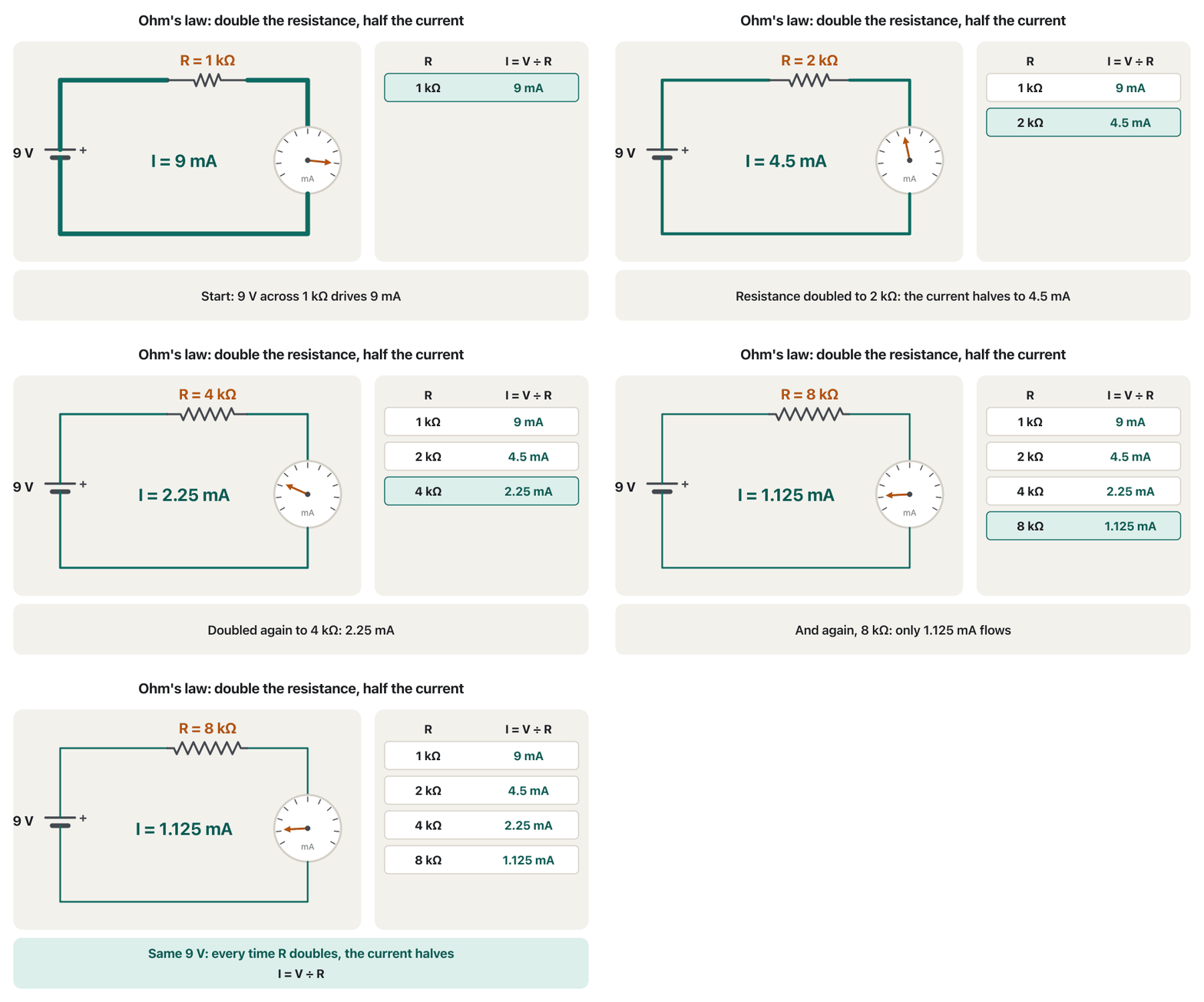
Keep the voltage the same and change only the resistance. In the animation a 9 V battery drives current through a resistor and an ammeter. Each time the resistance doubles — 1, 2, 4, 8 kΩ — the ammeter's needle falls to half: 9, 4.5, 2.25, 1.125 mA.
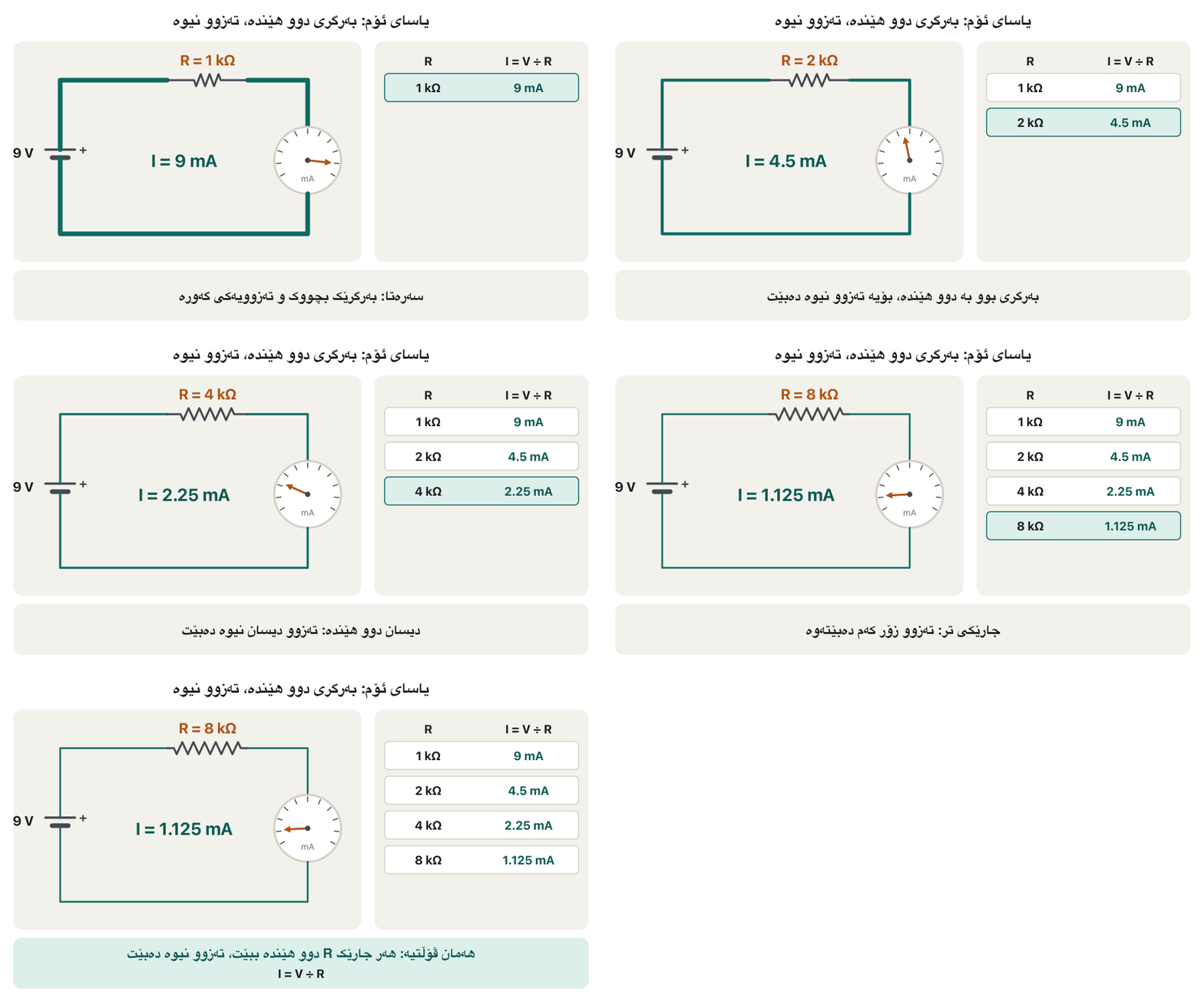
وەک خۆی بهێڵەوە و تەنها بگۆڕە. لە ئەنیمەیشنەکەدا پاترییەکی 9 V بە و دەنێرێت. هەر جارێک دوو هێندە دەبێت — 1، 2، 4، 8 kΩ — دەرزیی دادەبەزێت بۆ نیوە: 9، 4.5، 2.25، 1.125 mA.
Electricity as water in pipesکارەبا وەک ئاو لە بۆرییەکاندا
Voltage, current and resistance are invisible, so it helps to picture water flowing in pipes. The drawing below puts a water system and an electric circuit side by side.
، و نابینرێن، بۆیە یارمەتیدەرە وێنەی ڕۆیشتنی ئاو لە بۆرییەکاندا بهێنیتە پێش چاو. وێنەکەی خوارەوە سیستەمێکی ئاو و لە تەنیشت یەکدا دادەنێت.
Most houses in Kurdistan keep a water tank on the roof. The higher the tank, the harder the water pushes out of the kitchen tap — that push is the voltage. The number of litres coming out every second is the current. A narrow or half-blocked pipe lets less water through for the same push — that is resistance. The pump that lifts the water back to the roof plays the battery, the tap is the switch, and a water wheel turned by the stream is the lamp: the place where the energy does its work.
زۆربەی ماڵەکانی کوردستان تانکی ئاویان لەسەر سەربانە. تانکەکە تا بەرزتر بێت، ئاوەکە بە هێزتر لە شێری چێشتخانەکەوە دێتە دەرەوە — ئەو پاڵنانە . ژمارەی ئەو لیترانەی لە هەر چرکەیەکدا دێنە دەرەوە . بۆرییەکی باریک یان نیوە گیراو بە هەمان پاڵنان ئاوی کەمتر تێدەپەڕێنێت — ئەوە . ئەو پەمپەی ئاوەکە دەگەڕێنێتەوە سەربان ڕۆڵی پاتری دەبینێت، شێرەکە ڕۆڵی و ئاشێک کە ئاوەکە دەیسووڕێنێت ڕۆڵی گڵۆپ: ئەو شوێنەی وزەکە کاری تێدا دەکات.
Where the analogy stops workingسنووری ئەم نموونەیە
Do not push the picture too far. Water pours out of a cut pipe, but nothing pours out of a cut wire: the current simply stops everywhere. A wire is already full of electrons, which is why a lamp lights at once. And the picture says nothing useful about AC, capacitors or magnets.
وێنەکە زۆر مەکێشە. ئاو لە بۆرییەکی بڕاوەوە دەڕژێت، بەڵام هیچ شتێک لە وایەرێکی بڕاوەوە ناڕژێت: بە سادەیی لە هەموو شوێنێک دەوەستێت. وایەر پێشتر پڕە لە ، بۆیە گڵۆپ یەکسەر هەڵدەبێت. هەروەها وێنەکە هیچ شتێکی بەسوود دەربارەی AC، یان موگناتیس ناڵێت.
Series and parallel circuitsبەستنی زنجیرەیی و بەستنی هاوتەریب
When a circuit has more than one load, there are two basic ways to join them. In series the parts sit one after another, so the current has only one path. In parallel each part sits on its own branch between the same two points, so the current has several paths.
کاتێک زیاتر لە هەبێت، دوو ڕێگای بنەڕەتی هەیە بۆ بەستنیان. لە پارچەکان یەک لە دوای یەک دادەنرێن، بۆیە تەنها یەک ڕێگای هەیە. لە هەر پارچەیەک لەسەر لقێکی خۆی لە نێوان هەمان دوو خاڵدا دادەنرێت، بۆیە چەند ڕێگایەکی هەیە.
| Propertyتایبەتمەندی | Series | Parallel |
|---|---|---|
| Paths for the currentڕێگای | oneیەک | one per branchیەک بۆ هەر لقێک |
| Current | the same through every partلە هەموو پارچەکاندا وەک یەک | splits: دابەش دەبێت: |
| Voltage | shared: دابەش دەبێت: | the same across every branch: بە هەموو لقێک وەک یەک: |
| Total resistance گشتی | adds up: کۆ دەبێتەوە: | — less than the smallest branch — لە بچووکترین لق کەمترە |
| One part breaksپارچەیەک دەپچڕێت | everything stopsهەموو شتێک دەوەستێت | the other branches keep workingلقەکانی تر بەردەوام کار دەکەن |
| Exampleنموونە | old chains of decoration lightsزنجیرە گڵۆپی ڕازاندنەوەی کۆن | the lamps and sockets of a houseگڵۆپ و سۆکێتەکانی ماڵێک |
These two ways of connecting are exactly how the first logic gates are explained. Two switches in series with a lamp light it only when A and B are closed — the AND switch model. Two switches in parallel light it when A or B is closed — the OR switch model. And a wire placed across a lamp shorts it out: the current takes the wire and the lamp goes dark (in a series chain, the other lamp then gets the whole voltage and glows brighter). The NOT switch model uses exactly this trick.
ئەم دوو شێوەیەی بەستن ڕێک ئەوەن کە یەکەم پێیان ڕوون دەکرێنەوە. دوو بە لەگەڵ گڵۆپێکدا تەنها کاتێک هەڵیدەکەن کە A و B داخراو بن — نموونەی سویچیی AND. دوو بە هەڵیدەکەن کاتێک A یان B داخراو بێت — نموونەی سویچیی OR. هەروەها وایەرێک کە بە دوو سەری گڵۆپێکەوە دابنرێت دەکات: ڕێگای وایەرەکە دەگرێت و گڵۆپەکە دەکوژێتەوە (لە ، گڵۆپەکەی تر ئەوکات هەموو وەردەگرێت و گەشتر دەبێت). نموونەی سویچیی NOT ڕێک ئەم فێڵە بەکار دەهێنێت.
Series and parallel circuitsبەستنی زنجیرەیی و بەستنی هاوتەریب
Worked example: a series circuitنموونەی شیکراوە: بەستنی زنجیرەیی
A 6 V battery drives two resistors in series: and . Find the current and the voltage across each resistor.
پاترییەکی 6 V بە بە دوو بەستراوە: و . و نێوان دوو سەری هەر بدۆزەوە.
Check: , the battery's voltage. The bigger resistor takes the bigger share of the voltage.
پشکنین: ، پاترییەکە. بەشی گەورەتری وەردەگرێت.
Series and parallel circuitsبەستنی زنجیرەیی و بەستنی هاوتەریب
Worked example: a parallel circuitنموونەی شیکراوە: بەستنی هاوتەریب
A 6 V battery feeds two resistors in parallel: and . Find each branch current, the total current and the total resistance.
پاترییەکی 6 V وزە دەداتە دوو بە : و . هەر لقێک، گشتی و گشتی بدۆزەوە.
The formula gives the same: , so . For exactly two resistors there is a shortcut: kΩ. The total, 1.2 kΩ, is less than the smaller resistor (2 kΩ): every new branch is one more path, so the total resistance goes down.
یاساکەش هەمان شت دەدات: ، بۆیە . بۆ ڕێک دوو ڕێگایەکی کورت هەیە: kΩ. کۆی گشتی، 1.2 kΩ، لە (2 kΩ) کەمترە: هەر لقێکی نوێ ڕێگایەکی زیاترە، بۆیە گشتی کەم دەبێتەوە.
Power and energyتوانای کارەبایی و وزەی کارەبایی
Electric power is how fast energy is moved by an electric current, from the source into the load. That energy was first made by converting another form: mechanical energy (a generator turned by a dam or an engine), thermal energy (burning fuel) or chemical energy (a battery). We use it for lighting, computers, motors and entertainment; for heating and cooking it competes with gas.
ئەوەیە کە وزە چەند خێرا لە سەرچاوەکەوە دەگوازێتەوە بۆ . ئەو وزەیە سەرەتا بە گۆڕینی شێوەیەکی تر دروست کراوە: وزەی میکانیکی (مۆلیدەیەک کە بەنداوێک یان بزوێنەرێک دەیسووڕێنێت)، وزەی گەرمی (سووتاندنی سووتەمەنی) یان وزەی کیمیایی (پاتری). بۆ ڕووناکی، ، ماتۆڕ و کاتبەسەربردن بەکاری دەهێنین؛ بۆ گەرمکردنەوە و چێشتلێنان لەگەڵ غاز کێبڕکێ دەکات.
Power is energy per second. Energy carried by charge Q through voltage V is , and , so ; Ohm's law turns this into and . The unit is the watt (W), after James Watt (1736–1819): .
وزەیە لە هەر چرکەیەکدا. ئەو وزەیەی Q بە V دەیگوازێتەوە دەکاتە و ، بۆیە ؛ ئەمە دەکات بە و . یەکەکەی بریتییە لە (W)، بە ناوی James Watt (1736–1819): .
Power and energyتوانای کارەبایی و وزەی کارەبایی
Energy and the kilowatt-hours on the billوزەی کارەبایی و کیلۆوات-کاتژمێرەکانی پسوولە
Energy is power multiplied by time: , in joules. A joule is tiny, so the electricity company counts kilowatt-hours: 1 kWh is 1000 W used for one hour. With P in watts and t in hours, .
جارانی کات: ، بە . زۆر بچووکە، بۆیە کۆمپانیای کارەبا دەژمێرێت: 1 kWh واتە 1000 W بۆ ماوەی یەک کاتژمێر. بە P بە و t بە کاتژمێر، .
- A heater on the billسۆبەیەک لە پسوولەکەدا
A 2000 W electric heater runs for 3 hours: .
سۆبەیەکی کارەبایی 2000 W بۆ ماوەی 3 کاتژمێر کار دەکات: .
- A resistor on the breadboardبەرگرێک لەسەر بریدبۆرد
10 mA flows through a 1 kΩ resistor: . A common ¼ W (0.25 W) resistor handles that easily.
10 mA بە 1 kΩـدا دەڕوات: . باوی ¼ W (0.25 W) بە ئاسانی بەرگەی دەگرێت.
AC and DCAC و DC
Electricity comes in two kinds. Direct current (DC) flows steadily in one direction, from a battery, a solar panel or a power supply's output. Alternating current (AC) keeps reversing: the voltage swings smoothly up and down as a sine wave, and the current changes direction with it. The words describe both the current and the voltage.
کارەبا دوو جۆرە. (DC) بە جێگیری بە یەک ئاراستەدا دەڕوات، لە پاترییەکەوە، لە پانێڵێکی خۆرەوە یان لە دەرچووی . (AC) بەردەوام ئاراستە دەگۆڕێت: بە نەرمی وەک بەرز و نزم دەبێتەوە و لەگەڵیدا ئاراستە دەگۆڕێت. ئەم دوو ناوە هەم بۆ و هەم بۆ بەکاردێن.
The mains in Iraq and the Kurdistan Region is 230 V at 50 Hz: the current makes 50 full back-and-forth cycles every second ( per cycle). “230 V” is the effective (RMS) value — the DC voltage that would heat a heater just as much; the peaks are about . AC is used for the grid because a transformer can easily step it up for long power lines and down again for houses.
کارەبای ماڵ لە عێراق و هەرێمی کوردستان 230 V بە 50 Hzـە: لە هەر چرکەیەکدا 50 خولی تەواوی هاتوچۆ دەکات ( بۆ هەر خولێک). «230 V» نرخی کاریگەرە (RMS) — واتە سۆبەیەک بەم ACـە هەمان گەرمی دەدات کە بە DCـی 230 V دەیدات؛ لووتکەکان دەگەنە نزیکەی . AC بۆ تۆڕی کارەبا بەکاردێت چونکە گۆڕەری بە ئاسانی بۆ هێڵە درێژەکان بەرزی دەکاتەوە و بۆ ماڵەکان نزمی دەکاتەوە.
In Sorani Kurdish: the difference between direct current (DC) and alternating current (AC).
بە کوردیی سۆرانی: جیاوازیی نێوان (DC) و (AC).
Whole video (11:46), part of the Sorani series "Basics of electricity".
هەموو ڤیدیۆکە (11:46)، بەشێکە لە زنجیرە سۆرانییەکەی «بنچینەکانی کارەبا».
AC and DCAC و DC
DC for logic, and two fixesDC بۆ لۆجیک و دوو ڕاستکردنەوە
Batteries, chips, phones and computers all need DC. Logic gates in particular run on a steady 5 V or 3.3 V, with HIGH and LOW levels measured from it (logic levels). So every computer has a power supply that turns the wall's AC into low DC voltages — how it does that is in the power supply unit.
پاتری، ، مۆبایل و هەموویان پێویستیان بە DC هەیە. بە تایبەتی بە 5 V یان 3.3 Vـی جێگیر کار دەکەن و ئاستەکانی HIGH و LOW لەوەوە دەپێورێن (ئاستە لۆجیکییەکان). بۆیە هەموو هەیە کە ACـی دیوار دەکات بە DCـی نزم — چۆنیەتییەکەی لە سەرچاوەی وزە (PSU)دا هاتووە.
Safety firstسەرەتا سەلامەتی
What injures the body is the current that passes through it, and how long it flows. By Ohm's law, that current depends on the voltage and on the body's resistance. Dry skin can have hundreds of kilohms of resistance; wet or broken skin can fall to about 1 kΩ, and the inside of the body is lower still.
ئەوەی لەش ئازار دەدات ئەو کە پێیدا تێدەپەڕێت و ماوەی ڕۆیشتنەکەی. بە پێی ، ئەو بەندە بە و لەش. پێستی وشک دەتوانێت سەدان کیلۆئۆم هەبێت؛ پێستی تەڕ یان بریندار دەتوانێت دابەزێت بۆ نزیکەی 1 kΩ و ناوەوەی لەش لەوەش کەمترە.
| Current through the body (about 1 s, household AC) بە لەشدا (نزیکەی 1 چرکە، ACـی ماڵ) | What usually happensزۆرجار چی ڕوو دەدات |
|---|---|
| below 1 mAکەمتر لە 1 mA | not feltهەست ناکرێت |
| a faint tingleمووچڕکێکی کز | |
| a slight shock, not painful but disturbing; you can let goشۆکێکی کەم، بە ئازار نییە بەڵام بێزارکەرە؛ دەتوانیت دەست بەردەیت | |
| about 6 to 30 mAنزیکەی 6 تا 30 mA | painful; the muscles lock and you may not be able to let goبە ئازارە؛ ماسولکەکان گیر دەبن و لەوانەیە نەتوانیت دەست بەردەیت |
| 50 to 150 mA50 تا 150 mA | extreme pain, breathing stops, severe muscle contractions — death is possibleئازاری زۆر، هەناسە دەوەستێت، گرژبوونی توندی ماسولکە — مردن ڕەنگە ڕوو بدات |
| 1000 to 4300 mA1000 تا 4300 mA | the heart stops pumping properly; death is likelyدڵ لە پەمپکردنی ڕاست دەوەستێت؛ مردن زۆر ئەگەری هەیە |
| 10,000 mA and more10,000 mA و زیاتر | cardiac arrest and severe burns; death is probableوەستانی دڵ و سووتانی توند؛ مردن زۆر ئەگەری هەیە |
Safety firstسەرەتا سەلامەتی
Ohm's law and the human bodyیاسای ئۆم و لەشی مرۆڤ
Now use Ohm's law. A 5 V logic circuit through dry skin (say 100 kΩ) drives = 0.05 mA — far below what you can feel. The 230 V wall socket through wet skin (about 1 kΩ) could drive = 230 mA, well inside the deadly range. People have stopped breathing after shocks from voltages as low as about 50 V. Time matters too: 100 mA for 3 seconds is as dangerous as 900 mA for 0.03 seconds.
ئێستا بەکار بهێنە. کە بە 5 V کار دەکات، بە پێستی وشکدا (با بڵێین 100 kΩ) = 0.05 mA دەنێرێت — زۆر کەمتر لەوەی هەستی پێ بکەیت. سۆکێتی 230 Vـی دیوار بە پێستی تەڕدا (نزیکەی 1 kΩ) دەتوانێت = 230 mA بنێرێت، کە بە تەواوی لە ناو ناوچەی کوشندەدایە. هەندێک کەس دوای شۆک لە نزیکەی 50 Vـیشدا هەناسەیان وەستاوە. کاتیش گرنگە: 100 mA بۆ 3 چرکە بە قەد 900 mA بۆ 0.03 چرکە مەترسیدارە.
Why the current through the body does the harm, how voltage and skin resistance set that current, and why wet skin is so dangerous.
بۆچی ئەو بە لەشدا تێدەپەڕێت زیان دەگەیەنێت، و پێست چۆن ئەو دیاری دەکەن و بۆچی پێستی تەڕ ئەوەندە مەترسیدارە.
0:33 effects of current on the body; 2:24 skin-resistance simulation; 3:12 wet skin; 3:42 time and high-voltage shocks.
0:33 کاریگەریی لەسەر لەش؛ 2:24 هاوشێوەکردنی پێست؛ 3:12 پێستی تەڕ؛ 3:42 درێژیی کاتی شۆک و شۆکی بەرز.
Safety firstسەرەتا سەلامەتی
Safety rules in the labڕێساکانی سەلامەتی لە تاقیگەدا
- Build and change logic circuits only at 5 V (or 3.3 V) from a lab supply or batteries. Never work on mains (230 V) wiring.
- Switch the supply off before you add, move or remove a part.
- Keep hands, bench and floor dry. Wear closed shoes in the lab — no slippers or sandals.
- A large capacitor can keep its charge after the power is off; do not touch its legs.
- If anyone gets a shock or something smells hot, switch off at once and tell the lab supervisor.
- تەنها بە 5 V (یان 3.3 V) لە تاقیگە یان پاترییەوە دروست بکە و بگۆڕە. هەرگیز کار لەسەر وایەرەکانی کارەبای ماڵ (230 V) مەکە.
- پێش زیادکردن، جووڵاندن یان لابردنی هەر پارچەیەک بکوژێنەرەوە.
- دەست، مێز و زەوی وشک ڕابگرە. لە تاقیگەدا پێڵاوی داخراو لە پێ بکە — نەک نەعل و سەندەڵ.
- گەورە دەتوانێت دوای کوژاندنەوەی کارەبا بپارێزێت؛ دەست لە قاچەکانی مەدە.
- ئەگەر کەسێک شۆکی بەرکەوت یان بۆنی گەرمبوون هات، یەکسەر بیکوژێنەرەوە و بە سەرپەرشتیاری تاقیگە بڵێ.
Inside a PC there are other dangers to the parts — static electricity and the capacitors of the power supply. They are covered in Safety first: power off and unplug.
لە ناو مەترسیی تریش بۆ پارچەکان هەیە — کارەبای ستاتیک و . ئەمانە لە سەرەتا سەلامەتی: کوژاندنەوە و دەرهێنانی وایەردا باس کراون.
Common mistakesهەڵە باوەکان
| Mistakeهەڵە | What is trueڕاستییەکە |
|---|---|
| “The lamp uses up the current, so less comes back.”«گڵۆپەکە بەکار دەهێنێت، بۆیە کەمتر دەگەڕێتەوە.» | The same current goes in and comes out. The lamp uses energy, not current.هەمان دەچێتە ژوورەوە و دێتە دەرەوە. گڵۆپەکە وزە بەکار دەهێنێت، نەک . |
| “A battery is full of current.”«پاتری پڕە لە .» | A battery gives a voltage; current flows only when a complete circuit is connected.پاتری دەدات؛ تەنها کاتێک دەڕوات کە تەواو ببەسترێت. |
| Giving “the voltage at one point”.باسکردنی « لە یەک خاڵدا». | Voltage is always between two points (usually a point and ground). هەمیشە لە نێوان دوو خاڵدایە (زۆرجار خاڵێک و ). |
| Volts divided by kilohms give milliamperes: 9 mA. دابەش لەسەر کیلۆئۆم میلیئەمپێر دەدات: 9 mA. | |
| Adding parallel resistors: .کۆکردنەوەی بە : . | Parallel resistance is less than the smallest branch: 1.2 kΩ. لە بچووکترین لق کەمترە: 1.2 kΩ. |
| Drawing the current from − to +.کێشانی لە −ـەوە بۆ +. | Diagrams use conventional current, from + to −.وێنەکان ئاراستە ڕێککەوتووەکە بەکار دەهێنن، لە +ـەوە بۆ −. |
| “Low voltage is never dangerous.”« نزم هەرگیز مەترسیدار نییە.» | 5 V logic is safe to touch, but about 50 V can already kill, and even a car battery can start a fire through a short circuit.لۆجیکی 5 V دەست لێدانی بێ مەترسییە، بەڵام نزیکەی 50 V دەتوانێت بکوژێت و تەنانەت پاتریی ئۆتۆمبێلیش بە دەتوانێت ئاگر بکاتەوە. |
Exercisesڕاهێنانەکان
A 9 V battery is connected to a 220 Ω resistor and a 680 Ω resistor in series. Find the current and the voltage across each resistor.
پاترییەکی 9 V بە 220 Ω و 680 Ωـەوە بە بەستراوە. و نێوان دوو سەری هەر بدۆزەوە.
Hintئاماژە
Add the resistances first.
سەرەتا کۆ بکەرەوە.
Show answerوەڵامەکە پیشان بدە
Check: .
پشکنین: .
A simulator lab asks you to connect a 15 V DC source to a 1 kΩ and a 2 kΩ resistor in series and to fill in the table of V and I for each resistor. Predict the readings before you run it.
تاقیکردنەوەیەکی داوات لێ دەکات سەرچاوەیەکی DCـی 15 V بە 1 kΩ و 2 kΩـەوە بە ببەستیت و خشتەی V و Iـی هەر پڕ بکەیتەوە. پێش کارپێکردن خوێندنەوەکان پێشبینی بکە.
Show answerوەڵامەکە پیشان بدە
| R | V | I |
|---|---|---|
| 1 kΩ | 5 V | 5 mA |
| 2 kΩ | 10 V | 5 mA |
, so through both. and ; together 15 V.
، بۆیە بە هەردووکیاندا. و ؛ پێکەوە 15 V.
A 12 V supply feeds a 100 Ω and a 300 Ω resistor in parallel. Find the total resistance and the total current.
12 V وزە دەداتە 100 Ω و 300 Ω بە . گشتی و گشتی بدۆزەوە.
Show answerوەڵامەکە پیشان بدە
Branch check: and ; together 0.16 A.
پشکنینی لقەکان: و ؛ پێکەوە 0.16 A.
Three resistors, 2 kΩ, 3 kΩ and 6 kΩ, are connected in parallel across 12 V. Find each branch current, the total current and the total resistance.
سێ ، 2 kΩ، 3 kΩ و 6 kΩ، بە بە 12 Vـەوە بەستراون. هەر لقێک، گشتی و گشتی بدۆزەوە.
Show answerوەڵامەکە پیشان بدە
, , ; total . (check: ). Every branch has the full 12 V across it.
، ، ؛ کۆی گشتی . (پشکنین: ). هەموو لقێک هەموو 12 Vـەکەی بەسەرەوەیە.
A simulator tutorial builds this circuit: a 20 V source, then in series with three resistors in parallel, , and . Find the resistance of the parallel group, the total resistance, the current from the source, the voltage across R1 and across the group, and the current in each branch.
ڕێنماییەکی ئەم دروست دەکات: سەرچاوەیەکی 20 V، پاشان بە لەگەڵ سێ بە ، ، و . کۆمەڵە هاوتەریبەکە، گشتی، سەرچاوەکە، نێوان دوو سەری R1 و کۆمەڵەکە و هەر لقێک بدۆزەوە.
Hintئاماژە
Replace the parallel group by one resistor first; then it is a simple series circuit.
سەرەتا کۆمەڵە هاوتەریبەکە بە یەک بگۆڕەوە؛ ئینجا دەبێتە سادە.
Show answerوەڵامەکە پیشان بدە
Check: and .
پشکنین: و .
A 10 V supply drives in series with a parallel pair, and . Find the total current, the voltage across R1 and the current in R2 and R3.
بە لەگەڵ جووتێکی هاوتەریب ( و ) بە 10 Vـەوە بەستراون. گشتی، نێوان دوو سەری R1 و R2 و R3 بدۆزەوە.
Show answerوەڵامەکە پیشان بدە
, so and . , leaving 4 V across the pair: , (together 2 mA).
، بۆیە و . ، کەواتە 4 V بۆ جووتەکە دەمێنێتەوە: ، (پێکەوە 2 mA).
A house has a 5 A line from the neighbourhood generator at 230 V. (a) What is the most power it can use at once? (b) Can it run a 1000 W heater and a 100 W TV together? (c) And a 2200 W kettle?
ماڵێک هێڵێکی 5 لە مۆلیدەی گەڕەکەوە هەیە بە 230 V. (أ) زۆرترین کە لە یەک کاتدا دەتوانێت بەکاری بهێنێت چەندە؟ (ب) دەتوانێت سۆبەیەکی 1000 W و تەلەفزیۆنێکی 100 W پێکەوە هەڵبکات؟ (ج) ئەی کتڵێکی 2200 W؟
Show answerوەڵامەکە پیشان بدە
- (a) .
- (b) Yes: , which is — just under 5 A.
- (c) No: , nearly twice the 5 A limit.
- (أ) زۆرترین: .
- (ب) بەڵێ: ، کە دەکاتە — کەمێک لە خوار 5 A.
- (ج) نەخێر: ، نزیکەی دوو هێندەی سنووری 5 A.
A 2000 W heater runs 3 hours every day for 30 days. How many kilowatt-hours does the meter count?
سۆبەیەکی 2000 W ڕۆژانە 3 کاتژمێر بۆ ماوەی 30 ڕۆژ کار دەکات. مێتەرەکە چەند دەژمێرێت؟
Show answerوەڵامەکە پیشان بدە
Each day ; in 30 days .
هەر ڕۆژێک ؛ لە 30 ڕۆژدا .
Use Ohm's law with a dry-skin resistance of 100 kΩ and a wet-skin resistance of 1 kΩ. Find the current for (a) 5 V and dry skin, (b) 230 V and dry skin, (c) 230 V and wet skin, and compare each with the NIOSH table.
بەکار بهێنە بە 100 kΩ بۆ پێستی وشک و 1 kΩ بۆ پێستی تەڕ. بدۆزەوە بۆ (أ) 5 V و پێستی وشک، (ب) 230 V و پێستی وشک، (ج) 230 V و پێستی تەڕ و هەر یەکەیان بە خشتەی NIOSH بەراورد بکە.
Show answerوەڵامەکە پیشان بدە
- (a) : not felt.
- (b) : a clear tingle or shock — and skin resistance drops quickly at high voltage.
- (c) : far into the range where breathing stops and death is possible.
- (أ) : هەست ناکرێت.
- (ب) : مووچڕک یان شۆکێکی ڕوون — هەروەها پێست بە بەرز خێرا دادەبەزێت.
- (ج) : زۆر لە ناو ئەو ناوچەیەدا کە هەناسە دەوەستێت و مردن ڕەنگە ڕوو بدات.
Summaryپوختە
- A circuit needs a voltage source, a load and conductors in one complete loop; a break anywhere stops the current everywhere.
- Current is charge per second: , in amperes; electrons. Diagrams draw it from + to −.
- Voltage is the push between two points, in volts (). Resistance opposes the current, in ohms.
- Ohm's law: . Same voltage, double resistance → half the current.
- Series: same current, voltages add, . Parallel: same voltage, currents add, . Series switches act like AND, parallel switches like OR.
- Power in watts; energy , billed in kWh.
- DC flows one way (batteries, chips); AC reverses (Kurdistan's mains: 230 V, 50 Hz).
- Tens of milliamperes through the chest can kill: work at 5 V, never on the mains, with dry hands and closed shoes.
- پێویستی بە سەرچاوەیەکی ، و هەیە لە یەک بازنەی تەواودا؛ پچڕانێک لە هەر شوێنێک لە هەموو شوێنێک دەوەستێنێت.
- لە هەر چرکەیەکدا: ، بە ؛ . وێنەکان لە +ـەوە بۆ − دەیکێشن.
- پاڵنانی نێوان دوو خاڵە، بە (). بەرهەڵستی دەکات، بە .
- : . هەمان ، دوو هێندە ← نیوە.
- : هەمان ، کۆ دەبنەوە، . : هەمان ، کۆ دەبنەوە، . زنجیرەیی وەک AND و هاوتەریب وەک OR کار دەکەن.
- بە ؛ ، بە kWh لە پسوولەدا.
- DC بە یەک ئاراستە دەڕوات (پاتری، )؛ AC ئاراستە دەگۆڕێت (کارەبای ماڵی کوردستان: 230 V، 50 Hz).
- چەند دە میلیئەمپێرێک بە سنگدا دەتوانێت بکوژێت: بە 5 V کار بکە، هەرگیز لەسەر کارەبای ماڵ، بە دەستی وشک و پێڵاوی داخراو.
Why does a lamp in a series pair glow dimmer than the same lamp alone?بۆچی گڵۆپێک لە جووتێکی زنجیرەییدا کزتر هەڵدەبێت لە هەمان گڵۆپ بە تەنها؟
The two lamps share the battery's voltage, so each gets about half, and the total resistance is larger, so less current flows.
دوو گڵۆپەکە پاترییەکە دابەش دەکەن، بۆیە هەر یەکەیان نزیکەی نیوەی وەردەگرێت و گشتی گەورەترە، بۆیە کەمتر دەڕوات.
A 5 V supply and a 220 Ω resistor: what current flows?سەرچاوەیەکی وزەی 5 V و بەرگرێکی 220 Ω: چەند تەزوو دەڕوات؟
, about 23 mA.
، نزیکەی 23 mA.
Videoڤیدیۆ
Watch a videoسەیری ڤیدیۆیەک بکە
A video that viewers liked a lot and praised in their comments, chosen for this lesson.ڤیدیۆیەک کە بینەران زۆریان پێ خۆش بووە و لە کۆمێنتەکانیاندا ستایشیان کردووە، بۆ ئەم وانەیە هەڵبژێردراوە.
Electric potential and voltage, current, resistance and power, explained with a gravity analogy in five minutes.
پۆتێنشیاڵی کارەبایی و ، ، و ، بە لێکچواندن بە هێزی ڕاکێشان، لە پێنج خولەکدا ڕوون دەکاتەوە.
0:00 potential energy; 1:25 potential difference; 2:24 current; 3:17 resistance; 3:39 power.
0:00 وزەی شاراوە؛ 1:25 جیاوازیی پۆتێنشیاڵ؛ 2:24 ؛ 3:17 ؛ 3:39 .
Lesson complete!وانەکە تەواو بوو!
Well done. Review the key terms, then go on to the next lesson.دەستخۆش. سەیرێکی زاراوە سەرەکییەکان بکەرەوە، پاشان بڕۆ بۆ وانەی داهاتوو.
Key termsزاراوە سەرەکییەکان
Components and Instruments on the Lab Benchپارچە و ئامێرەکانی سەر مێزی تاقیگە
Related lecturesوانە پەیوەندیدارەکان
- Components and Instruments on the Lab Benchپارچە و ئامێرەکانی سەر مێزی تاقیگە
- The AND Gateگەیتی AND
- The OR Gateگەیتی OR
- Logic Gates, Truth Tables and the NOT Gateگەیتە لۆجیکییەکان، خشتەکانی ڕاستی و گەیتی NOT
- The System Unit, Motherboard and Power Supplyکەیس، بۆردی سەرەکی و سەرچاوەی وزە
- Building and Caring for a PCپێکەوەنان و چاودێریکردنی کۆمپیوتەر
References and further readingسەرچاوەکان و خوێندنەوەی زیاتر
- NIOSH: Electrical Safety — Safety and Health for Electrical Trades, Student Manual (2009-113)
- Wikipedia: Ohm's law
- Wikipedia: Electric current (conventional current, drift speed)
- Wikipedia: Kilowatt-hour
- SparkFun: Resistors (series and parallel resistance)
- WorldStandards: Iraq — plugs, sockets and voltage (230 V, 50 Hz)
- PhET Interactive Simulations: Circuit Construction Kit: DC
This lecture is a first edition. The Kurdish text and terminology are waiting for review by Kurdish IT teachers.ئەم وانەیە چاپی یەکەمە. دەقە کوردییەکە و زاراوەکانی چاوەڕێی پێداچوونەوەی مامۆستایانی کوردی بواری IT ن.