Chapterبەش 7 · Lectureوانە 7.2
Incident Response: Six Phasesوەڵامدانەوەی ڕووداو: شەش قۆناغ
What a security incident is and why organisations plan for it; the six phases of incident response — preparation, identification, containment, eradication, recovery and lessons learned — with playbooks, tabletop exercises, evidence handling and communication; and how NIST SP 800-61 Rev. 3 (2025) maps incident response to the CSF 2.0 functions.
چییە و بۆچی ڕێکخراوەکان پلانی بۆ دادەنێن؛ شەش قۆناغی — ئامادەکاری، ناسینەوە، ، ، گەڕاندنەوە و — لەگەڵ ، ، پاراستنی بەڵگە و پەیوەندیکردن؛ هەروەها NIST SP 800-61 Rev. 3 (2025) چۆن بە ئەرکەکانی CSF 2.0 دەبەستێتەوە.
What you will learnچی فێر دەبیت
- Tell a security incident from an ordinary event, and explain why a plan reduces impact and downtime.
- Name the six phases in order and give the tasks of each.
- Contain an incident without destroying evidence, and explain chain of custody.
- Plan communication during an incident, including out-of-band channels and legal notification.
- Map the six phases to NIST SP 800-61 Rev. 3 and the CSF 2.0 functions.
- لە ڕووداوێکی ئاسایی جیا بکەیتەوە و ڕوونی بکەیتەوە بۆچی پلان و لەکارکەوتن کەم دەکاتەوە.
- شەش قۆناغەکە بە ڕیز ناو ببەیت و ئەرکەکانی هەر یەکەیان بڵێیت.
- سنووردار بکەیت بەبێ لەناوبردنی بەڵگە و ڕوون بکەیتەوە.
- پلانی پەیوەندیکردن لە کاتی دابنێیت، لەوانە کەناڵی جیا و ئاگادارکردنەوەی یاسایی.
- شەش قۆناغەکە بە NIST SP 800-61 Rev. 3 و ئەرکەکانی CSF 2.0 ببەستیتەوە.
When prevention failsکاتێک ڕێگری سەرناکەوێت
Firewalls, patches and training stop most attacks, but not all of them. One day a staff member will open the wrong attachment, or a criminal will use a flaw nobody knew about. Incident response is what an organisation does from the moment it notices an attack until it is safe again — and what it learns afterwards.
، و ڕاهێنان زۆربەی هێرشەکان ڕادەگرن، بەڵام نەک هەموویان. ڕۆژێک کارمەندێک پاشکۆی هەڵە دەکاتەوە، یان تاوانبارێک بەکار دەهێنێت کە کەس نەیدەزانی. ئەوەیە کە ڕێکخراوێک دەیکات لەو ساتەوەی هێرشێک هەست پێ دەکات تا کاتێک دووبارە سەلامەت دەبێتەوە — هەروەها ئەوەی دواتر فێری دەبێت.
An event that harms or threatens the , or of systems or data, such as a malware infection, a or a successful phishing attack.
ڕووداوێکە کە زیان بە ، یان سیستەم یان دەگەیەنێت یان هەڕەشەی لێ دەکات، وەک تووشبوون بە ، یان هێرشێکی سەرکەوتووی .
Not everything strange is an incident. NIST calls any observable occurrence on a computer or network an event: a login, a blocked packet, a full disk. An event becomes a security incident when it actually or nearly harms the confidentiality, integrity or availability of information or systems, or breaks the law or the organisation's security rules. Every incident is an event; most events are not incidents.
هەموو شتێکی نامۆ نییە. NIST هەر ڕوودانێکی بینراو لەسەر یان بە ڕووداو ناو دەبات: هەوڵێکی ، ڕاگیراو، دیسکێکی پڕ. ڕووداوێک دەبێتە کاتێک بە ڕاستی یان نزیکەی زیان بە ، یان زانیاری یان سیستەمەکان دەگەیەنێت، یان یاسا یان ڕێساکانی ئاسایشی ڕێکخراوەکە دەشکێنێت. هەموو ڕووداوێکە؛ بەڵام زۆربەی ڕووداوەکان نین.
When prevention failsکاتێک ڕێگری سەرناکەوێت
Why incident response mattersبۆچی وەڵامدانەوەی ڕووداو گرنگە
The course gives two reasons why incident response matters:
کۆرسەکە دوو هۆکار دەدات بۆ ئەوەی بۆچی گرنگە:
- Protecting sensitive data: a fast response stops or limits a data breach, which keeps confidential information safe and keeps customers' trust.
- Minimising downtime: a well-defined plan gets systems working again sooner, which keeps the business running (business continuity) and reduces the money lost.
- پاراستنی هەستیار: وەڵامی خێرا ڕادەگرێت یان سنووردار دەکات، کە زانیاریی نهێنی دەپارێزێت و متمانەی کڕیاران دەهێڵێتەوە.
- کەمکردنەوەی کاتی لەکارکەوتن: پلانێکی ڕوون سیستەمەکان زووتر دەخاتەوە کار، کە کارەکە بەردەوام دەهێڵێت () و ئەو پارەیە کەم دەکاتەوە کە لەدەست دەچێت.
A school does not wait for a fire to decide who calls the fire brigade, which door each class uses and where everyone meets outside. It writes the plan, practises it twice a year, and after each drill fixes what went wrong. When smoke appears, nobody argues: everyone already knows their part. Incident response is the fire drill for computers.
قوتابخانە چاوەڕێی ئاگرکەوتنەوە ناکات بۆ ئەوەی بڕیار بدات کێ پەیوەندی بە ئاگرکوژێنەرەوە دەکات، هەر پۆلێک لە کام دەرگاوە دەچێتە دەرەوە و هەمووان لە دەرەوە لە کوێ کۆ دەبنەوە. پلانەکە دەنووسێت، ساڵی دوو جار ڕاهێنانی لەسەر دەکات و دوای هەر ڕاهێنانێک ئەوەی هەڵە بوو چاکی دەکات. کاتێک دووکەڵ دەردەکەوێت، کەس مشتومڕ ناکات: هەمووان پێشتر ئەرکی خۆیان دەزانن. ڕاهێنانی ئاگرکەوتنەوەیە بۆ .
Where the analogy stops workingسنووری ئەم نموونەیە
A fire is visible at once. A cyberattack may stay hidden for weeks, so part of incident response is finding out that anything is happening at all.
ئاگر یەکسەر دەبینرێت. لەوانەیە چەند هەفتەیەک شاراوە بمێنێتەوە، بۆیە بەشێک لە دۆزینەوەی ئەوەیە کە ئایا هیچ شتێک ڕوو دەدات.
Why plan before it happensبۆچی پێش ڕوودانی پلان دابنێین
Lecture 4 already says what an incident response plan is for: during preparation, write a comprehensive plan with the steps to take when a breach happens; for response and recovery, the plan must include steps for containment, remediation (fixing the cause) and recovery. Lecture 5 then lists what a good plan brings:
وانەی 4 پێشتر دەڵێت پلانی بۆ چییە: لە ئامادەکاریدا پلانێکی گشتگیر بنووسە بە ئەو هەنگاوانەی کاتی دزەکردن دەبێت بگیرێنە بەر؛ بۆ وەڵامدانەوە و گەڕاندنەوە، پلانەکە دەبێت هەنگاوەکانی ، چاککردنەوە (چارەسەرکردنی هۆکارەکە) و گەڕاندنەوەی تێدا بێت. پاشان وانەی 5 ئەوە ڕیز دەکات کە پلانێکی باش دەیهێنێت:
| Benefitسوود | What it meansواتای چییە |
|---|---|
| Reduced impact کەمتر | A quick, practised response limits the damage.وەڵامێکی خێرا و ڕاهێنراو زیانەکە سنووردار دەکات. |
| Faster recoveryگەڕاندنەوەی خێراتر | Steps, backups and contacts are ready, so systems and data come back sooner.هەنگاو، و پەیوەندییەکان ئامادەن، بۆیە سیستەم و زووتر دەگەڕێنەوە. |
| Better reputationناوبانگی باشتر | Customers trust a company that clearly had a plan and told them the truth.کڕیاران متمانە بە کۆمپانیایەک دەکەن کە بە ڕوونی پلانی هەبوو و ڕاستییەکەی پێ گوتن. |
| Stronger securityئاسایشی بەهێزتر | Each incident shows weak spots that are then fixed.هەر پیشان دەدات کە پاشان چاک دەکرێن. |
| Less downtimeلەکارکەوتنی کەمتر | The business is interrupted for hours, not weeks.کارەکە بۆ چەند کاتژمێرێک دەوەستێت، نەک چەند هەفتەیەک. |
| Money savedپارە پاشەکەوت دەکرێت | Smaller breaches mean smaller costs, fines and lost sales.دزەکردنی بچووکتر واتە تێچوو، سزای دارایی و فرۆشی لەدەستچووی کەمتر. |
The costs of a slow, unplanned response — downtime, fines, lost trust — are taught in The real cost of a cyber attack.
تێچووی وەڵامێکی هێواش و بێپلان — لەکارکەوتن، سزای دارایی، متمانەی لەدەستچوو — لە تێچووی ڕاستەقینەی هێرشێکی سایبەریدا فێر کراوە.
The six phases at a glanceشەش قۆناغەکە بە کورتی
The course divides incident response into six phases. This six-step model was made popular by SANS, a security-training organisation, in its Incident Handler's Handbook; the first letters, PICERL, help to remember it.
کۆرسەکە دابەش دەکات بۆ شەش قۆناغ. ئەم مۆدێلە شەش هەنگاوییە لەلایەن SANS، ڕێکخراوێکی ڕاهێنانی ئاسایش، لە Incident Handler's Handbookدا ناسراو کرا؛ پیتە یەکەمەکانی بە ئینگلیزی، PICERL، یارمەتی لەبەرکردنی دەدەن.
| # | Phaseقۆناغ | The question it answersوەڵامی کام پرسیار دەداتەوە |
|---|---|---|
| 1 | Preparationئامادەکاری | Are we ready? Plan, roles, communication, tools, training.ئایا ئامادەین؟ پلان، ڕۆڵ، پەیوەندی، ئامراز، ڕاهێنان. |
| 2 | Identificationناسینەوە | Is something happening, and what exactly? Detect, gather evidence, confirm.ئایا شتێک ڕوو دەدات و بە وردی چییە؟ دۆزینەوە، کۆکردنەوەی بەڵگە، پشتڕاستکردنەوە. |
| 3 | How do we stop it spreading? Isolate, block, limit damage.چۆن ڕێ لە بڵاوبوونەوەی بگرین؟ جیاکردنەوە، ڕاگرتن، سنووردارکردنی زیان. | |
| 4 | How do we remove it? Malware, compromised accounts, the vulnerability.چۆن لای ببەین؟ ، هەژمارە دزەپێکراوەکان، . | |
| 5 | Recoveryگەڕاندنەوە | How do we get back to normal? Restore systems and data, keep the business running.چۆن بگەڕێینەوە بۆ دۆخی ئاسایی؟ گەڕاندنەوەی سیستەم و ، . |
| 6 | Why did it happen, and how do we stop it next time? Root cause, recommendations.بۆچی ڕووی دا و چۆن جاری داهاتوو ڕێی لێ بگرین؟ هۆکاری بنەڕەتی، ڕاسپاردەکان. |
Phase 1: Preparationقۆناغی 1: ئامادەکاری
Preparation happens long before any attack. The course lists four parts:
ئامادەکاری زۆر پێش هەر هێرشێک ڕوو دەدات. کۆرسەکە چوار بەش ناو دەبات:
- Incident response planپلانی وەڵامدانەوەی ڕووداو
Document the procedures, the roles and who is responsible for what: who leads, who may disconnect a server, who talks to customers and the police, and when to call outside experts.
ڕێکارەکان، ڕۆڵەکان و ئەوەی کێ بەرپرسی چییە بنووسە: کێ سەرکردایەتی دەکات، کێ دەتوانێت داببڕێت، کێ قسە لەگەڵ کڕیاران و پۆلیس دەکات و کەی پەیوەندی بە پسپۆڕانی دەرەکییەوە دەکرێت.
- Communication channelsڕێگاکانی پەیوەندی
Agree how teams, managers and outside parties will talk during an incident. Keep a contact list, and have a way that does not use the possibly hacked network, such as phone calls.
لەسەر ئەوە ڕێک بکەون کە تیمەکان، بەڕێوەبەران و لایەنە دەرەکییەکان لە کاتی چۆن قسە دەکەن. لیستی پەیوەندییەکان هەڵبگرە و ڕێگایەکت هەبێت کە ئەو لەوانەیە هاک کرابێت بەکار نەهێنێت، وەک پەیوەندیی تەلەفۆنی.
- Security tools and technologiesئامراز و تەکنەلۆجیای ئاسایش
Put detection, prevention and response tools in place before you need them: logging and a SIEM, EDR on laptops, backups, a way to isolate machines quickly.
ئامرازەکانی دۆزینەوە، ڕێگری و وەڵامدانەوە پێش ئەوەی پێویستت پێیان بێت دابنێ: و ، لەسەر ، ، ڕێگایەک بۆ جیاکردنەوەی خێرای ئامێرەکان.
- Training and awarenessڕاهێنان و هۆشیاری
Train all employees in good security habits and in what to do when something looks wrong — above all, to report it at once (A reporting process that works).
هەموو کارمەندان لەسەر ڕەفتاری باشی ئاسایش ڕابهێنە و لەسەر ئەوەی کاتێک شتێک هەڵە دەردەکەوێت چی بکەن — لە هەمووی گرنگتر، یەکسەر ڕاپۆرتی بکەن (ڕێکارێکی ڕاپۆرتکردن کە کار دەکات).
Phase 1: Preparationقۆناغی 1: ئامادەکاری
A plan the attack cannot lockپلانێک کە هێرشەکە ناتوانێت قفڵی بکات
Backups belong to preparation too: they are useless if they were never tested or if the attacker can delete them. How to plan them is taught in Backup and recovery.
سەر بە ئامادەکارین: ئەگەر هەرگیز تاقی نەکرابنەوە یان بتوانێت بیانسڕێتەوە بێسوودن. چۆنیەتیی پلاندانانیان لە باکئەپ و گەڕاندنەوەدا فێر کراوە.
Phase 1: Preparationقۆناغی 1: ئامادەکاری
Playbooks and practiceڕێبەرنامەکانی وەڵامدانەوە و ڕاهێنان
A short, ready-made list of the steps a team follows for one type of , such as or a stolen password, so that people act quickly and in the right order.
لیستێکی کورت و ئامادەی ئەو هەنگاوانەیە کە تیمێک بۆ یەک جۆری پەیڕەوی دەکات، وەک یان تێپەڕەوشەیەکی دزراو، بۆ ئەوەی خەڵک بە خێرایی و بە ڕیزی دروست کار بکەن.
A plan says who does what in general. A playbook gives step-by-step tasks for one kind of incident, so nobody has to invent them under stress. Written as short checklists, procedures are easy to follow even under pressure. A ransomware playbook might begin like this:
پلان بە گشتی دەڵێت کێ چی دەکات. ئەرکی هەنگاو بە هەنگاو بۆ یەک جۆری دەدات، بۆ ئەوەی کەس ناچار نەبێت لە ژێر فشاردا دایانبهێنێت. کاتێک ڕێکارەکان وەک لیستی پشکنینی کورت دەنووسرێن، تەنانەت لە ژێر فشاریشدا پەیڕەوکردنیان ئاسانە. لەوانەیە بەم شێوەیە دەست پێ بکات:
- Confirm: a ransom note or many renamed files on more than one machine?
- Call the incident lead by phone; open the incident log.
- Disconnect affected machines from the network — do not switch them off.
- Disable the accounts that were used; protect the backups.
- Inform management, then the legal team, then (if needed) the national CERT and the police.
- پشتڕاستکردنەوە: نامەی بارمتە یان زۆر فایلی ناوگۆڕدراو لەسەر زیاتر لە یەک ئامێر؟
- بە تەلەفۆن پەیوەندی بە سەرۆکی تیمەوە بکە؛ تۆماری بکەرەوە.
- ئامێرە تووشبووەکان لە دابڕە — مەیانکوژێنەرەوە.
- ئەو هەژمارانەی بەکار هێنراون ناچالاک بکە؛ بپارێزە.
- بەڕێوەبەرایەتی ئاگادار بکەرەوە، پاشان تیمی یاسایی، پاشان (ئەگەر پێویست بوو) نیشتیمانی و پۆلیس.
Plans are tested in a tabletop exercise: the team sits around a table, a leader describes an imaginary incident step by step ("It is Monday 8 a.m.; the booking system shows a ransom note…"), and everyone says what they would do. Gaps appear safely — a missing phone number, an unclear decision — and are fixed before a real attack.
پلانەکان لە تاقی دەکرێنەوە: تیمەکە لە دەوری مێزێک دادەنیشێت، سەرکردەیەک ڕووداوێکی خەیاڵی هەنگاو بە هەنگاو وەسف دەکات («دووشەممەیە، کاتژمێر 8ی بەیانی؛ سیستەمی حجزکردن نامەی بارمتە پیشان دەدات…») و هەمووان دەڵێن چی دەکەن. کەموکوڕییەکان بە سەلامەتی دەردەکەون — ژمارەی تەلەفۆنێکی ون، بڕیارێکی ناڕوون — و پێش هێرشێکی ڕاستەقینە چاک دەکرێن.
Phase 2: Identificationقۆناغی 2: ناسینەوە
Identification means detecting that something is wrong, gathering evidence and confirming what kind of attack it is. The course names four sources of information:
ناسینەوە واتە دۆزینەوەی ئەوەی کە شتێک هەڵەیە، کۆکردنەوەی بەڵگە و پشتڕاستکردنەوەی ئەوەی کە چ جۆرە هێرشێکە. کۆرسەکە چوار سەرچاوەی زانیاری ناو دەبات:
| Sourceسەرچاوە | What it givesچی دەدات |
|---|---|
| Monitoring and alertingچاودێری و ئاگادارکردنەوە | Tools watch network activity and raise alerts on suspicious activity (see SIEM).ئامرازەکان چاودێریی چالاکیی دەکەن و بۆ چالاکیی گوماناوی ئاگادار دەکەنەوە (بڕوانە SIEM). |
| Log analysisشیکاریی | System and security logs show patterns: who logged in, from where, what changed. سیستەم و ئاسایش نموونەکان پیشان دەدەن: کێ هاتە ژوورەوە، لە کوێوە، چی گۆڕا. |
| Shows which weaknesses an attacker could have used to get in.پیشانی دەدات دەیتوانی کام بەکار بهێنێت بۆ چوونە ژوورەوە. | |
| Feeds about new threats and attack techniques help recognise what you see.زانیاری دەربارەی و تەکنیکە نوێیەکانی هێرش یارمەتی ناسینەوەی ئەوە دەدات کە دەیبینیت. |
Phase 2: Identificationقۆناغی 2: ناسینەوە
Triage and indicators of compromiseهەڵسەنگاندنی سەرەتایی و نیشانەکانی دزەپێکردن
Not every alert is an incident. A person first triages it: is it a real attack or a false positive? How serious is it, and which systems does it touch? Clues that a system has been attacked — a known malicious address, a strange new program, a file hash from a threat report — are called indicators of compromise. From the first minute, the team keeps a written log of what it sees and does, with times.
هەموو ئاگادارکردنەوەیەک نییە. کەسێک سەرەتا بۆ دەکات: هێرشێکی ڕاستەقینەیە یان ؟ چەند جددییە و دەست لە کام سیستەمانە دەدات؟ ئەو سەرەداوانەی پیشان دەدەن سیستەمێک هێرشی کراوەتە سەر — ناونیشانێکی خراپەکاری ناسراو، بەرنامەیەکی نوێی نامۆ، فایلێک لە ڕاپۆرتێکی — پێیان دەگوترێت . لە یەکەم خولەکەوە، تیمەکە تۆمارێکی نووسراو هەڵدەگرێت بۆ ئەوەی دەیبینێت و دەیکات، لەگەڵ کاتەکان.
Phase 3: Containmentقۆناغی 3: سنووردارکردن
Containment stops the spread and limits further damage while the team works out how to remove the threat. The course lists three actions:
بڵاوبوونەوە ڕادەگرێت و زیانی زیاتر سنووردار دەکات، لە کاتێکدا تیمەکە دەیەوێت بزانێت چۆن لاببات. کۆرسەکە سێ هەنگاو ناو دەبات:
- Isolate affected systems: disconnect them from the network (unplug the cable, turn off Wi-Fi, or move them into a quarantine zone).
- Block network traffic from compromised systems and from known malicious addresses, at the firewall.
- Disable vulnerable services and applications that the attack is using, to reduce its impact.
- جیاکردنەوەی سیستەمە تووشبووەکان: لە دایانببڕە (کێبڵەکە دەربهێنە، بکوژێنەرەوە، یان بیانخە ناوچەیەکی کەرەنتینەوە).
- ڕاگرتنی هاتوچۆی لە سیستەمە دزەپێکراوەکان و لە ناونیشانە خراپەکارە ناسراوەکانەوە، لە .
- ناچالاککردنی خزمەتگوزاری و لاوازەکان کە هێرشەکە بەکاریان دەهێنێت، بۆ کەمکردنەوەی .
- Short-term containment is the emergency step (unplug, block). Long-term containment keeps the business running safely while the clean-up is prepared — for example a temporary rule or a replacement server.
- Talk out of band: if attackers are inside the e-mail system, they read the defenders' e-mails too. CISA recommends phone calls, so the attacker does not learn that they have been noticed.
- کورتخایەن هەنگاوی فریاکەوتنە (دابڕین، ڕاگرتن). درێژخایەن کارەکە بە سەلامەتی بەردەوام دەهێڵێت لە کاتێکدا پاککردنەوەکە ئامادە دەکرێت — بۆ نموونە یاسایەکی کاتی یان جێگرەوە.
- بە ڕێگایەکی جیا قسە بکەن: ئەگەر لە ناو سیستەمی ئیمەیڵدا بن، ئیمەیڵەکانی بەرگریکارانیش دەخوێننەوە. CISA پەیوەندیی تەلەفۆنی پێشنیار دەکات، بۆ ئەوەی نەزانێت کە هەستی پێ کراوە.
Phase 3: Containmentقۆناغی 3: سنووردارکردن
Keep the evidenceبەڵگەکان بپارێزە
Evidence answers the big questions later: how did the attacker get in, what did they take, and how long were they inside? It may also be needed by the police, a court or an insurer. NIST asks responders to record every action, protect those records, and collect incident data in a way that keeps its integrity (nobody changed it) and its provenance (where it came from).
بەڵگەکان دواتر وەڵامی پرسیارە گەورەکان دەدەنەوە: چۆن هاتە ژوورەوە، چی برد و چەند لە ناوەوە بوو؟ لەوانەیە پۆلیس، دادگا یان کۆمپانیای بیمەش پێویستیان پێی بێت. NIST داوا لە وەڵامدەرەوەکان دەکات هەموو هەنگاوێک تۆمار بکەن، ئەو تۆمارانە بپارێزن و بە شێوەیەک کۆ بکەنەوە کە (کەس نەیگۆڕیوە) و سەرچاوەکەی (لە کوێوە هاتووە) بپارێزرێت.
- Copy the memory and the logs of affected machines before they are cleaned (specialists use forensic tools for this).
- Keep a chain of custody: a record of who collected each item, when, and who handled it after that.
- Write down every action with its time: "10:42 — unplugged FILE-01, left powered on".
- پێش پاککردنەوە، و ئامێرە تووشبووەکان کۆپی بکە (پسپۆڕان ئامرازی بۆ ئەمە بەکار دەهێنن).
- بپارێزە: تۆمارێک کە کێ هەر بەڵگەیەکی کۆ کردەوە، کەی و کێ دوای ئەوە مامەڵەی لەگەڵ کرد.
- هەموو هەنگاوێک لەگەڵ کاتەکەی بنووسە:
10:42 — unplugged FILE-01, left powered on.
Deep investigation of digital evidence is a profession of its own, digital forensics. A beginner's job is simpler: do not destroy what the specialists will need.
لێکۆڵینەوەی قووڵ لە بەڵگەی دیجیتاڵی پیشەیەکی سەربەخۆیە، . ئەرکی تازەکار سادەترە: ئەوە لەناو مەبە کە پسپۆڕان پێویستیان پێی دەبێت.
Phase 4: Eradicationقۆناغی 4: ڕیشەکێشکردن
Eradication removes the threat from the affected systems: the malware, the attacker's access and the weakness they used. The course lists three tasks:
لادەبات لە سیستەمە تووشبووەکان: ، دەستڕاگەیشتنی و ئەو لاوازییەی بەکاریان هێنا. کۆرسەکە سێ ئەرک ناو دەبات:
- Malware removalلابردنی نەرمەواڵەی زیانبەخش
Remove malware with antivirus/EDR or specialised tools. When a machine was badly compromised, the safer choice is to wipe it and rebuild it from a clean image, because hidden pieces are easy to miss.
بە / یان ئامرازی تایبەت لاببە. کاتێک ئامێرێک بە خراپی دزەی پێ کراوە، هەڵبژاردنی سەلامەتتر پاککردنەوەی تەواو و دووبارە دامەزراندنییەتی لە وێنەیەکی پاکەوە، چونکە بەشە شاراوەکان بە ئاسانی لەدەست دەچن.
- Account remediationچاککردنەوەی هەژمارەکان
Reset compromised accounts, remove any access the attacker created (new accounts, extra keys, mail-forwarding rules), and enforce strong passwords and MFA.
هەژمارە دزەپێکراوەکان ڕێک بخەرەوە، هەر دەستڕاگەیشتنێک کە دروستی کردووە لاببە (هەژماری نوێ، کلیلی زیادە، یاسای ناردنەوەی ئیمەیڵ) و بەهێز و MFA بسەپێنە.
- Patching vulnerabilitiesپینەکردنی خاڵە لاوازەکان
Apply the security patches that close the hole the attacker used, so they cannot simply come back the same way.
ئەو ئاسایشییانە دابمەزرێنە کە ئەو کونە دادەخەن کە بەکاری هێنا، بۆ ئەوەی نەتوانێت بە ئاسانی بە هەمان ڕێگادا بگەڕێتەوە.
Attackers often leave several ways back in (backdoors). Before declaring the threat gone, the team searches all systems — not only the ones that raised alerts — for the same indicators of compromise.
زۆرجار چەند ڕێگایەک بۆ گەڕانەوە بەجێ دەهێڵن (). پێش ڕاگەیاندنی ئەوەی لابراوە، تیمەکە هەموو سیستەمەکان دەپشکنێت — نەک تەنها ئەوانەی ئاگادارکردنەوەیان داوە — بۆ هەمان .
Phase 5: Recoveryقۆناغی 5: گەڕاندنەوە
Recovery brings systems and data back to normal operation, so the business continues. The course lists three parts:
گەڕاندنەوە سیستەم و دەگەڕێنێتەوە بۆ کارکردنی ئاسایی، بۆ ئەوەی کارەکە بەردەوام بێت. کۆرسەکە سێ بەش ناو دەبات:
- Data recovery: restore data from backups, or recover lost data in other ways.
- System restoration: rebuild affected systems or restore them from backups.
- Service restoration: bring critical services and applications back into operation.
- گەڕاندنەوەی : لە بگەڕێنەوە، یان لەدەستچوو بە ڕێگای تر بگەڕێنەوە.
- گەڕاندنەوەی سیستەم: سیستەمە تووشبووەکان دووبارە دروست بکەرەوە یان لە بیانگەڕێنەوە.
- گەڕاندنەوەی خزمەتگوزاری: خزمەتگوزاری و گرنگەکان بخەرەوە کار.
- Check backups before using them. NIST advises checking restoration assets for indicators of compromise and corruption first — a backup taken after the attacker got in may contain their backdoor.
- Restore in order of importance: the systems that customers and staff need most come first.
- Watch closely afterwards: attackers sometimes return to see whether their door still works.
- Declare the end of recovery when agreed criteria are met, and finish the documentation.
- پێش بەکارهێنان بپشکنە. NIST ئامۆژگاری دەکات سەرەتا سەرچاوەکانی گەڕاندنەوە بۆ و تێکچوون بپشکنرێن — کە دوای چوونە ژوورەوەی وەرگیرابێت لەوانەیە تێدا بێت.
- بەپێی گرنگی بیگەڕێنەوە: ئەو سیستەمانەی کڕیاران و کارمەندان زۆرترین پێویستیان پێیانە یەکەم جار دێن.
- دواتر بە وردی چاودێری بکە: هەندێک جار دەگەڕێنەوە بۆ ئەوەی ببینن ئایا دەرگاکەیان هێشتا کار دەکات.
- کاتێک مەرجە ڕێککەوتووەکان هاتنە دی کۆتایی گەڕاندنەوە ڕابگەیەنە و بەڵگەنامەکان تەواو بکە.
How far back you can restore, and how long it may take, are planned in advance as the RPO and RTO; backup types, the 3-2-1 rule and backups that ransomware cannot change are taught in Backup and recovery and Backups against ransomware.
تا کوێ دەتوانیت بگەڕێیتەوە و چەند کاتی دەوێت، پێشوەختە وەک و پلانیان بۆ دادەنرێت؛ جۆرەکانی ، و ئەو جۆرە کە ناتوانێت بیگۆڕێت لە باکئەپ و گەڕاندنەوە و باکئەپ دژی نەرمەواڵەی بارمتەگردا فێر کراون.
Phase 6: Lessons learnedقۆناغی 6: وانە وەرگیراوەکان
The last phase turns a bad day into a stronger organisation. The course lists three steps:
دوا قۆناغ ڕۆژێکی خراپ دەکات بە ڕێکخراوێکی بەهێزتر. کۆرسەکە سێ هەنگاو ناو دەبات:
- Incident analysisشیکاریی ڕووداوە ئاسایشییەکە
Understand the attack: which techniques were used and by which route (the attack vector) the attacker came in.
لە هێرشەکە تێبگە: کام تەکنیکانە بەکار هێنران و بە کام ڕێگادا () هاتە ژوورەوە.
- Root cause analysisشیکاریی هۆکاری بنەڕەتی
Find the underlying cause — a vulnerability, a misconfiguration or a human error — not just the last thing that went wrong. Asking "why?" several times helps: Why did ransomware run? A user opened a file. Why could it spread? The network was flat. Why was the VPN open? An old account had no MFA.
هۆکاری بنەڕەتی بدۆزەرەوە — ، یان هەڵەیەکی مرۆیی — نەک تەنها دوا شت کە هەڵە ڕۆیشت. چەند جار پرسیارکردنی «بۆچی؟» یارمەتی دەدات: بۆچی کاری کرد؟ بەکارهێنەرێک فایلێکی کردەوە. بۆچی توانی بڵاو ببێتەوە؟ تەخت بوو. بۆچی کراوە بوو؟ هەژمارێکی کۆن MFAـی نەبوو.
- Recommendationsڕاسپاردەکان
Turn the findings into concrete actions with an owner and a date, so similar incidents are prevented.
دۆزینەوەکان بکە بە کاری ڕوون کە هەر یەکەیان خاوەن و بەرواری خۆی هەبێت، بۆ ئەوەی ڕێ لە هاوشێوە بگیرێت.
- Hold the meeting soon, while memories are fresh, and keep it blameless: the goal is to fix systems and habits, not to punish the person who clicked. People who fear blame hide mistakes.
- Write an after-action report: what happened, what was done, what worked, what did not and what will change.
- Feed the lessons back into preparation: update the plan, the playbooks, the training and the defences. This closes the cycle.
- کۆبوونەوەکە زوو ساز بکە، لە کاتێکدا یادەوەرییەکان هێشتا تازەن. هەروەها با بەبێ تاوانبارکردن بێت: ئامانج چاککردنی سیستەم و ڕەفتارەکانە، نەک سزادانی ئەو کەسەی کرتەی کرد. ئەو کەسانەی لە تاوانبارکردن دەترسن هەڵەکانیان دەشارنەوە.
- ڕاپۆرتی دوای ڕووداو بنووسە: چی ڕووی دا، چی کرا، چی کاری کرد، چی کاری نەکرد و چی دەگۆڕێت.
- وانەکان بگەڕێنەوە بۆ ئامادەکاری: پلان، ، ڕاهێنان و بەرگرییەکان نوێ بکەرەوە. ئەمە خولەکە دادەخات.
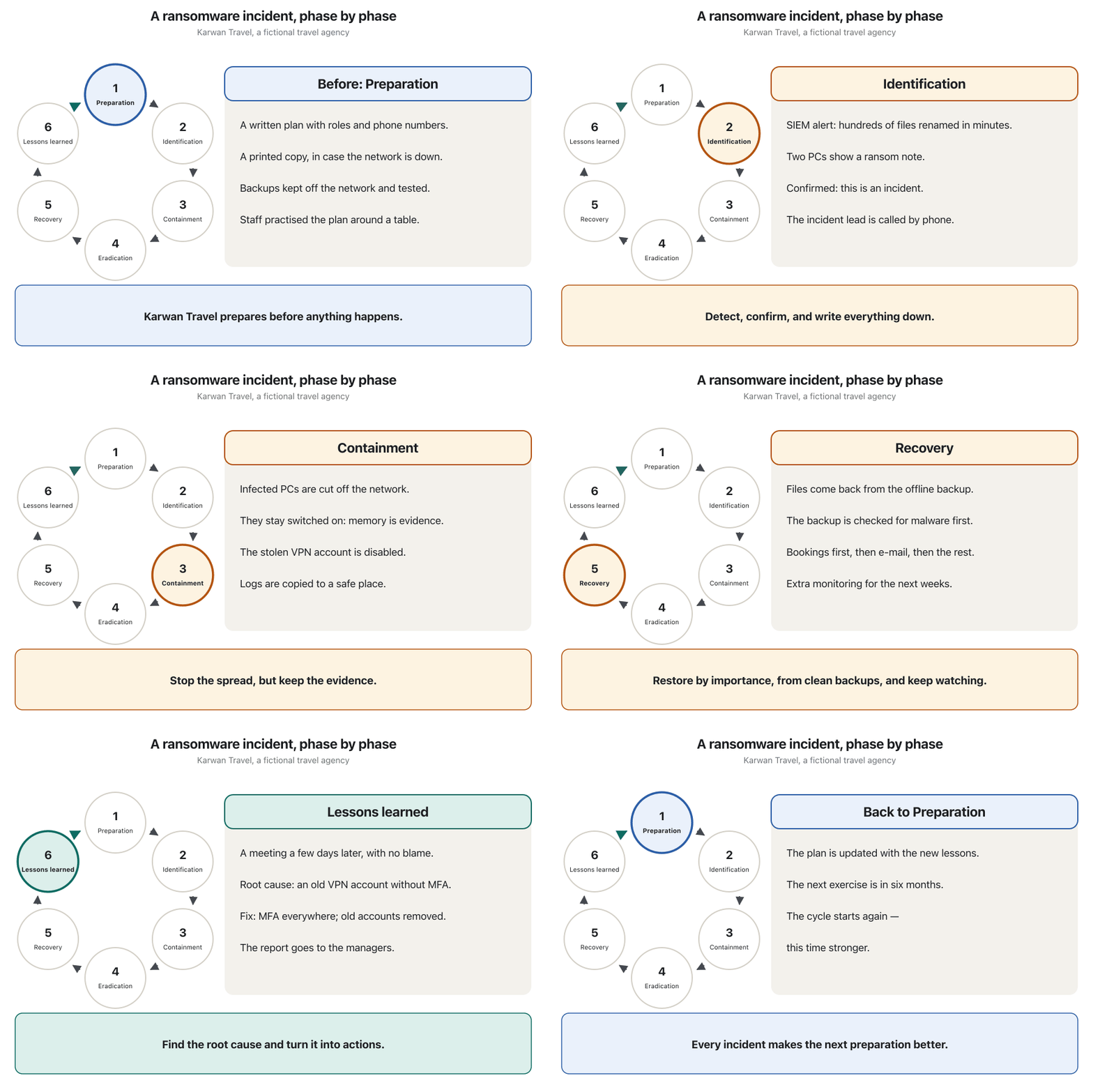
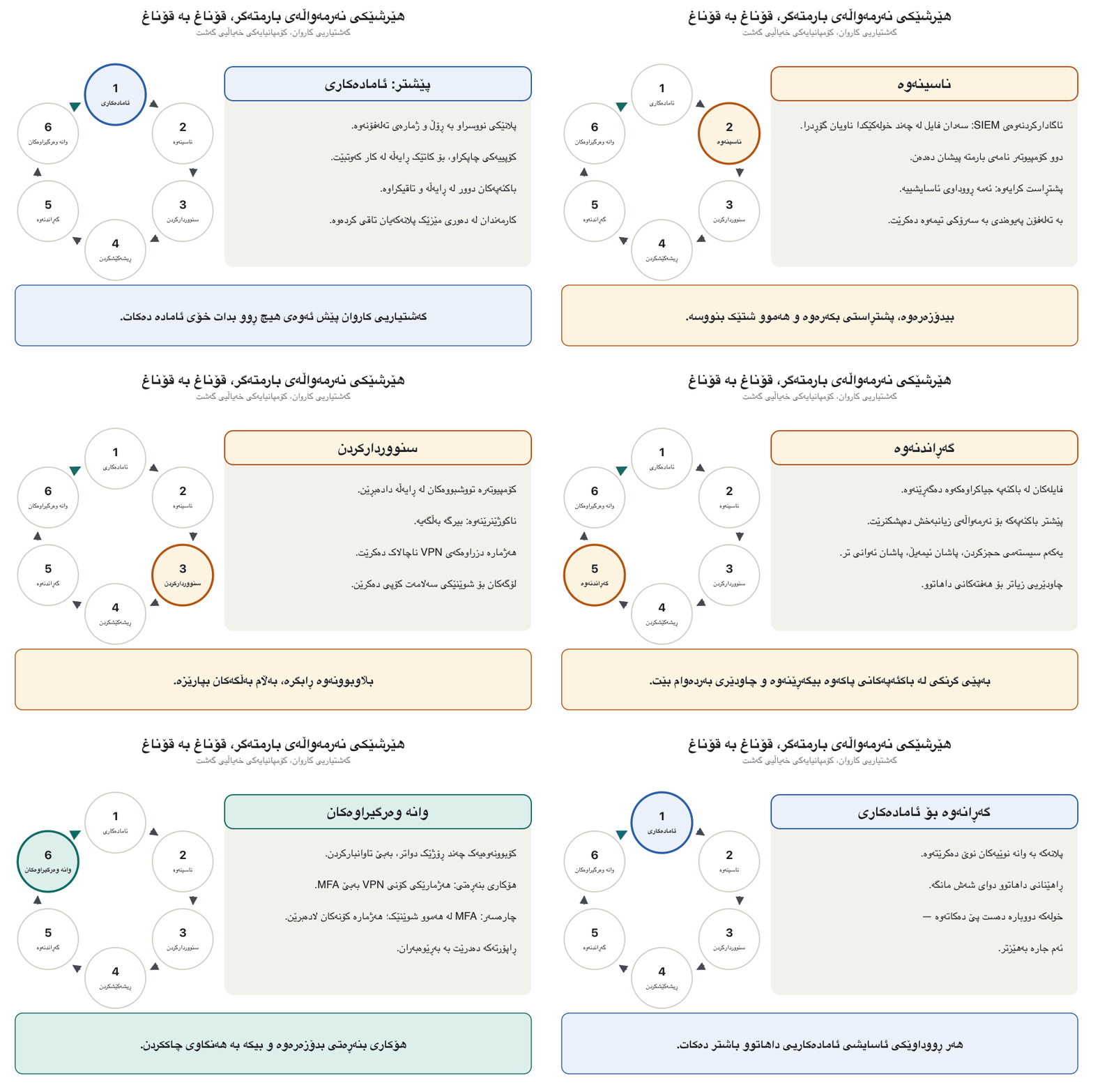
A ransomware incident, phase by phaseهێرشێکی نەرمەواڵەی بارمتەگر، قۆناغ بە قۆناغ
Here is the whole cycle in one story. Karwan Travel is a fictional travel agency with twenty staff. Watch which phase each action belongs to.
ئەمە هەموو خولەکەیە لە یەک چیرۆکدا. گەشتیاریی کاروان کۆمپانیایەکی خەیاڵیی گەشتە بە بیست کارمەندەوە. سەیر بکە هەر هەنگاوێک سەر بە کام قۆناغە.
Who to tell, and howبە کێ بڵێین و چۆن
An incident is also a communication problem. Who must hear what, and when? Incident communication falls into four kinds:
کێشەیەکی پەیوەندیکردنیشە. کێ دەبێت چی بزانێت و کەی؟ پەیوەندیکردن لە کاتی چوار جۆرە:
| Kindجۆر | Whoکێ | Exampleنموونە |
|---|---|---|
| Coordinationهەماهەنگی | Everyone with a role: IT, managers, legal team, outside expertsهەموو ئەوانەی ڕۆڵیان هەیە: IT، بەڕێوەبەران، تیمی یاسایی، پسپۆڕانی دەرەکی | Status calls every two hours, by phoneپەیوەندیی دۆخ هەموو دوو کاتژمێر جارێک، بە تەلەفۆن |
| Notificationئاگادارکردنەوە | Affected customers, staff, partners, regulatorsکڕیار، کارمەند، هاوبەش و دەسەڵاتە چاودێرە کاریگەربووەکان | Telling a data-protection authority about a breach within the legal deadlineئاگادارکردنەوەی دەسەڵاتی پاراستنی لە دزەکردنێک پێش تەواوبوونی دوا وادەی یاسایی |
| Public communicationپەیوەندیی گشتی | The public and journalistsخەڵکی گشتی و ڕۆژنامەنووسان | One clear, honest statement from one named spokespersonیەک لێدوانی ڕوون و ڕاستگۆیانە لە یەک وتەبێژی دیاریکراوەوە |
| Information sharingهاوبەشکردنی زانیاری | Other organisations and the national CERT, usually voluntaryڕێکخراوەکانی تر و نیشتیمانی، زۆرجار خۆبەخشانە | Sharing the attacker's addresses so others can block themهاوبەشکردنی ناونیشانەکانی بۆ ئەوەی ئەوانی تر ڕایانبگرن |
Some notifications are required by law and have deadlines: under the EU's GDPR, a personal-data breach must normally be reported to the authority within 72 hours (see Breach notification). That is why the plan names, in advance, who decides and who speaks. Sharing technical details with a national CERT or with partners helps others defend themselves — the idea behind Threat intelligence.
هەندێک ئاگادارکردنەوە یاسا داوایان دەکات و دوا وادەیان هەیە: بەپێی یەکێتیی ئەوروپا، کەسی بە ئاسایی دەبێت لە ماوەی 72 کاتژمێردا بە دەسەڵاتەکە ڕابگەیەنرێت (بڕوانە ئاگادارکردنەوەی دزەکردنی دراوە). بۆیە پلانەکە پێشوەختە ناوی ئەوە دەبات کە کێ بڕیار دەدات و کێ قسە دەکات. هاوبەشکردنی وردەکارییە تەکنیکییەکان لەگەڵ نیشتیمانی یان هاوبەشەکان یارمەتی ئەوانی تر دەدات بەرگری لە خۆیان بکەن — ئەمە بیرۆکەی پشت هەواڵگریی هەڕەشەـە.
The NIST view: SP 800-61 Rev. 3 and CSF 2.0دیدی NIST: SP 800-61 Rev. 3 و CSF 2.0
The six phases are not the only model. NIST's old incident handling guide (SP 800-61 Rev. 2, 2012) used four phases: Preparation; Detection and Analysis; Containment, Eradication and Recovery; and Post-Incident Activity. In April 2025 NIST replaced it with SP 800-61 Rev. 3, which places incident response inside the six functions of the NIST Cybersecurity Framework 2.0:
شەش قۆناغەکە تاکە مۆدێل نین. ڕێنماییە کۆنەکەی NIST بۆ مامەڵەکردن لەگەڵ (SP 800-61 Rev. 2، 2012) چوار قۆناغی بەکار دەهێنا: ئامادەکاری؛ دۆزینەوە و شیکردنەوە؛ ، و گەڕاندنەوە؛ هەروەها چالاکییەکانی دوای ڕووداو. لە نیسانی 2025دا NIST بە SP 800-61 Rev. 3 گۆڕییەوە، کە دەخاتە ناو شەش ئەرکەکەی NIST CSF 2.0:
| Course phase (SANS)قۆناغی کۆرسەکە (SANS) | NIST CSF 2.0 functions in SP 800-61 Rev. 3ئەرکەکانی 2.0 لە SP 800-61 Rev. 3دا |
|---|---|
| 1 Preparation1 ئامادەکاری | Govern, Identify, Protect — broad risk management that also prepares for incidentsGovern، Identify، Protect — فراوان کە بۆ ئامادە دەکات |
| 2 Identification2 ناسینەوە | Detect (find and analyse possible attacks)Detect (دۆزینەوە و شیکردنەوەی هێرشە ئەگەرییەکان) |
| 3 Containment, 4 Eradication3 ، 4 | Respond (manage, analyse, contain, eradicate, report)Respond (بەڕێوەبردن، شیکردنەوە، ، ، ڕاپۆرتدان) |
| 5 Recovery5 گەڕاندنەوە | Recover (restore assets and operations)Recover (گەڕاندنەوەی سامان و کارەکان) |
| 6 | Improvement (a category of Identify), fed by lessons from every function, at any timeImprovement (پۆلێکی Identify)، کە لە وانەکانی هەموو ئەرکەکانەوە، لە هەر کاتێکدا، پڕ دەکرێتەوە |
The NIST Cybersecurity Framework 2.0 walked through function by function: Govern, Identify, Protect, Detect, Respond and Recover, with simple examples.
2.0 ئەرک بە ئەرک: بەڕێوەبردن (Govern)، ناسینەوە (Identify)، پاراستن (Protect)، دۆزینەوە (Detect)، وەڵامدانەوە (Respond) و گەڕاندنەوە (Recover)، بە نموونەی سادە.
Watch from 4:23: Detect, Respond (5:45) and Recover (6:50), the CSF 2.0 functions where SP 800-61 Rev. 3 places incident handling. The whole video is on the course-map screen of 'What is cybersecurity'.
لە 4:23 بەدواوە سەیر بکە: دۆزینەوە (Detect)، وەڵامدانەوە (Respond، 5:45) و گەڕاندنەوە (Recover، 6:50)، ئەو ئەرکانەی 2.0 کە SP 800-61 Rev. 3 تێیاندا جێ دەکاتەوە. هەموو ڤیدیۆکە لەسەر شاشەی «نەخشەیەکی بوارەکە»ی وانەی « چییە؟» دانراوە.
Common mistakesهەڵە باوەکان
| Mistakeهەڵە | Why it is wrongبۆچی هەڵەیە | Do this insteadلە جیاتی ئەوە ئەمە بکە |
|---|---|---|
| Switching off an infected computer at onceکوژاندنەوەی یەکسەری تووشبوو | Memory, with valuable evidence, is lost، لەگەڵ بەڵگەی بەنرخ، لەدەست دەچێت | Disconnect it from the network and leave it onلە دایببڕە و با هەڵکراو بێت |
| Keeping the only copy of the plan on the file serverهەڵگرتنی تاکە کۆپیی پلانەکە لەسەر فایلەکان | Ransomware may lock it لەوانەیە قفڵی بکات | Keep printed and offline copiesکۆپیی چاپکراو و جیاکراوە لە هەڵبگرە |
| Restoring before eradicatingگەڕاندنەوە پێش | The attacker's backdoor is still there and they return هێشتا لە شوێنی خۆیەتی و دەگەڕێتەوە | Remove every foothold first, then restore from a checked backupسەرەتا هەموو جێپێیەک لاببە، پاشان لە پشکنراوەوە بیگەڕێنەوە |
| Discussing the response by e-mail on the hacked networkگفتوگۆکردنی وەڵامدانەوە بە ئیمەیڵ لەسەر هاککراوەکە | The attacker reads it and changes tactics دەیخوێنێتەوە و تاکتیکەکانی دەگۆڕێت | Use phones or a prepared separate channelتەلەفۆن یان کەناڵێکی جیای ئامادەکراو بەکار بهێنە |
| Skipping lessons learned because "it is fixed now"تێپەڕاندنی چونکە «ئێستا چاک بووە» | The same root cause lets the next attack inهەمان هۆکاری بنەڕەتی ڕێگە بە هێرشی داهاتوو دەدات | Hold a blameless review and update the planپێداچوونەوەیەکی بێ تاوانبارکردن ساز بکە و پلانەکە نوێ بکەرەوە |
| Writing a plan and never practising itنووسینی پلان و هەرگیز تاقینەکردنەوەی | Missing numbers and unclear roles appear during the real attackژمارەی ون و ڕۆڵی ناڕوون لە کاتی هێرشی ڕاستەقینەدا دەردەکەون | Run tabletop exercises at least once a yearلانیکەم ساڵی جارێک ئەنجام بدە |
| Blaming the employee who clickedتاوانبارکردنی ئەو کارمەندەی کرتەی کرد | People stop reporting mistakes quicklyخەڵک ڕاپۆرتکردنی خێرای هەڵەکان ڕادەگرن | Fix the system so one click is not enough (MFA, segmentation)سیستەمەکە چاک بکە بۆ ئەوەی یەک کرتە بەس نەبێت (MFA، ) |
Exercisesڕاهێنانەکان
Put these six phases in the order of the course: Recovery, Identification, Lessons learned, Containment, Preparation, Eradication.
ئەم شەش قۆناغە بەپێی ڕیزبەندیی کۆرسەکە ڕیز بکە: گەڕاندنەوە، ناسینەوە، ، ، ئامادەکاری، .
Show answerوەڵامەکە پیشان بدە
Preparation → Identification → Containment → Eradication → Recovery → Lessons learned (and then back to Preparation).
ئامادەکاری ← ناسینەوە ← ← ← گەڕاندنەوە ← (و پاشان گەڕانەوە بۆ ئامادەکاری).
Name the phase of each action: (a) analysing logs to see when the attacker first logged in; (b) blocking the attacker's IP addresses at the firewall; (c) resetting all compromised accounts; (d) rebuilding the web server from backups; (e) writing down the underlying cause and recommendations; (f) training staff on the incident procedure.
قۆناغی هەر هەنگاوێک ناو ببە: (أ) شیکردنەوەی بۆ ئەوەی ببینیت یەکەم جار کەی هاتە ژوورەوە؛ (ب) ڕاگرتنی لە ؛ (ج) ڕێکخستنەوەی هەموو هەژمارە دزەپێکراوەکان؛ (د) دووبارە دروستکردنەوەی لە ؛ (هـ) نووسینی هۆکاری بنەڕەتی و ڕاسپاردەکان؛ (و) ڕاهێنانی کارمەندان لەسەر ڕێکاری .
Show answerوەڵامەکە پیشان بدە
- (a) Identification (log analysis) — and later lessons learned, for the full timeline.
- (b) Containment (blocking network traffic).
- (c) Eradication (account remediation).
- (d) Recovery (system restoration).
- (e) Lessons learned (root cause analysis, recommendations).
- (f) Preparation (training and awareness).
- (أ) ناسینەوە (شیکاریی ) — و دواتر بۆ هێڵی کاتیی تەواو.
- (ب) (ڕاگرتنی هاتوچۆی ).
- (ج) (چاککردنەوەی هەژمارەکان).
- (د) گەڕاندنەوە (گەڕاندنەوەی سیستەم).
- (هـ) (، ڕاسپاردەکان).
- (و) ئامادەکاری (ڕاهێنان و هۆشیاری).
At a small shop, a cashier sees a ransom note. The manager switches off every computer, e-mails the whole staff "we have been hacked, details below", restores last night's backup the same evening and goes home. Name three mistakes and the correct action for each.
لە دوکانێکی بچووکدا، قاسەیەک نامەیەکی بارمتە دەبینێت. بەڕێوەبەرەکە هەموو دەکوژێنێتەوە، ئیمەیڵێک بۆ هەموو کارمەندان دەنێرێت «هاک کراوین، وردەکارییەکان لە خوارەوەن»، هەمان ئێوارە دوێنێ شەو دەگەڕێنێتەوە و دەچێتەوە ماڵەوە. سێ هەڵە و هەنگاوی دروست بۆ هەر یەکەیان ناو ببە.
Show answerوەڵامەکە پیشان بدە
- Switching off destroys evidence in memory → disconnect from the network and leave the machines on.
- E-mail on a possibly compromised network can warn the attacker → use phone calls or a prepared separate channel.
- Restoring at once skips eradication and may restore an infected backup → find and remove the cause first, check the backup, then restore; afterwards hold a lessons-learned review.
- کوژاندنەوە بەڵگەی ناو لەناو دەبات ← لە دایانببڕە و با هەڵکراو بن.
- ئیمەیڵ لەسەر کە لەوانەیە دزەی پێ کرابێت دەتوانێت ئاگادار بکاتەوە ← تەلەفۆن یان کەناڵێکی جیای ئامادەکراو بەکار بهێنە.
- گەڕاندنەوەی یەکسەری تێدەپەڕێنێت و لەوانەیە تووشبوو بگەڕێنێتەوە ← سەرەتا هۆکارەکە بدۆزەرەوە و لای ببە، بپشکنە، پاشان بیگەڕێنەوە؛ دواتر پێداچوونەوەی ساز بکە.
Write a one-page incident plan for your family's home network (router, phones, laptop): who to call, what to do first if a phone is hacked, where the backups are, and which passwords to change from a clean device.
پلانێکی یەک پەڕەیی بۆ بنووسە بۆ ماڵی خێزانەکەت (، مۆبایلەکان، ): پەیوەندی بە کێوە بکەیت، ئەگەر مۆبایلێک هاک کرا یەکەم جار چی بکەیت، لە کوێن و کام لە ئامێرێکی پاکەوە بگۆڕیت.
Show answerوەڵامەکە پیشان بدە
A good answer names a person who decides and an expert to call; first steps (disconnect the phone from Wi-Fi and mobile data, do not reset it before photos and messages are backed up and checked, change the e-mail and bank passwords from another device, turn on MFA); where backups live (cloud account plus an external drive kept unplugged); and when to tell the bank or the police. It is kept printed, and practised once a year.
وەڵامێکی باش ناوی کەسێک دەبات کە بڕیار دەدات و پسپۆڕێک کە پەیوەندیی پێوە بکرێت؛ یەکەم هەنگاوەکان (مۆبایلەکە لە و مۆبایل دابڕە، پێش ئەوەی وێنە و نامەکان بکرێن و بپشکنرێن ڕێکی مەخەرەوە، ئیمەیڵ و بانک لە ئامێرێکی ترەوە بگۆڕە، MFA هەڵبکە)؛ لە کوێن (هەژمارێکی هەور لەگەڵ کە نەبەستراوە)؛ و کەی بانک یان پۆلیس ئاگادار بکرێنەوە. بە چاپکراوی هەڵدەگیرێت و ساڵی جارێک تاقی دەکرێتەوە.
(a) Give the four parts of the preparation phase. (b) Give the three actions of containment. (c) Give the three steps of the lessons-learned phase.
(أ) چوار بەشی قۆناغی ئامادەکاری بنووسە. (ب) سێ هەنگاوی بنووسە. (ج) سێ هەنگاوی قۆناغی بنووسە.
Show answerوەڵامەکە پیشان بدە
- (a) Incident response plan; communication channels; security tools and technologies; training and awareness.
- (b) Isolating affected systems; blocking network traffic; disabling vulnerable services.
- (c) Incident analysis; root cause analysis; recommendations.
- (أ) پلانی ؛ ڕێگاکانی پەیوەندی؛ ئامراز و تەکنەلۆجیای ئاسایش؛ ڕاهێنان و هۆشیاری.
- (ب) جیاکردنەوەی سیستەمە تووشبووەکان؛ ڕاگرتنی هاتوچۆی ؛ ناچالاککردنی خزمەتگوزارییە لاوازەکان.
- (ج) شیکاریی ؛ ؛ ڕاسپاردەکان.
Summaryپوختە
- A security incident is an event that harms or threatens confidentiality, integrity or availability, or breaks security rules. Incident response protects data and minimises downtime.
- Six phases (SANS): Preparation, Identification, Containment, Eradication, Recovery, Lessons learned — and back to preparation.
- Prepare a plan with roles and contacts (also printed), playbooks, tools, backups and training, and practise it in tabletop exercises.
- Contain by isolating — not switching off — and keep evidence with a chain of custody; eradicate every foothold before recovering from checked backups.
- Communicate out of band; notify regulators and customers on time; share indicators with others.
- NIST SP 800-61 Rev. 3 (April 2025) maps incident response to CSF 2.0: Govern/Identify/Protect prepare, Detect/Respond/Recover respond, Improvement learns all the time.
- ڕووداوێکە کە زیان بە ، یان دەگەیەنێت یان هەڕەشەیان لێ دەکات، یان ڕێساکانی ئاسایش دەشکێنێت. دەپارێزێت و لەکارکەوتن کەم دەکاتەوە.
- شەش قۆناغ (SANS): ئامادەکاری، ناسینەوە، ، ، گەڕاندنەوە، — و گەڕانەوە بۆ ئامادەکاری.
- پلانێک بە ڕۆڵ و پەیوەندییەکانەوە ئامادە بکە (چاپکراویش)، لەگەڵ ، ئامراز، و ڕاهێنان. پاشان لە تاقی بکەرەوە.
- بە جیاکردنەوە — نەک کوژاندنەوە — بکە و بەڵگەکان بە بپارێزە؛ پێش گەڕاندنەوە لە پشکنراوەوە، هەموو جێپێیەک ڕیشەکێش بکە.
- بە ڕێگایەکی جیا پەیوەندی بکە؛ لە کاتی خۆیدا دەسەڵاتە چاودێرەکان و کڕیاران ئاگادار بکەرەوە؛ نیشانەکان لەگەڵ ئەوانی تر هاوبەش بکە.
- NIST SP 800-61 Rev. 3 (نیسانی 2025) بە CSF 2.0 دەبەستێتەوە: Govern/Identify/Protect ئامادە دەکەن، Detect/Respond/Recover وەڵام دەدەنەوە، Improvement هەمیشە فێر دەبێت.
Why disconnect an infected machine instead of switching it off?بۆچی ئامێرێکی تووشبوو دادەبڕین لە جیاتی کوژاندنەوەی؟
Disconnecting stops the spread; keeping it on preserves memory, which may hold evidence such as running malware and keys.
دابڕین بڵاوبوونەوە ڕادەگرێت؛ هەڵکراو هێشتنەوەی دەپارێزێت کە لەوانەیە بەڵگەی وەک کارکردوو و کلیلەکانی تێدا بێت.
What is the difference between containment and eradication?جیاوازیی نێوان سنووردارکردن و ڕیشەکێشکردن چییە؟
Containment stops the attack spreading; eradication removes it — malware, attacker accounts and the vulnerability.
ڕێ لە بڵاوبوونەوەی هێرشەکە دەگرێت؛ لای دەبات — ، هەژمارەکانی و .
Why is lessons learned the most important arrow in the cycle?بۆچی وانە وەرگیراوەکان گرنگترین تیری خولەکەیە؟
Because it fixes the root cause and improves preparation, so the same attack does not succeed again.
چونکە هۆکاری بنەڕەتی چاک دەکات و ئامادەکاری باشتر دەکات، بۆیە هەمان هێرش دووبارە سەرناکەوێت.
Videoڤیدیۆ
Watch a videoسەیری ڤیدیۆیەک بکە
A video that viewers liked a lot and praised in their comments, chosen for this lesson.ڤیدیۆیەک کە بینەران زۆریان پێ خۆش بووە و لە کۆمێنتەکانیاندا ستایشیان کردووە، بۆ ئەم وانەیە هەڵبژێردراوە.
The whole incident response process: planning, detection and analysis, containment strategies, eradication and recovery, and the lessons after an incident.
هەموو قۆناغەکانی : پلاندانان، دۆزینەوە و شیکردنەوە، ستراتیژەکانی ، و گەڕاندنەوە، هەروەها دوای ڕووداوەکە.
Planning 1:36, detection and analysis 2:37, containment 4:23, eradication and recovery 7:50, post-incident activities 9:08. The step names follow NIST's older four-phase guide, compared with the course's six phases on the 'NIST view' screen.
پلاندانان 1:36، دۆزینەوە و شیکردنەوە 2:37، 4:23، و گەڕاندنەوە 7:50، کارەکانی دوای ڕووداو 9:08. ناوی هەنگاوەکان شوێن ڕێبەرە کۆنە چوار قۆناغییەکەی NIST دەکەون، کە شاشەی «دیدی NIST» لەگەڵ شەش قۆناغەکەی کۆرسەکە بەراوردیان دەکات.
Lesson complete!وانەکە تەواو بوو!
Well done. Review the key terms, then go on to the next lesson.دەستخۆش. سەیرێکی زاراوە سەرەکییەکان بکەرەوە، پاشان بڕۆ بۆ وانەی داهاتوو.
Key termsزاراوە سەرەکییەکان
Security Operations Centres and Threat Huntingناوەندی کارەکانی ئاسایش و ڕاوکردنی هەڕەشە
Related lecturesوانە پەیوەندیدارەکان
- Security Operations Centres and Threat Huntingناوەندی کارەکانی ئاسایش و ڕاوکردنی هەڕەشە
- Ransomware: WannaCry, NotPetya and Recent Attacksنەرمەواڵەی بارمتەگر: WannaCry، NotPetya و هێرشە نوێیەکان
- Malware: Viruses, Worms, Trojans, Ransomware and Spywareنەرمەواڵەی زیانبەخش: ڤایرۆسەکانی کۆمپیوتەر، کرمەکان، ئەسپەکانی ترۆیا، نەرمەواڵەی بارمتەگر و نەرمەواڵەی سیخوڕی
- Backup and Recoveryباکئەپ و گەڕاندنەوەی دراوە
- Europe's GDPR: Rights, Breach Notification and FinesGDPRـی ئەوروپا: ماف، ئاگادارکردنەوەی دزەکردنی دراوە و سزای دارایی
- Finding and Rating Vulnerabilities: Scanning, OWASP and CVSSدۆزینەوە و هەڵسەنگاندنی خاڵە لاوازەکان: پشکنین، OWASP و CVSS
- What Is Cybersecurity?ئاسایشی سایبەر چییە؟
- The Real Cost of a Cyber Attackتێچووی ڕاستەقینەی هێرشێکی سایبەری
References and further readingسەرچاوەکان و خوێندنەوەی زیاتر
- NIST SP 800-61 Rev. 3: Incident Response Recommendations and Considerations for Cybersecurity Risk Management (April 2025)
- SANS: Incident Handler's Handbook (Patrick Kral, 2012)
- CISA: #StopRansomware Guide (response checklist, offline copy of the plan, evidence)
- NIST: Cybersecurity Framework 2.0 released (26 February 2024)
- UK NCSC: Building a Security Operations Centre (incident response and management)
This lecture is a first edition. The Kurdish text and terminology are waiting for review by Kurdish IT teachers.ئەم وانەیە چاپی یەکەمە. دەقە کوردییەکە و زاراوەکانی چاوەڕێی پێداچوونەوەی مامۆستایانی کوردی بواری IT ن.