Chapterبەش 7 · Lectureوانە 7.3
Security Operations Centres and Threat Huntingناوەندی کارەکانی ئاسایش و ڕاوکردنی هەڕەشە
What a security operations centre (SOC) does, who works in it and how analyst tiers and escalation work; how a log line becomes an alert, alert fatigue, behavioural analytics and SOAR automation; threat intelligence and how defenders share it (CERTs, ISACs, TLP); threat hunting; and MITRE ATT&CK as the shared map of attacker behaviour.
(SOC) چی دەکات، کێ تێیدا کار دەکات و پلەکانی شیکەرەوە و چۆن کار دەکەن؛ دێڕێکی چۆن دەبێتە ئاگادارکردنەوە، ، شیکاریی ڕەفتار و ؛ و بەرگریکاران چۆن هاوبەشی دەکەن (، ISAC، TLP)؛ ؛ هەروەها وەک نەخشەی هاوبەشی ڕەفتاری .
What you will learnچی فێر دەبیت
- Describe the three main functions of a SOC and its roles and hierarchy.
- Follow an alert from log line to triage, escalation and response, and explain alert fatigue.
- Explain behavioural analytics and what SOAR should and should not automate.
- Use threat intelligence sources and TLP labels correctly.
- Plan a simple threat hunt and map behaviour to MITRE ATT&CK tactics.
- سێ ئەرکە سەرەکییەکەی SOC و ڕۆڵ و پلەبەندییەکەی وەسف بکەیت.
- ئاگادارکردنەوەیەک لە دێڕی تا ، و وەڵامدانەوە ببەیت و ڕوون بکەیتەوە.
- شیکاریی ڕەفتار ڕوون بکەیتەوە و بڵێیت دەبێت چی خۆکار بکات و چی نا.
- سەرچاوەکانی و نیشانەکانی TLP بە دروستی بەکار بهێنیت.
- پلانی ڕاوێکی سادە دابنێیت و ڕەفتار بە تاکتیکەکانی ببەستیتەوە.
What a security operations centre doesناوەندی کارەکانی ئاسایش چی دەکات
A team, often working 24/7, that watches an organisation's systems, investigates alerts, responds to incidents and hunts for threats. Analysts, incident responders, threat hunters and engineers work there under a SOC manager.
تیمێکە، زۆرجار شەو و ڕۆژ بێ وەستان، کە چاودێریی سیستەمەکانی دامەزراوەیەک دەکات، لە ئاگادارکردنەوەکان دەکۆڵێتەوە، وەڵامی ڕووداوەکان دەداتەوە و بەدوای هەڕەشەکاندا دەگەڕێت. شیکەرەوەکان، وەڵامدەرەوەکانی ڕووداو، ڕاوکەرانی هەڕەشە و ئەندازیاران لە ژێر سەرپەرشتیی بەڕێوەبەری SOCـدا لەوێ کار دەکەن.
A security operations centre (SOC) is the team — and often the room with many screens — that watches an organisation's systems day and night, notices attacks that get past the firewalls and other protections, and makes sure they are handled. The course names its three main jobs:
(SOC) ئەو تیمەیە — و زۆرجار ئەو ژوورەیە کە زۆر شاشەی تێدایە — کە شەو و ڕۆژ چاودێریی سیستەمەکانی ڕێکخراوێک دەکات، ئەو هێرشانە هەست پێ دەکات کە لە و پاراستنەکانی تر تێدەپەڕن و دڵنیا دەبێتەوە کە چارەسەر دەکرێن. کۆرسەکە سێ ئەرکی سەرەکیی ناو دەبات:
- Centralised security monitoring: one place watches network activity, detects threats and starts the response, instead of every department watching alone.
- Threat intelligence gathering: the SOC collects and analyses information about new threats and attack techniques, so it knows what to look for.
- Incident response coordination: when something happens, the SOC makes sure teams communicate and work together (see Incident response).
- ناوەندی: یەک شوێن چاودێریی چالاکیی دەکات، دەدۆزێتەوە و وەڵامدانەوە دەست پێ دەکات، لە جیاتی ئەوەی هەر بەشێک بە تەنها چاودێری بکات.
- کۆکردنەوەی : SOC زانیاری دەربارەی و تەکنیکە نوێیەکانی هێرش کۆ دەکاتەوە و شیکاریی بۆ دەکات، بۆ ئەوەی بزانێت بەدوای چیدا بگەڕێت.
- هەماهەنگیی : کاتێک شتێک ڕوو دەدات، SOC دڵنیا دەبێتەوە کە تیمەکان پەیوەندی دەکەن و پێکەوە کار دەکەن (بڕوانە وەڵامدانەوەی ڕووداو).
What a security operations centre doesناوەندی کارەکانی ئاسایش چی دەکات
A control room — or a serviceژووری کۆنترۆڵ — یان خزمەتگوزارییەک
In a big city's traffic control room, staff watch camera screens from every main road. They do not drive the cars; they notice an accident on a bridge, send the police and the ambulance, change the traffic lights and warn drivers on the radio. A SOC watches "cameras" (logs and alerts) from every system, notices trouble early and sends the right people.
لە ژووری کۆنترۆڵی هاتوچۆی شارێکی گەورەدا، کارمەندان سەیری شاشەی کامێراکانی هەموو شەقامێکی سەرەکی دەکەن. ئۆتۆمبێلەکان لێناخوڕن؛ ڕووداوێک لەسەر پردێک هەست پێ دەکەن، پۆلیس و ئامبولانس دەنێرن، گڵۆپەکانی هاتوچۆ دەگۆڕن و لە ڕادیۆوە شۆفێران ئاگادار دەکەنەوە. SOC سەیری «کامێرا»کانی ( و ئاگادارکردنەوەکان) هەموو سیستەمێک دەکات، کێشە زوو هەست پێ دەکات و کەسانی گونجاو دەنێرێت.
Where the analogy stops workingسنووری ئەم نموونەیە
Traffic cameras show what is happening; logs only show what systems were set up to record. A SOC is blind where nobody switched logging on.
کامێراکانی هاتوچۆ ئەوە پیشان دەدەن کە ڕوو دەدات؛ تەنها ئەوە پیشان دەدەن کە سیستەمەکان بۆ تۆمارکردنی ڕێک خراون. SOC لەو شوێنانە کوێرە کە کەس هەڵنەکردووە.
Who works in a SOCکێ لە SOCـدا کار دەکات
The course lists the roles and the hierarchy of a SOC. One person may hold several roles in a small team; a large SOC has groups for each.
کۆرسەکە ڕۆڵەکان و پلەبەندیی SOC ڕیز دەکات. لە تیمێکی بچووکدا یەک کەس لەوانەیە چەند ڕۆڵێکی هەبێت؛ SOCـی گەورە بۆ هەر یەکەیان گرووپێکی هەیە.
| Roleڕۆڵ | What they do (from the course)چی دەکەن (لە کۆرسەکەوە) |
|---|---|
| SOC managerبەڕێوەبەری SOC | Oversees the SOC's operations, sets the strategic direction and manages resources (people, tools, budget).سەرپەرشتیی کارەکانی SOC دەکات، ئاراستەی ستراتیژی دیاری دەکات و سەرچاوەکان (کارمەندان، ئامراز، بودجە) بەڕێوە دەبات. |
| Monitor network activity, analyse logs and identify potential threats.چاودێریی چالاکیی دەکەن، شی دەکەنەوە و ئەگەری دەناسنەوە. | |
| Respond to incidents, contain threats and remediate (repair) affected systems.وەڵامی دەدەنەوە، سنووردار دەکەن و سیستەمە تووشبووەکان چاک دەکەنەوە. | |
| ڕاوچییانی | Proactively search for threats and vulnerabilities, find possible attack vectors and improve the security posture.بە شێوەی پێشوەختە بەدوای و دەگەڕێن، ئەگەری دەدۆزنەوە و ئاستی ئاسایش باشتر دەکەن. |
| Design, build and maintain the security infrastructure and tools: the SIEM, sensors, firewalls, automation.دیزاین، دروستکردن و چاککردنەوەی ژێرخان و ئامرازەکانی ئاسایش: ، هەستەوەرەکان، ، . |
Who works in a SOCکێ لە SOCـدا کار دەکات
Analyst tiers and escalationپلەکانی شیکەرەوە و بەرزکردنەوە
Many SOCs organise their analysts in tiers, so that simple work is done quickly and hard cases reach the most experienced people. Names differ between organisations, but the idea is common:
زۆر SOC شیکەرەوەکانیان بە پلە ڕێک دەخەن، بۆ ئەوەی کاری سادە بە خێرایی بکرێت و حاڵەتە قورسەکان بگەنە بەئەزموونترین کەسەکان. ناوەکان لە ڕێکخراوێکەوە بۆ ڕێکخراوێکی تر جیاوازن، بەڵام بیرۆکەکە باوە:
| Tierپلە | Main workکاری سەرەکی | Passes on when…دەینێرێت بۆ سەرەوە کاتێک… |
|---|---|---|
| Tier 1 — triageپلەی یەکەم — | Reads incoming alerts, closes false positives, opens tickets for real onesئاگادارکردنەوە هاتووەکان دەخوێنێتەوە، دادەخات، بۆ ڕاستەقینەکان دەکاتەوە | the alert looks real or is unclearئاگادارکردنەوەکە ڕاستەقینە یان ناڕوون دەردەکەوێت |
| Tier 2 — investigationپلەی دووەم — لێکۆڵینەوە | Finds out what happened and how far it spread; starts containmentدەزانێت چی ڕووی داوە و تا کوێ بڵاو بووەتەوە؛ دەست پێ دەکات | the attack is large, new or needs deep analysisهێرشەکە گەورە، نوێ یان پێویستی بە شیکاریی قووڵە |
| Tier 3 — expertsپلەی سێیەم — پسپۆڕان | Threat hunting, digital forensics, malware analysis, new detection rules، ، شیکاریی ، یاسای نوێی دۆزینەوە | — (reports to the SOC manager)— (ڕاپۆرت دەداتە بەڕێوەبەری SOC) |
Handing a case up to the next tier is called escalation. Good escalation rules say exactly when and how to escalate, so nothing serious waits in a queue and experts are not flooded with small things.
ناردنی حاڵەتێک بۆ پلەی سەرەوە پێی دەگوترێت . یاسای باشی بە وردی دەڵێن کەی و چۆن بەرز بکرێتەوە، بۆ ئەوەی هیچ شتێکی جددی لە ڕیزدا چاوەڕێ نەکات و پسپۆڕان بە شتی بچووک نوقم نەبن.
From log line to alertلە دێڕێکی لۆگەوە بۆ ئاگادارکردنەوە
Most of a SOC's day is spent on log analysis and correlation: reading security logs and connecting events from different systems to find suspicious activity. The SIEM does the first pass automatically (see SIEM); people decide what it means.
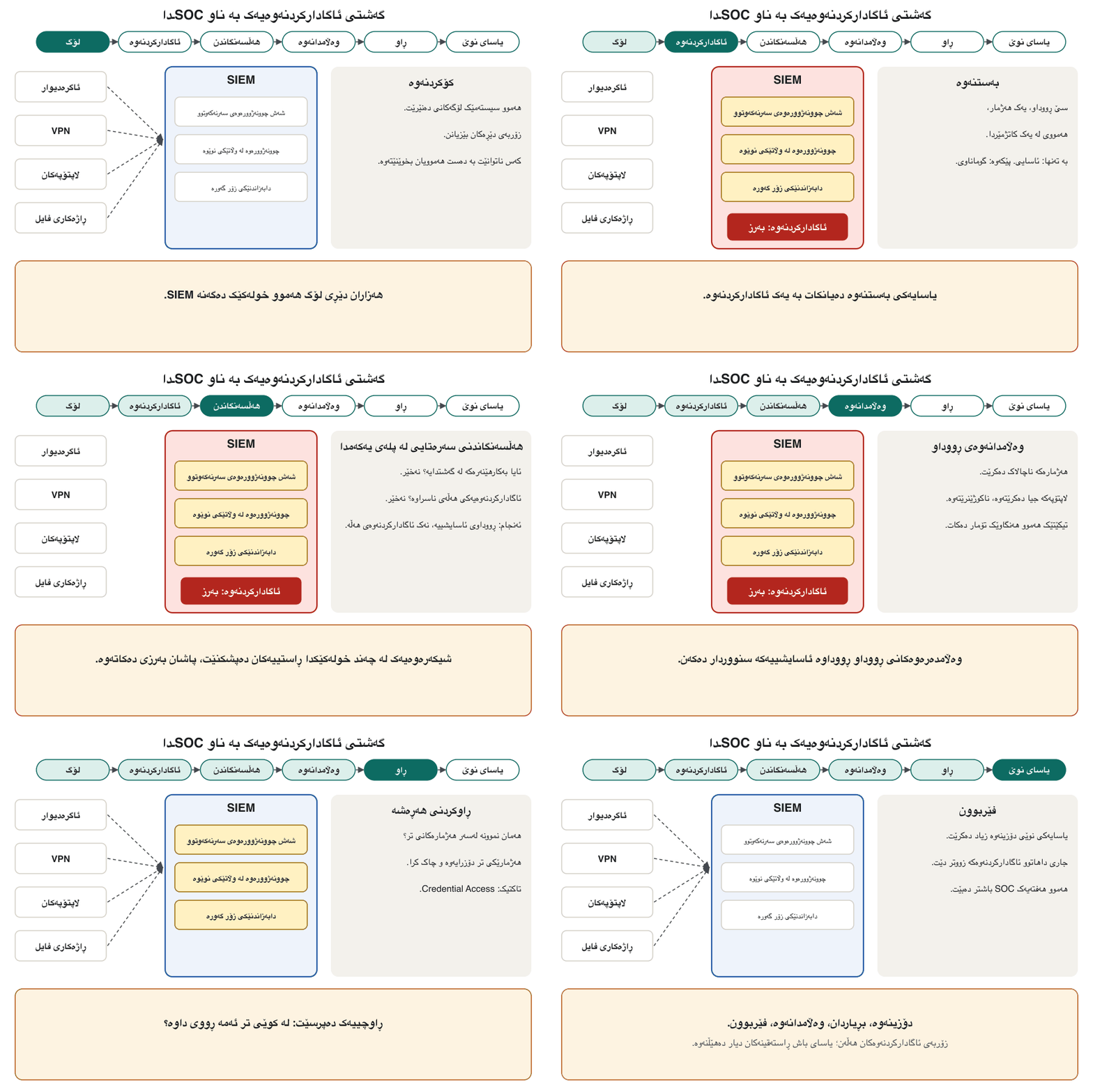
زۆربەی ڕۆژی SOC بە شیکاری و بەستنەوەی تێدەپەڕێت: خوێندنەوەی ئاسایش و بەستنەوەی ڕووداوەکانی سیستەمە جیاوازەکان بە یەکەوە بۆ دۆزینەوەی چالاکیی گوماناوی. یەکەم پشکنین بە شێوەی خۆکار دەکات (بڕوانە SIEM)؛ خەڵک بڕیار دەدەن واتای چییە.
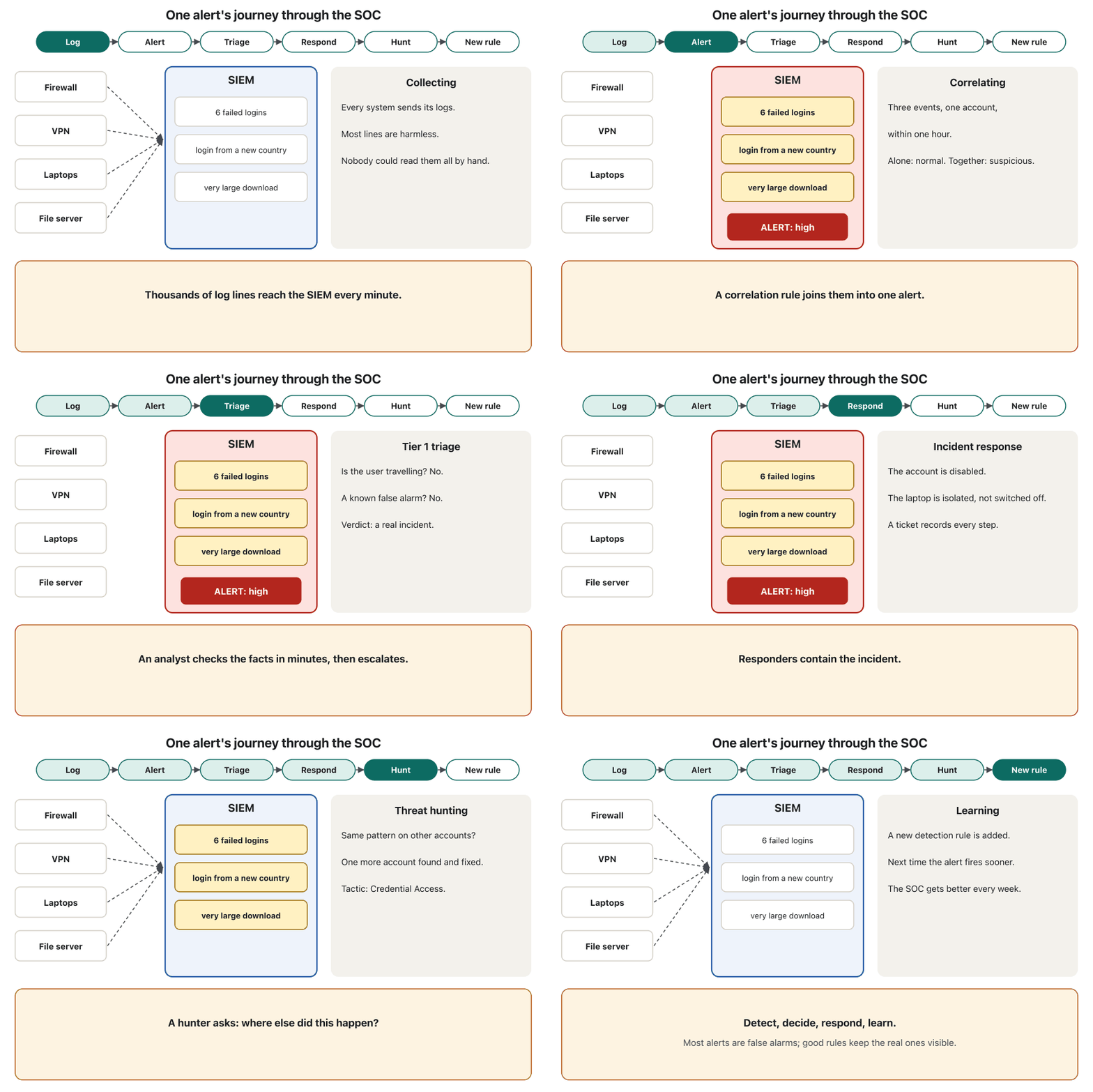
Most alerts are false positives. When a SOC receives thousands a day, analysts get tired and start skipping them — alert fatigue — and the one real attack is lost in the noise. NIST advises tuning monitoring to keep false positives and false negatives at acceptable levels, and the UK's NCSC suggests giving analysts feedback on noisy rules. A good alert also arrives with its evidence attached: which account, which device, which events, and why it matters.
زۆربەی ئاگادارکردنەوەکان . کاتێک SOC ڕۆژانە هەزاران ئاگادارکردنەوە وەردەگرێت، شیکەرەوەکان ماندوو دەبن و دەست دەکەن بە پشتگوێخستنیان — — و تاکە هێرشە ڕاستەقینەکە لە ناو ژاوەژاوەکەدا ون دەبێت. NIST ئامۆژگاری دەکات چاودێری ڕێک بخرێت بۆ ئەوەی و لە ئاستێکی پەسەندکراودا بمێننەوە. NCSCـی بەریتانیاش پێشنیار دەکات فیدباک لەسەر یاسا پڕ ئاگادارکردنەوەکان بدرێتە شیکەرەوەکان. ئاگادارکردنەوەیەکی باش لەگەڵ بەڵگەکانیدا دێت: کام هەژمار، کام ئامێر، کام ڕووداوەکان و بۆچی گرنگە.
Why analysts drown in thousands of alerts, and how a SIEM gathers logs from many tools in one place so real threats stand out.
بۆچی لە ناو هەزاران نوقم دەبن و چۆن لە زۆر ئامرازەوە لە یەک شوێندا کۆ دەکاتەوە تا دیار بن.
How a SIEM turns many logs into fewer, prioritised alerts and reduces alert fatigue.
چۆن دەکاتە ؛ بەمەش کەم دەکاتەوە.
Spotting unusual behaviourدۆزینەوەی ڕەفتاری نائاسایی
Attackers who use stolen passwords look like real users to a firewall. Behavioural analytics catches them by learning what is normal for each user and device, then flagging what is not. The course describes it as analysing user behaviour and network traffic patterns to find anomalies and potential threats.
کە دزراو بەکار دەهێنێت، بۆ وەک بەکارهێنەرێکی ڕاستەقینە دەردەکەوێت. شیکاریی ڕەفتار بەم شێوەیە دەیانگرێت: فێر دەبێت چی بۆ هەر بەکارهێنەر و ئامێرێک ئاساییە، پاشان ئەوەی ئاسایی نییە نیشانە دەکات. کۆرسەکە وەک شیکردنەوەی ڕەفتاری بەکارهێنەر و نموونەکانی هاتوچۆی بۆ دۆزینەوەی نائاسایی و ئەگەری وەسفی دەکات.
| Normalئاسایی | Unusual — worth a lookنائاسایی — شایەنی سەیرکردنە |
|---|---|
| An accountant logs in from the office at 9 a.m.ژمێریارێک لە کاتژمێر 9ی بەیانی لە ئۆفیسەوە دێتە ژوورەوە | The same account logs in at 3 a.m. from another continentهەمان هەژمار لە کاتژمێر 3ی بەرەبەیان لە کیشوەرێکی ترەوە دێتە ژوورەوە |
| A printer sends a few kilobytes a day ڕۆژانە چەند کیلۆبایتێک دەنێرێت | The printer sends gigabytes to the Internet گیگابایت دەنێرێت بۆ |
| A user opens about 20 files a dayبەکارهێنەرێک ڕۆژانە نزیکەی 20 فایل دەکاتەوە | The user opens 20,000 files in one hourبەکارهێنەرەکە لە یەک کاتژمێردا 20,000 فایل دەکاتەوە |
Automation: SOAR and playbooksخۆکارکردن: SOAR و ڕێبەرنامەکانی وەڵامدانەوە
A platform that connects security tools and runs automatically, for example blocking an address or disabling an account when the raises an alert.
پلاتفۆرمێکە کە ئامرازەکانی ئاسایش بە یەکەوە دەبەستێت و بە شێوەیەکی خۆکار جێبەجێ دەکات، بۆ نموونە ڕاگرتنی ناونیشانێک یان ناچالاککردنی هەژمارێک کاتێک ئاگادار دەکاتەوە.
Many alerts need the same first steps every time: look up the address in threat intelligence, check the user, block, open a ticket. A SOAR platform connects the SOC's tools and runs these steps automatically, following a written playbook. It does in seconds what would take an analyst twenty minutes, and it never forgets a step.
زۆر ئاگادارکردنەوە هەموو جارێک هەمان هەنگاوە سەرەتاییەکانیان پێویستە: گەڕان بەدوای ناونیشانەکەدا لە ، پشکنینی بەکارهێنەرەکە، ڕاگرتن، کردنەوەی . پلاتفۆرمی ئامرازەکانی SOC بە یەکەوە دەبەستێت و ئەم هەنگاوانە بە شێوەی خۆکار جێبەجێ دەکات، بەپێی ڕێبەرنامەیەکی وەڵامدانەوە نووسراو. لە چەند چرکەیەکدا ئەوە دەکات کە بیست خولەکی شیکەرەوەیەک دەبات و هەرگیز هەنگاوێک لەبیر ناکات.
- Good for automation: enriching an alert with facts, blocking a known-bad address, removing a reported phishing e-mail from every mailbox.
- Keep a person in the loop: shutting down a hospital system, disabling the CEO's account, deleting data. A wrong automatic action can stop a business as surely as an attack.
- باش بۆ : زیادکردنی ڕاستییەکان بۆ ئاگادارکردنەوەیەک، ڕاگرتنی ناونیشانێکی خراپی ناسراو، لابردنی ئیمەیڵێکی ڕاپۆرتکراو لە هەموو سندووقێکی پۆست.
- کەسێک لە بازنەکەدا بهێڵەرەوە: داخستنی سیستەمێکی نەخۆشخانە، ناچالاککردنی هەژماری بەڕێوەبەری گشتی، سڕینەوەی . هەنگاوێکی خۆکاری هەڵە دەتوانێت وەک هێرشێک کارێک ڕابگرێت.
Threat intelligence: knowing the enemy's habitsهەواڵگریی هەڕەشە: ناسینی ڕەفتارەکانی دوژمن
Information about current , such as attacker groups, their methods and the addresses and files linked to them, collected and shared so that defenders can prepare and detect attacks earlier.
زانیارییە دەربارەی ئێستا، وەک گرووپەکانی هێرشبەر، شێوازەکانیان و ئەو ناونیشان و فایلانەی پەیوەستن پێیانەوە، کە کۆ دەکرێنەوە و بەش دەکرێن بۆ ئەوەی بەرگریکاران خۆیان ئامادە بکەن و زووتر هێرشەکان بدۆزنەوە.
A SOC cannot recognise an attack it has never heard of. Threat intelligence is information about threats and attackers that has been collected, checked and explained so that defenders can act on it. NIST calls it threat information that has been analysed and enriched to give the context needed for decisions. The course names two main sources:
SOC ناتوانێت هێرشێک بناسێتەوە کە هەرگیز ناوی نەبیستووە. زانیارییە دەربارەی و کە کۆ کراوەتەوە، پشکنراوە و ڕوون کراوەتەوە بۆ ئەوەی بەرگریکاران کاری لەسەر بکەن. NIST پێی دەڵێت زانیاریی کە شیکاری و دەوڵەمەندکراوە بۆ ئەوەی ئەو پاشخانەی بۆ بڕیاردان پێویستە بدات. کۆرسەکە دوو سەرچاوەی سەرەکی ناو دەبات:
| Sourceسەرچاوە | What it givesچی دەدات | Examplesنموونە |
|---|---|---|
| Vulnerability databasesبنکەدراوەکانی | Known vulnerabilities and their possible impact کە ناسراون و ئەگەرییان | The CVE list (one ID per flaw), the US National Vulnerability Database (NVD) with CVSS scores, CISA's KEV catalog of flaws attackers already use — see Kinds, names and scoresلیستی (یەک ناسنامە بۆ هەر خاڵێک)، ئەمریکا لەگەڵ نمرەی ، CISA بۆ ئەو خاڵانەی پێشتر بەکاریان دەهێنن — بڕوانە جۆر، ناو و نمرە |
| Threat feedsسەرچاوە بەردەوامەکانی | Real-time updates about new threats and attack techniquesزانیاریی نوێی ڕاستەوخۆ دەربارەی و تەکنیکە نوێیەکانی هێرش | Lists of indicators of compromise: malicious IP addresses and domains, file hashes of malware, phishing sendersلیستی : و دۆمەینە خراپەکارەکان، فایلەکانی ، ناردەرانی |
Threat intelligence: knowing the enemy's habitsهەواڵگریی هەڕەشە: ناسینی ڕەفتارەکانی دوژمن
Strategic, operational and tactical intelligenceسێ ئاستی هەواڵگریی هەڕەشە: ستراتیژی، ئۆپەراسیۆنی و تاکتیکی
Intelligence is used at three levels. Strategic: for managers — which groups attack our sector and why, so the budget goes to the right defences. Operational: for the SOC — how a current campaign works, so analysts know what to watch. Tactical: for tools — the indicators themselves, loaded into the SIEM and firewall so matching traffic raises an alert or is blocked.
لە سێ ئاستدا بەکار دەهێنرێت. ستراتیژی: بۆ بەڕێوەبەران — کام گرووپ هێرش دەکەنە سەر کەرتەکەمان و بۆچی، بۆ ئەوەی بودجە بۆ بەرگریی دروست بڕوات. ئۆپەراسیۆنی: بۆ SOC — هەڵمەتێکی ئێستا چۆن کار دەکات، بۆ ئەوەی شیکەرەوەکان بزانن چاودێریی چی بکەن. تاکتیکی: بۆ ئامرازەکان — خودی نیشانەکان، کە دەخرێنە ناو و بۆ ئەوەی هاتوچۆی هاوتا ئاگادار بکاتەوە یان ڕابگیرێت.
Threat intelligence: knowing the enemy's habitsهەواڵگریی هەڕەشە: ناسینی ڕەفتارەکانی دوژمن
Sharing and learning from othersهاوبەشکردن و فێربوون لە ئەوانی تر
Attackers reuse the same tools against many victims, so what one organisation learns can protect hundreds of others. The course gives four ways to collaborate:
هەمان ئامراز دژی زۆر قوربانی دووبارە بەکار دەهێننەوە، بۆیە ئەوەی ڕێکخراوێک فێری دەبێت دەتوانێت سەدان ڕێکخراوی تر بپارێزێت. کۆرسەکە چوار ڕێگای هاوکاری دەدات:
- Sharing threat information about vulnerabilities and attacks helps everyone stay ahead of attackers.
- Sharing best practices with other organisations improves security across the whole industry.
- Following industry standards (such as the NIST Cybersecurity Framework or the OWASP Top 10) makes sure strong, agreed measures are in place.
- Taking part in security communities and forums spreads knowledge and builds trust between defenders.
- هاوبەشکردنی زانیاریی دەربارەی و هێرشەکان یارمەتی هەمووان دەدات لە پێش بن.
- هاوبەشکردنی باشترین ڕێکارەکان لەگەڵ ڕێکخراوەکانی تر ئاسایش لە هەموو کەرتەکەدا باشتر دەکات.
- پەیڕەوکردنی ستانداردەکانی کەرتەکە (وەک یان ) دڵنیا دەبێتەوە کە ڕێکاری بەهێز و ڕێککەوتوو جێبەجێ کراون.
- بەشداریکردن لە کۆمەڵگە و مەکۆکانی ئاسایش زانیاری بڵاو دەکاتەوە و متمانە لە نێوان بەرگریکاراندا دروست دەکات.
In practice, sharing happens through national CERTs (computer emergency response teams), sector groups called ISACs (information sharing and analysis centres, for banks, hospitals, energy…), and FIRST, the global forum of incident response teams that also maintains CVSS. Shared reports carry a Traffic Light Protocol (TLP) label that says who may see them: TLP:RED (named people only), TLP:AMBER+STRICT (inside the organisation only), TLP:AMBER (the organisation and its clients, only those who need it), TLP:GREEN (the community, not public channels) and TLP:CLEAR (anyone).
لە ڕاستیدا، هاوبەشکردن لە ڕێگەی نیشتیمانییەکانەوە (تیمەکانی وەڵامدانەوەی فریاکەوتنی )، گرووپەکانی کەرت کە پێیان دەگوترێت ISAC (ناوەندەکانی هاوبەشکردن و شیکاریی زانیاری، بۆ بانک، نەخۆشخانە، وزە…) و FIRST ڕوو دەدات، کە مەکۆی جیهانیی تیمەکانی و بەڕێوە دەبات. ڕاپۆرتە هاوبەشکراوەکان نیشانەیەکی Traffic Light Protocol (TLP) هەڵدەگرن کە دەڵێت کێ دەتوانێت بیانبینێت: TLP:RED (تەنها کەسانی ناوبراو)، TLP:AMBER+STRICT (تەنها لە ناو ڕێکخراوەکەدا)، TLP:AMBER (ڕێکخراوەکە و کڕیارەکانی، تەنها ئەوانەی پێویستیان پێیەتی)، TLP:GREEN (کۆمەڵگەکە، نەک کەناڵە گشتییەکان) و TLP:CLEAR (هەموو کەسێک).
Threat hunting: searching before the alarm ringsڕاوکردنی هەڕەشە: گەڕان پێش ئەوەی زەنگەکە لێ بدات
Actively searching a for hidden attackers that automatic tools have missed, starting from an idea such as "an attacker could be using stolen admin accounts" and checking the logs for signs of it.
گەڕانی چالاکانەیە لە ناو بۆ هێرشبەرانی شاراوە کە ئامرازە خۆکارەکان نەیاندۆزیونەتەوە، بە دەستپێکردن لە بیرۆکەیەکی وەک «لەوانەیە هێرشبەرێک هەژمارە دزراوەکانی بەڕێوەبەر بەکار بهێنێت» و پشکنینی بۆ نیشانەکانی.
Alerts only fire for what someone wrote a rule for. Threat hunters start from the opposite idea: assume an attacker is already inside and has not triggered any alert — then go looking. The course describes their work as proactively searching for threats and vulnerabilities, finding possible attack vectors and improving the security posture, using four activities:
ئاگادارکردنەوەکان تەنها بۆ ئەوە دێن کە کەسێک یاسای بۆ نووسیوە. ڕاوچییانی لە بیرۆکەی پێچەوانەوە دەست پێ دەکەن: وا دابنێ پێشتر لە ناوەوەیە و هیچ ئاگادارکردنەوەیەکی دروست نەکردووە — پاشان بەدوایدا دەگەڕێن. کۆرسەکە کارەکەیان وەک گەڕانی پێشوەختە بەدوای و ، دۆزینەوەی ئەگەری و باشترکردنی ئاستی ئاسایش وەسف دەکات، بە بەکارهێنانی چوار چالاکی:
| Activityچالاکی | In threat huntingلە |
|---|---|
| Threat intelligence gatheringکۆکردنەوەی | Read about new campaigns to get ideas: "a group attacking travel companies uses stolen VPN logins."دەربارەی هەڵمەتە نوێیەکان بخوێنەوە بۆ وەرگرتنی بیرۆکە: «گرووپێک کە هێرش دەکاتە سەر کۆمپانیاکانی گەشت دزراوی بەکار دەهێنێت.» |
| Vulnerability assessmentهەڵسەنگاندنی | Know where you are weak, so you know where an attacker would most likely be.بزانە لە کوێ لاوازیت، بۆ ئەوەی بزانیت بە ئەگەری زۆر لە کوێ دەبێت. |
| Log analysis and correlationشیکاری و بەستنەوەی | Search months of logs for traces that match the idea.لە چەند مانگێکدا بەدوای ئەو شوێنپێیانەدا بگەڕێ کە لەگەڵ بیرۆکەکە دەگونجێن. |
| Behavioural analyticsشیکاریی ڕەفتار | Look for accounts and devices behaving unlike their normal pattern.بەدوای ئەو هەژمار و ئامێرانەدا بگەڕێ کە جیاواز لە نموونەی ئاسایی خۆیان ڕەفتار دەکەن. |
- Hypothesisگریمانە
"If attackers had a stolen VPN password, we would see logins from unusual countries followed by internal scanning."
«ئەگەر دزراوی هەبووایە، لە وڵاتانی نائاساییەوە دەبینین و دوای ئەوە پشکنینی ناوخۆیی.»
- Searchگەڕان
Query the SIEM and EDR data for exactly that pattern.
لە و ڕێک بەدوای ئەو نموونەیەدا بگەڕێ.
- Decideبڕیار
Found something? Hand it to incident response. Found nothing? That is also useful knowledge.
شتێکت دۆزییەوە؟ بیدە بە . هیچت نەدۆزییەوە؟ ئەوەش زانیارییەکی بەسوودە.
- Improveباشترکردن
Turn the search into a new automatic detection rule, so next time an alert fires.
گەڕانەکە بکە بە یاسایەکی نوێی خۆکاری دۆزینەوە، بۆ ئەوەی جاری داهاتوو ئاگادارکردنەوە بێت.
Why attackers can stay hidden for months before anyone notices, and how threat hunters go looking for them first, with which techniques and tools.
بۆچی دەتوانن چەند مانگێک شاراوە بمێننەوە پێش ئەوەی کەس هەستیان پێ بکات و چۆن ڕاوچییانی پێشتر بەدوایاندا دەگەڕێن، بە چ تەکنیک و ئامرازێک.
Proactive threat hunting from 2:14; techniques at 3:00; tools at 4:54.
بە دەستپێشخەری لە 2:14؛ تەکنیکەکان لە 3:00؛ ئامرازەکان لە 4:54.
MITRE ATT&CK: a shared map of attacker behaviourMITRE ATT&CK: نەخشەیەکی هاوبەشی ڕەفتاری هێرشبەر
A free online knowledge base, run by the US non-profit MITRE, that describes the behaviour of real attackers: tactics (their goals, such as Initial Access or Exfiltration) and techniques (how they reach them). Defenders use it to plan detection and .
بنکەیەکی زانیاریی ئۆنلاینی بێبەرانبەرە کە ڕێکخراوی ناقازانجیی ئەمریکیی MITRE بەڕێوەی دەبات و ڕەفتاری هێرشبەرانی ڕاستەقینە ڕوون دەکاتەوە: تاکتیکەکان (ئامانجەکانیان، وەک Initial Access یان Exfiltration) و تەکنیکەکان (چۆن پێیان دەگەن). بەرگریکاران بۆ پلاندانانی دۆزینەوە و بەکاری دەهێنن.
MITRE ATT&CK (Adversarial Tactics, Techniques and Common Knowledge) is a free knowledge base kept by MITRE, a US non-profit. It is built from real, publicly reported attacks. It organises attacker behaviour into tactics — the attacker's goal at each stage, such as getting in or stealing data — and techniques, the ways each goal is reached. The Enterprise matrix in version 20 has 15 tactics:
(Adversarial Tactics, Techniques and Common Knowledge) بنکەیەکی زانیاریی بێبەرانبەرە کە MITRE، ڕێکخراوێکی ئەمریکیی ناقازانجی، بەڕێوەی دەبات. لە هێرشە ڕاستەقینە و بە ئاشکرا ڕاپۆرتکراوەکانەوە دروست کراوە. ڕەفتاری ڕێک دەخات بۆ تاکتیک — ئامانجی لە هەر قۆناغێکدا، وەک چوونە ژوورەوە یان دزینی — و تەکنیک، ئەو ڕێگایانەی هەر ئامانجێک پێیان دەگات. ماتریکسی Enterprise لە وەشانی 20دا 15 تاکتیکی هەیە:
How attackers' tactics, techniques and procedures (TTPs) form the stages of an attack, and how the MITRE ATT&CK framework maps them for defenders.
چۆن تاکتیک، تەکنیک و ڕێکارەکانی (TTPs) قۆناغەکانی پێک دەهێنن و چۆن بۆ بەرگریکاران نەخشەیان دەکێشێت.
TTPs from 2:50, the ATT&CK framework from 4:05, defending against threats from 6:16.
TTPـەکان لە 2:50، لە 4:05، بەرگری لە لە 6:16.
MITRE ATT&CK: a shared map of attacker behaviourMITRE ATT&CK: نەخشەیەکی هاوبەشی ڕەفتاری هێرشبەر
How a SOC uses ATT&CKSOC چۆن MITRE ATT&CK بەکار دەهێنێت
Why does a SOC care? ATT&CK gives everyone the same words: an analyst can write "Credential Access, then Lateral Movement" and every team understands. SOCs use it to map their detections (which tactics can we see? where are we blind?), to plan hunts ("we have nothing for Exfiltration — let's hunt there"), to describe incidents in reports, and to read threat intelligence, which often lists the techniques a group uses.
بۆچی SOC گرنگی پێ دەدات؟ ATT&CK هەمان وشەکان دەدات بە هەمووان: شیکەرەوەیەک دەتوانێت بنووسێت «Credential Access، پاشان Lateral Movement» و هەموو تیمێک تێدەگات. SOCـەکان بەکاری دەهێنن بۆ نەخشەکێشانی دۆزینەوەکانیان (کام تاکتیکەکان دەبینین؟ لە کوێ کوێرین؟)، بۆ پلاندانانی ڕاو («هیچمان بۆ Exfiltration نییە — با لەوێ ڕاو بکەین»)، بۆ وەسفکردنی لە ڕاپۆرتەکاندا و بۆ خوێندنەوەی ، کە زۆرجار ئەو تەکنیکانە لیست دەکات کە گرووپێک بەکاریان دەهێنێت.
Working in a SOCکارکردن لە SOCـدا
SOC analyst is one of the most common first jobs in cybersecurity. Tier 1 work teaches how real attacks look, and many people move on to incident response, threat hunting, engineering or management. The work is often in shifts, because attacks do not wait for office hours, and it needs calm habits: checking facts before acting and writing clear notes.
شیکەرەوەی SOC یەکێکە لە باوترین یەکەم کارەکان لە . کاری پلەی یەکەم فێرت دەکات هێرشی ڕاستەقینە چۆن دەردەکەوێت و زۆر کەس دواتر دەچن بۆ ، ، ئەندازیاری یان بەڕێوەبردن. کارەکە زۆرجار بە نۆرەیە (شیفت)، چونکە هێرشەکان چاوەڕێی کاتی دەوام ناکەن. پێویستی بە ڕەفتاری هێمن هەیە: پشکنینی ڕاستییەکان پێش هەر هەنگاوێک و نووسینی تێبینیی ڕوون.
- Useful foundations: networks and the Internet (Types of networks), operating systems, how attacks work (this course) and some scripting such as Python for searching logs.
- Practise legally: build a home lab with virtual machines, read public incident reports, and join defensive training platforms and capture-the-flag events that give you permission to practise.
- The English words of IT jobs, job adverts and interviews are practised in IT careers.
- بنەمای بەسوود: و (جۆرەکانی ڕایەڵە)، ، هێرشەکان چۆن کار دەکەن (ئەم کۆرسە) و هەندێک بەرنامەنووسیی وەک Python بۆ گەڕان لە .
- بە یاسایی ڕاهێنان بکە: تاقیگەیەکی ماڵەوە بە دروست بکە، ڕاپۆرتی گشتیی بخوێنەوە و بەشداری لە پلاتفۆرمەکانی ڕاهێنانی بەرگری و پێشبڕکێکانی capture-the-flag بکە کە مۆڵەتی ڕاهێنانت پێ دەدەن.
- وشە ئینگلیزییەکانی کارەکانی IT، و چاوپێکەوتن لە کارەکانی ITدا ڕاهێنانیان لەسەر دەکرێت.
Common mistakesهەڵە باوەکان
| Mistakeهەڵە | Why it is wrongبۆچی هەڵەیە | Do this insteadلە جیاتی ئەوە ئەمە بکە |
|---|---|---|
| Buying a SIEM and calling it a SOCکڕینی و ناونانی بە SOC | A tool without trained people and processes only collects dataئامرازێک بەبێ خەڵکی ڕاهێنراو و ڕێکار تەنها کۆ دەکاتەوە | Plan people, playbooks and log sources firstسەرەتا پلانی خەڵک، و سەرچاوەکانی دابنێ |
| Sending every log to the SIEM "just in case"ناردنی هەموو بۆ «بۆ هەر ئەگەرێک» | Cost and noise grow; important events drownتێچوو و ژاوەژاو زیاد دەبن؛ ڕووداوە گرنگەکان نوقم دەبن | Choose log sources by the attacks you need to seeسەرچاوەکانی بەپێی ئەو هێرشانە هەڵبژێرە کە پێویستە بیانبینیت |
| Ignoring alerts because "they are always false"پشتگوێخستنی ئاگادارکردنەوەکان چونکە «هەمیشە هەڵەن» | Alert fatigue hides the real attack هێرشە ڕاستەقینەکە دەشارێتەوە | Tune noisy rules; review closed alertsیاسا پڕ ئاگادارکردنەوەکان ڕێک بخە؛ پێداچوونەوە بە ئاگادارکردنەوە داخراوەکان بکە |
| Escalating everything to the expertsبەرزکردنەوەی هەموو شتێک بۆ پسپۆڕان | Experts drown and serious cases waitپسپۆڕان نوقم دەبن و حاڵەتە جددییەکان چاوەڕێ دەکەن | Clear escalation rules per tierیاسای ڕوونی بۆ هەر پلەیەک |
| Automating drastic actions without a personخۆکارکردنی هەنگاوی توند بەبێ کەسێک | A false positive can shut down the business دەتوانێت کارەکە ڕابگرێت | Automate lookups; keep people for big decisionsگەڕان خۆکار بکە؛ خەڵک بۆ بڕیارە گەورەکان بهێڵەرەوە |
| Hunting or "testing" on systems you do not ownڕاوکردن یان «تاقیکردنەوە» لەسەر سیستەمێک کە هی تۆ نییە | It can be a crime and harm othersدەکرێت تاوان بێت و زیان بە ئەوانی تر بگەیەنێت | Hunt only in your own environment, with authorisationتەنها لە ژینگەی خۆتدا و بە مۆڵەتەوە ڕاو بکە |
Exercisesڕاهێنانەکان
Name the SOC role for each task: (a) decides next year's SOC budget; (b) reads 200 morning alerts and closes the false ones; (c) isolates an infected server and restores it; (d) searches six months of logs for a new attacker technique; (e) connects a new cloud service's logs to the SIEM.
ڕۆڵی SOC بۆ هەر ئەرکێک ناو ببە: (أ) بڕیار لەسەر بودجەی ساڵی داهاتووی SOC دەدات؛ (ب) 200 ئاگادارکردنەوەی بەیانی دەخوێنێتەوە و هەڵەکان دادەخات؛ (ج) تووشبوو جیا دەکاتەوە و دەیگەڕێنێتەوە؛ (د) لە شەش مانگدا بەدوای تەکنیکێکی نوێی دەگەڕێت؛ (هـ) خزمەتگوزارییەکی نوێی هەور بە دەبەستێت.
Show answerوەڵامەکە پیشان بدە
- (a) SOC manager.
- (b) Security analyst (Tier 1).
- (c) Incident responder.
- (d) Threat hunter.
- (e) Security engineer.
- (أ) بەڕێوەبەری SOC.
- (ب) (پلەی یەکەم).
- (ج) کاری .
- (د) کاری ڕاوچیی .
- (هـ) کاری .
For each alert decide: close as a false positive, or escalate. (a) A login from Germany for a staff member whose calendar shows a conference in Berlin this week, with MFA approved on her own phone. (b) The backup server deletes all old backups at 2 a.m., which it has never done before. (c) The antivirus blocked a known test file that the IT team uses every Monday.
بۆ هەر ئاگادارکردنەوەیەک بڕیار بدە: وەک دایبخە، یان بەرزی بکەرەوە. (أ) لە ئەڵمانیاوە بۆ کارمەندێک کە ڕۆژژمێرەکەی کۆنفرانسێک لە بەرلین لەم هەفتەیەدا پیشان دەدات. هەروەها MFA لەسەر مۆبایلی خۆی پەسەند کراوە. (ب) لە کاتژمێر 2ی شەودا هەموو کۆنەکان دەسڕێتەوە، کە هەرگیز پێشتر نەیکردووە. (ج) فایلێکی تاقیکردنەوەی ناسراوی ڕاگرت کە تیمی IT هەموو دووشەممەیەک بەکاری دەهێنێت.
Show answerوەڵامەکە پیشان بدە
- (a) Probably a false positive: the context explains it. Close it with a note (and keep an eye on unusual activity afterwards).
- (b) Escalate at once: deleting backups is a typical step before ransomware is launched.
- (c) False positive: expected test activity. Ask the engineers to exclude this exact test so it stops alerting.
- (أ) بە ئەگەری زۆر : پاشخانەکە ڕوونی دەکاتەوە. بە تێبینییەکەوە دایبخە (و دواتر چاوت لە چالاکیی نائاسایی بێت).
- (ب) یەکسەر بەرزی بکەرەوە: سڕینەوەی هەنگاوێکی باوە پێش ئەوەی دەست پێ بکات.
- (ج) : چالاکیی تاقیکردنەوەی چاوەڕوانکراو. داوا لە ئەندازیاران بکە ئەم تاقیکردنەوە دیاریکراوە دەربهێنن بۆ ئەوەی ئیتر ئاگادار نەکاتەوە.
Match each observation to an ATT&CK tactic: (a) a phishing e-mail gives the attacker a first foothold; (b) a new hidden task restarts the malware after every reboot; (c) large archives are uploaded to an unknown cloud account; (d) files on the file server are encrypted for ransom.
هەر بینینێک بە تاکتیکێکی ATT&CK ببەستەوە: (أ) ئیمەیڵێکی یەکەم جێپێ بە دەدات؛ (ب) ئەرکێکی شاراوەی نوێ دوای هەموو دووبارە هەڵکردنەوەیەک دەست پێ دەکاتەوە؛ (ج) ئەرشیفی گەورە بۆ هەژمارێکی نەناسراوی هەور بار دەکرێن؛ (د) فایلەکانی سەر فایلەکان بۆ بارمتە شفرە دەکرێن.
Show answerوەڵامەکە پیشان بدە
- (a) Initial Access.
- (b) Persistence.
- (c) Exfiltration.
- (d) Impact.
- (أ) Initial Access (یەکەم چوونەژوورەوە).
- (ب) Persistence (مانەوە).
- (ج) Exfiltration (دەرهێنانی ).
- (د) Impact (زیانگەیاندن).
A threat report says criminals are using stolen VPN passwords against travel agencies. Write a hypothesis, the data you would search and what you would do with the result.
ڕاپۆرتێکی دەڵێت تاوانباران دزراوی دژی ئاژانسەکانی گەشت بەکار دەهێنن. گریمانەیەک بنووسە، ئەو لێی دەگەڕێیت و ئەوەی بە ئەنجامەکە دەیکەیت.
Show answerوەڵامەکە پیشان بدە
Hypothesis: "If one of our VPN accounts were stolen, we would see VPN logins from new countries or at odd hours, followed by connections to many internal servers." Data: VPN logs, MFA logs, firewall logs between zones, EDR data from laptops — the last 90 days. Result: any hit goes to incident response (disable the account, investigate); whatever is found or not, write a SIEM rule for the pattern and check that every VPN account has MFA.
گریمانە: «ئەگەر یەکێک لە هەژمارەکانی دزرابێت، لە وڵاتانی نوێوە یان لە کاتی نائاساییدا دەبینین و دوای ئەوە پەیوەندی بە زۆر ناوخۆییەوە.» : ، MFA، لە نێوان ناوچەکاندا، لە — 90 ڕۆژی ڕابردوو. ئەنجام: هەر شتێک بدۆزرێتەوە دەچێت بۆ (هەژمارەکە ناچالاک بکە، لێکۆڵینەوە بکە)؛ چ شتێک بدۆزرێتەوە یان نا، یاسایەکی بۆ نموونەکە بنووسە و بپشکنە کە هەموو هەژمارێکی MFAـی هەیە.
(a) Give the three main functions of a SOC. (b) Give the four activities of threat hunting and incident detection. (c) Name two sources of threat intelligence.
(أ) سێ ئەرکە سەرەکییەکەی SOC بنووسە. (ب) چوار چالاکییەکەی و دۆزینەوەی بنووسە. (ج) دوو سەرچاوەی ناو ببە.
Show answerوەڵامەکە پیشان بدە
- (a) Centralised security monitoring; threat intelligence gathering; incident response coordination.
- (b) Threat intelligence gathering; vulnerability assessment; log analysis and correlation; behavioural analytics.
- (c) Vulnerability databases (CVE, NVD, KEV) and threat feeds (indicators of compromise, new techniques).
- (أ) ناوەندی؛ کۆکردنەوەی ؛ هەماهەنگیی .
- (ب) کۆکردنەوەی ؛ هەڵسەنگاندنی ؛ شیکاری و بەستنەوەی ؛ شیکاریی ڕەفتار.
- (ج) بنکەدراوەکانی (، ، ) و سەرچاوە بەردەوامەکانی (، تەکنیکە نوێیەکان).
Summaryپوختە
- A SOC provides centralised monitoring, gathers threat intelligence and coordinates incident response — in-house or bought as a service.
- Roles: SOC manager, security analysts (often in Tiers 1–3 with escalation), incident responders, threat hunters and security engineers.
- Logs are analysed and correlated in the SIEM; people triage alerts, fight alert fatigue by tuning, and use behavioural analytics to spot unusual activity. SOAR automates routine steps.
- Threat intelligence comes from vulnerability databases (CVE, NVD, KEV) and threat feeds; it is shared through CERTs, ISACs and communities under TLP labels.
- Threat hunters assume a hidden attacker and search proactively; MITRE ATT&CK (v20: 15 tactics) is the shared map they and the whole SOC use.
- SOC ناوەندی دابین دەکات، کۆ دەکاتەوە و هەماهەنگیی دەکات — ناوخۆیی بێت یان وەک خزمەتگوزاری بکڕدرێت.
- ڕۆڵەکان: بەڕێوەبەری SOC، (زۆرجار بە پلەکانی یەک تا سێ لەگەڵ )، ، ڕاوچییانی و .
- لە شی دەکرێنەوە و بە یەکەوە دەبەسترێنەوە؛ خەڵک بۆ ئاگادارکردنەوەکان دەکەن، بە ڕێکخستنی یاساکان بەرەنگاری دەبنەوە و شیکاریی ڕەفتار بۆ دۆزینەوەی چالاکیی نائاسایی بەکار دەهێنن. هەنگاوە ڕۆتینییەکان خۆکار دەکات.
- لە بنکەدراوەکانی (، ، ) و سەرچاوە بەردەوامەکانی دێت؛ لە ڕێگەی ، ISAC و کۆمەڵگەکانەوە بە نیشانەکانی TLP هاوبەش دەکرێت.
- ڕاوچییانی وا دادەنێن شاراوە هەیە و بە شێوەی پێشوەختە دەگەڕێن؛ (v20: 15 تاکتیک) ئەو نەخشە هاوبەشەیە کە ئەوان و هەموو SOC بەکاری دەهێنن.
What is the difference between an analyst and a threat hunter?جیاوازیی نێوان شیکەرەوە و ڕاوچیی هەڕەشە چییە؟
An analyst reacts to alerts the tools raise; a hunter proactively searches for attackers that raised no alert, then turns findings into new detections.
شیکەرەوە وەڵامی ئەو ئاگادارکردنەوانە دەداتەوە کە ئامرازەکان دەیدەن؛ ڕاوچی بە شێوەی پێشوەختە بەدوای دەگەڕێت کە هیچ ئاگادارکردنەوەیەکی دروست نەکردووە، پاشان دۆزینەوەکان دەکات بە دۆزینەوەی خۆکاری نوێ.
Why are indicators of compromise not enough on their own?بۆچی نیشانەکانی دزەپێکردن بە تەنها بەس نین؟
Attackers change addresses and files quickly; describing their behaviour with ATT&CK tactics and techniques lasts much longer.
ناونیشان و فایلەکان بە خێرایی دەگۆڕن؛ وەسفکردنی ڕەفتارەکەیان بە تاکتیک و تەکنیکەکانی ATT&CK زۆر زیاتر دەمێنێتەوە.
What is alert fatigue and how is it reduced?ماندووبوون لە ئاگادارکردنەوە چییە و چۆن کەم دەکرێتەوە؟
Analysts overwhelmed by mostly false alerts start missing real ones. Tuning noisy rules, adding context and automating routine lookups reduce it.
شیکەرەوەکان کە بە ئاگادارکردنەوەی زۆرتر هەڵە نوقم بوون ڕاستەقینەکان لەدەست دەدەن. ڕێکخستنی یاسا پڕ ئاگادارکردنەوەکان، زیادکردنی پاشخان و خۆکارکردنی گەڕانە ڕۆتینییەکان کەمی دەکەنەوە.
Videoڤیدیۆ
Watch a videoسەیری ڤیدیۆیەک بکە
A video that viewers liked a lot and praised in their comments, chosen for this lesson.ڤیدیۆیەک کە بینەران زۆریان پێ خۆش بووە و لە کۆمێنتەکانیاندا ستایشیان کردووە، بۆ ئەم وانەیە هەڵبژێردراوە.
What a security operations centre is: the people, processes and tools it uses, and how it handles three example incidents from alert to response.
چییە: خەڵک، ڕێکار و ئامرازەکانی، هەروەها چۆن مامەڵە لەگەڵ سێ نموونەی دەکات، لە تا وەڵامدانەوە.
A six-minute overview of a SOC: people, processes, tools and three example incidents.
ناساندنێکی شەش خولەکی بۆ : خەڵک، ڕێکار، ئامرازەکان و سێ نموونەی .
Lesson complete!وانەکە تەواو بوو!
Well done. Review the key terms, then go on to the next lesson.دەستخۆش. سەیرێکی زاراوە سەرەکییەکان بکەرەوە، پاشان بڕۆ بۆ وانەی داهاتوو.
Key termsزاراوە سەرەکییەکان
Building a Security Cultureبونیادنانی کولتووری ئاسایش
Related lecturesوانە پەیوەندیدارەکان
- Finding and Rating Vulnerabilities: Scanning, OWASP and CVSSدۆزینەوە و هەڵسەنگاندنی خاڵە لاوازەکان: پشکنین، OWASP و CVSS
- Where Vulnerabilities Come Fromخاڵە لاوازەکان لە کوێوە دێن
- AI in Cybersecurity: Bias, Privacy, Surveillance and Deepfakesژیریی دەستکرد لە ئاسایشی سایبەردا: لاسەنگی، تایبەتێتی، چاودێری و دیپفەیکەکان
- Passwords, MFA and Access Controlتێپەڕەوشەکان، MFA و کۆنترۆڵی دەستڕاگەیشتن
- Jobs and Careers in ITکار و پیشە لە بواری IT
- Types of Networks: LAN, WAN and Moreجۆرەکانی ڕایەڵە: ڕایەڵەی ناوچەیی، ڕایەڵەی فراوان و زیاتر
References and further readingسەرچاوەکان و خوێندنەوەی زیاتر
- UK NCSC: Building a Security Operations Centre (SOC)
- NIST SP 800-61 Rev. 3: Incident Response Recommendations (SOC, SIEM, SOAR, threat intelligence)
- MITRE ATT&CK (v20)
- MITRE ATT&CK: Enterprise tactics
- FIRST: Traffic Light Protocol (TLP) 2.0 — RED, AMBER+STRICT, AMBER, GREEN, CLEAR
- CISA: Known Exploited Vulnerabilities Catalog
This lecture is a first edition. The Kurdish text and terminology are waiting for review by Kurdish IT teachers.ئەم وانەیە چاپی یەکەمە. دەقە کوردییەکە و زاراوەکانی چاوەڕێی پێداچوونەوەی مامۆستایانی کوردی بواری IT ن.