Chapterبەش 6 · Lectureوانە 6.9
LoRa: Long Range on Little PowerLoRa: دووریی زۆر بە وزەی کەم
LoRa is the radio, not the network: chirp spread spectrum and why it survives noise, Cycleo and Semtech, licence-free ISM/SRD bands and their rules (duty cycle, dwell time), regional frequency plans including what is known for Iraq (as of November 2026), realistic features, spreading factors and airtime, data rates and payload sizes, and packing readings into a few bytes.
ڕادیۆکەیە، نەک : و بۆچی لە ڕزگاری دەبێت، Cycleo و Semtech، ISM/SRD و یاساکانیان (، )، هەرێمی بە ئەوەی بۆ عێراق زانراوە (تا تشرینی دووەمی 2026)، تایبەتمەندییە ڕاستەقینەکان، و ، و قەبارەی و پەستاوتنی خوێندنەوەکان بۆ ناو چەند .
What you will learnچی فێر دەبیت
- Explain that LoRa is the radio (PHY) and LoRaWAN the network on top.
- Describe chirp spread spectrum and why chirps can be decoded below the noise.
- Name LoRa’s licence-free bands, their rules (duty cycle, dwell time) and the main regional plans, including what is known for Iraq.
- Explain the spreading factor and compute airtime and duty-cycle budgets.
- Give LoRa’s data rates and payload sizes and pack a reading into a few bytes.
- ڕوون بکەیتەوە کە ڕادیۆکەیە () و سەرووییەتی.
- باس بکەیت و بۆچی لە خوار دەخوێندرێنەوە.
- ، یاساکانیان (، ) و پلانە هەرێمییە سەرەکییەکان ناو ببەیت، بە ئەوەی بۆ عێراق زانراوە.
- ڕوون بکەیتەوە و بودجەی و هەژمار بکەیت.
- و قەبارەی بدەیت و خوێندنەوەیەک بپەستێنیت بۆ ناو چەند .
LoRa: a radio, not a networkLoRa: ڕادیۆیە، نەک ڕایەڵە
LoRa, short for Long Range, is a wireless modulation technique: a way of turning bits into radio waves, made for very long distances on very little power. Wi-Fi, Bluetooth and LTE aim at speed over short or medium range; LoRa sends small packets over many kilometres with almost no battery. That makes it popular for smart farms, smart cities and remote sensors.
، کورتکراوەی Long Range (دووریی زۆر)، تەکنیکێکی : ڕێگەیەک بۆ گۆڕینی بۆ ، کە بۆ دووریی زۆر و بە وزەیەکی زۆر کەم دروست کراوە. ، و LTE ئامانجیان خێراییە بۆ دووریی کورت یان مامناوەند؛ بچووک بۆ چەندین کیلۆمەتر دەنێرێت و نزیکەی هیچ بەکار ناهێنێت. بۆیە بۆ کێڵگەی هۆشمەند، و دوور بەناوبانگە.
Be exact about what LoRa is. Wi-Fi, Bluetooth, LTE, Sigfox and Zigbee are whole technologies, each with its own modulation inside. LoRa itself is only the radio part, the physical layer (PHY), made by Semtech. The network rules on top — who sends when, gateways, servers, security — are LoRaWAN, the next lesson. The LoRa radio also works alone: drone control links such as ExpressLRS use it (Remote controller and receiver), and so do off-grid messengers and simple point-to-point links.
وردبە لەوەی چییە. ، ، LTE، و تەکنەلۆجیای تەواون و هەریەکەیان خۆی لە ناودایە. خودی تەنیا بەشی ڕادیۆیە، واتە (PHY)، کە Semtech دروستی دەکات. یاساکانی لە سەرووییەوە — کێ کەی دەنێرێت، ، و — ن، وانەی داهاتوو. ڕادیۆی بە تەنیاش کار دەکات: بەستەرەکانی کۆنترۆڵی دڕۆن وەک ExpressLRS بەکاری دەهێنن (ڕیمۆت و وەرگر)، هەروەها نامەنێرەکانی دەرەوەی و بەستەری سادەی خاڵ بە خاڵ.
The course’s LoRa board is the MKR WAN 1310, whose radio module speaks LoRa at 433, 868 or 915 MHz.
بۆردی ئەم خولە MKR WAN 1310ـە، کە مۆدیولی ڕادیۆکەی بە لەسەر 433، 868 یان 915 MHz قسە دەکات.
LoRa beside other wireless technologiesLoRa لە تەنیشت تەکنەلۆجیا بێتەلەکانی تر
Compared with the radios you already know, LoRa is the slow, far-reaching, frugal one. The numbers below are typical values (as of 2026), not record or brochure numbers; the full map of technologies and the range–speed–power trade-off are in Choosing a wireless technology.
بەراورد بەو ڕادیۆیانەی پێشتر دەیانناسیت، ئەوەیە کە خاوە، دوور دەگات و کەمخەرجە. ژمارەکانی خوارەوە بەهای ئاسایین (تا 2026)، نەک ژمارەی ڕیکۆرد یان ڕێکلام؛ نەخشەی تەواوی تەکنەلۆجیاکان و هاوسەنگیی دووری–خێرایی–وزە لە هەڵبژاردنی تەکنەلۆجیایەکی بێتەلدان.
| Technologyتەکنەلۆجیا | Typical rangeدووریی ئاسایی | Speedخێرایی | Powerوزە | Typical useبەکارهێنانی ئاسایی |
|---|---|---|---|---|
| 2–5 km in towns, 10–15 km in open land2–5 km لە شار، 10–15 km لە زەویی کراوە | 0.25–11 kbit/s (Europe)0.25–11 kbit/s (ئەورووپا) | very lowزۆر کەم | remote sensors, farms دوور، کێڵگە | |
| tens of metresچەند دەیان مەتر | tens to hundreds of Mbit/sدەیان تا سەدان Mbit/s | highزۆر | video, the internetڤیدیۆ، | |
| about 10 mنزیکەی 10 m | 1–3 Mbit/s | low to mediumکەم تا مامناوەند | headphones, watches, small filesگوێگر، کاتژمێر، فایلی بچووک | |
| LTE (4G) | kilometres from a towerچەند کیلۆمەتر لە تاوەرێکەوە | 10–100 Mbit/s | highزۆر | video calls, browsingپەیوەندیی ڤیدیۆیی، گەڕان |
| 10–100 m per hop (mesh)10–100 m بۆ هەر (چنراو) | 250 kbit/s | lowکەم | home automationخۆکارکردنی ماڵ |
Chirp spread spectrumشەبەنگی بڵاوکراوەی جریوەیی
LoRa’s modulation is chirp spread spectrum (CSS). A chirp is a signal whose frequency rises or falls smoothly, like a bird’s whistle going up or down. LoRa sends a row of identical up-chirps to say “a message is coming”, then data chirps: each one starts at a different point of the channel and wraps around, and where it starts carries the bits.
(CSS)ـە. کە بە نەرمی بەرز یان نزم دەبێتەوە، وەک فیکەی باڵندەیەک کە سەر دەکەوێت یان دادەبەزێت. ڕیزێک بەرزبووەوەی وەک یەک دەنێرێت بۆ ئەوەی بڵێت «پەیامێک دێت»، پاشان : هەریەکەیان لە خاڵێکی جیاوازی دەست پێ دەکات و دەسووڕێتەوە و ئەو شوێنەی لێی دەست پێ دەکات هەڵدەگرێت.
Chirps are not new: radar and military radios used them for decades, because they are hard to disturb. LoRa was the first low-cost chip that brought CSS to everyday products, and it reaches farther than the traditional radios used before at the same power.
شتێکی نوێ نییە: ڕاداڕ و ڕادیۆی سەربازی چەندین دەیە بەکاریان هێناوە، چونکە تێکدانیان قورسە. یەکەم هەرزان بوو کە CSSـی هێنایە ناو بەرهەمی ڕۆژانەوە و بە هەمان هێز لە ڕادیۆ نەریتییەکانی پێشوو دوورتر دەگات.
You are in a big field and whistle short melodies that go up and down. Each melody means something: one says “I’m OK”, another “come here”. Even with wind and noise, your friend far away can still recognise the shape of the melody. Chirp spread spectrum works the same way: the receiver knows the shape it is listening for.
لە کێڵگەیەکی گەورەدایت و ئاوازی کورت فیکە دەکەیت کە بەرز و نزم دەبنەوە. هەر ئاوازێک مانایەکی هەیە: یەکێکیان دەڵێت «باشم»، یەکێکی تر «وەرە ئێرە». تەنانەت لەگەڵ با و ژاوەژاویشدا، هاوڕێکەت لە دوورەوە هێشتا شێوەی ئاوازەکە دەناسێتەوە. بە هەمان شێوە کار دەکات: وەرگرەکە ئەو شێوەیە دەزانێت کە گوێی بۆ دەگرێت.
Where the analogy stops workingسنووری ئەم نموونەیە
A real chirp is far too fast and too high for a human ear, and the receiver measures its start point exactly, which a listener could not do.
ڕاستەقینە زۆر خێراتر و بەرزترە لەوەی گوێی مرۆڤ بیبیستێت و وەرگرەکە خاڵی دەستپێکەکەی بە وردی دەپێوێت، کە گوێگرێک ناتوانێت.
Chirp spread spectrumشەبەنگی بڵاوکراوەی جریوەیی
Why chirps survive noiseبۆچی جریوەکان لە ژاوەژاو ڕزگاریان دەبێت
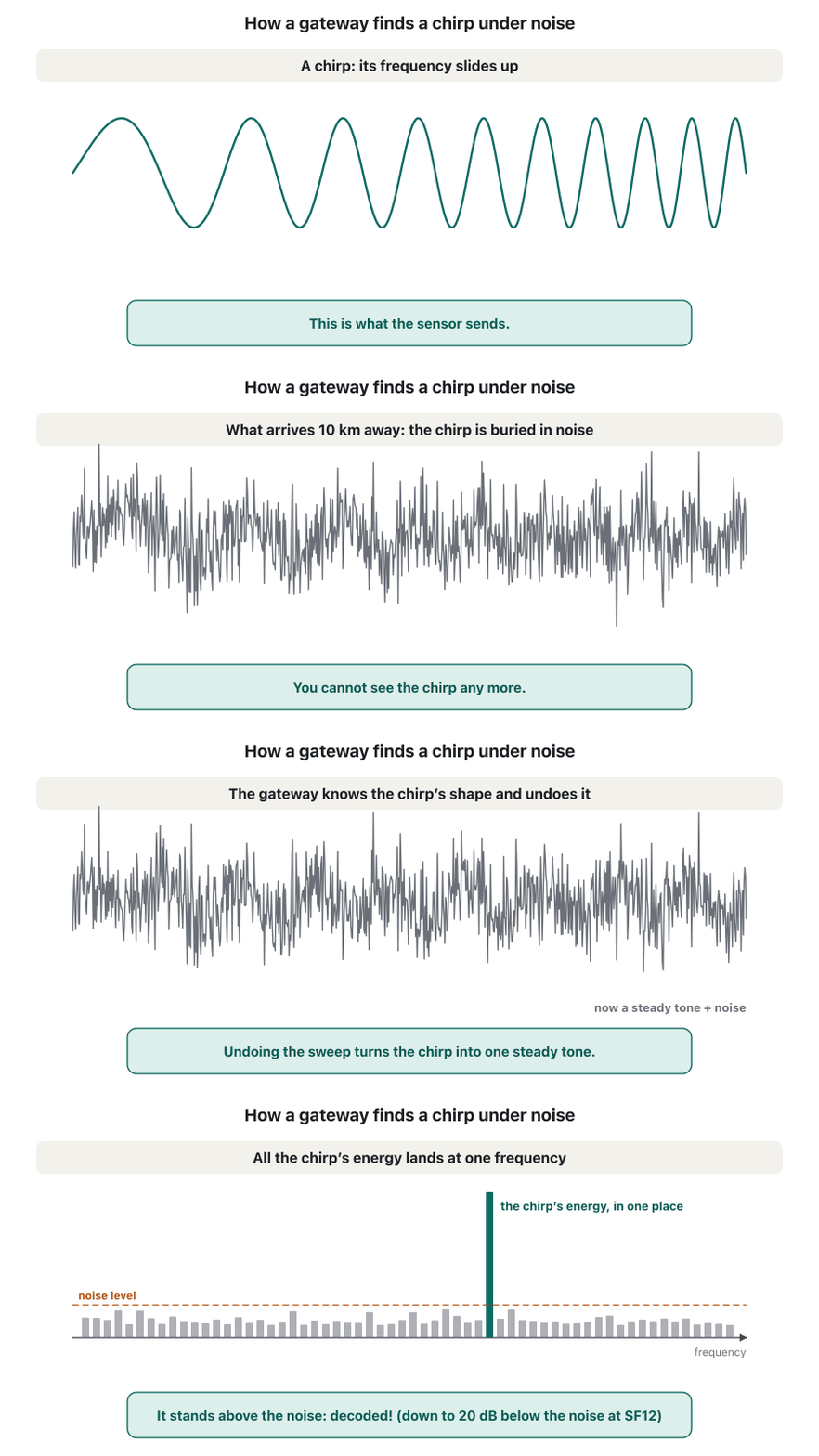
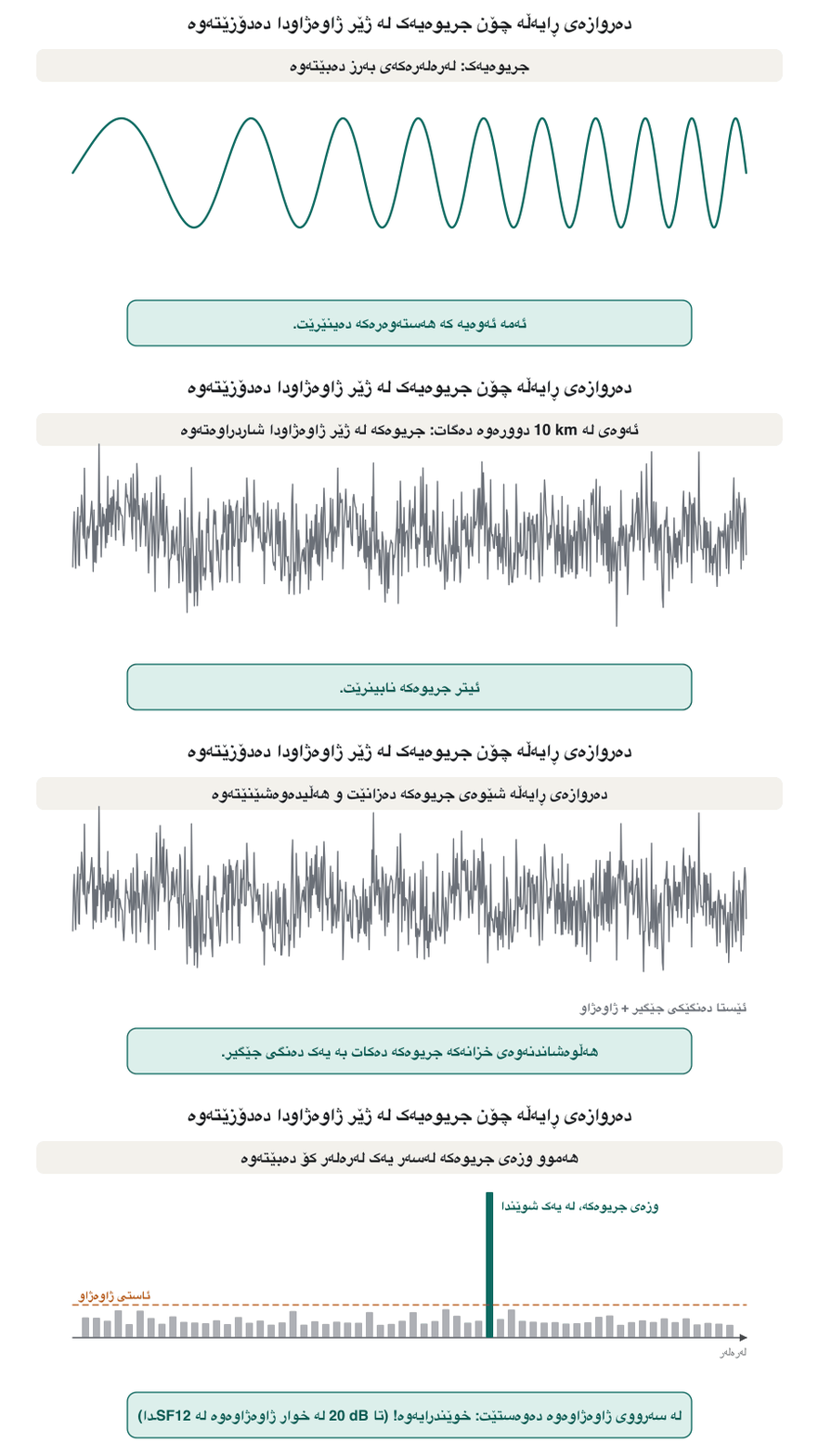
A chirp spreads its energy over the whole channel, 125 kHz wide: this is the spread spectrum part. Ten kilometres away the chirp may arrive weaker than the background noise. But the gateway knows the chirp’s shape. It “un-chirps” the signal by multiplying it with a falling chirp, and all of the chirp’s energy collects at one single frequency, which now stands out above the noise.
وزەکەی بەسەر هەموو بڵاو دەکاتەوە کە 125 kHz پانە: ئەمە بەشی . لە دە کیلۆمەتر دوورەوە لەوانەیە لە دەوروبەر لاوازتر بگات. بەڵام شێوەی دەزانێت. «هەڵدەوەشێنێتەوە» بە لێکدانی لەگەڵ دابەزیودا و هەموو وزەی لەسەر یەک کۆ دەبێتەوە کە ئێستا لە سەرووی دیار دەبێت.
Semtech states that a LoRa receiver can decode packets with a signal-to-noise ratio as low as −20 dB at SF12: a signal a hundred times weaker than the noise. Chirps also resist interference from other radios, echoes from buildings (multipath) and the frequency shift of moving devices (the Doppler effect).
Semtech دەڵێت وەرگرێکی دەتوانێت بخوێنێتەوە تەنانەت ئەگەر ڕێژەی بۆ تا −20 dB لە SF12ـدا نزم بێت: کە سەد جار لە لاوازترە. هەروەها بەرگەی ڕادیۆکانی تر، دەنگدانەوەی بیناکان (چەند ڕێگەیی) و گۆڕانی ئامێرە جووڵاوەکان (کاریگەریی دۆپلەر) دەگرن.
From Cycleo to Semtechلە Cycleoـەوە تا Semtech
LoRa’s modulation was created around 2010 by Cycleo, a small French start-up in Grenoble. In March 2012 the American radio-chip company Semtech bought Cycleo, for 5 million dollars plus later payments tied to sales, and began selling LoRa chips and licensing the design to other chip makers. Semtech still owns the LoRa radio today.
نزیکەی 2010 لەلایەن Cycleoـەوە دروست کرا، کە کۆمپانیایەکی نوێی بچووکی فەڕەنسی بوو لە گرێنۆبڵ. لە ئازاری 2012 کۆمپانیای ئەمریکیی ڕادیۆ Semtech کۆمپانیای Cycleoـی کڕی، بە 5 ملیۆن دۆلار لەگەڵ پارەدانی دواتر کە بە فرۆشەوە بەستراو بوو و دەستی کرد بە فرۆشتنی و دانی مۆڵەتی دیزاینەکە بە کۆمپانیاکانی تری چیپ. Semtech ئەمڕۆش خاوەنی ڕادیۆی .
LoRa is like two people who can whisper to each other across a whole football field because they agreed on a clever way of whispering. Cycleo invented that way of whispering; Semtech bought it and now makes the “voices” for millions of devices.
وەک دوو کەسە کە دەتوانن بە سەر هەموو یاریگایەکی تۆپی پێدا بە چرپە قسە لەگەڵ یەک بکەن، چونکە لەسەر ڕێگەیەکی زیرەکانەی چرپەکردن ڕێک کەوتوون. Cycleo ئەو ڕێگەیەی داهێنا؛ Semtech کڕی و ئێستا «دەنگ»ـەکان بۆ ملیۆنان ئامێر دروست دەکات.
Where the analogy stops workingسنووری ئەم نموونەیە
A whisper is quiet but slow to understand far away; LoRa is also slow, but it is a radio wave, not sound.
چرپە بێدەنگە بەڵام لە دوورەوە تێگەیشتنی خاوە؛ خاوە، بەڵام ، نەک دەنگ.
Two later steps made LoRa a global network technology: in 2015 companies formed the LoRa Alliance and published LoRaWAN, and in 2021 LoRaWAN became the ITU recommendation Y.4480. Both belong to LoRaWAN and industry alliances.
دوو هەنگاوی دواتر کرد بە تەکنەلۆجیایەکی جیهانی: لە 2015 کۆمپانیاکان LoRa Allianceـیان پێکهێنا و بڵاو کردەوە و لە 2021 بوو بە ڕاسپاردەی Y.4480ـی . هەردووکیان هی LoRaWAN و هاوپەیمانییەکانی پیشەسازین.
Licence-free bands: ISM and SRDباندە بێمۆڵەتەکان: ISM و SRD
LoRa works in licence-free sub-gigahertz bands: 433 MHz, 868 MHz and 915 MHz. Licence-free means you do not have to buy a licence or ask permission; sub-gigahertz means below 1 GHz; a band is a range of radio frequencies. MHz and GHz are units of frequency: 1 MHz is a million cycles per second and 1 GHz a billion.
لە خوار گیگاهێرتزدا کار دەکات: 433 MHz، 868 MHz و 915 MHz. بێمۆڵەت واتە پێویست ناکات مۆڵەت بکڕیت یان ڕێگە وەربگریت؛ خوار گیگاهێرتز واتە کەمتر لە 1 GHz؛ باند بڕێکە لە ڕادیۆیی. MHz و GHz یەکەی : 1 MHz یەک ملیۆن خولە لە چرکەیەکدا و 1 GHz یەک ملیار.
ISM bands were set aside internationally for industrial, scientific and medical machines, and the exact frequencies vary around the world. 915 MHz is an ISM band in the Americas. Strictly, Europe’s 868 MHz band is not ISM but a band for short-range devices (SRD) — also licence-free. 433 MHz is used in Europe and parts of Asia, 868 MHz in Europe (Germany, France…) and 915 MHz in North and South America (USA, Canada, Brazil).
لە ئاستی نێودەوڵەتیدا بۆ ئامێرەکانی پیشەسازی، زانستی و پزیشکی جیا کراوەتەوە و وردەکانی لە جیهاندا جیاوازن. 915 MHz لە ئەمریکاکاندا . بە وردی، باندی 868 MHzـی ئەورووپا ISM نییە، بەڵکو باندێکە بۆ ئامێرەکانی دووریی کورت (SRD) — ئەویش بێمۆڵەتە. 433 MHz لە ئەورووپا و هەندێک بەشی ئاسیا بەکار دێت، 868 MHz لە ئەورووپا (ئەڵمانیا، فەڕەنسا…) و 915 MHz لە ئەمریکای باکوور و باشوور (ئەمریکا، کەنەدا، بەڕازیل).
You do not ask permission every time you walk a letter along a village road: the road is public. LoRa uses licence-free bands like public roads, so nobody pays the government or asks permission. Mobile networks with SIM cards are different: they use licensed bands that the operator paid for. Wi-Fi and Bluetooth, like LoRa, use public “roads”.
هەر جارێک نامەیەک بە ڕێگای گوندێکدا دەبەیت ڕێگە وەرناگریت: ڕێگاکە گشتییە. وەک ڕێگای گشتی بەکار دەهێنێت، بۆیە کەس پارە بە حکومەت نادات و ڕێگە وەرناگرێت. کە سیمکارتیان هەیە جیاوازن: بەکار دەهێنن کە کۆمپانیاکە پارەی بۆ داوە. و ، وەک ، «ڕێگای» گشتی بەکار دەهێنن.
Where the analogy stops workingسنووری ئەم نموونەیە
Public roads still have traffic rules: speed limits and no parking. Licence-free bands have them too — power limits and duty cycles (next screen).
ڕێگای گشتیش یاسای هاتوچۆی هەیە: سنووری خێرایی و قەدەغەی وەستان. هەیانە — سنووری هێز و (پەڕەی داهاتوو).
The picture puts LoRa beside the other users of licence-free bands. 2.4 GHz is like a busy highway that everyone in the world may use, often crowded because Wi-Fi, Bluetooth and Zigbee all drive on it; Semtech also makes LoRa chips for it.
وێنەکە لە تەنیشت بەکارهێنەرانی تری دادەنێت. 2.4 GHz وەک ڕێگایەکی خێرای قەرەباڵغە کە هەموو جیهان دەتوانێت بەکاری بهێنێت، زۆرجار پڕە چونکە ، و هەموویان پێیدا دەڕۆن؛ Semtech بۆی دروست دەکات.
Licence-free bands: ISM and SRDباندە بێمۆڵەتەکان: ISM و SRD
Free, but not without rulesبێبەرانبەر، بەڵام بێ یاسا نا
In Europe some bands are free to use: you need no authorisation and pay nothing. But to share them fairly, the European standard ETSI EN 300 220 limits the transmit power and the duty cycle: the share of time a device may send. LoRaWAN’s three default channels (868.1, 868.3 and 868.5 MHz) sit in a sub-band with a 1 % duty cycle — at most 36 seconds of sending in every hour. Other sub-bands allow 0.1 % or 10 %.
لە ئەورووپا هەندێک باند بەکارهێنانیان بێبەرانبەرە: پێویستت بە ڕێگەپێدان نییە و هیچ پارەیەک نادەیت. بەڵام بۆ ئەوەی بە دادپەروەری بەش بکرێن، ستانداردی ئەورووپیی ETSI EN 300 220 سنوور بۆ هێزی ناردن و دادەنێت: ئەو بەشەی کات کە ئامێرێک بۆی هەیە بنێرێت. سێ بنەڕەتیی (868.1، 868.3 و 868.5 MHz) لە باندێکی لاوەکیدان کە 1 %ـی هەیە — لە هەر کاتژمێرێکدا زۆرترین 36 چرکە ناردن. باندە لاوەکییەکانی تر ڕێگە بە 0.1 % یان 10 % دەدەن.
The USA has no duty cycle in its 915 MHz band, but a different rule: a radio may stay on one channel for at most 400 ms (the dwell time), so it hops between many channels and long, slow messages are not allowed. The Things Network, the free community network, adds its own fair-use limit: 30 seconds of uplink airtime per day and 10 downlinks per device.
ئەمریکا لە باندی 915 MHzـدا نییە، بەڵام یاسایەکی تری هەیە: ڕادیۆیەک زۆرترین 400 ms دەتوانێت لەسەر یەک بمێنێتەوە ()، بۆیە لە نێوان زۆر باز دەدات و پەیامی درێژ و خاو ڕێگەپێدراو نییە. The Things Network، کە کۆمەڵگەیی و بێبەرانبەرە، سنووری بەکارهێنانی گونجاوی خۆی زیاد دەکات: ڕۆژانە 30 چرکە و 10 بۆ هەر ئامێرێک.
Frequency plans by regionپلانەکانی لەرەلەر بەپێی ناوچە
Each region has its own LoRaWAN frequency plan: which channels, powers and rules to use. The main plans are:
هەر ناوچەیەک خۆی هەیە: کام ، کام هێز و کام یاسا بەکار بهێنرێت. پلانە سەرەکییەکان ئەمانەن:
- EU868 (863–870 MHz): Europe — and many countries of Africa and the Middle East.
- US915 (902–928 MHz): North America.
- AU915 (915–928 MHz): Australia, and also some South American countries such as Brazil.
- AS923 (915–928 MHz, centred on 923 MHz): Japan and much of Asia.
- IN865 (865–867 MHz): India.
- Others: CN470 (China), KR920 (Korea), RU864 (Russia), EU433; and LoRa at 2.4 GHz works worldwide.
- EU868 (863–870 MHz): ئەورووپا — هەروەها زۆر وڵاتی ئەفریقا و ڕۆژهەڵاتی ناوەڕاست.
- US915 (902–928 MHz): ئەمریکای باکوور.
- AU915 (915–928 MHz): ئوسترالیا، هەروەها هەندێک وڵاتی ئەمریکای باشوور وەک بەڕازیل.
- AS923 (915–928 MHz، ناوەندەکەی 923 MHz): ژاپۆن و زۆربەی ئاسیا.
- IN865 (865–867 MHz): هیندستان.
- هی تر: CN470 (چین)، KR920 (کۆریا)، RU864 (ڕووسیا) و EU433. هەروەها لە 2.4 GHzـدا لە هەموو جیهان کار دەکات.
Iraq and the Kurdistan Region (as of November 2026). The LoRa Alliance’s Regional Parameters (RP002-1.0.5, October 2025) list Iraq with two suggested plans: EU868 (863–870 MHz) and EU433 (433.05–434.79 MHz), and no LoRaWAN-certified device yet approved for Iraq. The reason is not that we are “close to Europe”: Iraq is in ITU Region 1, together with Europe, Africa and the Middle East. The Things Network’s country list names Iraq without a plan. The legal rules are set by Iraq’s Communications and Media Commission (CMC), so check with it before you install a gateway.
عێراق و هەرێمی کوردستان (تا تشرینی دووەمی 2026). پارامیتەرە هەرێمییەکانی LoRa Alliance، واتە وەشانی RP002-1.0.5 لە تشرینی یەکەمی 2025، عێراق لەگەڵ دوو پلانی پێشنیارکراو دەنووسن: EU868 (863–870 MHz) و EU433 (433.05–434.79 MHz) و هێشتا هیچ ئامێرێکی بڕوانامەدراوی بۆ عێراق پەسەند نەکراوە. هۆکەی ئەوە نییە کە «نزیکی ئەورووپاین»: عێراق لە ناوچەی 1ی ، لەگەڵ ئەورووپا، ئەفریقا و ڕۆژهەڵاتی ناوەڕاست. لیستی وڵاتانی The Things Network ناوی عێراق دەهێنێت بەبێ پلان. یاسا فەرمییەکان دەستەی ڕاگەیاندن و پەیوەندییەکانی عێراق (CMC) دایان دەنێت، بۆیە پێش دانانی لەگەڵیدا بپشکنە.
LoRa’s promises and what to expectبەڵێنەکانی LoRa و ئەوەی چاوەڕێ دەکرێت
LoRa is one kind of LPWAN, so it is judged on the three LPWAN factors: range, data rate (bandwidth) and power consumption (LPWAN). It meets the need for low cost and for battery devices that send small packets over long distances: little energy, so the battery lasts long, like a torch that works for a year on one battery; and short messages such as “the soil is dry” or “the temperature is 25 °C” from a garden to a house far away.
جۆرێکە لە ، بۆیە بە سێ پێوەرەکەی هەڵدەسەنگێنرێت: ، () و (ڕایەڵەی فراوانی کەموزە). وەڵامی پێویستیی تێچووی کەم و ئەو ئامێرانەی دەداتەوە کە بچووک بۆ دووریی زۆر دەنێرن: وزەی کەم، بۆیە زۆر دەخایەنێت، وەک چرایەکی دەستی کە ساڵێک بە یەک کار بکات؛ پەیامی کورتی وەک «خاکەکە وشکە» یان «پلەی گەرمی 25 °Cـە» لە باخچەیەکەوە بۆ ماڵێکی دوور.
Brochures list four key features. Read them as best cases:
ڕێکلامەکان چوار تایبەتمەندیی سەرەکی دەنووسن. وەک باشترین حاڵەت بیانخوێنەوە:
- Long range: “15–30 miles (24–48 km) outdoors, with deep indoor coverage” — a message shouted far away and still clear inside a thick building. In practice plan with 2–5 km in towns and 10–15 km in open country.
- Low power: “10–20 years of battery life, more than ten times better than cellular M2M devices”. Real battery life is several years, and depends on how often the device sends and at which spreading factor.
- Many users: scalable capacity, multi-tenant, public or private — one network can serve many devices and many customers, and you can join a public network or build your own private one.
- Low cost: minimal infrastructure, low-cost end devices and open-source software — no expensive towers, cheap devices, and free network software.
- دووریی زۆر: «15–30 میل (24–48 km) لە دەرەوە، لەگەڵ داپۆشینی قووڵی ناو بینا» — پەیامێک کە لە دوورەوە هاوار دەکرێت و لە ناو بینایەکی ئەستووریشدا ڕوونە. لە ڕاستیدا پلان بە 2–5 km لە شار و 10–15 km لە دەشتی کراوە دابنێ.
- وزەی کەم: «10–20 ساڵ تەمەنی ، زیاتر لە دە جار باشتر لە ئامێرەکانی مۆبایل». تەمەنی ڕاستەقینەی چەند ساڵێکە و بەندە بەوەی ئامێرەکە چەند جار و بە کام دەنێرێت.
- زۆر بەکارهێنەر: ، چەند خاوەنی، گشتی یان تایبەت — یەک دەتوانێت زۆر ئامێر و زۆر کڕیار ڕاپەڕێنێت و دەتوانیت بچیتە ناو گشتییەوە یان تایبەتی خۆت دروست بکەیت.
- تێچووی کەم: ژێرخانی کەم، هەرزان و — بێ تاوەری گران، ئامێری هەرزان و بێبەرانبەر.
Spreading factor: slower reaches fartherفاکتەری بڵاوکردنەوە: خاوتر دوورتر دەگات
The LoRa setting (SF7 to SF12) for how long each lasts. A higher factor reaches farther and resists noise better, but sends more slowly and uses more .
ڕێکخستنی (SF7 تا SF12) بۆ ئەوەی هەر چەند بخایەنێت. فاکتەری بەرزتر دوورتر دەگات و باشتر بەرگەی ژاوەژاو دەگرێت، بەڵام هێواشتر دەنێرێت و زیاتر بەکار دەبات.
LoRa can make its chirps shorter or longer. The spreading factor (SF), from SF7 to SF12, sets how many tiny steps, called chips, one chirp has: 2 to the power SF, so 128 chips at SF7 and 4,096 at SF12. Each step up doubles the time of a chirp. A longer chirp collects more energy, so the receiver hears it about 2.5 dB deeper in the noise per step: it reaches farther — but it sends half as fast and keeps the radio on twice as long.
دەتوانێت خۆی کورتتر یان درێژتر بکات. (SF)، لە SF7 تا SF12، دیاری دەکات یەک چەند هەنگاوی زۆر بچووکی هەیە کە پێیان دەوترێت چیپ: 2 بە توانی SF، واتە 128 چیپ لە SF7 و 4096 لە SF12. هەر پلەیەک بەرزبوونەوە کاتی دوو هێندە دەکات. درێژتر وزەی زیاتر کۆ دەکاتەوە، بۆیە وەرگرەکە بۆ هەر پلەیەک نزیکەی 2.5 dB قووڵتر لە ناو دەیبیستێت: دوورتر دەگات — بەڵام بە نیوەی خێرایی دەنێرێت و ڕادیۆکە دوو هێندە زیاتر هەڵکراو دەهێڵێتەوە.
That is the reason behind the rule “the slower, the farther; the faster, the closer”. Different spreading factors do not disturb each other, so a gateway can hear an SF7 and an SF10 message on the same channel at the same time. In LoRaWAN the network usually picks the lowest SF that still works for each device (LoRaWAN).
ئەمە هۆکاری ئەو یاسایەیە کە «هەتا خاوتر، دوورتر؛ هەتا خێراتر، نزیکتر». جیاوازەکان یەکتر تێک نادەن، بۆیە دەتوانێت لە هەمان کاتدا پەیامێکی SF7 و پەیامێکی SF10 لەسەر هەمان ببیستێت. لە زۆرجار نزمترین SF هەڵدەبژێرێت کە هێشتا بۆ هەر ئامێرێک کار دەکات (LoRaWAN).
Spreading factor: slower reaches fartherفاکتەری بڵاوکردنەوە: خاوتر دوورتر دەگات
Data rates and airtimeڕێژەی بیت و ماوەی ناردن
LoRa is slow compared with Wi-Fi or a mobile network: in Europe from about 250 bit/s (SF12) to 11 kbit/s (SF7 with a 250 kHz channel). 250 bit/s is about a short word per second; 11 kbit/s is like a short sentence per second. That is fine, because LoRa is made for tiny messages such as “temperature = 28 °C”. LoRaWAN also offers an FSK rate of 50 kbit/s.
بەراورد بە یان خاوە: لە ئەورووپا لە نزیکەی 250 bit/s (SF12) تا 11 kbit/s (SF7 بە 250 kHz). خێرایی 250 bit/s نزیکەی وشەیەکی کورتە لە چرکەیەکدا؛ 11 kbit/s وەک ڕستەیەکی کورتە لە چرکەیەکدا. ئەمە کێشە نییە، چونکە بۆ پەیامی زۆر بچووکی وەک «پلەی گەرمی = 28 °C» دروست کراوە. هەروەها ڕێژەیەکی FSKـی 50 kbit/s پێشکەش دەکات.
The time a message spends on air is its airtime. For one 10-byte reading (LoRaWAN adds 13 bytes of headers, so 23 bytes go on air) The Things Network’s airtime calculator gives 61.7 ms at SF7 and 1,482.8 ms at SF12: 24 times longer for the same data.
ئەو کاتەی پەیامێک لە هەوادا دەمێنێتەوە . بۆ یەک خوێندنەوەی 10 ( 13 زیاد دەکات، بۆیە 23 دەچێتە هەوا) The Things Network 61.7 ms لە SF7ـدا و 1482.8 ms لە SF12ـدا دەدات: بۆ هەمان ، 24 جار درێژتر.
| Data rate | Settingڕێکخستن | Bit rate | Max. app payloadزۆرترین |
|---|---|---|---|
| DR0 | SF12 / 125 kHz | 250 bit/s | 51 bytes51 |
| DR1 | SF11 / 125 kHz | 440 bit/s | 51 bytes51 |
| DR2 | SF10 / 125 kHz | 980 bit/s | 51 bytes51 |
| DR3 | SF9 / 125 kHz | 1,760 bit/s | 115 bytes115 |
| DR4 | SF8 / 125 kHz | 3,125 bit/s | 222 bytes222 |
| DR5 | SF7 / 125 kHz | 5,470 bit/s | 222 bytes222 |
| DR6 | SF7 / 250 kHz | 11,000 bit/s | 222 bytes222 |
| DR7 | FSK | 50,000 bit/s | 222 bytes222 |
How big can a LoRa message be?پەیامێکی LoRa چەند گەورە دەبێت؟
A packet is one small message sent from a device to the receiver. In Europe the biggest LoRaWAN application payload is 222 bytes at the fast data rates (SF7, SF8) but only 51 bytes at the slow ones (SF10 to SF12); SF9 sits in between with 115 bytes. In the USA the slowest uplink rate (SF10) allows only 11 bytes, because of the 400 ms dwell time.
یەک پەیامی بچووکە کە لە ئامێرێکەوە بۆ وەرگر دەنێردرێت. لە ئەورووپا گەورەترین ئەپ لە 222 لە خێرادا (SF7، SF8) بەڵام تەنیا 51 لە خاوەکاندا (SF10 تا SF12)؛ SF9 بە 115 لە نێوانیاندایە. لە ئەمریکا خاوترین ڕێژەی (SF10) تەنیا ڕێگە بە 11 دەدات، بەهۆی 400 ms.
So: fast means a bigger message (222 bytes, a short paragraph) but a shorter reach; slow means a smaller message (51 bytes, about one sentence) that reaches farther. LoRa is a slow messenger, good for small notes and not for big files. Music streaming needs a lot of data every second, and pictures need kilobytes or megabytes. LoRa is very useful for sensor data: a weather station sending temperature and humidity, a water meter sending its use once a day, a farm sending soil moisture — small data, not often.
کەواتە: خێرا واتە پەیامی گەورەتر (222 ، بڕگەیەکی کورت) بەڵام دووریی کورتتر؛ خاو واتە پەیامی بچووکتر (51 ، نزیکەی ڕستەیەک) کە دوورتر دەگات. نامەبەرێکی خاوە، بۆ تێبینیی بچووک باشە و بۆ فایلی گەورە نا. پەخشی مۆسیقا لە هەر چرکەیەکدا زۆری دەوێت و وێنە یان دەوێت. بۆ زۆر بەسوودە: وێستگەیەکی کەشناسی کە پلەی گەرمی و شێ دەنێرێت، پێوەرێکی ئاو کە ڕۆژی جارێک بەکارهێنانەکەی دەنێرێت، کێڵگەیەک کە شێی خاک دەنێرێت — کەم، نەک زۆرجار.
How big can a LoRa message be?پەیامێکی LoRa چەند گەورە دەبێت؟
Packing a reading into a few bytesپەستاوتنی خوێندنەوەیەک بۆ ناو چەند بایتێک
Because every byte costs airtime, LoRa devices do not send readings as text. The text “T=24.5,H=40” is 11 bytes, one per character. The same reading fits into 3 bytes: the temperature times ten (245) in two bytes, and the humidity (40) in one. This sketch, for an UNO or the MKR WAN 1310 with a DHT11 on pin 2, shows both. It was checked with the CêIT Arduino checker.
چونکە هەموو دەوێت، ئامێرەکانی خوێندنەوە وەک دەق نانێرن. دەقی «T=24.5,H=40» 11 ، هەر پیتێک یەک . هەمان خوێندنەوە لە 3 دا جێی دەبێتەوە: پلەی گەرمی جارانی دە (245) لە دوو و شێ (40) لە یەکێکدا. ئەم ، بۆ UNO یان MKR WAN 1310 لەگەڵ DHT11 لەسەر پینی 2، هەردووکیان پیشان دەدات. بە پشکنەری Arduinoـی CêIT پشکنراوە.
// Pack one DHT11 reading into 3 bytes for a LoRa message
#include <DHT.h>

DHT dht(2, DHT11);              // DHT11 data pin on pin 2

void setup() {
  Serial.begin(9600);
  dht.begin();
}

void loop() {
  float t = dht.readTemperature();   // 24.5
  float h = dht.readHumidity();      // 40.0

  // As text, the reading needs 11 bytes
  String text = "T=" + String(t, 1) + ",H=" + String((int)h);
  Serial.print("As text (");
  Serial.print(text.length());
  Serial.print(" bytes): ");
  Serial.println(text);

  // Packed, it needs only 3 bytes
  int16_t t10 = (int16_t)round(t * 10);  // 24.5 -> 245
  uint8_t payload[3];
  payload[0] = (t10 >> 8) & 0xFF;       // high byte of 245
  payload[1] = t10 & 0xFF;              // low byte of 245
  payload[2] = (uint8_t)round(h);       // 40

  Serial.print("Packed (3 bytes): ");
  for (int i = 0; i < 3; i++) {
    if (payload[i] < 0x10) Serial.print("0");
    Serial.print(payload[i], HEX);
    Serial.print(" ");
  }
  Serial.println();
  delay(60000);                         // the next reading in a minute
}As text (11 bytes): T=24.5,H=40 Packed (3 bytes): 00 F5 28
CêIT Arduino checker, scenario: the DHT11 reads 24.5 °C and 40 %.
پشکنەری Arduinoـی CêIT، سیناریۆ: DHT11 بە 24.5 °C و 40 % دەخوێنێتەوە.
Explain the codeڕوونکردنەوەی کۆدەکە
- Lineدێڕی 23
Multiply by 10 and round, so 24.5 becomes the whole number 245 and the decimal survives.
جارانی 10 بکە و نزیک بکەرەوە، بۆ ئەوەی 24.5 ببێتە ژمارەی تەواوی 245 و ژمارەی دوای خاڵەکە نەفەوتێت.
- Lineدێڕی 25-26
One byte holds only 0–255, that is 0–25.5 °C. Two bytes leave room for negative and higher temperatures, so the number is split into a high byte and a low byte.
یەک تەنیا 0–255 هەڵدەگرێت، واتە 0–25.5 °C. دوو شوێن بۆ پلەی سالب و بەرزتر دەهێڵنەوە، بۆیە ژمارەکە دەکرێتە سەرەوە و خوارەوە.
- Lineدێڕی 27
Humidity 0–100 % fits into one byte.
شێی 0–100 % لە یەک جێی دەبێتەوە.
On the MKR WAN 1310 the three bytes are then handed to the LoRa module with the MKRWAN library: modem.beginPacket(), modem.write(payload, 3) and modem.endPacket(). The checker cannot imitate a LoRa radio, and the device must first join a network, so sending is shown in Sending a reading from the MKR WAN 1310. The receiving server reverses the packing: 0x00F5 = 245, so 24.5 °C; 0x28 = 40 %.
لەسەر MKR WAN 1310 پاشان ئەو سێ بە MKRWAN دەدرێنە مۆدیولی : modem.beginPacket()، modem.write(payload, 3) و modem.endPacket(). پشکنەرەکە ناتوانێت لاسایی ڕادیۆی بکاتەوە و ئامێرەکە سەرەتا دەبێت بچێتە ناو ، بۆیە ناردن لە ناردنی خوێندنەوەیەک لە MKR WAN 1310ـەوە پیشان دراوە. وەرگر پەستاوتنەکە پێچەوانە دەکاتەوە: 0x00F5 = 245، واتە 24.5 °C؛ 0x28 = 40 %.
Common mistakesهەڵە باوەکان
Exercisesڕاهێنانەکان
A soil sensor in Europe sends a 10-byte reading every 5 minutes. (a) How many messages is that per hour and per day? (b) At SF12 (1,482.8 ms each), does it respect the 1 % duty cycle? (c) Does it fit The Things Network’s 30 s of uplink airtime per day? (d) What about SF7 (61.7 ms)?
خاک لە ئەورووپا هەموو 5 خولەکێک خوێندنەوەیەکی 10 دەنێرێت. (a) لە کاتژمێرێکدا و لە ڕۆژێکدا چەند پەیامە؟ (b) لە SF12ـدا (هەریەکە 1482.8 ms)، 1 % ڕەچاو دەکات؟ (c) لە 30 چرکە ڕۆژانەی The Things Networkـدا جێی دەبێتەوە؟ (d) ئەی SF7 (61.7 ms)؟
Show answerوەڵامەکە پیشان بدە
At SF12 the sensor obeys the law (1 %) but breaks TTN’s fair-use limit by 14 times. At SF7 it fits both — if the gateway is close enough for SF7.
لە SF12ـدا یاسا (1 %) ڕەچاو دەکات بەڵام سنووری بەکارهێنانی گونجاوی TTN چواردە جار دەشکێنێت. لە SF7ـدا لە هەردووکیاندا جێی دەبێتەوە — ئەگەر ئەوەندە نزیک بێت کە SF7 بگات.
Using the sketch’s method, which three bytes (in hexadecimal) carry (a) 18.3 °C and 65 %? (b) −5.2 °C and 90 %? Hint: a negative 16-bit number is stored in two’s complement.
بە شێوازی ، کام سێ (بە ) ئەمانە هەڵدەگرن: (a) 18.3 °C و 65 %؟ (b) −5.2 °C و 90 %؟ ئاماژە: ژمارەیەکی سالبی 16 بە هەڵدەگیرێت.
Hintئاماژە
183 = 11 × 16 + 7; −52 + 65,536 = 65,484.
183 = 11 × 16 + 7؛ −52 + 65536 = 65484.
Show answerوەڵامەکە پیشان بدە
(a) 18.3 × 10 = 183 = 0x00B7, and 65 = 0x41: 00 B7 41. (b) −5.2 × 10 = −52, which is 0xFFCC in 16-bit two’s complement, and 90 = 0x5A: FF CC 5A. The server reads the first two bytes as a signed number.
(a) 18.3 × 10 = 183 = 0x00B7 و 65 = 0x41: 00 B7 41. (b) −5.2 × 10 = −52، کە بە 16 دەبێتە 0xFFCC و 90 = 0x5A: FF CC 5A. دوو یەکەم وەک دەخوێنێتەوە.
You plan LoRa water meters in a town near Duhok, about 3 km from a gateway on a hill. Which frequency plan should your devices use, which spreading factor would you try first, and how much data can each message carry?
پلانی پێوەری ئاوی دادەنێیت لە شارۆچکەیەک لە نزیک دهۆک، نزیکەی 3 km لە لەسەر گردێک. ئامێرەکانت دەبێت کام بەکار بهێنن، سەرەتا کام تاقی دەکەیتەوە و هەر پەیامێک چەند هەڵدەگرێت؟
Show answerوەڵامەکە پیشان بدە
EU868 hardware, the plan the LoRa Alliance suggests for Iraq — after checking the rules with the CMC. At 3 km from a gateway on a hill, try a low SF first (SF7 to SF9) and let the network raise it only if needed. At SF7–SF8 a message can carry up to 222 bytes, far more than a meter reading of a few bytes.
ئامێری EU868، ئەو پلانەی LoRa Alliance بۆ عێراق پێشنیاری دەکات — دوای پشکنینی یاساکان لەگەڵ CMC. لە 3 km لە لەسەر گرد، سەرەتا SFـی نزم تاقی بکەرەوە (SF7 تا SF9) و با تەنیا ئەگەر پێویست بوو بەرزی بکاتەوە. لە SF7–SF8ـدا پەیامێک تا 222 هەڵدەگرێت، زۆر زیاتر لە خوێندنەوەی پێوەرێک کە چەند .
Summaryپوختە
- LoRa is a radio (PHY) modulation by Semtech for small packets over kilometres on very little power; LoRaWAN is the network on top.
- It uses chirp spread spectrum: chirps slide across a 125 kHz channel, data is in where they start, and a gateway can decode them below the noise (−20 dB at SF12).
- Cycleo (France) created it around 2010; Semtech bought Cycleo in 2012.
- Licence-free bands (433, 868, 915 MHz, 2.4 GHz) are free of fees, not of rules: 1 % duty cycle in Europe, 400 ms dwell time in the USA.
- Regional plans: EU868, US915, AU915, AS923, IN865 and more. Iraq: EU868 or EU433 suggested by the LoRa Alliance; the CMC decides.
- Spreading factor SF7–SF12: each step doubles the chirp, is heard about 2.5 dB deeper in the noise (so it reaches farther) and halves the speed (EU868: 250 bit/s to 11 kbit/s).
- Payload in Europe: 51 bytes at slow rates, 222 at fast ones. Pack readings into bytes; never send photos or music.
- ڕادیۆیی ()ـی Semtechـە بۆ بچووک بۆ چەند کیلۆمەتر بە وزەیەکی زۆر کەم؛ ئەو کە لە سەرووییەوەیە.
- بەکار دەهێنێت: بە ناو 125 kHzـدا دەخزێن، لەو شوێنەدایە کە لێی دەست پێ دەکەن و دەتوانێت لە خوار بیانخوێنێتەوە (−20 dB لە SF12ـدا).
- Cycleo (فەڕەنسا) نزیکەی 2010 دروستی کرد؛ Semtech لە 2012 کۆمپانیای Cycleoـی کڕی.
- (433، 868، 915 MHz، 2.4 GHz) بێ پارەن، نەک بێ یاسا: 1 % لە ئەورووپا، 400 ms لە ئەمریکا.
- پلانە هەرێمییەکان: EU868، US915، AU915، AS923، IN865 و هی تر. عێراق: EU868 یان EU433 بە پێشنیاری LoRa Alliance؛ CMC بڕیار دەدات.
- SF7–SF12: هەر پلەیەک دوو هێندە دەکات، نزیکەی 2.5 dB قووڵتر لە ناو دەبیسترێت (بۆیە دوورتر دەگات) و خێرایی نیوە دەکات (EU868: 250 bit/s تا 11 kbit/s).
- لە ئەورووپا: 51 لە ڕێژە خاوەکاندا، 222 لە خێراکاندا. خوێندنەوەکان بپەستێنە بۆ ناو ؛ هەرگیز وێنە یان مۆسیقا مەنێرە.
Next: LoRaWAN, the network that carries LoRa messages from gateways to the internet.
دواتر: LoRaWAN، ئەو پەیامەکانی لە بۆ دەبات.
Lesson complete!وانەکە تەواو بوو!
Well done. Review the key terms, then go on to the next lesson.دەستخۆش. سەیرێکی زاراوە سەرەکییەکان بکەرەوە، پاشان بڕۆ بۆ وانەی داهاتوو.
Key termsزاراوە سەرەکییەکان
LoRaWAN: the Network Behind LoRaLoRaWAN: ڕایەڵەکەی پشت LoRa
Related lecturesوانە پەیوەندیدارەکان
- LoRaWAN: the Network Behind LoRaLoRaWAN: ڕایەڵەکەی پشت LoRa
- Range, Speed and Power: Choosing a Wireless Technologyمەودای سیگناڵ، خێرایی و وزە: هەڵبژاردنی تەکنەلۆجیایەکی بێتەل
- Arduino Boards and the Arduino IDEبۆردەکانی Arduino و Arduino IDE
- Who Writes the Rules? IoT Standardsکێ یاساکان دەنووسێت؟ ستانداردەکانی IoT
- Temperature and Humidity: the DHT11 and a 16x2 LCDپلەی گەرمی و شێ: DHT11 و LCDـێکی 16x2
- Radio Links: Remote Control, Telemetry, FPV Video and 5Gپەیوەندیی ڕادیۆیی: کۆنترۆڵی دوور، تەلەمەتری، ڤیدیۆی FPV و 5G
- Cables and Wireless: Transmission Mediaکێبڵ و بێتەل: هۆکارەکانی گواستنەوە
- Binary, Octal and Hex Shortcutsڕێگا کورتەکانی دووانی، هەشتی و شانزەیی
References and further readingسەرچاوەکان و خوێندنەوەی زیاتر
- Semtech: What is LoRa? (LoRa is the PHY; LoRaWAN is the LoRa Alliance standard)
- Semtech: LoRa FAQ (SNR down to −20 dB at SF12; about 2.5 dB per SF step)
- Semtech: SX1280 (LoRa at 2.4 GHz)
- Semtech Form 8-K (March 2012): Semtech acquires Cycleo SAS
- LoRa Alliance: RP002-1.0.5 LoRaWAN Regional Parameters (8 October 2025): country table, EU868 duty cycle, data rates, payload sizes, US915 dwell time
- LoRa Alliance: About LoRaWAN
- The Things Network: Frequency plans by country
- The Things Network: Duty cycle (ETSI sub-bands, Fair Use Policy)
- The Things Network: Spreading factors (receiver sensitivity, orthogonality)
- The Things Network: Modulation and data rate
- The Things Network: LoRaWAN airtime calculator (61.7 ms at SF7, 1.483 s at SF12 for 10 bytes)
- Wikipedia: Chirp spread spectrum
- Wikipedia: LoRa
This lecture is a first edition. The Kurdish text and terminology are waiting for review by Kurdish IT teachers.ئەم وانەیە چاپی یەکەمە. دەقە کوردییەکە و زاراوەکانی چاوەڕێی پێداچوونەوەی مامۆستایانی کوردی بواری IT ن.