Chapterبەش 6 · Lectureوانە 6.1
Computer Communicationsپەیوەندیی کۆمپیوتەر
How computers communicate: sender, channel and receiver; the communications devices (modems and network cards) that turn data into signals; analog and digital signals; bandwidth (in Mbit/s and in hertz) and latency with worked examples; the ways to connect to the internet, from dial-up to fibre, 4G/5G and satellite; what we use communications for, then and now; SMS, MMS and chat apps; hotspots and cybercafés; how GPS finds you (and why it needs four satellites); online collaboration; and web services and mashups.
چۆن پەیوەندی دەکەن: نێرەر، کەناڵ و وەرگر؛ ( و ) کە دەکەنە ؛ و ؛ (بە Mbit/s و بە ) و بە نموونەی چارەسەرکراو؛ ڕێگاکانی پەیوەستبوون بە ، لە dial-upـەوە تا فایبەر، 4G/5G و مانگی دەستکرد؛ پەیوەندی بۆ چی بەکار دەهێنین، ئەو کات و ئێستا؛ ، و ئەپی چات؛ و ؛ چۆن شوێنەکەت دەدۆزێتەوە (و بۆچی چوار مانگی دەستکردی پێویستە)؛ هاوکاریی ئۆنلاین؛ و و .
What you will learnچی فێر دەبیت
- Name the sending device, communications channel and receiving device in any example.
- Name the five components of data communication: sender, receiver, message, medium and protocol.
- Explain what modems and network cards do and why data must be changed into signals.
- Tell bandwidth from latency and calculate a download time from Mbit/s and MB.
- Describe the uses of communications, wireless messaging and hotspots as they are in 2026.
- Explain how GPS works and why a 3-D position needs at least four satellites.
- Give examples of collaboration software, web services and mashups.
- Compare dial-up and the broadband connections (DSL, cable, fibre, fixed wireless, 4G/5G, satellite) and explain where Wi-Fi fits.
- لە هەر نموونەیەکدا ئامێری نێرەر، و ئامێری وەرگر ناو ببەیت.
- پێنج پێکهاتەکەی ناو ببەیت: نێرەر، وەرگر، نامە، و .
- ڕوونی بکەیتەوە و چی دەکەن و بۆچی دەبێت بکرێتە .
- لە جیا بکەیتەوە و کاتی دابەزاندن لە Mbit/s و MBـەوە بژمێریت.
- بەکارهێنانەکانی پەیوەندی، نامەناردنی و وەک لە 2026دا هەن وەسف بکەیت.
- ڕوونی بکەیتەوە چۆن کار دەکات و بۆچی شوێنی سێ ڕەهەندی لانیکەم چوار مانگی دەستکردی دەوێت.
- نموونەی ، و بهێنیتەوە.
- dial-up و پەیوەندییەکانی (DSL، کێبڵ، فایبەر، جێگیر، 4G/5G، مانگی دەستکرد) بەراورد بکەیت و ڕوونی بکەیتەوە لە کوێدایە.
What computer communications meansپەیوەندیی کۆمپیوتەر چییە؟
Every time you send a message, open a website or join a video lesson, computers are communicating. Computer communications describes a process in which two or more computers or devices transfer data, instructions and information to each other. A phone, a laptop, a server in a data centre or a smartwatch can all take part.
هەر جارێک نامەیەک دەنێریت، دەکەیتەوە یان دەچیتە ناو وانەیەکی ڤیدیۆییەوە، پەیوەندی دەکەن. پەیوەندیی ئەو پرۆسەیەیە کە تێیدا دوو یان ئامێر یان زیاتر ، و بۆ یەکتر دەگوازنەوە. مۆبایل، ، لە یان کاتژمێرێکی زیرەک هەموویان دەتوانن بەشدار بن.
Every communications system has the same three parts: a sending device that starts the message, a communications channel that carries it (a cable, a fibre or radio waves), and a receiving device that accepts it. Between each device and the channel there is usually a communications device that changes the data into signals the channel can carry, and back again.
هەموو سیستەمێکی پەیوەندی هەمان سێ بەشی هەیە: ئامێری نێرەر کە نامەکە دەست پێ دەکات، کە دەیگوازێتەوە (کێبڵ، فایبەر یان شەپۆلی ڕادیۆیی) و ئامێری وەرگر کە وەری دەگرێت. لە نێوان هەر ئامێرێک و کەناڵەکەدا زۆرجار هەیە کە دەکاتە کە کەناڵەکە بتوانێت بیگوازێتەوە و بە پێچەوانەشەوە.
The path that carries a message from the sending device to the receiving device, such as a cable, a radio link or a satellite link. Every communications system has a sender, a channel and a receiver.
ئەو ڕێگایەیە کە نامەیەک لە ئامێری نێرەرەوە دەگەیەنێتە ئامێری وەرگر، وەک کێبڵ، پەیوەندیی ڕادیۆیی یان پەیوەندیی مانگی دەستکرد. هەموو سیستەمێکی پەیوەندی نێرەر، کەناڵ و وەرگری هەیە.
What computer communications meansپەیوەندیی کۆمپیوتەر چییە؟
Five components: the message and the protocolپێنج پێکهاتە: نامە و پرۆتۆکۆڵ
Books on data communication count five components. You know three already: the sender and the receiver — both are nodes, devices on a network that can send, receive or pass on data — and the medium, which is the communications channel. The two new ones are the message, the data itself (text, numbers, pictures, sound or video), and the protocol: the rules both sides follow, so that the message is not only delivered but understood.
کتێبەکانی پێنج پێکهاتە دەژمێرن. سێیانت ناسیوە: نێرەر و وەرگر — هەردووکیان ، واتە ئامێرێکن لەسەر کە دەتوانن بنێرن، وەربگرن یان بیگوازنەوە — لەگەڵ ، کە هەمان . دوو پێکهاتە نوێیەکە ئەمانەن: نامە، واتە خودی (دەق، ژمارە، وێنە، دەنگ یان ڤیدیۆ)؛ ، واتە ئەو یاسایانەی هەردوو لا پەیڕەوی دەکەن تا نامەکە نەک تەنها بگات، بەڵکو تێبگەیەنرێت.
| Componentپێکهاتە | What it isچییە | When Aram e-mails a photoکاتێک ئارام وێنەیەک بە دەنێرێت |
|---|---|---|
| Senderنێرەر | The device that starts the messageئەو ئامێرەی نامەکە دەست پێ دەکات | Aram's laptop ئارام |
| Receiverوەرگر | The device that accepts itئەو ئامێرەی نامەکە وەردەگرێت | Shilan's phoneمۆبایلەکەی شیلان |
| Messageنامە | The data being sentئەو دەنێردرێت | The photo, as bitsوێنەکە، وەک |
| Medium | The path: cable, fibre or radio wavesڕێگاکە: کێبڵ، فایبەر یان شەپۆلی ڕادیۆیی | Wi-Fi, fibre, 4G، فایبەر، 4G |
| Protocol | The rules both sides followئەو یاسایانەی هەردوو لا پەیڕەوی دەکەن | Wi-Fi and Ethernet rules on each link; the e-mail rules (SMTP) for the messageیاساکانی و لەسەر هەر بەستنەوەیەک؛ یاساکانی (SMTP) بۆ نامەکە |
Communications devices: modems and network cardsئامێرەکانی پەیوەندی: مۆدێم و کارتی ڕایەڵە
A communications device is hardware that can send and receive data over a channel. Its job is to turn the computer's data into a signal that suits the channel — electric pulses for copper, flashes of light for fibre, radio waves for the air — and to turn the incoming signal back into data.
کە دەتوانێت بە ناو کەناڵێکدا بنێرێت و وەربگرێت. کارەکەی ئەوەیە بکاتە کە لەگەڵ کەناڵەکە بگونجێت — لێدانی کارەبایی بۆ مس، ترووسکەی ڕووناکی بۆ فایبەر، شەپۆلی ڕادیۆیی بۆ هەوا — و هاتوو بکاتەوە بە .
Hardware that lets a computer or phone send and receive , instructions and information to and from other devices, such as a , a , a or a Wi-Fi adapter.
کە ڕێگە بە کۆمپیوتەر یان مۆبایل دەدات ، ڕێنمایی و زانیاری بۆ ئامێرەکانی تر بنێرێت و لێیانەوە وەربگرێت، وەک ، ، یان ئەداپتەرێکی وایفای.
You (the sender) give a parcel to a taxi office. The taxi on the road is the channel. Your cousin in Hewler is the receiver. The office that wraps your parcel so it survives the trip, and unwraps it at the other end, plays the role of the communications device.
تۆ (نێرەر) پاکەتێک دەدەیتە نووسینگەیەکی تەکسی. تەکسییەکە لەسەر ڕێگا کەناڵەکەیە. ئامۆزاکەت لە هەولێر وەرگرە. ئەو نووسینگەیەی پاکەتەکەت دەپێچێتەوە تا لە ڕێگادا سەلامەت بێت و لە سەرەکەی ترەوە دەیکاتەوە، ڕۆڵی دەگێڕێت.
Where the analogy stops workingسنووری ئەم نموونەیە
A taxi carries one parcel slowly; a fibre carries millions of messages a second, and the 'parcel' is copied, not moved: the sender still has the original.
تەکسی یەک پاکەت بە هێواشی دەبات؛ فایبەر لە هەر چرکەیەکدا ملیۆنان نامە دەبات و «پاکەتەکە» کۆپی دەکرێت، نەک بگوازرێتەوە: نێرەرەکە هێشتا ئەسڵەکەی لایە.
Communications devices: modems and network cardsئامێرەکانی پەیوەندی: مۆدێم و کارتی ڕایەڵە
Modems, network cards and radiosمۆدێم، کارتی ڕایەڵە و ڕادیۆکان
| Deviceئامێر | What it doesچی دەکات | Where you meet itلە کوێ دەیبینیت |
|---|---|---|
| Modem (modulator–demodulator) (گۆڕەر و گۆڕەرەوە: modulator–demodulator) | Changes digital data into a signal for a provider's line (and back): DSL over a phone line, a cable modem over TV coax, a fibre box (ONT) for fibre, a 4G/5G modem for mobile data. دیجیتاڵ دەکاتە بۆ هێڵی دابینکەرەکە (و بە پێچەوانەوە): DSL بە هێڵی تەلەفۆن، کێبڵ بە کێبڵی تیڤی، سندووقی فایبەر (ONT) بۆ فایبەر، 4G/5G بۆ داتای مۆبایل. | Inside the home "router" box, in a USB dongle, inside every phone.لە ناو سندووقی «»ـی ماڵەوە، لە دۆنگڵێکی USBـدا، لە ناو هەموو مۆبایلێکدا. |
| Network interface card (NIC) (بە ئینگلیزی NIC) | Connects one computer to a network: an Ethernet port for a cable, or a Wi-Fi radio. Every NIC has its own MAC address.یەک بە دەبەستێت: Ethernet بۆ کێبڵ، یان ڕادیۆیەکی . هەر تایبەتی خۆی هەیە. | Built into almost every laptop, desktop, phone and printer.لە ناو نزیکەی هەموو ، ، مۆبایل و دروست کراوە. |
| Wireless radiosڕادیۆی | Send and receive radio waves: Wi-Fi, Bluetooth, mobile network (4G/5G), NFC.شەپۆلی ڕادیۆیی دەنێرن و وەردەگرن: ، ، (4G/5G)، . | A smartphone has four or five of them. چوار یان پێنجی هەیە. |
| Router and access point و | Join networks together and let wireless devices in. پێکەوە دەبەستن و ڕێگە بە ئامێرە دەدەن بێنە ناوەوە. | Taught in Network Hardware.لە ڕەقەواڵەی ڕایەڵەـدا ڕوون کراوەتەوە. |
Communications devices: modems and network cardsئامێرەکانی پەیوەندی: مۆدێم و کارتی ڕایەڵە
Modulation and demodulationمۆدیولەیشن و دیمۆدیولەیشن: کاری مۆدێم
A modem's name tells its job. Modulation (the mo of modem) changes digital data into an analog signal: the sender's modem varies a wave — its strength, its timing or its frequency — so that the changes stand for 0s and 1s. Demodulation (the dem) is the opposite, an analog signal back into digital data: the receiver's modem reads the changes of the wave and turns them into bits again. Every modem does both, because every line carries data both ways.
ناوی کارەکەی دەڵێت. مۆدیولەیشن (modulation، بەشی moی ناوەکە) دەکاتە : نێرەر شەپۆلێک دەگۆڕێت — هێزەکەی، کاتەکەی یان — تا ئەو گۆڕانانە 0 و 1 نیشان بدەن. دیمۆدیولەیشن (demodulation، بەشی dem) پێچەوانەکەیەتی، واتە دەکاتەوە بە : وەرگر گۆڕانەکانی شەپۆلەکە دەخوێنێتەوە و دووبارە دەیانکاتەوە بە . هەموو هەردوو کارەکە دەکات، چونکە هەموو هێڵێک بە هەردوو ئاڕاستەدا دەبات.
The first modems turned bits into whistling sounds that an ordinary telephone line could carry. A modern fibre box (ONT) does the same job with flashes of light, and a 4G/5G modem with radio waves. Inside the computer nothing changes: the processor only ever sees 0s and 1s.
یەکەم دەکردە دەنگی فیکە کە هێڵێکی ئاسایی تەلەفۆن بتوانێت بیبات. سندووقێکی فایبەری ئەمڕۆ (ONT) هەمان کار بە ترووسکەی ڕووناکی دەکات و 4G/5G بە شەپۆلی ڕادیۆیی. لە ناو هیچ ناگۆڕێت: هەمیشە تەنها 0 و 1 دەبینێت.
Analog and digital signalsسیگناڵەکانی ئەنالۆگ و دیجیتاڵ
Inside the computer, data is digital: only two values, 0 and 1. Many channels are analog: a radio wave or the voltage on a long copper line changes smoothly, with any value in between. Communications devices sit at the border: they turn the 0s and 1s into changes of a wave (strength, timing or frequency) that the channel can carry, and the receiver turns the wave back into 0s and 1s.
لە ناو : تەنها دوو بەها، 0 و 1. زۆرێک لە کەناڵەکان : شەپۆلێکی ڕادیۆیی یان سەر هێڵێکی درێژی مس بە نەرمی دەگۆڕێت و هەر بەهایەکی نێوانیش وەردەگرێت. لەسەر سنوورەکەن: 0 و 1ـەکان دەکەنە گۆڕانی شەپۆلێک (هێز، کات یان ) کە کەناڵەکە بتوانێت بیبات. وەرگرەکەش شەپۆلەکە دەکاتەوە بە 0 و 1.
| Analog | Digital | |
|---|---|---|
| Valuesبەهاکان | Any value in a range; changes smoothlyهەر بەهایەک لە نێوان دوو سنووردا؛ بە نەرمی دەگۆڕێت | A few fixed levels (two in a computer: 0 and 1)چەند ئاستێکی جێگیر (لە دوو: 0 و 1) |
| Noise | Noise mixes with the signal and stays لەگەڵ تێکەڵ دەبێت و دەمێنێتەوە | Small noise is ignored; the receiver only asks "0 or 1?" کەم پشتگوێ دەخرێت؛ وەرگر تەنها دەپرسێت «0 یان 1؟» |
| Examplesنموونە | Old phone line, AM/FM radio, vinyl recordهێڵی تەلەفۆنی کۆن، ڕادیۆی AM/FM، قەوانی ڤینیل | Ethernet, Wi-Fi, 4G/5G, fibre, USBEthernet، ، 4G/5G، فایبەر، USB |
How fast? Bandwidth and latencyچەند خێرا؟ پانایی باند و دواکەوتن
Two different numbers describe a connection. Bandwidth is how much data it can carry per second, in bits per second: Mbit/s or Gbit/s. Latency is the delay: how long one small message takes to get there (often measured as a round trip, the 'ping'), in milliseconds (ms). A connection can have high bandwidth and still feel slow in a game if its latency is high.
دوو ژمارەی جیاواز پەیوەندییەک وەسف دەکەن. ئەوەیە کە لە هەر چرکەیەکدا چەند دەبات، بە لە چرکەیەکدا: Mbit/s یان Gbit/s. ئەو کاتەیە کە نامەیەکی بچووک دەیخایەنێت تا دەگات (زۆرجار وەک چوون و هاتنەوە دەپێورێت، واتە «ping»)، بە ملیچرکە (ms). پەیوەندییەک دەتوانێت زۆری هەبێت و هێشتا لە یارییەکدا خاو دەربکەوێت ئەگەر زۆر بێت.
Learn what bandwidth is: how much data a connection can carry each second, measured in bits per second, explained with a water pipe.
فێر دەبیت چییە: چەند دەتوانێت لە هەر چرکەیەکدا بە پەیوەندییەکدا تێبپەڕێت، کە بە لە چرکەدا دەپێورێت، بە نموونەی بۆریی ئاو.
Plays 0:00-2:22: bandwidth measured in bits per second and the water-pipe picture; stops before the sponsor message. Latency is not in the video.
لە 0:00 تا 2:22 پەخش دەبێت: کە بە لە چرکەیەکدا دەپێورێت، لەگەڵ وێنەی بۆریی ئاو؛ پێش پەیامی سپۆنسەر ڕادەوەستێت. لە ڤیدیۆکەدا نییە.
How fast? Bandwidth and latencyچەند خێرا؟ پانایی باند و دواکەوتن
Bits, bytes and download timeبیت، بایت و کاتی دابەزاندن
Watch the units: providers sell speed in bits per second, but files are measured in bytes (a byte is 8 bits). Lana downloads a 25 MB homework file over a 20 Mbit/s connection:
ئاگاداری یەکەکان بە: دابینکەرەکان خێرایی بە لە چرکەیەکدا دەفرۆشن، بەڵام فایلەکان بە دەپێورێن (هەر هەشت ). لانا فایلێکی ئەرکی 25 MB بە پەیوەندییەکی 20 Mbit/s دادەبەزێنێت:
About 10 seconds (a little more in real life, because some capacity is used by the network itself). Bits and bytes are explained in Bits, Bytes and Storage Units. More practice with rates: Exercises with numbers.
نزیکەی 10 چرکە (لە ڕاستیدا کەمێک زیاتر، چونکە بەشێک لە توانای بۆ خۆی بەکار دێت). و لە بیت، بایت و یەکەکانی خەزنکردنـدا ڕوون کراونەتەوە. ڕاهێنانی زیاتر لەسەر خێرایی: ڕاهێنان بە ژمارە.
How fast? Bandwidth and latencyچەند خێرا؟ پانایی باند و دواکەوتن
Bandwidth in hertz: the first meaningپانایی باند بە هێرتز: مانا یەکەمەکەی
Engineers first used bandwidth for something else: the range of frequencies a channel can carry, measured in hertz (Hz, waves per second). It is the highest frequency minus the lowest. An old telephone line carries voices from about 300 Hz to 3,400 Hz:
ئەندازیاران سەرەتا وشەی بۆ شتێکی تر بەکار دەهێنا: ئەو کە کەناڵێک دەتوانێت بیانبات، بە (Hz، ژمارەی شەپۆل لە هەر چرکەیەکدا) دەپێورێت. بریتییە لە بەرزترین لێدەرکردنی نزمترین. هێڵێکی کۆنی تەلەفۆن دەنگ لە نزیکەی 300 Hzـەوە تا 3,400 Hz دەبات:
About 3 kHz: enough for speech, far too little for data. The wider the range of frequencies, the more bits per second a channel can carry. That is why a Cat 6A cable (500 MHz) carries more than a Cat 5e cable (100 MHz) — see Cable categories — and why everyday speech now says 'bandwidth' for Mbit/s.
نزیکەی 3 kHz: بۆ قسەکردن بەسە، بەڵام بۆ زۆر کەمە. هەتا کۆمەڵە پانتر بێت، کەناڵەکە لە هەر چرکەیەکدا زیاتر دەبات. لەبەر ئەمەیە کێبڵی Cat 6A (500 MHz) زیاتر لە کێبڵی Cat 5e (100 MHz) دەبات — سەیری پۆلەکانی کێبڵ بکە — و لە قسەی ڕۆژانەدا بۆ Mbit/s بەکار دێت.
Ways to connect to the Internet: dial-up or broadband?ڕێگاکانی پەیوەستبوون بە ئینتەرنێتەوە: dial-up یان باندی فراوان؟
To go online at home you need an internet service provider (ISP) and a line between your home and the provider. The course sorts these connections into two kinds: dial-up and broadband.
بۆ ئەوەی لە ماڵەوە بچیتە سەر ، پێویستت بە و هێڵێک لە نێوان ماڵەکەت و دابینکەرەکەدا هەیە. وانەکە ئەم پەیوەندییانە دەکاتە دوو جۆر: dial-up و .
| Dial-updial-up (ژمارەگرتن) | Broadband | |
|---|---|---|
| How it connectsچۆن پەیوەست دەبێت | A dial-up modem dials a number over the ordinary phone line each time you go online, and hangs up when you finishهەر جارێک کە دەچیتە سەر ، dial-up ژمارەیەک بە هێڵی ئاسایی تەلەفۆن دەگرێت و کە تەواو بوویت دایدەخات | Always on (also called a direct connection): the computer stays connected, with no diallingهەمیشە پەیوەستە (پەیوەندیی ڕاستەوخۆشی پێ دەوترێت): بەردەوام پەیوەست دەمێنێتەوە، بێ ژمارەگرتن |
| Speedخێرایی | Slow: at most 56 kbit/sخاو: زۆرترین 56 kbit/s | High: from a few Mbit/s to more than 1 Gbit/sبەرز: لە چەند Mbit/sـێکەوە تا زیاتر لە 1 Gbit/s |
| The phone lineهێڵی تەلەفۆن | Busy: no phone calls while you are online (unless you have a second line)گیراوە: لە کاتی بوونت لەسەر پەیوەندیی تەلەفۆنی ناکرێت (مەگەر هێڵێکی دووەمت هەبێت) | With DSL, calls and internet at the same timeبە DSL، پەیوەندیی تەلەفۆن و لە هەمان کاتدا |
| Todayئەمڕۆ | History: AOL closed its dial-up service in September 2025مێژووە: AOL لە ئەیلوولی 2025دا خزمەتگوزاریی dial-upـی داخست | How homes and offices connectئەو ڕێگایەیە کە ماڵ و ئۆفیسەکان پێی پەیوەست دەبن |
Dial-up, DSL, satellite, fixed wireless, power-line, mobile, cable and fibre internet: how each reaches the home and how fast it is.
Dial-up، DSL، مانگی دەستکرد، جێگیر، هێڵی کارەبا، مۆبایل، کێبڵ و فایبەر: هەر یەکەیان چۆن دەگاتە ماڵ و چەندە خێرایە.
Whole video (12:32): every way to connect, from dial-up to fibre, matching the seven broadband types of the course.
هەموو ڤیدیۆکە (12:32): هەموو ڕێگاکانی بەستنەوە بە ، لە Dial-up تا فایبەر، بەگوێرەی حەوت جۆرەکەی کۆرسەکە.
Ways to connect to the Internet: dial-up or broadband?ڕێگاکانی پەیوەستبوون بە ئینتەرنێتەوە: dial-up یان باندی فراوان؟
DSL and cable internetDSL و ئینتەرنێتی کێبڵ
DSL (digital subscriber line) uses the copper telephone line that already reaches the house. Voice uses only the low frequencies of the line, below about 4 kHz; DSL sends data on much higher frequencies on the same wires. So you can talk on the phone and use the internet at the same time, and you do not even need a phone subscription. The most popular kind is ADSL, asymmetric because downloads are faster than uploads. Its weakness is distance: the further the house is from the telephone exchange, the slower the line, and some areas have no DSL at all.
DSL (digital subscriber line) هێڵی مسی تەلەفۆن بەکار دەهێنێت کە پێشتر گەیشتووەتە ماڵەکە. دەنگ تەنها نزمەکانی هێڵەکە بەکار دەهێنێت، خوار نزیکەی 4 kHz؛ DSL لەسەر زۆر بەرزتر بە هەمان وایەرەکاندا دەنێرێت. بۆیە دەتوانیت لە هەمان کاتدا قسە بە تەلەفۆن بکەیت و بەکار بهێنیت، تەنانەت تەلەفۆنیشت پێویست نییە. باوترین جۆری ADSLـە، ناهاوسەنگە چونکە لە خێراترە. لاوازییەکەی دوورییە: هەتا ماڵەکە لە سەنتراڵی تەلەفۆن دوورتر بێت، هێڵەکە خاوترە و هەندێک ناوچە هەر DSLـیان نییە.
Cable internet uses the coaxial cable of a cable-TV network and a cable modem. It is broadband and always on, it can be faster than DSL, and you do not need a TV subscription. It exists only where a cable-TV network has been built, and the neighbours on the same cable share its capacity.
کێبڵ تیڤیی کێبڵ و کێبڵ بەکار دەهێنێت. و هەمیشە پەیوەستە، دەتوانێت لە DSL خێراتر بێت و تیڤیت پێویست نییە. تەنها لەو شوێنانە هەیە کە تیڤیی کێبڵیان تێدا دروست کراوە و دراوسێکانی سەر هەمان کێبڵ تواناکەی هاوبەش دەکەن.
Ways to connect to the Internet: dial-up or broadband?ڕێگاکانی پەیوەستبوون بە ئینتەرنێتەوە: dial-up یان باندی فراوان؟
Fibre to the home and fixed wirelessفایبەر تا ماڵ و بێتەلی جێگیر
Fibre to the premises (FTTP), also called fibre to the home (FTTH) or broadband over fibre, brings a fibre-optic cable all the way into the building. A small box, the ONT, turns the light into Ethernet and Wi-Fi. It is the fastest fixed connection — hundreds of Mbit/s to several Gbit/s, often as fast up as down — and it does not slow down with distance.
فایبەر تا شوێنەکە (FTTP)، کە فایبەر تا ماڵ (FTTH) یان بە فایبەریشی پێ دەوترێت، کێبڵێکی فایبەر ئۆپتیک تا ناو بیناکە دەهێنێت. سندووقێکی بچووک، ONT، ڕووناکییەکە دەکاتە و . خێراترین پەیوەندیی جێگیرە — سەدان Mbit/s تا چەند Gbit/sێک، زۆرجار بە هەمان خێرایی — و بە دووری خاو نابێتەوە.
Fixed wireless sends the internet by radio from a provider's tower to an antenna, often dish-shaped, fixed on the roof or at a window — no cable and no satellite. It reaches villages and new neighbourhoods where no cable has been laid, but it needs a clear line to the tower and is not available everywhere.
جێگیر بە ڕادیۆ لە تاوەرێکی دابینکەرەکەوە دەنێرێت بۆ ئەنتێنەیەک، زۆرجار وەک دیش، کە لەسەر بانەکە یان لە پەنجەرەیەکدا جێگیر کراوە — بێ کێبڵ و بێ مانگی دەستکرد. دەگاتە گوند و گەڕەکە نوێیەکان کە هێشتا کێبڵیان بۆ ڕانەکێشراوە، بەڵام پێویستی بە ڕێگایەکی ڕوون هەیە تا تاوەرەکە و لە هەموو شوێنێک نییە.
Ways to connect to the Internet: dial-up or broadband?ڕێگاکانی پەیوەستبوون بە ئینتەرنێتەوە: dial-up یان باندی فراوان؟
Mobile broadband and satelliteباندی فراوانی مۆبایل و مانگی دەستکرد
Mobile broadband uses the provider's mobile network: a phone, a tablet, a laptop with a SIM or a 4G/5G router connects by radio to the nearest tower. It lets you use the internet away from home, even where there is no Wi-Fi. The course names 3G and 4G and warns that 3G may be slower than DSL; today 4G and 5G are normal, and 5G is often faster than DSL. The generations are explained in Mobile generations.
مۆبایل دابینکەرەکە بەکار دەهێنێت: مۆبایل، تابلێت، بە SIMـەوە یان 4G/5G بە ڕادیۆ بە نزیکترین تاوەرەوە دەبەسترێت. ڕێگەت پێ دەدات لە دەرەوەی ماڵ، تەنانەت لەو شوێنانەی لێ نییە بەکار بهێنیت. وانەکە 3G و 4G ناو دەبات و دەڵێت 3G لەوانەیە لە DSL خاوتر بێت؛ ئەمڕۆ 4G و 5G ئاساین و 5G زۆرجار لە DSL خێراترە. نەوەکان لە نەوەکانی ڕایەڵەی مۆبایلـدا ڕوون کراونەتەوە.
Satellite internet works almost anywhere — ships, planes, mountain villages — with no cable or phone line: a dish talks to a satellite. Rain and snow can weaken the signal. Its old problem is delay: a geostationary satellite is about 36,000 km up, and in early-2025 Ookla tests the median latency of HughesNet and Viasat was about 680 ms — too slow for games and awkward for video calls. Low-orbit satellites such as Starlink fly about 550 km up: about 45 ms. The maths is in Bluetooth, mobile networks and satellites.
مانگی دەستکرد نزیکەی لە هەموو شوێنێک کار دەکات — کەشتی، فڕۆکە، گوندی شاخاوی — بێ کێبڵ و بێ هێڵی تەلەفۆن: دیشێک لەگەڵ مانگێکی دەستکرد قسە دەکات. باران و بەفر دەتوانن لاواز بکەن. کێشە کۆنەکەی : مانگێکی دەستکردی جێگیر نزیکەی 36,000 کیلۆمەتر بەرزە و لە تاقیکردنەوەکانی Ookla لە سەرەتای 2025دا ناوەندی HughesNet و Viasat نزیکەی 680 ms بوو — بۆ یاری زۆر خاوە و بۆ پەیوەندیی ڤیدیۆیی ناخۆشە. مانگە دەستکردە نزمەکانی وەک Starlink نزیکەی 550 کیلۆمەتر بەرزن: نزیکەی 45 ms. ژمێریارییەکەی لە Bluetooth، ڕایەڵەکانی مۆبایل و مانگی دەستکردـدایە.
Ways to connect to the Internet: dial-up or broadband?ڕێگاکانی پەیوەستبوون بە ئینتەرنێتەوە: dial-up یان باندی فراوان؟
Where does Wi-Fi fit?وایفای لە کوێی ئەم وێنەیەدایە؟
Ways to connect to the Internet: dial-up or broadband?ڕێگاکانی پەیوەستبوون بە ئینتەرنێتەوە: dial-up یان باندی فراوان؟
Seven connections side by sideحەوت پەیوەندی لە تەنیشت یەکەوە
The course names seven types of broadband. Here they are together, with typical 2026 numbers (real speeds depend on the plan, the place and the time of day):
وانەکە حەوت جۆری ناو دەبات. ئەمانە پێکەوەن، لەگەڵ ژمارەی ئاسایی 2026 (خێرایی ڕاستەقینە بەستراوەتەوە بە پاکێجەکە، شوێنەکە و کاتی ڕۆژ):
| Typeجۆر | Reaches the home throughبە چیدا دەگاتە ماڵ | Typical download ئاسایی | Watch outئاگاداربە |
|---|---|---|---|
| DSL / ADSLهێڵی DSL / ADSL | the copper telephone lineهێڵی مسی تەلەفۆن | a few to about 100 Mbit/sچەند Mbit/sێک تا نزیکەی 100 Mbit/s | slower far from the exchangeدوور لە سەنتراڵ خاوترە |
| Cableکێبڵ | TV coaxial cable and a cable modem تیڤی و کێبڵ | 100 Mbit/s to 1 Gbit/s100 Mbit/s تا 1 Gbit/s | shared with the neighboursلەگەڵ دراوسێکاندا هاوبەشە |
| Fibre (FTTP/FTTH)فایبەر (FTTP/FTTH) | a fibre-optic cable and an ONT box و سندووقی ONT | hundreds of Mbit/s to several Gbit/sسەدان Mbit/s تا چەند Gbit/sێک | not yet in every streetهێشتا لە هەموو شەقامێکدا نییە |
| Fixed wireless (FWA) جێگیر (FWA) | radio from a tower to a roof antennaڕادیۆ لە تاوەرێکەوە بۆ ئەنتێنەی سەر بان | tens to hundreds of Mbit/sدەیان تا سەدان Mbit/s | needs a clear path to the towerڕێگای ڕوونی تا تاوەرەکە دەوێت |
| Mobile broadband مۆبایل | 4G/5G radio to the nearest towerڕادیۆی 4G/5G بۆ نزیکترین تاوەر | tens to hundreds of Mbit/sدەیان تا سەدان Mbit/s | data limits; busy towersسنووری ؛ تاوەری قەرەباڵغ |
| Satelliteمانگی دەستکرد | a dish and a satelliteدیشێک و مانگێکی دەستکرد | tens to hundreds of Mbit/sدەیان تا سەدان Mbit/s | rain; long delay with geostationary satellitesباران؛ زۆر لەگەڵ مانگی دەستکردی جێگیر |
| Wi-Fi | not a line: it shares one of the above inside the homeهێڵ نییە: یەکێک لەوانەی سەرەوە لە ناو ماڵدا هاوبەش دەکات | — | — |
Ways to connect to the Internet: dial-up or broadband?ڕێگاکانی پەیوەستبوون بە ئینتەرنێتەوە: dial-up یان باندی فراوان؟
Choosing an internet providerهەڵبژاردنی دابینکەرێکی ئینتەرنێت
An ISP sells you the line and the access to the internet. When you compare offers, ask about:
هێڵەکە و دەستگەیشتن بە پێ دەفرۆشێت. کاتێک پێشنیارەکان بەراورد دەکەیت، ئەمانە بپرسە:
- Speed — download and upload, in Mbit/s (divide by 8 for MB/s).
- Price and data limits — the monthly price, and whether there is a limit on gigabytes.
- Availability — which lines reach your street: fibre, DSL, cable or 4G/5G.
- Installation — who installs it, how long it takes and what it costs.
- Technical support — can you reach someone when the line is down?
- Contract terms — how long you must stay, and the cost of leaving early.
- Service record — ask neighbours how often the line fails.
- خێرایی — و ، بە Mbit/s (بۆ MB/s دابەشی 8ی بکە).
- نرخ و سنووری — نرخی مانگانە و ئایا سنوورێک بۆ گیگابایت هەیە.
- بوون — کام هێڵ دەگاتە شەقامەکەت: فایبەر، DSL، کێبڵ یان 4G/5G.
- دامەزراندن — کێ دایدەمەزرێنێت، چەند دەخایەنێت و تێچووەکەی چەندە.
- پشتگیریی تەکنیکی — کاتێک هێڵەکە دەپچڕێت دەتوانیت بگەیتە کەسێک؟
- مەرجەکانی گرێبەست — چەند کات دەبێت بمێنیتەوە و وازهێنانی زوو چەندی تێدەچێت.
- مێژووی خزمەتگوزاری — لە دراوسێکان بپرسە هێڵەکە چەند جار دەپچڕێت.
What we use communications forپەیوەندی بۆ چی بەکار دەهێنین؟
The course lists fifteen uses of computer communications. Nine are as common as ever (this screen); six have new names or have almost disappeared (next screen). Every one is kept.
وانەکە پازدە بەکارهێنانی پەیوەندیی دەژمێرێت. نۆیان وەک هەمیشە باون (ئەم شاشەیە)؛ شەشیان ناوی نوێیان هەیە یان نزیکەی نەماون (شاشەی داهاتوو). هەموویان هێڵراونەتەوە.
| Useبەکارهێنان | What it isچییە | In 2026لە 2026دا |
|---|---|---|
| Blogs | Websites of dated posts, newest first بە بابەتی ڕێکەوتدار، نوێترین لە سەرەوە | Still used; also newsletters and social media postsهێشتا بەکار دێن؛ هەروەها نامەی هەواڵ و بابەتی |
| Messages to an e-mail address, with files attachedنامە بۆ ، لەگەڵ فایلی هاوپێچ | Still the formal channel for work and university — see How E-mail Worksهێشتا کەناڵی فەرمییە بۆ کار و زانکۆ — سەیری ئیمەیڵ چۆن کار دەکات بکە | |
| Instant messaging | Real-time messages between peopleنامەی ڕاستەوخۆ لە نێوان خەڵکدا | WhatsApp, Telegram, Viber, MessengerWhatsApp، Telegram، Viber، Messenger |
| Internet | The worldwide network of networks جیهانیی | Carries all the othersهەموو ئەوانی تر هەڵدەگرێت |
| Video conferencing | Meetings with sound and videoکۆبوونەوە بە دەنگ و ڤیدیۆ | Teams, Google Meet, Zoom; online classesTeams، Google Meet، Zoom؛ وانەی ئۆنلاین |
| VoIP | Voice over IP: phone calls carried as internet dataدەنگ بە ناو IPـدا: پەیوەندیی تەلەفۆن وەک | WhatsApp calls; 4G/5G calls (VoLTE) also work this way — see Calls as dataپەیوەندیی WhatsApp؛ پەیوەندیی 4G/5G (VoLTE)ـیش بەم شێوەیە کار دەکات — سەیری پەیوەندیی دەنگی وەک دراوە بکە |
| Web | Pages joined by links, read in a browserلاپەڕەی بەستراو بە ، لە دەخوێنرێنەوە | Still the main way to reach servicesهێشتا ڕێگای سەرەکییە بۆ گەیشتن بە خزمەتگوزارییەکان |
| Web 2.0 | Websites where users add the content کە بەکارهێنەران ناوەڕۆکەکەی زیاد دەکەن | Social media, YouTube, Wikipedia: now simply "the web"، YouTube، Wikipedia: ئێستا تەنها «وێب»ـن |
| Wikisویکی | Websites that many people can edit کە زۆر کەس دەتوانن دەستکارییان بکەن | Wikipedia, team wikisWikipedia، ویکیی تیمەکان |
What we use communications forپەیوەندی بۆ چی بەکار دەهێنین؟
Old uses, new namesبەکارهێنانی کۆن، ناوی نوێ
| Useبەکارهێنان | What it isچییە | In 2026لە 2026دا |
|---|---|---|
| Chat roomsژووری چات | Live text chat with many peopleچاتی ڕاستەوخۆی نووسین لەگەڵ زۆر کەس | Replaced by group chats and channels (Telegram, Discord)گرووپی چات و کەناڵ جێیان گرتەوە (Telegram، Discord) |
| Faxفاکس | A paper page sent as a picture over a phone lineپەڕەیەکی کاغەز وەک وێنە بە هێڵی تەلەفۆن دەنێردرێت | Rare: some offices and hospitalsدەگمەن: هەندێک ئۆفیس و نەخۆشخانە |
| FTP | A protocol for moving files to and from a server بۆ گواستنەوەی فایل بۆ و لێیەوە | Mostly replaced by SFTP and cloud sharing links — see protocols you use every dayزۆربەی SFTP و هاوبەشکردنی هەوری جێی گرتەوە — سەیری ئەو پرۆتۆکۆڵانەی هەموو ڕۆژێک بەکاریان دەهێنیت بکە |
| Newsgroupsگرووپی هەواڵ | Discussion boards by topic (Usenet)تەختەی گفتوگۆ بەپێی بابەت (Usenet) | Replaced by online forums and Reddit و Reddit جێیان گرتەوە |
| RSS | A feed that lists a site's new articlesلیستێک کە بابەتە نوێیەکانی ڕیز دەکات | Still behind podcasts and news appsهێشتا لە پشت پۆدکاست و ئەپی هەواڵەوەیە |
| Web foldersفۆڵدەری وێب | Folders on a web server opened like local foldersفۆڵدەر لەسەر وێب کە وەک فۆڵدەری ناوخۆیی دەکرێنەوە | Replaced by cloud storage: OneDrive, Google Driveخەزنکردنی هەوری جێی گرتەوە: OneDrive، Google Drive |
Wireless messaging: SMS, MMS and chat appsنامەناردنی بێتەل: نامەی کورت، نامەی فرەمیدیا و ئەپی چات
Users send and receive wireless messages with wireless messaging services. The course names four kinds:
بەکارهێنەران بە خزمەتگوزارییەکانی نامەناردنی نامەی دەنێرن و وەردەگرن. وانەکە چوار جۆر ناو دەبات:
- Text messaging (SMS): short text messages on a phone, other mobile device or computer. One SMS holds 160 Latin characters — but only 70 characters of Kurdish or Arabic, because those letters need more bits each.
- Picture messaging: pictures and sound files; on the phone network this is MMS.
- Video messaging: short video clips, also through MMS.
- Wireless instant messaging: real-time messages between two or more wireless users — today, chat apps.
- نامەی نووسین (): نامەی نووسینی کورت لەسەر مۆبایل، تر یان . یەک 160 پیتی لاتینی هەڵدەگرێت — بەڵام تەنها 70 پیتی کوردی یان عەرەبی، چونکە هەر یەکێک لەو پیتانە زیاتری پێویستە.
- نامەی وێنە: وێنە و فایلی دەنگ؛ لەسەر ئەمە .
- نامەی ڤیدیۆ: ڤیدیۆی کورت، ئەمیش لە ڕێگەی .
- : نامەی ڕاستەوخۆ لە نێوان دوو بەکارهێنەری یان زیاتر — ئەمڕۆ، ئەپەکانی چات.
Multimedia Messaging Service: the mobile-network service that sends a picture, a sound or a short video clip from one phone number to another, the media version of .
خزمەتگوزاریی نامەی : ئەو خزمەتگوزارییەی کە وێنەیەک، دەنگێک یان ڤیدیۆیەکی کورت لە ژمارەیەکی مۆبایلەوە بۆ ژمارەیەکی تر دەنێرێت؛ وەشانی میدیای .
Wireless messaging: SMS, MMS and chat appsنامەناردنی بێتەل: نامەی کورت، نامەی فرەمیدیا و ئەپی چات
Chat apps, RCS and what is left of MMSئەپی چات، RCS و ئەوەی لە نامەی فرەمیدیا ماوەتەوە
SMS and MMS travel through the mobile network's own message service, and you pay per message. Chat apps (WhatsApp, Telegram, Viber) send their messages as internet data instead — over Wi-Fi or mobile data — so they cost nothing extra, show when a message was read, and carry large photos, voice notes and documents. Many phones now also use RCS, an upgrade of SMS with the same features, built into the phone's Messages app.
و بە خزمەتگوزاریی نامەی خودی دەڕۆن و بۆ هەر نامەیەک پارە دەدەیت. ئەپەکانی چات (WhatsApp، Telegram، Viber) لە جیاتی ئەوە نامەکانیان وەک دەنێرن — بە یان داتای مۆبایل — بۆیە پارەی زیادەیان ناوێت، پیشان دەدەن کەی نامەکە خوێندراوەتەوە و وێنەی گەورە، نامەی دەنگی و بەڵگەنامە دەبەن. زۆرێک لە مۆبایلەکان ئێستا RCSـیش بەکار دەهێنن، کە نوێکراوەی بە هەمان تایبەتمەندییەکان و لە ئەپی Messagesـی مۆبایلەکەدا دروست کراوە.
Hotspots and cybercafésهۆتسپۆتەکان و کافێکانی ئینتەرنێت
Wireless internet access points let people connect to the internet without a cable at home, at work, at school and in many public places. A public access point — in a café, an airport, a university library — is called a hotspot. Your phone can be one too: personal hotspot (tethering) shares its mobile data with a laptop over Wi-Fi.
ئینتەرنێتی ڕێگە بە خەڵک دەدەن بێ کێبڵ بە ببەسترێن، لە ماڵ، لە کار، لە قوتابخانە و لە زۆر شوێنی گشتیدا. گشتی — لە کافێیەک، فڕۆکەخانەیەک، کتێبخانەی زانکۆیەک — پێی دەوترێت . مۆبایلەکەشت دەتوانێت ببێتە یەکێکیان: کەسی داتای مۆبایلەکەی بە لەگەڵ هاوبەش دەکات.
A place where people can connect to the by , such as a café or an airport. A can also be a personal hotspot and share its mobile data.
شوێنێکە کە خەڵک دەتوانن لە ڕێگەی بە پەیوەست ببن، وەک چایخانە یان فڕۆکەخانە. دەتوانێت ببێتە خاڵێکی تایبەت و داتای مۆبایلەکەی لەگەڵ ئامێرەکانی تر بەش بکات.
A cybercafé is a coffeehouse, restaurant or other place that gives its customers computers with internet access. In the 2000s they were common in Kurdish cities, because few homes had internet. Today most people go online on their phones, and the places that remain are mostly gaming cafés with fast PCs.
کافێ، چێشتخانە یان شوێنێکی ترە کە بە دەداتە کڕیارەکانی. لە ساڵانی 2000دا لە شارە کوردییەکاندا زۆر باو بوون، چونکە کەم ماڵ هەبوو. ئەمڕۆ زۆربەی خەڵک بە مۆبایلەکانیان دەچنە سەر ئینتەرنێت و ئەو شوێنانەی ماونەتەوە زۆربەیان کافێی یارین بە خێراوە.
A café, shop or other place that lets customers use its computers with access, usually paying by the hour.
کافێ، دووکان یان شوێنێکی ترە کە ڕێگە بە کڕیاران دەدات بە بەکار بهێنن، زۆرجار بە پارەدان بۆ هەر کاتژمێرێک.
GPS: finding a place by satelliteGPS: دۆزینەوەی شوێن بە مانگی دەستکرد
A global positioning system (GPS) is a navigation system: one or more receivers on Earth accept and analyse signals sent by satellites to work out the receiver's geographic location. GPS receivers are built into phones, smartwatches and many new cars, and are also sold as handheld devices — and even as pet collars.
سیستەمی جیهانیی دیاریکردنی شوێن () سیستەمێکی ڕێنیشاندەرە: یەک وەرگر یان زیاتر لەسەر زەوی ئەو مانگە دەستکردەکان دەینێرن وەردەگرن و شییان دەکەنەوە بۆ ئەوەی شوێنی جوگرافیی وەرگرەکە بدۆزنەوە. وەرگری لە ناو مۆبایل، کاتژمێری زیرەک و زۆرێک لە ئۆتۆمبێلە نوێیەکاندا دروست کراوە و وەک ئامێری دەستییش دەفرۆشرێت — تەنانەت وەک ملوانکەی ئاژەڵی ماڵی.
The US satellite navigation system that lets a receiver, such as a phone or a plane, work out its position and the exact time from satellite signals. Other systems (together called GNSS) work the same way.
سیستەمی ڕێنیشاندەریی مانگی دەستکردی ئەمریکایە کە ڕێگە بە وەرگرێک (وەک مۆبایل یان فڕۆکە) دەدات لە سیگناڵی مانگە دەستکردەکانەوە شوێنی خۆی و کاتی ورد بزانێت. سیستەمەکانی تر (کە پێکەوە پێیان دەوترێت GNSS) بە هەمان شێوە کار دەکەن.
GPS only receives. The satellites do not know where you are; your phone works it out alone, even with no internet. An app such as a taxi or map app shares your position only when it sends it over the internet — and only if you allow location access.
تەنها وەردەگرێت. مانگە دەستکردەکان نازانن تۆ لە کوێیت؛ مۆبایلەکەت بە تەنها دەیدۆزێتەوە، تەنانەت بێ . وەک ئەپی تەکسی یان نەخشە تەنها کاتێک شوێنەکەت هاوبەش دەکات کە بە ناو بینێرێت — و تەنها ئەگەر ڕێگەی دەستگەیشتن بە شوێنت پێ دابێت.
GPS: finding a place by satelliteGPS: دۆزینەوەی شوێن بە مانگی دەستکرد
How GPS finds youGPS چۆن شوێنەکەت دەدۆزێتەوە
- Satellites send time and positionمانگە دەستکردەکان کات و شوێن دەنێرن
GPS satellites circle the Earth about 20,200 km up. Each one sends a radio signal all the time (its code repeats every thousandth of a second) that says where the satellite is and the exact time, from an atomic clock on board.
مانگە دەستکردەکانی لە بەرزیی نزیکەی 20,200 کیلۆمەترەوە بە دەوری زەویدا دەسووڕێنەوە. هەر یەکێکیان بە بەردەوامی ڕادیۆیی دەنێرێت (کۆدەکەی هەر هەزارێک چرکەیەک دووبارە دەبێتەوە) کە دەڵێت مانگە دەستکردەکە لە کوێیە و کاتی ورد چەندە، لە کاتژمێرێکی ئەتۆمی ناو خۆیەوە.
- The receiver measures distancesوەرگرەکە دووری دەپێوێت
Your phone's GPS receiver notes when each signal arrives. Radio travels at the speed of light , so the travel time gives the distance to that satellite: .
وەرگری مۆبایلەکەت تێبینی دەکات هەر کەی دەگات. ڕادیۆ بە خێرایی ڕووناکی () دەڕوات، بۆیە کاتی ڕۆیشتن () دووریی ئەو مانگە دەستکردە دەدات: .
- Circles meet at one pointبازنەکان لە یەک خاڵدا یەک دەگرنەوە
One distance puts you somewhere on a sphere around that satellite. Two spheres leave a ring, a third leaves two points (one far out in space). A fourth satellite settles the last question: the error in the receiver's own cheap clock.
یەک دووری تۆ دەخاتە شوێنێکی سەر گۆیەک بە دەوری ئەو مانگە دەستکردەدا. دوو گۆ ئەڵقەیەک دەهێڵنەوە و سێیەمیان دوو خاڵ (یەکێکیان دوور لە بۆشایی ئاسماندا). مانگی دەستکردی چوارەم دوایین پرسیار چارەسەر دەکات: هەڵەی کاتژمێرە هەرزانەکەی خودی وەرگرەکە.
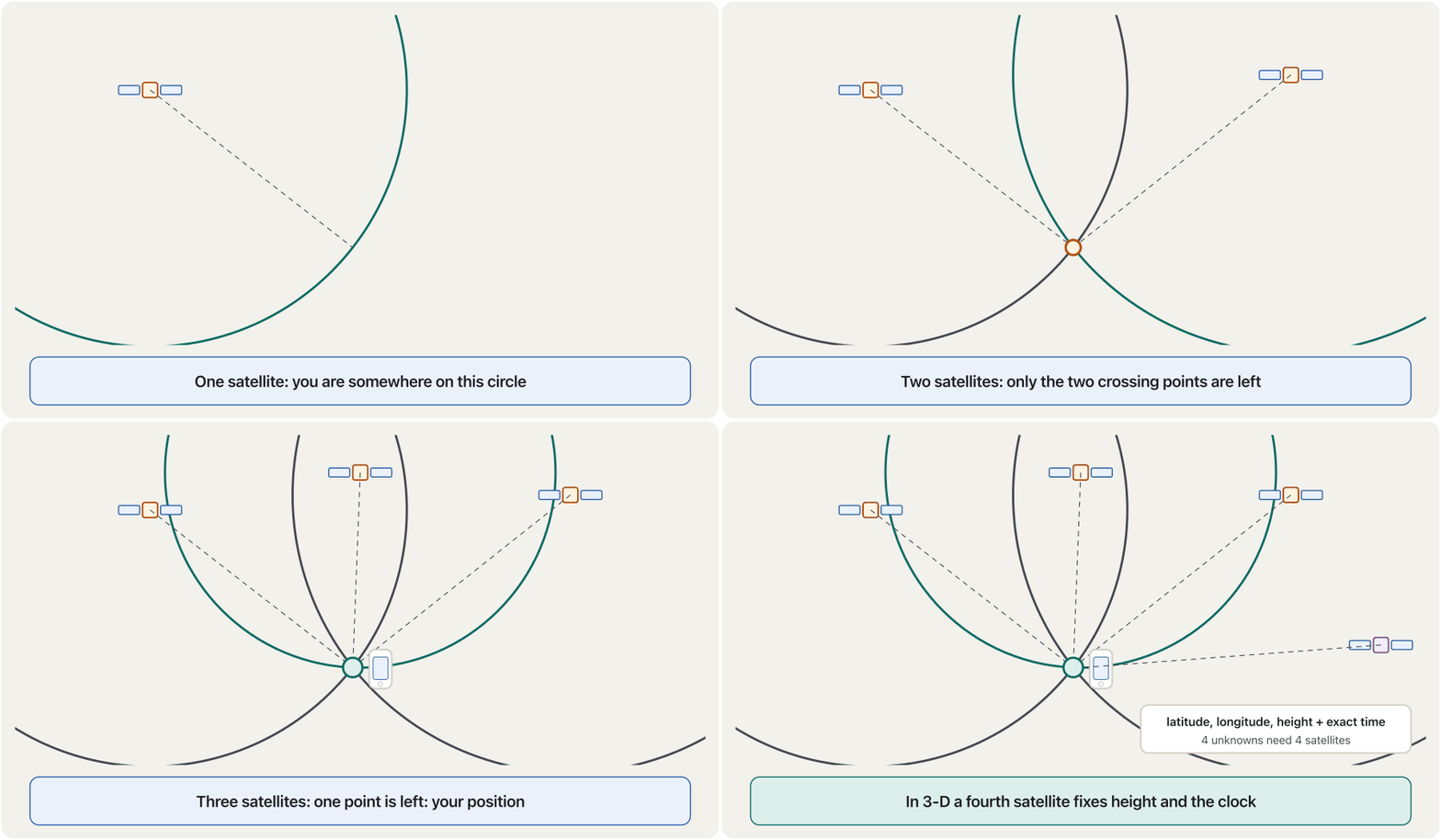
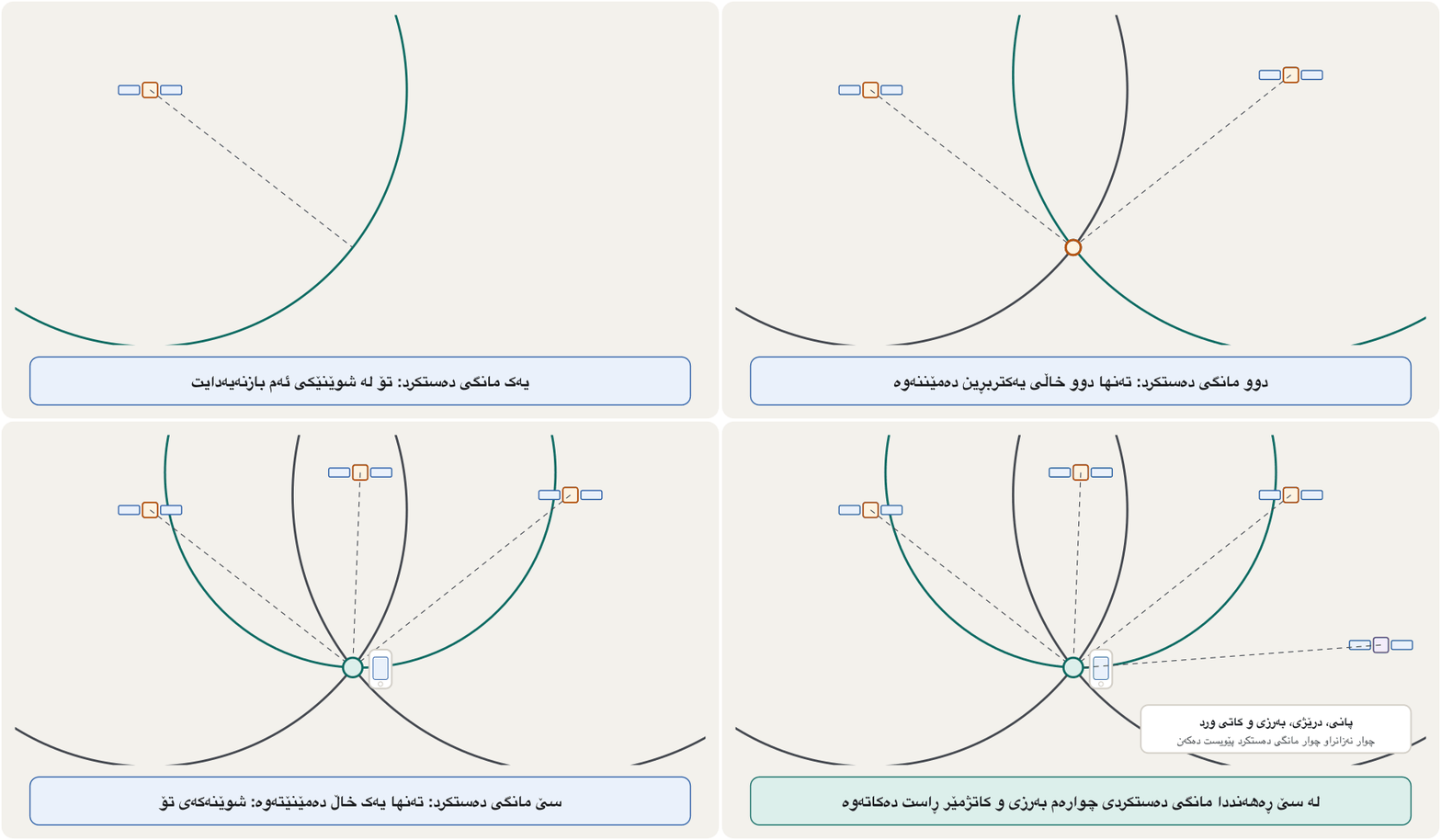
How a phone finds its place: satellite signals carry the time, the delays give distances, and trilateration with four satellites gives the position.
مۆبایل چۆن شوێنی خۆی دەدۆزێتەوە: مانگی دەستکرد کات هەڵدەگرن، لە دووری دەزانرێت و بە چوار مانگی دەستکرد (trilateration) شوێنەکە دیاری دەکرێت.
Whole video (5:03), TED-Ed. It has manual Central Kurdish (ckb) subtitles.
هەموو ڤیدیۆکە (5:03)، TED-Ed. ژێرنووسی کوردیی ناوەندی (سۆرانی)ی هەیە کە بە دەست نووسراوە.
Why four satellites?بۆچی چوار مانگی دەستکرد؟
A signal from a satellite straight overhead takes about 0.067 s (67 ms) to arrive. If the receiver's clock were wrong by only one millionth of a second, every distance would be 300 m wrong — that is why the fourth satellite is needed to correct the clock.
لە مانگێکی دەستکردەوە کە ڕاست لە سەرەوەیە نزیکەی 0.067 چرکە (67 ms) دەخایەنێت تا دەگات. ئەگەر کاتژمێری وەرگرەکە تەنها یەک ملیۆنیەکی چرکەیەک هەڵە بێت، هەموو دوورییەک 300 مەتر هەڵە دەبێت — لەبەر ئەمەیە مانگی دەستکردی چوارەم پێویستە بۆ ڕاستکردنەوەی کاتژمێرەکە.
Working together online: collaborationکارکردنی پێکەوە بە ئۆنلاین: هاوکاری
Many programs let you collaborate — work online with other users who are connected to the same server. Collaboration software includes the tools that let people share documents in online meetings and talk to the other connected users. The course names three kinds:
زۆرێک لە ڕێگەت پێ دەدەن هاوکاری بکەیت — بە ئۆنلاین لەگەڵ بەکارهێنەرانی تر کار بکەیت کە بە هەمان بەستراون. ئەو ئامرازانەیە کە ڕێگە بە خەڵک دەدەن لە کۆبوونەوەی ئۆنلایندا بەڵگەنامە هاوبەش بکەن و لەگەڵ بەکارهێنەرە بەستراوەکانی تر قسە بکەن. وانەکە سێ جۆر ناو دەبات:
| Toolئامراز | What it doesچی دەکات | 2026 examplesنموونەی 2026 |
|---|---|---|
| Online meetings ئۆنلاین | Talk with sound and video, share your screenقسەکردن بە دەنگ و ڤیدیۆ، هاوبەشکردنی شاشەکەت | Microsoft Teams, Google Meet, ZoomMicrosoft Teams، Google Meet، Zoom |
| Web conferencesکۆنفرانسی وێب | Large online lectures and webinars, with chat and pollsوانە و سیمینارێکی ئۆنلاینی گەورە، بە چات و دەنگدان | Teams webinars, Zoom Webinars, YouTube LiveTeams webinars، Zoom Webinars، YouTube Live |
| Document management systems | Keep shared files in one place, with permissions and old versionsفایلی هاوبەش لە یەک شوێندا هەڵدەگرن، بە مۆڵەت و وەشانی کۆنەوە | SharePoint, Google Drive, OneDriveSharePoint، Google Drive، OneDrive |
Software that lets people in different places work together online: share and edit documents, hold online meetings and chat, for example Microsoft Teams, Google Workspace or Zoom.
ئەو کە ڕێگە دەدات خەڵک لە شوێنی جیاوازەوە بە ئۆنلاین پێکەوە کار بکەن: بەڵگەنامە هاوبەش بکەن و دەستکاری بکەن، کۆبوونەوەی ئۆنلاین بکەن و چات بکەن، بۆ نموونە Microsoft Teams، Google Workspace یان Zoom.
The biggest change since the course was written is co-authoring: several people type in the same Word, Excel, PowerPoint or Google Docs file at the same time, and each sees the others' cursors. The file lives in cloud storage, so there is only one copy and no one e-mails versions back and forth. How to share and co-author is shown in Working together: share and co-author.
گەورەترین گۆڕانکاری لەو کاتەوەی وانەکە نووسراوە : چەند کەسێک لە هەمان کاتدا لە هەمان فایلی Word، Excel، PowerPoint یان Google Docsـدا دەنووسن و هەر یەکەیان ئەوانی تر دەبینێت. فایلەکە لە خەزنکردنی هەوریدایە، بۆیە تەنها یەک کۆپی هەیە و کەس وەشانەکان بە بۆ یەکتر نانێرێت. چۆنیەتیی هاوبەشکردن و لە کارکردنی پێکەوە: هاوبەشکردن و هاونووسینـدا پیشان دراوە.
Web services and mashupsخزمەتگوزارییەکانی وێب و مەشئەپەکان
Web services let programmers build applications that talk to other, remote computers over the internet (or over a company's internal network). Instead of writing a map, a currency converter or a payment system themselves, programmers ask another company's server for it and use the answer.
ڕێگە بە دەدەن دروست بکەن کە بە ناو (یان بە ناو ناوخۆیی کۆمپانیایەکدا) لەگەڵ دوور قسە بکەن. لە جیاتی ئەوەی خۆیان نەخشە، گۆڕینی دراو یان سیستەمی پارەدان بنووسن، داوای لە کۆمپانیایەکی تر دەکەن و وەڵامەکە بەکار دەهێنن.
A program on a that other programs use over the network with : they send requests and get data back, often as . A web API is offered by a web service.
بەرنامەیەکە لەسەر کە بەرنامەکانی تر لە ڕێگەی ڕایەڵەوە و بە بەکاری دەهێنن: داواکاری دەنێرن و دراوە وەردەگرنەوە، زۆرجار بە شێوەی . APIـی وێب لەلایەن خزمەتگوزارییەکی وێبەوە پێشکەش دەکرێت.
A mashup is a web application that combines services from two or more sources. A price-comparison site asks company A's server and company B's server for the price of the same phone and shows both on one page. A taxi app shows a map from one company, the weather from another and takes the payment through a third.
وێبییە کە خزمەتگوزاری لە دوو سەرچاوە یان زیاترەوە تێکەڵ دەکات. بەراوردکردنی نرخ داوای نرخی هەمان مۆبایل لە کۆمپانیای A و کۆمپانیای B دەکات و هەردووکیان لە یەک لاپەڕەدا پیشان دەدات. تەکسی نەخشەیەک لە کۆمپانیایەکەوە، کەشوهەوا لە کۆمپانیایەکی ترەوە پیشان دەدات و لە ڕێگەی سێیەمێکەوە پارە وەردەگرێت.
A web application that combines or services from two or more sources, often through their , into one new service.
وێبییە کە یان خزمەتگوزاری لە دوو سەرچاوە یان زیاتر، زۆرجار لە ڕێگەی ، تێکەڵ دەکات و خزمەتگوزارییەکی نوێی لێ دروست دەکات.
One message, many devicesیەک نامە، چەندین ئامێر
Put it all together. Shilan in Slemani sends a message to Aram's laptop in Hewler. Watch which channel and which communications device each step uses:
هەمووی پێکەوە دابنێ. شیلان لە سلێمانییەوە نامەیەک بۆ ئارام لە هەولێر دەنێرێت. سەیر بکە هەر هەنگاوێک کام کەناڵ و کام بەکار دەهێنێت:
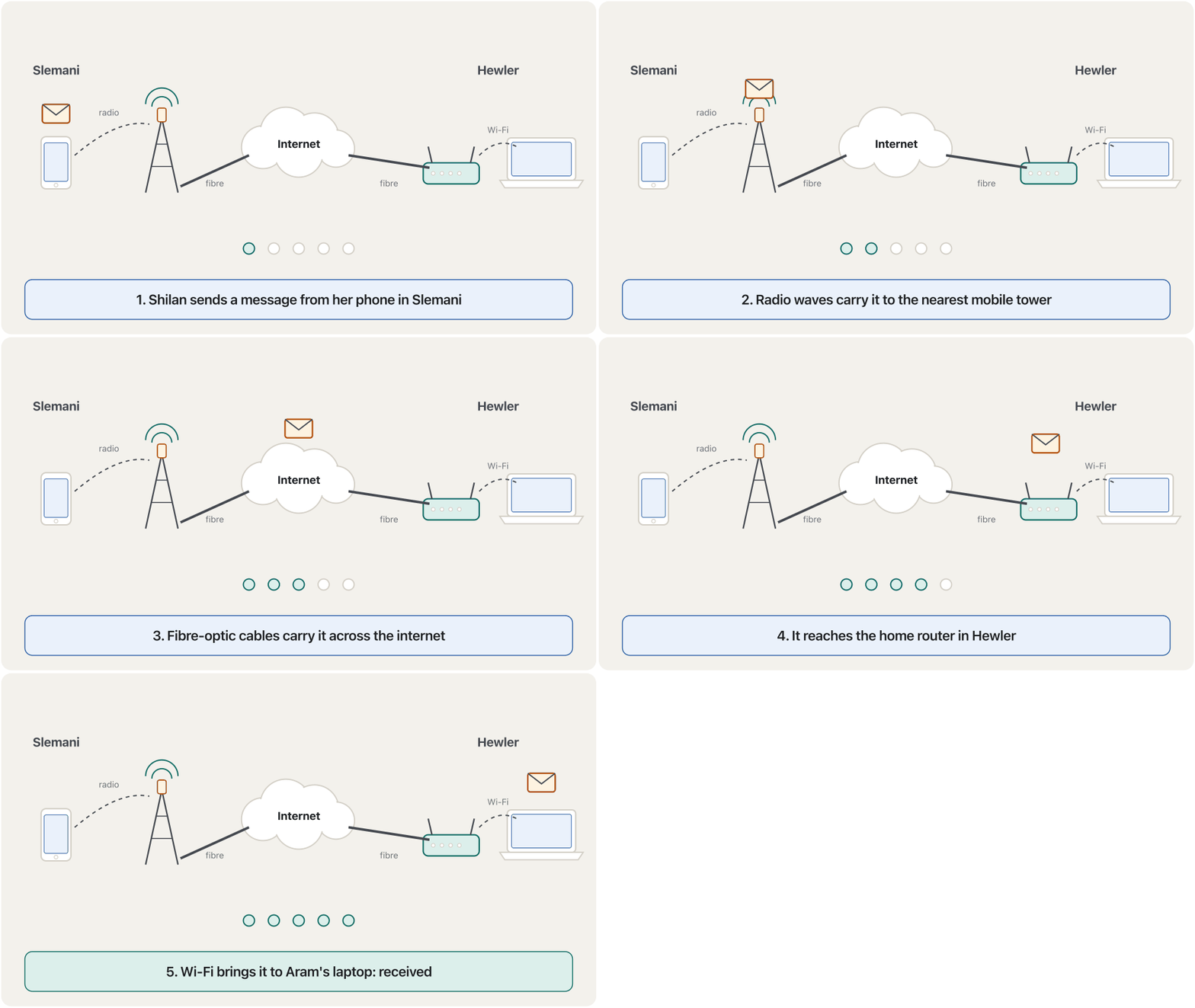
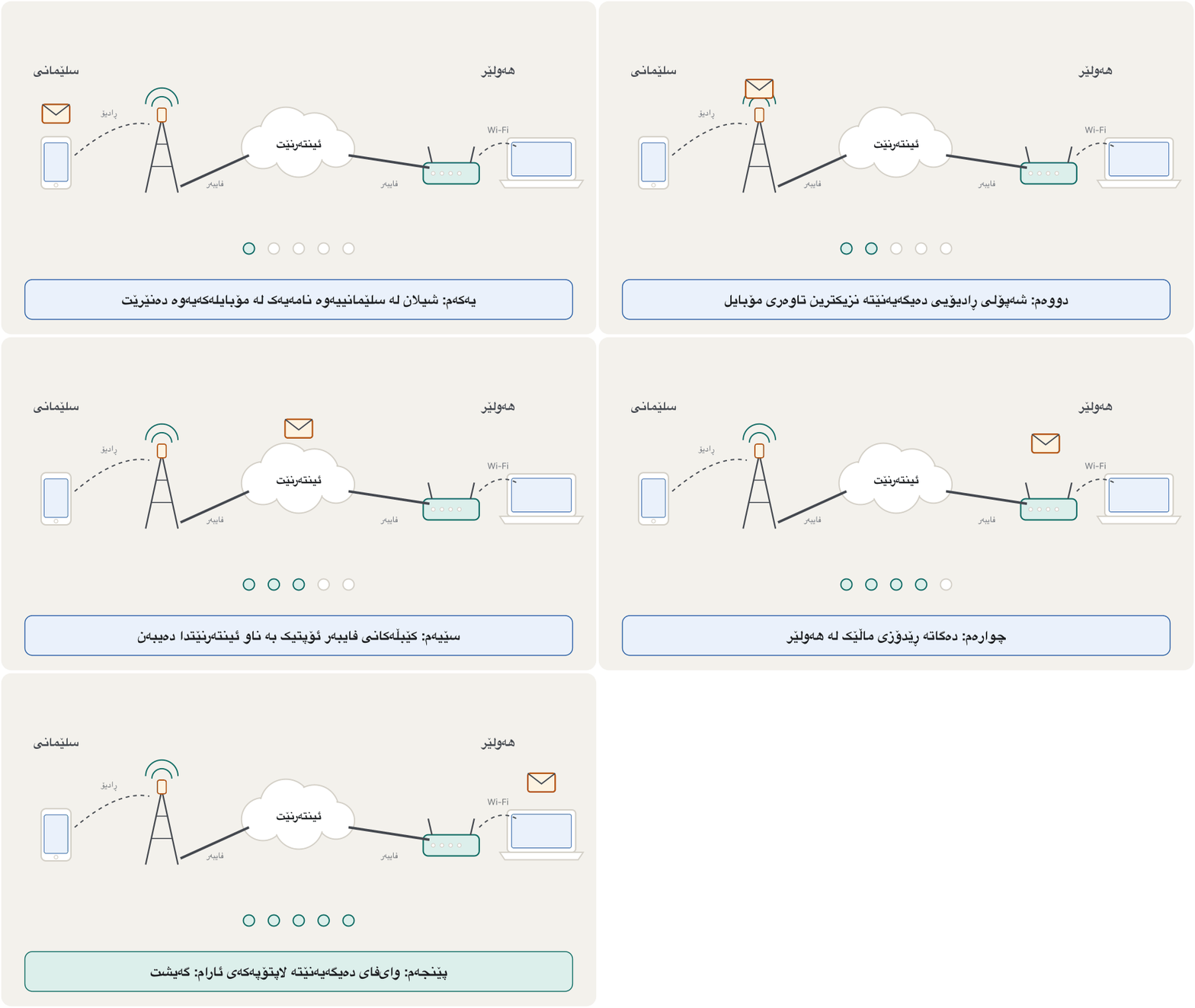
The phone's 4G/5G radio and the router's Wi-Fi radio are communications devices; the air and the fibre are channels. The devices in the middle of the internet — routers and switches — are explained in the next lesson, Network Hardware, and the cables and radio waves in Transmission Media.
ڕادیۆی 4G/5Gـی مۆبایلەکە و ڕادیۆی ؛ هەوا و فایبەر کەناڵن. ئەو ئامێرانەی لە ناوەڕاستی — و — لە وانەی داهاتوودا ڕوون کراونەتەوە: ڕەقەواڵەی ڕایەڵە. کێبڵ و شەپۆلە ڕادیۆییەکانیش لە هۆکارەکانی گواستنەوەـدا ڕوون کراونەتەوە.
Common mistakesهەڵە باوەکان
| Mistakeهەڵە | What is trueڕاستییەکە |
|---|---|
| "GPS needs three satellites."« سێ مانگی دەستکردی پێویستە.» | Three only for a flat position with known height; a 3-D fix needs at least four (the fourth corrects the clock).سێ تەنها بۆ شوێنی تەخت بە بەرزیی زانراو؛ شوێنی سێ ڕەهەندی لانیکەم چواری دەوێت (چوارەم کاتژمێرەکە ڕاست دەکاتەوە). |
| "GPS satellites track my phone."«مانگە دەستکردەکانی بەدوای مۆبایلەکەمدا دەگەڕێن.» | GPS is receive-only; apps share your location over the internet if you allow them. تەنها وەردەگرێت؛ ئەپەکان ئەگەر ڕێگەیان پێ بدەیت شوێنەکەت بە هاوبەش دەکەن. |
| "100 Mbit/s means 100 MB every second."«100 Mbit/s واتە 100 MB لە هەر چرکەیەکدا.» | Divide by 8: 100 Mbit/s is at most 12.5 MB/s.دابەشی 8ی بکە: 100 Mbit/s زۆرترین 12.5 MB/sـە. |
| "More bandwidth fixes lag in games."« زیاتر دواکەوتنی یاری چارەسەر دەکات.» | Lag is latency: distance and the number of hops to the server.دواکەوتنی یاری : دووری و ژمارەی وێستگەکان تا . |
| "A modem is an input/output device."« .» | It talks to another machine, not to a person: it is a communications device.لەگەڵ ئامێرێکی تر قسە دەکات نەک لەگەڵ مرۆڤ: . |
| "WhatsApp messages are SMS."«نامەکانی WhatsApp .» | They are internet data; SMS is the mobile network's own service. ؛ خزمەتگوزاریی خودی . |
| "Wi-Fi is my internet connection."« پەیوەندییەکەمە بە .» | Wi-Fi is the radio network inside the home. The internet arrives by fibre, DSL, cable, 4G/5G or satellite. ڕادیۆیی ناو ماڵەکەیە. بە فایبەر، DSL، کێبڵ، 4G/5G یان مانگی دەستکرد دەگات. |
| "DSL is just dial-up: the phone is busy while I am online."«DSL هەمان dial-upـە: تا لەسەر تەلەفۆن گیراوە.» | Dial-up blocks the phone. DSL uses much higher frequencies on the same wires, so calls and internet work together.dial-up تەلەفۆن ڕادەگرێت. DSL زۆر بەرزتر بە هەمان وایەرەکاندا بەکار دەهێنێت، بۆیە پەیوەندیی تەلەفۆن و پێکەوە کار دەکەن. |
Exercisesڕاهێنانەکان
Karwan watches a lesson on YouTube on his laptop over home Wi-Fi. Name the sending device, the receiving device, two channels and two communications devices.
کاروان لەسەر بە ماڵەوە وانەیەک لە YouTube تەماشا دەکات. ئامێری نێرەر، ئامێری وەرگر، دوو کەناڵ و دوو ناو ببە.
Show answerوەڵامەکە پیشان بدە
Sender: a YouTube server in a data centre. Receiver: Karwan's laptop. Channels: fibre-optic cables across the internet and to the home; radio waves (Wi-Fi) in the room. Communications devices: the fibre modem (ONT) or home router, and the laptop's Wi-Fi network card.
نێرەر: YouTube لە . وەرگر: کاروان. کەناڵەکان: بە ناو و تا ماڵەکە؛ شەپۆلی ڕادیۆیی () لە ژوورەکەدا. : فایبەر (ONT) یان ماڵەوە و .
Soran's connection is 50 Mbit/s. How long does a 1.5 GB game update take at best? (1 GB = 1000 MB.)
پەیوەندیی سۆران 50 Mbit/sـە. نوێکردنەوەیەکی یاریی 1.5 GB لە باشترین حاڵەتدا چەند کات دەخایەنێت؟ (1 GB = 1000 MB.)
Show answerوەڵامەکە پیشان بدە
At least 4 minutes; in practice a little longer.
لانیکەم 4 خولەک؛ لە ڕاستیدا کەمێک زیاتر.
For each old use, give what people use today: chat rooms, newsgroups, web folders, picture messaging.
بۆ هەر بەکارهێنانێکی کۆن، بڵێ خەڵک ئەمڕۆ چی بەکار دەهێنن: ژووری چات، گرووپی هەواڵ، فۆڵدەری وێب، نامەی وێنە.
Show answerوەڵامەکە پیشان بدە
Chat rooms → group chats and channels (Telegram, Discord). Newsgroups → online forums, Reddit. Web folders → cloud storage (OneDrive, Google Drive). Picture messaging (MMS) → photos in chat apps over internet data.
ژووری چات ← گرووپی چات و کەناڵ (Telegram، Discord). گرووپی هەواڵ ← ، Reddit. فۆڵدەری وێب ← (OneDrive، Google Drive). نامەی وێنە () ← وێنە لە ئەپەکانی چاتدا بە .
In three sentences, explain to a friend how her phone knows where she is in the bazaar, and why it needs four satellites.
بە سێ ڕستە بۆ هاوڕێیەکت ڕوون بکەرەوە مۆبایلەکەی چۆن دەزانێت ئەو لە کوێی بازاڕەکەدایە و بۆچی چوار مانگی دەستکردی پێویستە.
Show answerوەڵامەکە پیشان بدە
Each satellite keeps sending its position and the exact time. The phone measures how long each signal took and turns the times into distances. Three distances fix the place and the fourth corrects the phone's own clock, which is not accurate enough by itself.
هەر مانگێکی دەستکرد بە بەردەوامی شوێنی خۆی و کاتی ورد دەنێرێت. مۆبایلەکە دەپێوێت هەر چەند کاتی خایاندووە و کاتەکان دەکاتە دووری. سێ دووری شوێنەکە دیاری دەکەن و چوارەم کاتژمێری خودی مۆبایلەکە ڕاست دەکاتەوە، کە بە تەنها ئەوەندە ورد نییە.
How many hertz is 10 MHz? And how many kilohertz?
10 MHz چەند ؟ چەند کیلۆهێرتزیشە؟
Show answerوەڵامەکە پیشان بدە
Mega means a million, kilo means a thousand. For a bandwidth exercise with a signal from 500 MHz to 1 GHz, see Exercises with numbers.
مێگا واتە ملیۆنێک و کیلۆ واتە هەزارێک. بۆ ڕاهێنانێکی بە لە 500 MHzـەوە تا 1 GHz، سەیری ڕاهێنان بە ژمارە بکە.
(a) Match: 1 modulation, 2 demodulation with (x) changing an analog signal into digital data, (y) changing digital data into an analog signal. (b) Compare the two: what is the same, and what is different?
(أ) جووتیان بکە: 1 مۆدیولەیشن، 2 دیمۆدیولەیشن لەگەڵ (x) گۆڕینی بۆ ، (y) گۆڕینی بۆ . (ب) بەراوردیان بکە: چییان وەک یەکە و چییان جیاوازە؟
Show answerوەڵامەکە پیشان بدە
(a) 1 – y, 2 – x.
(أ) 1 – y، 2 – x.
| Modulationمۆدیولەیشن | Demodulationدیمۆدیولەیشن | |
|---|---|---|
| Directionئاڕاستە | digital data → analog signal ← | analog signal → digital data ← |
| Whereلە کوێ | at the sending endلە لای نێرەر | at the receiving endلە لای وەرگر |
| Sameوەک یەک | Both are done by a modem; every modem does both, one for each directionهەردووکیان دەیانکات؛ هەموو هەردووکیان دەکات، یەکێکیان بۆ هەر ئاڕاستەیەک | Both change the form of the data, not its meaningهەردووکیان شێوەی دەگۆڕن، نەک ماناکەی |
Choose and explain: … is a device that performs signal conversion — a modulator, a modem, a plotter or a network interface card?
هەڵبژێرە و ڕوونی بکەرەوە: … ئامێرێکە کە دەگۆڕێت — modulator، ، یان ؟
Show answerوەڵامەکە پیشان بدە
A modem. It converts in both directions between digital data and the signal of a provider's line (modulation and demodulation). A modulator alone works in one direction only, a plotter is an output device that draws on paper, and a network interface card joins a computer to a local network.
. لە هەردوو ئاڕاستەدا لە نێوان و هێڵی دابینکەردا دەیگۆڕێت (مۆدیولەیشن و دیمۆدیولەیشن). modulator بە تەنها تەنها بە یەک ئاڕاستە کار دەکات، ئامێرێکی کە لەسەر کاغەز دەکێشێت و بە دەبەستێت.
What are the types of internet connection? Name the two main kinds and the seven broadband types of the course, with one fact about each, and say which one is not really a line to the provider.
جۆرەکانی پەیوەندی بە چین؟ دوو جۆرە سەرەکییەکە و حەوت جۆرەکەی وانەکە ناو ببە، بۆ هەر یەکێکیان ڕاستییەک بڵێ و بڵێ کامیان لە ڕاستیدا هێڵ نییە بۆ دابینکەرەکە.
Show answerوەڵامەکە پیشان بدە
- Dial-up: dials over the phone line, slow (56 kbit/s), blocks calls — history.
- Broadband (always on): DSL over the phone line, calls at the same time; cable over TV coax; fibre (FTTP/FTTH), the fastest; fixed wireless from a tower; mobile 4G/5G, away from home; satellite, almost anywhere but with delay (GEO).
- Wi-Fi is the seventh in the course list, but it only shares one of the others inside the home.
- Dial-up: بە هێڵی تەلەفۆن ژمارە دەگرێت، خاوە (56 kbit/s)، پەیوەندیی تەلەفۆن ڕادەگرێت — مێژووە.
- (هەمیشە پەیوەست): DSL بە هێڵی تەلەفۆن، پەیوەندیی تەلەفۆنیش لە هەمان کاتدا؛ کێبڵ بە تیڤی؛ فایبەر (FTTP/FTTH)، خێراترینیان؛ جێگیر لە تاوەرێکەوە؛ 4G/5Gـی مۆبایل، لە دەرەوەی ماڵ؛ مانگی دەستکرد، نزیکەی لە هەموو شوێنێک بەڵام بە (GEO).
- حەوتەمیانە لە لیستی وانەکەدا، بەڵام تەنها یەکێک لەوانی تر لە ناو ماڵەکەدا هاوبەش دەکات.
Summaryپوختە
- Communication: sender → channel → receiver; five components: sender, receiver, message, medium, protocol.
- A modem modulates (digital to analog) and demodulates (analog to digital); NICs and radios are communications devices too.
- Bandwidth: how much per second (Mbit/s; divide by 8 for MB/s), or a range of frequencies in Hz. Latency: the delay of one trip (ms).
- Ways to connect: dial-up (history) or broadband: DSL, cable, fibre, fixed wireless, 4G/5G, satellite. Wi-Fi shares the line inside the home.
- Messaging: SMS (160 Latin or 70 Kurdish characters), MMS for pictures and video, chat apps and RCS over internet data. Hotspots are public access points.
- GPS: satellites send time and position; the receiver turns travel times into distances; a 3-D fix needs at least four satellites.
- Collaboration: online meetings, web conferences, document management, co-authoring. A mashup combines web services.
- پەیوەندی: نێرەر ← کەناڵ ← وەرگر؛ پێنج پێکهاتە: نێرەر، وەرگر، نامە، ، .
- مۆدیولەیشن ( بۆ ) و دیمۆدیولەیشن ( بۆ ) دەکات؛ و ڕادیۆکانیش .
- : چەند لە هەر چرکەیەکدا (Mbit/s؛ بۆ MB/s دابەشی 8ی بکە)، یان کۆمەڵە بە Hz. : کاتی یەک گەشت (ms).
- ڕێگاکانی پەیوەستبوون: dial-up (مێژوو) یان : DSL، کێبڵ، فایبەر، جێگیر، 4G/5G، مانگی دەستکرد. هێڵەکە لە ناو ماڵدا هاوبەش دەکات.
- نامەناردن: (160 پیتی لاتینی یان 70 پیتی کوردی)، بۆ وێنە و ڤیدیۆ، ئەپی چات و RCS بە . گشتین.
- : مانگە دەستکردەکان کات و شوێن دەنێرن؛ وەرگرەکە کاتی ڕۆیشتن دەکاتە دووری؛ شوێنی سێ ڕەهەندی لانیکەم چوار مانگی دەستکردی دەوێت.
- هاوکاری: ئۆنلاین، کۆنفرانسی وێب، بەڕێوەبردنی بەڵگەنامە، . چەند تێکەڵ دەکات.
What are the five components of data communication?پێنج پێکهاتەکەی پەیوەندیی دراوە چین؟
Sender, receiver, message, medium and protocol.
نێرەر، وەرگر، نامە، و .
Which matters more for a video call: bandwidth or latency?بۆ پەیوەندیی ڤیدیۆیی کامیان گرنگترە: پانایی باند یان دواکەوتن؟
Both need to be good enough, but low latency is what keeps the conversation natural.
هەردووکیان دەبێت بەس بن، بەڵام کەم ئەوەیە کە گفتوگۆکە سروشتی دەهێڵێتەوە.
Why can one SMS hold fewer Kurdish than English letters?بۆچی یەک نامەی کورت پیتی کوردی کەمتر لە ئینگلیزی هەڵدەگرێت؟
Kurdish letters are sent with a longer code (more bits each), so only 70 fit instead of 160.
پیتە کوردییەکان بە کۆدێکی درێژتر دەنێردرێن ( زیاتر بۆ هەر یەکێک)، بۆیە تەنها 70 جێیان دەبێتەوە لە جیاتی 160.
Why can you phone and use DSL at the same time, but not dial-up?بۆچی دەتوانیت لە هەمان کاتدا تەلەفۆن بکەیت و DSL بەکار بهێنیت، بەڵام dial-up نا؟
DSL sends data on frequencies far above the voice band; dial-up turns the data into sounds inside the voice band and takes the whole line.
DSL لەسەر زۆر سەرووی دەنگەوە دەنێرێت؛ dial-up دەکاتە دەنگ لە ناو دەنگدا و هەموو هێڵەکە دەگرێت.
Lesson complete!وانەکە تەواو بوو!
Well done. Review the key terms, then go on to the next lesson.دەستخۆش. سەیرێکی زاراوە سەرەکییەکان بکەرەوە، پاشان بڕۆ بۆ وانەی داهاتوو.
Key termsزاراوە سەرەکییەکان
Network Hardware: NICs, Switches and Routersڕەقەواڵەی ڕایەڵە: کارتی ڕایەڵە، سویچ و ڕێدۆز
Related lecturesوانە پەیوەندیدارەکان
- Network Hardware: NICs, Switches and Routersڕەقەواڵەی ڕایەڵە: کارتی ڕایەڵە، سویچ و ڕێدۆز
- Cables and Wireless: Transmission Mediaکێبڵ و بێتەل: هۆکارەکانی گواستنەوە
- Mobile Technology and Wireless Networksتەکنەلۆژیای مۆبایل و ڕایەڵە بێتەلەکان
- Analog and Digital Signalsسیگناڵەکانی ئەنالۆگ و دیجیتاڵ
- Web APIs and JSONAPIـی وێب و JSON
- Communicating Onlineپەیوەندیکردن بە شێوەی ئۆنلاین
- The Internet and the Webئینتەرنێت و وێب
- Input, Output and Devices That Do Bothنێوخستە، دەرخستە و ئەو ئامێرانەی هەردووکیان دەکەن
- Data Communication: Modes, Switching and Protocolsپەیوەندیی دراوە: شێوازەکانی ناردن، سویچکردن و پرۆتۆکۆڵەکان
- How E-mail Worksئیمەیڵ چۆن کار دەکات
- Cloud Storageخەزنکردنی هەوری
- Cellular Networks and Mobile Generationsڕایەڵەکانی مۆبایل و نەوەکانی ڕایەڵەی مۆبایل
- The Internet and the Webئینتەرنێت و وێب
References and further readingسەرچاوەکان و خوێندنەوەی زیاتر
- GPS.gov (archive): Space segment — at least 24 satellites, 31 operational (2023), ~20,200 km, at least four visible
- U.S. Coast Guard NAVCEN: GPS constellation status
- MathWorks: GPS and How It Works (distance = speed of light × travel time; four satellites for position and clock)
- Wikipedia: Modem (modulator–demodulator; DSL, cable, fibre ONT, cellular modems; residential gateways)
- Wikipedia: Networking hardware (NIC, modem, router, gateway definitions)
- MDN Web Docs: Understanding latency
- Wikipedia: Rich Communication Services (RCS; iOS 18, 2024)
- Wikipedia: Asymmetric digital subscriber line (voice band vs ADSL bands 26–138 kHz up, 138–1104 kHz down; splitter; distance)
- Wikipedia: Dial-up Internet access (56 kbit/s V.90/V.92; phone line busy; AOL ended dial-up 30 Sep 2025)
- Ericsson: Fixed wireless access (broadband over radio; 4G LTE and 5G; indoor or outdoor CPE)
- Light Reading: Starlink vs GEO satellite operators, Ookla Q1 2025 (median latency 45 ms vs about 683–684 ms)
- Shafaq News (9 Jun 2024): Kurdistan Region minister — fibre to the home (FTTH) has reached 400,000 homes
This lecture is a first edition. The Kurdish text and terminology are waiting for review by Kurdish IT teachers.ئەم وانەیە چاپی یەکەمە. دەقە کوردییەکە و زاراوەکانی چاوەڕێی پێداچوونەوەی مامۆستایانی کوردی بواری IT ن.