Chapterبەش 6 · Lectureوانە 6.6
Cellular IoT: 4G, 5G, LTE-M and NB-IoTIoTـی خانەیی: 4G، 5G، LTE-M و NB-IoT
How IoT devices use the mobile network: what cellular gives (coverage, movement, licensed spectrum) and what it imposes (modem, plan, energy), why classic 4G suits fleets and connected cars, how LTE-M and NB-IoT bring cellular to battery devices with deep coverage, PSM and eDRX, what 5G and RedCap add, and what the 2G and 3G switch-offs mean, also in Iraq.
ئامێرەکانی IoT چۆن بەکار دەهێنن: چی دەدات (گەیشتن، جووڵە، ) و چی دەسەپێنێت (، پلان، وزە)، بۆچی 4Gـی ئاسایی بۆ ئۆتۆمبێلەکانی کۆمپانیا و ئۆتۆمبێلی بەستراو دەگونجێت، و چۆن بە گەیشتنی قووڵ، و بۆ ئامێری پاترییدار دەهێنن، 5G و چی زیاد دەکەن و کوژاندنەوەی 2G و 3G چ واتایەکی هەیە، لە عێراقیشدا.
What you will learnچی فێر دەبیت
- Explain what the mobile network gives IoT devices and the three costs it imposes.
- Describe why classic 4G fits fleets and connected cars but not coin-cell sensors.
- Compare LTE-M and NB-IoT, and explain deep coverage, PSM and eDRX.
- Say what 5G and RedCap add for IoT, and plan for the 2G and 3G switch-offs.
- ڕوون بکەیتەوە چی بە ئامێرەکانی IoT دەدات و ئەو سێ تێچووەی دەیسەپێنێت.
- وەسف بکەیت بۆچی 4Gـی ئاسایی بۆ ئۆتۆمبێلەکانی کۆمپانیا و ئۆتۆمبێلی بەستراو دەگونجێت بەڵام بۆ دوگمەیی ناگونجێت.
- و بەراورد بکەیت و گەیشتنی قووڵ، و ڕوون بکەیتەوە.
- بڵێیت 5G و چی بۆ IoT زیاد دەکەن و بۆ کوژاندنەوەی 2G و 3G پلان دابنێیت.
Your phone's network, now for machinesڕایەڵەی مۆبایلەکەت، ئێستا بۆ ئامێرەکانیش
Look at the SIM card in your phone. In Iraq it probably comes from an operator such as Asiacell or Korek. That small card connects you to a mobile network, also called a cellular network because it is built from many radio cells. Through it you make voice calls, watch YouTube and chat on WhatsApp almost anywhere. These networks are well established for people: they give reliable broadband, fast internet that carries voice and video.
سەیری سیمکارتی مۆبایلەکەت بکە، کە جۆرێکە لە . لە عێراق بە ئەگەری زۆر لە کۆمپانیایەکی وەک Asiacell یان Korekـەوە هاتووە. ئەو کارتە بچووکە بە دەتبەستێتەوە، کە پێی دەوترێت خانەیی، چونکە لە چەندین ڕادیۆیی پێک هاتووە. بەهۆیەوە لە نزیکەی هەموو شوێنێک پەیوەندی دەکەیت، سەیری YouTube دەکەیت و لە WhatsApp قسە دەکەیت. ئەم ڕایەڵانە بۆ خەڵک بە باشی جێگیر بوون: متمانەپێکراو دەدەن، واتە خێرا کە دەنگ و ڤیدیۆ هەڵدەگرێت.
Machines can use the same towers. A meter, a car or a truck with its own SIM sends data over the mobile network exactly as your phone does: this is called cellular IoT. How cells, base stations, handover and the generations from 1G to 6G work is taught in Cellular Networks and Mobile Generations. This lesson asks what cellular gives IoT, what it costs, and which cellular technologies were made for IoT.
ئامێرەکانیش دەتوانن هەمان تاوەر بەکار بهێنن. ، ئۆتۆمبێلێک یان بارهەڵگرێک کە SIMـی خۆی هەیە، ڕێک وەک مۆبایلەکەت بە دەنێرێت: ئەمە پێی دەوترێت IoTـی خانەیی. چۆنیەتیی کارکردنی ، ، و لە 1Gـەوە تا 6G لە وانەی ڕایەڵەکانی مۆبایل و نەوەکانی مۆبایل فێر دەکرێت. ئەم وانەیە دەپرسێت چی بە IoT دەدات، تێچووی چەندە و کام تەکنەلۆجیای خانەیی بۆ IoT دروست کراوە.
What the mobile network gives IoTڕایەڵەی مۆبایل چی بە IoT دەدات
With Wi-Fi, Zigbee or LoRaWAN you build the network yourself: you buy gateways, place them and keep them running, and the devices work only near them. With cellular the operator has already built the network. Its towers cover towns, roads and many villages, so a device works almost anywhere, with nothing to install. Four things make this attractive:
بە ، یان خۆت دروست دەکەیت: دەکڕیت، دایاندەنێیت و بە کارکردوویی دەیانهێڵیتەوە و ئامێرەکان تەنیا لە نزیکیاندا کار دەکەن. بە کۆمپانیای مۆبایل پێشتر دروست کردووە. تاوەرەکانی شار، ڕێگا و زۆر گوند دەگرنەوە، بۆیە ئامێرێک لە نزیکەی هەموو شوێنێک کار دەکات و هیچ شتێک دانانێیت. چوار شت ئەمە سەرنجڕاکێش دەکەن:
- Coverage: a whole country, not one building.
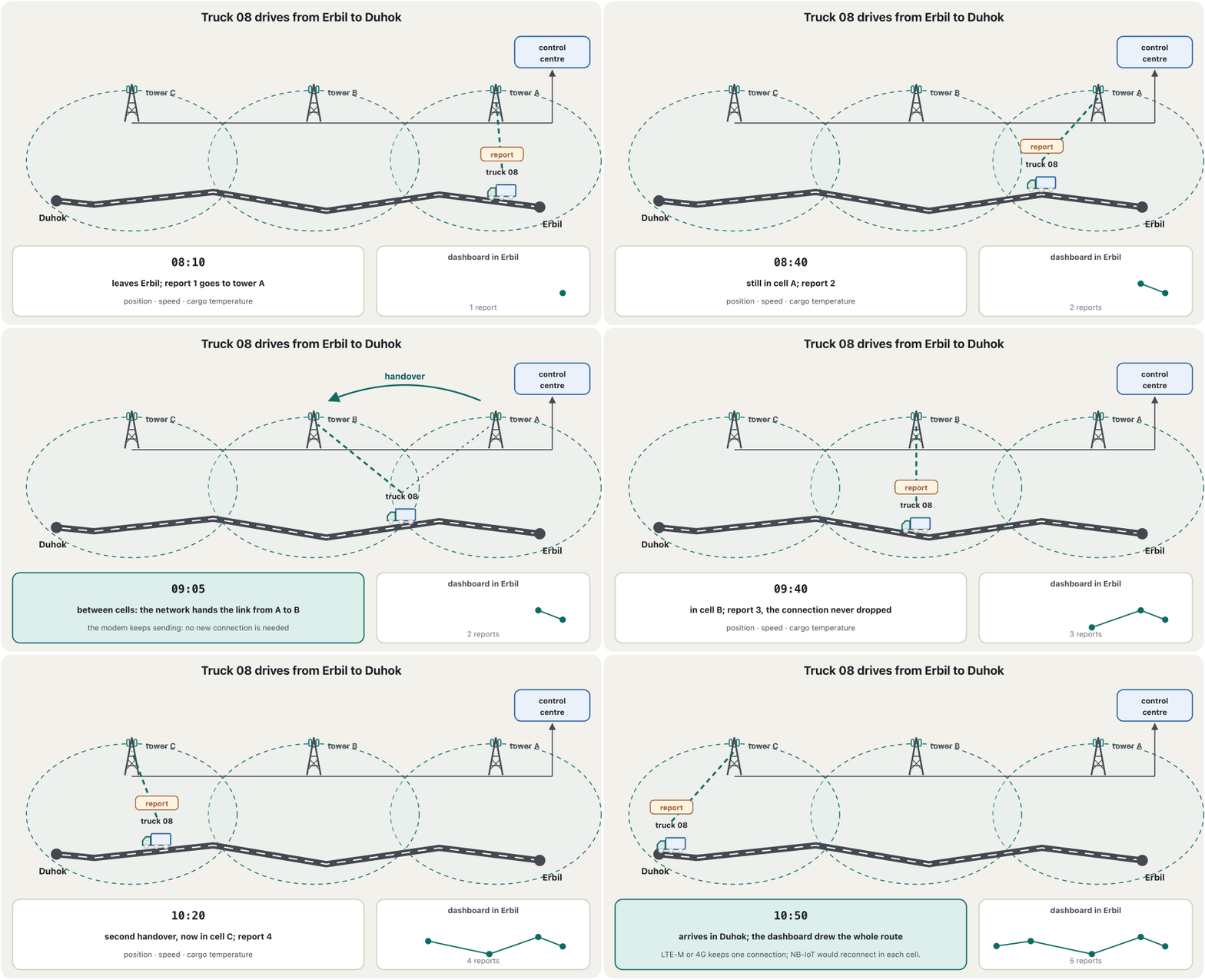
- Movement: a car or a truck is passed from tower to tower and stays connected (handover).
- Licensed spectrum: only the operator may use its frequencies, so there is less interference than in the crowded free bands (LPWAN).
- Identity and security: the SIM proves which device is talking, and the operator runs and protects the network.
- گەیشتن: هەموو وڵاتێک، نەک یەک بینا.
- جووڵە: ئۆتۆمبێلێک یان بارهەڵگرێک لە تاوەرێکەوە بۆ تاوەرێکی تر دەگوازرێتەوە و بەستراو دەمێنێتەوە (ڕادەستکردن).
- : تەنیا کۆمپانیاکە بۆی هەیە بەکار بهێنێت، بۆیە لە باندە بێبەرانبەرە قەرەباڵغەکان کەمترە (ڕایەڵەی فراوانی کەموزە).
- ناسنامە و : SIM دەیسەلمێنێت کام ئامێر قسە دەکات و کۆمپانیاکە بەڕێوە دەبات و دەیپارێزێت.
The price: every device needs a SIM and a plan, and it works only where the operator has coverage.
نرخەکەی: هەموو ئامێرێک SIM و دەوێت و تەنیا لەو شوێنانە کار دەکات کە کۆمپانیاکە پێی دەگات.
The price: hardware, plans and energyنرخەکە: ئامێر، پلان و وزە
Cellular has a downside: it imposes high operating costs and power needs. To impose means that someone with power forces you to accept something, such as a rule, a punishment or a tax. If you choose cellular, you cannot avoid three costs:
لایەنێکی خراپی هەیە: تێچووی بەکارهێنانی بەرز و پێویستیی زۆری وزە دەسەپێنێت. impose واتە کەسێکی خاوەن دەسەڵات شتێکت بەسەردا دەسەپێنێت و ناچارت دەکات قبووڵی بکەیت، وەک یاسایەک، سزایەک یان باجێک. ئەگەر هەڵبژێریت، ناتوانیت لە سێ تێچوو ڕابکەیت:
- Hardware: every device needs a cellular modem, which costs more than a Wi-Fi or Bluetooth chip.
- Service: every device needs a SIM and a plan from an operator, paid every month or year. Ten devices cost little; a fleet of 1,000 trucks means 1,000 plans.
- Energy: a classic 4G modem uses much more power than Wi-Fi or Bluetooth, so it needs a big battery or the vehicle's electricity.
- ئامێر: هەموو ئامێرێک خانەیی دەوێت، کە لە چیپی یان گرانترە.
- خزمەتگوزاری: هەموو ئامێرێک SIM و کۆمپانیای مۆبایلی دەوێت کە هەموو مانگێک یان ساڵێک پارەی دەدرێت. دە ئامێر تێچوویان کەمە؛ 1,000 بارهەڵگر واتە 1,000 پلان.
- وزە: 4Gـی ئاسایی وزەیەکی زۆر زیاتر لە یان بەکار دەهێنێت، بۆیە گەورە یان کارەبای ئۆتۆمبێلی دەوێت.
IoT plans are often small, because most devices send little data. In 2025 operators earned about 20.8 billion US dollars from about 4.7 billion cellular IoT connections: on average about 4.4 dollars per connection per year (IoT Analytics, April 2026). Real prices depend on the operator and the plan, so ask yours.
پلانەکانی IoT زۆرجار بچووکن، چونکە زۆربەی ئامێرەکان کەم دەنێرن. لە 2025ـدا کۆمپانیاکانی مۆبایل نزیکەی 20.8 ملیار دۆلاری ئەمریکییان لە نزیکەی 4.7 ملیار بەستنەوەی IoTـی خانەیی بەدەست هێنا: بە تێکڕایی نزیکەی 4.4 دۆلار بۆ هەر بەستنەوەیەک لە ساڵێکدا (IoT Analytics، نیسانی 2026). نرخی ڕاستەقینە بەپێی کۆمپانیا و پلانەکە جیاوازە، بۆیە لە کۆمپانیاکەی خۆت بپرسە.
Why a cellular radio needs so much energyبۆچی ڕادیۆی خانەیی ئەوەندە وزەی دەوێت
Three things make a classic cellular modem hungry. Distance: the tower may be kilometres away, so the modem sends with up to 200 milliwatts (23 dBm), while a Bluetooth LE tag talking to a phone a few metres away uses about 1 milliwatt. Listening: to receive calls and messages, a classic modem wakes every second or two, all day, to check whether the network is calling it. Talking to the network: before it sends, the modem exchanges control messages with the network, which adds radio time to every report.
سێ شت خانەیی ئاسایی برسی دەکەن. دووری: لەوانەیە تاوەرەکە چەند کیلۆمەترێک دوور بێت، بۆیە بە تا 200 میلیوات (23 dBm) دەنێرێت، لە کاتێکدا کە لەگەڵ مۆبایلێکی چەند مەتر دوور قسە دەکات نزیکەی 1 میلیوات بەکار دەهێنێت. گوێگرتن: بۆ وەرگرتنی پەیوەندی و پەیام، ئاسایی بە درێژایی ڕۆژ هەموو یەک تا دوو چرکە جارێک بەئاگا دێت بۆ ئەوەی بزانێت بانگی دەکات یان نا. قسەکردن لەگەڵ : پێش ناردن، چەند پەیامێکی کۆنترۆڵ لەگەڵ ئاڵوگۆڕ دەکات، کە کاتی ڕادیۆ بۆ هەموو ڕاپۆرتێک زیاد دەکات.
Every radio trades power for range, as you saw in Why Wi-Fi drains batteries. LTE-M and NB-IoT attack exactly these three costs, as the next screens show.
هەموو ڕادیۆیەک بۆ ئەوەی دوورتر بگات وزەی زیاتر دەخوات، وەک لە بۆچی وایفای پاتری بەتاڵ دەکات بینیت. و ڕێک هێرش دەکەنە سەر ئەم سێ تێچووە، وەک شاشەکانی داهاتوو نیشانی دەدەن.
Where classic cellular fits, and where it does notڕایەڵەی مۆبایلی ئاسایی لە کوێ دەگونجێت و لە کوێ ناگونجێت
Because of these costs, classic cellular (3G and 4G) is not viable, that is, not workable, for most battery-powered sensor networks. A soil sensor or a door sensor on a coin cell must last months or years; a 4G modem would empty that cell within days. But cellular fits jobs where power is available and the device moves or sits far from any Wi-Fi: connected cars, and fleet management in transport and logistics, where trucks and buses send their live position to a control centre. A vehicle has a large battery that its engine keeps charging, so the modem's appetite is no problem.
بەهۆی ئەم تێچووانەوە، ئاسایی (3G و 4G) بۆ زۆربەی کە بە کار دەکەن viable نییە، واتە گونجاو و کارپێکراو نییە. خاک یان دەرگا کە بە دوگمەیی کار دەکات دەبێت چەند مانگ یان چەند ساڵێک بژی؛ 4G لە ماوەی چەند ڕۆژێکدا ئەو بەتاڵ دەکات. بەڵام بۆ ئەو کارانە دەگونجێت کە وزەیان هەیە و ئامێرەکە دەجووڵێت یان لە هەموو دوورە: ئۆتۆمبێلی بەستراو و بەڕێوەبردنی ئۆتۆمبێلەکانی کۆمپانیا لە گواستنەوە و ، کە بارهەڵگر و پاسەکان شوێنی ئێستایان بۆ ناوەندی کۆنترۆڵ دەنێرن. ئۆتۆمبێل گەورەی هەیە کە بزوێنەرەکەی بەردەوام پڕی دەکاتەوە، بۆیە ئیشتیای کێشە نییە.
That was true for the old generations. Since 2016, LTE-M and NB-IoT have brought cellular to battery devices too, and today cellular IoT makes up about 22 % of all IoT connections (What IoT devices really use).
ئەمە بۆ کۆن ڕاست بوو. لە 2016ـەوە، و بۆ ئامێرە پاترییدارەکانیش هێناوە و ئەمڕۆ IoTـی خانەیی نزیکەی 22%ـی هەموو بەستنەوەکانی IoT پێک دەهێنێت (ئامێرەکانی IoT بەڕاستی چی بەکار دەهێنن).
Fleets: vehicles that report to a control centreئۆتۆمبێلەکانی کۆمپانیا: ڕاپۆرت بۆ ناوەندی کۆنترۆڵ
A fleet is all the vehicles of one company: trucks, buses, taxis or ambulances. In fleet management each vehicle carries a small tracker: a receiver that finds the position, a cellular modem with a SIM, and a cable to the vehicle's power. Every minute or so it sends a short report, with the position, the speed and sometimes the fuel level, the door state or the cargo temperature, to the company's servers. In the control centre a dashboard draws every vehicle on a map. Fleet tracking is one kind of machine-to-machine (M2M) communication (Industrial internet and M2M).
fleet واتە هەموو ئۆتۆمبێلەکانی کۆمپانیایەک: بارهەڵگر، پاس، تەکسی یان ئەمبولانس. لە بەڕێوەبردنی ئۆتۆمبێلەکانی کۆمپانیادا هەر ئۆتۆمبێلێک تراکەرێکی بچووکی پێیە: وەرگرێکی کە شوێنەکە دەدۆزێتەوە، خانەیی بە SIM و وایەرێک بۆ کارەبای ئۆتۆمبێلەکە. نزیکەی هەموو خولەکێک ڕاپۆرتێکی کورت بۆ کۆمپانیاکە دەنێرێت، کە شوێن، خێرایی و هەندێک جار ئاستی سووتەمەنی، دۆخی دەرگا یان پلەی گەرمیی بارەکەی تێدایە. لە ناوەندی کۆنترۆڵدا هەموو ئۆتۆمبێلەکان لەسەر نەخشەیەک دەکێشێت. بەدواداچوونی ئۆتۆمبێلەکان جۆرێکە لە (ئینتەرنێتی شتەکانی پیشەسازی و پەیوەندیی مەکینە بۆ مەکینە).
With these reports the company sees delays early, plans better routes (), finds a stolen truck, keeps medicine and food cold, and gets an alert when a vehicle leaves an allowed area (). Remember Box 17 in Wi-Fi and Bluetooth: on the road no phone heard its BLE tag. A cellular tracker in the truck closes that gap.
بەم ڕاپۆرتانە کۆمپانیاکە دواکەوتن زوو دەبینێت، ڕێگای باشتر پلان دەکات ()، بارهەڵگرێکی دزراو دەدۆزێتەوە، دەرمان و خۆراک بە ساردی دەهێڵێتەوە و کاتێک ئۆتۆمبێلێک لە ناوچەیەکی ڕێگەپێدراو دەردەچێت ئاگادار دەکرێتەوە (). سندوقی 17 لە وایفای و Bluetooth لە بیرە؟ لە ڕێگادا هیچ مۆبایلێک گوێی لە نەبوو. تراکەرێکی خانەیی لە ناو بارهەڵگرەکەدا ئەو بۆشاییە پڕ دەکاتەوە.
Fleets: vehicles that report to a control centreئۆتۆمبێلەکانی کۆمپانیا: ڕاپۆرت بۆ ناوەندی کۆنترۆڵ
Follow truck 08 from tower to towerبەدوای بارهەڵگری 08 بکەوە لە تاوەرێکەوە بۆ تاوەرێکی تر
Truck 08 carries Box 17 from Erbil to Duhok. On the way it passes through the cells of several towers. Each time it nears the edge of a cell, the network moves its connection to the next tower: this is handover. The modem never has to start again, so the reports keep arriving and the dashboard in Erbil draws the whole route. LTE-M and 4G keep the connection like this while moving; NB-IoT does not, so it would have to reconnect in each new cell. Drones can stay on the mobile network in the same way: Drones on mobile networks.
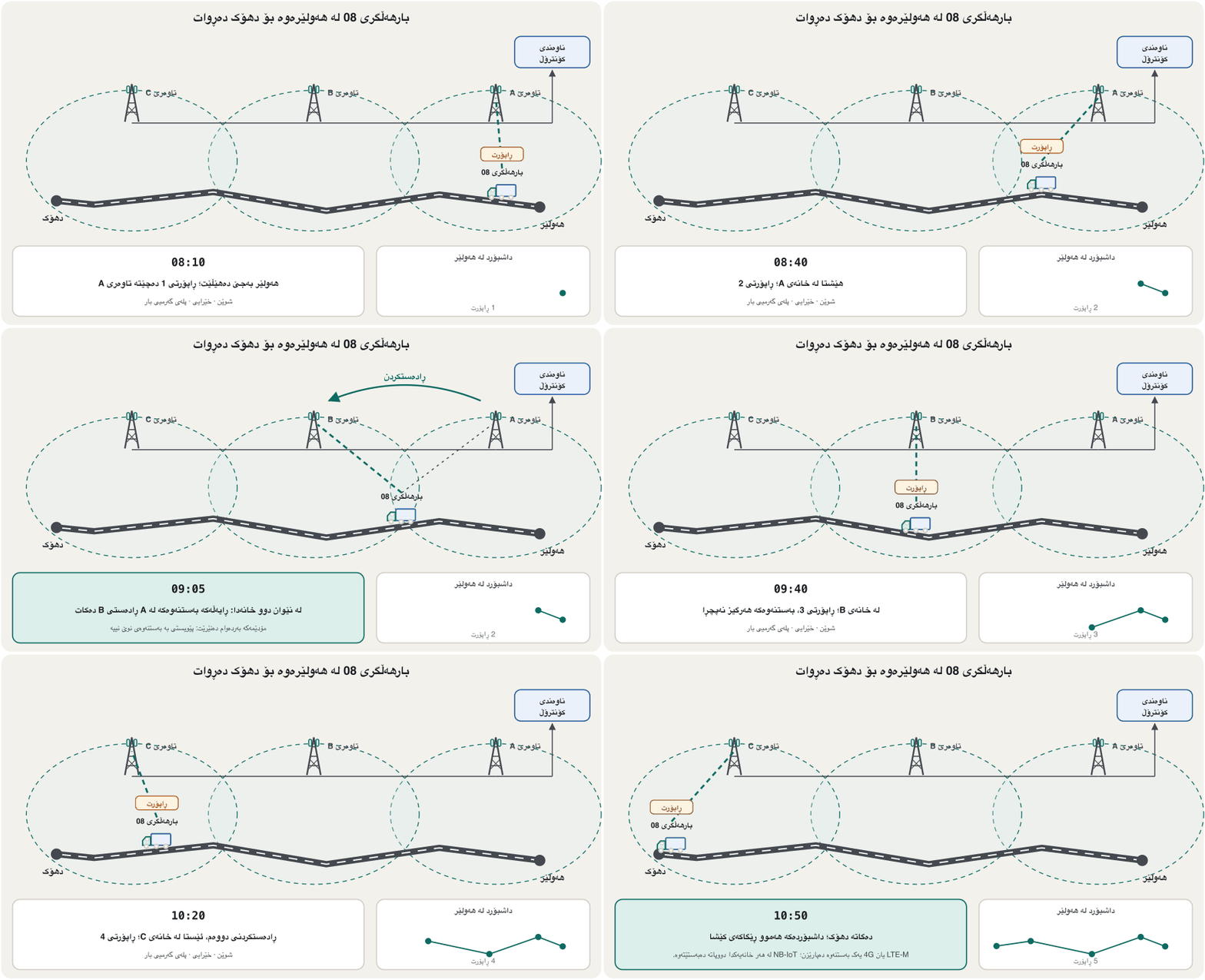
بارهەڵگری 08 سندوقی 17 لە هەولێرەوە بۆ دهۆک دەبات. لە ڕێگادا بە چەند تاوەرێکدا تێدەپەڕێت. هەر جارێک کە لە لێواری نزیک دەبێتەوە، بەستنەوەکەی دەگوازێتەوە بۆ تاوەری دواتر: ئەمە پێی دەوترێت . هەرگیز پێویست ناکات لە سەرەتاوە دەست پێ بکاتەوە، بۆیە ڕاپۆرتەکان بەردەوام دەگەن و لە هەولێر هەموو ڕێگاکە دەکێشێت. و 4G بەم شێوەیە لە کاتی جووڵەدا بەستنەوەکە دەپارێزن؛ ناپارێزێت، بۆیە دەبوو لە هەر نوێدا دووپاتە ببەستێتەوە. دەتوانن بە هەمان شێوە لەسەر بمێننەوە: درۆنەکان لەسەر ڕایەڵەی مۆبایل.
Connected carsئۆتۆمبێلی بەستراو
A connected car has its own cellular modem and SIM, usually together with a GNSS receiver. It uses them for navigation with live traffic, for locking, unlocking or warming the car from a phone app, for software updates over the air (), for health reports so that a workshop can replace a part before it fails (), and for a Wi-Fi hotspot for the passengers.
ئۆتۆمبێلی بەستراو و SIMـی خانەیی خۆی هەیە، زۆرجار لەگەڵ وەرگرێکی . ئەمانە بەکار دەهێنێت بۆ بە هاتوچۆی ئێستا، بۆ داخستن، کردنەوە یان گەرمکردنی ئۆتۆمبێلەکە بە مۆبایل، بۆ نوێکردنەوەی لە دوورەوە ()، بۆ ڕاپۆرتی تەندروستی تا گەراج پێش تێکچوونی پارچەیەک بیگۆڕێت () و بۆ بۆ سەرنشینان.
The most important service is the emergency call. In the European Union every new car model must call 112 by itself after a serious crash (eCall, see Safer cars). The first eCall systems made 2G or 3G calls. Because those networks are closing, new car types in the EU must make eCall over 4G or 5G (NG eCall) since 1 January 2026.
گرنگترین خزمەتگوزاری پەیوەندیی فریاکەوتنە. لە یەکێتیی ئەورووپا هەموو مۆدێلێکی نوێی ئۆتۆمبێل دەبێت دوای پێکدادانێکی سەخت خۆی پەیوەندی بە 112ـەوە بکات (eCall، بڕوانە ئۆتۆمبێلی سەلامەتتر). یەکەم سیستەمەکانی eCall پەیوەندیی 2G یان 3Gـیان دەکرد. چونکە 2G و 3G دادەخرێن، لە 1ی کانوونی دووەمی 2026ـەوە مۆدێلە نوێکانی ئۆتۆمبێل لە یەکێتیی ئەورووپا دەبێت eCall بە 4G یان 5G بکەن (NG eCall).
LTE-M and NB-IoT: cellular made for IoTLTE-M و NB-IoT: ڕایەڵەی مۆبایل کە بۆ IoT دروست کراوە
Phone networks were designed for people who want speed. Many IoT devices want the opposite: a few bytes a day, ten years on a battery, a signal in a basement and a cheap modem. So 3GPP, the body that writes the mobile standards, finished two light versions of 4G LTE in Release 13, in June 2016:
بۆ خەڵکێک دیزاین کران کە خێرایی دەوێت. زۆر ئامێری IoT پێچەوانەکەیان دەوێت: ڕۆژی چەند ، دە ساڵ بە یەک ، لە ژێرزەمیندا و هەرزان. بۆیە 3GPP، ئەو دەزگایەی ستانداردەکانی مۆبایل دەنووسێت، لە Release 13، لە حوزەیرانی 2016ـدا دوو وەشانی سووکی 4G LTEـی تەواو کرد:
- LTE-M, also called LTE Cat-M1 or eMTC: a slimmed-down LTE for devices that move, need a quick answer or even carry voice. A faster Cat-M2 followed in Release 14.
- NB-IoT, Narrowband IoT, also called LTE Cat-NB1 (and the faster Cat-NB2 of Release 14): a very narrow, very simple radio for devices that stay in one place and send tiny messages.
- ، کە پێی دەوترێت LTE Cat-M1 یان eMTC: LTEـیەکی سووککراو بۆ ئەو ئامێرانەی دەجووڵێن، وەڵامی خێرایان دەوێت یان تەنانەت دەنگ دەگوازنەوە. دواتر لە Release 14ـدا Cat-M2ـی خێراتر هات.
- ، Narrowband IoT، کە پێی دەوترێت LTE Cat-NB1 (و Cat-NB2ـی خێراتر لە Release 14): ڕادیۆیەکی زۆر تەسک و زۆر سادە بۆ ئەو ئامێرانەی لە یەک شوێندا دەمێننەوە و پەیامی زۆر بچووک دەنێرن.
Both run in the operator's licensed spectrum on the same towers as 4G, and both need a SIM. Together with LoRaWAN and Sigfox they form the family of low-power wide-area networks, taught in LPWAN.
هەردووکیان لە کۆمپانیای مۆبایلدا لەسەر هەمان تاوەرەکانی 4G کار دەکەن و هەردووکیان SIMـیان دەوێت. لەگەڵ و خێزانی پێک دەهێنن کە لە ڕایەڵەی فراوانی کەموزە فێر دەکرێت.
LTE-M and NB-IoT: cellular made for IoTLTE-M و NB-IoT: ڕایەڵەی مۆبایل کە بۆ IoT دروست کراوە
LTE-M or NB-IoT?LTE-M یان NB-IoT؟
The two differ mainly in width. An LTE-M channel is 1.4 MHz wide; NB-IoT uses only 180 kHz, about one eighth. A wider channel carries more: LTE-M reaches about 1 Mbit/s in the standard (real devices 300–400 kbit/s) and answers in 50–100 ms. A narrow channel is cheaper and concentrates the power, so NB-IoT reaches deeper into buildings, but it carries only tens of kbit/s (Cat-NB2 up to about 150 kbit/s) and may need 1.5 to 10 seconds.
جیاوازیی سەرەکیی نێوانیان پانییە. کەناڵێکی 1.4 MHz پانە؛ تەنیا 180 kHz بەکار دەهێنێت، نزیکەی یەک لەسەر هەشت. کەناڵی پانتر زیاتر هەڵدەگرێت: لە ستانداردەکەدا دەگاتە نزیکەی 1 Mbit/s (ئامێری ڕاستەقینە 300–400 kbit/s) و لە 50–100 ms وەڵام دەداتەوە. کەناڵی تەسک هەرزانترە و وزەکە کۆ دەکاتەوە، بۆیە قووڵتر دەچێتە ناو بیناکانەوە، بەڵام تەنیا چەند دەیان kbit/s هەڵدەگرێت (Cat-NB2 تا نزیکەی 150 kbit/s) و لەوانەیە 1.5 تا 10 چرکەی پێ بچێت.
LTE-M keeps its connection while the device moves (handover) and can carry voice calls (VoLTE), so it suits trackers, wearables and alarm buttons. NB-IoT suits fixed devices: meters, parking sensors and waste bins. Many operators run both, some only one, and plans change: at the end of 2024 AT&T in the USA stopped selling NB-IoT and moved its customers to LTE-M, closing its NB-IoT network in 2025. Always check what your operator offers.
لە کاتی جووڵەی ئامێرەکەدا بەستنەوەکەی دەپارێزێت () و دەتوانێت پەیوەندیی دەنگی (VoLTE) بگوازێتەوە، بۆیە بۆ تراکەر، و دوگمەی ئاگادارکردنەوە گونجاوە. بۆ ئامێری جێگیر گونجاوە: ، پارکینگ و تەنەکەی خۆڵ. زۆر کۆمپانیا هەردووکیان هەیە، هەندێکیان تەنیا یەکێکیان و پلانەکانیش دەگۆڕێن: لە کۆتایی 2024ـدا AT&T لە ئەمریکا فرۆشتنی ڕاگرت و کڕیارەکانی گواستەوە بۆ و لە 2025ـدا داخست. هەمیشە بپشکنە کۆمپانیاکەت چی پێشکەش دەکات.
A meter in the basement: deep coverageپێوەرێک لە ژێرزەمیندا: گەیشتنی قووڵ
Water, gas and electricity meters often sit in basements or behind thick walls, where a phone shows no signal bars. NB-IoT was designed for them. 3GPP set a target of 164 dB maximum coupling loss: the largest loss of signal between tower and device at which the link must still work. A phone call would have failed long before that.
پێوەری ئاو، گاز و کارەبا زۆرجار لە ژێرزەمین یان لە پشت دیواری ئەستوورەوەن، کە مۆبایل هیچ هێڵێکی نیشان نادات. بۆ ئەوان دیزاین کرا. ئامانجی 164 dB بۆ زۆرترین لەدەستچوونی دانا: زۆرترین لاوازبوونی لە نێوان تاوەر و ئامێرەکەدا کە هێشتا دەبێت بەستنەوەکە کار بکات. پەیوەندییەکی مۆبایل زۆر پێش ئەوە دەپچڕا.
How? The narrow channel puts all its power into a small slice of spectrum, and the tower and the device can repeat a message, up to 2048 times towards the device and 128 times from it. The receiver adds the copies together until the message is clear. The price is time and energy: a device deep inside a building needs more radio time, and more battery, for every report. Smart meters stay in one place, wake once a day and need no handover, so NB-IoT fits them well.
چۆن؟ کەناڵە تەسکەکە هەموو وزەکەی دەخاتە پارچەیەکی بچووکی و تاوەر و ئامێرەکە دەتوانن پەیامێک دووپاتە بکەنەوە، تا 2048 جار بەرەو ئامێرەکە و 128 جار لە ئامێرەکەوە. وەرگرەکە کۆپییەکان پێکەوە کۆ دەکاتەوە تا پەیامەکە ڕوون دەبێتەوە. نرخەکەی کات و وزەیە: ئامێرێک لە قووڵایی بینایەکدا بۆ هەموو ڕاپۆرتێک کاتی ڕادیۆی زیاتر و زیاتری دەوێت. لە یەک شوێندا دەمێننەوە، ڕۆژی جارێک بەئاگا دێن و پێویست نییە، بۆیە زۆر لێیان دێت.
Sleeping on a mobile network: PSM and eDRXخەوتن لەسەر ڕایەڵەی مۆبایل: PSM و eDRX
A classic modem stays reachable by waking every second or two to listen for paging, the network calling a device. Most IoT devices do not need that. LTE-M and NB-IoT add two ways to sleep:
ئاسایی هەمیشە ئامادەیە پەیامی پێ بگات، چونکە هەموو یەک تا دوو چرکە جارێک بەئاگا دێت و گوێ لە بانگکردن دەگرێت، واتە کاتێک ئامێرێک بانگ دەکات. زۆربەی ئامێرەکانی IoT پێویستیان بەمە نییە. و دوو ڕێگای خەوتن زیاد دەکەن:
- PSM (power saving mode): after sending, the device listens for a short moment, then switches its radio off but stays registered. Nobody can reach it until it wakes, on its own timer or when it has data, and then it sends at once without joining the network again. In PSM the modem draws only a few microamps.
- eDRX (extended discontinuous reception): instead of every second or two, the device listens only at agreed moments, from seconds to hours apart. It can still receive a command, just later.
- (دۆخی پاشەکەوتکردنی وزە): دوای ناردن، ئامێرەکە ماوەیەکی کورت گوێ دەگرێت، پاشان ڕادیۆکەی دەکوژێنێتەوە بەڵام هەر تۆمارکراو دەمێنێتەوە. تا بەئاگا نەیەت کەس پێی ناگات، بە کاتژمێری خۆی یان کاتێک هەبێت، پاشان دەستبەجێ دەنێرێت بەبێ ئەوەی دیسان بچێتەوە ناو . لە تەنیا چەند مایکرۆئەمپێرێک بەکار دەبات.
- (وەرگرتنی پچڕپچڕی درێژکراوە): لە جیاتی هەموو یەک تا دوو چرکە جارێک، ئامێرەکە تەنیا لە کاتە ڕێککەوتووەکاندا گوێ دەگرێت، کە لە چەند چرکەیەکەوە تا چەند کاتژمێرێک لە یەکتر دوورن. هێشتا دەتوانێت فەرمانێک وەربگرێت، تەنیا درەنگتر.
The device asks for its timers, but the network decides. A water meter that reports once a day lives in PSM; a parking sensor whose settings the city may change uses eDRX. With these modes 3GPP aims at about ten years on a 5 Wh battery (Power). Exercise 2 lets you check this with the method of Estimate battery life yourself.
ئامێرەکە داوای کاتەکانی خۆی دەکات، بەڵام بڕیار دەدات. پێوەرێکی ئاو کە ڕۆژی جارێک ڕاپۆرت دەدات لە دەژی؛ پارکینگ کە لەوانەیە شارەوانی ڕێکخستنەکانی بگۆڕێت بەکار دەهێنێت. بەم دۆخانە ئامانجی نزیکەی دە ساڵە بە 5 Wh (وزە). لە ڕاهێنانی 2ـدا ئەمە خۆت دەپشکنیت، بە هەمان ڕێگای هەڵسەنگاندنی تەمەنی پاتری.
5G and IoT: speed, delay and many devices5G و IoT: خێرایی، دواکەوتن و ئامێری زۆر
5G adds high-speed mobility support and ultra-low latency: it stays fast while you move, and its radio delay can be as low as 1 millisecond. Its three usage scenarios, eMBB, URLLC and mMTC, are explained in 5G: the fifth generation. For massive IoT (mMTC) you have already met the answer: LTE-M and NB-IoT meet the 5G requirements, so they continue inside 5G networks. What is new for machines is URLLC: fast links that almost never fail.
5G پشتگیریی جووڵەی خێرا و زۆر کەم زیاد دەکات: لە کاتی جووڵەدا خێرا دەمێنێتەوە و ڕادیۆکەی دەکرێت تەنیا 1 میلیچرکە بێت. سێ جۆرە بەکارهێنانەکەی (eMBB، URLLC و mMTC) لە 5G: نەوەی پێنجەم ڕوون کراونەتەوە. بۆ IoTـی زۆر (mMTC) وەڵامەکەت پێشتر بینیوە: و مەرجەکانی 5G پڕ دەکەنەوە، بۆیە لە ناو 5Gـیشدا بەردەوام دەبن. ئەوەی بۆ ئامێرەکان نوێیە URLLCـە: بەستنەوەی خێرا کە نزیکەی هەرگیز شکست ناهێنێت.
That is why 5G is called the future of self-driving cars and augmented reality (AR). Delay matters when things move: at 72 km/h a car covers 20 m every second. A message delayed 10 s, which is normal for NB-IoT, arrives 200 m too late; with 1 ms the car has moved only 2 cm. AR glasses need a short delay too, or the pictures they draw lag behind your head.
بۆیە بە 5G دەوترێت داهاتووی و (AR). کاتێک گرنگە کە شتەکان دەجووڵێن: بە 72 km/h ئۆتۆمبێلێک هەموو چرکەیەک 20 m دەبڕێت. پەیامێک کە 10 s دوا بکەوێت، کە بۆ ئاساییە، 200 m درەنگ دەگات؛ بە 1 ms ئۆتۆمبێلەکە تەنیا 2 cm ڕۆیشتووە. چاویلکەی AR-یش کورتی دەوێت، دەنا ئەو وێنانەی دەیانکێشێت لە دوای جووڵەی سەرت دەمێننەوە.
5G and IoT: speed, delay and many devices5G و IoT: خێرایی، دواکەوتن و ئامێری زۆر
Does a self-driving car need 5G?ئایا ئۆتۆمبێلی خۆگەڕ پێویستی بە 5G هەیە؟
A self-driving car does not drive by 5G. It sees the road with its own cameras, radar and lidar, decides on board, and must stay safe when the signal drops, in a tunnel or on a mountain road. The network adds what its sensors cannot see: warnings from cars ahead, traffic-light timing, map updates and remote help. 3GPP added such vehicle-to-everything messages (V2X) to LTE in Release 14 and to 5G in Release 16.
بە 5G لێناخوڕێت. ڕێگاکە بە کامێرا، و خۆی دەبینێت، لە ناو خۆیدا بڕیار دەدات و دەبێت کاتێک دەپچڕێت سەلامەت بمێنێتەوە، لە تونێلێکدا یان لەسەر ڕێگایەکی شاخاوی. ئەوە زیاد دەکات کە خۆی نایبینن: ئاگادارکردنەوە لە ئۆتۆمبێلەکانی پێشەوە، کاتی گڵۆپەکانی هاتوچۆ، نەخشە و یارمەتیی دوور. ئەم پەیامانەی نێوان ئۆتۆمبێل و هەموو شتێک (V2X) لە Release 14ـدا بۆ LTE و لە Release 16ـدا بۆ 5G زیاد کرد.
5G and IoT: speed, delay and many devices5G و IoT: خێرایی، دواکەوتن و ئامێری زۆر
Cameras, ambulances and factoriesکامێرا، ئەمبولانس و کارگە
5G is also expected to carry three kinds of time-critical IoT:
هەروەها چاوەڕێ دەکرێت 5G سێ جۆری IoT هەڵبگرێت کە کات تێیاندا گرنگە:
- Real-time video surveillance for public safety: many cameras send live video up to a control room at the same time. That needs a fast uplink and room for many devices.
- Connected health: an ambulance sends a patient's heart rate, blood pressure and video to the hospital while it drives, so the doctors are ready when it arrives.
- Time-sensitive industrial automation: factory machines and robot arms must react within milliseconds and almost never lose a message. Some factories run their own private 5G network for this, for example Hyundai's car plant in Ulsan, South Korea.
- ڤیدیۆیی لە بۆ ئاسایشی گشتی: چەندین کامێرا لە هەمان کاتدا ڤیدیۆی ڕاستەوخۆ بەرز دەنێرن بۆ ژووری کۆنترۆڵ. ئەمە خێرا و شوێن بۆ ئامێری زۆری دەوێت.
- تەندروستیی بەستراو: ئەمبولانسێک لە کاتی ڕۆیشتندا لێدانی دڵ، پەستانی خوێن و ڤیدیۆی نەخۆشێک بۆ نەخۆشخانە دەنێرێت، بۆ ئەوەی کاتێک دەگات پزیشکەکان ئامادە بن.
- پیشەسازیی هەستیار بە کات: ئامێرەکانی کارگە و دەستی دەبێت لە ماوەی چەند میلیچرکەیەکدا وەڵام بدەنەوە و نزیکەی هەرگیز پەیامێک لەدەست نەدەن. هەندێک کارگە بۆ ئەمە 5Gـی تایبەتی خۆیان هەیە، بۆ نموونە کارگەی ئۆتۆمبێلی Hyundai لە Ulsan لە کۆریای باشوور.
Cameras in public places also raise questions of privacy: who may watch, and for how long the video is kept (AI ethics).
کامێرا لە شوێنە گشتییەکاندا پرسیاری دروست دەکەن: کێ بۆی هەیە سەیر بکات و ڤیدیۆکە تا کەی دەهێڵرێتەوە (ئەخلاقی ژیریی دەستکرد).
5G RedCap: simpler 5G for mid-sized devices5G RedCap: 5Gـی سادەتر بۆ ئامێری مامناوەند
Between tiny NB-IoT meters and full 5G phones there is a middle: smartwatches, video cameras and industrial sensors. A full 5G modem is too costly and too hungry for them; LTE-M is too slow for video. So 3GPP made RedCap (Reduced Capability) in Release 17 (2022): a 5G device with a channel of at most 20 MHz and only one or two antennas. It reaches about 150 Mbit/s down and 50 Mbit/s up, similar to a 4G Cat-4 modem, with a longer battery life. eRedCap (Release 18) is simpler still, with about 10 Mbit/s.
لە نێوان پێوەرە بچووکەکانی و مۆبایلی 5Gـی تەواودا ناوەڕاستێک هەیە: کاتژمێری هۆشمەند، کامێرای ڤیدیۆ و پیشەسازی. 5Gـی تەواو بۆ ئەوان زۆر گران و زۆر برسییە؛ بۆ ڤیدیۆ زۆر خاوە. بۆیە لە Release 17 (2022)ـدا ـی دروست کرد (Reduced Capability، واتە توانای کەمکراوە): ئامێرێکی 5G بە کەناڵێکی زۆرترین 20 MHz و تەنیا یەک یان دوو . نزیکەی 150 Mbit/s وەردەگرێت و 50 Mbit/s دەنێرێت، نزیک لە 4Gـی Cat-4، بە تەمەنێکی درێژتری . eRedCap (Release 18) لەوەش سادەترە، بە نزیکەی 10 Mbit/s.
RedCap works only on 5G standalone networks, that is, 5G with its own new core. As of April 2026, the GSA counted 42 operators in 27 countries investing in RedCap; 14 of them had launched it by March 2026. Much of the mass market below RedCap goes to LTE Cat-1 bis, a cheap one-antenna 4G that is replacing 2G and 3G modules.
تەنیا لەسەر 5Gـی سەربەخۆ (standalone) کار دەکات، واتە 5G بە ناوکی نوێی خۆیەوە. تا نیسانی 2026، GSA 42 کۆمپانیای لە 27 وڵاتدا ژمارد کە پارەیان لە دادەنا؛ 14ـیان تا ئاداری 2026 دەستیان پێ کردبوو. زۆربەی بازاڕی گەورەی خوار بۆ LTE Cat-1 bis دەچێت، 4Gـێکی هەرزان بە یەک کە شوێنی مۆدیوڵەکانی 2G و 3G دەگرێتەوە.
What cellular IoT uses in 2026IoTـی خانەیی لە 2026ـدا چی بەکار دەهێنێت
At the end of 2025 there were about 4.7 billion cellular IoT connections, about 22 % of all IoT connections, and about 5.4 billion are expected in 2026. Of the cellular IoT modules and chips shipped in 2025, about a third were NB-IoT (33.5 %), 21.4 % were LTE Cat-1 bis and 18.6 % were other 4G (IoT Analytics, April 2026).
لە کۆتایی 2025ـدا نزیکەی 4.7 ملیار بەستنەوەی IoTـی خانەیی هەبوو، کە نزیکەی 22%ـی هەموو بەستنەوەکانی IoTـە. چاوەڕێ دەکرێت لە 2026ـدا ببێتە نزیکەی 5.4 ملیار. لەو مۆدیوڵ و IoTـی خانەیی کە لە 2025ـدا نێردران، نزیکەی سێیەکیان بوون (33.5%)، 21.4% LTE Cat-1 bis و 18.6% 4Gـی تر (IoT Analytics، نیسانی 2026).
Counted by money instead of devices, 5G comes first, because each 5G connection carries much more data. Growth slowed to about 13 % in 2025, mainly because the market in China grew more slowly. Such numbers change every year: look up the newest report when you need them.
ئەگەر بە پارە بژمێردرێت نەک بە ئامێر، 5G یەکەمە، چونکە هەر بەستنەوەیەکی 5G زۆر زیاتر هەڵدەگرێت. گەشەکە لە 2025ـدا بۆ نزیکەی 13% خاو بووەوە، بە تایبەتی چونکە بازاڕی چین بە خاوی گەشەی کرد. ئەم ژمارانە هەموو ساڵێک دەگۆڕێن: کاتێک پێویستت پێیانە سەیری نوێترین ڕاپۆرت بکە.
When 2G and 3G switch offکاتێک 2G و 3G دەکوژێنرێنەوە
Operators are closing their oldest networks to reuse the frequencies for 4G and 5G and to run fewer networks. By June 2026 the GSA, an industry group that tracks mobile networks, counted 313 2G and 3G switch-offs completed, planned or under way in 89 countries and territories. For 3G, 174 operators in 67 markets had started and 102 had finished; for 2G, 139 operators in 70 markets had finished or planned it, 56 of them finished. Europe has the most (43 %), then Asia (26 %).
کۆمپانیاکانی مۆبایل کۆنترین دادەخەن بۆ ئەوەی بۆ 4G و 5G بەکار بهێننەوە و کەمتر بەڕێوە ببەن. تا حوزەیرانی 2026، GSA، کە گرووپێکی پیشەسازییە و چاودێریی دەکات، 313 کوژاندنەوەی 2G و 3Gـی تەواوبوو، پلاندار یان لە کاردا لە 89 وڵات و هەرێمدا ژمارد. بۆ 3G، 174 کۆمپانیا لە 67 بازاڕدا دەستیان پێ کردبوو و 102ـیان تەواویان کردبوو؛ بۆ 2G، 139 کۆمپانیا لە 70 بازاڕدا تەواویان کردبوو یان پلانیان بۆ دانابوو، 56ـیان تەواو. ئەورووپا زۆرترینی هەیە (43%)، پاشان ئاسیا (26%).
For IoT this is serious, because devices live long. A meter or an alarm with only a 3G modem simply goes silent when its network closes. When the US operators closed 3G in 2022, many older connected cars lost emergency calls, remote unlocking and app features unless their modem was replaced. So new IoT devices use 4G (LTE-M, NB-IoT, Cat-1 bis) or 5G, and planners ask how long each network will run.
بۆ IoT ئەمە جیددییە، چونکە ئامێرەکان تەمەنیان درێژە. پێوەرێک یان ئاگادارکەرەوەیەک کە تەنیا 3Gـی هەبێت، کاتێک دادەخرێت بە سادەیی بێدەنگ دەبێت. کاتێک کۆمپانیاکانی ئەمریکا لە 2022ـدا 3Gـیان داخست، زۆر ئۆتۆمبێلی بەستراوی کۆن پەیوەندیی فریاکەوتن، کردنەوە لە دوورەوە و تایبەتمەندییەکانی لەدەست دا، مەگەر گۆڕدرابێت. بۆیە ئامێرە نوێیەکانی IoT 4G (، ، Cat-1 bis) یان 5G بەکار دەهێنن و پلاندانەران دەپرسن هەر تا کەی کار دەکات.
When 2G and 3G switch offکاتێک 2G و 3G دەکوژێنرێنەوە
Iraq and the Kurdistan Regionعێراق و هەرێمی کوردستان
Iraq reached each generation late. Its three operators, Asiacell, Korek and Zain, agreed to pay for 3G frequencies only in November 2014, and Zain Iraq announced the first nationwide 4G-LTE service in January 2021. As of November 2026 there was still no 5G service across Iraq. At the end of August 2026 the federal Minister of Communications said he wanted one launch for all provinces and the Kurdistan Region together, and in September 2026 the Kurdistan Region's Ministry of Transport and Communications said that 5G could start at the end of 2026 or early in 2027, possibly first in Erbil.
عێراق درەنگ گەیشتە هەر نەوەیەک. سێ کۆمپانیای مۆبایلەکەی، Asiacell، Korek و Zain، تەنیا لە تشرینی دووەمی 2014ـدا ڕازی بوون پارەی 3G بدەن و Zain Iraq لە کانوونی دووەمی 2021ـدا یەکەم خزمەتگوزاریی 4G-LTEـی لە هەموو عێراقدا ڕاگەیاند. تا تشرینی دووەمی 2026 هێشتا خزمەتگوزاریی 5G لە عێراقدا نەبوو. لە کۆتایی ئابی 2026ـدا وەزیری گەیاندنی فیدراڵ گوتی دەیەوێت 5G لە هەموو پارێزگاکان و هەرێمی کوردستاندا پێکەوە دەست پێ بکات و لە ئەیلوولی 2026ـدا وەزارەتی گواستنەوە و گەیاندنی هەرێمی کوردستان گوتی 5G دەکرێت لە کۆتایی 2026 یان سەرەتای 2027ـدا دەست پێ بکات، لەوانەیە یەکەمجار لە هەولێر.
For an IoT project here this means three things. Ask the operator, in writing, which technologies its network supports today (4G, LTE-M, NB-IoT) and where. Choose modules that work on 4G and later networks, not on 2G or 3G only. And plan for the device's whole life, which may be ten years or more.
بۆ پڕۆژەیەکی IoT لێرە ئەمە سێ واتای هەیە. بە نووسراو لە کۆمپانیای مۆبایل بپرسە ئەمڕۆ پشتگیریی کام تەکنەلۆجیا دەکات (4G، ، ) و لە کوێ. ئەو مۆدیوڵانە هەڵبژێرە کە لەسەر 4G و دواتر کار دەکەن، نەک تەنیا لەسەر 2G یان 3G. هەروەها بۆ هەموو تەمەنی ئامێرەکە پلان دابنێ، کە لەوانەیە دە ساڵ یان زیاتر بێت.
Choosing a cellular optionهەڵبژاردنی جۆرێکی خانەیی
Start with the operator: which technologies does it run, and where? Then ask about the device. Video or a lot of data? Take 4G or 5G, or RedCap for cameras and watches. Moves between towers, or needs voice? Take LTE-M. Fixed, sending tiny messages from deep indoors for years on a battery? Take NB-IoT. Otherwise, for medium data on mains or vehicle power, take LTE Cat-1 bis. With no mobile coverage at all, look at LoRaWAN or satellite links; the comparison of all radios is in Choosing a radio, step by step.
لە کۆمپانیای مۆبایلەوە دەست پێ بکە: کام تەکنەلۆجیای هەیە و لە کوێ؟ پاشان پرسیار لەبارەی ئامێرەکە بکە. ڤیدیۆ یان زۆر؟ 4G یان 5G بەکار بهێنە، یان بۆ کامێرا و کاتژمێر. لە نێوان تاوەرەکاندا دەجووڵێت، یان دەنگی دەوێت؟ . جێگیرە و پەیامی زۆر بچووک لە قووڵایی بیناوە بۆ چەند ساڵێک بە دەنێرێت؟ . ئەگەر هیچیان نەبوو، بۆ مامناوەند لەسەر کارەبای ماڵ یان ئۆتۆمبێل، LTE Cat-1 bis. ئەگەر هیچ نەبوو، سەیری LoRaWAN یان بەستنەوەی مانگی دەستکرد بکە؛ بەراوردی هەموو ڕادیۆکان لە وانەی هەڵبژاردنی ڕادیۆ هەیە.
Common mistakesهەڵە باوەکان
Exercisesڕاهێنانەکان
Choose a cellular option for each device and give one reason: (a) the buses of an Erbil bus company report their position every 30 seconds; (b) water meters in basements in Duhok send one reading a day and must last ten years on a battery; (c) a 5G security camera at a factory gate; (d) a fall-alarm button for an elderly person that must also allow a voice call.
بۆ هەر ئامێرێک جۆرێکی خانەیی هەڵبژێرە و یەک هۆکار بڵێ: (أ) پاسەکانی کۆمپانیایەکی پاس لە هەولێر هەموو 30 چرکە جارێک شوێنی خۆیان دەنێرن؛ (ب) پێوەری ئاو لە ژێرزەمینەکانی دهۆک ڕۆژی یەک خوێندنەوە دەنێرن و دەبێت دە ساڵ بە بژین؛ (ج) کامێرایەکی ئاسایشی 5G لە دەرگای کارگەیەک؛ (د) دوگمەی ئاگادارکردنەوەی کەوتن بۆ کەسێکی بەتەمەن کە دەبێت پەیوەندیی دەنگیش ڕێگەپێدراو بێت.
Show answerوەڵامەکە پیشان بدە
- (a) LTE-M or 4G (for example Cat-1 bis): the buses move between cells all day, so they need handover, and they have power from the bus.
- (b) NB-IoT if the operator offers it, otherwise LTE-M, both with PSM: fixed, tiny data, deep indoors, years on a battery.
- (c) 5G RedCap (or full 4G or 5G): video needs megabits per second, which LTE-M and NB-IoT cannot carry.
- (d) LTE-M: it can carry voice (VoLTE), follows the person between cells and still saves power.
- (أ) یان 4G (بۆ نموونە Cat-1 bis): پاسەکان بە درێژایی ڕۆژ لە نێوان خانەکاندا دەجووڵێن، بۆیە پێویستە و وزەشیان لە پاسەکەوە هەیە.
- (ب) ئەگەر کۆمپانیاکە پێشکەشی بکات، دەنا ، هەردووکیان بە : جێگیر، زۆر کەم، قووڵایی بینا، چەند ساڵ بە .
- (ج) 5G (یان 4G یان 5Gـی تەواو): ڤیدیۆ چەند مێگابیت لە چرکەیەکدا دەوێت کە و ناتوانن هەڵیبگرن.
- (د) : دەتوانێت دەنگ بگوازێتەوە (VoLTE)، لە نێوان خانەکاندا بەدوای کەسەکەدا دەچێت و هێشتا وزە پاشەکەوت دەکات.
An NB-IoT water meter sleeps in PSM at 0.005 mA. Once a day it wakes for 10 s and draws 50 mA on average while it sends. Its battery stores 5 Wh at 3.6 V, about 1,389 mAh. (a) Find the average current. (b) Estimate the battery life. (c) Without PSM, suppose the modem stays registered and listening at an average of 1 mA. How long does the battery last then? (These currents are example values for the exercise.)
پێوەرێکی ئاوی لە بە 0.005 mA دەخەوێت. ڕۆژی جارێک 10 s بەئاگا دێت و لە کاتی ناردندا بە تێکڕایی 50 mA بەکار دەبات. 5 Wh لە 3.6 Vـدا هەڵدەگرێت، نزیکەی 1,389 mAh. (أ) تێکڕای بدۆزەرەوە. (ب) تەمەنی هەڵبسەنگێنە. (ج) بەبێ ، وا دابنێ کە تۆمارکراو دەمێنێتەوە و بە تێکڕایی 1 mA گوێ دەگرێت. ئەو کاتە چەند دەژی؟ (ئەم ژمارانەی نموونەن بۆ ئەم ڕاهێنانە.)
Hintئاماژە
Use the method of Estimate battery life yourself: average current = charge used in one cycle ÷ length of the cycle.
ڕێگای هەڵسەنگاندنی تەمەنی پاتری بەکار بهێنە: تێکڕای = ئەو بارەی لە یەک خولدا بەکار دێت ÷ درێژیی خولەکە.
Show answerوەڵامەکە پیشان بدە
A day has 86,400 s. Real batteries also lose a little charge each year by themselves, so about ten years is the honest promise. PSM makes the difference between two months and ten years.
ڕۆژێک 86,400 چرکەیە. ڕاستەقینە هەموو ساڵێک خۆی کەمێک لە بارەکەی لەدەست دەدات، بۆیە نزیکەی دە ساڵ بەڵێنێکی ڕاستگۆیانەیە. جیاوازیی نێوان دوو مانگ و دە ساڵ دروست دەکات.
A delivery robot drives on a pavement at 18 km/h. How far does it move while a message is delayed by (a) 10 ms, (b) 100 ms, (c) 10 s? Which delay is acceptable for an 'emergency stop' command, and which only for a daily report?
گەیاندن بە خێرایی 18 km/h لەسەر شۆستە دەڕوات. چەند دەڕوات لە کاتێکدا پەیامێک (أ) 10 ms، (ب) 100 ms، (ج) 10 s دوا دەکەوێت؟ کام بۆ فەرمانی «وەستانی فریاکەوتن» قبووڵە و کامیان تەنیا بۆ ڕاپۆرتی ڕۆژانە؟
Show answerوەڵامەکە پیشان بدە
5 cm and 50 cm are acceptable for a stop command; 50 m is far too late and fits only a report that may wait, such as a daily summary. A robot should also stop by itself when it loses the link.
5 cm و 50 cm بۆ فەرمانی وەستان قبووڵن؛ 50 m زۆر درەنگە و تەنیا بۆ ڕاپۆرتێک دەگونجێت کە دەتوانێت چاوەڕێ بکات، وەک پوختەی ڕۆژانە. دەبێت کاتێک بەستنەوەکە لەدەست دەدات خۆشی بوەستێت.
A water company installed 3G meters in 2016 and expected them to work for fifteen years. Its operator now plans to close 3G. List the risks and write a short plan.
کۆمپانیایەکی ئاو لە 2016ـدا پێوەری 3Gـی دانا و چاوەڕێی دەکرد پازدە ساڵ کار بکەن. ئێستا کۆمپانیای مۆبایلەکەی پلانی داخستنی 3Gـی هەیە. مەترسییەکان بنووسە و پلانێکی کورت دابنێ.
Show answerوەڵامەکە پیشان بدە
- Risk: the meters go silent years before 2031, readings stop and bills must be estimated or read by hand.
- Ask the operator for the exact date and which technologies stay (4G, LTE-M, NB-IoT).
- Budget for replacing modems or meters; start with the meters that matter most.
- Buy new meters with NB-IoT or LTE-M (with PSM) and modules that support more than one technology, plus software updates over the air.
- مەترسی: پێوەرەکان چەند ساڵێک پێش 2031 بێدەنگ دەبن، خوێندنەوەکان دەوەستن و دەبێت پسوولەکان بە خەمڵاندن یان بە دەست بخوێنرێنەوە.
- لە کۆمپانیای مۆبایل ڕێکەوتی ڕاستەقینە بپرسە و کام تەکنەلۆجیا دەمێنێتەوە (4G، ، ).
- بودجە بۆ گۆڕینی یان پێوەرەکان دابنێ؛ لەو پێوەرانەوە دەست پێ بکە کە لە هەمووان گرنگترن.
- پێوەری نوێ بە یان (بە ) بکڕە و ئەو مۆدیوڵانەی پشتگیریی زیاتر لە یەک تەکنەلۆجیا دەکەن، لەگەڵ .
Summaryپوختە
- Cellular IoT uses the operator's mobile network and a SIM, like a phone (the Asiacell or Korek SIM in your pocket): country-wide coverage, movement with handover, licensed spectrum.
- It imposes three costs: the modem, a plan for every device and energy. Classic 3G or 4G suits vehicles, not coin cells: connected cars and fleets that report to a control centre.
- LTE-M (Cat-M1, eMTC) and NB-IoT (Cat-NB1/NB2), 3GPP Release 13, 2016: LTE-M for things that move or talk; NB-IoT for fixed devices deep indoors. PSM and eDRX let both sleep for about ten years on a battery.
- 5G brings low delay for cars, AR, cameras, ambulances and factories; RedCap (Release 17) serves cameras and watches; Cat-1 bis carries much of today's volume.
- 2G and 3G are closing (313 switch-offs in 89 countries by June 2026): ask your operator, avoid 2G/3G-only modules and plan for the device's whole life.
- IoTـی خانەیی کۆمپانیا و SIM بەکار دەهێنێت، وەک مۆبایل (سیمکارتی Asiacell یان Korek لە گیرفانتدا): گەیشتن بە هەموو وڵات، جووڵە بە ، .
- سێ تێچوو دەسەپێنێت: ، پلانێک بۆ هەر ئامێرێک و وزە. 3G یان 4Gـی ئاسایی بۆ ئۆتۆمبێل دەگونجێت، نەک بۆ دوگمەیی: ئۆتۆمبێلی بەستراو و ئۆتۆمبێلەکانی کۆمپانیا کە ڕاپۆرت بۆ ناوەندی کۆنترۆڵ دەنێرن.
- (Cat-M1، eMTC) و (Cat-NB1/NB2)، Release 13، 2016: بۆ شتی جووڵاو یان قسەکەر؛ بۆ ئامێری جێگیر لە قووڵایی بینادا. و ڕێگە دەدەن هەردووکیان نزیکەی دە ساڵ بە یەک بخەون.
- 5G کەم بۆ ئۆتۆمبێل، AR، کامێرا، ئەمبولانس و کارگە دەهێنێت؛ (Release 17) خزمەتی کامێرا و کاتژمێر دەکات؛ Cat-1 bis بەشێکی زۆری بازاڕی ئەمڕۆ هەڵدەگرێت.
- 2G و 3G دادەخرێن (313 کوژاندنەوە لە 89 وڵاتدا تا حوزەیرانی 2026): لە کۆمپانیاکەت بپرسە، خۆت لە مۆدیوڵی تەنیا 2G/3G بپارێزە و بۆ هەموو تەمەنی ئامێرەکە پلان دابنێ.
Lesson complete!وانەکە تەواو بوو!
Well done. Review the key terms, then go on to the next lesson.دەستخۆش. سەیرێکی زاراوە سەرەکییەکان بکەرەوە، پاشان بڕۆ بۆ وانەی داهاتوو.
Key termsزاراوە سەرەکییەکان
Low-Power Wide-Area Networks (LPWAN)ڕایەڵە فراوانە کەموزەکان
Related lecturesوانە پەیوەندیدارەکان
- Wi-Fi and Bluetooth Low Energy for IoTوایفای و بلووتووسی کەموزە بۆ IoT
- RFID, Zigbee and Other Mesh ProtocolsRFID، Zigbee و پرۆتۆکۆڵەکانی تری ڕایەڵەی چنراو
- Point-to-Point, Star and Mesh Networksپەیوەندیی خاڵ بۆ خاڵ، ڕایەڵەی ئەستێرەیی و ڕایەڵەی چنراو
- Who Writes the Rules? IoT Standardsکێ یاساکان دەنووسێت؟ ستانداردەکانی IoT
- Low-Power Wide-Area Networks (LPWAN)ڕایەڵە فراوانە کەموزەکان
- LoRa: Long Range on Little PowerLoRa: دووریی زۆر بە وزەی کەم
- LoRaWAN: the Network Behind LoRaLoRaWAN: ڕایەڵەکەی پشت LoRa
- Where IoT Is Used, and What Makes It HardIoT لە کوێ بەکار دێت و چی قورسی دەکات
- Cables and Wireless: Transmission Mediaکێبڵ و بێتەل: هۆکارەکانی گواستنەوە
- Radio Links: Remote Control, Telemetry, FPV Video and 5Gپەیوەندیی ڕادیۆیی: کۆنترۆڵی دوور، تەلەمەتری، ڤیدیۆی FPV و 5G
- Keeping IoT Devices Safe and Privateئامێرەکانی IoT: ئاسایش و تایبەتێتی
References and further readingسەرچاوەکان و خوێندنەوەی زیاتر
- IoT Analytics (28 October 2025): Number of connected IoT devices, State of IoT 2025 (cellular IoT 22 %)
- IoT Analytics (29 April 2026): Cellular IoT market update, spring 2026
- Ericsson (2016): Cellular IoT alphabet soup (Cat-M1, NB-IoT, EC-GSM-IoT)
- Ericsson (2018): LTE-M and NB-IoT meet the 5G performance requirements
- 3GPP (21 June 2016): Standardization of NB-IoT completed
- RFC 8376: Low-Power Wide Area Network (LPWAN) Overview, NB-IoT section
- Nordic Developer Academy: LTE-M and NB-IoT
- Nordic Developer Academy: Power saving techniques (PSM, eDRX)
- nRF Connect SDK: Cellular overview (LTE-M and NB-IoT parameters)
- Analysys Mason (6 December 2024): Other operators could follow AT&T in shutting down NB-IoT
- Kousias et al. (2020): Coverage and Deployment Analysis of Narrowband Internet of Things in the Wild (repetitions)
- Harounabadi et al. (2021): V2X in 3GPP Standardization: NR Sidelink in Rel-16 and Beyond
- Ericsson: 5G RedCap
- GSA Viewpoint (2026): 5G RedCap, accelerating the next phase of cellular IoT growth
- GSA (4 August 2026): 2G and 3G switch-off, August 2026
- Interoperable Europe: NG eCall (Delegated Regulations (EU) 2024/1180 and 2024/1084)
- The Drive (February 2022): How the 3G shutdown in 2022 could affect your car
- Iraq Business News (6 November 2014): Telcos agree to pay for 3G
- Zain Iraq (January 2021): 4G-LTE launched across Iraq
- Kurdistan24 (29 August 2026): Iraq's Communications Minister seeks simultaneous 5G launch across provinces and Kurdistan Region
- Kurdistan24 (26 September 2026): KRG advances 5G plans
This lecture is a first edition. The Kurdish text and terminology are waiting for review by Kurdish IT teachers.ئەم وانەیە چاپی یەکەمە. دەقە کوردییەکە و زاراوەکانی چاوەڕێی پێداچوونەوەی مامۆستایانی کوردی بواری IT ن.