Chapterبەش 6 · Lectureوانە 6.3
Cables and Wireless: Transmission Mediaکێبڵ و بێتەل: هۆکارەکانی گواستنەوە
What signals travel through: guided media (twisted pair, coaxial and fibre-optic cable, with their layers, categories and connectors) and unguided media (radio, microwave and infrared); why pairs are twisted and how light stays inside a fibre; Wi-Fi 6, 6E and 7; Bluetooth, mobile networks and satellites; and how to choose a medium.
بە ناو چیدا دەڕۆن: ڕێنماییکراو (، و ، لەگەڵ چین، پۆل و ) و هۆکارە ڕێنمایینەکراوەکان (ڕادیۆ، مایکرۆوەیڤ و ژێرسوور)؛ بۆچی جووتەکان بادەدرێن و ڕووناکی چۆن لە ناو فایبەردا دەمێنێتەوە؛ Wi-Fi 6، 6E و 7؛ ، و مانگی دەستکرد؛ و چۆن هۆکارێک هەڵدەبژێریت.
What you will learnچی فێر دەبیت
- Sort transmission media into guided and unguided and give examples of each.
- Explain why twisted pairs are twisted, tell UTP from STP and choose a cable category.
- Name the layers of coaxial and fibre-optic cable and their connectors.
- Explain total internal reflection and the difference between multimode and single-mode fibre.
- Compare radio, microwave, infrared, Wi-Fi generations, Bluetooth, mobile networks and satellites.
- بکەیتە ڕێنماییکراو و ڕێنمایینەکراو و نموونەی هەر یەکێکیان بهێنیتەوە.
- ڕوونی بکەیتەوە بۆچی جووتەکان بادەدرێن، لە جیا بکەیتەوە و پۆلێکی کێبڵ هەڵبژێریت.
- چینەکانی و و ناو ببەیت.
- و جیاوازیی نێوان و ڕوون بکەیتەوە.
- ڕادیۆ، مایکرۆوەیڤ، ژێرسوور، نەوەکانی ، ، و مانگی دەستکرد بەراورد بکەیت.
Guided and unguided mediaهۆکارەکانی گواستنەوەی تەلدار و بێتەل
A transmission medium is whatever the signal travels through between two devices. There are two families. Guided media are cables: the signal is guided along a wire or a glass fibre and cannot leave it. Unguided media are wireless: the signal spreads out through the air or through space as radio waves, microwaves or infrared light.
هەر شتێکە کە لە نێوان دوو ئامێردا پێیدا دەڕوات. دوو خێزانی هەیە. ڕێنماییکراو کێبڵن: بە درێژایی وایەرێک یان فایبەرێکی شووشەیی ڕێنمایی دەکرێت و ناتوانێت لێی دەربچێت. ڕێنمایینەکراو : وەک شەپۆلی ڕادیۆیی، مایکرۆوەیڤ یان ڕووناکیی ژێرسوور بە ناو هەوا یان بۆشاییدا بڵاو دەبێتەوە.
What a signal travels through between network devices. Guided (wired) media are , and ; unguided (wireless) media are radio waves, microwaves and infrared.
ئەو شتەیە کە لە نێوان ئامێرەکانی ڕایەڵەدا پێیدا دەڕوات. هۆکارە ڕێنماییکراوەکان (بە وایەر) ، و ؛ هۆکارە ڕێنمایینەکراوەکان () شەپۆلی ڕادیۆ، مایکرۆوەیڤ و ژێرسوورن.
Guided media are like a train on rails: it can only go where the rails go, but nothing gets in its way. Unguided media are like sound in a bazaar: it reaches everyone around without any rails, but other voices can drown it.
ڕێنماییکراو وەک شەمەندەفەرێکن لەسەر هێڵی ئاسن: تەنها دەتوانێت بڕواتە ئەو شوێنەی هێڵەکە دەچێت، بەڵام هیچ شتێک ڕێگای لێ ناگرێت. ڕێنمایینەکراو وەک دەنگن لە بازاڕێکدا: بێ هیچ هێڵێک دەگاتە هەموو دەوروبەر، بەڵام دەنگەکانی تر دەتوانن دایبپۆشن.
Where the analogy stops workingسنووری ئەم نموونەیە
Radio waves pass through walls, which a voice mostly does not, and wireless data can be encrypted so only the right receiver understands it.
شەپۆلی ڕادیۆیی بە ناو دیواردا تێدەپەڕێت، کە دەنگ زۆرجار ناتوانێت. هەروەها دەتوانرێت بە بپارێزرێت تا تەنها وەرگرە دروستەکە تێی بگات.
Cables and connectorsکێبڵ و سەرەکانی کێبڵ
Wired networks use three kinds of cable: twisted pair — either unshielded (UTP) or shielded (STP) — coaxial, and fibre optic. Each kind has its own plugs, called connectors.
تەلدار سێ جۆر کێبڵ بەکار دەهێنن: — یان یان — و . هەر جۆرێک سەری تایبەتی خۆی هەیە کە پێیان دەوترێت .
| Cableکێبڵ | Connectors | Where you meet themلە کوێ دەیانبینیت |
|---|---|---|
| Twisted pair (modular) (modular) | RJ-45 (8 contacts) for Ethernet; RJ-11 (fewer contacts) for telephone lines (8 پەڕەی پەیوەندی) بۆ Ethernet؛ RJ-11 (پەڕەی کەمتر) بۆ هێڵی تەلەفۆن | Every LAN cable, router and wall socketهەموو کێبڵێکی LAN، و دەرچەی دیوار |
| Coaxial | BNC (push and twist; CCTV cameras, lab equipment), SMA (small screw-on; antennas, Wi-Fi cards); the F connector (screw-on) for TV and satellite dishesBNC (پاڵنان و سووڕاندن؛ کامێرای CCTV، ئامێری تاقیگە)، SMA (بچووک و بادراو؛ ئەنتێنە، کارتی )؛ سەری F (بادراو) بۆ تیڤی و دیشی مانگی دەستکرد | Satellite TV at home, security camerasتیڤیی مانگی دەستکرد لە ماڵەوە، کامێرای ئاسایش |
| Fibre optic | SC (square, push-pull), FC (round, screw-on); today LC (small, with a clip) is the most commonSC (چوارگۆشە، پاڵنان و ڕاکێشان)، FC (خڕ، بادراو)؛ ئەمڕۆ LC (بچووک، بە قوفڵێکەوە) لە هەمووان باوترە | Data centres, the fibre box at home، سندووقی فایبەر لە ماڵەوە |
Twisted-pair cable: UTP and STPکێبڵی جووتە بادراو: جووتە بادراوی نەپارێزراو و جووتە بادراوی پارێزراو
A twisted-pair cable holds pairs of thin copper wires twisted around each other — an Ethernet cable has four pairs. Why twist them? Electrical noise from motors, power cables or the next pair hits both wires of a twisted pair almost equally. The receiver measures only the difference between the two wires, so the noise cancels out. The tighter the twists, the better this works.
جووتە وایەری باریکی مس لەخۆ دەگرێت کە بە دەوری یەکتردا بادراون — کێبڵی Ethernet چوار جووتی هەیە. بۆچی بادەدرێن؟ لە بزوێنەر، کێبڵی کارەبا یان جووتەکەی تەنیشتەوە نزیکەی بە یەکسانی بەر هەردوو وایەری جووتێکی بادراو دەکەوێت. وەرگرەکە تەنها جیاوازی نێوان دوو وایەرەکە دەپێوێت، بۆیە یەکتر لادەبەن. هەتا بادانەکان توندتر بن، ئەمە باشتر کار دەکات.
| UTP (unshielded) (UTP) | STP (shielded) (STP) | |
|---|---|---|
| Shieldڕووپۆش | None: the twists alone fight noiseنییە: تەنها بادانەکان بەرگەی دەگرن | Metal foil or braid around the pairsپەڕەی کانزایی یان تۆڕی چنراو بە دەوری جووتەکاندا |
| Cost and handlingنرخ و بەکارهێنان | Cheaper, thinner, easier to bendهەرزانتر، باریکتر، ئاسانتر دەچەمێتەوە | Dearer, stiffer; the shield must be earthedگرانتر، ڕەقتر؛ ڕووپۆشەکە دەبێت بە زەوی ببەسترێت |
| Whereلە کوێ | Homes, offices, schoolsماڵ، ئۆفیس، قوتابخانە | Factories, hospitals, near heavy machines; Cat 8کارگە، نەخۆشخانە، نزیک ئامێری قورس؛ Cat 8 |
A with no metal foil or braid around its pairs. The twists alone reduce . It is the usual Ethernet cable in homes and offices.
کە هیچ پەڕەیەکی کانزایی یان تۆڕێکی چنراو بە دەوری جووتەکانیدا نییە. تەنها بادانەکان کەم دەکەنەوە. کێبڵی ئاسایی Ethernetـە لە ماڵ و ئۆفیسدا.
A with a metal foil or braid (a shield) around its pairs, to keep out from motors, power cables and machines.
کە پەڕەیەکی کانزایی یان تۆڕێکی چنراو (ڕووپۆش) بە دەوری جووتەکانیدا هەیە، بۆ ئەوەی لە بزوێنەر، کێبڵی کارەبا و ئامێرەکانەوە نەیەتە ژوورەوە.
Why the two wires of a pair are twisted: noise hits both wires equally and cancels, with a live demonstration.
بۆچی دوو تەلەکەی هەر جووتێک بادەدرێن: بە یەکسانی بەر هەردوو تەلەکە دەکەوێت و یەکتری لادەبات، لەگەڵ نمایشێکی ڕاستەوخۆ.
Plays 0:00-4:14: what a twisted pair is, how it rejects noise and a demonstration; stops before the subscribe end.
لە 0:00 تا 4:14 پەخش دەبێت: چییە، چۆن ڕەت دەکاتەوە و نمایشێک؛ پێش داواکردنی سەبسکرایب لە کۆتاییدا ڕادەوەستێت.
Twisted-pair cable: UTP and STPکێبڵی جووتە بادراو: جووتە بادراوی نەپارێزراو و جووتە بادراوی پارێزراو
Cable categories: Cat 5e to Cat 8پۆلەکانی کێبڵ: Cat 5e تا Cat 8
Twisted-pair cables are sold by category (Cat). A higher category is built more carefully (tighter twists, better insulation, sometimes a shield), so it can carry higher frequencies and therefore more data. The number of metres matters too: Ethernet over twisted pair is designed for up to 100 m.
بەپێی پۆل (Cat) دەفرۆشرێن. پۆلی بەرزتر بە وردی زیاتر دروست کراوە (بادانی توندتر، دابڕاوی باشتر، هەندێک جار ڕووپۆش)، بۆیە دەتوانێت بەرزتر و لە ئەنجامدا زیاتر ببات. ژمارەی مەترەکانیش گرنگە: Ethernet لەسەر بۆ تا 100 مەتر دیزاین کراوە.
| Categoryپۆل | Bandwidth (frequency) () | Speedخێرایی | Distanceدووری | Typical useبەکارهێنانی ئاسایی |
|---|---|---|---|---|
| Cat 5e | 100 MHz | 1 Gb/s | 100 m | Older homes and officesماڵ و ئۆفیسی کۆنتر |
| Cat 6 | 250 MHz | 1 Gb/s (10 Gb/s only up to about 35 m)1 Gb/s (10 Gb/s تەنها تا نزیکەی 35 m) | 100 m | Most new home and office cablingزۆربەی کێبڵکێشانی نوێی ماڵ و ئۆفیس |
| Cat 6A | 500 MHz | 10 Gb/s | 100 m | Offices, Wi-Fi 7 access pointsئۆفیس، Wi-Fi 7 |
| Cat 8 | 2 GHz | 25 or 40 Gb/s | 30 m | Short links between servers in data centresبەستنەوەی کورت لە نێوان لە |
Coaxial cableکێبڵی هاوتەوەر
A coaxial cable has one copper wire at the centre. Around it, from the inside out: an insulating layer, a woven or braided metal shield, and a plastic outer coating. All the layers share the same centre line (co-axial), so the shield surrounds the signal on every side and keeps noise out. That makes coax good at carrying radio-frequency signals such as TV channels.
یەک وایەری مسی لە ناوەڕاستدایە. بە دەوریدا، لە ناوەوە بۆ دەرەوە: چینێکی دابڕاو، ڕووپۆشێکی کانزایی چنراو و بەرگێکی پلاستیکیی دەرەوە. هەموو چینەکان هەمان هێڵی ناوەڕاستیان هەیە (هاوتەوەر)، بۆیە ڕووپۆشەکە لە هەموو لایەکەوە دادەپۆشێت و ڕێگە نادات. ئەمە وا دەکات بۆ گواستنەوەی ڕادیۆیی وەک کەناڵەکانی تیڤی باش بێت.
A round cable with one copper wire in the middle, surrounded by insulation, a woven metal shield and a plastic jacket. It is used for cable TV, satellite dishes and some internet connections.
کێبڵێکی خڕە بە وایەرێکی مس لە ناوەڕاستدا کە بە دابڕەر، قەڵغانێکی کانزایی چنراو و بەرگێکی پلاستیکی دەورە دراوە. بۆ تیڤیی کێبڵی، دەفری مانگی دەستکرد و هەندێک پەیوەندیی بەکار دێت.
| Typeجۆر | Impedanceبەرگری (impedance) | Use in the course tableبەکارهێنان لە خشتەی وانەکەدا | Todayئەمڕۆ |
|---|---|---|---|
| RG-59 | 75 Ω | Cable TVتیڤیی کێبڵ | Rarely used; only short analogue video linksدەگمەن بەکار دێت؛ تەنها بۆ بەستنەوەی ڤیدیۆی ئەنالۆگی کورت |
| RG-58 | 50 Ω | Thin EthernetEthernetـی باریک | Obsolete for networks; still in radio and lab equipmentبۆ کۆن بووە؛ هێشتا لە ئامێری ڕادیۆ و تاقیگەدا |
| RG-11 | 50 Ω | Thick EthernetEthernetـی ئەستوور | Obsolete for networksبۆ کۆن بووە |
| RG-6 | 75 Ω | (not in the course table)(لە خشتەی وانەکەدا نییە) | Today's standard for satellite dishes, cable TV and CCTVستانداردی ئەمڕۆ بۆ دیشی مانگی دەستکرد، تیڤیی کێبڵ و CCTV |
Coaxial cableکێبڵی هاوتەوەر
Baseband and broadband coaxکێبڵی هاوتەوەری baseband و broadband
The course's classification tree also splits coax into baseband and broadband. Baseband coax carries one signal at a time on the whole cable (the old Ethernet); broadband coax carries many channels side by side, each on its own frequency — like the dozens of TV channels on one satellite cable.
دارەکەی دابەشکردنی وانەکە دەکاتە baseband و broadband. coaxـی baseband لە هەر کاتێکدا یەک بە هەموو کێبڵەکەدا دەبات (Ethernetـی کۆن)؛ coaxـی broadband چەندین کەناڵ لە تەنیشت یەکەوە دەبات، هەر یەکێکیان لەسەر تایبەتی خۆی — وەک دەیان کەناڵی تیڤی لەسەر یەک کێبڵی مانگی دەستکرد.
Fibre-optic cable: data as lightکێبڵی فایبەر ئۆپتیک: دراوە وەک ڕووناکی
A fibre-optic cable carries data as flashes of light through a glass core thinner than a hair. Its layers, from the centre out: the core (where the light travels), the cladding (glass that bends light less), a protective coating, strength members (strong fibres that stop the cable being stretched) and the outer jacket.
وەک ترووسکەی ڕووناکی بە ناو ناوکێکی شووشەییدا دەبات کە لە موو باریکترە. چینەکانی، لە ناوەڕاستەوە بۆ دەرەوە: ناوک (کە ڕووناکی تێیدا دەڕوات)، چینی دەوروبەر (cladding، شووشەیەک کە ڕووناکی کەمتر دەچەمێنێتەوە)، ڕووپۆشێکی پارێزەر، ڕیشاڵی بەهێزکەر (ڕیشاڵی بەهێز کە ڕێگە نادەن کێبڵەکە ڕابکێشرێت) و بەرگی دەرەوە.
Why does the light stay inside, even round bends? The core's glass slows light more than the cladding's. When light inside the core hits the cladding at a shallow angle, none of it passes through — it is all reflected back into the core. This is total internal reflection, and it repeats thousands of times along the cable.
بۆچی ڕووناکییەکە لە ناوەوە دەمێنێتەوە، تەنانەت لە چەمانەوەکانیشدا؟ شووشەی ناوکەکە ڕووناکی زیاتر لە شووشەی چینی دەوروبەر خاو دەکاتەوە. کاتێک ڕووناکی لە ناو ناوکەکەدا بە گۆشەیەکی کەم بەر چینی دەوروبەر دەکەوێت، هیچی تێناپەڕێت — هەمووی دەداتەوە بۆ ناو ناوکەکە. ئەمە و هەزاران جار بە درێژایی کێبڵەکە دووبارە دەبێتەوە.
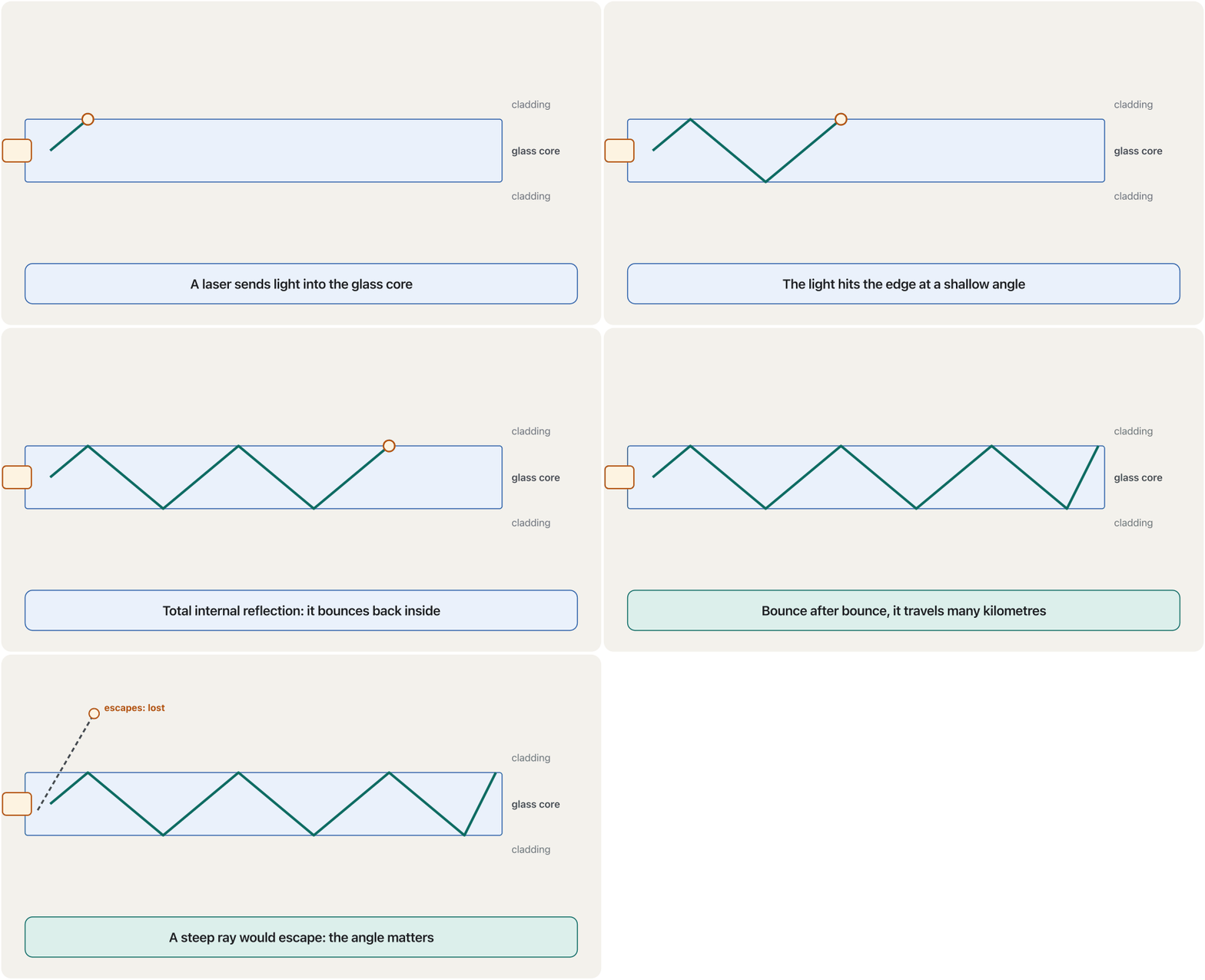
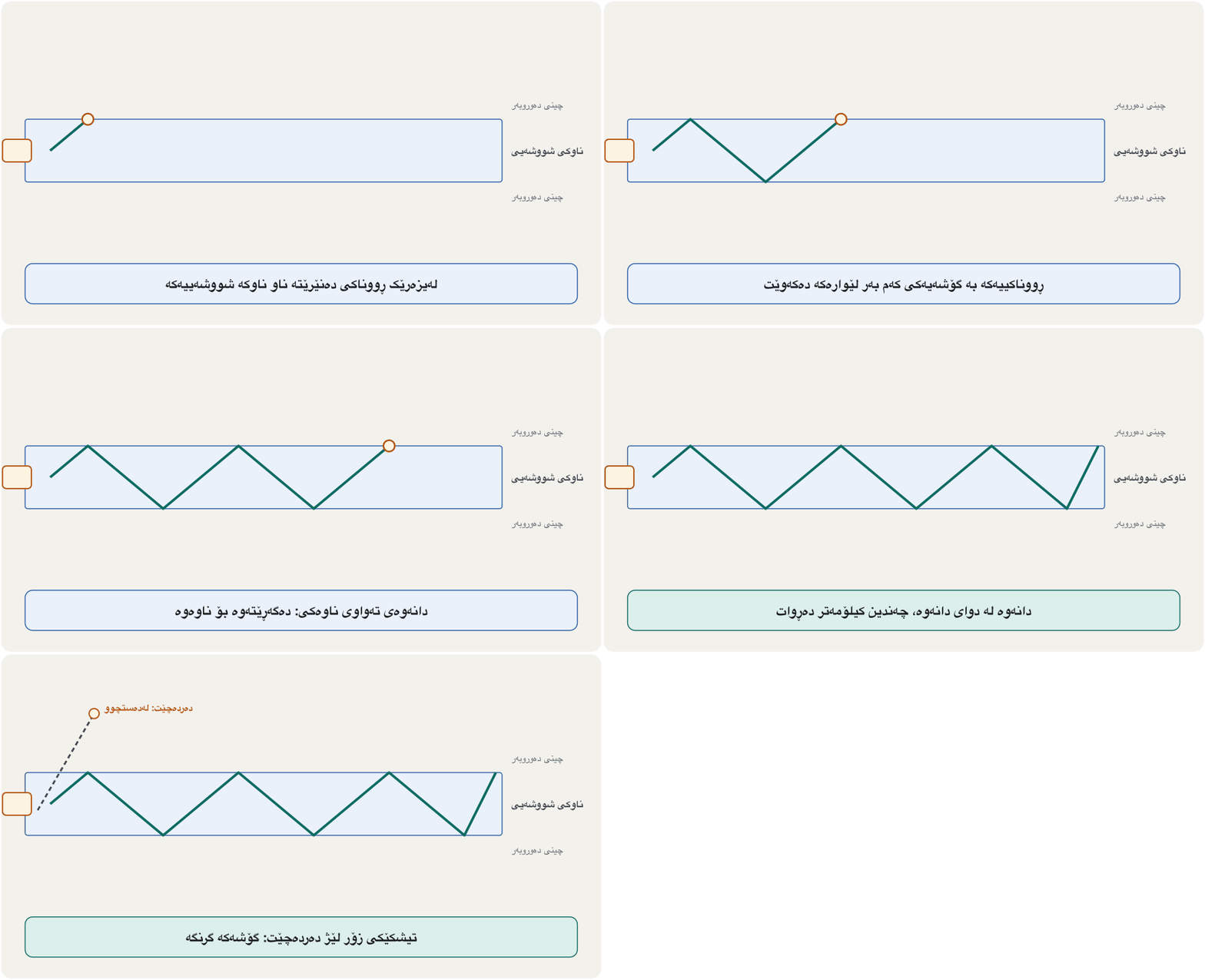
When light inside glass hits the edge at a shallow angle, none of it escapes: it all reflects back inside. This keeps light in the core of a , because the core's glass bends light more than the cladding around it.
کاتێک ڕووناکی لەناو شووشەدا بە گۆشەیەکی کەم بەر لێوارەکە دەکەوێت، هیچی دەرناچێت: هەمووی دەداتەوە بۆ ناوەوە. ئەمە ڕووناکی لە ناوکی دەهێڵێتەوە، چونکە شووشەی ناوکەکە زیاتر لە چینی دەوروبەری ڕووناکی دەچەمێنێتەوە.
How light stays inside a glass fibre by total internal reflection, why repeaters are needed, and where fibre is used.
ڕووناکی چۆن بە لەناو دەزووی شووشەدا دەمێنێتەوە، بۆچی پێویستن و لە کوێ بەکار دێت.
Plays 0:00-4:53: refraction, total internal reflection, the fibre and its uses; stops before the sponsor.
لە 0:00 تا 4:53 پەخش دەبێت: شکانەوەی ڕووناکی، ، فایبەرەکە و بەکارهێنانەکانی؛ پێش ڕیکلامی سپۆنسەر ڕادەوەستێت.
Fibre-optic cable: data as lightکێبڵی فایبەر ئۆپتیک: دراوە وەک ڕووناکی
Why fibre, and whereبۆچی فایبەر و لە کوێ؟
| Advantagesسوودەکان | Disadvantagesکەموکورتییەکان |
|---|---|
| Huge bandwidth: tens to hundreds of Gb/s on one colour of light, and many colours can share one fibre زۆر گەورە: دەیان تا سەدان Gb/s لەسەر یەک ڕەنگی ڕووناکی و چەندین ڕەنگ دەتوانن یەک فایبەر هاوبەش بکەن | Glass breaks if bent too sharplyشووشە دەشکێت ئەگەر زۆر بچەمێنرێتەوە |
| Very low loss: tens of kilometres without a repeaterلەدەستچوونی زۆر کەم: دەیان کیلۆمەتر بێ | Joining two fibres needs special tools (splicing)بەستنەوەی دوو فایبەر ئامرازی تایبەتی پێویستە (splicing) |
| Immune to electrical noise and lightning; carries no electricityبەرگەی و هەورەتریشقە دەگرێت؛ کارەبا ناگوازێتەوە | Equipment at each end costs more than copperئامێرەکانی هەر سەرێک لە مس گرانترن |
| Hard to tap secretlyبە نهێنی گوێگرتن لێی قورسە | Cannot carry power to a device (copper Ethernet can)ناتوانێت وزە بۆ ئامێرێک ببات (Ethernetـی مس دەتوانێت) |
Fibre is the backbone of the internet: under the seas, between cities and to the masts of the mobile network. More and more homes in many cities, including in the Kurdistan Region, now get fibre to the home (FTTH) (ways to connect): the fibre ends in a small box (ONT) that turns light back into Ethernet and Wi-Fi.
فایبەر بڕبڕەی پشتی : لە ژێر دەریاکاندا، لە نێوان شارەکاندا و تا تاوەرەکانی . ماڵی زیاتر و زیاتر لە زۆر شاردا، لەوانە لە هەرێمی کوردستان، ئێستا فایبەر تا ماڵ (FTTH) وەردەگرن (ڕێگاکانی پەیوەستبوون): فایبەرەکە لە سندووقێکی بچووکدا (ONT) کۆتایی دێت کە ڕووناکی دەکاتەوە بە Ethernet و .
Fibre-optic cable: data as lightکێبڵی فایبەر ئۆپتیک: دراوە وەک ڕووناکی
Fibre modes: multimode and single-modeجۆرەکانی فایبەر: فرەمۆد و تاکمۆد
A mode is one path that light can take through the core. The course names three kinds of fibre:
مۆد یەک ڕێڕەوە کە ڕووناکی دەتوانێت بە ناو ناوکەکەدا بیگرێت. وانەکە سێ جۆر فایبەر ناو دەبات:
- Multimode, step-index: a wide core (50 or 62.5 µm) with a sharp edge. Rays at different angles take paths of different lengths, so a short pulse spreads out — fine for tens of metres.
- Multimode, graded-index: the glass changes slowly from the centre outwards, so the rays bend gently and arrive nearly together — the usual multimode fibre in buildings and data centres.
- Single-mode: a core of about 9 µm lets only one path through. A laser feeds it, and the light reaches many kilometres: provider networks, links between cities and the fibre to your home.
- فرەمۆد، step-index: ناوکێکی پان (50 یان 62.5 µm) بە لێوارێکی تیژ. تیشکەکان بە گۆشەی جیاواز ڕێڕەوی درێژیی جیاواز دەگرن، بۆیە لێدانێکی کورت بڵاو دەبێتەوە — بۆ دەیان مەتر باشە.
- فرەمۆد، graded-index: شووشەکە لە ناوەڕاستەوە بۆ دەرەوە بە هێواشی دەگۆڕێت، بۆیە تیشکەکان بە نەرمی دەچەمێنەوە و نزیکەی پێکەوە دەگەن — ئاسایی لە بینا و .
- تاکمۆد: ناوکێکی نزیکەی 9 µm تەنها ڕێگە بە یەک ڕێڕەو دەدات. لەیزەرێک ڕووناکی تێدەکات و ڕووناکییەکە دەگاتە چەندین کیلۆمەتر: دابینکەر، بەستنەوەی نێوان شارەکان و ئەو فایبەرەی دەگاتە ماڵەکەت.
with a very thin glass core (about 9 µm) that carries light along one path only. A laser sends the light, and it reaches many kilometres: it links cities, countries and many homes.
کە ناوکێکی شووشەیی زۆر باریکی هەیە (نزیکەی 9 µm) و ڕووناکی تەنها بە یەک ڕێڕەودا دەبات. لەیزەرێک ڕووناکییەکە دەنێرێت و دەگاتە چەندین کیلۆمەتر: شار، وڵات و زۆرێک لە ماڵەکان پێکەوە دەبەستێت.
with a wider core (50 or 62.5 µm) in which light travels along many paths at once. It is cheaper to connect but works only over short distances, such as inside a building or a data centre. Step-index and graded-index are its two kinds.
کە ناوکێکی پانتری هەیە (50 یان 62.5 µm) و ڕووناکی بە چەندین ڕێڕەودا پێکەوە تێیدا دەڕوات. بەستنەوەی هەرزانترە، بەڵام تەنها بۆ دووریی کورت کار دەکات، وەک ناو بینایەک یان . دوو جۆری هەیە: step-index و graded-index.
Wireless media: radio, microwave and infraredهۆکارەکانی گواستنەوەی بێتەل: ڕادیۆ، مایکرۆوەیڤ و ژێرسوور
Unguided media are electromagnetic waves — the same family as light, but at frequencies our eyes cannot see. The frequency changes how they behave:
ڕێنمایینەکراو شەپۆلی کارۆموگناتیسین — هەمان خێزانی ڕووناکی، بەڵام بە کە چاومان نایبینێت. ڕەفتاریان دەگۆڕێت:
| Waveشەپۆل | Frequencies (textbook) (کتێب) | How it behavesچۆن ڕەفتار دەکات | Examplesنموونە |
|---|---|---|---|
| Radio wavesشەپۆلی ڕادیۆیی | 3 kHz – 1 GHz | Spread in all directions and pass through walls; lower frequencies go furtherبۆ هەموو لایەک بڵاو دەبنەوە و بە ناو دیواردا تێدەپەڕن؛ نزمتر دوورتر دەڕوات | AM/FM radio, TV broadcasting, cordless phones, low 4G/5G bandsڕادیۆی AM/FM، پەخشی تیڤی، تەلەفۆنی بێتەلی ماڵ، باندە نزمەکانی 4G/5G |
| Microwavesمایکرۆوەیڤ | 1 – 300 GHz | Higher frequencies; with a dish they go in a narrow beam that needs a clear line of sight بەرزتر؛ بە دیش وەک تیشکێکی تەسک دەڕۆن کە پێویستی بە هێڵێکی بینینی ڕوون هەیە | Dish links between towers; satellites; Wi-Fi, Bluetooth and most 4G/5G (with small antennas)بەستنەوەی دیش لە نێوان تاوەرەکاندا؛ مانگی دەستکرد؛ ، و زۆربەی 4G/5G (بە ئەنتێنەی بچووک) |
| Infraredژێرسوور | 300 GHz – 400 THz | Very short range; blocked by walls and by your handتەنها بۆ دووریی زۆر کورت؛ دیوار و دەستت ڕێگای لێ دەگرن | TV remote controls, some sensorsڕیمۆتی تیڤی، هەندێک هەستەوەر |
Wireless media: radio, microwave and infraredهۆکارەکانی گواستنەوەی بێتەل: ڕادیۆ، مایکرۆوەیڤ و ژێرسوور
Radio or microwave? Where the line isڕادیۆ یان مایکرۆوەیڤ؟ سنوورەکە لە کوێیە
Wi-Fi generations: Wi-Fi 6, 6E and 7نەوەکانی وایفای: Wi-Fi 6، 6E و 7
Wi-Fi is the radio standard for local wireless networks (IEEE 802.11). Since 2018 the Wi-Fi Alliance gives the generations simple numbers, so you can compare a router and a phone at a glance:
ستانداردی ڕادیۆییە بۆ ناوخۆیی (IEEE 802.11). لە 2018ـەوە Wi-Fi Alliance ژمارەی سادە دەداتە نەوەکان، بۆ ئەوەی بە یەک سەیرکردن و مۆبایلێک بەراورد بکەیت:
| Generationنەوە | Bandsباندەکان | Widest channelپانترین کەناڵ | What it broughtچی هێنا |
|---|---|---|---|
| Wi-Fi 5 (802.11ac) | 5 GHz | 160 MHz | Gigabit Wi-Fi in homesWi-Fiـی گیگابیتی لە ماڵەکاندا |
| Wi-Fi 6 (802.11ax) | 2.4 + 5 GHz | 160 MHz | Shares the channel better among many devices (OFDMA); saves phone batteryکەناڵەکە باشتر لە نێوان چەندین ئامێردا دابەش دەکات (OFDMA)؛ پاتریی مۆبایل دەپارێزێت |
| Wi-Fi 6E | + 6 GHz | 160 MHz | A new, empty 6 GHz band: less interferenceباندێکی نوێ و بەتاڵی 6 GHz: تێکچوونی کەمتر |
| Wi-Fi 7 (802.11be) | 2.4 + 5 + 6 GHz | 320 MHz | Twice as wide channels, 4K-QAM, Multi-Link Operation (several bands at once)کەناڵی دوو هێندە پانتر، 4K-QAM، Multi-Link Operation (چەند باندێک پێکەوە) |
| Wi-Fi 8 (802.11bn) | — | — | Still a draft (Draft 2.0 in 2026; final approval planned for 2028); aims at reliability more than speedهێشتا پێشنووسە (پێشنووسی 2.0 لە 2026دا؛ پەسەندکردنی کۆتایی بۆ 2028 دانراوە)؛ ئامانجی متمانەپێکراوییە زیاتر لە خێرایی |
Wi-Fi 6, 6E and 7: what each new generation adds in speed, bands (2.4, 5 and 6 GHz) and crowded-room performance.
6، 6E و 7: هەر نەوەیەکی نوێ چی زیاد دەکات لە خێرایی، باندەکان (2.4، 5 و 6 GHz) و کارکردن لە ژووری قەرەباڵغدا.
Plays 4:47-8:22 only: Wi-Fi 6, Wi-Fi 6E and Wi-Fi 7.
تەنها لە 4:47 تا 8:22 پەخش دەبێت: 6، 6E و 7.
Bluetooth, mobile networks and satellitesBluetooth، ڕایەڵەکانی مۆبایل و مانگی دەستکرد
Bluetooth also uses the 2.4 GHz band, but at low power for short links around one person: earbuds, keyboards, smartwatches, a phone sharing a file with a laptop. Classic Bluetooth carries 1 to 3 Mbit/s, and Bluetooth Low Energy (for watches and sensors) 1 or 2 Mbit/s. The range depends on the radio and its power — from less than a metre to more than a kilometre; everyday devices reach about 10 m.
باندی 2.4 GHz بەکار دەهێنێت، بەڵام بە وزەی کەم بۆ بەستنەوەی کورت بە دەوری یەک کەسدا: ، ، کاتژمێری زیرەک، مۆبایلێک کە فایلێک لەگەڵ هاوبەش دەکات. کلاسیک 1 تا 3 Mbit/s دەبات و Bluetooth Low Energy (بۆ کاتژمێر و هەستەوەر) 1 یان 2 Mbit/s. دووریی گەیشتن بەستراوەتەوە بە ڕادیۆکە و وزەکەی — لە کەمتر لە مەترێکەوە تا زیاتر لە کیلۆمەترێک؛ ئامێرە ئاساییەکان نزیکەی 10 مەتر دەگەن.
Mobile networks (4G, 5G) cover whole countries with radio cells around base stations, and the towers are joined to the rest of the network by fibre or microwave. How cells, handover and the generations from 1G to 6G work is taught in Cellular Networks and Mobile Generations; 5G's targets (20 Gbit/s peak, 1 ms delay for critical uses) are explained there.
(4G، 5G) بە خانەی ڕادیۆیی بە دەوری هەموو وڵاتێک دادەپۆشن و تاوەرەکان بە فایبەر یان مایکرۆوەیڤ بە بەشەکەی تری بەستراون. خانەکان، گواستنەوە لە خانەیەکەوە بۆ خانەیەکی تر و لە 1Gـەوە تا 6G چۆن کار دەکەن لە ڕایەڵەکانی مۆبایل و نەوەکانی ڕایەڵەی مۆبایلـدا ڕوون کراوەتەوە؛ ئامانجەکانی 5G (20 Gbit/s لە لووتکەدا، 1 ms بۆ بەکارهێنانی هەستیار) لەوێ ڕوون کراونەتەوە.
Bluetooth, mobile networks and satellitesBluetooth، ڕایەڵەکانی مۆبایل و مانگی دەستکرد
Satellites: GEO and LEOمانگی دەستکرد: GEO و LEO
Satellites reach places with no cables and no towers: ships, planes, mountain villages. Classic TV and internet satellites hang in geostationary orbit, 35,786 km above the equator. The distance alone makes them slow to answer:
مانگی دەستکرد دەگاتە ئەو شوێنانەی نە کێبڵیان هەیە نە تاوەر: کەشتی، فڕۆکە، گوندی شاخاوی. مانگە دەستکردە کلاسیکییەکانی تیڤی و لە سووڕگەی جێگیر (geostationary)دان، 35,786 کیلۆمەتر لە سەرووی هێڵی یەکسانەوە. تەنها ئەم دوورییە وا دەکات وەڵامدانەوەیان خاو بێت:
Each line is one trip up to the satellite and down again. A question and its answer each make that trip, so a geostationary link adds almost half a second of latency. Low-Earth-orbit (LEO) satellites fly only about 550 km up, so the distance adds only a few milliseconds; with the other stops on the way, Starlink's median latency in early-2025 Ookla tests was about 45 ms, against about 680 ms for geostationary services.
هەر دێڕێک یەک گەشتە بۆ سەرەوە بۆ لای مانگە دەستکردەکە و گەڕانەوە بۆ خوارەوە. پرسیارێک و وەڵامەکەی هەر یەکەیان ئەو گەشتە دەکەن، بۆیە بەستنەوەیەکی جێگیر نزیکەی نیو چرکە زیاد دەکات. مانگە دەستکردەکانی سووڕگەی نزم (LEO) تەنها نزیکەی 550 کیلۆمەتر بەرزن، بۆیە دوورییەکە تەنها چەند ملیچرکەیەک زیاد دەکات؛ لەگەڵ وێستگەکانی تری ڕێگا، ناوەندی Starlink لە تاقیکردنەوەکانی Ookla لە سەرەتای 2025دا نزیکەی 45 ms بوو، بەرامبەر نزیکەی 680 ms بۆ خزمەتگوزارییە جێگیرەکان.
Choosing a mediumهەڵبژاردنی هۆکارێک
| Mediumهۆکار | Typical speedخێرایی ئاسایی | Distanceدووری | Noise | Best forباشترین بۆ |
|---|---|---|---|---|
| Twisted pair (Cat 6/6A) (Cat 6/6A) | 1–10 Gb/s | 100 m | Fair (twists help)مامناوەند (بادان یارمەتی دەدات) | Desks, printers, access points in a buildingمێز، ، لە بینایەکدا |
| Coaxial (RG-6) (RG-6) | TV channels, cable internetکەناڵی تیڤی، ئینتەرنێتی کێبڵ | Tens to hundreds of metresدەیان تا سەدان مەتر | Good (shield)باش (ڕووپۆش) | Satellite TV, CCTVتیڤیی مانگی دەستکرد، CCTV |
| Fibre optic | 10–400 Gb/s and more10–400 Gb/s و زیاتر | Up to many kilometresتا چەندین کیلۆمەتر | Immuneکاری تێناکات | Backbones, buildings, homes (FTTH)بڕبڕەی پشت، بینا، ماڵ (FTTH) |
| Wi-Fi | Hundreds of Mb/s to a few Gb/sسەدان Mb/s تا چەند Gb/sێک | Tens of metres, through wallsدەیان مەتر، بە ناو دیواردا | Shared air, interferenceهەوای هاوبەش، تێکچوون | Phones and laptops that moveمۆبایل و کە دەجووڵێن |
| 4G/5G | Tens to hundreds of Mb/sدەیان تا سەدان Mb/s | Kilometres from a towerچەند کیلۆمەترێک لە تاوەرێکەوە | Shared, weather and wallsهاوبەش، کەشوهەوا و دیوار | Anywhere on the moveهەر شوێنێک لە کاتی جووڵەدا |
| Satelliteمانگی دەستکرد | Tens to hundreds of Mb/sدەیان تا سەدان Mb/s | The whole Earthهەموو زەوی | Rain can weaken itباران دەتوانێت لاوازی بکات | Ships, planes, remote villagesکەشتی، فڕۆکە، گوندی دوور |
Common mistakesهەڵە باوەکان
| Mistakeهەڵە | What is trueڕاستییەکە |
|---|---|
| "Fibre carries electricity very fast."«فایبەر کارەبا زۆر خێرا دەگوازێتەوە.» | Fibre carries light; it carries no electric current at all.فایبەر ڕووناکی دەگوازێتەوە؛ هیچ تەزوویەکی کارەبا ناگوازێتەوە. |
| "Any Ethernet cable can run 10 Gb/s for 100 m."«هەر کێبڵێکی Ethernet دەتوانێت 10 Gb/s بۆ 100 مەتر ببات.» | Only Cat 6A (or better) does; Cat 6 manages 10 Gb/s only up to about 35 m.تەنها Cat 6A (یان باشتر)؛ Cat 6 تەنها تا نزیکەی 35 مەتر 10 Gb/s دەبات. |
| "Coaxial cable is today's Ethernet cable."« کێبڵی Ethernetـی ئەمڕۆیە.» | Coax Ethernet ended in the 1990s; coax is now for TV, satellite and CCTV.Ethernetـی coax لە ساڵانی 1990دا کۆتایی هات؛ ئێستا بۆ تیڤی، مانگی دەستکرد و CCTVـیە. |
| "A Wi-Fi 7 router gives Wi-Fi 7 speed to every device."« Wi-Fi 7 خێرایی Wi-Fi 7 دەداتە هەموو ئامێرێک.» | Both ends must support Wi-Fi 7; old phones stay at their own generation.هەردوو سەر دەبێت پشتگیری Wi-Fi 7 بکەن؛ مۆبایلە کۆنەکان لە نەوەی خۆیاندا دەمێننەوە. |
| "Shielded cable is always better."«کێبڵی پارێزراو هەمیشە باشترە.» | STP helps near strong noise but costs more and must be earthed; UTP is right for most homes and offices. لە نزیک بەهێزدا یارمەتی دەدات، بەڵام گرانترە و دەبێت بە زەوی ببەسترێت؛ بۆ زۆربەی ماڵ و ئۆفیسەکان دروستە. |
Exercisesڕاهێنانەکان
Sort these and name the medium: (a) the cable from a satellite dish to the receiver; (b) the link between your phone and your earbuds; (c) the cable from the wall socket to your desktop; (d) the line from the provider to the ONT box at home; (e) a TV remote control.
ئەمانە پۆلێن بکە و هۆکارەکە ناو ببە: (أ) کێبڵی نێوان دیشی مانگی دەستکرد و ڕیسیڤەر؛ (ب) بەستنەوەی نێوان مۆبایلەکەت و ؛ (ج) کێبڵی نێوان دەرچەی دیوار و ؛ (د) هێڵی نێوان دابینکەرەکە و سندووقی ONT لە ماڵەوە؛ (هـ) ڕیمۆتی تیڤی.
Show answerوەڵامەکە پیشان بدە
Guided: (a) coaxial RG-6; (c) twisted pair with RJ-45; (d) single-mode fibre. Unguided: (b) radio waves (Bluetooth); (e) infrared.
ڕێنماییکراو: (أ) RG-6؛ (ج) بە ؛ (د) . ڕێنمایینەکراو: (ب) شەپۆلی ڕادیۆیی ()؛ (هـ) ژێرسوور.
List the layers of a coaxial cable and of a fibre-optic cable, from the centre outwards.
چینەکانی و لە ناوەڕاستەوە بۆ دەرەوە ڕیز بکە.
Show answerوەڵامەکە پیشان بدە
Coaxial: copper wire, insulating material, woven or braided metal, plastic outer coating. Fibre: core, cladding, coating, strength member, outer jacket.
: وایەری مس، ماددەی دابڕاو، کانزای چنراو، بەرگی پلاستیکیی دەرەوە. فایبەر: ناوک، چینی دەوروبەر، ڕووپۆش، ڕیشاڵی بەهێزکەر، بەرگی دەرەوە.
A ship uses a geostationary satellite (35,786 km up). Estimate the shortest time for a message to go ship → satellite → ground station, and for a question and its answer.
کەشتییەک مانگێکی دەستکردی جێگیر بەکار دەهێنێت (35,786 کیلۆمەتر بەرز). کەمترین کات بۆ ڕۆیشتنی نامەیەک لە کەشتییەوە ← مانگی دەستکرد ← وێستگەی سەر زەوی، هەروەها بۆ پرسیارێک و وەڵامەکەی، بخەمڵێنە.
Show answerوەڵامەکە پیشان بدە
About a quarter of a second one way and half a second for a question and answer, before any processing.
نزیکەی چارەکە چرکەیەک بۆ یەک ڕێگا و نیو چرکە بۆ پرسیار و وەڵام، پێش هەر چارەسەرکردنێک.
Name the two types of twisted-pair cable and give three differences between them.
دوو جۆرەکەی ناو ببە و سێ جیاوازییان بڵێ.
Show answerوەڵامەکە پیشان بدە
| UTP (unshielded) | STP (shielded) | |
|---|---|---|
| Shieldڕووپۆش | none: the twists alone fight noiseنییە: تەنها بادانەکان بەرگەی دەگرن | metal foil or braid around the pairsپەڕەی کانزایی یان تۆڕی چنراو بە دەوری جووتەکاندا |
| Noise | more easily disturbed near motors and power cablesلە نزیک بزوێنەر و کێبڵی کارەبادا زووتر تێک دەچێت | better protected; the shield must be earthedباشتر پارێزراوە؛ ڕووپۆشەکە دەبێت بە زەوی ببەسترێت |
| Cost and handlingنرخ و بەکارهێنان | cheapest, thin, easy to bend and installهەرزانترین، باریک، ئاسان بۆ چەماندنەوە و دامەزراندن | dearer, thicker and stifferگرانتر، ئەستوورتر و ڕەقتر |
| Typical placeشوێنی ئاسایی | homes, offices, schoolsماڵ، ئۆفیس، قوتابخانە | factories, hospitals; Cat 8 linksکارگە، نەخۆشخانە؛ بەستنەوەی Cat 8 |
Summaryپوختە
- Guided media are cables (twisted pair, coaxial, fibre); unguided media are wireless (radio, microwave, infrared).
- Twisted pairs cancel noise; UTP has no shield, STP has one; categories Cat 5e/6/6A/8 set speed and distance (100 m, Cat 8 30 m).
- Coax: copper core, insulation, braided shield, jacket; RG-6 for TV and satellite today; coax Ethernet is history.
- Fibre: core, cladding, coating, strength member, jacket; light stays in by total internal reflection; multimode (step/graded-index) for short links, single-mode for kilometres.
- Connectors: RJ-45 (twisted pair), BNC/SMA/F (coax), SC/FC/LC (fibre).
- Wi-Fi 6 shares better, 6E adds 6 GHz, Wi-Fi 7 adds 320 MHz channels and Multi-Link; Wi-Fi 8 is a draft.
- Radio waves (about 3 kHz–1 GHz) spread everywhere; microwaves (1–300 GHz) need a line of sight with dishes; infrared (300 GHz–400 THz) is very short range.
- Bluetooth (1–3 Mbit/s classic, 1–2 Mbit/s LE) for short personal links, 4G/5G for anywhere, satellites for remote places: GEO adds about half a second, LEO only tens of milliseconds.
- ڕێنماییکراو کێبڵن (، ، فایبەر)؛ ڕێنمایینەکراوەکان (ڕادیۆ، مایکرۆوەیڤ، ژێرسوور).
- جووتە بادراوەکان لادەبەن؛ ڕووپۆشی نییە و هەیەتی؛ پۆلەکانی Cat 5e/6/6A/8 خێرایی و دووری دیاری دەکەن (100 m، Cat 8 30 m).
- : ناوکی مس، دابڕاو، ڕووپۆشی چنراو، بەرگ؛ ئەمڕۆ RG-6 بۆ تیڤی و مانگی دەستکرد؛ Ethernetـی coax مێژووە.
- فایبەر: ناوک، چینی دەوروبەر، ڕووپۆش، ڕیشاڵی بەهێزکەر، بەرگ؛ ڕووناکی بە لە ناوەوە دەمێنێتەوە؛ فرەمۆد (step/graded-index) بۆ بەستنەوەی کورت، تاکمۆد بۆ کیلۆمەترەکان.
- : ()، BNC/SMA/F ()، SC/FC/LC (فایبەر).
- Wi-Fi 6 باشتر دابەش دەکات، 6E باندی 6 GHz زیاد دەکات، Wi-Fi 7 کەناڵی 320 MHz و Multi-Link زیاد دەکات؛ Wi-Fi 8 پێشنووسە.
- شەپۆلی ڕادیۆیی (نزیکەی 3 kHz تا 1 GHz) بۆ هەموو لایەک بڵاو دەبێتەوە؛ مایکرۆوەیڤ (1 تا 300 GHz) بە دیش هێڵی بینینی دەوێت؛ ژێرسوور (300 GHz تا 400 THz) تەنها بۆ دووریی زۆر کورتە.
- (کلاسیک 1 تا 3 Mbit/s، LE 1 تا 2 Mbit/s) بۆ بەستنەوەی کورتی کەسی، 4G/5G بۆ هەموو شوێنێک، مانگی دەستکرد بۆ شوێنی دوور: GEO نزیکەی نیو چرکە زیاد دەکات، LEO تەنها دەیان ملیچرکە.
Why does fibre have no problem with electrical noise?بۆچی فایبەر کێشەی لەگەڵ ژاوەژاو نییە؟
It carries light in glass, not electric current, so electrical fields cannot disturb the signal.
ڕووناکی لە شووشەدا دەبات نەک تەزووی کارەبا، بۆیە بواری کارەبایی ناتوانێت تێک بدات.
Which cable would you put between a desk PC and a switch 40 m away?کام کێبڵ لە نێوان کۆمپیوتەرێکی سەر مێز و سویچێک دادەنێیت کە 40 مەتر دوورە؟
A Cat 6 or Cat 6A UTP cable with RJ-45 plugs.
کێبڵێکی Cat 6 یان Cat 6A بە سەری .
Videoڤیدیۆ
Watch a videoسەیری ڤیدیۆیەک بکە
A video that viewers liked a lot and praised in their comments, chosen for this lesson.ڤیدیۆیەک کە بینەران زۆریان پێ خۆش بووە و لە کۆمێنتەکانیاندا ستایشیان کردووە، بۆ ئەم وانەیە هەڵبژێردراوە.
In Kurdish: the main kinds of network cable, then CAT cables in detail: categories and speeds, RJ45 connectors, UTP and STP.
بە کوردی: جۆرە سەرەکییەکانی کێبڵی ، پاشان کێبڵی CAT بە وردی: جۆرەکانی و خێراییەکانیان، ، (UTP) و (STP).
Kurdish (Sorani), plays 0:00-13:35: network cables and their kinds, then CAT (twisted-pair) cables in detail. The straight/crossover part is left out.
بە کوردیی سۆرانی، لە 0:00 تا 13:35 پەخش دەبێت: کێبڵەکانی و جۆرەکانیان، پاشان کێبڵی CAT () بە وردی. بەشی کێبڵی ڕاستەوخۆ و چەپەوانە (straight/crossover) لابراوە.
Lesson complete!وانەکە تەواو بوو!
Well done. Review the key terms, then go on to the next lesson.دەستخۆش. سەیرێکی زاراوە سەرەکییەکان بکەرەوە، پاشان بڕۆ بۆ وانەی داهاتوو.
Key termsزاراوە سەرەکییەکان
Data Communication: Modes, Switching and Protocolsپەیوەندیی دراوە: شێوازەکانی ناردن، سویچکردن و پرۆتۆکۆڵەکان
Related lecturesوانە پەیوەندیدارەکان
- Computer Communicationsپەیوەندیی کۆمپیوتەر
- Ports and Connectorsدەرچەکان و سەرەکانی کێبڵ
- Mobile Technology and Wireless Networksتەکنەلۆژیای مۆبایل و ڕایەڵە بێتەلەکان
- Cellular Networks and Mobile Generationsڕایەڵەکانی مۆبایل و نەوەکانی ڕایەڵەی مۆبایل
- Networksڕایەڵەکان
- Data Communication: Modes, Switching and Protocolsپەیوەندیی دراوە: شێوازەکانی ناردن، سویچکردن و پرۆتۆکۆڵەکان
- Network Hardware: NICs, Switches and Routersڕەقەواڵەی ڕایەڵە: کارتی ڕایەڵە، سویچ و ڕێدۆز
References and further readingسەرچاوەکان و خوێندنەوەی زیاتر
- Fluke Networks: Ethernet cable history (Cat 5e, 6, 6A, 8)
- Fluke Networks: Category 8 cable testing (30 m, 2 GHz)
- Fluke Networks: Coax cable — RG6 and RG59 today
- Wikipedia: Optical fiber (core, cladding, total internal reflection, single-mode and multimode)
- Wi-Fi Alliance: Wi-Fi CERTIFIED 6
- Wi-Fi Alliance: Wi-Fi CERTIFIED 7 (320 MHz channels, MLO, 4K QAM)
- Intel: What is Wi-Fi 7? (46 Gbps theoretical, 5.8 Gbps for 2x2 devices)
- IEEE 802.11 working group timelines (802.11be, 802.11bn)
- Bluetooth SIG: Understanding Bluetooth range
- ITU-R M.2410: Minimum requirements for IMT-2020 (5G)
- Bluetooth SIG: Technology overview (BR 1 Mb/s, EDR 2–3 Mb/s, LE 1M/2M PHY, 2.4 GHz ISM band)
- NASA Science: Microwaves (the high-frequency end of the radio spectrum)
- Light Reading: Starlink vs GEO satellite operators, Ookla Q1 2025 (median latency 45 ms vs about 683–684 ms)
This lecture is a first edition. The Kurdish text and terminology are waiting for review by Kurdish IT teachers.ئەم وانەیە چاپی یەکەمە. دەقە کوردییەکە و زاراوەکانی چاوەڕێی پێداچوونەوەی مامۆستایانی کوردی بواری IT ن.