Chapterبەش 6 · Lectureوانە 6.3
Reading Maths in Kurdish, Arabic and English Booksخوێندنەوەی بیرکاری لە کتێبی کوردی، عەرەبی و ئینگلیزیدا
How the same maths looks in an English book, in a Kurdish book or exam paper of the Kurdistan Region, and in Arabic-script notation you may meet: what KRG exams write (Latin letters, 0–9, decimal point, spaced thousands, , f o g, «و» and «،»), a reading table for س, د(س), حا, لو, نها and مجـ, what is mirrored and what never flips, traps in mixed lines, handout habits with their book forms, and what to do when you are not sure.
هەمان بیرکاری چۆن دەردەکەوێت لە کتێبێکی ئینگلیزی، لە کتێب یان پەڕەی تاقیکردنەوەی هەرێمی کوردستان و لەو نووسینە پیتی عەرەبییەی کە لەوانەیە بیبینیت: تاقیکردنەوەکانی هەرێم چی دەنووسن (پیتی لاتینی، 0–9، بە خاڵ، هەزاران بە بۆشایی، ، f o g، «و» و «،»)، خشتەیەکی خوێندنەوە بۆ س، د(س)، حا، لو، نها و مجـ، چی ئاوێنەیی دەبێت و چی هەرگیز ناگۆڕێت، تەڵەکانی دێڕی تێکەڵ، خووەکانی مەلزەمە لەگەڵ شێوەکانیان لە کتێبدا و چی بکەیت کاتێک دڵنیا نیت.
What you will learnچی فێر دەبیت
- Read the same formula in an English book, a Kurdish book or KRG exam, and right-to-left Arabic-script notation.
- Recognise the habits of KRG exam papers: Latin letters, 0–9, decimal point, spaced thousands, , f o g, «و» and «،».
- Translate between international and Arabic-script notation (س, د(س), حا, لو, نها, مجـ, ٠–٩, ٫).
- Know what is mirrored and what never flips, and read mixed right-to-left lines without being tricked.
- Turn handout habits into book forms, and check unclear symbols in the right way.
- هەمان لە کتێبی ئینگلیزی، کتێبی کوردی یان تاقیکردنەوەی هەرێم و نووسینی پیتی عەرەبیدا بخوێنیتەوە.
- خووەکانی پەڕەکانی تاقیکردنەوەی هەرێم بناسیتەوە: پیتی لاتینی، 0–9، بە خاڵ، هەزاران بە بۆشایی، ، f o g، «و» و «،».
- لە نێوان نووسینی نێودەوڵەتی و پیتی عەرەبیدا وەربگێڕیت (س، د(س)، حا، لو، نها، مجـ، ٠–٩، ٫).
- بزانیت چی ئاوێنەیی دەبێت و چی هەرگیز ناگۆڕێت و دێڕی تێکەڵی بێ هەڵخەڵەتان بخوێنیتەوە.
- خووەکانی مەلزەمە بگۆڕیت بۆ شێوەکانی کتێب و ناڕوون بە ڕێگەی دروست بپشکنیت.
One exercise, three kinds of bookیەک ڕاهێنان، سێ جۆر کتێب
Open three maths books and the same exercise can look quite different. An English book runs its text and its formulas from left to right. A grade-12 exam paper of the Kurdistan Region (2024–25) writes the Kurdish words from right to left, but every formula from left to right, with Latin letters and the digits 0 to 9. And in older books, books of the Arabic curriculum or some teachers’ notes you may meet a third system: formulas written from right to left, with Arabic letters and Eastern digits.
سێ کتێبی بیرکاری بکەرەوە و دەبینیت هەمان ڕاهێنان دەتوانێت زۆر جیاواز دەربکەوێت. کتێبی ئینگلیزی دەق و دەنووسێت. پەڕەیەکی تاقیکردنەوەی پۆلی 12ـی هەرێمی کوردستان (2024–25) وشە کوردییەکان دەنووسێت، بەڵام هەموو ، بە پیتی لاتینی و 0 تا 9. لە کتێبی کۆن، کتێبی پرۆگرامی عەرەبی یان تێبینیی هەندێک مامۆستادا لەوانەیە سیستەمی سێیەم ببینیت: نووسراون، بە پیتی عەرەبی و .
Underneath, the maths is the same: the equation and its answer do not change, only the direction, the letters and the digits. This lesson shows how to read all three, and the traps of lines that mix two directions. It builds on Formulas run left to right and Two sets of digits.
لە ژێرەوە بیرکارییەکە هەمانە: و وەڵامەکەی ناگۆڕێن، تەنیا ئاڕاستە، پیت و دەگۆڕێن. ئەم وانەیە پیشانت دەدات چۆن هەر سێکیان بخوێنیتەوە، هەروەها تەڵەکانی ئەو دێڕانەی دوو ئاڕاستە تێکەڵ دەکەن. لەسەر فۆرمولەکان چەپ بۆ ڕاستن و دوو کۆمەڵە تاکژمارە بنیات نراوە.
How Kurdistan Region exam papers write mathsپەڕەکانی تاقیکردنەوەی هەرێمی کوردستان چۆن بیرکاری دەنووسن
The grade-12 maths exams of the Kurdistan Region (2024–25, first round, literary and scientific tracks) show clear habits. The picture is our own example page with the same habits, not a copy of a real paper:
تاقیکردنەوەکانی بیرکاریی پۆلی 12ـی هەرێمی کوردستان (2024–25، خولی یەکەم، بەشی وێژەیی و زانستی) خووی ڕوونیان هەیە. وێنەکە لاپەڕەیەکی نموونەی خۆمانە بە هەمان خووەکان، نەک کۆپیی پەڕەیەکی ڕاستەقینە:
- Kurdish words run right to left; formulas run left to right, with Latin letters (x, y, f(x)) and the digits 0–9; answer choices are labelled A, B, C, D.
- A decimal point (, ) and a space between the thousands ().
- Intervals with reversed brackets and a signed infinity: , (The style of the Kurdistan Region’s exams, The reversed-bracket notation).
- Composition with the letter o: (f after g, Definition and notation); sin, lim, log and ln in Latin letters.
- Kurdish words between formulas: «و» joins two conditions, «،» separates the numbers of a list, sets keep braces with Latin commas, and points are separated by a semicolon.
- وشە کوردییەکان ؛ ، بە پیتی لاتینی (x، y، f(x)) و 0–9؛ وەڵامە هەڵبژاردەکان بە A، B، C، D ناو دەنرێن.
- بە خاڵ (، ) و بۆشایی لە نێوان هەزارەکاندا ().
- بە کەوانەی پێچەوانە و بە نیشانەوە: ، (شێوازی تاقیکردنەوەکانی هەرێم، نووسینی کەوانەی پێچەوانە).
- بە پیتی o: (f لە دوای g، پێناسە و نووسین)؛ sin، lim، log و ln بە پیتی لاتینی.
- وشەی کوردی لە نێوان : «و» دوو مەرج پێکەوە دەبەستێت، «،» ژمارەکانی لیستێک جیا دەکاتەوە، کەوانەی لوول و کۆمای لاتینی دەهێڵنەوە و خاڵەکان بە خاڵبەند (;) لە یەک جیا دەکرێنەوە.
How Kurdistan Region exam papers write mathsپەڕەکانی تاقیکردنەوەی هەرێمی کوردستان چۆن بیرکاری دەنووسن
School words for the same symbolsوشەی قوتابخانە بۆ هەمان هێماکان
School books and exams also use their own Kurdish words for some ideas. The symbols are the same, so know both words: the table puts CêIT’s word beside the school word, and the picture shows three of them. The matrix words are compared in Kurdish words in CêIT and in school books, the function words in , , codomain and image.
کتێب و تاقیکردنەوەکانی قوتابخانە بۆ هەندێک بیرۆکە وشەی کوردیی خۆیان بەکار دەهێنن. وەک یەکن، بۆیە هەردوو وشەکە بزانە: خشتەکە وشەی CêIT لە تەنیشت وشەی قوتابخانەوە دادەنێت و وێنەکە سێیان پیشان دەدات. وشەکانی لە وشە کوردییەکان لە CêIT و لە کتێبەکانی قوتابخانەدا بەراورد کراون، وشەکانی لە ، ، بواری بەرامبەر و وێنەدا.
| Symbol | CêIT saysCêIT دەڵێت | School books, KRG examsکتێبی قوتابخانە، تاقیکردنەوەکانی هەرێم |
|---|---|---|
| function | نەخشە | |
| domain of f f | بواری نەخشە | |
| range of f f | مەودای نەخشە | |
| matrix | ڕیزکراوە | |
| , | determinant | سنووردەر |
| inverse matrix | هەڵگەڕاوەی ڕیزکراوە | |
| correlation coefficient | هاوکۆلکەی پەیوەستی | |
| DNE | does not exist (a limit)بوونی نییە () | بوونی نییە |
You may meet: formulas written right to left with Arabic lettersلەوانەیە بیبینیت: فۆرمولەیەک کە ڕاست بۆ چەپ بە پیتی عەرەبی نووسراوە
Some books write the whole formula from right to left. Two references describe this Arabic notation: a W3C note (2006) for North Africa and the Middle East, and an overview with examples from Morocco, Egypt, Syria and Iran; neither of them describes Iraq. In such books the unknowns are Arabic letters (س for x, ص for y, ع for z), د(س) is f(x), the digits are ٠ to ٩ and the decimal sign is ٫. You may meet them in older books, in books of the Arabic curriculum or in teachers’ notes; the Kurdistan Region’s grade-12 exams of 2024–25 use the left-to-right system.
هەندێک کتێب هەموو دەنووسن. دوو سەرچاوە ئەم نووسینە عەرەبییە باس دەکەن: تێبینییەکی W3C (2006) بۆ باکووری ئەفریقا و ڕۆژهەڵاتی ناوەڕاست و پێداچوونەوەیەک بە نموونەی مەغریب، میسر، سووریا و ئێران؛ هیچیان باسی عێراق ناکەن. لەم جۆرە کتێبانەدا نەزانراوەکان پیتی عەرەبین (س بۆ x، ص بۆ y، ع بۆ z)، د(س) واتە f(x)، ٠ تا ٩ن و ٫ـە. لەوانەیە لە کتێبی کۆن، کتێبی پرۆگرامی عەرەبی یان تێبینیی مامۆستایاندا بیانبینیت؛ تاقیکردنەوەکانی پۆلی 12ـی هەرێمی کوردستان لە 2024–25ـدا سیستەمی بەکار دەهێنن.
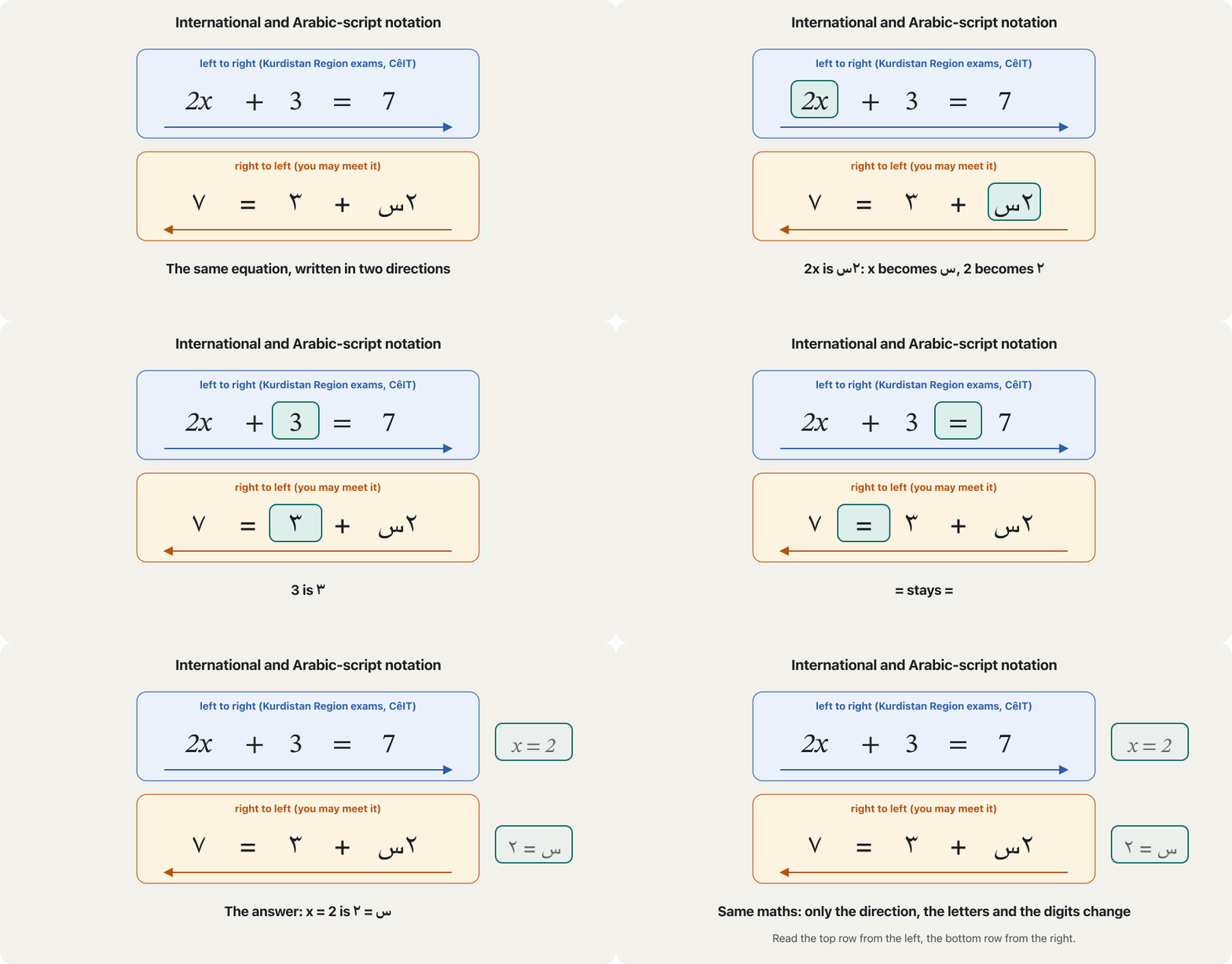
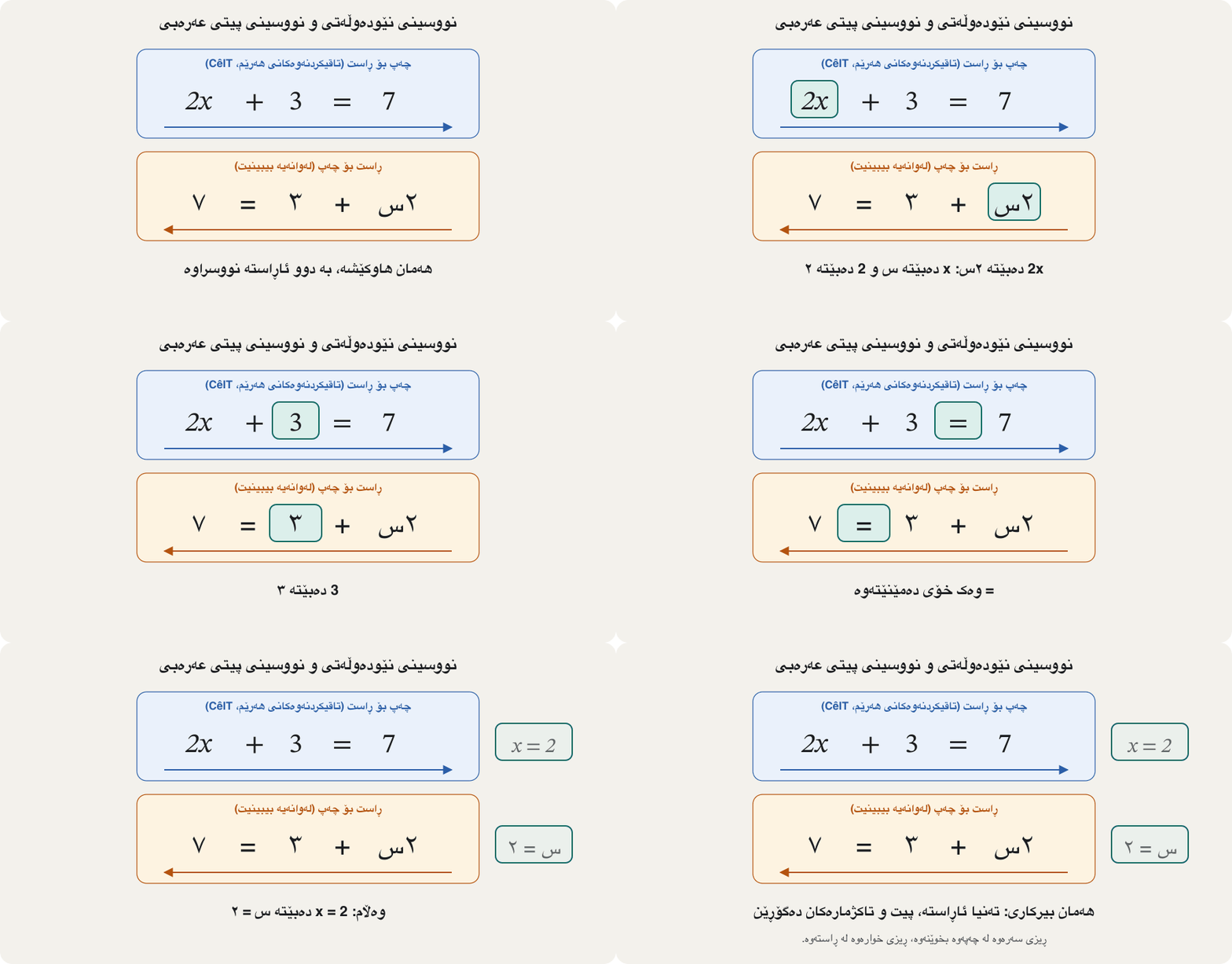
Read such a formula from the right: ٢س + ٣ = ٧ is . The order of the parts is reversed, but every number keeps its own digit order: ٢٠٢٦ is 2026.
ئەم جۆرە لە ڕاستەوە بخوێنەوە: ٢س + ٣ = ٧ واتە . ڕیزبەندیی بەشەکان پێچەوانەیە، بەڵام هەموو ژمارەیەک ڕیزبەندیی خۆی دەهێڵێتەوە: ٢٠٢٦ واتە 2026.
A reading table: international ↔ Arabic scriptخشتەی خوێندنەوە: نێودەوڵەتی ↔ پیتی عەرەبی
Use the table to translate in both directions. The function names are short Arabic words: حا (or جا) for sin, لو for log, لط (also لوھ) for ln, نها for lim, مجـ for Σ and جـذ for Π. The trigonometric names, with and without dots, are explained in Arabic-script names for sin, cos and tan.
خشتەکە بەکار بهێنە بۆ وەرگێڕان لە هەردوو ئاڕاستەدا. ناوی وشەی کورتی عەرەبین: حا (یان جا) بۆ sin، لو بۆ log، لط (هەروەها لوھ) بۆ ln، نها بۆ lim، مجـ بۆ Σ و جـذ بۆ Π. ناوەکانی سێگۆشەناسی، بە خاڵ و بێ خاڵ، لە ناوی پیتی عەرەبی بۆ sin، cos و tanـدا ڕوون کراونەتەوە.
Two details trick readers. A minus sign may stand on the left of the digits, so in right-to-left reading it comes last: ٣− is −3. And signs such as < are drawn as a mirror image: ٣ < ٧ still says that 3 is less than 7.
دوو وردەکاری خوێنەر هەڵدەخەڵەتێنن. نیشانەی لەوانەیە لە لای چەپی بێت، بۆیە لە خوێندنەوەی لە کۆتاییدا دێت: ٣− واتە −3. هەروەها نیشانەی وەک < وەک وێنەی ئاوێنە دەکێشرێن: ٣ < ٧ هێشتا دەڵێت 3 لە 7 بچووکترە.
What is mirrored, and what never flipsچی ئاوێنەیی دەبێت و چی هەرگیز ناگۆڕێت
When a formula runs from right to left, the meaning of every sign stays the same. The digit order inside a number never flips: ٢٠٢٦ and 2026 both have the biggest place on the left. A bracket still opens towards what it holds, and < still opens towards the bigger number. What changes is the drawing: signs that point one way, such as √, ∑, ∫, <, ∈ and the brackets, are drawn as mirror images. Unicode calls these characters mirrored, and mirroring keeps a reversed-bracket interval looking like (UTR #25). Unicode also stores the Kurdish letters themselves (Your turn: Kurdish in Unicode).
کاتێک دەنووسرێت، واتای هەموو نیشانەیەک وەک خۆی دەمێنێتەوە. ڕیزبەندیی لە ناو ژمارەیەکدا هەرگیز پێچەوانە نابێتەوە: ٢٠٢٦ و 2026 هەردووکیان گەورەترین پلەیان لە لای چەپە. کەوانە هێشتا بەرەو ئەوەی تێیدایە دەکرێتەوە و < هێشتا بەرەو ژمارە گەورەکە دەکرێتەوە. ئەوەی دەگۆڕێت کێشانەکەیە: ئەو نیشانانەی ئاڕاستەیان هەیە، وەک √، ∑، ∫، <، ∈ و کەوانەکان، وەک وێنەی ئاوێنە دەکێشرێن. بە لەم جۆرە دەڵێت mirrored و ئاوێنەکردن وا دەکات کەوانە پێچەوانەی هەر وەک دیار بێت (UTR #25). پیتە کوردییەکانیش هەڵدەگرێت (نۆرەی تۆ: کوردی لە Unicodeـدا).
Arrows are not mirrored automatically: in a right-to-left formula the writer has to type the arrow that points the right way, such as ⇐ for “implies”. For the same reason CêIT writes «←» for “then” in Kurdish sentences (One arrow, four jobs).
تیرەکان خۆکارانە ئاوێنەیی نابن: لە نووسەر دەبێت ئەو تیرە بنووسێت کە بەرەو ئاڕاستەی ڕاست دەڕوات، وەک ⇐ بۆ «دەگەیەنێت». هەر بەم هۆیەوە CêIT لە ڕستە کوردییەکاندا بۆ «پاشان» «←» دەنووسێت (یەک تیر، چوار کار).
Mixed lines that trick the eyeدێڕی تێکەڵ کە چاو هەڵدەخەڵەتێنن
A line that mixes Kurdish words with numbers can look wrong even when it was typed correctly, because the computer orders it with the bidirectional algorithm. The cards show what you may see in notes, chats and some printed pages: a list of numbers that starts on the right, the school year printed as 2025-2024, the % sign on the left of the number, a minus sign that jumps to the other side, shown as , and points that are read from the right.
دێڕێک کە وشەی کوردی و ژمارە تێکەڵ دەکات دەتوانێت هەڵە دیار بێت، تەنانەت ئەگەر بە دروستیش نووسرابێت، چونکە بە ڕیزی دەکات. کارتەکان ئەوە پیشان دەدەن کە لەوانەیە لە تێبینی، چات و هەندێک لاپەڕەی چاپکراودا ببینیت: لیستێکی ژمارە کە لە ڕاستەوە دەست پێدەکات، ساڵی خوێندن کە وەک 2025-2024 چاپ کراوە، نیشانەی % لە لای چەپی ژمارەکە، نیشانەی کە بازدەدات بۆ لای تر، کە وەک دەردەکەوێت و خاڵەکان کە لە ڕاستەوە دەخوێنرێنەوە.
When a line looks strange, read its numbers from the right: that is the order in which they were typed. How to type such lines without traps is in Formulas inside a Kurdish sentence; for web pages, see Mixed text: English words and numbers in Kurdish.
کاتێک دێڕێک سەیر دیار بوو، ژمارەکانی لە ڕاستەوە بخوێنەوە: ئەوە ئەو ڕیزبەندییەیە کە پێی نووسراون. چۆن ئەم جۆرە دێڕانە بێ تەڵە بنووسیت لە فۆرمولە لە ناو ڕستەیەکی کوردیدا هەیە؛ بۆ بڕوانە دەقی تێکەڵ: وشەی ئینگلیزی و ژمارە لە کوردیدا.
Handout habits and their book formsخووی مەلزەمەکان و شێوەکانیان لە کتێبدا
The handouts (مەلزەمە) of some lecturers have private habits. Read them, but write the book form, which every reader understands:
مەلزەمەی هەندێک مامۆستای زانکۆ خووی تایبەتی خۆیان هەیە. بیانخوێنەوە، بەڵام شێوەی کتێب بنووسە، کە هەموو خوێنەرێک لێی تێدەگات:
- “S.S = {(−∞, −3), (2, 7)}” means the union (Answers in pieces).
- is (Handout forms, Definition).
- and are and : the bigger number is how many there are (Counting symbols, Permutations).
- is (Small marks, different meanings).
- A capital for a whole population: books write (Handout symbols and book symbols).
- “Ir” for the irrational numbers is (How the letters are printed).
- is ; for a function of one variable is ( and ); one complex number written Z is a small z (Capital and small letters).
- «S.S = {(−∞, −3), (2, 7)}» واتە (وەڵام بە پارچە).
- واتە (شێوەکانی مەلزەمە، پێناسە).
- و واتە و : ژمارە گەورەکە ژمارەی هەمووانە (هێماکانی ژماردن، گۆڕینەکان).
- واتە (نیشانەی بچووک، واتای جیاواز).
- ـی گەورە بۆ هەموو : کتێبەکان دەنووسن (هێماکانی مەلزەمە و هێماکانی کتێب).
- «Ir» بۆ واتە (پیتەکان چۆن چاپ دەکرێن).
- واتە ؛ بۆ یەک واتە ( و )؛ کە بە Z نووسرابێت z بچووکە (پیتی گەورە و بچووک).
Algebra began in an Arabic book, without symbolsجەبر لە کتێبێکی عەرەبییەوە دەستی پێکرد، بێ هێما
The word algebra comes from the Arabic الجبر (al-jabr), from the title of a book by Muhammad ibn Musa al-Khwarizmi, written in Baghdad around 820. It solves equations completely in words, with geometric drawings, and uses no symbols at all. The symbols came centuries later: + and − in print in 1489, = in 1557 (A little history, The equals sign). The right-to-left notation of this lesson is called modern Arabic mathematical notation: it is much younger than al-Khwarizmi’s book.
وشەی (بە ئینگلیزی algebra) لە وشەی عەرەبیی الجبرـەوە هاتووە، لە ناونیشانی کتێبێکی محەممەد کوڕی مووسای خوارەزمی، کە نزیکەی ساڵی 820 لە بەغدا نووسراوە. ئەو کتێبە بە تەواوی بە وشە و لەگەڵ وێنەی ئەندازەیی شیکار دەکات. هیچ بەکار ناهێنێت. سەدان ساڵ دواتر هاتن: + و − لە چاپدا لە 1489 و = لە 1557 (کەمێک مێژوو، هێمای یەکسان). ئەو نووسینە ئەم وانەیە پێی دەوترێت عەرەبیی نوێ: زۆر لە کتێبەکەی خوارەزمی گەنجترە.
When you are not sureکاتێک دڵنیا نیت
Books do not all use the same symbols, and some handouts invent their own. When a symbol puzzles you, do not guess from its shape. Look for the book’s list of symbols (often after the contents page), read the context (the subject, the units, the words around the formula), compare with another book or with the Symbol dictionary, and ask your teacher. One question in class can save an exam answer.
هەموو کتێبەکان هەمان بەکار ناهێنن و هەندێک مەلزەمە خۆیان دادەهێنن. کاتێک سەرت لێ دەشێوێنێت، لە شێوەکەیەوە مەزانە. بەدوای لیستی کتێبەکەدا بگەڕێ (زۆرجار لە دوای لاپەڕەی ناوەڕۆک)، دەوروبەرەکە بخوێنەوە (بابەت، یەکەکان و وشەکانی دەوروبەری )، لەگەڵ کتێبێکی تر یان فەرهەنگی هێماکان بەراوردی بکە و پرسیار لە مامۆستای پۆلەکەت بکە. پرسیارێک لە پۆلدا دەتوانێت وەڵامێکی تاقیکردنەوە ڕزگار بکات.
Common mistakesهەڵە باوەکان
| Mistakeهەڵە | Why it is wrongبۆچی هەڵەیە | Do thisئەمە بکە |
|---|---|---|
| Reading an Arabic-script formula from the leftخوێندنەوەی پیتی عەرەبی لە چەپەوە | The parts come out in reverse orderبەشەکان بە ڕیزی پێچەوانە دەردەکەون | Start at the right: ص = ٢س − ٥ is لە ڕاستەوە دەست پێبکە: ص = ٢س − ٥ واتە |
| Taking for a printing mistakeوا زانینی وەک هەڵەی چاپ | KRG exams and French books use it for an open intervalتاقیکردنەوەکانی هەرێم و کتێبی فەرەنسی بۆ بەکاری دەهێنن | Read it as وەک بیخوێنەوە |
| Reading “f o g” as a wordخوێندنەوەی «f o g» وەک وشە | It is composition, ، | Say “f after g”: بڵێ «f لە دوای g»: |
| Taking ٫ for a comma or ٠ for a dotوا زانینی ٫ وەک کۆما یان ٠ وەک خاڵ | ٫ is the decimal sign and ٠ is zero٫ و ٠ سفرە | ٣٫٥ = 3.5 and ١٠ = 10٣٫٥ = 3.5 و ١٠ = 10 |
| Copying a handout’s “S.S = {…}” or into your answerکۆپیکردنی «S.S = {…}» یان ـی مەلزەمە بۆ وەڵامەکەت | Other readers may not know the private formلەوانەیە خوێنەرانی تر شێوە تایبەتییەکە نەزانن | Write and و بنووسە |
| Reading a year printed as 2025-2024 backwardsخوێندنەوەی ساڵێک کە وەک 2025-2024 چاپ کراوە بە پێچەوانە | The line was ordered right to leftدێڕەکە ڕیز کراوە | The first year is on the rightساڵی یەکەم لە لای ڕاستە |
| Thinking a mirrored √ or ∑ is a new symbolوا زانینی √ یان ∑ـی ئاوێنەیی وەک نوێ | It is the same symbol drawn for right-to-left writingهەمان کە بۆ نووسینی کێشراوە | Read it as √ or ∑وەک √ یان ∑ بیخوێنەوە |
Practiceڕاهێنان
(a) Write ص = ٣س + ٢ in international notation. (b) Write لو ١٠٠ = ٢ in international notation and check it. (c) Write in Arabic script.
(a) ص = ٣س + ٢ بە نووسینی نێودەوڵەتی بنووسە. (b) لو ١٠٠ = ٢ بە نووسینی نێودەوڵەتی بنووسە و بیپشکنە. (c) بە پیتی عەرەبی بنووسە.
Hintئاماژە
Start at the right end of each strip; keep the digit order of every number.
لە لای ڕاستی هەر دێڕێکەوە دەست پێبکە؛ ڕیزبەندیی هەر ژمارەیەک بهێڵەرەوە.
Show answerوەڵامەکە پیشان بدە
- (a) Read from the right: .
- (b) : true for base 10, because .
- (c) ص = ٥س − ١, read from the right: y equals 5x minus 1.
- (a) لە ڕاستەوە بخوێنەوە: .
- (b) : بۆ 10 ڕاستە، چونکە .
- (c) ص = ٥س − ١، لە ڕاستەوە دەخوێنرێتەوە: y یەکسانە بە 5x کەم 1.
Read this exam-style question of our own aloud in English and in Kurdish, then answer it: if and , find .
ئەم پرسیارەی خۆمان، کە وەک تاقیکردنەوەیە، بە ئینگلیزی و بە کوردی بە دەنگی بەرز بخوێنەوە، پاشان وەڵامی بدەرەوە: ئەگەر و بێت، بدۆزەوە.
Show answerوەڵامەکە پیشان بدە
- English: “If f of x equals 2x minus 1 and g of x equals x squared, find f after g of 3.”
- Kurdish: ئەگەر fـی x یەکسان بێت بە 2x کەم 1 و gـی x یەکسان بێت بە x دووجا، f لە دوای gـی 3 بدۆزەوە.
- Answer: g works first, ; then .
- ئینگلیزی: If f of x equals 2x minus 1 and g of x equals x squared, find f after g of 3.
- کوردی: «ئەگەر fـی x یەکسان بێت بە 2x کەم 1 و gـی x یەکسان بێت بە x دووجا، f لە دوای gـی 3 بدۆزەوە.»
- وەڵام: g یەکەم جار کار دەکات، ؛ پاشان .
Write the book form: (a) “S.S = {[−3, 12)}” (b) (c) (d) (e) for the mean mark of all 40 students of one class, when the class is the whole group studied.
شێوەی کتێب بنووسە: (a) «S.S = {[−3, 12)}» (b) (c) (d) (e) بۆ نمرەی هەر 40 خوێندکاری پۆلێک، کاتێک پۆلەکە هەموو ئەو گرووپەیە کە لێی دەکۆڵرێتەوە.
Show answerوەڵامەکە پیشان بدە
- (a) : braces around one interval are not needed.
- (b) , the natural logarithm.
- (c) : 2 out of 5, in order.
- (d) : the product of the two outputs.
- (e) : the 40 students are the whole population here.
- (a) : کەوانەی لوول بە دەوری یەک پێویست نییە.
- (b) ، .
- (c) ، واتە 2 لە 5 بە ڕیزەوە.
- (d) ، واتە ئەنجامی دوو .
- (e) : لێرەدا 40 خوێندکارەکە هەموو .
Summaryپوختە
- English books write text and formulas left to right; the KRG grade-12 exams write Kurdish right to left and formulas left to right, with Latin letters and 0–9.
- KRG habits: decimal point, spaced thousands, and , f o g, «و» between conditions, «،» between list items.
- You may meet right-to-left Arabic-script formulas: س ص ع for x y z, د(س) for f(x), حا لو نها مجـ, ٠–٩ and ٫. Read them from the right.
- Digit order never flips; signs keep their meaning; √ ∑ ∫ < ∈ and brackets are drawn mirrored in right-to-left formulas, arrows are not.
- Mixed lines may show lists, years, % and minus signs in surprising places: read the numbers from the right.
- Read handout habits (S.S, , , , for a population, Ir), but write the book forms; when unsure, check the list of symbols and ask.
- When a symbol is new to you, look it up: How to look up a symbol you do not know and Symbols with several meanings in the Symbol dictionary.
- کتێبی ئینگلیزی دەق و دەنووسێت؛ تاقیکردنەوەکانی پۆلی 12ـی هەرێم کوردی و دەنووسن، بە پیتی لاتینی و 0–9.
- خووەکانی هەرێم: بە خاڵ، هەزاران بە بۆشایی، و ، f o g، «و» لە نێوان مەرجەکاندا، «،» لە نێوان ژمارەکانی لیستدا.
- لەوانەیە پیتی عەرەبی ببینیت: س ص ع بۆ x y z، د(س) بۆ f(x)، حا لو نها مجـ، ٠–٩ و ٫. لە ڕاستەوە بیانخوێنەوە.
- ڕیزبەندیی هەرگیز ناگۆڕێت؛ نیشانەکان واتای خۆیان دەهێڵنەوە؛ √ ∑ ∫
<∈ و کەوانەکان لە ئاوێنەیی دەکێشرێن، تیرەکان نا. - دێڕی تێکەڵ لەوانەیە لیست، ساڵ، % و نیشانەی لە شوێنی سەیردا پیشان بدات: ژمارەکان لە ڕاستەوە بخوێنەوە.
- خووەکانی مەلزەمە بخوێنەوە (S.S، ، ، ، بۆ ، Ir)، بەڵام شێوەکانی کتێب بنووسە؛ کاتێک دڵنیا نیت، لیستی بپشکنە و بپرسە.
- کاتێک بۆت نوێیە، بیدۆزەرەوە: چۆن هێمایەک بدۆزیتەوە کە نایناسیت و هێماکان بە چەند واتا لە فەرهەنگی .
How do KRG exams write an open interval from 2 to 5?تاقیکردنەوەکانی هەرێم ماوەیەکی کراوە لە 2ـەوە تا 5 چۆن دەنووسن؟
, read like .
، وەک دەخوێنرێتەوە.
What is ٣٫٥?٣٫٥ چییە؟
3.5: ٣ and ٥ are Eastern digits and ٫ is the decimal sign.
3.5: ٣ و ٥ و ٫ .
Is a mirrored ∑ a different symbol?ئایا ∑ـی ئاوێنەیی هێمایەکی ترە؟
No: it is the same sum, drawn for a right-to-left formula.
نەخێر: هەمان کۆیە، کە بۆ کێشراوە.
Lesson complete!وانەکە تەواو بوو!
Well done. Review the key terms, then go on to the next lesson.دەستخۆش. سەیرێکی زاراوە سەرەکییەکان بکەرەوە، پاشان بڕۆ بۆ وانەی داهاتوو.
Key termsزاراوە سەرەکییەکان
The Symbol Dictionaryفەرهەنگی هێماکان
Related lecturesوانە پەیوەندیدارەکان
- Inequalities, Infinity and Intervalsلاسەنگەکان، بێسنوور و ماوەکان
- Function Notation: f(x), Arrows, Inverses and Compositionنووسینی نەخشەیی: ، تیرەکان، پێچەوانە و ئاوێتەکردن
- Exponents and Logarithms: eˣ, log, ln, lg and lbتوانەکان و لۆگاریتمەکان: eˣ، log، ln، lg و lb
- Geometry and Trigonometry Symbolsهێماکانی ئەندازەزانی و سێگۆشەزانی
- Probability and Statistics Symbolsهێماکانی ئەگەر و ئامار
- Typing Mathematics: Keyboards, Word, LaTeX and Unicodeچۆن بیرکاری بنووسیت: کیبۆرد، Word، LaTeX و Unicode
- The Symbol Dictionaryفەرهەنگی هێماکان
- Intervals and the Number Lineماوەکان و هێڵی ژمارەکان
- Logarithms and Their Rulesلۆگاریتمەکان و یاساکانیان
- Composition of Functionsئاوێتەکردنی نەخشەکان
- Counting and Permutationsژماردن و گۆڕینەکان
- ASCII and Character CodesASCII و کۆدەکانی نووسە
- Kurdish and Bilingual Websites: Right to Leftتۆڕگەکانی کوردی و دووزمانە: ڕاست بۆ چەپ
References and further readingسەرچاوەکان و خوێندنەوەی زیاتر
- KRG Ministry of Education, grade-12 general exams 2024–2025, first round, mathematics (literary and scientific tracks), model answers
- W3C Interest Group Note: Arabic mathematical notation (2006; Moroccan, Maghreb, Machrek and Persian styles; mirrored symbols)
- Wikipedia: Modern Arabic mathematical notation (Arabic letters for variables and functions, mirrored ∑ √ ∫, ٫ and ٬, minus position; examples from Morocco, Egypt, Syria and Iran)
- Unicode Technical Report #25: Unicode Support for Mathematics, §4.2 Bidirectional Layout of Mathematical Text (mirroring keeps ]a, b[; arrows are not mirrored)
- Unicode CLDR: Central Kurdish (ckb) number symbols (٫ decimal, ٬ group, ٪ percent)
- Wikimedia Commons: Bodleian MS. Huntington 214, al-Khwarizmi’s al-Jabr (copy of 1342), fol. 4v–5r, public domain
This lecture is a first edition. The Kurdish text and terminology are waiting for review by Kurdish IT teachers.ئەم وانەیە چاپی یەکەمە. دەقە کوردییەکە و زاراوەکانی چاوەڕێی پێداچوونەوەی مامۆستایانی کوردی بواری IT ن.