Chapterبەش 4 · Lectureوانە 4.5
Logarithms and Their Rulesلۆگاریتمەکان و یاساکانیان
The logarithm as the inverse of the exponential function: what means, its domain and graph, the natural and common logarithms, the seven rules (with the corrected rule 3), change of base in Python, and how counts the steps of binary search and the bits of a code.
وەک توانی: واتای چییە، و هێڵکارییەکەی، و ، حەوت یاساکە (یاسای 3 ڕاستکراوە)، لە Pythonـدا و چۆن هەنگاوەکانی و کۆدێک دەژمێرێت.
What you will learnچی فێر دەبیت
- Switch between and and evaluate simple logarithms.
- Explain why is the inverse of and give its domain and range .
- Use the seven rules of logarithms, including the corrected reciprocal rule and the change-of-base formula.
- Count binary-search steps and bits with and compute logarithms in Python.
- لە نێوان و ـدا بگۆڕە و سادە بژمێرە.
- ڕوون بکەرەوە بۆچی ـە و و ـی بڵێ.
- حەوت یاساکەی بەکاربهێنە، لەوانە یاسای ڕاستکراوەی یەک بەسەر و .
- هەنگاوەکانی و بە بژمێرە و لە Pythonـدا بژمێرە.
The question a logarithm answersئەو پرسیارەی لۆگاریتم وەڵامی دەداتەوە
An exponential function answers: 2 to the power 3 is what? Answer: 8. A logarithm asks the question the other way round: 2 to which power gives 8? Answer: 3. We write
وەڵامی ئەم پرسیارە دەداتەوە: 2 بە 3 دەکاتە چەند؟ وەڵام: 8. پرسیارەکە بە پێچەوانەوە دەکات: 2 بە چ توانێک دەکاتە 8؟ وەڵام: 3. دەنووسین
Read: "log base 2 of 8 is 3", because . The logarithm is an exponent.
دەخوێنرێتەوە: « 8 بە 2 دەکاتە 3»، چونکە . خۆی .
In computing, counts how many times you can halve n before 1 is left: is three halvings, so . That is exactly the work of a search that throws away half of a list at every step.
لە کۆمپیوتەردا دەژمێرێت چەند جار دەتوانیت n نیوە بکەیتەوە تا 1 بمێنێتەوە: سێ جار نیوەکردنە، بۆیە . ئەمە ڕێک کاری گەڕانێکە کە لە هەر هەنگاوێکدا نیوەی لیستێک فڕێ دەدات.
Karwan thinks of a whole number from 1 to 100 and only answers "higher" or "lower". If you always guess the middle of what is left, every answer throws away half. Since , you never need more than 7 guesses: , rounded up.
کاروان لە 1 تا 100 لە دڵی خۆیدا دادەنێت و تەنها دەڵێت «بەرزتر» یان «نزمتر». ئەگەر هەمیشە ناوەڕاستی ئەوەی ماوەتەوە مەزەندە بکەیت، هەر وەڵامێک نیوەی دەخاتە دەرەوە. لەبەر ئەوەی ، هەرگیز پێویستت بە زیاتر لە 7 مەزەندە نییە: ، بەرەو سەرەوە.
Where the analogy stops workingسنووری ئەم نموونەیە
It works only because every answer splits what is left into two halves. Asking "is it 37?" removes just one number, and then you may need 100 guesses.
تەنها لەبەر ئەوە کار دەکات کە هەر وەڵامێک ئەوەی ماوەتەوە دەکاتە دوو نیوە. پرسیاری «ئایا 37ـە؟» تەنها یەک ژمارە لادەبات و ئەو کاتە لەوانەیە پێویستت بە 100 مەزەندە بێت.
Definition: means پێناسە: واتە
The logarithm is the exponent you must put on the base a to get x: . It is the inverse of ; its domain is .
لۆگاریتمی ئەو کە دەبێت بخرێتە سەر بنچینەی a تا x بەدەست بێت: . پێچەوانەی ـە و بوارەکەی ـە.
Both sentences say the same fact. To find a logarithm, ask: a to which power gives x?
هەردوو ڕستەکە هەمان ڕاستی دەڵێن. بۆ دۆزینەوەی بپرسە: a بە چ توانێک دەکاتە x؟
The notes list logarithmic functions such as , and . The notes write the base on the left; most books write it as a small number on the right: , and . The last example shows that the input of a logarithm can be any expression, but it must be positive.
تێبینییەکان وەک ، و دەژمێرن. تێبینییەکان لە لای چەپ دەنووسن؛ زۆربەی کتێبەکان بە ژمارەیەکی بچووک لە لای ڕاست دەینووسن: ، و . نموونەی کۆتایی پیشان دەدات کە دەکرێت هەر بێت، بەڵام دەبێت موجەب بێت.
| Powerتوان | Logarithm | In wordsبە وشە |
|---|---|---|
| 10 to the 3rd is 100010 بە توانی 3 دەکاتە 1000 | ||
| a fraction gives a negative log سالب دەدات | ||
| one halving backwardsیەک نیوەکردن بەرەو دواوە | ||
| two decimal placesدوو | ||
| the log of 1 is always 0 1 هەمیشە 0ـە | ||
| the log of the base is always 1 هەمیشە 1ـە |
A calm lesson on what a logarithm is: the exponent that turns the base into the number, with worked examples and the usual default bases.
وانەیەکی ئارام دەربارەی ئەوەی چییە: ئەو کە دەکاتە ژمارەکە، لەگەڵ نموونەی چارەسەرکراو و باوەکان.
y = log_a x means a^y = x, worked slowly with examples; 7:56 which base 'log' means when no base is written.
واتە ، بە هێواشی و بە نموونە؛ 7:56 کاتێک هیچ نەنووسرابێت، «» کام .
The inverse of the exponential functionپێچەوانەی نەخشەی توانی
The notes never connect logarithms to exponentials, but this is the key idea. is one-to-one: different exponents give different results. So it has an inverse function, and that inverse is . Each one undoes the other:
تێبینییەکان هەرگیز بە نابەستنەوە، بەڵام ئەمە بیرۆکە سەرەکییەکەیە. : جیاواز ئەنجامی جیاواز دەدەن. بۆیە پێچەوانەیەکی نەخشەی هەیە و ئەو پێچەوانەیە ـە. هەر یەکێکیان کاری ئەوی تر هەڵدەوەشێنێتەوە:
The first undoes the power for every real x; the second undoes the logarithm for every .
یەکەمیان بۆ هەموو xێکی ڕاستی کاری توانەکە هەڵدەوەشێنێتەوە؛ دووەمیان بۆ هەموو کاری هەڵدەوەشێنێتەوە.
The notes give the domain and range: for a base , and . They are exactly the range and domain of , swapped. There is no logarithm of 0 or of a negative number, because is always positive: no exponent y gives or .
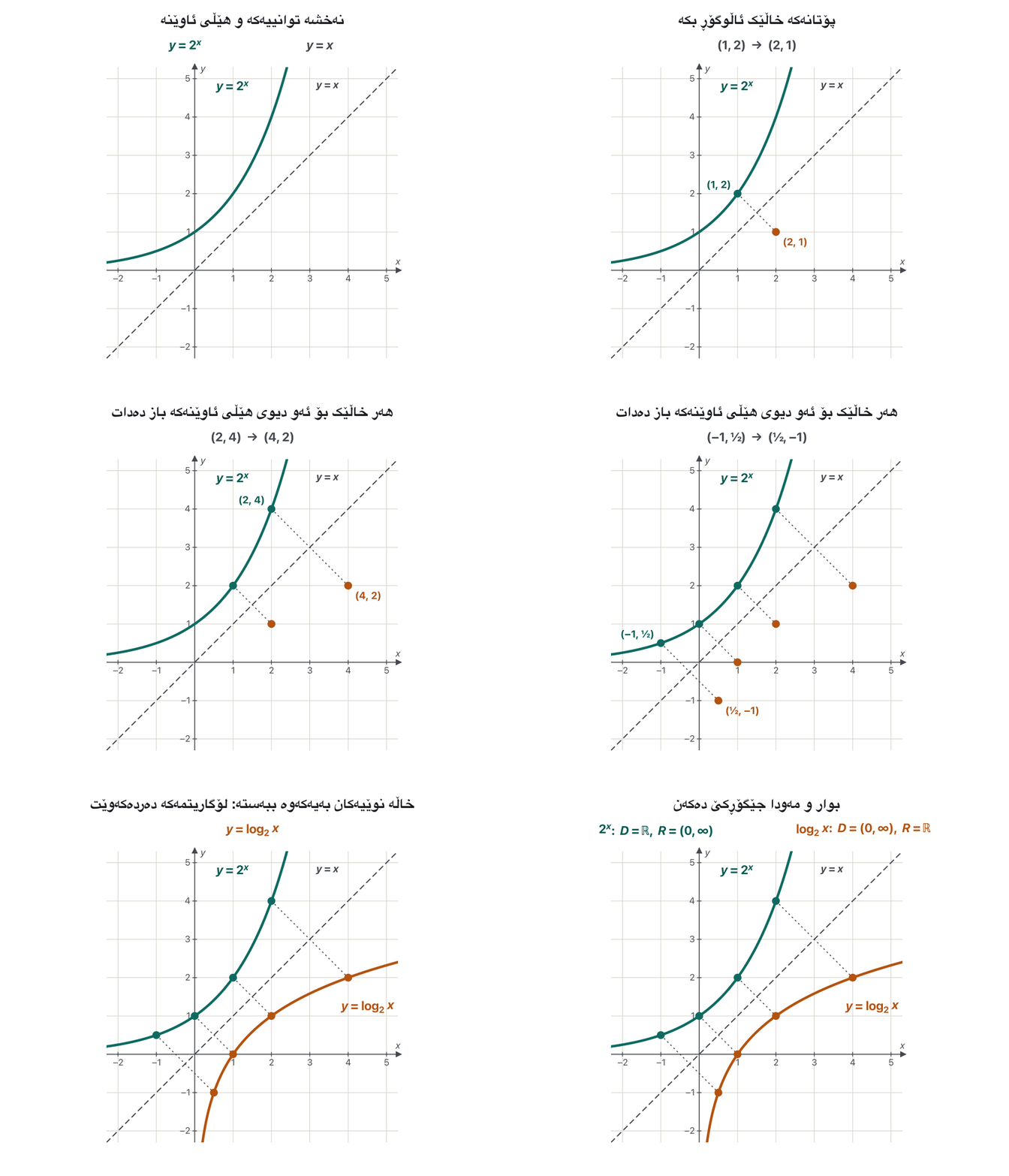
تێبینییەکان و دەدەن: بۆ ، و . ئەمانە ڕێک و ـن، بە جێگۆڕکێ. بۆ 0 یان نییە، چونکە هەمیشە موجەبە: هیچ y یان نادات.
The inverse of the exponential functionپێچەوانەی نەخشەی توانی
The graph: a mirror image in هێڵکاریی نەخشەکە: وێنەیەکی ئاوێنەیی لە ـدا
Because they are inverses, the graph of is the mirror image of the graph of in the line : every point becomes .
لەبەر ئەوەی پێچەوانەی یەکترن، وێنەی ئاوێنەیی ـە لە هێڵی ـدا: هەر خاڵێکی دەبێتە .
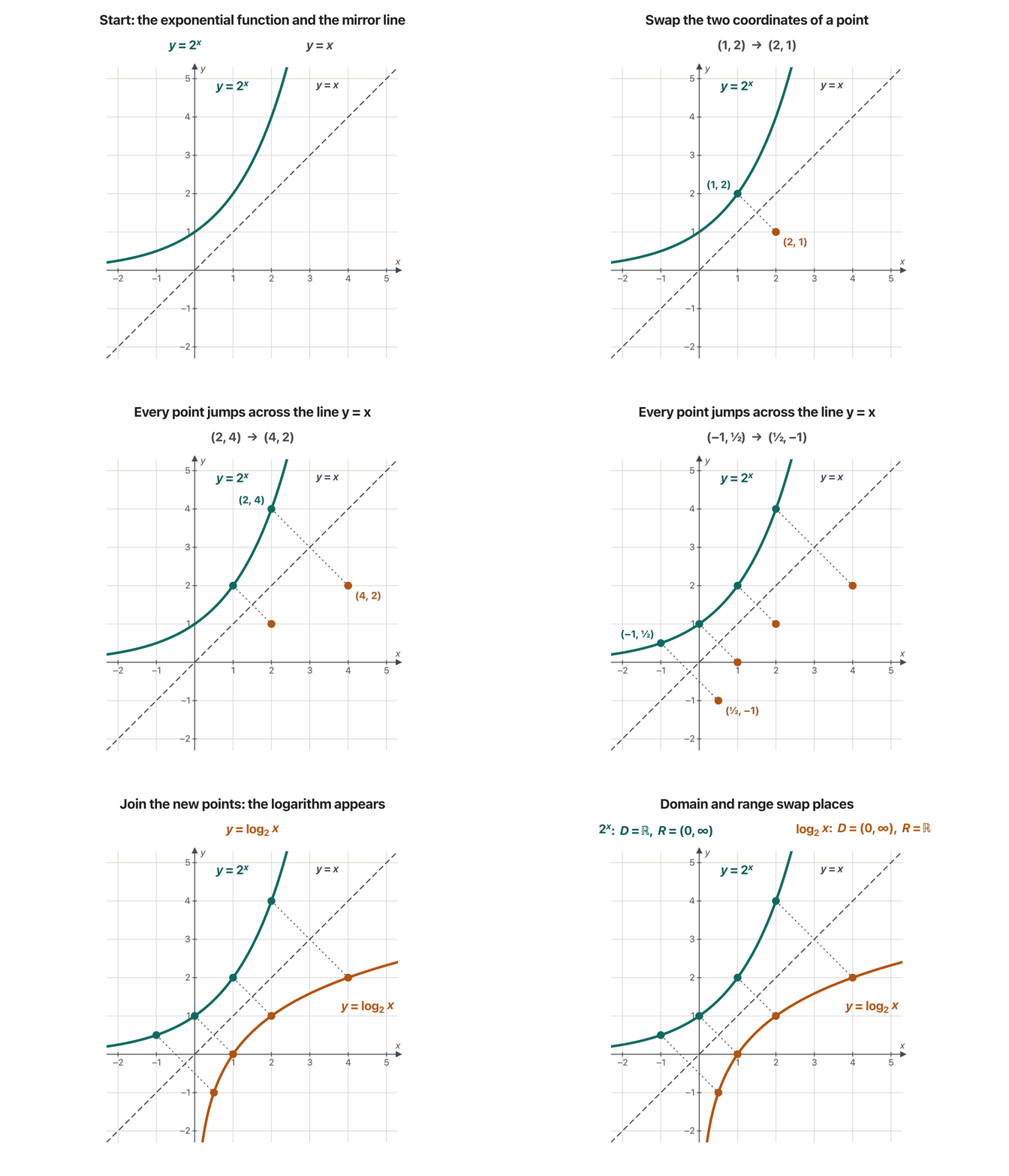
Graphs of , and هێڵکاریی ، و
The notes show three logarithm curves on one picture. They share a pattern you can explain with the definition:
تێبینییەکان سێ هێڵی لەسەر یەک وێنە پیشان دەدەن. چەند تایبەتمەندییەکی هاوبەشیان هەیە کە دەتوانیت بە پێناسەکە ڕوونیان بکەیتەوە:
- Every curve passes through , because means .
- Each curve reaches height 1 exactly at : , , . So the crossings with are at 2, and 3.
- A bigger base gives a flatter curve. All of them rise very slowly: .
- The y-axis is a vertical asymptote: as x gets close to 0, the curves fall without end.
- هەموو هێڵێک بە ـدا تێدەپەڕێت، چونکە واتە .
- هەر هێڵێک ڕێک لە ـدا دەگاتە بەرزیی 1: ، ، . بۆیە هێڵی لە 2، و 3ـدا دەیانبڕێت.
- گەورەتر هێڵێکی تەختتر دەدات. هەموویان زۆر هێواش بەرز دەبنەوە: .
- y ستوونییە: کاتێک x لە 0 نزیک دەبێتەوە، هێڵەکان بێ کۆتایی دادەبەزن.
The natural logarithm ln and the common logarithmلۆگاریتمی سروشتی ln و لۆگاریتمی دەیی
The notes define the logarithm with base e as the natural logarithm: , with and . It is the inverse of , so , and .
تێبینییەکان بە e وەک پێناسە دەکەن: ، بە و . ـە، بۆیە ، و .
The with base e: . It is the inverse of .
ئەو کە بنچینەکەی eـیە: . پێچەوانەی ـە.
The other everyday logarithm has base 10, the : . It counts digits: a positive whole number n has digits.
تری زۆر بەکارهاتوو 10ـی هەیە، : . ژمارەی خانەکان دەژمێرێت: موجەبی n، خانەی هەیە.
| Writtenنووسراو | Base | Whereلە کوێ |
|---|---|---|
| e | everywhereلە هەموو شوێنێک | |
| 10 | calculators, school books, engineeringحاسیبە، کتێبی قوتابخانە، ئەندازیاری | |
| e | many university maths booksزۆربەی کتێبەکانی بیرکاریی زانکۆ | |
math.log(x) | e | Python |
math.log10(x), math.log2(x) | 10, 210، 2 | Python |
The seven rules of logarithmsحەوت یاساکەی لۆگاریتم
The notes list seven basic identities of , for all (and a base , ). Each one is checked here with base 2:
تێبینییەکان حەوت بنەڕەتیی دەژمێرن، بۆ هەموو (و ، ). لێرەدا هەر یەکێکیان بە 2 پشکنراوە:
| Ruleیاسا | Formulaفۆرمولە | Check with base 2پشکنین بە 2 |
|---|---|---|
| 1 | ||
| 2 | ||
| 3 | ||
| 4 | ||
| 5 | ||
| 6 | ||
| 7 |
In rule 4 the exponent B may be any real number, for example . Rule 7 is the ; it gets its own screen below.
لە یاسای 4دا B دەکرێت هەر بێت، بۆ نموونە . یاسای 7 ـە؛ لە خوارەوە پەڕەیەکی تایبەتی هەیە.
The product, quotient and power rules of logarithms, and how to use them to evaluate and expand logs without a calculator.
یاساکانی لێکدان، دابەشکردن و ، هەروەها چۆن بەبێ بەکاریان دەهێنیت بۆ دۆزینەوەی نرخی و کردنەوەیان.
Chapters: 0:00 the properties, 0:48 power rule, 1:46 product rule, 2:59 quotient rule.
بەشەکان: 0:00 تایبەتمەندییەکان، 0:48 یاسای ، 1:46 یاسای لێکدان، 2:59 یاسای دابەشکردن.
The seven rules of logarithmsحەوت یاساکەی لۆگاریتم
Why the rules workبۆچی یاساکان دروستن
Every rule is a law of exponents in disguise. Here is rule 1, the product rule:
هەر یاسایەک یاسایەکی بە جلێکی ترەوە. ئەمە یاسای 1ـە، یاسای لێکدان:
- Name the logsناو لە لۆگاریتمەکان بنێ
Let and . By the definition, and .
با و . بەپێی پێناسە و .
- Multiplyلێکیان بدە
Use the law :
یاسای بەکاربهێنە:
- Read it as a logarithmوەک لۆگاریتم بیخوێنەرەوە
So the exponent that gives is :
بۆیە ئەو دەدات ـە:
Rule 4 works the same way: , so . Rules 5 and 6 are just and read backwards, and rule 2 follows from rules 1 and 3.
یاسای 4 بە هەمان شێوە کار دەکات: ، بۆیە . یاساکانی 5 و 6 تەنها و ـن بە پێچەوانەوە خوێندراونەتەوە و یاسای 2 لە یاساکانی 1 و 3ـەوە دێت.
The seven rules of logarithmsحەوت یاساکەی لۆگاریتم
Rule 3, correctedیاسای 3، ڕاستکراوە
Rule 2 with numerator 1, then rule 6. Check: .
یاسای 2 بە 1، پاشان یاسای 6. پشکنین: .
Change of base with a calculator or Pythonیاسای گۆڕینی بنچینە بە حاسیبە یان Python
Many calculators have only two log keys, ln and log (base 10). Rule 7 lets you compute a logarithm in any base with them:
زۆر تەنها دوو دوگمەی هەیە، ln و log ( 10). یاسای 7 ڕێگەت دەدات بە هەر بەوانە بژمێریت:
Example: . Check: .
نموونە: . پشکنین: .
Python's math.log(x, base) does exactly this: the documentation says it is calculated as log(x)/log(base). For bases 2 and 10 Python has special functions that are more accurate:
math.log(x, base)ـی Python ڕێک ئەمە دەکات: بەڵگەنامەکەی دەڵێت وەک log(x)/log(base) دەژمێردرێت. بۆ 2 و 10، Python دوو تایبەتی هەیە کە وردترن:
import math

print(math.log(8, 2))
print(math.log(1000, 10))
print(math.log10(1000))
print(math.log2(1_000_000))
print(math.log(100))
print(math.log(7) / math.log(3))
print((1000).bit_length())3.0 2.9999999999999996 3.0 19.931568569324174 4.605170185988092 1.7712437491614221 10
Explain the codeڕوونکردنەوەی کۆدەکە
- Lineدێڕی 4
Rule 7 done with floats: comes out a tiny bit below 3.
یاسای 7 بە : کەمێک لە 3 کەمتر دەردەچێت.
- Lineدێڕی 5
math.log10(andmath.log2) avoid that rounding error for exact powers.math.log10(وmath.log2) ئەو هەڵەی خڕکردنەوەیە بۆ توانە تەواوەکان نادەن.- Lineدێڕی 7
With one argument,
math.logis the natural log: .بە یەک ،
math.log: .- Lineدێڕی 9
int.bit_length()gives the number of bits needed to write 1000 in binary: 10.int.bit_length()ژمارەی ئەو دەدات کە بۆ نووسینی 1000 بە پێویستن: 10.
A logarithm of 0 or of a negative number does not exist, and Python refuses it:
0 یان بوونی نییە و Python ڕەتی دەکاتەوە:
import math

print(math.log(0))Traceback (most recent call last): ... ValueError: math domain error
Python 3.12 and 3.13 print this message. Python 3.14 and newer word it differently: ValueError: expected a positive input.
Python 3.12 و 3.13 ئەم پەیامە چاپ دەکەن. Python 3.14 و نوێتر بە شێوەیەکی تر دەینووسن: ValueError: expected a positive input.
Logarithms in IT: halving and bitsلۆگاریتم لە ITـدا: نیوەکردن و بیتەکان
finds a value in a sorted list by looking at the middle, keeping the half that can contain the value, and repeating. Each look halves the candidates, so a list of n items needs at most looks: halvings and one last look. The search in the picture never stops early: even when the middle number is the one it wants, it keeps halving until one candidate is left, so it always needs the same number of looks.
بەهایەک لە لیستێکی ڕیزکراودا دەدۆزێتەوە بەوەی سەیری ناوەڕاست دەکات، ئەو نیوەیە دەهێڵێتەوە کە دەکرێت بەهاکەی تێدا بێت و دووبارەی دەکاتەوە. هەر سەیرکردنێک ژمارەی بەربژێرەکان نیوە دەکات، بۆیە لیستێکی n دانەیی لانیزۆر سەیرکردنی پێویستە: نیوەکردن و یەک سەیرکردنی کۆتایی. گەڕانەکەی ناو وێنەکە زوو ناوەستێت: تەنانەت کاتێک ژمارەی ناوەڕاست ئەوەیە کە بەدوایدا دەگەڕێت، بەردەوام نیوەی دەکات تا یەک بەربژێر دەمێنێتەوە، بۆیە هەمیشە هەمان ژمارەی سەیرکردنی پێویستە.
| List size nقەبارەی لیست n | At most (looks)لانیزۆر (سەیرکردن) | |
|---|---|---|
| 16 | 4 | 5 |
| 9.97 | 10 | |
| 19.93 | 20 | |
| 29.90 | 30 |
A thousand times more data costs only about 10 more looks. In the Fundamentals of Programming course, binary search is written in Python, and this slow growth is called logarithmic time: How many steps? Logarithmic time.
هەزار جار زیاتر تەنها نزیکەی 10 سەیرکردنی زیاتری دەوێت. لە کۆرسی بنەماکانی بە Python دەنووسرێت و ئەم گەشە هێواشە پێی دەوترێت : چەند هەنگاو؟ کاتی لۆگاریتمی.
Why log₂ n counts how many times you can halve n, and why halving algorithms and trees run in logarithmic time.
بۆچی دەژمێرێت چەند جار دەتوانیت n نیوە بکەیتەوە، هەروەها بۆچی ئەو نیوە دەکەنەوە و لە کار دەکەن.
Watch 0:00–4:51: logarithms as repeated halving, and in tree structures; the sorting part after 4:51 goes beyond this lesson.
لە 0:00 تا 4:51 سەیر بکە: وەک نیوەکردنەوەی دووبارە، هەروەها لە ؛ بەشی دوای 4:51 لە سنووری ئەم وانەیە دەردەچێت.
Logarithms in IT: halving and bitsلۆگاریتم لە ITـدا: نیوەکردن و بیتەکان
Counting bits with ژماردنی بیتەکان بە
The same logarithm counts bits: to give each of n things its own binary code you need bits. 26 letters need bits ( codes are too few, are enough).
هەمان دەژمێرێت: بۆ ئەوەی هەر یەکێک لە n شت کۆدی خۆی هەبێت، پێویستە. 26 پیت پێویستە ( کۆد کەمە، بەسە).
Common mistakesهەڵە باوەکان
| Mistakeهەڵە | Counter-exampleنموونەی پێچەوانە | Correctڕاست |
|---|---|---|
| but بەڵام | No rule splits a sum.هیچ یاسایەک کۆ لێک جیا ناکاتەوە. | |
| but بەڵام | ||
| (the misprint in the notes)(هەڵە چاپییەکەی تێبینییەکان) | ||
| but بەڵام | ||
| Taking or وەرگرتنی یان | for every yبۆ هەموو yێک | Domain |
Using math.log(x) as base 10بەکارهێنانی math.log(x) وەک 10 | math.log(100) → 4.605 | math.log10(100) → 2.0 |
| Base 1 or a negative base 1 یان سالب | for every yبۆ هەموو yێک |
Exercisesڕاهێنانەکان
Find , , , and .
، ، ، و بدۆزەرەوە.
Show answerوەڵامەکە پیشان بدە
Ask "the base to which power?": , , , , .
بپرسە « بە چ توانێک؟»: ، ، ، ، .
Write and as logarithms, and as a power.
و وەک بنووسە و وەک توان.
Show answerوەڵامەکە پیشان بدە
Use the rules to write (with ) as a sum and difference of simple logs.
بە یاساکان (بە ) وەک کۆ و جیاوازیی سادە بنووسە.
Show answerوەڵامەکە پیشان بدە
Rule 2, then rule 1, then rule 4.
یاسای 2، پاشان یاسای 1، پاشان یاسای 4.
Write as one logarithm and evaluate it.
وەک یەک بنووسە و بەهاکەی بدۆزەرەوە.
Show answerوەڵامەکە پیشان بدە
Solve . Then use the answer for the photo archive of the previous lesson: when does reach 1000?
چارەسەر بکە. پاشان وەڵامەکە بۆ ئەرشیفی وێنەی وانەی پێشوو بەکاربهێنە: کەی دەگاتە 1000؟
Hintئاماژە
Take of both sides, then use rule 7.
ـی هەردوو لا وەربگرە، پاشان یاسای 7 بەکاربهێنە.
Show answerوەڵامەکە پیشان بدە
So the archive passes 1000 GB during the 8th year, which matches the table answer of 8 whole years.
بۆیە ئەرشیفەکە لە ساڵی هەشتەمدا لە 1000 GB تێدەپەڕێت، کە لەگەڵ وەڵامی خشتەکەدا (8 ساڵی تەواو) دەگونجێت.
The notes give as an example of a logarithmic function. For which x is it defined?
تێبینییەکان وەک نموونەیەکی دەدەن. بۆ کام xـەکان پێناسەکراوە؟
Show answerوەڵامەکە پیشان بدە
The input of a logarithm must be positive, so we need . On the unit circle the sine is positive in the upper half, between 0 and π, and this repeats every :
دەبێت موجەب بێت، بۆیە پێویستمان بە ـە. لەسەر لە نیوەی سەرەوەدا موجەبە، لە نێوان 0 و πـدا و هەموو ـێک دووبارە دەبێتەوە:
Without a computer, find how many decimal digits has. Use .
بەبێ کۆمپیوتەر بدۆزەرەوە لە سیستەمی دەییدا چەند خانەی هەیە. بەکاربهێنە.
Hintئاماژە
Rule 4 turns the power into a product.
یاسای 4 توانەکە دەکاتە لێکدان.
Show answerوەڵامەکە پیشان بدە
So and the number has digits. Python confirms: 2 ** 64 is 18446744073709551616, 20 digits. (This is also the number of grains on the whole chessboard plus one.)
بۆیە و ژمارەکە خانەی هەیە. Python دووپاتی دەکاتەوە: 2 ** 64 دەکاتە 18446744073709551616، 20 خانە. (ئەمە هەروەها ژمارەی هەموو دانەکانی سەر تەختەی شەترەنجەکەیە زیاد یەک.)
A sorted register has 5000 student names. At most how many looks does binary search need?
تۆمارێکی ڕیزکراو 5000 ناوی خوێندکاری تێدایە. لانیزۆر چەند سەیرکردنی پێویستە؟
Show answerوەڵامەکە پیشان بدە
Summaryکورتە
- (, ): the logarithm is the exponent. is the inverse of ; its graph is the mirror image in .
- Domain , range ; every graph passes and .
- (natural log), (common log). In Python
math.log(x)is ln. - Rules: product → sum, quotient → difference, , power → multiple, , , .
- In IT, counts halvings: binary search needs at most looks, and n codes need bits.
- (، ): هەمان . ـە؛ هێڵکارییەکەی وێنەی ئاوێنەییە لە ـدا.
- ، ؛ هەموو هێڵکارییەک بە و ـدا تێدەپەڕێت.
- ()، (). لە Pythonـدا
math.log(x)lnـە. - یاساکان: لێکدان دەبێتە کۆ، دابەشکردن دەبێتە جیاوازی، ، توان دەبێتە لێکدان، ، ، .
- لە ITـدا نیوەکردنەکان دەژمێرێت: لانیزۆر سەیرکردنی پێویستە و n کۆد پێویستە.
Why is there no ?بۆچی نییە؟
Because is positive for every y, so no exponent gives .
چونکە بۆ هەموو yێک موجەبە، بۆیە هیچ نادات.
What is ? چەندە؟
7, because the logarithm undoes the power.
7، چونکە کاری توانەکە هەڵدەوەشێنێتەوە.
How do you compute on a calculator? چۆن بە حاسیبە دەژمێریت؟
(rule 7).
(یاسای 7).
Videoڤیدیۆ
Watch a videoسەیری ڤیدیۆیەک بکە
A video that viewers liked a lot and praised in their comments, chosen for this lesson.ڤیدیۆیەک کە بینەران زۆریان پێ خۆش بووە و لە کۆمێنتەکانیاندا ستایشیان کردووە، بۆ ئەم وانەیە هەڵبژێردراوە.
In Kurdish: logarithmic functions and their properties, with every example and exercise of the Grade 10 book.
بە کوردی: و تایبەتمەندییەکانیان، لەگەڵ هەموو نموونە و ڕاهێنانەکانی کتێبی پۆلی 10.
Sorani, Grade 10 science (new edition) chapter 4 lesson 3: logarithmic functions and their properties.
بە سۆرانی، پۆلی 10ـی زانستی (چاپی نوێ)، بەشی 4، وانەی 3: و تایبەتمەندییەکانیان.
Lesson complete!وانەکە تەواو بوو!
Well done. Review the key terms, then go on to the next lesson.دەستخۆش. سەیرێکی زاراوە سەرەکییەکان بکەرەوە، پاشان بڕۆ بۆ وانەی داهاتوو.
Key termsزاراوە سەرەکییەکان
Shifting Graphsکشانەوەی هێڵکاری
Related lecturesوانە پەیوەندیدارەکان
References and further readingسەرچاوەکان و خوێندنەوەی زیاتر
- OpenStax Calculus Volume 1, 1.5 Exponential and Logarithmic Functions (Logarithmic Functions, Properties of Logarithms, Change-of-Base Formulas)
- OpenStax College Algebra 2e, 6.5 Logarithmic Properties
- Python documentation: math — Mathematical functions (math.log, math.log2, math.log10)
- Python documentation: bisect — Array bisection algorithm
- Wikipedia: Binary search (number of iterations ⌊log₂ n⌋ + 1)
This lecture is a first edition. The Kurdish text and terminology are waiting for review by Kurdish IT teachers.ئەم وانەیە چاپی یەکەمە. دەقە کوردییەکە و زاراوەکانی چاوەڕێی پێداچوونەوەی مامۆستایانی کوردی بواری IT ن.