Chapterبەش 3 · Lectureوانە 3.1
Function Notation: f(x), Arrows, Inverses and Compositionنووسینی نەخشەیی: ، تیرەکان، پێچەوانە و ئاوێتەکردن
How to read and say , and ; the names , , codomain and image; the four jobs of the arrow; why is not ; read from the right and the “f o g” of Kurdistan's exams; braces with conditions; max, min and functions in code.
چۆن ، و بخوێنیتەوە؛ ناوەکانی ، ، و ؛ چوار کاری تیر؛ بۆچی هەمان نییە؛ کە لە ڕاستەوە دەخوێنرێتەوە و «f o g»ـی تاقیکردنەوەکانی کوردستان؛ کەوانەی لوول بە ؛ ، و لە کۆددا.
What you will learnچی فێر دەبیت
- Read and say , , and in English and in Kurdish, and evaluate and .
- Name the domain, codomain, range and image and recognise , and .
- Tell the four jobs of the arrow apart and write «←» for “then” in Kurdish sentences.
- Explain why is not and what “1-1” means.
- Read and the exam form “f o g” from the right, and tell from and .
- Read a piecewise function with a brace, and functions such as max, min and , also in code.
- ، ، و بە ئینگلیزی و بە کوردی بخوێنیتەوە و و دەربهێنیت.
- ، ، و ناو بنێیت و ، و بناسیتەوە.
- چوار کاری تیری لێک جیا بکەیتەوە و لە ڕستەی کوردیدا «←» بۆ «پاشان» بنووسیت.
- ڕوون بکەیتەوە بۆچی هەمان نییە و «1-1» واتای چییە.
- و شێوەی «f o g»ـی تاقیکردنەوەکان لە ڕاستەوە بخوێنیتەوە و لە و جیا بکەیتەوە.
- بە کەوانەی لوولەوە و وەک ، و بخوێنیتەوە، لە کۆدیشدا.
: f of x, not f times x: «fـی x»، نەک f جاران x
is read “f of x”. f is the name of the function, the x inside the brackets is the input, and is the output: the value that f gives for that x. So says “f of x equals x squared minus three x”. In Kurdish, CêIT says fـی x; you may also hear نرخی f لە x (the value of f at x). Many books give the output its own letter: .
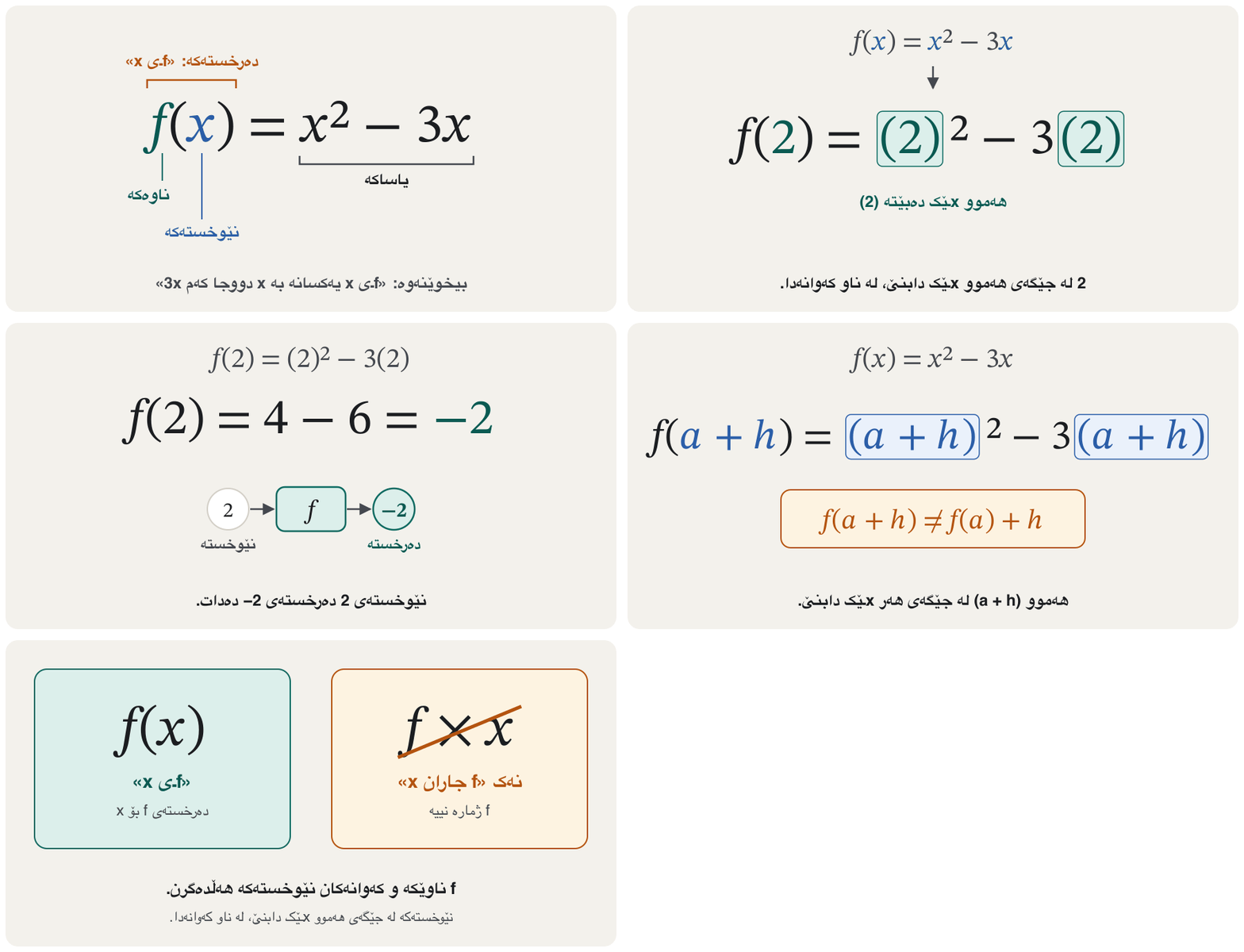
دەخوێنرێتەوە «fـی x» (f of x). f ناوی ، x کە لە ناو کەوانەکەدایە و : ئەو نرخەی f بۆ ئەو xـە دەیدات. کەواتە دەڵێت «fـی x یەکسانە بە x دووجا کەم 3x». لەوانەیە «نرخی f لە x»ـیش ببیستیت. زۆر کتێب پیتێکی تایبەت دەدەنە : .
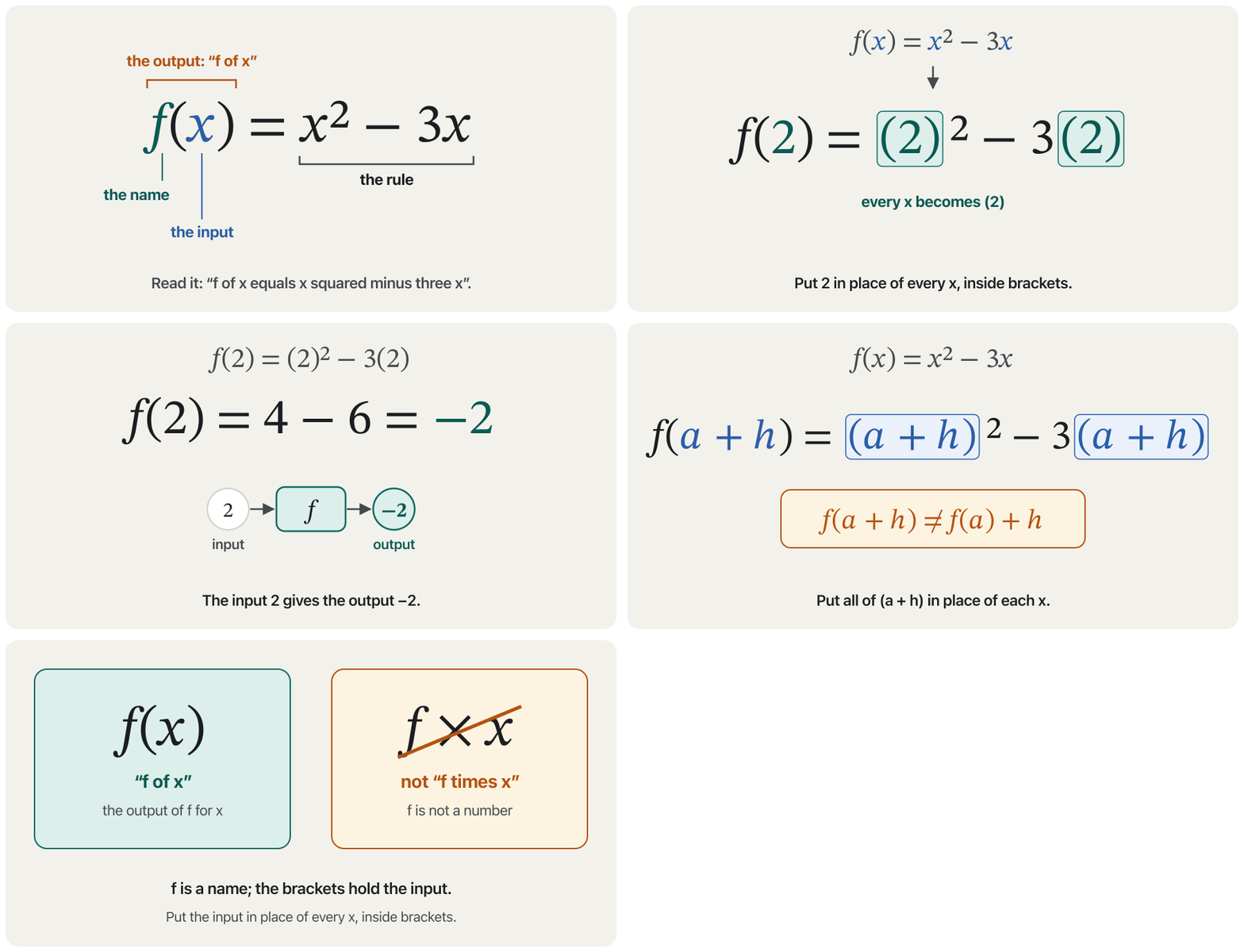
The brackets do not mean multiplication: is never f times x. To find a value, put the input in place of every x, inside brackets: , and , which is not . The notation is in 28 CêIT lessons, from Notation and other names to the probability function (The pmf).
کەوانەکان واتای لێکدان نادەن: هەرگیز f جاران x نییە. بۆ دۆزینەوەی نرخێک، لە جێگەی هەموو xـێک دابنێ، لە ناو کەوانەدا: و ، کە هەمان نییە. لە 28 وانەی CêITـدا هەیە، لە شێوەی نووسین و ناوەکانی ترـەوە تا (نەخشەی بارستەی ئەگەر).
and : the arrows of a function و : تیرەکانی نەخشەیەک
Books often name a function together with its two sets: , read “f maps X to Y” or “f is a function from X to Y”; in Kurdish f، کۆمەڵەی X دەبات بۆ ناو کۆمەڵەی Y. X is the set of inputs and Y is the set where the outputs land. Some handouts put the name on the arrow instead: .
کتێبەکان زۆرجار لەگەڵ هەردوو ناو دەبەن: ، کە دەخوێنرێتەوە «f، X دەبات بۆ ناو Y» (f maps X to Y). X و Y ئەو کە تێیدا دەنیشنەوە. هەندێک مەلزەمە ناوەکە لەسەر تیرەکە دەنووسن: .
The rule comes with a different arrow, , which has a small bar at its tail: is read “x maps to x squared”; one common way to say it in Kurdish is x دەبێتە x دووجا. Together: . Books also call a function a mapping, a transformation or an operator; all three mean the same idea (Notation and other names).
یاساکە بە تیرێکی تر دێت، ، کە هێڵێکی بچووکی لە کلکدایە: بە ئینگلیزی x maps to x squared دەخوێنرێتەوە؛ شێوەیەکی باوی وتنی بە کوردی «x دەبێتە x دووجا»ـیە. پێکەوە: . کتێبەکان بە دەڵێن mapping، transformation یان operatorـیش؛ هەر سێکیان هەمان بیرۆکەن (شێوەی نووسین و ناوەکانی تر).
, , codomain and image، ، بواری بەرامبەر و وێنە
A function comes with three sets, and each has a name and a short written form (Inputs that are allowed, outputs that are reached):
هەر سێ لەگەڵە و هەریەکەیان ناو و شێوەیەکی کورتی نووسینی هەیە (نێوخستەکانی ڕێگەپێدراو و دەرخستەکانی بەدەستهاتوو):
| Nameناو | Writtenنووسین | Kurdishکوردی | Meaningواتا |
|---|---|---|---|
| domaindomain | , | بواری f; exams: بواری نەخشە« f»؛ تاقیکردنەوەکان: « » | the inputs that are allowed: Xئەو ڕێگەیان پێدراوە: X |
| codomaincodomain | Y in Y لە ـدا | بواری بەرامبەری f« f»، واتە Y | where the outputs may landئەو شوێنەی دەتوانن تێیدا بنیشنەوە |
| rangerange | , , | مەودای f« f»، هەمان | the outputs that really appearئەو بە ڕاستی دەردەکەون |
| image of a set Aimage of A | وێنەی A لە ژێر fـدا« A لە ژێر fـدا» | the outputs of the inputs in A ئەو لە Aـدان |
Domains and ranges are often intervals, such as or (One set, four ways). The graph of f is a set of pairs: , read “the set of pairs x, f of x, such that x is in the domain of f”.
و زۆرجار ، وەک یان (یەک کۆمەڵە، چوار شێوەی نووسین). f لە : ، کە دەخوێنرێتەوە « جووتەکانی x و fـی x، بە جۆرێک کە x fـە».
One arrow, four jobsیەک تیر، چوار کار
The arrow appears in many CêIT lessons, and its job changes with the subject. Read the subject before you read the arrow:
تیری لە زۆر وانەی CêITـدا دەبینرێت و کارەکەی بە پێی بابەتەکە دەگۆڕێت. پێش ئەوەی تیرەکە بخوێنیتەوە، سەیری بابەتەکە بکە:
- From … to in functions: , “f maps X to Y” (this lesson).
- Tends to, approaches in limits: , “as x approaches 2”; , “as x grows without end” (Limits).
- Implies, if … then in logic: (Implication); worked solutions use the double arrow for “so” (Logic symbols).
- The next step in a chain or a path: in base conversion (The second example), a search path (A* search) or a menu path such as File → Print.
- لە واتە لە … بۆ: ، «f، X دەبات بۆ ناو Y» (ئەم وانەیە).
- لە واتە نزیک دەبێتەوە لە: ، «کاتێک x لە 2 نزیک دەبێتەوە»؛ ، «کاتێک x بێ کۆتایی گەورە دەبێت» (ئامانجەکان).
- لە لۆجیکدا واتە ئەگەر … ئەوا: (گوزارەی مەرجی)؛ شیکارە کارکراوەکان تیری دووهێڵی بۆ «کەواتە» بەکار دەهێنن (هێماکانی لۆجیک).
- لە زنجیرە یان ڕێگایەکدا واتە هەنگاوی دواتر: لە گۆڕینی بنچینەدا (نموونەی دووەم)، ڕێگایەکی گەڕان (گەڕانی A*) یان ڕێگای مێنیویەکی وەک File → Print.
In a Kurdish sentence CêIT writes the arrow for “then, leads to” as «←», so that it points the way Kurdish is read: « ← ». Inside a formula the arrow always stays , because formulas run left to right (Formulas run left to right).
لە ڕستەیەکی کوردیدا CêIT تیری «پاشان، دەبێتە» بە «←» دەنووسێت، تاکو ڕووی لەو ئاڕاستەیە بێت کە کوردی پێی دەخوێنرێتەوە: « ← ». لە ناو تیرەکە هەمیشە دەمێنێتەوە، چونکە لە چەپەوە بۆ ڕاست دەڕۆن (فۆرمولەکان لە چەپەوە بۆ ڕاست دەڕۆن).
: f inverse, not 1 over f: پێچەوانەی نەخشەی f، نەک 1 لەسەر f
is read “f inverse”; in Kurdish پێچەوانەی f. It is the function that undoes f: if , then . Here the raised is not an exponent, so . The reciprocal is written or , with the brackets around the value.
دەخوێنرێتەوە «پێچەوانەی f» (f inverse). ئەو کە کاری f هەڵدەوەشێنێتەوە: ئەگەر ، ئەوا . لێرەدا ـی بەرز نییە، بۆیە . بە یان دەنووسرێت، بە کەوانە بە دەوری نرخەکەدا.
Only a one-to-one function has an inverse: no two inputs share an output. Handouts shorten one-to-one to “1-1”, read “one-to-one” (One-to-one functions). The raised has three jobs in CêIT (Superscripts): the inverse function , also (Read the carefully); the inverse matrix (Vectors and matrices); and a real power of a number, (Negative exponents).
تەنیا پێچەوانەی هەیە: هیچ دوو هەمان بەش ناکەن. مەلزەمەکان «one-to-one» کورت دەکەنەوە بە «1-1» و دەخوێنرێتەوە «یەک بۆ یەک» (نەخشە یەک بۆ یەکەکان). ـی بەرز لە CêITـدا سێ کاری هەیە (ژوورنووسەکان): ، هەروەها ( بە وردی بخوێنەوە)؛ (ئاڕاستەبڕەکان و ماتریکسەکان)؛ هەروەها ڕاستەقینە لەسەر ژمارەیەک، (توانەکانی سالب).
: f after g, read from the right: f لە دوای g، لە ڕاستەوە بیخوێنەوە
means : first g works on x, then f works on the result. Read it “f of g of x”, “f after g” or “f circle g”; in Kurdish f لە دوای g. The function written next to x works first, so you read the order from the right (Definition and notation).
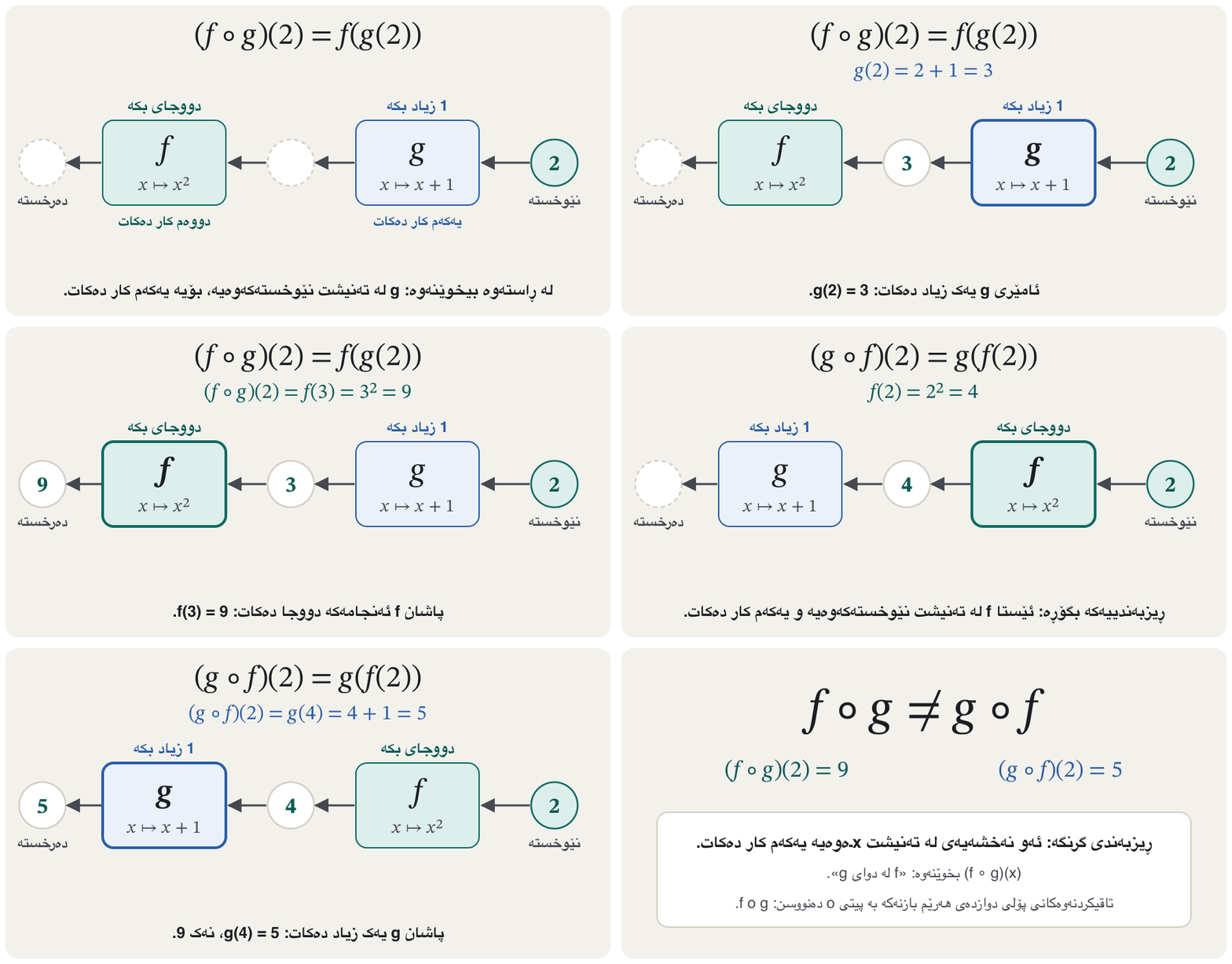
واتە : یەکەم g لەسەر x کار دەکات، پاشان f لەسەر ئەنجامەکە کار دەکات. دەخوێنرێتەوە «f لە دوای g» (f of g of x، f after g، f circle g). ئەو لە تەنیشت xـەوە نووسراوە یەکەم کار دەکات، بۆیە ڕیزبەندییەکە لە ڕاستەوە دەخوێنیتەوە (پێناسە و نووسین).
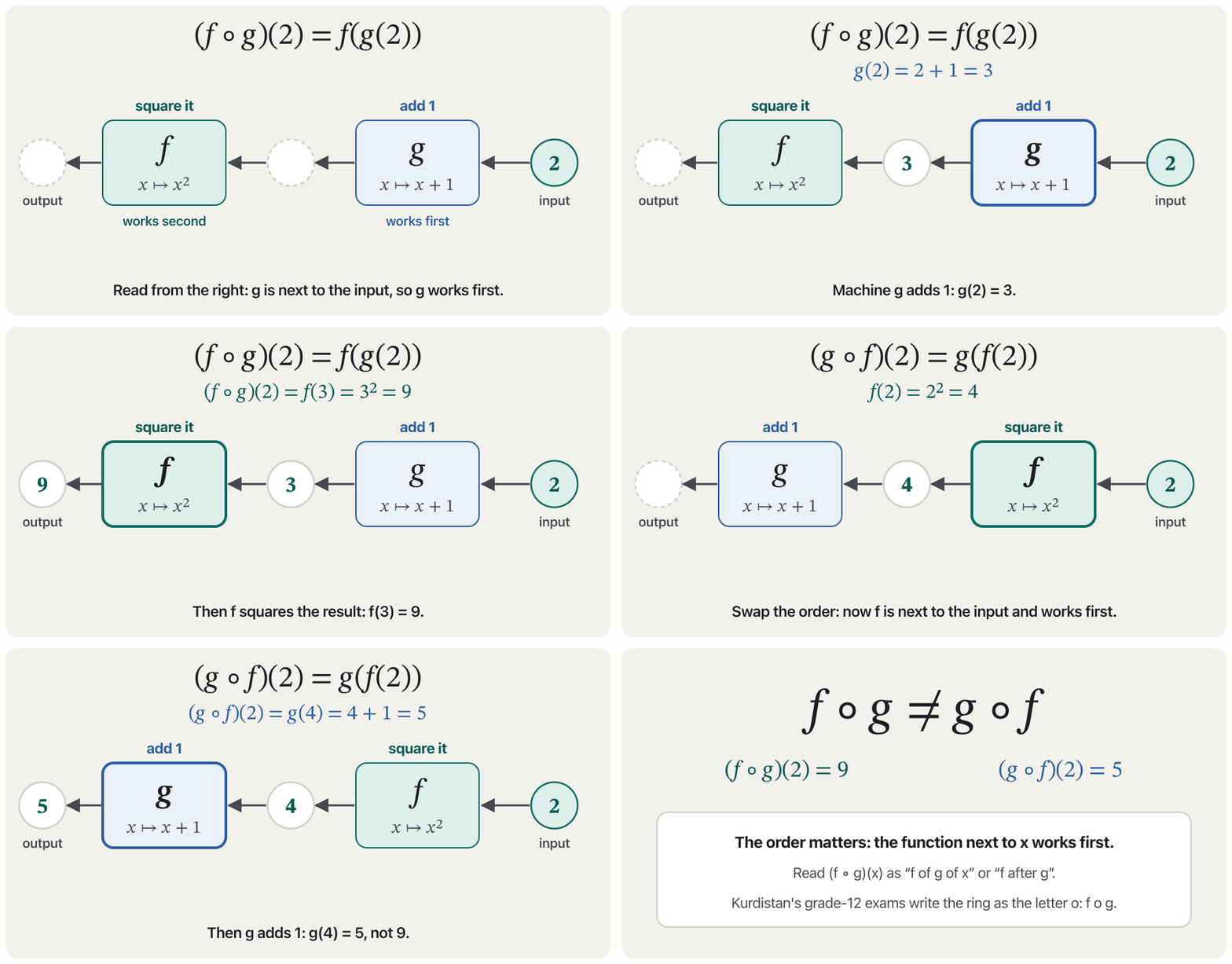
With and : , but . The order matters: (The order matters). The Kurdistan Region's grade-12 exams write the ring as the letter o, even for three functions: means , with h first and f last.
بە و : ، بەڵام . ڕیزبەندی گرنگە: (ڕیزبەندی گرنگە). تاقیکردنەوەکانی پۆلی دوازدەی هەرێمی کوردستان بازنەکە بە پیتی o دەنووسن، تەنانەت بۆ سێ : واتە ، یەکەم h و لە کۆتاییدا f.
: f after g, read from the right: f لە دوای g، لە ڕاستەوە بیخوێنەوە
, , and o: small marks, different meanings، ، و o: نیشانەی بچووک، واتای جیاواز
Small marks between function names are easy to misread. (a ring on the line) is composition. (a dot) is the product of the outputs: . A smaller circle up high after a number, , is degrees (Degrees). Kurdish exam papers use the letter o for the ring: is .
نیشانە بچووکەکانی نێوان ناوی بە ئاسانی بە هەڵە دەخوێنرێنەوە. (بازنەیەک لەسەر هێڵەکە) . (خاڵێک) ئەنجامی : . بازنەیەکی بچووکتر لە سەرەوە دوای ژمارەیەک، ، (پلەکان). پرسیارنامەکانی تاقیکردنەوەی کوردی پیتی o بۆ بازنەکە بەکار دەهێنن: هەمان ـە.
The four operations on functions all keep the input in ordinary brackets after the name: , , and , read “f plus g of x” and so on (The four operations). You may meet handouts that print , , “F+g” or “F.g”: read them as , and . A capital F is a different name from f, and the input never goes into a subscript.
هەر چوار سەر لە کەوانەی ئاسایی دوای ناوەکەدا دەهێڵنەوە: ، ، و ، کە دەخوێنرێنەوە «f کۆ gـی x» و هتد (کۆکردنەوە، لێدەرکردن، لێکدان و دابەشکردن). لەوانەیە مەلزەمەیەک ببینیت کە ، ، «F+g» یان «F.g» چاپ دەکات: وەک ، و بیانخوێنەرەوە. Fـی گەورە ناوێکی جیاوازە لە fـی بچووک و هەرگیز ناچێتە ناو .
Braces with conditions: piecewise functionsکەوانەی لوول و مەرجەکان: نەخشە ڕێسا پەلدارەکان
A large left brace holds one function with several rules. Each line has a rule and, on its right, a condition that says when that rule is used. Here is a ticket price in dinars for a visitor of age a:
کەوانەیەکی لوولی گەورە لە لای چەپ یەک بە چەند یاسایەکەوە هەڵدەگرێت. هەر دێڕێک یاسایەک و لە لای ڕاستییەوە هەیە کە دەڵێت ئەو یاسایە کەی بەکار دێت. ئەمە نرخی بلیتێکە بە دینار بۆ سەردانکەرێک کە تەمەنی a ساڵە:
Read each line from the left: the rule, then “if”, then the condition.
هەر دێڕێک لە چەپەوە بخوێنەوە: یاساکە، پاشان if («ئەگەر»)، پاشان .
Read it “p of a equals 0 if a is less than 6, 2000 if a is at least 6 and less than 18, and 5000 if a is 18 or more”. In Kurdish each condition starts with ئەگەر (if), and “otherwise” is لە حاڵەتەکانی تردا. Each input fits exactly one line, so . Many books leave out the word “if” and write only the condition, sometimes after a comma. CêIT uses braces for , floor and the cumulative distribution function (Piecewise functions, The step formula).
بیخوێنەوە «pـی a یەکسانە بە 0 ئەگەر a لە 6 بچووکتر بێت، 2000 ئەگەر a لانیکەم 6 بێت و لە 18 بچووکتر بێت و 5000 ئەگەر a 18 یان زیاتر بێت». هەر بە «ئەگەر» دەست پێدەکات و otherwise واتە «لە حاڵەتەکانی تردا». هەر ڕێک لە یەک دێڕدا جێی دەبێتەوە، بۆیە . زۆر کتێب وشەی «ئەگەر» نانووسن و تەنیا دەنووسن، هەندێک جار دوای کۆمایەک. CêIT کەوانەی لوول بۆ ، و بەکار دەهێنێت (نەخشە ڕێسا پەلدارەکان، فۆرمولەی پلیکانەیی).
max, min, several inputs and functions in code، ، چەند نێوخستە و کردارەکان لە کۆددا
Some functions have names of several letters, written upright: gives the larger number and the smaller one, so ; , “sign of x”, gives , or . CêIT uses max for (The max form) and for the GDPR fine (Fines). A function can also take several inputs, separated by commas: the area of a rectangle is , so .
هەندێک ناوێکی چەند پیتی هەیە کە ڕاست دەنووسرێت (نەک لار): ژمارە گەورەکە دەدات و بچووکەکە، بۆیە ؛ ، «هێمای x»، ، یان دەدات. CêIT max بۆ (شێوەی max) و بۆ سزای GDPR بەکار دەهێنێت (سزاکان). دەتوانێت چەند هەبێت کە بە کۆما لێک جیا دەکرێنەوە: ڕووبەری لاکێشەیەک ـە، بۆیە .
Programs write functions the same way: a name, the inputs in brackets and a rule. Python writes def f(x): return x**2 + 1 (Your first function); MATLAB writes the anonymous function f = @(x) x.^2 + 1 (Anonymous functions). Mobile apps even describe the screen as a function of the state, (Declarative UI).
بە هەمان شێوە دەنووسن: ناوێک، لە ناو کەوانەدا و یاسایەک. Python دەنووسێت def f(x): return x**2 + 1 (یەکەم کرداری خۆت)؛ MATLAB f = @(x) x.^2 + 1 دەنووسێت (کردارە بێناوەکان). ئەپەکانی مۆبایل تەنانەت شاشەکە وەک وەسف دەکەن، (نێوبەستەی وەسفی).
Common mistakesهەڵە باوەکان
| Mistakeهەڵە | Fixچارەسەر |
|---|---|
| Reading as f times xخوێندنەوەی وەک f جاران x | is “f of x”: the value of f at x واتە «fـی x»: نرخی f لە xـدا |
| Put in place of every x: for , لە جێگەی هەموو xـێک دابنێ: بۆ ، | |
| undoes f; is the reciprocal کاری f هەڵدەوەشێنێتەوە؛ | |
| Doing f first in یەکەم جێبەجێکردنی f لە ـدا | The function next to x works first: , g then fئەو لە تەنیشت xـەوەیە یەکەم کار دەکات: ، g پاشان f |
| The ring is composition; the dot is the productبازنەکە ؛ خاڵەکە | |
| or “F+g” یان «F+g» | : a small f and the input in brackets: fـی بچووک و لە ناو کەوانەدا |
| to give the rule بۆ نووسینی یاساکە | : between sets, between elements: لە نێوان ، لە نێوان |
| Two lines of a brace both true for one input, as with and دوو دێڕی کەوانەیەک کە هەردووکیان بۆ یەک ڕاستن، وەک و | Each input must fit exactly one line: and هەر دەبێت ڕێک لە یەک دێڕدا جێی ببێتەوە: و |
Practiceڕاهێنان
Read aloud in English and in Kurdish: (a) (b) (c) (d) (e)
بە ئینگلیزی و بە کوردی بە دەنگی بەرز بیانخوێنەوە: (a) (b) (c) (d) (e)
Show answerوەڵامەکە پیشان بدە
- (a) “f of x equals three x minus one”, fـی x یەکسانە بە 3x کەم 1.
- (b) “g maps the real numbers to the real numbers; t maps to t squared”, g، ژمارە ڕاستییەکان دەبات بۆ ناو ژمارە ڕاستییەکان؛ t دەبێتە t دووجا.
- (c) “f inverse of four”, نرخی پێچەوانەی f لە 4ـدا: the input that f turns into 4.
- (d) “f of g of x”, “f after g”, f لە دوای g: g works first.
- (e) “the range of f is the interval from 0, closed, to plus infinity”, مەودای f ماوەی 0 تا بێسنووری موجەبە، لای 0 داخراو.
- (a) «fـی x یەکسانە بە 3x کەم 1» (f of x equals three x minus one).
- (b) «g، دەبات بۆ ناو ؛ t دەبێتە t دووجا» (g maps the real numbers to the real numbers; t maps to t squared).
- (c) «نرخی پێچەوانەی f لە 4ـدا» (f inverse of four): ئەو f دەیکاتە 4.
- (d) «f لە دوای g» (f of g of x): یەکەم g کار دەکات.
- (e) « f 0 تا موجەبە، لای 0 داخراو» (the range of f is the interval from 0, closed, to plus infinity).
Let and . Find (a) (b) (c) (d) (e) (f)
با و بن. ئەمانە بدۆزەرەوە: (a) (b) (c) (d) (e) (f)
Hintئاماژە
Work from the inside out, and put each input in brackets.
لە ناوەوە بۆ دەرەوە کار بکە و هەر بخەرە ناو کەوانەوە.
Show answerوەڵامەکە پیشان بدە
- (a) Put in :
- (b) , then
- (c) g first: , then
- (d) Which input gives 7? , so
- (e) Add the outputs:
- (f) Multiply the outputs:
- (a) دابنێ:
- (b) ، پاشان
- (c) یەکەم g: ، پاشان
- (d) کام 7 دەدات؟ ، کەواتە
- (e) کۆ بکەرەوە:
- (f) لێک بدە:
Rewrite each line in the usual notation: (a) (b) “F.g” for the product of f and g (c) (d) for : (e)
هەر دێڕێک بە نووسینی باو بنووسەوە: (a) (b) «F.g» بۆ ئەنجامی f و g (c) (d) بۆ : (e)
Show answerوەڵامەکە پیشان بدە
- (a) : the input goes in brackets.
- (b) , or , with a small f.
- (c) , with the input in ordinary brackets.
- (d) : it undoes “times 2”. is the reciprocal .
- (e) , or with the sets .
- (a) : دەچێتە ناو کەوانەوە.
- (b) ، یان ، بە fـی بچووک.
- (c) ، بە لە ناو کەوانەی ئاساییدا.
- (d) : کاری «جاران 2» هەڵدەوەشێنێتەوە. ـە.
- (e) ، یان لەگەڵ : .
Summaryپوختە
- is “f of x”, the output of f for the input x, never f times x; put the input in place of every x.
- names the two sets; gives the rule. domain, range, Y codomain, image.
- can mean “from … to”, “approaches”, “implies” or “next step”: read the subject.
- is “f inverse” and undoes f; is the reciprocal.
- : g first, read from the right; exams write f o g. The dot is a product.
- A brace with conditions is one piecewise function: each input fits exactly one line.
- Every symbol of this lesson, with its readings, is also in one table: Function notation in the Symbol Dictionary.
- واتە «fـی x»، f بۆ x، هەرگیز f جاران x نییە؛ لە جێگەی هەموو xـێک دابنێ.
- هەردوو ناو دەبات؛ یاساکە دەدات. ، ، Y ، .
- دەشێت واتای «لە … بۆ»، «نزیک دەبێتەوە لە»، «ئەگەر … ئەوا» یان «هەنگاوی دواتر» بدات: سەیری بابەتەکە بکە.
- واتە «پێچەوانەی f» و کاری f هەڵدەوەشێنێتەوە؛ .
- : یەکەم g، لە ڕاستەوە بیخوێنەوە؛ تاقیکردنەوەکان f o g دەنووسن. خاڵی .
- کەوانەیەکی لوول بە یەک : هەر ڕێک لە یەک دێڕدا جێی دەبێتەوە.
- هەموو ئەم وانەیە، لەگەڵ خوێندنەوەکانیان، لە یەک خشتەشدا هەن: نووسینی نەخشەیی لە فەرهەنگی هێماکان.
How do you say ? چۆن دەخوێنیتەوە؟
“f of x equals x squared plus one”; in Kurdish fـی x یەکسانە بە x دووجا کۆ 1.
«fـی x یەکسانە بە x دووجا کۆ 1» (f of x equals x squared plus one).
Why is not ?بۆچی هەمان نییە؟
On a function name the means “inverse”, the function that undoes f; it is not a power.
لەسەر ناوی ، واتە «پێچەوانە»، ئەو کاری f هەڵدەوەشێنێتەوە؛ نییە.
In , which function works first?لە ـدا کام نەخشە یەکەم کار دەکات؟
g, the one next to x: .
g، ئەوەی لە تەنیشت xـەوەیە: .
Lesson complete!وانەکە تەواو بوو!
Well done. Review the key terms, then go on to the next lesson.دەستخۆش. سەیرێکی زاراوە سەرەکییەکان بکەرەوە، پاشان بڕۆ بۆ وانەی داهاتوو.
Key termsزاراوە سەرەکییەکان
Exponents and Logarithms: eˣ, log, ln, lg and lbتوانەکان و لۆگاریتمەکان: eˣ، log، ln، lg و lb
Related lecturesوانە پەیوەندیدارەکان
- What Is a Function?نەخشە چییە؟
- Domain, Range and Imageبوار، مەودا و وێنە
- Inverse Functions and Inverse Trigonometric Functionsپێچەوانەکانی نەخشە و نەخشە سێگۆشەییە پێچەوانەکان
- Composition of Functionsئاوێتەکردنی نەخشەکان
- Adding, Subtracting, Multiplying and Dividing Functionsکۆکردنەوە، لێدەرکردن، لێکدان و دابەشکردنی نەخشەکان
- Piecewise Functions: Absolute Value, Floor and Ceilingنەخشە ڕێسا پەلدارەکان: نرخی ڕووت، نەخشەی گەورەترین ژمارەی تەواو و نەخشەی بچووکترین ژمارەی تەواو
- Equal, Constant, One-to-One and Onto Functionsنەخشەی یەکسان، نەخشەی نەگۆڕ، نەخشەی یەک بۆ یەک و نەخشەی گشتگر
- Function Files and Anonymous Functionsفایلەکانی کردار و کردارە بێناوەکان
- Defining and Calling Functionsناساندن و بانگکردنی کردارەکان
- Exponents and Logarithms: eˣ, log, ln, lg and lbتوانەکان و لۆگاریتمەکان: eˣ، log، ln، lg و lb
References and further readingسەرچاوەکان و خوێندنەوەی زیاتر
- OpenStax, Calculus Volume 1, 1.4 Inverse Functions (f⁻¹ is read “f inverse”; the −1 is not an exponent; sin⁻¹ = arcsin)
- OpenStax, Calculus Volume 1, 2.2 The Limit of a Function (x → a read “x approaches a”)
- Wikipedia: Function (mathematics) — functional notation, arrow notation f: X → Y, the maps-to arrow ↦
- Wikipedia: Function composition (order of g ∘ f, not commutative, U+2218 RING OPERATOR vs the degree sign)
- Wikipedia: Glossary of mathematical symbols (→, ↦, ⇒, ∘)
- Kurdistan Region Ministry of Education: grade-12 maths general exam 2024–2025, first round, scientific track, model answers (re-hosted by student12.com)
- Python Tutorial: Defining Functions
- MathWorks: Anonymous Functions
This lecture is a first edition. The Kurdish text and terminology are waiting for review by Kurdish IT teachers.ئەم وانەیە چاپی یەکەمە. دەقە کوردییەکە و زاراوەکانی چاوەڕێی پێداچوونەوەی مامۆستایانی کوردی بواری IT ن.