Chapterبەش 3 · Lectureوانە 3.3
Geometry and Trigonometry Symbolsهێماکانی ئەندازەزانی و سێگۆشەزانی
How to read and name the signs of school geometry and trigonometry: and Greek letters for angles; degrees, minutes and seconds; radians, the unit nobody writes, and the D/R mode of a calculator and of code; sin, cos, tan and their partners; , and ; , , , and ; segment, ray, line and arc marks; and the Arabic-script names you may meet.
چۆن نیشانەکانی و سێگۆشەزانیی قوتابخانە بخوێنیتەوە و ناویان بنێیت: و پیتی یۆنانی بۆ ؛ ، خولەک و چرکە؛ (ئەو یەکەیەی کەس نایدەنووسێت) و دۆخی D/Rـی و کۆد؛ sin، cos، tan و هاوەڵەکانیان؛ ، و ؛ ، ، ، و ؛ نیشانەکانی پارچە ڕاستەهێڵ، تیشک، ڕاستەهێڵ و کەوانە؛ هەروەها ئەو ناوە عەرەبییانەی لەوانەیە ببینیت.
What you will learnچی فێر دەبیت
- Name an angle as with the vertex in the middle, and read degrees, minutes and seconds.
- Read as circumference ÷ diameter and use .
- Recognise radians when no unit is written, and set a calculator or code to the right unit.
- Read sin, cos, tan, cot, sec and csc aloud, and the point .
- Tell , , and apart.
- Read , , , , and the segment, ray, line and arc marks, and recognise Arabic-script trig names.
- بە ناو بنێیت کە سەرەکەی لە ناوەڕاستە و ، خولەک و چرکە بخوێنیتەوە.
- وەک چێوە دابەش تیرە بخوێنیتەوە و بەکار بهێنیت.
- بناسیتەوە کاتێک یەکە نەنووسراوە و یان کۆد لەسەر یەکەی دروست دابنێیت.
- sin، cos، tan، cot، sec و csc بە دەنگی بەرز بخوێنیتەوە، هەروەها خاڵی .
- ، ، و لێک جیا بکەیتەوە.
- ، ، ، ، و نیشانەکانی پارچە ڕاستەهێڵ، تیشک، ڕاستەهێڵ و کەوانە بخوێنیتەوە و ناوە عەرەبییەکانی سێگۆشەزانی بناسیتەوە.
Naming an angle: and ناونانی گۆشەیەک: و
An angle is the opening between two rays that start at the same point, the vertex. Books name it with three points and the sign : , read “angle ABC”, in Kurdish گۆشەی ABC. The vertex is always the middle letter, so and are the same angle, but is a different one. When only one angle sits at B, the short is enough. Many books also give an angle a Greek letter: (theta), , , (The Greek alphabet).
ئەو کرانەوەیەیە کە لە نێوان دوو تیشکدایە و هەردووکیان لە یەک خاڵەوە دەست پێدەکەن، کە پێی دەڵێن سەری . کتێبەکان بە سێ خاڵ و نیشانەی ناوی دەنێن: ، دەخوێنرێتەوە « ABC» (angle ABC). سەری هەمیشە پیتی ناوەڕاستە، بۆیە و هەمان ، بەڵام ترە. کاتێک تەنیا یەک لە B هەیە، ـی کورت بەسە. زۆر کتێبیش پیتێکی یۆنانی بە دەدەن: («تێتا»)، ، ، (ئەلفوبێی یۆنانی).
Some American books separate the angle from its size: , “the measure of angle ABC is 40 degrees”. Most books simply write .
هەندێک کتێبی ئەمریکی لە قەبارەکەی جیا دەکەنەوە: ، واتە «قەبارەی ABC 40 ». زۆربەی کتێبەکان تەنیا دەنووسن .
Degrees: the sign پلەکان: نیشانەی
A full turn is divided into 360 equal parts, the degrees, written with a small raised circle: . A right angle is , a straight line . Say “thirty degrees”, in Kurdish 30 پلە. Nobody knows for sure why 360 was chosen; it is close to the number of days in a year and can be divided by 2, 3, 4, 5, 6, 8, 9 and 10.
سووڕانەوەیەکی تەواو بۆ 360 بەشی یەکسان دابەش دەکرێت، کە پێیان دەڵێن و بە بازنەیەکی بچووکی بەرز دەنووسرێن: . وەستاو ـە و هێڵێکی ڕاست . بخوێنەوە «30 » (thirty degrees). کەس بە دڵنیایی نازانێت بۆچی 360 هەڵبژێردرا؛ نزیکە لە ژمارەی ڕۆژەکانی ساڵ و بە 2، 3، 4، 5، 6، 8، 9 و 10 دابەش دەبێت.
The same small circle has other jobs. After a temperature it is a different degree: is 25 degrees Celsius, as in the Python examples of CêIT (Nested if). Between two function names, a ring on the line, , is composition, not degrees (Function notation). Keep the degree sign high and right after the number: , not 30 o or 30⁰.
هەمان بازنە بچووکە کاری تریشی هەیە. لە دوای پلەی گەرمی، پلەیەکی جیاوازە: واتە 25 پلەی سیلیزی، وەک لە نموونەکانی Pythonـی CêIT (if لە ناو if). لە نێوان ناوی دوو ، بازنەیەک لەسەر هێڵەکە، ، ئاوێتەکردنە، نەک (نووسینی نەخشەیی). نیشانەی بەرز و ڕاستەوخۆ لە دوای ژمارەکە بنووسە: ، نەک 30 o یان 30⁰.
Minutes and seconds of an angle: ′ and ″خولەک و چرکەی گۆشەیەک: ′ و ″
A degree is split like an hour: (60 minutes) and (60 seconds). The prime ′ and the double prime ″ are the same marks as in f′ and f″, but here they are units (Marks on letters). Maps and GPS use them: the citadel of Erbil lies at about north, read “36 degrees, 11 minutes, 28 seconds”, in Kurdish 36 پلە و 11 خولەک و 28 چرکە.
وەک کاتژمێر دابەش دەکرێت: (60 خولەک) و (60 چرکە). نیشانەی ′ و ″ هەمان نیشانەکانی f′ و f″ن، بەڵام لێرەدا یەکەن (نیشانەکانی سەر پیت). نەخشە و GPS بەکاریان دەهێنن: قەڵای هەولێر نزیکەی لەسەر ـی باکوورە، کە دەخوێنرێتەوە «36 و 11 خولەک و 28 چرکە» (36 degrees, 11 minutes, 28 seconds).
: the circle number: ژمارەی بازنە
Take any circle, big or small. Measure the way round it, the circumference , and the way across it through the centre, the diameter . Divide the first by the second and you always get the same number, (“pi”, Kurdish پی): . So , because a diameter is two radii. Roll a wheel once, as in the animation: it moves a little more than three of its diameters.
بازنەیەک وەربگرە، گەورە بێت یان بچووک. درێژیی دەورەکەی بپێوە، واتە چێوەکەی ، هەروەها درێژیی ئەو هێڵەی بە ناوەندەکەیدا لە لایەکەوە بۆ لایەکەی تر دەڕوات، واتە تیرەکەی . یەکەم دابەش بکە بەسەر دووەمدا: هەمیشە هەمان ژمارە دەردەچێت، («پی»، pi): . کەواتە ، چونکە تیرە دوو نیوەتیرەیە. تایەیەک یەک جار بسووڕێنە، وەک لە : کەمێک زیاتر لە سێ تیرەی خۆی دەڕوات.
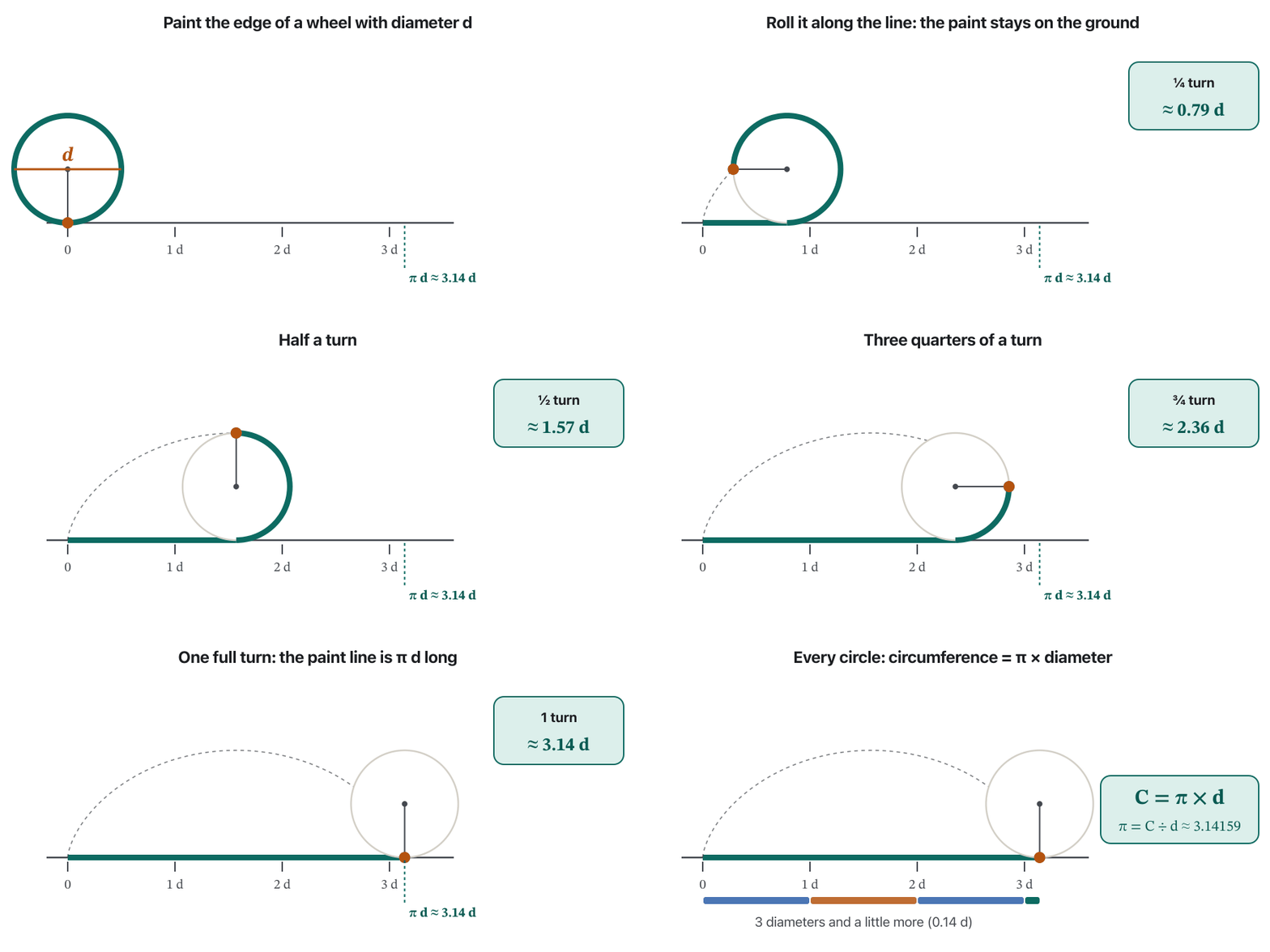
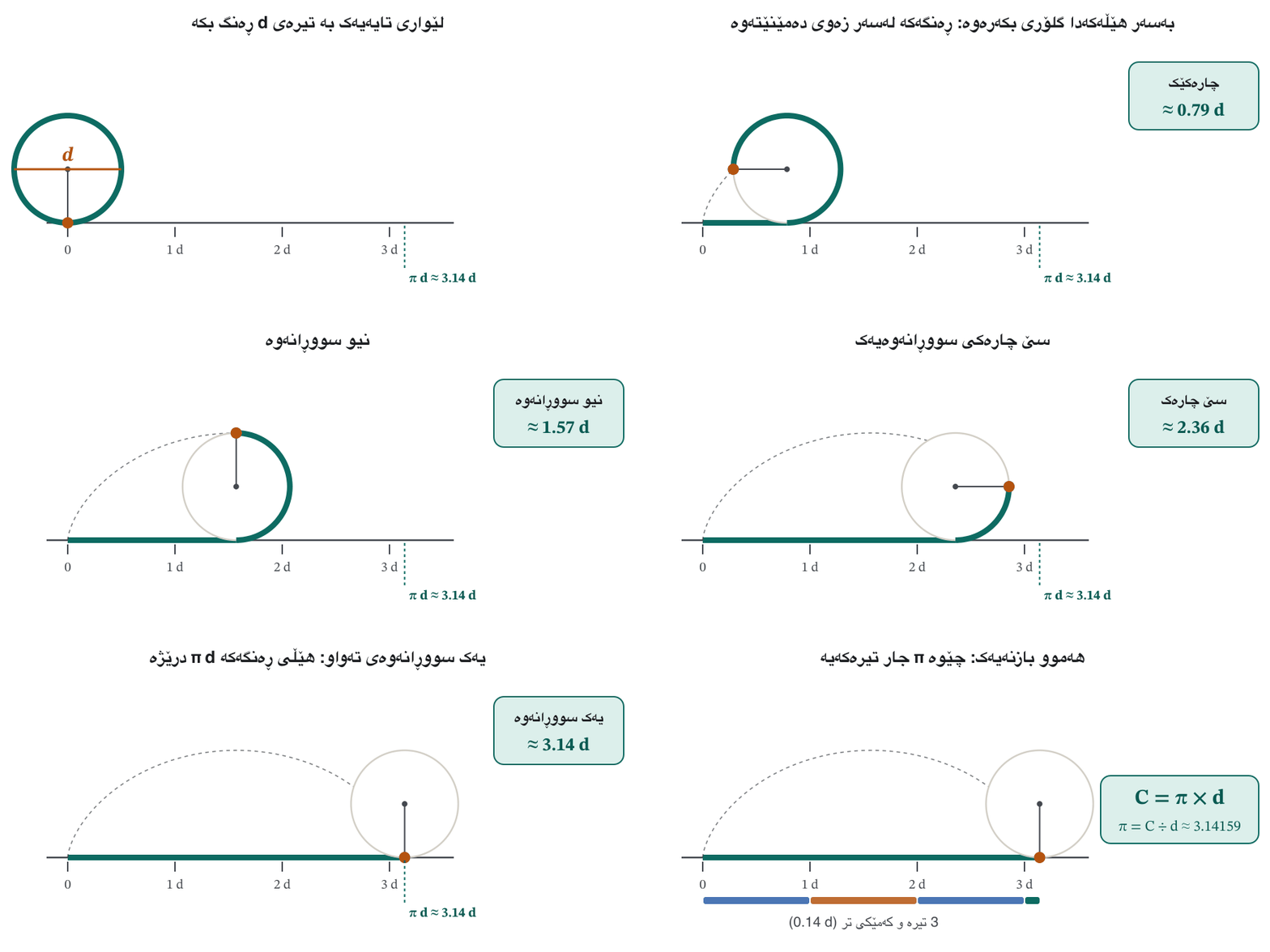
The digits of never end and never repeat (), so 3.14 and are only close values (Irrational numbers). The letter is the Greek p, probably for perimetros, “perimeter”: William Jones first used it for this number in 1706, and Euler made it common (Why one letter?). In code it is math.pi in Python and Math.PI in Java, both 3.141592653589793.
هەرگیز کۆتاییان نایەت و دووپاتە نابنەوە ()، بۆیە 3.14 و تەنیا نرخی نزیکن (ژمارە ناڕێژەییەکان). پیتەکە pـی یۆنانییە، لەوانەیە بۆ وشەی περίμετρος، واتە «چێوە»: ویلیەم جۆنز یەکەم جار لە 1706ـدا بۆ ئەم ژمارەیە بەکاری هێنا و ئۆیلەر باوی کرد (بۆچی یەک پیت؟). لە کۆددا لە Pythonـدا math.piـە و لە Javaـدا Math.PI، هەردووکیان 3.141592653589793.
Radians: the unit you do not seeڕادیانەکان: ئەو یەکەیەی نایبینیت
University maths measures angles in radians. One radian is the angle whose arc is exactly as long as the radius. About 6.28 radii fit round a circle, so a full turn is rad and ; one radian is about . The unit is usually not written: an angle with no sign, such as or , is in radians. Say “pi over two”, in Kurdish π لەسەر 2.
بیرکاریی زانکۆ بە دەپێوێت. یەک ئەو کە کەوانەکەی ڕێک بە درێژیی نیوەتیرەیە. نزیکەی 6.28 نیوەتیرە بە دەوری بازنەیەکدا جێدەبێتەوە، بۆیە سووڕانەوەیەکی تەواو rad و ـە؛ یەک نزیکەی ـە. یەکەکە زۆربەی جار نانووسرێت: بەبێ نیشانەی ، وەک یان ، بە . بخوێنەوە «π لەسەر 2» (pi over two).
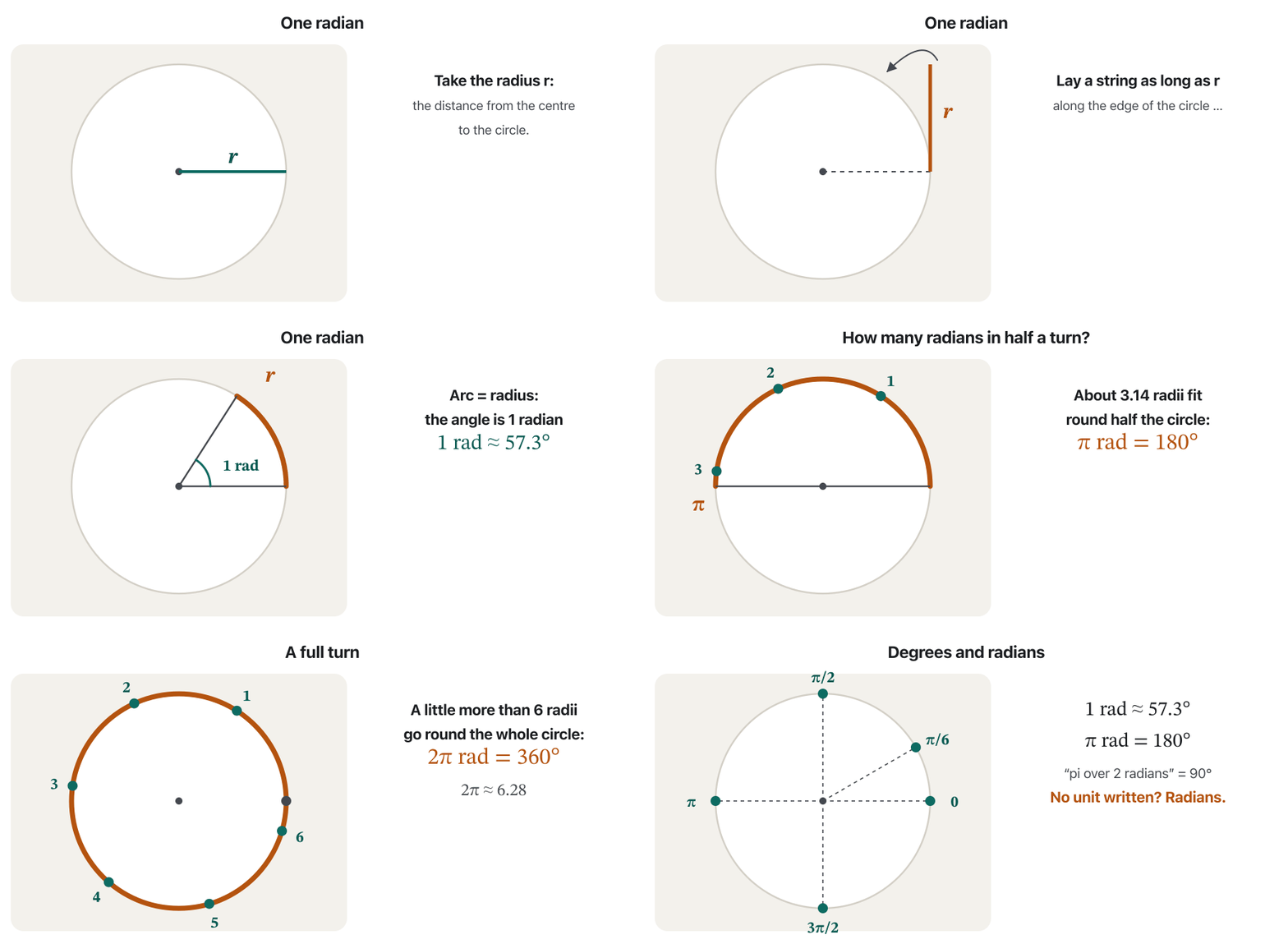
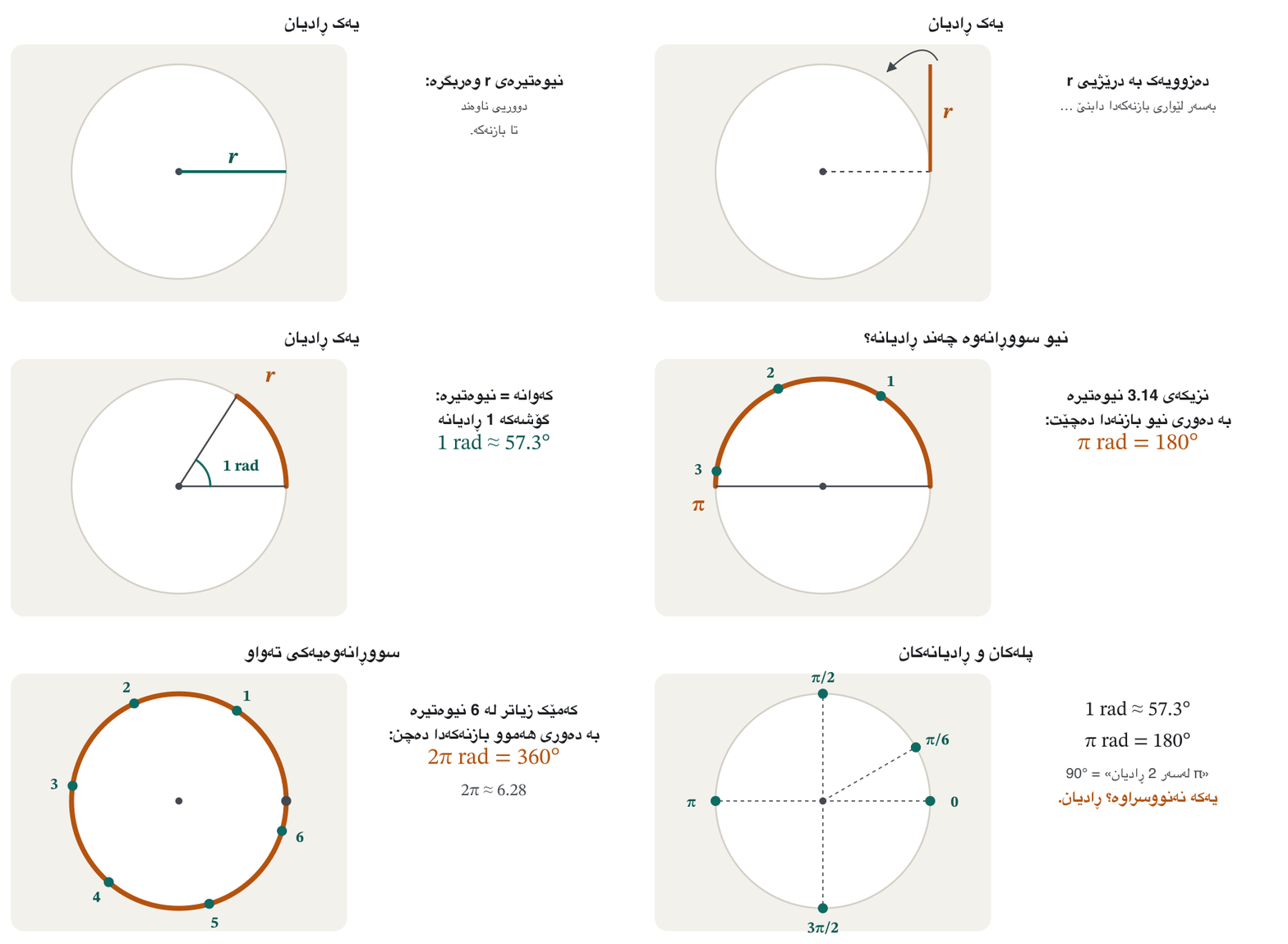
Some old books mark radians with a small c (for “circular measure”), , or write rad: . Converting and the full table of common angles are taught in Measuring angles in radians and Converting degrees and radians.
هەندێک کتێبی کۆن بە cـێکی بچووک (بۆ «پێوانی بازنەیی») دیاری دەکەن، ، یان rad دەنووسن: . گۆڕین و خشتەی تەواوی لە پێوانی گۆشەکان بە ڕادیان و گۆڕینی پلە و ڕادیان فێر دەکرێن.
Degrees or radians on a calculator and in codeپلە یان ڕادیان لەسەر حاسیبە و لە کۆددا
A calculator can work in either unit, and a small letter on its screen says which: D or DEG for degrees, R or RAD for radians (and G for gradians, 400 to a turn). The same keys, sin 30, give 0.5 in D mode but in R mode, because 30 radians is almost five turns. Check the letter before an exam question with angles.
دەتوانێت بە هەر دوو یەکە کار بکات و پیتێکی بچووک لەسەر شاشەکەی دەڵێت کامیان: D یان DEG بۆ ، R یان RAD بۆ (و G بۆ گرادیان، 400 بۆ سووڕانەوەیەک). هەمان sin 30 لە دۆخی D ئەنجامی 0.5 دەدەن، بەڵام لە دۆخی R ئەنجامی ، چونکە 30 نزیکەی پێنج سووڕانەوەیە. پێش پرسیارێکی تاقیکردنەوە کە تێدایە، پیتەکە بپشکنە.
| Toolئامراز | Works inیەکەکەی | Sine of | Learn moreزیاتر |
|---|---|---|---|
| Python | radians | math.sin(math.radians(30)) | The math toolboxئامرازەکانی math |
| MATLAB | radians; sind in degrees؛ sind بە | sind(30) | Radians or degrees?ڕادیان یان پلە؟ |
| Java | radians | Math.sin(Math.toRadians(30)) | The Math classپۆلی Math |
| Excel | radians | =SIN(RADIANS(30)) | Formulasفۆرمولەکان |
| Flutter | radians | Matrix4.rotationZ(pi / 6) | Turning a boxسووڕاندنی سندووقێک |
sin, cos, tan and their partners: names and readingssin، cos، tan و هاوەڵەکانیان: ناو و خوێندنەوە
The six trigonometric functions have short names. Say “sine theta”, “cos theta” (or “cosine theta”) and “tan theta”; their partners are “cotangent”, “secant” and “cosecant”. In Kurdish: ساینی θ, کۆساینی θ, تانجێنتی θ, کۆتانجێنتی θ, سێکانتی θ and کۆسێکانتی θ. In a right triangle, sine is the opposite side over the hypotenuse, cosine the adjacent side over the hypotenuse and tangent the opposite over the adjacent.
شەش ناوی کورتیان هەیە. بخوێنەوە « θ»، « θ» و « θ»؛ هاوەڵەکانیان «»، «» و «»ن. بە ئینگلیزی دەڵێن sine theta، cos theta و tan theta. لە سێگۆشەیەکی گۆشەوەستاودا بریتییە لە لای بەرامبەر لەسەر ژێ، لای تەنیشت لەسەر ژێ و لای بەرامبەر لەسەر لای تەنیشت.
You may meet other spellings: British books write cosec for csc, and Russian and other Eastern European books (and some older German ones) write tg for tan and ctg for cot; the international standard prefers tan and cot. All six functions, their graphs and periods are taught in The six trigonometric functions.
لەوانەیە ڕێنووسی تر ببینیت: کتێبە بەریتانییەکان cosec لە جیاتی csc دەنووسن و کتێبە ڕووسییەکان و هەندێک کتێبی تری ئەوروپای ڕۆژهەڵات (هەروەها هەندێک کتێبی کۆنی ئەڵمانی) tg لە جیاتی tan و ctg لە جیاتی cot دەنووسن؛ ستانداردی نێودەوڵەتی tan و cot پێ باشترە. هەر شەش ، بە و ، لە شەش نەخشە سێگۆشەییەکە فێر دەکرێن.
The point خاڵی
Put an angle at the centre of the circle of radius 1, the unit circle. The point where the angle ends is : is its x and is its y. A trick to remember the order: c comes before s in the alphabet, just as x comes before y. Both values stay between and . The animation walks the point round the circle and reads in degrees and in radians.
لە ناوەندی بازنەیەک بە نیوەتیرەی 1 دابنێ، کە پێی دەڵێن . ئەو خاڵەی لێی کۆتایی دێت ـە: xـیەتی و yـیەتی. ڕێگایەک بۆ لەبیرکردنی ڕیزبەندییەکە: لە ئەلفوبێدا c پێش s دێت، هەروەک x پێش y دێت. هەردوو نرخەکە لە نێوان و ـدا دەمێننەوە. وێنە جووڵاوەکە خاڵەکە بە دەوری بازنەکەدا دەبات و بە و بە دەخوێنێتەوە.
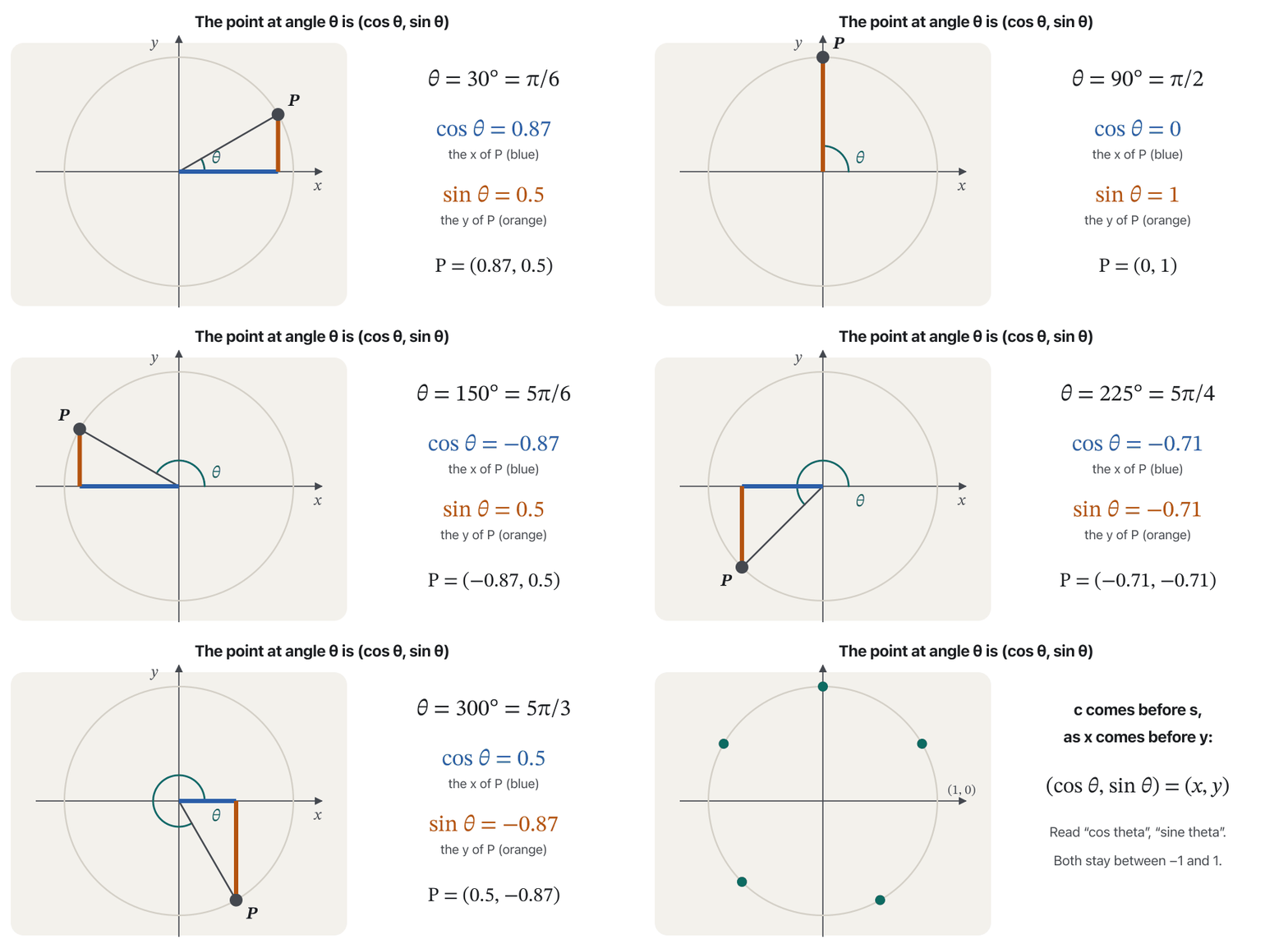
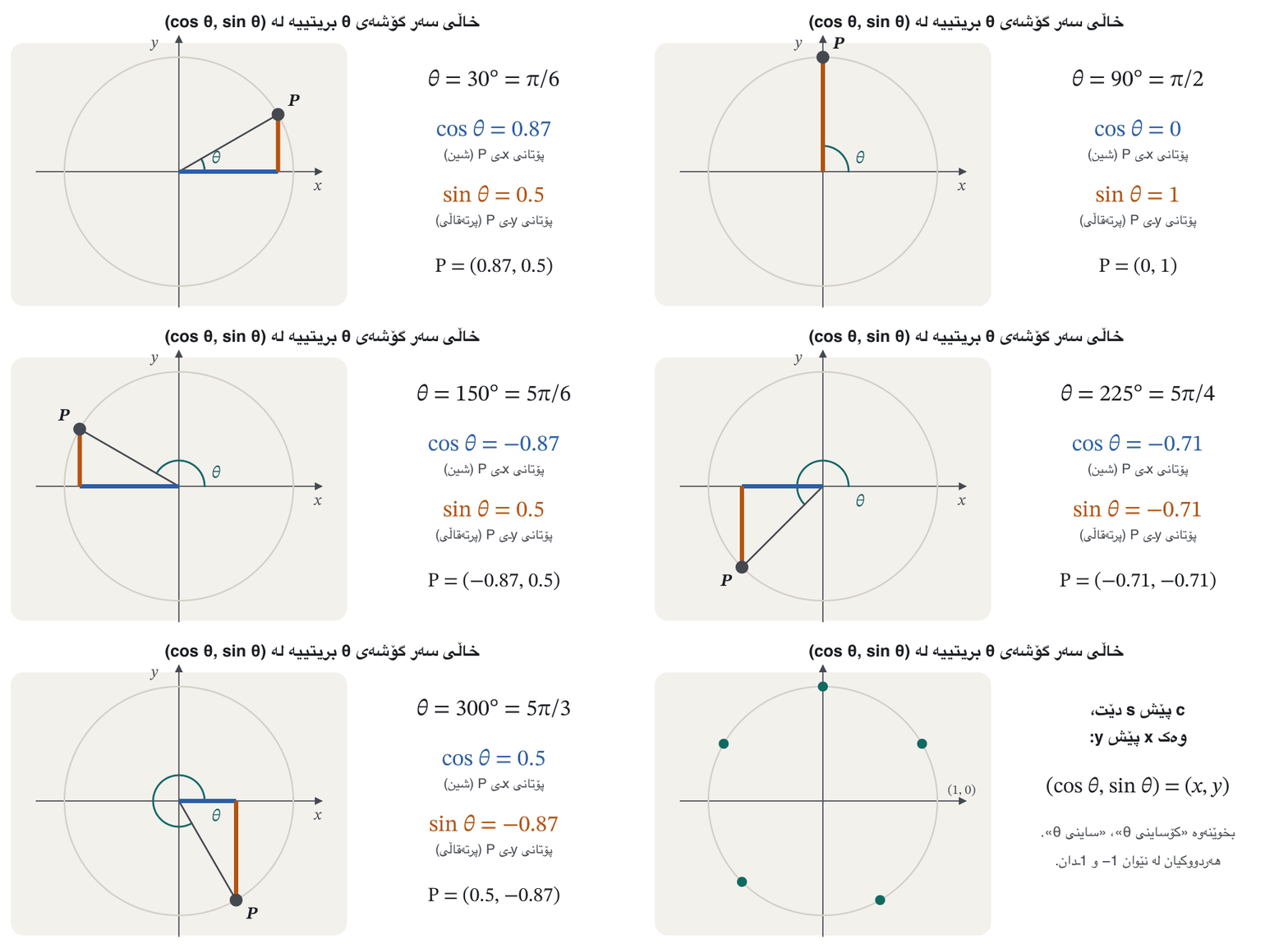
Why the unit circle defines sine and cosine for every angle, and the exact values at , and , are taught in The unit circle.
بۆچی و بۆ هەموو پێناسە دەکات و نرخە وردەکان لە ، و ـدا لە بازنەی یەکە فێر دەکرێن.
, and ، و
A small number written on the function name is a power of the result: , “sine squared x”, in Kurdish دووجای ساینی x. A small 2 on the x squares the angle first: . The exception is : means the inverse function , “inverse sine of x”, پێچەوانەی ساینی x, which gives back an angle. One over sine is written .
ژمارەیەکی بچووک لەسەر ناوی ئەنجامەکەیە: ، «دووجای x» (sine squared x). 2ـێکی بچووک لەسەر x سەرەتا دووجا دەکات: . تاکە جیاوازی ـە: واتە ، «پێچەوانەی x» (inverse sine of x)، کە دەگەڕێنێتەوە. یەک لەسەر دەنووسرێت .
So , and in a handout are arcsin, arccos and arctan. On a calculator they sit above the sin, cos and tan keys (SHIFT sin), and code calls them asin, acos, atan (math.asin, Math.asin, ASIN in Excel). The same raised on f is explained in Function notation; the warning in the calculus course: is not .
بۆیە ، و لە مەلزەمەدا هەمان arcsin، arccos و arctanن. لەسەر لە سەرەوەی sin، cos و tanـن (SHIFT sin) و کۆد ناویان دەنێت asin، acos، atan (math.asin، Math.asin، ASIN لە Excel). هەمان ـی بەرز لەسەر f لە نووسینی نەخشەیی ڕوون کراوەتەوە؛ ئاگادارکردنەوەکەی خولی کالکولەس: هەمان نییە.
Signs in drawings: , , and نیشانەکانی ناو وێنە: ، ، و
School geometry writes facts about drawings with a few signs. is “triangle ABC”, سێگۆشەی ABC. is “AB is perpendicular to CD”, AB ئەستوونە لەسەر CD: the lines meet at a right angle, which a drawing marks with a small square. is “AB is parallel to CD”, AB تەریبە لەگەڵ CD: they never meet, and a drawing marks them with matching arrowheads.
قوتابخانە ڕاستییەکانی ناو وێنە بە چەند نیشانەیەک دەنووسێت. واتە «سێگۆشەی ABC» (triangle ABC). واتە «AB لەسەر CD» (AB is perpendicular to CD): هێڵەکان بە وەستاو یەکتر دەبڕن، کە وێنە بە چوارگۆشەیەکی بچووک دیاری دەکات. واتە «AB لەگەڵ CD» (AB is parallel to CD): هەرگیز یەکتر نابڕن و وێنە بە سەرەتیری وەک یەک دیاریان دەکات.
Watch the look-alikes. The triangle sign is not the Greek capital delta , which means a change, as in (Look-alikes); in set theory is also the symmetric difference, ^ in Python (Set operations). In electronics, means two resistors joined side by side (Series and parallel circuits).
ئاگاداری لێکچووەکان بە. نیشانەی سێگۆشە هەمان دێلتای گەورەی یۆنانی نییە، کە واتای گۆڕان دەدات، وەک لە (لێکچووەکان)؛ لە تیۆری ، کە لە Pythonـدا ^ـە (کارەکانی کۆمەڵە). لە ئەلیکترۆنیکدا واتە دوو کە بە بەستراون (بەستنی زنجیرەیی و هاوتەریب).
Congruent and similar جووتبوو و هاوشێوە
says the triangles are congruent: the same shape and the same size, so one fits exactly on the other. says they are similar: the same shape, maybe another size; the angles are equal and the sides are in one ratio. Read them “… is congruent to …” and “… is similar to …”, in Kurdish … جووتبووە لەگەڵ … and … هاوشێوەیە لەگەڵ …. The order of the letters matters: A goes with D, B with E and C with F.
دەڵێت سێگۆشەکان : هەمان شێوە و هەمان قەبارەیان هەیە، بۆیە یەکێکیان ڕێک دەکەوێتە سەر ئەوی تر. دەڵێت : هەمان شێوە، لەوانەیە بە قەبارەیەکی تر؛ یەکسانن و لاکان بە یەک . بیانخوێنەوە «… لەگەڵ …» و «… لەگەڵ …» (is congruent to، is similar to). ڕیزبەندیی پیتەکان گرنگە: A لەگەڵ D، B لەگەڵ E و C لەگەڵ F دەڕوات.
The Kurdish words and are the words of the Kurdistan Region school glossary; Kurdish Wikipedia uses پێککەوتوو and لێکچوو. The tilde has other jobs in other subjects, such as “about” and “is distributed as” (One sign, four jobs).
وشە کوردییەکانی و وشەکانی فەرهەنگی بیرکاریی قوتابخانەکانی هەرێمی کوردستانن؛ ویکیپیدیای کوردی «پێککەوتوو» و «لێکچوو» بەکار دەهێنێت. تیلدا لە بابەتەکانی تردا کاری تریشی هەیە، وەک «نزیکەی» و «دابەش بووە وەک» (یەک نیشانە، چوار کار).
Segment, ray, line and arc: marks over two lettersپارچە ڕاستەهێڵ، تیشک، ڕاستەهێڵ و کەوانە: نیشانە لەسەر دوو پیت
A mark over two letters says which kind of line they name. is the segment from A to B, with two ends. is the ray that starts at A, passes B and goes on for ever. is the whole line through A and B, with no end. is the arc from A to B on a circle. Without a mark, AB (or |AB|) is usually the length, a number: .
نیشانەیەک لەسەر دوو پیت دەڵێت ناوی چ جۆرە هێڵێکن. پارچە ڕاستەهێڵی A تا Bـیە، بە دوو سەرەوە. تیشکەکەیە کە لە Aـەوە دەست پێدەکات، بە Bـدا تێدەپەڕێت و بێ کۆتایی دەڕوات. هەموو ڕاستەهێڵەکەیە کە بە A و Bـدا دەڕوات، بێ هیچ سەرێک. کەوانەی A تا Bـیە لەسەر بازنەیەک. بەبێ نیشانە، AB (یان |AB|) زۆربەی جار درێژییەکەیە، ژمارەیەک: .
In Kurdish say پارچە ڕاستەهێڵی AB, تیشکی AB, ڕاستەهێڵی AB and کەوانەی AB. The word کەوانە is also the word for a bracket in CêIT, so let the drawing or the arc mark decide. Kurdistan Region books may use other school words; the readings here follow the school glossary and Kurdish Wikipedia.
بە کوردی بڵێ «پارچە ڕاستەهێڵی AB»، «تیشکی AB»، «ڕاستەهێڵی AB» و «کەوانەی AB». وشەی «کەوانە» لە CêITـدا بۆ کەوانەی نووسینیش بەکار دێت، بۆیە با وێنەکە یان نیشانەی کەوانەکە بڕیار بدات. لەوانەیە کتێبەکانی هەرێمی کوردستان وشەی تری قوتابخانە بەکار بهێنن؛ خوێندنەوەکانی ئێرە فەرهەنگی قوتابخانە و ویکیپیدیای کوردی پەیڕەو دەکەن.
You may meet: Arabic-script names for sin, cos and tanلەوانەیە ببینیت: ناوی عەرەبیی sin، cos و tan
Books and exams of the Kurdistan Region write the trigonometric functions in Latin letters: sin x, cos x, tan x. In older books, in Arabic-curriculum books or in some teachers' notes you may meet Arabic-script abbreviations instead: جا for sin, جتا for cos, ظا for tan, ظتا for cot, قا for sec and قتا for csc. They come from the Arabic words جيب, ظل and قاطع; the extra ت stands for تمام, “the co- of”. Many books print them without dots: حا, حتا, طا (the full reading table).
کتێب و تاقیکردنەوەکانی هەرێمی کوردستان بە پیتی لاتینی دەنووسن: sin x، cos x، tan x. لە کتێبە کۆنەکان، لە کتێبەکانی پرۆگرامی عەرەبی یان لە هەندێک تێبینیی مامۆستایاندا لەوانەیە کورتکراوەی عەرەبی ببینیت: جا بۆ sin، جتا بۆ cos، ظا بۆ tan، ظتا بۆ cot، قا بۆ sec و قتا بۆ csc. لە وشە عەرەبییەکانی جيب، ظل و قاطعـەوە هاتوون؛ پیتی زیادەی ت کورتکراوەی تمامـە، کە هەمان coـی ناوی cos و cotـە. زۆر کتێب بێ خاڵ چاپیان دەکەن: حا، حتا، طا (خشتەی تەواوی خوێندنەوە).
The English word sine itself came through Arabic. Indian mathematicians called the half-chord jyā, “bow-string”; Arabic wrote it جيب, and twelfth-century translators read it as the word for a fold or pocket and put it into Latin as sinus, which became sine. Albert Girard was the first to print the short forms sin, cos and tan, and Euler made them common.
وشەی ئینگلیزیی sine خۆی بە ڕێگای عەرەبیدا هاتووە. بیرکاریزانانی هیندی بە نیوەی ئەو هێڵەی دوو سەری کەوانەیەک دەبەستێتەوە دەیانگوت jyā، واتە «ژێی کەوان»؛ عەرەبی بە جيب نووسییەوە و وەرگێڕەکانی سەدەی دوازدە وەک وشەی «گیرفان یان چین» خوێندیانەوە و کردیانە sinusـی لاتینی، کە بوو بە sine. ئەلبێرت ژیرار یەکەم کەس بوو کە شێوە کورتەکانی sin، cos و tanـی چاپ کرد و ئۆیلەر باوی کردن.
Common mistakesهەڵە باوەکان
| Mistakeهەڵە | Why it is wrongبۆچی هەڵەیە | Do thisئەمە بکە |
|---|---|---|
| Reading with the vertex at Aخوێندنەوەی وەک ئەوەی سەرەکەی A بێت | The vertex is the middle letterسەری پیتی ناوەڕاستە | Vertex Bسەرەکەی B |
| Pressing sin 30 in R mode for داگرتنی sin 30 لە دۆخی R بۆ | 30 is read as 30 radians: 30 وەک 30 دەخوێنرێتەوە: | Switch to D, or convert to بیگۆڕە بۆ D، یان بیکە بە |
math.sin(30) for math.sin(30) بۆ | Code works in radiansکۆد بە کار دەکات | math.sin(math.radians(30))math.sin(math.radians(30)) |
| on a trig name means the inverse لەسەر ناوی واتە پێچەوانە | ; ؛ | |
| The 2 on the name squares the result2 لەسەر ناوەکە ئەنجامەکە دووجا دەکات | ||
| Writing 30⁰ or 30o for degreesنووسینی 30⁰ یان 30o بۆ | ⁰ is a power and o is a letter⁰ و o پیتە | |
| Taking for وەرگرتنی وەک | is a triangle; means a change سێگۆشەیە؛ واتای گۆڕان دەدات | vs بەرامبەر |
| and used the same wayبەکارهێنانی و وەک یەک | Similar shapes may have different sizesشێوە لەوانەیە قەبارەیان جیاواز بێت | same size; same shape only هەمان قەبارە؛ تەنیا هەمان شێوە |
| Reading as a numberخوێندنەوەی وەک ژمارەیەک | With a bar it is the segment itselfبە هێڵەوە خودی پارچە ڕاستەهێڵەکەیە | The length is or درێژییەکە یان ـە |
Practiceڕاهێنان
Read each statement aloud in English and in Kurdish: (a) (b) (c) (d) (e) .
هەر ڕستەیەک بە ئینگلیزی و بە کوردی بە دەنگی بەرز بخوێنەوە: (a) (b) (c) (d) (e) .
Show answerوەڵامەکە پیشان بدە
- (a) “Angle ABC is 90 degrees”: a right angle at B.
- (b) “AB is perpendicular to BC”.
- (c) “Segment DE is parallel to segment FG”.
- (d) “Triangle ABC is congruent to triangle PQR”: A with P, B with Q, C with R.
- (e) “Triangle ABC is similar to triangle XYZ”: same angles, maybe a different size.
- (a) « ABC 90 »: وەستاو لە B.
- (b) «AB لەسەر BC».
- (c) «پارچە ڕاستەهێڵی DE لەگەڵ پارچە ڕاستەهێڵی FG».
- (d) «سێگۆشەی ABC لەگەڵ سێگۆشەی PQR»: A لەگەڵ P، B لەگەڵ Q، C لەگەڵ R.
- (e) «سێگۆشەی ABC لەگەڵ سێگۆشەی XYZ»: هەمان ، لەوانەیە قەبارەی جیاواز.
Say whether each angle is in degrees or radians, and give it in the other unit: (a) (b) (c) (d) Matrix4.rotationZ(pi / 12) in Flutter.
بڵێ هەر بە یان بە ، پاشان بە یەکەکەی تر بینووسە: (a) (b) (c) (d) Matrix4.rotationZ(pi / 12) لە Flutterـدا.
Show answerوەڵامەکە پیشان بدە
- (a) degrees; rad
- (b) radians (no sign);
- (c) radians;
- (d) radians, like all code;
- (a) ؛ rad
- (b) (بێ نیشانەی )؛
- (c) ؛
- (d) ، وەک هەموو کۆدێک؛
Write each one another way and find its value for : (a) (b) (c) (d) .
هەر یەکەیان بە شێوەیەکی تر بنووسە و نرخەکەی بۆ بدۆزەرەوە: (a) (b) (c) (d) .
Show answerوەڵامەکە پیشان بدە
(d) is always 1, whatever the angle: The Pythagorean identity.
(d) هەمیشە 1ـە، هەر بێت: هاوئەنجامی فیساگۆرس.
Summaryپوختە
- : “angle ABC”, vertex in the middle; , , name angles.
- and ; is a different degree.
- for every circle, so ; the letter is the Greek p of perimetros, “perimeter”.
- Radians are usually not written: , ; calculators show D or R, and code always uses radians.
- sin, cos, tan, cot, sec, csc: “sine theta” …; is the point on the unit circle.
- , , , .
- perpendicular, parallel, congruent, similar; segment, ray, line.
- You may meet جا, جتا, ظا for sin, cos, tan in Arabic-script books.
- Every symbol of this lesson, with its readings, is also in one table: Geometry and trigonometry in the Symbol Dictionary.
- : « ABC»، سەرەکەی لە ناوەڕاست؛ ، ، ناوی .
- و ؛ جیاوازە.
- بۆ هەموو بازنەیەک، بۆیە ؛ پیتەکە pـی یۆنانییە بۆ περίμετρος، واتە «چێوە».
- زۆربەی جار نانووسرێت: ، ؛ D یان R پیشان دەدات و کۆد هەمیشە بەکار دەهێنێت.
- sin، cos، tan، cot، sec، csc: « θ» …؛ خاڵی سەر .
- ، ، ، .
- ، ، ، ؛ پارچە ڕاستەهێڵ، تیشک، ڕاستەهێڵ.
- لەوانەیە لە کتێبی عەرەبیدا جا، جتا، ظا ببینیت بۆ sin، cos و tan.
- هەموو ئەم وانەیە، لەگەڵ خوێندنەوەکانیان، لە یەک خشتەشدا هەن: ئەندازەزانی و سێگۆشەزانی لە فەرهەنگی هێماکان.
How do you say ? چۆن دەخوێنیتەوە؟
“Sine squared theta”: the sine of , squared.
«دووجای θ» (sine squared theta): ، دووجاکراو.
Your calculator gives for . What happened?حاسیبەکەت بۆ ئەنجامی دەدات. چی ڕوویدا؟
It is in R (radian) mode. Switch to D for degrees.
لە دۆخی R ()دایە. بیگۆڕە بۆ D بۆ .
What is the difference between and ?جیاوازیی نێوان و چییە؟
means the same shape and size; means the same shape, maybe a different size.
واتە هەمان شێوە و قەبارە؛ واتە هەمان شێوە، لەوانەیە قەبارەی جیاواز.
Lesson complete!وانەکە تەواو بوو!
Well done. Review the key terms, then go on to the next lesson.دەستخۆش. سەیرێکی زاراوە سەرەکییەکان بکەرەوە، پاشان بڕۆ بۆ وانەی داهاتوو.
Key termsزاراوە سەرەکییەکان
Sequences, Sums (Σ) and Products (Π)یەکبەدوای یەکەکان، کۆ (Σ) و لێکدان (Π)
Related lecturesوانە پەیوەندیدارەکان
- Function Notation: f(x), Arrows, Inverses and Compositionنووسینی نەخشەیی: ، تیرەکان، پێچەوانە و ئاوێتەکردن
- Equals, Not Equal, Approximately and Other Relationsیەکسان، یەکسان نییە، نزیکەی یەکسان و پەیوەندییەکانی تر
- Reading Maths in Kurdish, Arabic and English Booksخوێندنەوەی بیرکاری لە کتێبی کوردی، عەرەبی و ئینگلیزیدا
- The Six Trigonometric Functionsشەش نەخشە سێگۆشەییەکە
- Trigonometric Identitiesهاوئەنجامە سێگۆشەییەکان
- Inverse Functions and Inverse Trigonometric Functionsپێچەوانەکانی نەخشە و نەخشە سێگۆشەییە پێچەوانەکان
- Built-in Maths Functionsکردارە ئامادەکانی بیرکاری
- Decorating a Container: Border, Radius, Shadow, Transformڕازاندنەوەی Container: سنوور، گۆشەی خڕ، سێبەر، transform
References and further readingسەرچاوەکان و خوێندنەوەی زیاتر
- OpenStax, Algebra and Trigonometry 2e, 7.1 Angles (∠DEF, Greek letters for angles, degrees, radians, no unit means radians)
- Wikipedia: Degree (angle) (minutes and seconds, decimal degrees, the gradian)
- Wikipedia: Radian (the symbol rad, old marks c and r, angles without a unit)
- Wikipedia: Trigonometric functions (sin²x = (sin x)², sin⁻¹ x is the inverse, not the reciprocal)
- Wikipedia: Sine and cosine (history of the word sine and of the abbreviations)
- Wikipedia (German): Tangens und Kotangens (the older forms tg and ctg)
- Wikipedia: Modern Arabic mathematical notation (Arabic-script names of the trigonometric functions)
- W3C Interest Group Note: Arabic mathematical notation (dotted and dotless letters by region)
- Python documentation: math (sin in radians, radians(), degrees())
- Java SE 17 API: class Math (sin, toRadians, toDegrees)
- Microsoft Support: SIN function (radians; RADIANS or PI()/180)
- Wikipedia: Erbil Citadel (coordinates 36°11′28″N 44°00′33″E)
- Jeff Miller, Earliest Uses of Symbols for Constants (MacTutor): π for circumference ÷ diameter, William Jones 1706, Euler 1736–1748
This lecture is a first edition. The Kurdish text and terminology are waiting for review by Kurdish IT teachers.ئەم وانەیە چاپی یەکەمە. دەقە کوردییەکە و زاراوەکانی چاوەڕێی پێداچوونەوەی مامۆستایانی کوردی بواری IT ن.