Chapterبەش 4 · Lectureوانە 4.3
Logic Symbols and Boolean Algebraهێماکانی لۆجیک و جەبری بوول
Read and say the signs of logic in every style books use: statements p and q; NOT as , , a prime or a bar; AND , OR and XOR ; the arrows , , and ; the step signs of worked solutions; the quantifiers and ; then Boolean algebra, where means AND and , the gate signs & and ≥1, and the same ideas in Python, C, Java, PHP, MATLAB and SQL.
لۆجیک بە هەموو ئەو شێوانەی کتێبەکان بەکاریان دەهێنن بخوێنەوە و بیڵێ: p و q؛ NOT بە ، ، پرایم یان هێڵ؛ AND ، OR و XOR ؛ تیرەکانی ، ، و ؛ نیشانەکانی هەنگاو لە شیکارە کارکراوەکاندا؛ و ؛ پاشان ، کە تێیدا واتە AND و ، نیشانەکانی & و ≥1، هەروەها هەمان بیرۆکەکان لە Python، C، Java، PHP، MATLAB و SQLـدا.
What you will learnچی فێر دەبیت
- Read statements p and q and the truth values T and F, 1 and 0.
- Recognise NOT, AND and OR in every common notation ( bar; ;
|) and say them in English and Kurdish. - Read XOR, , , and , and use the truth table of an implication.
- Read the step signs and in worked solutions, and , , and .
- Read , , and , and deny a “for all” statement correctly.
- Read Boolean algebra (, , ), explain why there, and match the logic signs with code operators.
- p و q و نرخەکانی ڕاستیی T و F، 1 و 0 بخوێنیتەوە.
- NOT، AND و OR بە هەموو شێوە باوەکان بناسیتەوە ( هێڵ؛ ؛
|) و بە ئینگلیزی و کوردی بیانڵێیت. - XOR، ، ، و بخوێنیتەوە و بەکار بهێنیت.
- نیشانەکانی هەنگاوی و لە شیکارە کارکراوەکاندا بخوێنیتەوە، هەروەها ، ، و .
- ، ، و بخوێنیتەوە و ڕستەیەکی «بۆ هەموو» بە دروستی ڕەت بکەیتەوە.
- بخوێنیتەوە (، ، )، ڕوون بکەیتەوە بۆچی لەوێ ـە و لۆجیک لەگەڵ کۆد بەراورد بکەیت.
Statements: p, q, true and falseگوزارەکان: p و q، ڕاست و هەڵە
Logic works with statements, also called propositions: sentences that are either true or false. Books name them with small letters, usually p, q and r: p = “Erbil is in Kurdistan” is true, q = is false. A question or an order is not a statement, and neither is while x is unknown. The two truth values are written T and F, or 1 and 0 in logic design and in code; some books write and (Propositions and symbols).
لۆجیک لەگەڵ کار دەکات: ڕستەیەک کە یان ڕاستە یان هەڵە. کتێبەکان بە پیتی بچووک ناویان دەنێن، بە زۆری ، و : p = «هەولێر لە کوردستانە» ڕاستە، q = هەڵەیە. پرسیار و فەرمان نین، هەروەها ـیش نییە مادام x نەزانراوە. دوو نرخی ڕاستی بە T و F دەنووسرێن، یان بە 1 و 0 لە دیزاینی و لە کۆددا؛ هەندێک کتێب و دەنووسن (گوزارەکان و هێماکان).
NOT: five ways to write itNOT: پێنج شێوەی نووسین
The negation of p is true when p is false and false when p is true. Books write it (the AI course and most logic books), (OpenStax and older books), or (logic design, where is NOT A), and !p or not p in code. Read every one “not p”; in Kurdish نا p or وا نییە کە p. Two NOTs cancel: . The tilde has other jobs too (: one sign, four jobs).
p ڕاستە کاتێک p هەڵە بێت و هەڵەیە کاتێک p ڕاست بێت. کتێبەکان بەم شێوانە دەینووسن: (کۆرسی و زۆربەی کتێبەکانی لۆجیک)، (OpenStax و کتێبی کۆنتر)، یان (دیزاینی ، کە تێیدا واتە NOT A)، هەروەها !p یان not p لە کۆددا. هەموویان «نا p» یان «وا نییە کە p» دەخوێنرێنەوە. دوو NOT یەکتر لادەبەن: . تیلدا کاری تریشی هەیە (: یەک نیشانە، چوار کار).
A long bar covers a whole group: is NOT (A OR B), which is not the same as (A bar over a whole group). You may meet a table header printed for NOT A; the usual forms are and (The NOT gate).
هێڵێکی درێژ گرووپێکی تەواو دادەپۆشێت: واتە NOT (A OR B)، کە هەمان نییە (هێڵێک بەسەر گرووپێکی تەواودا). لەوانەیە سەردێڕی خشتەیەک ببینیت کە بۆ NOT A چاپ کردووە؛ شێوە باوەکان و ـن (گەیتی NOT).
AND and OR: , , and AND و OR: ، ، و
AND, OR and NOT are the basic logical operators. , “p and q”, is true only when both are true; books also write , or simply . , “p or q”, is true when at least one is true, including when both are: the “or” of logic always allows both. Other spellings are in logic design and p || q or p or q in code. In Kurdish: p و q and p یان q (The five connectives).
AND، OR و NOT سێ بنەڕەتین. ، «p و q»، تەنیا کاتێک ڕاستە کە هەردووکیان ڕاست بن؛ کتێبەکان ، یان بە سادەیی ـیش دەنووسن. ، «p یان q»، ڕاستە کاتێک لانیکەم یەکێکیان ڕاست بێت، لەوانە کاتێک هەردووکیان ڕاستن: «یان»ـی لۆجیک هەمیشە ڕێگە بە هەردووکیان دەدات. شێوەکانی تری نووسینی ـە لە دیزاینی و p || q یان p or q لە کۆددا (پێنج بەستەرەکە).
A memory trick: looks like the of intersection and like the of union. It is no accident: “x is in ” means , and NOT matches the complement (The same laws in sets and in logic).
فێڵێک بۆ لەبیرکردن: لە ـی دەچێت و لە ـی . ئەمە ڕێکەوت نییە: «x لە ـدایە» واتە . NOTـیش هاوتای (هەمان یاساکان لە کۆمەڵەکان و لە لۆجیکدا).
XOR: one or the other, not bothXOR: یان ئەم یان ئەو، نەک هەردووکیان
Everyday “or” sometimes means “only one”: “tea or coffee with the meal”. Logic calls that exclusive or, XOR: is true when exactly one of p and q is true. Books also write , rectangular gate symbols carry the mark =1, and for True and False Python’s p != q (or p ^ q) does the job. Its partner XNOR, or , is true when both are the same (The XOR gate). In Kurdish: یان p یان q، نەک هەردووکیان.
«یان»ـی ڕۆژانە هەندێک جار واتای «تەنیا یەکێکیان» دەدات: «چا یان قاوە لەگەڵ ژەمەکە». لۆجیک بەمە دەڵێت «یان»ـی تایبەت (exclusive or)، واتە XOR: ڕاستە کاتێک تەنیا یەکێک لە p و q ڕاست بێت. کتێبەکان ـیش دەنووسن، هێما لاکێشەییەکانی نیشانەی =1 هەڵدەگرن و بۆ True و False لە p != q (یان p ^ q) ئەو کارە دەکات. هاوڕێکەی XNOR، یان ، ڕاستە کاتێک هەردووکیان وەک یەک بن (گەیتی XOR). بە کوردی: «یان p یان q، نەک هەردووکیان».
and : if … then و : ئەگەر … ئەوا
is the implication “if p then q”, also read “p implies q”; in Kurdish ئەگەر p ئەوا q. Many books use the double arrow , and older ones write , which has nothing to do with supersets here. Watch the animation fill the truth table: the implication is false only when p is true and q is false. When p is false, nothing was promised, so it counts as true (Implication).
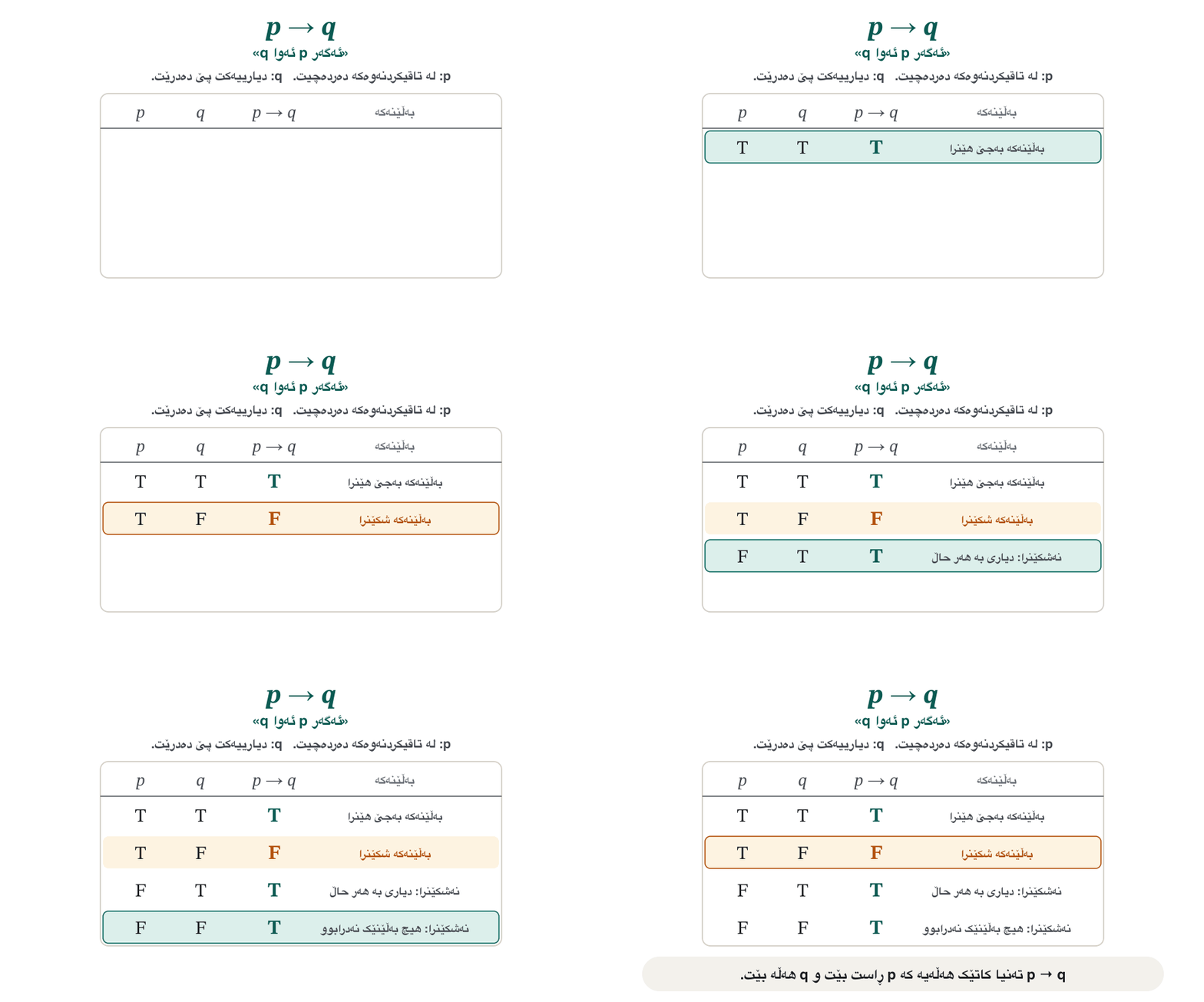
: «ئەگەر p ئەوا q»، کە «، دەگەیەنێت»ـیش دەخوێنرێتەوە. زۆر کتێب تیری دووهێڵی بەکار دەهێنن و کتێبە کۆنەکان دەنووسن، کە لێرەدا هیچ پەیوەندیی بە نییە. سەیری ئەنیمەیشنەکە بکە کە پڕ دەکاتەوە: تەنیا کاتێک هەڵەیە کە p ڕاست بێت و q هەڵە بێت. کاتێک p هەڵە بێت، هیچ بەڵێنێک نەدراوە، بۆیە بە ڕاست دادەنرێت (گوزارەی مەرجی).
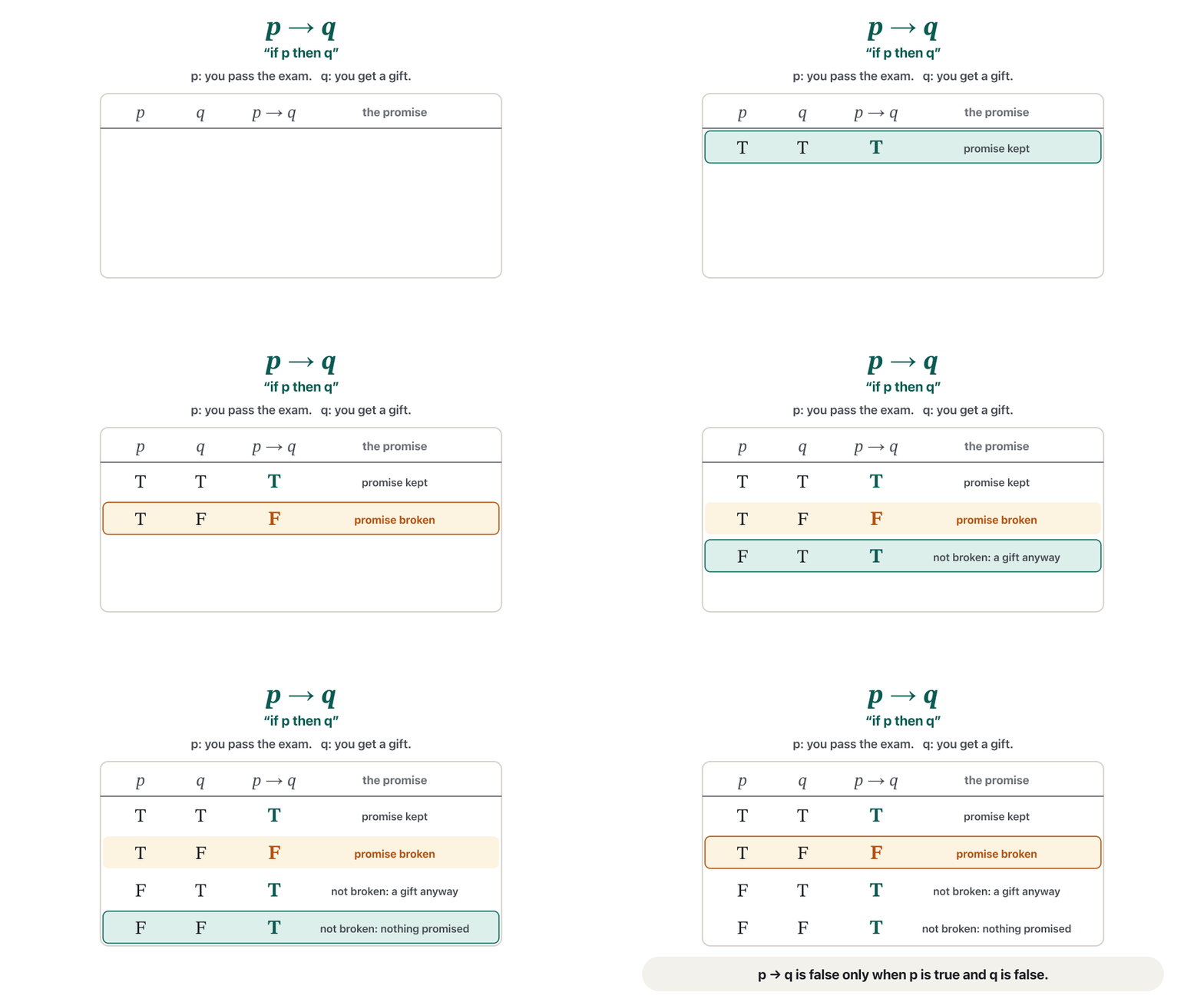
The arrow points one way. “If it rains, the street is wet” does not say “if the street is wet, it rained”: , the converse, is a different statement. Inside formulas the arrow stays ; in Kurdish sentences CêIT writes «←» for “then” (One arrow, four jobs).
تیرەکە تەنیا یەک ئاڕاستەی هەیە. «ئەگەر باران ببارێت، شەقامەکە تەڕ دەبێت» نالێت «ئەگەر شەقامەکە تەڕ بێت، باران باریوە»: ، کە پێچەوانەکەیەتی، ڕستەیەکی ترە. لە ناو تیرەکە دەمێنێتەوە؛ لە ڕستەی کوردیدا CêIT بۆ «ئەوا» «←» دەنووسێت (یەک تیر، چوار کار).
, and : if and only if، و : ئەگەر و تەنیا ئەگەر
, the biconditional, says the rule works both ways: “p if and only if q”, shortened to “p iff q”; in Kurdish p ئەگەر و تەنیا ئەگەر q. It is true when p and q have the same truth value, so it means . Books write , , the long or (Biconditional).
، واتە ، دەڵێت یاساکە بە هەردوو ئاڕاستەدا کار دەکات: «p ئەگەر و تەنیا ئەگەر q»، بە کورتی «p iff q». ڕاستە کاتێک p و q هەمان نرخی ڕاستییان هەبێت، بۆیە واتای دەدات. کتێبەکان ، ، ـی درێژ یان دەنووسن (گوزارەی دوومەرجی).
Definitions are full of “iff”: a function is one-to-one iff different inputs always give different outputs (One-to-one functions). An “iff” is a two-way street; an “if” is one way.
پێناسەکان پڕن لە «iff»: یەک بۆ یەکە ئەگەر و تەنیا ئەگەر جیاواز هەمیشە جیاواز بدات (نەخشە یەک بۆ یەکەکان). «ئەگەر و تەنیا ئەگەر» شەقامێکی دوو ئاڕاستەیە؛ «ئەگەر» یەک ئاڕاستەیە.
Signs between the steps of a solutionهێماکانی نێوان هەنگاوەکانی شیکارێک
Worked solutions join their lines with arrows. means “so” or “therefore”: the next line follows from this one. means “is the same as”: each line follows from the other, so no answer is lost or added. So , but works one way only, because also allows . Do not write “or” where you mean : “ or ” says something quite different from (Adding the same number to both sides).
شیکارە کارکراوەکان دێڕەکانیان بە تیر پێکەوە دەبەستن. واتە «کەواتە»: دێڕی دواتر لەم دێڕەوە دێت. واتە «هەمان شتە»: هەر دێڕێک لە ئەوی ترەوە دێت، بۆیە هیچ وەڵامێک ون نابێت و زیادیش نابێت. کەواتە ، بەڵام تەنیا بە یەک ئاڕاستە کار دەکات، چونکە ڕێگە بە ـیش دەدات. لە جیاتی «یان» مەنووسە: « یان » شتێکی زۆر جیاواز لە دەڵێت (زیادکردنی هەمان ژمارە بۆ هەردوو لا).
More signs of proofs: “therefore” and “because” ( and ); or , also written QED, marks the end of a proof; “proves” means a sentence can be derived with rules, and “entails” means it is true in every case where the left side is true (Queries and entailment).
تری : «کەواتە» و «چونکە» ( و )؛ یان ، کە بە QEDـیش دەنووسرێت، کۆتایی پیشان دەدات؛ «دەسەلمێنێت» واتە ڕستەیەک بە یاساکان دەردەهێنرێت و «لێی دەکەوێتەوە» () واتە لە هەموو ئەو حاڵەتانەدا ڕاستە کە لای چەپ تێیاندا ڕاستە (پرسەکان و لێکەوتنەوە).
and : for all, there exists و : بۆ هەموو، هەیە
Two turned letters say “how many”. (an upside-down A, for “all”) is read “for all”, “for every” or “for each”: , “for every real x, x squared is at least 0”; in Kurdish بۆ هەموو x. (a turned E, for “exists”) is read “there exists” or “there is at least one”: , “there is a natural number n greater than 100”. means “there is exactly one” and “there is no”. These signs are called quantifiers; Kurdish has no settled word for the name yet.
دوو پیتی هەڵگەڕاوە دەڵێن «چەند». (Aـیەکی سەرەوخوار، بۆ all) دەخوێنرێتەوە «بۆ هەموو»: ، «بۆ هەموو x لە ـدا، x دووجا گەورەترە لە 0 یان یەکسانە پێی». (Eـیەکی هەڵگەڕاوە، بۆ exists) دەخوێنرێتەوە «هەیە» یان «لانیکەم یەک … هەیە»: ، «لانیکەم یەک n لە ـدا هەیە کە لە 100 گەورەترە». واتە «تەنیا یەک … هەیە» و واتە «هیچ … نییە». بەم نیشانانە دەوترێت ؛ هێشتا وشەیەکی جێگیری کوردی بۆ ناوەکەیان نییە.
Definitions use them: a function gives every x exactly one y, (Notation and other names), and database queries use them too (Formulas, quantifiers and implication). To deny “all”, one counterexample is enough: is the same as , “not all” is “some are not”.
پێناسەکان بەکاریان دەهێنن: بە هەموو xـێک تەنیا یەک y دەدات، (شێوەی نووسین و ناوەکانی تر)؛ پرسیارەکانی بەکاریان دەهێنن (فۆرمولەکان، quantifier و گوزارەی مەرجی). بۆ ڕەتکردنەوەی «هەموو»، یەک نموونەی پێچەوانە بەسە: هەمان ـە، «وا نییە کە هەموو» واتە «هەندێکیان نا».
Boolean algebra: , and جەبری بوول: ، و
Logic design writes logic like algebra, with 0 and 1: Boolean algebra. A product is AND: or . A sum is OR: . A bar or a prime is NOT, the complement: or , and a bar over a group, as in (NAND), covers the whole group. So reads “X equals A AND NOT B, OR C”. NOT comes first, then AND, then OR, just as multiplication comes before addition (+ means OR, · means AND).
دیزاینی لۆجیک وەک جەبر دەنووسێت، بە 0 و 1: . نووسینی پیتەکان بە دوای یەکدا، ، یان واتە AND. نیشانەی کۆ، ، واتە OR. هێڵێک لەسەر پیتەکە یان پرایم واتە NOT، واتە : یان ؛ هێڵێکیش لەسەر گرووپێک، وەک (NAND)، هەموو گرووپەکە دادەپۆشێت. کەواتە دەخوێنرێتەوە «X یەکسانە بە A AND NOT B، OR C». سەرەتا NOT، پاشان AND، پاشان OR، هەروەک پێش دێت (+ واتە OR، · واتە AND).
Because + is OR, : one input that is on is enough. Arithmetic gives 2 and binary addition gives ; mixing them up is a classic slip, even in careful reports (OR is not binary addition). Gate drawings carry the same ideas: in the rectangular IEC style a box marked & is AND, ≥1 is OR and =1 is XOR (Two ways to draw gates). Kurdish texts keep the gate names in Latin letters (AND, OR, NOT), and you may see the gate drawings called هێمای لۆجیکانە, “logic symbols”.
چونکە + واتە OR، : یەک هەڵکراو بەسە. ژمێرکاری 2 دەدات و دەدات؛ تێکەڵکردنیان هەڵەیەکی باوە، تەنانەت لە ڕاپۆرتی وردیشدا (OR کۆکردنەوەی دووانی نییە). وێنەی هەمان بیرۆکە هەڵدەگرن: لە شێوازی لاکێشەیی IECـدا سندووقێک بە نیشانەی & واتە AND، ≥1 واتە OR و =1 واتە XOR (دوو ڕێگا بۆ کێشانی گەیتەکان). لە دەقی کوردیدا ناوی بە پیتی لاتینی دەمێننەوە، وەک ؛ لەوانەیە بە وێنەکانیشیان بوترێت «هێمای لۆجیکانە».
The same ideas in codeهەمان بیرۆکەکان لە کۆددا
Programming languages type logic with keyboard signs, and each language has its own set:
لۆجیک بە نیشانەکانی دەنووسن و هەر زمانێک کۆمەڵە نیشانەیەکی تایبەتی خۆی هەیە:
p, q = True, False
print(not p, p and q, p or q)   # ¬p, p ∧ q, p ∨ q
print(p != q, p ^ q)            # p ⊕ q: two ways
print(True + True, 1 | 1) # + adds; | is OR on bitsFalse False True True True 2 1
Explain the codeڕوونکردنەوەی کۆدەکە
- Lineدێڕی 4
+adds, even True values, soTrue + Trueis 2: for OR writeor(or|on bits, where1 | 1is 1).+کۆ دەکاتەوە، تەنانەت نرخەکانی True، بۆیەTrue + Trueدەکاتە 2: بۆ OR بنووسەor(یان|لەسەر ، کە تێیدا1 | 1دەکاتە 1).
Two more traps: ^ is XOR in Python, C, Java and PHP but a power in MATLAB and Excel (Notation in computing); and &&, ||, and and or stop as soon as the answer is known (Stop as soon as the answer is known, Python stops as soon as it knows). MATLAB’s operators are in Combining conditions, SQL’s in Combining conditions: AND, OR, NOT.
دوو تەڵەی تر: ^ لە ، C، Java و PHPـدا XORـە، بەڵام لە MATLAB و Excelـدا (هێماکان لە کۆمپیوتەردا)؛ هەروەها &&، ||، and و or هەر کە وەڵامەکە زانرا دەوەستن (هەڵسەنگاندنی کورتبڕ، Python هەر کە زانی دەوەستێت). MATLAB لە تێکەڵکردنی مەرجەکانـدان و هی SQL لە تێکەڵکردنی مەرجەکان: AND، OR، NOTـدا.
Common mistakesهەڵە باوەکان
| Mistakeهەڵە | Fixچارەسەر |
|---|---|
| Calling a mistake in logic designوتنی ئەوەی کە لە دیزاینی هەڵەیە | In Boolean algebra + is OR: 1 OR 1 = 1لە + واتە OR: 1 OR 1 = 1 |
| Thinking “p or q” leaves out “both”وا بزانیت «p یان q» «هەردووکیان» ناگرێتەوە | The OR of logic allows both; “only one” is XOR, ORـی لۆجیک ڕێگە بە هەردووکیان دەدات؛ «تەنیا یەکێکیان» XORـە، |
| Reading as خوێندنەوەی وەک | The arrow points one way; is the converse, a different statementتیرەکە یەک ئاڕاستەی هەیە؛ پێچەوانەکەیەتی، ڕستەیەکی ترە |
| Writing نووسینی | Use : also allows بەکار بهێنە: ڕێگە بە ـیش دەدات |
| Writing “or” between steps where is meantنووسینی «یان» لە نێوان هەنگاوەکاندا کە مەبەست ـە | : «کەواتە»، نەک «یان» |
| Reading in an old logic book as “superset”خوێندنەوەی لە کتێبێکی کۆنی لۆجیکدا وەک «» | There it means لەوێ واتای دەدات |
| Denying with ڕەتکردنەوەی بە | The denial is : one counterexample is enoughڕەتکردنەوەکە ـە: یەک نموونەی پێچەوانە بەسە |
Using ^ for a power in Pythonبەکارهێنانی ^ بۆ لە | ^ is XOR there; a power is **^ لەوێ XORـە؛ بە ** دەنووسرێت |
Expecting True + True to be Trueچاوەڕوانی ئەوە بیت True + True بکاتە True | It is 2 in Python; write orلە دەکاتە 2؛ or بنووسە |
Practiceڕاهێنان
Let p = “it rains” and q = “the match is cancelled”. Write in symbols: (a) It rains and the match is not cancelled. (b) If it rains, the match is cancelled. (c) The match is cancelled if and only if it rains. (d) It does not rain, or the match is cancelled. (e) Then say in words.
با p = «باران دەبارێت» و q = «یارییەکە هەڵدەوەشێتەوە» بێت. بە بینووسە: (a) باران دەبارێت و یارییەکە هەڵناوەشێتەوە. (b) ئەگەر باران ببارێت، یارییەکە هەڵدەوەشێتەوە. (c) یارییەکە هەڵدەوەشێتەوە ئەگەر و تەنیا ئەگەر باران ببارێت. (d) باران نابارێت یان یارییەکە هەڵدەوەشێتەوە. (e) پاشان بە وشە بڵێ.
Show answerوەڵامەکە پیشان بدە
- (a)
- (b)
- (c) , the same as
- (d) : it has the same truth table as (b)
- (e) “If the match is not cancelled, it does not rain.” It says the same as (b).
- (a) : «و» لەگەڵ «نا»
- (b) : «ئەگەر … ئەوا»
- (c) ، هەمان
- (d) : هەمان (b)ـی هەیە
- (e) «ئەگەر یارییەکە هەڵنەوەشێتەوە، باران نابارێت.» هەمان شتی (b) دەڵێت.
With , and , find: (a) (b) (c) (d) (e)
بە ، و ، ئەمانە بدۆزەوە: (a) (b) (c) (d) (e)
Show answerوەڵامەکە پیشان بدە
- (a) : one input is 1
- (b)
- (c)
- (d)
- (e)
- (a) : یەک 1ـە
- (b) : سەرەتا AND
- (c) : سەرەتا هێڵەکان
- (d) : هەردووکیان وەک یەکن
- (e) : NOT بۆ هەموو گرووپەکە
Read aloud in English and in Kurdish. Is it true? Then swap the two quantifiers: . Is that true?
بە ئینگلیزی و بە کوردی بە دەنگی بەرز بخوێنەوە. ئایا ڕاستە؟ پاشان شوێنی هەردوو بگۆڕە: . ئایا ئەوە ڕاستە؟
Show answerوەڵامەکە پیشان بدە
“For every natural number n there is a natural number m greater than n”: true, take . Swapped: “there is a natural number m greater than every natural number n”: false, because no natural number is the biggest (and fails for n = m). The order of quantifiers matters.
«بۆ هەموو n، m هەیە کە لە n گەورەترە»: ڕاستە، وەربگرە. دوای گۆڕین: « m هەیە کە لە هەموو n گەورەترە»: هەڵەیە، چونکە هیچ گەورەترین نییە (و بۆ n = m، ڕاست نییە). ڕیزبەندیی گرنگە.
Summaryپوختە
- Statements p, q are true (T, 1) or false (F, 0).
- NOT: , , , ,
!p. AND: ,&, , . OR: , ,||, always allowing both. XOR : exactly one. - or , “if p then q”, is false only when p is true and q false; (, ), “iff”, works both ways.
- In solutions is “so” (one way) and “is the same as” (both ways); end the reasoning.
- for all, there exists, exactly one; “not all” is “some are not”.
- Boolean algebra: is AND and is OR, so ; in code
and/or/not,&&||!,&|~. - All these signs, with their readings, are in the Symbol dictionary: Logic symbols and Boolean algebra.
- وەک p و q یان ڕاستن (T، 1) یان هەڵە (F، 0).
- NOT: ، ، ، ،
!p. AND: ،&، ، . OR: ، ،||، هەمیشە ڕێگە بە هەردووکیان دەدات. XOR : تەنیا یەکێکیان. - یان ، «ئەگەر p ئەوا q»، تەنیا کاتێک هەڵەیە کە p ڕاست بێت و q هەڵە؛ (، )، «ئەگەر و تەنیا ئەگەر»، بە هەردوو ئاڕاستە کار دەکات.
- لە شیکارەکاندا واتە «کەواتە» (یەک ئاڕاستە) و واتە «هەمان شتە» (هەردوو ئاڕاستە)؛ بیرکردنەوەکە تەواو دەکەن.
- بۆ هەموو، هەیە، تەنیا یەک؛ «وا نییە کە هەموو» واتە «هەندێکیان نا».
- : واتە AND و واتە OR، بۆیە ؛ لە کۆددا
and/or/not،&&||!،&|~. - هەموو ئەم نیشانانە، لەگەڵ خوێندنەوەکانیان، لە فەرهەنگی هەن: هێماکانی لۆجیک و جەبری بوول.
What is the difference between and in a worked solution?جیاوازیی نێوان و لە شیکارێکی کارکراودا چییە؟
: the next line follows from this one (one way). : each line follows from the other, so nothing is lost or added.
: دێڕی دواتر لەم دێڕەوە دێت (یەک ئاڕاستە). : هەر دێڕێک لە ئەوی ترەوە دێت، بۆیە هیچ شتێک ون نابێت و زیاد نابێت.
Why is in logic design?بۆچی لە دیزاینی لۆجیکی دیجیتاڵدا ـە؟
Because + is OR there: if at least one input is 1, the output is 1.
چونکە لەوێ + واتە OR: ئەگەر لانیکەم یەک 1 بێت، 1ـە.
How do you read ? چۆن دەخوێنیتەوە؟
“There is exactly one x.”
«تەنیا یەک x هەیە.»
Lesson complete!وانەکە تەواو بوو!
Well done. Review the key terms, then go on to the next lesson.دەستخۆش. سەیرێکی زاراوە سەرەکییەکان بکەرەوە، پاشان بڕۆ بۆ وانەی داهاتوو.
Key termsزاراوە سەرەکییەکان
Limits, Derivatives and Integrals: lim, dy/dx, ∂ and ∫ئامانجەکان، مشتەقەکان و تەواوکارییەکان: lim، dy/dx، ∂ و ∫
Related lecturesوانە پەیوەندیدارەکان
- Propositional Logic and Knowledge Basesلۆجیکی گوزارەیی و بنکەکانی زانین
- Logic Gates, Truth Tables and the NOT Gateگەیتە لۆجیکییەکان، خشتەکانی ڕاستی و گەیتی NOT
- Boolean Expressions and Lawsدەربڕینە بوولییەکان و یاساکانی جەبری بوول
- The OR Gateگەیتی OR
- XOR, XNOR and All Gates at a Glanceگەیتی XOR، گەیتی XNOR و هەموو گەیتەکان بە یەک سەیرکردن
- De Morgan's Theoremsسەلمێنراوەکانی دی مۆرگان
- Logical Operators and Nested ifکارپێکەرە لۆجیکییەکان و ڕستەی ifـی ناوەکی
- Logical Operators, Nested and Multi-way ifکارپێکەرە لۆجیکییەکان، ڕستەکانی ifـی ناوەکی و ifـی فرە ڕێگا
- Making Decisions: Relational Operators and if / elseif / elseبڕیاردان: کارپێکەرەکانی بەراوردکردن و if / elseif / else
- Relational Algebra and Relational Calculusجەبری پەیوەندیدار و ژمێرکاریی پەیوەندیدار
- Equals, Not Equal, Approximately and Other Relationsیەکسان، یەکسان نییە، نزیکەی یەکسان و پەیوەندییەکانی تر
- Function Notation: f(x), Arrows, Inverses and Compositionنووسینی نەخشەیی: ، تیرەکان، پێچەوانە و ئاوێتەکردن
References and further readingسەرچاوەکان و خوێندنەوەی زیاتر
- Wikipedia: Logical connective (notations for negation, conjunction, disjunction, implication and equivalence, and who introduced them)
- OpenStax, Contemporary Mathematics, 2.1 Statements and Quantifiers (statements p, q; negation ~p; all, some, none and their negations)
- Wikipedia: Glossary of mathematical symbols (¬ ∧ ∨ ⊻ ⇒ ⇔ ∀ ∃ ∃!; → and ≡ as implication and equivalence; ∴ ∵; the tombstone)
- Wikipedia: Universal quantification (∀ read “for all”; Gentzen 1935, after Peano’s ∃; ¬∀x P(x) ≡ ∃x ¬P(x))
- Wikipedia: Existential quantification (∃ read “there exists”, “for some”; Peano 1896; ∄ = ¬∃)
- Wikipedia: Turnstile (symbol) (⊢ derivability, ⊨ semantic consequence)
- Wikipedia: Tombstone (typography) (∎ end of proof, Halmos 1950; Q.E.D.)
- Python Language Reference: Boolean operations (not, and, or; short-circuit evaluation; bitwise & ^ | ~)
This lecture is a first edition. The Kurdish text and terminology are waiting for review by Kurdish IT teachers.ئەم وانەیە چاپی یەکەمە. دەقە کوردییەکە و زاراوەکانی چاوەڕێی پێداچوونەوەی مامۆستایانی کوردی بواری IT ن.