Chapterبەش 3 · Lectureوانە 3.2
Exponents and Logarithms: eˣ, log, ln, lg and lbتوانەکان و لۆگاریتمەکان: eˣ، log، ln، lg و lb
How to read and say and why a logarithm is an exponent; the number e, and ; the short names ln, lg and lb; which base a plain log means in school books, statistics, calculators, Excel, Python, MATLAB, Java and computer science; the calculator keys; handout forms such as ; powers and brackets on log; and log scales, where becomes .
چۆن بخوێنیتەوە و بۆچی ؛ ، و ؛ ناوە کورتەکانی ln، lg و lb؛ log بەبێ لە کتێبی قوتابخانە، ، ، Excel، Python، MATLAB، Java و زانستی مەبەستی کام ؛ ؛ شێوەکانی مەلزەمە وەک ؛ و کەوانە لەسەر log؛ هەروەها پێوەری لۆگاریتمی کە تێیدا دەبێتە .
What you will learnچی فێر دەبیت
- Read and say in English and in Kurdish, name its base, and turn into and back.
- Tell the number e, the E of E-notation and the function apart.
- Give the base of ln, lg, lb and of a plain log in school books, statistics, calculators, code and computer science.
- Use the log keys of a calculator and rewrite handout forms such as in book form.
- Read powers and brackets on log correctly (, , ) and explain a log scale.
- بە ئینگلیزی و بە کوردی بخوێنیتەوە، ناو بنێیت و بکەیتە و بە پێچەوانەوە.
- ، Eـی ناو ژمارە و لێک جیا بکەیتەوە.
- ln، lg، lb و logـی بێ لە کتێبی قوتابخانە، ، ، کۆد و زانستی بزانیت.
- log لەسەر بەکار بهێنیت و شێوەکانی مەلزەمە وەک بە شێوەی کتێب بنووسیتەوە.
- و کەوانە لەسەر log بە دروستی بخوێنیتەوە (، ، ) و پێوەری لۆگاریتمی ڕوون بکەیتەوە.
A logarithm is an exponentلۆگاریتم توانێکە
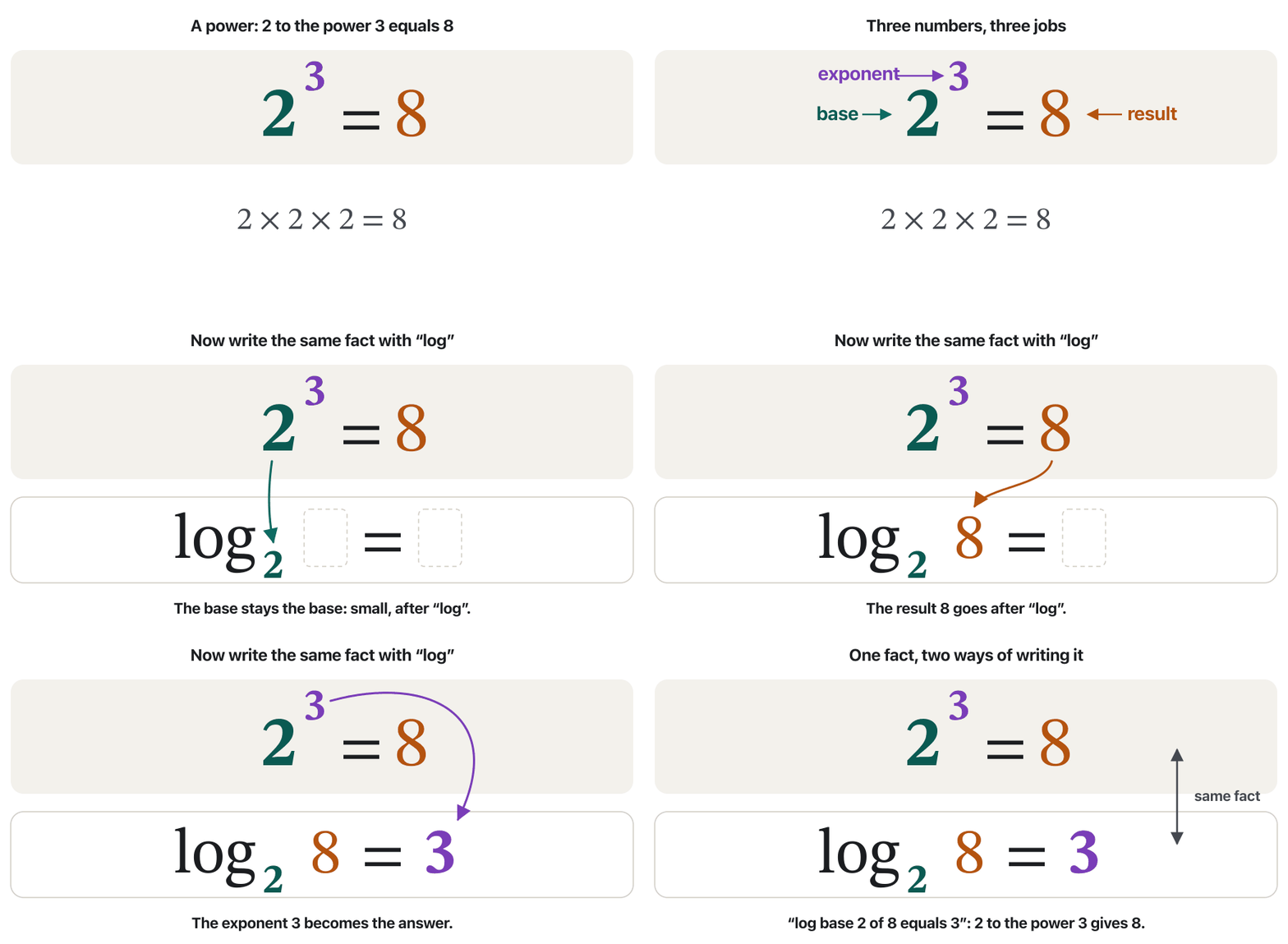
Many students stop when they see in a formula. The key idea is short: a logarithm is an exponent. and say one fact in two ways. The first says “2 to the power 3 is 8”. The second asks the question the other way round: “2 to which power gives 8?” The answer is 3. Watch the numbers move from one form to the other.
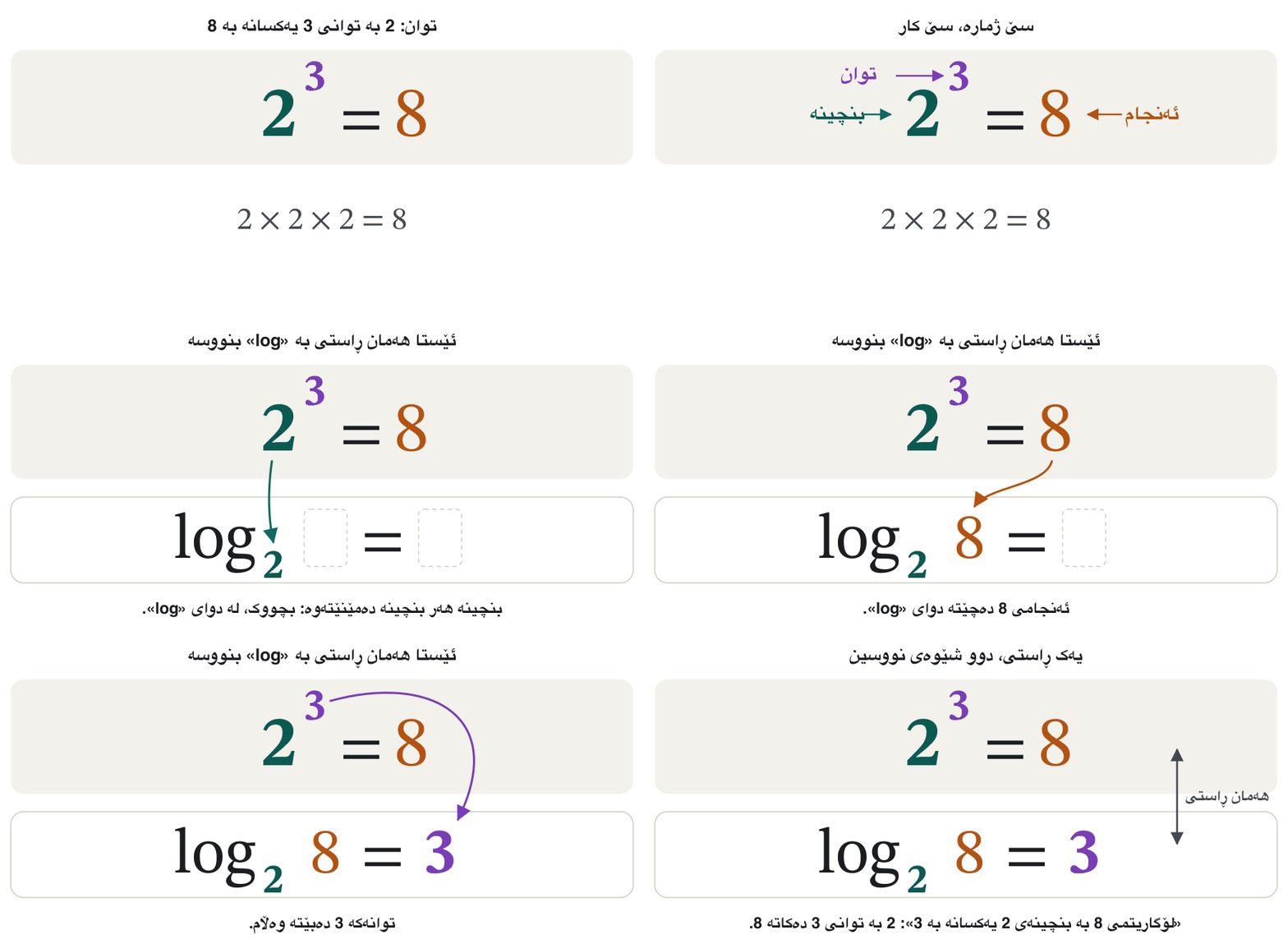
زۆر قوتابی کاتێک لە دەبینن دەوەستن. بیرۆکە سەرەکییەکە کورتە: . و یەک ڕاستی بە دوو شێوە دەڵێن. یەکەمیان دەڵێت «2 بە توانی 3 دەکاتە 8». دووەمیان پرسیارەکە بە پێچەوانەوە دەکات: «2 بە چ دەکاتە 8؟». وەڵامەکەی 3ـە. سەیر بکە ژمارەکان چۆن لە شێوەیەکەوە دەچنە شێوەکەی تر.
| Power | Logarithm | Say the logarithmخوێندنەوەی |
|---|---|---|
| “log base 2 of 8 is 3”« 8 بە 2 دەکاتە 3» | ||
| “log base 10 of 100 is 2”« 100 بە 10 دەکاتە 2» | ||
| “log base 3 of 81 is 4”« 81 بە 3 دەکاتە 4» |
The parts of and how to say itبەشەکانی و خوێندنەوەی
has three parts. log is the name of the function, printed upright. The small, lowered a is the base. The x after the name is the number you take the log of (also called the argument); it must be positive. The value of the whole is an exponent: the power you put on a to get x. Say it “log base a of x” or “the logarithm of x to the base a”.
سێ بەشی هەیە. log ناوی و بە پیتی ڕاست چاپ دەکرێت. aـی بچووک کە کەمێک نزمترە . x، کە لە دوای ناوەکە دێت، ئەو ژمارەیەیە کە دەدۆزینەوە و دەبێت موجەب بێت. نرخی تەواوی : ئەو دەیخەیتە سەر a تا x بەدەست بێت. بیخوێنەوە « x بە a» (log base a of x).
| Symbol | Say itخوێندنەوە | It meansواتاکەی | Type itنووسین |
|---|---|---|---|
| “log base a of x”« x بە a» (log base a of x) | the power on a that gives xئەو لەسەر a کە x دەدات | \log_a x | |
| “log base 2 of 32 is 5”« 32 بە 2 دەکاتە 5» | \log_2 32 | ||
| “log base 10 of zero point zero zero one is minus 3”« 0.001 بە 10 دەکاتە » | \log_{10} 0.001 |
When the base has two digits, LaTeX needs braces: \log_{10} x. Without them, \log_10 x puts only the 1 down and prints log₁0x. A logarithm of 0 or of a negative number does not exist: no power of a positive base gives 0 or a negative number (Definition).
کاتێک لە دوو پێکدێت، LaTeX پێویستی بە کەوانەی لوولە: \log_{10} x. بەبێ ئەوان، \log_10 x تەنیا 1 دادەبەزێنێت و log₁0x چاپ دەکات. 0 و بوونی نییە: هیچ موجەب 0 یان نادات (پێناسە).
The number e, and ژمارەی e، و
The letter e is a fixed number, about 2.71828, just as is about 3.14159. It is called Euler's number: Leonhard Euler began to use the letter e for it in 1727–1728, and it first appeared in print in 1736. is read “e to the x”. It is the natural exponential function. When the exponent is long, books write instead, so the formula stays on one line: is part of the bell curve of statistics (The bell curve).
پیتی e ژمارەیەکی جێگیرە، نزیکەی 2.71828، هەروەک نزیکەی 3.14159ـە. ئەمە ، کە بە ئینگلیزی پێی دەڵێن Euler's number: لیۆنارد ئۆیلەر لە 1727–1728ـەوە پیتی eـی بۆ بەکار هێنا و ئەم پیتە یەکەم جار لە 1736 چاپ کرا. دەخوێنرێتەوە «e بە توانی x» (e to the x) و سروشتییە. کاتێک درێژ بێت، کتێبەکان لە جیاتی ئەوە دەنووسن تا لەسەر یەک دێڕ بمێنێتەوە: بەشێکە لە چەماوەی زەنگیی (چەماوەی زەنگی).
Do not mix e up with the E of E-notation. A calculator shows as 6.02E23, and code writes 6.02e23 or 2e3 (= 2000.0): there E or e means “times ten to the power” (E-notation). In code the number e is math.e in Python, Math.E in Java and exp(1) in MATLAB; is math.exp(x), Math.exp(x) or exp(x). An exponential function has a constant base: and are exponential, but is not (Is x to the x exponential?).
e لەگەڵ Eـی شێوازی E تێکەڵ مەکە. ژمارەی وەک 6.02E23 پیشان دەدات و کۆد 6.02e23 یان 2e3 (= 2000.0) دەنووسێت: لەوێدا E یان e واتە «جاران 10 بە توانی…» (E لە ناو ژمارەدا). لە کۆددا لە Pythonـدا math.eـە، لە Javaـدا Math.E و لە MATLABـدا exp(1)؛ دەبێتە math.exp(x)، Math.exp(x) یان exp(x). جێگیری هەیە: و توانین، بەڵام نا (ئایا x بە توانی x نەخشەی توانییە؟).
Short names: ln, lg and lbناوە کورتەکان: ln، lg و lb
Three bases are so common that their logarithms have names with the base built in. is the natural logarithm, base e: say “L N x” or “the natural log of x”. is the common logarithm, base 10, and is the binary logarithm, base 2: say “log base 10 of x” and “log base 2 of x”. lg and lb are the names recommended by ISO 80000-2, the international standard for mathematical signs.
سێ ئەوەندە باون کە ناوی تایبەتیان هەیە و لە ناو ناوەکەدایە. ، بە e: بیخوێنەوە « x» (L N x، natural log of x). ، بە 10 و ، بە 2: بیانخوێنەوە « x» و « x». lg و lb ئەو ناوانەن کە ISO 80000-2، ستانداردی نێودەوڵەتیی بیرکاری، پێشنیاریان دەکات.
Careful: some computer-science books, among them well-known algorithms textbooks, write for , and German books write ld for base 2. When a book uses lg, look at its notation page or test a value: if , the base is 2.
ئاگاداربە: هەندێک کتێبی زانستی ، لەوانە کتێبە ناسراوەکانی ، بۆ دەنووسن و کتێبە ئەڵمانییەکان ld بۆ 2 بەکار دەهێنن. کاتێک کتێبێک lg بەکار دەهێنێت، سەیری لاپەڕەی کتێبەکە بکە یان نرخێک تاقی بکەرەوە: ئەگەر بێت، 2ـە.
with no base: which base? بەبێ بنچینە: کام بنچینە؟
When a book writes only , the base depends on who wrote it. School books, calculators, Excel, statistics and engineering mean base 10; the statistics lessons of CêIT use it for the geometric mean and for Sturges' rule (The geometric mean with logs, The number of classes). Many university maths books and the languages Python, MATLAB, Java and C mean base e. Computer science means base 2: a binary search of n items needs about looks (Logarithmic time).
کاتێک کتێبێک تەنیا دەنووسێت، بەندە بەوەی کێ نووسیویەتی. کتێبی قوتابخانە، ، Excel، و ئەندازیاری مەبەستیان 10ـە؛ وانەکانی CêIT بۆ و یاسای Sturges بەکاری دەهێنن (ناوەندی ئەندازەیی بە لۆگاریتم، ژمارەی پۆلەکان). زۆر کتێبی بیرکاریی زانکۆ و زمانەکانی Python، MATLAB، Java و C مەبەستیان eـیە. زانستی مەبەستی 2ـە: بۆ n دانە نزیکەی سەیرکردنی پێویستە (کاتی لۆگاریتمی).
with no base: which base? بەبێ بنچینە: کام بنچینە؟
log on calculators, in Excel and in codelog لەسەر حاسیبە، لە Excel و لە کۆددا
Here the same word gives different answers. Ask a calculator or Excel for and you get 2. Ask Python, MATLAB or Java and you get 4.605…, because there log is ln. Every tool has separate names for the other bases:
لێرەدا هەمان وشە وەڵامی جیاواز دەدات. ئەگەر لە یان Excel داوای بکەیت، 2 وەردەگریت. ئەگەر لە Python، MATLAB یان Java داوای بکەیت، 4.605… وەردەگریت، چونکە لەوێ log هەمان lnـە. هەر ئامرازێک ناوی جیاوازی بۆ تر هەیە:
| Toolئامراز | Any base bهەر b | |||
|---|---|---|---|---|
| Calculator | ln key ln | log key log | log□□ key log□□ | log□□ key log□□ |
| Excel | LN(x) | LOG(x) | LOG(x, 2) | LOG(x, b) |
| Python | math.log(x) | math.log10(x) | math.log2(x) | math.log(x, b) |
| MATLAB | log(x) | log10(x) | log2(x) | log(x)/log(b) |
| Java | Math.log(x) | Math.log10(x) | Math.log(x)/Math.log(2) | Math.log(x)/Math.log(b) |
Java has no log2; it divides two natural logs, the change-of-base rule. The code itself is taught in the programming lessons: Logarithms in MATLAB, the math module, the Math class and Change of base with a calculator or Python.
Java log2ـی نییە؛ دوو بەسەر یەکدا دابەش دەکات، کە یاسای گۆڕینی . خودی کۆدەکە لە وانەکانی فێر دەکرێت: لۆگاریتمەکان لە MATLAB، مۆدیوڵی math، پۆلی Math و گۆڕینی بنچینە بە حاسیبە یان Python.
The log keys on a calculatorدوگمەکانی log لەسەر حاسیبە
A scientific calculator has two log keys: log for base 10 and ln for base e. After SHIFT (or 2nd), the same keys give and , the inverses of log and ln, which are printed above them. Many newer models also have a key with two boxes, log□□, for any base: put 2 in the first box and 16 in the second to get . On most modern calculators you press the key first and then the number; some older ones want the number first.
زانستی دوو هەیە: log بۆ 10 و ln بۆ e. لە دوای SHIFT (یان 2nd)، هەمان و دەدەن، کە پێچەوانەی log و lnـن و لە سەرەوەیان نووسراون. زۆر مۆدێلی نوێ دوو چوارگۆشەییشیان هەیە، log□□، بۆ هەر : 2 لە چوارگۆشەی یەکەم و 16 لە دووەمدا بنووسە تا بەدەست بێت. لە زۆربەی نوێدا سەرەتا دادەگریت و پاشان ژمارەکە؛ هەندێکی کۆن سەرەتا ژمارەکەیان دەوێت.
No log□□ key? Use the change-of-base rule with the log key: (Change of base).
ئەگەر log□□ـی نییە، یاسای گۆڕینی لەگەڵ log بەکار بهێنە: (گۆڕینی بنچینە).
Handout forms such as شێوەکانی مەلزەمە، وەک
Some lecture handouts write the base as a small letter before a capital Log: , and . They mean exactly , and . Read them “log base a of x” and so on, but when you write, use the book form: the base small and after log (Writing logarithms correctly).
هەندێک مەلزەمە بە پیتێکی بچووک پێش Logـێکی گەورە دەنووسن: ، و . ڕێک واتای ، و دەدەن. بیانخوێنەوە « x بە a» و هتد، بەڵام کاتێک خۆت دەنووسیت شێوەی کتێب بەکار بهێنە: بچووک و لە دوای log (نووسینی دروستی لۆگاریتمەکان).
Statistics books and handouts usually mean base 10 when they write log: for the geometric mean, and . The natural log of the same number is , so check which key you pressed.
کتێب و مەلزەمەکانی کاتێک log دەنووسن زۆربەی جار مەبەستیان 10ـە: بۆ و . هەمان ژمارە ـە، بۆیە بپشکنە کام داگرتووە.
Powers and brackets on logتوان و کەوانە لەسەر log
A function name takes only the next piece of a formula. So means ; for the log of , write brackets: . A small number on the name is a power of the result: . That is not , which means . means , the log taken twice; some running times in computer science use it. The same habit holds for (Powers and inverses on sin).
ناوی تەنیا پارچەی دواتری دەگرێت. بۆیە واتە ؛ بۆ کەوانە بنووسە: . ژمارەیەکی بچووک لەسەر ناوەکە ئەنجامەکەیە: . ئەمە هەمان نییە، کە واتە . واتە ، واتە دوو جار؛ هەندێک کاتی کارکردن لە زانستی بەکاری دەهێنن. هەمان نەریت بۆ ـیش ڕاستە (توان و پێچەوانە لەسەر sin).
Reading whole formulas aloudفۆرمولەیەکی تەواو بە دەنگی بەرز بخوێنەوە
The grade-12 maths exams of the Kurdistan Region (2024–25) write logarithms in Latin letters and left to right, inside Kurdish text: , and . Read such a formula piece by piece, from the outside in. In the whole sits up in the exponent.
پرسیارنامەکانی تاقیکردنەوەی بیرکاریی پۆلی 12ـی هەرێمی کوردستان (2024–25) بە پیتی لاتینی و لە چەپەوە بۆ ڕاست لە ناو دەقی کوردیدا دەنووسن: ، و . وەها پارچە بە پارچە بخوێنەوە، لە دەرەوە بەرەو ناوەوە. لە ـدا هەموو لە .
: “e to the power natural log of x plus 2 equals x plus 2”. It is true for , because ln and undo each other.
: «e بە توانی x کۆ 2، یەکسانە بە x کۆ 2». بۆ ڕاستە، چونکە ln و یەکتر هەڵدەوەشێننەوە.
: “log base 25 of zero point zero four equals minus 1”, because .
: « 0.04 بە 25 یەکسانە بە »، چونکە .
: “log G equals the sum of F log X, over the sum of F”, with base 10.
: «log G یەکسانە بە کۆی F log X، لەسەر کۆی F»، بە 10.
: “big O of log n”: the work grows like the logarithm of n.
: «Oـی گەورەی log n» (big O of log n): کارەکە وەک n گەورە دەبێت.
Log scales: becomes پێوەری لۆگاریتمی: دەبێتە
On an ordinary number line from 0 to 10 000, the numbers 1, 10 and 100 are squeezed into one corner. A log scale puts each number at its logarithm instead: 1, 10, 100, 1000 and 10 000 sit at equal steps, because their common logarithms are 0, 1, 2, 3 and 4. Multiplying by 10 has become adding 1.
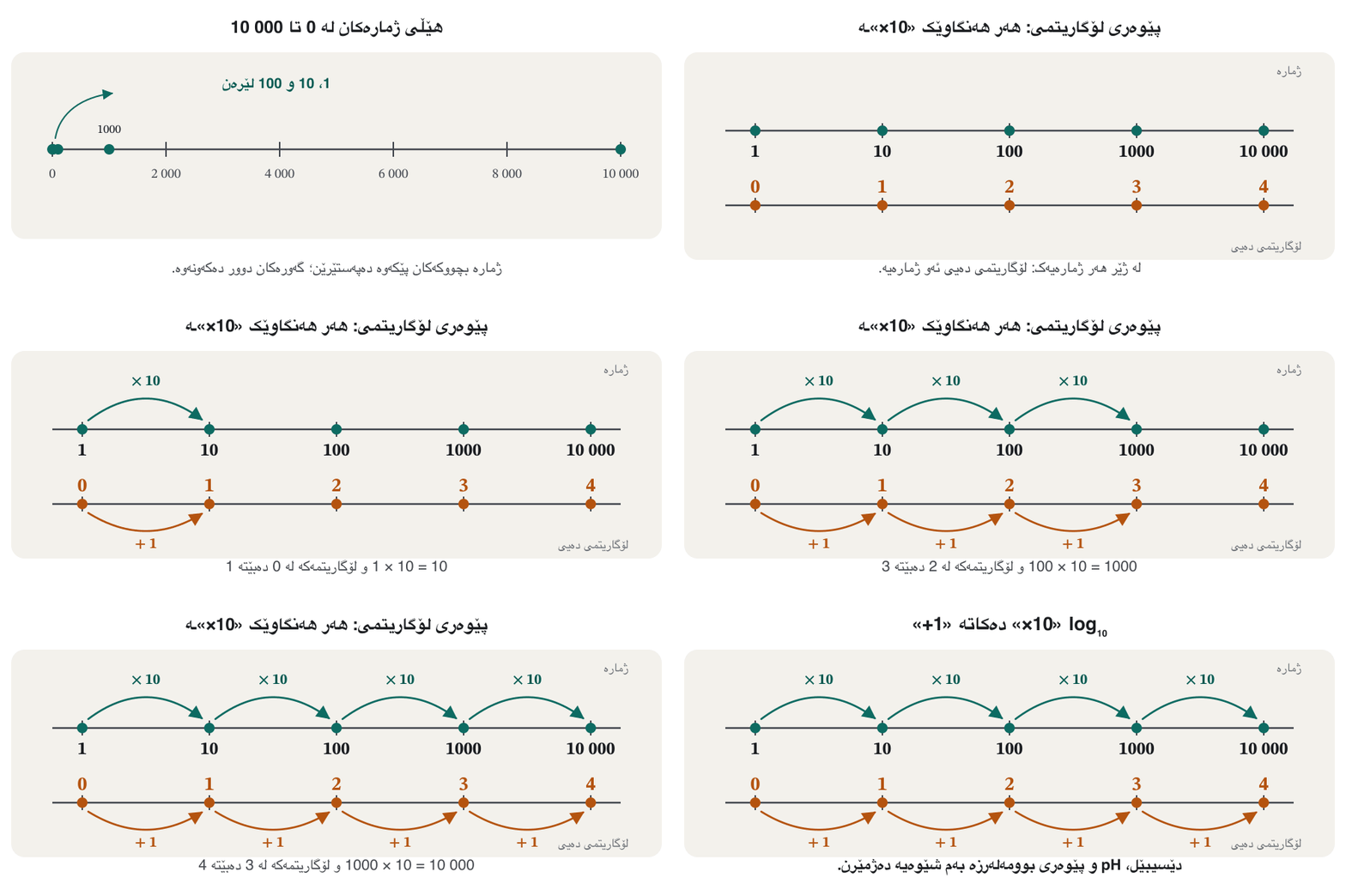
لەسەر لە 0 تا 10 000، ژمارەکانی 1، 10 و 100 لە سووچێکدا پەستێنراون. پێوەری لۆگاریتمی هەر ژمارەیەک لە شوێنی دادەنێت: 1، 10، 100، 1000 و 10 000 بە هەنگاوی یەکسان دادەنرێن، چونکە ئەم ژمارانە بە ڕیز 0، 1، 2، 3 و 4ـە. بە 10 بووە بە 1.
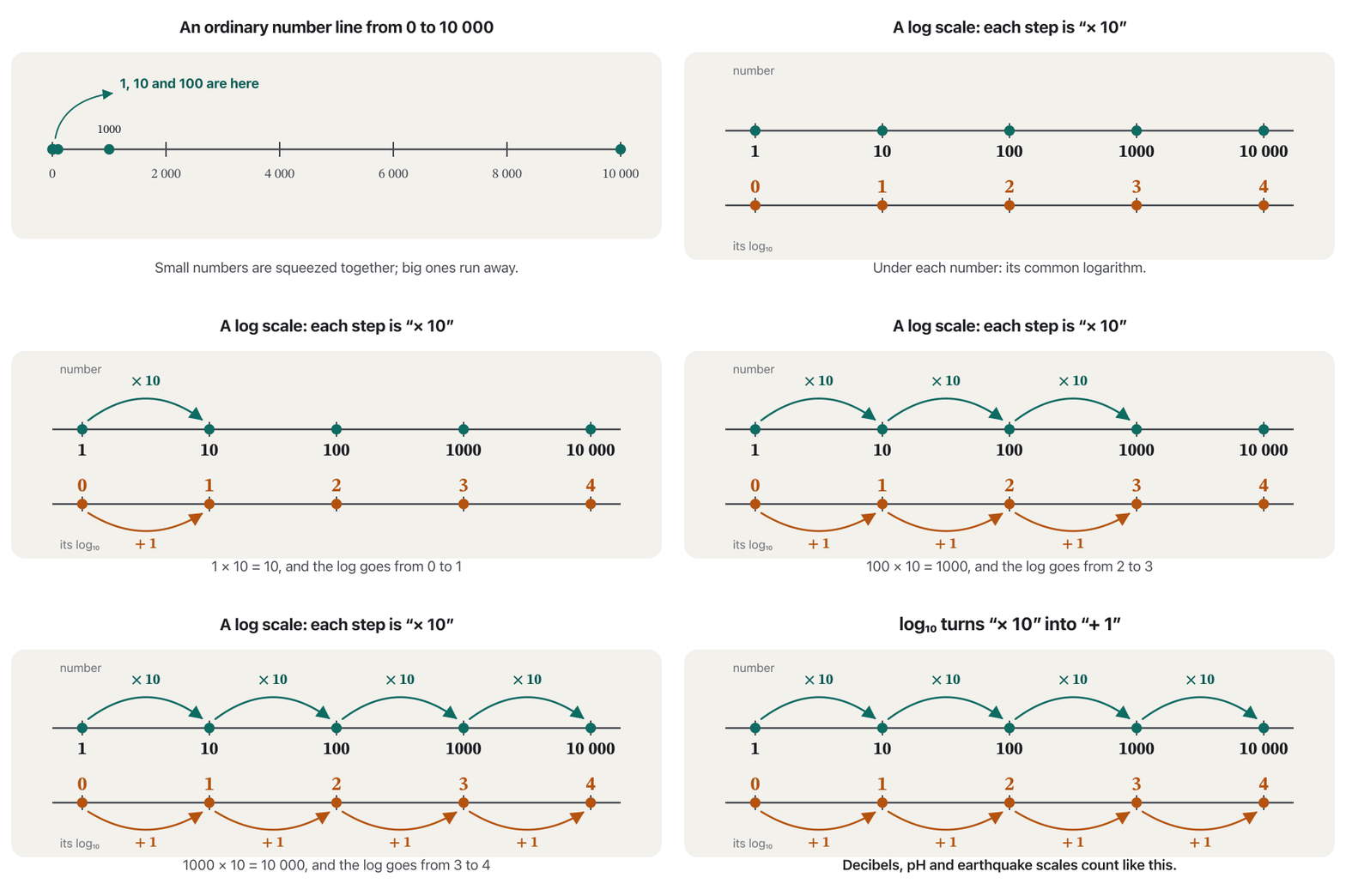
You meet log scales in sound levels (+10 dB means 10 times the sound power), in pH (one step is a tenfold change in acidity) and in earthquake magnitudes. CêIT draws Moore's law on a log scale (Moore's law), and MATLAB's semilogy draws one axis this way (More chart types). Inside formulas the same trick turns a product into a sum: (A logarithm turns into ).
پێوەری لۆگاریتمی لە ئاستی دەنگدا دەبینیت (+10 dB واتە 10 هێندەی هێزی دەنگ)، لە pHـدا (هەر هەنگاوێک واتە ترشێتی 10 جار زیاتر یان کەمتر دەبێت) و لە پێوانەی بوومەلەرزەدا. CêIT یاسای مور لەسەر پێوەری لۆگاریتمی دەکێشێت (یاسای مور) و semilogyـی MATLAB یەک بەم شێوەیە دەکێشێت (جۆرەکانی تری هێڵکاری). لە ناو هەمان فێڵ دەکاتە کۆ: (لۆگاریتم دەکاتە ).
Why “log” on a calculator means base 10بۆچی «log» لەسەر حاسیبە بنچینە 10ـە
Logarithms were invented to make long multiplications quick. John Napier published them in 1614, and in 1617 Henry Briggs printed the first table of base-10 logarithms: the logs of 1 to 1000, to 14 digits. To multiply two numbers, people looked up their logs, added them and looked the sum up backwards. A slide rule did the same with two log scales that slide past each other, and engineers used it until pocket calculators replaced it in the 1970s. Base 10 fits our decimal numbers, so these tables made it the common logarithm, and calculators kept the name log for it.
داهێنران تا درێژ خێرا بکەن. جۆن نەیپیەر لە 1614 بڵاوی کردنەوە و لە 1617 هێنری بریگز یەکەم خشتەی بە 10 چاپ کرد: 1 تا 1000، بە 14 . بۆ لێکدانی دوو ژمارە، خەڵک لە خشتەکەدا دەدۆزییەوە، کۆیان دەکردنەوە و پاشان ژمارەی ئەو کۆیەیان بە پێچەوانەوە دەدۆزییەوە. ڕاستەی خلیسکێن (slide rule) هەمان کاری بە دوو پێوەری لۆگاریتمی دەکرد کە بەسەر یەکدا دەخزێن و ئەندازیاران تا ساڵانی 1970 بەکاریان دەهێنا، تا گیرفان جێیان گرتەوە. 10 لەگەڵ ژمارەکانماندا دەگونجێت، کە لەسەر 10 بنیات نراون، بۆیە ئەم خشتانە کردیانە و ناوی logـیان بۆ هێشتەوە.
Common mistakesهەڵە باوەکان
| Mistakeهەڵە | Why it is wrongبۆچی هەڵەیە | Do thisئەمە بکە |
|---|---|---|
Taking Python’s math.log(x) as base 10وەرگرتنی math.log(x)ـی Python وەک 10 | In Python, MATLAB and Java, log is lnلە Python، MATLAB و Javaـدا log هەمان lnـە | Use math.log10(x) for base 10بۆ 10 math.log10(x) بەکار بهێنە |
| (dividing 8 by 2) ( 8 بەسەر 2) | A log asks for an exponent پرسیار لەبارەی دەکات | , because ، چونکە |
Typing \log_10 x in LaTeXنووسینی \log_10 x لە LaTeX | Only the 1 goes downتەنیا 1 دادەبەزێت | Type \log_{10} x\log_{10} x بنووسە |
| Reading 6.02E23 as خوێندنەوەی 6.02E23 وەک | E means “times 10 to the power”E واتە «جاران 10 بە توانی…» | |
| is the log of ـە | ; ؛ | |
| log takes only the next piecelog تەنیا پارچەی دواتر دەگرێت | Keep the bracketsکەوانەکان بهێڵەوە | |
| Reading as “a times Log x”خوێندنەوەی وەک «a جاران Log x» | The small a is the baseaـی بچووک | Write بنووسە |
| Assuming is always base 10وا دانان کە هەمیشە 10ـە | Some computer-science books use lg for base 2هەندێک کتێبی زانستی lg بۆ 2 بەکار دەهێنن | Check the notation pageلاپەڕەی بپشکنە |
| Taking the log of 0 or a negative numberدۆزینەوەی 0 یان | It does not exist; Python stops with a ValueErrorبوونی نییە؛ Python بە ValueError دەوەستێت | Check that the number is positiveدڵنیابە ژمارەکە موجەبە |
Practiceڕاهێنان
Say which base each “log” uses: (a) a statistics handout: (b) Python: math.log(x) (c) MATLAB: log10(x) (d) an algorithms book: “binary search takes about steps” (e) a school exercise: (f) a grade-12 exam question: .
بڵێ هەر «log»ـێک کام بەکار دەهێنێت: (a) مەلزەمەیەکی : (b) Python: math.log(x) (c) MATLAB: log10(x) (d) کتێبێکی : « نزیکەی هەنگاو دەخایەنێت» (e) ڕاهێنانێکی قوتابخانە: (f) پرسیارێکی تاقیکردنەوەی پۆلی 12: .
Show answerوەڵامەکە پیشان بدە
- (a) 10, as in statistics books.
- (b) e: in Python log is ln.
- (c) 10: the name says it.
- (d) 2: computer science; in big O the base does not matter.
- (e) 10, so .
- (f) e: means , so .
- (a) 10، وەک کتێبەکانی .
- (b) e: لە Pythonـدا log هەمان lnـە.
- (c) 10: ناوەکە خۆی دەیڵێت.
- (d) 2: زانستی ؛ لە گرنگ نییە.
- (e) 10، بۆیە .
- (f) e: واتە ، بۆیە .
Read each one aloud in English and in Kurdish, then find its value: (a) (b) (c) (d) (e) .
هەر یەکەیان بە ئینگلیزی و بە کوردی بە دەنگی بەرز بخوێنەوە، پاشان نرخەکەی بدۆزەرەوە: (a) (b) (c) (d) (e) .
Show answerوەڵامەکە پیشان بدە
Readings: (a) “log base 3 of 81”; (b) “log base 10 of zero point zero zero one”; (c) “the natural log of e to the 5”; (d) “the binary log of 32”, “log base 2 of 32”; (e) “log base 25 of zero point zero four”.
خوێندنەوەکان: (a) « 81 بە 3»؛ (b) « 0.001 بە 10»؛ (c) « e بە توانی 5»؛ (d) « 32»؛ (e) « 0.04 بە 25».
Rewrite in book notation: (a) (b) (c) “log base 5 of 125”, typed in LaTeX (d) “the common log of x, squared”.
بە شێوەی کتێب بینووسەوە: (a) (b) (c) « 125 بە 5»، بە LaTeX (d) «دووجای x».
Show answerوەڵامەکە پیشان بدە
- (a) , “log base 2 of 16”
- (b) , with brackets
- (c)
\log_5 125, which shows (= 3) - (d) , not
- (a) ، « 16 بە 2»
- (b) ، بە کەوانەوە
- (c)
\log_5 125، کە پیشان دەدات (= 3) - (d) ، نەک
Summaryپوختە
- A logarithm is an exponent: means . Say “log base a of x”.
- is a constant; is “e to the x”; the E in 6.02E23 means .
- = base e, = base 10, = base 2 (ISO); some computer-science books write lg for base 2.
- A plain log is base 10 in school, statistics, calculators and Excel, base e in Python, MATLAB and Java, base 2 in computer science.
- in handouts is ; , .
- On a log scale each step is ; a log turns into .
- Every symbol of this lesson, with its readings, is also in one table: Exponents and logarithms in the Symbol Dictionary.
- : واتە . بیخوێنەوە « x بە a».
- ؛ واتە «e بە توانی x»؛ Eـی ناو 6.02E23 واتە .
- = e، = 10، = 2 (ISO)؛ هەندێک کتێبی زانستی lg بۆ 2 دەنووسن.
- log بەبێ لە قوتابخانە، ، و Excelـدا 10ـە، لە Python، MATLAB و Javaـدا eـیە و لە زانستی 2.
- ـی مەلزەمە هەمان ـە؛ ، .
- لەسەر پێوەری لۆگاریتمی هەر هەنگاوێک ـە؛ دەکاتە .
- هەموو ئەم وانەیە، لەگەڵ خوێندنەوەکانیان، لە یەک خشتەشدا هەن: توانەکان و لۆگاریتمەکان لە فەرهەنگی هێماکان.
How do you say ? چۆن دەخوێنیتەوە؟
“Log base 2 of 8 equals 3”, because .
« 8 بە 2 یەکسانە بە 3» (log base 2 of 8 equals 3)، چونکە .
Why does math.log(100) print 4.605 in Python?بۆچی math.log(100) لە Pythonـدا 4.605 چاپ دەکات؟
Because Python's log is the natural log, base e. For base 10 use math.log10(100).
چونکە logـی Python ، بە e. بۆ 10 math.log10(100) بەکار بهێنە.
What does mean? واتای چییە؟
: take the log, then square it.
: سەرەتا بدۆزەرەوە، پاشان دووجای بکە.
Lesson complete!وانەکە تەواو بوو!
Well done. Review the key terms, then go on to the next lesson.دەستخۆش. سەیرێکی زاراوە سەرەکییەکان بکەرەوە، پاشان بڕۆ بۆ وانەی داهاتوو.
Key termsزاراوە سەرەکییەکان
Geometry and Trigonometry Symbolsهێماکانی ئەندازەزانی و سێگۆشەزانی
Related lecturesوانە پەیوەندیدارەکان
- Function Notation: f(x), Arrows, Inverses and Compositionنووسینی نەخشەیی: ، تیرەکان، پێچەوانە و ئاوێتەکردن
- Numbers and Digits: ١٢٣ and 123, Decimal Points and Scientific Notationژمارە و تاکژمارەکان: ١٢٣ و 123، فاریزە و شێوازی زانستی
- Geometry and Trigonometry Symbolsهێماکانی ئەندازەزانی و سێگۆشەزانی
- Notation in Computing: mod, Bases, Big-O and Code Operatorsهێماکان لە کۆمپیوتەردا: mod، بنچینەکان، نیشانەی O-ی گەورە و کارپێکەرەکانی کۆد
- Logarithms and Their Rulesلۆگاریتمەکان و یاساکانیان
- Exponential Functions and the Number eنەخشە توانییەکان و ژمارەی e
- Kinds of Functions: Polynomial, Algebraic and Transcendentalجۆرەکانی نەخشە: ڕادەدار، جەبری و ناجەبری
- Binary Search and Hashingگەڕانی دووانی و هاشکردن
- Built-in Maths Functionsکردارە ئامادەکانی بیرکاری
- The Math Classکلاسەکەی Math
References and further readingسەرچاوەکان و خوێندنەوەی زیاتر
- Python documentation: math — Mathematical functions (log, log10, log2, exp, e)
- Java SE 17 API: class Math (log is base e, log10)
- Microsoft Support: LOG function (base 10 when the base is left out)
- MathWorks: log — natural logarithm (log10, log2, exp)
- CASIO fx-115ES PLUS / fx-991ES PLUS manual: Logarithmic functions (log key, base 10 by default, the two-box key)
- Wikipedia: Binary logarithm (notation lb, lg, ld; ISO 80000-2; logs in computer science)
- Wikipedia: Logarithm (which base “log” means by field; Napier 1614, Briggs 1617, log tables, slide rules)
- Wikipedia: Logarithmic scale (equal steps are multiplications; decibel, pH, magnitudes, slide rule)
- Wikipedia: e (mathematical constant) (Euler’s first uses 1727–1728, in print 1736; e = exp(1))
This lecture is a first edition. The Kurdish text and terminology are waiting for review by Kurdish IT teachers.ئەم وانەیە چاپی یەکەمە. دەقە کوردییەکە و زاراوەکانی چاوەڕێی پێداچوونەوەی مامۆستایانی کوردی بواری IT ن.