Chapterبەش 1 · Lectureوانە 1.2
Letters, Subscripts, Superscripts and the Greek Alphabetپیتەکان، ژێرنووسەکان، ژوورنووسەکان و ئەلفوبێی یۆنانی
Which letter usually does which job, why a capital and a small letter are different symbols, how to read subscripts and superscripts, what the marks ′ ¯ ^ * ~ mean in different subjects, and the Greek alphabet with its English and Kurdish names, its common uses and its look-alikes.
کام پیت زۆربەی جار کام کار دەکات، بۆچی پیتی گەورە و بچووک دوو جیاوازن، چۆن و بخوێنیتەوە، نیشانەکانی ′ ¯ ^ * ~ لە بابەتی جیاوازدا چ واتایەکیان هەیە و بە ناوە ئینگلیزی و کوردییەکانی، بەکارهێنانە باوەکانی و لێکچووەکانییەوە.
What you will learnچی فێر دەبیت
- Guess the job of a letter from common habits (x unknown, n how many, f function, capitals for sets and matrices).
- Read subscripts and superscripts aloud and tell a label from a power.
- Give the meaning of prime, bar, hat, star, tilde and dot from the subject you are reading.
- Name the common Greek letters in English and Kurdish and recognise their usual jobs and look-alikes.
- Explain why maths uses one letter for an idea, and where , , and come from.
- کاری پیتێک لە نەریتە باوەکانەوە بزانیت (x نەزانراو، n چەند دانە، f ، پیتی گەورە بۆ و ).
- و بە دەنگی بەرز بخوێنیتەوە و ناونیشان لە جیا بکەیتەوە.
- واتای پرایم، بار، هات، ئەستێرە، تیلدا و خاڵ بەپێی ئەو بابەتەی دەیخوێنیتەوە بڵێیت.
- پیتە یۆنانییە باوەکان بە ئینگلیزی و کوردی ناو بنێیت و کارە باوەکان و لێکچووەکانیان بناسیتەوە.
- ڕوون بکەیتەوە بۆچی بیرکاری یەک پیت بۆ بیرۆکەیەک بەکار دەهێنێت و ، ، و لە کوێوە هاتوون.
Which letter for which jobکام پیت بۆ کام کار
No rule forces a writer to use a certain letter, but some habits are so common that the letter itself hints at its job. Once you know them, a new formula already feels familiar.
هیچ یاسایەک نووسەر ناچار ناکات پیتێکی دیاریکراو بەکار بهێنێت، بەڵام هەندێک نەریت ئەوەندە باون کە پیتەکە خۆی ئاماژە بە کارەکەی دەکات. کاتێک ئەم نەریتانە بزانیت، نوێش ناسراو دێتە بەرچاو.
| Lettersپیتەکان | Usual jobکاری باو | Exampleنموونە |
|---|---|---|
| unknowns and variablesنەزانراوەکان و | ||
| known numbers: constants and coefficientsژمارەی زانراو: و | ||
| counters (indexes, loops) (ئیندێکسەکان، خولەکان) | , | |
| how many (whole numbers)چەند دانە () | values, an matrix | |
| functions | , | |
| sets, matrices, events, random variablesکۆمەڵەکان، ماتریکسەکان، ، گۆڕاوە هەڕەمەکییەکان | ||
| fixed constants: the number e, the imaginary unit, pi جێگیر: ژمارەی e، یەکەی خەیاڵی، پی |
Capital and small letters are different symbolsپیتی گەورە و پیتی بچووک دوو هێمای جیاوازن
Changing the size of a letter changes the symbol. A capital is a random variable (a rule that gives numbers); a small is one of its values. A capital is a set; a small is an element of it. A capital is the size of a population; a small is the size of a sample.
گۆڕینی قەبارەی پیت دەگۆڕێت. ـی گەورە (یاسایەک کە ژمارە دەدات)؛ ـی بچووک یەکێکە لە نرخەکانی. ـی گەورە ؛ ـی بچووک یەکێکە لە . ـی گەورە قەبارەی ؛ ـی بچووک قەبارەی .
So take care with complex numbers. You may see a handout call one complex number , but (or a plain ) already names the set of all integers. Books write one complex number with a small letter: , for example . Its is the imaginary unit: people often write , but the rule that defines it is (see The imaginary unit).
کەواتە لە ئاگادار بە. لەوانەیە ببینیت مەلزەمەیەک ناو بنێت ، بەڵام (یان ـی ئاسایی) پێشتر ناوی هەموو . کتێبەکان بە پیتی بچووک دەنووسن: ، بۆ نموونە . ئەو ـیەی تێیدایە : خەڵک زۆرجار دەنووسن ، بەڵام ئەو یاسایەی پێناسەی دەکات ـە (بڕوانە یەکەی خەیاڵی).
Subscripts: small labels below the lineژێرنووسەکان: ناونیشانی بچووک لە خوارەوە
A subscript is a small number or letter written low after a symbol: , , . It does not change the value; it says which one. In a list of marks, is the first mark, the second, and (“X sub i”) is any one of them.
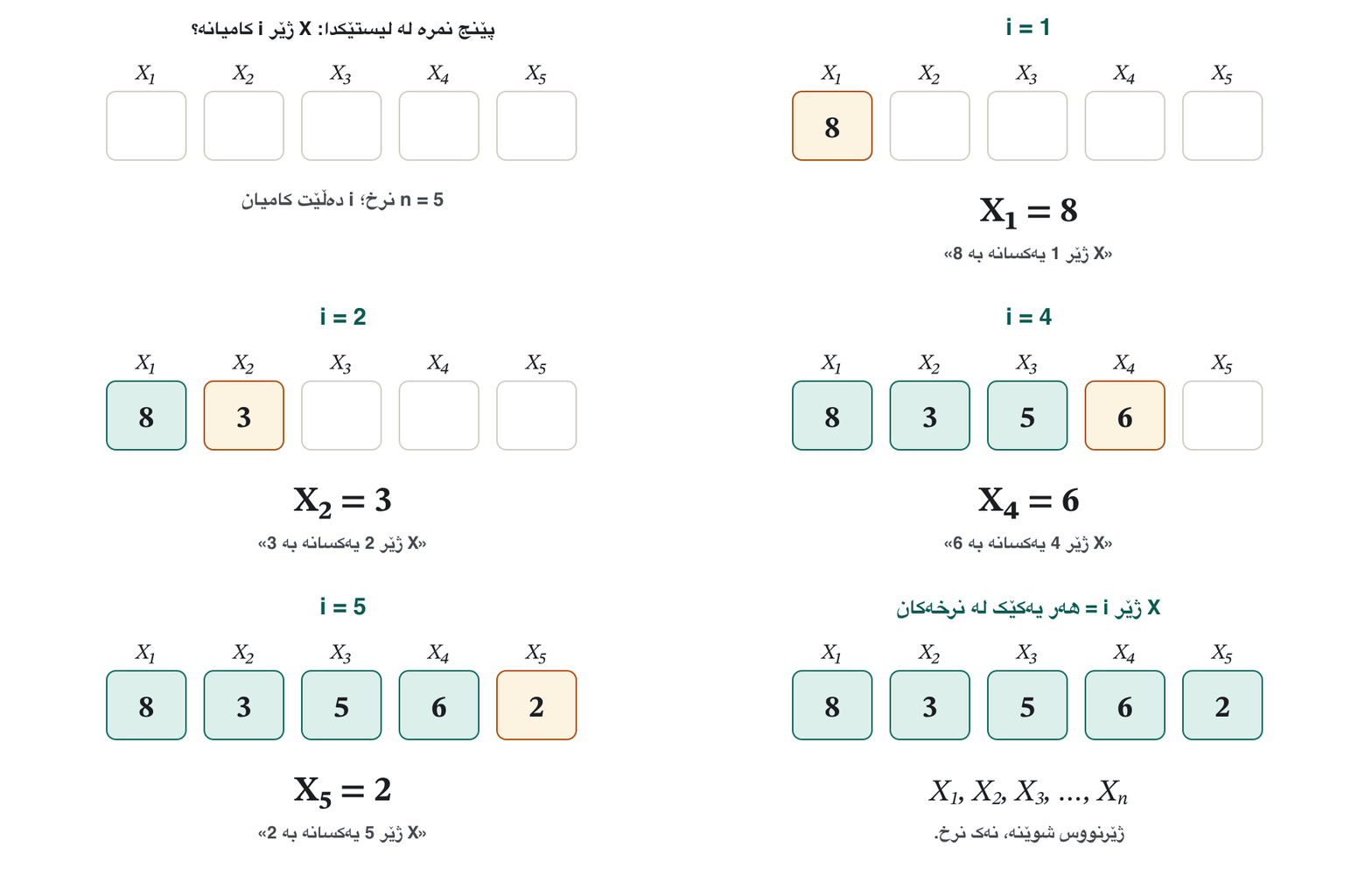
ژمارە یان پیتێکی بچووکە کە بە نزمی لە دوای دەنووسرێت: ، ، . نرخەکە ناگۆڕێت؛ دەڵێت کامیان. لە لیستێکی نمرەدا یەکەم نمرەیە، دووەم و («X ژێر i») هەر یەکێکیانە.
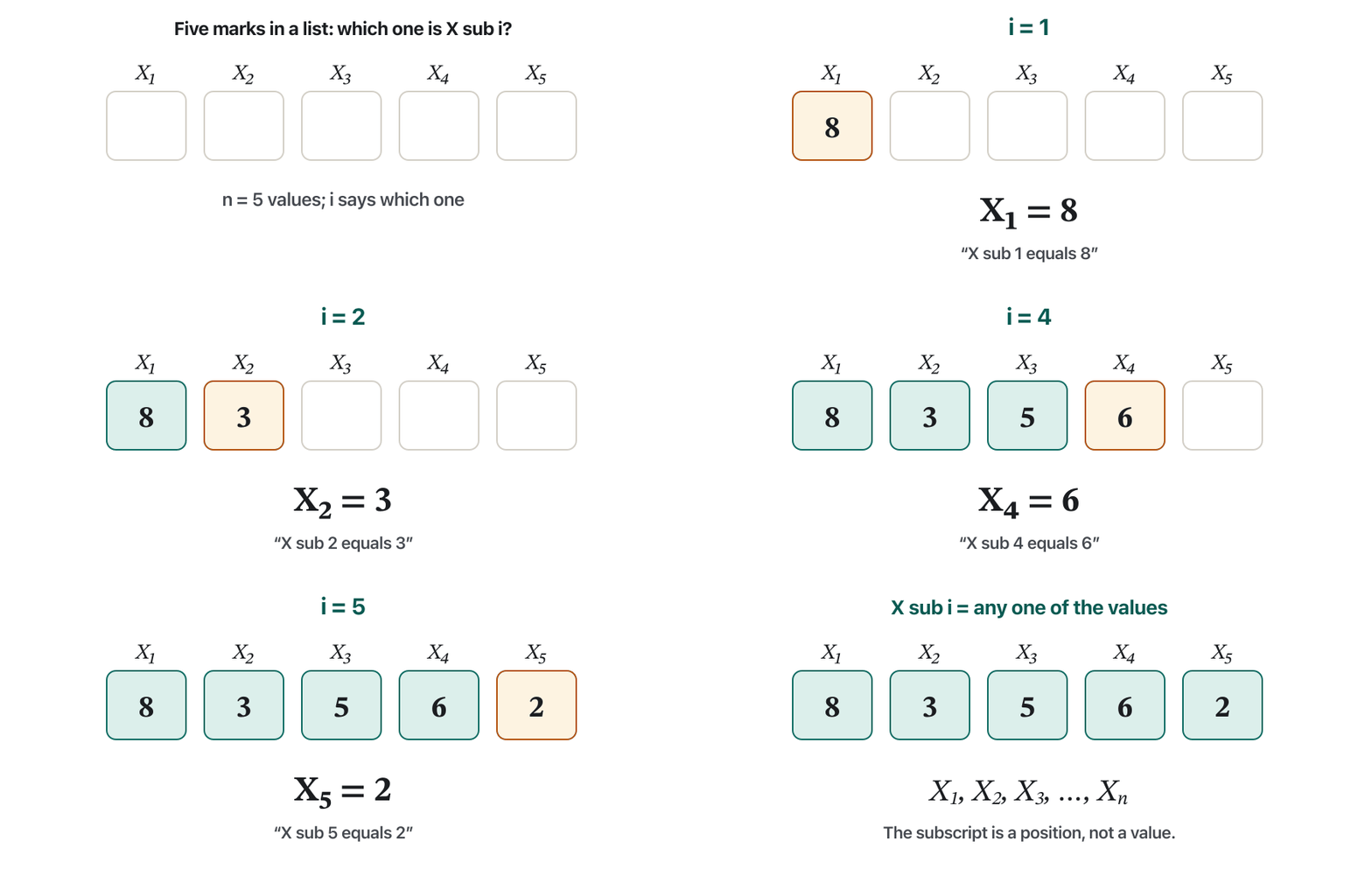
Say as “x sub one” or simply “x one”. is “x nought” (British) or “x naught” (American), or just “x zero”; it is often a starting value, as in Newton's method. Subscripts do many jobs in CêIT: is the entry in row i and column j of a matrix (Entry names), is the domain of f (Domain and range), is the first quartile (Finding quartiles) and in the 2 is the base (Number systems).
بخوێنەوە «x ژێر یەک» یان تەنیا «x یەک». بە ئینگلیزی «x nought» یان «x naught» یان «x zero»ـە؛ زۆرجار نرخی دەستپێکە، وەک لە ڕێگای نیوتن. لە CêITـدا چەندین کار دەکەن: ئەو ژمارەیەیە کە لە ڕیزی i و ستوونی jـی (ناوی ژمارەکان)، fـە (بوار و مەودا)، یەکەم (دۆزینەوەی چواریەکەکان) و لە ـدا 2 (سیستەمە ژمارەییەکان).
Superscripts: up high, several jobsژوورنووسەکان: لە سەرەوە، چەند کارێک
A superscript is written high after a symbol: , , . Most of the time it is an exponent, a power: (see Powers and roots). But some superscripts are only labels, and reading them as powers is a classic mistake:
بە بەرزی لە دوای دەنووسرێت: ، ، . زۆربەی جار : (بڕوانە توانەکان و ڕەگەکان). بەڵام هەندێک تەنیا ناونیشانن و خوێندنەوەیان وەک هەڵەیەکی باوە:
- : the inverse function, not (Function notation);
- : the transpose of a matrix (Vectors and matrices);
- : the complement of a set (Set notation);
- : the positive real numbers;
- : the i-th example in a data table; AI and data books put the label in brackets so that it is not read as a power;
- , : derivatives (Limits, derivatives and integrals).
- : ، نەک (نووسینی نەخشەیی)؛
- : (ئاڕاستەبڕەکان و ماتریکسەکان)؛
- : (نیشانەکانی کۆمەڵە)؛
- : لە ناو ؛
- : نموونەی iـەم لە خشتەیەکی ؛ کتێبەکانی و ناونیشانەکە دەخەنە ناو کەوانە بۆ ئەوەی وەک نەخوێنرێتەوە؛
- ، : (ئامانج، مشتەق و تەواوکاری).
Marks on letters: prime, bar, hat and moreنیشانەکانی سەر پیت: پرایم، بار، هات و هی تر
A small mark on or next to a letter makes a new symbol, and the same mark means different things in different subjects. So first ask: which subject am I reading?
نیشانەیەکی بچووک لەسەر پیتێک یان لە تەنیشتی نوێ دروست دەکات و هەمان نیشانە لە بابەتی جیاوازدا واتای جیاوازی هەیە. کەواتە یەکەم جار بپرسە: کام بابەت دەخوێنمەوە؟
| Markنیشانە | Say itخوێندنەوە | Meanings you will meetئەو واتایانەی دەیانبینیت |
|---|---|---|
| , | prime: “f prime”پرایم: «f پرایم» | derivative (calculus); complement (sets, probability); NOT A (logic); the next node (A* search) (کالکولەس)؛ (کۆمەڵەکان، ئەگەر)؛ NOT A (لۆجیک)؛ گرێی دواتر (گەڕانی A*) |
| , | bar: “x bar”بار: «ئێکس بار» | mean (statistics); NOT A (logic); repeating digits (numbers); complex conjugate (ئامار)؛ NOT A (لۆجیک)؛ (ژمارەکان)؛ |
| , | hat: “p hat”هات: «p هات» | an estimate from a sample; a unit vector (length 1)خەمڵاندنێک لە ؛ (درێژیی 1) |
| , | star: “x star”ئەستێرە: «x ئەستێرە» | the best (optimal) value; the complex conjugateباشترین نرخ؛ |
| , | tilde: “x tilde”تیلدا: «x tilde» | a changed or approximate x; “is distributed as” (statistics symbols)xـێکی دەستکاریکراو یان نزیکەیی؛ «دابەش بووە وەک» (هێماکانی ئامار) |
| dot: “x dot”خاڵ: «x dot» | how fast x changes in time (physics)x چەند خێرا لەگەڵ کاتدا دەگۆڕێت (فیزیا) |
The Greek alphabetئەلفوبێی یۆنانی
Maths needed more letters than the Latin alphabet has, so it borrowed the 24 letters of Greek. Each has a capital and a small form. Many Greek capitals look exactly like Latin ones (Α, Β, Ε, Ζ, Η, Ι, Κ, Μ, Ν, Ο, Ρ, Τ, Υ, Χ), so maths rarely uses them; the capitals you will meet are , , , , , , and .
بیرکاری پیتی زیاتری پێویست بوو لەوەی ئەلفوبێی لاتینی هەیەتی، بۆیە 24 پیتی یۆنانیی وەرگرت. هەر یەکەیان شێوەیەکی گەورە و شێوەیەکی بچووکی هەیە. زۆر لە پیتە گەورە یۆنانییەکان ڕێک وەک پیتی لاتینی دەردەکەون (Α، Β، Ε، Ζ، Η، Ι، Κ، Μ، Ν، Ο، Ρ، Τ، Υ، Χ)، بۆیە بیرکاری بە دەگمەن بەکاریان دەهێنێت؛ ئەو پیتە گەورانەی دەیانبینیت ئەمانەن: ، ، ، ، ، ، و .
The 24 letters of the Greek language, from alpha () to omega (). Maths, science and computing use them as names: for 3.14159…, for a sum, and in statistics, for an and for the .
ئەو 24 پیتەی زمانی یۆنانین، لە ئەلفاوە () تا ئۆمێگا (). بیرکاری، زانست و کۆمپیوتەر وەک ناو بەکاریان دەهێنن: بۆ ، بۆ کۆ، و لە ، بۆ و بۆ .
The Greek letters you will meet mostئەو پیتە یۆنانییانەی زۆرتر دەیانبینیت
About ten Greek letters do most of the work in CêIT's courses. Learn their names and their usual jobs:
نزیکەی دە پیتی یۆنانی زۆربەی کارەکە لە خوولەکانی CêITـدا دەکەن. ناو و کارە باوەکانیان فێر ببە:
| Letterپیت | Nameناو | Usual job (where in CêIT)کاری باو (لە کوێی CêIT) |
|---|---|---|
| piپی | 3.14159…, circles; math.pi in Python3.14159…، بازنە؛ math.pi لە Pythonـدا | |
| thetaتێتا | an angle (radians) (ڕادیانەکان) | |
| , | alpha, betaئەلفا، بێتا | angles; the two bounds of alpha-beta pruning؛ دوو سنوورەکەی بڕینی ئەلفا-بێتا |
| deltaدێلتا | a change: in simulated annealingگۆڕان: لە simulated annealing | |
| epsilonئێپسیلۆن | a very small amountبڕێکی زۆر بچووک | |
| lambdaلامدا | a rate; a wavelengthڕێژە؛ | |
| muمیو | the mean of a population (mu and sigma); micro, one millionth (μ و σ)؛ مایکرۆ، یەک لە ملیۆن | |
| , | sigmaسیگما | standard deviation; = a sum (Sigma notation)؛ = کۆ (نیشانەی سیگما) |
| omegaئۆمێگا | the ohm; the sample space (next screen)؛ (شاشەی داهاتوو) | |
| phiفی | an angle |
Why one letter? Where , , and come fromبۆچی یەک پیت؟ ، ، و لە کوێوە هاتوون
Before these signs, writers put every idea into words: “the sum of all the terms, from the first to the last”, or “the circumference divided by the diameter”. That is long, and it changes from language to language. One sign is short, the same in every country and easy to spot in a formula, just as $ stands for “dollars” and % for “per cent”. And most of the letters were not chosen for their shape: each one is the first letter of a word.
پێش ئەم ، نووسەران هەموو بیرۆکەیەکیان بە وشە دەنووسی: «کۆی هەموو ، لە یەکەمەوە تا دوایین» یان «چێوەی بازنە دابەش بە تیرەکەی». ئەمە درێژە و لە زمانێکەوە بۆ زمانێکی تر دەگۆڕێت. یەک نیشانە کورتە، لە هەموو وڵاتێک وەک یەکە و لە ناو بە ئاسانی دەبینرێت، وەک چۆن $ لەبری «دۆلار» و % لەبری «لەسەدا» دەنووسرێت. زۆربەی ئەم پیتانەش لەبەر شێوەکەیان هەڵنەبژێردراون: هەر یەکەیان پیتی یەکەمی وشەیەکە.
Euler explained it himself in 1755: just as he wrote Δ for a difference, he would write Σ for a sum. Σ is the Greek S of the Latin summa (The parts of a sum), and Δ the Greek D of differentia (Δx, a change), not a picture of a triangle. Π is the Greek P of “product”, and π the Greek p of perimetros (περίμετρος), “perimeter” (π, the circle number). The O of big-O is a Latin O for “order”, and Donald Knuth gave Θ and Ω their jobs beside it in 1976 (Big-O).
ئۆیلەر خۆی لە 1755ـدا ڕوونی کردەوە: هەروەک Δـی بۆ جیاوازی نووسیوە، Σ بۆ کۆ دەنووسێت. Σ پیتی Sـی یۆنانییە بۆ وشەی لاتینیی summa (بەشەکانی کۆ) و Δ پیتی Dـیە بۆ differentia (Δx، گۆڕانێک)، نەک وێنەی سێگۆشەیەک. Π پیتی Pـیە بۆ «لێکدراو» (product) و π پیتی pـیە بۆ وشەی یۆنانیی περίμετρος، واتە «چێوە» (π، ژمارەی بازنە). Oـی پیتێکی لاتینییە بۆ «پلە» (order) و Donald Knuth لە 1976ـدا کاری Θ و Ωـی لە تەنیشتیدا دانا (نیشانەی O-ی گەورە).
One letter, many jobsیەک پیت، چەند کارێک
The same Greek letter can mean completely different things in different courses, and CêIT uses all of these:
هەمان پیتی یۆنانی دەتوانێت لە خوولی جیاوازدا واتای تەواو جیاوازی هەبێت و CêIT هەموو ئەمانە بەکار دەهێنێت:
- : the ohm, the unit of resistance (Resistance); the sample space (Sample spaces); big-Omega in algorithm analysis (Notation in computing).
- : micro, one millionth, as in (Capacitor codes); the mean of a population (Parameter and statistic).
- : the standard deviation (The normal distribution); selection in relational algebra (Selection).
- : 3.14159…; projection in relational algebra (Projection).
- : ، یەکەی (وانەی بەرگری)؛ (وانەی بۆشایی نموونە)؛ Ωـی گەورە لە شیکردنەوەی (نیشانەکان لە کۆمپیوتەردا).
- : مایکرۆ، یەک لە ملیۆن، وەک (کۆدی کاپاسیتەرەکان)؛ (پارامیتەر و پێوەری نموونە).
- : (وانەی دابەشبوونی ئاسایی)؛ لە (وانەی هەڵبژاردن).
- : 3.14159…؛ لە (وانەی دەرهێنانی ستوون).
Look-alikes: same shape, different symbolلێکچووەکان: هەمان شێوە، هێمای جیاواز
Some symbols look almost the same but are different: (epsilon) and (“is an element of”), (nu) and , (rho) and , (omega) and , (capital sigma) and , (phi) and (the empty set), (capital delta) and a triangle, the curly (partial) and (small delta).
هەندێک نزیکەی وەک یەک دەردەکەون بەڵام جیاوازن: (ئێپسیلۆن) و («ئەندامە لە»)، (نوو) و ، (ڕۆ) و ، (ئۆمێگا) و ، (سیگمای گەورە) و ، (فی) و ()، (دێلتای گەورە) و سێگۆشە، ـی خوار (بەشەکی) و (دێلتای بچووک).
Common mistakesهەڵە باوەکان
| Mistakeهەڵە | Why it is wrongبۆچی هەڵەیە | Do thisئەمە بکە |
|---|---|---|
| Reading as خوێندنەوەی وەک | is the second x; is دووەم xـە؛ ـە | Look at the height of the small numberسەیری بەرزیی ژمارە بچووکەکە بکە |
| Reading as خوێندنەوەی وەک | On a function, is a label: the inverse functionلەسەر ، ناونیشانە: | Say “f inverse” (Function notation)بڵێ «f inverse» (نووسینی نەخشەیی) |
| Calling one complex number ناونانی بە | (or Z) already names the integers (یان Z) پێشتر ناوی | Write بنووسە |
| Reading as epsilonخوێندنەوەی وەک ئێپسیلۆن | is a set symbol | Say “is an element of”بڵێ «ئەندامە لە» |
| Giving Ω, μ, σ or π one meaning everywhereدانانی یەک واتا بۆ Ω، μ، σ یان π لە هەموو شوێنێک | Each course gives the letter its own jobهەر خوولێک کاری تایبەتی خۆی دەداتە پیتەکە | Read the subject firstیەکەم جار بابەتەکە بخوێنەوە |
| Dropping a mark: writing for فەرامۆشکردنی نیشانەیەک: نووسینی لە جیاتی | is one value; is the mean of all values یەک نرخە؛ هەموو نرخەکانە | Copy every mark carefullyهەموو نیشانەیەک بە وردی بنووسەرەوە |
Practiceڕاهێنان
Name every Greek letter in these CêIT formulas and say what it means there: (a) (b) (c) (d) (e)
ناوی هەموو پیتێکی یۆنانی لەم CêITـدا بڵێ و بڵێ لەوێدا چ واتایەکی هەیە: (a) (b) (c) (d) (e)
Show answerوەڵامەکە پیشان بدە
- (a) pi: 3.14159…, in the area of a circle.
- (b) mu: the mean; sigma: the standard deviation.
- (c) capital delta: the change in E.
- (d) capital omega: the sample space; its probability is 1.
- (e) alpha and beta: the two bounds that alpha-beta pruning starts with.
- (a) پی: 3.14159…، لە ڕووبەری بازنەدا.
- (b) میو: ؛ سیگما: .
- (c) دێلتای گەورە: گۆڕانی E.
- (d) ئۆمێگای گەورە: ؛ 1ـە.
- (e) ئەلفا و بێتا: ئەو دوو سنوورەی پێیان دەست پێدەکات.
What does the mark mean in each book? (a) in a calculus book (b) in a probability book (c) in a logic design book (d) in a statistics book (e) in an arithmetic book
نیشانەکە لە هەر کتێبێکدا واتای چییە؟ (a) لە کتێبێکی کالکولەسدا (b) لە کتێبێکی (c) لە کتێبێکی دیزاینی (d) لە کتێبێکی (e) لە کتێبێکی ژمێرکاریدا
Show answerوەڵامەکە پیشان بدە
- (a) the derivative of f;
- (b) the complement: everything that is not in A;
- (c) NOT A;
- (d) an estimate of a proportion, made from a sample;
- (e) : the 6 repeats.
- (a) f؛
- (b) : هەموو شتێک کە لە Aـدا نییە؛
- (c) NOT A؛
- (d) خەمڵاندنی ڕێژەیەک کە لە کراوە؛
- (e) : 6 دووپاتە دەبێتەوە.
Read aloud in English and in Kurdish: (a) (b) (c)
بە ئینگلیزی و بە کوردی بە دەنگی بەرز بیخوێنەوە: (a) (b) (c)
Show answerوەڵامەکە پیشان بدە
- (a) “x sub one plus x sub two plus x sub three”.
- (b) “a sub two three”: the entry in row 2, column 3.
- (c) “x bar equals seven point five”: the mean is 7.5.
- (a) «x ژێر یەک کۆ x ژێر دوو کۆ x ژێر سێ» (x sub one plus x sub two plus x sub three).
- (b) «a ژێر دوو سێ» (a sub two three): ژمارەی ڕیزی 2 و ستوونی 3.
- (c) «ئێکس بار یەکسانە بە حەوت فاریزە پێنج» (x bar equals seven point five): 7.5ـە.
Summaryپوختە
- Letters have habits: x, y, z unknowns; a, b, c known numbers; i, j, k counters; n how many; f, g, h functions; capitals for sets, matrices, events and random variables; e, i, π fixed constants.
- A capital and a small letter are different symbols: X and x, ℤ and z.
- A subscript (, “X sub i”) is a label that says which one; a superscript is usually a power, but sometimes a label (, , ).
- Marks (′ ¯ ^ * ~ ˙) change meaning with the subject: always ask which subject you are reading.
- Learn the common Greek letters by name: π, θ, α, β, Δ, ε, λ, μ, σ/Σ, Ω, φ. Watch for one letter with many jobs and for look-alikes such as and .
- Most signs are first letters: Σ is the Greek S of summa (sum), Δ the Greek D of differentia (difference), π the Greek p of perimetros (perimeter), and the O of big-O stands for “order”. One sign replaces a long phrase, like $ for “dollars”.
- All these letters and marks, with their readings, are collected in the Symbol dictionary: Letters, marks and small words and The Greek alphabet.
- پیتەکان نەریتیان هەیە: x، y، z نەزانراو؛ a، b، c ژمارەی زانراو؛ i، j، k ؛ n چەند دانە؛ f، g، h ؛ پیتی گەورە بۆ ، ، و ؛ e، i، π جێگیر.
- پیتی گەورە و بچووک جیاوازن: X و x، ℤ و z.
- (، «X ژێر i») ناونیشانێکە کە دەڵێت کامیان؛ زۆربەی جار ، بەڵام هەندێک جار ناونیشانە (، ، ).
- نیشانەکان (′ ¯ ^ * ~ ˙) بەپێی بابەت واتایان دەگۆڕێت: هەمیشە بپرسە کام بابەت دەخوێنیتەوە.
- پیتە یۆنانییە باوەکان بە ناو فێر ببە: π، θ، α، β، Δ، ε، λ، μ، σ/Σ، Ω، φ. ئاگاداری یەک پیت بە چەند کار و لێکچووەکانی وەک و بە.
- زۆربەی نیشانەکان پیتی یەکەمی وشەیەکن: Σ پیتی Sـی یۆنانییە بۆ summa (کۆ)، Δ پیتی Dـیە بۆ differentia (جیاوازی)، π پیتی pـیە بۆ περίμετρος (چێوە) و Oـی بۆ «پلە»یە. یەک نیشانە جێگەی دەستەواژەیەکی درێژ دەگرێتەوە، وەک $ لەبری «دۆلار».
- هەموو ئەم پیت و نیشانانە، لەگەڵ خوێندنەوەکانیان، لە فەرهەنگی کۆ کراونەتەوە: پیت، نیشانە و وشە بچووکەکان و ئەلفوبێی یۆنانی.
What is the difference between and ?جیاوازیی نێوان و چییە؟
is the third value of x (a label); is (a power).
سێیەم نرخی xـە (ناونیشان)؛ واتە ().
Why do books write one complex number as z and not Z?بۆچی کتێبەکان ژمارەیەکی ئاوێتە بە z دەنووسن نەک Z؟
Because (or Z) is already the set of all integers; a small letter names one number.
چونکە (یان Z) پێشتر هەموو ؛ پیتی بچووک ناوی یەک ژمارەیە.
In a circuit diagram you see . What is here?لە هێڵکارییەکی سووڕدا دەبینیت. لێرەدا چییە؟
The ohm, the unit of resistance: . In probability the same letter would be the sample space.
، یەکەی : . لە هەمان پیت دەبێت.
Lesson complete!وانەکە تەواو بوو!
Well done. Review the key terms, then go on to the next lesson.دەستخۆش. سەیرێکی زاراوە سەرەکییەکان بکەرەوە، پاشان بڕۆ بۆ وانەی داهاتوو.
Key termsزاراوە سەرەکییەکان
Numbers and Digits: ١٢٣ and 123, Decimal Points and Scientific Notationژمارە و تاکژمارەکان: ١٢٣ و 123، فاریزە و شێوازی زانستی
Related lecturesوانە پەیوەندیدارەکان
- Numbers and Digits: ١٢٣ and 123, Decimal Points and Scientific Notationژمارە و تاکژمارەکان: ١٢٣ و 123، فاریزە و شێوازی زانستی
- The Symbol Dictionaryفەرهەنگی هێماکان
- Subscripts and Sigma (Σ) Notationژێرنووسەکان و نیشانەی سیگما (Σ)
- Matrix Notation and Special Matricesنووسینی ماتریکس و جۆرە تایبەتەکانی
- Sets of Numbers: From Natural to Complexکۆمەڵەکانی ژمارە: لە ژمارە سروشتییەکانەوە تا ژمارە ئاوێتەکان
- What Is Statistics? Data, Populations and Samplesئامار چییە؟ دراوە، کۆمەڵگە و نموونە
References and further readingسەرچاوەکان و خوێندنەوەی زیاتر
- Wikipedia: Greek letters used in mathematics, science, and engineering
- Sorani Wikipedia: ئەلفوبێی یۆنانی (Greek alphabet, Kurdish names of the letters)
- Wikipedia: Glossary of mathematical symbols (prime, bar, tilde, dot)
- Wikipedia: Hat operator (estimates, unit vectors)
- Wikipedia: Asterisk, mathematics (complex conjugate, convolution)
- OpenStax, Statistics, Appendix F: Mathematical Phrases, Symbols, and Formulas (x-bar, mu, sigma, p-hat, H-naught, A-prime)
- Jeff Miller, Earliest Uses of Symbols of Operation (MacTutor): Euler 1755 — “as we used Δ for a difference, so Σ for a sum”; Π (Gauss 1812, per Cajori)
- Jeff Miller, Earliest Uses of Symbols for Constants (MacTutor): π by William Jones 1706, made popular by Euler; probably for perimetron
- Wikipedia: Big O notation, History (O for Ordnung, Bachmann 1894 and Landau; Knuth 1976, “Big Omicron and big Omega and big Theta”)
This lecture is a first edition. The Kurdish text and terminology are waiting for review by Kurdish IT teachers.ئەم وانەیە چاپی یەکەمە. دەقە کوردییەکە و زاراوەکانی چاوەڕێی پێداچوونەوەی مامۆستایانی کوردی بواری IT ن.