Chapterبەش 4 · Lectureوانە 4.2
Set Notation and the Number Sets ℕ ℤ ℚ ℝ ℂهێماکانی کۆمەڵە و کۆمەڵەکانی ژمارە ℕ ℤ ℚ ℝ ℂ
Read, say and type the signs of sets: braces and , set-builder notation with , or , and the two meanings of , , the three ways to write a complement, , , and ; then the number sets in blackboard bold and plain capitals, whether starts at 0, and the same signs in Python.
بخوێنەوە، بیڵێ و بینووسە: کەوانەی لوول و ، بە ، یان ، و دوو واتاکەی ، ، سێ شێوەی نووسینی ، ، ، و ؛ پاشان ژمارە بە پیتی دووهێڵی و پیتی سادە، ئایا لە 0ـەوە دەست پێ دەکات، هەروەها هەمان نیشانەکان لە .
What you will learnچی فێر دەبیت
- Read and say braces, , and set-builder notation with , or in English and in Kurdish.
- Tell , , and apart and find out which meaning of a book uses.
- Read , and , and recognise the complement in its spellings , and .
- Tell , , and apart and read , , and .
- Name , , , and in blackboard bold and in plain capitals, and check whether a book’s starts at 0.
- Match the maths signs with Python’s set operators.
- کەوانەی لوول، ، و بە ، یان بە ئینگلیزی و بە کوردی بخوێنیتەوە و بیڵێیت.
- ، ، و لێک جیا بکەیتەوە و بزانیت کتێبێک کام واتای بەکار دەهێنێت.
- ، و بخوێنیتەوە و بە شێوەکانی ، و بناسیتەوە.
- ، ، و لێک جیا بکەیتەوە و ، ، و بخوێنیتەوە.
- ، ، ، و بە پیتی دووهێڵی و بە پیتی سادە ناو بنێیت و بزانیت ئایا ـی کتێبێک لە 0ـەوە دەست پێ دەکات.
- بیرکاری لەگەڵ بەراورد بکەیت.
Braces and : writing a setکەوانەی لوول و : نووسینی کۆمەڵەیەک
A set is a collection of different objects, its elements. Books name a set with a capital letter and write its elements between braces, separated by commas: , read “A is the set two, four, six, eight”. The sign says that something belongs to a set: , “4 is an element of A” or simply “4 is in A”. With a stroke through it, , “5 is not an element of A”. Rules and examples: Writing sets and elements.
کۆمەڵێک شتی جیاوازە کە پێیان دەوترێت . کتێبەکان بە پیتێکی گەورە ناو دەنێن و لە نێوان کەوانەی لوولدا دەنووسن و بە کۆما لێکیان جیا دەکەنەوە: ، دەخوێنرێتەوە «A 2، 4، 6 و 8ـە». نیشانەی دەڵێت شتێک لە ناو : ، «4 Aـیە» یان بە کورتی «4 لە Aـدایە». بە هێڵێکی لار بەسەریدا، ، «5 A نییە». یاسا و نموونەکان: نووسینی کۆمەڵەکان و ئەندامەکان.
| Sign | Say itخوێندنەوە | Type it (LaTeX)نووسین (LaTeX) |
|---|---|---|
| the set …; the signs are called braces« …»؛ بە نیشانەکان دەوترێت کەوانەی لوول (braces) | \{ \} | |
| x is an element of A; x is in A; x belongs to A«x Aـیە»، «x لە Aـدایە» (x is in A) | \in | |
| x is not an element of A; x is not in A«x A نییە»، «x لە Aـدا نییە» (x is not in A) | \notin |
Set-builder notation: “the set of all x such that …”شێوەی وەسفیی کۆمەڵە: «کۆمەڵەی هەموو ئەو xـانەی کە …»
Why write a rule? Think of a class of 30 students and the group of those who are older than 20. If only four of them are, a list is quick: . In a university with 500 such students, nobody wants to write 500 names. And a set that never ends, such as all the natural numbers above 5, can never be written out in full. So instead of naming the elements, you write the rule that decides which ones belong.
بۆچی یاسایەک بنووسین؟ پۆلێکی 30 خوێندکار بهێنە بەرچاوت و گرووپی ئەوانەی تەمەنیان لە 20 زیاترە. ئەگەر تەنیا چواریان وابن، لیستکردن خێرایە: . لە زانکۆیەکدا کە 500 خوێندکاری لەو جۆرەی هەیە، کەس نایەوێت 500 ناو بنووسێت. کە هەرگیز کۆتایی نایەت، وەک هەموو سەرووی 5، هەرگیز بە تەواوی نانووسرێت. بۆیە لە جیاتی ناوهێنانی ، ئەو یاسایە دەنووسیت کە بڕیار دەدات کامیان دەچنە ناو .
Instead of a list, set-builder notation gives a rule: . Read it from the left: “the set of all x in R such that x is greater than 0”, that is, every positive real number. Before the separator stand the variable and often where it comes from; after it stands the condition. The separator is a vertical bar , a colon or, in some handouts, a semicolon . All three are read “such that”: , and are one set (Two ways to write a set).
لە جیاتی لیستێک، یاسایەک دەدات: . لە چەپەوە بیخوێنەوە: « هەموو ئەو xـانەی لە ـدان، بە جۆرێک کە x گەورەترە لە 0»، واتە هەموو موجەب. پێش جیاکەرەوەکە دێت و زۆرجار ئەوەی لە کوێوە هاتووە؛ دوای ئەویش دێت. جیاکەرەوەکە هێڵێکی ستوونی ، دوو خاڵ یان لە هەندێک مەلزەمەدا خاڵبۆر ـە. هەر سێکیان «بە جۆرێک کە» دەخوێنرێنەوە: ، و یەک (دوو ڕێگا بۆ نووسینی کۆمەڵەیەک).
The same bar has other jobs. In it means “given” (Statistics symbols), and a pair of bars measures or counts, as in and (Vertical bars with other jobs). Inside braces, right after a variable, one bar is always “such that”.
هەمان هێڵ کاری تریشی هەیە. لە ـدا واتە «بە مەرجی» (هێماکانی ئامار)، جووتێک هێڵیش دەپێوێت یان دەژمێرێت، وەک لە و ـدا (هێڵی ستوونی بە کاری تر). لە ناو کەوانەی لوولدا و ڕاستەوخۆ دوای ، یەک هێڵ هەمیشە «بە جۆرێک کە»ـیە.
Set-builder notation: “the set of all x such that …”شێوەی وەسفیی کۆمەڵە: «کۆمەڵەی هەموو ئەو xـانەی کە …»
Reading part by partخوێندنەوەی بەش بە بەش
A set with a name, given by a rule.
بە ناوێکەوە، کە بە یاسایەک دراوە.
| Partبەش | What it saysچی دەڵێت |
|---|---|
| the name of the set, so that you can talk about it laterناوی ، بۆ ئەوەی دواتر باسی بکەیت | |
| the variable: any one element you test: هەر کە تاقی دەکەیتەوە | |
| “is in”, “belongs to”«لە … دایە» (is in) | |
| where x is taken from: the natural numbersx لە کوێوە وەردەگیرێت: | |
| “such that”«بە جۆرێک کە» (such that) | |
| the condition: only the numbers that pass it are in A: تەنیا ئەو ژمارانەی تێیدا دەردەچن لە Aـدان |
All together: “A is the set of all natural numbers x such that x is greater than 5.” Now test the numbers one at a time: 5 fails, because 5 is not greater than 5; 6 passes; 7 passes; and every larger number passes too. So . One short rule holds infinitely many elements. It does not even matter whether starts at 0 or at 1 (Does N start at 0 or at 1?): 0 and 1 both fail the condition.
هەمووی پێکەوە: «A هەموو ئەو xـانەیە کە لە ـدان، بە جۆرێک کە x گەورەترە لە 5.» ئێستا ژمارەکان یەک بە یەک تاقی بکەرەوە: 5 دەرناچێت، چونکە 5 لە 5 گەورەتر نییە؛ 6 دەردەچێت؛ 7 دەردەچێت و هەموو ژمارەیەکی گەورەتریش دەردەچێت. بۆیە . یەک یاسای کورت ژمارەیەکی بێکۆتا لە لەخۆ دەگرێت. تەنانەت گرنگ نییە لە 0 دەست پێدەکات یان لە 1 (ئایا لە 0 دەست پێدەکات یان لە 1؟): 0 و 1 هەردووکیان لە دەرناچن.
Set-builder notation: “the set of all x such that …”شێوەی وەسفیی کۆمەڵە: «کۆمەڵەی هەموو ئەو xـانەی کە …»
Not only numbers: the students older than 20تەنیا ژمارە نا: ئەو خوێندکارانەی تەمەنیان لە 20 زیاترە
The elements of a set can be anything: students, cities, books. Go back to the class: let be the set of its 30 students. The students who are older than 20 then make this set:
دەکرێت هەر شتێک بن: خوێندکار، شار، کتێب. بگەڕێوە بۆ پۆلەکە: با 30 خوێندکارەکەی بێت. ئینجا ئەو خوێندکارانەی تەمەنیان لە 20 زیاترە ئەم پێکدەهێنن:
Read it: “A is the set of all x in S such that the age of x is greater than 20.”
بیخوێنەوە: «A هەموو ئەو xـانەیە کە لە Sـدان، بە جۆرێک کە تەمەنی x لە 20 زیاترە.»
- : where x is taken from, the 30 students of the class.
- : any one student; the students are tested one at a time.
- : the age of student x. This is a function: it takes a student and gives back a number (Function notation).
- : the condition. Only the students who pass it are in A. A student who is exactly 20 is not in A, because 20 is not greater than 20.
- : x لە کوێوە وەردەگیرێت، 30 خوێندکارەکەی پۆلەکە.
- : هەر خوێندکارێک؛ خوێندکارەکان یەک بە یەک تاقی دەکرێنەوە.
- : تەمەنی خوێندکاری x. ئەمە : خوێندکارێک وەردەگرێت و ژمارەیەک دەداتەوە (نەخشە).
- : . تەنیا ئەو خوێندکارانەی تێیدا دەردەچن لە Aـدان. خوێندکارێک کە ڕێک 20 ساڵە لە Aـدا نییە، چونکە 20 لە 20 زیاتر نییە.
Some books write the age of student x as (“a sub x”), a letter with a subscript. Then the set is : the same set, written more briefly.
هەندێک کتێب تەمەنی خوێندکاری x بە دەنووسن (a sub x)، واتە پیتێک لەگەڵ . ئینجا دەبێتە : هەمان ، تەنیا کورتتر نووسراوە.
, and : inside and around، و : لە ناوەوە و لە دەوروبەر
says that every element of A is also in B: “A is a subset of B” or “A is contained in B”. Seen from the other side, B is a superset of A: , “B contains A”. A stroke denies it: , “A is not a subset of B”, as soon as one element of A is missing from B (Subsets). CêIT’s database lessons use ⊇ between kinds of keys: super key ⊇ candidate key ⊇ primary key (Database keys).
دەڵێت هەموو A لە Bـیشدا هەیە: «A Bـیە» یان «A لە ناو Bـدایە». لە لاکەی ترەوە، B Aـیە: ، «B، Aـی لەخۆ گرتووە». هێڵێکی لار ڕەتی دەکاتەوە: ، «A B نییە»، هەر کاتێک یەک A لە Bـدا نەبێت (ژێرکۆمەڵەکان). وانەکانی CêIT لە نێوان جۆرەکانی ⊇ بەکار دەهێنن: ⊇ ⊇ (کلیلەکانی بنکەدراوە).
Take care with , the sign with no line under it. Many books, CêIT’s calculus lessons among them, use it for a proper subset, one smaller than B, so that and work like and . Other books use for any subset and write a proper subset . You may meet both habits in one course: on one page, on the next. Check the book’s list of symbols (Proper subsets).
ئاگاداری بە، ئەو نیشانەیەی هێڵی لە ژێردا نییە. زۆر کتێب، لەوانە وانەکانی کالکولەسی CêIT، بۆ بەکاری دەهێنن، واتە کە لە B بچووکترە، بەم شێوەیە و وەک و کار دەکەن. هەندێک کتێبی تر بۆ هەر بەکار دەهێنن و بە دەنووسن. لەوانەیە هەردوو نەریت لە یەک کۆرسدا ببینیت: لە پەڕەیەکدا و لە پەڕەی دواتردا. سەیری لیستی کتێبەکە بکە (ژێرکۆمەڵە ڕاست و پاکەکان).
, and : join, share, remove، و : پێکەوەنان، هاوبەشی، لابردن
Three signs make a new set from A and B. , “A union B”, holds everything that is in A or in B or in both; the sign is open at the top like the U of union. , “A intersect B” or “A intersection B”, holds what A and B share. , “A minus B” or “A without B”, holds what is in A but not in B; many books, and CêIT’s calculus lessons, write it . The order matters: .
سێ نیشانە لە A و B نوێ دروست دەکەن. ، « A و B»، هەموو ئەو شتانەی تێدایە کە لە A یان لە B یان لە هەردووکیاندان؛ نیشانەکە لە سەرەوە کراوەیە وەک پیتی U لە وشەی union. ، « A و B»، ئەوەی تێدایە کە A و B تێیدا هاوبەشن. ، «A کەم B» یان «A بەبێ B»، ئەوەی تێدایە کە لە Aـدایە و لە Bـدا نییە؛ زۆر کتێب و وانەکانی کالکولەسی CêIT بە دەینووسن. ڕیزبەندی گرنگە: .
In probability, where events are sets, is said “or” and “and” (Or, and, not). Every operation with worked examples: All the operations at a glance.
لە ، کە ، بە «یان» و بە «و» دەخوێنرێنەوە (یان، و، نا). هەموو بە نموونەی کارکراوەوە: هەموو کارەکانی کۆمەڵە بە یەک نیگا.
, and : three ways to write “not in A”، و : سێ شێوە بۆ نووسینی «لە Aـدا نییە»
The complement of A holds everything in the universal set U that is not in A. Books write it three ways: , “A complement”, in CêIT’s calculus and probability lessons; , “A prime”, in many statistics books; and , “A bar”, in logic design, where it means NOT A. Some books also write . All are the same set, , and one handout may even switch between and .
A هەموو ئەو شتانەی U لەخۆ دەگرێت کە لە Aـدا نین. کتێبەکان بە سێ شێوە دەینووسن: ، « A»، لە وانەکانی کالکولەس و CêITـدا؛ ، «A پرایم»، لە زۆر کتێبی ؛ هەروەها ، «A بار»، لە دیزاینی ، کە واتای NOT A دەدات. هەندێک کتێبیش دەنووسن. هەموویان هەمان : . تەنانەت لەوانەیە یەک مەلزەمە لە نێوان و ـدا بگۆڕێت.
The answer depends on U: with and , (Complement). When the whole is another set A and , “the complement of B in A” is , often still written . Do not confuse the bar with the mean: over data, is an average (Marks on letters).
وەڵامەکە بە U بەستراوە: بە و ، (تەواوکەر). کاتێک هەموو شتەکە ترە وەک A و ، « B لە Aـدا» دەکاتە و زۆرجار هێشتا بە دەنووسرێت. هێڵەکە لەگەڵ تێکەڵ مەکە: لەسەر داتا، (نیشانەکانی سەر پیت).
and : how many elements? و : چەند ئەندام؟
The empty set has no elements. It is written , read “the empty set” or “the null set”, or . Three look-alikes are not empty: holds one element, an empty box inside a box; holds the number 0; and 0 itself is a number, not a set. The sign is neither the Greek letter φ nor the letter Ø of Danish and Norwegian, although André Weil modelled it on Ø in 1939 (The empty set).
هیچ تێدا نییە. بە دەنووسرێت و دەخوێنرێتەوە «»، یان بە . سێ لێکچوو بەتاڵ نین: یەک تێدایە، سندووقێکی بەتاڵ لە ناو سندووقێکدا؛ ژمارە 0ـی تێدایە؛ خودی 0ـیش ژمارەیە، نەک . نیشانەی نە پیتی یۆنانیی φـیە و نە پیتی Øـی زمانی دانیمارکی و نەرویجی، هەرچەندە André Weil لە ساڵی 1939ـدا لە سەر شێوەی Ø دروستی کرد (کۆمەڵەی بەتاڵ).
The number of elements, the cardinality, is written or (some books write ), read “the number of elements of A”. So , and . Around a number the same bars mean a distance: (Vertical bars with other jobs).
بە یان دەنووسرێت (هەندێک کتێب دەنووسن) و دەخوێنرێتەوە « A». کەواتە ، و . لە دەوری ژمارەیەکدا هەمان هێڵەکان واتای دووری دەدەن: (هێڵی ستوونی بە کاری تر).
and : sets made from sets و : کۆمەڵەکان کە لە کۆمەڵەکانەوە دروست دەکرێن
, “A cross B”, is the Cartesian product: every ordered pair with a from A and b from B. Pairs use round brackets and keep their order, ; with and there are pairs (Ordered pairs and the Cartesian product). The same can also be a point on a graph or the open interval from 2 to 5 (One set, four ways); the subject tells you which.
، « A و B» (A cross B)، هەموو ـە کە a لە A و b لە Bـەوە بێت. جووتەکان کەوانەی خڕ بەکار دەهێنن و ڕیزبەندییان دەپارێزن، ؛ بە و ، جووت هەیە (جووتە ڕێکخراوەکان و لێکدانی دیکارتی). هەمان دەکرێت خاڵێک بێت لەسەر هێڵکارییەک، یان 2 تا 5 (یەک کۆمەڵە، چوار شێوە)؛ بابەتەکە پێت دەڵێت کامیانە.
, “the power set of A”, is the set of all subsets of A, also written . For , . A set with n elements has subsets, which explains the 2.
، « A»، هەموو Aـیە، کە بە ـیش دەنووسرێت. بۆ ، . کە n هەبێت، هەیە، ئەمەش هۆی ئەو 2ـیەیە.
, , , and : the number sets، ، ، و : کۆمەڵەکانی ژمارە
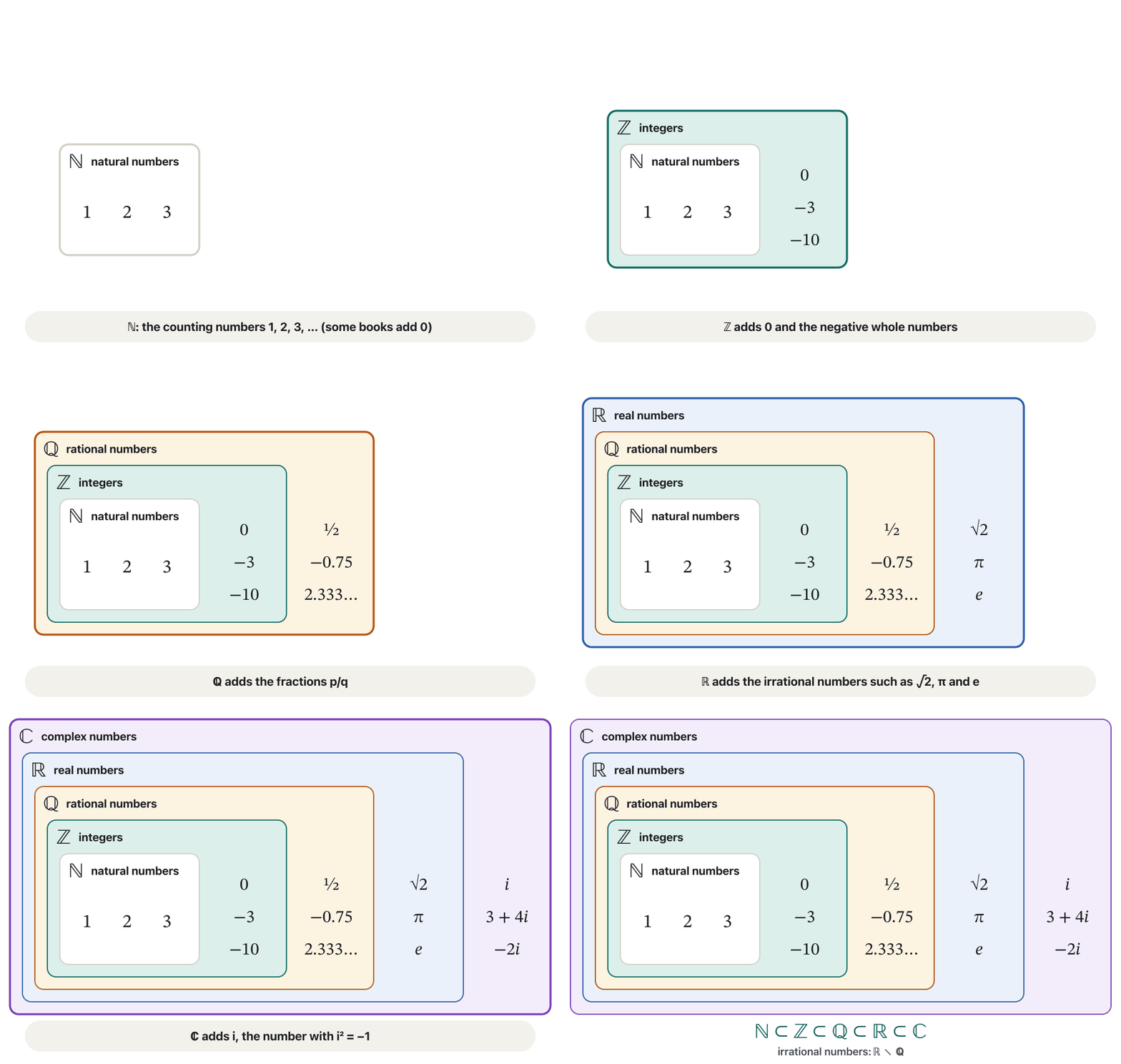
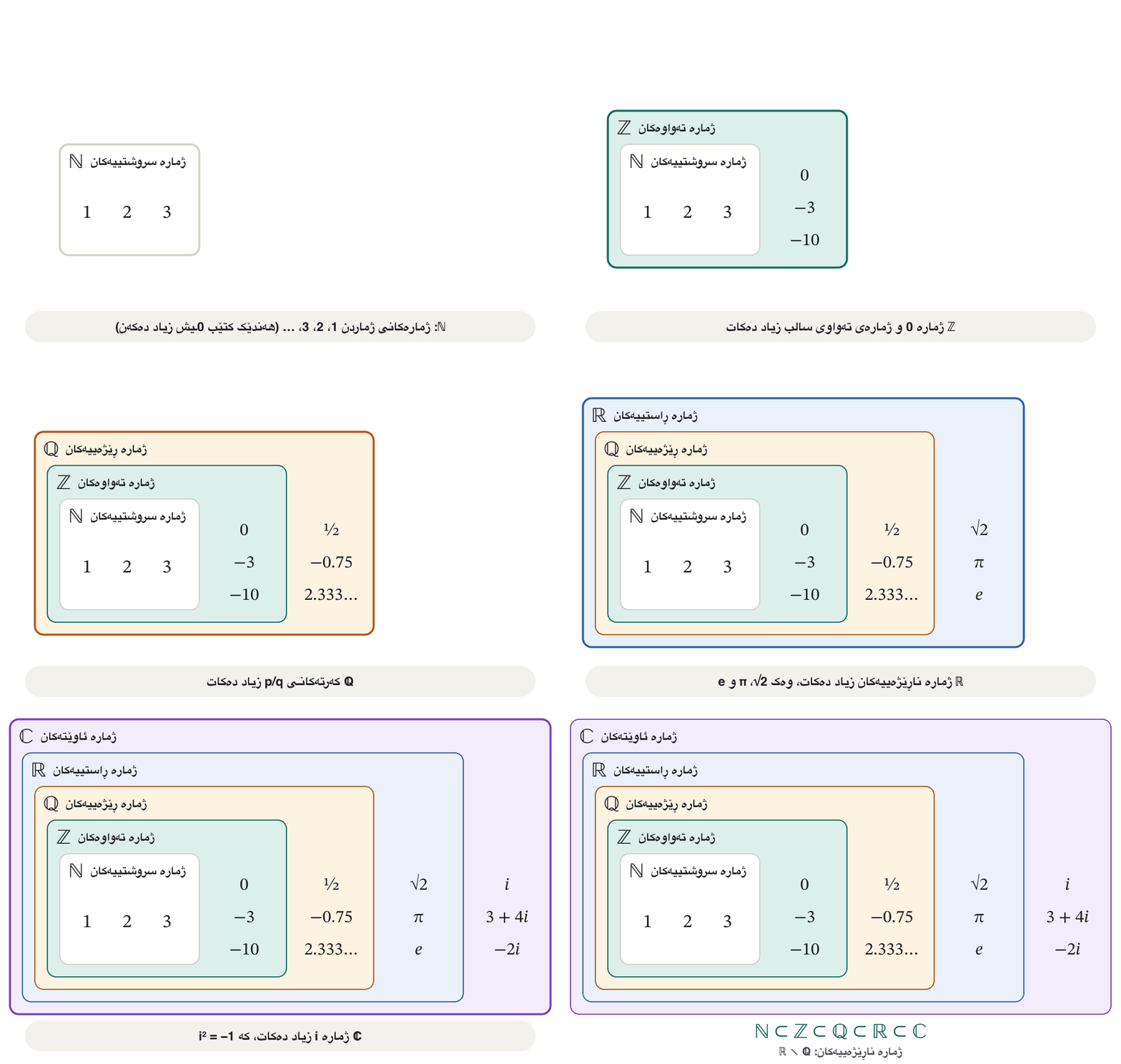
Five letters name the families of numbers, and each family contains the one before it: . Say them as letters (“N”, “Z”, “Q”, “R”, “C”) or by their names in the table. The letters have reasons: comes from the German Zahl, “number”, and from quotient, a fraction . What each family holds is taught in Sets inside sets.
پێنج پیت ناوی خێزانەکانی ژمارە دەنێن و هەر خێزانێک ئەوەی پێش خۆی لەخۆ دەگرێت: . وەک پیت بیانخوێنەوە («ئێن»، «زێد»، «کیو»، «ئار»، «سی») یان بە ناوەکانیان لە خشتەکەدا. پیتەکان هۆیان هەیە: لە وشەی ئەڵمانیی Zahlـەوە هاتووە کە واتای «ژمارە» دەدات. ـیش لە quotientـەوە هاتووە، واتە . هەر خێزانێک چی تێدایە: کۆمەڵەکان لە ناو کۆمەڵەکاندا.
| Letterپیت | Nameناو | Examplesنموونە | Type itنووسین |
|---|---|---|---|
| natural numbers | or یان | \mathbb{N} | |
| integers | \mathbb{Z} | ||
| rational numbers | \mathbb{Q} | ||
| real numbers | \mathbb{R} | ||
| complex numbers | \mathbb{C} | ||
| irrational numbers | \mathbb{R}\setminus\mathbb{Q} |
, R or R: how the letters are printed، R یان R: پیتەکان چۆن چاپ دەکرێن
Printed books use blackboard bold, capitals with a double stroke: . The style began as a way to write bold letters on a blackboard; the standard ISO 80000-2 accepts it as well as ordinary bold R. You may also meet handouts that simply write the plain capitals N, Z, Q, R and C. All of them mean the same sets, but a plain R can clash with a set that a problem calls R, so draw the double stroke when you write by hand.
کتێبە چاپکراوەکان پیتی دووهێڵی (blackboard bold) بەکار دەهێنن، پیتی گەورە بە هێڵێکی دووانەوە: . ئەم شێوازە وەک ڕێگایەک بۆ نووسینی پیتی تۆخ لەسەر تەختەڕەش دەستی پێکرد؛ ستانداردی ISO 80000-2 هەم ئەم شێوازە و هەم پیتی تۆخی ئاسایی R وەردەگرێت. لەوانەیە مەلزەمەش ببینیت کە بە سادەیی پیتە گەورە ئاساییەکان دەنووسێت: N Z Q R C. هەموویان هەمان دەگەیەنن، بەڵام Rـی سادە لەوانەیە لەگەڵ تێکەڵ بێت کە پرسیارێک ناوی ناوە R، بۆیە کاتێک بە دەست دەنووسیت هێڵە دووانەکە بکێشە.
Small marks change the set: and are the positive and the negative integers, the positive reals and , “R without zero”, every real number except 0. Books differ on whether 0 belongs to , so look for a definition such as . Some handouts call the irrational numbers “Ir”; books write or (Irrational numbers).
نیشانەی بچووک دەگۆڕن: واتە موجەب و واتە سالب؛ واتە موجەب و ، «R بەبێ سفر»، واتە هەموو جگە لە 0. کتێبەکان جیاوازن لەوەی ئایا 0 لە ـدایە یان نا، بۆیە بەدوای پێناسەیەکی وەک ـدا بگەڕێ. هەندێک مەلزەمە بە دەڵێن «Ir»؛ کتێبەکان یان دەنووسن (ژمارە ناڕێژەییەکان).
Does start at 0 or at 1?ئایا لە 0ـەوە دەست پێ دەکات یان لە 1ـەوە؟
Books disagree, and each is right inside its own pages. The international standard ISO 80000-2, and most of computer science, start at 0: . Many school and university books, the NIST Digital Library of Mathematical Functions (DLMF) and CêIT’s calculus course start at 1: . To leave no doubt, books add a mark: for “with 0”; , or for “from 1”. The numbers 0, 1, 2, … are also called the whole numbers.
کتێبەکان لەسەر ئەمە ڕێک نین و هەریەکەیان لە ناو پەڕەکانی خۆیدا ڕاستە. ستانداردی نێودەوڵەتیی ISO 80000-2 و زۆربەی زانستی کۆمپیوتەر لە 0ـەوە دەست پێ دەکەن: . زۆر کتێبی قوتابخانە و زانکۆ، DLMF (NIST Digital Library of Mathematical Functions) و کۆرسی کالکولەسی CêIT لە 1ـەوە دەست پێ دەکەن: . بۆ ئەوەی هیچ گومانێک نەمێنێت، کتێبەکان نیشانەیەک زیاد دەکەن: بۆ «لەگەڵ 0»؛ ، یان بۆ «لە 1ـەوە». بە ژمارەکانی دەوترێت .
So before you use in an answer, check the book’s first chapter or its list of symbols (Natural numbers). Code leaves no doubt: Python’s range(5) gives 0, 1, 2, 3, 4, and positions in a list start at 0.
کەواتە پێش ئەوەی لە وەڵامێکدا بەکار بهێنیت، سەیری بەشی یەکەمی کتێبەکە یان لیستی بکە (ژمارە سروشتییەکان). کۆد هیچ گومانێک ناهێڵێت: range(5)ـی ژمارەکانی 0، 1، 2، 3، 4 دەدات و شوێنەکانی ناو لە 0ـەوە دەست پێ دەکەن.
The same signs in Pythonهەمان نیشانەکان لە Pythonـدا
Python’s sets follow the maths closely, with keyboard signs instead of maths symbols. Braces hold the elements, in tests membership, and |, &, - and ^ combine sets:
زۆر لە بیرکاری دەچن، بەڵام نیشانەی لە جیاتی بیرکاری بەکار دەهێنن. کەوانەی لوول هەڵدەگرێت، in ئەندامێتی دەپشکنێت و |، &، - و ^ پێکەوە دەبەستن:
A = {1, 2, 3, 4}
B = {3, 4, 5}
print(3 in A, 5 not in A)          # ∈ and ∉
print(A | B, A & B)                # ∪ and ∩
print(A - B, A ^ B)                # ∖ and symmetric difference
print({3, 4} <= A, {3, 4} < A)     # ⊆ and proper ⊂
print(len(A), set(), type({}))     # |A|, ∅ and a trap
print({x for x in A if x % 2 == 0}) # {x ∈ A | x is even}True True
{1, 2, 3, 4, 5} {3, 4}
{1, 2} {1, 2, 5}
True True
4 set() <class 'dict'>
{2, 4}Explain the codeڕوونکردنەوەی کۆدەکە
- Lineدێڕی 5
^keeps the elements that are in exactly one of the sets, the symmetric difference . It is not a power here.^ئەو دەهێڵێتەوە کە تەنیا لە یەکێک لە ، واتە . لێرەدا نییە.- Lineدێڕی 7
{}makes an empty dictionary, so the empty set is writtenset().{}dictionaryـیەکی بەتاڵ دروست دەکات، بۆیە بەset()دەنووسرێت.- Lineدێڕی 8
A set comprehension is set-builder notation in code: .
set comprehension هەمان لە کۆددا: ، واتە جووتەکانی A.
More practice: Union, intersection and difference. Databases use the same ideas: SQL’s UNION, INTERSECT and EXCEPT and relational algebra’s , and work on whole tables (Union, intersection and difference).
ڕاهێنانی زیاتر: یەکگرتن، یەکتربڕین و جیاوازیی کۆمەڵە. هەمان بیرۆکە بەکار دەهێنن: UNION، INTERSECT و EXCEPTـی SQL و ، و ـی لەسەر بە تەواوی کار دەکەن (یەکگرتن، یەکتربڕین و جیاوازیی کۆمەڵە).
Common mistakesهەڵە باوەکان
| Mistakeهەڵە | Fixچارەسەر |
|---|---|
| Reading as the Greek letter εخوێندنەوەی وەک پیتی یۆنانیی ε | is a sign: “is an element of” (Look-alikes) نیشانەیە: « …ـیە» (لێکچووەکان) |
| Calling or emptyوتنی ئەوەی کە یان بەتاڵن | Each has one element; only is emptyهەریەکەیان یەک هەیە؛ تەنیا بەتاڵە |
| Writing the letter Ø or φ for the empty setنووسینی پیتی Ø یان φ بۆ | Type the sign (LaTeX \emptyset, Unicode U+2205)نیشانەی بنووسە (LaTeX \emptyset، Unicode U+2205) |
| Taking as “proper subset” in every bookوەرگرتنی وەک «» لە هەموو کتێبێکدا | Check the book: may allow equal sets; never doesسەیری کتێبەکە بکە: لەوانەیە یەکسان ڕێگە پێ بدات؛ هەرگیز |
| Writing for an event Aنووسینی بۆ وەک A | An event is a set: ; one outcome: : ؛ یەک ئەنجام: |
| Thinking وا بزانیت | but بەڵام |
| Using without saying whether 0 is inبەکارهێنانی بەبێ وتنی ئەوەی ئایا 0 تێدایە | Write for and or for بۆ بنووسە و بۆ بنووسە یان |
| Reading as the set خوێندنەوەی وەک | Round brackets: an ordered pair, a point or an open interval, where order matters; braces: a setکەوانەی خڕ: ، خاڵێک یان ، کە ڕیزبەندی تێیدا گرنگە؛ کەوانەی لوول: |
Writing {} for an empty set in Pythonنووسینی {} بۆ لە | {} is a dictionary; write set(){} dictionaryـیە؛ بنووسە set() |
Practiceڕاهێنان
Read each statement aloud in English and in Kurdish: (a) (b) (c) (d) (e)
هەر ڕستەیەک بە ئینگلیزی و بە کوردی بە دەنگی بەرز بخوێنەوە: (a) (b) (c) (d) (e)
Show answerوەڵامەکە پیشان بدە
- (a) “Minus two is an element of Z”: is an integer.
- (b) “Q is a subset of R”: every rational number is real.
- (c) “A intersect B is the empty set”: A and B share nothing.
- (d) “The number of elements of A union B is 5.”
- (e) “The set of all real x such that x squared equals 4 is the set minus two, two.”
- (a) «سالب دوو ℤـە» (minus two is an element of Z): .
- (b) «ℚ ℝـە»: هەموو ڕاستییە (Q is a subset of R).
- (c) « A و B »: A و B هیچ هاوبەشێکیان نییە (A intersect B is the empty set).
- (d) « A و B یەکسانە بە 5» (the number of elements of A union B is five).
- (e) « هەموو ئەو xـە ڕاستییانەی کە x دووجا یەکسانە بە 4، سالب دوو و دووە» (the set of all real x such that x squared equals four is the set minus two, two).
(a) Write as a list, once for a book whose starts at 1 and once for a book whose starts at 0. (b) Write in set-builder notation. (c) List .
(a) وەک لیست بنووسە، جارێک بۆ کتێبێک کە ـەکەی لە 1ـەوە دەست پێ دەکات و جارێک بۆ کتێبێک کە لە 0ـەوە دەست پێ دەکات. (b) بە بنووسە. (c) ڕیز بکە.
Show answerوەڵامەکە پیشان بدە
- (a) when starts at 1; when it starts at 0.
- (b) , or : the positive even numbers.
- (c) : is included () and 3 is not ().
- (a) کاتێک لە 1ـەوە دەست پێ دەکات؛ کاتێک لە 0ـەوە دەست پێ دەکات.
- (b) ، یان : ژمارە جووتە موجەبەکان.
- (c) : تێدایە () و 3 نا ().
Rewrite each piece for a book that writes and , and : (a) (b) in a book where means proper subset (c) “Ir = R − Q” (d) “A ∈ S” for an event A.
هەر پارچەیەک بۆ کتێبێک بنووسەرەوە کە و ، و دەنووسێت: (a) (b) لە کتێبێکدا کە واتای دەدات (c) «Ir = R − Q» (d) «A ∈ S» بۆ وەک A.
Show answerوەڵامەکە پیشان بدە
- (a) : instead of
- (b) (and is also true)
- (c) , the irrational numbers
- (d) : an event is a set
- (a) : لە جیاتی
- (b) (هەروەها ـیش ڕاستە)
- (c) ،
- (d) :
Summaryپوختە
- Braces list a set; “is an element of”, “is not”.
- : the bar, the colon or the semicolon is read “such that”.
- subset, superset; is proper in some books and any subset in others.
- union (or), intersection (and), or minus; the complement is , or .
- Only is empty; or counts elements; makes pairs; holds all subsets.
- , also printed N, Z, Q, R, C; check whether a book’s has 0.
- All these signs, with their readings, are in the Symbol dictionary: Sets and number sets.
- کەوانەی لوول ڕیز دەکات؛ « …ـیە»، «… نییە».
- : هێڵ، دوو خاڵ یان خاڵبۆر «بە جۆرێک کە» دەخوێنرێنەوە.
- ، ؛ لە هەندێک کتێبدا و لە هەندێکی تردا هەر .
- (یان)، (و)، یان کەم؛ بە ، یان دەنووسرێت.
- تەنیا بەتاڵە؛ یان دەژمێرێت؛ جووت دروست دەکات؛ هەموو تێدایە.
- ، بە پیتی سادەی N Z Q R Cـیش دەنووسرێن؛ سەیر بکە ئایا ـی کتێبێک 0ـی تێدایە.
- هەموو ئەم نیشانانە، لەگەڵ خوێندنەوەکانیان، لە فەرهەنگی هەن: کۆمەڵەکان و کۆمەڵەکانی ژمارە.
How do you read ? چۆن دەخوێنیتەوە؟
“The set of all integers x such that x is greater than 3”: 4, 5, 6, …
« هەموو ئەو xـانەی کە و لە 3 گەورەترن»: 4، 5، 6، …
A handout writes and a logic book . Are they different ideas?مەلزەمەیەک دەنووسێت و کتێبێکی لۆجیک . ئایا دوو بیرۆکەی جیاوازن؟
No. Both mean “not A”: the complement for sets and events, NOT A in logic design.
نەخێر. هەردووکیان واتە «نا A»: بۆ و ، NOT A لە دیزاینی .
Is 0 in ?ئایا 0 لە ـدایە؟
It depends on the book: yes in ISO 80000-2 and in computing, no in DLMF and in CêIT’s calculus course. always includes it.
بەستراوە بە کتێبەکە: بەڵێ لە ISO 80000-2 و لە کۆمپیوتەردا، نەخێر لە DLMF و لە کۆرسی کالکولەسی CêITـدا. هەمیشە لەخۆی دەگرێت.
Lesson complete!وانەکە تەواو بوو!
Well done. Review the key terms, then go on to the next lesson.دەستخۆش. سەیرێکی زاراوە سەرەکییەکان بکەرەوە، پاشان بڕۆ بۆ وانەی داهاتوو.
Key termsزاراوە سەرەکییەکان
Logic Symbols and Boolean Algebraهێماکانی لۆجیک و جەبری بوول
Related lecturesوانە پەیوەندیدارەکان
- Sets, Elements and Subsetsکۆمەڵەکان، ئەندامەکان و ژێرکۆمەڵەکان
- Union, Intersection, Difference and Complementیەکگرتن، یەکتربڕین، جیاوازیی کۆمەڵە و تەواوکەر
- Sets of Numbers: From Natural to Complexکۆمەڵەکانی ژمارە: لە ژمارە سروشتییەکانەوە تا ژمارە ئاوێتەکان
- Experiments, Sample Spaces and Eventsتاقیکردنەوە، بۆشایی نموونە و ڕووداوەکان
- Tuples, Sets and Dictionariesتاپڵەکان، کۆمەڵەکان و فەرهەنگەکان
- Relational Algebra and Relational Calculusجەبری پەیوەندیدار و ژمێرکاریی پەیوەندیدار
- Inequalities, Infinity and Intervalsلاسەنگەکان، بێسنوور و ماوەکان
- Powers, Roots, Absolute Value, Factorial, Floor and Ceilingتوانەکان، ڕەگەکان، نرخی ڕووت، فاکتۆریێل، نەخشەی گەورەترین ژمارەی تەواو و نەخشەی بچووکترین ژمارەی تەواو
- Logic Symbols and Boolean Algebraهێماکانی لۆجیک و جەبری بوول
- Probability and Statistics Symbolsهێماکانی ئەگەر و ئامار
References and further readingسەرچاوەکان و خوێندنەوەی زیاتر
- Wikipedia: Natural number (0 included or not; ISO 31-11 and ISO 80000-2 include 0; ℕ₀, ℕ₁, ℤ⁺)
- NIST DLMF, Introduction: Common Notations and Definitions (ℕ = the positive integers; ⊂ “is contained in”, ⊆ “is, or is contained in”, ∖ set subtraction)
- Wikipedia: Glossary of mathematical symbols (sets: ∅, ∈, the two definitions of ⊂, ∖, △, |S| and #S; blackboard bold ℕ ℤ ℚ ℝ ℂ)
- Wikipedia: Subset (⊂ for subset or for proper subset; ⊆ and ⊂ like ≤ and <)
- Wikipedia: Set-builder notation (the bar or colon read “such that”; {x ∈ ℝ | x > 0}; Python comprehensions)
- Wikipedia: Complement (set theory) (Aᶜ, A′, Ā, ∁A; B ∖ A in ISO 31-11)
- Wikipedia: Empty set (∅ introduced by André Weil for Bourbaki in 1939, after the letter Ø; {∅} has one element)
- Wikipedia: Blackboard bold (origin on blackboards; Z from German Zahl, Q from quotient; ISO 80000-2 accepts bold and double-struck forms)
- Python documentation: Set Types — set, frozenset (len, in, <=, <, >=, |, &, -, ^)
This lecture is a first edition. The Kurdish text and terminology are waiting for review by Kurdish IT teachers.ئەم وانەیە چاپی یەکەمە. دەقە کوردییەکە و زاراوەکانی چاوەڕێی پێداچوونەوەی مامۆستایانی کوردی بواری IT ن.