Chapterبەش 5 · Lectureوانە 5.2
Vectors and Matrices: Arrows, Bold Letters, Aᵀ, A⁻¹ and detئاڕاستەبڕەکان و ماتریکسەکان: تیر، پیتی تۆخ، Aᵀ، A⁻¹ و det
How to read vectors (bold , , , vs the point , , , , , ) and matrices (brackets, , , I and O, and its other spellings, and , , adj and tr, block labels, MATLAB's A' and .*), with the Kurdish words of CêIT and of Kurdistan school books.
چۆن بخوێنیتەوە (ـی تۆخ، ، ، بەرامبەر خاڵی ، ، ، ، ، ) و (کەوانە، ، ، I و O، و شێوەکانی تری، و ، ، adj و tr، ناوی بلۆکەکان، A' و .*ـی MATLAB)، لەگەڵ وشە کوردییەکانی CêIT و کتێبەکانی قوتابخانەی کوردستان.
What you will learnچی فێر دەبیت
- Recognise a vector in print and by hand, tell from the point , and read , , , and .
- Read matrix notation: brackets, row first, the order , and O.
- Read in its four spellings, , , and , and know that these bars are not absolute value.
- Read block labels such as and MATLAB's
A',A^2and.*. - Match CêIT's Kurdish matrix words with the words of Kurdistan school books and exams.
- لە چاپ و دەستنووسدا بناسیتەوە، لە خاڵی جیا بکەیتەوە و ، ، ، و بخوێنیتەوە.
- بخوێنیتەوە: کەوانە، یەکەم ڕیز، قەبارەی ، و O.
- بە چوار شێوەکەیەوە، ، ، و بخوێنیتەوە و بزانیت ئەم هێڵانە نین.
- ناوی بلۆکەکانی وەک و
A'،A^2و.*ـی MATLAB بخوێنیتەوە. - وشە کوردییەکانی لە CêIT لەگەڵ وشەکانی کتێب و تاقیکردنەوەکانی قوتابخانەی کوردستان بەراورد بکەیت.
A vector: bold in print, an arrow by handئاڕاستەبڕ: تۆخ لە چاپدا، تیر بە دەست
A vector has a length and a direction, like a walk of 3 steps east and 4 steps north. Books mark a letter that stands for a vector, so you do not take it for an ordinary number. Printed books use a bold letter: , . Bold is hard to write by hand, so on paper you draw a small arrow on top: . An arrow over two capital letters, , is the vector that starts at the point P and ends at the point Q. The zero vector, a bold , has no length and no direction. Say “vector v” and “vector P Q”.
درێژی و ئاڕاستەی هەیە، وەک ڕۆیشتنی 3 هەنگاو بەرەو ڕۆژهەڵات و 4 هەنگاو بەرەو باکوور. کتێبەکان ئەو پیتە نیشانە دەکەن کە جێگەی دەگرێتەوە، تا وەک ژمارەیەکی ئاسایی نەیخوێنیتەوە. کتێبی چاپکراو پیتی تۆخ بەکار دەهێنێت: ، . نووسینی تۆخ بە دەست قورسە، بۆیە لەسەر کاغەز تیرێکی بچووک لە سەرەوەی دەکێشیت: . تیرێک لەسەر دوو پیتی گەورە، ، ئەو کە لە خاڵی Pـەوە دەست پێدەکات و لە خاڵی Q کۆتایی دێت. سفر، ـی تۆخ، نە درێژیی هەیە و نە ئاڕاستە. بخوێنەوە « v» و « PQ».
is a vector, is a point ئاڕاستەبڕێکە، خاڵێکە
The numbers inside a vector are its components. Many books write them in angle brackets: means 3 to the right and 4 up. The same numbers in round brackets, , are a point: one place on the plane. A vector is a move, so the same arrow may start anywhere. Other books write a vector as a row , as a column or with unit vectors: . In three dimensions: , where (“v sub two”) is the second component.
ژمارەکانی ناو پێیان دەوترێت بەشەکانی (components). زۆر کتێب لە ناو کەوانەی گۆشەداردا دەیاننووسن: واتە 3 بەرەو ڕاست و 4 بەرەو سەرەوە. هەمان ژمارەکان لە ناو کەوانەی خڕدا، ، خاڵێکن: یەک شوێن لەسەر ڕووتەخت. جووڵەیە، بۆیە هەمان تیر دەتوانێت لە هەر شوێنێکەوە دەست پێبکات. کتێبی تر وەک ڕیزێک ، وەک ستوونێک یان بە دەنووسن: . لە سێ ڕەهەنددا: ، کە («v ژێر 2») بەشی دووەمە.
Round brackets have other jobs too: can also be an open interval or an ordered pair (One set, four ways to write it). Read the words around it: “the point”, “the vector”, “the interval”.
کەوانەی خڕ کاری تریشی هەیە: دەکرێت یان بێت (یەک کۆمەڵە، چوار شێوەی نووسین). سەیری وشەکانی دەوروبەری بکە: «خاڵەکە»، «»، «».
Length and unit vectors , , , درێژیی ئاڕاستەبڕ و ئاڕاستەبڕی یەکەکان ، ، ،
Double bars give the length of a vector, also called its norm or magnitude: , “the length of v” or “the norm of v”. For , : Pythagoras on the two components. Some books use single bars, ; the bold letter inside tells you it is a vector, not a number.
هێڵە ستوونییە دووانەکان درێژیی دەدەن، کە پێی دەوترێت (norm): ، « v». بۆ ، : یاسای فیساغۆرس لەسەر دوو بەشەکە. هەندێک کتێب یەک هێڵ بەکار دەهێنن، ؛ پیتە تۆخەکەی ناوی پێت دەڵێت کە ، نەک ژمارە.
A unit vector has length 1. A hat marks it: , “v hat”, is v divided by its own length, so it points the same way: . The unit vectors along the axes have their own bold letters: , and, in three dimensions, . They are not the indexes i and j of : these are bold.
درێژیی 1ـە. کڵاوێک نیشانەی دەکات: ، کە یەک شێوەی خوێندنەوەی «v هات»ـە (v hat)، بریتییە لە v دابەش بەسەر درێژیی خۆیدا، بۆیە هەمان ئاڕاستەی هەیە: . سەر تەوەرەکان پیتی تۆخی خۆیان هەیە: ، و لە سێ ڕەهەنددا . ئەمانە i و jـی ناو نین: ئەمانە تۆخن.
and : two products of vectors و : دوو جۆر لێکدانی ئاڕاستەبڕەکان
Two products are written between vectors, and the sign tells you which one. The dot product , “u dot v”, multiplies matching components and adds the results, so its answer is a number: . The cross product , “u cross v”, is for vectors in three dimensions, and its answer is a new vector at right angles to both. How to work them out belongs to linear algebra; here you only need to read them.
دوو جۆر لێکدان لە نێوان دەنووسرێن و پێت دەڵێت کامیانە. ، « u و v» (u dot v)، بەشە هاوتاکان لێک دەدات و ئەنجامەکان کۆ دەکاتەوە، بۆیە وەڵامەکەی ژمارەیەکە: . ، « u و v» (u cross v)، بۆ سێ ڕەهەندە و وەڵامەکەی نوێیە کە لەسەر هەردووکیان. چۆنیەتیی ئەنجامدانیان بابەتی ؛ لێرەدا تەنیا پێویستە بیانخوێنیتەوە.
Between two ordinary numbers, · and × both mean times (Five ways to write “times”). Between bold vectors they are two different operations. A number times a vector, , is a third one: the scalar 3 makes v three times as long. And in a matrix order such as , the × only means “by” (× and · have other jobs too). AI uses the dot product to measure how close two meanings are: see Vectors and Embeddings.
لە نێوان دوو ژمارەی ئاساییدا، · و × هەردووکیان واتە جاران (پێنج شێوەی نووسینی «جاران»). لە نێوان تۆخدا دوو کاری جیاوازن. ژمارەیەک جاران ، ، کارێکی سێیەمە: 3، v سێ هێندە درێژ دەکات. لە قەبارەی وەک ، × تەنیا واتە «بە» (× و · کاری تریشیان هەیە). بەکار دەهێنێت بۆ پێوانی نزیکیی دوو واتا: بڕوانە ئاڕاستەبڕەکان و ئیمبەدینگەکان.
A matrix: brackets, entries and the order ماتریکس: کەوانە، ژمارەکانی و قەبارەی
A matrix is a rectangular table of numbers, named with a capital letter: A, B, M. Books put it in square brackets [ ] or in round brackets ( ); both mean the same matrix. Each entry gets the small letter and two subscripts, row first: , “a sub two three”, is in row 2 and column 3. The whole matrix is also written . The order (size) is read “m by n”: m rows and n columns. It is often written under the name: , , .
خشتەیەکی لاکێشەیی ژمارەیە کە بە پیتێکی گەورە ناو دەنرێت: ، ، . کتێبەکان لە ناو کەوانەی چوارگۆشە [ ] یان کەوانەی خڕ ( )ـدا دەینووسن؛ هەردووکیان هەمان . هەر ژمارەیەک پیتە بچووکەکە و دوو وەردەگرێت، یەکەم ڕیز: ، «a ژێر 2 3»، لە ڕیزی 2 و ستوونی 3ـدایە. هەموو بەم شێوەیەش دەنووسرێت: . قەبارەی دەخوێنرێتەوە «m بە n»: m ڕیز و n ستوون. زۆرجار لە ژێر ناوەکەوە دەنووسرێت: ، ، .
In Kurdish, CêIT reads ژمارەی ڕیزی i و ستوونی j (The address of an entry). The Kurdistan Region's grade-12 exams name an entry and say لە جۆری for the order. When an index has two digits, a comma keeps the two numbers apart: is row 12, column 3.
بە کوردی CêIT وا دەخوێنێتەوە: «ژمارەی ڕیزی i و ستوونی j» (ناونیشانی ژمارەیەک). تاقیکردنەوەکانی پۆلی 12ی هەرێمی کوردستان ژمارەیەک بە ناو دەبەن و بۆ قەبارە دەڵێن «لە جۆری ». کاتێک دوو هەیە، کۆمایەک دوو ژمارەکە لێک جیا دەکاتەوە: ڕیزی 12 و ستوونی 3ـە.
Square, identity and zero matrices: and ماتریکسی چوارگۆشەیی، ماتریکسی یەکە و ماتریکسی سفر: و
A matrix with as many rows as columns, , is a square matrix. The identity matrix (or simply I; a few books write E) has 1s on the main diagonal and 0s everywhere else; it works like the number 1: . The zero matrix O (or a bold 0) is all zeros. A single row, , is a row vector; a single column, , is a column vector. Dots stand for the entries a book does not show: along a row, down a column, along the diagonal (The three dots).
کە ژمارەی ڕیزەکانی و ستوونەکانی وەک یەک بێت، ، . (یان تەنیا I؛ چەند کتێبێک E دەنووسن) لەسەر 1ـی هەیە و لە هەموو شوێنەکانی تر 0؛ وەک ژمارە 1 کار دەکات: . O (یان 0ـی تۆخ) هەمووی سفرە. یەک ڕیز، ، ڕیزییە؛ یەک ستوون، ، ستوونییە. خاڵەکان جێگەی ئەو ژمارانە دەگرنەوە کە کتێب پیشانیان نادات: بە درێژیی ڕیزێک، بە درێژیی ستوونێک و بە لاری (سێ خاڵەکە).
Read “I three”, “O two by three” and “I n”. More special matrices (symmetric, diagonal, triangular …) are listed in All the special matrices in one table.
بخوێنەوە «I ژێر 3»، «O ژێر 2 بە 3» و «I ژێر n». تایبەتەکانی تر لە هەموو ماتریکسە تایبەتەکان لە یەک خشتەدا هاتوون.
The transpose: , , and MATLAB's A'جێگۆڕکێی ماتریکس: ، ، و A'ـی MATLAB
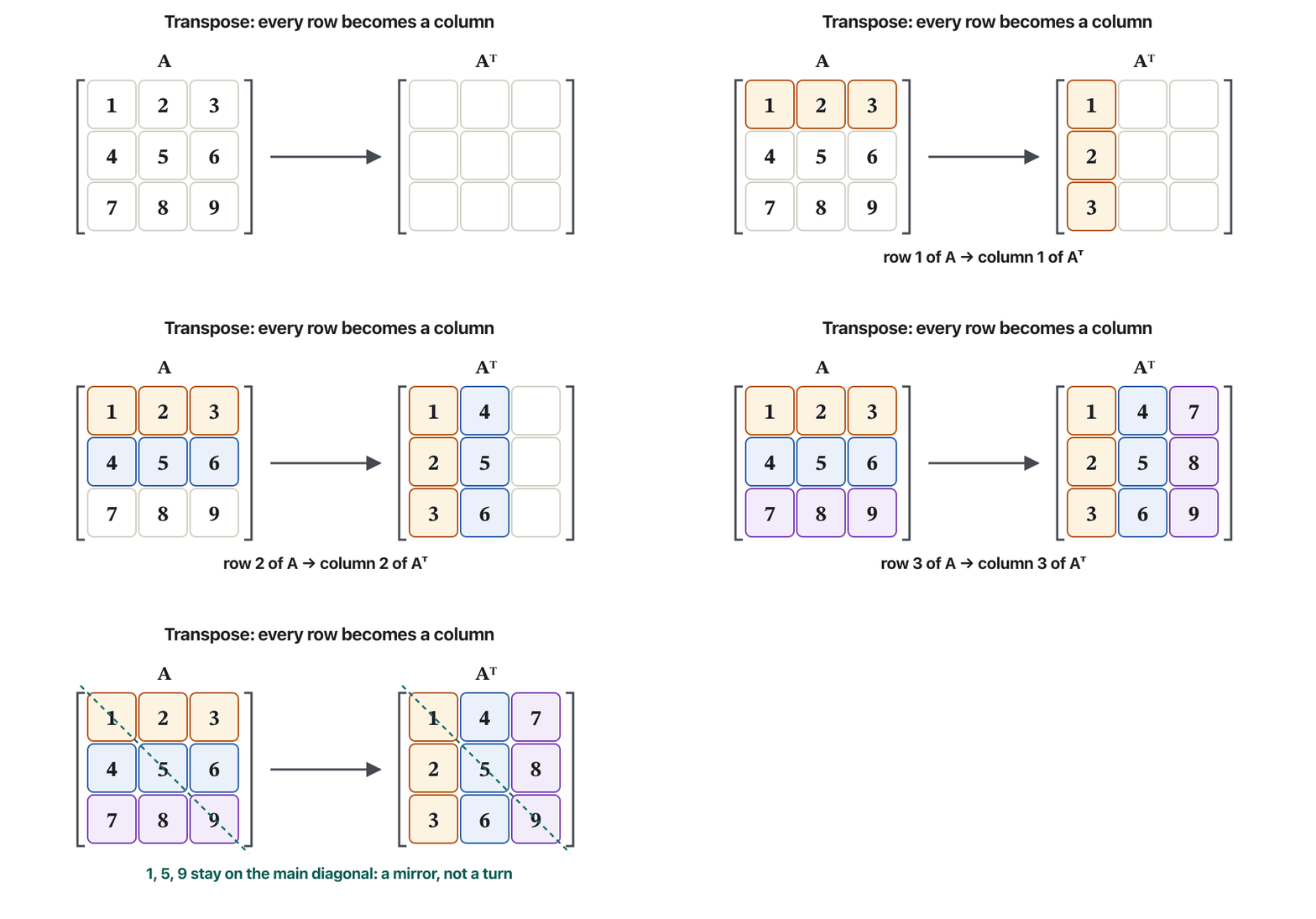
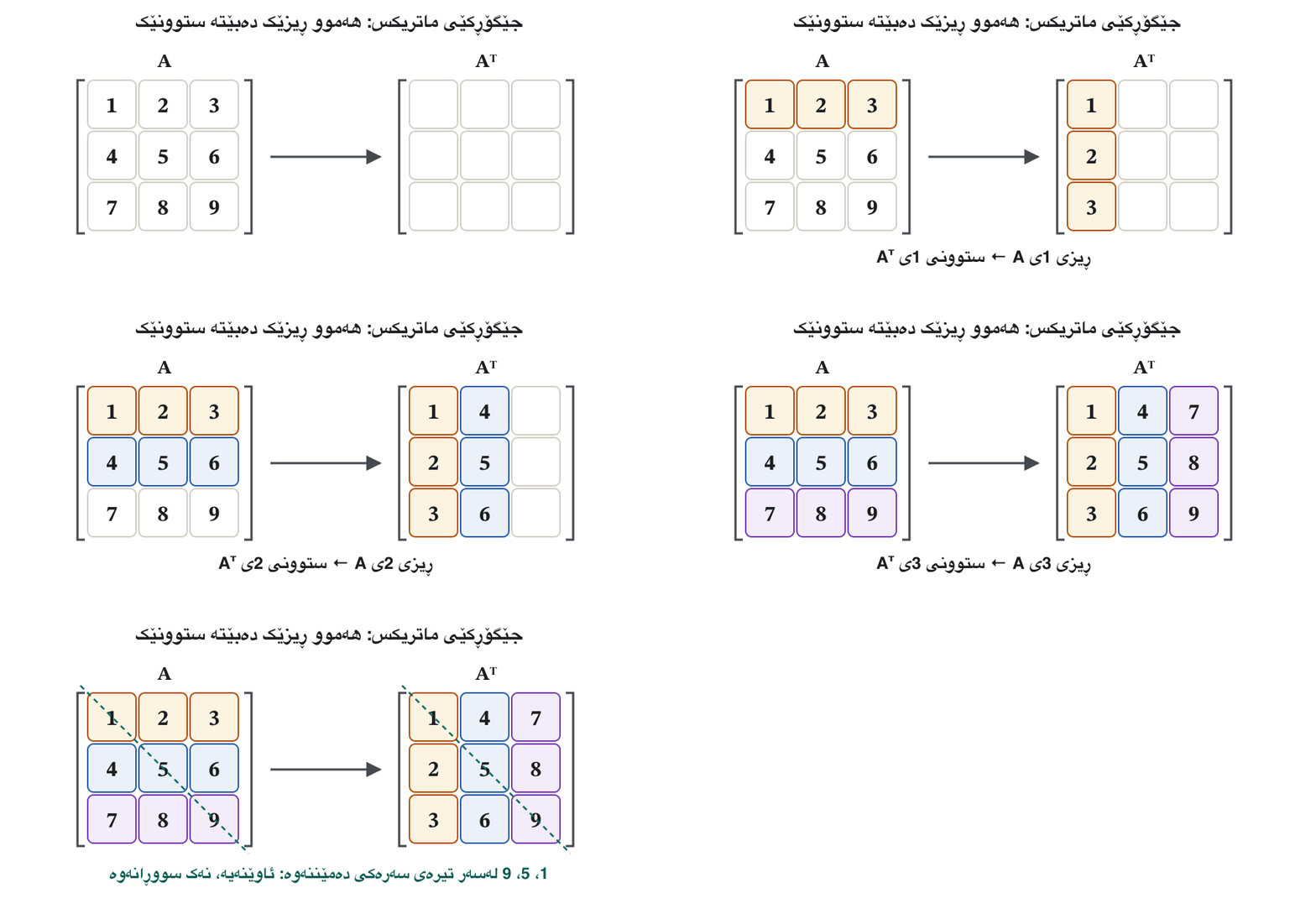
The transpose of A turns every row into a column: row 1 becomes column 1, row 2 becomes column 2, and so on. An matrix becomes , and the numbers on the main diagonal stay where they are. Read “A transpose”. The animation from the statistics course shows it on a matrix (The transpose: rows become columns).
هەموو ڕیزێکی A دەکات بە ستوون: ڕیزی 1 دەبێتە ستوونی 1، ڕیزی 2 دەبێتە ستوونی 2 و بەم شێوەیە. دەبێتە و ژمارەکانی سەر لە شوێنی خۆیان دەمێننەوە. بخوێنەوە « A» (A transpose). ئەنیمەیشنەکەی خوولی لەسەر پیشانی دەدات (جێگۆڕکێی ماتریکس: ڕیز دەبێتە ستوون).
| Writtenنووسین | Where you meet itلە کوێ دەیبینیت |
|---|---|
| , | most maths books and CêIT's calculus and statistics lessonsزۆربەی کتێبەکانی بیرکاری و وانەکانی کالکولەس و CêIT |
| many statistics and economics books, as in ; the same prime can mean “not A” in probabilityزۆر کتێبی و ئابووری، وەک ؛ هەمان پرایم لە دەتوانێت واتای A بدات | |
| , | some European booksهەندێک کتێبی ئەورووپی |
A' | MATLAB; for complex numbers A.' swaps rows and columns only (The transpose)MATLAB؛ بۆ A.' تەنیا ڕیز و ستوون دەگۆڕێتەوە (جێگۆڕکێی ماتریکس) |
Two rules appear in many formulas: , and , where the order of the product turns round (The transpose of sums and products).
دوو یاسا لە زۆر دەردەکەون: و ، کە تێیدا ڕیزبەندیی لێکدانەکە پێچەوانە دەبێتەوە (جێگۆڕکێی ماتریکسی کۆ و لێکدراو).
and : bars that are not absolute value و : هێڵەکان نرخی ڕووت نین
The determinant is one number worked out from a square matrix. It is written , or , often with the bars straight around the entries: . Read it “the determinant of A”. Around a matrix the bars do not mean absolute value, so the answer can be negative: for the matrix , , while for the number , . Some books call a determinant Δ (delta).
یەک ژمارەیە کە لە دەدۆزرێتەوە. بە ، یان دەنووسرێت، زۆرجار بە هێڵەکان ڕاستەوخۆ بە دەوری ژمارەکاندا: . بیخوێنەوە « A». بە دەوری هێڵەکان واتای نادەن، بۆیە وەڵامەکە دەشێت سالب بێت: بۆ ـی ، ، بەڵام بۆ ژمارەی ، . هەندێک کتێب بە دەڵێن Δ (دێلتا).
So look at what stands between the bars: a number, a matrix or a vector (Vertical bars with other jobs). When there could be doubt, write det. Working determinants out is taught in What a determinant is and A matrix: the bars are not absolute value.
کەواتە سەیری ئەوە بکە کە لە نێوان هێڵەکاندایە: ژمارە، یان (هێڵی ستوونی بە کاری تر). کاتێک گومان هەبێت، det بنووسە. دۆزینەوەی لە دیتەرمینانت چییە و ماتریکسێکی : هێڵەکان نرخی ڕووت نین فێر دەکرێت.
, and ، و
, “A inverse”, is the matrix that undoes A: . It exists only for a square matrix with ; when , A has no inverse and is called singular. The −1 is not an ordinary power: matrices cannot be divided, so never write (the same warning as for , f inverse, not 1 over f). , “the adjugate of A” (older books say adjoint), gives the inverse: . , “the trace of A”, adds up the main diagonal.
، « A» (A inverse)، ئەو کە کاری A هەڵدەوەشێنێتەوە: . تەنیا بۆ هەیە کە بێت؛ کاتێک ، A پێچەوانەی نییە و پێی دەوترێت . −1ـەکە ئاسایی نییە: دابەش ناکرێن، بۆیە هەرگیز مەنووسە (هەمان ئاگاداری وەک ، پێچەوانەی نەخشەی f، نەک 1 لەسەر f). ، « A» (کتێبی کۆن دەڵێن adjoint)، پێچەوانەکە دەدات: . ، « A»، ژمارەکانی سەر کۆ دەکاتەوە.
The methods are in Definition: , Invertible or singular, Method 2: the adjugate and The trace of a square matrix.
ڕێگەکان لەمانەدان: پێناسە: ، پێچەوانەدار یان بێپێچەوانە، ڕێگەی 2: ئەدجوگەیت و کۆی تیرەی ماتریکسێکی چوارگۆشەیی.
Block matrices: is a block, and needs bracketsماتریکسە بلۆکییەکان: بلۆکێکە و کەوانەی پێویستە
Lines can cut a big matrix into smaller matrices, its blocks; it is then a block matrix. names a whole block, the top-left one, not a single number: . Small labels pile up here. Some books and handouts print , with the −1 straight above the 11. Is that the inverse of the block, or the top-left block of the inverse? They are different matrices, so write the brackets: for the first, for the second.
هێڵ دەتوانن گەورە بکەن بە چەند بچووکتر کە پێیان دەوترێت بلۆک؛ ئەو کاتە پێی دەوترێت . ناوی بلۆکێکی تەواوە، بلۆکەکەی سەرەوەی چەپ، نەک تاکە ژمارەیەک: . لێرەدا نیشانە بچووکەکان لەسەر یەک کەڵەکە دەبن. هەندێک کتێب و مەلزەمە چاپ دەکەن، کە −1ـەکە ڕاست لەسەر 11ـەکەیە. ئایا ئەمە پێچەوانەی بلۆکەکەیە، یان بلۆکی سەرەوەی چەپی پێچەوانەکەیە؟ دوو جیاوازن، بۆیە کەوانەکان بنووسە: بۆ یەکەمیان و بۆ دووەمیان.
For the matrix in the picture, , but the top-left block of is . Computing with blocks is a university topic; what matters here is reading the labels.
بۆ ناو وێنەکە، ، بەڵام بلۆکی سەرەوەی چەپی بریتییە لە . ژماردن بە بلۆک بابەتێکی زانکۆیە؛ ئەوەی لێرەدا گرنگە خوێندنەوەی نیشانەکانە.
Matrices in MATLAB: A', A^2 and the dot operatorsماتریکسەکان لە MATLABـدا: A'، A^2 و کارپێکەرە خاڵدارەکان
MATLAB writes matrix notation with keyboard signs. A' is the transpose . A*B is the matrix product of linear algebra, so A^2 means A*A, a matrix power. Put a dot before the sign and MATLAB works element by element instead: A.*B multiplies matching entries, A./B divides them and A.^2 squares every entry. A(2,1) is : row first, counting from 1 as in maths.
MATLAB بە نیشانەکانی دەنووسێت. A' ، . A*B ، بۆیە A^2 واتە A*A، . خاڵێک بخە پێش نیشانەکە و MATLAB لەبری ئەوە بە کار دەکات: A.*B ژمارە هاوشوێنەکان لێک دەدات، A./B دابەشیان دەکات و A.^2 هەموو ژمارەیەک دووجا دەکات. A(2,1) بریتییە لە : یەکەم ڕیز، ژماردن لە 1ـەوە وەک بیرکاری.
| Mathsبیرکاری | MATLAB | For A = [1 2; 3 4]بۆ A = [1 2; 3 4] |
|---|---|---|
A' | ||
A^2 | ||
| every entry squaredهەموو ژمارەیەک دووجا | A.^2 | |
A(2,1) | ||
inv(A) | ||
det(A) |
* follows linear algebra; .* pairs up matching entries.* یاساکانی پەیڕەو دەکات؛ .* ژمارە هاوشوێنەکان جووت دەکات.CêITWhy the dot matters in real programs: Why the dot matters. Python counts its indexes from 0, so is A[1][0] there (Indexes: from 1 or from 0?).
بۆچی خاڵەکە لە ڕاستەقینەدا گرنگە: بۆچی خاڵەکە گرنگە. Python لە 0ـەوە دەژمێرێت، بۆیە لەوێ دەبێتە A[1][0] (ئیندێکسەکان: لە 1ـەوە یان لە 0ـەوە؟).
Kurdish words in CêIT and in school booksوشە کوردییەکان لە CêIT و لە کتێبەکانی قوتابخانەدا
CêIT names these ideas with the words of its terminology registry; switch the page to Kurdish to see them. School books and the grade-12 exams of the Kurdistan Region use other words for the same symbols: ڕیزکراوە for a matrix, سنووردەر for the determinant, هەڵگەڕاوەی ڕیزکراوە for the inverse matrix, ڕیزکراوەی یەکە for the identity matrix and لە جۆری for the order. Row and column, ڕیز and ستوون, are the same in both.
CêIT ئەم بیرۆکانە بەم وشانە ناو دەنێت: ، ، و . کتێبەکانی قوتابخانە و تاقیکردنەوەکانی پۆلی 12ی هەرێمی کوردستان بۆ هەمان وشەی تر بەکار دەهێنن: «ڕیزکراوە» بۆ ، «سنووردەر» بۆ ، «هەڵگەڕاوەی ڕیزکراوە» بۆ ، «ڕیزکراوەی یەکە» بۆ و بۆ قەبارەش «لە جۆری ». ڕیز و ستوون لە هەردووکیاندا وەک یەکن.
Mind one word: in CêIT, (هەڵگەڕاوە) is , the reciprocal of a number. The school name fits: does for a matrix what does for a number. Still, a matrix is never written . When you rewrite a school question with symbols, the symbols stay the same in every language. More school words: School words for the same symbols.
ئاگاداری یەک وشە بە: لە CêITـدا «» واتە ، ژمارەیەک. ناوەکەی قوتابخانە دەگونجێت: بۆ هەمان کار دەکات کە بۆ ژمارەیەک دەیکات. لەگەڵ ئەوەشدا هەرگیز بە نانووسرێت. کاتێک پرسیارێکی قوتابخانە بە دەنووسیتەوە، لە هەموو زمانێکدا وەک خۆیان دەمێننەوە. وشەی قوتابخانەی زیاتر: وشەی قوتابخانە بۆ هەمان هێماکان.
Common mistakesهەڵە باوەکان
| Mistakeهەڵە | Why it is wrongبۆچی هەڵەیە | Do thisئەمە بکە |
|---|---|---|
| Reading as absolute valueخوێندنەوەی وەک | Around a matrix the bars mean the determinant, which can be negativeبە دەوری هێڵەکان واتە ، کە دەشێت سالب بێت | ; write det when in doubt؛ کاتێک گومانت هەیە det بنووسە |
| Reading as row 1, column 2خوێندنەوەی وەک ڕیزی 1، ستوونی 2 | The row always comes firstڕیز هەمیشە یەکەم دێت | : row 2, column 1: ڕیزی 2، ستوونی 1 |
| Writing for نووسینی لەبری | Matrices cannot be divided دابەش ناکرێن | |
| Saying that a matrix is “6”وتنی ئەوەی «6»ـە | Here × only means “by”لێرەدا × تەنیا واتە «بە» | “2 by 3”: 2 rows, 3 columns«2 بە 3»: 2 ڕیز، 3 ستوون |
| Taking and for the same thingبە یەک شت زانینی و | One is a place, the other a moveیەکێکیان شوێنە و ئەوی تر جووڵە | Read the brackets and the words around themکەوانەکان و وشەکانی دەوروبەریان بخوێنەوە |
| Reading as “not A” in a matrix formulaخوێندنەوەی وەک A لە | Statistics books with matrices use the prime for the transposeکتێبەکانی کە بەکار دەهێنن پرایم بۆ دادەنێن | Check the book's list of symbolsسەیری لیستی کتێبەکە بکە |
| Writing with no bracketsنووسینی بەبێ کەوانە | and differ و جیاوازن | Write the brackets you meanئەو کەوانانەی مەبەستتە بنووسە |
x^2 for the squares of a MATLAB vectorx^2 بۆ دووجاکانی MATLAB | ^ is a matrix power^ | x.^2x.^2 |
| Reading the arrow in the same way in every bookخوێندنەوەی تیری بە یەک شێوە لە هەموو کتێبێکدا | Geometry books use it for a ray (Segment, ray, line and arc)کتێبەکانی ئەندازە بۆ تیشک بەکاری دەهێنن (پارچە ڕاستەهێڵ، تیشک، ڕاستەهێڵ و کەوانە) | In a vector chapter it is the vector from A to Bلە بەشی لە Aـەوە بۆ B |
Practiceڕاهێنان
Read each statement in English and in Kurdish and say what it means: (a) (b) (c) (d) (e) .
هەر ڕستەیەک بە ئینگلیزی و بە کوردی بخوێنەوە و بڵێ واتای چییە: (a) (b) (c) (d) (e) .
Show answerوەڵامەکە پیشان بدە
- (a) “The length (norm) of u is 1”: u is a unit vector.
- (b) “AB transpose equals B transpose times A transpose”: the order turns round.
- (c) “The determinant of A is not equal to 0”: A has an inverse.
- (d) “a sub three two equals 7”: the entry in row 3, column 2 is 7.
- (e) “u dot v equals 0”: the dot product is 0 (the two vectors are at right angles).
- (a) « u یەکسانە بە 1»: u .
- (b) « AB یەکسانە بە Bᵀ جاران Aᵀ»: ڕیزبەندییەکە پێچەوانە دەبێتەوە.
- (c) « A یەکسان نییە بە 0»: A پێچەوانەی هەیە.
- (d) «a ژێر 3 2 یەکسانە بە 7»: ژمارەی ڕیزی 3 و ستوونی 2 حەوتە.
- (e) « u و v یەکسانە بە 0»: سفرە (دوو ).
Say what the bars mean and find the value where you can: (a) (b) (c) (d) , where B is a 3 × 3 matrix.
بڵێ هێڵەکان واتای چییە و لە هەر شوێنێک دەتوانیت نرخەکە بدۆزەرەوە: (a) (b) (c) (d) ، کە B ـە.
Show answerوەڵامەکە پیشان بدە
- (a) Absolute value of a number: 9.
- (b) Determinant: .
- (c) Length of a vector: .
- (d) B is a matrix, so ; it may be negative.
- (a) ژمارەیەک: 9.
- (b) : .
- (c) درێژیی : .
- (d) B ، بۆیە ؛ دەشێت سالب بێت.
A school book asks, in its own words: “The matrix (ڕیزکراوە) is of order . Find and its determinant (سنووردەر). Does A have an inverse (هەڵگەڕاوە)?” Rewrite it with CêIT's symbols and answer it.
کتێبێکی قوتابخانە بە وشەکانی خۆی دەپرسێت: «ڕیزکراوەی لە جۆری ـە. و سنووردەرەکەی بدۆزەرەوە. ئایا A هەڵگەڕاوەی هەیە؟» بە CêIT بینووسەوە و وەڵامی بدەرەوە.
Show answerوەڵامەکە پیشان بدە
The school's is , the entry in row 2, column 1. The determinant is 0, so A is singular and has no inverse.
ـی قوتابخانە هەمان ـە، ژمارەی ڕیزی 2 و ستوونی 1. 0ـە، بۆیە A و پێچەوانەی نییە.
Summaryپوختە
- Vectors: bold in print, by hand, from P to Q, the zero vector; is a vector, a point.
- is the length (norm); and are unit vectors; gives a number, a vector.
- Matrices: [ ] or ( ); row first; order “m by n”; identity, zero.
- (, , MATLAB
A') turns rows into columns; exists only when and is never . - can be negative: look at what stands between the bars; and are the adjugate and the trace.
- Blocks: write or ; in MATLAB the dot (
.*,./,.^) means element by element. - School books say ڕیزکراوە, سنووردەر and هەڵگەڕاوە where CêIT uses its registry words: know both.
- All these signs, with their readings, are in the Symbol dictionary: Vectors and matrices.
- : ـی تۆخ لە چاپدا، بە دەست، لە Pـەوە بۆ Q، سفر؛ ، خاڵ.
- ؛ و ؛ ژمارە دەدات، .
- : [ ] یان ( )؛ یەکەم ڕیز؛ قەبارەی «m بە n»؛ ، .
- (، ،
A'ـی MATLAB) ڕیز دەکات بە ستوون؛ تەنیا کاتێک هەیە کە بێت و هەرگیز نییە. - دەشێت سالب بێت: سەیری ئەوە بکە کە لە نێوان هێڵەکاندایە؛ و و .
- بلۆکەکان: یان بنووسە؛ لە MATLABـدا خاڵ (
.*،./،.^) واتە بە . - کتێبەکانی قوتابخانە دەڵێن «ڕیزکراوە»، «سنووردەر» و «هەڵگەڕاوە»، لە کاتێکدا CêIT دەڵێت ، و : هەردووکیان بناسە.
- هەموو ئەم نیشانانە، لەگەڵ خوێندنەوەکانیان، لە فەرهەنگی هەن: ئاڕاستەبڕەکان و ماتریکسەکان.
How do you say ? چۆن دەخوێنیتەوە؟
“a sub two three”: the entry in row 2, column 3.
«a ژێر 2 3»: ژمارەی ڕیزی 2 و ستوونی 3.
Can be negative?ئایا دەشێت سالب بێت؟
Yes, when A is a matrix: then is the determinant, for example .
بەڵێ، کاتێک A بێت: ئەو کاتە ، بۆ نموونە .
What is the difference between A^2 and A.^2 in MATLAB?جیاوازیی A^2 و A.^2 لە MATLABـدا چییە؟
A^2 is the matrix product A*A; A.^2 squares every entry on its own.
A^2 A*Aـیە؛ A.^2 هەموو ژمارەیەک بە تەنیا دووجا دەکات.
Lesson complete!وانەکە تەواو بوو!
Well done. Review the key terms, then go on to the next lesson.دەستخۆش. سەیرێکی زاراوە سەرەکییەکان بکەرەوە، پاشان بڕۆ بۆ وانەی داهاتوو.
Key termsزاراوە سەرەکییەکان
Probability and Statistics Symbolsهێماکانی ئەگەر و ئامار
Related lecturesوانە پەیوەندیدارەکان
- Sequences, Sums (Σ) and Products (Π)یەکبەدوای یەکەکان، کۆ (Σ) و لێکدان (Π)
- Function Notation: f(x), Arrows, Inverses and Compositionنووسینی نەخشەیی: ، تیرەکان، پێچەوانە و ئاوێتەکردن
- Notation in Computing: mod, Bases, Big-O and Code Operatorsهێماکان لە کۆمپیوتەردا: mod، بنچینەکان، نیشانەی O-ی گەورە و کارپێکەرەکانی کۆد
- Matrix Notation and Special Matricesنووسینی ماتریکس و جۆرە تایبەتەکانی
- Multiplying Matricesلێکدانی ماتریکسەکان
- Determinants, Minors and Cofactorsدیتەرمینانتەکان، ماینەرەکان و کۆفاکتەرەکان
- The Inverse of a Matrixپێچەوانەی ماتریکس
- Algebra, Boolean Logic and Matrices Inside the Computerجەبر، لۆجیکی بوول و ماتریکسەکان لەناو کۆمپیوتەردا
- Creating Matricesدروستکردنی ماتریکسەکان
- Matrix Operations vs Element-by-Element Operationsکارەکانی ماتریکس بەرامبەر کارەکانی توخم بە توخم
References and further readingسەرچاوەکان و خوێندنەوەی زیاتر
- OpenStax, Calculus Volume 3, 2.1 Vectors in the Plane (bold v, arrow by hand, PQ with an arrow, ⟨x, y⟩ vs (x, y), ‖v‖, unit vectors i and j)
- NIST Digital Library of Mathematical Functions: Common Notations and Definitions ([a_jk], A⁻¹, Aᵀ, tr A, det A, I)
- Wikipedia: Transpose (notations Aᵀ, ᵗA, Aᵗ; introduced by Cayley in 1858)
- E. W. Frees, Regression Modeling with Actuarial and Financial Applications, technical supplement: basic matrix definitions (the prime A′ for the transpose)
- Wikipedia: Determinant (det(A), det A, |A| and vertical bars around the entries)
- Wikipedia: Block matrix (blocks Aᵢⱼ; the top-left block of the inverse is not simply the inverse of A₁₁)
- MathWorks: Array vs. Matrix Operations (*, ^, ' versus .*, .^, .')
- MathWorks: transpose, A.' (nonconjugate transpose)
This lecture is a first edition. The Kurdish text and terminology are waiting for review by Kurdish IT teachers.ئەم وانەیە چاپی یەکەمە. دەقە کوردییەکە و زاراوەکانی چاوەڕێی پێداچوونەوەی مامۆستایانی کوردی بواری IT ن.