Chapterبەش 4 · Lectureوانە 4.1
Sequences, Sums (Σ) and Products (Π)یەکبەدوای یەکەکان، کۆ (Σ) و لێکدان (Π)
How to read sequences , the general term and rules such as ; the dots ; every part of , how to say it and how to unroll it; the dummy index, sums without limits and as a loop; the classic misreadings; ; and in logic design; ; classic sum formulas and infinite series.
چۆن ، گشتی و یاسای وەک بخوێنیتەوە؛ خاڵەکانی ؛ هەموو بەشێکی ، خوێندنەوە و کردنەوەی؛ کاتی، کۆ بەبێ سنوور و وەک ؛ هەڵە باوەکانی خوێندنەوە؛ ؛ و لە دیزاینی ؛ ؛ فۆرمولە ناسراوەکانی کۆ و بێ کۆتایی.
What you will learnچی فێر دەبیت
- Read a sequence, its general term and a rule such as , and tell from .
- Name the index, the limits and the term of , say it in English and in Kurdish, unroll it and roll a long sum back up.
- Count the terms, read sums without limits, and see and as loops that start at 0 and 1.
- Avoid the misreadings vs and vs .
- Read and of logic design, the matrix entry , classic sums and an infinite series.
- ، گشتیی و یاسایەکی وەک بخوێنیتەوە و لە جیا بکەیتەوە.
- ، سنوورەکان و ناو بنێیت، بە ئینگلیزی و بە کوردی بیخوێنیتەوە، بیکەیتەوە و کۆیەکی درێژ بپێچیتەوە.
- بژمێریت، کۆی بێ سنوور بخوێنیتەوە و و وەک ببینیت کە لە 0 و 1ـەوە دەست پێدەکەن.
- خۆت لە هەڵەی خوێندنەوەی بەرامبەر و بەرامبەر بپارێزیت.
- و ـی دیزاینی ، ژمارەی لە ، کۆ ناسراوەکان و بێ کۆتایی بخوێنیتەوە.
Sequences: and the term یەکبەدوای یەکەکان: و بڕی
A sequence is an ordered list of numbers that follows a rule: 2, 4, 6, 8, … Each number is a term. (“a sub one”) is the first term, the second, and (“a sub n”) is the general term, the n-th one. A rule such as gives every term at once: . Books write the whole sequence as or ; here the braces mean a list in order, not a set (Set notation). The index may also start at 0:
لیستێکی ڕیزدارە لە ژمارە کە یاسایەک پەیڕەو دەکات: 2، 4، 6، 8، … هەر ژمارەیەک . («a ژێر 1») یەکەمە، دووەم و («a ژێر n») گشتییە، واتە nـەم. یاسایەکی وەک هەموو بە یەک جار دەدات: . کتێبەکان هەموو بە یان دەنووسن؛ لێرەدا کەوانە لوولەکان واتای لیستێکی ڕیزدار دەدەن، نەک (نووسینی کۆمەڵە). دەکرێت لە 0ـەوە دەست پێبکات:
Rules that use the term before: یاسایەک کە بڕی پێشوو بەکار دەهێنێت:
Some sequences give a first term and a rule that makes each term from the one before: , gives 3, 5, 7, 9, … Read “a sub n plus one”: it is the term after . It is not , which adds 1 to the term itself: with , but . Adding the same number each time gives an arithmetic sequence, ; multiplying by the same number gives a geometric one, .
هەندێک یەکەم و یاسایەک دەدەن کە هەر لە پێشووی دروست دەکات: ، دەدات 3، 5، 7، 9، … بخوێنەوە «a ژێر (n + 1)»: ئەو کە لە دوای دێت. هەمان نییە، کە 1 دەخاتە سەر خودی : بە ، ـە بەڵام . زیادکردنی هەمان ژمارە لە هەر هەنگاوێکدا دەدات، ؛ لێکدان لە هەمان ژمارە دەدات، .
The three dots: سێ خاڵەکە:
Three dots, the ellipsis, mean “and so on, in the same pattern”; in Kurdish و بەم شێوەیە or هەتا کۆتایی. Between commas they sit on the line: . Between or signs many books raise them to the middle: . In a matrix, vertical and diagonal dots fill the rows and columns you are not shown (Identity and zero matrices). After digits, says the digits go on (Repeating decimals).
سێ خاڵ واتە «و بەم شێوەیە، بە هەمان نەخش» یان «هەتا کۆتایی» (and so on). لە نێوان کۆماکاندا لەسەر هێڵەکەن: . لە نێوان نیشانەکانی یان ـدا زۆر کتێب بەرزیان دەکەنەوە بۆ ناوەڕاست: . لە ، خاڵە ستوونییەکان و لارەکان ئەو ڕیز و ستوونانە پڕ دەکەنەوە کە پیشان نەدراون (ماتریکسی یەکە و ماتریکسی سفر). لە دوای ژمارەکان، دەڵێت ژمارەکان بەردەوام دەبن (ژمارەی دەیی دووپاتەبووەوە).
The pattern must be clear from the first terms. could go on 8, 16 (doubling) or 7, 11 (adding 1, 2, 3, 4): when in doubt, a book should give the rule, such as .
نەخشەکە دەبێت لە یەکەم ڕوون بێت. دەکرێت بە 8، 16 (دووهێندەکردن) یان بە 7، 11 (زیادکردنی 1، 2، 3، 4) بەردەوام بێت: کاتێک دڵنیا نیت، کتێب دەبێت یاساکە بدات، وەک .
: the parts of a sum and how to say it: بەشەکانی کۆ و خوێندنەوەی
The capital Greek letter (sigma) means “add up”. Under it stands the index with its first value, the lower limit (); above it, the upper limit, the last value (5); after it, the term (), what is added for each value of the index. Read “the sum of k squared, from k equals 1 to 5”. In Kurdish, CêIT reads it کۆی k دووجا، لە k = 1ـەوە تا 5, the same pattern as کۆی X ژێر i لە i = 1ـەوە تا n in Sigma notation.
پیتی گەورەی یۆنانیی (سیگما) واتە «کۆ بکەرەوە». لە ژێریدا و یەکەم نرخەکەی دێت، سنووری خوارەوە ()؛ لە سەریدا سنووری سەرەوە، دوایین نرخ (5)؛ لە دوایدا ()، ئەوەی بۆ هەر نرخێکی کۆ دەکرێتەوە. بخوێنەوە «کۆی k دووجا، لە k = 1ـەوە تا 5» (the sum of k squared, from k equals 1 to 5)، وەک «کۆی X ژێر i لە i = 1ـەوە تا n» لە نیشانەی سیگما.
In a line of text the limits move to the side: . Type it in LaTeX as \sum_{k=1}^{5} k^2. is the Greek S, for the Latin summa, “sum”: Euler chose it in 1755, and Fourier added the limits below and above around 1820 (Why one letter?).
لە ناو دێڕێکی دەقدا سنوورەکان دەچنە لاوە: . لە LaTeXـدا بینووسە \sum_{k=1}^{5} k^2. پیتی Sـی یۆنانییە، بۆ وشەی لاتینیی summa («کۆ»): ئۆیلەر لە 1755ـدا هەڵیبژارد و فۆریێ نزیکەی 1820 سنوورەکانی خوارەوە و سەرەوەی زیاد کرد (بۆچی یەک پیت؟).
Unrolling a sum, and rolling it back upکردنەوەی کۆیەک و پێچانەوەی
To unroll a , put each value of the index into the term, from the lower limit up to the upper limit, and write + between the results. Watch open: gives 1, gives 3, then 5 and 7, so the sum is 16.
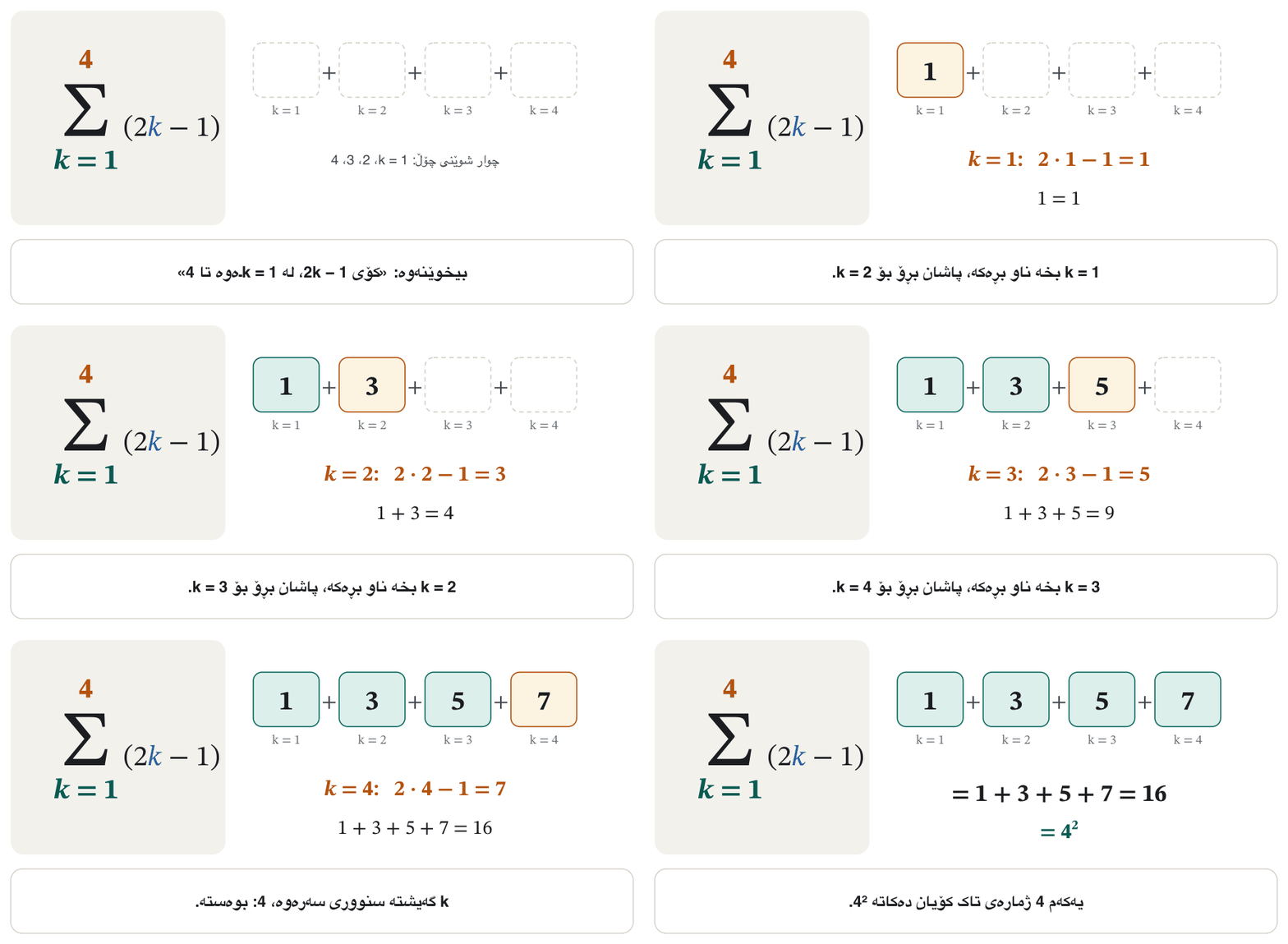
بۆ کردنەوەی ، هەر نرخێکی بخە ناو ، لە سنووری خوارەوە تا سنووری سەرەوە و + لە نێوان ئەنجامەکاندا بنووسە. سەیر بکە چۆن دەکرێتەوە: دەکاتە 1، دەکاتە 3، پاشان 5 و 7، بۆیە کۆکە 16ـە.
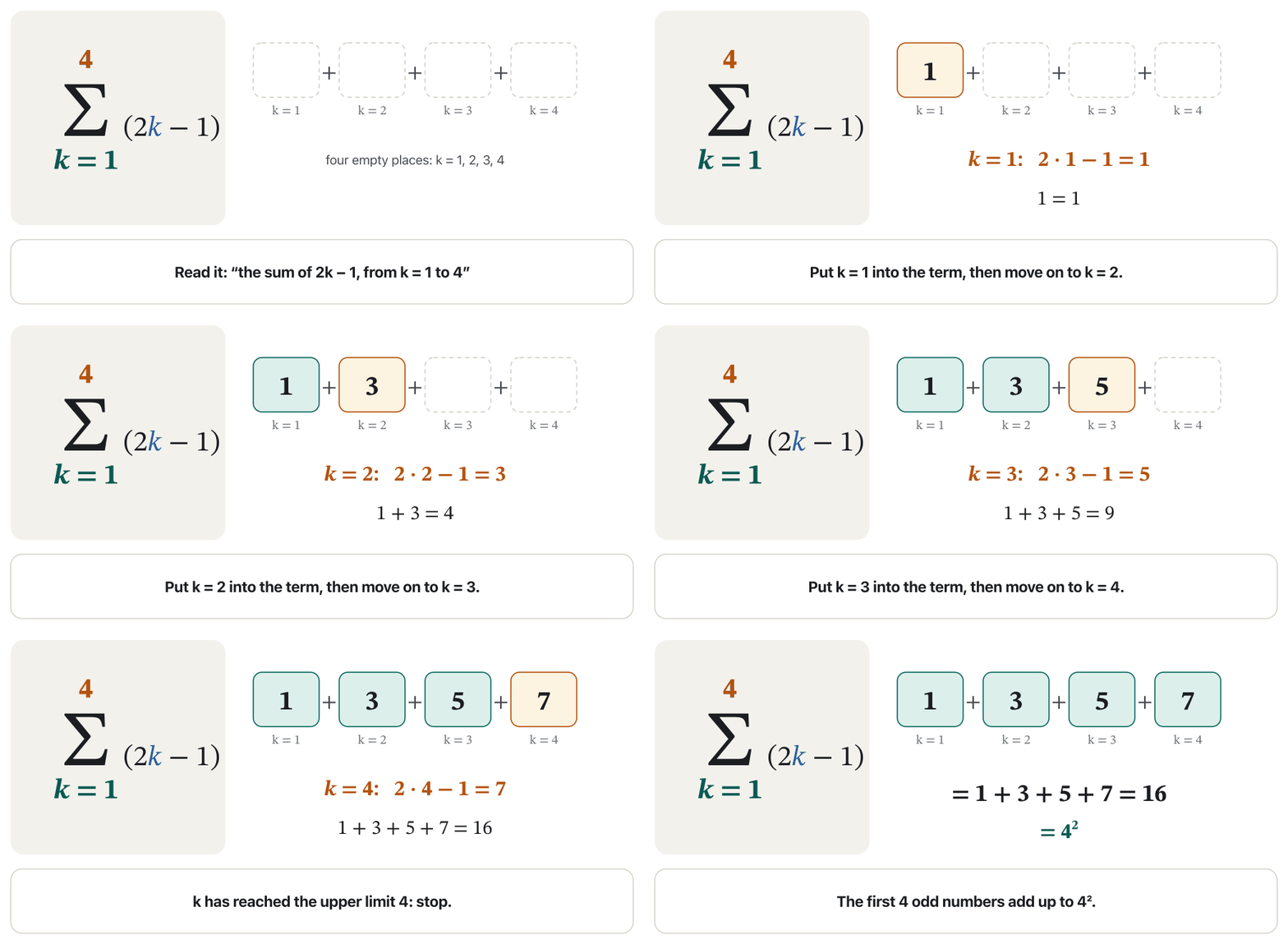
The other way round, a long sum with a pattern rolls up into a : find what changes from term to term and call it k. and .
بە پێچەوانەوە، کۆیەکی درێژ کە نەخشێکی هەیە دەپێچرێتەوە بۆ : بزانە چی لە بۆ تر دەگۆڕێت و ناوی بنێ k. و .
The index is only a counter; sums without limitsئیندێکس تەنیا بۆ ژماردنە؛ کۆ بەبێ سنوور
The index only counts, so its letter does not matter: , and the answer contains neither i nor k. Books call it a dummy index and use i, j, k or n; with complex numbers, avoid i, which is there. The number of terms is upper limit − lower limit + 1: has 5 terms. If the upper limit is below the lower one, there are no terms and the sum is 0, the empty sum.
تەنیا دەژمێرێت، بۆیە پیتەکەی گرنگ نییە: و وەڵامەکە نە iـی تێدایە و نە k. کتێبەکان پێی دەڵێن کاتی (dummy) و i، j، k یان n بەکار دەهێنن؛ لەگەڵ i بەکار مەهێنە، چونکە لەوێ ـە. ژمارەی بریتییە لە سنووری سەرەوە − سنووری خوارەوە + 1: 5 هەیە. ئەگەر سنووری سەرەوە لە خوارەوە بچووکتر بێت، هیچ نییە و کۆکە 0ـە، واتە کۆی بەتاڵ.
When every value of the data is added, books drop the limits: , . Others write only the index, or a condition, under : means “add over every value x”, as in the expected value (Expected value).
کاتێک هەموو نرخەکانی داتاکە کۆ دەکرێنەوە، کتێبەکان سنوورەکان لادەبەن: ، . هەندێکی تر تەنیا یان لە ژێر دەنووسن: واتە «بۆ هەموو نرخێکی x کۆ بکەرەوە»، وەک لە (نرخی پێشبینیکراو).
is a loop خولێکە
Summation, written with the Greek sigma, and a loop in a program do the same job. Start a total at 0, the empty sum; let the index run from the lower limit to the upper limit; in each turn add the term. The colours in the picture match the parts. In Python, range(1, n + 1) stops before its end, so it needs the + 1; MATLAB's 1:n includes n. MATLAB and Python programs compute series exactly this way.
کۆکردنەوە (کە بە سیگمای یۆنانی دەنووسرێت) و لە هەمان کار دەکەن. کۆیەک لە 0ـەوە دەست پێبکە، کە کۆی بەتاڵە؛ با لە سنووری خوارەوە تا سنووری سەرەوە بڕوات؛ لە هەر زیاد بکە. ڕەنگەکانی وێنەکە بەشەکان پێکەوە دەبەستن. لە Pythonـدا range(1, n + 1) پێش کۆتاییەکەی دەوەستێت، بۆیە + 1ـی پێویستە؛ 1:nـی MATLAB nـیش دەگرێتەوە. MATLAB و Python ڕێک بەم شێوەیە حساب دەکەن.
The loops themselves are taught in the programming lessons: A loop is a sigma, Adding up in a loop: the accumulator and The for loop.
خودی لە وانەکانی فێر دەکرێن: خول سیگمایە، کۆکردنەوە لە خولێکدا: گۆڕاوی کۆکردنەوە و خولی for.
Where does stop? The classic misreadings لە کوێ دەوەستێت؟ هەڵە باوەکانی خوێندنەوە
covers its term up to the next + or − that is not inside brackets. So means , while adds 1 to every term and gives . A power works the same way: squares each value and then adds, but adds first and squares the total once. With that is 60 against 196. A quotient cannot be split either: ; with the two sides are 4.111 and 0.737.
دەگرێتەوە تا یەکەم + یان − کە لە ناو کەوانەدا نەبێت. بۆیە واتە ، بەڵام 1 دەخاتە سەر هەموو و دەکاتە . هەروایە: سەرەتا هەر نرخێک دووجا دەکات و پاشان کۆیان دەکاتەوە، بەڵام سەرەتا کۆ دەکاتەوە و پاشان کۆکە یەک جار دووجا دەکات. بە ئەمە 60 بەرامبەر 196ـە. بەم شێوەیە جیا ناکرێتەوە: ؛ بە دوو لاکە 4.111 و 0.737ـن.
A term without the index is the same in every turn: (C written n times), and a constant factor comes out: , . These rules and their proofs are in Sigma notation, with Rules 1 and 2 and “Rule 9” is false.
کە تێدا نییە لە هەموو وەک یەکە: (C n جار دەنووسرێت). دەتوانێت بچێتە پێش : ، . ئەم یاسایانە و سەلماندنەکانیان لە نیشانەی سیگماـدان، لەگەڵ یاساکانی 1 و 2 و «یاسای 9» هەڵەیە.
: the same idea with : هەمان بیرۆکە بە
The capital Greek letter (pi) means “multiply”: , read “the product of k, from k = 1 to 4”. So . A sum starts from 0 and a product from 1: the empty product is 1, so a loop that multiplies must start at 1. A logarithm turns a product into a sum, . Do not mix up with the small , which is about 3.14159.
پیتی گەورەی یۆنانیی (پی) واتە «لێک بدە»: ، دەخوێنرێتەوە « k، لە k = 1ـەوە تا 4» (the product of k, from k = 1 to 4). بۆیە . کۆ لە 0ـەوە و لە 1ـەوە دەست پێدەکات: بەتاڵ 1ـە، بۆیە کە لێک دەدات دەبێت لە 1ـەوە دەست پێبکات. دەکاتە کۆ: . لەگەڵ ـی بچووک تێکەڵ مەکە، کە نزیکەی 3.14159ـە.
and its ten rules are taught in Reading step by step and A logarithm turns into ; logarithms in Exponents and logarithms.
و دە یاساکەی لە خوێندنەوەی هەنگاو بە هەنگاو و لۆگاریتم دەکاتە فێر دەکرێن؛ لە توانەکان و لۆگاریتمەکان.
and in logic design are lists و لە دیزاینی لۆجیکی دیجیتاڵدا لیستن
In logic design, is not an arithmetic sum. It lists the rows of the truth table where , and means : the minterms of those rows joined by OR, because + is OR in Boolean algebra. In the same way lists the rows where , the maxterms joined by AND. Read the first “F equals the sum of minterms 1, 3 and 5”. It is never .
لە دیزاینی ، کۆیەکی ژمارەیی نییە. ئەو ڕیزانەی دەژمێرێت کە تێیاندا و واتە : ئەو ڕیزانە کە بە OR بەیەکەوە بەستراون، چونکە لە + واتە OR. بە هەمان شێوە ئەو ڕیزانە دەژمێرێت کە ، واتە کە بە AND بەستراون. یەکەمیان بخوێنەوە «F یەکسانە بە کۆی 1، 3 و 5». هەرگیز نییە.
How minterms and maxterms are built is taught in Standard SOP = a sum of minterms and Standard POS = a product of maxterms; the symbols of Boolean algebra in Logic symbols.
چۆنیەتیی دروستکردنی و لە SOPـی ستاندارد = کۆی مینتێرمەکان و POSـی ستاندارد = لێکدانی ماکستێرمەکان فێر دەکرێت؛ لە هێماکانی لۆجیک.
Reading خوێندنەوەی
Each entry of a matrix product is a sum: , read “c sub i j equals the sum over k of a sub i k times b sub k j”. Here i and j are fixed, row i of A and column j of B; only k runs. For matrices: . The k has gone from the answer: it was the dummy index.
هەر ژمارەیەکی ناو دوو کۆیەکە: ، دەخوێنرێتەوە «c ژێر i j یەکسانە بە کۆی a ژێر i k جاران b ژێر k j، بەسەر kـدا». لێرەدا i و j جێگیرن، ڕیزی iـی A و ستوونی jـی B؛ تەنیا k دەڕوات. بۆ : . k لە وەڵامەکەدا دەرناکەوێت: کاتی بوو.
How to multiply matrices is taught in One entry: row i times column j; matrix symbols in Vectors and matrices.
چۆنیەتیی لە یەک ژمارە: ڕیزی i لە ستوونی j فێر دەکرێت؛ لە ئاڕاستەبڕەکان و ماتریکسەکان.
Classic sums: کۆ ناسراوەکان:
Some sums have a short formula. : two copies of the staircase make an rectangle, so . The same sum counts the links of a full mesh network: n nodes need links (How many links does a full mesh need?). Two more for reading practice: and .
هەندێک کۆ کورتیان هەیە. : دوو وێنەی پەیژەی لاکێشەیەکی دروست دەکەن، بۆیە . هەمان کۆ بەستنەوەکانی دەژمێرێت: n پێویستیان بە بەستنەوەیە (ڕایەڵەی چنراوی تەواو چەند بەستنەوەی پێویستە؟). دوو تر بۆ ڕاهێنانی خوێندنەوە: و .
Series: adding a sequence, even for everزنجیرە: کۆکردنەوەی یەکبەدوای یەکێک، تەنانەت بێ کۆتایی
Adding the terms of a sequence gives a series: The on top does not mean “add for ever”. It means: look at the sums so far, ; if they come as close as you like to one number, that number is the sum. So . MATLAB programs add the first terms of such a series in a loop; one of them, the sum of , comes close to e (The accumulator).
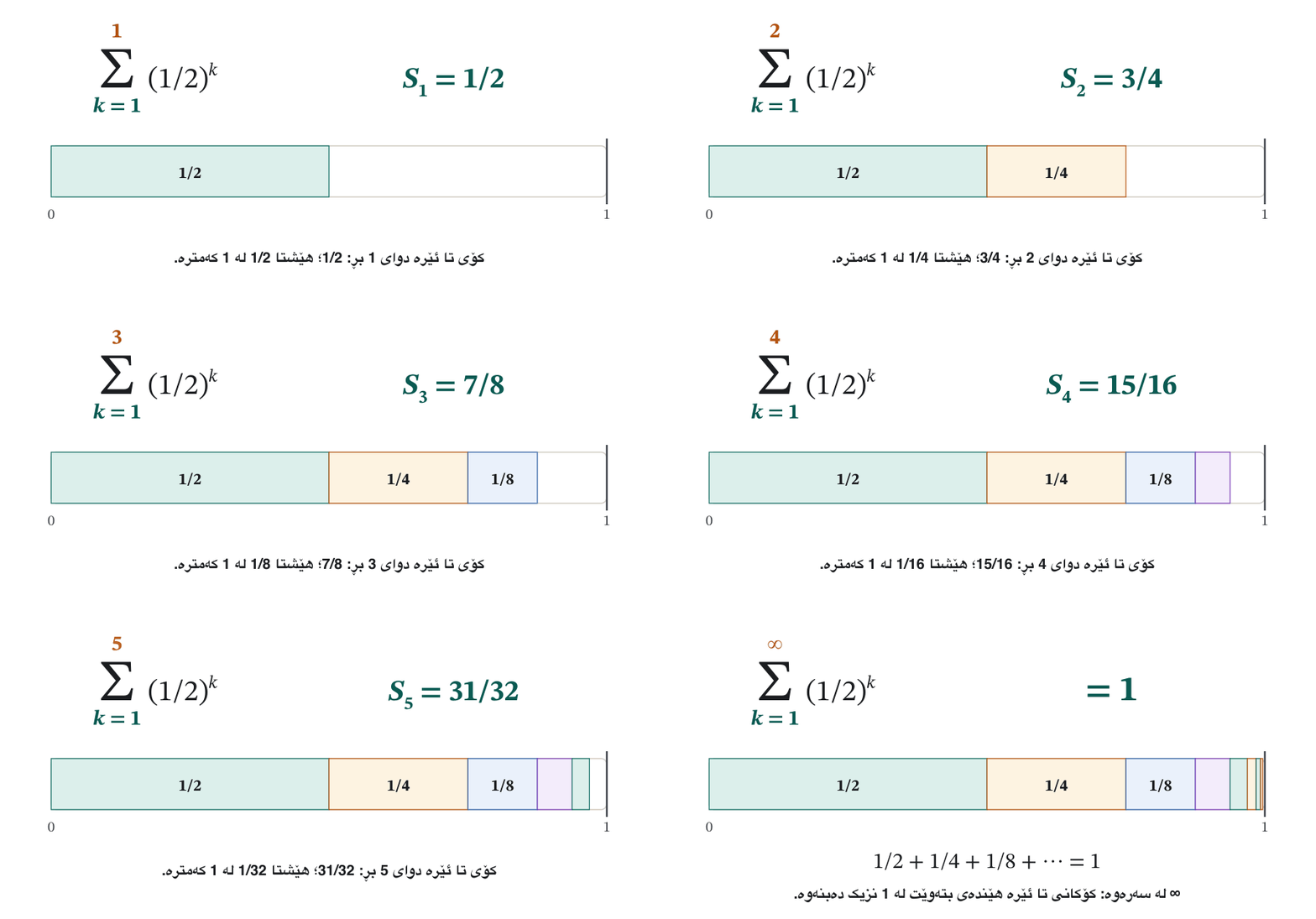
کۆکردنەوەی دەدات: لە سەرەوە واتای «بێ کۆتایی کۆ بکەرەوە» نییە. واتای ئەمەیە: سەیری کۆکانی تا ئێرە بکە، ؛ ئەگەر هێندەی بتەوێت لە یەک ژمارە نزیک ببنەوە، ئەو ژمارەیە کۆکەیە. بۆیە . MATLAB یەکەم وەها لە کۆ دەکەنەوە؛ یەکێکیان، کۆی ، لە e نزیک دەبێتەوە (گۆڕاوی کۆکردنەوە).
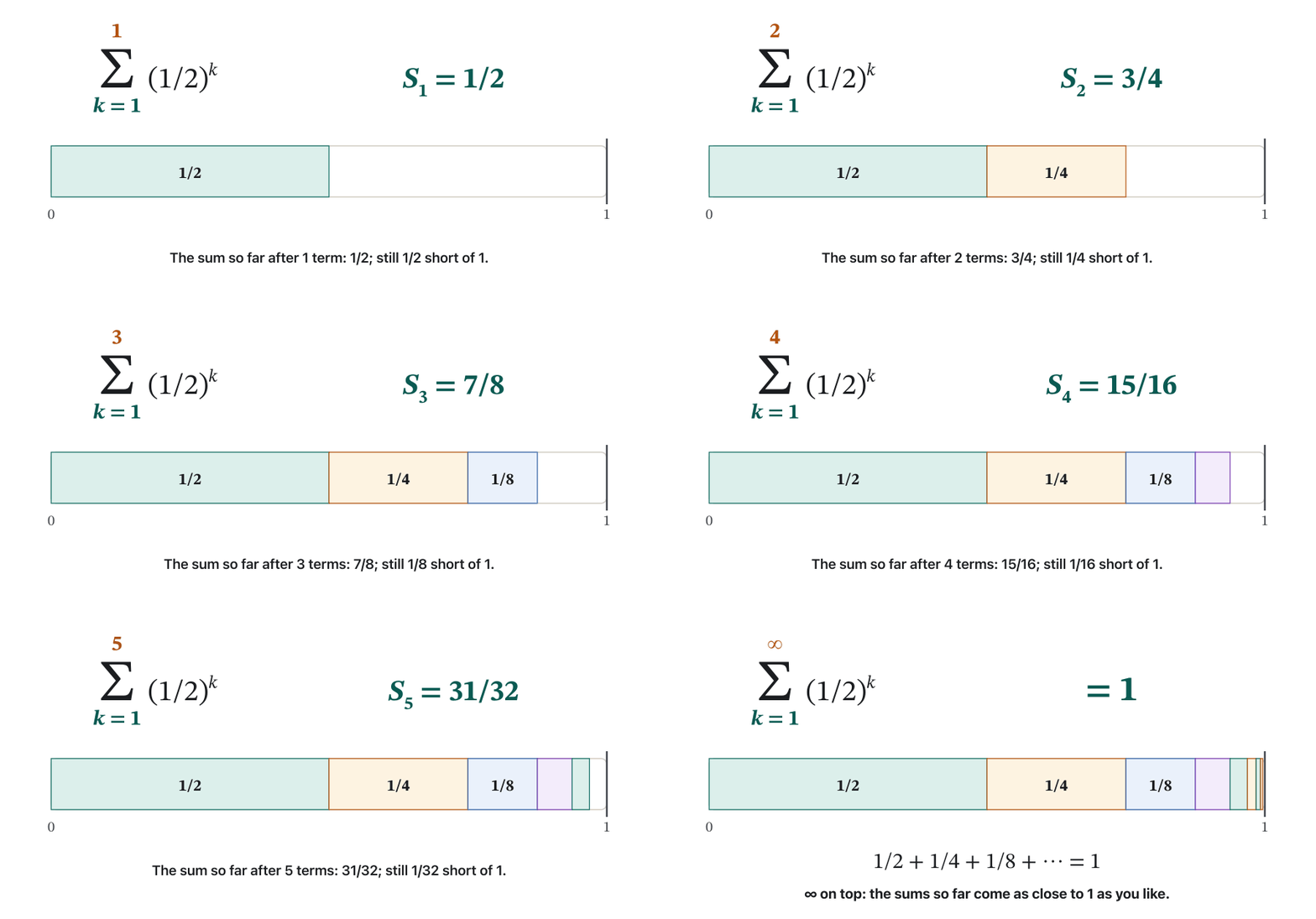
Kurdish school books give the two ideas different names: a sequence is یەکبەدوای یەک and a series is زنجیرە. Do not confuse this زنجیرە with the sequences of Python, such as strings, lists and tuples, which CêIT's Kurdish also calls زنجیرە (Sequences: strings, lists and tuples).
لە کتێبەکانی قوتابخانەدا و دوو ناوی جیاوازن. ئەم لەگەڵ Python، وەک string، list و tuple، تێکەڵ مەکە کە کۆکراوەیەکی ڕیزدارە لە (زنجیرەکان: string، list و tuple).
Common mistakesهەڵە باوەکان
| Mistakeهەڵە | Why it is wrongبۆچی هەڵەیە | Do thisئەمە بکە |
|---|---|---|
| Reading as خوێندنەوەی وەک | The subscript names the next term ناوی دواترە | “a sub (n + 1)”: the next term«a ژێر (n + 1)»: دواتر |
| Square-then-add is not add-then-squareدووجاکردن پاشان کۆکردنەوە هەمان کۆکردنەوە پاشان دووجاکردن نییە | 2, 4, 6, 2: 60 vs 1962، 4، 6، 2: 60 بەرامبەر 196 | |
| A sum cannot be split across a divisionکۆ بەسەر دابەش ناکرێت | Add the fractions one by oneکەرتەکان یەک بە یەک کۆ بکەرەوە | |
| stops at the outside brackets لە ـی دەرەوەی کەوانە دەوەستێت | ||
| Counting as 4 termsژماردنی وەک 4 | Both limits are includedهەردوو سنوورەکە دەگیرێنەوە | terms |
range(1, n) for a sum up to nrange(1, n) بۆ کۆیەک تا n | range stops before its endrange پێش کۆتاییەکەی دەوەستێت | range(1, n + 1)range(1, n + 1) |
| Starting a product loop at 0دەستپێکردنی لە 0 | Everything times 0 is 0هەموو شتێک جاران 0 دەکاتە 0 | Start at 1, the empty productلە 1ـەوە دەست پێبکە، بەتاڵ |
| Reading as 9خوێندنەوەی وەک 9 | In logic design it is a list of rowsلە دیزاینی لیستی ڕیزەکانە | , where + means OR، کە + واتە OR |
| Writing with no ruleنووسینی بەبێ یاسا | Several patterns fitچەند نەخشێک دەگونجێن | Give the rule, e.g. یاساکە بدە، وەک |
Practiceڕاهێنان
Write each one out term by term and find its value: (a) (b) (c) (d) .
هەر یەکەیان بە بنووسە و نرخەکەی بدۆزەرەوە: (a) (b) (c) (d) .
Show answerوەڵامەکە پیشان بدە
In (b) the index starts at 0, so there are 4 terms; in (d) the term has no j, so 3 is written 5 times.
لە (b)ـدا لە 0ـەوە دەست پێدەکات، بۆیە 4 هەیە؛ لە (d)ـدا jـی تێدا نییە، بۆیە 3 پێنج جار دەنووسرێت.
Write each sum with : (a) (b) (c) .
هەر کۆیەک بە بنووسە: (a) (b) (c) .
Show answerوەڵامەکە پیشان بدە
- (a) : the 10 odd numbers from 1 to 19.
- (b) , starting at
- (c) , or simply
- (a) : 10 ژمارە تاکەکەی 1 تا 19.
- (b) ، کە لە ـەوە دەست پێدەکات
- (c) ، یان تەنیا
Read each one in English and in Kurdish and say what it means: (a) (b) (c) (d) .
هەر یەکەیان بە ئینگلیزی و بە کوردی بخوێنەوە و بڵێ واتای چییە: (a) (b) (c) (d) .
Show answerوەڵامەکە پیشان بدە
- (a) “a sub n plus one equals two a sub n”: each term is twice the one before.
- (b) “the sum of X sub i squared, from i = 1 to n”: square each value, then add.
- (c) “F equals the sum of minterms 0 and 2”: F is 1 in rows 0 and 2 of its truth table.
- (d) “c sub one two equals the sum over k of a sub one k times b sub k two”: row 1 of A times column 2 of B.
- (a) «a ژێر (n + 1) یەکسانە بە 2 جاران a ژێر n»: هەر دوو هێندەی پێشوویەتی.
- (b) «کۆی X ژێر i دووجا، لە i = 1ـەوە تا n»: هەر نرخێک دووجا بکە، پاشان کۆیان بکەرەوە.
- (c) «F یەکسانە بە کۆی 0 و 2»: F لە ڕیزەکانی 0 و 2ـی 1ـە.
- (d) «c ژێر 1 2 یەکسانە بە کۆی a ژێر 1 k جاران b ژێر k 2، بەسەر kـدا»: ڕیزی 1ـی A جاران ستوونی 2ـی B.
Summaryپوختە
- A sequence : “a sub n” is the general term; is the next term, not .
- on the line, between + signs, in matrices: “and so on”, only when the pattern is clear.
- : index k, lower limit 1, upper limit n, then the term; “the sum of … from k = 1 to n”; the index is a dummy; upper − lower + 1 terms.
- is a loop that starts at 0; is a loop of that starts at 1.
- , ; stops at a outside brackets.
- In logic design and are lists of rows; sums over k only.
- A series adds a sequence; on top means the sums so far close in on one number.
- Every symbol of this lesson, with its readings, is also in one table: Sequences and sums in the Symbol Dictionary.
- : «a ژێر n» گشتییە؛ دواترە، نەک .
- لەسەر هێڵ، لە نێوان +ـەکان، لە : «و بەم شێوەیە»، تەنیا کاتێک نەخشەکە ڕوونە.
- : k، سنووری خوارەوە 1، سنووری سەرەوە n، پاشان ؛ «کۆی … لە k = 1ـەوە تا n»؛ کاتییە؛ سەرەوە − خوارەوە + 1 .
- کە لە 0ـەوە دەست پێدەکات؛ ـە کە لە 1ـەوە دەست پێدەکات.
- ، ؛ لە ـی دەرەوەی کەوانە دەوەستێت.
- لە دیزاینی و لیستی ڕیزەکانن؛ تەنیا بەسەر kـدا کۆ دەکاتەوە.
- کۆ دەکاتەوە؛ لە سەرەوە واتە کۆکانی تا ئێرە لە یەک ژمارە نزیک دەبنەوە.
- هەموو ئەم وانەیە، لەگەڵ خوێندنەوەکانیان، لە یەک خشتەشدا هەن: یەکبەدوای یەکەکان و کۆ لە فەرهەنگی هێماکان.
How do you say ? چۆن دەخوێنیتەوە؟
“The sum of X sub i, from i = 1 to n.”
«کۆی X ژێر i لە i = 1ـەوە تا n» (the sum of X sub i from i = 1 to n).
Why does a product loop start at 1?بۆچی خولی لێکدان لە 1ـەوە دەست پێدەکات؟
Because 1 is the empty product: multiplying by 1 changes nothing, while 0 would wipe out every factor.
چونکە 1 بەتاڵە: لە 1 هیچ ناگۆڕێت، بەڵام 0 هەموو لێکدراوەکان سفر دەکات.
Is equal to 8?ئایا یەکسانە بە 8؟
No. In logic design it lists rows 2 and 6, where the function is 1.
نەخێر. لە دیزاینی ڕیزەکانی 2 و 6 دەژمێرێت کە تێیاندا 1ـە.
Lesson complete!وانەکە تەواو بوو!
Well done. Review the key terms, then go on to the next lesson.دەستخۆش. سەیرێکی زاراوە سەرەکییەکان بکەرەوە، پاشان بڕۆ بۆ وانەی داهاتوو.
Key termsزاراوە سەرەکییەکان
Set Notation and the Number Sets ℕ ℤ ℚ ℝ ℂهێماکانی کۆمەڵە و کۆمەڵەکانی ژمارە ℕ ℤ ℚ ℝ ℂ
Related lecturesوانە پەیوەندیدارەکان
- Subscripts and Sigma (Σ) Notationژێرنووسەکان و نیشانەی سیگما (Σ)
- Product (Π) Notationنیشانەی پی (Π)
- Minterms, Maxterms and Truth Tablesمینتێرمەکان، ماکستێرمەکان و خشتەکانی ڕاستی
- Multiplying Matricesلێکدانی ماتریکسەکان
- for Loops: Sums, Series and Searchingخولەکانی for: کۆکردنەوە، زنجیرە و گەڕان
- The for Loop and range()خولی for و
range() - Recursionخۆبانگکردنەوە
- Network Topologiesتۆپۆلۆجییەکانی ڕایەڵە
- Set Notation and the Number Sets ℕ ℤ ℚ ℝ ℂهێماکانی کۆمەڵە و کۆمەڵەکانی ژمارە ℕ ℤ ℚ ℝ ℂ
- Logic Symbols and Boolean Algebraهێماکانی لۆجیک و جەبری بوول
References and further readingسەرچاوەکان و خوێندنەوەی زیاتر
- OpenStax, Calculus Volume 1, 5.1 Approximating Areas (sigma notation: index, dummy variable, properties, sums of powers)
- OpenStax, Calculus Volume 2, 5.1 Sequences ({aₙ}, index, explicit and recursive formulas, Fibonacci)
- Wikipedia: Summation (reading, bounds, empty sum, dummy index; Euler 1755, Fourier 1820)
- Wikipedia: Multiplication (capital pi notation, empty product = 1)
- Wikipedia: Ellipsis (in mathematical notation: low and raised dots, matrices)
- NIST Digital Library of Mathematical Functions: Common Notations and Definitions (empty sums 0, empty products 1)
- Jeff Miller, Earliest Uses of Symbols of Operation (MacTutor): Σ in Euler's Institutiones calculi differentialis, 1755
This lecture is a first edition. The Kurdish text and terminology are waiting for review by Kurdish IT teachers.ئەم وانەیە چاپی یەکەمە. دەقە کوردییەکە و زاراوەکانی چاوەڕێی پێداچوونەوەی مامۆستایانی کوردی بواری IT ن.