Chapterبەش 2 · Lectureوانە 2.2
Brackets and the Order of Operationsکەوانەکان و پێشینەیی کارپێکەرەکان
Why is 14: brackets and the hidden brackets of the fraction bar and the root sign, the order brackets → powers → and → and (PEMDAS, BODMAS and friends), left to right on each step, power towers and , the famous , and why calculators, Excel, Python and MATLAB do not always agree.
بۆچی دەکاتە 14: کەوانەکان و کەوانە شاراوەکانی هێڵی و ڕەگ، ڕیزبەندیی کەوانە ← ← و ← و (PEMDAS، BODMAS و هاوشێوەکانیان)، لە چەپەوە بۆ ڕاست لە هەر پلەیەکدا، تاوەری و ، ـی بەناوبانگ و بۆچی ، Excel، Python و MATLAB هەمیشە ڕێک ناکەون.
What you will learnچی فێر دەبیت
- Use brackets, and spot the hidden brackets of the fraction bar, the root sign and exponents.
- Work out any expression in the agreed order: brackets, powers and roots, and , and , left to right on each step.
- Read power towers and front minus signs correctly: , .
- Explain why is ambiguous and write it clearly.
- Predict where calculators, Excel, Python and MATLAB give different answers.
- کەوانە بەکار بهێنیت و کەوانە شاراوەکانی هێڵی ، ڕەگ و بدۆزیتەوە.
- هەر بە ڕیزبەندییە ڕێککەوتووەکە ئەنجام بدەیت: کەوانە، و ڕەگ، و ، و ، لە هەر پلەیەکدا لە چەپەوە بۆ ڕاست.
- تاوەری و کەمی پێشەوە بە دروستی بخوێنیتەوە: ، .
- ڕوونی بکەیتەوە بۆچی ناڕوونە و بە ڕوونی بینووسیتەوە.
- پێشبینی بکەیت لە کوێدا ، Excel، Python و MATLAB وەڵامی جیاواز دەدەن.
One expression, one answerیەک دەربڕینی جەبری، یەک وەڵام
What is ? Work from left to right and you get . Multiply first and you get . An expression is only useful if everyone gets the same answer, so mathematicians agreed on one order. The agreed answer is 14.
چەندە؟ ئەگەر لە چەپەوە بۆ ڕاست بڕۆیت، دەردەچێت. ئەگەر یەکەم جار لێک بدەیت، دەردەچێت. تەنیا کاتێک بەسوودە کە هەموو کەس هەمان وەڵام وەربگرێت، بۆیە بیرکارزانان لەسەر یەک ڕیزبەندی ڕێک کەوتوون. وەڵامە ڕێککەوتووەکە 14ـە.
This agreed order is the order of operations; programmers call it operator precedence. In Kurdish school maths it is called ڕیزکردنی کردارەکان. A simple shop calculator that works out each key at once shows 20; a scientific calculator, Excel, Python, Java and almost every other programming language show 14.
ئەم ڕیزبەندییە ڕێککەوتووە ؛ لە بیرکاریی قوتابخانەدا ناوی «ڕیزکردنی کردارەکان»ـە. سادەی دوکان کە هەر دەستبەجێ ئەنجام دەدات 20 پیشان دەدات؛ زانستی، Excel، Python، Java و نزیکەی هەموو تر 14 پیشان دەدەن.
Brackets: do this firstکەوانە: یەکەم جار ئەمە بکە
Brackets say “work this out first”. Three shapes are used, and in arithmetic they all mean the same:
کەوانە دەڵێت «یەکەم جار ئەمە ئەنجام بدە». سێ شێوە بەکار دێن و لە ژمێرکاریدا هەموویان هەمان واتایان هەیە:
( )round brackets or parentheses, in Kurdish کەوانە or کەوانەی خڕ (some handouts write نێوکەوانە);[ ]square brackets, کەوانەی چوارگۆشە;{ }braces or curly brackets, کەوانەی لوول.
( )کەوانە یان کەوانەی خڕ (هەندێک مەلزەمە «نێوکەوانە» دەنووسن)؛[ ]کەوانەی چوارگۆشە؛{ }کەوانەی لوول.
With brackets inside brackets, start with the innermost pair and work outwards, like peeling an onion: . Books change the shape at each level so you can see which pairs belong together, and worked solutions nest them the same way (for example in Example 1, method A). Braces have a second job too: they hold the members of a set, (Set notation).
کاتێک کەوانە لە ناو کەوانەدا بێت، لە ناوەوەترین جووتەوە دەست پێ بکە و بەرەو دەرەوە بڕۆ، وەک پاککردنی پیاز: . کتێبەکان لە هەر ئاستێکدا شێوەی کەوانە دەگۆڕن بۆ ئەوەی بزانیت کام جووت پێکەوەن و شیکارە نووسراوەکانیش هەروا دەیانخەنە ناو یەکتر (بۆ نموونە لە نموونەی 1، ڕێگای A). کەوانەی لوول کارێکی تریشی هەیە: هەڵدەگرێت، (هێماکانی کۆمەڵە).
The order: brackets, powers, and , and ڕیزبەندییەکە: کەوانە، توان، و ، و
Here is the whole rule, from first to last:
ئەمە هەموو یاساکەیە، لە یەکەمەوە تا کۆتایی:
- Brackets, innermost first, and the hidden ones too.
- Powers and roots: , .
- Multiplication and division, from left to right.
- Addition and subtraction, from left to right.
- کەوانە، ناوەوەترین یەکەم، کەوانە شاراوەکانیش.
- و ڕەگەکان: ، .
- و ، لە چەپەوە بۆ ڕاست.
- و ، لە چەپەوە بۆ ڕاست.
Countries remember the same rule with different words: PEMDAS in the USA (Parentheses, Exponents, Multiplication and Division, Addition and Subtraction), BODMAS or BIDMAS in the UK and many Commonwealth countries (Brackets, Orders or Indices, that is powers, …) and BEDMAS in Canada and New Zealand. German schools say “dot before line”: the dot signs · and : come before the line signs + and −.
وڵاتان هەمان یاسا بە وشەی جیاواز لەبەر دەکەن: PEMDAS لە ئەمریکا (Parentheses، Exponents، Multiplication و Division، Addition و Subtraction)، BODMAS یان BIDMAS لە بەریتانیا و زۆر وڵاتی کۆمەنوێڵس (Brackets، Orders یان Indices واتە ، …) و BEDMAS لە کەنەدا و نیوزیلەندا. قوتابخانەکانی ئەڵمانیا دەڵێن «خاڵ پێش هێڵ»: خاڵداری · و : پێش هێڵداری + و − دێن.
The order: brackets, powers, and , and ڕیزبەندییەکە: کەوانە، توان، و ، و
Same step: left to rightهەمان پلە: لە چەپەوە بۆ ڕاست
Multiplication and division share one step, and so do addition and subtraction. On one step, go from left to right, whichever sign comes first: and .
و لە یەک پلەدان، و هەروا. لە یەک پلەدا لە چەپەوە بۆ ڕاست بڕۆ، هەر یەکەم جار هات: و .
This is where memory words mislead. PEMDAS does not mean “M before D”, and BODMAS does not mean “D before M” or “A before S”. Multiplying first in gives , and adding first in gives 3. Both are wrong.
لێرەدایە کە وشە یارمەتیدەرەکانی لەبەرکردن هەڵەت پێ دەکەن. PEMDAS واتای «M پێش D» نییە و BODMAS واتای «D پێش M» یان «A پێش S» نییە. ئەگەر لە ـدا یەکەم جار لێک بدەیت، دەردەچێت و ئەگەر لە ـدا یەکەم جار کۆ بکەیتەوە، 3 دەردەچێت. هەردووکیان هەڵەن.
Watch the order step by stepڕیزبەندییەکە هەنگاو بە هەنگاو ببینە
The animation works out one step at a time. At each step the part done next is highlighted: the bracket, then the power, then and from left to right, and last the .
وێنە جووڵاوەکە هەنگاو بە هەنگاو ئەنجام دەدات. لە هەر هەنگاوێکدا ئەو بەشەی دواتر ئەنجام دەدرێت ڕەنگ دەکرێت: کەوانەکە، پاشان ، پاشان و لە چەپەوە بۆ ڕاست و لە کۆتاییدا .
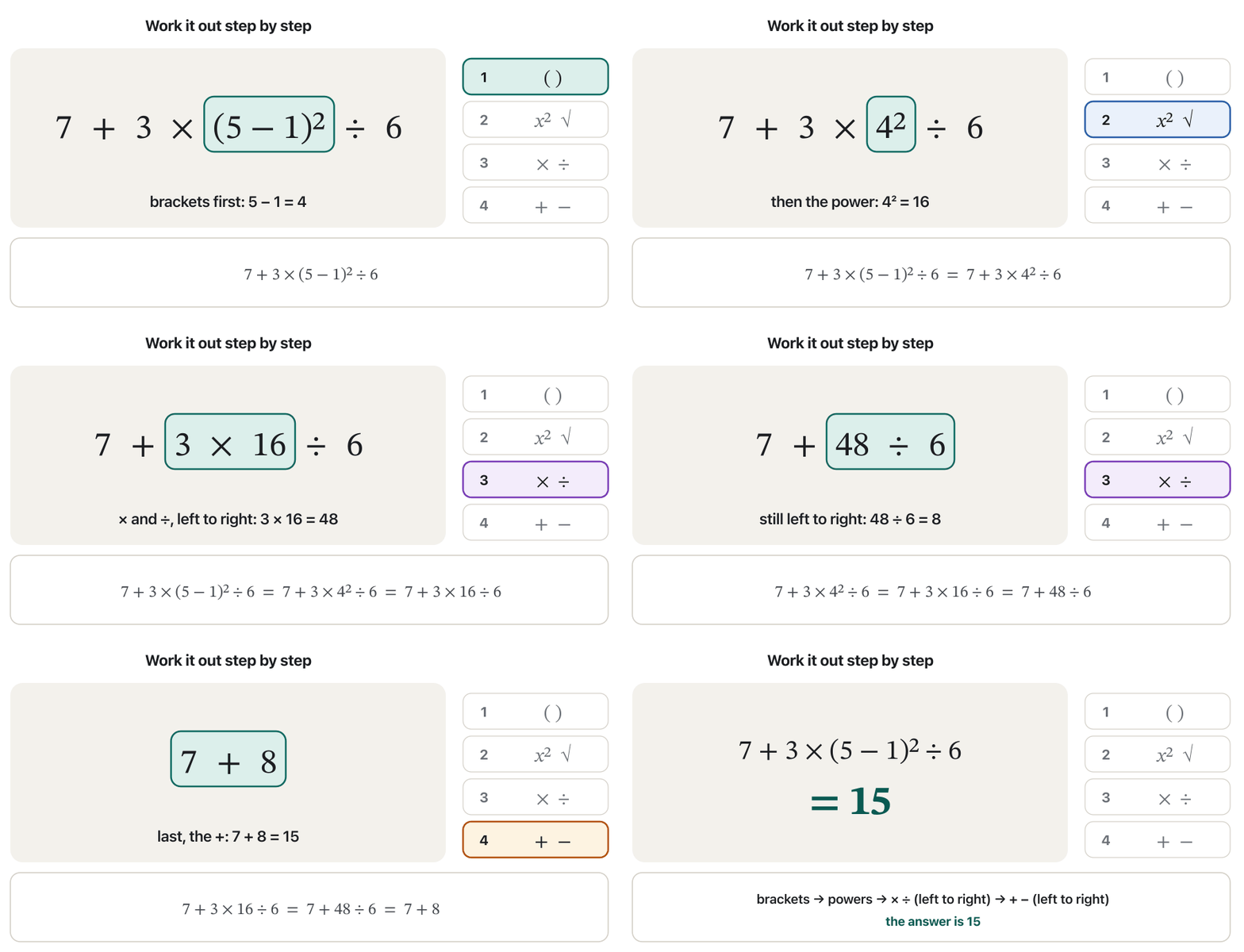
In English you can read the bracket as “the quantity”: “seven plus three times the quantity five minus one, squared, divided by six”. How to read any formula piece by piece: Read it aloud, piece by piece.
بە کوردی کەوانەکە وەک یەک پارچە بخوێنەوە: «7 کۆ 3 جاران دووجای (5 کەم 1)، دابەش بەسەر 6». چۆن هەر پارچە پارچە بخوێنیتەوە: بە دەنگی بەرز، پارچە پارچە بیخوێنەوە.
Two traps with powersدوو تەڵە لەگەڵ توانەکان
Towers are built from the top. means : work out the top exponent first. It is not .
تاوەری لە سەرەوە دروست دەکرێت. واتە : یەکەم جار سەرەوە ئەنجام بدە. واتای نییە.
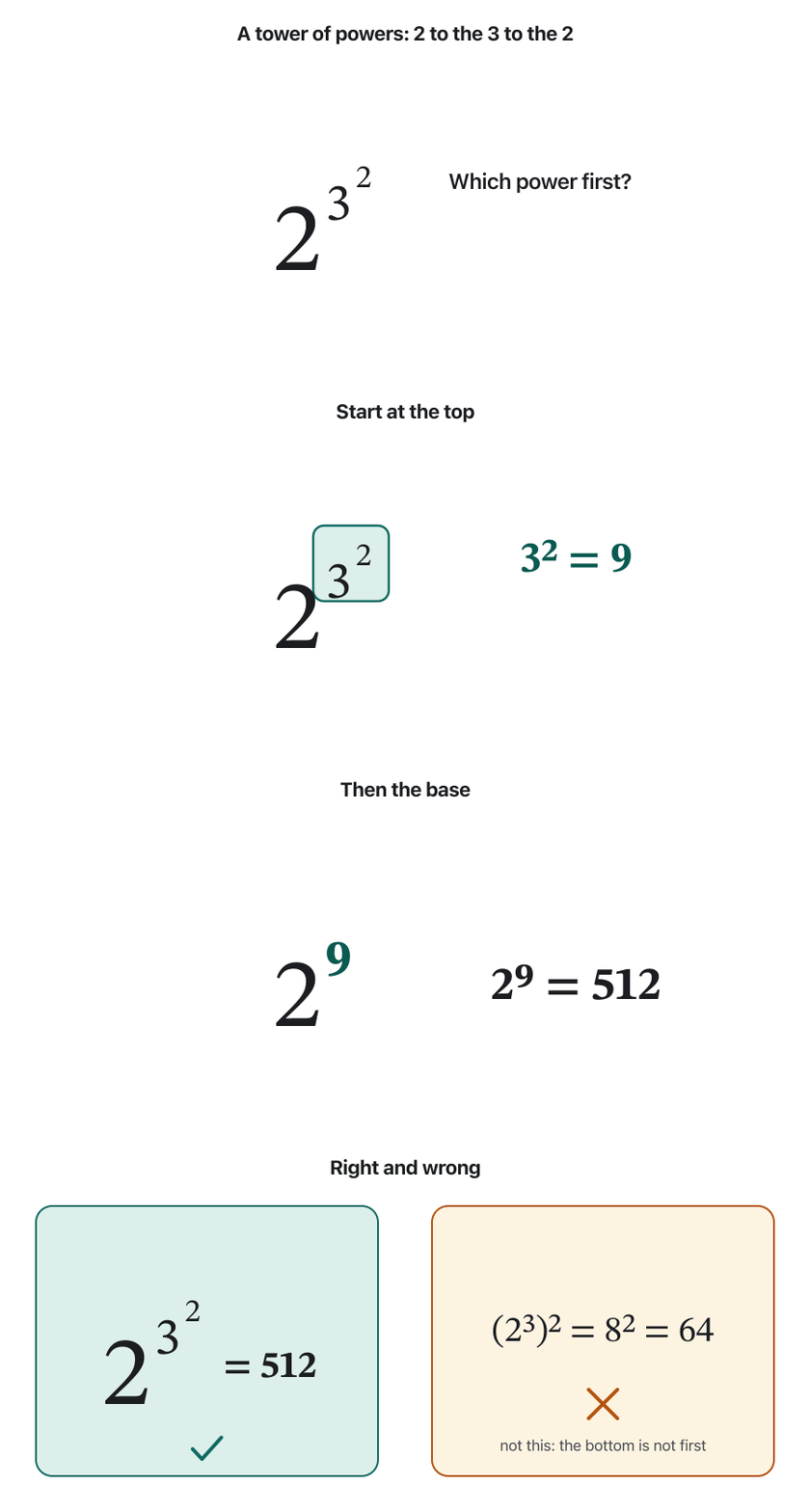
A minus sign in front waits for the power. In only the 3 is squared: . To square , books write brackets: . Read as “the opposite of three squared” and as “minus three, squared”.
کەم لە پێشەوە چاوەڕێی دەکات. لە ـدا تەنیا 3 دووجا دەکرێت: . بۆ دووجاکردنی ، کتێبەکان کەوانە دەنووسن: . بخوێنەوە «پێچەوانەی دووجای 3» و «دووجای ».
The famous ـی بەناوبانگ
This line goes viral online every few years. After the bracket it looks like , but there is no in it: between 2 and the bracket stands an invisible times (The invisible times sign). Two habits read it differently:
ئەم دێڕە هەر چەند ساڵ جارێک لە ئینتەرنێتدا بڵاو دەبێتەوە. لە دوای کەوانەکە وەک دەردەکەوێت، بەڵام هیچ ـێکی تێدا نییە: لە نێوان 2 و کەوانەکەدا هەیە (هێمای جارانی نەبینراو). دوو خوو بە دوو شێوە دەیخوێننەوە:
- Treat the hidden sign like , left to right: .
- Treat as one block, as many science books do (they read as ): .
- وەک دابنێ و لە چەپەوە بۆ ڕاست بڕۆ: .
- وەک یەک پارچە دابنێ، وەک زۆر کتێبی زانستی دەیکەن ( وەک دەخوێننەوە): .
Both habits are in use, and even calculators disagree: some models show 9, others 1. So the honest answer is that the line is badly written. Careful writers use a fraction bar instead: or . Do the same in your own work.
هەردوو خووەکە بەکار دێن و تەنانەت ڕێک ناکەون: هەندێک جۆر 9 پیشان دەدەن و هەندێکی تر 1. کەواتە وەڵامە ڕاستگۆیانەکە ئەوەیە کە دێڕەکە خراپ نووسراوە. نووسەرە وردەکان لە جیاتیی ئەوە هێڵی بەکار دەهێنن: یان . لە کاری خۆتدا هەمان شت بکە.
Calculators, Excel, Python and MATLABحاسیبە، Excel، Python و MATLAB
Machines have their own precedence tables, and they do not always agree:
ئامێرەکان خشتەی خۆیان هەیە و هەمیشە ڕێک ناکەون:
| Toolئامراز | writtenنووسینی | givesئەنجام | writtenنووسینی | givesئەنجام |
|---|---|---|---|---|
| Maths bookکتێبی بیرکاری | ||||
| Excel | =-3^2 | =2^3^2 | ||
| Python | -3**2 | 2**3**2 | ||
| MATLAB | -3^2 | 2^3^2 |
Excel applies the negation sign before the power, so =-3^2 is 9 (but =0-3^2 is , because there the minus is a subtraction). Excel and MATLAB build towers from the left, Python from the top, like the book. Python writes powers as **; its ^ is XOR, a logic operator (XOR), as in Java, which has no power operator at all and writes Math.pow(2, 3) (Powers in Java). JavaScript refuses to guess: -3 ** 2 is an error until you add brackets. Details: Python, MATLAB, Excel, Java.
Excel کەم پێش ئەنجام دەدات، بۆیە =-3^2 دەکاتە 9 (بەڵام =0-3^2 دەکاتە ، چونکە لەوێدا کەمەکە ). Excel و MATLAB تاوەر لە چەپەوە دروست دەکەن، Python لە سەرەوە، وەک کتێب. Python بە ** دەنووسێت؛ ^ـی ئەو XORـە، لۆجیکی (XOR)، وەک Java کە هیچ نییە و Math.pow(2, 3) دەنووسێت (توان لە Javaـدا). JavaScript مەزەندە ناکات: -3 ** 2 هەڵەیە تا کەوانە زیاد دەکەیت. وردەکاری: Python، MATLAB، Excel، Java.
Common mistakesهەڵە باوەکان
| Mistakeهەڵە | Why it is wrongبۆچی هەڵەیە | Do thisئەمە بکە |
|---|---|---|
| comes before پێش دێت | ||
| and share one step: go left to right و لە یەک پلەدان: لە چەپەوە بۆ ڕاست بڕۆ | ||
| Only the 3 is squaredتەنیا 3 دووجا دەکرێت | ; write for 9؛ بۆ 9 بنووسە | |
| Towers are built from the topتاوەر لە سەرەوە دروست دەکرێت | ||
Typing a + b / 2 for an averageنووسینی a + b / 2 بۆ | Only b is dividedتەنیا b دابەش دەکرێت | (a + b) / 2(a + b) / 2 |
Typing 8^1/3 for the cube root of 8نووسینی 8^1/3 بۆ 8 | The power comes before the division: it gives 8/3 پێش دێت: 8/3 دەدات | 8^(1/3)8^(1/3) |
| The root covers the whole sumڕەگەکە هەموو کۆکەی دادەپۆشێت | ||
| Writing نووسینی | Readers disagree: 1 or 9خوێنەران ڕێک ناکەون: 1 یان 9 | Use a fraction barهێڵی بەکار بهێنە |
Practiceڕاهێنان
Work out each one, then read it aloud in English and Kurdish: (a) (b) (c) (d) (e) .
هەر یەکەیان ئەنجام بدە، پاشان بە ئینگلیزی و کوردی بە دەنگی بەرز بیخوێنەوە: (a) (b) (c) (d) (e) .
Show answerوەڵامەکە پیشان بدە
Readings: (a) “eighteen minus four times three”; (b) “the quantity eighteen minus four, times three”; (c) “two plus three squared times two”; (d) “twenty-four divided by four, divided by two”; (e) “six plus nine, over five, minus one”.
خوێندنەوەکان: (a) «18 کەم 4 جاران 3»؛ (b) «(18 کەم 4) جاران 3»؛ (c) «2 کۆ 3 دووجا جاران 2»؛ (d) «24 دابەش بەسەر 4، دابەش بەسەر 2»؛ (e) «(6 کۆ 9) لەسەر 5، کەم 1».
Predict the result: (a) Excel =-4^2 (b) Python -4**2 (c) Excel =2^2^3 (d) Python 2**2**3.
ئەنجامەکە پێشبینی بکە: (a) Excel =-4^2 (b) Python -4**2 (c) Excel =2^2^3 (d) Python 2**2**3.
Show answerوەڵامەکە پیشان بدە
- (a) 16: Excel squares .
- (b) : Python squares 4, then makes it negative.
- (c) 64: Excel goes left to right, .
- (d) 256: Python starts at the top, .
- (a) 16: Excel دووجا دەکات.
- (b) : Python 4 دووجا دەکات، پاشان سالبی دەکات.
- (c) 64: Excel لە چەپەوە بۆ ڕاست دەڕوات، .
- (d) 256: Python لە سەرەوە دەست پێ دەکات، .
Add brackets to make each line true: (a) (b) (c) .
کەوانە زیاد بکە بۆ ئەوەی هەر دێڕێک ڕاست بێت: (a) (b) (c) .
Show answerوەڵامەکە پیشان بدە
Summaryپوختە
- The order of operations: brackets, then powers and roots, then and , then and .
- and share one step, and share one step: on a step, go from left to right.
- The fraction bar, the root sign and a raised exponent are hidden brackets; typed on one line, write them.
- Towers start at the top: . A front minus waits for the power: .
- is badly written; use a fraction bar.
- Excel, Python and MATLAB differ on and on towers: check the tool, or add brackets.
- All these symbols, with their readings, are in the Symbol dictionary: Brackets and the order of operations.
- : کەوانە، پاشان و ڕەگەکان، پاشان و ، پاشان و .
- و لە یەک پلەدان، و ـیش لە یەک پلەدان: لە هەر پلەیەکدا لە چەپەوە بۆ ڕاست بڕۆ.
- هێڵی ، ڕەگ و بەرز کەوانەی شاراوەن؛ لە یەک دێڕدا بیاننووسە.
- تاوەر لە سەرەوە دەست پێ دەکات: . کەمی پێشەوە چاوەڕێی دەکات: .
- خراپ نووسراوە؛ هێڵی بەکار بهێنە.
- Excel، Python و MATLAB لە و تاوەردا جیاوازن: ئامرازەکە بپشکنە، یان کەوانە زیاد بکە.
- هەموو ئەم نیشانانە، لەگەڵ خوێندنەوەکانیان، لە فەرهەنگی هەن: کەوانەکان و پێشینەیی کارپێکەرەکان.
What is ? چەندە؟
, , then .
، ، پاشان .
Why is not ?بۆچی یەکسان نییە بە ؟
The fraction bar groups : . is .
هێڵی کۆ دەکاتەوە: . دەکاتە .
Which is bigger, or ?کامیان گەورەترە، یان ؟
; .
؛ .
Lesson complete!وانەکە تەواو بوو!
Well done. Review the key terms, then go on to the next lesson.دەستخۆش. سەیرێکی زاراوە سەرەکییەکان بکەرەوە، پاشان بڕۆ بۆ وانەی داهاتوو.
Key termsزاراوە سەرەکییەکان
Powers, Roots, Absolute Value, Factorial, Floor and Ceilingتوانەکان، ڕەگەکان، نرخی ڕووت، فاکتۆریێل، نەخشەی گەورەترین ژمارەی تەواو و نەخشەی بچووکترین ژمارەی تەواو
Related lecturesوانە پەیوەندیدارەکان
- Powers, Roots, Absolute Value, Factorial, Floor and Ceilingتوانەکان، ڕەگەکان، نرخی ڕووت، فاکتۆریێل، نەخشەی گەورەترین ژمارەی تەواو و نەخشەی بچووکترین ژمارەی تەواو
- How to Read a Formulaچۆن فۆرمولەیەک بخوێنیتەوە
- Operators and Expressionsکارپێکەرەکان و دەربڕینەکان
- MATLAB as a Calculator: Operators, Variables and FormatsMATLAB وەک حاسیبە: کارپێکەرەکان، گۆڕاوەکان و شێوەکانی پیشاندان
- Spreadsheet Essentialsبنەماکانی بەرنامەی خشتەیی
- Stacks: Last In, First Outستاکەکان: دوایین هاتوو، یەکەم دەرچوو
- The Symbol Dictionaryفەرهەنگی هێماکان
References and further readingسەرچاوەکان و خوێندنەوەی زیاتر
- OpenStax, Prealgebra 2e, 2.1 Use the Language of Algebra (order of operations)
- Wikipedia: Order of operations (mnemonics, serial exponentiation, unary minus, implied multiplication, calculators)
- Python Language Reference: Expressions (the power operator and precedence)
- Microsoft Support: Calculation operators and precedence in Excel
- MathWorks: Operator Precedence (MATLAB)
This lecture is a first edition. The Kurdish text and terminology are waiting for review by Kurdish IT teachers.ئەم وانەیە چاپی یەکەمە. دەقە کوردییەکە و زاراوەکانی چاوەڕێی پێداچوونەوەی مامۆستایانی کوردی بواری IT ن.