Chapterبەش 5 · Lectureوانە 5.1
Limits, Derivatives and Integrals: lim, dy/dx, ∂ and ∫ئامانجەکان، مشتەقەکان و تەواوکارییەکان: lim، dy/dx، ∂ و ∫
Read and say the notation of calculus without doing the calculus: , one-sided limits, and “does not exist”; ; the many names of a derivative (, , , , ) and higher derivatives; and for functions of several variables; the parts of and the evaluation bracket; how a sum of rectangles becomes ; and the look-alikes d, , , and .
کالکولەس بخوێنەوە و بیڵێ بەبێ ئەوەی کالکولەسەکە بکەیت: ، یەک لا، و «بوونی نییە»؛ ؛ ناوە زۆرەکانی (، ، ، ، ) و بەرزتر؛ و بۆ فرەگۆڕاو؛ بەشەکانی و کەوانەی نرخاندن؛ چۆن کۆی لاکێشەکان دەبێتە ؛ هەروەها لێکچووەکانی d، ، ، و .
What you will learnچی فێر دەبیت
- Read and say , one-sided limits and , and DNE.
- Read and explain how becomes .
- Recognise the five names of a derivative and read higher derivatives such as , and .
- Tell when is used, read , and tell d, , , and apart.
- Name the parts of , read , and say why the integral sign is a long S.
- ، یەک لا و ، و DNE بخوێنیتەوە و بیانڵێیت.
- بخوێنیتەوە و ڕوون بکەیتەوە چۆن دەبێتە .
- پێنج ناوەکەی بناسیتەوە و بەرزتری وەک ، و بخوێنیتەوە.
- بزانیت کەی بەکار دێت، بخوێنیتەوە و d، ، ، و لێک جیا بکەیتەوە.
- بەشەکانی ناو بنێیت، بخوێنیتەوە و بڵێیت بۆچی Sـێکی درێژە.
lim: the value approacheslim: ئەو نرخەی لێی نزیک دەبێتەوە
is read “the limit of f of x, as x approaches a, is L”; in Kurdish ئامانجی fـی x، کاتێک x لە a نزیک دەبێتەوە، یەکسانە بە L. “lim” is short for limit. Under it, says where x is going: the arrow is read “approaches” or “tends to” (One arrow, four jobs). The limit is the value that comes as close as you like to while x comes close to a. What happens exactly at a does not matter: may be different, or not defined at all.
دەخوێنرێتەوە « fـی x، کاتێک x لە a نزیک دەبێتەوە، یەکسانە بە L». «lim» کورتکراوەی limitـە. لە ژێریدا دەڵێت x بەرەو کوێ دەچێت: تیرەکە «نزیک دەبێتەوە لە» دەخوێنرێتەوە (یەک تیر، چوار کار). ئەو نرخەیە کە fـی x هەتا بتەوێت لێی نزیک دەبێتەوە کاتێک x لە a نزیک دەبێتەوە. ئەوەی ڕێک لە aـدا ڕوو دەدات گرنگ نییە: لەوانەیە جیاواز بێت، یان هەر پێناسە نەکرابێت.
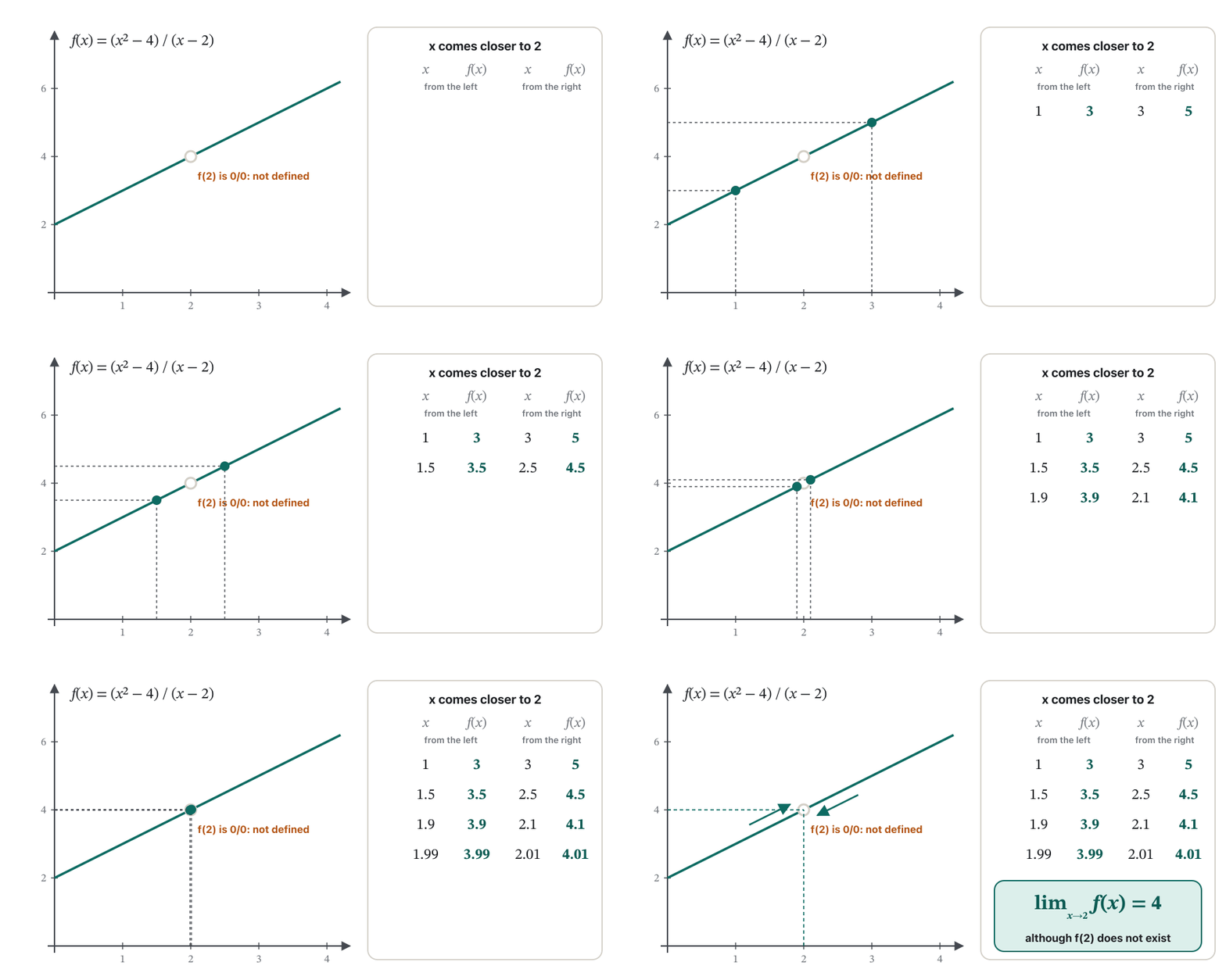
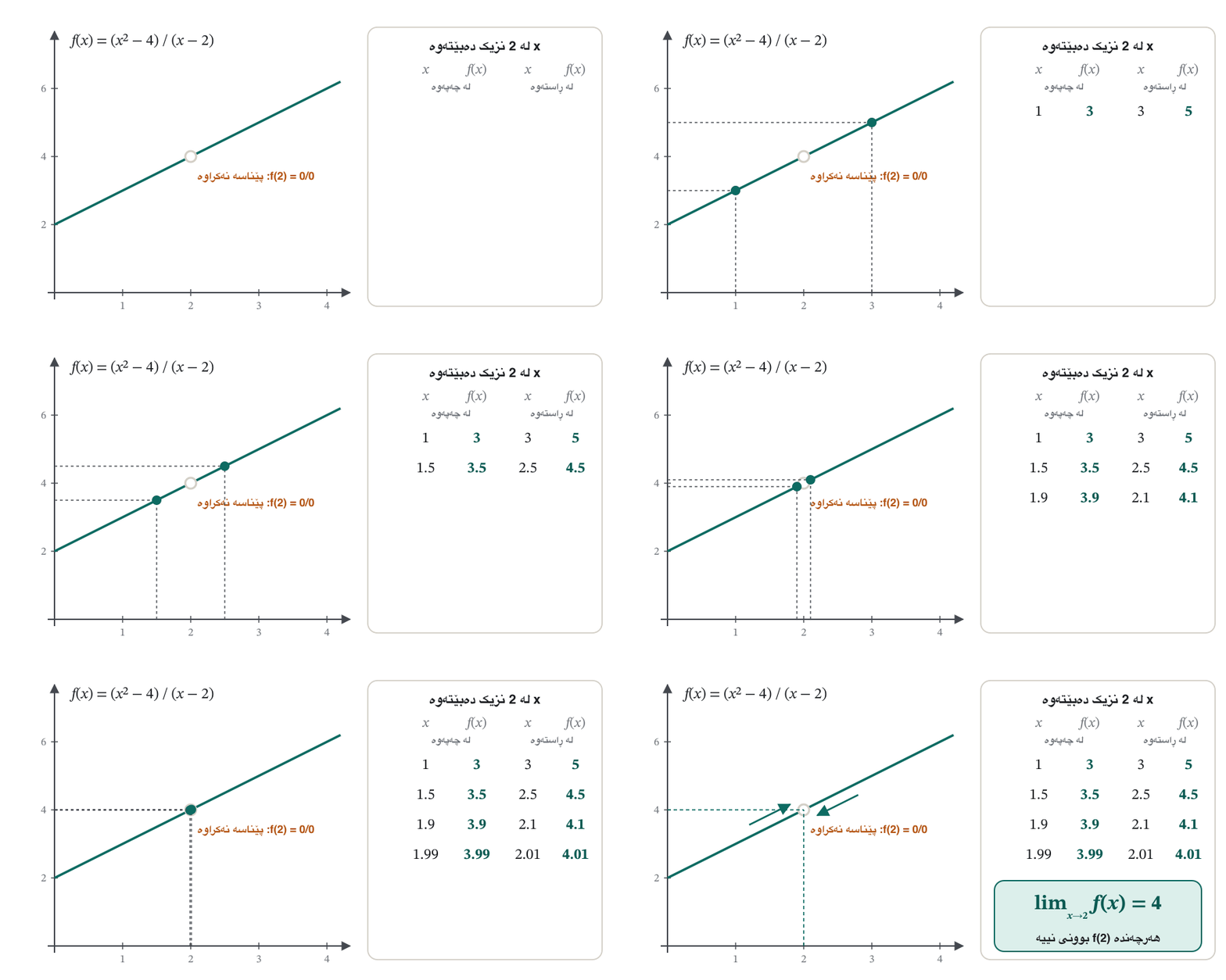
In the animation, has no value at 2 (it would be ), yet from both sides settles at 4: (The classic trap).
لە ئەنیمەیشنەکەدا لە 2ـدا هیچ نرخێکی نییە (دەبووە )، بەڵام لە هەردوو لاوە fـی x لە 4 دەگیرسێتەوە: (تەڵە ناسراوەکە).
From the left, from the right, and “does not exist”لە لای چەپەوە، لە لای ڕاستەوە، و «بوونی نییە»
A small sign on a shows the side: , “x approaches a from the left” (from smaller values), and , “from the right”. The minus and the plus are not powers and do not make a negative number. When the two sides give different values, the limit does not exist, written DNE; Kurdish exam papers write بوونی نییە. A statement such as says that grows without end: there is no number limit, because is not a number (Infinity).
نیشانەیەکی بچووک لەسەر a لاکە پیشان دەدات: واتە «x لە لای چەپەوە لە a نزیک دەبێتەوە» (لە نرخی بچووکترەوە). واتە «لە لای ڕاستەوە». سالب و موجەبەکە نین و ژمارەکە سالب ناکەن. کاتێک دوو لاکە دوو نرخی جیاواز بدەن، بوونی نییە، کە بە DNE دەنووسرێت؛ پرسیارەکانی تاقیکردنەوەی کوردی دەنووسن «بوونی نییە». ڕستەیەکی وەک دەڵێت بێ کۆتایی گەورە دەبێت: ژمارەیی نییە، چونکە ژمارە نییە (بێسنوور).
At the ends of the number line, reads “as x grows without end”. Statistics books write and ; is only a short form of the limit (Properties of every CDF).
لە کۆتاییەکانی ، دەخوێنرێتەوە «کاتێک x بێ کۆتایی گەورە دەبێت». کتێبەکانی دەنووسن و ؛ تەنیا کورتکراوەی (تایبەتمەندییەکانی هەموو نەخشەی دابەشبوونی کەڵەکەبوو).
: a change, and how it becomes : گۆڕانێک و چۆن دەبێتە
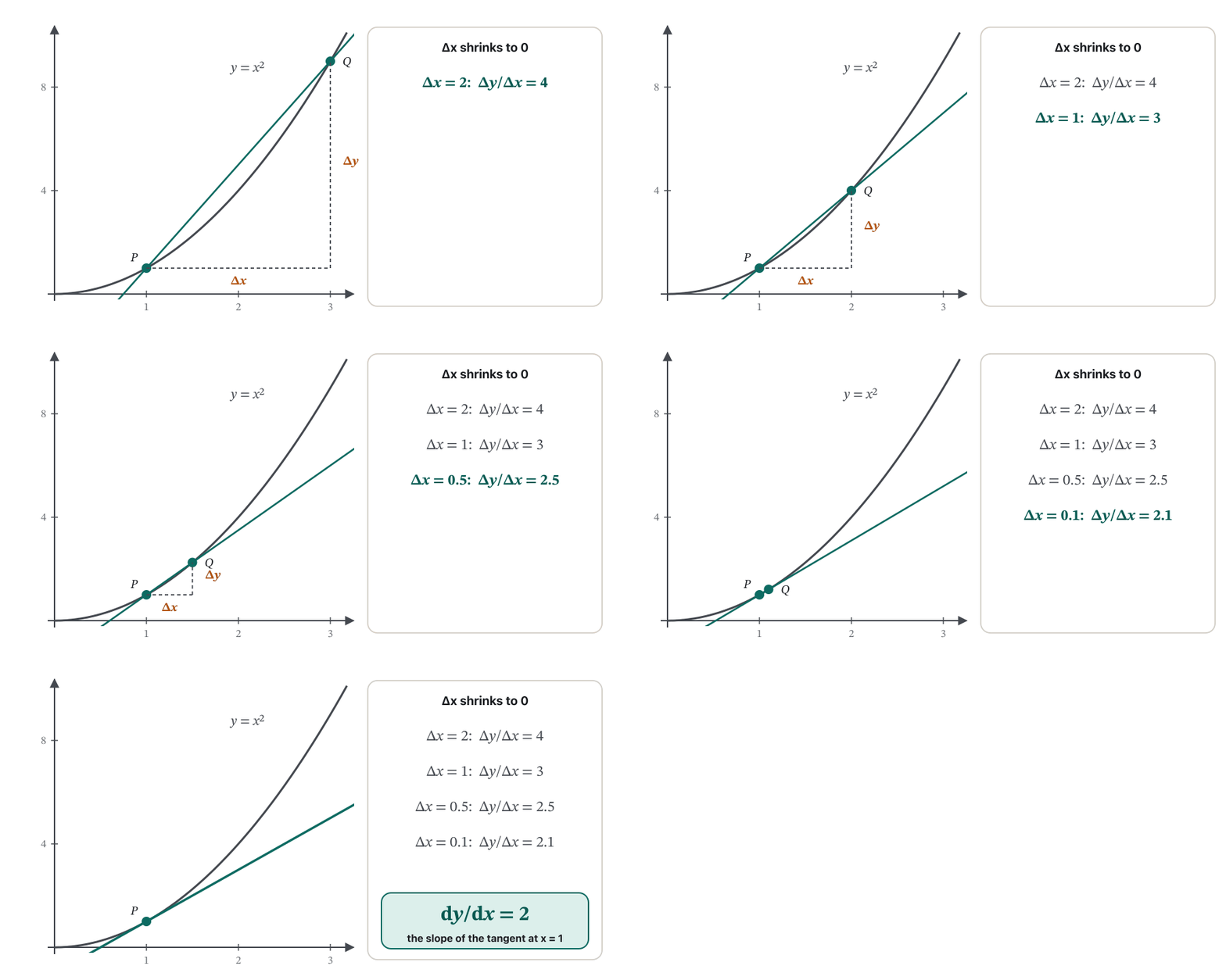
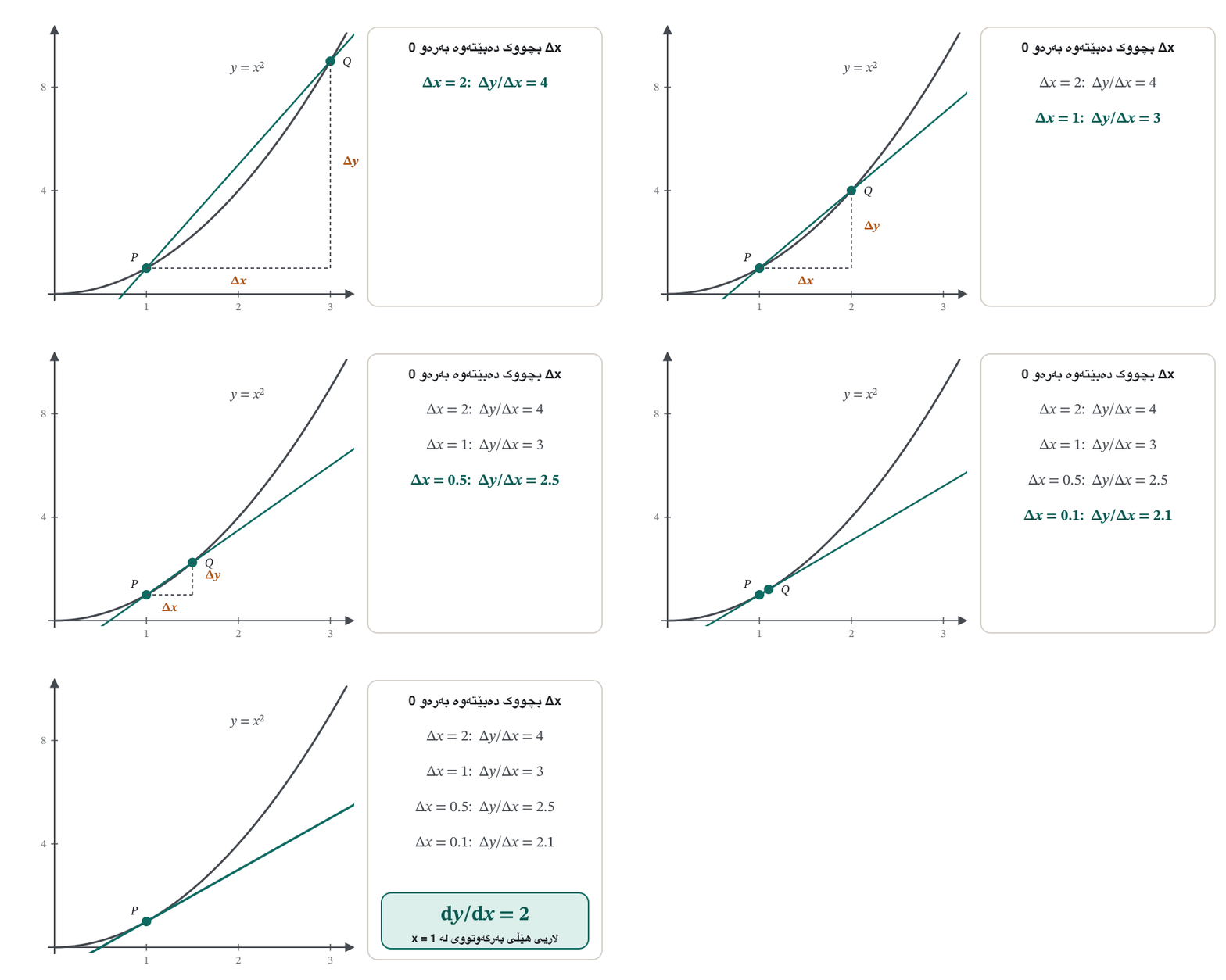
The capital Greek delta Δ means “change in”: , read “delta x”; in Kurdish دێلتا x or گۆڕانی x. The slope of a line is , “delta y over delta x”: how much y changes for each step in x (Slope and intercept). Now shrink the step, as in the animation: the slopes 4, 3, 2.5 and 2.1 come closer to 2. That last value is the derivative, : a d is a Δ that has become too small to see.
پیتی گەورەی یۆنانیی Δ (دێلتا) واتە «گۆڕانی»: ، دەخوێنرێتەوە «دێلتا x» یان «گۆڕانی x». هێڵێک ـە، «دێلتا y لەسەر دێلتا x»: y چەند دەگۆڕێت بۆ هەر هەنگاوێکی x (لاری). ئێستا هەنگاوەکە بچووک بکەرەوە، وەک لە ئەنیمەیشنەکەدا: 4، 3، 2.5 و 2.1 لە 2 نزیک دەبنەوە. ئەو دوایین نرخە ، : بەم شێوەیە d هەمان Δـیە کاتێک ئەوەندە بچووک دەبێت کە نابینرێت.
Δ is simply the Greek D, the first letter of the Latin differentia, “difference”; it was not chosen for its triangle shape (Why one letter?). So it marks a change in many subjects: is a change of value in simulated annealing, a drop in voltage in drone batteries, and some matrix books call the determinant (Vectors and matrices).
Δ بە سادەیی Dـی یۆنانییە، پیتی یەکەمی وشەی لاتینیی differentia، واتە «جیاوازی»؛ لەبەر شێوە سێگۆشەییەکەی هەڵنەبژێردراوە (بۆچی یەک پیت؟). بۆیە لە زۆر بابەتدا گۆڕان دیاری دەکات: لە simulated annealingـدا گۆڕانی نرخە، لە پاترییەکانی درۆنـدا دابەزینی ، هەروەها هەندێک کتێبی ناوی دەنێن (ئاڕاستەبڕ و ماتریکسەکان).
One derivative, five namesیەک مشتەق، پێنج ناو
The derivative of , how fast y changes as x changes, has several spellings that all mean the same: “f prime of x” (Lagrange’s notation), “y prime”, “dee y by dee x” (Leibniz’s notation), “d by d x of f of x”, and “y dot” (Newton’s notation, used in physics when the variable is time). In Kurdish, CêIT reads them مشتەقی y بە پێی x, or letter by letter f پرایمی x; you may also hear بە نیسبەت x for “with respect to x”.
، واتە y چەند خێرا دەگۆڕێت کاتێک x دەگۆڕێت، چەند شێوەیەکی نووسینی هەیە کە هەموویان هەمان واتایان هەیە: «f پرایمی x» (نووسینی Lagrange)، «y پرایم»، «dy لەسەر dx» (نووسینی Leibniz)، « fـی x بە پێی x» و «y خاڵ» (نووسینی Newton، لە فیزیادا بەکار دێت کاتێک کاتە). بە کوردی CêIT دەیانخوێنێتەوە « y بە پێی x»، یان پیت بە پیت «f پرایمی x»؛ لەوانەیە «بە نیسبەت x»ـیش ببیستیت لە جیاتی «بە پێی x».
, and : derivatives of derivatives، و : مشتەقی مشتەق
Take the derivative again and add another prime: , “f double prime of x”, is the second derivative, and , “f triple prime”, the third. From the fourth on, books write the number in brackets, , “the fourth derivative of f”: the brackets show that it is not a power, since could mean f to the fourth. In Leibniz’s notation the second derivative is , read “d two y by d x squared” (you may also hear “d squared y by d x squared”): the 2s count derivatives, and nothing is squared. Newton writes , “y double dot”.
دووپاتە وەربگرە و پرایمێکی تر زیاد بکە: ، «f دوو پرایمی x»، دووەمە و ، «f سێ پرایم»، سێیەمە. لە چوارەمەوە کتێبەکان ژمارەکە لە ناو کەوانەدا دەنووسن، ، « چوارەمی f»: کەوانەکان پیشان دەدەن کە نییە، چونکە لەوانەیە واتای «f توانی چوار» بدات. بە نووسینی Leibniz دووەم ـە، دەخوێنرێتەوە «d دوو y لەسەر dx دووجا» (لەوانەیە «d دووجا y لەسەر dx دووجا»ـیش ببیستیت): 2ـەکان دەژمێرن و هیچ شتێک دووجا نەکراوە. Newton دەنووسێت، «y دوو خاڵ».
and : functions of several variables و : نەخشەی فرەگۆڕاو
When a function has several inputs, such as the height of a hill at the point (x, y), each input gets its own derivative. The curly marks a partial derivative: , read “partial f by partial x” or “del f by del x”, is how fast f changes when only x moves and y stays fixed; it is also written . In Kurdish: مشتەقی بەشەکیی f بە پێی x. Put all the partial derivatives together and you get the gradient , read “nabla f”, “del f” or “grad f”: an arrow that points the steepest way uphill. Machine-learning books step against it to make an error smaller.
کاتێک چەند هەبێت، وەک بەرزیی گردێک لە خاڵی (x, y)ـدا، هەر تایبەتی خۆی هەیە. ـی چەماوە نیشانەی : ، دەخوێنرێتەوە « f بە پێی x»، ئەوەیە کە f چەند خێرا دەگۆڕێت کاتێک تەنیا x دەجووڵێت و y جێگیر دەمێنێت؛ بە ـیش دەنووسرێت. هەموو پێکەوە دابنێ و دەبینیت، دەخوێنرێتەوە «نابلا f»: تیرێک کە ئاڕاستەی لێژترین ڕێگای سەرەوە پیشان دەدات. کتێبەکانی بە پێچەوانەکەیدا هەنگاو دەنێن تا هەڵەیەک کەم بکەنەوە.
A function of one variable needs only d: the density is . Some statistics handouts write for it; read it as (The CDF of a continuous variable).
بە یەک تەنیا پێویستی بە dـیە: ـە. هەندێک مەلزەمەی بۆ ئەمە دەنووسن؛ وەک بیخوێنەوە (نەخشەی دابەشبوونی کەڵەکەبووی گۆڕاوی بەردەوام).
d, , , and : look-alikesd، ، ، و : لێکچووەکان
Five similar signs mean different things. d, an ordinary letter, upright in careful printing: a tiny change, in and . ∂, the curly d, “partial”: a partial derivative. δ, small Greek delta: a small change or error in some books, and the δ of the ε–δ definition of a limit. Δ, capital delta: a change, . ∇, nabla, an upside-down Δ: the gradient. And △ is a triangle, as in (Look-alikes).
پێنج نیشانەی لێکچوو واتای جیاوازیان هەیە. d، پیتێکی ئاسایی کە لە چاپی ورددا ستوونی دەنووسرێت، نەک لار: گۆڕانێکی زۆر بچووک، لە و ـدا. ∂، dـی چەماوە، «بەشەکی»: . δ، دێلتای بچووکی یۆنانی: لە هەندێک کتێبدا گۆڕان یان هەڵەیەکی بچووک، هەروەها δـی پێناسەی ε–δـی . Δ، دێلتای گەورە: گۆڕان، . ∇، نابلا، Δـیەکی سەرەوخوار: . △ـیش سێگۆشەیە، وەک لە ـدا (لێکچووەکان).
In LaTeX: d, \partial, \delta, \Delta, \nabla, \triangle. Each is a different Unicode character, so choose the right one when you type (Same look, different characters).
لە LaTeXـدا: d، \partial، \delta، \Delta، \nabla، \triangle. هەریەکەیان پیتێکی جیاوازی Unicodeـە، بۆیە کاتێک دەنووسیت دروستەکەی هەڵبژێرە (هەمان شێوە، نووسەکانی جیاواز).
: the parts of an integral: بەشەکانی تەواوکارییەک
The integral sign is a tall S, for “sum”. Read the whole expression from the left: , “the integral from a to b of f of x, dx”; in Kurdish تەواوکاریی fـی x لە aـەوە تا b، بە پێی x. At the bottom of the sign stands the lower limit a, at the top the upper limit b; then comes the function being integrated, the integrand, and last , which names the variable that moves. With limits it is a definite integral, a number; without limits, is an indefinite integral, a family of functions with the constant of integration C (Areas from antiderivatives).
Sـێکی درێژە، بۆ «کۆ». هەموو دەربڕینەکە لە چەپەوە بخوێنەوە: ، « fـی x لە aـەوە تا b، بە پێی x». لە خوارەوەی سنووری خوارەوە a دێت و لە سەرەوەی سنووری سەرەوە b؛ پاشان ئەو بۆ دەکرێت (integrand) و لە کۆتاییدا ، کە ناوی ئەو دەڵێت کە دەگۆڕێت. بە سنوورەکانەوە ، ژمارەیەک؛ بەبێ سنوور، ، خێزانێک لە لەگەڵ C (ڕووبەر لە ڕێگەی پێچەوانەی مشتەق).
The letter after d is only a name: , just like the index of Σ (The index is only a counter). That is why statistics writes : the u keeps the inside apart from the upper limit x. And is the area under the density between a and b.
پیتەکەی دوای d تەنیا ناوێکە: ، ڕێک وەک Σ (ئیندێکس تەنیا بۆ ژماردنە). بۆیە دەنووسێت : uـەکە ناوەوە لە سنووری سەرەوەی x جیا دەکاتەوە. هەروەها ڕووبەری ژێر لە نێوان a و bـدا.
From to : thin rectanglesلە ـەوە بۆ : لاکێشەی باریک
The notation tells its own story. Cut the area under f between a and b into n thin rectangles of width ; their total area is a sum, . Make the rectangles thinner and thinner: the sum comes closer to the exact area, and the notation changes with it. Σ becomes the tall S ∫, becomes , and the separate become every x between a and b (Σ: the parts of a sum, Why an integral is an area).
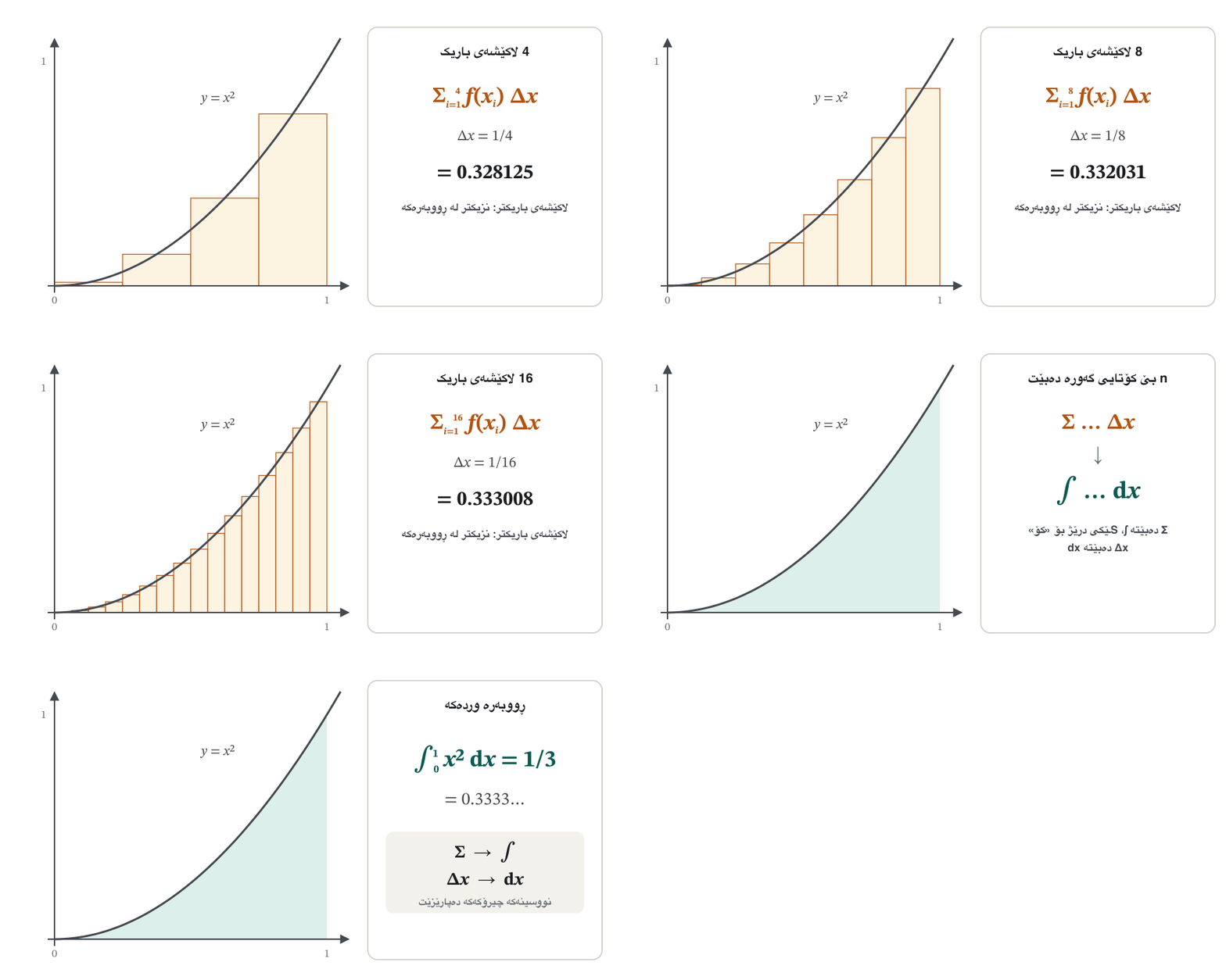
نووسینەکە چیرۆکی خۆی دەگێڕێتەوە. ڕووبەری ژێر f لە نێوان a و bـدا بکە بە n لاکێشەی باریک بە پانیی ؛ کۆی ڕووبەرەکانیان کۆیەکە، . لاکێشەکان باریکتر و باریکتر بکە: کۆکە لە ڕووبەرە وردەکە نزیکتر دەبێتەوە و نووسینەکەش لەگەڵیدا دەگۆڕێت. Σ دەبێتە Sـە درێژەکەی ∫، دەبێتە و ـە جیاکان دەبنە هەموو xـێک لە نێوان a و bـدا (Σ: بەشەکانی کۆ، بۆچی تەواوکاری ڕووبەرە).
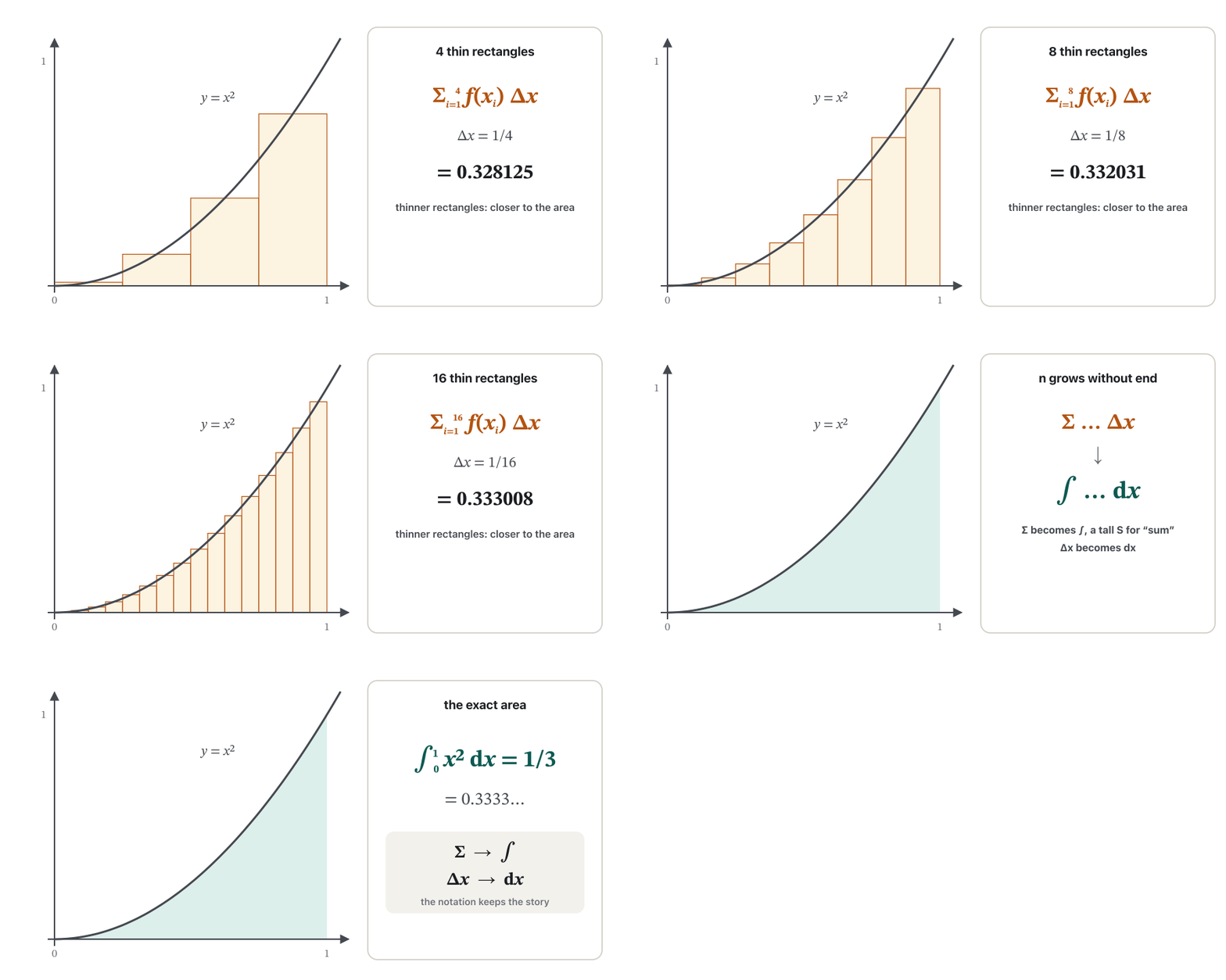
Read: the integral from a to b is the limit of the sums as the number of rectangles grows without end.
بیخوێنەوە: لە aـەوە تا b کۆکانە کاتێک ژمارەی لاکێشەکان بێ کۆتایی گەورە دەبێت.
and other integral signs و هێماکانی تری تەواوکاری
When the answer is found, books write the evaluation bracket , or a bar, , read “F of x, evaluated from a to b”. Both mean : top minus bottom. An example from a probability lesson: .
کاتێک وەڵامەکە دۆزرایەوە، کتێبەکان کەوانەی نرخاندن یان هێڵێک دەنووسن، ، کە دەخوێنرێتەوە «Fـی x، لە aـەوە تا b». هەردووکیان واتە : سەرەوە کەم خوارەوە. نموونەیەک لە وانەیەکی : .
Some signs you only need to recognise: and , double and triple integrals over an area or a volume, and , an integral around a closed path. And in statistics , “the integral of f from minus infinity to infinity is 1”: the whole area under a density is 1.
هەندێک تەنیا پێویستە بیانناسیتەوە: و ، دووانە و سیانە لەسەر ڕووبەرێک یان قەبارەیەک، هەروەها ، بە دەوری ڕێگایەکی داخراودا. لە ، « f لە سالبەوە تا یەکسانە بە 1»: هەموو ڕووبەری ژێر 1ـە.
Common mistakesهەڵە باوەکان
| Mistakeهەڵە | Fixچارەسەر |
|---|---|
| Cancelling the d’s in سڕینەوەی dـەکان لە ـدا | is one symbol: “the derivative of y with respect to x” یەک : « y بە پێی x» |
| Reading as f to the fourthخوێندنەوەی وەک f توانی چوار | The brackets mean the fourth derivative; a power is written کەوانەکان واتە چوارەم؛ بە دەنووسرێت |
| Reading the minus in as a negative numberخوێندنەوەی سالبەکەی وەک | It means “from the left”: and name sidesواتە «لە لای چەپەوە»: و ناوی لاکانن |
| Writing for a function of one variableنووسینی بۆ بە یەک | One variable: ; only when other variables stay fixedیەک : ؛ تەنیا کاتێک تر جێگیر دەمێننەوە |
| Calling the value of وتنی ئەوەی کە نرخی ـە | says it grows without end: there is no number limit دەڵێت بێ کۆتایی گەورە دەبێت: ژمارەیی نییە |
| Thinking the limit must equal وا بزانیت دەبێت یەکسان بێت بە | The limit looks near a; may differ or be missing سەیری نزیکی a دەکات؛ لەوانەیە جیاواز بێت یان نەبێت |
| Forgetting لەبیرچوونی | names the variable and closes the integral ناوی دەڵێت و دادەخات |
| Mixing up with △ or تێکەڵکردنی لەگەڵ △ یان | a change, △ a triangle, a small change گۆڕان، △ سێگۆشە، گۆڕانێکی بچووک |
| Adding to a definite integralزیادکردنی بۆ | belongs to indefinite integrals; it cancels in هی ؛ لە ـدا لادەچێت |
Practiceڕاهێنان
Read each line aloud in English and in Kurdish: (a) (b) (c) for (d) (e)
هەر دێڕێک بە ئینگلیزی و بە کوردی بە دەنگی بەرز بخوێنەوە: (a) (b) (c) بۆ (d) (e)
Show answerوەڵامەکە پیشان بدە
- (a) “The limit of 3 over x, as x grows without end, is 0.”
- (b) “The derivative of x cubed with respect to x is 3x squared.”
- (c) “f double prime of 2 is 12”: the second derivative at x = 2.
- (d) “The integral from 0 to 3 of x squared over 9, dx, is 1.”
- (e) “Partial f by partial y”: how f changes when only y moves.
- (a) « 3 لەسەر x، کاتێک x بێ کۆتایی گەورە دەبێت، یەکسانە بە 0.»
- (b) « x سێجا بە پێی x یەکسانە بە 3x دووجا.»
- (c) «f دوو پرایمی 2 یەکسانە بە 12»: دووەم لە x = 2ـدا.
- (d) « x دووجا لەسەر 9، لە 0ـەوە تا 3، بە پێی x، یەکسانە بە 1.»
- (e) « f بە پێی y»: f چۆن دەگۆڕێت کاتێک تەنیا y دەجووڵێت.
Pair each notation in the first list with the one in the second list that means the same. First list: , , , , for a function F of x alone. Second list: , , , , .
هەر نووسینێکی لیستی یەکەم لەگەڵ ئەو نووسینەی لیستی دووەمدا جووت بکە کە هەمان واتای هەیە. لیستی یەکەم: ، ، ، ، بۆ F کە تەنیا بە xـەوە بەستراوە. لیستی دووەم: ، ، ، ، .
Show answerوەڵامەکە پیشان بدە
- ↔
- ↔
- ↔
- ↔ : the dot means a change in time
- ↔ : with one variable, d is enough
- و : یەکەم
- و : دووەم
- و : سەرەوە کەم خوارەوە
- و : خاڵەکە واتە گۆڕان لەگەڵ کاتدا
- و : بە یەک ، d بەسە
Read aloud and explain each part: (a) (b)
بە دەنگی بەرز بیخوێنەوە و هەر بەشێک ڕوون بکەرەوە: (a) (b)
Show answerوەڵامەکە پیشان بدە
- (a) “The probability that X lies between a and b equals the integral from a to b of f of x, dx”: the area under the density f between a and b.
- (b) “F of infinity, that is, the limit of F of x as x grows without end, equals 1”: all the probability is collected; is only a short form of the limit.
- (a) « ئەوەی X لە نێوان a و bـدا بێت یەکسانە بە fـی x لە aـەوە تا b، بە پێی x»: ڕووبەری ژێر f لە نێوان a و bـدا.
- (b) «Fـی ، واتە Fـی x کاتێک x بێ کۆتایی گەورە دەبێت، یەکسانە بە 1»: هەموو کۆ کراوەتەوە؛ تەنیا کورتکراوەی .
Summaryپوختە
- : “the limit of f of x as x approaches a”; and are the two sides; DNE means it does not exist; means it grows without end.
- is a change; is what becomes as .
- One derivative, many names: , , , , ; higher ones , , .
- is for several variables (: only x moves); gathers them into the gradient.
- : sign, limits, integrand, dx; ; without limits, add .
- The look-alikes d, , , , and △ are six different signs.
- All these signs, with their readings, are in the Symbol dictionary: Limits, derivatives and integrals.
- : « fـی x کاتێک x لە a نزیک دەبێتەوە»؛ و دوو لاکەن؛ DNE واتە بوونی نییە؛ واتە بێ کۆتایی گەورە دەبێت.
- گۆڕانێکە؛ ئەوەیە کە دەیبێت کاتێک .
- یەک ، چەندین ناو: ، ، ، ، ؛ ئەوانی بەرزتر ، ، .
- بۆ چەند (: تەنیا x دەجووڵێت)؛ هەموویان دەکاتە .
- : ، سنوورەکان، ، dx؛ ؛ بەبێ سنوور، زیاد بکە.
- لێکچووەکانی d، ، ، ، و △ شەش جیاوازن.
- هەموو ئەم نیشانانە، لەگەڵ خوێندنەوەکانیان، لە فەرهەنگی هەن: ئامانج، مشتەق و تەواوکاری.
How do you say ? چۆن دەڵێیت؟
“Dee y by dee x”: the derivative of y with respect to x.
«dy لەسەر dx»: y بە پێی x.
Why does look like an S?بۆچی لە S دەچێت؟
It is a long S for “sum”: an integral is the limit of sums of thin rectangles.
Sـێکی درێژە بۆ «کۆ»: کۆی لاکێشە باریکەکانە.
When do you write instead of d?کەی لە جیاتی d، دەنووسیت؟
When the function has several variables and only one of them moves; for one variable write d.
کاتێک چەند هەبێت و تەنیا یەکێکیان بجووڵێت؛ بۆ یەک d بنووسە.
Lesson complete!وانەکە تەواو بوو!
Well done. Review the key terms, then go on to the next lesson.دەستخۆش. سەیرێکی زاراوە سەرەکییەکان بکەرەوە، پاشان بڕۆ بۆ وانەی داهاتوو.
Key termsزاراوە سەرەکییەکان
Vectors and Matrices: Arrows, Bold Letters, Aᵀ, A⁻¹ and detئاڕاستەبڕەکان و ماتریکسەکان: تیر، پیتی تۆخ، Aᵀ، A⁻¹ و det
Related lecturesوانە پەیوەندیدارەکان
- Continuous Random Variables and Density Functionsگۆڕاوە هەڕەمەکییە بەردەوامەکان و نەخشەی چڕیی ئەگەر
- The Cumulative Distribution Function (CDF)نەخشەی دابەشبوونی کەڵەکەبوو (CDF)
- Project: Finding Roots Numericallyپڕۆژە: دۆزینەوەی ڕەگ بە ڕێگە ژمارەییەکان
- Simulated Annealingsimulated annealing
- Inequalities, Infinity and Intervalsلاسەنگەکان، بێسنوور و ماوەکان
- Letters, Subscripts, Superscripts and the Greek Alphabetپیتەکان، ژێرنووسەکان، ژوورنووسەکان و ئەلفوبێی یۆنانی
- Vectors and Matrices: Arrows, Bold Letters, Aᵀ, A⁻¹ and detئاڕاستەبڕەکان و ماتریکسەکان: تیر، پیتی تۆخ، Aᵀ، A⁻¹ و det
References and further readingسەرچاوەکان و خوێندنەوەی زیاتر
- OpenStax, Calculus Volume 1, 2.2 The Limit of a Function (reading lim; one-sided limits; infinite limits; DNE)
- OpenStax, Calculus Volume 1, 3.2 The Derivative as a Function (f′(x), dy/dx, y′, d/dx; f″, f‴, f⁽⁴⁾, d²y/dx²)
- OpenStax, Calculus Volume 1, 5.2 The Definite Integral (integrand, limits of integration, variable of integration, dummy variable, Riemann sums)
- Wikipedia: Notation for differentiation (Leibniz, Lagrange, Newton and Euler notations; evaluation bar)
- Wikipedia: Leibniz’s notation (d from differentia; ∫ a long s for summa; manuscripts of 1675; printed 1684 and 1686)
- Wikipedia: Integral symbol (Leibniz 1675, first printed 1686; U+222B; regional slants)
- Wikipedia: Partial derivative (∂f/∂x, f_x; ∂ read “partial”; Legendre 1786, Jacobi 1841; the gradient)
- Wikipedia: Nabla symbol (an inverted delta named after a harp; read “del”; gradient, divergence, curl)
- Wikipedia: Delta (letter) (Δ for change and difference, from Greek diaphorá; δ for a small change)
- Jeff Miller, Earliest Uses of Symbols of Operation (MacTutor): Euler 1755 used Δ for a difference and Σ for a sum
This lecture is a first edition. The Kurdish text and terminology are waiting for review by Kurdish IT teachers.ئەم وانەیە چاپی یەکەمە. دەقە کوردییەکە و زاراوەکانی چاوەڕێی پێداچوونەوەی مامۆستایانی کوردی بواری IT ن.