Chapterبەش 5 · Lectureوانە 5.3
Probability and Statistics Symbolsهێماکانی ئەگەر و ئامار
How to read and say the symbols of probability and statistics: , Pr and the handouts' , and the “given” bar, , X and x, f and F, and four spellings of and “n choose r”, population and sample symbols, handout symbols such as and S.D., and Var, ~, quartiles, z and r.
چۆن و بخوێنیتەوە: ، Pr و ـی مەلزەمەکان، و هێڵی «بە مەرجی»، ، X و x، f و F، و چەند شێوەی نووسینی و «n هەڵبژێرە r»، و ، مەلزەمەی وەک و S.D.، و Var، ~، ، z و r.
What you will learnچی فێر دەبیت
- Read , , and , and write the “given” bar instead of a slash.
- Recognise the three spellings of “not A”, capital X vs small x and small f vs capital F.
- Read , and “n choose r” in every common spelling, including the handouts' and .
- Tell population symbols (, , N, p) from sample symbols (, s, n, ) and map handout symbols to book symbols.
- Read , Var(X), , the quartiles, z and r, and check what a book's means.
- ، ، و بخوێنیتەوە و هێڵی «بە مەرجی» لەبری هێڵی لار بنووسیت.
- سێ شێوەی نووسینی ، Xـی گەورە بەرامبەر xـی بچووک و fـی بچووک بەرامبەر Fـی گەورە بناسیتەوە.
- ، و «n هەڵبژێرە r» بە هەموو شێوە ناسراوەکانیانەوە بخوێنیتەوە، لەوانە و ـی مەلزەمەکان.
- (، ، N، p) لە (، s، n، ) جیا بکەیتەوە و مەلزەمە بە کتێب بگۆڕیت.
- ، Var(X)، ، ، z و r بخوێنیتەوە و بپشکنیت ـی کتێبێک واتای چییە.
: the probability of an event: ئەگەری ڕووداوێک
All the outcomes of an experiment together form the sample space, written Ω (capital omega) or S. An event is a part of it and gets a capital letter: for one die, and . Sets of outcomes go in braces { }, not in square brackets. is read “P of A” or “the probability of A”: here . Some books write , with an upright Pr. Every probability lies between 0 and 1, and .
هەموو پێکەوە پێک دەهێنن، کە بە Ω (ئۆمێگای گەورە) یان S دەنووسرێت. بەشێکە لێی و پیتێکی گەورە وەردەگرێت: بۆ یەک بەردەزار، و . لە ناو کەوانەی لوول { }ـدا دەنووسرێن، نەک لە ناو کەوانەی چوارگۆشەدا. دەخوێنرێتەوە « A» (P of A): لێرەدا . هەندێک کتێب دەنووسن، بە پیتی ڕاست (نەک لار). هەموو لە نێوان 0 و 1ـدایە و .
The letter P has other jobs: and count permutations, can name a polynomial, and (“p hat”) is a proportion worked out from a sample. Some handouts write the probability that a random variable takes a value as : read it or ; the small r is not a permutation. In Kurdish notes you may also meet the Arabic word ئیحتیمال for probability; CêIT and most Kurdish books say ئەگەر.
پیتی P کاری تریشی هەیە: و دەژمێرن، دەتوانێت ناوی بێت و («p هات») ڕێژەیەکە کە لە حساب کراوە. هەندێک مەلزەمە ئەوەی نرخێک وەربگرێت بە دەنووسن: وەک یان بیخوێنەوە؛ r بچووکەکە نییە. لە تێبینییە کوردییەکاندا لەوانەیە وشەی عەرەبیی «ئیحتیمال»ـیش ببینیت؛ CêIT و زۆربەی کتێبە کوردییەکان دەڵێن «».
, and : or, and, given، و : یان، و، بە مەرجی
Set signs inside P build new events (∪, ∩ and ∖: join, share, remove). is the probability of “A or B” (at least one of them) and of “A and B” (both). A vertical bar inside P means given: is read “the probability of A given B”; in Kurdish, CêIT says ئەگەری A بە مەرجی B. The bar throws away every outcome outside B, so B becomes the new sample space, as the animation shows.
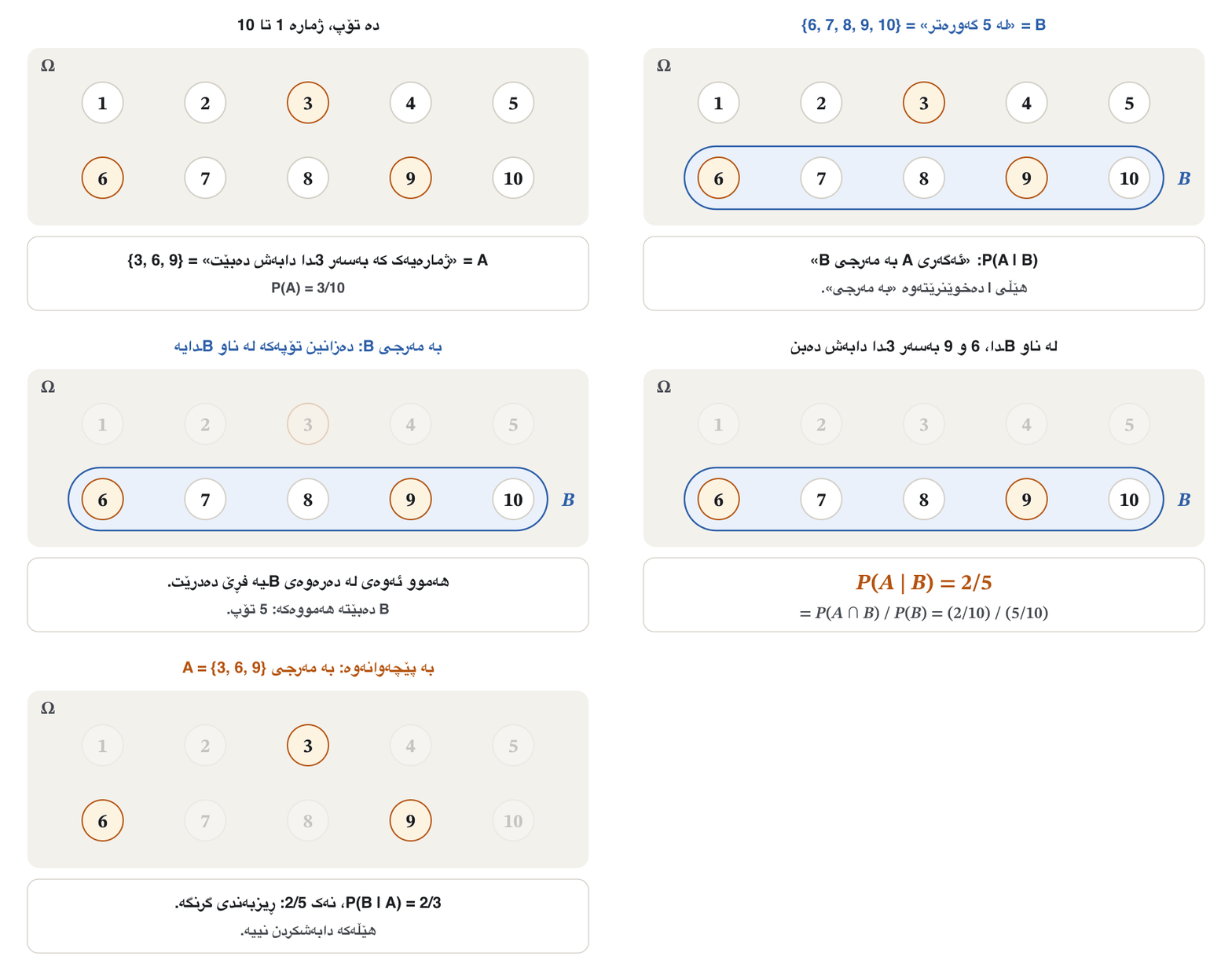
لە ناو Pـدا نوێ دروست دەکەن (، و ). «A یان B»ـیە (لانیکەم یەکێکیان) و «A و B» (هەردووکیان). هێڵێکی ستوونی لە ناو Pـدا واتای بە مەرجی دەدات: دەخوێنرێتەوە « A بە مەرجی B» (the probability of A given B). هێڵەکە هەموو دەرەوەی B فڕێ دەدات، بۆیە B دەبێتە نوێ، وەک ئەنیمەیشنەکە پیشانی دەدات.
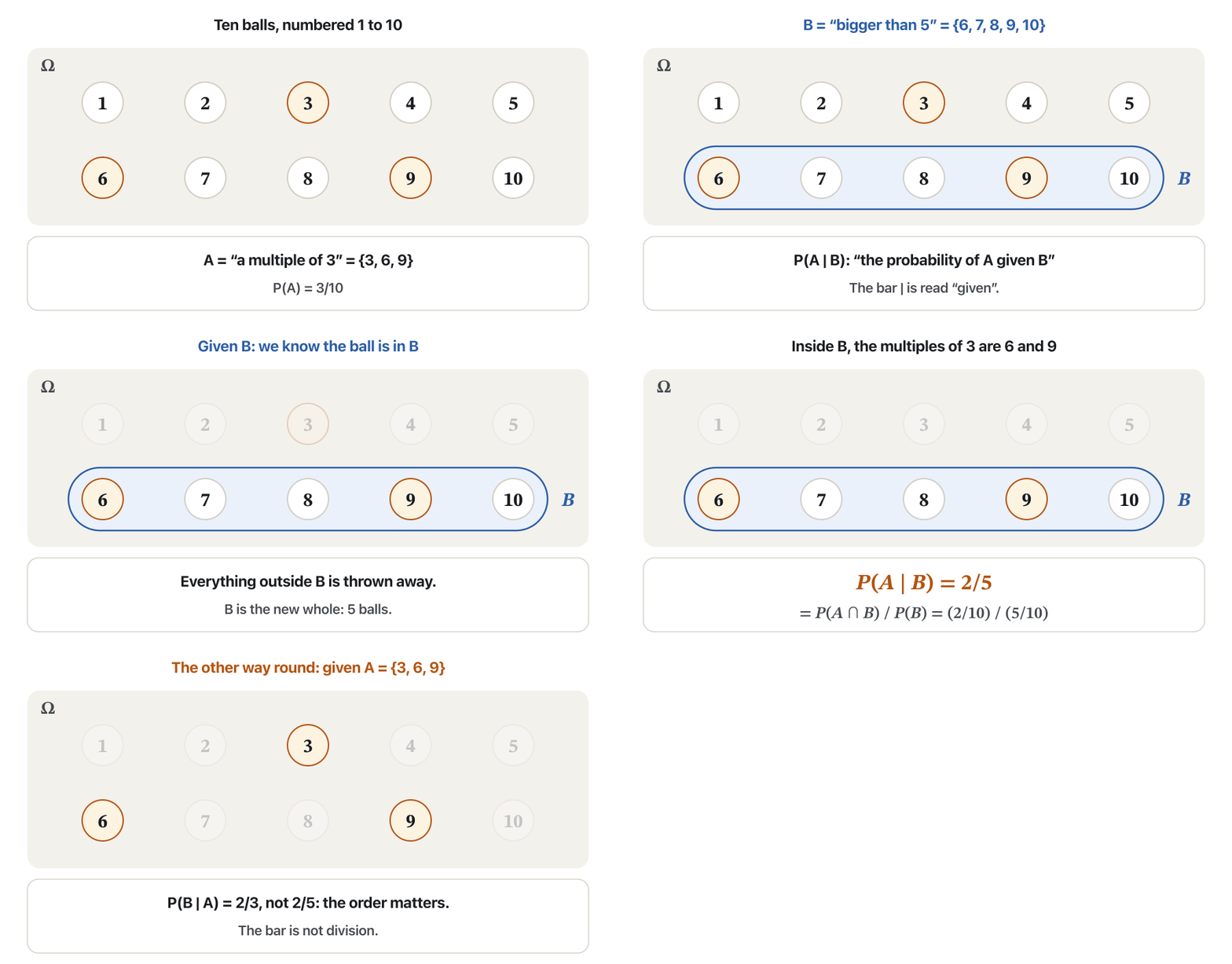
So , and the order matters: and are different numbers. Some handouts write with a slash. Read it “A given B”, but write the bar yourself: / means division, and is something else. The formula and its examples are taught in New information changes probabilities.
کەواتە و ڕیزبەندی گرنگە: و دوو ژمارەی جیاوازن. هەندێک مەلزەمە بە هێڵێکی لار دەنووسن. وەک «A بە مەرجی B» بیخوێنەوە، بەڵام خۆت هێڵە ستوونییەکە بنووسە: / واتای دەدات و شتێکی ترە. و نموونەکانی لە زانیاریی نوێ ئەگەرەکان دەگۆڕێت فێر دەکرێن.
Not A: , and ڕووداوی تەواوکەر: ، و
The complement of A, everything in Ω that is not in A, has three spellings: , (“A prime”) and (“A bar”). One book may even use two of them (Three ways to write “not in A”). Read any of them “not A” or “the complement of A”. A and not-A share out the whole of Ω, so : for the die, the probability of not getting 5 or 6 is . The prime has other jobs too: is a derivative and, in matrix books, is a transpose (Marks on letters).
A، واتە هەموو ئەوەی لە Ωـدایە بەڵام لە Aـدا نییە، سێ شێوەی نووسینی هەیە: ، («A پرایم») و («A بار»). تەنانەت یەک کتێب دەتوانێت دووانیان بەکار بهێنێت (سێ شێوە بۆ نووسینی «لە Aـدا نییە»). هەر کامیان بخوێنەوە « A» (not A). A و هەموو Ω لە نێوان خۆیاندا دابەش دەکەن، بۆیە : بۆ بەردەزارەکە، ئەوەی 5 یان 6 نەیەت ـە. پرایم کاری تریشی هەیە: و لە کتێبەکانی (نیشانەکانی سەر پیت).
Capital and small ; small and capital ـی گەورە و ـی بچووک؛ ـی بچووک و ـی گەورە
A capital letter names a random variable, a small letter one of its values: X is “the number of heads in two coin tosses”, and x can be 0, 1 or 2. So is read “the probability that X equals x”, and . The function that gives these probabilities is the probability mass function (pmf), written , or . For a continuous X, the small is the probability density function (pdf). The capital is the cumulative distribution function (CDF): the running total.
پیتی گەورە ناوی دەنێت و پیتی بچووک یەکێک لە نرخەکانی: X بریتییە لە «ژمارەی شێر لە دوو جار هەڵدانی دراودا» و x دەتوانێت 0، 1 یان 2 بێت. کەواتە دەخوێنرێتەوە « ئەوەی X یەکسان بێت بە x» و . ئەو ئەم دەدات (pmf) و بە ، یان دەنووسرێت. بۆ ، ـی بچووک (pdf). ـی گەورە (CDF): کۆی کەڵەکەبوو.
One abbreviation trap: C.D.F names this probability function, while some statistics handouts write C.F.D for a cumulative frequency distribution, a table of running totals of data (Running totals: cumulative frequency). The notation itself is taught in Capital X, small x.
تەڵەیەک لە کورتکراوەکاندا: C.D.F واتە ، بەڵام هەندێک مەلزەمەی C.F.D بۆ خشتەیەکی دەنووسن، واتە کۆی کەڵەکەبووی (کۆی کەڵەکەبوو: دووپاتەبوونەوەی کەڵەکەبوو). خودی لە ـی گەورە و ـی بچووک فێر دەکرێن.
Counting symbols: , and “n choose r” in many spellingsهێماکانی ژماردن: ، و «n هەڵبژێرە r» بە چەند شێوەیەک
, “n factorial”, means , with (Factorial). The number of ways to choose r things out of n when the order does not matter is read “n choose r”, and books spell it in several ways: , , , and, in many handouts, with n on top; calculators show nCr. When the order does matter you count permutations: , , or , as many handouts write it.
، « n»، واتە و (فاکتۆریێل). ژمارەی ڕێگاکانی هەڵبژاردنی r شت لە n شت، کاتێک ڕیزبەندی گرنگ نییە، بە ئینگلیزی n choose r دەخوێنرێتەوە (یەک شێوەی خوێندنەوە بە کوردی: «n هەڵبژێرە r») و کتێبەکان بە چەند شێوەیەک دەینووسن: ، ، ، و لە زۆر مەلزەمەدا کە n لە سەرەوەیە؛ nCr پیشان دەدەن. کاتێک ڕیزبەندی گرنگ بێت دەژمێریت: ، ، یان ، وەک زۆر مەلزەمە دەینووسن.
Where the two small numbers sit changes from book to book, so use one rule: the bigger number is how many there are, the smaller is how many you take. is “9 choose 3” = 84, never “3 choose 9”. The formulas and their uses: Arranging some of the objects: permutations and Computing C(n, r) without huge numbers.
شوێنی دوو ژمارە بچووکەکە لە کتێبێکەوە بۆ کتێبێکی تر دەگۆڕێت، بۆیە یەک یاسا بەکار بهێنە: ژمارە گەورەکە ژمارەی هەمووانە و بچووکەکە ئەوەیە کە دەیبەیت. واتە «9 هەڵبژێرە 3» = 84، هەرگیز «3 هەڵبژێرە 9» نییە. و بەکارهێنانیان: ڕیزکردنی هەندێک لە شتەکان: گۆڕینەکان و حسابکردنی بەبێ ژمارەی زۆر گەورە.
Population or sample? and , and , and کۆمەڵگە یان نموونە؟ و ، و ، و
Statistics books use two alphabets on purpose. Numbers that describe a whole population, its parameters, get Greek letters and a capital N: (“mu”) for the mean, (“sigma”) for the standard deviation, for the variance and N for the size. Numbers worked out from a sample, its statistics, get Latin letters and a small n: (“x bar”), s, and n. A proportion is p for a population and (“p hat”; some books write p′) for a sample. Memory trick: population goes with parameter, sample with statistic (Parameter and statistic).
کتێبەکانی بە ئەنقەست دوو ئەلفوبێ بەکار دەهێنن. ئەو ژمارانەی هەموو وەسف دەکەن، واتە ، پیتی یۆنانی و Nـی گەورە وەردەگرن: («میو»؛ لەوانەیە «موو»ـیش ببیستیت) بۆ ، («سیگما») بۆ ، بۆ و N بۆ قەبارە. ئەو ژمارانەی لە حساب دەکرێن، واتە ، پیتی لاتینی و nـی بچووک وەردەگرن: («ئێکس بار»)، s، و n. ڕێژە بۆ ـیە و بۆ («p هات»؛ هەندێک کتێب p′ دەنووسن). ڕێگایەک بۆ لەبیرنەکردن: لەگەڵ ، لەگەڵ (پارامیتەر و پێوەری نموونە).
Handout symbols and book symbolsهێماکانی مەلزەمە و هێماکانی کتێب
Many statistics handouts in Kurdistan, and the CêIT statistics lessons that follow them, write a capital for the mean, for frequencies, for the weighted mean, G, H and Q for the geometric, harmonic and quadratic means, for the median and for the mode. Abbreviations with dots stand inside formulas: M.D (mean deviation), S.D. (standard deviation, also S), C.V (coefficient of variation), T.R (total range), LL and UL (lower and upper class limits), L.B.L (lower class boundary). The table shows what other books write for the same ideas.
زۆر مەلزەمەی لە کوردستان، هەروەها ئەو وانانەی CêIT کە پەیڕەویان دەکەن، ـی گەورە بۆ ، بۆ ، بۆ ، G، H و Q بۆ ، و ، بۆ و بۆ دەنووسن. کورتکراوەی خاڵدار لە ناو دێن: M.D ()، S.D. (، هەروەها S)، C.V ()، T.R ( گشتی)، LL و UL ( خوارەوە و سەرەوە)، L.B.L ( خوارەوە). خشتەکە پیشان دەدات کتێبی تر بۆ هەمان بیرۆکەکان چی دەنووسن.
One habit needs care: some handouts write and n even for a whole population. Books keep and N for a population and and n for a sample, so the reader knows which kind of data you had. And Q is also the letter of the quartiles : the subscript tells them apart.
یەک خوو ئاگاداریی دەوێت: هەندێک مەلزەمە و n تەنانەت بۆ هەموو دەنووسن. کتێبەکان و N بۆ و و n بۆ دەهێڵنەوە، تا خوێنەر بزانێت چ جۆرە هەبووە. هەروەها Q پیتی ، : لێکیان جیا دەکاتەوە.
and , read aloud و بە دەنگی بەرز
, also printed , or simply , is the expected value of X: the average you expect in the long run. , or is its variance. Read from left to right: “the expected value of X equals the sum of x times P of x”. In words: multiply each value by its probability, then add them all up. A Kurdish worked answer writes the same sum value by value: (0 × the probability of 0) + (1 × the probability of 1) + …
، کە بە ، یان تەنیا ـیش دەنووسرێت، Xـە: ئەو لە دوورمەودادا چاوەڕێی دەکەیت. ، یان . لە چەپەوە بۆ ڕاست بخوێنەوە: « X یەکسانە بە کۆی x جاران x». بە وشە: هەر نرخێک جاران خۆی بکە، پاشان هەموویان کۆ بکەرەوە. وەڵامێکی کوردی هەمان کۆ نرخ بە نرخ دەنووسێت: (سفر جاران سفر) + (یەک جاران یەک) + …
Watch the brackets: squares first and then averages, averages first and then squares, and needs both. Some books and handouts print or without these brackets; write and . Some handouts call this r-th moment simply (Moments). The box example is worked in H.W 10: defective items in a box; the methods in What you expect in the long run and Variance and standard deviation of X.
ئاگاداری کەوانەکان بە: یەکەم دووجا دەکات و پاشان دەدۆزێتەوە، یەکەم دەدۆزێتەوە و پاشان دووجای دەکات و پێویستی بە هەردووکیانە. هەندێک کتێب و مەلزەمە یان بەبێ ئەم کەوانانە چاپ دەکەن؛ و بنووسە. هەندێک مەلزەمە ئەم rـەمە تەنیا بە دەنووسن (مۆمێنتەکان). نموونەی سندووقەکە لە ئەرکی 10: کەرەستەی بێکەڵک لە سندووقێکدا شیکار کراوە؛ ڕێگاکان لە ئەوەی لە دوورمەودادا چاوەڕێی دەکەیت و لێکنەچوون و لادانی پێوانەیی X.
and : “is distributed as” و : «دابەش بووە وەک»
Between a random variable and a distribution, the tilde ~ means “is distributed as” or “follows”. reads “X follows a binomial distribution with n = 10 and p = 0.5” (~: one sign, four jobs). is a normal distribution with mean . But books disagree about its second number: many university books put the variance there, while others, among them OpenStax and CêIT's normal distribution lesson, put the standard deviation: .
لە نێوان و ، تیلدای ~ واتە «دابەش بووە وەک»: «X دابەشبوونی … هەیە» یان «X پەیڕەوی … دەکات». دەخوێنرێتەوە «X هەیە بە n = 10 و p = 0.5» (: یەک نیشانە، چوار کار). بە . بەڵام کتێبەکان لەسەر ژمارە دووەمەکەی کۆک نین: زۆر کتێبی زانکۆ ، ، لەوێ دادەنێن، کەچی هەندێکی تر، لەوانە OpenStax و وانەی دابەشبوونی ئاسایی لە CêITـدا، دادەنێن: .
So may mean or : find the book's definition before you use it. Python's statistics.NormalDist(mu, sigma) takes the standard deviation. The standard normal distribution is in both styles, because .
کەواتە دەکرێت واتای یان بێت: پێش بەکارهێنانی، پێناسەی کتێبەکە بدۆزەرەوە. statistics.NormalDist(mu, sigma)ـی Python وەردەگرێت. لە هەردوو شێوەکەدا ـە، چونکە .
, , , IQR, and ، ، ، IQR، و
Quartiles cut ordered data into four equal parts: (“Q one”, the first quartile), (the median, in many handouts) and . The interquartile range is the width of the middle half (The interquartile range and outliers). The z-score says how many standard deviations x lies from the mean (z-scores). The letter r is the correlation coefficient, from to ; the grade-12 exams of the Kurdistan Region call it هاوکۆلکەی پەیوەستی, the same words CêIT uses. Its population twin is (“rho”).
ڕیزکراو دەکەن بە چوار بەشی یەکسان: («Q یەک»، یەکەم)، (، کە زۆر مەلزەمە بە دەینووسن) و . ، ، پانیی نیوەکەی ناوەڕاستی (مەودای چواریەکی و بەها پەڕگرەکان). ، ، دەڵێت x چەند لە دوورە (نمرە پێوانەییەکان). پیتی r ، لە تا ؛ تاقیکردنەوەکانی پۆلی 12ـی هەرێمی کوردستان هەمان ناوی CêIT بەکار دەهێنن. جووتەکەی بۆ ـیە («ڕۆ»).
Two symbols you will meet in later statistics: (“H nought”), the null hypothesis, the starting claim that a test checks; and (“alpha”), the probability of wrongly rejecting a true that you accept beforehand.
دوو کە لە دواتردا دەیانبینیت: («H سفر»، بە ئینگلیزی H-naught)، null hypothesis، واتە ئەو بانگەشە سەرەتاییەی تاقیکردنەوەیەک دەیپشکنێت؛ و («ئەلفا»)، ڕەتکردنەوەی هەڵەی ـێکی ڕاست، کە پێشوەخت قبووڵی دەکەیت.
Statistics symbols in Pythonهێماکانی ئامار لە Pythonـدا
Python's statistics and math modules turn these symbols into function names. Watch which standard deviation each function means: stdev is s (it divides by n − 1), pstdev is (it divides by N).
statistics و mathـی Python ئەم دەکەن بە ناوی . ئاگاداربە هەر کام دەگەڕێنێتەوە: stdev بریتییە لە s (بەسەر n − 1ـدا دابەش دەکات)، pstdev بریتییە لە (بەسەر Nـدا دابەش دەکات).
import math
import statistics as st

marks = [12, 15, 11, 18, 14]                   # a sample of n = 5 marks

print("mean (x bar):", st.mean(marks))
print("s, divides by n - 1:", round(st.stdev(marks), 3))
print("sigma, divides by N:", round(st.pstdev(marks), 3))
print("5 choose 2:", math.comb(5, 2))           # nCr
print("5 P 2:", math.perm(5, 2))                # nPr
print("5 factorial:", math.factorial(5))

X = st.NormalDist(mu=50, sigma=4)              # sigma is the SD, not the variance
print("P(X < 54):", round(X.cdf(54), 4))mean (x bar): 14 s, divides by n - 1: 2.739 sigma, divides by N: 2.449 5 choose 2: 10 5 P 2: 20 5 factorial: 120 P(X < 54): 0.8413
Explain the codeڕوونکردنەوەی کۆدەکە
- Lineدێڕی 6-8
x̄ is
mean; s isstdev(n − 1); σ ispstdev(N). Same data, two different answers.x̄ بریتییە لە
mean؛ s بریتییە لەstdev(n − 1)؛ σ بریتییە لەpstdev(N). هەمان ، دوو وەڵامی جیاواز.- Lineدێڕی 9-11
is
math.comb(5, 2), ismath.perm(5, 2)and ismath.factorial(5).بریتییە لە
math.comb(5, 2)، بریتییە لەmath.perm(5, 2)و بریتییە لەmath.factorial(5).- Lineدێڕی 13-14
NormalDist(mu=50, sigma=4)is with σ = 4;cdf(54)is .NormalDist(mu=50, sigma=4)بریتییە لە بە σ = 4؛cdf(54)بریتییە لە .
Common mistakesهەڵە باوەکان
| Mistakeهەڵە | Why it is wrongبۆچی هەڵەیە | Do thisئەمە بکە |
|---|---|---|
| Reading as خوێندنەوەی وەک | The bar means “given”, not divisionهێڵەکە واتە «بە مەرجی»، نەک | |
| Taking and for the sameبە یەک زانینی و | The given event changes the sample space دەگۆڕێت | Balls 1–10: 2/5 vs 2/3تۆپەکانی 1–10: 2/5 بەرامبەر 2/3 |
| Writing نووسینی | / means division/ واتە | Write بنووسە |
| Reading as permutationsخوێندنەوەی وەک | It is a probability | or یان |
| Using and n for a whole populationبەکارهێنانی و n بۆ هەموو | Readers will think it was a sampleخوێنەر وا دەزانێت بووە | and N for a population و N بۆ |
| Reading as “3 choose 9”خوێندنەوەی وەک «3 هەڵبژێرە 9» | The bigger number is always the totalژمارە گەورەکە هەمیشە ژمارەی هەمووانە | “9 choose 3” = 84«9 هەڵبژێرە 3» = 84 |
| Square-then-average is not average-then-squareدووجاکردن پاشان هەمان پاشان دووجاکردن نییە | ||
| Taking σ = 4 from in every bookوەرگرتنی σ = 4 لە لە هەموو کتێبێکدا | Some books write the variance secondهەندێک کتێب لە شوێنی دووەمدا دەنووسن | Check the book's definitionپێناسەی کتێبەکە بپشکنە |
| Mixing up and تێکەڵکردنی و | Small f: each value; capital F: running totalfـی بچووک: هەر نرخێک؛ Fـی گەورە: کۆی کەڵەکەبوو | |
| Reading Q (quadratic mean) as a quartileخوێندنەوەی Q () وەک | Quartiles carry a subscript هەیە | are quartiles |
Practiceڕاهێنان
Read each formula in English and in Kurdish: (a) (b) (c) (d) (e) (f) (g) (h) .
هەر بە ئینگلیزی و بە کوردی بخوێنەوە: (a) (b) (c) (d) (e) (f) (g) (h) .
Show answerوەڵامەکە پیشان بدە
- (a) “x bar equals the sum of x over n”: the sample mean.
- (b) “s squared equals the sum of x minus x bar, squared, over n minus one”: the sample variance.
- (c) “P of A or B equals P of A plus P of B minus P of A and B”.
- (d) “E of X equals the sum of x times P of x”.
- (e) “z equals x minus mu, over sigma”.
- (f) “n choose r equals n factorial over r factorial times n minus r factorial”.
- (g) “X follows a binomial distribution with n = 10 and p = 0.5”.
- (h) “P of A given B equals P of A and B over P of B”.
- (a) «ئێکس بار یەکسانە بە کۆی x لەسەر n»: .
- (b) «s دووجا یەکسانە بە کۆی (x کەم ئێکس بار) دووجا، لەسەر n کەم یەک»: .
- (c) « A یان B یەکسانە بە A کۆ B کەم A و B».
- (d) « X یەکسانە بە کۆی x جاران x».
- (e) «z یەکسانە بە x کەم میو، لەسەر سیگما».
- (f) «n هەڵبژێرە r یەکسانە بە n لەسەر r جاران (n کەم r)».
- (g) «X هەیە بە n = 10 و p = 0.5».
- (h) « A بە مەرجی B یەکسانە بە A و B لەسەر B».
Rewrite with the symbols most books use, and say what each one is: (a) , for a sample (b) S.D. = 4 for a sample (c) (d) and with n on top (e) .
بەو زۆربەی کتێبەکان بەکاریان دەهێنن بینووسەوە و بڵێ هەریەکەیان چییە: (a) ، بۆ (b) S.D. = 4 بۆ (c) (d) و کە n لە سەرەوەیە (e) .
Show answerوەڵامەکە پیشان بدە
- (a) : the mean of grouped data.
- (b) : the sample standard deviation.
- (c) or : the median.
- (d) and .
- (e) : the probability that X equals 3.
- (a) : .
- (b) : .
- (c) یان : .
- (d) و .
- (e) : ئەوەی X یەکسان بێت بە 3.
Choose the right symbol for each number: (a) the mean mark of all 4,000 students of a university (b) the standard deviation of the marks of 50 students chosen at random (c) the share of left-handed students among 200 students asked (d) the number of all students of the university.
بۆ هەر ژمارەیەک دروست هەڵبژێرە: (a) نمرەی هەموو 4,000 خوێندکاری زانکۆیەک (b) نمرەی 50 خوێندکار کە بە هەڕەمەکی هەڵبژێردراون (c) ڕێژەی خوێندکارە چەپڵەکان لە ناو 200 خوێندکاری پرسیارلێکراودا (d) ژمارەی هەموو خوێندکارانی زانکۆکە.
Show answerوەڵامەکە پیشان بدە
- (a) : a parameter of the whole population.
- (b) s: a sample statistic.
- (c) : a sample proportion.
- (d) N: the size of the population.
- (a) : هەموو .
- (b) s: .
- (c) : ڕێژەی .
- (d) N: قەبارەی .
Summaryپوختە
- “P of A”; Ω or S the sample space; events get capital letters, and their outcomes go in braces { }; is the same P; in handouts means .
- “or”, “and”, “given”; ; write the bar, not a slash.
- Not A: , and . Capital X the variable, small x a value; f each value, F the running total.
- “n choose r”: ; the bigger number is the total.
- Population: , , , N, p. Sample: , s, , n, . Handouts: , , , , S.D., M.D, C.V.
- : each value times its probability, added up; .
- ~ “is distributed as”; check whether takes or . , IQR, z and r (هاوکۆلکەی پەیوەستی).
- All these symbols, with their readings, are in the Symbol dictionary: Probability symbols and Statistics symbols.
- « A»؛ Ω یان S ؛ پیتی گەورە وەردەگرن و لە ناو { }ـدا دەنووسرێن؛ هەمان Pـیە؛ لە مەلزەمەدا واتە .
- «یان»، «و»، «بە مەرجی»؛ ؛ هێڵە ستوونییەکە بنووسە، نەک هێڵی لار.
- : و . Xـی گەورە ، xـی بچووک نرخێک؛ f هەر نرخێک، F کۆی کەڵەکەبوو.
- «n هەڵبژێرە r»: ؛ ژمارە گەورەکە ژمارەی هەمووانە.
- : ، ، ، N، p. : ، s، ، n، . مەلزەمەکان: ، ، ، ، S.D.، M.D، C.V.
- : هەر نرخێک جاران ، کۆکراوە؛ .
- ~ «دابەش بووە وەک»، واتە «X دابەشبوونی … هەیە»؛ بپشکنە ئایا وەردەگرێت یان . ، IQR، z و r ().
- هەموو ئەم ، لەگەڵ خوێندنەوەکانیان، لە فەرهەنگی هەن: هێماکانی ئەگەر و هێماکانی ئامار.
How do you say and ? و چۆن دەخوێنیتەوە؟
“x bar”, the sample mean, and “mu”, the population mean.
«ئێکس بار»، و «میو»، .
What does the bar in do?هێڵەکەی ناو چی دەکات؟
It keeps only the outcomes in B: B becomes the new sample space.
تەنیا ناو B دەهێڵێتەوە: B دەبێتە نوێ.
Is the same as ?ئایا هەمان ـە؟
Yes, in books that put n on top: both are “5 choose 2” = 10.
بەڵێ، لەو کتێبانەی n لە سەرەوە دادەنێن: هەردووکیان «5 هەڵبژێرە 2» = 10ـن.
Lesson complete!وانەکە تەواو بوو!
Well done. Review the key terms, then go on to the next lesson.دەستخۆش. سەیرێکی زاراوە سەرەکییەکان بکەرەوە، پاشان بڕۆ بۆ وانەی داهاتوو.
Key termsزاراوە سەرەکییەکان
Notation in Computing: mod, Bases, Big-O and Code Operatorsهێماکان لە کۆمپیوتەردا: mod، بنچینەکان، نیشانەی O-ی گەورە و کارپێکەرەکانی کۆد
Related lecturesوانە پەیوەندیدارەکان
- Set Notation and the Number Sets ℕ ℤ ℚ ℝ ℂهێماکانی کۆمەڵە و کۆمەڵەکانی ژمارە ℕ ℤ ℚ ℝ ℂ
- Equals, Not Equal, Approximately and Other Relationsیەکسان، یەکسان نییە، نزیکەی یەکسان و پەیوەندییەکانی تر
- Powers, Roots, Absolute Value, Factorial, Floor and Ceilingتوانەکان، ڕەگەکان، نرخی ڕووت، فاکتۆریێل، نەخشەی گەورەترین ژمارەی تەواو و نەخشەی بچووکترین ژمارەی تەواو
- Limits, Derivatives and Integrals: lim, dy/dx, ∂ and ∫ئامانجەکان، مشتەقەکان و تەواوکارییەکان: lim، dy/dx، ∂ و ∫
- What Is Statistics? Data, Populations and Samplesئامار چییە؟ دراوە، کۆمەڵگە و نموونە
- Random Variables and Probability Mass Functionsگۆڕاوە هەڕەمەکییەکان و نەخشەی بارستەی ئەگەر
- Counting and Permutationsژماردن و گۆڕینەکان
- Combinationsگونجێنەکان
- Conditional Probability, Independence and the Multiplication Ruleئەگەری مەرجدار، سەربەخۆیی و یاسای لێکدانی ئەگەر
- Expected Value (Mathematical Expectation)نرخی پێشبینیکراو (چاوەڕوانیی بیرکاری)
- Moments, Variance and Standard Deviation of a Random Variableمۆمێنتەکان، لێکنەچوون و لادانی پێوانەیی گۆڕاوێکی هەڕەمەکی
- The Normal Distribution (Supplementary)دابەشبوونی ئاسایی (زیادە)
- Quartiles, Percentiles and Box Plots (Supplementary)چواریەکەکان، سەدیەکەکان و هێڵکارییە سندووقییەکان (زیادە)
References and further readingسەرچاوەکان و خوێندنەوەی زیاتر
- OpenStax, Statistics, Appendix F: Mathematical Phrases, Symbols, and Formulas (how each symbol is said: x̄ “x-bar”, μ “mu”, P(A|B), A′, p′ / p̂, H₀ “H-naught”, IQR, r)
- OpenStax, Introductory Statistics 2e, chapter 6 The Normal Distribution (X ~ N(μ, σ) with the standard deviation)
- Wikipedia: Normal distribution (the notation N(μ, σ²) with the variance)
- Wikipedia: Binomial coefficient (n choose k, C(n, k), nCk and other notations; Ettingshausen 1826)
- Wikipedia: Permutation (notations for k-permutations of n: P(n, k), ⁿPₖ, ₙPₖ, Pₖⁿ …)
- Python documentation: statistics — Mathematical statistics functions (mean, stdev vs pstdev, NormalDist(mu, sigma))
This lecture is a first edition. The Kurdish text and terminology are waiting for review by Kurdish IT teachers.ئەم وانەیە چاپی یەکەمە. دەقە کوردییەکە و زاراوەکانی چاوەڕێی پێداچوونەوەی مامۆستایانی کوردی بواری IT ن.