Chapterبەش 1 · Lectureوانە 1.1
How to Read a Formulaچۆن فۆرمولەیەک بخوێنیتەوە
Formulas are short sentences written with symbols. Learn the parts of a formula, the difference between an expression and an equation, why every formula is read from left to right even inside a Kurdish sentence, how to read a formula aloud in English and in Kurdish, and what slanted and upright letters tell you.
ڕستەی کورتن کە بە نووسراون. فێری بەشەکانی دەبیت، جیاوازیی نێوان و ، بۆچی هەموو لە چەپەوە بۆ ڕاست دەخوێنرێتەوە تەنانەت لە ناو ڕستەیەکی کوردیشدا، چۆن بە ئینگلیزی و بە کوردی بە دەنگی بەرز بخوێنیتەوە و پیتە لار و ڕاستەکان چیت پێ دەڵێن.
What you will learnچی فێر دەبیت
- Name the parts of a formula: variables, constants, coefficients, exponents, operators, terms and the relation sign.
- Tell an expression (a phrase) from an equation (a sentence).
- Read a formula from left to right, also when it sits inside a right-to-left Kurdish sentence.
- Read a formula aloud piece by piece, in English and in Kurdish.
- Tell variables (italic letters) from names of functions and constants (upright: sin, log, e, π).
- بەشەکانی ناو بنێیت: ، ، ، ، ، و پەیوەندی.
- (دەستەواژە) لە (ڕستە) جیا بکەیتەوە.
- لە چەپەوە بۆ ڕاست بخوێنیتەوە، تەنانەت کاتێک لە ناو ڕستەیەکی کوردیدایە کە .
- پارچە پارچە بە دەنگی بەرز بخوێنیتەوە، بە ئینگلیزی و بە کوردی.
- (پیتی لار) لە ناوی و (پیتی ڕاست: sin، log، e، π) جیا بکەیتەوە.
Why formulas feel hardبۆچی فۆرمولەکان قورس دەردەکەون
Many students understand the idea of a lesson but get lost in its symbols. A page of a textbook, a handout or an exam paper full of , , and looks like a secret code. This course was added because students — especially in Kurdistan — struggle with exactly this. Its aim is simple: you will be able to read the formulas in your own books.
زۆر خوێندکار بیرۆکەی وانەکە تێدەگەن، بەڵام لە ناو ون دەبن. لاپەڕەیەکی کتێب، مەلزەمەیەک یان پەڕەی تاقیکردنەوەیەک کە پڕە لە ، ، و وەک کۆدێکی نهێنی دەردەکەوێت. ئەم خوولە بۆیە زیاد کرا کە خوێندکاران، بەتایبەتی لە کوردستان، ڕێک بەم کێشەیەوە دەناڵێنن. ئامانجەکەی سادەیە: بتوانیت ناو کتێبەکانی خۆت بخوێنیتەوە.
Symbols are everywhere in CêIT too. In October 2026, 243 of its 549 lessons contained formulas: every lesson of calculus, statistics and logic design, and many lessons on programming, IT, mobile apps and cybersecurity. The picture shows one formula from five courses.
لە CêITـیشدا لە هەموو شوێنێکن. لە ئۆکتۆبەری 2026ـدا 243 وانە لە 549 وانەکەی تێدا بوو: هەموو وانەکانی کالکولەس، و دیزاینی ، هەروەها زۆر وانەی ، ، مۆبایل و . وێنەکە یەک لە هەر یەکێک لە پێنج خوول پیشان دەدات.
Reading maths is like learning a new alphabet. Each symbol has a name, a meaning and a way to say it. Every lesson of this course follows the same path: the symbol → what it means → how to say it in English and in Kurdish → how to type it → examples → common mistakes → practice.
خوێندنەوەی بیرکاری وەک فێربوونی ئەلفوبێیەکی نوێیە. هەر ناوێک، واتایەک و شێوەیەکی خوێندنەوەی هەیە. هەموو وانەیەکی ئەم خوولە هەمان ڕێگا دەگرێتەبەر: ← واتاکەی ← چۆن بە ئینگلیزی و بە کوردی دەخوێنرێتەوە ← چۆن دەنووسرێت ← نموونە ← هەڵە باوەکان ← ڕاهێنان.
The agreed system of symbols and rules for writing mathematics: letters stand for numbers, signs such as + and = stand for operations and relations, and forms such as , or have fixed meanings. Learning it means knowing what each means and how to say it.
ئەو سیستەمە ڕێککەوتووەی و یاساکانە کە بیرکاریی پێ دەنووسرێت: پیتەکان لە جیاتی ژمارە دادەنرێن، نیشانەی وەک + و = کردار و پەیوەندی پیشان دەدەن و شێوەی وەک ، یان واتای جێگیریان هەیە. فێربوونی واتە بزانیت هەر واتای چییە و چۆن دەخوێندرێتەوە.
The parts of a formulaبەشەکانی فۆرمولەیەک
A formula is built from a few kinds of pieces, just as a sentence is built from nouns and verbs. Look at :
لە چەند جۆرە پارچەیەک دروست دەبێت، ڕێک وەک چۆن ڕستە لە ناو و کردار دروست دەبێت. سەیری بکە:
- Variable (): a letter whose value is unknown or can change.
- Coefficient (): the number that multiplies a variable; means 3 times .
- Exponent (): the small raised number; means .
- Operator (): a sign for an operation, such as , , or .
- Constant (, ): a fixed value.
- Term (, ): one of the pieces joined by or .
- Relation sign (): joins the left side to the right side and says how they compare: , , , …
- (): پیتێکە کە نرخەکەی نەزانراوە یان دەگۆڕێت.
- (): ئەو ژمارەیەیە کە لە دەدرێت؛ واتە 3 جاران .
- (): ژمارە بچووکە بەرزەکە؛ واتە .
- (): نیشانەی ، وەک ، ، یان .
- (، ): نرخێکی جێگیر.
- (، ): یەکێک لەو پارچانەی بە یان بەیەکەوە بەستراون.
- پەیوەندی (): لای چەپ و لای ڕاست بەیەکەوە دەبەستێت و دەڵێت چۆن بەراورد دەکرێن: ، ، ، …
The parts of a formulaبەشەکانی فۆرمولەیەک
Variables and constantsگۆڕاوەکان و نەگۆڕەکان
A variable is a symbol that can stand for more than one value. In it hides one unknown number (); in it can be any number at all. A constant always means the same value: , , or a fixed letter such as .
کە دەتوانێت جێگەی زیاتر لە نرخێک بگرێتەوە. لە ـدا ژمارەیەکی نەزانراو دەشارێتەوە ()؛ لە ـدا دەتوانێت هەر ژمارەیەک بێت. هەمیشە هەمان نرخە: ، یان پیتێکی جێگیری وەک .
Letters can be constants too: in the letter never changes, while and do. Read more in Variables and constants, Independent and dependent variables and, for capital versus small , Random variables.
پیتیش دەتوانێت بێت: لە ـدا پیتی هەرگیز ناگۆڕێت، بەڵام و دەگۆڕێن. زیاتر بخوێنەوە لە گۆڕاوەکان و نەگۆڕەکان، گۆڕاوی سەربەخۆ و گۆڕاوی گرێدراو، هەروەها بۆ ـی گەورە بەرامبەر ـی بچووک: گۆڕاوە هەڕەمەکییەکان.
Phrase or sentence: expressions and equationsدەستەواژە یان ڕستە: دەربڕینی جەبری و هاوکێشە
An expression is made of numbers, letters and operators, with no relation sign: , , . Like a phrase in a language (“two glasses of tea”), it has no verb, so it says nothing true or false. You can only simplify it or find its value: when , is 11.
لە ژمارە، پیت و پێک دێت، بەبێ پەیوەندی: ، ، . وەک دەستەواژەیەک لە زماندا («دوو پەرداخ چا») کرداری نییە، بۆیە هیچ شتێکی ڕاست یان هەڵە ناڵێت. تەنیا دەتوانیت سادەی بکەیتەوە یان نرخەکەی بدۆزیتەوە: کاتێک بێت، دەکاتە 11.
An equation joins two expressions with : . Now it is a full sentence, and is its verb (“equals”). It can be true or false, and solving it means finding the values that make it true: here . Signs such as and also make sentences: is an inequality (see Inequalities and intervals).
دوو بە بەیەکەوە دەبەستێت: . ئێستا ڕستەیەکی تەواوە و کردارەکەیەتی («یەکسانە بە»). دەشێت ڕاست یان هەڵە بێت و شیکارکردنی واتە دۆزینەوەی ئەو نرخانەی ڕاستی دەکەن: لێرەدا . نیشانەی وەک و ـیش ڕستە دروست دەکەن: (بڕوانە لاسەنگەکان و ماوەکان).
Formulas run left to right, also in Kurdishفۆرمولەکان لە چەپەوە بۆ ڕاست دەڕۆن، لە کوردیشدا
Kurdish is written , but formulas are not. In the Kurdistan Region's grade-12 maths exams of 2024–2025, the Kurdish words run from right to left, while every formula runs from left to right, with Latin letters (, , ) and the digits 0–9. CêIT does the same: every formula is shown , also inside Kurdish text.
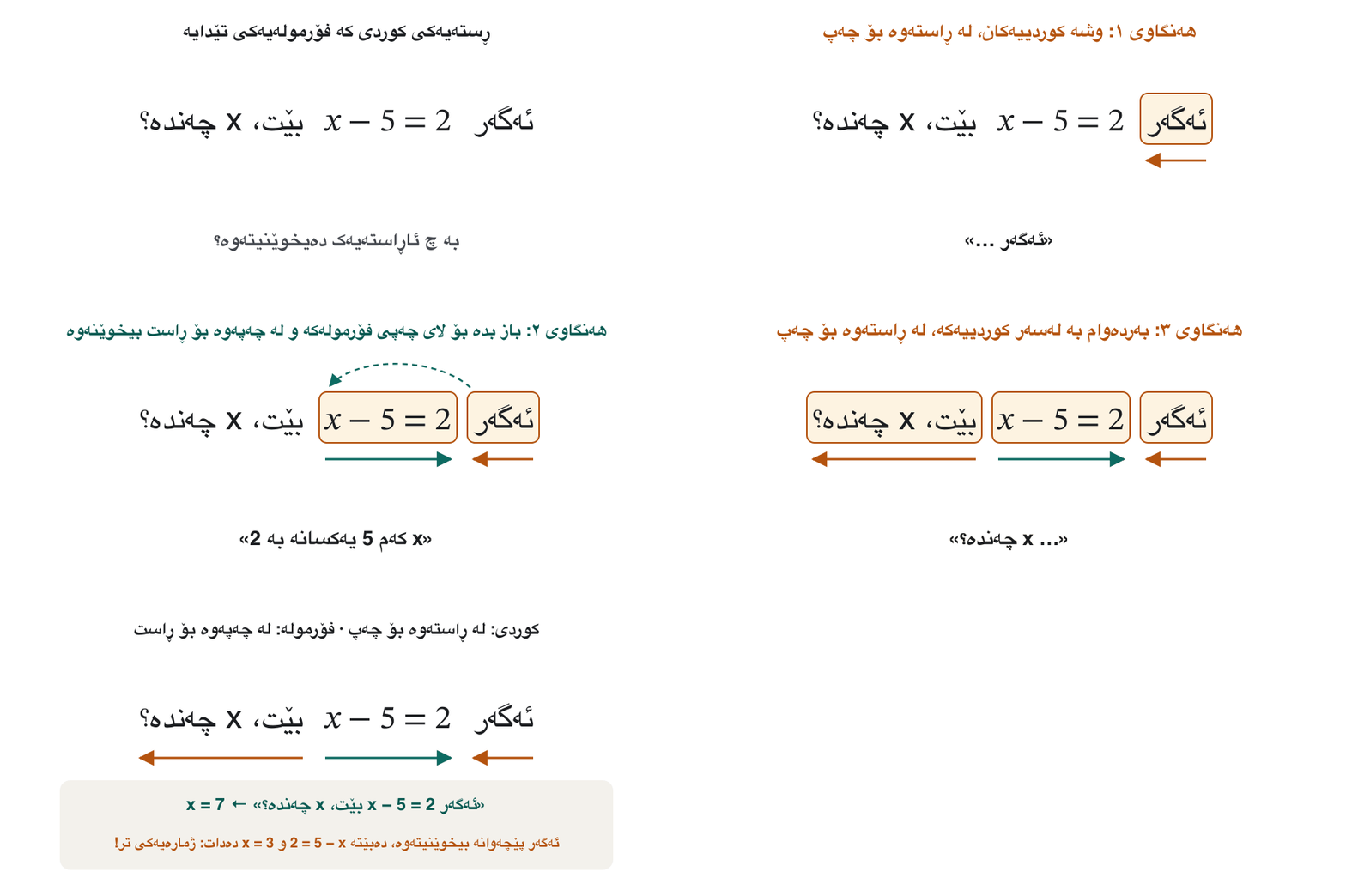
کوردی دەنووسرێت، بەڵام وا نین. لە تاقیکردنەوەکانی بیرکاریی پۆلی دوازدەی هەرێمی کوردستاندا (2024–2025) وشە کوردییەکان لە ڕاستەوە بۆ چەپ دەڕۆن، بەڵام هەموو لە چەپەوە بۆ ڕاست دەڕوات، بە پیتی لاتینی (، ، ) و 0–9. CêIT هەمان شت دەکات: هەموو پیشان دەدرێت، تەنانەت لە ناو دەقی کوردیشدا.
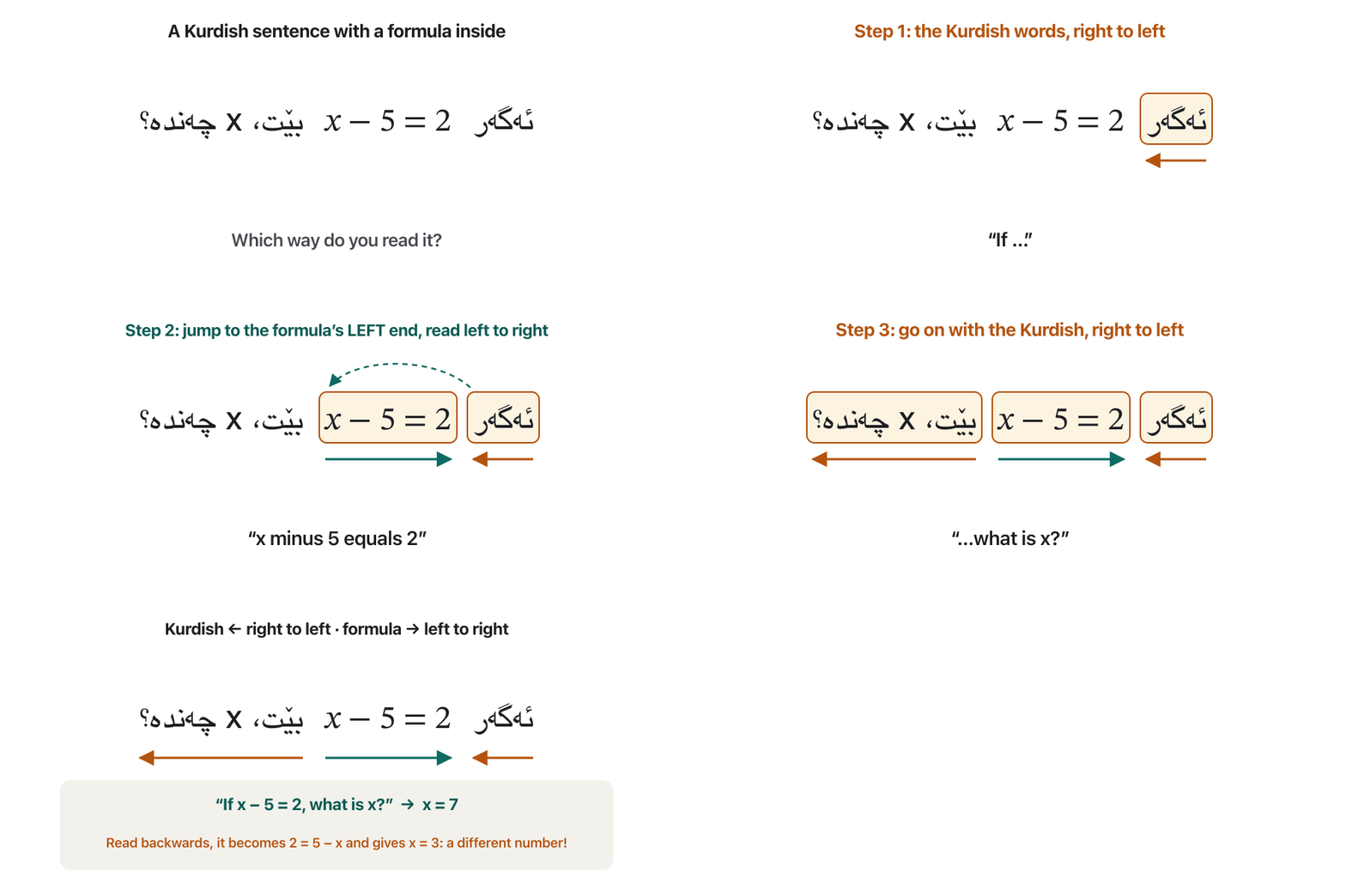
So your eyes make a small jump: read the Kurdish words from right to left; at a formula, jump to its left end and read to the right; then carry on with the Kurdish. Numbers behave the same way: their biggest place is always on the left (see Numbers and digits).
کەواتە چاوەکانت بازێکی بچووک دەدەن: وشە کوردییەکان لە ڕاستەوە بۆ چەپ بخوێنەوە؛ کاتێک گەیشتیتە ، باز بدە بۆ لای چەپی و بەرەو ڕاست بیخوێنەوە؛ پاشان بەردەوام بە لەسەر کوردییەکە. ژمارەکانیش هەروان: گەورەترین خانەیان هەمیشە لە لای چەپە (بڕوانە ژمارە و تاکژمارەکان).
Read it aloud, piece by pieceبە دەنگی بەرز، پارچە پارچە بیخوێنەوە
Saying a formula out loud is the best test that you understand it. Go from left to right and ask three questions about every piece:
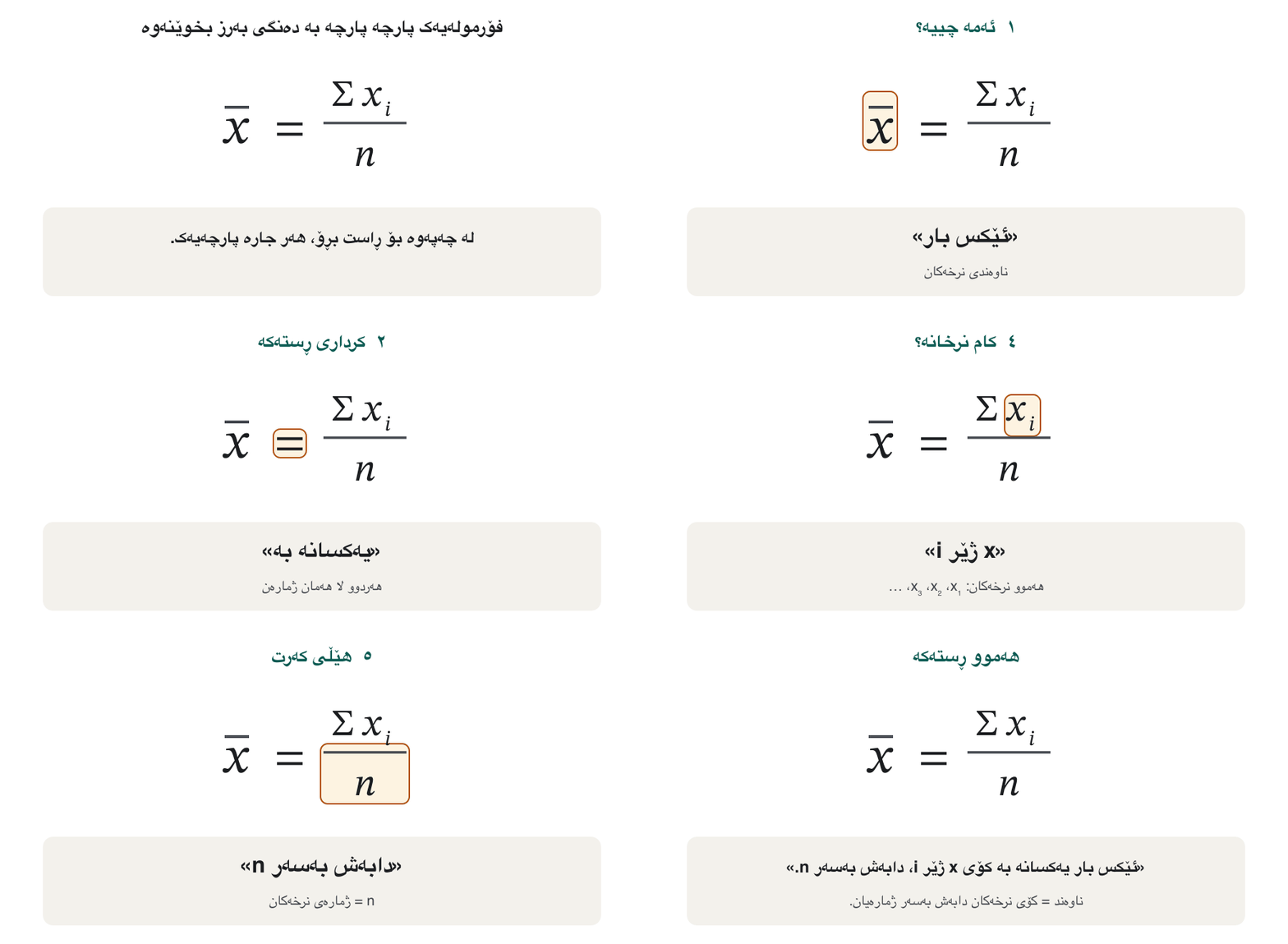
خوێندنەوەی بە دەنگی بەرز باشترین تاقیکردنەوەیە بۆ ئەوەی بزانیت لێی تێگەیشتوویت. لە چەپەوە بۆ ڕاست بڕۆ و سێ پرسیار لەبارەی هەر پارچەیەک بکە:
- What is it?ئەمە چییە؟
Name the symbol: is “x bar”, is “sigma”, is “x sub i”.
ناوی بڵێ: دەخوێنرێتەوە «ئێکس بار»، «سیگما» و «x ژێر i».
- What does it do?چی دەکات؟
Say its job: adds, the fraction bar divides.
کارەکەی بڵێ: کۆ دەکاتەوە، هێڵی دابەش دەکات.
- What does it mean?واتای چییە؟
Put the pieces together: is the mean (average) of the values.
پارچەکان پێکەوە دابنێ: نرخەکانە.
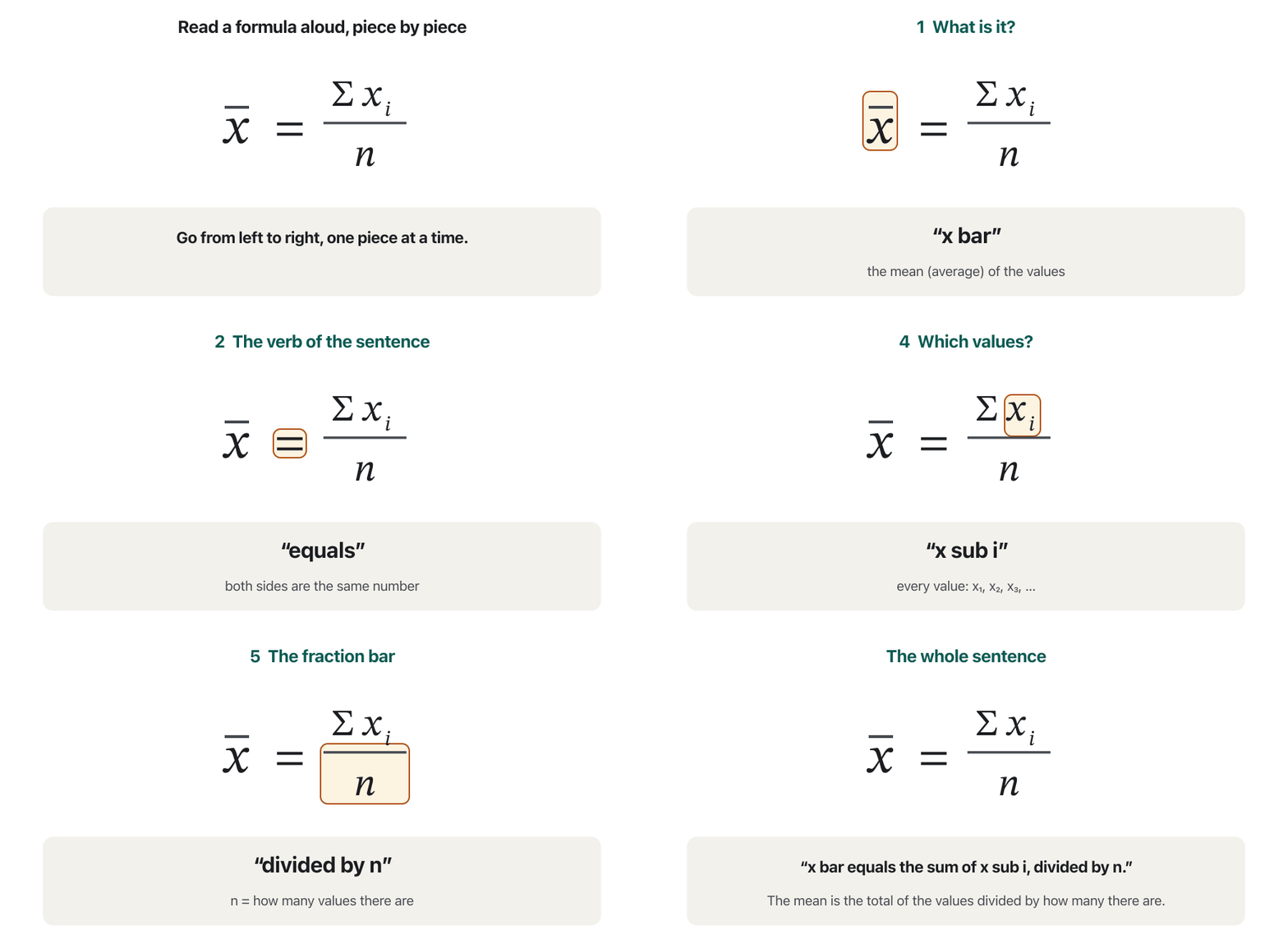
So is read “x bar equals the sum of x sub i, divided by n”. Its meaning: the mean is the total of the values divided by how many there are. With the marks 8, 3 and 5: .
کەواتە دەخوێنرێتەوە «ئێکس بار یەکسانە بە کۆی x ژێر i، دابەش بەسەر n». واتاکەی: کۆی نرخەکانە دابەش بەسەر ژمارەیان. بە نمرەکانی 8، 3 و 5: .
Ten readings you will use every dayدە خوێندنەوە کە ڕۆژانە بەکاریان دەهێنیت
These are the readings you will need most often. Each one is taught fully in its own lesson of this course; the last column takes you there.
ئەمانە ئەو خوێندنەوانەن کە زۆرترین جار پێویستت پێیانە. هەر یەکەیان بە تەواوی لە وانەیەکی تایبەتی ئەم خوولەدا فێر دەکرێت؛ ستوونی کۆتایی دەتباتە ئەوێ.
| Symbol | Say itخوێندنەوە | Learn it inفێری ببە لە |
|---|---|---|
| a plus b«a کۆ b» (a plus b) | Arithmetic signsوانەی نیشانەکانی ژمێرکاری | |
| a minus b«a کەم b» (a minus b) | Arithmetic signsوانەی نیشانەکانی ژمێرکاری | |
| , | a times b«a جاران b» (a times b) | Arithmetic signsوانەی نیشانەکانی ژمێرکاری |
| a over b; a divided by b«a لەسەر b»، «a دابەش بەسەر b» (a over b) | Arithmetic signsوانەی نیشانەکانی ژمێرکاری | |
| x squared«x دووجا» (x squared) | Powers and rootsوانەی توانەکان و ڕەگەکان | |
| a equals b«a یەکسانە بە b» (a equals b) | Equals and other relationsوانەی یەکسان و پەیوەندییەکانی تر | |
| a is less than b«a بچووکترە لە b» (a is less than b) | Inequalitiesوانەی لاسەنگەکان | |
| f of x«fـی x» (f of x) | Function notationوانەی نووسینی نەخشەیی | |
| x sub one; x one«x ژێر 1» (x sub one) | Letters and subscriptsوانەی پیتەکان و ژێرنووسەکان | |
| the sum of x sub i«کۆی x ژێر i» (the sum of x sub i) | Sumsوانەی نیشانەی سیگما |
Slanted letters and upright namesپیتی لار و ناوی ڕاست
Printed maths uses two styles of letters, and the style tells you the job. Italic (slanted) letters are variables: , , . Upright letters are names: function names such as , , , and , and, in the style of the international standard ISO 80000-2, the fixed constants (2.71828…), and the imaginary unit .
بیرکاریی چاپکراو دوو شێوە پیت بەکار دەهێنێت و شێوەکە کارەکەت پێ دەڵێت. پیتی : ، ، . پیتی ڕاست ناون: ناوی وەک ، ، ، و ، هەروەها بەپێی ستانداردی نێودەوڵەتیی ISO 80000-2 وەک (2.71828…)، و .
Why it matters: is one function applied to . If “sin” were slanted like a variable, would look like . When you write by hand you cannot slant letters, so write function names as whole words (sin, log, lim) and never split them.
بۆچی گرنگە: یەک کە لەسەر کار دەکات. ئەگەر «sin» وەک لار بووایە، وەک دەردەکەوت. کاتێک بە دەست دەنووسیت ناتوانیت پیت لار بکەیت، بۆیە ناوی وەک وشەیەکی تەواو بنووسە (sin، log، lim) و هەرگیز لێکیان مەکەرەوە.
Small words around formulasوشە بچووکەکانی دەوروبەری فۆرمولەکان
Books often put a few English words around a formula. They are part of the sentence, so read them too:
کتێبەکان زۆرجار چەند وشەیەکی ئینگلیزی لە دەوروبەری دادەنێن. ئەمانە بەشێکن لە ڕستەکە، بۆیە ئەوانیش بخوێنەوە:
| Wordوشە | Exampleنموونە | What it doesچی دەکات |
|---|---|---|
| letlet («با») | Let be the number of books. | gives a letter its job before the formulaپێش کارێک دەداتە پیتێک: «با x ژمارەی کتێبەکان بێت» |
| wherewhere («کە») | , where is the radius | explains a letter after the formulaلە دوای پیتێک ڕوون دەکاتەوە: «کە r نیوەتیرەیە» |
| such thatsuch that («بە جۆرێک کە») | adds a condition; the bar or a colon is read “such that”مەرجێک زیاد دەکات؛ هێڵی یان دوو خاڵ بەم شێوەیە دەخوێنرێتەوە | |
| forfor («بۆ») | for | says where the formula is trueدەڵێت لە کوێدا ڕاستە |
| if … then …if … then … («ئەگەر … ئەوا …») | if then | a condition and what follows from itمەرجێک و ئەوەی لێیەوە دێت |
| therefore, therefore، («کەواتە») | , therefore | a conclusionئەنجامێک |
Common mistakesهەڵە باوەکان
| Mistakeهەڵە | Why it is wrongبۆچی هەڵەیە | Do thisئەمە بکە |
|---|---|---|
| Reading a formula from the right because the sentence is Kurdishخوێندنەوەی لە لای ڕاستەوە چونکە ڕستەکە کوردییە | becomes : instead of 7 دەبێتە : لە جیاتی 7 | Always start at the formula's left endهەمیشە لە لای چەپی دەست پێ بکە |
| Reading as خوێندنەوەی وەک | sin is one name, printed uprightsin یەک ناوە و بە ڕاستی چاپ دەکرێت | Say “the sine of x”بڵێ « x» |
| Reading as “x two” or as خوێندنەوەی وەک «x دوو» یان وەک | but : for they give 9 and 6 بەڵام : بۆ دەبنە 9 و 6 | Say “x squared”بڵێ «x دووجا» |
| Trying to “solve” هەوڵدان بۆ «شیکارکردنی» | An expression has no relation sign, so it says nothing that could be true or false پەیوەندیی نییە، بۆیە هیچ شتێک ناڵێت کە ڕاست یان هەڵە بێت | Simplify it or find its valueسادەی بکەرەوە یان نرخەکەی بدۆزەوە |
| Reading as “f times x”خوێندنەوەی وەک «f جاران x» | The brackets hold the value given to the functionناو کەوانەکە ئەو نرخەیە کە دەدرێتە | Say “f of x” (see Function notation)بڵێ «fـی x» (بڕوانە نووسینی نەخشەیی) |
| Saying only letters: “x bar equals sigma x i n”وتنی تەنیا پیتەکان: «ئێکس بار یەکسانە بە سیگما x i n» | The listener cannot rebuild the formulaگوێگر ناتوانێت دووپاتە دروست بکاتەوە | Say what each piece does: “the sum of x sub i, divided by n”بڵێ هەر پارچەیەک چی دەکات: «کۆی x ژێر i، دابەش بەسەر n» |
Practice: read real formulasڕاهێنان: فۆرمولەکانی ڕاستەقینە بخوێنەوە
Read these formulas aloud in English and in Kurdish: (a) (b) (c)
ئەم بە ئینگلیزی و بە کوردی بە دەنگی بەرز بخوێنەوە: (a) (b) (c)
Hintئاماژە
Go from left to right and name each piece; the table of readings above helps.
لە چەپەوە بۆ ڕاست بڕۆ و ناوی هەر پارچەیەک بڵێ؛ خشتەی خوێندنەوەکانی سەرەوە یارمەتیت دەدات.
Show answerوەڵامەکە پیشان بدە
- (a) “y equals two x plus one.”
- (b) “A equals pi r squared”: the area of a circle.
- (c) “a plus b, over two” (or “a plus b, all divided by two”): the mean of a and b.
- (a) «y یەکسانە بە دوو x کۆ یەک» (y equals two x plus one).
- (b) «A یەکسانە بە پی r دووجا» (A equals pi r squared): ڕووبەری بازنە.
- (c) «a کۆ b، لەسەر دوو» (a plus b, over two): a و b.
Which are expressions and which are equations? (a) (b) (c) (d) . Then solve (b).
کامیان و کامیان ؟ (a) (b) (c) (d) . پاشان (b) شیکار بکە.
Show answerوەڵامەکە پیشان بدە
- (a) and (c) are expressions: they have no relation sign.
- (b) and (d) are equations: they have .
- (b): , so .
- (a) و (c) : پەیوەندییان نییە.
- (b) و (d) : ـیان هەیە.
- (b): ، کەواتە .
Name every part of . Then find .
ناوی هەموو بەشەکانی بنێ. پاشان بدۆزەوە.
Show answerوەڵامەکە پیشان بدە
Variable ; coefficient 4; exponent 3; operator ; constants 7 and 25; terms and (with its minus sign); relation sign . Then , , so .
؛ 4؛ 3؛ ؛ 7 و 25؛ و (لەگەڵ نیشانەی کەمەکەی)؛ پەیوەندی . پاشان ، ، کەواتە .
A Kurdish worksheet asks, in Kurdish: “If , find the value of .” Read the formula in the right order, say it in English and solve it.
پەڕەیەکی ڕاهێنانی کوردی دەپرسێت: «ئەگەر بێت، بەهای بدۆزەوە.» بە ڕیزی دروست بخوێنەوە، بە ئینگلیزی بیڵێ و شیکاری بکە.
Show answerوەڵامەکە پیشان بدە
Start at the formula's left end: “three x plus one equals ten”. Then , so . Reading from the right (“ten equals one plus three x”) happens to give the same equation here because addition can swap, but with subtraction or division the order changes the answer.
لە لای چەپی دەست پێ بکە: «سێ x کۆ یەک یەکسانە بە دە» (three x plus one equals ten). پاشان ، کەواتە . لێرەدا خوێندنەوە لە ڕاستەوە بە ڕێکەوت هەمان دەدات، چونکە لە شوێنی ژمارەکان دەگۆڕدرێن؛ بەڵام لە و ڕیزەکە وەڵامەکە دەگۆڕێت.
Summaryپوختە
- A formula is a sentence made of symbols: variables, constants, coefficients, exponents, operators, terms and a relation sign.
- An expression is a phrase with no relation sign; an equation or an inequality is a sentence that can be true or false.
- Formulas and numbers always run from left to right, even inside a Kurdish sentence.
- Read aloud piece by piece: What is it? What does it do? What does it mean?
- Italic letters are variables; upright letters are names (sin, log) and constants (e, π).
- Small words such as let, where, such that and for are part of the reading.
- Every symbol of this course, with its readings in English and Kurdish, is collected in the Symbol dictionary.
- ڕستەیەکە لە دروست بووە: ، ، ، ، ، و پەیوەندی.
- دەستەواژەیەکە بێ پەیوەندی؛ یان ڕستەیەکە کە دەشێت ڕاست یان هەڵە بێت.
- و ژمارەکان هەمیشە لە چەپەوە بۆ ڕاست دەڕۆن، تەنانەت لە ناو ڕستەیەکی کوردیشدا.
- پارچە پارچە بە دەنگی بەرز بخوێنەوە: ئەمە چییە؟ چی دەکات؟ واتای چییە؟
- پیتی لار ؛ پیتی ڕاست ناون (sin، log) یان (e، π).
- وشە بچووکەکانی وەک let، where، such that و for بەشێکن لە خوێندنەوەکە.
- هەموو ئەم خوولە، لەگەڵ خوێندنەوەکانیان بە ئینگلیزی و کوردی، لە فەرهەنگی هێماکانـدا کۆ کراونەتەوە.
What is the difference between and ?جیاوازیی نێوان و چییە؟
The first is an expression (a phrase): you can only simplify it or find its value. The second is an equation (a sentence): it is true only for .
یەکەمیان (دەستەواژە): تەنیا دەتوانیت سادەی بکەیتەوە یان نرخەکەی بدۆزیتەوە. دووەمیان (ڕستە): تەنیا بۆ ڕاستە.
A Kurdish sentence contains . What is ?ڕستەیەکی کوردی ـی تێدایە. چەندە؟
Read it from its left end: 10 minus x equals 4, so .
لە لای چەپیەوە بیخوێنەوە: 10 کەم x یەکسانە بە 4، کەواتە .
Why is “sin” printed upright but slanted?بۆچی «sin» ڕاست چاپ دەکرێت بەڵام لار؟
Upright letters are names of functions; slanted letters are variables. is one function of , not .
پیتی ڕاست ناوی ؛ پیتی لار . یەک بۆ ، نەک .
Lesson complete!وانەکە تەواو بوو!
Well done. Review the key terms, then go on to the next lesson.دەستخۆش. سەیرێکی زاراوە سەرەکییەکان بکەرەوە، پاشان بڕۆ بۆ وانەی داهاتوو.
Key termsزاراوە سەرەکییەکان
Letters, Subscripts, Superscripts and the Greek Alphabetپیتەکان، ژێرنووسەکان، ژوورنووسەکان و ئەلفوبێی یۆنانی
Related lecturesوانە پەیوەندیدارەکان
- Letters, Subscripts, Superscripts and the Greek Alphabetپیتەکان، ژێرنووسەکان، ژوورنووسەکان و ئەلفوبێی یۆنانی
- Numbers and Digits: ١٢٣ and 123, Decimal Points and Scientific Notationژمارە و تاکژمارەکان: ١٢٣ و 123، فاریزە و شێوازی زانستی
- The Symbol Dictionaryفەرهەنگی هێماکان
- Algebra, Boolean Logic and Matrices Inside the Computerجەبر، لۆجیکی بوول و ماتریکسەکان لەناو کۆمپیوتەردا
- What Is a Function?نەخشە چییە؟
- Subscripts and Sigma (Σ) Notationژێرنووسەکان و نیشانەی سیگما (Σ)
References and further readingسەرچاوەکان و خوێندنەوەی زیاتر
- OpenStax, Prealgebra 2e, 2.1 Use the Language of Algebra
- ISO 80000-2:2019 Quantities and units — Part 2: Mathematics (AFNOR store listing: scope, 2019 edition)
- Wikipedia: Typographical conventions in mathematical formulae
- OpenStax, Statistics, Appendix F: Mathematical Phrases, Symbols, and Formulas
- Kurdistan Region Ministry of Education: grade-12 maths general exam 2024–2025, first round, literary track, model answers (re-hosted by student12.com)
This lecture is a first edition. The Kurdish text and terminology are waiting for review by Kurdish IT teachers.ئەم وانەیە چاپی یەکەمە. دەقە کوردییەکە و زاراوەکانی چاوەڕێی پێداچوونەوەی مامۆستایانی کوردی بواری IT ن.