Chapterبەش 2 · Lectureوانە 2.3
Powers, Roots, Absolute Value, Factorial, Floor and Ceilingتوانەکان، ڕەگەکان، نرخی ڕووت، فاکتۆریێل، نەخشەی گەورەترین ژمارەی تەواو و نەخشەی بچووکترین ژمارەی تەواو
How to read and say (squared, cubed, to the n), negative and fraction exponents, , and , the absolute value and the other jobs of vertical bars, with , and floor and ceiling , with links to the lessons that teach the maths behind each symbol.
چۆن بخوێنیتەوە (دووجا، سێجا، بە توانی n)، سالب و کەرتی، ، و ، و کارەکانی تری هێڵی ستوونی، لەگەڵ ، و ، لەگەڵ بەستەر بۆ ئەو وانانەی بیرکاریی پشت هەر فێر دەکەن.
What you will learnچی فێر دەبیت
- Name the base and the exponent of a power and say , and in English and Kurdish.
- Read zero, negative and fraction exponents: , , .
- Read root signs and know that is never negative.
- Read and tell it from the other bars: , , , .
- Read and compute , and , also for negative x.
- و بناسیت و ، و بە ئینگلیزی و کوردی بخوێنیتەوە.
- سفر، سالب و کەرتی بخوێنیتەوە: ، ، .
- ڕەگ بخوێنیتەوە و بزانیت هەرگیز سالب نییە.
- بخوێنیتەوە و لە هێڵەکانی تر جیای بکەیتەوە: ، ، ، .
- ، و بخوێنیتەوە و هەژماریان بکەیت، بۆ xـی سالبیش.
Powers: base and exponentتوانەکان: بنچینە و توان
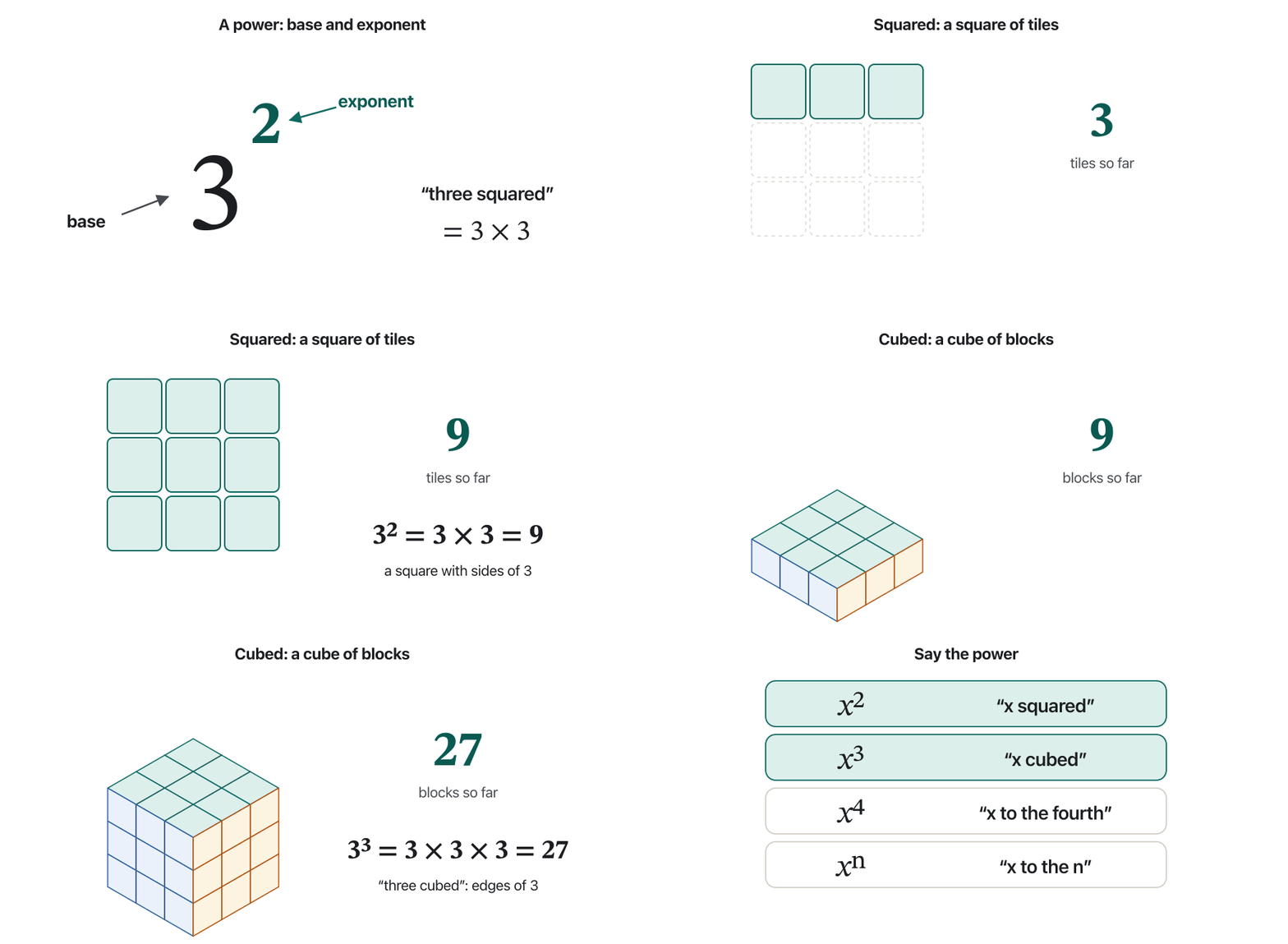
In the big is the base and the small raised is the exponent, or power. The exponent says how many times the base is multiplied by itself: . Say as “a to the n” or “a to the power n”.
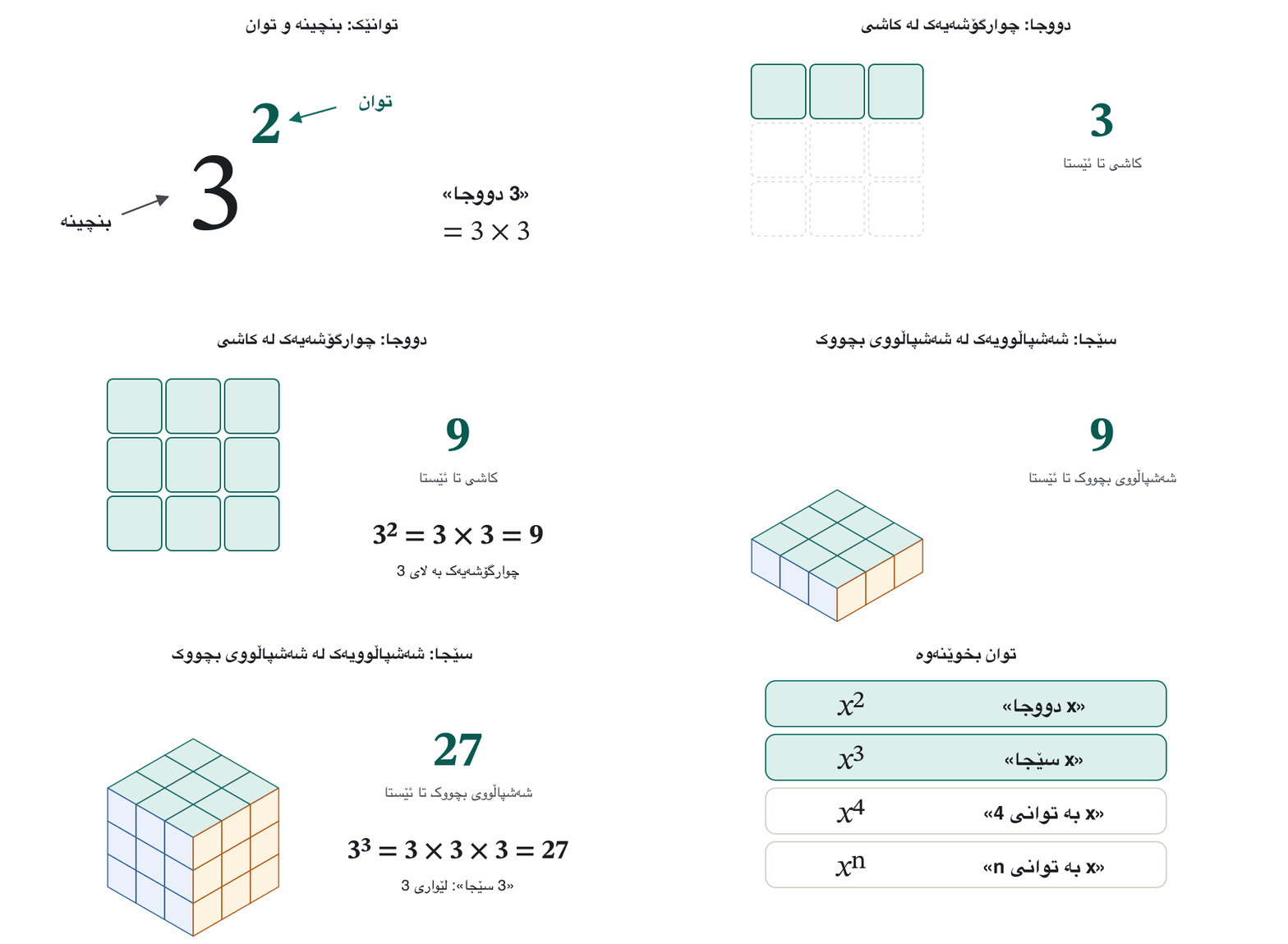
لە ـدا ـی گەورە و ـی بچووکی بەرز . دەڵێت چەند جار لە خۆی دەدرێت: . بخوێنەوە «a بە توانی n» یان «a توانی n».
| Symbol | Say itخوێندنەوە |
|---|---|
| “x squared”«x دووجا» (x squared) | |
| “x cubed”«x سێجا» (x cubed) | |
| “x to the fourth (power)”«x بە توانی 4» (x to the fourth) | |
| “x to the n”, “x to the power n”«x بە توانی n» (x to the n) |
A square with sides of 3 holds tiles and a cube with edges of 3 holds blocks: that is why we say “squared” and “cubed”. You may also hear x توانی دوو for . Typed on one line it is x^2 (calculators, Excel, LaTeX) or x**2 (Powers with **), and Java writes Math.pow(x, 2) (Math.pow); plain text may use superscript digits, as in O(n²) or 2¹⁶ = 65,536 (Superscripts).
چوارگۆشەیەک بە لای 3 کاشی دەگرێت و شەشپاڵوویەک بە لێواری 3 شەشپاڵووی بچووک: بۆیە دەڵێین «دووجا» و «سێجا». لەوانەیە بۆ «x توانی دوو»ـش ببیستیت. لە یەک دێڕدا دەنووسرێت x^2 (، Excel، LaTeX) یان x**2 (توان بە **) و Java دەنووسێت Math.pow(x, 2) (Math.pow)؛ دەقی ئاسایی دەشێت بەکار بهێنێت، وەک O(n²) یان 2¹⁶ = 65,536 (ژوورنووسەکان).
Zero, negative and fraction exponentsتوانی سفر، سالب و کەرتی
Exponents do not have to be positive whole numbers. Follow the pattern in the picture: each step down divides by 2. It shows why and why a negative exponent makes a fraction.
پێویست ناکات تەنیا 1، 2، 3 و هتد بن. شوێن ئەو ڕێچکەیە بکەوە کە وێنەکە پیشانی دەدات: هەر هەنگاوێک بۆ خوارەوە بەسەر 2دا دابەش دەکات. پیشان دەدات بۆچی و بۆچی سالب دروست دەکات.
- for every : “a to the zero is one”.
- : , “two to the minus three”. So , the reciprocal of a.
- : , “nine to the one half”, and .
- بۆ هەموو : «a بە توانی سفر یەکسانە بە یەک».
- : ، «2 بە توانی ». کەواتە ، a.
- : ، «9 بە توانی یەک لەسەر دوو» و .
Careful: on a function, a raised is not a power. is the inverse function, not (Function notation). The rules for computing with powers are taught in the lesson on exponential functions.
ئاگادار بە: لەسەر ، ـی بەرز نییە. ، نەک (نووسینی نەخشەیی). یاساکانی هەژمارکردن بە لە وانەی نەخشە توانییەکان فێر دەکرێن.
Roots: , and ڕەگەکان: ، و
The root sign undoes a power. because : say “the square root of nine”. A small number in the hook says which root: , “the cube root of eight”, because , and is “the n-th root of a”. With no small number, it is the square root.
ڕەگ کاری هەڵدەوەشێنێتەوە. ، چونکە : بڵێ « 9». ژمارە بچووکەکەی ناو قولابەکە دەڵێت کام ڕەگ: ، « 8»، چونکە . واتە «ڕەگی nـەمی a». ئەگەر ژمارەی بچووک نەبوو، .
Two facts to remember. always means the non-negative root: , never . When an equation has two answers, books write : gives . And the bar of the sign is a hidden bracket (Hidden brackets). Code writes sqrt(9). More in Square roots and cube roots.
دوو ڕاستی لەبیر بێت. هەمیشە واتای ڕەگە نا-سالبەکە دەدات: ، هەرگیز . کاتێک دوو وەڵامی هەبێت، کتێبەکان دەنووسن: دەدات . هەروەها هێڵی سەر کەوانەیەکی شاراوەیە (کەوانەی شاراوە). کۆد دەنووسێت sqrt(9). زیاتر لە ڕەگی دووجا و ڕەگی سێجا.
Absolute value: نرخی ڕووت:
Two vertical bars around a number give its absolute value: its distance from 0 on the number line, so the sign is dropped. , , . Say as “the absolute value of x”; British books also call it “the modulus of x”.
دوو هێڵی ستوونی لە دەوری ژمارەیەک دەدەن: دوورییەکەی لە 0 لەسەر ، بۆیە نیشانەکەی ( یان ) لادەبرێت. ، ، . بخوێنەوە « x»؛ کتێبە بەریتانییەکان پێی دەڵێن the modulus of x.
Read the brace as “if”: is x when x is 0 or positive, and , the opposite of x, when x is negative. Because is never negative, also (The definition: two cases).
کەوانە لوولەکە بە «ئەگەر» بخوێنەوە: دەکاتە x کاتێک x سفر یان موجەب بێت و ، پێچەوانەی x، کاتێک x سالب بێت. چونکە هەرگیز سالب نییە، ـیش ڕاستە (پێناسە دوو حاڵەتییەکە).
In statistics, is the distance of a value from the mean, the heart of the mean deviation. Code writes abs(x).
لە ، دووریی نرخێکە لە ، کرۆکی لادانی نێوانەیی. کۆد دەنووسێت abs(x).
Absolute value: نرخی ڕووت:
means واتە
Because is a distance, a statement about it describes points on both sides of 0. Read the double arrow “if and only if”: the two sides mean exactly the same (Logic symbols):
چونکە دوورییە، هەر ڕستەیەک لەبارەی خاڵەکانی هەردوو لای 0 دەدوێت. تیرە دووسەرەکەی بخوێنەوە «ئەگەر و تەنیا ئەگەر»: هەردوو لا ڕێک هەمان واتایان هەیە (هێماکانی لۆجیک):
- : x is exactly r away from 0. For : or .
- : x is closer than r to 0; for , between and 3.
- or : x is farther than r from 0, outside on both sides.
- : x ڕێک r لە 0ـەوە دوورە. بۆ : یان .
- : x لە r نزیکترە لە 0؛ بۆ ، لە نێوان و 3ـدایە.
- یان : x لە r دوورترە لە 0، لە دەرەوە لە هەردوو لا.
Solving such equations and inequalities step by step is taught in The theorem: three cases.
چۆنیەتی شیکارکردنیان هەنگاو بە هەنگاو لە تیۆرەمەکە: سێ حاڵەت فێر دەکرێت.
Vertical bars with other jobsهێڵی ستوونی بە کاری تر
Vertical bars are not always absolute value. Look at what stands between them:
هێڵی ستوونی هەمیشە نییە. سەیری ئەوە بکە کە لە نێوانیاندایە:
| Symbol | Say itخوێندنەوە | Meaningواتا |
|---|---|---|
| “the absolute value of minus seven”بڵێ « » | distance from 0, never negative (Absolute value)دووری لە 0، هەرگیز سالب نییە (نرخی ڕووت) | |
| , | “the determinant of A”بڵێ « A» | a number from a square matrix; it can be negative: (A matrix, Determinant bars)ژمارەیەک لە چوارگۆشە؛ دەشێت سالب بێت: (ماتریکسێکی ، هێڵەکانی دیتەرمینانت) |
| , | “the number of elements of S”بڵێ « S» | for , (Set notation)بۆ ، (هێماکانی کۆمەڵە) |
| “the probability of A given B”« A بە مەرجی B» | one bar that means “given” (Statistics symbols)یەک هێڵ بە واتای «بە مەرجی» (هێماکانی ئامار) | |
| “the length of v”, “the norm of v”بڵێ « v» | double bars: the length of a vector (Vectors and matrices)دوو هێڵی جووت: درێژیی (ئاڕاستەبڕەکان و ماتریکسەکان) |
Factorial: فاکتۆریێل:
An exclamation mark after a whole number is the factorial: multiply all the whole numbers from n down to 1. . Say it “five factorial”; in Kurdish فاکتۆریێلی 5 or 5 فاکتۆریێل. It is not an excited “five!”.
نیشانەی سەرسوڕمان لە دوای موجەب : هەموو لە nـەوە تا 1 لێک بدە. . بیخوێنەوە « 5» یان «5 ». «پێنج!»ـێکی بە هاوار نییە.
By definition : an empty product is 1, and there is exactly one way to arrange nothing (Why zero factorial is 1). Factorials grow fast: , and is already bigger than . You meet in counting (Arranging everything), in recursion (A classic recursive function), in determinants, and as math.factorial(5) in Python or factorial(5) in MATLAB (MATLAB functions).
بە پێناسە : بەتاڵ 1ـە و ڕێک یەک ڕێگا هەیە بۆ ڕیزکردنی هیچ (بۆچی فاکتۆریێلی سفر 1ـە). خێرا گەورە دەبن: و لە گەورەترە. لە ژماردندا (ڕیزکردنی هەموو شتەکان)، لە (فاکتۆریێل بە خۆبانگکردنەوە)، لە و وەک math.factorial(5) لە Python یان factorial(5) لە MATLAB (فاکتۆریێل لە MATLAB) دەبینیت.
Floor and ceiling نەخشەی گەورەترین ژمارەی تەواو و نەخشەی بچووکترین ژمارەی تەواو
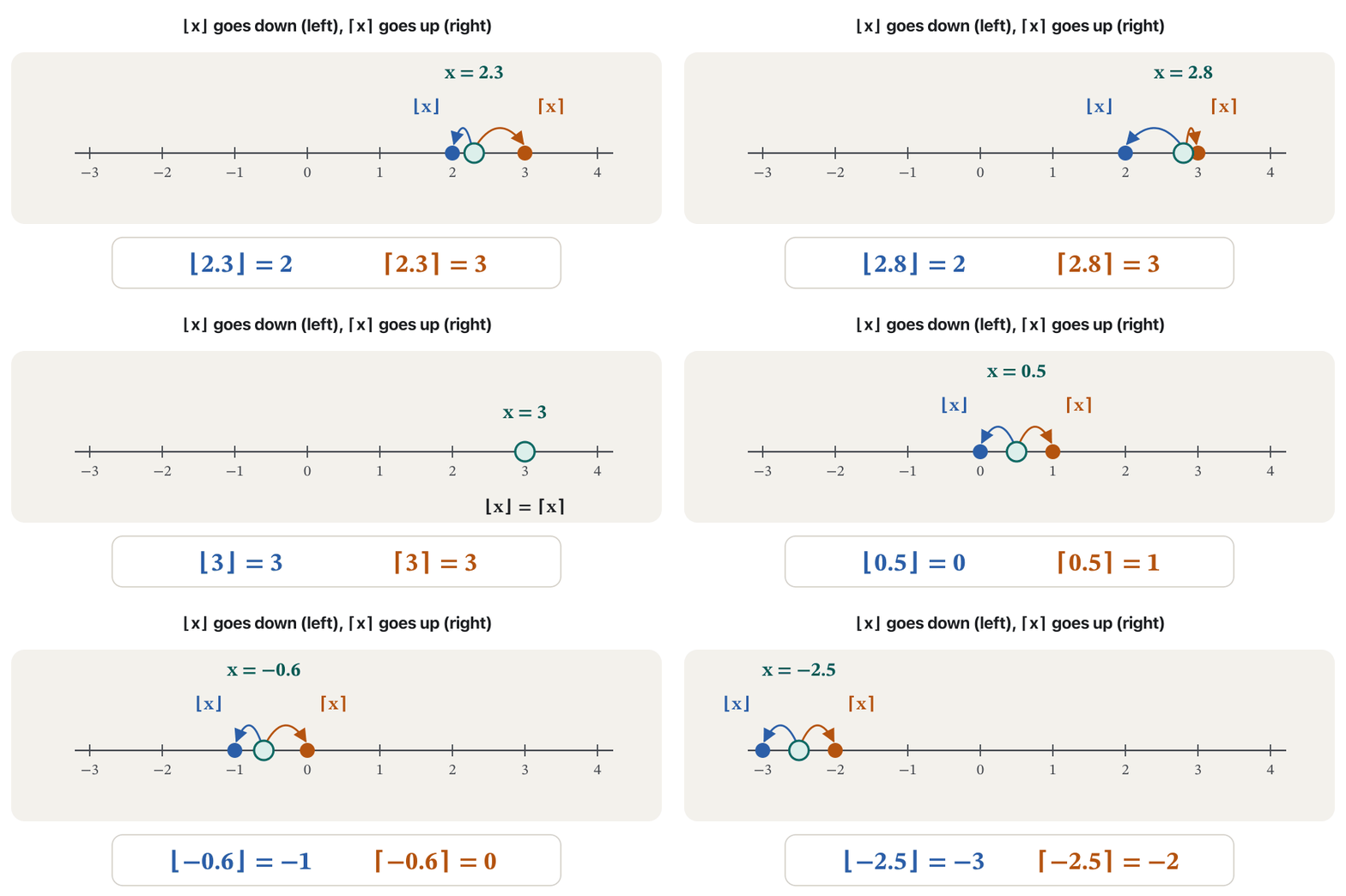
The floor is the greatest whole number that is not above x: go down, to the left on the number line. The ceiling goes up, to the right. A whole number stays where it is. Say “the floor of x” and “the ceiling of x”. The animation slides x along a number line.
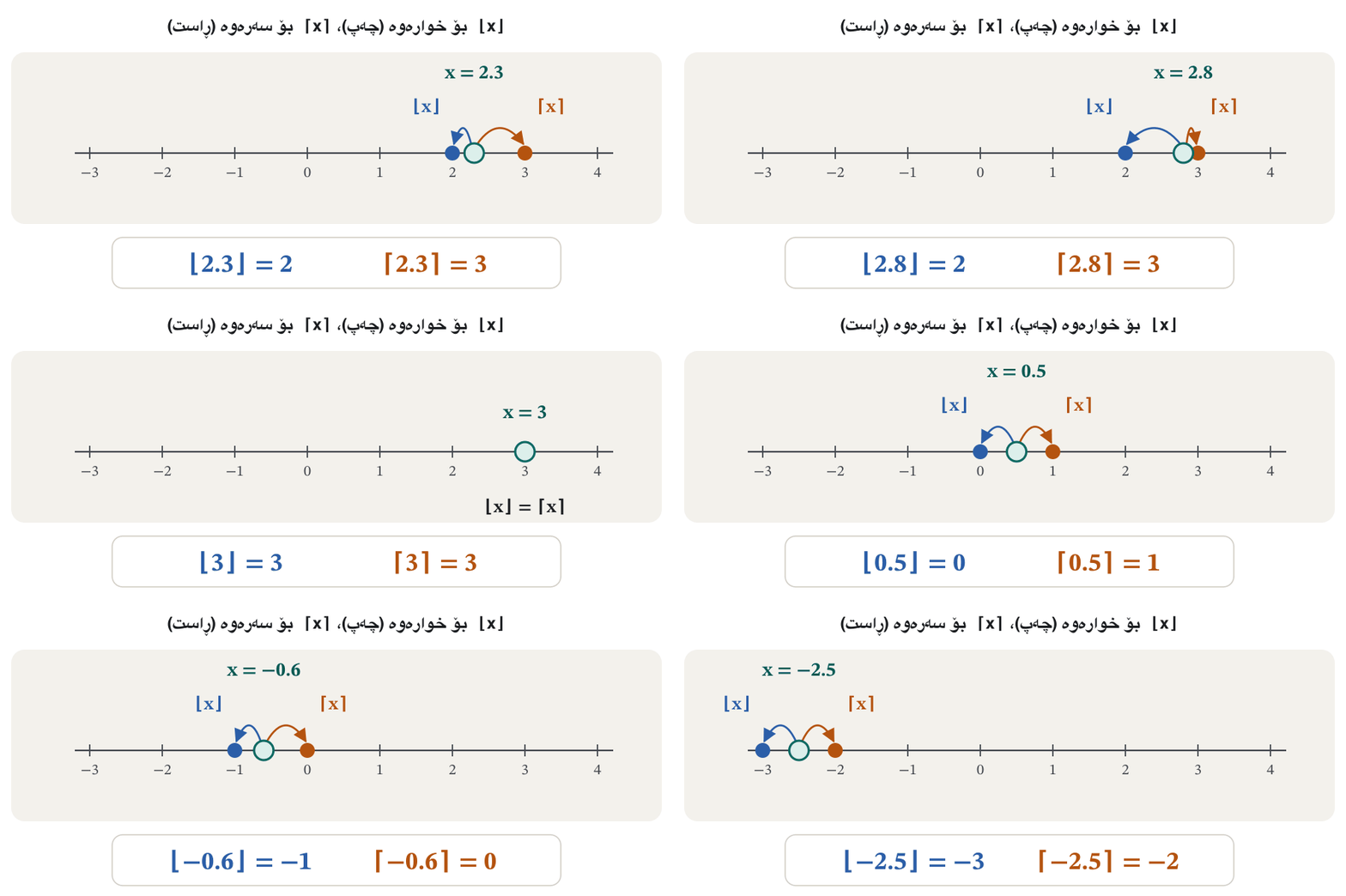
گەورەترین کە لە x گەورەتر نەبێت: بڕۆ بۆ خوارەوە، بۆ لای چەپی . دەچێتە سەرەوە، بۆ لای ڕاست. لە جێی خۆی دەمێنێتەوە. بە ئینگلیزی دەڵێن the floor of x و the ceiling of x؛ لەوانەیە «فلۆری x» و «سیلینگی x»ـش ببیستیت. وێنە جووڵاوەکە x بەسەر دەجووڵێنێت.
| xنرخی x | ||
|---|---|---|
Mind the shapes: the floor has its little bars at the bottom, the ceiling at the top, like the floor and the ceiling of a room. Older books write the floor as (Gauss, 1808) or ; the shapes and come from Kenneth Iverson (1962). Graphs and more examples: The floor function.
سەیری شێوەکان بکە: هێڵە بچووکەکانی لە خوارەوەیە و لە سەرەوە، وەک زەوی و بنمیچی ژوورێک. کتێبە کۆنەکان بە (گاوس، 1808) یان دەنووسن؛ شێوەکانی و لە کێنێس ئایڤەرسنەوە هاتوون (1962). و نموونەی زیاتر: نەخشەی گەورەترین ژمارەی تەواو.
Floor and ceiling نەخشەی گەورەترین ژمارەی تەواو و نەخشەی بچووکترین ژمارەی تەواو
Floor, cutting off and roundingنەخشەی گەورەترین ژمارەی تەواو، بڕینەوە و نزیککردنەوە
The floor is not the same as cutting off the decimals (truncation). Cutting off always moves toward 0, the floor always moves down. For positive numbers they agree; for negative numbers they do not: , but cutting off gives . Rounding is different again: it goes to the nearest whole number.
وەک فڕێدانی ژمارەکانی دوای () نییە. هەمیشە بەرەو 0 دەچێت، هەمیشە بەرەو خوارەوە. بۆ یەک دەگرنەوە؛ بۆ نا: ، بەڵام دەدات. جیاوازە: بۆ نزیکترین دەچێت.
| For بۆ | Python | Java | MATLAB | Resultئەنجام |
|---|---|---|---|---|
| floor | math.floor(x) | Math.floor(x) | floor(x) | |
| ceiling | math.ceil(x) | Math.ceil(x) | ceil(x) | |
| cut off | int(x) | (int) x | fix(x) |
Programs use the floor all the time: Python's // divides and then floors (-7 // 2 is , while Java's -7 / 2 cuts off to , Dividing negative numbers); binary search needs at most looks (How many steps?); 47 results at 10 per page need pages (Floor and ceiling in programs). Rounding rules: Rounding, truncating, floor and ceiling.
هەمیشە بەکار دەهێنن: //ـی Python دابەش دەکات و پاشان بەرەو خوار دەیبات (-7 // 2 دەکاتە ، بەڵام -7 / 2ـی Java دەیبڕێتەوە بۆ ، دابەشکردنی ژمارە سالبەکان)؛ لانیزۆر پێویستی بە سەیرکردن هەیە (چەند هەنگاو؟)؛ 47 ئەنجام بە 10 لە هەر لاپەڕەیەک پێویستی بە لاپەڕە هەیە (لە بەرنامەکاندا). یاساکانی : نزیککردنەوە و بڕینەوە.
Common mistakesهەڵە باوەکان
| Mistakeهەڵە | Why it is wrongبۆچی هەڵەیە | Do thisئەمە بکە |
|---|---|---|
| Reading as خوێندنەوەی وەک | For : 9, not 6بۆ : 9، نەک 6 | |
| A negative exponent makes a fraction, not a negative number سالب دروست دەکات، نەک | ||
| means the non-negative root واتە ڕەگە نا-سالبەکە | 3; it is that has 3؛ ئەوە ـە کە ـی هەیە | |
| for a matrix بۆ | Around a matrix the bars mean determinantلە دەوری هێڵەکان واتای دەدەن | ; write to be clear؛ بۆ ڕوونی بنووسە |
| is 1 by definition بە پێناسە 1ـە | ||
Reading != in code as a factorialخوێندنەوەی != لە کۆددا وەک | In code ! means NOT, and != means “is not equal to”لە کۆددا ! واتە NOT و != واتە «یەکسان نییە بە» | Read a != b as “a is not equal to b”a != b بخوێنەوە «a یەکسان نییە بە b» |
| The floor goes down, to the left دەچێتە خوارەوە، بۆ چەپ | ||
| Mixing up and تێکەڵکردنی و | Floor: bars at the bottom; ceiling: bars at the top: هێڵەکان لە خوارەوە؛ : لە سەرەوە | Floor goes down, ceiling goes up بۆ خوارەوە، بۆ سەرەوە |
Practiceڕاهێنان
Read each one aloud in English and Kurdish, then find its value: (a) (b) (c) (d) (e) .
هەر یەکەیان بە ئینگلیزی و کوردی بە دەنگی بەرز بخوێنەوە، پاشان نرخەکەی بدۆزەرەوە: (a) (b) (c) (d) (e) .
Show answerوەڵامەکە پیشان بدە
Readings: (a) “two to the minus two”; (b) “twenty-seven to the one third”, the cube root of 27; (c) “the absolute value of minus seven”; (d) “four factorial”; (e) “the floor of minus two point five”.
خوێندنەوەکان: (a) «2 بە توانی »؛ (b) «27 بە توانی یەک لەسەر سێ»، 27؛ (c) « »؛ (d) « 4»؛ (e) « ».
Say what the bars mean in each line: (a) (b) (c) (d) , where R is “rain” and C is “clouds”.
بڵێ هێڵەکان لە هەر دێڕێکدا واتای چییە: (a) (b) (c) (d) ، R واتە «باران» و C واتە «هەور».
Show answerوەڵامەکە پیشان بدە
- (a) Absolute value: x is less than 1 away from 3.
- (b) Determinant: , which may be negative.
- (c) The number of elements: the set has 3 members.
- (d) “Given”: the probability of rain when we already know there are clouds.
- (a) : x کەمتر لە 1 لە 3ـەوە دوورە.
- (b) : ، کە دەشێت سالب بێت.
- (c) : 3 هەیە.
- (d) «بە مەرجی»: باران کاتێک دەزانین هەور هەیە.
Each line has a mistake. Write it correctly: (a) (b) (c) (d) .
هەر دێڕێک هەڵەیەکی تێدایە. بە دروستی بینووسەوە: (a) (b) (c) (d) .
Show answerوەڵامەکە پیشان بدە
(c) needs the order of operations: the power belongs to 4 only (Two traps with powers).
(c) پێویستی بە هەیە: تەنیا هی 4ـە (دوو تەڵە لەگەڵ توانەکان).
Summaryپوختە
- : base a, exponent n; “a to the n”, «a بە توانی n»; “x squared”, “x cubed”.
- , , ; on a function, is the inverse.
- is never negative; the small number in says which root.
- is the distance from 0; means .
- Bars can also mean a determinant , a number of elements , “given” or a length .
- , “n factorial”, and .
- goes down, goes up; cutting off goes toward 0.
- All these symbols, with their readings, are in the Symbol dictionary: Powers, roots and bars.
- : a، n؛ «a بە توانی n»؛ «x دووجا»، «x سێجا».
- ، ، ؛ لەسەر ، .
- هەرگیز سالب نییە؛ ژمارە بچووکەکەی دەڵێت کام ڕەگ.
- دوورییە لە 0؛ واتە .
- هێڵەکان دەشێت واتای ، ، «بە مەرجی» یان درێژی بدەن.
- ، « n» و .
- بۆ خوارەوە، بۆ سەرەوە؛ بەرەو 0.
- هەموو ئەم نیشانانە، لەگەڵ خوێندنەوەکانیان، لە فەرهەنگی هەن: توانەکان، ڕەگ و هێڵی ستوونی.
How do you say and ? و چۆن دەخوێنیتەوە؟
“x cubed” and “the cube root of x”; in Kurdish x سێجا and ڕەگی سێجای x.
«x سێجا» (x cubed) و « x» (the cube root of x).
Can be negative?ئایا دەشێت سالب بێت؟
Not when A is a number: then is its absolute value, 0 or more. When A is a matrix, is its determinant, which can be negative.
ئەگەر A ژمارە بێت، نا: ئەوکات ، سفر یان زیاتر. ئەگەر A بێت، ، کە دەشێت سالب بێت.
What are and ? و چەندن؟
7 and 8: the floor goes down, the ceiling goes up.
7 و 8: بۆ خوارەوە، بۆ سەرەوە.
Lesson complete!وانەکە تەواو بوو!
Well done. Review the key terms, then go on to the next lesson.دەستخۆش. سەیرێکی زاراوە سەرەکییەکان بکەرەوە، پاشان بڕۆ بۆ وانەی داهاتوو.
Key termsزاراوە سەرەکییەکان
Equals, Not Equal, Approximately and Other Relationsیەکسان، یەکسان نییە، نزیکەی یەکسان و پەیوەندییەکانی تر
Related lecturesوانە پەیوەندیدارەکان
- Letters, Subscripts, Superscripts and the Greek Alphabetپیتەکان، ژێرنووسەکان، ژوورنووسەکان و ئەلفوبێی یۆنانی
- Exponents and Logarithms: eˣ, log, ln, lg and lbتوانەکان و لۆگاریتمەکان: eˣ، log، ln، lg و lb
- Exponential Functions and the Number eنەخشە توانییەکان و ژمارەی e
- Sets of Numbers: From Natural to Complexکۆمەڵەکانی ژمارە: لە ژمارە سروشتییەکانەوە تا ژمارە ئاوێتەکان
- Absolute Valueنرخی ڕووت
- Piecewise Functions: Absolute Value, Floor and Ceilingنەخشە ڕێسا پەلدارەکان: نرخی ڕووت، نەخشەی گەورەترین ژمارەی تەواو و نەخشەی بچووکترین ژمارەی تەواو
- Counting and Permutationsژماردن و گۆڕینەکان
- Rounding and Decimal Placesنزیککردنەوە و خانە دەییەکان
- The Symbol Dictionaryفەرهەنگی هێماکان
References and further readingسەرچاوەکان و خوێندنەوەی زیاتر
- OpenStax, Prealgebra 2e, 2.1 Use the Language of Algebra (exponents: squared, cubed, to the nth power)
- NIST Digital Library of Mathematical Functions: Common Notations and Definitions (floor, ceiling, n!, empty product)
- Wikipedia: Floor and ceiling functions (Gauss [x], Iverson 1962)
- Wikipedia: Absolute value (Weierstrass 1841; other uses of the bars)
- Wikipedia: Factorial (Kramp 1808; 0! = 1; growth)
- Python Language Reference: Expressions (the power operator, floor division)
This lecture is a first edition. The Kurdish text and terminology are waiting for review by Kurdish IT teachers.ئەم وانەیە چاپی یەکەمە. دەقە کوردییەکە و زاراوەکانی چاوەڕێی پێداچوونەوەی مامۆستایانی کوردی بواری IT ن.