Chapterبەش 2 · Lectureوانە 2.4
Equals, Not Equal, Approximately and Other Relationsیەکسان، یەکسان نییە، نزیکەی یەکسان و پەیوەندییەکانی تر
The equals sign says that two sides have the same value. Learn to read and say , , , , , , , , , , and in English and in Kurdish, why a running calculation with is wrong, how code uses = to store and == to compare, and which sign to write after rounding.
دەڵێت دوو لا هەمان نرخیان هەیە. فێری خوێندنەوە و وتنی ، ، ، ، ، ، ، ، ، ، و دەبیت بە ئینگلیزی و بە کوردی، بۆچی حیسابی بەردەوام بە هەڵەیە، کۆد چۆن = بۆ هەڵگرتن و == بۆ بەراوردکردن بەکار دەهێنێت و دوای کام بنووسیت.
What you will learnچی فێر دەبیت
- Read as a statement that can be true or false, and write chains in which every is true.
- Read and say , , , , , , , , , and in English and in Kurdish.
- Tell an equation from an identity, a definition and a congruence.
- Explain the difference between in maths,
=and==in code, and←in pseudocode. - Use after rounding and recognise direct and inverse variation.
- وەک ڕستەیەک بخوێنیتەوە کە دەشێت ڕاست یان هەڵە بێت و زنجیرە بنووسیت کە هەموو ـێکی ڕاست بێت.
- ، ، ، ، ، ، ، ، ، و بە ئینگلیزی و بە کوردی بخوێنیتەوە.
- لە ، پێناسە و یەکسان جیا بکەیتەوە.
- جیاوازیی نێوان لە بیرکاریدا،
=و==لە کۆددا و←لە ڕوون بکەیتەوە. - دوای بەکار بهێنیت و و بناسیتەوە.
The equals sign: one value on both sidesهێمای یەکسان: یەک نرخ لە هەردوو لا
The sign is the most common sign in mathematics. It joins a left side and a right side and says that both have the same value: . Read it “equals” or “is equal to”; in Kurdish یەکسانە بە. A formula with is a sentence, so it can be true or false: is true and is false (Phrase or sentence).
() باوترین بیرکارییە. لای چەپ و لای ڕاست بەیەکەوە دەبەستێت و دەڵێت هەردووکیان هەمان نرخیان هەیە: . بە کوردی دەخوێنرێتەوە «یەکسانە بە» و بە ئینگلیزی equals یان is equal to. کە ـی تێدا بێت ڕستەیە، بۆیە دەشێت ڕاست یان هەڵە بێت: ڕاستە و هەڵەیە (دەستەواژە یان ڕستە).
The sign is not very old. In 1557 the Welsh mathematician Robert Recorde, in his book The Whetstone of Witte, was tired of writing “is equal to” again and again. He drew two parallel lines of the same length instead, because, he explained, no two things are more equal than that. His lines were much longer than ours, but the idea has not changed.
ئەم زۆر کۆن نییە. لە ساڵی 1557ـدا بیرکارزانی وێڵزی، ڕۆبێرت ڕیکۆرد، لە کتێبەکەیدا بە ناوی The Whetstone of Witte لە دووپاتە نووسینی «is equal to» ماندوو بوو. لە جیاتی ئەوە دوو هێڵی و هاودرێژی کێشا، چونکە بە ڕوونکردنەوەی خۆی، هیچ دوو شتێک لەوە یەکسانتر نین. هێڵەکانی ئەو زۆر لە هی ئێمە درێژتر بوون، بەڵام بیرۆکەکە نەگۆڕاوە.
The sign =, read “is equal to” or “equals”. In maths it says that both sides have the same value (); in most a single = gives a value to a instead, and == compares.
هێمای =ـە کە «یەکسانە بە» دەخوێندرێتەوە. لە بیرکاریدا دەڵێت هەردوو لا هەمان نرخیان هەیە ()؛ لە زۆربەی = بە تەنیا نرخێک دەداتە و == بەراورد دەکات.
Chains, and the running-calculation trapزنجیرە و تەڵەی حیسابی بەردەوام
One line may hold several equals signs. means and , so all three are the same number. Books use such chains to show working: in every part is 14, because the brackets are worked out first (Brackets: do this first).
دەشێت یەک دێڕ چەند تێدا بێت. واتە و ، کەواتە هەر سێکیان هەمان ژمارەن. کتێبەکان بەم زنجیرانە هەنگاوەکانی کار پیشان دەدەن: لە ـدا هەموو بەشێک دەکاتە 14، چونکە یەکەم جار ناو کەوانەکان حیساب دەکرێت (کەوانە: یەکەم جار ئەمە بکە).
A very common mistake is to use like the key of a calculator, as “and the answer is”: . Read it as a sentence and it claims , which is false. Write a true chain, or put one step on each line.
هەڵەیەکی زۆر باو ئەوەیە کە وەک بەکار بهێنرێت، بە واتای «و وەڵامەکە ئەمەیە»: . وەک ڕستە بیخوێنەرەوە، دەڵێت ، کە هەڵەیە. زنجیرەیەکی ڕاست بنووسە، یان هەر هەنگاوێک لە دێڕێکی جیادا بنووسە.
: not equal: یەکسان نییە
A stroke through a sign means “not”. reads “a is not equal to b”, in Kurdish a یەکسان نییە بە b. It appears in dozens of CêIT lessons, for example in , “every number except 2” (Answers in two pieces), and in “a matrix has an inverse only when ” (Invertible or singular). The same stroke turns other signs round: “not less than”, “is not an element of”, “not identical”.
هێڵێکی لار بە سەر واتای «نا» دەدات. دەخوێنرێتەوە «a یەکسان نییە بە b» (a is not equal to b). لە دەیان وانەی CêITـدا دەبینرێت، بۆ نموونە لە ـدا، واتە «هەموو ژمارەیەک جگە لە 2» (وەڵامی دوو پارچەیی)، هەروەها لە « تەنیا کاتێک پێچەوانەی هەیە کە بێت» (پێچەوانەدار یان بێپێچەوانە). هەمان هێڵی لار تریش پێچەوانە دەکاتەوە: «بچووکتر نییە لە»، « … نییە»، « نییە».
Learn the code forms where you use them: Python, MATLAB, SQL and PHP. Saying them in English is practised in Saying operators in words.
شێوەکانی کۆد لەو شوێنانە فێر ببە کە بەکاریان دەهێنیت: Python، MATLAB، SQL و PHP. وتنیان بە ئینگلیزی لە Saying operators in wordsـدا ڕاهێنانی لەسەر دەکرێت.
: approximately equal: نزیکەی یەکسان
reads “is approximately equal to”, or simply “is about”; in Kurdish نزیکەی یەکسانە بە. The two sides are close, but not exactly the same. You write it after rounding: , , . It is in dozens of CêIT lessons: sizes and speeds in IT (), results in statistics and rounded decimals in calculus.
دەخوێنرێتەوە « بە» (is approximately equal to). هەردوو لا نزیکی یەکن، بەڵام ڕێک وەک یەک نین. دوای دەینووسیت: ، ، . لە دەیان وانەی CêITـدا هەیە: قەبارە و خێرایی لە ()، ئەنجامەکانی و ژمارە دەییە نزیککراوەکان لە کالکولەسدا.
So is false: keep once you have rounded. Some books print for “about”, or a wavy for “roughly”, as in (about a million). How to round is taught in Why we round.
کەواتە هەڵەیە: دوای ، بهێڵەرەوە. هەندێک کتێب بۆ «نزیکەی» چاپ دەکەن، یان ـی شەپۆلی بۆ «بە نزیکەیی»، وەک (نزیکەی ملیۆنێک). چۆنیەتیی لە بۆچی نزیک دەکەینەوەـدا دەخوێنرێت.
and : always equal, equal by definition و : هەمیشە یەکسان، یەکسان بە پێناسە
Three bars make a stronger claim. Identity: is true for every x, while the equation is true only when (Equation or identity?). Read “is identical to”; one common way to say it in Kurdish is هاوئەنجامە لەگەڵ. Many books write identities with a plain . In logic design, “NAND negative-OR” says two gates do exactly the same job (Negative gates).
سێ هێڵ قسەیەکی بەهێزتر دەکەن. : بۆ هەموو xـێک ڕاستە، بەڵام تەنیا کاتێک ڕاستە کە بێت (هاوکێشە یان هاوئەنجام؟). بە ئینگلیزی is identical to دەخوێنرێتەوە؛ شێوەیەکی باوی وتنی بە کوردی « لەگەڵ»ـە. زۆر کتێب بە ـی ئاسایی دەنووسن. لە دیزاینی ، «NAND negative-OR» دەڵێت دوو ڕێک هەمان کار دەکەن (گەیتی Negative-OR و گەیتی Negative-AND).
Congruence: reads “17 is congruent to 2 modulo 5”: both leave the same remainder when divided by 5, because . This is the maths behind % in code (Notation in computing). Definition: (also printed or ) reads “is defined as”: the left side is a new name for the right side, as in . In Kurdish: بە پێناسە یەکسانە بە. Nothing is solved; a name is given. Some reference books, such as NIST's DLMF, use for “is defined as” too, so check the book's list of symbols.
یەکسان (mod): بە ئینگلیزی 17 is congruent to 2 modulo 5 دەخوێنرێتەوە: هەردووکیان لە بەسەر 5ـدا هەمان دەدەن، چونکە . ئەمە بیرکاریی پشت %ـە لە کۆددا (هێماکان لە کۆمپیوتەردا). پێناسە: (کە بە یان ـیش چاپ دەکرێت) دەخوێنرێتەوە «بە پێناسە یەکسانە بە»: لای چەپ ناوێکی نوێیە بۆ لای ڕاست، وەک . هیچ شتێک شیکار ناکرێت؛ تەنیا ناوێک دەدرێت. هەندێک کتێبی سەرچاوە، وەک DLMFـی NIST، ـیش بە واتای «بە پێناسە یەکسانە بە» بەکار دەهێنن، بۆیە سەیری لیستی کتێبەکە بکە.
= and == in programming= و == لە بەرنامەسازیدا
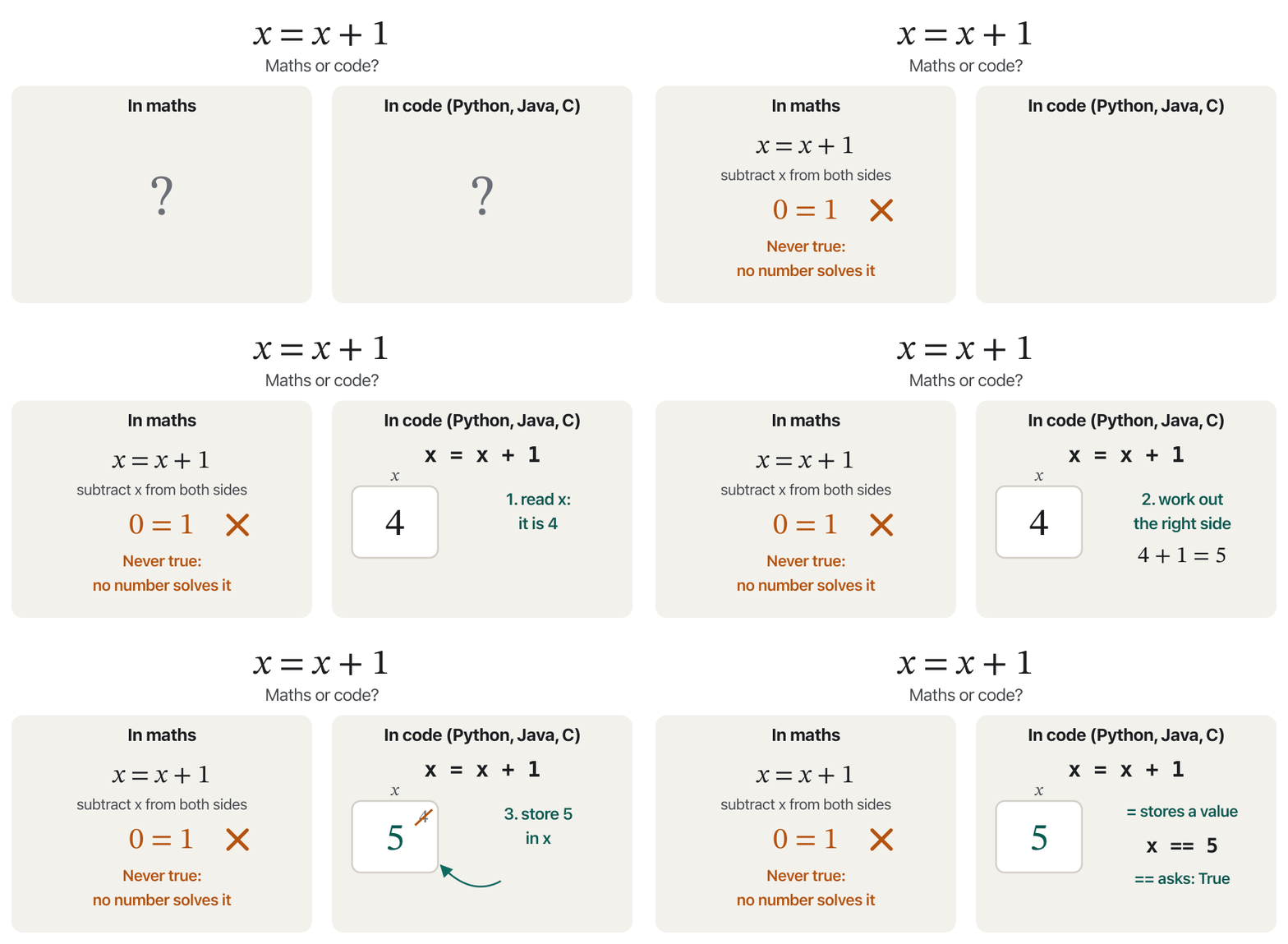
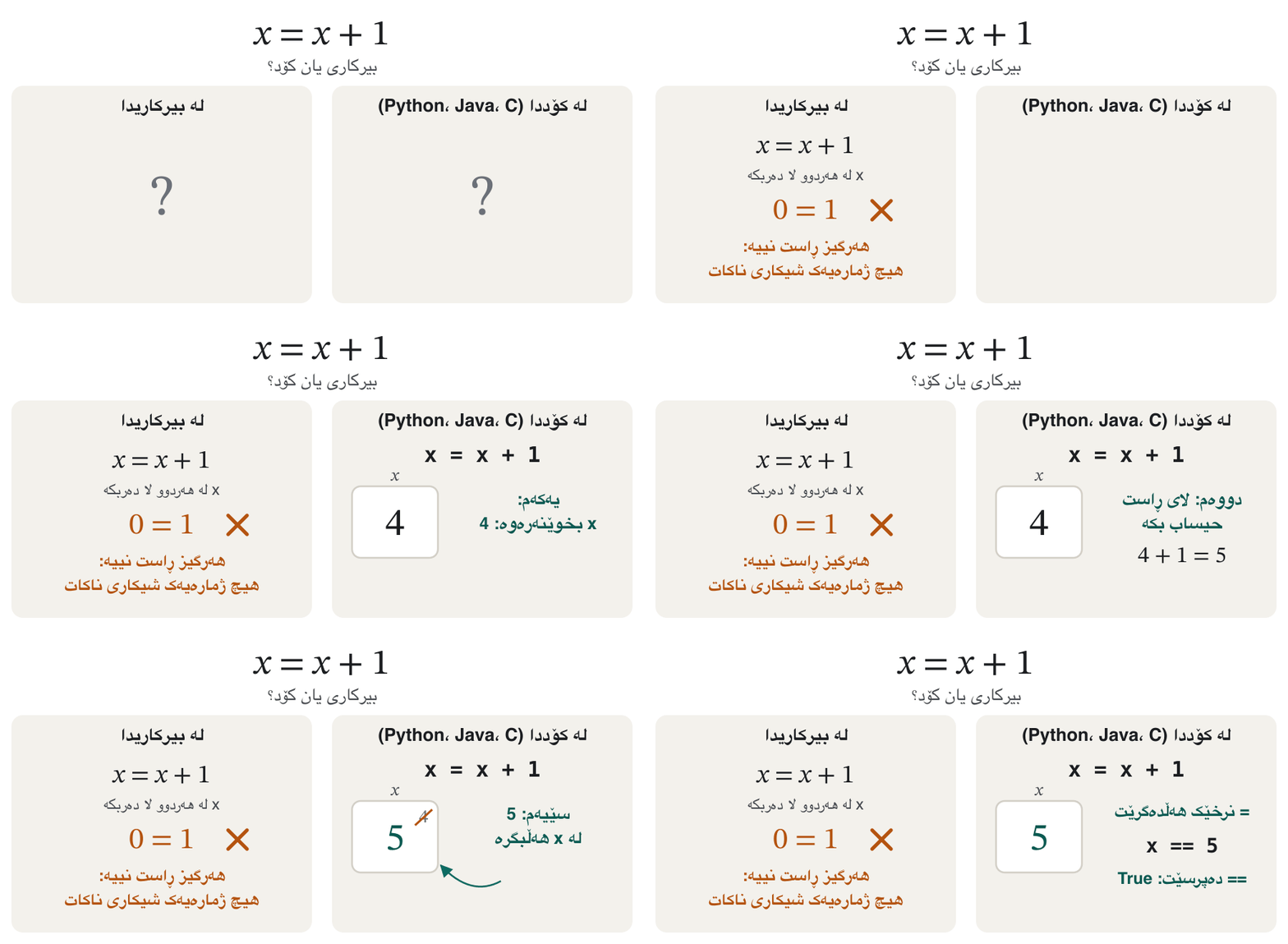
In algebra, states that two sides are equal. In most programming languages (Python, Java, C, PHP, JavaScript, MATLAB) a single = does something else: it stores the value of the right side in the variable on the left. To ask whether two values are equal, code writes ==, which gives True or False. So is impossible in algebra, but in code x = x + 1 simply adds 1 to x.
لە دەڵێت دوو لا یەکسانن. لە زۆربەی (Python، Java، C، PHP، JavaScript، MATLAB) =ـی تاک کارێکی تر دەکات: نرخی لای ڕاست لە لای چەپدا هەڵدەگرێت. بۆ ئەوەی بپرسیت ئایا دوو نرخ یەکسانن، کۆد == دەنووسێت، کە True یان False دەدات. بۆیە لە مەحاڵە، بەڵام لە کۆددا x = x + 1 تەنیا 1 دەخاتە سەر x.
| Meaningواتا | Mathsبیرکاری | Python, Java, C, PHPPython، Java، C، PHP | MATLAB | SQL | Pseudocode |
|---|---|---|---|---|---|
| store a valueنرخێک هەڵبگرە | “let x = 5”«با x = 5 بێت» | x = 5 | x = 5 | SET x = 5 | x ← 5 |
| are they equal?ئایا یەکسانن؟ | x == 5 | x == 5 | x = 5 | x = 5 |
Pseudocode avoids the clash with an arrow: total ← 0 means “store 0 in total” (Pseudocode). Pascal stores with :=; in Python 3.8 and later the “walrus” := stores a value inside an expression. PHP and JavaScript add ===: same value and same type (PHP). In Excel, = starts a formula, and inside it = compares: =A1=B1 gives TRUE or FALSE. More: “=” in algebra and in programming, = or == in Java.
بە تیرێک لەم تێکەڵبوونە خۆی دەپارێزێت: total ← 0 واتە «0 لە total هەڵبگرە» (نیمچەکۆد). Pascal بە := هەڵدەگرێت؛ لە Python 3.8ـەوە := (walrus) نرخێک لە ناو هەڵدەگرێت. PHP و JavaScript ===ـیش زیاد دەکەن: هەمان نرخ و هەمان جۆر (PHP). لە Excelـدا بە = دەست پێدەکات و لە ناویدا = بەراورد دەکات: =A1=B1 TRUE یان FALSE دەدات. زیاتر: «=» لە جەبر و لە بەرنامەسازیدا، = یان == لە Javaـدا.
: proportional to: هاوڕێژە
reads “y is proportional to x”, in Kurdish y هاوڕێژەیە لەگەڵ x: y is always the same number times x, . Double x and y doubles too. Bread at 250 dinars a loaf: n loaves cost , so . This is direct variation.
دەخوێنرێتەوە «y هاوڕێژەیە لەگەڵ x» (y is proportional to x): y هەمیشە هەمان ژمارەیە جاران x، واتە . x دوو هێندە بکە، yـیش دوو هێندە دەبێت. نان هەر دانەیەک بە 250 دینار: n دانە نان تێدەچێت، کەواتە . ئەمە ـە.
reads “y is inversely proportional to x”: when x doubles, y halves, because stays the same. This is inverse variation (you may also meet the name پەیوەندیی پێچەوانە). Sharing 60 000 dinars between n friends gives each . Do not copy as the Greek letter (alpha): is wider and open on the right.
دەخوێنرێتەوە «y پێچەوانە هاوڕێژەیە لەگەڵ x»: کاتێک x دوو هێندە دەبێت، y نیوە دەبێت، چونکە وەک خۆی دەمێنێتەوە. ئەمە ـە (لەوانەیە ناوی «پەیوەندیی پێچەوانە»ـش ببینیت). دابەشکردنی 60 000 دینار بەسەر n هاوڕێدا بەشی هەریەکەیان دەکاتە . وەک پیتی یۆنانیی (ئەلفا) مەنووسە: پانترە و لای ڕاستی کراوەیە.
: one sign, four jobs: یەک هێما، چوار کار
The tilde is a busy sign. Look at the subject before you read it:
تیلدا زۆر بەکارهاتووە. پێش ئەوەی بیخوێنیتەوە سەیری بابەتەکە بکە:
- About, roughly: a city of people, “about a million”.
- Similar shapes in geometry: , same shape, maybe a different size; means congruent, same shape and size (Geometry symbols).
- Is distributed as in statistics: , X follows a normal distribution (Statistics symbols).
- Not in some logic books: means “not p” (Logic symbols).
- نزیکەی: شارێکی کەسی، واتە «نزیکەی ملیۆنێک».
- شێوەی لە : ، هەمان شێوە، لەوانەیە بە قەبارەی جیاواز؛ واتە ، هەمان شێوە و قەبارە (هێماکانی ئەندازەزانی).
- دابەش بووە وەک لە : ، واتە X هەیە (هێماکانی ئامار).
- نا لە هەندێک کتێبی لۆجیکدا: واتە «وا نییە کە p» (هێماکانی لۆجیک).
, , and ، ، و
Four more signs you will meet in science and engineering books and in worked answers:
چوار تر کە لە کتێبی زانست و ئەندازیاری و لە وەڵامی کارکراودا دەیانبینیت:
| Sign | Say itخوێندنەوە | Exampleنموونە |
|---|---|---|
| a is much less than b«a زۆر بچووکترە لە b» (a is much less than b) | : so small that it can often be ignored: ئەوەندە بچووکە کە زۆرجار پشتگوێ دەخرێت | |
| a is much greater than b«a زۆر گەورەترە لە b» (a is much greater than b) | : n is very large: n زۆر گەورەیە | |
| therefore«کەواتە» (therefore) | ||
| because«چونکە» (because) |
and are the strict signs and doubled; the signs of order themselves are in Inequalities and intervals. Instead of , many solutions simply write “so” or an arrow (Small words around formulas, Signs between the steps).
و و ـن بە دووپاتەیی؛ خودی ڕیزبەندی لە لاسەنگەکان و ماوەکانـدان. زۆر وەڵام لە جیاتی تەنیا «کەواتە» یان تیری دەنووسن (وشە بچووکەکانی دەوروبەری فۆرمولەکان، هێماکانی نێوان هەنگاوەکان).
Common mistakesهەڵە باوەکان
| Mistakeهەڵە | Fixچارەسەر |
|---|---|
| A running calculation: حیسابی بەردەوام: | Every must be true: , or one step per lineهەموو ـێک دەبێت ڕاست بێت: ، یان هەر هەنگاوێک لە دێڕێکدا |
| after rounding دوای | |
if x = 5: in Pythonif x = 5: لە Pythonـدا | if x == 5: — = stores, == compares (= instead of ==)if x == 5: — = هەڵدەگرێت، == بەراورد دەکات (= لەبری ==) |
Reading x = x + 1 in code as an impossible equationخوێندنەوەی x = x + 1ـی ناو کۆد وەک مەحاڵ | In code it means “add 1 to x”لە کۆددا واتە «1 بخەرە سەر x» |
| Solving like an equationشیکارکردنی وەک | An identity is true for every x; is about remainders بۆ هەموو xـێک ڕاستە؛ باسی دەکات |
| Copying as نووسینەوەی وەک | is “proportional to”; is a Greek letter واتە «هاوڕێژەیە لەگەڵ»؛ پیتێکی یۆنانییە |
| Reading the same way in every subjectخوێندنەوەی بە یەک شێوە لە هەموو بابەتێکدا | Check the subject: about, similar, distributed as, or notسەیری بابەتەکە بکە: نزیکەی، ، دابەشبوون یان نا |
Practiceڕاهێنان
Put , , or in each gap : (a) (b) for all a and b (c) (d) “let A be the area”: (e) (f)
لە هەر شوێنێکی چۆڵی ـدا ، ، یان دابنێ: (a) (b) بۆ هەموو a و b (c) (d) «با A ڕووبەرەکە بێت»: (e) (f)
Show answerوەڵامەکە پیشان بدە
- (a) : 3.1416 is π rounded.
- (b) : true for every a and b (many books write ).
- (c) : exactly 12.
- (d) : A is a new name for .
- (e) (mod 5): both leave remainder 2.
- (f) :
- (a) : 3.1416 نزیککراوەی πـیە.
- (b) : بۆ هەموو a و b ڕاستە (زۆر کتێب دەنووسن).
- (c) : ڕێک 12.
- (d) : A ناوێکی نوێیە بۆ .
- (e) (mod 5): هەردووکیان 2 دەدەن.
- (f) : چونکە
Say what each = does: (a) total = total + price in Python (b) if total == 100: (c) in a maths book (d) =B2*C2 in an Excel cell (e) WHERE city = 'Erbil' in SQL (f) largest ← a in pseudocode
بڵێ هەر =ێک چی دەکات: (a) total = total + price لە Pythonـدا (b) if total == 100: (c) لە کتێبێکی بیرکاریدا (d) =B2*C2 لە Excelـدا (e) WHERE city = 'Erbil' لە SQLـدا (f) largest ← a لە
Show answerوەڵامەکە پیشان بدە
- (a) Store: the new total replaces the old one.
- (b) Compare:
==asks a question. - (c) State: an equation, true only for .
- (d) Start a formula: “work this out”.
- (e) Compare: SQL uses one
=to compare. - (f) Store, written with an arrow instead of
=.
- (a) هەڵگرتن: کۆی نوێ جێگەی کۆنەکە دەگرێتەوە.
- (b) بەراوردکردن:
==پرسیار دەکات. - (c) ڕستە: ، تەنیا بۆ ڕاستە.
- (d) دەستپێکی : «ئەمە حیساب بکە».
- (e) بەراوردکردن: SQL بۆ بەراوردکردن یەک
=بەکار دەهێنێت. - (f) هەڵگرتن، بە تیر لە جیاتی
=نووسراوە.
Read aloud in English and in Kurdish: (a) (b) (c) (d) (e)
بە ئینگلیزی و بە کوردی بە دەنگی بەرز بیانخوێنەوە: (a) (b) (c) (d) (e)
Show answerوەڵامەکە پیشان بدە
- (a) “x is not equal to zero”, x یەکسان نییە بە سفر.
- (b) “root two is approximately equal to one point four one”, ڕەگی 2 نزیکەی یەکسانە بە 1.41.
- (c) “y is proportional to x”, y هاوڕێژەیە لەگەڵ x.
- (d) “a times (b plus c) is identical to ab plus ac”, a جاران (b کۆ c) هاوئەنجامە لەگەڵ ab کۆ ac.
- (e) “n is much greater than one”, n زۆر گەورەترە لە 1.
- (a) «x یەکسان نییە بە سفر» (x is not equal to zero).
- (b) « 2 بە 1.41» (root two is approximately equal to one point four one).
- (c) «y هاوڕێژەیە لەگەڵ x» (y is proportional to x).
- (d) «a جاران (b کۆ c) لەگەڵ ab کۆ ac» (a times (b plus c) is identical to ab plus ac).
- (e) «n زۆر گەورەترە لە 1» (n is much greater than one).
Summaryپوختە
- says both sides have the same value; a formula with can be true or false. Every in a chain must be true.
- not equal (
!=,~=,<>in code); about equal, after rounding. - : identity (true for every x) or congruence mod n; “is defined as”.
- In code
=stores and==compares; pseudocode stores with←. - proportional to; has four jobs; much less / greater; therefore, because.
- All these signs, with their readings, are in the Symbol dictionary: Equals and other relations.
- دەڵێت هەردوو لا هەمان نرخیان هەیە؛ کە ـی تێدا بێت دەشێت ڕاست یان هەڵە بێت. هەموو ـێک لە زنجیرەدا دەبێت ڕاست بێت.
- یەکسان نییە (لە کۆددا
!=،~=،<>)؛ ، دوای . - : (بۆ هەموو x ڕاستە) یان یەکسان بە mod n؛ «بە پێناسە یەکسانە بە».
- لە کۆددا
=هەڵدەگرێت و==بەراورد دەکات؛ بە←هەڵدەگرێت. - هاوڕێژە؛ چوار کاری هەیە؛ زۆر بچووکتر / گەورەتر؛ کەواتە، چونکە.
- هەموو ئەم نیشانانە، لەگەڵ خوێندنەوەکانیان، لە فەرهەنگی هەن: یەکسان و پەیوەندییەکانی تر.
Why is wrong?بۆچی هەڵەیە؟
Read as a sentence it claims . Use a true chain or one step per line.
وەک ڕستە بیخوێنیتەوە دەڵێت . زنجیرەیەکی ڕاست بنووسە یان هەر هەنگاوێک لە دێڕێکدا.
What is the difference between and ?جیاوازیی نێوان و چییە؟
is true for one x; is true for every x.
بۆ یەک x ڕاستە؛ بۆ هەموو xـێک ڕاستە.
Why is x = x + 1 fine in a program?بۆچی x = x + 1 لە بەرنامەدا کێشە نییە؟
In code = stores the right side in the variable: the old x plus 1 becomes the new x.
لە کۆددا = لای ڕاست لە هەڵدەگرێت: xـی کۆن کۆ 1 دەبێتە xـی نوێ.
Lesson complete!وانەکە تەواو بوو!
Well done. Review the key terms, then go on to the next lesson.دەستخۆش. سەیرێکی زاراوە سەرەکییەکان بکەرەوە، پاشان بڕۆ بۆ وانەی داهاتوو.
Key termsزاراوە سەرەکییەکان
Inequalities, Infinity and Intervalsلاسەنگەکان، بێسنوور و ماوەکان
Related lecturesوانە پەیوەندیدارەکان
- Plus, Minus, Times, Divide and the Fraction Barکۆ، کەم، جاران، دابەش و هێڵی کەرت
- Inequalities, Infinity and Intervalsلاسەنگەکان، بێسنوور و ماوەکان
- Algebra, Boolean Logic and Matrices Inside the Computerجەبر، لۆجیکی بوول و ماتریکسەکان لەناو کۆمپیوتەردا
- Making Decisions: if, elif, elseبڕیاردان:
if،elifوelse - Algorithms, Pseudocode and Flowchartsئەلگۆریزمەکان، نیمچەکۆد و هێڵکارییەکانی ڕەوت
- Trigonometric Identitiesهاوئەنجامە سێگۆشەییەکان
- The Symbol Dictionaryفەرهەنگی هێماکان
References and further readingسەرچاوەکان و خوێندنەوەی زیاتر
- Wikipedia: Equals sign (Robert Recorde, The Whetstone of Witte, 1557; = and == in programming)
- Wikipedia: Glossary of mathematical symbols
- NIST Digital Library of Mathematical Functions: Common Notations and Definitions (≡ for definitions and congruence)
- Wikipedia: Proportionality (mathematics)
- Python Language Reference: Expressions (comparisons, assignment expressions :=)
- OpenStax, Statistics, Appendix F: Mathematical Phrases, Symbols, and Formulas
This lecture is a first edition. The Kurdish text and terminology are waiting for review by Kurdish IT teachers.ئەم وانەیە چاپی یەکەمە. دەقە کوردییەکە و زاراوەکانی چاوەڕێی پێداچوونەوەی مامۆستایانی کوردی بواری IT ن.