Chapterبەش 1 · Lectureوانە 1.3
Numbers and Digits: ١٢٣ and 123, Decimal Points and Scientific Notationژمارە و تاکژمارەکان: ١٢٣ و 123، فاریزە و شێوازی زانستی
The two digit sets Kurdish students meet (0–9 and the Eastern Arabic digits), why the digit order never flips in a right-to-left sentence, the decimal and thousands separators of different countries, how to say numbers aloud, percent, scientific and E-notation with prefixes, and the ways books mark repeating decimals.
ئەو دوو کۆمەڵە خوێندکارانی کورد دەیانبینن (0–9 و ٠–٩)، بۆچی ڕیزبەندیی لە ڕستەیەکی پێچەوانە نابێتەوە، و لە وڵاتە جیاوازەکاندا، چۆن ژمارە بە دەنگی بەرز بخوێنیتەوە، ، و شێوەی E لەگەڵ و ئەو شێوانەی کتێبەکان پێ دیاری دەکەن.
What you will learnچی فێر دەبیت
- Read numbers written with Western (0–9) and Eastern Arabic digits, and know that the biggest place is always on the left.
- Tell the decimal separator from the thousands separator in English, European, international and Eastern Arabic styles.
- Say decimals, negative numbers and percentages aloud in English and Kurdish.
- Read and write scientific notation, E-notation and the prefixes k, M, G, m, μ, n.
- Recognise the four ways of writing a repeating decimal.
- ژمارەی نووسراو بە (0–9) و (٠–٩) بخوێنیتەوە و بزانیت گەورەترین خانە هەمیشە لە لای چەپە.
- لە جیا بکەیتەوە لە شێوازی ئینگلیزی، ئەورووپی، نێودەوڵەتی و عەرەبیی ڕۆژهەڵاتیدا.
- ژمارە دەییەکان، و بە ئینگلیزی و کوردی بە دەنگی بەرز بخوێنیتەوە.
- ، شێوەی E و k، M، G، m، μ، n بخوێنیتەوە و بنووسیت.
- چوار شێوەی نووسینی بناسیتەوە.
Two sets of digits: 0–9 and ٠–٩دوو کۆمەڵە تاکژمارە: 0–9 و ٠–٩
The Western Arabic numerals, 0 to 9, are used in maths, science and computers all over the world. The Eastern Arabic numerals are used in Kurdish and Arabic writing: in books, on signs and money, and on phones set to Kurdish. CêIT writes Kurdish sentences with either set, but every formula and every line of code uses 0–9, like the KRG maths exams and every programming language does.
(0 تا 9) لە بیرکاری، زانست و لە هەموو جیهاندا بەکار دێن. (٠ تا ٩) لە نووسینی کوردی و عەرەبیدا بەکار دێن: لە کتێب، لەسەر تابلۆ و پارە و لە مۆبایلێکدا کە زمانەکەی کوردییە. CêIT ڕستە کوردییەکان بە هەر دووکیان دەنووسێت، بەڵام هەموو و هەموو دێڕێکی کۆد 0–9 بەکار دەهێنێت، وەک تاقیکردنەوەکانی بیرکاریی هەرێم و هەموو .
Watch three details. Persian draws 4, 5 and 6 differently, but they are the same numbers: ۴۵۶ and ٤٥٦ are both 456. The Eastern zero ٠ is a small dot, so do not take it for a decimal point. The Eastern five ٥ is a small circle, so do not take it for a zero. Both sets came from India through Arabic books, which is why English calls 0–9 “Arabic numerals”.
ئاگاداری سێ وردەکاری بە. فارسی 4، 5 و 6 جیاواز دەنووسێت، بەڵام هەمان ژمارەن: ۴۵۶ و ٤٥٦ هەردووکیان 456ـن. سفری ڕۆژهەڵاتی ٠ خاڵێکی بچووکە، بۆیە بە دای مەنێ. پێنجی ڕۆژهەڵاتی ٥ بازنەیەکی بچووکە، بۆیە بە سفر دای مەنێ. هەردوو کۆمەڵەکە لە هیندستانەوە و لە ڕێگەی کتێبە عەرەبییەکانەوە هاتوون، بۆیە ئینگلیزی بە 0–9 دەڵێت «ژمارە عەرەبییەکان».
The digit order never flipsڕیزبەندیی تاکژمارەکان هەرگیز پێچەوانە نابێتەوە
Kurdish runs from right to left, but a number does not: its biggest place is always on the left, in both digit sets and inside every Kurdish sentence. In نرخی دەفتەرەکە ١٢٥٠ دینارە (“the notebook costs 1250 dinars”) the ١ on the left is the thousands. When you meet a number in a Kurdish line, jump to its left end and read to the right, just as with a formula (Formulas run left to right).
کوردی لە ڕاستەوە بۆ چەپ دەنووسرێت، بەڵام ژمارە وا نییە: گەورەترین خانەی هەمیشە لە لای چەپە، لە هەردوو کۆمەڵە و لە ناو هەموو ڕستەیەکی کوردیدا. لە ڕستەی «نرخی دەفتەرەکە ١٢٥٠ دینارە»، ١ـی لای چەپ هەزارەکانە. کاتێک لە دێڕێکی کوردیدا دەگەیتە ژمارەیەک، باز بدە بۆ لای چەپی و بەرەو ڕاست بیخوێنەوە، ڕێک وەک (فۆرمولەکان لە چەپەوە بۆ ڕاست دەڕۆن).
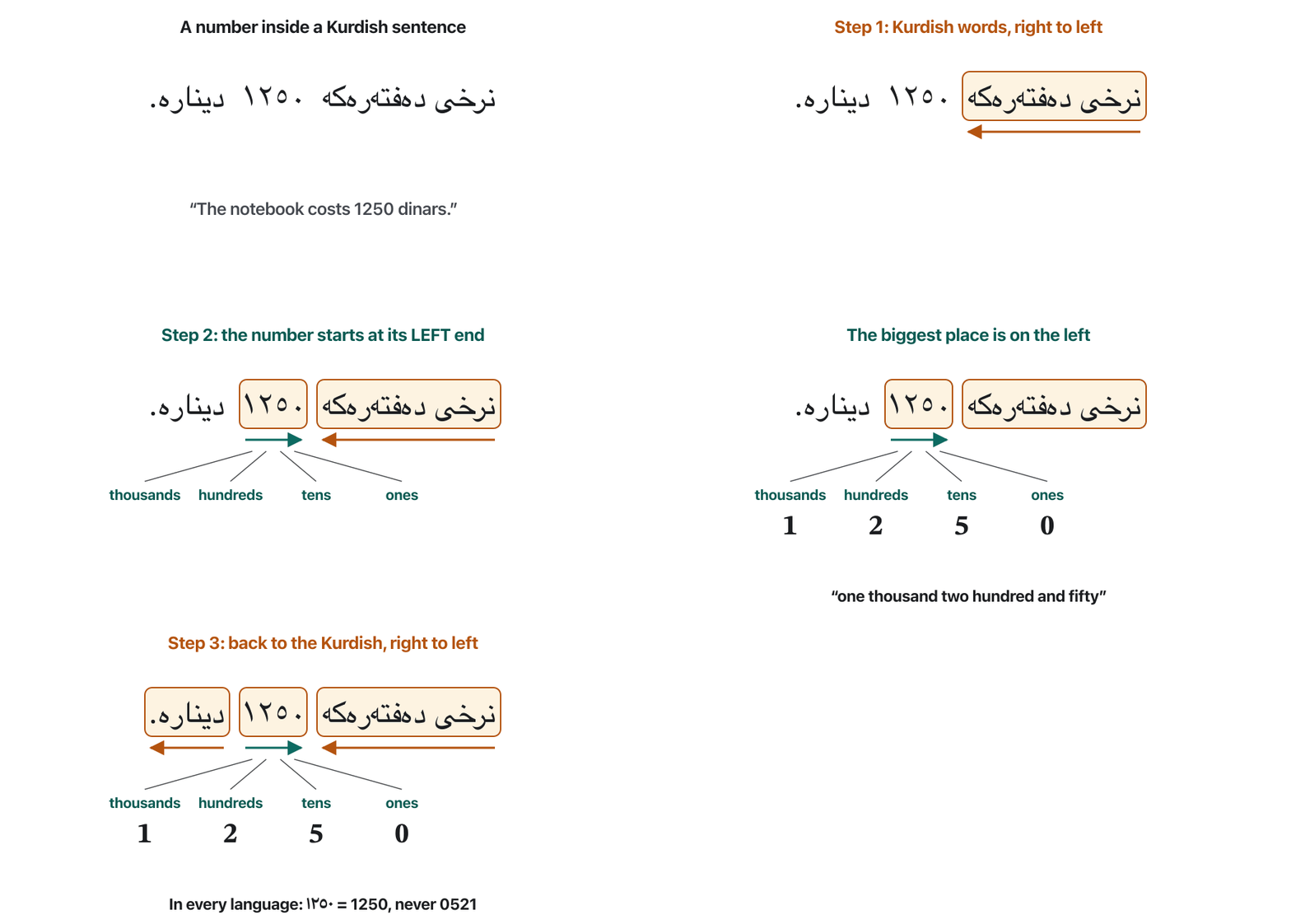
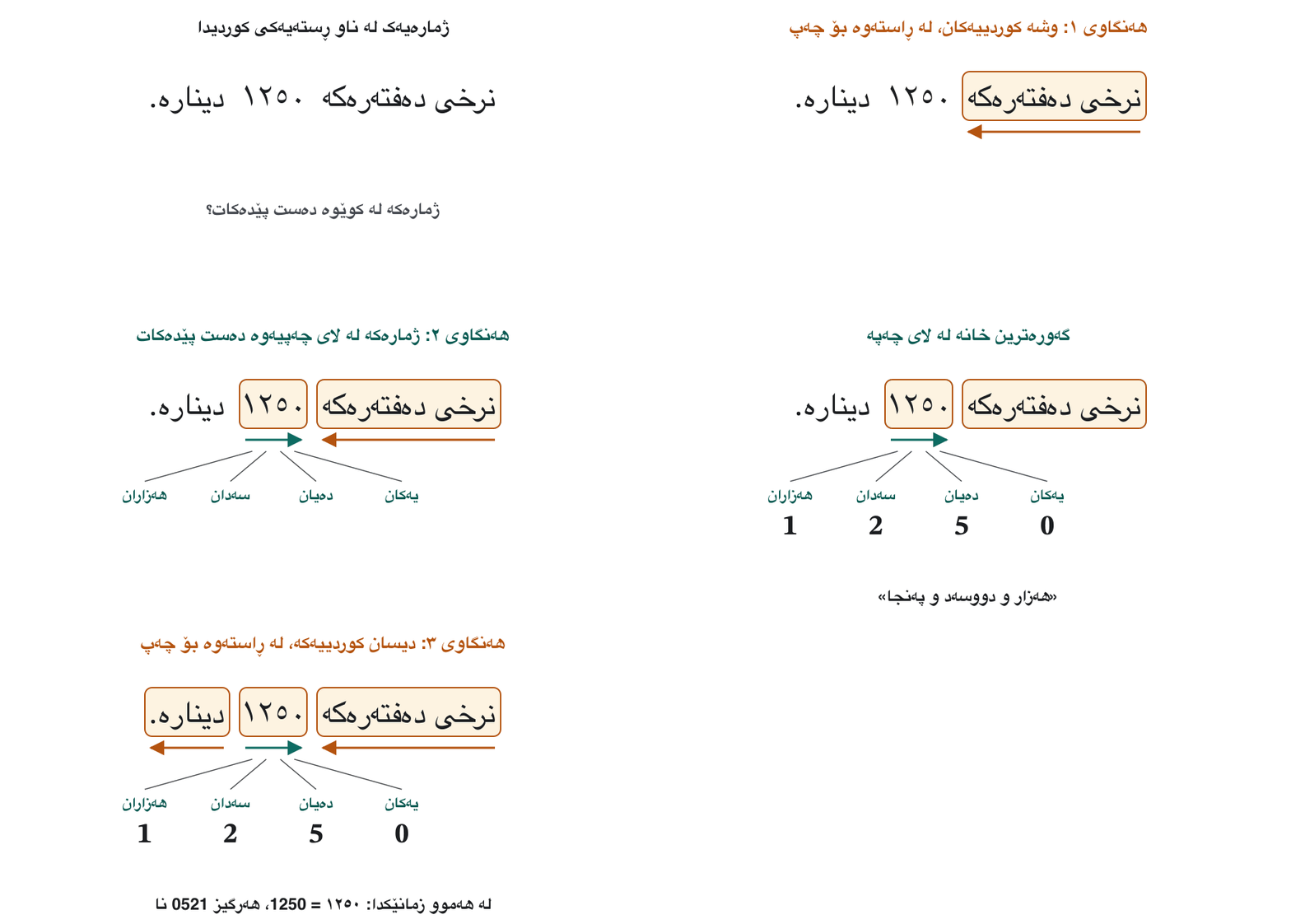
Kurdish notes often mix the two sets in one text. Some put Western digits and letters in brackets inside a Kurdish sentence, such as (x) and (2 + 3); others write Eastern digits in brackets, such as (٥) and (−٣), and keep English words such as “Number Line” as they are. All of this is fine in ordinary writing. Inside a formula, keep to 0–9 so that the formula reads the same everywhere.
تێبینییە کوردییەکان زۆرجار هەردوو کۆمەڵەکە لە یەک دەقدا تێکەڵ دەکەن. هەندێک پیت و ڕۆژئاوایی لە ناو کەوانەدا دەخەنە ناو ڕستەیەکی کوردییەوە، وەک «گۆڕاوی (x) یەکسانە بە (2 + 3)»؛ هەندێکی تر ڕۆژهەڵاتی لە ناو کەوانەدا دەنووسن، وەک «جارانی (٥) بکە» و «(−٣)». هەندێکیش وشەی ئینگلیزی وەک «Number Line» وەک خۆی دەهێڵنەوە. ئەمانە هەموویان لە نووسینی ئاساییدا دروستن. بەڵام لە ناو 0–9 بەکار بهێنە، بۆ ئەوەی لە هەموو شوێنێک وەک یەک بخوێنرێتەوە.
Point, comma or ٫: the decimal separatorفاریزە: خاڵ، کۆما یان ٫
The decimal separator (the decimal point) splits the whole part of a number from its fraction part. Three marks are in common use:
بەشی تەواوی ژمارە لە بەشە کەرتییەکەی جیا دەکاتەوە. سێ نیشانە زۆر بەکار دێن:
| Markنیشانە | Three and a halfسێ و نیو | Where you meet itلە کوێ دەیبینیت |
|---|---|---|
| point .خاڵ . | English-speaking countries, China, Japan, India; the KRG maths exams; every programming language, and calculators unless you switch them to a commaوڵاتانی ئینگلیزیزمان، چین، ژاپۆن، هیندستان؛ تاقیکردنەوەکانی بیرکاریی هەرێم؛ هەموو ، هەروەها ئەگەر بۆ کۆما نەیانگۆڕیت | |
| comma ,کۆما , | most of continental Europe, Turkey, Russia, Brazilزۆربەی وڵاتانی ئەورووپا، تورکیا، ڕووسیا، بەڕازیل | |
| Arabic decimal separator ٫جیاکەرەوەی دەیی عەرەبی ٫ | ٣٫٥ | Arabic-script text with Eastern digits, and the Central Kurdish setting of phones and computers (Unicode CLDR)دەقی پیتی عەرەبی بە ٠–٩، هەروەها ڕێکخستنی کوردیی ناوەندی لە مۆبایل و (CLDR) |
In Kurdish the decimal point is called فاریزە, and the places after it are the decimal places. So a rounding rule such as “keep only two digits after the فاریزە” means two decimal places: 3.14159 becomes 3.14 (Why we round).
بە کوردی خاڵی نێوان بەشی تەواو و بەشی کەرتی پێی دەوترێت و خانەکانی دوای ئەو (هەروەها دەوترێت «خانەی فاریزە»). بۆیە ڕێنمایی وەک «تەنیا دوو ژمارەی دوای فاریزە وەرگرە» واتە دوو : 3.14159 دەبێتە 3.14 (بۆچی نزیککردنەوە دەکەین).
Programs follow these settings too: on a computer set to Central Kurdish, a program may expect ٫ instead of a point (Computers set to Kurdish or Arabic).
ئەم ڕێکخستنانە پەیڕەو دەکەن: لە کە بە کوردیی ناوەندی ڕێک خرابێت، لەوانەیە لە جیاتی خاڵ ٫ چاوەڕێ بکات (ئەو کۆمپیوتەرانەی بە کوردی یان عەرەبی ڕێکخراون).
Grouping thousands: comma, point, space or ٬جیاکەرەوەی هەزاران: کۆما، خاڵ، بۆشایی یان ٬
Long numbers are split into groups of three digits so that they are easy to read. The mark between the groups is the thousands separator: a comma in English (), a point in German or Turkish (), the Arabic sign ٬ with Eastern digits (١٬٢٥٠٬٠٠٠) and a small space in the international style (). The KRG grade-12 maths exams of 2024–2025 use the space: , . CêIT's Kurdish pages use ٬ and ٫ too.
ژمارە درێژەکان دەکرێنە گرووپی سێ بۆ ئەوەی ئاسان بخوێنرێنەوە. نیشانەی نێوان گرووپەکان : کۆما لە ئینگلیزیدا ()، خاڵ لە ئەڵمانی یان تورکیدا ()، نیشانەی عەرەبیی ٬ لەگەڵ (١٬٢٥٠٬٠٠٠) و بۆشاییەکی بچووک لە شێوازی نێودەوڵەتیدا (). تاقیکردنەوەکانی بیرکاریی پۆلی دوازدەی هەرێم (2024–2025) بۆشایی بەکار دەهێنن: ، . لاپەڕە کوردییەکانی CêIT ٬ و ٫ـیش بەکار دەهێنن.
Computers have their own habits: Python prints commas between the groups with f"{1250000:,}" (Format specifiers) and lets you write 1_250_000 in code, while spreadsheets add separators through the cell format.
نەریتی خۆیان هەیە: Python بە f"{1250000:,}" کۆما دەخاتە نێوان گرووپەکانەوە (Format specifiers) و ڕێگە دەدات لە کۆددا 1_250_000 بنووسیت، لە کاتێکدا لە ڕێگەی فۆرماتی خانەکەوە جیاکەرەوە زیاد دەکەن.
Places, and saying numbers aloudخانەکان و خوێندنەوەی ژمارە بە دەنگی بەرز
Every digit has a place, and the place gives its value: in 2026.75 the 2 on the left means two thousands and the 5 at the end means five hundredths. Each place is worth ten times the place on its right; the maths of this is in Place value. Here we name the places and say them.
هەر خانەیەکی هەیە و خانەکە نرخەکەی دیاری دەکات: لە 2026.75ـدا 2ـی لای چەپ واتە دوو هەزار و 5ـی کۆتایی واتە پێنج لە سەد. هەر خانەیەک دە هێندەی خانەکەی لای ڕاستی دەهێنێت؛ بیرکارییەکەی لە بەهای خانەیی فێر دەبیت. لێرەدا خانەکان ناو دەنێین و دەیانخوێنینەوە.
- Decimals in English: say “point”, then the digits one by one: 3.25 is “three point two five”; 0.5 is “zero point five” (British English also says “nought point five” or just “point five”).
- Decimals in Kurdish: say فاریزە: 3.25 is usually سێ فاریزە بیست و پێنج; you may also hear the digits one by one, سێ فاریزە دوو پێنج.
- Negative numbers: is “minus five” or “negative five”, in Kurdish سالب پێنج or کەم پێنج. In a formula the minus sign always stands on the left of the number, and brackets keep it clear: . The printed minus sign () and the hyphen (
-) of code are compared in Arithmetic signs. - Saying the numbers of computer specifications (“16 GB”, “”) is practised in Saying specifications aloud.
- بە ئینگلیزی: بڵێ «point»، پاشان یەک یەک: 3.25 دەبێتە «three point two five»؛ 0.5 دەبێتە «zero point five» (ئینگلیزیی بەریتانی «nought point five» یان تەنیا «point five»ـیش دەڵێت).
- بە کوردی: بڵێ «فاریزە»: 3.25 زۆرجار دەبێتە «سێ فاریزە بیست و پێنج»؛ لەوانەیە یەک یەک ببیستیت: «سێ فاریزە دوو پێنج».
- : بە ئینگلیزی «minus five» یان «negative five»ـە و بە کوردی «سالب پێنج» یان «کەم پێنج». لە نیشانەی سالب هەمیشە لە لای چەپی ژمارەکەیە و کەوانە ڕوونی دەکاتەوە: . جیاوازیی نیشانەی کەمی چاپکراو () و هایفنی کۆد (
-) لە نیشانەکانی ژمێرکاری ڕوون کراوەتەوە. - وتنی ژمارەکانی تایبەتمەندیی («16 GB»، «») لە Saying specifications aloud ڕاهێنانی لەسەر دەکرێت.
Percent: % and ٪ڕێژەی سەدی: % و ٪
The percent sign % means “out of a hundred”: . With Eastern digits the Arabic-script sign ٪ is used: ٣٨٪. In Kurdish, 38% is لە سەدا سی و هەشت; “100% sure” is لە سەدا سەد دڵنیاین, and a probability of 0 means the event is impossible, ئەستەم. The rarer sign ‰ (per mille) means “out of a thousand”: five per mille is 0.005. CêIT's Kurdish pages use both % and ٪.
نیشانەی % واتە «لە سەد»: . لەگەڵ نیشانەی ٪ بەکار دێت: ٣٨٪. بە کوردی 38% دەبێتە «لە سەدا سی و هەشت»؛ «لە سەدا سەد دڵنیاین» واتە 100% دڵنیاین و 0 واتە ڕووداوەکە «ئەستەم»ـە. نیشانە دەگمەنەکەی ‰ واتە «لە هەزار»: پێنج لە هەزار دەکاتە 0.005. لاپەڕە کوردییەکانی CêIT هەم % و هەم ٪ بەکار دەهێنن.
In Kurdish lines you may see the percent sign on either side of the number, because of the way right-to-left text is typed; the KRG exam papers have both forms. In formulas and in English, write the sign after the number: 38%.
لە دێڕە کوردییەکاندا لەوانەیە نیشانەی % لە هەر دوو لای ژمارەکە ببینیت، بەهۆی شێوەی نووسینی دەقی ؛ پەڕەکانی تاقیکردنەوەی هەرێم هەردوو شێوەکەیان تێدایە. لە و لە ئینگلیزیدا نیشانەکە لە دوای ژمارەکە بنووسە: 38%.
Scientific notation: شێوازی زانستی:
Very big and very small numbers are easier to read as a number from 1 up to (not including) 10, times a power of ten. This is scientific notation: (about the speed of light in metres per second) and (one millionth). Say as “three times ten to the eight”, in Kurdish سێ جاران دە بە توانی هەشت. CêIT uses it in more than twenty lessons, from memory sizes to probabilities.
ژمارەی زۆر گەورە و زۆر بچووک ئاسانتر دەخوێنرێنەوە ئەگەر وەک ژمارەیەک لە 1 تا کەمتر لە 10 بنووسرێن، جاران توانێکی 10. ئەمە : (نزیکەی خێرایی ڕووناکی بە مەتر لە چرکەیەکدا) و (یەک لە ملیۆن). بخوێنەوە «سێ جاران دە بە توانی هەشت». CêIT لە زیاتر لە بیست وانەدا بەکاری دەهێنێت، لە قەبارەی تا .
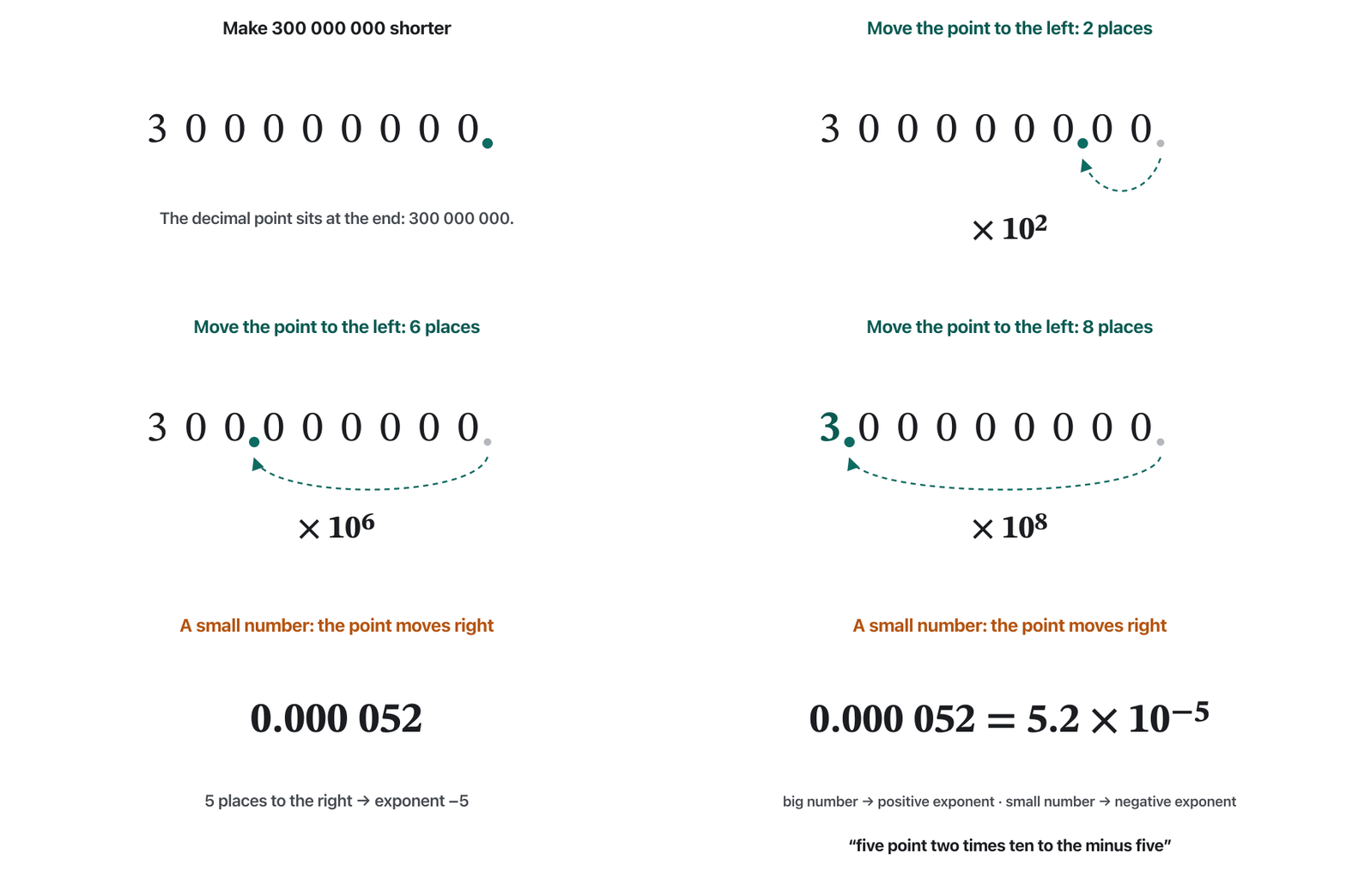
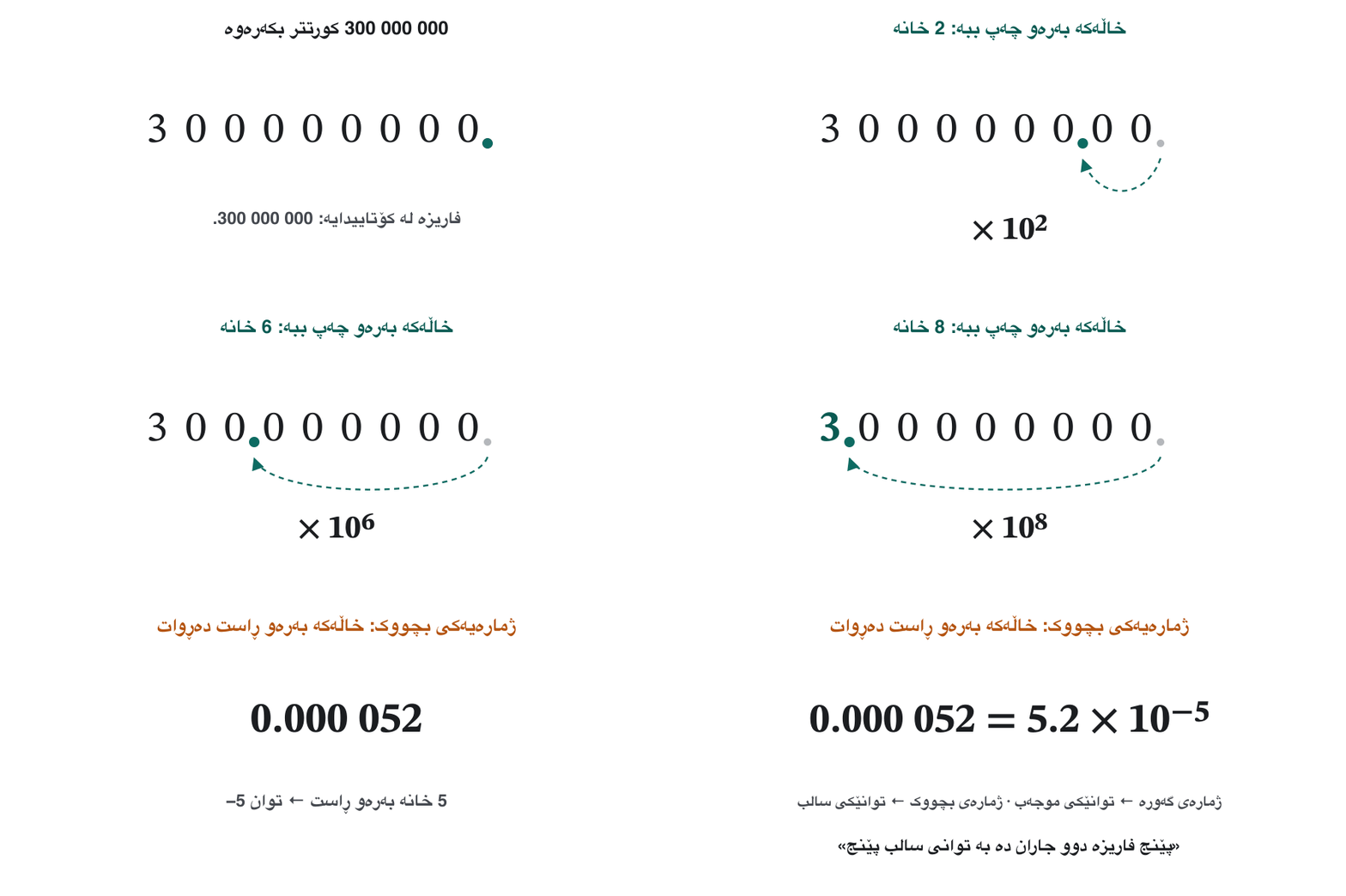
Scientific notation: شێوازی زانستی:
Prefixes are powers of tenپێشگرەکانی SI: توانەکانی 10
Units carry letters that stand for powers of ten. Read the prefix and the unit together: 3 km is three kilometres, 2 ms is two milliseconds.
یەکەکان پیتیان پێوەیە کە جێگەی توانەکانی 10 دەگرنەوە. و یەکەکە پێکەوە بخوێنەوە: 3 km واتە سێ کیلۆمەتر، 2 ms واتە دوو میلیچرکە.
| Prefix | Symbol | Power | Exampleنموونە |
|---|---|---|---|
| kiloکیلۆ | k | ||
| megaمێگا | M | ||
| gigaگیگا | G | ||
| teraتێرا | T | ||
| milliمیلی | m | ||
| microمایکرۆ | μ | ||
| nanoنانۆ | n |
but , a billion times smaller, so copy capital and small letters exactly. Computers also use powers of two: (1,000 or 1,024?), and b is a bit while B is a byte (Bits or bytes).
بەڵام ، کە ملیار جار بچووکترە، بۆیە پیتی گەورە و بچووک ڕێک وەک خۆی بنووسە. توانەکانی 2ـیش بەکار دەهێنن: (1,000 یان 1,024؟)، هەروەها b و B (بیت یان بایت).
E-notation on calculators and in codeشێوەی E لە حاسیبەکان و کۆددا
Screens cannot always print a small raised exponent, so calculators, spreadsheets and programming languages write “times ten to the” as the letter E (or e): 3E8 = , 6.02e23 = , 1.5e-6 = . Read 6.02E23 as “six point oh two E twenty-three” or “six point oh two times ten to the twenty-three”. This E is not the number e ≈ 2.718.
شاشەکان هەمیشە ناتوانن بچووکی بەرز چاپ بکەن، بۆیە ، و «جاران دە بە توانی» بە پیتی E (یان e) دەنووسن: 3E8 = ، 6.02e23 = ، 1.5e-6 = . 6.02E23 بخوێنەوە «شەش فاریزە سفر دوو جاران دە بە توانی بیست و سێ». ئەم Eـیە نییە (≈ 2.718).
MATLAB's format shortE shows 41.429 as 4.1429e+01; older versions printed 4.1429e+001, the same number (Display formats). Phones and computers set to Central Kurdish follow Unicode's locale data (CLDR): Eastern digits, the signs ٫ and ٬, and اس instead of E. And because computers store most decimals in binary, 0.1 + 0.2 prints 0.30000000000000004 (Float surprises, Rounding).
format shortEـی MATLAB ژمارەی 41.429 وەک 4.1429e+01 پیشان دەدات؛ وەشانە کۆنەکان 4.1429e+001ـیان چاپ دەکرد، کە هەمان ژمارەیە (Display formats). مۆبایل و کە بە کوردیی ناوەندی ڕێک خرابن، داتای ناوچەیی (CLDR) پەیڕەو دەکەن: ، نیشانەکانی ٫ و ٬، هەروەها «اس» لە جیاتی E. چونکە زۆربەی ژمارە دەییەکان بە هەڵدەگرن، 0.1 + 0.2 چاپ دەکات 0.30000000000000004 (Float surprises، نزیککردنەوە).
Repeating decimals: dots, bars and bracketsژمارە دەییە دووپاتەبووەوەکان: خاڵ، هێڵ و کەوانە
Some fractions never end: , , . Books mark the repeating block in different ways. Three dots () only say that the number goes on. A bar over the block () is used in the US, Turkey and many European countries, such as France and Germany; dots over the first and last repeating digit () in the UK, Iran, Egypt and China; brackets () in Russia and Poland. All of them mean . Say as “two point three recurring” (British) or “two point three repeating” (American).
هەندێک هەرگیز کۆتاییان نایەت: ، ، . کتێبەکان بەشە دووپاتەبووەکە بە چەند شێوەیەک دیاری دەکەن. سێ خاڵ () تەنیا دەڵێت ژمارەکە بەردەوامە. هێڵێک لەسەر بەشەکە () لە ئەمریکا، تورکیا و زۆر وڵاتی ئەورووپی وەک فەرەنسا و ئەڵمانیا بەکار دێت؛ خاڵ لەسەر یەکەم و کۆتا دووپاتەبووە () لە بەریتانیا، ئێران، میسر و چین؛ کەوانە () لە ڕووسیا و پۆڵەندا. هەموویان واتە . بە ئینگلیزی دەخوێنرێتەوە «two point three recurring» (بەریتانی) یان «two point three repeating» (ئەمریکی)؛ بە کوردی دەتوانیت بڵێیت «دوو فاریزە سێ، سێکە دووپاتە دەبێتەوە».
Common mistakesهەڵە باوەکان
| Mistakeهەڵە | Why it is wrongبۆچی هەڵەیە | Do thisئەمە بکە |
|---|---|---|
| Reading ١٢٥٠ from the right as 0521خوێندنەوەی ١٢٥٠ لە ڕاستەوە وەک 0521 | The digit order never flips: the biggest place is on the leftڕیزبەندیی پێچەوانە نابێتەوە: گەورەترین خانە لە لای چەپە | Start at the left end of every numberلە لای چەپی هەموو ژمارەیەکەوە دەست پێ بکە |
| Taking the Eastern zero ٠ for a decimal point, or ٥ for a zeroدانانی سفری ڕۆژهەڵاتی ٠ بە ، یان ٥ بە سفر | ٠ is zero and looks like a dot; ٥ is five and looks like a circle٠ سفرە و وەک خاڵ دەردەکەوێت؛ ٥ پێنجە و وەک بازنە دەردەکەوێت | Learn the ten shapes in the tableدە شێوەکەی ناو خشتەکە فێر ببە |
| Reading 2,5 in a European text as twenty-fiveخوێندنەوەی 2,5 لە دەقێکی ئەورووپیدا وەک بیست و پێنج | In much of Europe the comma is the decimal separatorلە زۆربەی ئەورووپادا کۆما | Check which mark the book uses for decimalsبزانە کتێبەکە کام نیشانە بۆ بەکار دەهێنێت |
| Calling scientific notationناونانی بە | The first number must be at least 1 and less than 10ژمارەی یەکەم دەبێت لانیکەم 1 و کەمتر لە 10 بێت | Write بنووسە |
| Reading 2E3 as خوێندنەوەی 2E3 وەک | On a screen, E means “times ten to the”لەسەر شاشە، E واتە «جاران دە بە توانی» | 2E3 = = 20002E3 واتە = 2000 |
| Writing 2.333 for نووسینی 2.333 لە جیاتی | 2.333 is rounded; the true value goes on for ever2.333 نزیککراوەیە؛ نرخە ڕاستەقینەکە بۆ هەمیشە بەردەوامە | Write or بنووسە یان |
| Typing a school year such as 2024–2025 that then shows as 2025–2024 in a Kurdish lineنووسینی ساڵی خوێندنی وەک 2024–2025 کە پاشان لە دێڕێکی کوردیدا وەک 2025–2024 دەردەکەوێت | In right-to-left text the two numbers around a dash can swap sidesلە دەقی دوو ژمارەکەی دەوری هێڵەکە دەشێت شوێن بگۆڕن | Check the order; see Typing mathematicsڕیزبەندییەکە بپشکنە؛ بڕوانە نووسینی بیرکاری |
Practiceڕاهێنان
Write each number in the other two styles: (a) 1,250.5 (English style) (b) ٣٬٠٤٠٫٧٥ (Eastern digits) (c) (French style).
هەر ژمارەیەک بە دوو شێوەکەی تر بنووسە: (a) 1,250.5 (شێوازی ئینگلیزی) (b) ٣٬٠٤٠٫٧٥ () (c) (شێوازی فەرەنسی).
Show answerوەڵامەکە پیشان بدە
- (a) International style (or with a decimal comma); Eastern digits ١٬٢٥٠٫٥.
- (b) English 3,040.75; international .
- (c) English 12,500.25; Eastern digits ١٢٬٥٠٠٫٢٥.
- (a) شێوازی نێودەوڵەتی (یان بە کۆما)؛ ١٬٢٥٠٫٥.
- (b) ئینگلیزی 3,040.75؛ نێودەوڵەتی .
- (c) ئینگلیزی 12,500.25؛ ١٢٬٥٠٠٫٢٥.
Read aloud in English and in Kurdish, write it in E-notation, and say how many zeros follow 602 when it is written out in full.
بە ئینگلیزی و بە کوردی بە دەنگی بەرز بخوێنەوە، بە شێوەی E بینووسە و بڵێ کاتێک بە تەواوی دەنووسرێت، چەند سفر لە دوای 602 دێت.
Show answerوەڵامەکە پیشان بدە
- English: “six point oh two times ten to the twenty-three”.
- Kurdish: شەش فاریزە سفر دوو جاران دە بە توانی بیست و سێ.
- E-notation: 6.02E23 (Python prints 6.02e+23).
- The point moves 23 places to the right; two of them are used by the 0 and the 2, so 602 is followed by 21 zeros.
- بە ئینگلیزی: «six point oh two times ten to the twenty-three».
- بە کوردی: «شەش فاریزە سفر دوو جاران دە بە توانی بیست و سێ».
- شێوەی E: 6.02E23 (Python چاپی دەکات 6.02e+23).
- خاڵەکە 23 خانە بەرەو ڕاست دەڕوات؛ دوانیان بە 0 و 2 پڕ دەبنەوە، بۆیە 21 سفر لە دوای 602 دێت.
(a) Write 0.000 52 in scientific notation. (b) Write in full. (c) What number is 2.5E-3?
(a) 0.000 52 بە بنووسە. (b) بە تەواوی بنووسە. (c) 2.5E-3 چ ژمارەیەکە؟
Show answerوەڵامەکە پیشان بدە
(a) (the point moves 4 places to the right). (b) . (c) .
(a) (خاڵەکە 4 خانە بەرەو ڕاست دەڕوات). (b) . (c) .
What is wrong in each? (a) A student reads ٢٠٦٥ as five thousand six hundred and two. (b) A student reads “2,5 kg” in a German recipe as 25 kg. (c) A student writes .
هەڵەی هەر یەکێکیان چییە؟ (a) خوێندکارێک ٢٠٦٥ دەخوێنێتەوە پێنج هەزار و شەشسەد و دوو. (b) خوێندکارێک «2,5 kg»ـی ڕێنمایی چێشتلێنانێکی ئەڵمانی بە 25 kg دەخوێنێتەوە. (c) خوێندکارێک دەنووسێت .
Show answerوەڵامەکە پیشان بدە
- (a) The biggest place is on the left: ٢٠٦٥ = 2065.
- (b) There the comma is the decimal separator: 2.5 kg.
- (c) 0.666 is rounded; write or keep .
- (a) گەورەترین خانە لە لای چەپە: ٢٠٦٥ = 2065.
- (b) لەوێ کۆما : 2.5 kg.
- (c) 0.666 نزیککراوەیە؛ بنووسە یان وەک خۆی بهێڵەوە.
Summaryپوختە
- Two sets of digits: Western Arabic 0–9 and Eastern Arabic (Persian 4, 5, 6 look different). Formulas and code always use 0–9.
- The biggest place is always on the left, even inside a Kurdish sentence.
- Decimal separator: a point (English, KRG exams, code), a comma (much of Europe) or ٫ (Eastern digits). Thousands: a comma, a point, ٬ or, the safe international choice, a space.
- Say decimals with “point”, in Kurdish فاریزە; negatives with “minus”, in Kurdish سالب; % means out of a hundred.
- Scientific notation is with ; calculators and code write it with E: 6.02E23. Prefixes such as k, M, G, m, μ and n are powers of ten.
- Repeating decimals: , , and all mean .
- All the number signs of this lesson, with their readings, are in the Symbol dictionary: Numbers and digits.
- دوو کۆمەڵە : 0–9 و ٠–٩ (لە فارسیدا 4، 5، 6 جیاوازن). و کۆد هەمیشە 0–9 بەکار دەهێنن.
- گەورەترین خانە هەمیشە لە لای چەپە، تەنانەت لە ناو ڕستەیەکی کوردیشدا.
- : خاڵ (ئینگلیزی، تاقیکردنەوەکانی هەرێم، کۆد)، کۆما (زۆربەی ئەورووپا) یان ٫ (). : کۆما، خاڵ، ٬ یان بۆشایی، کە هەڵبژاردنی نێودەوڵەتیی سەلامەتە.
- بە «point» یان «فاریزە» بخوێنەوە؛ بە «minus» یان «سالب»؛ % واتە لە سەد.
- واتە کە ؛ و کۆد بە E دەینووسن: 6.02E23. وەک k، M، G، m، μ و n توانەکانی 10ـن.
- : ، ، و هەموویان واتە .
- هەموو نیشانەکانی ژمارە لەم وانەیەدا، لەگەڵ خوێندنەوەکانیان، لە فەرهەنگی هەن: ژمارە و تاکژمارەکان.
What does 1,000 g mean in a German book?1,000 g لە کتێبێکی ئەڵمانیدا واتای چییە؟
One gram, written with three decimal places (1.000 g in English). In an English book it would be one thousand grams.
یەک گرام کە بە سێ نووسراوە (بە ئینگلیزی 1.000 g). لە کتێبێکی ئینگلیزیدا دەبێتە هەزار گرام.
Read 3.25 aloud in English and in Kurdish.3.25 بە ئینگلیزی و بە کوردی بە دەنگی بەرز بخوێنەوە.
“three point two five”; in Kurdish سێ فاریزە بیست و پێنج (or سێ فاریزە دوو پێنج).
«three point two five»؛ بە کوردی «سێ فاریزە بیست و پێنج» (یان «سێ فاریزە دوو پێنج»).
Why is not scientific notation?بۆچی شێوازی زانستی نییە؟
The first number must be at least 1 and less than 10: .
ژمارەی یەکەم دەبێت لانیکەم 1 و کەمتر لە 10 بێت: .
Lesson complete!وانەکە تەواو بوو!
Well done. Review the key terms, then go on to the next lesson.دەستخۆش. سەیرێکی زاراوە سەرەکییەکان بکەرەوە، پاشان بڕۆ بۆ وانەی داهاتوو.
Key termsزاراوە سەرەکییەکان
Plus, Minus, Times, Divide and the Fraction Barکۆ، کەم، جاران، دابەش و هێڵی کەرت
Related lecturesوانە پەیوەندیدارەکان
- Letters, Subscripts, Superscripts and the Greek Alphabetپیتەکان، ژێرنووسەکان، ژوورنووسەکان و ئەلفوبێی یۆنانی
- Number Systems and Place Valueسیستەمە ژمارەییەکان و بەهای خانەیی
- Rounding and Decimal Placesنزیککردنەوە و خانە دەییەکان
- Bits, Bytes and Storage Unitsبیتەکان، بایتەکان و یەکەکانی خەزنکردن
- MATLAB as a Calculator: Operators, Variables and FormatsMATLAB وەک حاسیبە: کارپێکەرەکان، گۆڕاوەکان و شێوەکانی پیشاندان
- Sets of Numbers: From Natural to Complexکۆمەڵەکانی ژمارە: لە ژمارە سروشتییەکانەوە تا ژمارە ئاوێتەکان
References and further readingسەرچاوەکان و خوێندنەوەی زیاتر
- Unicode CLDR: Central Kurdish (ckb) number symbols (numbers.json)
- BIPM: Resolution 10 of the 22nd CGPM (2003), symbol for the decimal marker
- NIST: Writing with metric units (SI)
- NIST: Metric (SI) prefixes
- NIST: Prefixes for binary multiples
- Wikipedia: Eastern Arabic numerals
- Wikipedia: Decimal separator
- Wikipedia: Repeating decimal (notations by country)
- Python Language Reference: numeric literals
- MathWorks: format (display formats such as shortE)
- Kurdistan Region Ministry of Education: grade-12 maths general exam 2024–2025, first round, literary track, model answers (re-hosted by student12.com)
- CASIO fx-570ES PLUS / fx-991ES PLUS user’s guide: decimal point display format (Dot or Comma)
This lecture is a first edition. The Kurdish text and terminology are waiting for review by Kurdish IT teachers.ئەم وانەیە چاپی یەکەمە. دەقە کوردییەکە و زاراوەکانی چاوەڕێی پێداچوونەوەی مامۆستایانی کوردی بواری IT ن.