Chapterبەش 2 · Lectureوانە 2.1
Plus, Minus, Times, Divide and the Fraction Barکۆ، کەم، جاران، دابەش و هێڵی کەرت
The four arithmetic signs and how to say them in English and Kurdish; five ways to write “times”, and the invisible one in ; , and the fraction bar with its numerator and denominator; ratios, and , the minus sign that is not a hyphen, and the other jobs of and .
هەر چوار ژمێرکاری و چۆن بە ئینگلیزی و کوردی دەخوێنرێنەوە؛ پێنج شێوەی نووسینی «جاران» و جارانە نەبینراوەکەی ناو ؛ ، و هێڵی لەگەڵ و ؛ ، و ، کەم کە هایفن نییە و کارەکانی تری و .
What you will learnچی فێر دەبیت
- Name the four arithmetic signs and say them aloud in English and Kurdish.
- Recognise every way books and code write multiplication and division, including the invisible times in 2x.
- Read a fraction with its numerator, fraction bar and denominator, and read ratios, and .
- Tell the minus sign from a hyphen, and know the other jobs of and .
- ناوی هەر چوار ژمێرکاری بزانیت و بە ئینگلیزی و کوردی بە دەنگی بەرز بیانخوێنیتەوە.
- هەموو ئەو شێوانە بناسیتەوە کە کتێب و کۆد و پێ دەنووسن، ناو ـیشەوە.
- لەگەڵ ، هێڵی و بخوێنیتەوە، هەروەها ، و .
- کەم لە هایفن جیا بکەیتەوە و کارەکانی تری و بزانیت.
The four signs and how to say themچوار هێماکە و خوێندنەوەیان
Four signs do most of the work in arithmetic. Each sign stands for an operation, and the answer of each operation has its own name. The card shows all four with the same two numbers, 12 and 3.
چوار زۆربەی کاری ژمێرکاری دەکەن. هەر جێگەی دەگرێتەوە و ئەنجامی هەر کارێکیش ناوی تایبەتی خۆی هەیە. کارتەکە هەر چواریان بە هەمان دوو ژمارە پیشان دەدات: 12 و 3.
| Sign | Say itخوێندنەوە | Operationکار | The answer is the …ناوی ئەنجامەکە |
|---|---|---|---|
| “12 plus 3”«12 کۆ 3» (twelve plus three) | addition | sumکۆ | |
| “12 minus 3”«12 کەم 3» (twelve minus three) | subtraction | differenceجیاوازی | |
| “12 times 3”«12 جاران 3» (twelve times three) | multiplication | productئەنجامی | |
| “12 divided by 3”«12 دابەش بەسەر 3» (twelve divided by three) | division | quotientئەنجامی |
Kurdish handouts often give the operations as instructions: کۆی بکەرەوە (add), لە … دەربکە (subtract from), جارانی (٥) بکە (multiply by 5) and دابەش بکە (divide). Multiplication is also called جارانکردن, as in خشتەی جارانکردن, the times table, and division دابەشکاری. The readings in the table are the ones CêIT uses in every course (Ten readings you will use every day); you may also hear 12 لێدەرکردنی 3 or the short 12 دابەش 3. The English words are practised in Saying formulas aloud.
مەلزەمە کوردییەکان زۆرجار ئەم کارانە وەک فەرمان دەنووسن: «کۆی بکەرەوە»، «لە … دەربکە»، «جارانی (٥) بکە» و «دابەش بکە». پێی دەوترێت «جارانکردن»ـیش، وەک «خشتەی جارانکردن». پێی دەوترێت «دابەشکاری». خوێندنەوەکانی خشتەکە ئەوانەن کە CêIT لە هەموو خوولەکاندا بەکاریان دەهێنێت (دە خوێندنەوە کە ڕۆژانە بەکاریان دەهێنیت)؛ لەوانەیە «12 3» یان بە کورتی «12 دابەش 3»ـیش ببیستیت. وشە ئینگلیزییەکان لە خوێندنەوەی فۆرمولەکان بە دەنگی بەرز ڕاهێنانیان لەسەر دەکرێت.
Five ways to write “times”پێنج شێوەی نووسینی «جاران»
Multiplication can be written in more ways than any other operation. Every line of the animation says the same thing: 3 times 4, which is 12.
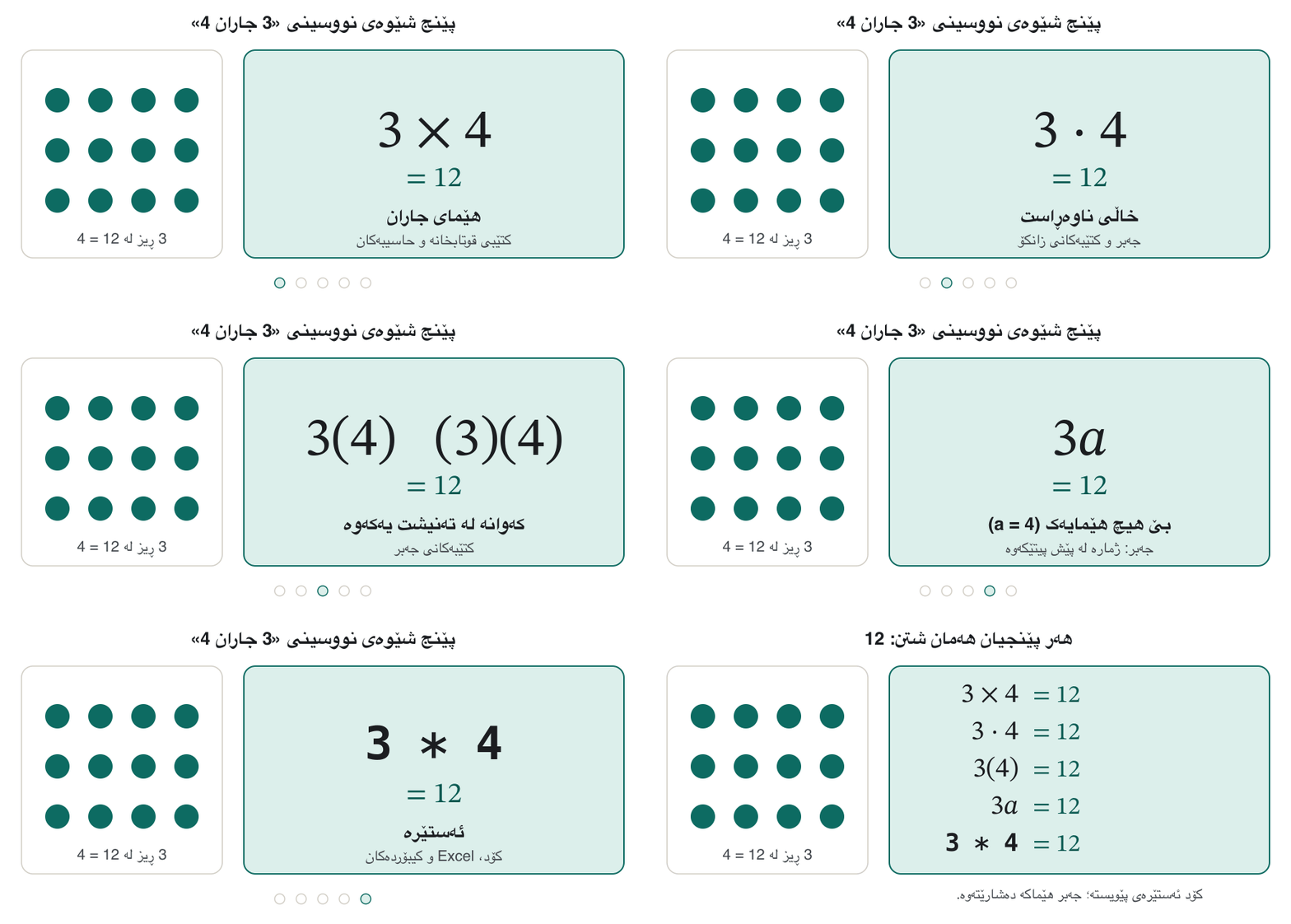
زیاتر لە هەر کارێکی تر شێوەی نووسینی هەیە. هەموو دێڕێکی وێنە جووڵاوەکە هەمان شت دەڵێت: 3 جاران 4، کە دەکاتە 12.
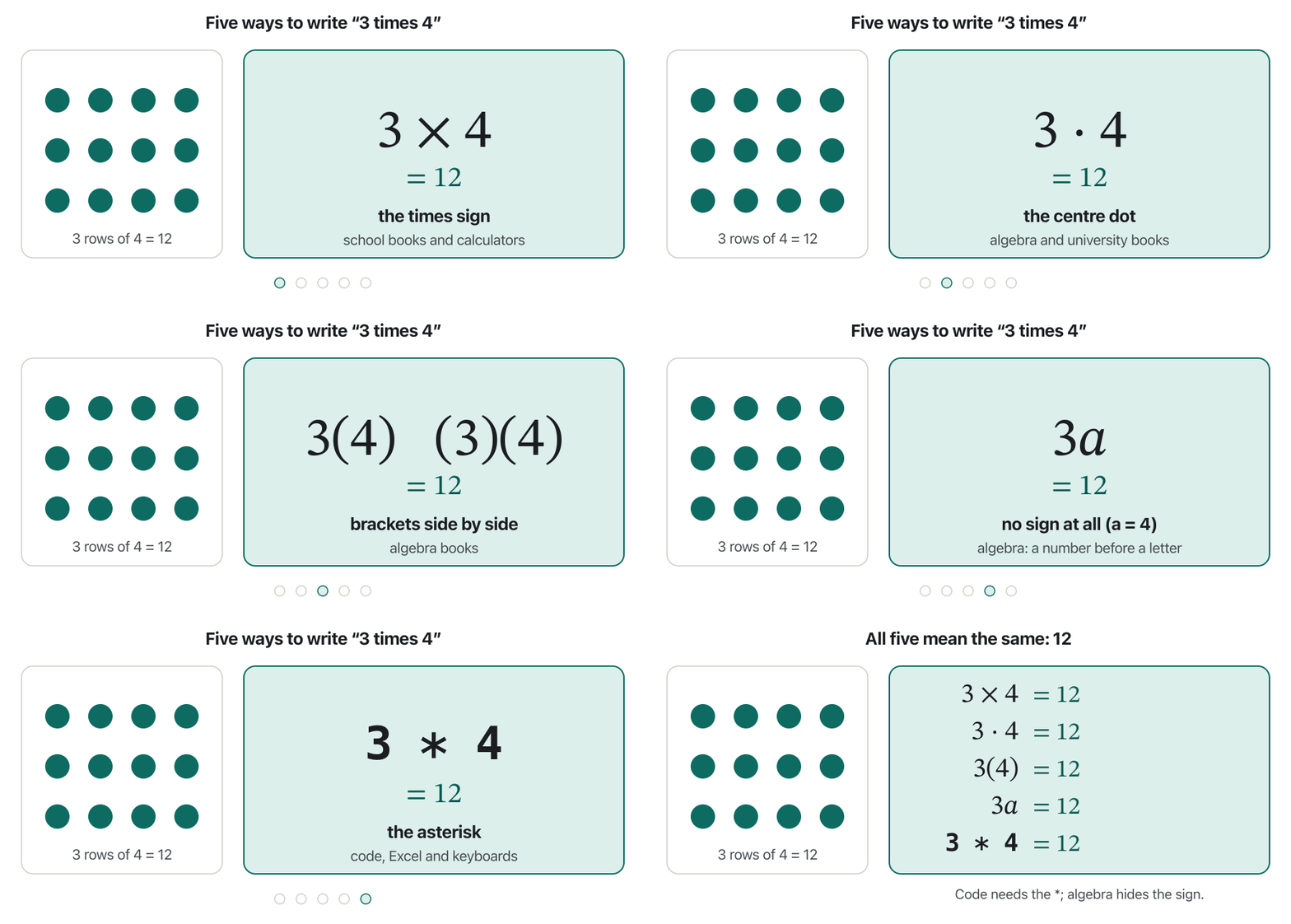
- , the times sign: school books and calculators.
- , the centre dot: algebra and university books.
- or : brackets side by side.
- , : no sign at all between a number and a letter, or between two letters.
3 * 4, the asterisk: code, Excel and computer keyboards.
- ، جاران: کتێبی قوتابخانە و .
- ، خاڵی ناوەڕاست: و کتێبەکانی زانکۆ.
- یان : کەوانە لە تەنیشت یەکەوە.
- ، : بێ هیچ لە نێوان ژمارە و پیتێک، یان لە نێوان دوو پیتدا.
3 * 4، ئەستێرە: کۆد، Excel و .
Algebra drops because it looks like the letter x: is hard to read, so books write . Code cannot guess, so it always needs * (see Python's operators, MATLAB's and Java's).
لا دەبات، چونکە وەک پیتی x دەردەکەوێت: خوێندنەوەی قورسە، بۆیە کتێبەکان دەنووسن. کۆد ناتوانێت مەزەندە بکات، بۆیە هەمیشە *ـی پێویستە (بڕوانە کارپێکەرە ژمێرەییەکانی Python و هی MATLAB و هی Java).
The invisible times signلێکدانی شاراوە: هێمای جارانی نەبینراو
When nothing stands between a number and a letter, or between two letters, they are multiplied. This is implicit multiplication: the sign is invisible, but it is there. means , means , the circle's means , and means . The number in front, such as the 2 of , is the coefficient (The parts of a formula).
کاتێک هیچ شتێک لە نێوان ژمارەیەک و پیتێک، یان لە نێوان دوو پیتدا نەبێت، لێک دەدرێن. ئەمە : نابینرێت، بەڵام لەوێیە. واتە ، واتە ، ـی بازنە واتە و واتە . ژمارەکەی پێشەوە، وەک 2ـی ، (بەشەکانی فۆرمولەیەک).
Two warnings. Digits side by side form one number, not a product: 23 is twenty-three. And when you put a value into such a formula, write the hidden sign back: for , , not 25. A mixed number is the one place where side by side means plus: , “two and a half”, is , not . That is why algebra books write or 2.5 instead.
دوو ئاگاداری. لە تەنیشت یەکەوە یەک ژمارەن، نەک ئەنجامی : 23 واتە بیست و سێ. هەروەها کاتێک نرخێک دەخەیتە ناو ئەم جۆرە ، بگەڕێنەوە: بۆ ، ، نەک 25. تاکە شوێنە کە لە تەنیشت یەک بوون واتای کۆ دەدات: ، «دوو و نیو»، دەکاتە ، نەک . بۆیە کتێبەکانی لە جیاتیی ئەوە یان 2.5 دەنووسن.
Three ways to write “divided by”سێ شێوەی نووسینی «دابەش بەسەر»
Division has several signs too. , and all mean “12 divided by 3”, which is 4. Where you meet each one:
چەند هەیە. ، و هەموویان واتە «12 دابەش بەسەر 3»، کە دەکاتە 4. هەر یەکەیان لە کوێ دەبینیت:
- , the division sign (also called the obelus): primary school, calculator keys and some IT unit sums, such as in b or B. The international standard for maths symbols, ISO 80000-2, says not to use it in formulas.
- , the slash: formulas written on one line, and every programming language:
12 / 3. - The fraction bar, one number over another: books, handouts and exam papers. Logic design also writes long divisions such as (Long division).
- ، دابەش (ناوی ئۆبێلەسـیشی هەیە): قوتابخانەی سەرەتایی، و هەندێک هەژماری یەکەکانی IT، وەک لە b یان B. ستانداردی نێودەوڵەتیی بیرکاری، ISO 80000-2، دەڵێت لە بەکاری مەهێنە.
- ، هێڵی لار: یەک دێڕی و هەموو :
12 / 3. - هێڵی ، ژمارەیەک لە سەرووی یەکێکی ترەوە: کتێب، مەلزەمە و پەڕەی تاقیکردنەوە. دیزاینی درێژی وەک دەنووسێت (دابەشکردنی درێژ).
Three ways to write “divided by”سێ شێوەی نووسینی «دابەش بەسەر»
The colon: ratios such as دوو خاڵ: ڕێژەکان وەک
A ratio compares two amounts by division. It is written with a colon and read “to”. A class with 12 girls and 8 boys has the ratio , “twelve to eight”. Like a fraction it can be simplified: , so for every 3 girls there are 2 boys. As a fraction: .
دوو بڕ بە بەراورد دەکات. بە دوو خاڵ دەنووسرێت و بە «بۆ» دەخوێنرێتەوە. پۆلێک کە 12 کچ و 8 کوڕی تێدایە ـە، «12 بۆ 8». وەک سادە دەکرێتەوە: ، واتە بۆ هەر 3 کچ 2 کوڕ هەن. وەک : .
You meet ratios in screen shapes (, see Resolution names and aspect ratios), on maps () and in recipes. In German, Russian and French the colon is also the common sign for division: .
لە شێوەی (، بڕوانە ناوی ڕوونییەکان و ڕێژەی پانی بۆ بەرزی)، لەسەر نەخشەی جوگرافی () و لە ڕێنمایی چێشتلێناندا دەبینیت. لە ئەڵمانی، ڕووسی و فەرەنسیدا دوو خاڵ ئاسایی : .
The fraction bar: numerator over denominatorهێڵی کەرت: سەرە لەسەر ژێرە
In a fraction such as , the line in the middle is the fraction bar, and it means “divided by”. The number on top is the numerator, the number below is the denominator. Say as “three over four”, “three quarters” or “three divided by four”: it is 0.75.
لە وەک ـدا، هێڵەکەی ناوەڕاست هێڵی و واتای «دابەش بەسەر» دەدات. ژمارەکەی سەرەوە و ژمارەکەی خوارەوە . دەخوێنرێتەوە «3 لەسەر 4»، «سێ چارەک» یان «3 دابەش بەسەر 4»: دەکاتە 0.75.
Two Kurdish sentences are worth remembering. هەموو ژمارەیەک ژێرەکەی بریتییە لە یەک: every whole number is a fraction over 1, . And in probability, the numerator counts the outcomes you want and the denominator counts all the outcomes: a die shows 5 or 6 with probability . A denominator can never be 0.
دوو ڕستەی کوردی باشە لەبیرت بن. «هەموو ژمارەیەک ژێرەکەی بریتییە لە یەک»: هەموو لەسەر 1، . هەروەها لە ئەو ئەنجامانە دەژمێرێت کە دەتەوێن و هەموو ئەنجامەکان: ئەوەی زارێک 5 یان 6 پیشان بدات ـە. هەرگیز نابێت 0 بێت.
In inequality work you will read سەرە و ژێرە یەکسان بکە بە سفر: find where the numerator and the denominator become 0 (Example 1, method A).
لە کاری دەخوێنیتەوە «سەرە و ژێرە یەکسان بکە بە سفر»: بدۆزەرەوە و لە کوێدا دەبنە 0 (نموونەی 1، ڕێگای A).
and : two signs in oneهێمای کۆ یان کەم: دوو هێما لە یەکدا
The plus–minus sign is read “plus or minus”. It packs two values into one line: means or . You meet it when an equation has two answers, as in , and with absolute value: means .
دەخوێنرێتەوە «کۆ یان کەم». دوو نرخ لە یەک دێڕدا دەنووسێت: واتە یان . کاتێک دوو وەڵامی هەبێت دەیبینیت، وەک ، هەروەها لەگەڵ نرخی ڕووت: واتە .
Its second job is an allowed error: a rod of cm may be anything from 9.9 cm to 10.1 cm. You meet this in resistor tolerances such as (The colour code), in , “mu plus or minus sigma” (The 68–95–99.7 rule), and in class boundaries (Class boundaries).
کاری دووەمی هەڵەی ڕێگەپێدراوە: دارێکی سم دەشێت هەر درێژییەک بێت لە 9.9 سم تا 10.1 سم. ئەمە لە هەڵەی ڕێگەپێدراوی وەک (کۆدی ڕەنگەکان)، لە ، «میو کۆ یان کەم سیگما» (یاسای 68–95–99.7) و لە سنووری پۆلەکاندا (سنووری پۆلەکان) دەبینیت.
Its partner , “minus or plus”, comes only together with and takes the opposite sign: in , read the top signs together ( then ) and the bottom signs together ( then ).
هاوڕێکەی ، «کەم یان کۆ»، تەنیا لەگەڵ دێت و پێچەوانە وەردەگرێت: لە ـدا، سەرەوە پێکەوە بخوێنەوە ( پاشان ) و خوارەوەش پێکەوە ( پاشان ).
One minus sign, three jobsیەک هێمای کەم، سێ کار
The same sign does three different jobs:
هەمان سێ کاری جیاواز دەکات:
- subtract: , “seven minus two”;
- a negative number: , “minus five” or “negative five” (readings in Numbers and digits);
- the opposite of: is “the opposite of x”, or just “minus x”. If , then : is not always negative (The definition: two cases).
- : ، «7 کەم 2»؛
- : ، «سالب پێنج» یان «کەم پێنج» (خوێندنەوەکان لە ژمارە و تاکژمارەکان)؛
- پێچەوانەی: واتە «پێچەوانەی x»، یان تەنیا «کەم x». ئەگەر ، ئەوا : هەمیشە سالب نییە (پێناسە دوو حاڵەتییەکە).
- in code.هەمان کار، دوو جیاواز: لە چاپدا، - لە کۆددا.CêITIn print, the minus sign is its own character: (U+2212 MINUS SIGN), as wide as . The short dash on the keyboard is the hyphen-minus - (U+002D): code uses it for minus, as in x = -5, and text uses it to join words. CêIT writes in its lesson text and - in its code. Paste a printed into Python and it stops with SyntaxError: invalid character '−' (U+2212). How to type the real signs: Typing mathematics.
لە چاپدا کەم تایبەتی خۆیەتی: (U+2212 MINUS SIGN)، هێندەی پانە. هێڵە کورتەکەی سەر هایفن-کەم -ـە (U+002D): کۆد بۆ کەم بەکاری دەهێنێت (وەک x = -5) و دەقیش بۆ پێکەوەلکاندنی وشەکان. CêIT لە دەقی وانەکاندا و لە کۆدەکانیدا - دەنووسێت. ئەگەر ـی چاپکراو بخەیتە ناو Pythonـەوە، بەم ڕادەوەستێت: SyntaxError: invalid character '−' (U+2212). چۆن هێما ڕاستەقینەکان بنووسیت: نووسینی بیرکاری.
and have other jobs too و کاری تریشیان هەیە
Outside arithmetic, is often read “by”, and it does not always multiply:
لە دەرەوەی ژمێرکاری، زۆرجار بە «بە» دەخوێنرێتەوە (by) و هەمیشە لێکدان نییە:
- : a screen “nineteen twenty by ten eighty”, 1920 pixels across and 1080 down (Saying specifications aloud);
- a matrix: “three by four”, 3 rows and 4 columns (Reading entries and orders);
- : the Cartesian product, “X cross Y”, every pair (Ordered pairs);
- in logic design: AND, so (+ means OR, · means AND).
- : «1920 بە 1080»، 1920 بە پانی و 1080 بە بەرزی (خوێندنەوەی تایبەتمەندییەکان بە دەنگی بەرز)؛
- : «3 بە 4»، 3 ڕیز و 4 ستوون (خوێندنەوەی ئەندام و قەبارە)؛
- : ، «X cross Y»، هەموو جووتێکی (جووتە ڕێکخراوەکان)؛
- لە دیزاینی : AND، بۆیە ( واتە OR، واتە AND).
In words, the logic rule is سفر و یەک پێکەوە جاران بکرێت دەکاتە سفر. And in some CêIT captions a spaced only separates items in a list (A · B · C): no maths at all. In scientific notation, , the is a real “times” again (Scientific notation).
بە وشە، یاسای لۆجیکیی دەبێتە «سفر و یەک پێکەوە جاران بکرێت دەکاتە سفر». هەروەها لە هەندێک ڕوونکردنەوەی وێنەی CêITـدا بە بۆشاییەوە تەنیا بڕگەکانی لیستێک لێک جیا دەکاتەوە (A · B · C): هیچ بیرکارییەکی تێدا نییە. لە ، ، دیسان «جاران»ـی ڕاستەقینەیە (شێوازی زانستی).
Common mistakesهەڵە باوەکان
| Mistakeهەڵە | Why it is wrongبۆچی هەڵەیە | Do thisئەمە بکە |
|---|---|---|
| Writing in algebraنووسینی لە | looks like the letter x وەک پیتی x دەردەکەوێت | Write or بنووسە یان |
| Reading as 25 when خوێندنەوەی وەک 25 کاتێک | is : the sign is only hidden واتە : تەنیا شاراوەیە | |
| Reading as خوێندنەوەی وەک | A mixed number means plus واتای کۆ دەدات | |
Typing 2x or 3 × 4 in codeنووسینی 2x یان 3 × 4 لە کۆددا | Code needs a visible *کۆد *ـی دیاری پێویستە | 2*x, 3*42*x، 3*4 |
| Thinking is always negativeوا بزانیت هەمیشە سالبە | is the opposite of x پێچەوانەی xـە | For , بۆ ، |
| Pasting a printed into codeدانانی ـی چاپکراو لە ناو کۆددا | U+2212 is not the hyphen-minus that code expectsU+2212 ئەو هایفن-کەمە نییە کە کۆد چاوەڕێی دەکات | Type it again with the - keyبە - دووپاتە بینووسەوە |
Reading 3·5 in an old British book as خوێندنەوەی 3·5 لە کتێبێکی کۆنی بەریتانیدا وەک | There a raised dot was once the decimal pointلەوێ خاڵی بەرز لە کۆندا بوو | Check the book: it may mean 3.5کتێبەکە بپشکنە: لەوانەیە واتای 3.5 بێت |
Practiceڕاهێنان
Say each one aloud in English and in Kurdish, then give its value: (a) (b) (c) (d) (e) .
هەر یەکەیان بە ئینگلیزی و بە کوردی بە دەنگی بەرز بخوێنەوە، پاشان نرخەکەی بڵێ: (a) (b) (c) (d) (e) .
Show answerوەڵامەکە پیشان بدە
- (a) “fifteen minus six”, 15 کەم 6: 9.
- (b) “four times seven”, 4 جاران 7: 28.
- (c) “nine over three” or “nine divided by three”, 9 لەسەر 3: 3.
- (d) “x equals plus or minus two”, x یەکسانە بە کۆ یان کەم 2: or .
- (e) “five to two”, 5 بۆ 2: a ratio, the same as .
- (a) «fifteen minus six»، «15 کەم 6»: 9.
- (b) «four times seven»، «4 جاران 7»: 28.
- (c) «nine over three» یان «nine divided by three»، «9 لەسەر 3»: 3.
- (d) «x equals plus or minus two»، «x یەکسانە بە کۆ یان کەم 2»: یان .
- (e) «five to two»، «5 بۆ 2»: ، هەمان .
Rewrite in algebra style: (a) (b) (c) . Then write (d) the way Python needs it.
بە شێوازی بینووسەوە: (a) (b) (c) . پاشان (d) بەو شێوەیە بنووسە کە Python پێویستی پێیەتی.
Hintئاماژە
Numbers in front, letters after, no sign.
ژمارە لە پێشەوە، پیت لە دواوە، بێ .
Show answerوەڵامەکە پیشان بدە
In (c) the numbers go in front and are multiplied together: .
لە (c)ـدا ژمارەکان دەچنە پێشەوە و پێکەوە لێک دەدرێن: .
(d) 4*x*y: code needs every *. Python stops at 4xy with a SyntaxError, and xy on its own would be one variable name, not x times y.
(d) 4*x*y: کۆد هەموو *ـێکی پێویستە. Python لە 4xyـدا بە SyntaxError ڕادەوەستێت و xy بە تەنیا دەبێتە ناوی یەک ، نەک x جاران y.
Shilan writes . Explain her mistake and give the right value.
شیلان دەنووسێت . هەڵەکەی ڕوون بکەرەوە و نرخە ڕاستەکە بدە.
Show answerوەڵامەکە پیشان بدە
is a mixed number, “two and a half”: here side by side means plus. . Side by side means times only with letters and brackets, as in or .
، «دوو و نیو»: لێرەدا لە تەنیشت یەک بوون واتە کۆ. . لە تەنیشت یەک بوون تەنیا لەگەڵ پیت و کەوانە واتە جاران، وەک یان .
With and , find (a) (b) (c) (d) .
بە و ، بدۆزەرەوە: (a) (b) (c) (d) .
Show answerوەڵامەکە پیشان بدە
Write the hidden signs back and keep the brackets around .
بگەڕێنەوە و کەوانە لە دەوری بهێڵەوە.
Summaryپوختە
- plus, minus, times, divided by; the answers are the sum, difference, product and quotient.
- Times can be written , , with brackets, with no sign at all () or as
*in code. - Divided by can be written , or with a fraction bar: numerator on top, denominator below.
- A mixed number means plus; a ratio is read “three to two”.
- gives two values or an allowed error; takes the opposite sign.
- The minus sign subtracts, marks a negative number or means “the opposite of”; in code it is the hyphen-minus
-. - is also “by” (sizes, matrices) and “cross” (Cartesian product); is AND in logic.
- All these signs, with their readings, are in the Symbol dictionary: Arithmetic signs.
- کۆ، کەم، جاران، دابەش بەسەر؛ ئەنجامەکان: کۆ، جیاوازی، ئەنجامی و ئەنجامی .
- جاران دەنووسرێت ، ، بە کەوانە، بێ هیچ () یان
*لە کۆددا. - دابەش بەسەر دەنووسرێت ، یان بە هێڵی : لە سەرەوە، لە خوارەوە.
- واتای کۆ دەدات؛ دەخوێنرێتەوە «3 بۆ 2».
- دوو نرخ یان هەڵەیەکی ڕێگەپێدراو دەدات؛ پێچەوانە وەردەگرێت.
- کەم لێدەردەکات، نیشان دەدات یان واتای «پێچەوانەی» دەدات؛ لە کۆددا هایفن-کەمی
-ـە. - هەروەها «بە»ـیە (قەبارە، ) و «cross» ()؛ لە لۆجیکدا ANDـە.
- هەموو ئەم نیشانانە، لەگەڵ خوێندنەوەکانیان، لە فەرهەنگی هەن: نیشانەکانی ژمێرکاری.
How do you say , and which number is the numerator? چۆن دەخوێنیتەوە و سەرە کامەیە؟
“Two over five” or “two fifths”; the numerator is 2, the number on top.
«2 لەسەر 5» یان «دوو لە پێنج»؛ 2ـە، ژمارەی سەرەوە.
Why does algebra write and not ?بۆچی جەبر دەنووسێت نەک ؟
Because looks like the letter x. The sign is left out, and side by side means times.
چونکە وەک پیتی x دەردەکەوێت. لادەبرێت و لە تەنیشت یەک بوون واتە جاران.
What does mean? واتای چییە؟
or : two values in one line.
یان : دوو نرخ لە یەک دێڕدا.
Lesson complete!وانەکە تەواو بوو!
Well done. Review the key terms, then go on to the next lesson.دەستخۆش. سەیرێکی زاراوە سەرەکییەکان بکەرەوە، پاشان بڕۆ بۆ وانەی داهاتوو.
Key termsزاراوە سەرەکییەکان
Brackets and the Order of Operationsکەوانەکان و پێشینەیی کارپێکەرەکان
Related lecturesوانە پەیوەندیدارەکان
- Brackets and the Order of Operationsکەوانەکان و پێشینەیی کارپێکەرەکان
- Powers, Roots, Absolute Value, Factorial, Floor and Ceilingتوانەکان، ڕەگەکان، نرخی ڕووت، فاکتۆریێل، نەخشەی گەورەترین ژمارەی تەواو و نەخشەی بچووکترین ژمارەی تەواو
- Numbers and Digits: ١٢٣ and 123, Decimal Points and Scientific Notationژمارە و تاکژمارەکان: ١٢٣ و 123، فاریزە و شێوازی زانستی
- Operators and Expressionsکارپێکەرەکان و دەربڕینەکان
- MATLAB as a Calculator: Operators, Variables and FormatsMATLAB وەک حاسیبە: کارپێکەرەکان، گۆڕاوەکان و شێوەکانی پیشاندان
- Inside the Computerناو کۆمپیوتەرەکە
References and further readingسەرچاوەکان و خوێندنەوەی زیاتر
- OpenStax, Prealgebra 2e, 2.1 Use the Language of Algebra
- OpenStax, Prealgebra 2e, 4.1 Visualize Fractions (mixed numbers)
- Unicode Technical Report #25: Unicode Support for Mathematics (rev. 15, 2017)
- Wikipedia: Multiplication sign
- Wikipedia: Division sign (obelus; ISO 80000-2)
- Wikipedia: Plus and minus signs
- Wikipedia: Plus–minus sign
- Wikipedia: Colon (punctuation) — ratio and division
- Wikipedia: Decimal separator (the raised dot in British print)
- Wikipedia: Glossary of mathematical symbols
This lecture is a first edition. The Kurdish text and terminology are waiting for review by Kurdish IT teachers.ئەم وانەیە چاپی یەکەمە. دەقە کوردییەکە و زاراوەکانی چاوەڕێی پێداچوونەوەی مامۆستایانی کوردی بواری IT ن.