Chapterبەش 2 · Lectureوانە 2.5
Inequalities with Fractions (Rational Inequalities)لاسەنگە ڕێژەییەکان
Why you may never multiply an inequality by , and two safe methods instead: one fraction compared with 0 (method A) and multiplying by the squares of the denominators (method B). Both are correct and give the same answer: slide 14's Examples 1 and 2 solved both ways and compared, with sign tables, the rules for the ends, and corrected solutions.
بۆچی هەرگیز نابێت لە بدەیت و دوو ڕێگای سەلامەت لە جیاتی ئەوە: یەک بەراورد لەگەڵ 0 (ڕێگای A) و لێکدان لە دووجای (ڕێگای B). هەردوو ڕێگاکە دروستن و هەمان وەڵام دەدەن: نموونەکانی 1 و 2ی سلایدی 14 بە هەردوو ڕێگا و بەراوردکردنیان، لەگەڵ ، یاساکانی سنوور و چارەسەری ڕاستکراوە.
What you will learnچی فێر دەبیت
- Explain why multiplying by an expression of unknown sign is wrong.
- Solve a rational inequality by making one fraction and using a sign chart (method A).
- Solve it by multiplying by the squares of the denominators (method B) and know its trap.
- Compare the two methods and explain why they always give the same answer.
- Decide which ends belong to the answer and write it as a union of intervals.
- ڕوونی بکەیتەوە بۆچی لێکدان لە کە هێماکەی نەزانراوە هەڵەیە.
- چارەسەر بکەیت بە کردنی بە یەک و بەکارهێنانی (ڕێگای A).
- بە لێکدان لە دووجای چارەسەری بکەیت (ڕێگای B) و تەڵەکەی بناسیت.
- دوو ڕێگاکە بەراورد بکەیت و ڕوونی بکەیتەوە بۆچی هەمیشە هەمان وەڵام دەدەن.
- بڕیار بدەیت کام سنوور دەچێتە ناو وەڵامەوە و وەک بینووسیت.
Inequalities with fractionsلاسەنگە ڕێژەییەکان
A has x in a . Slide 14 starts with one: . Two facts decide everything that follows.
xـی لە هەیە. سلایدی 14 بە یەکێکیان دەست پێدەکات: . دوو ڕاستی هەموو ئەوەی دواتر دێت دیاری دەکەن.
An with x in a , such as . Never multiply by an expression whose sign you do not know: move everything to one side, make one fraction and use a .
کە x لە هەیە، وەک . هەرگیز لە دەربڕینێک مەدە کە هێماکەی نازانیت: هەموو شتێک بگوازەرەوە بۆ یەک لا، بیکە بە یەک کەرت و بەکار بهێنە.
- A denominator can never be 0. Here and : for these numbers the fractions do not exist, so they can never be in the answer.
- You may not multiply both sides by or . The slide warns about this, and the next screen shows why.
- هەرگیز ناتوانێت 0 بێت. لێرەدا و : بۆ ئەم ژمارانە بوونیان نییە، بۆیە هەرگیز ناچنە ناو وەڵامەکەوە.
- نابێت هەردوو لا لە یان بدەیت. سلایدەکە ئاگاداری ئەمە دەکاتەوە و شاشەی داهاتوو پیشان دەدات بۆچی.
Why you must not multiply by بۆچی نابێت لە بدەیت
With an equation you could multiply both sides by . With an inequality you cannot, because the sign of depends on x. For it is positive and the sign would stay; for it is negative and the sign would have to turn round. We do not know x yet, so we cannot know which to do.
لە دەتوانیت هەردوو لا لە بدەیت. لە ناتوانیت، چونکە هێمای بەندە بە xـەوە. بۆ موجەبە و هێماکە وەک خۆی دەمێنێتەوە؛ بۆ سالبە و هێماکە دەبێت پێچەوانە بکرێتەوە. هێشتا x نازانین، بۆیە نازانین کامیان بکەین.
Two safe methodsدوو ڕێگای سەلامەت
There are two safe ways. Both are correct and always give the same answer; you will compare them after Example 1. Both end with the sign chart you know from Quadratic inequalities.
دوو ڕێگای سەلامەت هەن. هەردووکیان دروستن و هەمیشە هەمان وەڵام دەدەن؛ دوای نموونەی 1 بەراوردیان دەکەین. هەردووکیان بەو کۆتایی دێن کە لە لاسەنگە پلەدووەکان دەیناسیت.
| Stepهەنگاو | Method A: one fractionڕێگای A: یەک | Method B: multiply by squaresڕێگای B: لێکدان لە دووجاکان |
|---|---|---|
| Ideaبیرۆکە | Move everything to one side and make one fraction; compare it with 0.هەموو شتێک بگوازەرەوە بۆ یەک لا و بیکە بە یەک ؛ لەگەڵ 0 بەراوردی بکە. | Multiply both sides by the squares of the denominators. A square is positive (it is never 0 for an allowed x), so the sign stays.هەردوو لا لە دووجای بدە. دووجا موجەبە (بۆ هەر نرخێکی ڕێگەپێدراوی x هەرگیز 0 نییە)، بۆیە هێماکە وەک خۆی دەمێنێتەوە. |
| Thenپاشان | Zeros of the numerator and of the denominator; sign chart of the fraction.سفرەکانی و ؛ . | Factor the polynomial; sign chart of the product. ؛ لێکدانەکە. |
| Used byبەکارهاتووە لە | Standard textbooks; the student's Kurdish notes.کتێبە ستاندەردەکان؛ تێبینییە کوردییەکانی خوێندکارەکە. | The lecturer's answer sheets and the board.وەرەقەی وەڵامەکان و تەختەی مامۆستا. |
Example 1, method A: one fractionنموونەی 1، ڕێگای A: یەک کەرت
Here is Example 1 by method A, step by step. The step names come from a student's Kurdish notes on this exercise.
ئەمە نموونەی 1ـە بە ڕێگای A، هەنگاو بە هەنگاو. ناوی هەنگاوەکان لە تێبینییە کوردییەکانی خوێندکارێکەوە وەرگیراون بۆ ئەم پرسیارە.
- Zero on the rightسفر لە لای ڕاست
Move the right side to the left.
بەشی ڕاست بخەرە چەپ.
- Common denominatorژێرەی هاوبەش
Give both fractions the same denominator .
هاوبەش دروست بکە: .
- One fractionیەک کەرت
Write them as one fraction.
بیانکە بە یەک .
- Simplifyسادە بکەرەوە
Simplify the numerator: watch the sign, .
سادە بکەرەوە: ئاگاداری هێما بە، .
- Zerosسفرەکان
Set the numerator and the denominator equal to zero, and solve: , , give , , .
و یەکسان بکە بە سفر و چارەسەریان بکە: ، و دەدەن ، و .
- Number lineهێڵی ژمارەکان
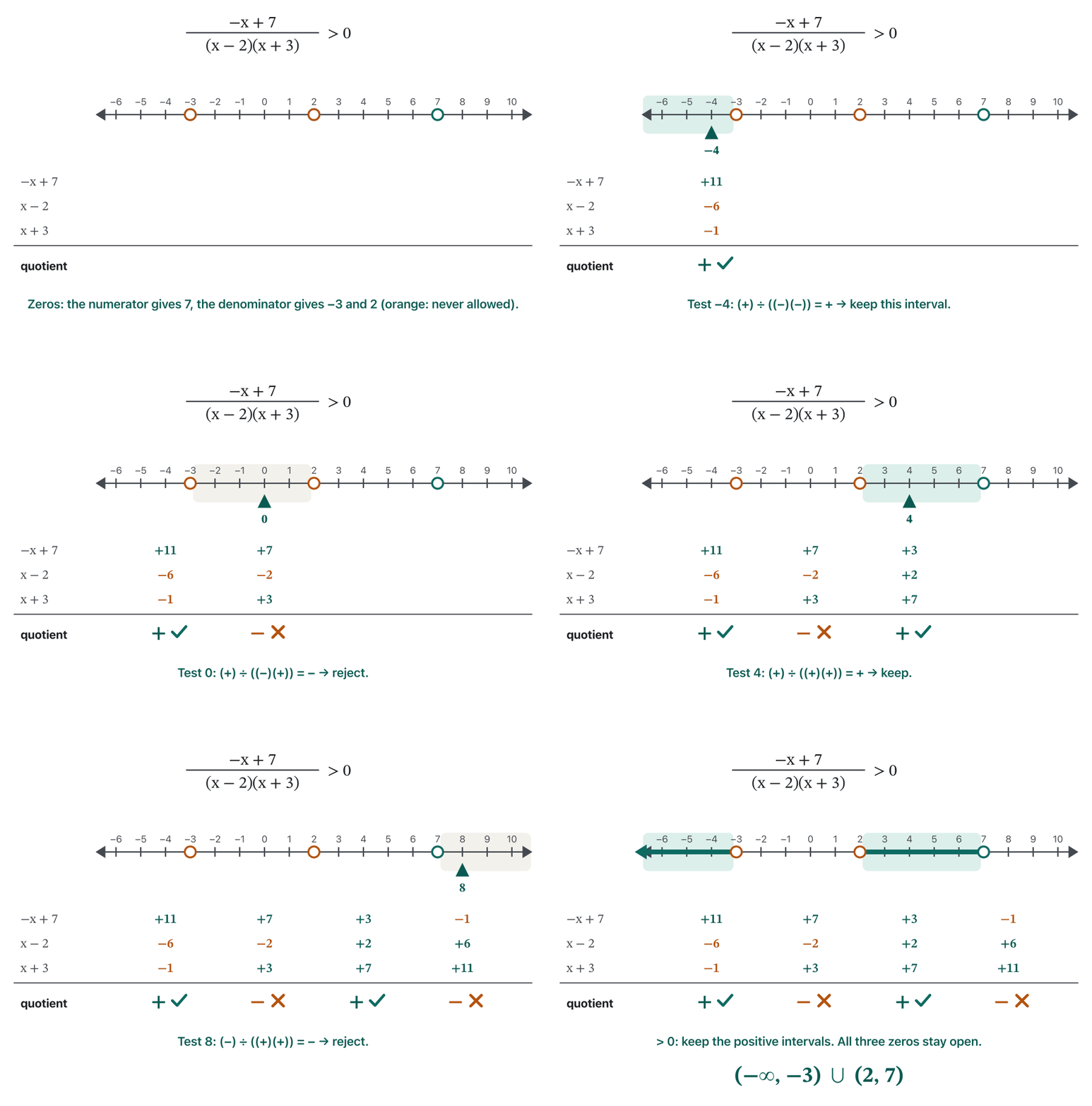
Put the numbers on the number line from small to large, left to right: . They cut it into four intervals.
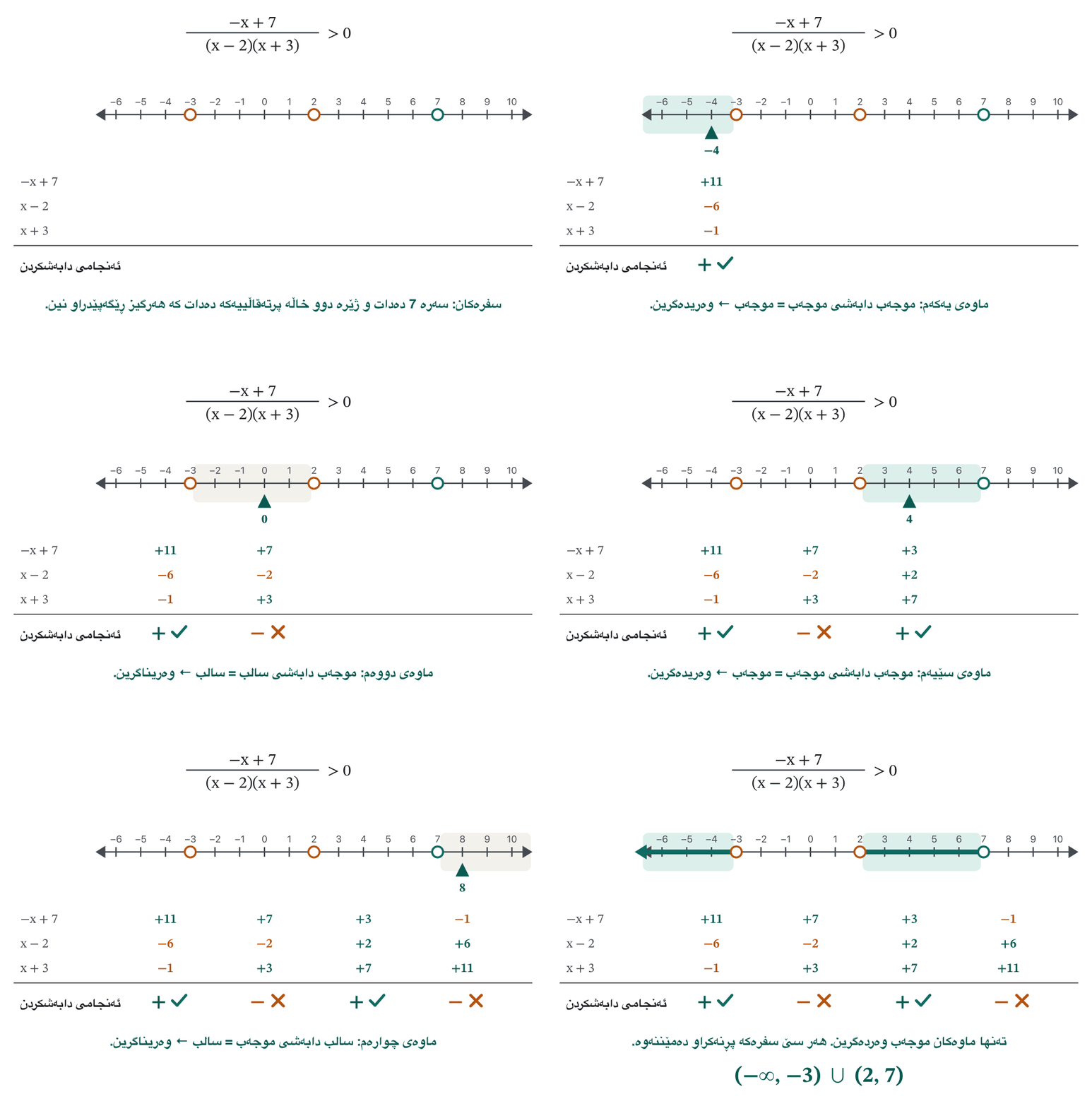
ژمارەکان لە بچووکەوە بەرەو گەورە، لە چەپەوە بەرەو ڕاست، بخە سەر : . هێڵەکە دەکەن بە چوار .
Example 1: the sign tableنموونەی 1: خشتەی هێماکان
Take one test number in each interval — “a number in that interval”: , 0, 4 and 8. Work out each factor there; only its sign matters.
لە هەر ژمارەیەکی تاقیکردنەوە وەربگرە — «ژمارەیەک لەو نێوانە»: ، 0، 4 و 8. هەر کۆلکەیەک لەوێدا حیساب بکە؛ تەنها هێماکەی گرنگە.
| Factorکۆلکە | (−4) (−4) | (0) (0) | (4) (4) | (8) (8) |
|---|---|---|---|---|
| (+) | (+) | (+) | (−) | |
| (−) | (−) | (+) | (+) | |
| (−) | (+) | (+) | (+) | |
| quotientئەنجامی دابەشکردن | + | − | + | − |
Example 1: choosing the answerنموونەی 1: هەڵبژاردنی وەڵام
The question asks for > 0, so only the positive intervals are taken: and .
پرسیارەکە > 0 دەخوازێت، بۆیە تەنها وەردەگیرێن: و .
Now the ends. and 2 make a denominator 0, so the fraction does not exist there: they are never in the answer, whatever the sign says. 7 makes the fraction equal to 0, and is false, so 7 is left out too. All three ends are open.
ئێستا سنوورەکان. و 2 یەکێک لە دەکەنە 0، بۆیە لەوێدا بوونی نییە: هەرگیز ناچنە ناو وەڵامەوە، هێماکە هەرچی بڵێت. 7 دەکاتە 0 و هەڵەیە، بۆیە 7ـیش تێدا نییە. هەر سێ سنوورەکە پڕنەکراون.
The answer of Example 1, written as a union of two intervals.
وەڵامی نموونەی 1، وەک دوو .
Example 1, method B: multiply by the squaresنموونەی 1، ڕێگای B: لێکدان لە دووجاکان
The lecturer solved Example 1 on the board and on the answer sheet like this:
مامۆستاکە نموونەی 1ی لەسەر تەختەکە و لە وەرەقەی وەڵامەکاندا بەم شێوەیە چارەسەر کرد:
Multiply by the positive , cancel, bring everything to one side, take out the common factor and simplify the bracket: (the board writes directly as ).
لە ـی موجەب بدە، لاببە، هەموو شتێک بگوازەرەوە بۆ یەک لا، کۆلکەی هاوبەشی دەربهێنە و ناو کەوانەکە سادە بکەرەوە: (تەختەکە ڕاستەوخۆ وەک دەنووسێت).
| Testتاقیکردنەوە | Substitutionجێگرتنەوەی x | Valueئەنجام | > 0 ?> 0 ؟ |
|---|---|---|---|
| ✓ | |||
| ✗ | |||
| ✓ | |||
| ✗ |
The answer is again . The lecturer tested 3 in and the student tested 4: any number inside an interval works. On the board the first test was written ; the last bracket is with , that is — write the substitution out to avoid sign slips.
وەڵامەکە دیسان ـە. مامۆستاکە 3ی لە دا تاقی کردەوە و خوێندکارەکە 4ی: هەر ژمارەیەک لە ناو کار دەکات. لەسەر تەختەکە یەکەم تاقیکردنەوە بەم شێوەیە نووسرا: ؛ کەوانەی کۆتایی ـە بە ، واتە — جێگرتنەوەکە بە تەواوی بنووسە بۆ ئەوەی هەڵەی هێما نەکەیت.
Method A or method B?ڕێگای A یان ڕێگای B؟
Both methods are correct. Example 1 gave both ways, and Example 2 below does the same. Each one is safe for its own reason: method A never multiplies by anything that contains x, and method B multiplies only by a square, which is positive wherever the inequality makes sense.
هەردوو ڕێگاکە دروستن. نموونەی 1 بە هەردوو ڕێگا ـی دا و نموونەی 2ـیش لە خوارەوە هەمان شت دەکات. هەر یەکەیان بە هۆکاری خۆی سەلامەتە: ڕێگای A هەرگیز لە هیچ شتێک نادات کە xـی تێدا بێت و ڕێگای B تەنها لە دووجایەک دەدات کە لە هەر شوێنێک واتای هەبێت موجەبە.
| Compareبەراورد | Method A: one fractionڕێگای A: یەک | Method B: multiply by squaresڕێگای B: لێکدان لە دووجاکان |
|---|---|---|
| The algebraکاری جەبری | A common denominator, then simplify the numerator. هاوبەش، پاشان سادەکردنەوەی . | Cancel, take out the common factor and simplify; the product has a higher degree (degree 3 in Example 1).لابردن، دەرهێنانی کۆلکەی هاوبەش و سادەکردنەوە؛ لێکدانەکە پلەی بەرزترە (لە نموونەی 1دا پلە 3). |
| The endsسنوورەکان | Numerator zeros and denominator zeros stay easy to tell apart.سفرەکانی و سفرەکانی بە ئاسانی لێک جیا دەکرێنەوە. | Denominator zeros become zeros of the product: remove them yourself.سفرەکانی دەبنە سفری لێکدانەکە: خۆت لایان ببە. |
| Good forباشە بۆ | The standard textbook method and a safe default.ڕێگای ستاندەردی کتێبەکان و هەڵبژاردەیەکی سەلامەت. | Short work when the common factor is easy to see; the lecturer also uses it for absolute value inequalities with fractions.کورتە کاتێک کۆلکە هاوبەشەکە بە ئاسانی دیارە؛ مامۆستاکە بۆ لەگەڵ بەکاری دێنێت. |
| Example 1نموونەی 1 |
Use whichever you find easier — but in an exam, write which method you use and keep the denominator zeros out of the answer. Method B returns in Absolute value inequalities with fractions.
کامیانت پێ ئاسانترە ئەوە بەکاربهێنە — بەڵام لە تاقیکردنەوەدا بنووسە کام ڕێگا بەکاردێنیت و سفرەکانی لە وەڵامەکەدا دامەنێ. ڕێگای B لە لاسەنگەکانی نرخی ڕووت لەگەڵ کەرتەکاندا دووبارە دەردەکەوێتەوە.
Method A or method B?ڕێگای A یان ڕێگای B؟
Why the two methods always agreeبۆچی دوو ڕێگاکە هەمیشە یەک دەگرنەوە
They are closer than they look. Method A ends with the fraction . Method B ends with the product : the same numerator times the same denominator. A quotient and a product always have the same sign — both are positive when and have the same sign, both negative otherwise — so the two sign charts are identical.
ئەم دوو ڕێگایە لەوە نزیکترن کە دەردەکەون. ڕێگای A بە کۆتایی دێت. ڕێگای B بە لێکدانی کۆتایی دێت: هەمان جارانی هەمان . ئەنجامی دابەشکردنی و لێکدانی هەمیشە هەمان هێمایان هەیە — ئەگەر و هەمان هێمایان هەبێت هەردووکیان موجەبن، ئەگەر نا هەردووکیان سالبن — بۆیە هەردوو ڕێک وەک یەکن.
Example 2 (homework): نموونەی 2 (ڕاهێنانی ماڵەوە):
Method A again. Move the right side to the left, give both fractions the denominator and simplify the numerator:
دیسان ڕێگای A. بەشی ڕاست بخەرە چەپ، بدە بە هەردوو و سادە بکەرەوە:
The x-terms cancel and the numerator is just 7, which is always positive. So the sign of the fraction depends only on the denominator.
بڕەکانی x یەکتر لادەبەن و تەنها 7ـە کە هەمیشە موجەبە. کەواتە هێمای تەنها بەندە بە .
Example 2 (homework): نموونەی 2 (ڕاهێنانی ماڵەوە):
Example 2: sign table and answerنموونەی 2: خشتەی هێماکان و وەڵام
Zeros of the denominator: gives and gives . Turn the fractions into decimals so you can place them easily: 0.2 and . Test , 0 and 1:
سفرەکانی : دەکاتە و دەکاتە . بکە بە ژمارەی دەیی تا بە ئاسانی بیانخەیتە سەر : 0.2 و . ژمارەکانی ، 0 و 1 تاقی بکەرەوە:
| Factorکۆلکە | (−1) (−1) | (0) (0) | (1) (1) |
|---|---|---|---|
| (−) | (−) | (+) | |
| (−) | (+) | (+) | |
| quotientئەنجامی دابەشکردن | + ✓ | − ✗ | + ✓ |
Keep the positive intervals: . The student's notes end with “”; the usual way is or simply .
وەربگرە: . تێبینییەکانی خوێندکارەکە بە «» کۆتایی دێن؛ شێوە باوەکە یان تەنها ـە.
Which ends belong to the answer?کام سنوور دەچێتە ناو وەڵام؟
Two rules settle every end of a rational inequality:
دوو یاسا هەموو سنوورێکی یەکلا دەکەنەوە:
- Zeros of the denominator: never. The fraction does not exist there. Always an open dot and a round bracket — even for and .
- Zeros of the numerator: only with or . There the fraction is 0, so it counts when the question allows “or equal”.
- سفرەکانی : هەرگیز. لەوێدا بوونی نییە. هەمیشە خاڵی پڕنەکراو و کەوانەی خڕ — تەنانەت بۆ و .
- سفرەکانی : تەنها لەگەڵ یان . لەوێدا 0ـە، بۆیە کاتێک دەژمێردرێت کە پرسیارەکە «یان یەکسان» ڕێگە بدات.
Example: . Zeros 4 (numerator) and (denominator). Test : (+); test 0: (−); test 5: (+). Keep the negative interval; 4 is included (), is not: .
نموونە: . سفرەکان 4 () و (). تاقیکردنەوەی : (+)؛ تاقیکردنەوەی 0: (−)؛ تاقیکردنەوەی 5: (+). وەربگرە؛ 4 تێدایە () و تێدا نییە: .
Check and correct solutionsچارەسەرەکان تاقی بکەرەوە و ڕاستیان بکەرەوە
Here is a homework solution of Example 2, retyped. Is it right?
ئەمە چارەسەرێکی ڕاهێنانی ماڵەوەیە بۆ نموونەی 2، دووبارە نووسراوەتەوە. ئایا ڕاستە؟
- ;
- Sign chart:
- Solution:
- ؛
- :
- وەڵام:
Show answerوەڵامەکە پیشان بدە
Yes, it is correct. It uses method A, and the answer in reversed-bracket notation is the same as (see reversed brackets).
بەڵێ، ڕاستە. ڕێگای A بەکاردێنێت و وەڵامەکە بە نووسینی کەوانەی پێچەوانە هەمان ـە (بڕوانە کەوانەی پێچەوانە).
A student wrote: , answer . Find a number in this answer that is not a solution, and name the wrong step.
خوێندکارێک نووسیویەتی: ، وەڵام . ژمارەیەک لەم وەڵامەدا بدۆزەرەوە کە شیکار نییە و هەنگاوە هەڵەکە دیاری بکە.
Hintئاماژە
Try in the original inequality.
لە تاقی بکەرەوە.
Show answerوەڵامەکە پیشان بدە
For example 0: is not greater than . Also 2 and are in but the fractions do not exist there. The wrong step is the first one: multiplying by , whose sign is unknown. The right answer is .
بۆ نموونە 0: لە گەورەتر نییە. هەروەها 2 و لە دان بەڵام لەوێدا بوونیان نییە. هەنگاوە هەڵەکە یەکەمیانە: لێکدان لە کە هێماکەی نەزانراوە. وەڵامی دروست ـە.
Someone answers with . What is wrong?
کەسێک وەڵامی بە دەداتەوە. چی هەڵەیە؟
Show answerوەڵامەکە پیشان بدە
makes the denominator 0, so the fraction does not exist there. Even with it must be open: .
دەکاتە 0، بۆیە لەوێدا بوونی نییە. تەنانەت لەگەڵ دەبێت کراوە بێت: .
For a student answers . What went wrong?
بۆ خوێندکارێک وەڵام دەداتەوە . چی بە هەڵەدا چوو؟
Show answerوەڵامەکە پیشان بدە
That is the interval where the quotient is negative (test 0 gives ). The question asks for , so the answer is the two outer intervals: .
ئەوە ئەو کە ئەنجامی دابەشکردن تێیدا سالبە (تاقیکردنەوەی 0 دەکاتە ). پرسیارەکە دەخوازێت، بۆیە وەڵامەکە دوو : .
Common mistakesهەڵە باوەکان
| Mistakeهەڵە | Fixڕاستکردنەوە |
|---|---|
| Multiplying both sides by (or cross-multiplying).لێکدانی هەردوو لا لە (یان لێکدان بە شێوەی خاچ). | Its sign is unknown. Use method A (one fraction) or method B (squares).هێماکەی نەزانراوە. ڕێگای A (یەک ) یان ڕێگای B (دووجاکان) بەکاربهێنە. |
| Putting a denominator zero in the answer.دانانی سفرێکی لە ناو وەڵامدا. | Denominator zeros are always open, even for and .سفرەکانی هەمیشە کراوەن، تەنانەت بۆ و . |
| Comparing with a number other than 0 in the sign chart.بەراوردکردن لەگەڵ ژمارەیەکی جیا لە 0 لە . | First move everything to one side so that the other side is 0.سەرەتا هەموو شتێک بگوازەرەوە بۆ یەک لا تا لاکەی تر 0 بێت. |
| Sign slips in the numerator: .هەڵەی هێما لە : . | , so .، بۆیە . |
| Writing the answer as .نووسینی وەڵام وەک . | Join the pieces with : .پارچەکان بە ببەستەوە: . |
| Forgetting, in method B, that the product is 0 where the fractions do not exist.لەبیرکردنی ئەوەی لە ڕێگای B لێکدانەکە لەو شوێنانە 0ـە کە بوونیان نییە. | Remove the denominator zeros from the final answer yourself.خۆت سفرەکانی لە وەڵامی کۆتایی لاببە. |
Exercisesڕاهێنانەکان
Solve the lecturer's way: multiply both sides by .
بە ڕێگای مامۆستاکە چارەسەر بکە: هەردوو لا لە بدە.
Show answerوەڵامەکە پیشان بدە
Zeros and . Tests: gives ✓, 0 gives ✗, 1 gives ✓. Answer: , the same as method A.
سفرەکان و . تاقیکردنەوە: دەکاتە ✓، 0 دەکاتە ✗، 1 دەکاتە ✓. وەڵام: ، هەمان وەڵامی ڕێگای A.
Solve .
چارەسەر بکە.
Show answerوەڵامەکە پیشان بدە
Zeros and 3. Test : (+); 0: (−); 4: 5 (+). Negative between them, both ends open: .
سفرەکان و 3. تاقیکردنەوەی : (+)؛ 0: (−)؛ 4: 5 (+). لە نێوانیاندا سالبە و هەردوو سنوور کراوەن: .
Solve .
چارەسەر بکە.
Hintئاماژە
Do not multiply by . Subtract 1 and make one fraction.
لە مەدە. 1 دەربکە و بیکە بە یەک .
Show answerوەڵامەکە پیشان بدە
Zeros 4 (numerator) and 1 (denominator). Test 0: (−); 2: 2 (+); 5: (−). Keep the negative intervals, 4 included, 1 never: .
سفرەکان 4 () و 1 (). تاقیکردنەوەی 0: (−)؛ 2: 2 (+)؛ 5: (−). وەربگرە، 4 تێدایە و 1 هەرگیز: .
Solve .
چارەسەر بکە.
Show answerوەڵامەکە پیشان بدە
. Zeros 2 and . Positive outside them; 2 included, never: .
. سفرەکان 2 و . لە دەرەوەیان موجەبە؛ 2 تێدایە و هەرگیز: .
Solve .
چارەسەر بکە.
Show answerوەڵامەکە پیشان بدە
. Zeros 2 and 1. Test 0: (−); 1.5: 1 (+); 3: (−). Answer: .
. سفرەکان 2 و 1. تاقیکردنەوەی 0: (−)؛ 1.5: 1 (+)؛ 3: (−). وەڵام: .
Solve .
چارەسەر بکە.
Show answerوەڵامەکە پیشان بدە
Zeros , 2 (numerator) and 4 (denominator). Tests : (−); 0: (+); 3: (−); 5: (+). Answer: .
سفرەکان ، 2 () و 4 (). تاقیکردنەوەکان : (−)؛ 0: (+)؛ 3: (−)؛ 5: (+). وەڵام: .
Solve . Why is “so ” wrong?
چارەسەر بکە. بۆچی «کەواتە » هەڵەیە؟
Show answerوەڵامەکە پیشان بدە
. Zeros 2 and 0. Test : (−); 1: (+); 3: (−). Answer: . “” forgets every negative x, for example : ✓. Taking reciprocals is only safe when both sides have the same sign (see reciprocals).
. سفرەکان 2 و 0. تاقیکردنەوەی : (−)؛ 1: (+)؛ 3: (−). وەڵام: . «» هەموو نرخە سالبەکانی x لەبیر دەکات، بۆ نموونە : ✓. هەڵگێڕانەوەی تەنها کاتێک سەلامەتە کە هەردوو لا هەمان هێمایان هەبێت (بڕوانە پێچەوانەی ژمارەکان).
Summaryپوختە
- Never multiply an inequality by an expression whose sign you do not know, such as .
- Method A: move everything to one side, make one fraction, find the zeros of numerator and denominator, use a sign chart.
- Method B: multiply by the squares of the denominators (positive), then solve the polynomial inequality — and remove the denominator zeros.
- Both methods are correct and always agree: B's product is A's numerator times A's denominator, and has the same sign as .
- Denominator zeros are never in the answer; numerator zeros only with or .
- Example 1: . Example 2: .
- هەرگیز لە مەدە کە هێماکەی نازانیت، وەک .
- ڕێگای A: هەموو شتێک بگوازەرەوە بۆ یەک لا، بیکە بە یەک ، سفرەکانی و بدۆزەرەوە و بەکاربهێنە.
- ڕێگای B: لە دووجای بدە (موجەبن)، پاشان چارەسەر بکە — و سفرەکانی لاببە.
- هەردوو ڕێگاکە دروستن و هەمیشە یەک دەگرنەوە: لێکدانەکەی B بریتییە لە جارانی A و هەمان هێمای ـی هەیە.
- سفرەکانی هەرگیز لە وەڵامدا نین؛ سفرەکانی تەنها لەگەڵ یان .
- نموونەی 1: . نموونەی 2: .
Why is cross-multiplying wrong for ?بۆچی لێکدان بە شێوەی خاچ بۆ هەڵەیە؟
It multiplies by , which is negative for some x. There the sign should turn round, but cross-multiplying never turns it.
لە دەدات کە بۆ هەندێک نرخی x سالبە. لەوێدا هێماکە دەبوو پێچەوانە ببێتەوە، بەڵام لێکدان بە شێوەی خاچ هەرگیز پێچەوانەی ناکاتەوە.
Can a zero of the numerator be in the answer?ئایا سفرێکی سەرە دەتوانێت لە وەڵامدا بێت؟
Yes, when the inequality is or : there the fraction equals 0.
بەڵێ، کاتێک یان بێت: لەوێدا یەکسانە بە 0.
Videoڤیدیۆ
Watch a videoسەیری ڤیدیۆیەک بکە
A video that viewers liked a lot and praised in their comments, chosen for this lesson.ڤیدیۆیەک کە بینەران زۆریان پێ خۆش بووە و لە کۆمێنتەکانیاندا ستایشیان کردووە، بۆ ئەم وانەیە هەڵبژێردراوە.
Why you must not multiply an inequality by a denominator of unknown sign, and the safe way: one fraction and a sign chart.
بۆچی نابێت لە لێک بدەیت کە هێماکەی نازانیت، هەروەها ڕێگا بێمەترسییەکە: یەک و .
Chapters: 0:55 x^2 > 3x+4, 3:13 the rational inequality x^2/(3x+4) > 1, 7:37 why the answers differ.
بەشەکان: 0:55 ، 3:13 ، 7:37 بۆچی وەڵامەکان جیاوازن.
Lesson complete!وانەکە تەواو بوو!
Well done. Review the key terms, then go on to the next lesson.دەستخۆش. سەیرێکی زاراوە سەرەکییەکان بکەرەوە، پاشان بڕۆ بۆ وانەی داهاتوو.
Key termsزاراوە سەرەکییەکان
Absolute Valueنرخی ڕووت
Related lecturesوانە پەیوەندیدارەکان
References and further readingسەرچاوەکان و خوێندنەوەی زیاتر
This lecture is a first edition. The Kurdish text and terminology are waiting for review by Kurdish IT teachers.ئەم وانەیە چاپی یەکەمە. دەقە کوردییەکە و زاراوەکانی چاوەڕێی پێداچوونەوەی مامۆستایانی کوردی بواری IT ن.