Chapterبەش 1 · Lectureوانە 1.1
What Is the Internet of Things?ئینتەرنێتی شتەکان چییە؟
From an internet made by people to an internet of things: what IoT means, what can be a 'thing', how your phone already works like an IoT device, why we connect things and why it became possible only in recent years.
لە کە خەڵک دروستیان کردووە بۆ : IoT واتای چییە، چی دەتوانێت ببێتە «شت»، مۆبایلەکەت چۆن ئێستا وەک ئامێرێکی IoT کار دەکات، بۆچی شتەکان دەبەستینەوە و بۆچی تەنیا لەم ساڵانەی دواییدا ئەمە بووە شتێکی کردەنی.
What you will learnچی فێر دەبیت
- Explain the difference between the internet of people and the Internet of Things.
- Name the sensor behind each thing your phone 'knows'.
- Define IoT and give examples of things from homes, structures, bodies and medicine.
- Give three reasons for connecting things and the trends that made IoT possible now.
- جیاوازیی نێوان خەڵک و ڕوون بکەیتەوە.
- ناوی ئەو بهێنیت کە لە پشت هەر شتێکەوەیە مۆبایلەکەت «دەیزانێت».
- پێناسە بکەیت و نموونەی شت لە ماڵ، پێکهاتەکان، جەستە و پزیشکییەوە بهێنیتەوە.
- سێ هۆکار بۆ بەستنەوەی شتەکان بڵێیت، لەگەڵ ئەو ڕەوتانەی ئێستا کردە ڕاستی.
From an internet of people to an internet of thingsلە ئینتەرنێتی خەڵکەوە بۆ ئینتەرنێتی شتەکان
The internet has been around for decades, but almost everything on it was made by people: the pages we write, the messages we send, the photos and videos we share. Machines carried the data; people created it. This internet of people is one of the most important and life-changing inventions in history. It is like a digital fabric woven into all our lives — at school, at work, in the bazaar and at home.
چەندین دەیەیە هەیە، بەڵام نزیکەی هەموو ئەوەی لەسەریەتی خەڵک دروستیان کردووە: ئەو لاپەڕانەی دەینووسین، ئەو نامانەی دەینێرین، ئەو وێنە و ڤیدیۆیانەی بڵاویان دەکەینەوە. ئامێرەکان گواستووەتەوە؛ خەڵک دروستیان کردووە. ئەم خەڵکە یەکێکە لە گرنگترین ئەو داهێنانانەی ژیانی مرۆڤیان گۆڕیوە. وەک قوماشێکی دیجیتاڵی وایە کە لە ژیانی هەموومان چنراوە — لە قوتابخانە، لە کار، لە بازاڕ و لە ماڵ.
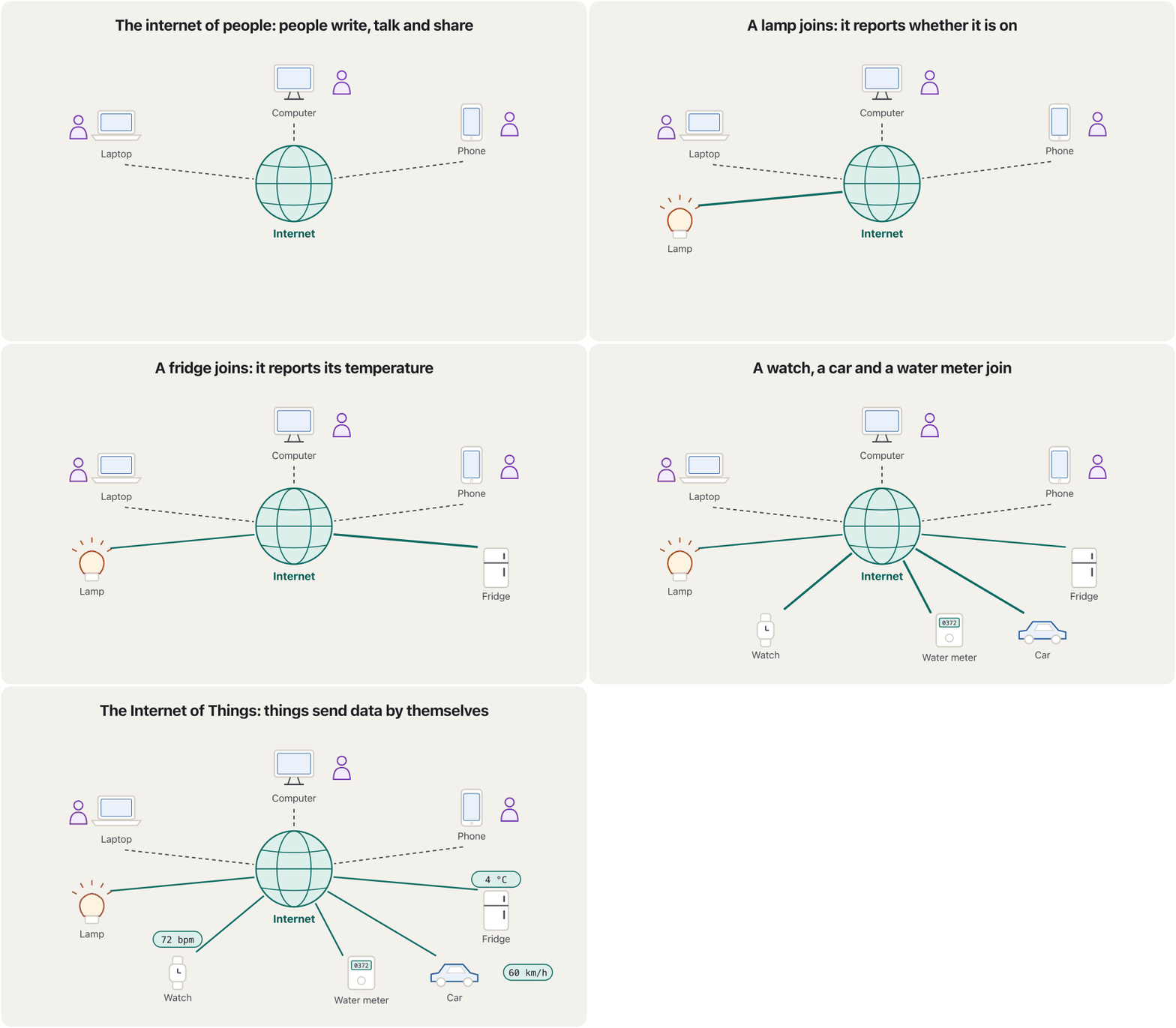
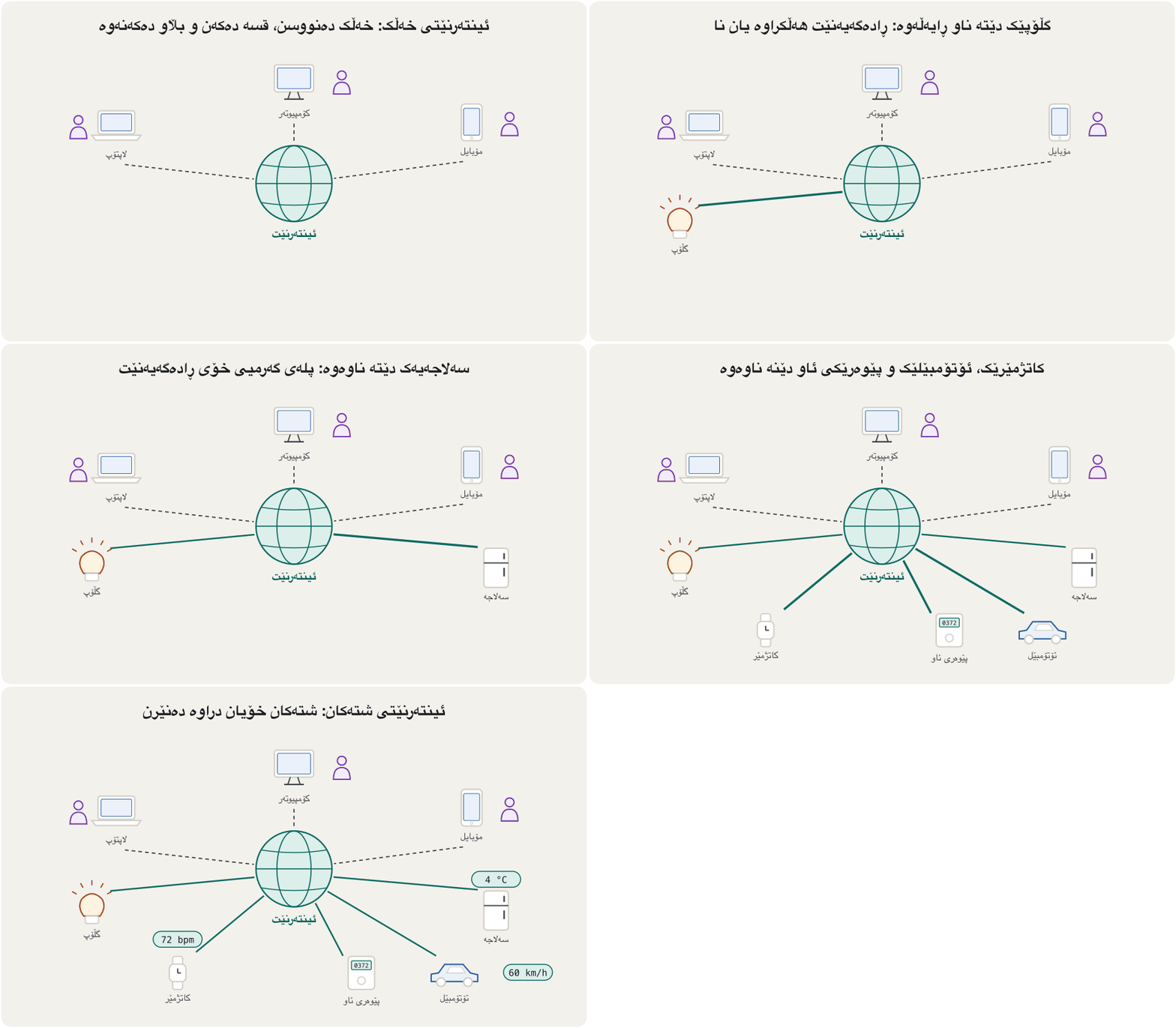
Now a new internet is growing, and it is about to change the world again. It is not about connecting people: it connects things — lamps, fridges, water meters, cars, watches and machines that send data by themselves, with nobody typing. That is why it is called the Internet of Things (IoT). Watch the network change:
ئێستا نوێ گەشە دەکات و خەریکە دیسان جیهان دەگۆڕێت. ئەمیان بۆ بەستنەوەی خەڵک نییە: شتەکان دەبەستێتەوە — گڵۆپ، سەلاجە، پێوەری ئاو، ئۆتۆمبێل، کاتژمێر و ئەو ئامێرانەی خۆیان دەنێرن بێ ئەوەی کەس هیچ بنووسێت. بۆیە پێی دەوترێت (IoT). سەیری گۆڕانی بکە:
Your phone: an IoT device in your pocketمۆبایلەکەت: ئامێرێکی IoT لە گیرفانتدا
You already carry a small IoT device. A smartphone 'knows' a lot about the world around it because it is full of sensors — parts that measure something in the physical world and turn it into data. Each thing it knows comes from one sensor:
تۆ ئێستا ئامێرێکی بچووکی IoT لەگەڵ خۆت هەڵدەگریت. زۆر شت لەبارەی جیهانی دەوروبەری «دەزانێت»، چونکە پڕە لە — ئەو پارچانەی شتێک لە جیهانی فیزیکیدا دەپێون و دەیکەنە . هەر زانیارییەکی مۆبایلەکە لە دێت:
Sensing is only half of the story. The phone also communicates through wireless networks — Wi-Fi, Bluetooth and the mobile network — so what it senses can reach an app or a server far away. Sensing + communicating is exactly what an IoT device does. A full table of phone sensors is in The sensors in your phone.
هەستکردن تەنیا نیوەی چیرۆکەکەیە. مۆبایلەکە هەروەها لە ڕێی پەیوەندی دەکات — ، و — بۆیە ئەوەی هەستی پێ دەکات دەتوانێت بگاتە یان لە دوورەوە. هەستکردن + پەیوەندیکردن ڕێک ئەو کارەیە کە ئامێرێکی IoT دەیکات. خشتەیەکی تەواوی مۆبایل لە هەستەوەرەکانی مۆبایلەکەتـدا هەیە.
What 'Internet of Things' meansئینتەرنێتی شتەکان واتای چییە
IoT is a term for a world in which a huge range of objects are addressable through a network. Addressable means that each object has an address, like a house on a street, so data can find it and it can send data to others. Put simply, the Internet of Things is made up of devices that connect to the internet and share data with each other. They are not only computers, laptops and smartphones, but also ordinary objects fitted with chips that gather data and send it over a network.
IoT زاراوەیەکە بۆ جیهانێک کە تێیدا ژمارەیەکی زۆر لە کەلوپەل لە ڕێی ناونیشانیان هەیە. واتە هەر کەلوپەلێک ناونیشانێکی هەیە، وەک ماڵێک لە کۆڵانێکدا، بۆیە دەتوانێت بیدۆزێتەوە و ئەویش دەتوانێت بۆ ئەوانی تر بنێرێت. بە کورتی، لەو ئامێرانە پێک دێت کە بە دەبەسترێن و لەگەڵ یەکتر ئاڵوگۆڕ دەکەن. ئەم ئامێرانە تەنیا ، و نین، بەڵکو کەلوپەلی ئاسایین کە تێدا دانراوە بۆ کۆکردنەوەی و ناردنی بە .
Everyday objects such as lights, cameras, fridges and sensors that connect to the , so they can send data and be controlled from far away, often with a phone.
ئەو کەلوپەلە ڕۆژانەییانەن، وەک گڵۆپ، کامێرا، سەلاجە و هەستەوەر، کە بە دەبەسترێن بۆ ئەوەی بنێرن و لە دوورەوە کۆنترۆڵ بکرێن، زۆرجار بە مۆبایل.
What 'Internet of Things' meansئینتەرنێتی شتەکان واتای چییە
How the ITU defines IoTITU چۆن ئینتەرنێتی شتەکان پێناسە دەکات
The ITU — the United Nations agency for information and communication technologies — wrote a formal definition in its 2012 standard ITU-T Y.2060: the IoT is a global infrastructure that links physical and virtual things using today's and tomorrow's information and communication technologies. A physical thing is an object in the real world, such as a lamp or a bridge; a virtual thing exists only as information, such as a stored file or a piece of software. What makes something a 'thing' is that it can be identified and joined to a communication network.
ITU — دەزگای نەتەوە یەکگرتووەکان بۆ تەکنەلۆجیای زانیاری و پەیوەندی — لە ITU-T Y.2060ـی ساڵی 2012دا پێناسەیەکی فەرمیی نووسی: ژێرخانێکی جیهانییە کە شتە فیزیکی و مەجازییەکان بە تەکنەلۆجیاکانی زانیاری و پەیوەندیی ئەمڕۆ و داهاتوو پێکەوە دەبەستێت. شتی فیزیکی کەلوپەلێکە لە جیهانی ڕاستەقینەدا، وەک گڵۆپێک یان پردێک؛ شتی مەجازی تەنیا وەک زانیاری هەیە، وەک خەزنکراو یان پارچەیەک . ئەوەی شتێک دەکاتە «شت» ئەوەیە کە بتوانرێت بناسرێتەوە و بە پەیوەندییەوە ببەسترێت.
The ITU also shows IoT as a third direction of communication. Phones and computers already let us communicate at any time and in any place; IoT adds any thing — people talking to things, and things talking to things.
ITU هەروەها وەک ئاڕاستەی سێیەمی پەیوەندی پیشان دەدات. مۆبایل و پێشتر ڕێیان پێداوین لە هەر کاتێک و لە هەر شوێنێک پەیوەندی بکەین؛ هەر شتێک زیاد دەکات — مرۆڤ لەگەڵ شت قسە دەکات و شتیش لەگەڵ شت.
What can be a 'thing'?«شت» دەتوانێت چی بێت؟
IoT devices include not only computers, laptops and smartphones, but almost any object that gets a chip, a sensor and a network connection. The main groups:
ئامێرەکانی IoT تەنیا ، و نین، بەڵکو نزیکەی هەر کەلوپەلێکن کە ، و بەستنەوە بە وەربگرێت. گرووپە سەرەکییەکان:
- Smart buildings and home appliances — washing machines, TVs, fridges, cookers, doors, even chairs.
- Civil-engineering structures — bridges and railways whose sensors report cracks, strain or shaking.
- Wearable devices — smart watches, smart glasses, rings and clothes that measure the body.
- Medical devices — even a pill you swallow (next screen).
- And possibly every thing in the world.
- باڵەخانە و ئامێرە ماڵییە هۆشمەندەکان — جلشۆر، تیڤی، سەلاجە، چێشتلێنەر، دەرگا، تەنانەت کورسی.
- پێکهاتەکانی ئەندازیاریی شارستانی — پرد و هێڵی شەمەندەفەر کە درز، کشان یان لەرزین ڕادەگەیەنن.
- — کاتژمێری هۆشمەند، چاویلکەی هۆشمەند، ئەڵقە و جلوبەرگ کە جەستە دەپێون.
- ئامێری پزیشکی — تەنانەت حەبێک کە قووتی دەدەیت (شاشەی داهاتوو).
- و لەوانەیە هەموو شتێکی جیهان.
Most of these things are embedded computers: a small computer hidden inside another machine — see Wearables and embedded computers.
زۆربەی ئەم شتانە : بچووک کە لە ناو ئامێرێکی تردا شاردراوەتەوە — بڕوانە ئامێرە لەبەرکراوەکان و سیستەمە چەسپێنراوەکان.
What can be a 'thing'?«شت» دەتوانێت چی بێت؟
A pill that reportsحەبێک کە ڕاپۆرت دەدات
The 'embedded pill' sounds like science fiction, but it is real. An ingestible sensor is a tiny sensor inside a tablet. When the patient swallows it, it sends a weak signal; a patch worn on the skin picks the signal up and passes it to a phone app, so the patient — and, only with permission, a doctor — can see that the medicine was taken. In November 2017 the US Food and Drug Administration (FDA) approved the first medicine with such a sensor.
«حەبی چەسپێنراو» وەک چیرۆکێکی زانستی-خەیاڵی دێتە بەرچاو، بەڵام ڕاستییە. قووتدراو زۆر بچووکە لە ناو حەبێکدا. کاتێک نەخۆشەکە قووتی دەدات، لاواز دەنێرێت؛ پارچەیەکی لکاو لەسەر پێست وەردەگرێت و دەیگەیەنێتە مۆبایل، بۆیە نەخۆشەکە — و تەنیا بە ڕەزامەندیی ئەو پزیشکیش — دەبینێت کە دەرمانەکە خوراوە. لە تشرینی دووەمی 2017دا دەزگای خۆراک و دەرمانی ئەمریکا (FDA) یەکەم دەرمانی خاوەن وای پەسەند کرد.
Why connect things?بۆچی شتەکان دەبەستینەوە؟
Connecting a thing to the network brings three benefits:
بەستنەوەی شتێک بە سێ سوودی هەیە:
- More functions, more intelligence — the thing can do new jobs, and can even decide and act by itself.
- Easier management — people can check it and control it from far away.
- More information — its readings show what is really happening, so people decide better.
- کاری زیاتر، ژیریی زیاتر — شتەکە دەتوانێت کاری نوێ بکات و تەنانەت خۆی بڕیار بدات و کار بکات.
- بەڕێوەبردنی ئاسانتر — خەڵک دەتوانن لە دوورەوە بیپشکنن و کۆنترۆڵی بکەن.
- زانیاریی زیاتر — خوێندنەوەکانی پیشان دەدەن چی ڕوو دەدات، بۆیە خەڵک باشتر بڕیار دەدەن.
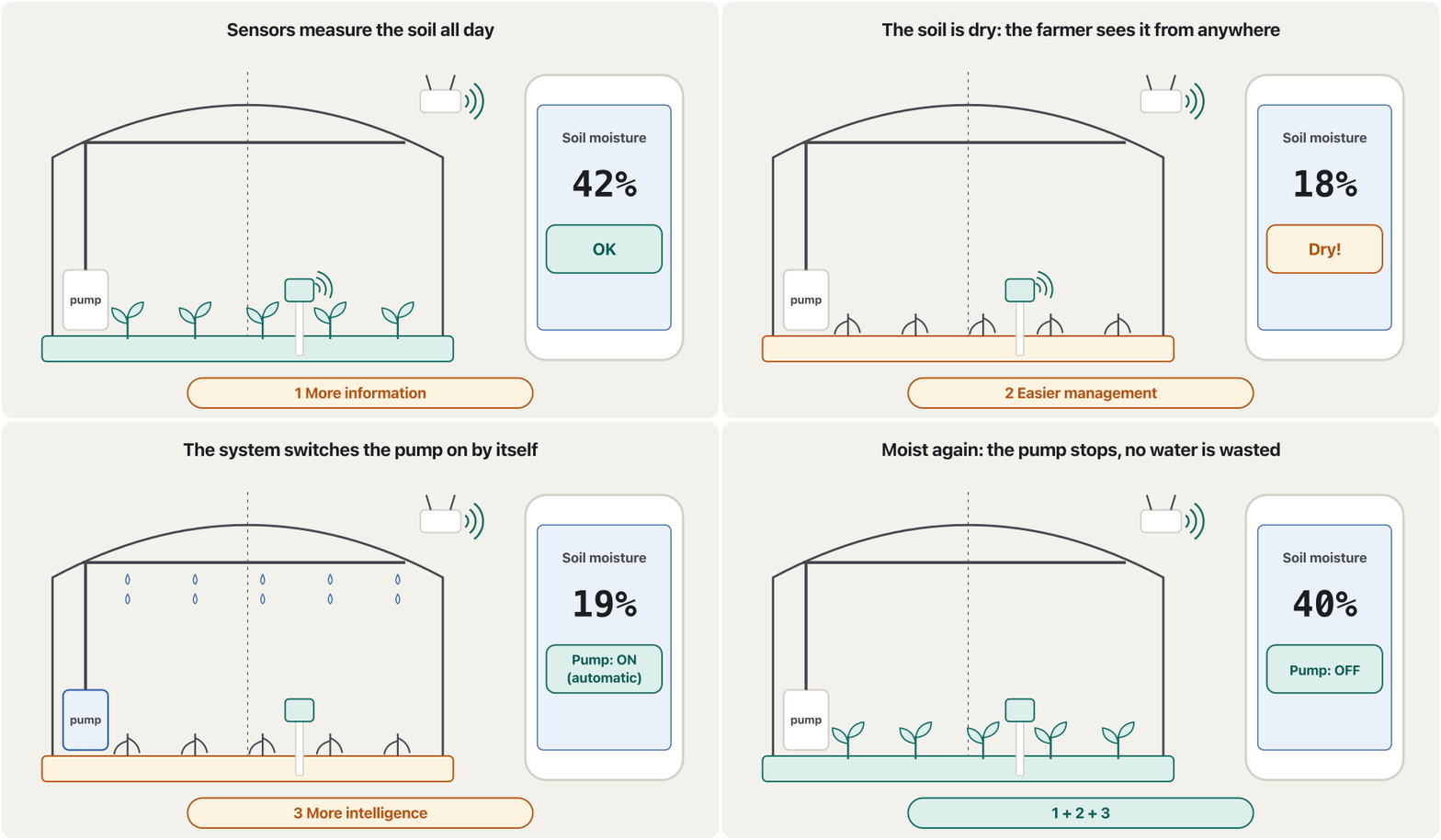
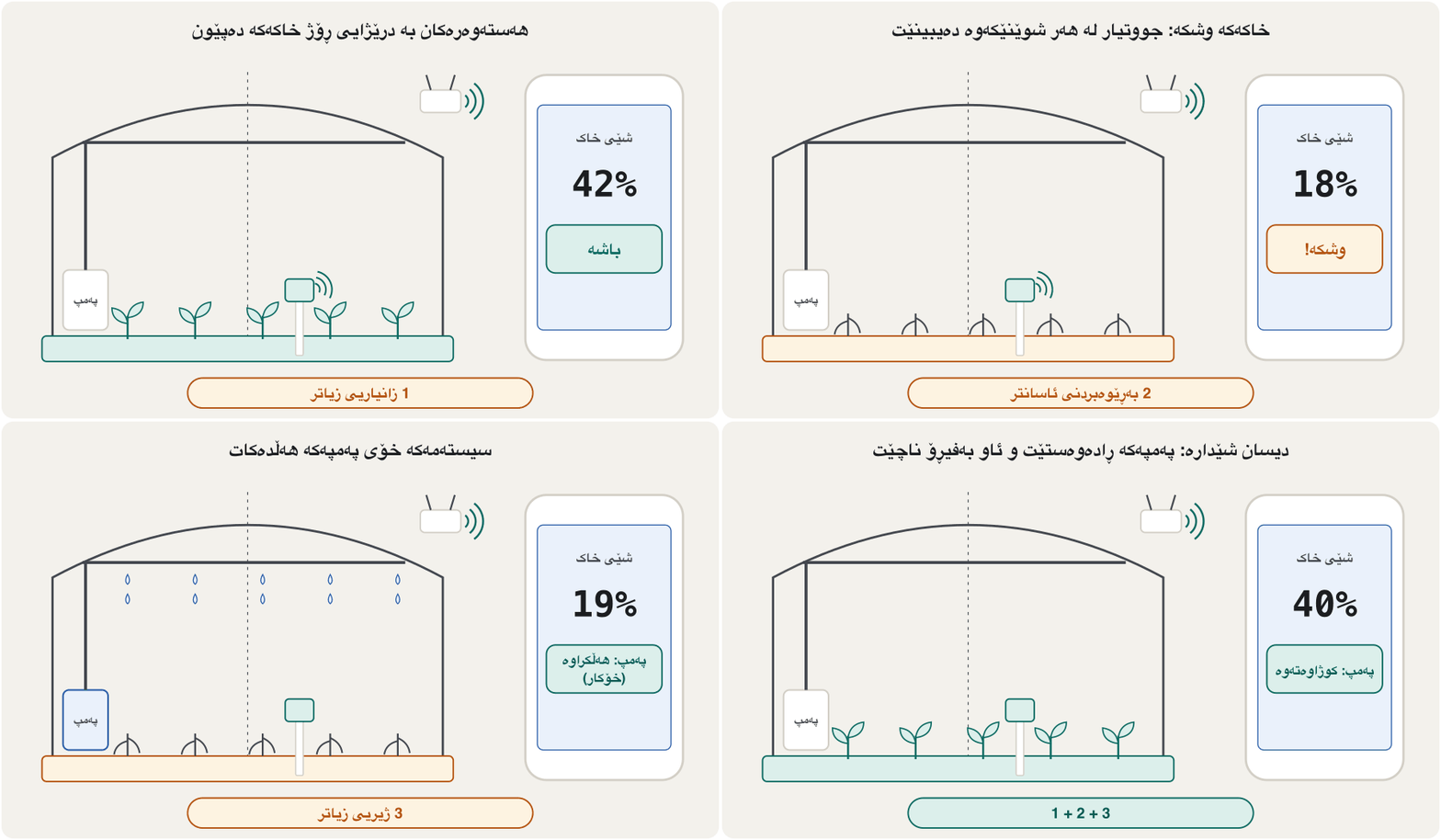
Example: a greenhouse near Halabja. A soil-moisture sensor tells the farmer's phone when the soil is dry (more information); the farmer can switch the pump on from the bazaar (easier management); and the system can water by itself when the soil is too dry (more intelligence).
نموونە: گوڵخانەیەک لە نزیک هەڵەبجە. شێی خاک بە مۆبایلی جووتیارەکە دەڵێت کەی خاکەکە وشک بووە (زانیاریی زیاتر)؛ جووتیارەکە دەتوانێت لە بازاڕەوە پەمپەکە هەڵبکات (بەڕێوەبردنی ئاسانتر)؛ سیستەمەکەش دەتوانێت کاتێک خاکەکە زۆر وشک دەبێت خۆی ئاو بدات (ژیریی زیاتر).
Why IoT became possible nowبۆچی ئینتەرنێتی شتەکان ئێستا بووە شتێکی کردەنی
People connected things to networks decades ago (A Short History of IoT), but only in the last twenty years did it become cheap and practical almost everywhere. Five trends made IoT realistic:
خەڵک چەندین دەیە پێش ئێستا شتیان بە بەستووەتەوە (مێژوویەکی کورتی IoT)، بەڵام تەنیا لەم بیست ساڵەی دواییدا لە نزیکەی هەموو شوێنێک هەرزان و کردەنی بوو. پێنج ڕەوت کردە ڕاستی:
- Chips became cheaper — and so did sensors.
- They became smaller: a whole small computer now fits on one chip (microcontrollers).
- They need less power, so one small battery can last for months or even years.
- Communication became faster, with more ways to connect: Wi-Fi, Bluetooth, mobile networks and low-power wide-area networks.
- Small devices have more processing power, so they can work on their data themselves.
- هەرزانتر بوون، هەروەها .
- بچووکتر بوون: ئێستا بچووکی تەواو لەسەر یەک جێی دەبێتەوە (مایکرۆکۆنترۆڵەرەکان).
- وزەی کەمتریان پێویستە، بۆیە یەک بچووک دەتوانێت چەند مانگ یان تەنانەت چەند ساڵێک بەس بێت.
- پەیوەندی خێراتر بوو و ڕێگای زیاتر بۆ بەستنەوە هەیە: ، ، و .
- ئامێرە بچووکەکان توانای زیاتریان هەیە، بۆیە دەتوانن خۆیان چارەسەر بکەن.
These trends are also why experts expect the number of IoT devices to keep growing — see How many things are connected today? How chips kept getting more powerful is in Moore's law.
ئەم ڕەوتانە هەروەها هۆکاری ئەوەن کە پسپۆڕان چاوەڕێ دەکەن ژمارەی ئامێرەکانی IoT هەر زیاد بێت — بڕوانە ئەمڕۆ چەند شت بەستراوە؟ چۆن هەر بەهێزتر بوون لە یاسای مورـدا هاتووە.
Why IoT became possible nowبۆچی ئینتەرنێتی شتەکان ئێستا بووە شتێکی کردەنی
From a room to a fingertipلە ژوورێکەوە بۆ سەری پەنجەیەک
Compare two computers. ENIAC, shown to the public in the USA in February 1946, was the world's first large general-purpose electronic computer. It filled a big room, weighed about 27 tonnes, used about 18,000 vacuum tubes and drew about 150 kilowatts of electricity. Today a microcontroller board such as the Arduino Nano measures mm, weighs 7 grams and needs far less than one watt — and it can read sensors and talk to a network. That is : nearly four million times lighter. More about early computers: A short history of computers.
دوو بەراورد بکە. ENIAC، کە لە شوباتی 1946دا لە ئەمریکا بە خەڵک پیشان درا، یەکەم ئەلیکترۆنیی گەورەی جیهان بوو. ژوورێکی گەورەی پڕ دەکردەوە، نزیکەی 27 تەن کێشی بوو، نزیکەی 18,000 لوولەی بۆشایی تێدا بوو و نزیکەی 150 کیلۆوات کارەبای دەکێشا. ئەمڕۆ وەک Arduino Nano تەنیا ملیمەترە، 7 گرام کێشیەتی و زۆر کەمتر لە یەک وات کارەبای پێویستە — و دەتوانێت بخوێنێتەوە و لەگەڵ قسە بکات. واتە : نزیکەی چوار ملیۆن جار سووکتر. زیاتر لەبارەی سەرەتاییەکان: مێژوویەکی کورتی کۆمپیوتەرەکان.
Common mistakesهەڵە باوەکان
- 'IoT is a separate network.' IoT devices use the same internet and the same kinds of networks as phones and computers.
- 'A thing must have a screen.' Most IoT devices have no screen at all: a water meter, a soil sensor, a pill.
- 'IoT means smart-home gadgets.' Farms, factories, bridges, cars and hospitals use IoT too — see Where IoT Is Used, and What Makes It Hard.
- 'Measuring is enough.' A thermometer on the wall measures but shares nothing. It becomes an IoT device only when it can also communicate over a network.
- 'IoT and the Web of Things are the same.' IoT connects the things; the Web of Things is a layer on top that lets them use web standards.
- « جیاوازە.» ئامێرەکانی IoT هەمان و هەمان جۆری بەکار دەهێنن کە مۆبایل و بەکاری دەهێنن.
- «شت دەبێت شاشەی هەبێت.» زۆربەی ئامێرەکانی IoT هیچ شاشەیەکیان نییە: پێوەری ئاو، خاک، حەبێک.
- « تەنیا کەلوپەلی .» کێڵگە، کارگە، پرد، ئۆتۆمبێل و نەخۆشخانەکانیش IoT بەکار دەهێنن — بڕوانە IoT لە کوێ بەکار دێت و چی قورسی دەکات.
- «پێوان بەسە.» گەرمیپێوێک لەسەر دیوار دەپێوێت بەڵام هیچ شتێک نانێرێت. تەنیا کاتێک دەبێتە ئامێرێکی IoT کە بتوانێت لە ڕێی پەیوەندیش بکات.
- « و یەک شتن.» شتەکان دەبەستێتەوە؛ وێبی شتەکان چینێکە لەسەری کە ڕێیان پێ دەدات وێب بەکار بهێنن.
Exercisesڕاهێنانەکان
Look around your home. List five things that are, or could become, IoT devices. For each one, write what it would measure and what data it would share.
سەیری دەوروبەری ماڵەکەت بکە. پێنج شت بنووسە کە ئێستا ئامێری IoTـن یان دەتوانن ببنە ئامێری IoT. بۆ هەریەکەیان بنووسە چی دەپێوێت و چ دەنێرێت.
Show answerوەڵامەکە پیشان بدە
- Water tank on the roof: a level sensor shares how full the tank is and warns before it runs dry.
- Electricity meter: shares how many kilowatt-hours the home uses each hour.
- Door lock: shares whether the door is open or locked and when it was opened.
- Air conditioner: shares the room temperature and can be switched on from the phone.
- Smart plug: shares how much power the device plugged into it is using.
- تانکی ئاو لەسەر سەربان: ئاست دەڵێت تانکەکە چەندە پڕە و پێش بەتاڵبوون ئاگادار دەکاتەوە.
- پێوەری کارەبا: دەڵێت ماڵەکە هەر کاتژمێرێک چەند بەکار دەهێنێت.
- قوفڵی دەرگا: دەڵێت دەرگاکە کراوەیە یان داخراوە و کەی کرایەوە.
- سپلیت: پلەی گەرمیی ژوورەکە دەنێرێت و دەکرێت لە مۆبایلەوە هەڵبکرێت.
- : دەڵێت ئەو ئامێرەی پێیەوە بەستراوە چەند کارەبا بەکار دەهێنێت.
Which sensor does each job? (a) The screen goes off at your ear during a call. (b) The map shows where you are. (c) The screen gets brighter in the sun. (d) The step counter counts your steps.
کام هەریەک لەم کارانە دەکات؟ (a) لە کاتی پەیوەندیدا شاشەکە لە بەر گوێت دەکوژێتەوە. (b) نەخشەکە پیشان دەدات لە کوێیت. (c) لە بەر خۆردا شاشەکە ڕووناکتر دەبێت. (d) هەنگاوژمێر هەنگاوەکانت دەژمێرێت.
Show answerوەڵامەکە پیشان بدە
(a) the proximity sensor; (b) the GNSS receiver (GPS); (c) the ambient-light sensor; (d) the accelerometer.
(a) ؛ (b) وەرگری ()؛ (c) ؛ (d) .
Use the definition to decide which of these are IoT devices, and say why: a USB flash drive, a smart TV, a fitness band, a thermometer on the wall, a smart electricity meter.
بە پێی پێناسەکە بڕیار بدە کامیان ئامێری IoTـن و بڵێ بۆچی: ، ، بازنێکی وەرزشی، گەرمیپێوێک لەسەر دیوار، کارەبا.
Show answerوەڵامەکە پیشان بدە
- Flash drive: no — it stores data but has no sensor and no network connection.
- Smart TV: yes — it is on the network, shares data and can be controlled from an app.
- Fitness band: yes — its sensors measure steps and pulse and it sends them to a phone by Bluetooth.
- Wall thermometer: no — it measures but shares nothing, unless it has a network connection.
- Smart electricity meter: yes — it measures use and sends the readings by itself.
- : نەخێر — هەڵدەگرێت بەڵام نە هەیە نە بەستنەوە بە .
- : بەڵێ — لەسەر ، دەنێرێت و دەکرێت لە کۆنترۆڵ بکرێت.
- بازنی وەرزشی: بەڵێ — هەنگاو و لێدانی دڵ دەپێون و بە دەیاننێرێت بۆ مۆبایل.
- گەرمیپێوی دیوار: نەخێر — دەپێوێت بەڵام هیچ نانێرێت، مەگەر بە بەسترابێت.
- کارەبا: بەڵێ — بەکارهێنان دەپێوێت و خۆی خوێندنەوەکان دەنێرێت.
Summaryپوختە
- The internet of people links people; the Internet of Things links things that measure the world and share data by themselves.
- Your smartphone is a pocket IoT device: GNSS receiver, accelerometer, gyroscope, magnetometer, light and proximity sensors, microphone and camera — plus radios to communicate.
- IoT means objects that are addressable on a network, connect to the internet and share data; for the ITU, things can be physical or virtual.
- A 'thing' can be an appliance, a building, a bridge, a wearable or even a pill.
- Connecting things gives more intelligence, easier management and more information.
- IoT became realistic because chips got cheaper, smaller and lower-power, networks got faster and small devices got more processing power.
- خەڵک خەڵک دەبەستێتەوە؛ ئەو شتانە دەبەستێتەوە کە جیهان دەپێون و خۆیان دەنێرن.
- ئامێرێکی IoTـی گیرفانە: وەرگری ، ، ، ، و ، و کامێرا — لەگەڵ ڕادیۆ بۆ پەیوەندیکردن.
- واتە ئەو کەلوپەلانەی لەسەر ناونیشانیان هەیە، بە دەبەسترێن و ئاڵوگۆڕ دەکەن؛ لای ITU شتەکان دەکرێت فیزیکی یان مەجازی بن.
- «شت» دەکرێت ئامێرێکی ماڵ، باڵەخانەیەک، پردێک، یان تەنانەت حەبێک بێت.
- بەستنەوەی شتەکان ژیریی زیاتر، بەڕێوەبردنی ئاسانتر و زانیاریی زیاتر دەدات.
- بووە ڕاستی چونکە هەرزانتر، بچووکتر و کەموزەتر بوون، خێراتر بوون و ئامێرە بچووکەکان توانای زیاتریان پەیدا کرد.
Lesson complete!وانەکە تەواو بوو!
Well done. Review the key terms, then go on to the next lesson.دەستخۆش. سەیرێکی زاراوە سەرەکییەکان بکەرەوە، پاشان بڕۆ بۆ وانەی داهاتوو.
Key termsزاراوە سەرەکییەکان
A Short History of IoT, and How Many Devices There Areمێژوویەکی کورتی ئینتەرنێتی شتەکان و ژمارەی ئامێرەکانی
Related lecturesوانە پەیوەندیدارەکان
- A Short History of IoT, and How Many Devices There Areمێژوویەکی کورتی ئینتەرنێتی شتەکان و ژمارەی ئامێرەکانی
- Where IoT Is Used, and What Makes It HardIoT لە کوێ بەکار دێت و چی قورسی دەکات
- Inside an IoT System: Building Blocks and the Data Pathناو سیستەمێکی IoT: پێکهاتە سەرەکییەکان و ڕێڕەوی دراوە
- Emerging Technologies: IoT, VR/AR, Robots and Blockchainتەکنەلۆجیا نوێیەکان: ئینتەرنێتی شتەکان، ڕاستیی گریمانەیی/ڕاستیی زیادکراو، ڕۆبۆتەکان و بلۆکچەین
References and further readingسەرچاوەکان و خوێندنەوەی زیاتر
- ITU-T Recommendation Y.2060 (Y.4000): Overview of the Internet of things (06/2012)
- ITU-T: Internet of Things Global Standards Initiative
- Pharmacy Times: FDA approves first drug with ingestible digital adherence sensor (2017)
- IEEE ETHW Milestone: Electronic Numerical Integrator and Computer, 1946
- Wikipedia: ENIAC
- Arduino Docs: Nano
This lecture is a first edition. The Kurdish text and terminology are waiting for review by Kurdish IT teachers.ئەم وانەیە چاپی یەکەمە. دەقە کوردییەکە و زاراوەکانی چاوەڕێی پێداچوونەوەی مامۆستایانی کوردی بواری IT ن.