Chapterبەش 3 · Lectureوانە 3.5
Equal, Constant, One-to-One and Onto Functionsنەخشەی یەکسان، نەخشەی نەگۆڕ، نەخشەی یەک بۆ یەک و نەخشەی گشتگر
When are two functions the same? Which functions never repeat an output, and which reach every element of the codomain? Equal and constant functions, one-to-one (injective), onto (surjective) and bijective functions, with arrow diagrams, the horizontal line test and the worked examples , , and .
کەی دوو یەک شتن؟ کام هەرگیز دووبارە ناکاتەوە و کامیان دەگاتە هەموو ؟ یەکسان، ، ، و ، لەگەڵ هێڵکاریی تیر، و نموونە چارەسەرکراوەکانی ، ، و .
What you will learnچی فێر دەبیت
- Decide whether two functions are equal by comparing their domains and their values.
- Recognise a constant function and its graph.
- Prove that a function is one-to-one, or give a counter-example; use the horizontal line test.
- Prove that a function is onto, and explain why the codomain matters.
- Classify functions as bijective or not, from arrow diagrams, formulas and graphs.
- بە بەراوردکردنی و بەهاکانیان بڕیار بدەیت ئایا دوو یەکسانن.
- و بناسیتەوە.
- بسەلمێنیت یەک بۆ یەکە، یان نموونەیەکی پێچەوانە بهێنیتەوە؛ بەکار بهێنیت.
- بسەلمێنیت گشتگرە و ڕوونی بکەیتەوە بۆچی گرنگە.
- لە هێڵکاریی تیر، فۆرمولە و هێڵکارییەوە پۆلێن بکەیت: یان نا.
Four questions about a functionچوار پرسیار دەربارەی نەخشەیەک
A function gives every input exactly one output (What is a function?). The set X is the domain, Y is the codomain, and the outputs that really appear form the range (Domain, range and image).
وەک بە هەر تەنها یەک دەدات، کە ـە (نەخشە چییە؟). X ، Y و ئەو بەهایانەیە کە f بە ڕاستی دەیاندات (بوار، مەودا و وێنە).
In this lesson we ask four questions about a function. Each question has a name:
لەم وانەیەدا چوار پرسیار دەربارەی دەکەین. هەر پرسیارێک ناوێکی هەیە:
- Equal functions: is f the same function as another function g?
- Constant function: does f give the same output for every input?
- One-to-one: do different inputs always give different outputs?
- Onto: is every element of Y really used as an output?
- یەکسان: ئایا f هەمان کە g؟
- : ئایا f بۆ هەموو هەمان دەدات؟
- : ئایا جیاواز هەمیشە جیاواز دەدەن؟
- : ئایا هەموو Y بە ڕاستی وەک بەکار دێت؟
Why care? Later you will turn functions around ("which input gave this output?"). That only works for functions that are one-to-one, and it is how logarithms and the inverse trigonometric functions are built.
بۆچی گرنگە؟ دواتر نەخشەکان پێچەوانە دەکەیتەوە («کام ئەم دا؟»). ئەمە تەنها بۆ کار دەکات و و لەسەر ئەم بنەمایە دروست دەکرێن.
Equal functionsنەخشەی یەکسان
Two functions are equal when they do exactly the same job. Formally, and are equal, and we write , if and only if they give the same output for every input:
دوو یەکسانن کاتێک هەمان کار بە تەواوی دەکەن. بە شێوەی فەرمی، و یەکسانن و دەنووسین ، ئەگەر و تەنها ئەگەر بۆ هەموو هەمان بدەن:
Read as "for every". Both functions must start from the same domain X and land in the same codomain Y, and they must agree at every single x. One input where they differ (or where only one of them is defined) is enough to make them different functions.
بخوێنەوە «بۆ هەموو». هەردوو دەبێت لە هەمان X دەست پێبکەن و لە هەمان Y بگەن و لە هەموو xـێکدا یەکسان بن. تەنها یەک کە تێیدا جیاوازن (یان تەنها یەکێکیان تێیدا پێناسە کراوە) بەسە بۆ ئەوەی دوو جیاواز بن.
Think of two price lists in the bazaar. They are the same list only if they name the same goods and every item has the same price. If one list has an item the other does not have, the lists are different, even if all the shared prices agree.
بیر لە دوو لیستی نرخ لە بازاڕدا بکەرەوە. تەنها کاتێک هەمان لیستن کە هەمان کاڵا ناو ببەن و هەر کاڵایەک هەمان نرخی هەبێت. ئەگەر لیستێک کاڵایەکی تێدا بێت کە لە لیستەکەی تردا نییە، دوو لیستی جیاوازن، تەنانەت ئەگەر هەموو نرخە هاوبەشەکان وەک یەک بن.
Where the analogy stops workingسنووری ئەم نموونەیە
A price list is finite, so you can check it line by line. A function on has infinitely many inputs, so we compare the formulas and the domains instead.
لیستی نرخ کۆتایی هەیە و دەتوانیت دێڕ بە دێڕ بیپشکنیت. لەسەر بێکۆتایی هەیە، بۆیە لە جیاتی ئەوە فۆرمولەکان و بەراورد دەکەین.
Equal functionsنەخشەی یەکسان
Comparing two functions pair by pairبەراوردکردنی دوو نەخشە جووت بە جووت
When the domain is a small finite set, write each function as its set of pairs and compare them input by input, like the two price lists. Let , and with and .
کاتێک بچووک و کۆتاییدارە، هەر وەک جووتەکانی بنووسە و بە بەراوردیان بکە، وەک دوو لیستە نرخەکە. با ، و بن، کە و .
Equal functionsنەخشەی یەکسان
Example: and نموونە: و
The notes ask: are and equal? Check the two conditions one after the other.
تێبینییەکان دەپرسن: ئایا و یەکسانن؟ دوو مەرجەکە یەک لە دوای یەک بپشکنە.
- Compare the domainsبوارەکان بەراورد بکە
We cannot divide by 0, so f needs : . But g is defined everywhere: . The domains are different, so .
ناتوانین بەسەر 0دا دابەش بکەین، بۆیە f پێویستی بە هەیە: . بەڵام g لە هەموو شوێنێک پێناسە کراوە: . جیاوازن، بۆیە .
- Compare the valuesبەهاکان بەراورد بکە
For we may cancel: . So while . In fact only for or , and 0 is not allowed, so the two graphs share just one point, .
بۆ دەتوانین کورتی بکەینەوە: . کەواتە بەڵام . لە ڕاستیدا تەنها بۆ یان ڕاستە و 0 ڕێگەپێدراو نییە، بۆیە دوو هێڵکارییەکە تەنها یەک خاڵی هاوبەشیان هەیە: .
Equal functionsنەخشەی یەکسان
The classic trap: تەڵە ناسراوەکە:
Constant functionsنەخشە نەگۆڕەکان
A function that gives the same output for every input: . Its graph is a horizontal line.
نەخشەیەکە کە بۆ هەموو نێوخستەیەک هەمان دەرخستە دەدات: . هێڵکارییەکەی هێڵێکی ئاسۆییە.
A function is constant if there is one fixed value with for all . The simplest example is : whatever you put in, 5 comes out. Its graph is a horizontal line, and its range is the one-element set .
وەک نەگۆڕە ئەگەر یەک بەهای جێگیری هەبێت کە بۆ هەموو . سادەترین نموونە ـە: هەرچی بخەیتە ناوی، 5 دەردەچێت. هێڵێکی ئاسۆییە و تاک-ئەندامی ـە.
Some shops in the bazaar sell everything for 1,000 dinars. The rule "item → price" is a constant function: a pen, a cup and a toy all give the same output.
هەندێک دوکان لە بازاڕدا هەموو شتێک بە 1,000 دینار دەفرۆشن. یاسای «کاڵا ← نرخ» : پێنووس، کوپ و یاری هەموویان هەمان دەدەن.
Where the analogy stops workingسنووری ئەم نموونەیە
A shop has a finite list of goods; is defined for every real number.
دوکان لیستێکی کۆتاییداری کاڵای هەیە؛ بۆ هەموو پێناسە کراوە.
The identity functionنەخشەی هەرئەوێتی
The function that gives back its input unchanged: . Its graph is the line .
ئەو نەخشەیەی کە نێوخستەکەی بەبێ گۆڕان دەگەڕێنێتەوە: . هێڵکارییەکەی هێڵی ـە.
The identity function gives back exactly what you put in: for every real x. On any set A it is , . Its graph is the diagonal line through the origin, and its range is all of . Different inputs give different outputs and every real number is an output, so it is one-to-one and onto (bijective), as the next screens explain.
ڕێک ئەوەی دەیخەیتە ناوی دەیگەڕێنێتەوە: بۆ هەموو xـێکی ڕاستی . لەسەر هەر A دەبێتە ، . هێڵە لارەکەی ـە کە بە تێدەپەڕێت و هەموو ـە. جیاواز جیاواز دەدەن و هەموو ، بۆیە ، وەک لە شاشەکانی داهاتوودا ڕوون دەکرێتەوە.
Why does it matter? It is the “do nothing” function, like adding 0 or multiplying by 1. Later you will compose functions: doing f and then I, or I and then f, gives f again, . And a function and its inverse undo each other, so together they act like I.
بۆچی گرنگە؟ ئەمە کە «هیچ ناکات»، وەک زیادکردنی 0 یان لێکدان لە 1. دواتر نەخشەکان ئاوێتە دەکەیت: کردنی f و پاشان I، یان I و پاشان f، دیسان f دەدات، . هەروەها و پێچەوانەی نەخشەکەی کاری یەکتر هەڵدەوەشێننەوە، بۆیە پێکەوە وەک I کار دەکەن.
One-to-one functionsنەخشە یەک بۆ یەکەکان
A function where different inputs always give different outputs: .
نەخشەیەکە کە نێوخستەی جیاواز هەمیشە دەرخستەی جیاواز دەدات: .
A function is one-to-one (also called injective, or an injection) if different inputs always give different outputs:
وەک یەک بۆ یەکە (پێی دەوترێت injective یان injectionـیش) ئەگەر جیاواز هەمیشە جیاواز بدەن:
The right-hand form is the left-hand rule turned around, so both say: no two different inputs share an output. The second form is the one we use in proofs: start from two equal outputs and show that the inputs were equal.
شێوەی لای ڕاست هەمان یاسای لای چەپە، بەڵام بە پێچەوانەوە نووسراوە، بۆیە هەردووکیان یەک شت دەڵێن: هیچ دوو جیاواز هاوبەشیان نییە. شێوەی دووەم ئەوەیە کە لە بەکاری دەهێنین: لە دوو یەکسانەوە دەست پێدەکەین و نیشان دەدەین کە یەکسان بوون.
At a university every student gets a student number, and no two students ever share one. The rule "student → student number" is one-to-one: if two numbers are equal, they belong to the same student.
لە زانکۆدا هەر خوێندکارێک ژمارەیەکی خوێندکاری وەردەگرێت و هەرگیز دوو خوێندکار یەک ژمارەیان نییە. یاسای «خوێندکار ← ژمارەی خوێندکاری» یەک بۆ یەکە: ئەگەر دوو ژمارە یەکسان بن، هی هەمان خوێندکارن.
Where the analogy stops workingسنووری ئەم نموونەیە
Many possible student numbers are never given to anyone. That is allowed: one-to-one says nothing about unused outputs (that is the next question, onto).
زۆر ژمارەی خوێندکاری هەن کە هەرگیز بە کەس نادرێن. ئەمە ڕێگەپێدراوە: یەک بۆ یەک هیچ دەربارەی بەکارنەهاتوو نالێت (ئەوە پرسیاری داهاتووە، گشتگر).
One-to-one functionsنەخشە یەک بۆ یەکەکان
The horizontal line testتاقیکردنەوەی هێڵی ئاسۆیی
For a function from to you can often see whether it is one-to-one. Draw the horizontal line . It meets the graph exactly at the inputs x with . If some horizontal line meets the graph twice, two different inputs share the output k, so f is not one-to-one. If every horizontal line meets the graph at most once, f is one-to-one.
بۆ لە ـەوە بۆ زۆرجار دەتوانیت ببینیت ئایا یەک بۆ یەکە. هێڵی ئاسۆیی بکێشە. ئەم هێڵە ڕێک لەو خاڵانەدا دەبڕێت کە . ئەگەر هێڵێکی ئاسۆیی دوو جار ببڕێت، دوو جیاواز k بەش دەکەن، بۆیە f یەک بۆ یەک نییە. ئەگەر هەموو هێڵێکی ئاسۆیی زۆرترین جار یەک جار ببڕێت، f یەک بۆ یەکە.
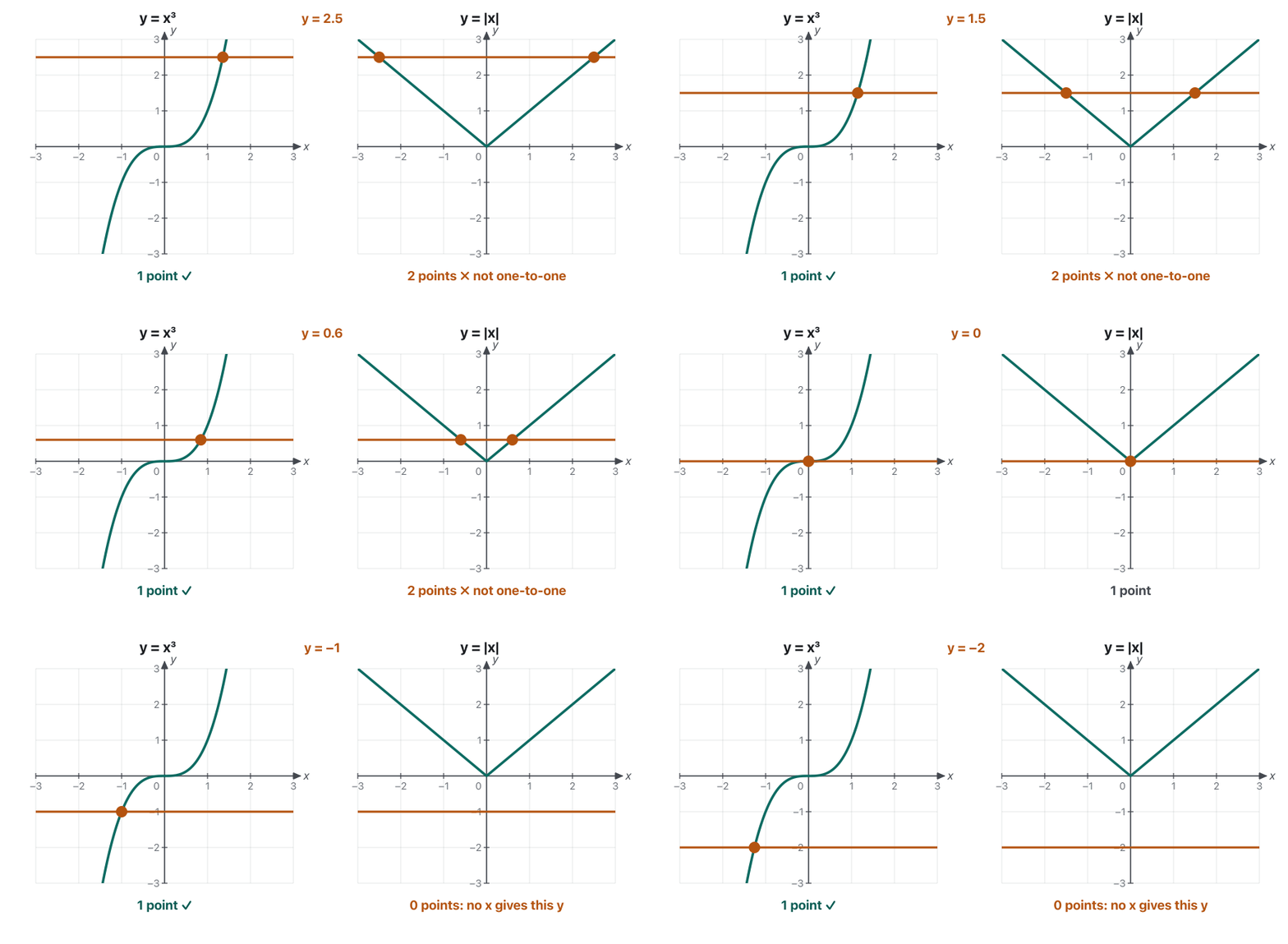
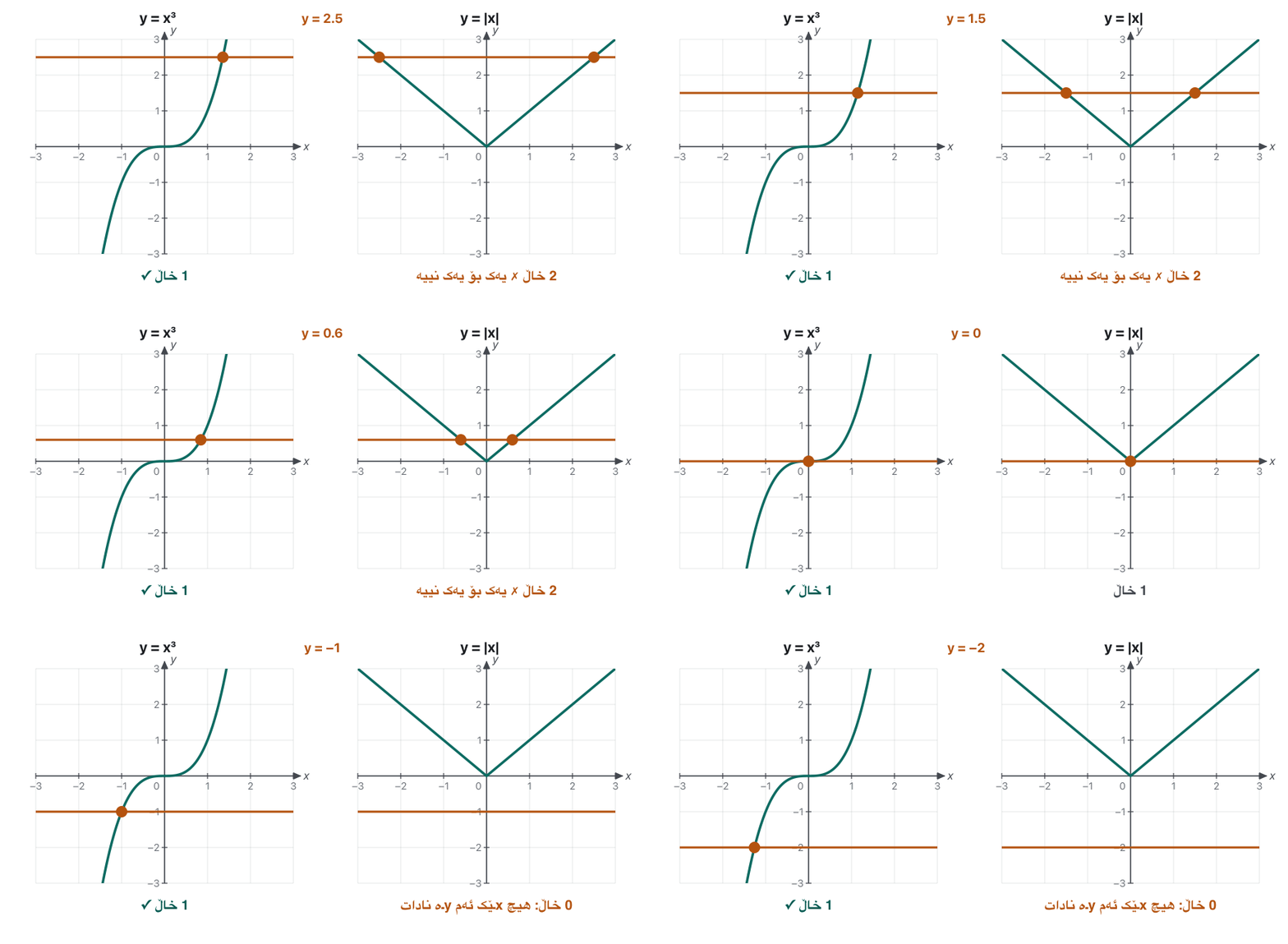
Do not mix up the two line tests. The vertical line test asks "is this curve a function at all?" (the vertical line test). The horizontal line test asks "is this function one-to-one?". Notice also the lines below the x-axis in the animation: they never meet , because no x gives a negative output. That is a hint for the next question.
دوو تاقیکردنەوەکەی هێڵ تێکەڵ مەکە. دەپرسێت «ئایا ئەم چەماوەیە هەر ؟» (تاقیکردنەوەی هێڵی ستوونی). دەپرسێت «ئایا ئەم یەک بۆ یەکە؟». سەرنجی هێڵەکانی ژێر xـیش لە وێنە جووڵاوەکەدا بدە: هەرگیز نابڕن، چونکە هیچ xـێک سالب نادات. ئەمە ئاماژەیەکە بۆ پرسیاری داهاتوو.
Onto functionsنەخشە گشتگرەکان
A function whose range is all of Y: every element of the codomain is the image of at least one input.
نەخشەی کە هەموو Yـە: هەموو ئەندامێکی وێنەی لانیکەم یەک نێوخستەیە.
A function is onto (also called surjective, or a surjection) if every element of Y is the image of at least one element of X:
وەک گشتگرە (پێی دەوترێت surjective یان surjectionـیش) ئەگەر هەموو Y لانیکەم یەک X بێت:
Read as "for every", as "there exists" and the colon as "such that". The range is always a part of the codomain Y; f is onto exactly when the range is the whole codomain, so no element of Y is left without an arrow.
بخوێنەوە «بۆ هەموو»، «هەیە» و دوو خاڵەکە «بە جۆرێک کە». هەمیشە بەشێکە لە Y؛ f ڕێک کاتێک گشتگرە کە هەموو بێت، کەواتە هیچ Y بەبێ تیر نامێنێتەوە.
The codomain matters. The same formula can be onto with one codomain and not onto with another. as a function is not onto, because is never an output. As a function it is onto: for any , the input gives .
گرنگە. هەمان فۆرمولە دەکرێت بە گشتگر بێت و بە یەکێکی تر نا. وەک گشتگر نییە، چونکە هەرگیز نییە. وەک گشتگرە: بۆ هەر ، بەهای دەدات.
Defines an onto (surjective) function: every element of the codomain is hit. Then proves a function is onto by solving y = f(x) for x.
(surjective) پێناسە دەکات: هیچ بێ تیر نامێنێتەوە. پاشان بە چارەسەرکردنی بۆ x دەسەلمێنێت کە گشتگرە.
Whole video (7:58): definition, example, a proof that a function is onto, and a practice problem.
هەموو ڤیدیۆکە (7:58): پێناسە، نموونە، کە گشتگرە، هەروەها پرسیارێکی ڕاهێنان.
Bijective functions: one-to-one and ontoنەخشەی یەک بۆ یەک و گشتگر
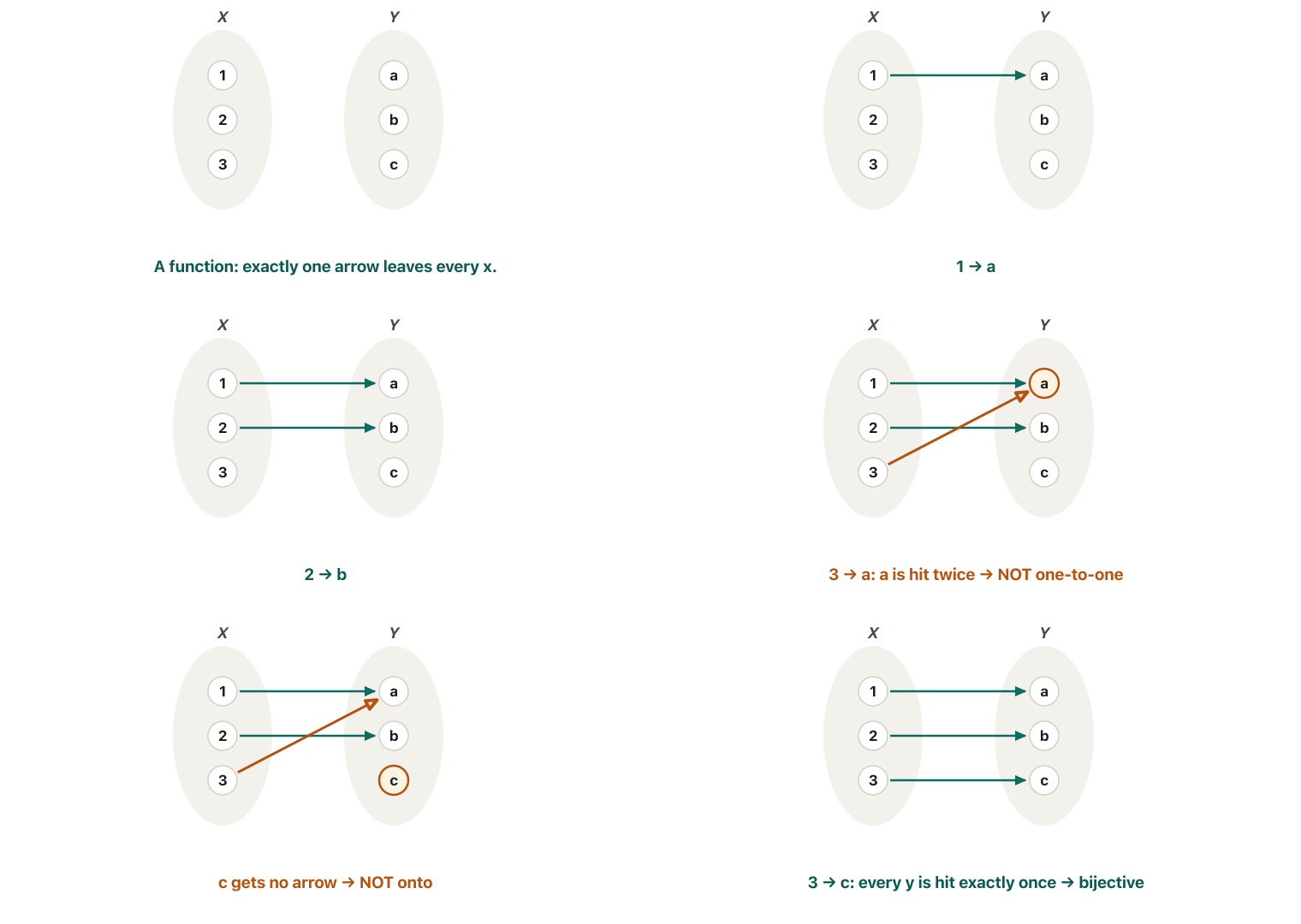
A function that is both and : every element of Y is the image of exactly one x. Only bijective functions have an inverse function.
نەخشەیەکە کە هەم و هەم : هەموو ئەندامێکی Y وێنەی تەنها یەک xـە. تەنها ئەم جۆرە نەخشانە هەیە.
If is both one-to-one and onto, it is called bijective (a bijection, or a one-to-one correspondence). Then every element of Y is the image of exactly one element of X: onto gives "at least one", one-to-one gives "at most one".
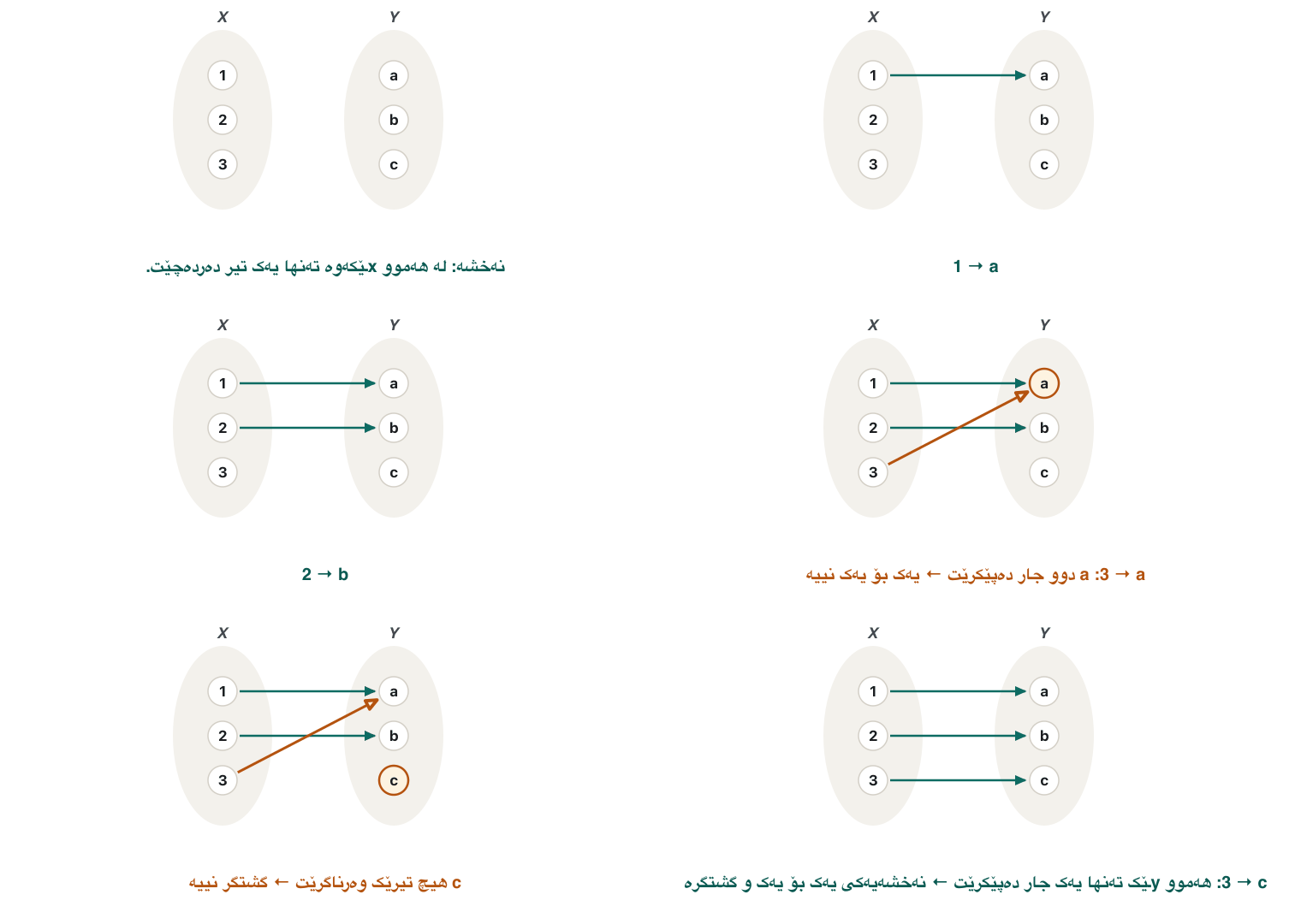
ئەگەر هەم یەک بۆ یەک و هەم گشتگر بێت، پێی دەوترێت (bijection). ئەو کاتە هەموو Y تەنها یەک Xـە: گشتگر «لانیکەم یەک» دەدات و یەک بۆ یەک «زۆرترین یەک».
At a taxi garage, every passenger (X) gets into one taxi (Y). One-to-one: no two passengers share a taxi. Onto: no taxi leaves empty. Bijective: each taxi carries exactly one passenger, so passengers and taxis are paired off, and there are just as many of each.
لە گەراجێکی تەکسیدا هەر سەرنشینێک (X) سواری یەک تەکسی (Y) دەبێت. یەک بۆ یەک: هیچ دوو سەرنشینێک یەک تەکسی بەش ناکەن. گشتگر: هیچ تەکسییەک بە بەتاڵی ناڕوات. یەک بۆ یەک و گشتگر: هەر تەکسییەک ڕێک یەک سەرنشین دەبات، بۆیە سەرنشینەکان و تەکسییەکان جووت جووت دەبن و ژمارەیان یەکسانە.
Where the analogy stops workingسنووری ئەم نموونەیە
Real taxis carry up to four people; in the analogy a shared taxi is exactly what breaks one-to-one. For infinite sets you cannot count, but pairing off still works.
تەکسیی ڕاستەقینە تا چوار کەس هەڵدەگرێت؛ لە بەراوردەکەدا بەشکردنی تەکسی ڕێک ئەوەیە کە یەک بۆ یەک تێک دەدات. بۆ بێکۆتایی ناتوانیت بژمێریت، بەڵام جووتکردن هەر کار دەکات.
Worked example: is one-to-one and ontoنموونەی چارەسەرکراو: یەک بۆ یەک و گشتگرە
Let , . We prove both properties, so f is bijective.
با ، . هەردوو تایبەتمەندییەکە دەسەلمێنین، کەواتە f .
- One-to-oneیەک بۆ یەک
Suppose two outputs are equal: . Every real number has exactly one real cube root, so taking cube roots of both sides gives . Equal outputs came from equal inputs.
وا دابنێ دوو یەکسانن: . هەموو تەنها یەک ڕاستی هەیە، بۆیە وەرگرتنی لە هەردوو لا دەدات. یەکسان لە یەکسانەوە هاتوون.
A second way: the bracket on the right is a sum of squares, so it is 0 only when . So forces .
ڕێگەیەکی دووەم: کەوانەکەی لای ڕاست کۆی دووجاکانە، بۆیە تەنها کاتێک 0ـە کە . کەواتە ناچارمان دەکات .
- Ontoگشتگر
Take any . Choose (the real cube root). Then . For example comes from , because .
هەر ـێک وەربگرە. هەڵبژێرە ( ڕاستی). ئەو کاتە . بۆ نموونە لە ـەوە دێت، چونکە .
Worked examples: and the constant 5نموونەی چارەسەرکراو: و نەگۆڕی 5
Two functions from to that fail both tests. To show that a property fails, one counter-example is enough.
دوو لە ـەوە بۆ کە لە هەردوو تاقیکردنەوەکەدا شکست دەهێنن. بۆ نیشاندانی ئەوەی تایبەتمەندییەک نییە، یەک نموونەی پێچەوانە بەسە.
| Function | One-to-one?یەک بۆ یەک؟ | Onto ?گشتگر بۆ ؟ |
|---|---|---|
| No: but نەخێر: بەڵام | No: , but , so no x gives نەخێر: ، بەڵام ، بۆیە هیچ xـێک نادات | |
| No: نەخێر: | No: the range is ; for example 7 is never an outputنەخێر: ـە؛ بۆ نموونە 7 هەرگیز نییە |
Every constant function on a set with two or more elements fails both tests in the same way: all inputs crowd onto one output, and every other element of the codomain stays empty.
هەموو لەسەر کە دوو یان زیاتری هەبێت بە هەمان شێوە لە هەردوو تاقیکردنەوەکەدا شکست دەهێنێت: هەموو لەسەر یەک کۆ دەبنەوە و هەموو تری بەتاڵ دەمێننەوە.
Homework: ئەرکی ماڵەوە:
Show that the linear function , , is one-to-one. Then decide whether it is also onto.
نیشانی بدە کە ، ، یەک بۆ یەکە. پاشان بڕیار بدە ئایا گشتگریشە.
Hintئاماژە
Assume and show .
وا دابنێ و نیشانی بدە .
Show answerوەڵامەکە پیشان بدە
- One-to-oneیەک بۆ یەک
Start from equal outputs and undo the formula step by step.
لە یەکسانەوە دەست پێبکە و فۆرمولەکە هەنگاو بە هەنگاو هەڵبوەشێنەوە.
- Ontoگشتگر
Take any and solve for x. The solution is a real number, so every y is reached.
هەر ـێک وەربگرە و بۆ x چارەسەر بکە. چارەسەرەکە ، بۆیە دەگەینە هەموو yـێک.
- Conclusionئەنجام
f is one-to-one and onto, so it is bijective. The same works for every linear function with . With you get a constant function, which is neither.
f هەم یەک بۆ یەکە و هەم گشتگرە، بۆیە . هەمان شت بۆ هەموو وەک بە ڕاستە. بە وەردەگریت کە هیچ کامیان نییە.
Now take the integers: , . Is g one-to-one? Is it onto?
ئێستا وەربگرە: ، . ئایا g یەک بۆ یەکە؟ ئایا گشتگرە؟
Show answerوەڵامەکە پیشان بدە
One-to-one: yes. gives , as before. Onto: no. is always odd. For we would need , which is not an integer. The same formula on would be bijective; changing the sets changes the answer.
یەک بۆ یەک: بەڵێ. وەک پێشتر دەدات. گشتگر: نەخێر. هەمیشە تاکە. بۆ پێویستمان بە دەبێت، کە نییە. هەمان فۆرمولە لەسەر دەبوو؛ گۆڕینی وەڵامەکە دەگۆڕێت.
In computingلە کۆمپیوتەردا
Common mistakesهەڵە باوەکان
| Mistakeهەڵە | Why it is wrongبۆچی هەڵەیە | Correct thinkingبیرکردنەوەی ڕاست |
|---|---|---|
| ", so the two functions are equal."«، بۆیە دوو یەکسانن.» | Cancelling hides the condition .کورتکردنەوە مەرجی دەشارێتەوە. | Compare domains first, then values.سەرەتا بەراورد بکە، پاشان بەهاکان. |
| ", so f is one-to-one."«، بۆیە f یەک بۆ یەکە.» | One pair proves nothing about all the other pairs.یەک جووت هیچ دەربارەی هەموو جووتەکانی تر ناسەلمێنێت. | Prove ; but one pair with equal outputs does prove "not one-to-one". بسەلمێنە؛ بەڵام یەک جووت بە یەکسان «یەک بۆ یەک نییە» دەسەلمێنێت. |
| " is onto."« گشتگرە.» | It depends on the codomain.پەیوەستە بە . | Not onto as ; onto as .وەک گشتگر نییە؛ وەک گشتگرە. |
| "Onto means every x has an output."«گشتگر واتە هەموو xـێک هەیە.» | Every function gives every x an output.هەموو بە هەموو xـێک دەدات. | Onto is about Y: every y is reached.گشتگر دەربارەی Yـە: دەگەینە هەموو yـێک. |
| Using the vertical line test for one-to-one.بەکارهێنانی بۆ یەک بۆ یەک. | Vertical lines check "is it a function?".هێڵی ستوونی دەپشکنێت «ئایا ؟». | Use horizontal lines for one-to-one.بۆ یەک بۆ یەک هێڵی ئاسۆیی بەکار بهێنە. |
| ", so " as a proof.«، بۆیە » وەک . | It repeats the claim without a reason.بانگەشەکە بەبێ هۆکار دووبارە دەکاتەوە. | Give the reason: cube roots are unique.هۆکارەکە بدە: تاکن. |
Exercisesڕاهێنانەکان
Let and . Classify each function as one-to-one, onto, both or neither: (a) ; (b) .
با و . هەر پۆلێن بکە: یەک بۆ یەک، گشتگر، هەردووکیان یان هیچیان: (أ) ؛ (ب) .
Show answerوەڵامەکە پیشان بدە
(a) Every element of Y is hit exactly once: f is bijective. (b) p is hit twice () and q is never hit: g is neither one-to-one nor onto.
(أ) هەموو Y تەنها یەک جار دەپێکرێت: f . (ب) p دوو جار دەپێکرێت () و q هەرگیز ناپێکرێت: g نە یەک بۆ یەکە و نە گشتگر.
For decide: one-to-one? onto? (a) (b) (c)
بۆ بڕیار بدە: یەک بۆ یەک؟ گشتگر؟ (أ) (ب) (ج)
Show answerوەڵامەکە پیشان بدە
| Function | One-to-one?یەک بۆ یەک؟ | Onto?گشتگر؟ |
|---|---|---|
| Yes: بەڵێ: | Yes: بەڵێ: | |
| Yes ()بەڵێ () | Yes: بەڵێ: | |
| No: نەخێر: | No: outputs are never negativeنەخێر: هەرگیز سالب نین |
Are and equal functions?
ئایا و یەکسانن؟
Show answerوەڵامەکە پیشان بدە
No. For , , so the values agree. But f is not defined at (it gives ), so . The graph of f is the line with a hole at .
نەخێر. بۆ ، ، بۆیە بەهاکان یەکسانن. بەڵام f لە ـدا پێناسە نەکراوە ( دەدات)، بۆیە . f هێڵی ـە بە کونێک لە ـدا.
Choose a domain and a codomain that make bijective.
و هەڵبژێرە کە بکەنە .
Show answerوەڵامەکە پیشان بدە
Take . On only the right half of the parabola is left, so every horizontal line meets it at most once (one-to-one), and every is reached by (onto). This "restricting the domain" is exactly how inverse functions such as are made.
وەربگرە. لەسەر تەنها نیوەی ڕاستی دەمێنێتەوە، بۆیە هەموو هێڵێکی ئاسۆیی زۆرترین جار یەک جار دەیبڕێت (یەک بۆ یەک) و دەگەینە هەموو ـێک بە (گشتگر). ئەم «بچووککردنەوەی بوار»ـە ڕێک ئەو ڕێگەیەیە کە وەک پێی دروست دەکرێت.
Summaryپوختە
- Equal: means the same domain and codomain and for every x. Cancelling a fraction can change the domain.
- Constant: for all x; the graph is a horizontal line.
- The identity function gives back its input; its graph is the line .
- One-to-one: ; every horizontal line meets the graph at most once.
- Onto: every y in the codomain is reached; range = codomain. The answer depends on the codomain.
- Bijective: both; every y comes from exactly one x. and are bijective on ; and 5 are neither.
- یەکسان: واتە هەمان و و بۆ هەموو xـێک . کورتکردنەوەی دەتوانێت بگۆڕێت.
- : بۆ هەموو xـێک ؛ هێڵێکی ئاسۆییە.
- دەگەڕێنێتەوە؛ هێڵی ـە.
- یەک بۆ یەک: ؛ هەموو هێڵێکی ئاسۆیی زۆرترین جار یەک جار دەبڕێت.
- گشتگر: دەگەینە هەموو yـێکی ؛ = . وەڵامەکە پەیوەستە بە .
- یەک بۆ یەک و گشتگر: هەردووکیان؛ هەموو yـێک لە تەنها یەک xـەوە دێت. و لەسەر یەک بۆ یەک و گشتگرن؛ و 5 هیچیان نین.
What is the quickest way to show that a function is NOT one-to-one?خێراترین ڕێگە بۆ نیشاندانی ئەوەی نەخشەیەک یەک بۆ یەک نییە چییە؟
Find two different inputs with the same output, for example for .
دوو جیاواز بە هەمان بدۆزەوە، بۆ نموونە بۆ .
How do you prove that a function IS onto?چۆن دەسەلمێنیت کە نەخشەیەک گشتگرە؟
Take any y in the codomain, solve , and check that the x you found lies in the domain.
هەر yـێکی وەربگرە، چارەسەر بکە و بپشکنە کە ئەو xـەی دۆزیتەوە لە .
Why is the constant function 5 not onto ?بۆچی نەخشەی نەگۆڕی 5 بۆ گشتگر نییە؟
Its range is , so any other real number, such as 7, is never an output.
ـە، بۆیە هەر تر، وەک 7، هەرگیز نییە.
Videoڤیدیۆ
Watch a videoسەیری ڤیدیۆیەک بکە
A video that viewers liked a lot and praised in their comments, chosen for this lesson.ڤیدیۆیەک کە بینەران زۆریان پێ خۆش بووە و لە کۆمێنتەکانیاندا ستایشیان کردووە، بۆ ئەم وانەیە هەڵبژێردراوە.
A Kurdish (Sorani) teacher explains what a function is, then what one-to-one (جیا) and onto (گشتگر) functions are.
مامۆستایەکی کورد بە سۆرانی ڕوون دەکاتەوە چییە، پاشان (لە ڤیدیۆکەدا «جیا») و چین.
Lesson-level, Sorani (7:48): arrow diagrams for a function, a one-to-one function (نەخشەی جیا) and an onto function (نەخشەی گشتگر). Equal, constant and identity functions are not covered.
بۆ هەموو وانەکە، بە سۆرانی (7:48): هێڵکاریی تیر بۆ ، (لە ڤیدیۆکەدا « جیا») و . ، و باس ناکات.
Lesson complete!وانەکە تەواو بوو!
Well done. Review the key terms, then go on to the next lesson.دەستخۆش. سەیرێکی زاراوە سەرەکییەکان بکەرەوە، پاشان بڕۆ بۆ وانەی داهاتوو.
Key termsزاراوە سەرەکییەکان
Graphs of Linear and Power Functions; Even and Odd Functionsهێڵکاریی نەخشە هێڵییەکان و نەخشەکانی هێز؛ نەخشە جووتەکان و نەخشە تاکەکان
Related lecturesوانە پەیوەندیدارەکان
References and further readingسەرچاوەکان و خوێندنەوەی زیاتر
- OpenStax Calculus Volume 1, 1.4 Inverse Functions (one-to-one functions, Rule: Horizontal Line Test, restricting domains)
- OpenStax Calculus Volume 1, 1.1 Review of Functions (functions, domain and range, vertical line test)
- T. Sundstrom, Mathematical Reasoning: Writing and Proof (Grand Valley State University), 6.3 Injections, Surjections, and Bijections
This lecture is a first edition. The Kurdish text and terminology are waiting for review by Kurdish IT teachers.ئەم وانەیە چاپی یەکەمە. دەقە کوردییەکە و زاراوەکانی چاوەڕێی پێداچوونەوەی مامۆستایانی کوردی بواری IT ن.