Chapterبەش 5 · Lectureوانە 5.2
The Cumulative Distribution Function (CDF)نەخشەی دابەشبوونی کەڵەکەبوو (CDF)
as a running total: the step formula, the staircase graph, properties, interval probabilities , going back from to the pmf, the course's coin, and die homework, and a first look at the smooth CDF of a continuous variable.
وەک کۆیەکی ڕۆیشتوو: پلەیی، هێڵکاریی پەیژەیی، تایبەتمەندییەکان، بە ، گەڕانەوە لە ـەوە بۆ ، ڕاهێنانەکانی دراو، و بەردەزاری کۆرسەکە و یەکەم سەیرکردنی نەرمی گۆڕاوی بەردەوام.
What you will learnچی فێر دەبیت
- Define the CDF and build it from a pmf.
- Draw a discrete CDF as a staircase with correct open and filled dots.
- Use the properties of and find interval probabilities with .
- Recover the pmf from the jumps of .
- پێناسە بکەیت و لە دروستی بکەیت.
- پچڕاو وەک پەیژە بکێشیت بە خاڵی پڕ و بەتاڵی دروست.
- تایبەتمەندییەکانی بەکار بهێنیت و بە بدۆزیتەوە.
- لە بازدانەکانی ـەوە بدۆزیتەوە.
A running total of probabilityکۆیەکی ڕۆیشتووی ئەگەر
Many questions ask “at most”: at most 2 heads, at most 3 errors, a wait of at most 5 minutes. They all have the form . The cumulative distribution function (CDF) answers all of them at once:
زۆر پرسیار دەڵێن «لانیزۆر»: لانیزۆر 2 شێر، لانیزۆر 3 هەڵە، چاوەڕوانییەک کە لانیزۆر 5 خولەک بێت. هەموویان بە شێوەی ن. (CDF) هەموویان پێکەوە وەڵام دەداتەوە:
collects the probability of every value up to and including . For a discrete it adds the pmf values with .
هەموو بەهایەک تا و خودی کۆ دەکاتەوە. بۆ ـی پچڕاو ئەو بەهایانەی کۆ دەکاتەوە کە .
A taxi meter shows the fare so far. It starts at 0, only ever goes up, and jumps each time you pass a pricing point. The CDF is a meter for probability: it starts at 0 far to the left, climbs by the pmf at each value of , and ends at 1.
ئامێری کرێی تاکسی کرێی تا ئێستا نیشان دەدات. لە 0 دەست پێ دەکات، هەرگیز دانابەزێت و هەر جارێک کە بە خاڵێکی نرخدا تێدەپەڕیت باز دەدات. ئامێرێکی وەهایە بۆ : لە چەپی دوور لە 0 دەست پێ دەکات، لە هەر بەهایەکی بە ئەندازەی بەرز دەبێتەوە و لە 1 کۆتایی دێت.
Where the analogy stops workingسنووری ئەم نموونەیە
A taxi fare has no upper limit; a CDF can never go above 1.
کرێی تاکسی سنووری سەرەوەی نییە؛ هەرگیز لە 1 تێناپەڕێت.
The CDF as a running total of the pmf: for a die, F(x) = P(X ≤ x) climbs in steps from 0 to 1.
وەک کۆی بەردەوامی : بۆ بەردەزارێک، هەنگاو بە هەنگاو لە 0ـەوە بۆ 1 بەرز دەبێتەوە.
Plays 3:31-7:00, the discrete CDF part.
لە 3:31 تا 7:00 پەخش دەبێت: بەشی پچڕاو.
A running total of probabilityکۆیەکی ڕۆیشتووی ئەگەر
The notes, “at most” and cumulative frequencyتێبینییەکان، «لانیزۆر» و دووبارەبوونەوەی کەڵەکەبوو
You have met the same idea for data: the “less than” column of a frequency table, cumulative frequency, is a running total of frequencies. The CDF is its probability version.
هەمان بیرۆکەت بۆ بینیوە: ستوونی «کەمتر لە» لە خشتەی ، دووبارەبوونەوەی کەڵەکەبوو، کۆیەکی ڕۆیشتووی . هەمان ئەو بیرۆکەیەیە بۆ .
The step formulaفۆرمولەی پلەکان
If takes the values , then is flat between two values and jumps at each value. Written out in pieces:
گەر بەهاکانی وەربگرێت، ئەوا لە نێوان دوو بەهادا ڕاستە و لە سەر هەر بەهایەک باز دەدات. بە پارچە نووسراوە:
Each line adds one more pmf value. Below the smallest value ; from the largest value on, .
هەر هێڵێک بەهایەکی تری زیاد دەکات. لە خوار بچووکترین بەها ؛ لە گەورەترین بەهاوە بەرەو سەرەوە .
This is a piecewise function, and because it is flat with jumps it is called a step function, like the floor function .
ئەمە نەخشەی ڕێسا پەلدارـە و چونکە ڕاستە و باز دەدات پێی دەڵێن ، وەک نەخشەی .
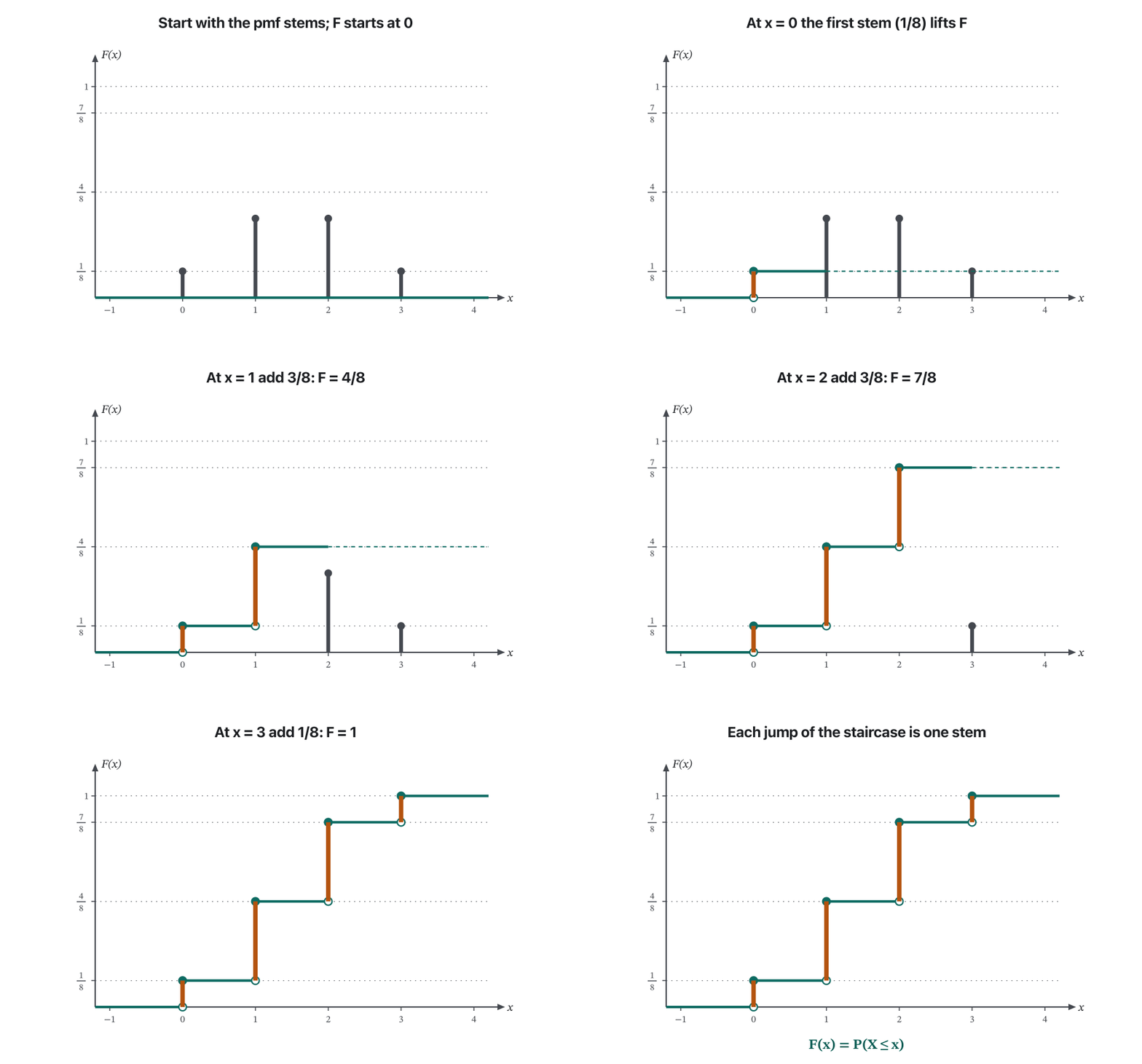
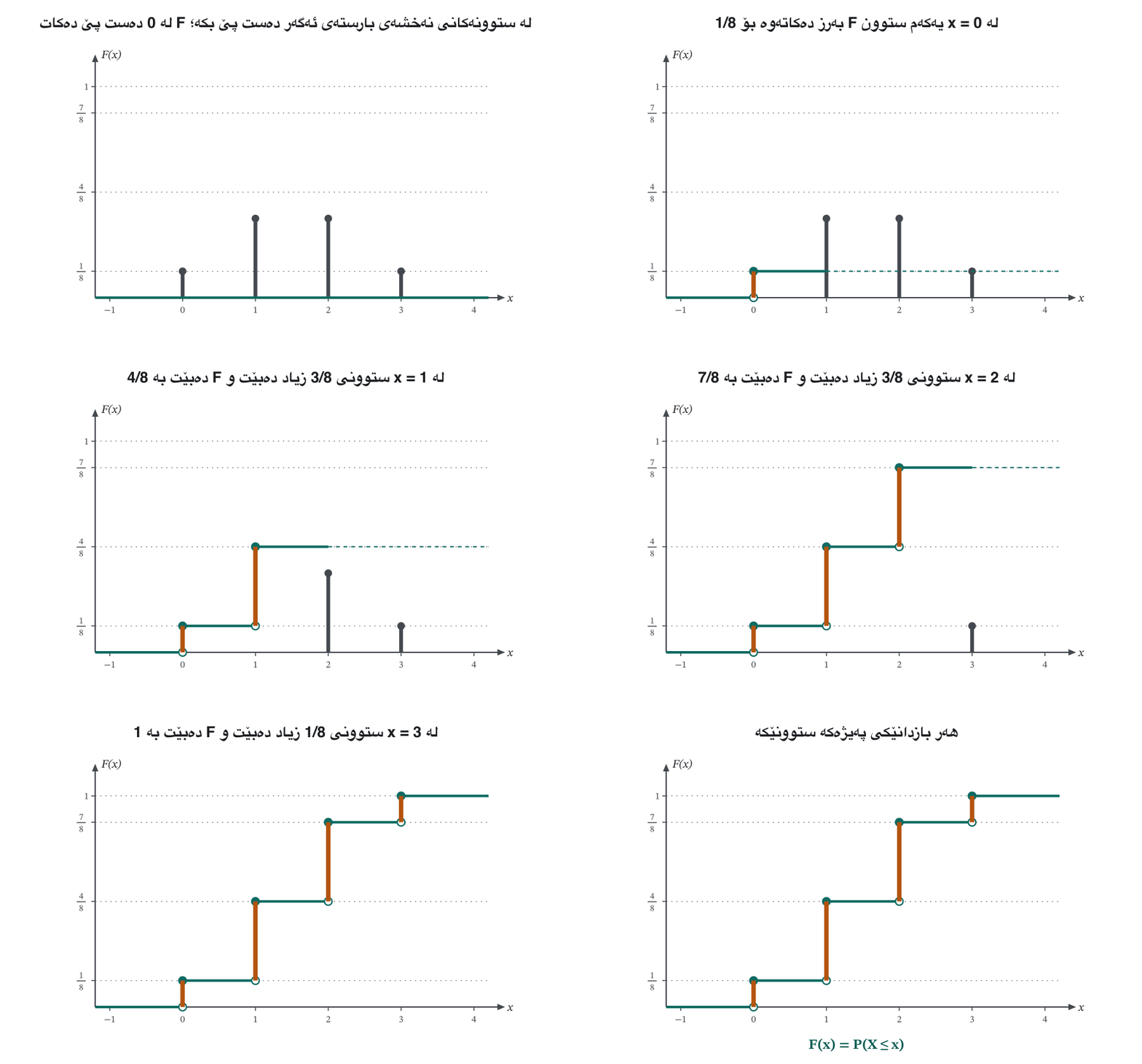
Example: the CDF of three coinsنموونە: نەخشەی دابەشبوونی کەڵەکەبووی سێ دراو
Lecture 3, Example 1, part 3 and Lecture 4, Example 4, part 1: three coins, = number of heads. Add the pmf down the table:
وانەی 3، نموونەی 1، بەشی 3 و وانەی 4، نموونەی 4، بەشی 1: سێ دراو، = ژمارەی شێرەکان. بە درێژایی خشتەکە کۆ بکەرەوە:
| holds forبۆ | |||
|---|---|---|---|
| 0 | |||
| 1 | |||
| 2 | |||
| 3 |
Example: the CDF of three coinsنموونە: نەخشەی دابەشبوونی کەڵەکەبووی سێ دراو
From stems to a staircaseلە ستوونەوە بۆ پەیژە
Watch the pmf stems being stacked one on top of the other. Each stem becomes one jump of the staircase.
سەیر بکە چۆن ستوونەکانی یەک لە سەر یەک کەڵەکە دەکرێن. هەر ستوونێک دەبێت بە بازدانێکی پەیژەکە.
Properties of every CDFتایبەتمەندییەکانی هەموو نەخشەی دابەشبوونی کەڵەکەبوو
The two lectures list these properties. They hold for discrete and continuous variables alike:
دوو وانەکە ئەم تایبەتمەندییانە دەژمێرن. بۆ گۆڕاوی پچڕاو و بەردەوام وەک یەک ڕاستن:
- : is a probability.
- Non-decreasing: if then . Moving right can only add probability, never remove it.
- and : far to the left nothing has happened yet; far to the right everything has.
- At a jump, the value of is the upper end (the filled dot): is continuous from the right.
- : .
- دانەبەزیو: گەر ئەوا . چوونە ڕاست تەنها دەتوانێت زیاد بکات، هەرگیز لای نابات.
- و : لە چەپی دوور هێشتا هیچ ڕووی نەداوە؛ لە ڕاستی دوور هەموو شتێک ڕووی داوە.
- لە شوێنی بازدان بەهای کۆتایی سەرەوەیە (خاڵە پڕەکە): لە لای ڕاستەوە بەردەوامە.
Lecture 3 writes the two limits as and ; these are short forms of the limits above, since is not a number you can put into .
وانەی 3 دوو بە و دەنووسێت؛ ئەمانە کورتکراوەی سەرەوەن، چونکە ژمارە نییە تا بیخەیتە ناو .
Probabilities of intervals: ئەگەری ماوەکان:
counts everything up to ; counts everything up to . Their difference is what lies after , up to and including :
هەموو شتێک تا دەژمێرێت؛ هەموو شتێک تا . جیاوازییەکەیان ئەوەیە کە دەکەوێتە دوای تا ، بە خودی ـیشەوە:
Example, with : (the values 2 and 3).
نموونە، بە : (بەهاکانی 2 و 3).
For a discrete variable, watch the ends. To include , subtract just below : . For three coins, .
بۆ گۆڕاوی پچڕاو ئاگاداری کۆتاییەکان بە. بۆ تێدابوونی ، ـی ڕێک لە خوار کەم بکەرەوە: . بۆ سێ دراو، .
Example 3: the CDF of نموونەی 3: نەخشەی دابەشبوونی کەڵەکەبووی
Lecture 4, Example 3 (Lecture 3, H.W 2): , . Find the CDF and sketch it. Keep adding:
وانەی 4، نموونەی 3 (وانەی 3، ڕاهێنانی ماڵەوەی 2): ، . بدۆزەوە و بیکێشە. بەردەوام کۆ بکەرەوە:
The jumps are : the pmf values. is the of the pmf lesson.
بازدانەکان ـن: بەهاکانی . هەمان ـی وانەی .
From the CDF back to the pmfلە نەخشەی دابەشبوونی کەڵەکەبووەوە بۆ نەخشەی بارستەی ئەگەر
The CDF and the pmf carry the same information. Going down, add; going up, subtract. The size of each jump is the pmf value at that point:
و هەمان زانیاری هەڵدەگرن. بۆ خوارەوە کۆ بکەرەوە؛ بۆ سەرەوە کەم بکەرەوە. قەبارەی هەر بازدانێک بەهای لەو خاڵەدا:
- کاتێک
- کاتێک
- کاتێک
- کاتێک
We get back . (One line of the course notes labels the last value “”; with three coins the largest value is 3, so it is .)
دووبارە وەردەگرینەوە. (هێڵێک لە تێبینییەکانی کۆرسەکە ناوی دوا بەها دەنێت «»؛ بە سێ دراو گەورەترین بەها 3ـە، بۆیە ئەوە ـە.)
The course homework, solvedڕاهێنانەکانی ماڵەوەی کۆرسەکە، چارەسەرکراو
Two coins, = number of heads, pmf . Find the CDF.
دوو دراو، = ژمارەی شێرەکان، . بدۆزەوە.
Show answerوەڵامەکە پیشان بدە
, : find the CDF and sketch it.
، : بدۆزەوە و بیکێشە.
Show answerوەڵامەکە پیشان بدە
The pmf is 0.125, 0.375, 0.375, 0.125 (the three-coin pmf, see the pmf lesson), so the CDF is the same staircase as three coins:
بریتییە لە 0.125، 0.375، 0.375، 0.125 ( سێ دراو، بڕوانە وانەی نەخشەی بارستەی ئەگەر)، بۆیە هەمان پەیژەی سێ دراوەکەیە:
for (as printed). (a) Is it a pmf? (b) Find the CDF. (c) Find .
بۆ (وەک چاپکراوە). (أ) ؟ (ب) بدۆزەوە. (ج) بدۆزەوە.
Show answerوەڵامەکە پیشان بدە
(a) As printed, gives seven values and a total of : not a pmf (why). With , a fair die, it is.
(أ) وەک چاپکراوە، حەوت بەها و کۆی دەدات: نییە (بۆچی). بە ، بەردەزارێکی دادپەروەر، .
(b) For the die: on the steps, then 1.
(ب) بۆ بەردەزارەکە: لە سەر پلەکان، پاشان 1.
(c) The values 3 and 4.
(ج) بەهاکانی 3 و 4.
A smooth CDF for continuous variablesنەخشەی دابەشبوونی کەڵەکەبووی نەرم بۆ گۆڕاوی بەردەوام
For a continuous variable there are no stems to add: probability is spread along an interval by a density . The running total becomes an area, written as an integral, and the staircase becomes a smooth curve.
بۆ گۆڕاوی بەردەوام هیچ ستوونێک نییە کۆی بکەیتەوە: بە چڕییەک بە درێژایی بڵاو بووەتەوە. کۆی ڕۆیشتوو دەبێت بە ڕووبەر، کە بە دەنووسرێت و پەیژەکە دەبێت بە هێڵێکی چەماوەی نەرم.
The letter inside the integral is a dummy name, so it does not clash with the upper limit . Going back, the density is the derivative of the CDF.
پیتی لە ناو ناوێکی کاتییە، بۆ ئەوەی لەگەڵ سنووری سەرەوە تێکەڵ نەبێت. بە پێچەوانەوە، چڕییەکە .
How to find and use these integrals, with the course's examples, is the next lesson: Continuous Random Variables and Density Functions. The best-known continuous CDF belongs to the normal distribution: Probabilities are areas.
چۆنیەتیی دۆزینەوە و بەکارهێنانی ئەم ، لەگەڵ نموونەکانی کۆرسەکە، وانەی داهاتووە: گۆڕاوە هەڕەمەکییە بەردەوامەکان و نەخشەی چڕیی ئەگەر. ناسراوترین بەردەوام هی : ئەگەرەکان ڕووبەرن.
Common mistakesهەڵە باوەکان
- Drawing a discrete CDF as bars or stems. It is a staircase: flat steps, a jump at each value, 0 on the far left and 1 on the far right.
- Open and closed dots the wrong way round. At a jump takes the upper value: for three coins, not .
- Using instead of . ; for discrete variables is a different number.
- Adding running totals. Each step adds one pmf value , not .
- Wrong ends in . It gives : is left out and is kept.
- کێشانی پچڕاو وەک ستوون. پەیژەیە: پلەی ڕاست، بازدانێک لە سەر هەر بەهایەک، 0 لە چەپی دوور و 1 لە ڕاستی دوور.
- خاڵی پڕ و بەتاڵ بە پێچەوانەوە. لە شوێنی بازدان بەهای سەرەوە وەردەگرێت: بۆ سێ دراو ، نەک .
- بەکارهێنانی لە جیاتی . ؛ بۆ گۆڕاوی پچڕاو ژمارەیەکی جیاوازە.
- کۆکردنەوەی کۆی ڕۆیشتوو. هەر پلەیەک یەک بەهای زیاد دەکات، نەک .
- کۆتایی هەڵە لە . دەدات: دەردەکرێت و دەمێنێتەوە.
Exercisesڕاهێنانەکان
For three coins, find , , , and .
بۆ سێ دراو، ، ، ، و بدۆزەوە.
Show answerوەڵامەکە پیشان بدە
In the pmf lesson, two balls are taken from a bag with 2 red and 3 blue; = number of red, with pmf for 0, 1, 2. Write the CDF.
لە وانەی ، دوو تۆپ لە توورەکەیەک دەردەهێنرێن کە 2 سوور و 3 شینی تێدایە؛ = ژمارەی سوورەکان، بە بۆ 0، 1، 2. بنووسە.
Show answerوەڵامەکە پیشان بدە
A discrete has for , on , on and for . Find the pmf and .
ـێکی پچڕاو ـی هەیە بۆ ، لە ، لە و بۆ . و بدۆزەوە.
Hintئاماژە
A jump of at a value is the pmf at that value.
بازدانی لە بەهایەکدا بەهای لەو بەهایەدا.
Show answerوەڵامەکە پیشان بدە
The jumps are at 1, 2 and 4: , , (no jump at 3, so ). Then .
بازدانەکان لە 1، 2 و 4ن: ، و (لە 3 بازدان نییە، بۆیە ). پاشان .
Summaryکورتە
- The CDF is , a running total of probability, defined for every real .
- Discrete : is a staircase. Each jump is a pmf value: .
- , never decreases, on the far left and on the far right.
- . Three coins: . For : .
- Continuous : , a smooth curve, and .
- بریتییە لە ، کۆیەکی ڕۆیشتووی ، کە بۆ هەموو ـێکی ڕاستی پێناسە کراوە.
- ـی پچڕاو: پەیژەیە. هەر بازدانێک بەهایەکی : .
- ، هەرگیز دانابەزێت، لە چەپی دوور و لە ڕاستی دوور .
- . سێ دراو: . بۆ : .
- ـی بەردەوام: ، هێڵێکی چەماوەی نەرم و .
Videoڤیدیۆ
Watch a videoسەیری ڤیدیۆیەک بکە
A video that viewers liked a lot and praised in their comments, chosen for this lesson.ڤیدیۆیەک کە بینەران زۆریان پێ خۆش بووە و لە کۆمێنتەکانیاندا ستایشیان کردووە، بۆ ئەم وانەیە هەڵبژێردراوە.
A visual tour: random variable, pmf, the CDF staircase for a discrete variable, then the smooth CDF of a continuous one.
گەشتێکی وێنەیی: ، ، پەیژەی بۆ ، پاشان نەرم بۆ .
Discrete CDF from 2:04, continuous variables and their CDF from 4:32 (the last screen of the lesson).
پچڕاو لە 2:04ـەوە، و لە 4:32ـەوە (دوایین شاشەی وانەکە).
Lesson complete!وانەکە تەواو بوو!
Well done. Review the key terms, then go on to the next lesson.دەستخۆش. سەیرێکی زاراوە سەرەکییەکان بکەرەوە، پاشان بڕۆ بۆ وانەی داهاتوو.
Key termsزاراوە سەرەکییەکان
Continuous Random Variables and Density Functionsگۆڕاوە هەڕەمەکییە بەردەوامەکان و نەخشەی چڕیی ئەگەر
Related lecturesوانە پەیوەندیدارەکان
- Grouping Data: Frequency Tablesپۆلێنکردنی دراوە: خشتەکانی دووبارەبوونەوە
- Histograms and Cumulative Frequency Graphsهیستۆگرامەکان و هێڵکارییەکانی دووبارەبوونەوەی کەڵەکەبوو
- Piecewise Functions: Absolute Value, Floor and Ceilingنەخشە ڕێسا پەلدارەکان: نرخی ڕووت، نەخشەی گەورەترین ژمارەی تەواو و نەخشەی بچووکترین ژمارەی تەواو
- Continuous Random Variables and Density Functionsگۆڕاوە هەڕەمەکییە بەردەوامەکان و نەخشەی چڕیی ئەگەر
- Intervals and the Number Lineماوەکان و هێڵی ژمارەکان
References and further readingسەرچاوەکان و خوێندنەوەی زیاتر
This lecture is a first edition. The Kurdish text and terminology are waiting for review by Kurdish IT teachers.ئەم وانەیە چاپی یەکەمە. دەقە کوردییەکە و زاراوەکانی چاوەڕێی پێداچوونەوەی مامۆستایانی کوردی بواری IT ن.