Chapterبەش 3 · Lectureوانە 3.6
Graphs of Linear and Power Functions; Even and Odd Functionsهێڵکاریی نەخشە هێڵییەکان و نەخشەکانی هێز؛ نەخشە جووتەکان و نەخشە تاکەکان
How to draw the basic graphs every later lesson uses: straight lines with their slope and intercept, the parabola , the odd powers , , and the roots , , , with their domains and ranges; then even and odd functions and their mirror and half-turn symmetry.
چۆن ئەو هێڵکارییە بنەڕەتییانە بکێشیت کە هەموو وانەکانی داهاتوو بەکاریان دەهێنن: هێڵی ڕاستی بە و ، ، ، ، و ڕەگەکانی ، ، لەگەڵ و ؛ پاشان و و ئاوێنە و نیو سووڕانەوەیان.
What you will learnچی فێر دەبیت
- Plot a linear function from a table and read its slope and y-intercept.
- Sketch , , , , , and and state their domains and ranges.
- Use rational exponents and take odd roots of negative numbers.
- Test a function for being even or odd, and connect the result to the symmetry of its graph.
- لە خشتەیەکەوە بکێشیت و و yـی بخوێنیتەوە.
- ، ، ، ، ، و بکێشیت و و بنووسیت.
- کەرتی بەکار بهێنیت و ڕەگی تاکی وەربگریت.
- بۆ جووت یان تاک بوون تاقی بکەیتەوە و ئەنجامەکە بە هێڵکارییەکەیەوە ببەستیتەوە.
What a graph showsهێڵکاری چی نیشان دەدات
The graph of a function f is the set of all points in the coordinate plane, one point for every x in the domain. You cannot plot infinitely many points by hand, so you work like this: make a small table of inputs and outputs, plot those points, and join them with the shape you expect.
f هەموو خاڵەکانی ـە لەسەر ڕووتەختی پۆتان، بۆ هەر xـێکی خاڵێک. ناتوانیت بە دەست خاڵی بێکۆتایی دابنێیت، بۆیە بەم شێوەیە کار دەکەیت: خشتەیەکی بچووکی و دروست بکە، ئەو خاڵانە دابنێ و بەو شێوەیەی چاوەڕێی دەکەیت پێکیانەوە ببەستە.
"The shape you expect" is the point of this lesson. A few basic graphs (lines, , , ) appear everywhere. Once you know them by heart, later lessons simply shift, stretch and reflect them.
«ئەو شێوەیەی چاوەڕێی دەکەیت» مەبەستی ئەم وانەیەیە. چەند هێڵکارییەکی بنەڕەتی (هێڵ، ، ، ) لە هەموو شوێنێک دەردەکەون. کاتێک لەبەرت کردن، وانەکانی داهاتوو تەنها دەیانکشێننەوە، درێژیان دەکەنەوە و وێنەیان دەدەنەوە.
Linear functions: always a straight lineنەخشە هێڵییەکان: هەمیشە هێڵێکی ڕاست
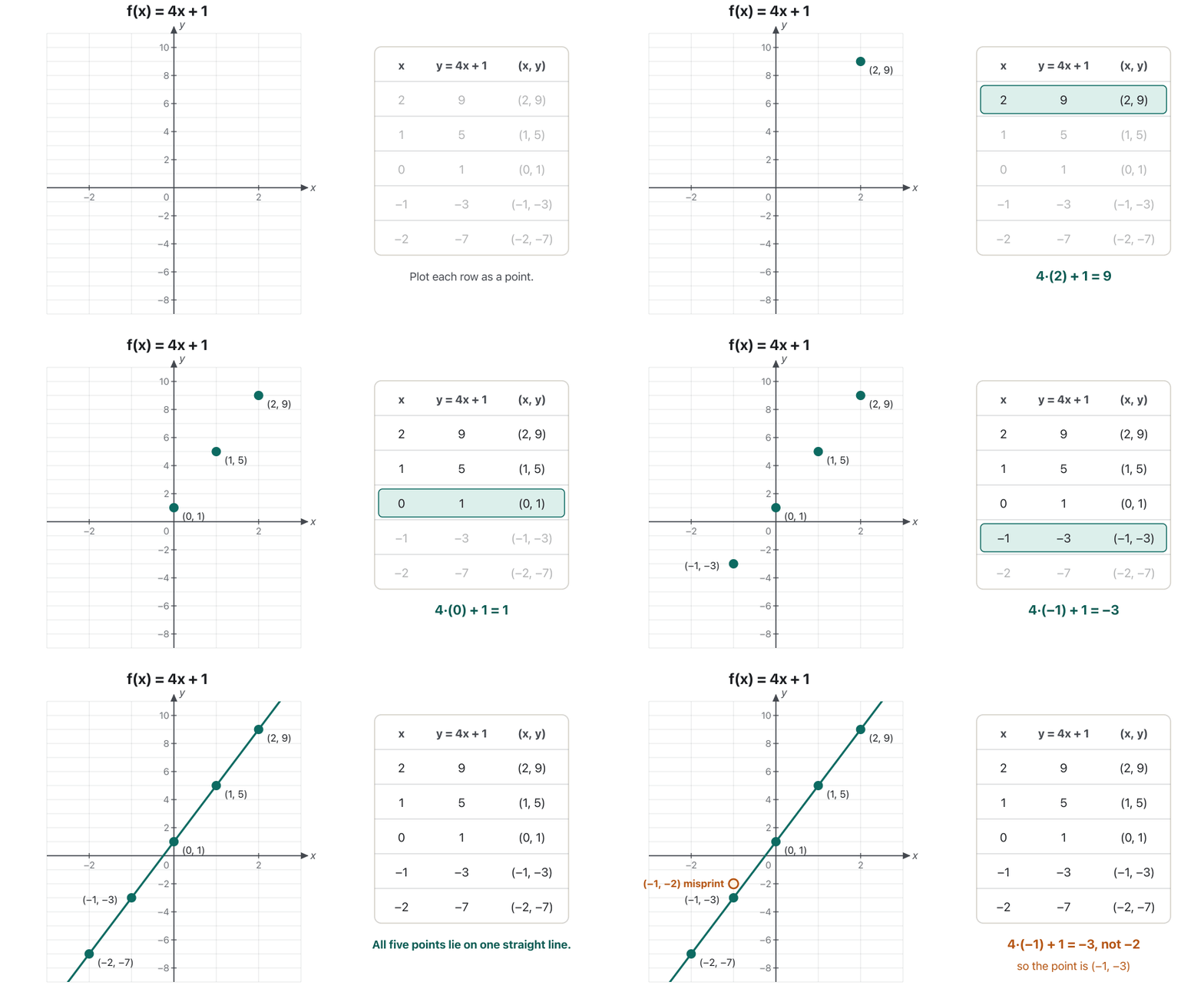
A linear function has the form , where a and b are constants. Its graph is always a straight line, so two points are enough to draw it. The notes use and plot five points from a table:
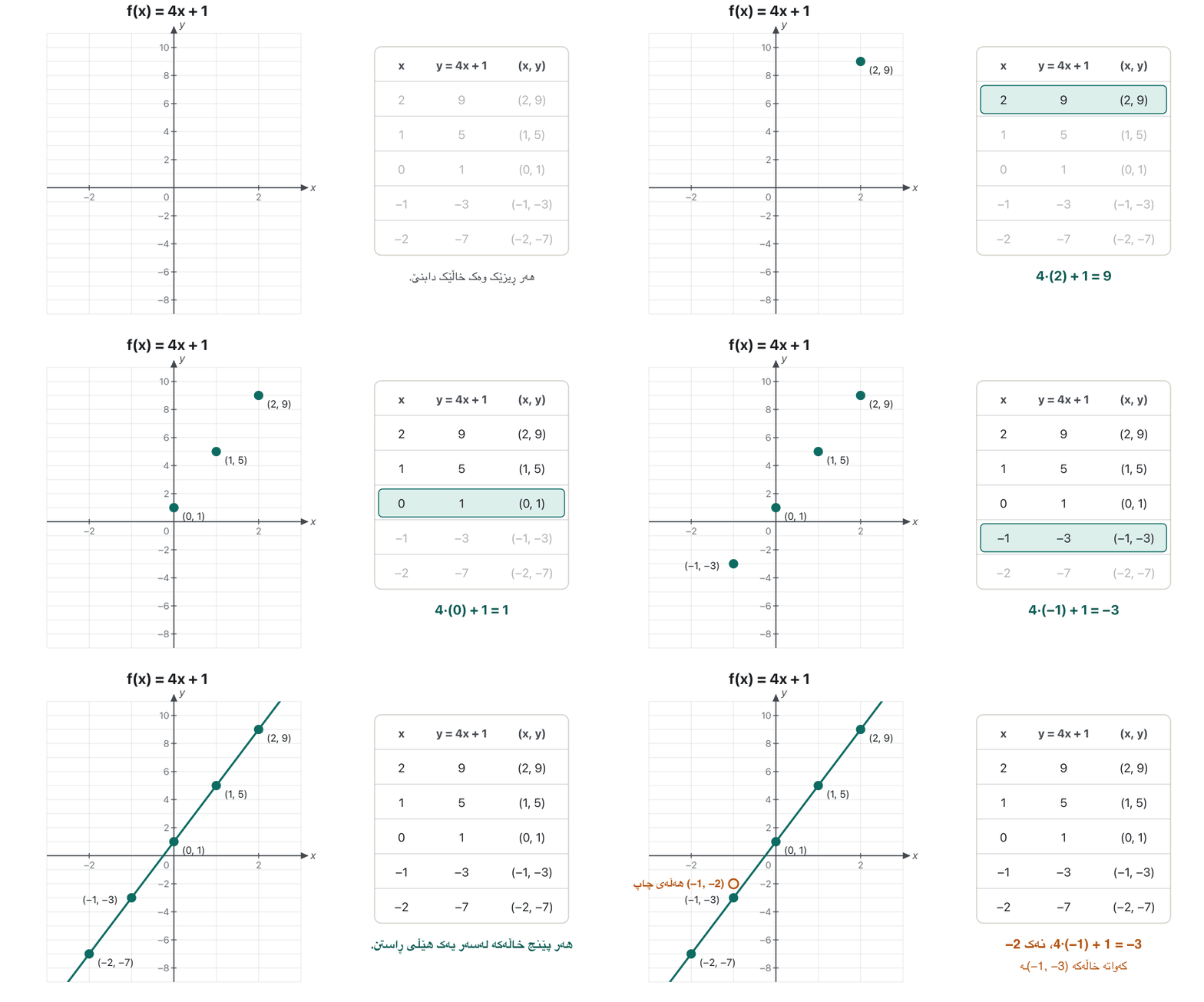
بە شێوەی ـە، کە a و b . هەمیشە هێڵێکی ڕاستە، بۆیە دوو خاڵ بەسە بۆ کێشانی. تێبینییەکان بەکار دەهێنن و پێنج خاڵ لە خشتەیەکەوە دادەنێن:
Linear functions: always a straight lineنەخشە هێڵییەکان: هەمیشە هێڵێکی ڕاست
Slope and intercept: what a and b meanلاری و یەکتربڕینی تەوەرە: a و b واتای چییە
Look at the table again: each time x grows by 1, y grows by 4. That fixed rate is the slope a. Between any two points of the line it is the same:
دیسان سەیری خشتەکە بکە: هەر جارێک x بە 1 زیاد دەکات، y بە 4 زیاد دەکات. ئەو ڕێژە جێگیرە و بە a دەنووسرێت. لە نێوان هەر دوو خاڵێکی هێڵەکەدا هەمان بەهایە:
A constant slope is exactly what makes the graph straight. The misprinted point fails this check: from to the slope would be 3, not 4.
جێگیر ڕێک ئەوەیە کە ڕاست دەکات. خاڵە هەڵە چاپکراوەکە لەم پشکنینەدا دەکەوێت: لە ـەوە بۆ دەبوو بە 3، نەک 4.
The number b is where the line crosses the y-axis: , so the y-intercept is ; for it is . If the line rises from left to right, if it falls, and if it is flat: a constant function.
ژمارەی b ئەو شوێنەیە کە هێڵەکە y دەبڕێت: ، بۆیە y خاڵی ـە؛ بۆ خاڵی ـە. ئەگەر هێڵەکە لە چەپەوە بۆ ڕاست بەرز دەبێتەوە، ئەگەر نزم دەبێتەوە و ئەگەر ئاسۆییە: نەخشەی نەگۆڕ.
In y = mx + c, m is the slope ('gradient') and c is where the line crosses the y-axis; sketches lines from equations.
لە ، m (gradient) و c ئەو خاڵەیە کە هێڵەکە y دەبڕێت؛ لە هێڵ دەکێشێت.
Whole video (4:53). British notation: y = mx + c and 'gradient' mean our f(x) = ax + b and 'slope'.
هەموو ڤیدیۆکە (4:53). نووسینی بەریتانییە: و «gradient» هەمان و ئێمەن.
Power functions: نەخشەکانی هێز:
A power function has the form : the variable x is the base and the exponent n is a fixed number. The notes ask you to draw three of them and find their domain and range. Start with (a) .
بە شێوەی ـە: x و n ژمارەیەکی جێگیرە. تێبینییەکان داوا دەکەن سێیان بکێشیت و و بدۆزیتەوە. بە (أ) دەست پێبکە.
- Tableخشتە
Squares of opposite numbers are equal: , , and .
دووجای دوو ژمارەی پێچەوانە یەکسانن: ، ، و .
- Shapeشێوە
The points form a U-shaped curve, a parabola, with its lowest point at the origin. The left half is the mirror image of the right half.
خاڵەکان چەماوەیەکی U-شێوە پێک دەهێنن، ، کە نزمترین خاڵی لە . نیوەی چەپ وێنەی ئاوێنەی نیوەی ڕاستە.
- Domain and rangeبوار و مەودا
You can square any real number, so . A square is never negative and every is reached (by ), so .
دەتوانیت هەر دووجا بکەیت، بۆیە . دووجا هەرگیز سالب نییە و دەگەینە هەموو ـێک (بە )، بۆیە .
Compares power functions with even and odd exponents: U-shaped curves for x², x⁴ and rising S-curves for x³, x⁵, with their symmetry.
بە جووت و تاک بەراورد دەکات: چەماوەی U-شێوە بۆ و ، چەماوەی S-شێوەی هەڵکشاو بۆ و ، لەگەڵ .
Plays 1:33–8:36: even versus odd powers and their symmetry; the rest of the lecture is about end behaviour and shifts.
لە 1:33 تا 8:36 پەخش دەبێت: جووت بەرامبەر تاک و ؛ ئەوەی تری وانەکە دەربارەی ڕەفتاری کۆتاییەکان و .
Power functions: نەخشەکانی هێز:
Odd powers: , , توانی تاک: ، ،
(b) . Now negative inputs give negative outputs: . The graph comes up from the bottom left, flattens through the origin and leaves at the top right. Every real number is a cube of exactly one real number, so the domain and the range are .
(ب) . ئێستا سالب سالب دەدەن: . لە خوار-چەپەوە دێتە سەرەوە، بە بە تەختی تێدەپەڕێت و لە سەر-ڕاستەوە دەڕوات. هەموو سێجای تەنها یەک ، بۆیە و هەردووکیان ـن.
Graph (b) in the notes draws , and together. All three pass through , and , because and for odd n. Between and 1 a higher power is flatter ( but ); beyond it is steeper ( but ).
هێڵکاریی (ب) لە تێبینییەکاندا ، و پێکەوە دەکێشێت. هەر سێکیان بە ، و ـدا تێدەپەڕن، چونکە بۆ nـی تاک و . لە نێوان و 1دا گەورەتر تەختترە ( بەڵام )؛ دوای لێژترە ( بەڵام ).
Power functions: نەخشەکانی هێز:
Root functions: , , نەخشەی ڕەگ: ، ،
(c) . A fraction in the exponent means a root: , , , and in general , for example .
(ج) . لە واتای ڕەگ دەدات: ، ، و بە گشتی ، بۆ نموونە .
- Even roots (, ) need : no real number squared (or raised to the 4th power) is negative. Domain , range .
- Odd roots () work for negative numbers too: because . Domain , range .
- All three pass through and . For a higher root grows more slowly: but and .
- ڕەگی جووت (، ) پێویستی بە هەیە: هیچ بە دووجاکردن (یان بە 4) نابێتە سالب. ، .
- ڕەگی تاک () بۆ کار دەکات: چونکە . ، .
- هەر سێکیان بە و ـدا تێدەپەڕن. بۆ ڕەگی بەرزتر هێواشتر گەورە دەبێت: بەڵام و .
Power functions: نەخشەکانی هێز:
Odd roots of negative numbersڕەگی تاکی ژمارە سالبەکان
Power functions: نەخشەکانی هێز:
Domains and ranges at a glanceبوار و مەودا بە یەک نیگا
The notes ask for the domain and range of every graph but do not list them. Here they are, read from the formulas and checked on the graphs:
تێبینییەکان داوای و هەموو هێڵکارییەک دەکەن بەڵام نایاننووسن. ئەمانەن، لە فۆرمولەکانەوە خوێندراونەتەوە و لەسەر هێڵکارییەکان پشکنراون:
| Function | Domain | Range | Shapeشێوە |
|---|---|---|---|
| U-shaped parabola U-شێوە | |||
| rises through the originبە بەرز دەبێتەوە | |||
| starts at the origin, right half onlyلە دەست پێدەکات، تەنها نیوەی ڕاست | |||
| both halvesهەردوو نیوە | |||
| straight lineهێڵی ڕاست |
Even and odd functionsنەخشە جووتەکان و نەخشە تاکەکان
The notes end chapter 2 with a remark: a function is
تێبینییەکان بەشی 2 بەم تێبینییە کۆتایی پێدەهێنن: وەک
- even if ;
- odd if .
- ئەگەر ؛
- ئەگەر .
This must hold for every x in the domain. To test a function, replace x by , simplify, and compare the result with and with .
ئەمە دەبێت بۆ هەموو xـێکی ڕاست بێت. بۆ تاقیکردنەوەی ، x بە بگۆڕە، سادەی بکەرەوە و ئەنجامەکە لەگەڵ و بەراورد بکە.
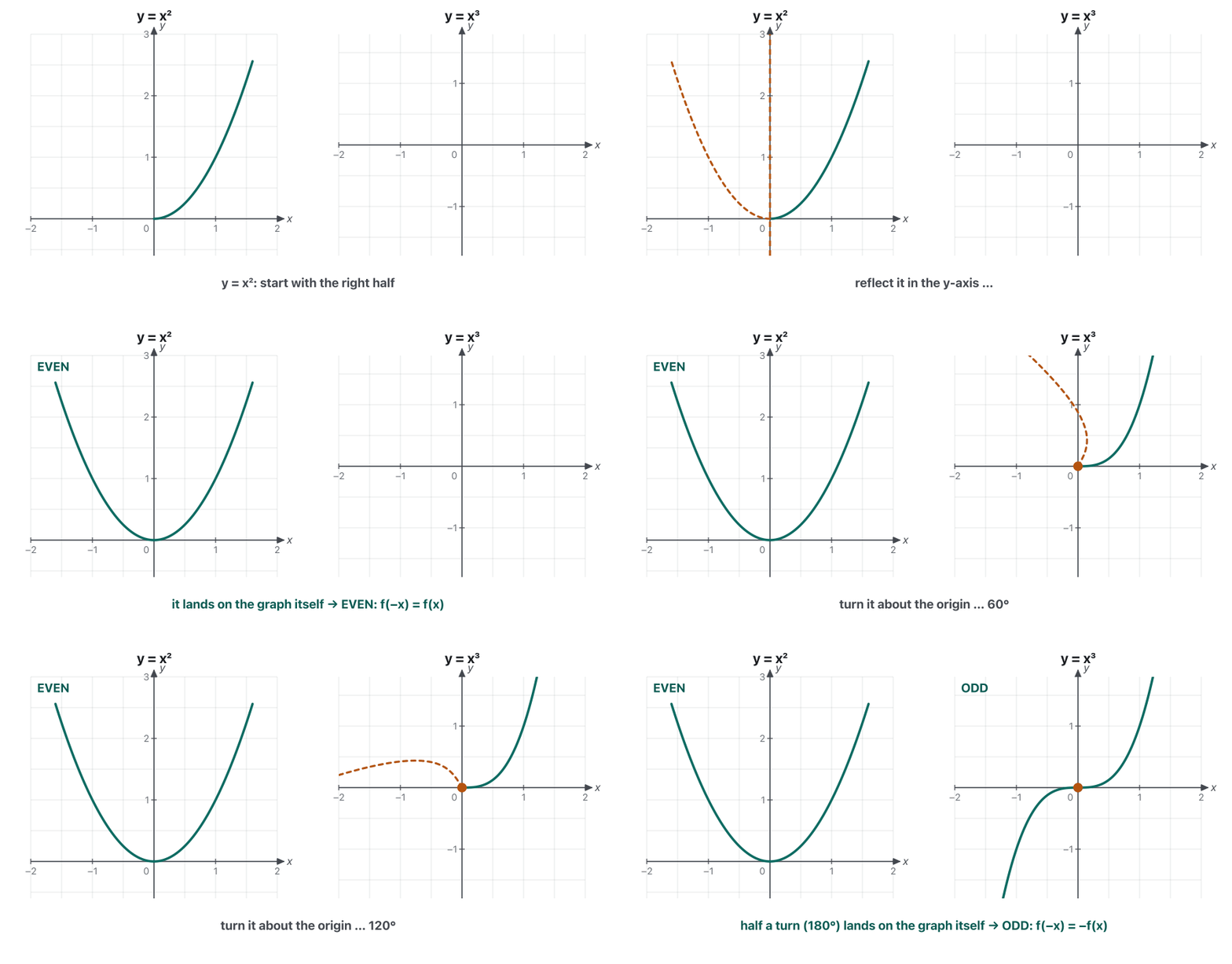
A function with for every x in its domain. Its graph is a mirror image across the y-axis.
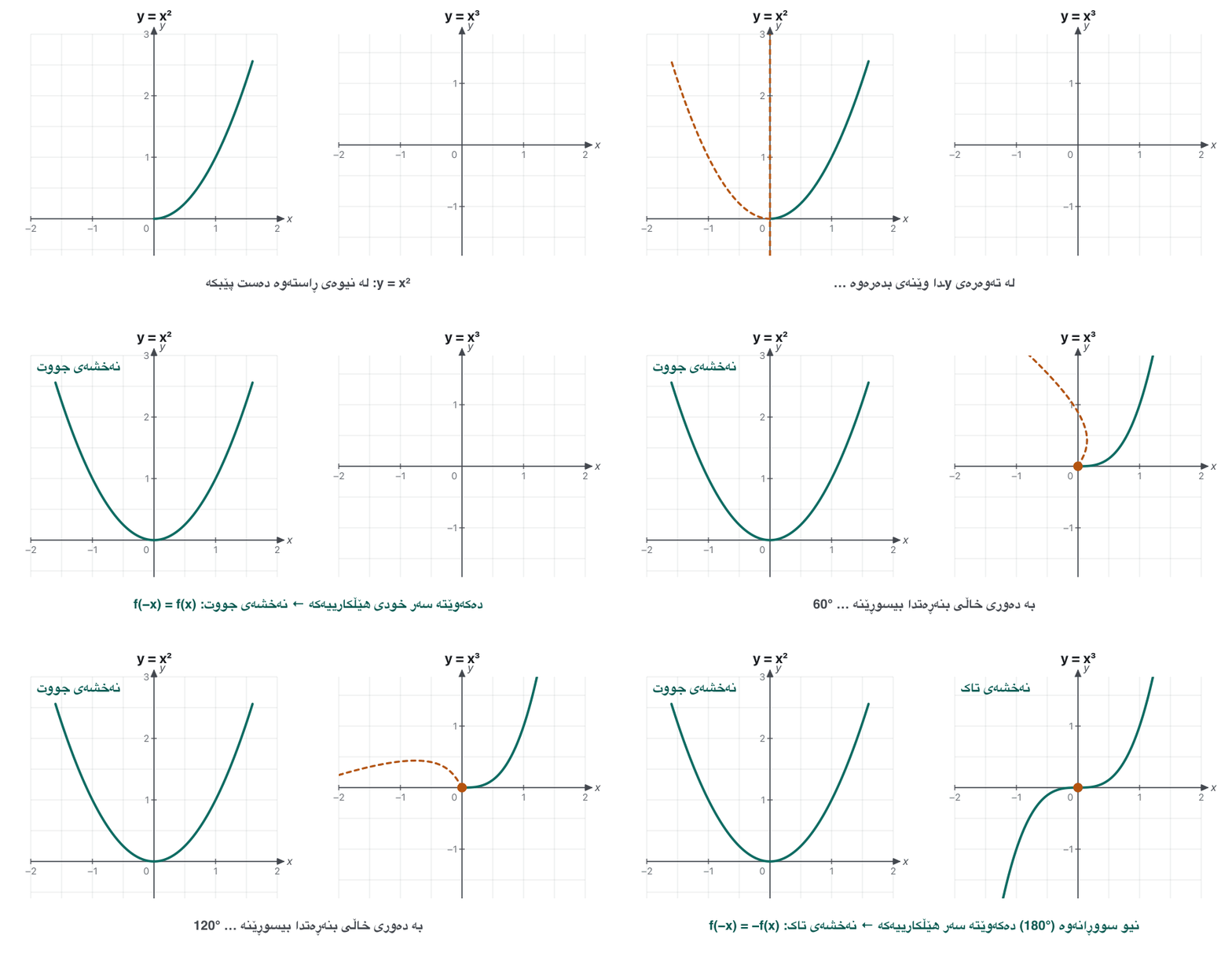
نەخشەیەکە کە بۆ هەموو x لە بوارەکەیدا . هێڵکارییەکەی بەرامبەر بە تەوەرەی y وەک وێنەی ئاوێنە .
A function with for every x in its domain. Its graph looks the same after a half turn (180°) about the origin.
نەخشەیەکە کە بۆ هەموو x لە بوارەکەیدا . هێڵکارییەکەی دوای نیو سووڕانەوە (180°) بە دەوری وەک خۆی دەمێنێتەوە.
Even and odd functionsنەخشە جووتەکان و نەخشە تاکەکان
What even and odd look likeجووت و تاک چۆن دەردەکەون
Even = mirror in the y-axis. If is on the graph, then , so is on it too: the left half is the mirror image of the right half. Odd = half a turn about the origin. If is on the graph, then , so is on it too: turning the graph through about the origin gives the same graph.
جووت = ئاوێنە لە y. ئەگەر لەسەر بێت، ئەوا ، بۆیە ـیش لەسەریەتی: نیوەی چەپ وێنەی ئاوێنەی نیوەی ڕاستە. تاک = نیو سووڕانەوە بە دەوری . ئەگەر لەسەر بێت، ئەوا ، بۆیە ـیش لەسەریەتی: بە بە دەوری هەمان هێڵکاری دەدات.
The names come from the powers: with an even n (, ) is an even function, and with an odd n (, ) it is an odd function.
ناوەکان لە هاتوون: بە nـی جووت (، ) و بە nـی تاک (، ) .
Shows with graphs that even functions mirror in the y-axis and odd functions turn half a circle about the origin.
بە وێنە: لە y وەک ئاوێنە هاوجێن و بە نیو خول سووڕانەوە بە دەوری وەک خۆیان دەمێننەوە.
Plays 4:15–15:32: even versus odd pictures and symmetry; the algebraic definitions follow later in the lecture.
لە 4:15 تا 15:32 پەخش دەبێت: وێنەی بەرامبەر و ؛ پێناسە جەبرییەکان دواتر لە وانەکەدا دێن.
Even and odd functionsنەخشە جووتەکان و نەخشە تاکەکان
Examples: , and functions that are neitherنموونە: ، و نەخشەکان کە هیچیان نین
The notes' example: is even or odd? And ?
نموونەی تێبینییەکان: ئایا جووتە یان تاک؟ و ؟
So is even and is odd. A minus sign squared disappears; a minus sign cubed stays.
کەواتە و . نیشانەی سالب کاتێک دووجا دەکرێت نامێنێت؛ کاتێک سێجا دەکرێت دەمێنێتەوە.
Most functions are neither. For : , while and , so equals neither. Adding a constant to an odd function usually breaks the symmetry: is neither (it is shifted up). The domain must also be symmetric: is neither, because does not exist. Only the zero function is both even and odd.
زۆربەی هیچیان نین. بۆ : ، بەڵام و ، بۆیە یەکسان نییە بە هیچ کامیان. زیادکردنی بۆ زۆرجار تێک دەدات: هیچیان نییە (ئەمە ـە کە بۆ سەرەوە کشاوەتەوە). دەبێت هاوجێ بێت: هیچیان نییە، چونکە بوونی نییە. تەنها سفر هەم جووتە و هەم تاک.
Even and odd functionsنەخشە جووتەکان و نەخشە تاکەکان
Homework: and ئەرکی ماڵەوە: و
Which of and is even, and which is odd? (Use the unit circle.)
کام لە و جووتە و کامیان تاکە؟ (بازنەی یەکە بەکار بهێنە.)
Hintئاماژە
Compare the points of the angles x and on the unit circle.
خاڵەکانی گۆشەی x و لەسەر بەراورد بکە.
Show answerوەڵامەکە پیشان بدە
On the unit circle the angle gives the point . The angle is the same turn downwards, so its point is the mirror image in the x-axis: the same x-coordinate and the opposite y-coordinate.
لەسەر گۆشەی خاڵی دەدات. گۆشەی هەمان سووڕانەوەیە بەڵام بەرەو خوارەوە، بۆیە خاڵەکەی وێنەی ئاوێنەیە لە xـدا: هەمان x و yـی پێچەوانە.
So cosine is even and sine is odd. This matches the graphs: the cosine wave is a mirror image in the y-axis, and the sine wave looks the same after half a turn about the origin.
کەواتە و . ئەمە لەگەڵ هێڵکارییەکان دەگونجێت: شەپۆلی وێنەی ئاوێنەیە لە yـدا و شەپۆلی دوای نیو سووڕانەوە بە دەوری هەمان شێوەیە.
Common mistakesهەڵە باوەکان
| Mistakeهەڵە | Why it is wrongبۆچی هەڵەیە | Correctڕاست |
|---|---|---|
| Copying a table point wrongly, such as for خاڵێکی خشتە بە هەڵە نووسینەوە، وەک بۆ | The point must use the computed y.خاڵەکە دەبێت yـی حیسابکراو بەکار بهێنێت. | Check each point with the formula, or check that the slope stays the same.هەر خاڵێک بە فۆرمولەکە بپشکنە، یان بپشکنە کە وەک خۆی دەمێنێتەوە. |
| Drawing to the left of the y-axisکێشانی لە لای چەپی y | Square roots of negative numbers are not real. ڕاستی نین. | starts at ; only odd roots continue left. لە ـەوە دەست پێدەکات؛ تەنها ڕەگی تاک بەرەو چەپ بەردەوام دەبێت. |
| " does not exist"« بوونی نییە» | .. | |
| Deciding from one point: has , "so it is even"بڕیاردان لە یەک خاڵەوە: بۆ ، ، «بۆیە جووتە» | The rule must hold for every x.یاساکە دەبێت بۆ هەموو xـێک ڕاست بێت. | : it is odd.: تاکە. |
| Mixing up and تێکەڵکردنی و | For : but .بۆ : بەڵام . | : change the input. : change the sign of the output.: بگۆڕە. : نیشانەی بگۆڕە. |
| "Every function is even or odd"«هەموو جووتە یان تاک» | and are neither. و هیچیان نین. | Most functions are neither.زۆربەی هیچیان نین. |
Exercisesڕاهێنانەکان
Make a table for at . State the slope and the y-intercept.
خشتەیەک بۆ لە ـدا دروست بکە. و y بنووسە.
Show answerوەڵامەکە پیشان بدە
Points , , , . Each step right goes 2 down: slope . y-intercept .
خاڵەکان ، ، ، . هەر هەنگاوێک بۆ ڕاست 2 بۆ خوارەوە دەچێت: . y .
Classify: (a) (b) (c) (d) (e)
پۆلێن بکە: (أ) (ب) (ج) (د) (هـ)
Show answerوەڵامەکە پیشان بدە
| Function | Resultئەنجام | |
|---|---|---|
| (a) | oddتاک | |
| (b) | evenجووت | |
| (c) | neitherهیچیان | |
| (d) | oddتاک | |
| (e) | evenجووت |
In (c), is neither nor .
لە (ج)ـدا نە ـە و نە .
Which is larger: (a) or ? (b) or ? Explain with the graphs of and .
کامیان گەورەترە: (أ) یان ؟ (ب) یان ؟ بە هێڵکارییەکانی و ڕوونی بکەرەوە.
Show answerوەڵامەکە پیشان بدە
(a) : between 0 and 1 the higher power is lower. (b) : beyond 1 the higher power is higher. The two graphs cross at .
(أ) : لە نێوان 0 و 1دا گەورەتر نزمترە. (ب) : دوای 1 گەورەتر بەرزترە. دوو هێڵکارییەکە لە ـدا یەکتر دەبڕن.
Find (a) (b) (c) (d)
بدۆزەوە: (أ) (ب) (ج) (د)
Show answerوەڵامەکە پیشان بدە
(a) , because . (b) 2, because . (c) . (d) Not a real number: an even root of a negative number.
(أ) ، چونکە . (ب) 2، چونکە . (ج) . (د) نییە: ڕەگی جووتی .
Make a table, plot the points and sketch: (a) for ; (b) , after finding where it is 0; (c) , after finding where it is 0 and where it crosses the y-axis.
خشتەیەک دروست بکە، خاڵەکان دابنێ و بیکێشە: (أ) بۆ ؛ (ب) ، دوای ئەوەی دەیدۆزیتەوە لە کوێ 0ـە؛ (ج) ، دوای ئەوەی دەیدۆزیتەوە لە کوێ 0ـە و لە کوێ y دەبڕێت.
Hintئاماژە
A parabola is symmetric, so its vertex lies halfway between two points at the same height, for example halfway between its two zeros. A product is 0 exactly when one of its factors is 0.
هەیە، بۆیە ڕێک لە نیوەڕاستی دوو خاڵدایە کە هەمان بەرزییان هەیە، بۆ نموونە لە نیوەڕاستی دوو سفرەکەیدا. لێکدان ڕێک کاتێک 0ـە کە یەکێک لە ژمارە لێکدراوەکانی 0 بێت.
Show answerوەڵامەکە پیشان بدە
(a) , so the vertex is halfway, at : . The number in front of is negative, so the parabola opens downwards and is its highest point. On the graph starts at and ends at ; its range there is . (The shortcut gives the same vertex.)
(أ) ، بۆیە لە نیوەڕاستدایە، لە : . ژمارەی پێش سالبە، بۆیە بەرەو خوارەوە کراوەیە و بەرزترین خاڵیەتی. لەسەر هێڵکارییەکە لە ـەوە دەست پێدەکات و لە ـدا کۆتایی دێت؛ لەوێدا ـە. (ڕێگای کورتی هەمان دەدات.)
(b) , so the zeros are and 3, and the y-intercept is . The vertex is halfway between the zeros, at : . The parabola opens upwards; its range is .
(ب) ، بۆیە سفرەکان و 3ن و y ـە. لە نیوەڕاستی سفرەکاندایە، لە : . بەرەو سەرەوە کراوەیە؛ ـە.
(c) The zeros are , 1 and 2 (one bracket is 0), and . Test one number in each gap: , , , . So the graph comes up from the lower left and crosses at , turns and comes down through 1, turns again and goes up through 2, then rises to the right like far from the origin. (Just left of it rises a little above 2.)
(ج) سفرەکان ، 1 و 2ن (یەکێک لە کەوانەکان 0ـە) و . لە هەر بۆشاییەکدا ژمارەیەک تاقی بکەرەوە: ، ، ، . کەواتە هێڵکارییەکە لە خوارەوەی چەپەوە بەرز دەبێتەوە و لە ـدا تەوەرەکە دەبڕێت، پاشان دەگەڕێتەوە و بە 1ـدا دادەبەزێت، دیسان دەگەڕێتەوە و بە 2ـدا بەرز دەبێتەوە، ئینجا وەک لە دوور لە بەرەو ڕاست بەرز دەبێتەوە. (هەر لە چەپی ـدا کەمێک لە 2 بەرزتر دەبێت.)
Summaryپوختە
- is a straight line with slope a (rise per step right) and y-intercept . For the table point is .
- : parabola, domain , range . : domain and range , through , flatter near 0 and steeper beyond as the power grows.
- . Even roots need ; odd roots work for every real x.
- Even: , mirror in the y-axis (, , ). Odd: , half-turn about the origin (, ). Most functions are neither.
- هێڵێکی ڕاستە بە a (بەرزبوونەوە بۆ هەر هەنگاوێک بۆ ڕاست) و y . بۆ خاڵی خشتەکە ـە.
- : ، ، . : و ، بە ـدا، بە گەورەبوونی لە نزیک 0 تەختتر و دوای لێژتر.
- . ڕەگی جووت پێویستی بە هەیە؛ ڕەگی تاک بۆ هەموو xـێکی ڕاستی کار دەکات.
- جووت: ، ئاوێنە لە y (، ، ). تاک: ، نیو سووڕانەوە بە دەوری (، ). زۆربەی هیچیان نین.
Why is the graph of straight?بۆچی هێڵکاریی نەخشەی ڕاستە؟
Because the slope between any two of its points is the same number a.
چونکە لە نێوان هەر دوو خاڵێکیدا هەمان ژمارەی aـیە.
Why does have domain but does not?بۆچی بواری ـە بەڵام هی نا؟
A negative number has a real cube root () but no real square root, since squares are never negative.
ڕاستی هەیە () بەڵام ڕاستی نییە، چونکە دووجا هەرگیز سالب نییە.
How do you test whether a function is even or odd?چۆن تاقی دەکەیتەوە کە نەخشەیەک جووتە یان تاک؟
Compute for a general x and compare it with (even) and (odd).
بۆ xـێکی گشتی حیساب بکە و لەگەڵ (جووت) و (تاک) بەراوردی بکە.
Lesson complete!وانەکە تەواو بوو!
Well done. Review the key terms, then go on to the next lesson.دەستخۆش. سەیرێکی زاراوە سەرەکییەکان بکەرەوە، پاشان بڕۆ بۆ وانەی داهاتوو.
Key termsزاراوە سەرەکییەکان
The Six Trigonometric Functionsشەش نەخشە سێگۆشەییەکە
Related lecturesوانە پەیوەندیدارەکان
- Equal, Constant, One-to-One and Onto Functionsنەخشەی یەکسان، نەخشەی نەگۆڕ، نەخشەی یەک بۆ یەک و نەخشەی گشتگر
- Shifting Graphsکشانەوەی هێڵکاری
- Stretching, Compressing and Reflecting Graphsدرێژکردنەوە، پەستاندن و وێنەدانەوەی هێڵکاری
- The Six Trigonometric Functionsشەش نەخشە سێگۆشەییەکە
- Operators and Expressionsکارپێکەرەکان و دەربڕینەکان
References and further readingسەرچاوەکان و خوێندنەوەی زیاتر
- OpenStax Calculus Volume 1, 1.2 Basic Classes of Functions (linear functions and slope, power functions, root functions)
- OpenStax Calculus Volume 1, 1.1 Review of Functions (symmetry of functions: even and odd)
- OpenStax College Algebra 2e, 1.3 Radicals and Rational Exponents (nth roots, odd roots of negative numbers)
- Python documentation: math — Mathematical functions (math.cbrt, new in 3.11)
This lecture is a first edition. The Kurdish text and terminology are waiting for review by Kurdish IT teachers.ئەم وانەیە چاپی یەکەمە. دەقە کوردییەکە و زاراوەکانی چاوەڕێی پێداچوونەوەی مامۆستایانی کوردی بواری IT ن.