Chapterبەش 3 · Lectureوانە 3.1
What Is a Function?نەخشە چییە؟
A function is a rule that gives every input exactly one output. Meet ordered pairs, the Cartesian product and relations, the notation , independent and dependent variables, the coordinate plane and the vertical line test.
یاسایەکە کە بە هەر تەنها یەک دەدات. ، و دەناسیت، هەروەها نووسینی ، و ، و .
What you will learnچی فێر دەبیت
- Write the Cartesian product of two small sets and explain what an ordered pair is.
- Decide whether a relation is a function, from its pairs or from an arrow diagram.
- Use the notation and , and name the independent and dependent variables.
- Plot ordered pairs in the coordinate plane and use the vertical line test.
- Explain how a mathematical function differs from a function in a program.
- دوو بچووک بنووسە و ڕوونی بکەرەوە چییە.
- لە جووتەکانییەوە یان لە هێڵکارییەکی تیرەوە بڕیار بدە ئایا یان نا.
- نووسینی و بەکار بهێنە و و دیاری بکە.
- لەسەر دابنێ و بەکار بهێنە.
- ڕوونی بکەرەوە لە بیرکاریدا چ جیاوازییەکی لەگەڵ لە هەیە.
A rule that always gives one answerیاسایەک کە هەمیشە یەک وەڵام دەدات
Many things in daily life follow a fixed rule: you give something in, and one definite thing comes out. Dial a phone number and exactly one phone rings. Point at a drink on a tea-house menu and the menu shows exactly one price. In mathematics a rule like this is called a function.
زۆر شت لە ژیانی ڕۆژانەدا یاسایەکی جێگیر پەیڕەو دەکەن: شتێک دەدەیت و تەنها یەک شتی دیاریکراو دێتە دەرەوە. ژمارەی مۆبایلێک لێ بدە، تەنها یەک مۆبایل زەنگ لێ دەدات. لە لیستی چایخانەدا دەست بخە سەر خواردنەوەیەک، لیستەکە تەنها یەک نرخی بۆ پیشان دەدات. لە بیرکاریدا یاسایەکی لەم جۆرە پێی دەوترێت .
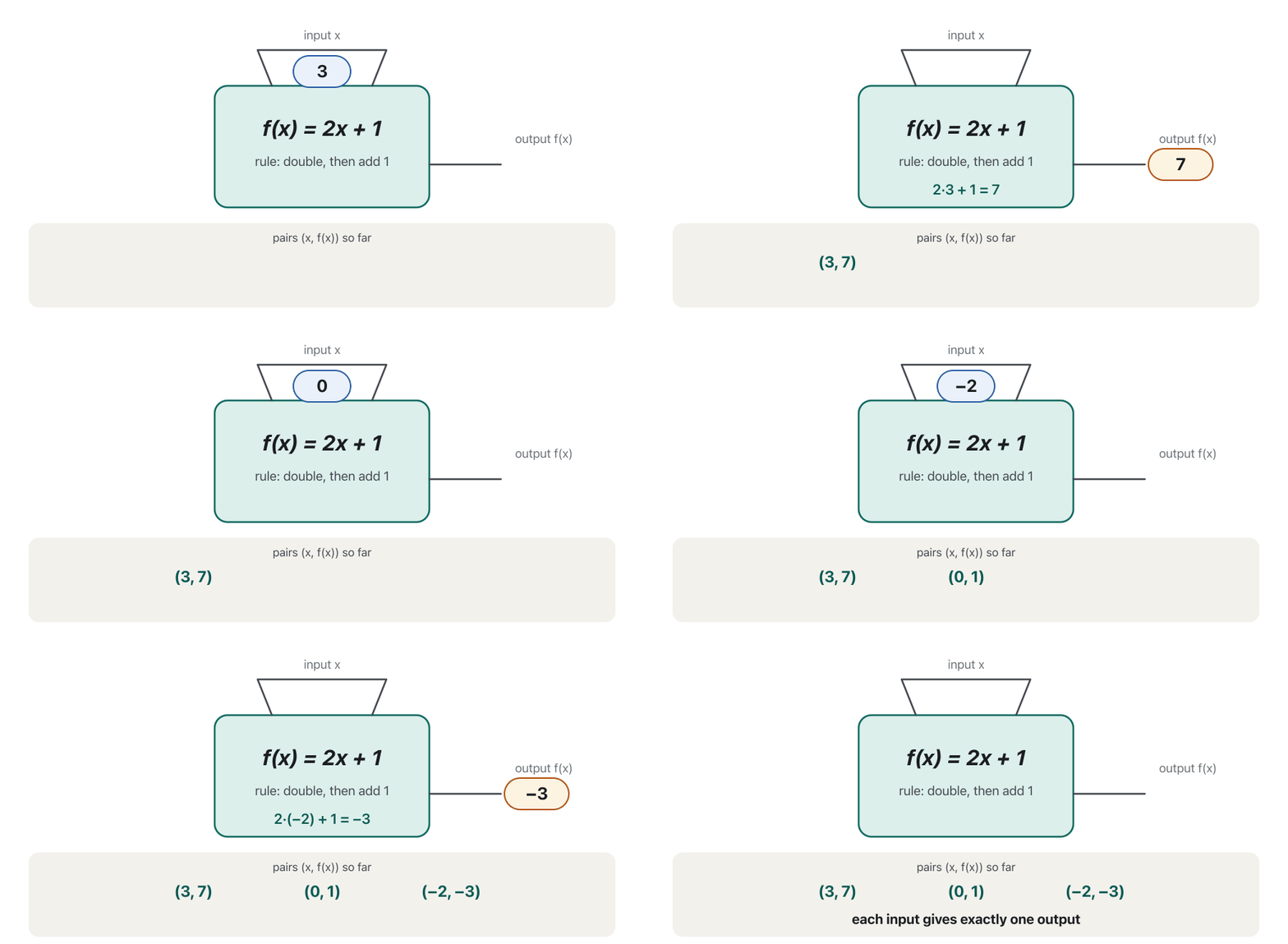
The machine in the animation doubles a number and then adds 1. We write the rule as . Put in 3 and you get 7; put in 3 again tomorrow and you get 7 again. Each time we can write down the pair (input, output): , , . Later in this lesson you will see that a function is exactly this collection of pairs.
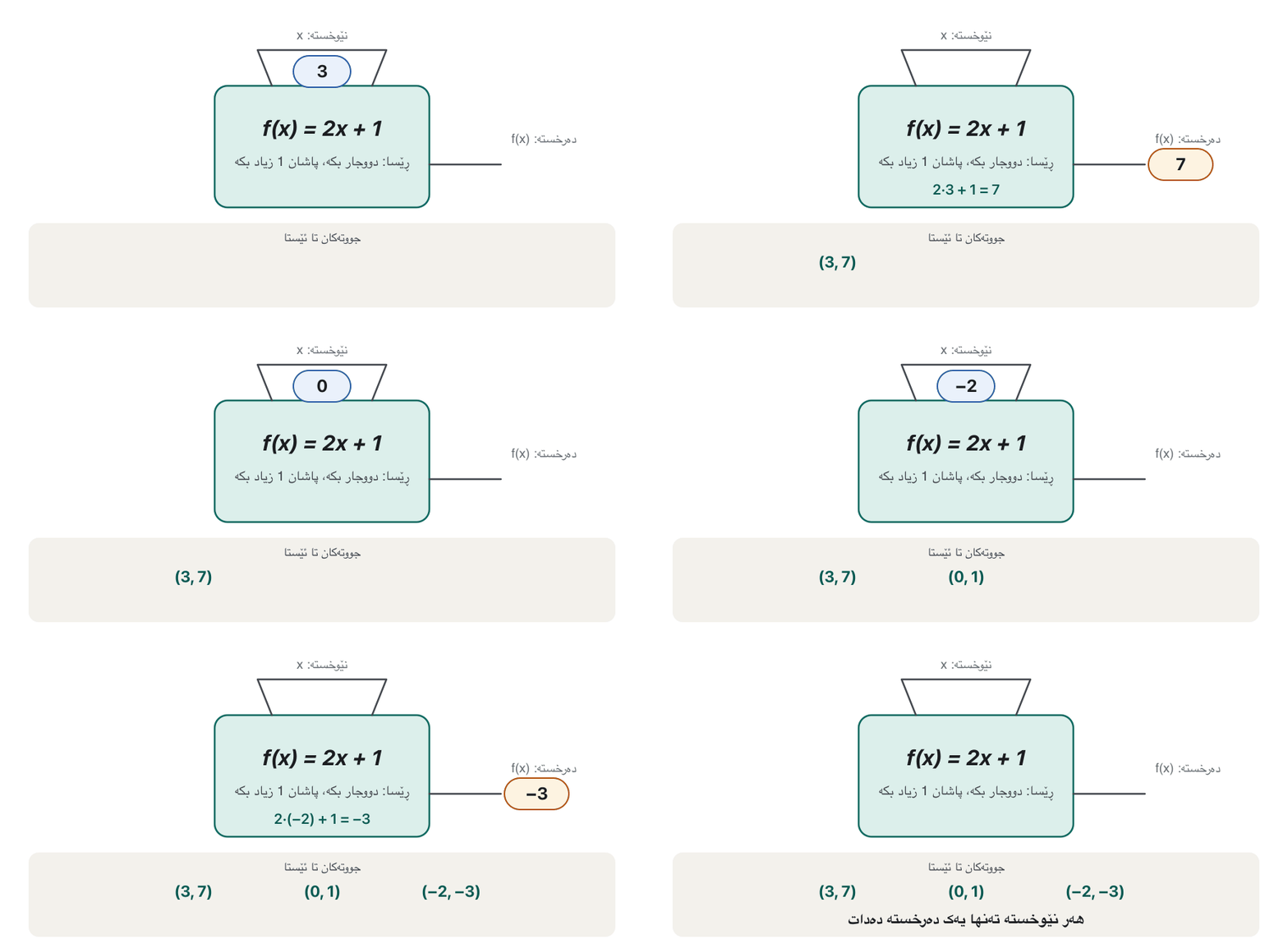
ئامێرەکەی ناو وێنە جووڵاوەکە ژمارەیەک دووجار دەکات و پاشان 1ـی بۆ زیاد دەکات. ئەم یاسایە وا دەنووسین: . 3 بخەرە ژوورەوە، 7 وەردەگریت؛ سبەینێ دیسان 3 بخەرە ژوورەوە، دیسان 7 وەردەگریتەوە. هەر جارێک دەتوانین جووتی (، ) بنووسین: ، و . لە درێژەی ئەم وانەیەدا دەبینیت کە بریتییە لە ئەم جووتانە.
A rule that always gives one answerیاسایەک کە هەمیشە یەک وەڵام دەدات
A snack machine: one button, one snackئامێری فرۆشتن: یەک دوگمە، یەک خواردن
A snack machine in the university corridor is a good picture of a function. Each button is an input and gives one fixed snack, the output: press B2 and you get an orange juice, every time. Two buttons may give the same snack; that is fine. But if one button sometimes gave juice and sometimes gave biscuits, nobody could trust it. Such a machine would not be a function.
ئامێری فرۆشتنی خۆکار لە ڕاڕەوی زانکۆدا وێنەیەکی باشی . هەر دوگمەیەک و یەک خواردنی دیاریکراو دەدات، کە : B2 دابگرە، هەموو جارێک شەربەتی پرتەقاڵ وەردەگریت. دەکرێت دوو دوگمە هەمان خواردن بدەن؛ ئەمە کێشە نییە. بەڵام ئەگەر یەک دوگمە جارێک شەربەت و جارێکی تر بسکیت بدات، کەس متمانەی پێ ناکات. ئامێرێکی وا نییە.
Where the analogy stops workingسنووری ئەم نموونەیە
A real machine can be empty, keep your money or break down, and it only accepts certain coins. A mathematical function never fails: for every allowed input its output is already decided. The machine is also only a picture of the rule; mathematicians think of the function as the whole set of input–output pairs.
ئامێری ڕاستەقینە دەکرێت بەتاڵ بێت، پارەکەت بخوات یان تێک بچێت، هەروەها تەنها هەندێک جۆری پارە وەردەگرێت. لە بیرکاریدا هەرگیز شکست ناهێنێت: بۆ هەر ڕێگەپێدراو، پێشتر دیاری کراوە. ئامێرەکە تەنها وێنەیەکی یاساکەیە؛ بیرکارزانەکان وەک هەموو جووتەکانی و دەبینن.
A rule that always gives one answerیاسایەک کە هەمیشە یەک وەڵام دەدات
One function, four waysیەک نەخشە، چوار شێوە
The same function can be given in four ways, and each way is good for something. Here is the machine's rule, , in all four:
هەمان دەتوانرێت بە چوار شێوە بدرێت و هەر شێوەیەک بۆ شتێک باشە. ئەمە یاساکەی ئامێرەکەیە، ، بە هەر چوار شێوەکە:
- Formula: short and exact; it gives the output for any input.
- Table: quick to read, but it shows only some inputs, like a bus timetable.
- Graph: shows the shape at a glance; you will plot points later in this lesson.
- Words: how people explain a rule in daily life; easy to understand, but often less exact.
- فۆرمولە: کورت و وردە؛ بۆ هەر دەدات.
- خشتە: خێرا دەخوێنرێتەوە، بەڵام تەنها هەندێک پیشان دەدات، وەک خشتەی کاتی پاس.
- هێڵکاری: شێوەکە بە یەک نیگا پیشان دەدات؛ لە درێژەی ئەم وانەیەدا خاڵ دادەنێیت.
- وشە: ئەو شێوەیەیە کە خەڵک لە ژیانی ڕۆژانەدا یاسایەکی پێ ڕوون دەکەنەوە؛ ئاسانە، بەڵام زۆرجار کەمتر وردە.
Ordered pairs and the Cartesian productجووتە ڕێکخراوەکان و لێکدانی دیکارتی
An ordered pair is two objects written in a fixed order: first x, then y. The order matters: and are different pairs, just as "2 kg of sugar for 5,000 dinars" is not the same as "5 kg for 2,000".
بریتییە لە دوو شت کە بە ڕیزبەندییەکی جێگیر دەنووسرێن: سەرەتا x، پاشان y. ڕیزبەندییەکە گرنگە: و دوو جووتی جیاوازن، هەروەک چۆن «2 کیلۆ شەکر بە 5,000 دینار» هەمان «5 کیلۆ بە 2,000» نییە.
Take two sets X and Y. If we pair every element of X with every element of Y, we get the Cartesian product (read "X cross Y"):
دوو X و Y وەربگرە. ئەگەر هەموو X لەگەڵ هەموو Y جووت بکەین، بەدەست دێت (دەخوێنرێتەوە «X کرۆس Y»):
The set of all ordered pairs whose first entry comes from X and whose second entry comes from Y.
هەموو ئەو کە یەکەم بەشیان لە X و دووەم بەشیان لە Yـەوە هاتووە.
Shows what an ordered pair is and builds the Cartesian product A × B by pairing every element of A with every element of B.
چییە و چۆن دروست دەکرێت: هەر A لەگەڵ هەر B جووت دەکرێت.
Whole video (5:11): sets, ordered pairs (2:00), the Cartesian product (3:21) and set-builder notation (4:08).
هەموو ڤیدیۆکە (5:11): ، (2:00)، (3:21) و (4:08).
Ordered pairs and the Cartesian productجووتە ڕێکخراوەکان و لێکدانی دیکارتی
A Cartesian product, step by stepلێکدانی دیکارتی هەنگاو بە هەنگاو
Let and . Pair 1 with a and with b, then 2 with a and with b, then 3 with a and with b:
با و بن. 1 لەگەڵ a و لەگەڵ b جووت بکە، پاشان 2 لەگەڵ a و b، پاشان 3 لەگەڵ a و b:
A set with m elements times a set with n elements always gives pairs. Swapping the sets swaps every pair: . These are different pairs, so in general .
بە m جارانی بە n هەمیشە جووت دەدات. ئەگەر جێی دوو بگۆڕیت، هەموو جووتەکان پێچەوانە دەبنەوە: . ئەمانە جووتی جیاوازن، بۆیە بە گشتی .
Relations: choosing some of the pairsپەیوەندییەکان: هەڵبژاردنی هەندێک لە جووتەکان
The product contains every possible pair. Usually only some pairs interest us. Any subset of is called a relation from X to Y. A relation says which elements of X are linked with which elements of Y.
هەموو جووتێکی گونجاو لەخۆ دەگرێت. زۆربەی کات تەنها هەندێک لە جووتەکان گرنگن بۆمان. هەر پێی دەوترێت لە Xـەوە بۆ Y. دەڵێت کام X بە کام Yـەوە بەستراوە.
Any of a : a set of ordered pairs that links some elements of X with some elements of Y.
هەر : کۆمەڵەیەک لە جووتە ڕێکخراو کە هەندێک ئەندامی X بە هەندێک ئەندامی Yـەوە دەبەستێتەوە.
Example: let and . The relation "x is less than y" keeps only the pairs with : . That is 6 of the 12 pairs of .
نموونە: با و بن. «x لە y بچووکترە» تەنها ئەو جووتانە دەهێڵێتەوە کە : . ئەمە 6 جووتە لە 12 جووتەکەی .
The definition of a functionپێناسەی نەخشە
A function is a relation with one strict rule. Let X and Y be two non-empty sets. A subset f of is called a function from X to Y when every x in X appears in exactly one pair of f. That partner y is written .
بە یەک یاسای توند. با X و Y دوو نابەتاڵ بن. f لە پێی دەوترێت لە Xـەوە بۆ Y ئەگەر هەر xـێکی X تەنها لە یەک جووتی ی fـدا دەربکەوێت. ئەو هاوبەشە y بە دەنووسرێت.
Read: for every x in X there exists exactly one y in Y such that is in f; we write this y as . The symbol means "for every" and means "there is exactly one".
دەخوێنرێتەوە: بۆ هەر xـێک لە X تەنها یەک y لە Y هەیە کە لە fـدا بێت؛ ئەم y بە دەنووسین. هێمای واتە «بۆ هەر» و واتە «تەنها یەک دانە هەیە».
Look at f again: 2 and 3 both point to b, and nothing points to c. Both are allowed. The definition only talks about the elements of X: each must send out one arrow, never zero and never two.
دیسان سەیری f بکە: 2 و 3 هەردووکیان ئاماژە بۆ b دەکەن و هیچ تیرێک ناچێتە c. هەردووکیان ڕێگەپێدراون. پێناسەکە تەنها باسی X دەکات: هەر یەکەیان دەبێت یەک تیر بنێرێت، نە سفر و نە دوو.
A relation is a set of ordered pairs; it is a function when no input has two different outputs. Many quick examples.
واتە لە ؛ کاتێک دەبێتە کە هیچ دوو جیاوازی نەبێت. بە چەندین نموونەی خێرا.
Plays 0:00–4:17: relations as sets of pairs, then how to tell if a relation is a function; ends before the website plug.
لە 0:00 تا 4:17 پەخش دەبێت: وەک جووتەکان، پاشان چۆن دەزانیت یان نا؛ پێش ڕیکلامی خۆی کۆتایی دێت.
The definition of a functionپێناسەی نەخشە
Notation and other namesشێوەی نووسین و ناوەکانی تر
We write a function from X to Y in either of these ways, and read it "f maps X into Y" or "f is a function from X to Y":
لە Xـەوە بۆ Y بەم دوو شێوەیە دەنووسین و دەیخوێنینەوە «f، X دەبات بۆ ناو Y» یان «f لە Xـەوە بۆ Y»:
Books also use other names for a function: mapping, transformation and operator. They all mean the same idea: every element of X is sent to one element of Y. (In programming, "operator" usually means a symbol such as + or <, so in a computing text read it carefully.)
کتێبەکان ناوی تریش بۆ بەکار دەهێنن: mapping، transformation و operator. هەموویان هەمان بیرۆکەیان هەیە: هەر X دەنێردرێت بۆ یەک Y. (لە زۆرجار واتای هێمایەکی وەک + یان < دەدات، بۆیە لە دەقێکی کۆمپیوتەریدا بە وردی بیخوێنەرەوە.)
The definition of a functionپێناسەی نەخشە
The two conditionsدوو مەرجەکە
From the definition, a relation f from X to Y is a function if and only if both conditions hold:
لە پێناسەکەوە، f لە Xـەوە بۆ Y ئەگەر و تەنها ئەگەر هەردوو مەرجەکە ڕاست بن:
- Existence: for each there is a with .
- Uniqueness: for all , if then .
- بوون: بۆ هەر ـێک هەیە کە .
- تاقانەیی: بۆ هەموو ، ئەگەر ئەوا .
Condition 1 makes sure that f gives some y to every x: no input is left without an output (h in the picture fails here). Condition 2 makes sure that this y is unique: the same input can never give two different outputs (g fails here). With pairs, condition 2 says: if and , then .
مەرجی 1 دڵنیا دەبێتەوە کە f بە هەر x yـێک دەدات: هیچ بێ نامێنێتەوە (hـی ناو وێنەکە لێرەدا شکست دەهێنێت). مەرجی 2 دڵنیا دەبێتەوە کە ئەو y تاقانەیە: هەمان هەرگیز دوو جیاواز نادات (g لێرەدا شکست دەهێنێت). بە زمانی جووتەکان، مەرجی 2 دەڵێت: ئەگەر و ، ئەوا .
The definition of a functionپێناسەی نەخشە
Checking a list of pairsپشکنینی لیستێک لە جووت
- List the first entriesیەکەم بەشەکان بنووسە
Write down the first entry of every pair.
یەکەم بەشی هەموو جووتەکان بنووسە.
- Check condition 1مەرجی 1 بپشکنە
Is every element of X in that list? If one is missing, f is not a function on X.
ئایا هەموو X لەو لیستەدایە؟ ئەگەر یەکێکیان نەبێت، f لەسەر X نییە.
- Check condition 2مەرجی 2 بپشکنە
Does some first entry appear twice with different second entries? If yes, f is not a function.
ئایا یەکەم بەشێک دوو جار لەگەڵ دووەم بەشی جیاواز دەردەکەوێت؟ ئەگەر بەڵێ، f نییە.
Independent and dependent variablesگۆڕاوی سەربەخۆ و گۆڕاوی گرێدراو
In the letter x is the independent variable: we choose it freely from X. The letter y is the dependent variable: its value depends on the x we chose. Read as "f of x". It means the output of f at x, not "f times x".
لە ـدا پیتی x : بە ئازادی لە Xـەوە هەڵیدەبژێرین. پیتی y : بەهاکەی بەندە بەو xـەی هەڵمانبژاردووە. دەخوێنرێتەوە «fـی x». واتاکەی f لە xـدایە، نەک «f جارانی x».
Example: for we get , and . The value of x decides the value of y. In everyday formulas it is the same: in the area of a circle, , the radius r is independent and the area A depends on it.
نموونە: بۆ دەبێت ، و . بەهای x بەهای y دیاری دەکات. لە فۆرمولە ڕۆژانەییەکانیشدا هەروایە: لە ڕووبەری بازنەدا، ، نیوەتیرەی r سەربەخۆیە و ڕووبەری A پێیەوە بەندە.
Plotting pairs in the coordinate planeدانانی جووتەکان لەسەر ڕووتەختی پۆتان
Pairs of real numbers can be drawn as points. Take two number lines that cross at right angles at 0: the horizontal x-axis and the vertical y-axis. They form the coordinate plane, and the crossing point is the origin.
جووتی دەکرێت وەک خاڵ بکێشرێن. دوو وەربگرە کە لە سفردا بە گۆشەی وەستاو یەکتر دەبڕن: x ئاسۆییە و y ستوونییە. ئەم دووانە پێک دەهێنن و خاڵی یەکتربڕینەکەیان، ، .
To plot , start at the origin, move a units along the x-axis (right if a is positive, left if negative), then b units parallel to the y-axis (up if positive, down if negative). The numbers a and b are the coordinates of the point.
بۆ دانانی ، لە دەست پێبکە، a یەکە بە درێژایی x بڕۆ (ئەگەر a موجەب بێت بۆ ڕاست، ئەگەر سالب بێت بۆ چەپ)، پاشان b یەکە بە ئاڕاستەی y (ئەگەر موجەب بێت بۆ سەرەوە، ئەگەر سالب بێت بۆ خوارەوە). ژمارەکانی a و b خاڵەکەن.
The graph of a function f is the set of all its points . For on the graph is five points:
f بریتییە لە هەموو خاڵەکانی . بۆ لەسەر هێڵکارییەکە پێنج خاڵە:
The vertical line testتاقیکردنەوەی هێڵی ستوونی
How can you see from a picture whether a curve is the graph of a function? Use the vertical line test: a curve is the graph of a function exactly when no vertical line meets it more than once.
چۆن لە وێنەیەکەوە دەزانیت ئایا چەماوەیەک یان نا؟ بەکار بهێنە: چەماوەیەک تەنها کاتێک کە هیچ هێڵێکی ستوونی زیاتر لە جارێک نەیبڕێت.
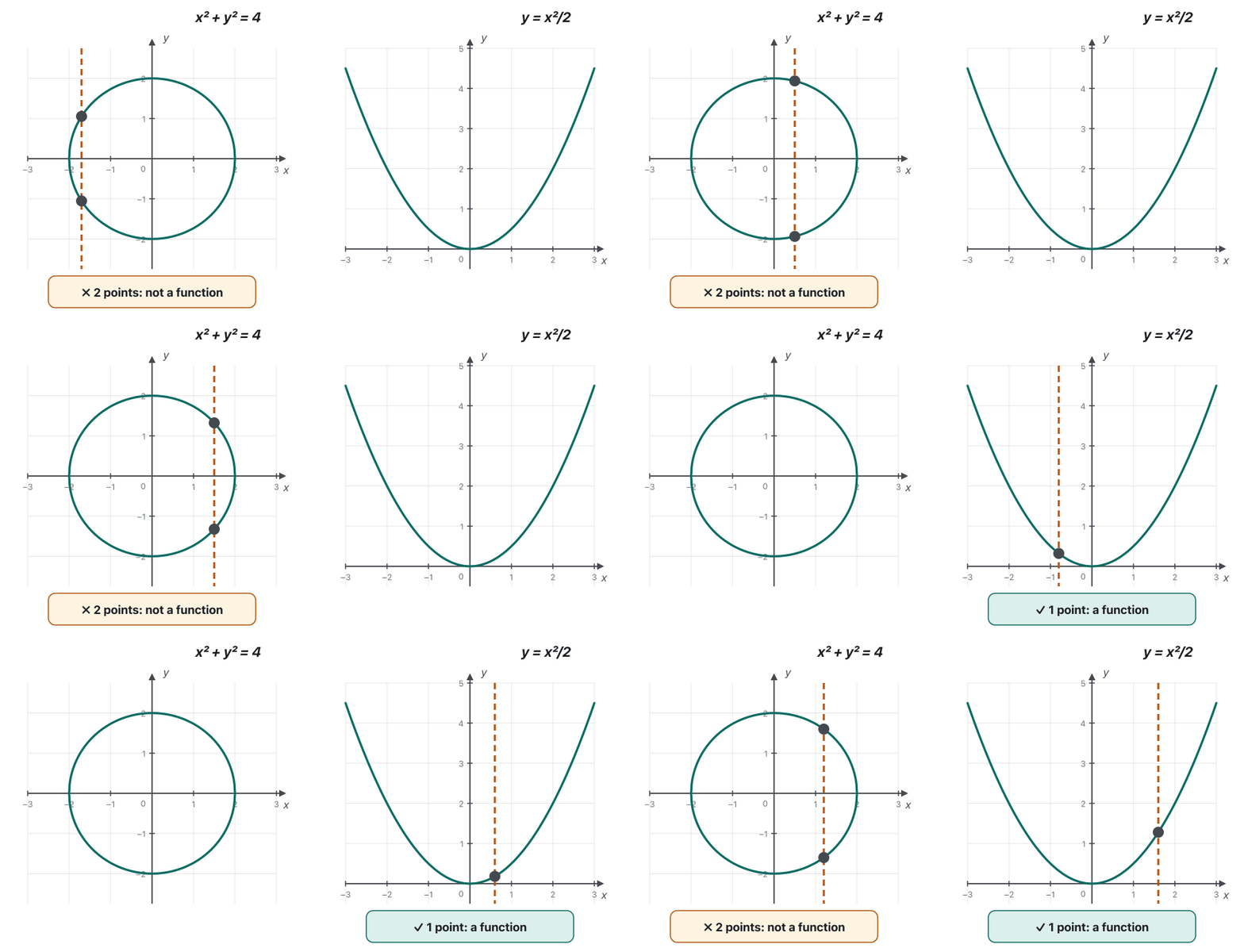
Why it works: every point on a vertical line has the same x. If the line meets the curve twice, then one x has two different y values, which breaks condition 2. On the circle , for example, gives both and . On the parabola every x gives one y.
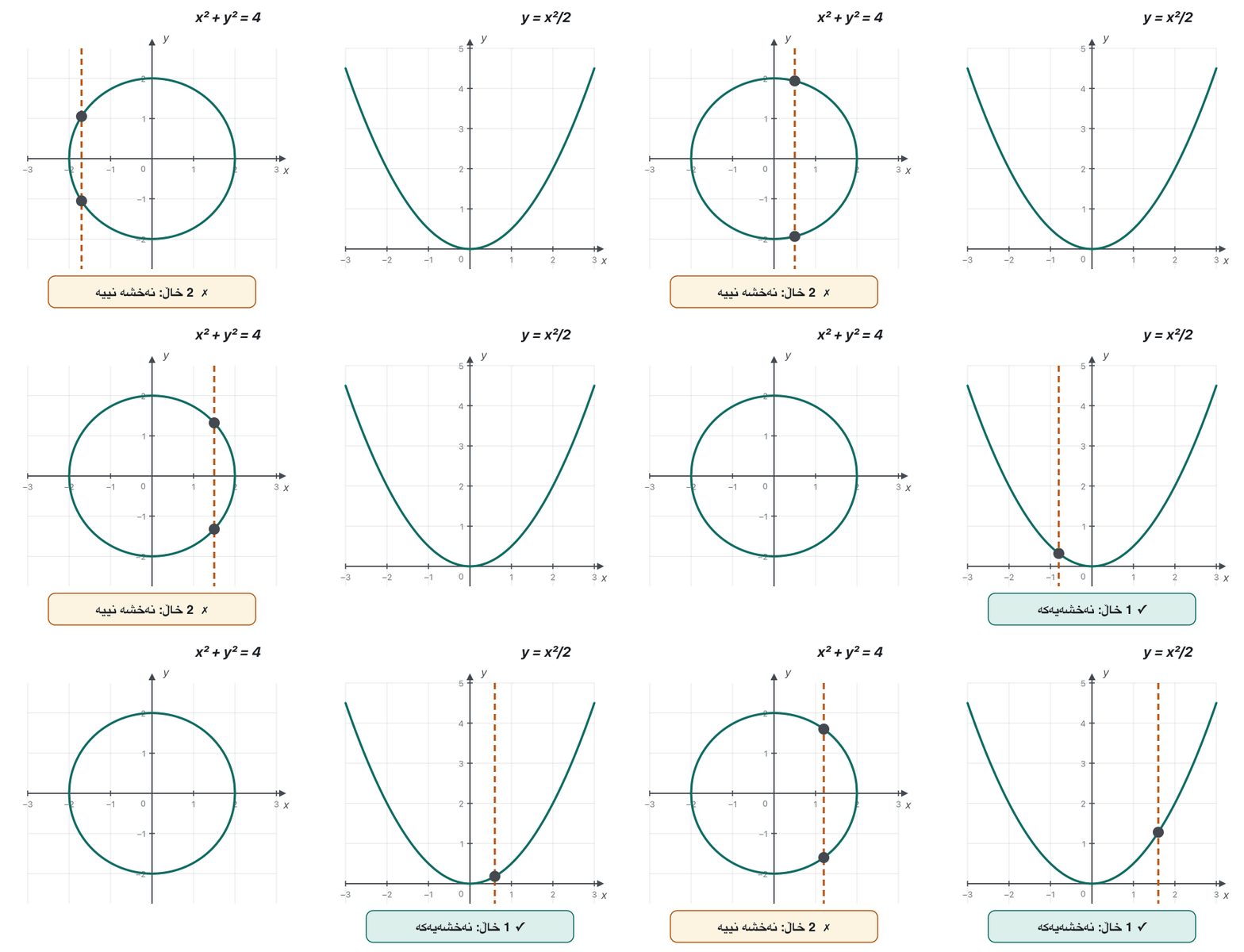
بۆچی کار دەکات: هەموو خاڵەکانی سەر هێڵێکی ستوونی هەمان xـیان هەیە. ئەگەر هێڵەکە دوو جار چەماوەکە ببڕێت، ئەوا یەک x دوو بەهای جیاوازی yـی هەیە و ئەمەش مەرجی 2 دەشکێنێت. بۆ نموونە لەسەر بازنەی ، هەم و هەم دەدات. لەسەر هەر x یەک y دەدات.
Shows how the vertical line test works and, importantly, why: a vertical line meeting a graph twice means one x with two y-values.
چۆن کار دەکات و گرنگتر بۆچی: هێڵێکی ستوونی کە دوو جار بەر بکەوێت، واتە یەک x دوو نرخی yـی هەیە.
Whole video (11:51), mostly on why the test works.
هەموو ڤیدیۆکە (11:51)، زۆربەی باس لەوە دەکات کە بۆچی ئەم تاقیکردنەوەیە کار دەکات.
Functions in mathematics and in programsنەخشە لە بیرکاری و کردار لە بەرنامەسازیدا
In programming the word function means a named block of code that you call to do a job (see Defining and calling functions in the Python track of Fundamentals of Programming, or What is a function? in the web programming course). A program function can do things a mathematical function never does: print text, read the keyboard, use a random number or the clock. Then the same input can give a different result each time, or the function gives back nothing useful at all (two kinds of functions).
لە وشەی واتای بلۆکێکی ناونراوی کۆد دەدات کە بانگی دەکەیت بۆ ئەنجامدانی کارێک (بڕوانە ناساندن و بانگکردنی کردارەکان لە بەشی Pythonـی خولی بنەماکانی ، یان کردار چییە؟ لە خولی وێب). لە دەتوانێت کارێک بکات کە هەرگیز نایکات: دەق چاپ بکات، لە تەختەکلیلەوە بخوێنێتەوە، یان کاتژمێر بەکار بهێنێت. ئەو کاتە هەمان دەکرێت هەر جارەی ئەنجامێکی جیاواز بدات، یان هیچ شتێکی بەسوود نەگەڕێنێتەوە (دوو جۆری کردار).
A mathematical function is only its set of pairs: the same input always gives the same output, today, tomorrow and on every computer. In Kurdish this course keeps the two ideas apart: for the mathematical function and for the programming one.
لە بیرکاریدا تەنها جووتەکانیەتی: هەمان هەمیشە هەمان دەدات، ئەمڕۆ، سبەینێ و لەسەر هەموو کۆمپیوتەرێک. ئەم خولە لە کوردیدا دوو بیرۆکەکە لێک جیا دەکاتەوە: «» بۆ بیرکاری و «» بۆ .
Common mistakesهەڵە باوەکان
| Mistakeهەڵە | What is trueڕاستییەکە |
|---|---|
| "Two different x's may not share a y."«دوو xـی جیاواز نابێت هەمان yـیان هەبێت.» | They may: in f, both 2 and 3 go to b. Only one x with two y's is forbidden.دەکرێت: لە fـدا 2 و 3 هەردووکیان دەچن بۆ b. تەنها یەک x بە دوو y قەدەغەیە. |
| " and are the same pair."« و هەمان جووتن.» | In an ordered pair the order counts, so they are different.لە ڕیزبەندی گرنگە، بۆیە جیاوازن. |
| "."« هەمان ـە.» | Every pair is reversed; the two products are equal only when or one of the sets is empty.هەموو جووتەکان پێچەوانە دەبنەوە؛ دوو لێکدانەکە تەنها کاتێک یەکسانن کە یان یەکێک لە بەتاڵ بێت. |
| "Every element of Y must receive an arrow."«دەبێت تیر بگاتە هەموو Y.» | No. Only the elements of X must send arrows. The outputs that are really used form the range (next lesson).نەخێر. تەنها X دەبێت تیر بنێرن. کە بە ڕاستی بەکار دێن پێک دەهێنن (وانەی داهاتوو). |
| " means f times x."« واتە f جارانی x.» | is the output of f at x. fـە لە xـدا. |
| "A horizontal line decides whether a graph is a function."«هێڵی ئاسۆیی بڕیار دەدات کە هێڵکارییەک یان نا.» | Use a vertical line for that. The horizontal line test checks something else: whether the function is one-to-one.بۆ ئەوە هێڵی ستوونی بەکار بهێنە. شتێکی تر دەپشکنێت: ئایا . |
Exercisesڕاهێنانەکان
Let and . Write . How many pairs does it have? Is an element of ?
با و بن. بنووسە. چەند جووتی تێدایە؟ ئایا ـە؟
Show answerوەڵامەکە پیشان بدە
It has pairs. is not in : its first entry 2 is not in A. It belongs to .
جووتی تێدایە. لە ـدا نییە: یەکەم بەشی، 2، لە Aـدا نییە. سەر بە ـە.
Let and . Which relations are functions from X to Y? (a) (b) (c)
با و بن. کام لە Xـەوە بۆ Y؟ (أ) (ب) (ج)
Show answerوەڵامەکە پیشان بدە
- (a) Yes. Every x has exactly one partner; they all share 5. (A rule like this, with one output for everything, is a constant function.)
- (b) No. 3 has no partner, so condition 1 fails.
- (c) No. 2 is paired with 5 and with 6, so condition 2 fails.
- (أ) بەڵێ. هەر x تەنها یەک هاوبەشی هەیە؛ هەموویان 5 بەش دەکەن. (یاسایەکی وا کە بۆ هەموو شتێک یەک دەدات .)
- (ب) نەخێر. 3 هاوبەشی نییە، بۆیە مەرجی 1 شکست دەهێنێت.
- (ج) نەخێر. 2 هەم لەگەڵ 5 و هەم لەگەڵ 6 جووت کراوە، بۆیە مەرجی 2 شکست دەهێنێت.
Let . Find , , and , write the four points and plot them.
با بێت. ، ، و بدۆزەرەوە، چوار خاڵەکەی بنووسە و لەسەر دایانبنێ.
Show answerوەڵامەکە پیشان بدە
The points are , , and . Note that and share the output 2, which is allowed. The point is 2 to the right and 1 down.
خاڵەکان ، ، و ن. تێبینی بکە کە و هەمان 2 بەش دەکەن و ئەمە ڕێگەپێدراوە. خاڵی 2 یەکە بۆ ڕاست و 1 یەکە بۆ خوارەوەیە.
Which of these curves are graphs of functions of x? (a) (b) (c) (d)
کام لەم چەماوانە xن؟ (أ) (ب) (ج) (د)
Show answerوەڵامەکە پیشان بدە
- (a) Yes. Every x has one absolute value.
- (b) No. The vertical line meets it at and .
- (c) Yes. A horizontal line: every x has the single output 5 (a constant function).
- (d) No. It is a vertical line, so the vertical line meets it in infinitely many points: one x with every y.
- (أ) بەڵێ. هەر x تەنها یەک هەیە.
- (ب) نەخێر. هێڵی ستوونیی لە و ـدا دەیبڕێت.
- (ج) بەڵێ. هێڵێکی ئاسۆییە: هەر x تەنها 5 دەدات ().
- (د) نەخێر. خۆی هێڵێکی ستوونییە، بۆیە هێڵی ستوونیی لە ژمارەیەکی بێکۆتا خاڵدا دەیبڕێت: یەک x لەگەڵ هەموو yـێک.
How many different functions are there from to ?
چەند جیاواز لە ـەوە بۆ هەیە؟
Hintئاماژە
Each of 1, 2 and 3 must choose one partner.
هەر یەک لە 1، 2 و 3 دەبێت یەک هاوبەش هەڵبژێرێت.
Show answerوەڵامەکە پیشان بدە
A function chooses one output for each input. The input 1 has 2 choices (a or b), so do 2 and 3, and the choices are independent: functions. In general there are functions from X to Y. (Compare: a relation may be any subset of the 6 pairs, so there are relations.)
بۆ هەر یەک هەڵدەبژێرێت. 1 دوو هەڵبژاردەی هەیە (a یان b)، 2 و 3ـیش هەروا و هەڵبژاردنەکان سەربەخۆن: . بە گشتی لە Xـەوە بۆ Y هەیە. (بەراوردی بکە: دەکرێت هەر 6 جووتەکە بێت، بۆیە هەیە.)
Summaryکورتە
- An ordered pair has a fixed order. The Cartesian product is the set of all pairs with x from X and y from Y.
- A relation from X to Y is any subset of .
- A function is a relation in which every x in X has exactly one partner (existence and uniqueness). Other names: mapping, transformation, operator.
- x is the independent variable, y the dependent variable.
- The graph of f is the set of points in the coordinate plane; a curve is a graph of a function when no vertical line meets it twice.
- A mathematical function always gives the same output for the same input; a programming function may not.
- ڕیزبەندییەکی جێگیری هەیە. هەموو ئەو جووتانەیە کە x لە X و y لە Yـەوەیە.
- لە Xـەوە بۆ Y هەر ـە.
- کە تێیدا هەر xـێکی X تەنها یەک هاوبەشی هەیە، (بوون و تاقانەیی). ناوەکانی تر: mapping، transformation، operator.
- x و y .
- f خاڵەکانی ـە لەسەر ؛ چەماوەیەک کاتێک هیچ هێڵێکی ستوونی دوو جار نەیبڕێت.
- لە بیرکاریدا بۆ هەمان هەمیشە هەمان دەدات؛ لە لەوانەیە وا نەبێت.
Is every relation a function?ئایا هەموو پەیوەندییەک نەخشەیەکە؟
No. A relation becomes a function only if every x in X has exactly one partner in Y.
نەخێر. تەنها کاتێک دەبێتە کە هەر xـێکی X تەنها یەک هاوبەشی لە Yـدا هەبێت.
May two inputs have the same output?ئایا دەکرێت دوو نێوخستە هەمان دەرخستەیان هەبێت؟
Yes. For example gives . What is not allowed is one input with two outputs.
بەڵێ. بۆ نموونە دەدات . ئەوەی ڕێگەپێنەدراوە یەک بە دوو .
Why does a vertical line test a graph?بۆچی هێڵی ستوونی هێڵکارییەک تاقی دەکاتەوە؟
All points on a vertical line share one x. Two hits would mean one x with two y values.
هەموو خاڵەکانی سەر هێڵێکی ستوونی یەک xـیان هەیە. دوو یەکتربڕین واتە یەک x بە دوو بەهای y.
Videoڤیدیۆ
Watch a videoسەیری ڤیدیۆیەک بکە
A video that viewers liked a lot and praised in their comments, chosen for this lesson.ڤیدیۆیەک کە بینەران زۆریان پێ خۆش بووە و لە کۆمێنتەکانیاندا ستایشیان کردووە، بۆ ئەم وانەیە هەڵبژێردراوە.
Explains a function as a rule that gives each input exactly one output, with function notation, graphs and graphs that are not functions.
وەک یاسایەک ڕوون دەکاتەوە کە بە هەر ڕێک یەک دەدات، لەگەڵ نووسینی ، و ئەو نین.
Whole lesson in one calm video: inputs and outputs, one output per input, graphs, non-function graphs, f(x) notation.
هەموو وانەکە لە یەک ڤیدیۆی ئارامدا: و ، یەک بۆ هەر ، ، ئەو نین، نووسینی .
Lesson complete!وانەکە تەواو بوو!
Well done. Review the key terms, then go on to the next lesson.دەستخۆش. سەیرێکی زاراوە سەرەکییەکان بکەرەوە، پاشان بڕۆ بۆ وانەی داهاتوو.
Key termsزاراوە سەرەکییەکان
Domain, Range and Imageبوار، مەودا و وێنە
Related lecturesوانە پەیوەندیدارەکان
- Domain, Range and Imageبوار، مەودا و وێنە
- Equal, Constant, One-to-One and Onto Functionsنەخشەی یەکسان، نەخشەی نەگۆڕ، نەخشەی یەک بۆ یەک و نەخشەی گشتگر
- Relational Algebra and Relational Calculusجەبری پەیوەندیدار و ژمێرکاریی پەیوەندیدار
- Agents, Sensors and Actuators; Rational Agentsئەیجێنتەکان، هەستەوەرەکان و جووڵێنەرەکان؛ ئەیجێنتە عەقڵانییەکان
- Functionsکردارەکان
- Defining and Calling Functionsناساندن و بانگکردنی کردارەکان
References and further readingسەرچاوەکان و خوێندنەوەی زیاتر
This lecture is a first edition. The Kurdish text and terminology are waiting for review by Kurdish IT teachers.ئەم وانەیە چاپی یەکەمە. دەقە کوردییەکە و زاراوەکانی چاوەڕێی پێداچوونەوەی مامۆستایانی کوردی بواری IT ن.