Chapterبەش 1 · Lectureوانە 1.3
Sets of Numbers: From Natural to Complexکۆمەڵەکانی ژمارە: لە ژمارە سروشتییەکانەوە تا ژمارە ئاوێتەکان
The families of numbers as sets: natural numbers, integers, rational numbers and their decimals, irrational numbers and roots, real numbers on the number line, and complex numbers — how they fit inside one another and why each was needed.
خێزانەکانی ژمارە وەک : ، ، و ژمارە دەییەکانیان، و ڕەگەکان، لەسەر و — چۆن لە ناو یەکتردان و بۆچی هەریەکەیان پێویست بوو.
What you will learnچی فێر دەبیت
- Define , , , the irrational numbers, and , and give examples of each.
- Tell rational from irrational numbers by their decimals, and turn simple decimals into fractions.
- Work out square and cube roots, including cube roots of negative numbers.
- Classify any number by its smallest family and explain .
- ، ، ، ، و پێناسە بکەیت و بۆ هەریەکەیان نموونە بهێنیتەوە.
- لە بە ژمارە دەییەکانیان جیا بکەیتەوە و ژمارەی دەیی سادە بکەیت بە .
- و حیساب بکەیت، .
- هەر ژمارەیەک بەپێی بچووکترین خێزانی پۆلێن بکەیت و ڕوون بکەیتەوە.
Numbers grew with our needsژمارەکان لەگەڵ پێداویستییەکانماندا گەشەیان کرد
The numbers you use today did not appear all at once. Each new family was invented because the old one could not answer a question:
ئەو ژمارانەی ئەمڕۆ بەکاریان دەهێنیت هەموویان بە یەکجار دەرنەکەوتن. هەر خێزانێکی نوێ داهێنرا چونکە خێزانە کۆنەکە نەیدەتوانی وەڵامی پرسیارێک بداتەوە:
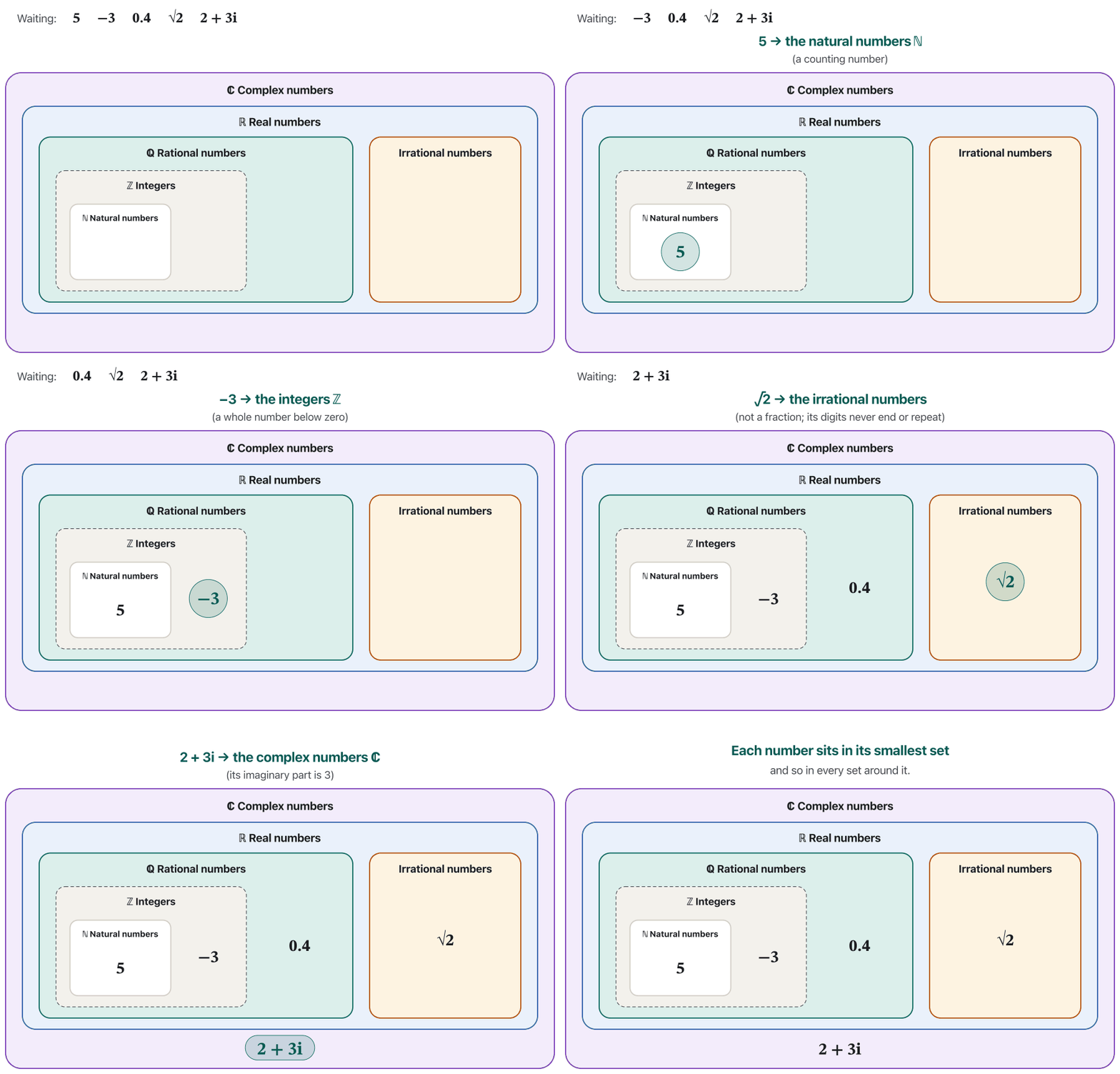
- Counting sheep or students needs 1, 2, 3, … → the natural numbers ℕ.
- Debts and temperatures below zero need −1, −2, … and 0 → the integers ℤ.
- Sharing one loaf of bread between 4 people needs → the rational numbers ℚ.
- The diagonal of a square with side 1 is , which is not a fraction → the irrational numbers. Rationals and irrationals together are the real numbers ℝ.
- The equation has no real answer → the complex numbers ℂ.
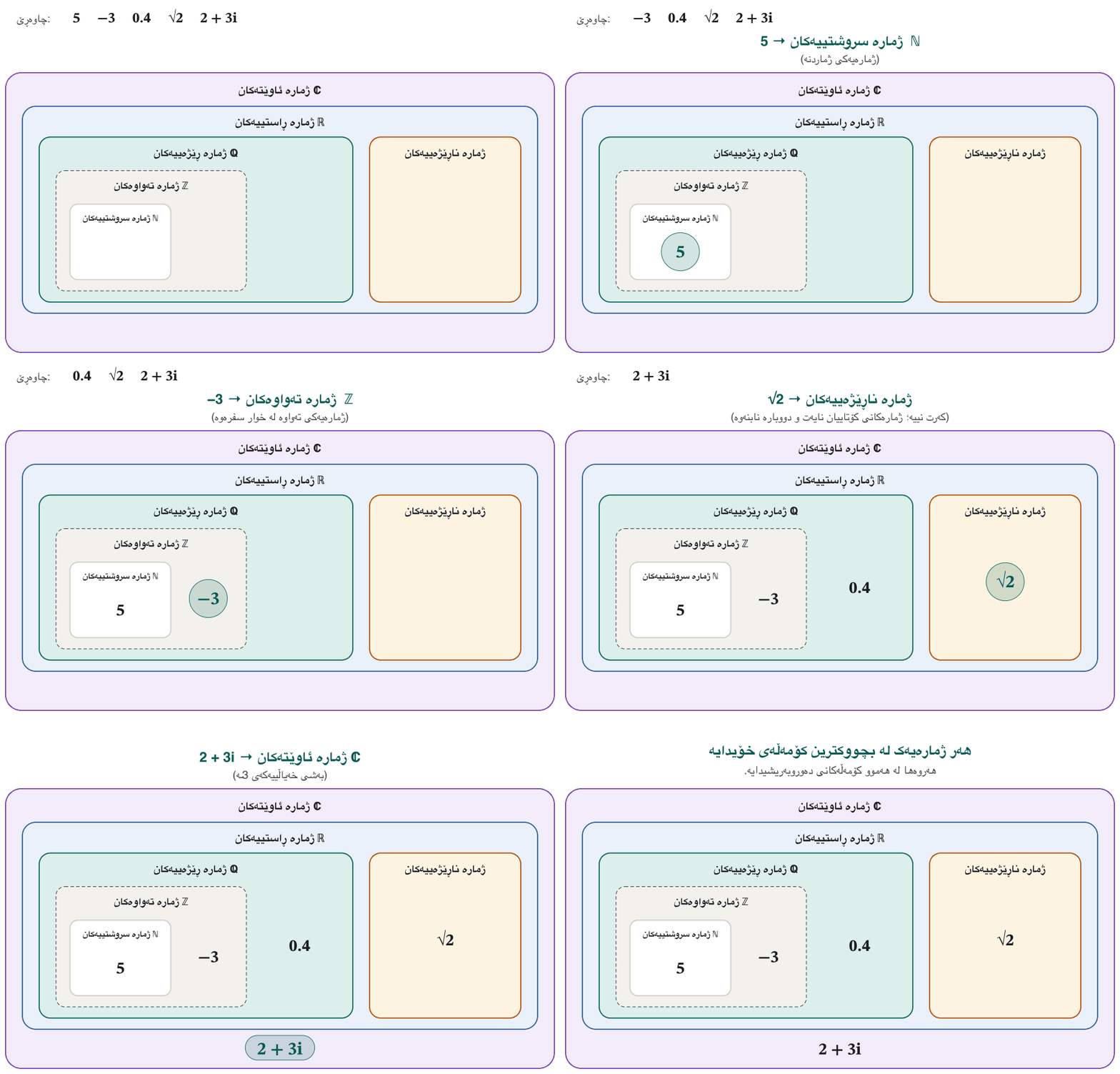
- ژماردنی مەڕ یان قوتابی پێویستی بە 1، 2، 3، … هەیە ← ℕ.
- قەرز و پلەی گەرمی ژێر سفر پێویستیان بە و هەیە ← ℤ.
- دابەشکردنی نانێک بەسەر 4 کەسدا پێویستی بە هەیە ← ℚ.
- تیرەی چوارگۆشەیەک کە لایەکەی 1 بێت ـە کە نییە ← . و پێکەوە ℝ پێکدەهێنن.
- هیچ وەڵامێکی ڕاستیی نییە ← ℂ.
Each family is a set, and each one contains the one before it. This lesson walks through them in order.
هەر خێزانێک و هەریەکەیان ئەوەی پێش خۆی لەخۆ دەگرێت. ئەم وانەیە بە ڕیز یەک یەک دەیانناسێنێت.
Natural numbers ژمارە سروشتییەکان
A counting number: 1, 2, 3, … The set of natural numbers is written . Some books (and most programming) also count 0 as natural.
ژمارەکانی ژماردن: 1، 2، 3، … . کۆمەڵەی ژمارە سروشتییەکان بە دەنووسرێت. هەندێک کتێب (و زۆربەی بەرنامەسازی) سفریش بە ژمارەیەکی سروشتی دادەنێن.
The natural numbers (also called the positive integers) are the counting numbers. The set never ends: after every natural number comes another one.
(پێیان دەوترێت ) ژمارەکانی ژماردنن. هەرگیز کۆتایی نایەت: دوای هەر یەکێکی تر دێت.
Integers ژمارە تەواوەکان
The integers are the whole numbers with their negatives and zero. The letter Z comes from the German word Zahlen, “numbers”.
ژمارەکانی ژماردنن لەگەڵ سالبەکانیان و سفر. پیتی Z لە وشەی ئەڵمانیی Zahlen (ژمارەکان) هاتووە.
The slide splits ℤ into three pieces with the union of the previous lesson:
سلایدەکە ℤ بە وانەی پێشوو دەکاتە سێ پارچە:
are the negative integers, are the positive integers (the same set as ℕ), and 0 is neither positive nor negative. The three pieces are disjoint: every integer is in exactly one of them.
بەشە سالبەکەی ℤـە، بەشە موجەبەکەیەتی (هەمان ℕ) و 0 نە موجەبە نە سالب. سێ پارچەکە جیاکراوەن: هەر ڕێک لە یەکێکیاندایە.
Think of the lift in a big shopping centre in Erbil. The buttons read −2, −1 for the car parks under the ground, 0 for the ground floor, and 1, 2, 3 for the shops above. Going down one floor always subtracts 1, whether you are at 3 or at −1. The integers are this list of floors, continued forever in both directions.
بیر لە ئاسانسۆری بازاڕێکی گەورە لە هەولێر بکەرەوە. دوگمەکان و بۆ نهۆمەکانی ژێر زەوی (شوێنی ئۆتۆمبێل)، 0 بۆ نهۆمی زەوی و 1، 2، 3 بۆ دوکانەکانی سەرەوەن. دابەزین بۆ نهۆمێک هەمیشە 1 کەم دەکاتەوە، چ لە 3 بیت چ لە . ئەم لیستەی نهۆمەکانە کە بە هەردوو ئاڕاستەدا بێ کۆتایی درێژ دەبێتەوە.
Where the analogy stops workingسنووری ئەم نموونەیە
A real building has a lowest and a highest floor. ℤ has neither: it goes on forever both ways.
باڵەخانەی ڕاستەقینە نزمترین و بەرزترین نهۆمی هەیە. ℤ هیچیانی نییە: بە هەردوو ئاڕاستەدا بێ کۆتایی بەردەوامە.
Rational numbers ژمارە ڕێژەییەکان
A number that can be written as a fraction of two integers with . Its decimal form either ends or repeats. The set is .
ژمارەیەکە کە دەتوانرێت وەک بنووسرێت، کە p و q و . شێوە دەییەکەی یان کۆتایی دێت یان دووبارە دەبێتەوە. کۆمەڵەکەی ـە.
A rational number is a fraction of two integers. Q stands for “quotient”, the result of a division.
دوو . Q لە «quotient»ـەوە هاتووە، واتە ئەنجامی دابەشکردن.
The course examples: , , and are rational. A minus sign may sit on top or below: . And , so 0 is rational too.
نموونەکانی کۆرسەکە: ، ، و . نیشانەی سالب دەکرێت لە سەرەوە یان لە خوارەوە بێت: . هەروەها ، بۆیە 0ـیش .
- Why ? Division undoes multiplication: because . For we would need a number that gives 6 when multiplied by 0, and no such number exists. So a denominator can never be 0.
- Every integer is rational: , for example . So .
- بۆچی ؟ دابەشکردن پێچەوانەی لێکدانە: چونکە . بۆ پێویستمان بە ژمارەیەک دەبوو کە لێکدانی لە 0 بکاتە 6. ژمارەیەکی وا بوونی نییە. بۆیە هەرگیز نابێت 0 بێت.
- هەموو : ، بۆ نموونە . بۆیە .
Rational numbers as decimalsژمارە ڕێژەییەکان وەک ژمارەی دەیی
Divide the numerator by the denominator and a rational number becomes a decimal. Only two things can happen:
دابەشی بکە و دەبێتە ژمارەیەکی دەیی. تەنها دوو شت ڕوو دەدەن:
- It terminates (stops): , .
- It repeats forever: , . The bar marks the block that repeats.
- کۆتایی دێت (دەوەستێت): ، .
- دووبارە دەبێتەوە بێ کۆتایی: ، . هێڵەکەی سەرەوە ئەو بەشە نیشان دەدات کە دووبارە دەبێتەوە.
Why only these two? In long division by q, each remainder is one of . If a remainder is 0, the division stops. If not, after at most q steps a remainder must come back, and from then on the same digits come back in the same order. For the remainder is always 1, so the digit 3 repeats.
بۆچی تەنها ئەم دووانە؟ لە دابەشکردنی درێژدا بەسەر qـدا، هەر یەکێکە لە . ئەگەر 0 بێت، دابەشکردنەکە دەوەستێت. ئەگەر نا، دوای زۆرترین q هەنگاو دەبێت دووبارە ببێتەوە و لەوێوە هەمان بە هەمان ڕیز دووبارە دەبنەوە. بۆ هەمیشە 1ـە، بۆیە 3 دووبارە دەبێتەوە.
It also works backwards: a terminating or repeating decimal is always rational. For example and .
بە پێچەوانەشەوە ڕاستە: ژمارەیەکی دەیی کە کۆتایی بێت یان دووبارە ببێتەوە هەمیشە . بۆ نموونە و .
The parts of a decimal numberبەشەکانی ژمارەیەکی دەیی
A decimal number has a whole-number part and a fractional part, separated by the decimal point. In 24.36 the whole-number part is 24 and the fractional part is 0.36, which is .
ژمارەیەکی دەیی بەشێکی تەواو و بەشێکی کەرتیی هەیە کە بە لێک جیا دەکرێنەوە. لە 24.36دا بەشی تەواو 24ـە و بەشی کەرتی 0.36ـە، کە دەکاتە .
Each place after the point is worth ten times less than the one before it: . That is why a terminating decimal is always a fraction with 10, 100, 1000, … underneath. The same place-value idea is behind every number system (see Place value).
هەر شوێنێک دوای خاڵەکە دە جار لە شوێنی پێش خۆی کەمترە: . هەر بۆیە ژمارەیەکی دەیی کە کۆتایی دێت هەمیشە کە 10، 100، 1000، … لە ژێرەوەیەتی. هەمان بیرۆکەی بەهای شوێن لە پشت هەموو سیستەمێکی ژمارەوەیە (بڕوانە بەهای شوێن).
Irrational numbersژمارە ناڕێژەییەکان
A real number that cannot be written as a fraction of two integers. Its decimal form never ends and never repeats.
کە ناتوانرێت وەک کەرتی دوو بنووسرێت. شێوە دەییەکەی هەرگیز کۆتایی نایەت و دووبارەش نابێتەوە.
An irrational number is a real number that cannot be written as with integers p and q. The course examples are , , and . Their decimals never end and never repeat: , .
کە ناتوانرێت وەک بنووسرێت بە دوو p و q. نموونەکانی کۆرسەکە ، ، و ـن. ژمارە دەییەکانیان هەرگیز کۆتاییان نایەت و دووبارە نابنەوە: ، .
How to tell rational from irrational numbers: fractions, repeating decimals, square roots that are not whole, and pi.
چۆن لە جیا دەکەیتەوە: ، ژمارەی دەیی دووبارەبووەوە، ئەو نین و .
5:54; 3:00 repeating decimals, 4:05 square root of 7, 4:49 pi.
ڤیدیۆکە 5:54 خولەکە؛ 3:00 ژمارەی دەیی دووبارەبووەوە، 4:05 7، 4:49 .
Square roots and cube rootsڕەگی دووجا و ڕەگی سێجا
Roots appear in the lists above, so let us read them carefully. The square root is the number that is not negative and whose square is a: because . The cube root is the number whose cube is a.
ڕەگەکان لە لیستەکانی سەرەوەدا هەن، بۆیە با بە وردی بیانخوێنینەوە. ئەو ژمارەیەیە کە سالب نییە و دووجاکەی aـیە: چونکە . ئەو ژمارەیەیە کە سێجاکەی aـیە.
A cube built from 64 small cubes has edges 4 cubes long; one built from 8 small cubes has edges 2 long.
شەشپاڵوویەک کە لە 64 شەشپاڵووی بچووک دروست کرابێت لێوارەکانی 4 شەشپاڵوو درێژن؛ ئەوەی لە 8 دروست کرابێت لێوارەکانی 2ـن.
- Odd roots of negative numbers are real: , because .
- Even roots of negative numbers are not real: has no real value, because every real number squared is 0 or positive. This is where the complex numbers begin.
- Rational or irrational? The root of a natural number is either a natural number or irrational: is rational, but and are irrational.
- ڕەگی تاکی ڕاستین: ، چونکە .
- ڕەگی جووتی ڕاستی نین: هیچ بەهایەکی ڕاستیی نییە، چونکە دووجای هەموو 0 یان موجەبە. لێرەوە دەست پێدەکەن.
- یان ؟ ڕەگی یان یان : ، بەڵام و .
Real numbers and the number lineژمارە ڕاستییەکان و هێڵی ژمارەکان
Any number that is a point on the : all rational and irrational numbers together. The set is .
هەر ژمارەیەک کە خاڵێکە لەسەر ؛ واتە هەموو و پێکەوە. کۆمەڵەکەی ـە.
The real numbers are all the rational and irrational numbers together. The two families are disjoint: every real number is either rational or irrational, never both.
هەموو و پێکەوە. دوو خێزانەکە جیاکراوەن: هەر یان یان ، هەرگیز هەردووکیان نییە.
The real numbers fill the number line with no gaps. Every real number is one point on the line, and every point is one real number. Smaller numbers lie to the left.
بەبێ هیچ کەلێنێک پڕ دەکەنەوە. هەر خاڵێکە لەسەر هێڵەکە و هەر خاڵێکیش . ژمارە بچووکترەکان لە لای چەپن.
In Kurdish: the real numbers as one family made of the rational numbers (fractions, repeating decimals) and the irrational numbers (non-repeating decimals, roots like √5).
بە کوردی: وەک یەک خێزان، کە لە (، دەیی دووبارەبووەوە) و (دەیی دووبارەنەبووەوە، ڕەگی وەک ) پێک دێن.
Sorani, Grade 9 lesson (1-4). Plays 2:20-5:35 (found on video frames): the board tree of the real numbers, rational and irrational with their kinds, and the box 'real numbers = all rational and irrational numbers'.
بە سۆرانی، وانەی پۆلی 9 (1-4). لە 2:20 تا 5:35 پەخش دەبێت (لە وێنەکانی ڤیدیۆکەوە دیاری کراوە): دارەکەی سەر تەختە بۆ ، و لەگەڵ جۆرەکانیان، هەروەها چوارچێوەی « = هەموو و ».
The imaginary unit یەکەی خەیاڵی
No real number squared gives −1, so has no real solution. Mathematicians add one new number, the imaginary unit i, with the rule:
دووجای هیچ نادات، بۆیە هیچ چارەسەرێکی ڕاستیی نییە. بیرکاریزانان ژمارەیەکی نوێ زیاد دەکەن، (i)، بەم یاسایە:
Informally people write , but the rule is the real definition.
بە شێوەیەکی نافەرمی دەنووسرێت ، بەڵام پێناسە ڕاستەقینەکە یاسای ـە.
Complex numbers ژمارە ئاوێتەکان
A number with a real part x and an imaginary part y, where is the (). The set is ; every real number is complex with .
ژمارەیەکی وەک کە بەشی ڕاستیی x و بەشی خەیاڵیی y هەیە و (). کۆمەڵەکەی ـە؛ هەموو ژمارەیەکی ڕاستی ژمارەیەکی ئاوێتەیە کە .
x is the real part of z and y is the imaginary part. The course example: : real part −1, imaginary part 3.
x بەشی ڕاستی zـیە و y بەشی خەیاڵی. نموونەی کۆرسەکە: : بەشی ڕاستی و بەشی خەیاڵی ـە.
Every real number is also complex, with imaginary part 0: . So .
هەموو بە بەشی خەیاڵیی 0: . بۆیە .
Sets inside setsکۆمەڵەکان لە ناو کۆمەڵەکاندا
Each family contains the one before it. The slide's first note says it with proper-subset signs:
هەر خێزانێک ئەوەی پێش خۆی لەخۆ دەگرێت. یەکەم تێبینیی سلایدەکە بە هێمای دەیڵێت:
Each is a proper subset (see Proper subsets): ℤ has 0 and the negatives that ℕ lacks, ℚ has fractions like , ℝ has the irrationals, and ℂ has i. The last link is not on the slide; it follows from .
هەر ـیەک (بڕوانە ژێرکۆمەڵە ڕاست و پاکەکان): ℤ سفر و هەیە کە ℕ نییەتی، ℚ وەک هەیە، ℝ هەیە و ℂ iـی هەیە. دوا ئەڵقە، ، لە سلایدەکەدا نییە؛ لە ـەوە دەردەکەوێت.
Where does each number live?هەر ژمارەیەک لە کوێ دەژی؟
To classify a number, find the smallest family it belongs to. It then belongs to every family around that one as well.
بۆ پۆلێنکردنی ژمارەیەک، بچووکترین خێزان بدۆزەرەوە کە سەر بەیەتی. ئینجا سەر بە هەموو ئەو خێزانانەشە کە دەوری ئەوەیان داوە.
| ℕ | ℤ | ℚ | Irrational | ℝ | ℂ | |
|---|---|---|---|---|---|---|
| ✓ | ✓ | ✓ | ✗ | ✓ | ✓ | |
| ✗ | ✓ | ✓ | ✗ | ✓ | ✓ | |
| ✗ | ✓ | ✓ | ✗ | ✓ | ✓ | |
| ✗ | ✗ | ✓ | ✗ | ✓ | ✓ | |
| ✗ | ✗ | ✓ | ✗ | ✓ | ✓ | |
| ✗ | ✗ | ✓ | ✗ | ✓ | ✓ | |
| ✓ | ✓ | ✓ | ✗ | ✓ | ✓ | |
| ✗ | ✗ | ✗ | ✓ | ✓ | ✓ | |
| ✗ | ✗ | ✗ | ✓ | ✓ | ✓ | |
| ✗ | ✗ | ✗ | ✗ | ✗ | ✓ |
Between any two numbersلە نێوان هەر دوو ژمارەیەکدا
The slide's last note: between any two different real numbers there is always a rational number and an irrational number. You can even build them:
دوا تێبینیی سلایدەکە: لە نێوان هەر دوو جیاوازدا هەمیشە و هەیە. تەنانەت دەتوانیت دروستیان بکەیت:
- A rational number in betweenژمارەیەکی ڕێژەیی لە نێوانیاندا
Take the average of the two numbers. If a and b are rational, so is .
تێکڕای دوو ژمارەکە وەربگرە. ئەگەر a و b ، ـیش .
- An irrational number in betweenژمارەیەکی ناڕێژەیی لە نێوانیاندا
If a and b are rational, move from a by a piece of the gap that is irrational, for example . This piece is smaller than the whole gap, and a rational number plus an irrational number is always irrational.
ئەگەر a و b ، لە aـەوە بە پارچەیەک لە بۆشاییەکە بڕۆ کە ، بۆ نموونە . ئەم پارچەیە لە هەموو بۆشاییەکە بچووکترە و کۆی و هەمیشە .
So there is no “next” real number after 1: whatever number you name, there are infinitely many numbers between 1 and it. The real numbers are packed densely along the line.
کەواتە نییە کە «دوای» 1 بێت: هەر ژمارەیەک بڵێیت، ژمارەی بێشومار لە نێوان 1 و ئەودا هەن. بە چڕی بەدرێژایی هێڵەکە ڕیز بوون.
Common mistakesهەڵە باوەکان
| Mistakeهەڵە | Why it is wrongبۆچی هەڵەیە | Do this insteadلە جیاتی ئەوە |
|---|---|---|
| “Negative numbers are not rational”« نین» | and are fractions of integers و دوو | Ask only: can it be written as ?تەنها بپرسە: دەتوانرێت وەک بنووسرێت؟ |
| “ is irrational because it has a root sign”« چونکە هێمای ڕەگی هەیە» | Work the root out firstسەرەتا ڕەگەکە حیساب بکە | |
| Writing نووسینی | is only close to تەنها نزیکە لە | Use or 3.14 only as approximations یان 3.14 تەنها وەک نزیککراوە بەکار بهێنە |
| “A repeating decimal like is irrational”«ژمارەیەکی دەیی دووبارەبووەوەی وەک » | Repeating decimals are rational: ژمارەی دەیی دووبارەبووەوە : | Irrational means never ends and never repeats واتە هەرگیز کۆتایی نایەت و دووبارە نابێتەوە |
| “The imaginary part of is ”«بەشی خەیاڵیی دەکاتە » | The imaginary part is the real number in front of iبەشی خەیاڵی ئەو ژمارەیەیە کە لە پێش iـدایە | Imaginary part بەشی خەیاڵی |
| Assuming everyone starts ℕ at 1 (or at 0)وا دانان کە هەمووان ℕ لە 1ـەوە (یان لە 0ـەوە) دەست پێدەکەن | Books and programming languages differکتێب و جیاوازن | Check the convention; this course uses ڕێساکە بپشکنە؛ ئەم کۆرسە بەکار دەهێنێت |
Exercisesڕاهێنانەکان
For each number, give the smallest family it belongs to (ℕ, ℤ, ℚ, irrational, or ℂ only): , , , , , , , .
بۆ هەر ژمارەیەک بچووکترین خێزان بنووسە کە سەر بەیەتی (ℕ، ℤ، ℚ، یان تەنها ℂ): ، ، ، ، ، ، ، .
Hintئاماژە
Simplify first. Then remember: smallest family, and the bigger families come for free.
سەرەتا سادەی بکەرەوە. پاشان لە بیرت بێت: بچووکترین خێزان، خێزانە گەورەترەکان خۆیان دێن.
Show answerوەڵامەکە پیشان بدە
- → ℕ; → ℤ; → ℕ; → ℚ.
- → ℕ; → irrational; → ℂ only; → ℚ.
- ← ℕ؛ ← ℤ؛ ← ℕ؛ ← ℚ.
- ← ℕ؛ ← ؛ ← تەنها ℂ؛ ← ℚ.
(a) Write and as decimals; which one terminates? (b) Write 0.4 and 1.75 as fractions in lowest terms.
(أ) و وەک ژمارەی دەیی بنووسە؛ کامیان کۆتایی دێت؟ (ب) 0.4 و 1.75 وەک بە سادەترین شێوە بنووسە.
Show answerوەڵامەکە پیشان بدە
(a) terminates; repeats. (b) and .
(أ) کۆتایی دێت؛ دووبارە دەبێتەوە. (ب) و .
Find , , and . Which of these numbers is irrational: , ?
، ، و بدۆزەرەوە. کام لەم ژمارانە : ، ؟
Show answerوەڵامەکە پیشان بدە
, , , . is rational; 9 is not a perfect cube, so is irrational.
، ، ، . ؛ 9 سێجای هیچ نییە، بۆیە .
Find one rational and one irrational number between 1.4 and 1.5.
و لە نێوان 1.4 و 1.5دا بدۆزەرەوە.
Show answerوەڵامەکە پیشان بدە
Rational: . Irrational: (or ).
: . : (یان ).
Write in the form and give its real and imaginary parts. Is a complex number?
بە شێوەی بنووسە و بەشی ڕاستی و بەشی خەیاڵیی بنووسە. ئایا ؟
Show answerوەڵامەکە پیشان بدە
: real part , imaginary part . Yes: , so every real number is also complex.
: بەشی ڕاستی و بەشی خەیاڵی . بەڵێ: ، بۆیە هەموو .
Summary and reviewپوختە و پێداچوونەوە
- (this course; some books add 0). .
- ℚ: fractions of integers with ; their decimals terminate or repeat.
- Irrational numbers (, π, ) are not fractions; their decimals never end or repeat. .
- with ; real part x, imaginary part y.
- ; between any two different reals there are rational and irrational numbers.
- (لەم کۆرسەدا؛ هەندێک کتێب 0ـیش زیاد دەکەن). .
- ℚ: لە بە ؛ ژمارە دەییەکانیان کۆتاییان دێت یان دووبارە دەبنەوە.
- (، π، ) نین؛ ژمارە دەییەکانیان کۆتاییان نایەت و دووبارە نابنەوە. .
- بە ؛ بەشی ڕاستی x و بەشی خەیاڵی y.
- ؛ لە نێوان هەر دوو جیاوازدا و هەن.
Why can a denominator never be 0?بۆچی ژێرە هەرگیز نابێت 0 بێت؟
Because no number times 0 gives a non-zero result, so a division by 0 has no answer.
چونکە لێکدانی هیچ ژمارەیەک لە 0 ئەنجامێکی جیا لە سفر نادات، بۆیە دابەشکردن بەسەر 0 وەڵامی نییە.
How can you tell from the decimals whether a number is rational?چۆن لە ژمارە دەییەکانەوە دەزانیت ژمارەیەک ژمارەی ڕێژەییە؟
Rational: the decimals end or repeat. Irrational: they never end and never repeat.
: ژمارە دەییەکان کۆتاییان دێت یان دووبارە دەبنەوە. : هەرگیز کۆتاییان نایەت و دووبارە نابنەوە.
Why do we need complex numbers?بۆچی پێویستمان بە ژمارە ئاوێتەکان هەیە؟
Because no real number squared gives a negative number, so equations like need the new number i.
چونکە دووجای هیچ نادات، بۆیە وەک پێویستیان بە ژمارە نوێیەکەی i هەیە.
Is 0 rational? Is it natural?ئایا 0 ژمارەی ڕێژەییە؟ ئایا ژمارەی سروشتییە؟
Rational, yes (). Natural: not in this course, which starts ℕ at 1.
، بەڵێ (). : لەم کۆرسەدا نا، چونکە ℕ لە 1ـەوە دەست پێدەکات.
Videoڤیدیۆ
Watch a videoسەیری ڤیدیۆیەک بکە
A video that viewers liked a lot and praised in their comments, chosen for this lesson.ڤیدیۆیەک کە بینەران زۆریان پێ خۆش بووە و لە کۆمێنتەکانیاندا ستایشیان کردووە، بۆ ئەم وانەیە هەڵبژێردراوە.
The family tree of numbers: natural numbers, integers, rational and irrational numbers, real numbers and imaginary numbers.
خێزانی ژمارەکان: ، ، ، ، و ژمارە خەیاڵییەکان.
Chapters: 0:46 imaginary numbers, 1:48 rational, 2:29 irrational, 5:31 repeating decimals, 7:01 review of all the sets.
بەشەکان: 0:46 ژمارە خەیاڵییەکان، 1:48 ، 2:29 ، 5:31 ژمارەی دەیی دووبارەبووەوە، 7:01 پێداچوونەوەی هەموو .
Lesson complete!وانەکە تەواو بوو!
Well done. Review the key terms, then go on to the next lesson.دەستخۆش. سەیرێکی زاراوە سەرەکییەکان بکەرەوە، پاشان بڕۆ بۆ وانەی داهاتوو.
Key termsزاراوە سەرەکییەکان
Order on the Real Line and the Rules of Inequalitiesڕیزبەندی لەسەر هێڵی ژمارە ڕاستییەکان و یاساکانی لاسەنگەکان
Related lecturesوانە پەیوەندیدارەکان
References and further readingسەرچاوەکان و خوێندنەوەی زیاتر
- OpenStax, College Algebra 2e — 1.1 Real Numbers: Algebra Essentials (classifying real numbers, sets of numbers as subsets; the irrationals written Q′)
- OpenStax, College Algebra 2e — 1.3 Radicals and Rational Exponents (nth roots, odd roots of negative numbers)
- C. Wells, abstractmath.org — Density of the Real Numbers (rational and irrational numbers are dense)
- Python Standard Library — Built-in Types: Numeric Types int, float, complex
- Wikipedia: Unit (ring theory) — the unit group R× (also written R*); for a field it is the set of non-zero elements
This lecture is a first edition. The Kurdish text and terminology are waiting for review by Kurdish IT teachers.ئەم وانەیە چاپی یەکەمە. دەقە کوردییەکە و زاراوەکانی چاوەڕێی پێداچوونەوەی مامۆستایانی کوردی بواری IT ن.