Chapterبەش 4 · Lectureوانە 4.2
Experiments, Sample Spaces and Eventsتاقیکردنەوە، بۆشایی نموونە و ڕووداوەکان
The language of probability: random experiments, sample spaces listed with tree diagrams and grids, events as subsets, simple and compound events, combining events with or, and, not, mutually exclusive and exhaustive events, and the laws of set algebra as a reference card.
زمانی : ، کە بە و تۆڕ دەنووسرێت، وەک ، سادە و ئاوێتە، تێکەڵکردنی بە یان، و، نا، جیا و گشتگر، لەگەڵ یاساکانی جەبری وەک کارتێکی سەرچاوە.
What you will learnچی فێر دەبیت
- Describe a random experiment and write its sample space, using a tree diagram or a grid when needed.
- Write events as subsets and tell simple, compound, impossible and certain events apart.
- Combine events with union, intersection and complement, and recognise mutually exclusive and exhaustive events.
- Use the laws of set algebra, including De Morgan's laws, to rewrite events.
- وەسف بکەیت و بنووسیت، بە یان تۆڕ کاتێک پێویست بێت.
- وەک بنووسیت و سادە، ئاوێتە، ئەستەم و دڵنیا لە یەک جیا بکەیتەوە.
- بە ، و تێکەڵ بکەیت و جیا و گشتگر بناسیتەوە.
- یاساکانی جەبری ، لەوانە یاساکانی دی مۆرگان، بەکار بهێنیت بۆ نووسینەوەی .
A one-screen recap of setsپێداچوونەوەیەکی یەکشاشەیی بە کۆمەڵەکان
Probability theory is written in the language of sets, so this chapter of the lecture notes opens with the few set ideas it needs. You learned them in Sets and Set Operations; here is the short version.
بە زمانی دەنووسرێت، بۆیە ئەم بەشەی تێبینییەکانی وانە بەو چەند بیرۆکەیەی دەست پێ دەکات کە پێویستی پێیانە. ئەمانەت لە کۆمەڵەکان و کارەکانی کۆمەڵە خوێندووە؛ ئەمە کورتەکەیەتی.
| Ideaبیرۆکە | Notationنیشانە | Exampleنموونە |
|---|---|---|
| A set is a collection of objects, its elements. کۆکراوەیەکە لە شت، کە . | the faces of a die (Example 1)ڕووەکانی بەردەزارێک (نموونەی 1) | |
| Is an element / is not an element / نییە | 4 is a face, 7 is not4 ڕوویەکە، 7 نا | |
| The empty set has no elements. هیچ نییە. | faces showing 7ڕووەکانی کە 7 نیشان دەدەن | |
| A finite set can be listed completely. کۆتادار بە تەواوی دەنووسرێت. | a coin (Example 2)دراوێک (نموونەی 2) | |
| An infinite set can be listed one by one but never ends. بێکۆتا یەک یەک دەنووسرێت بەڵام کۆتایی نایەت. | the positive integers (Example 3) (نموونەی 3) | |
| Subset: every element of S is also in T. Equal: each is a subset of the other.: هەموو S لە Tـیشدایە. یەکسان: هەر یەکەیان ئەوی ترە. |
Random experimentsتاقیکردنەوە هەڕەمەکییەکان
An action whose result cannot be known in advance, although all possible results are known, such as tossing a coin or drawing a card.
کردەوەیەکە کە ئەنجامەکەی پێشوەختە نازانرێت، هەرچەندە هەموو ئەنجامە لە توانادارەکانی زانراون، وەک هەڵدانی دراوێک یان دەرهێنانی کارتێک.
A random experiment is any process whose result is uncertain before it happens, even though we know which results are possible. Examples from the lecture notes:
هەر کارێکە کە ئەنجامەکەی پێش ڕوودانی نادیارە، هەرچەندە دەزانین چ ئەنجامێک دەگونجێن. نموونەکان لە تێبینییەکانی وانەوە:
- tossing a coin once, or several times;
- picking one card, or several cards, from a deck;
- measuring the temperature of patients arriving at a clinic;
- and, from computing: the time a web page takes to load, or the number of messages that arrive in the next minute.
- هەڵدانی دراوێک یەک جار، یان چەند جار؛
- هەڵگرتنی یەک کارت، یان چەند کارتێک، لە دەستە کارتێک؛
- پێوانی پلەی گەرمیی ئەو نەخۆشانەی دێنە نۆرینگەیەک؛
- و لە : ئەو کاتەی پەڕەیەکی وێب دەیخایەنێت بۆ بارکردن، یان ژمارەی ئەو نامانەی لە خولەکی داهاتوودا دەگەن.
One run of a simple experiment, such as one toss of a coin, is called a trial. "Toss a coin three times" can be seen as one experiment made of three trials.
یەک جار ئەنجامدانی تاقیکردنەوەیەکی سادە، وەک یەک جار هەڵدانی دراوێک، پێی دەگوترێت . «سێ جار هەڵدانی دراوێک» دەکرێت وەک یەک تاقیکردنەوە ببینرێت کە لە سێ پێک هاتووە.
The sample spaceبۆشایی نموونە
The set of all possible of a , written or .
کۆمەڵەی هەموو ئەنجامە لە توانادارەکانی و بە یان دەنووسرێت.
The sample space is the set of all possible outcomes of a random experiment. It is written (omega) or . Like every set it is written with braces { }.
هەموو گونجاوەکانی . بە (ئۆمێگا) یان دەنووسرێت. وەک هەموو بە کەوانەی لوولپێچ { } دەنووسرێت.
| Experimentتاقیکردنەوە | Sample space |
|---|---|
| toss a coinهەڵدانی دراوێک | |
| throw a dieهەڵدانی بەردەزارێک |
A sample space can be finite (a die: 6 outcomes) or infinite. Toss a coin until the first head appears and count the tosses: the answer can be 1, 2, 3, … with no last value, the positive integers of Example 3. Measure a temperature and every value in an interval is possible.
دەتوانێت کۆتادار بێت (بەردەزار: 6 ) یان بێکۆتا. دراوێک هەڵبدە تا یەکەم شێر دەردەکەوێت و هەڵدانەکان بژمێرە: وەڵامەکە دەتوانێت 1، 2، 3، … بێت بێ دوایین نرخ، هەمان نموونەی 3. پلەی گەرمی بپێوە و هەموو نرخێک لە دەگونجێت.
The sample spaceبۆشایی نموونە
Tree diagrams: three coin tossesهێڵکارییە درەختییەکان: سێ هەڵدانی دراو
To list a sample space without forgetting anything, draw a tree diagram: one column of branches for each trial. For three tosses of a coin, each toss splits every path in two:
بۆ ئەوەی بنووسیت بێ ئەوەی هیچ شتێک لەبیر بکەیت، بکێشە: بۆ هەر ستوونێک لە لق. بۆ سێ هەڵدانی دراو، هەر هەڵدانێک هەموو ڕێگایەک دەکاتە دوو:
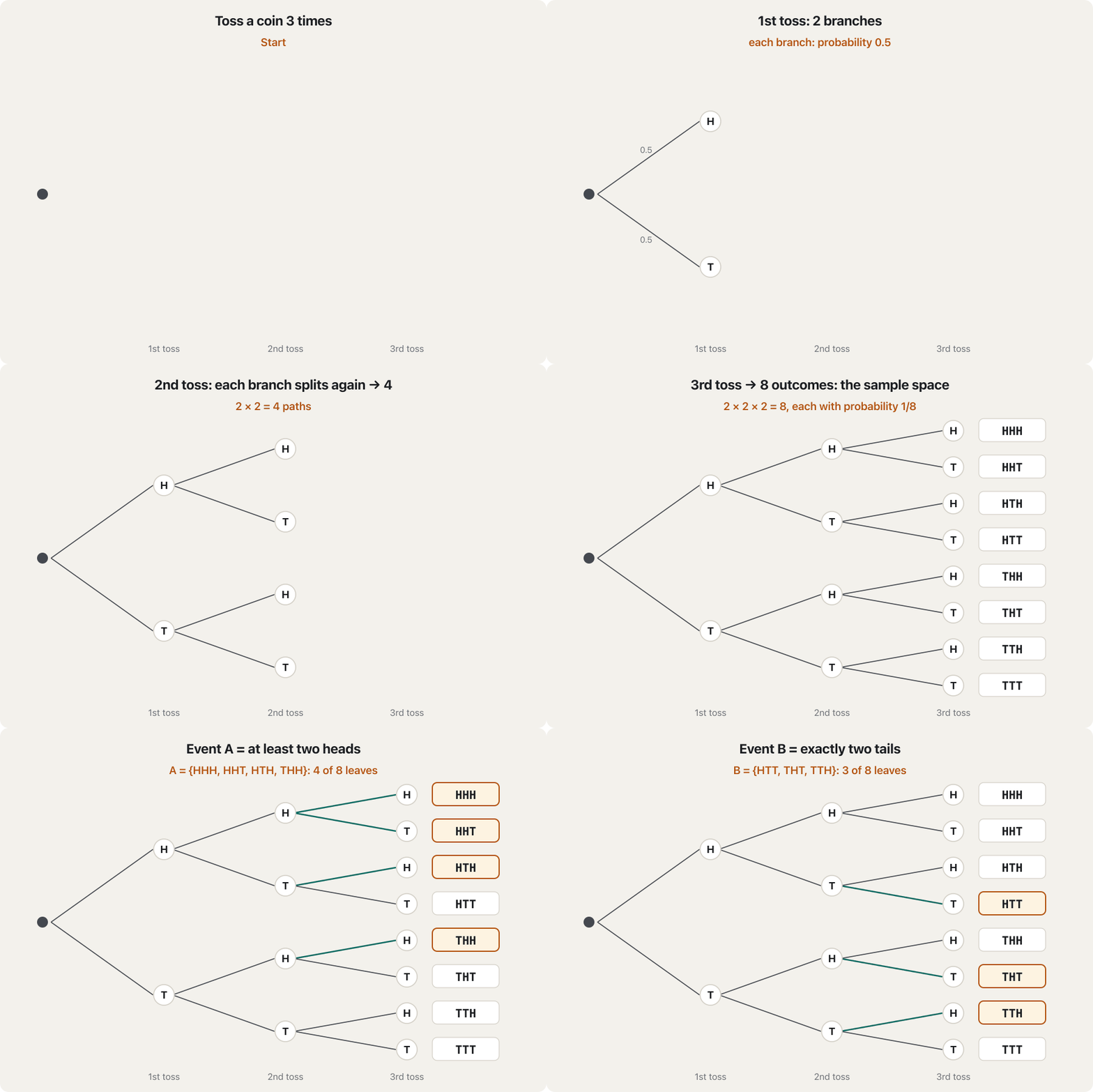
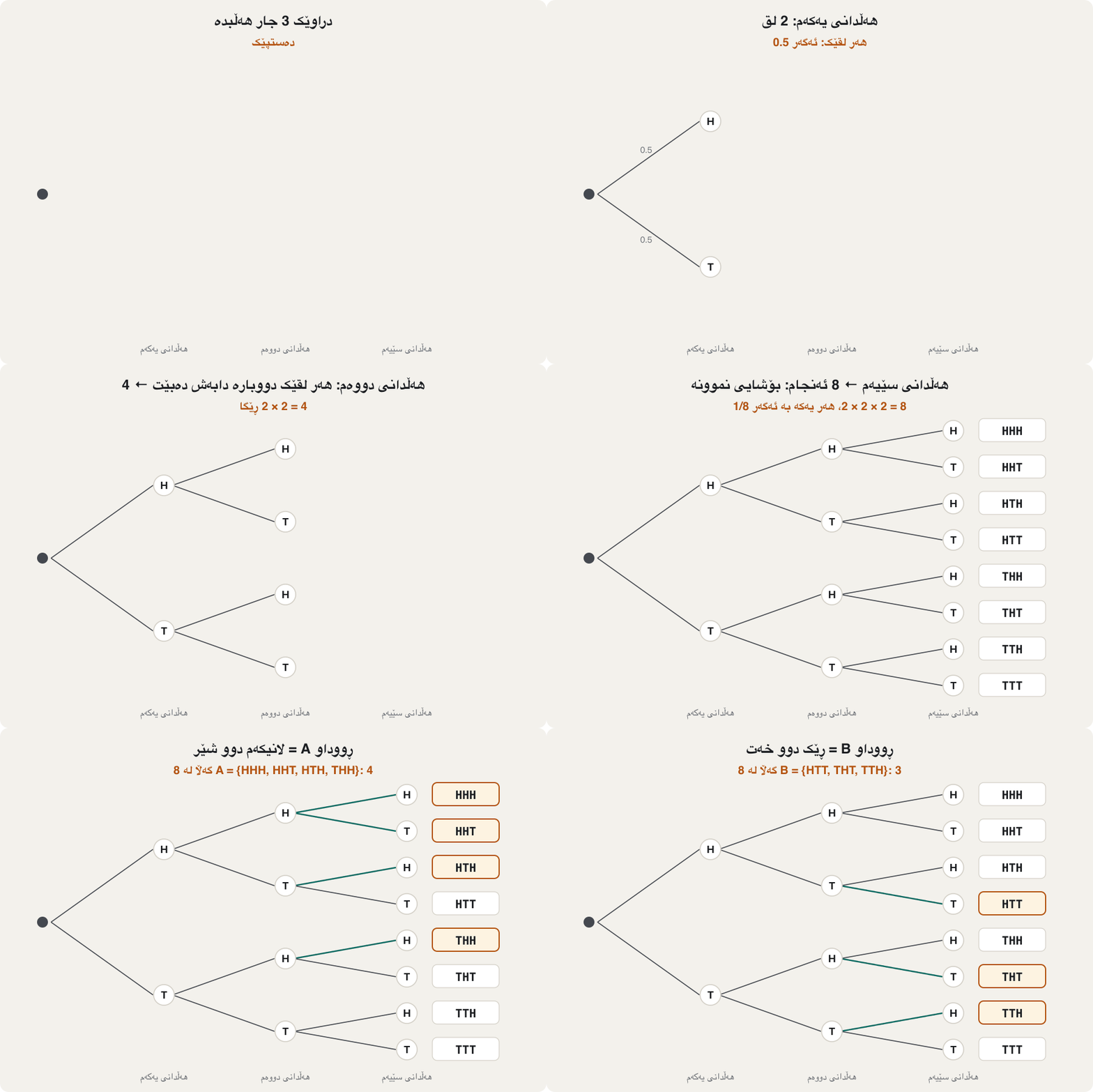
outcomes. For a fair coin every branch has probability 0.5, so each of the 8 leaves has probability .
. بۆ دراوێکی دادپەروەر هەر لقێک 0.5ـە، بۆیە هەر یەک لە 8 گەڵاکە ـە.
Multiplying the number of branches at each stage is the counting principle; it is the start of the next lesson, Counting and Permutations.
لێکدانی ژمارەی لقەکان لە هەر قۆناغێکدا ـە؛ سەرەتای وانەی داهاتووە، ژماردن و گۆڕینەکان.
What a sample space is, how a tree diagram lists every outcome of two coin flips, the basic rules every probability obeys, and the complement rule.
چییە، چۆن هەموو دوو جار هەڵدانی دراو دەنووسێت، یاسا بنەڕەتییەکانی و .
Plays 1:30-4:07: the sample space and a tree diagram of two coin flips (the screen grows it to three), then "at least one tail" read from the outcomes.
لە 1:30 تا 4:07 پەخش دەبێت: و بۆ دوو جار هەڵدانی دراو (ئەم شاشەیە دەیکات بە سێ جار)، پاشان «لانیکەم یەک خەت» لە دەخوێنرێتەوە.
The sample spaceبۆشایی نموونە
Two dice: 36 ordered pairsدوو بەردەزار: 36 جووتە ڕێکخراو
Midterm question: two dice are thrown; is the number on the first and on the second. Write the sample space. Each outcome is an ordered pair : 6 choices for times 6 for .
پرسیاری تاقیکردنەوەی نیوەی وەرز: دوو بەردەزار هەڵدەدرێن؛ ژمارەی یەکەمیانە و ژمارەی دووەم. بنووسە. هەر : 6 هەڵبژاردن بۆ جارانی 6 بۆ .
Events are subsets of the sample spaceڕووداوەکان ژێرکۆمەڵەکانی بۆشایی نموونەن
A set of of a — a part of the . We say the event happens if the outcome is in it.
کۆمەڵەیەکە لە — بەشێکە لە . دەڵێین ڕووداوەکە ڕوویدا ئەگەر ئەنجامەکە سەر بەو کۆمەڵەیە بێت.
An event is an outcome or a set of outcomes we are interested in. Formally, an event is a subset of the sample space. We say the event happens when the outcome of the experiment is one of its elements.
یان کە گرنگیمان پێی هەیە. بە شێوەی فەرمی، . دەڵێین ڕوو دەدات کاتێک ئەنجامی تاقیکردنەوەکە یەکێک بێت لە .
| Event for one die بۆ یەک بەردەزار | As a subset of وەک |
|---|---|
| rolling a 4هێنانی 4 | |
| rolling an even numberهێنانی ژمارەیەکی جووت | |
| rolling a number less than 5هێنانی ژمارەیەکی بچووکتر لە 5 |
For three tosses of a coin, the lecture notes define two events:
بۆ سێ هەڵدانی دراو، تێبینییەکانی وانە دوو پێناسە دەکەن:
| Event | In wordsبە وشە | As a setوەک |
|---|---|---|
| at least two headsلانیکەم دوو شێر | ||
| exactly two tailsڕێک دوو خەت |
Events are subsets of the sample spaceڕووداوەکان ژێرکۆمەڵەکانی بۆشایی نموونەن
Simple, compound, impossible and certain eventsڕووداوەکانی سادە، ئاوێتە، ئەستەم و دڵنیا
- A simple event has exactly one outcome: "rolling a 3" is .
- A compound event has two or more outcomes: "rolling an even number or a number less than 3" is .
- The empty set is the impossible event: it never happens.
- The whole sample space is the certain event: it always happens.
- ڕێک یەک هەیە: «هێنانی 3» دەبێتە .
- دوو یان زیاتری هەیە: «هێنانی ژمارەیەکی جووت یان ژمارەیەکی بچووکتر لە 3» دەبێتە .
- : هەرگیز ڕوو نادات.
- هەموو : هەمیشە ڕوو دەدات.
The coin example lists every event of one toss, :
نموونەی دراو هەموو یەک هەڵدان دەنووسێت، :
| Event | Subset | Probability (fair coin) (دراوی دادپەروەر) |
|---|---|---|
| headsشێر | ||
| tailsخەت | ||
| heads or tailsشێر یان خەت | 1 (certain)1 (دڵنیا) | |
| both heads and tails in one tossهەم شێر و هەم خەت لە یەک هەڵداندا | 0 (impossible)0 (ئەستەم) |
A set with 2 outcomes has events, because each outcome is either in or out of an event. In general a sample space with outcomes has events: a die has and three coin tosses have . Events can also be independent or mutually exclusive; those ideas get their own lessons (Mutually Exclusive Events and the Addition Rule, and Independent events later in this chapter).
بە 2 هەیە، چونکە هەر یان لە ناو یان لە دەرەوەیەتی. بە گشتی بە هەیە: بەردەزار ـی هەیە و سێ هەڵدانی دراو . دەتوانن سەربەخۆ یان جیا بن؛ ئەو بیرۆکانە وانەی تایبەتی خۆیان هەیە (ڕووداوی جیا و یاسای کۆکردنەوەی ئەگەر، هەروەها ڕووداوە سەربەخۆکان لە وانەیەکی دواتری ئەم بەشەدا).
Or, and, not: combining eventsیان، و، نا: تێکەڵکردنی ڕووداوەکان
Because events are sets, the set operations from Set Operations become the words or, and and not:
لەبەر ئەوەی ، ئەو کە لە کارەکانی کۆمەڵە خوێندت دەبنە وشەکانی یان، و و نا:
| Wordsوشە | Set operation | Meaningواتا |
|---|---|---|
| A or BA یان B | (union) () | outcomes in A, in B, or in both لە A، لە B، یان لە هەردووکیان |
| A and BA و B | (intersection) () | outcomes in both A and B لە هەردوو A و B |
| not Aنا A | (complement) () | outcomes of that are not in A کە لە ـدا نین |
- A and B are mutually exclusive (disjoint) if : they have no outcome in common, so they cannot happen together.
- A and B are jointly exhaustive if : together they cover the whole sample space, so at least one of them always happens.
- A و B ن (جیاکراوە) گەر : هیچ هاوبەشیان نییە، بۆیە ناتوانن پێکەوە ڕوو بدەن.
- A و B ن گەر : پێکەوە هەموو دادەپۆشن، بۆیە لانیکەم یەکێکیان هەمیشە ڕوو دەدات.
Or, and, not: combining eventsیان، و، نا: تێکەڵکردنی ڕووداوەکان
A Venn diagram of A and Bهێڵکاریی ڤێنی A و B
A Venn diagram draws as a rectangle and events as circles inside it. Here are the events and of three tosses:
وەک لاکێشەیەک و وەک بازنە لە ناویدا دەکێشێت. ئەمانە و ـی سێ هەڵدانن:
and its complement are mutually exclusive and exhaustive: every outcome is in exactly one of them.
و هەم جیان و هەم گشتگرن: هەموو ڕێک لە یەکێکیاندایە.
Clear animations show events that cannot happen together (mutually exclusive) and events that together cover the whole sample space (exhaustive).
ڕوون ئەو پیشان دەدەن کە ناتوانن پێکەوە ڕوو بدەن ()، هەروەها ئەوانەی پێکەوە هەموو دادەپۆشن ().
Mutually exclusive events from 0:27, exhaustive events from 2:09, and overlapping and non-overlapping exhaustive events in Venn pictures from 5:15.
لە 0:27ـەوە، لە 2:09ـەوە، هەروەها بە بەشی هاوبەش و بێ بەشی هاوبەش لە لە 5:15ـەوە.
Or, and, not: combining eventsیان، و، نا: تێکەڵکردنی ڕووداوەکان
Example (4)نموونەی (4)
Let , , and .
با ، ، و بن.
- A or CA یان C
: everything in A or C, each number once.
: هەموو شتێک لە A یان C، هەر ژمارەیەک یەک جار.
- A and CA و C
: the even numbers up to 5.
: ژمارە جووتەکان تا 5.
- not Cنا C
.
.
- A and BA و B
: no number is both even and odd, so A and B are mutually exclusive.
: هیچ ژمارەیەک هەم جووت و هەم تاک نییە، بۆیە A و B .
- A or B or CA یان B یان C
: A, B and C together are exhaustive ( and alone already cover ).
: A، B و C پێکەوە گشتگرن ( و بە تەنها دادەپۆشن).
The laws of set algebra: a reference cardیاساکانی جەبری کۆمەڵە: کارتێکی سەرچاوە
These laws let you rewrite an event in a simpler or more useful form. You do not need to memorise them all now; use this card when a later lesson needs one. The same laws appear in Boolean algebra, with as OR, as AND and the complement as NOT.
ئەم یاسایانە ڕێگەت پێ دەدەن بە شێوەیەکی سادەتر یان بەسوودتر بنووسیتەوە. پێویست ناکات ئێستا هەموویان لەبەر بکەیت؛ کاتێک وانەیەکی دواتر پێویستی بە یەکێکیان بوو ئەم کارتە بەکار بهێنە. هەمان یاساکان لە جەبری بوولدا دەردەکەون، کە وەک OR و وەک AND و وەک NOTـە.
| Lawیاسا | Union formشێوەی | Intersection formشێوەی |
|---|---|---|
| Commutative | ||
| Associative | ||
| Distributive | ||
| De Morgan | ||
| Identity | ||
| Complementیاسای | ||
| Complement (more)یاسای (زیاتر) | ||
| Idempotent |
De Morgan in words: "not (A or B)" means "not A and not B". Check it with Example (4): , and . The same set.
دی مۆرگان بە وشە: «نا (A یان B)» واتە «نا A و نا B». بە نموونەی (4) بیپشکنە: هەروەها . هەمان .
Common mistakesهەڵە باوەکان
| Mistakeهەڵە | Correct ideaبیرۆکەی ڕاست |
|---|---|
| Writing a sample space with [ ] or ( ).نووسینی بە [ ] یان ( ). | Sets use braces { }. Round brackets are for ordered pairs such as . کەوانەی لوولپێچ { } بەکار دەهێنن. کەوانەی ئاسایی بۆ وەک . |
| Listing only 21 outcomes for two dice because and "are the same".نووسینی تەنها 21 بۆ دوو بەردەزار چونکە و «یەکن». | There are 36 ordered pairs; only those are equally likely.36 هەیە؛ تەنها ئەوانە . |
| Forgetting a branch in a tree, for example writing 6 outcomes for 3 tosses.لەبیرکردنی لقێک لە درەختەکەدا، بۆ نموونە نووسینی 6 بۆ 3 هەڵدان. | Each toss doubles the paths: .هەر هەڵدانێک ڕێگاکان دووقات دەکات: . |
| Mixing up and .تێکەڵکردنی و . | is "or" (bigger, like a cup that holds more); is "and" (only the shared part). «یان»ـە (گەورەتر، وەک پیاڵەیەک کە زیاتر هەڵدەگرێت)؛ «و»ـە (تەنها بەشە هاوبەشەکە). |
| Thinking "mutually exclusive" means "exhaustive".بیرکردنەوە کە «جیا» واتە «گشتگر». | Exclusive: no overlap. Exhaustive: nothing left out. A and B of three tosses are exclusive but not exhaustive.جیا: هیچ یەکتربڕینێک. گشتگر: هیچ شتێک لە دەرەوە نامێنێت. و ـی سێ هەڵدان جیان بەڵام گشتگر نین. |
Exercisesڕاهێنانەکان
A coin is tossed three times. Write the sample space, then the events A "at least two heads", B "exactly two tails" and C "the first toss is heads".
دراوێک سێ جار هەڵدەدرێت. بنووسە، پاشان A «لانیکەم دوو شێر»، B «ڕێک دوو خەت» و C «هەڵدانی یەکەم شێرە».
Show answerوەڵامەکە پیشان بدە
With the events of exercise 1, find , , and say whether A and C are mutually exclusive.
بە ڕاهێنانی 1، ، و بدۆزەرەوە و بڵێ ئایا A و C .
Show answerوەڵامەکە پیشان بدە
is not empty, so A and C are not mutually exclusive: they can happen together (for example HHH).
بەتاڵ نییە، بۆیە A و C جیا نین: دەتوانن پێکەوە ڕوو بدەن (بۆ نموونە HHH).
, , , . Find , , , and .
، ، ، . ، ، ، و بدۆزەرەوە.
Show answerوەڵامەکە پیشان بدە
Two dice are thrown; is the number on the first and on the second. Write the sample space and the event , "the same number on both dice".
دوو بەردەزار هەڵدەدرێن؛ ژمارەی یەکەمیانە و ژمارەی دووەم. و ، «هەمان ژمارە لەسەر هەردوو بەردەزار»، بنووسە.
Show answerوەڵامەکە پیشان بدە
has 6 of the 36 outcomes, so .
شەش لە 36ـی هەیە، بۆیە .
List all the events of tossing one coin, and say how many events a die has.
هەموو هەڵدانی یەک دراو بنووسە و بڵێ بەردەزار چەند هەیە.
Show answerوەڵامەکە پیشان بدە
Coin: , four events, . Die: events, from up to .
دراو: ، چوار ، . بەردەزار: ، لە ـەوە تا .
Summaryپوختە
- A random experiment has an uncertain result; one run is a trial.
- The sample space is the set of all outcomes; list it with a tree diagram or a grid.
- An event is a subset of ; is impossible, is certain; outcomes give events.
- "Or" is , "and" is , "not" is the complement; mutually exclusive: ; exhaustive: .
- نادیاری هەیە؛ یەک جار ئەنجامدانی ـە.
- هەموو ؛ بە یان تۆڕێک بینووسە.
- ـیە؛ ئەستەمە و دڵنیایە؛ دەدەن.
- «یان» ـە، «و» ـە و «نا» ؛ جیا: ؛ گشتگر: .
What is the difference between an outcome and an event?جیاوازیی نێوان ئەنجام و ڕووداو چییە؟
An outcome is one result; an event is a set of outcomes (it may hold one, many, none or all).
یەک ئەنجامە؛ (دەتوانێت یەک، چەندین، هیچ یان هەموویانی تێدا بێت).
Why are and both in the sample space of two dice?بۆچی و هەردووکیان لە بۆشایی نموونەی دوو بەردەزاردان؟
The dice are different, so the order matters; this keeps all 36 outcomes equally likely.
بەردەزارەکان جیاوازن، بۆیە ڕیزبەندی گرنگە؛ ئەمە هەر 36 بە دەهێڵێتەوە.
Videoڤیدیۆ
Watch a videoسەیری ڤیدیۆیەک بکە
A video that viewers liked a lot and praised in their comments, chosen for this lesson.ڤیدیۆیەک کە بینەران زۆریان پێ خۆش بووە و لە کۆمێنتەکانیاندا ستایشیان کردووە، بۆ ئەم وانەیە هەڵبژێردراوە.
A Kurdish teacher writes the events of one die as sets, then finds A ∪ B, A ∩ B and their probabilities in worked examples.
مامۆستایەکی کورد یەک بەردەزار وەک دەنووسێت، پاشان ، و لە نموونەی چارەسەرکراودا دەدۆزێتەوە.
Grade 11 (literary) lesson 1-3, part 1, in Sorani: the events of one die as subsets of {1, 2, 3, 4, 5, 6} (to about 11:30), A ∪ B and A ∩ B with dice and cards (about 11:30-21:40), then P(event) = favourable / all and P(A ∩ B), P(A ∪ B) by counting.
پۆلی 11 (وێژەیی)، وانەی (1-3)، بەشی یەکەم، بە سۆرانی: یەک بەردەزار وەک (تا نزیکەی 11:30)، و بە بەردەزار و کارت (نزیکەی 11:30 تا 21:40)، پاشان = ژمارەی گونجاوەکان ÷ ژمارەی هەموو ، هەروەها و بە ژماردن.
Lesson complete!وانەکە تەواو بوو!
Well done. Review the key terms, then go on to the next lesson.دەستخۆش. سەیرێکی زاراوە سەرەکییەکان بکەرەوە، پاشان بڕۆ بۆ وانەی داهاتوو.
Key termsزاراوە سەرەکییەکان
Counting and Permutationsژماردن و گۆڕینەکان
Related lecturesوانە پەیوەندیدارەکان
- Counting and Permutationsژماردن و گۆڕینەکان
- Mutually Exclusive Events and the Addition Ruleڕووداوی جیا و یاسای کۆکردنەوەی ئەگەر
- The Axioms of Probability and the Complement Ruleبەڵگەنەویستەکانی ئەگەر و یاسای تەواوکەر
- De Morgan's Theoremsسەلمێنراوەکانی دی مۆرگان
- Relational Algebra and Relational Calculusجەبری پەیوەندیدار و ژمێرکاریی پەیوەندیدار
- Conditional Probability, Independence and the Multiplication Ruleئەگەری مەرجدار، سەربەخۆیی و یاسای لێکدانی ئەگەر
References and further readingسەرچاوەکان و خوێندنەوەی زیاتر
This lecture is a first edition. The Kurdish text and terminology are waiting for review by Kurdish IT teachers.ئەم وانەیە چاپی یەکەمە. دەقە کوردییەکە و زاراوەکانی چاوەڕێی پێداچوونەوەی مامۆستایانی کوردی بواری IT ن.